


 购物车
购物车 个人中心
个人中心
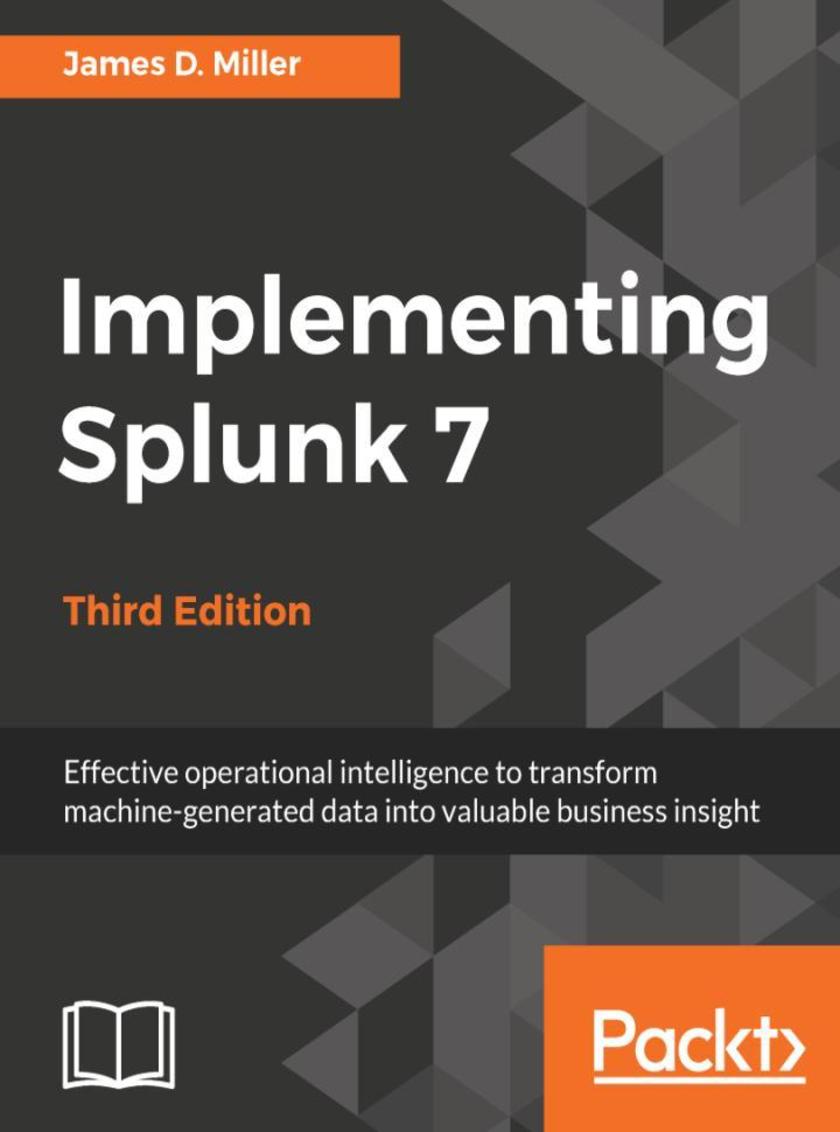
Implementing Splunk 7 - Third Edition
¥90.46
A comprehensive guide to making machine data accessible across the organization using advanced dashboards About This Book ? Enrich machine-generated data and transform it into useful, meaningful insights ? Perform search operations and configurations, build dashboards, and manage logs ? Extend Splunk services with scripts and advanced configurations to process optimal results Who This Book Is For This book is intended for data analysts, business analysts, and IT administrators who want to make the best use of big data, operational intelligence, log management, and monitoring within their organization. Some knowledge of Splunk services will help you get the most out of the book What You Will Learn ? Focus on the new features of the latest version of Splunk Enterprise 7 ? Master the new offerings in Splunk: Splunk Cloud and the Machine Learning Toolkit ? Create efficient and effective searches within the organization ? Master the use of Splunk tables, charts, and graph enhancements ? Use Splunk data models and pivots with faster data model acceleration ? Master all aspects of Splunk XML dashboards with hands-on applications ? Create and deploy advanced Splunk dashboards to share valuable business insights with peers In Detail Splunk is the leading platform that fosters an efficient methodology and delivers ways to search, monitor, and analyze growing amounts of big data. This book will allow you to implement new services and utilize them to quickly and efficiently process machine-generated big data. We introduce you to all the new features, improvements, and offerings of Splunk 7. We cover the new modules of Splunk: Splunk Cloud and the Machine Learning Toolkit to ease data usage. Furthermore, you will learn to use search terms effectively with Boolean and grouping operators. You will learn not only how to modify your search to make your searches fast but also how to use wildcards efficiently. Later you will learn how to use stats to aggregate values, a chart to turn data, and a time chart to show values over time; you'll also work with fields and chart enhancements and learn how to create a data model with faster data model acceleration. Once this is done, you will learn about XML Dashboards, working with apps, building advanced dashboards, configuring and extending Splunk, advanced deployments, and more. Finally, we teach you how to use the Machine Learning Toolkit and best practices and tips to help you implement Splunk services effectively and efficiently. By the end of this book, you will have learned about the Splunk software as a whole and implemented Splunk services in your tasks at projects Style and approach An easy-to-follow, step-by-step guide to help you get to grips with real-world applications of Splunk 7.
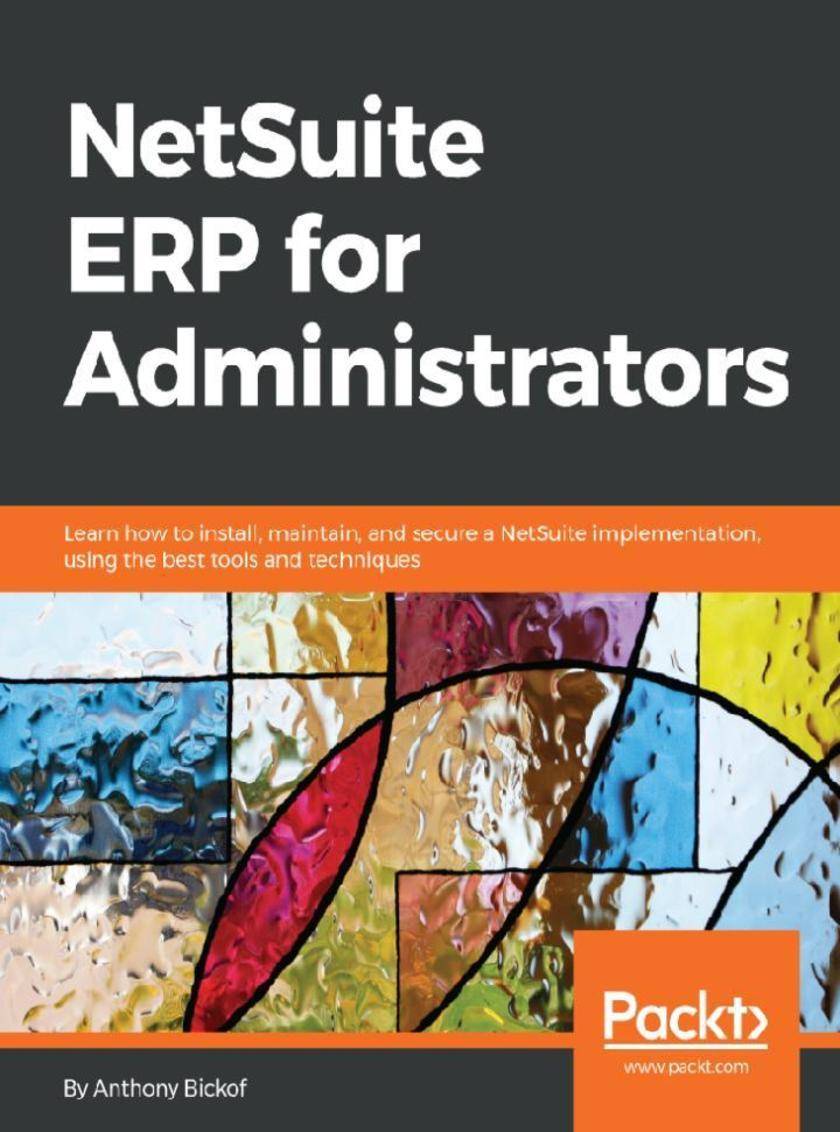
NetSuite ERP for Administrators
¥90.46
Learn steps and tasks to help a NetSuite administrator perform both his daily and monthly tasks efficiently. Advance his expertise to become NetSuite leader without having to spend time and money on corporate trainings. About This Book ? Understand the business considerations and implementation of the NetSuite ERP ? Gain a deep knowledge of enterprise security, data management, process automation, and analytics ? Learn techniques to sail through system maintenance while ensuring accuracy and to practically troubleshoot issues Who This Book Is For This book is for administrators, consultants, and Project Managers who would like to improve their skills in the areas of configuration and system management. Basic experience implementing NetSuite is assumed. What You Will Learn ? Provide executives with meaningful insights into the business ? A Framework to streamline the implementation of new and existing features ? Leverage built-in tools to optimize your efficiency and effectiveness ? Test configuration to check the implementation of role-specific permissions ? Understand how to optimize the amount of data to be shared with users ? Import data like new leads and employ current data like pricing updates ? Perform on-going maintenance and troubleshoot issues In Detail NetSuite ERP is a complete, scalable cloud ERP solution targeted at fast-growing, mid-sized businesses and large enterprises. It's the smartly executed combination of financial management operations and built-in business intelligence, which enables companies to make data-driven and well-informed decisions. This book will help administrators become expert enough to be seen as the NetSuite leader at their company and to be able to advise department heads on specific processes, and strategic decisions. We start with an overview of ERP and NetSuite ERP, before going on to explain the built-in features to show the breadth of NetSuite ERP's product and its ease of use. We then discuss business aspects, focusing on the most important processes in NetSuite. Then you'll understand the implementation aspects that are generic enough to cover all the features. The focus then shifts to specific skills that you will need to administer for any system, such as roles, permissions, customization, and data imports. Moving on, you'll learn how to centralize the creation of search templates and give users the tools to pivot the data and expose it to the user in useful ways, such as on the dashboard. The book ends with checklists providing actionable steps that you as an administrator can take to do your job and support the application through new releases and troubleshooting problems. Style and approach A slow and steady introduction of topics from reports through searches with aim to enable the administrator to gain a holistic view of the NetSuite product.
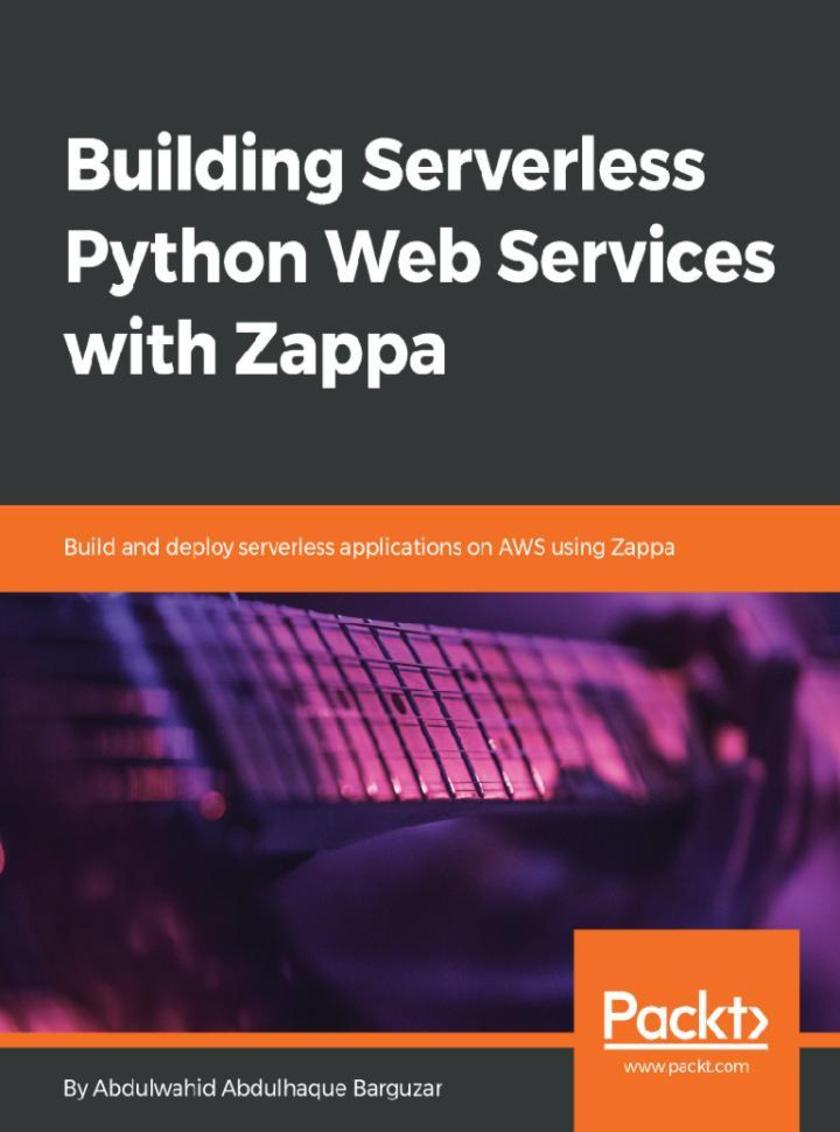
Building Serverless Python Web Services with Zappa
¥69.75
Master serverless architectures in Python and their implementation, with Zappa on three different frameworks. Key Features * Scalable serverless Python web services using Django, Flask, and Pyramid. * Learn Asynchronous task execution on AWS Lambda and scheduling using Zappa. * Implementing Zappa in a Docker container. Book Description Serverless applications are becoming very popular these days, not just because they save developers the trouble of managing the servers, but also because they provide several other benefits such as cutting heavy costs and improving the overall performance of the application. This book will help you build serverless applications in a quick and efficient way. We begin with an introduction to AWS and the API gateway, the environment for serverless development, and Zappa. We then look at building, testing, and deploying apps in AWS with three different frameworks--Flask, Django, and Pyramid. Setting up a custom domain along with SSL certificates and configuring them with Zappa is also covered. A few advanced Zappa settings are also covered along with securing Zappa with AWS VPC. By the end of the book you will have mastered using three frameworks to build robust and cost-efficient serverless apps in Python. What you will learn *Build, test, and deploy a simple web service using AWS CLI *Integrate Flask-based Python applications, via AWS CLI configuration *Design Rest APIs integrated with Zappa for Flask and Django *Create a project in the Pyramid framework and configure it with Zappa *Generate SSL Certificates using Amazon Certificate Manager *Configure custom domains with AWS Route 53 *Create a Docker container similar to AWS Lambda Who this book is for Python Developers who are interested in learning how to develop fast and highly scalable serverless applications in Python, will find this book useful
C++ Reactive Programming
¥81.74
Learn how to implement the reactive programming paradigm with C++ and build asynchronous and concurrent applications About This Book ? Efficiently exploit concurrency and parallelism in your programs ? Use the Functional Reactive programming model to structure programs ? Understand reactive GUI programming to make your own applications using Qt Who This Book Is For If you’re a C++ developer interested in using reactive programming to build asynchronous and concurrent applications, you’ll find this book extremely useful. This book doesn’t assume any previous knowledge of reactive programming. What You Will Learn ? Understand language-level concurrency in C++ ? Explore advanced C++ programming for the FRP ? Uncover the RxCpp library and its programming model ? Mix the FP and OOP constructs in C++ 17 to write well-structured programs ? Master reactive microservices in C++ ? Create custom operators for RxCpp ? Learn advanced stream processing and error handling In Detail Reactive programming is an effective way to build highly responsive applications with an easy-to-maintain code base. This book covers the essential functional reactive concepts that will help you build highly concurrent, event-driven, and asynchronous applications in a simpler and less error-prone way. C++ Reactive Programming begins with a discussion on how event processing was undertaken by different programming systems earlier. After a brisk introduction to modern C++ (C++17), you’ll be taken through language-level concurrency and the lock-free programming model to set the stage for our foray into the Functional Programming model. Following this, you’ll be introduced to RxCpp and its programming model. You’ll be able to gain deep insights into the RxCpp library, which facilitates reactive programming. You’ll learn how to deal with reactive programming using Qt/C++ (for the desktop) and C++ microservices for the Web. By the end of the book, you will be well versed with advanced reactive programming concepts in modern C++ (C++17). Style and approach The book includes real-world problems that you will solve with the reactive programming model. It highlights the way event processing has evolved in the programming world.
Tkinter GUI Application Development Blueprints - Second Edition
¥90.46
Geometry Management, Event Handling, and more About This Book ? A Practical, guide to learn the application of Python and GUI programming with tkinter ? Create multiple cross-platform real-world projects by integrating host of third party libraries and tools ? Learn to build beautiful and highly interactive user interfaces, targeting multiple devices. Who This Book Is For This book is for a beginner to intermediate-level Pythonists who want to build modern, cross-platform GUI applications with the amazingly powerful Tkinter. Prior knowledge of Tkinter is required. What You Will Learn ? A Practical, guide to help you learn the application of Python and GUI programming with Tkinter ? Create multiple, cross-platform, real-world projects by integrating a host of third-party libraries and tools ? Learn to build beautiful and highly interactive user interfaces, targeting multiple devices. In Detail Tkinter is the built-in GUI package that comes with standard Python distributions. It is a cross-platform package, which means you build once and deploy everywhere. It is simple to use and intuitive in nature, making it suitable for programmers and non-programmers alike. This book will help you master the art of GUI programming. It delivers the bigger picture of GUI programming by building real-world, productive, and fun applications such as a text editor, drum machine, game of chess, audio player, drawing application, piano tutor, chat application, screen saver, port scanner, and much more. In every project, you will build on the skills acquired in the previous project and gain more expertise. You will learn to write multithreaded programs, network programs, database-driven programs, asyncio based programming and more. You will also get to know the modern best practices involved in writing GUI apps. With its rich source of sample code, you can build upon the knowledge gained with this book and use it in your own projects in the discipline of your choice. Style and approach An easy-to-follow guide, full of hands-on examples of real-world GUI programs. The first chapter is a must-read as it explains most of the things you need to get started with writing GUI programs with Tkinter. Each subsequent chapter is a stand-alone project that discusses some aspects of GUI programming in detail. These chapters can be read sequentially or randomly, depending on the reader's experience with Python.
Practical Web Penetration Testing
¥73.02
Learn how to execute web application penetration testing end-to-end About This Book ? Build an end-to-end threat model landscape for web application security ? Learn both web application vulnerabilities and web intrusion testing ? Associate network vulnerabilities with a web application infrastructure Who This Book Is For Practical Web Penetration Testing is for you if you are a security professional, penetration tester, or stakeholder who wants to execute penetration testing using the latest and most popular tools. Basic knowledge of ethical hacking would be an added advantage. What You Will Learn ? Learn how to use Burp Suite effectively ? Use Nmap, Metasploit, and more tools for network infrastructure tests ? Practice using all web application hacking tools for intrusion tests using Kali Linux ? Learn how to analyze a web application using application threat modeling ? Know how to conduct web intrusion tests ? Understand how to execute network infrastructure tests ? Master automation of penetration testing functions for maximum efficiency using Python In Detail Companies all over the world want to hire professionals dedicated to application security. Practical Web Penetration Testing focuses on this very trend, teaching you how to conduct application security testing using real-life scenarios. To start with, you’ll set up an environment to perform web application penetration testing. You will then explore different penetration testing concepts such as threat modeling, intrusion test, infrastructure security threat, and more, in combination with advanced concepts such as Python scripting for automation. Once you are done learning the basics, you will discover end-to-end implementation of tools such as Metasploit, Burp Suite, and Kali Linux. Many companies deliver projects into production by using either Agile or Waterfall methodology. This book shows you how to assist any company with their SDLC approach and helps you on your journey to becoming an application security specialist. By the end of this book, you will have hands-on knowledge of using different tools for penetration testing. Style and approach In this book, you will learn and understand the workflow of application security testing. Starting from analysis using threat modeling until the testing phase and before the web project goes into production, you will be able conduct effective penetrating testing using web intrusion tests , network infrastructure tests, and code review.
Python GUI Programming with Tkinter
¥81.74
Find out how to create visually stunning and feature-rich applications by empowering Python's built-in Tkinter GUI toolkit About This Book ? Explore Tkinter's powerful features to easily design and customize your GUI application ? Learn the basics of 2D and 3D animation in GUI applications. ? Learn to integrate stunning Data Visualizations using Tkinter Canvas and Matplotlib. Who This Book Is For This book will appeal to developers and programmers who would like to build GUI-based applications. Knowledge of Python is a prerequisite. What You Will Learn ? Implement the tools provided by Tkinter to design beautiful GUIs ? Discover cross-platform development through minor customizations in your existing application ? Visualize graphs in real time as data comes in using Tkinter's animation capabilities ? Use PostgreSQL authentication to ensure data security for your application ? Write unit tests to avoid regressions when updating code In Detail Tkinter is a lightweight, portable, and easy-to-use graphical toolkit available in the Python Standard Library, widely used to build Python GUIs due to its simplicity and availability. This book teaches you to design and build graphical user interfaces that are functional, appealing, and user-friendly using the powerful combination of Python and Tkinter. After being introduced to Tkinter, you will be guided step-by-step through the application development process. Over the course of the book, your application will evolve from a simple data-entry form to a complex data management and visualization tool while maintaining a clean and robust design. In addition to building the GUI, you'll learn how to connect to external databases and network resources, test your code to avoid errors, and maximize performance using asynchronous programming. You'll make the most of Tkinter's cross-platform availability by learning how to maintain compatibility, mimic platform-native look and feel, and build executables for deployment across popular computing platforms. By the end of this book, you will have the skills and confidence to design and build powerful high-end GUI applications to solve real-world problems. Style and approach This is a comprehensive guide that explores the essential Tkinter features and modules and implements them in building real-world cross-platform GUI applications
Hands-On Data Science with Anaconda
¥63.21
Develop, deploy, and streamline your data science projects with the most popular end-to-end platform, Anaconda About This Book ? Use Anaconda to find solutions for clustering, classification, and linear regression ? Analyze your data efficiently with the most powerful data science stack ? Use the Anaconda cloud to store, share, and discover projects and libraries Who This Book Is For Hands-On Data Science with Anaconda is for you if you are a developer who is looking for the best tools in the market to perform data science. It’s also ideal for data analysts and data science professionals who want to improve the efficiency of their data science applications by using the best libraries in multiple languages. Basic programming knowledge with R or Python and introductory knowledge of linear algebra is expected. What You Will Learn ? Perform cleaning, sorting, classification, clustering, regression, and dataset modeling using Anaconda ? Use the package manager conda and discover, install, and use functionally efficient and scalable packages ? Get comfortable with heterogeneous data exploration using multiple languages within a project ? Perform distributed computing and use Anaconda Accelerate to optimize computational powers ? Discover and share packages, notebooks, and environments, and use shared project drives on Anaconda Cloud ? Tackle advanced data prediction problems In Detail Anaconda is an open source platform that brings together the best tools for data science professionals with more than 100 popular packages supporting Python, Scala, and R languages. Hands-On Data Science with Anaconda gets you started with Anaconda and demonstrates how you can use it to perform data science operations in the real world. The book begins with setting up the environment for Anaconda platform in order to make it accessible for tools and frameworks such as Jupyter, pandas, matplotlib, Python, R, Julia, and more. You’ll walk through package manager Conda, through which you can automatically manage all packages including cross-language dependencies, and work across Linux, macOS, and Windows. You’ll explore all the essentials of data science and linear algebra to perform data science tasks using packages such as SciPy, contrastive, scikit-learn, Rattle, and Rmixmod. Once you’re accustomed to all this, you’ll start with operations in data science such as cleaning, sorting, and data classification. You’ll move on to learning how to perform tasks such as clustering, regression, prediction, and building machine learning models and optimizing them. In addition to this, you’ll learn how to visualize data using the packages available for Julia, Python, and R. Style and approach This book is your step-by-step guide full of use cases, examples and illustrations to get you well-versed with the concepts of Anaconda.
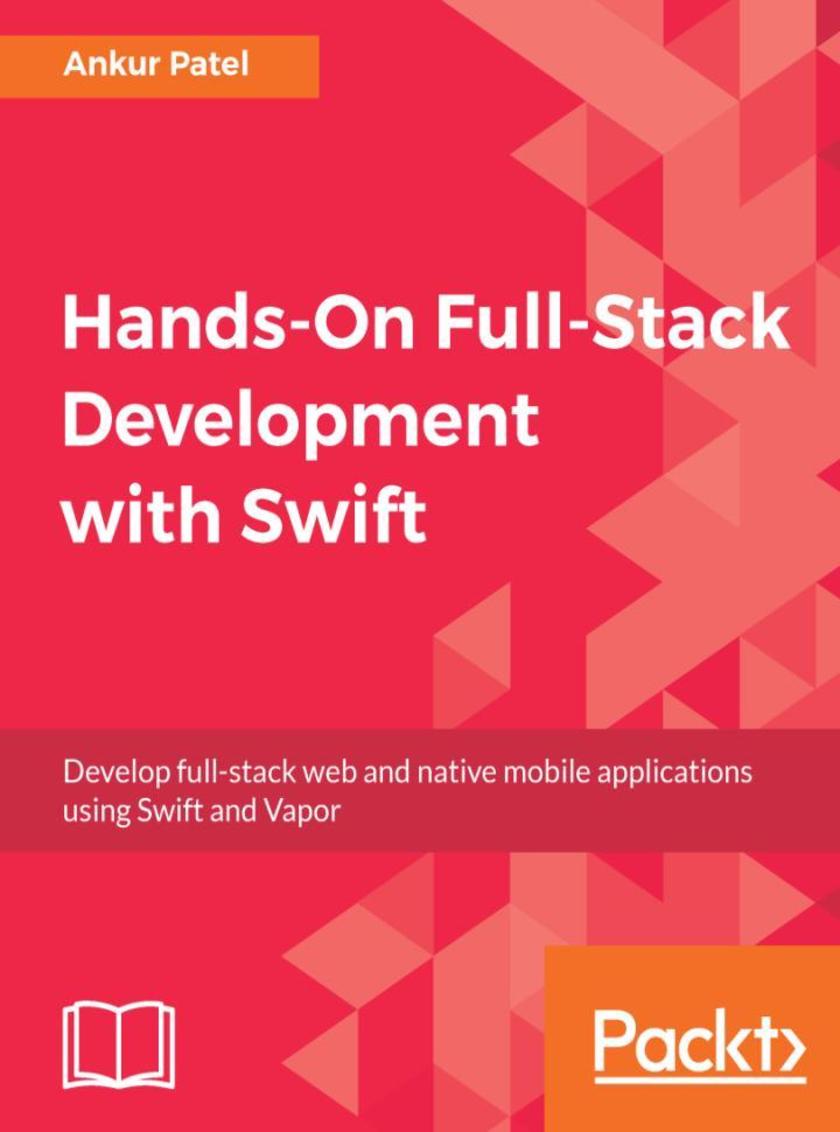
Hands-On Full-Stack Development with Swift
¥81.74
Build full-stack shopping list applications from scratch for web and mobile platforms using Xcode, Vapor, and Swift About This Book ? Build, package, and deploy an end-to-end app solution for mobile and web with Swift 4 ? Increase developer productivity by creating reusable client and server components ? Develop backend services for your apps and websites using Vapor framework Who This Book Is For This book is for developers who are looking to build full-stack web and native mobile applications using Swift. An understanding of HTML, CSS, and JavaScript would be beneficial when building server-rendered pages with Vapor. What You Will Learn ? Get accustomed to server-side programming as well as the Vapor framework ? Learn how to build a RESTful API ? Make network requests from your app and handle error states when a network request fails ? Deploy your app to Heroku using the CLI command ? Write a test for the Vapor backend ? Create a tvOS version of your shopping list app and explore code-sharing with an iOS platform ? Add registration and authentication so that users can have their own shopping lists In Detail Making Swift an open-source language enabled it to share code between a native app and a server. Building a scalable and secure server backend opens up new possibilities, such as building an entire application written in one language—Swift. This book gives you a detailed walk-through of tasks such as developing a native shopping list app with Swift and creating a full-stack backend using Vapor (which serves as an API server for the mobile app). You'll also discover how to build a web server to support dynamic web pages in browsers, thereby creating a rich application experience. You’ll begin by planning and then building a native iOS app using Swift. Then, you'll get to grips with building web pages and creating web views of your native app using Vapor. To put things into perspective, you'll learn how to build an entire full-stack web application and an API server for your native mobile app, followed by learning how to deploy the app to the cloud, and add registration and authentication to it. Once you get acquainted with creating applications, you'll build a tvOS version of the shopping list app and explore how easy is it to create an app for a different platform with maximum code shareability. Towards the end, you’ll also learn how to create an entire app for different platforms in Swift, thus enhancing your productivity. Style and approach A step-by-step tutorial-based approach that teaches you full-stack Swift through the development of a single application on several platforms.
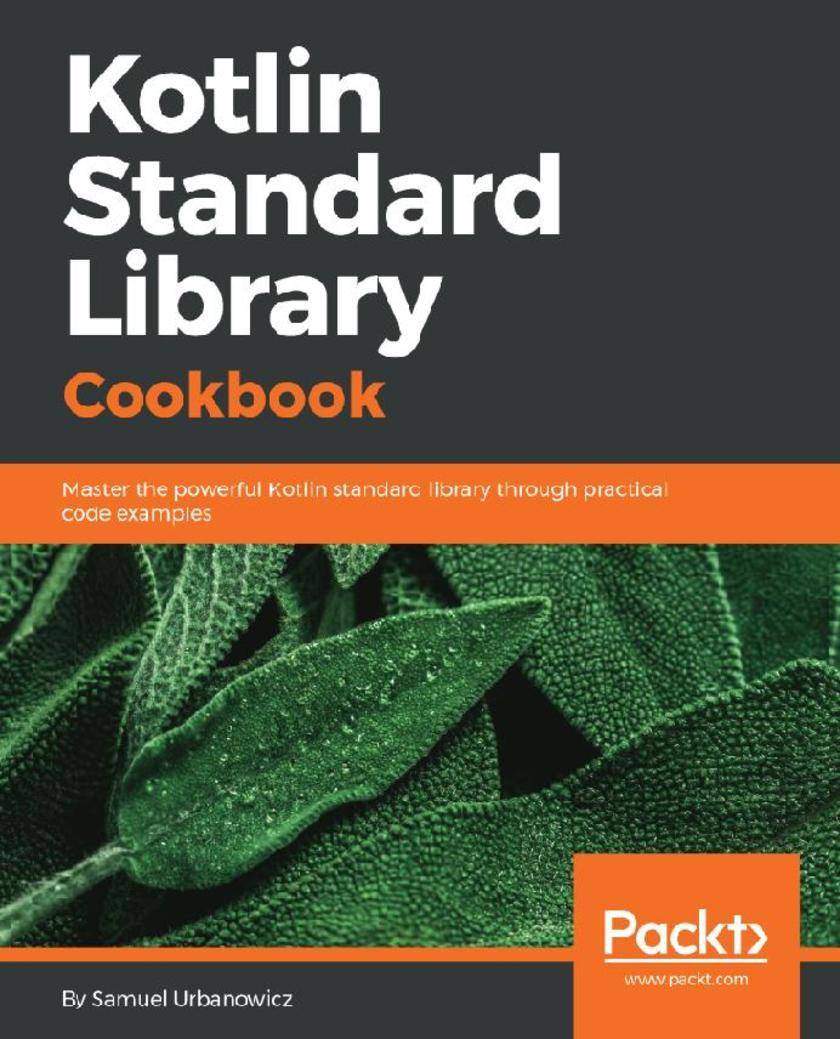
Kotlin Standard Library Cookbook
¥69.75
Gain hands-on experience of installing OpenShift Origin 3.9 in a production configuration and managing applications using the platform you built Key Features *Gain hands-on experience of working with Kubernetes and Docker *Learn how to deploy and manage applications in OpenShift *Get a practical approach to managing applications on a cloud-based platform *Explore multi-site and HA architectures of OpenShift for production Book Description Docker containers transform application delivery technologies to make them faster and more reproducible, and to reduce the amount of time wasted on configuration. Managing Docker containers in the multi-node or multi-datacenter environment is a big challenge, which is why container management platforms are required. OpenShift is a new generation of container management platforms built on top of both Docker and Kubernetes. It brings additional functionality to the table, something that is lacking in Kubernetes. This new functionality significantly helps software development teams to bring software development processes to a whole new level. In this book, we’ll start by explaining the container architecture, Docker, and CRI-O overviews. Then, we'll look at container orchestration and Kubernetes. We’ll cover OpenShift installation, and its basic and advanced components. Moving on, we’ll deep dive into concepts such as deploying application OpenShift. You’ll learn how to set up an end-to-end delivery pipeline while working with applications in OpenShift as a developer or DevOps. Finally, you’ll discover how to properly design OpenShift in production environments. This book gives you hands-on experience of designing, building, and operating OpenShift Origin 3.9, as well as building new applications or migrating existing applications to OpenShift. What you will learn *Understand the core concepts behind containers and container orchestration tools *Understand Docker, Kubernetes, and OpenShift, and their relation to CRI-O *Install and work with Kubernetes and OpenShift *Understand how to work with persistent storage in OpenShift *Understand basic and advanced components of OpenShift, including security and networking *Manage deployment strategies and application’s migration in OpenShift *Understand and design OpenShift high availability Who this book is for The book is for system administrators, DevOps engineers, solutions architects, or any stakeholder who wants to understand the concept and business value of OpenShift.
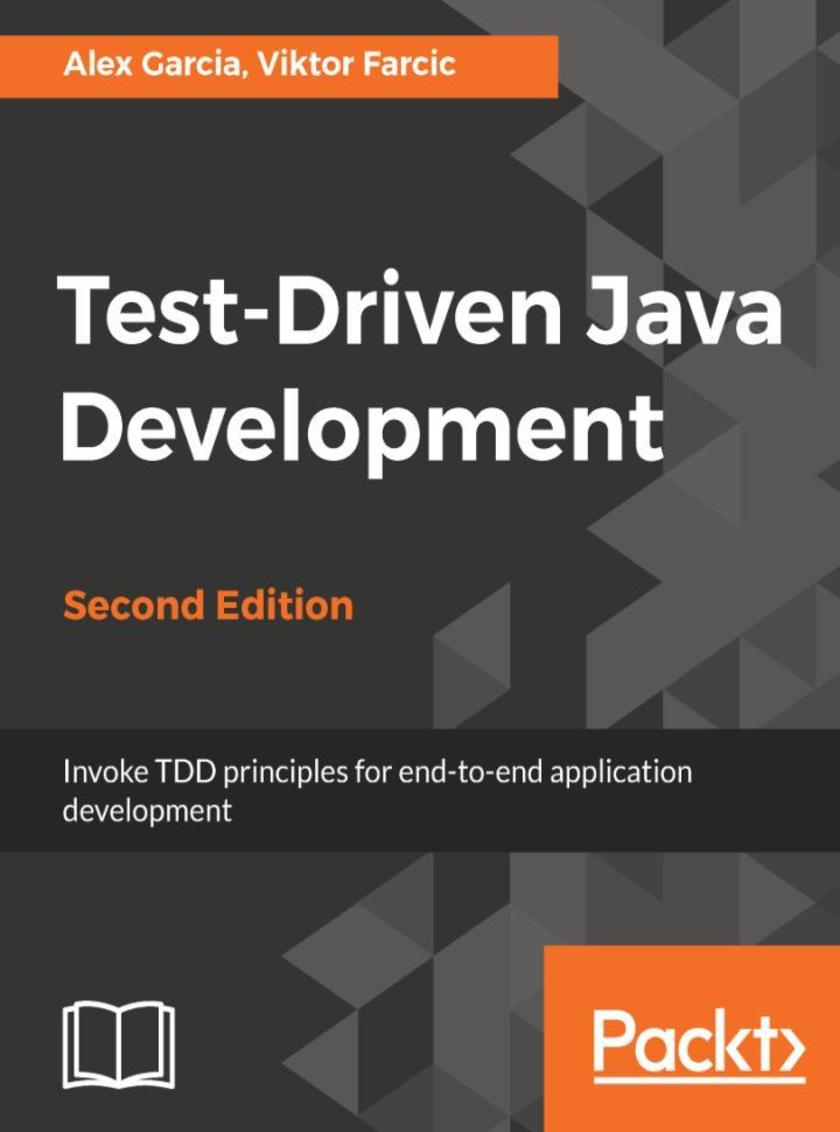
Test-Driven Java Development - Second Edition
¥90.46
This book will teach the concepts of test driven development in Java so you can build clean, maintainable and robust code About This Book ? Explore the most popular TDD tools and frameworks and become more proficient in building applications ? Create applications with better code design, fewer bugs, and higher test coverage, enabling you to get them to market quickly ? Implement test-driven programming methods into your development workflows Who This Book Is For If you're an experienced Java developer and want to implement more effective methods of programming systems and applications, then this book is for you. What You Will Learn ? Explore the tools and frameworks required for effective TDD development ? Perform the Red-Green-Refactor process efficiently, the pillar around which all other TDD procedures are based ? Master effective unit testing in isolation from the rest of your code ? Design simple and easily maintainable code by implementing different techniques ? Use mocking frameworks and techniques to easily write and quickly execute tests ? Develop an application to implement behavior-driven development in conjunction with unit testing ? Enable and disable features using feature toggles In Detail Test-driven development (TDD) is a development approach that relies on a test-first procedure that emphasizes writing a test before writing the necessary code, and then refactoring the code to optimize it.The value of performing TDD with Java, one of the longest established programming languages, is to improve the productivity of programmers and the maintainability and performance of code, and develop a deeper understanding of the language and how to employ it effectively. Starting with the basics of TDD and understanding why its adoption is beneficial, this book will take you from the first steps of TDD with Java until you are confident enough to embrace the practice in your day-to-day routine.You'll be guided through setting up tools, frameworks, and the environment you need, and we will dive right into hands-on exercises with the goal of mastering one practice, tool, or framework at a time. You'll learn about the Red-Green-Refactor procedure, how to write unit tests, and how to use them as executable documentation.With this book, you'll also discover how to design simple and easily maintainable code, work with mocks, utilize behavior-driven development, refactor old legacy code, and release a half-finished feature to production with feature toggles.You will finish this book with a deep understanding of the test-driven development methodology and the confidence to apply it to application programming with Java. Style and approach An easy-to-follow, hands-on guide to building applications through effective coding practices. This book covers practical examples by introducing different problems, each one designed as a learning exercise to help you understand each aspect of TDD.
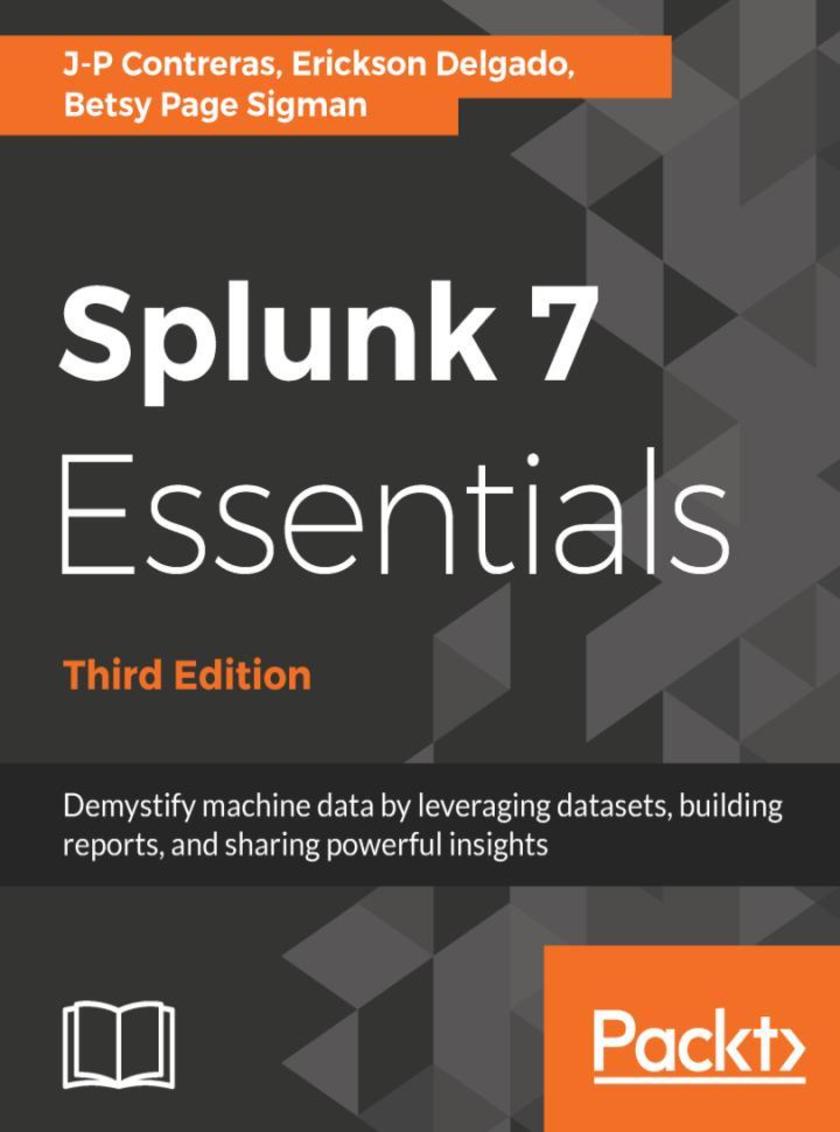
Splunk 7 Essentials - Third Edition
¥73.02
Transform machine data into powerful analytical intelligence using Splunk About This Book ? Analyze and visualize machine data to step into the world of Splunk! ? Leverage the exceptional analysis and visualization capabilities to make informed decisions for your business ? This easy-to-follow, practical book can be used by anyone - even if you have never managed data before Who This Book Is For This book is for the beginners who want to get well versed in the services offered by Splunk 7. If you want to be a data/business analyst or want to be a system administrator, this book is what you want. No prior knowledge of Splunk is required. What You Will Learn ? Install and configure Splunk for personal use ? Store event data in Splunk indexes, classify events into sources, and add data fields ? Learn essential Splunk Search Processing Language commands and best practices ? Create powerful real-time or user-input dashboards ? Be proactive by implementing alerts and scheduled reports ? Tips from the Fez: best practices using Splunk features and add-ons ? Understand security and deployment considerations for taking Splunk to an organizational level In Detail Splunk is a search, reporting, and analytics software platform for machine data, which has an ever-growing market adoption rate. More organizations than ever are adopting Splunk to make informed decisions in areas such as IT operations, information security, and the Internet of Things. The first two chapters of the book will get you started with a simple Splunk installation and set up of a sample machine data generator, called Eventgen. After this, you will learn to create various reports, dashboards, and alerts. You will also explore Splunk's Pivot functionality to model data for business users. You will then have the opportunity to test-drive Splunk's powerful HTTP Event Collector. After covering the core Splunk functionality, you'll be provided with some real-world best practices for using Splunk, and information on how to build upon what you've learned in this book. Throughout the book, there will be additional comments and best practice recommendations from a member of the SplunkTrust Community, called "Tips from the Fez". Style and approach This fast-paced, example-rich guide will help you analyze and visualize machine data with Splunk through simple, practical instructions and recommendations.
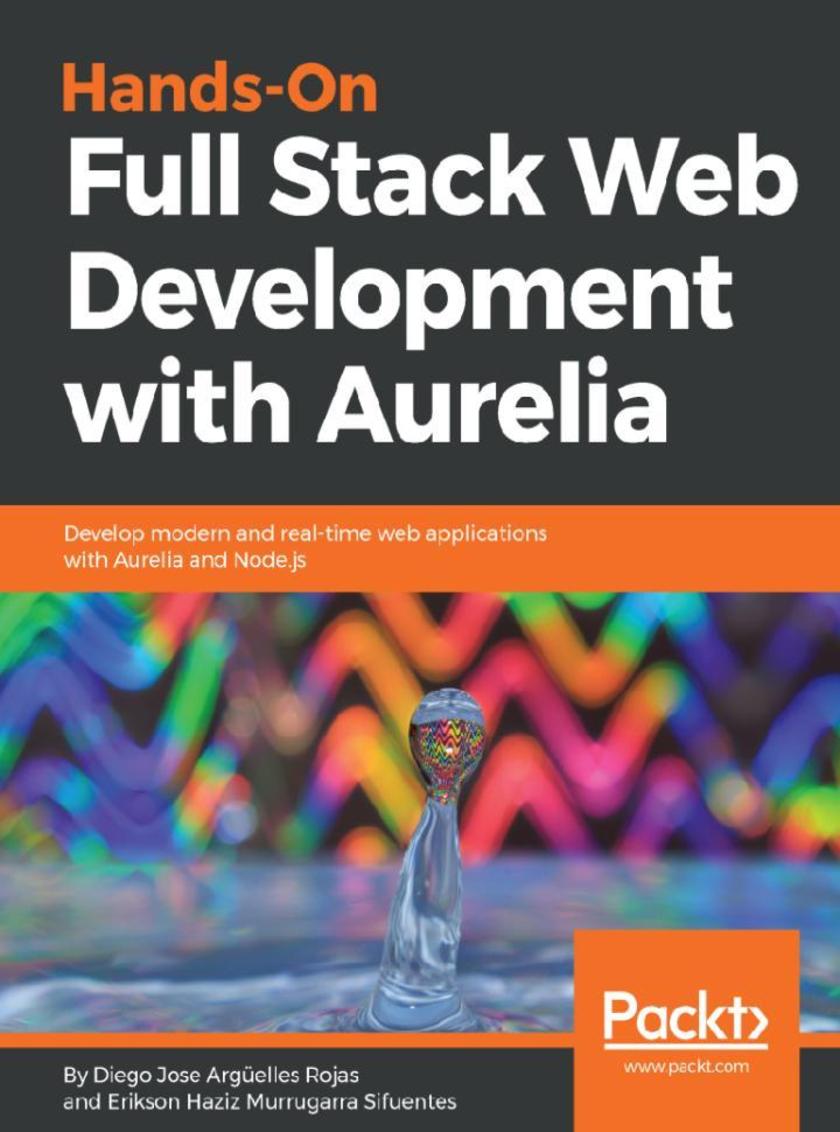
Hands-On Full Stack Web Development with Aurelia
¥73.02
Develop rich and scalable web applications with Node.js, Express.js, and MongoDB About This Book ? Learn the advanced features of Aurelia to build responsive web applications ? Write clean, modular, and testable code that will be easy to maintain and evolve ? Harness the power of JavaScript on the client and server side to build full-stack applications Who This Book Is For Hands-On Full Stack Web Development with Aurelia is for you if you are a web or full-stack JavaScript developer who has experience with traditional stacks such as LAMP, MEAN, or MERN and wish to explore the power of Aurelia and new stack with modern web technologies. What You Will Learn ? Employ best practices and modern approaches to create frontend applications ? Learn about modern CSS preprocessors and improve the readability of your application ? Use the Aurelia framework to create navigable web applications ? Write your own tests, making your application secure and fault-tolerant ? Create solid RESTful APIs using the microservice architecture ? Understand the NoSQL paradigm and get the best performance from your database ? Integrate third-party libraries such as Gmail for Single Sign On ? Write UI testing scripts and integration tests to build extensible apps In Detail Hands-On Full Stack Web Development with Aurelia begins with a review of basic JavaScript concepts and the structure of an Aurelia application generated with the Aurelia-CLI tool. You will learn how to create interesting and intuitive application using the Aurelia-Materialize plugin, which implements the material design approach. Once you fully configure a FIFA World Cup 2018 app, you'll start creating the initial components through TDD practices and then develop backend services to process and store all the user data. This book lets you explore the NoSQL model and implement it using one of the most popular NoSQL databases, MongoDB, with some exciting libraries to make the experience effortless. You'll also be able to add some advanced behavior to your components, from managing the lifecycle properly to using dynamic binding, field validations, and the custom service layer. You will integrate your application with Google OAuth Service and learn best practices to secure your applications. Furthermore, you'll write UI Testing scripts to create high-quality Aurelia Apps and explore the most used tools to run end-to-end tests. In the concluding chapters, you'll be able to deploy your application to the Cloud and Docker containers. By the end of this book, you will have learned how to create rich applications using best practices and modern approaches. Style and approach This is a comprehensive example-based book that guides you to create highly scalable applications using the new MEAN Stack.
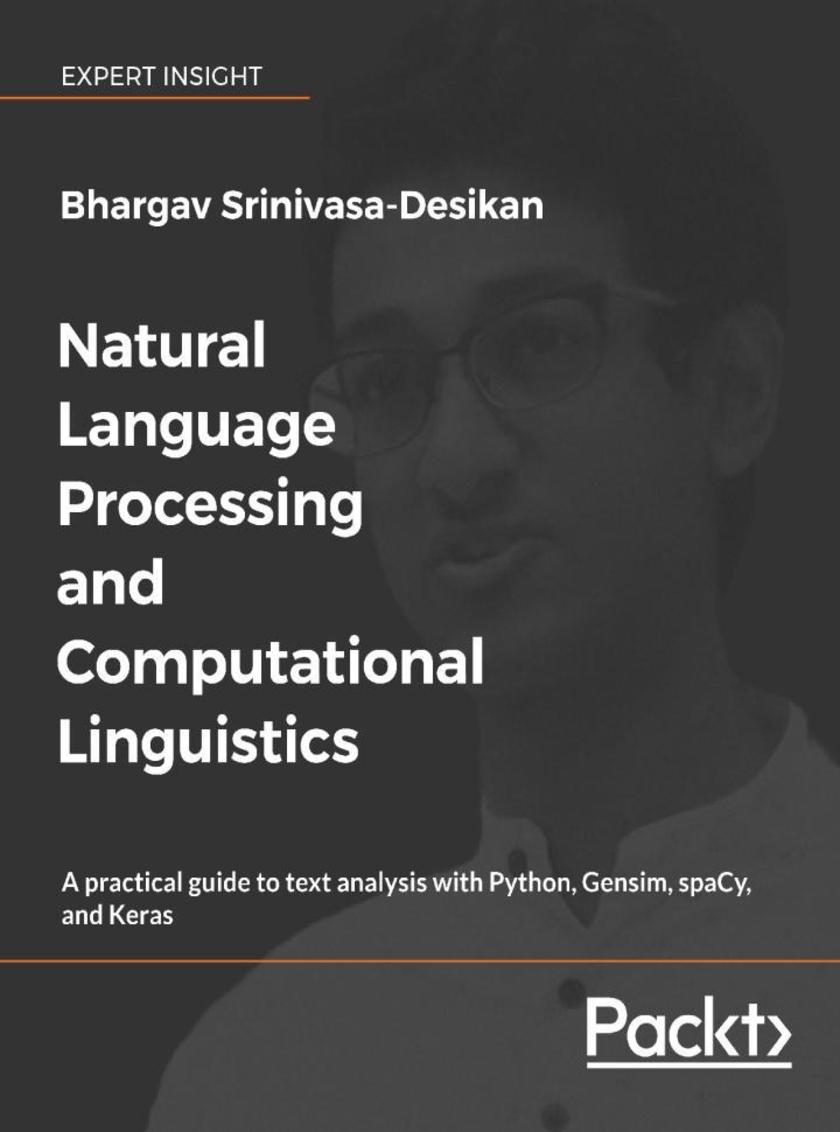
Natural Language Processing and Computational Linguistics
¥73.02
Work with Python and powerful open source tools such as Gensim and spaCy to perform modern text analysis, natural language processing, and computational linguistics algorithms. About This Book ? Discover the open source Python text analysis ecosystem, using spaCy, Gensim, scikit-learn, and Keras ? Hands-on text analysis with Python, featuring natural language processing and computational linguistics algorithms ? Learn deep learning techniques for text analysis Who This Book Is For This book is for you if you want to dive in, hands-first, into the interesting world of text analysis and NLP, and you're ready to work with the rich Python ecosystem of tools and datasets waiting for you! What You Will Learn ? Why text analysis is important in our modern age ? Understand NLP terminology and get to know the Python tools and datasets ? Learn how to pre-process and clean textual data ? Convert textual data into vector space representations ? Using spaCy to process text ? Train your own NLP models for computational linguistics ? Use statistical learning and Topic Modeling algorithms for text, using Gensim and scikit-learn ? Employ deep learning techniques for text analysis using Keras In Detail Modern text analysis is now very accessible using Python and open source tools, so discover how you can now perform modern text analysis in this era of textual data. This book shows you how to use natural language processing, and computational linguistics algorithms, to make inferences and gain insights about data you have. These algorithms are based on statistical machine learning and artificial intelligence techniques. The tools to work with these algorithms are available to you right now - with Python, and tools like Gensim and spaCy. You'll start by learning about data cleaning, and then how to perform computational linguistics from first concepts. You're then ready to explore the more sophisticated areas of statistical NLP and deep learning using Python, with realistic language and text samples. You'll learn to tag, parse, and model text using the best tools. You'll gain hands-on knowledge of the best frameworks to use, and you'll know when to choose a tool like Gensim for topic models, and when to work with Keras for deep learning. This book balances theory and practical hands-on examples, so you can learn about and conduct your own natural language processing projects and computational linguistics. You'll discover the rich ecosystem of Python tools you have available to conduct NLP - and enter the interesting world of modern text analysis. Style and approach The book teaches NLP from the angle of a practitioner as well as that of a student. This is a tad unusual, but given the enormous speed at which new algorithms and approaches travel from scientific beginnings to industrial implementation, first principles can be clarified with the help of entirely practical examples.
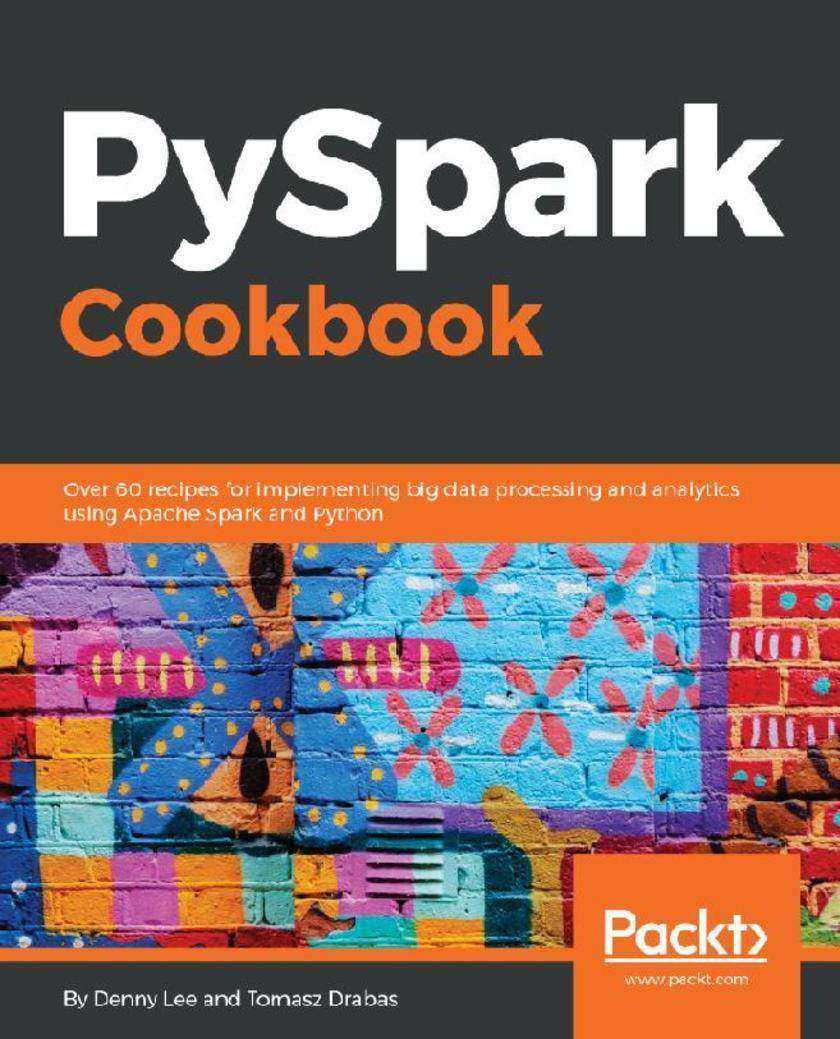
PySpark Cookbook
¥73.02
Combine the power of Apache Spark and Python to build effective big data applications About This Book ? Perform effective data processing, machine learning, and analytics using PySpark ? Overcome challenges in developing and deploying Spark solutions using Python ? Explore recipes for efficiently combining Python and Apache Spark to process data Who This Book Is For The PySpark Cookbook is for you if you are a Python developer looking for hands-on recipes for using the Apache Spark 2.x ecosystem in the best possible way. A thorough understanding of Python (and some familiarity with Spark) will help you get the best out of the book. What You Will Learn ? Configure a local instance of PySpark in a virtual environment ? Install and configure Jupyter in local and multi-node environments ? Create DataFrames from JSON and a dictionary using pyspark.sql ? Explore regression and clustering models available in the ML module ? Use DataFrames to transform data used for modeling ? Connect to PubNub and perform aggregations on streams In Detail Apache Spark is an open source framework for efficient cluster computing with a strong interface for data parallelism and fault tolerance. The PySpark Cookbook presents effective and time-saving recipes for leveraging the power of Python and putting it to use in the Spark ecosystem. You’ll start by learning the Apache Spark architecture and how to set up a Python environment for Spark. You’ll then get familiar with the modules available in PySpark and start using them effortlessly. In addition to this, you’ll discover how to abstract data with RDDs and DataFrames, and understand the streaming capabilities of PySpark. You’ll then move on to using ML and MLlib in order to solve any problems related to the machine learning capabilities of PySpark and use GraphFrames to solve graph-processing problems. Finally, you will explore how to deploy your applications to the cloud using the spark-submit command. By the end of this book, you will be able to use the Python API for Apache Spark to solve any problems associated with building data-intensive applications. Style and approach This book is a rich collection of recipes that will come in handy when you are working with PySpark Addressing your common and not-so-common pain points, this is a book that you must have on the shelf.
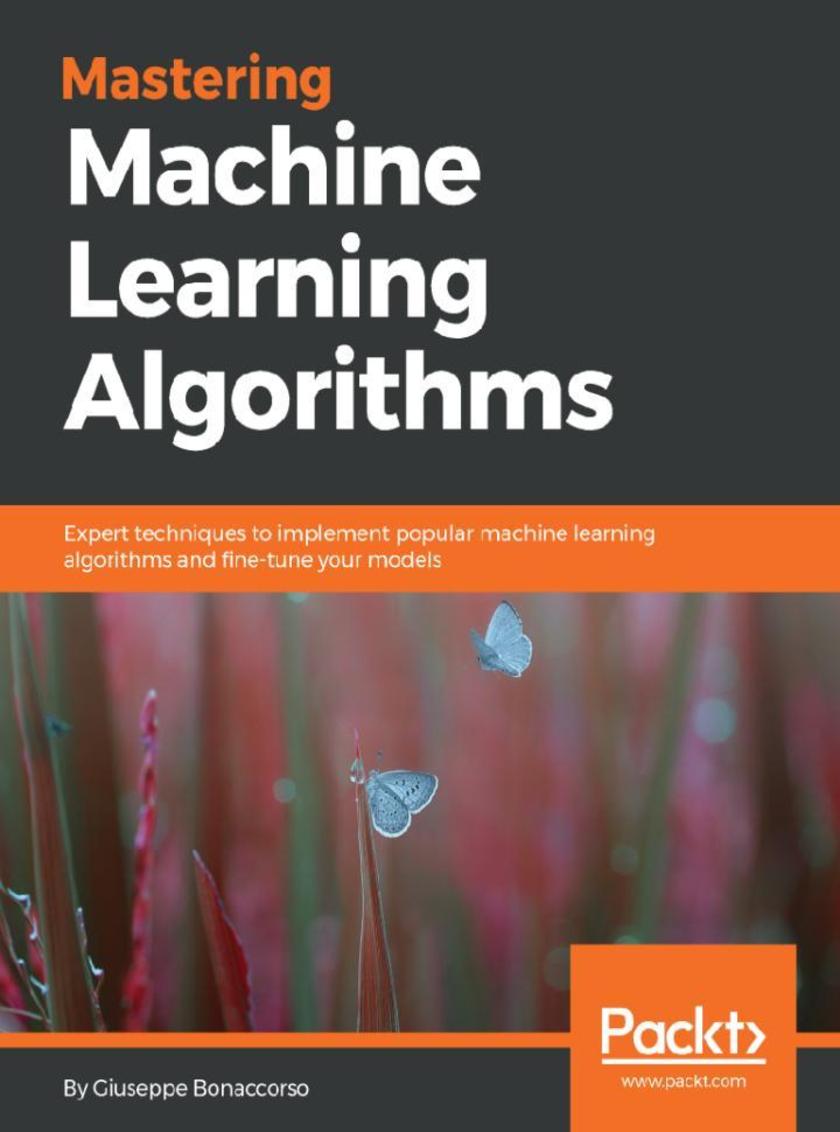
Mastering Machine Learning Algorithms
¥81.74
Explore and master the most important algorithms for solving complex machine learning problems. About This Book ? Discover high-performing machine learning algorithms and understand how they work in depth. ? One-stop solution to mastering supervised, unsupervised, and semi-supervised machine learning algorithms and their implementation. ? Master concepts related to algorithm tuning, parameter optimization, and more Who This Book Is For This book is an ideal and relevant source of content for data science professionals who want to delve into complex machine learning algorithms, calibrate models, and improve the predictions of the trained model. A basic knowledge of machine learning is preferred to get the best out of this guide. What You Will Learn ? Explore how a ML model can be trained, optimized, and evaluated ? Understand how to create and learn static and dynamic probabilistic models ? Successfully cluster high-dimensional data and evaluate model accuracy ? Discover how artificial neural networks work and how to train, optimize, and validate them ? Work with Autoencoders and Generative Adversarial Networks ? Apply label spreading and propagation to large datasets ? Explore the most important Reinforcement Learning techniques In Detail Machine learning is a subset of AI that aims to make modern-day computer systems smarter and more intelligent. The real power of machine learning resides in its algorithms, which make even the most difficult things capable of being handled by machines. However, with the advancement in the technology and requirements of data, machines will have to be smarter than they are today to meet the overwhelming data needs; mastering these algorithms and using them optimally is the need of the hour. Mastering Machine Learning Algorithms is your complete guide to quickly getting to grips with popular machine learning algorithms. You will be introduced to the most widely used algorithms in supervised, unsupervised, and semi-supervised machine learning, and will learn how to use them in the best possible manner. Ranging from Bayesian models to the MCMC algorithm to Hidden Markov models, this book will teach you how to extract features from your dataset and perform dimensionality reduction by making use of Python-based libraries such as scikit-learn. You will also learn how to use Keras and TensorFlow to train effective neural networks. If you are looking for a single resource to study, implement, and solve end-to-end machine learning problems and use-cases, this is the book you need. Style and approach A hands-on guide filled with real-world examples of popular algorithms used for data science and machine learning
Full-Stack React Projects
¥81.74
Unleash the power of MERN stack by building diverse web applications using React, Node.js, Express, and MongoDB About This Book ? Create dynamic web applications with the MERN stack ? Leverage the power of React in building interactive and complex user interfaces ? Unlock the potential of Node, Express, and MongoDB to build modern full-stack applications Who This Book Is For Full-Stack React Web Development Projects is for JavaScript developers who have some experience with React, but no previous experience with full-stack development involving Node, Express, and MongoDB, and who want practical guidelines to start building different types of real-world web applications with this stack. What You Will Learn ? Set up your development environment and develop a MERN application ? Implement user authentication and authorization using JSON Web Tokens ? Build a social media application by extending the basic MERN application ? Create an online marketplace application with shopping cart and Stripe payments ? Develop a media streaming application using MongoDB GridFS ? Implement server-side rendering with data to improve SEO ? Set up and use React 360 to develop user interfaces with VR capabilities ? Learn industry best practices to make MERN stack applications reliable and scalable In Detail The benefits of using a full JavaScript stack for web development are undeniable, especially when robust and widely adopted technologies such as React, Node, and Express and are available. Combining the power of React with industry-tested, server-side technologies, such as Node, Express, and MongoDB, creates a diverse array of possibilities when developing real-world web applications. This book guides you through preparing the development environment for MERN stack-based web development, to creating a basic skeleton application and extending it to build four different web applications. These applications include a social media, an online marketplace, a media streaming, and a web-based game application with virtual reality features. While learning to set up the stack and developing a diverse range of applications with this book, you will grasp the inner workings of the MERN stack, extend its capabilities for complex features, and gain actionable knowledge of how to prepare MERN-based applications to meet the growing demands of real-world web applications. Style and approach This book provides practical guidelines on setting up and building MERN stack based applications, while providing further explanations on key concepts and implementations.
Intelligent Mobile Projects with TensorFlow
¥90.46
Create Deep Learning and Reinforcement Learning apps for multiple platforms with TensorFlow About This Book ? Build TensorFlow-powered AI applications for mobile and embedded devices ? Learn modern AI topics such as computer vision, NLP, and deep reinforcement learning ? Get practical insights and exclusive working code not available in the TensorFlow documentation Who This Book Is For If you're an iOS/Android developer interested in building and retraining others' TensorFlow models and running them in your mobile apps, or if you're a TensorFlow developer and want to run your new and amazing TensorFlow models on mobile devices, this book is for you. You'll also benefit from this book if you're interested in TensorFlow Lite, Core ML, or TensorFlow on Raspberry Pi. What You Will Learn ? Classify images with transfer learning ? Detect objects and their locations ? Transform pictures with amazing art styles ? Understand simple speech commands ? Describe images in natural language ? Recognize drawing with Convolutional Neural Network and Long Short-Term Memory ? Predict stock price with Recurrent Neural Network in TensorFlow and Keras ? Generate and enhance images with generative adversarial networks ? Build AlphaZero-like mobile game app in TensorFlow and Keras ? Use TensorFlow Lite and Core ML on mobile ? Develop TensorFlow apps on Raspberry Pi that can move, see, listen, speak, and learn In Detail As a developer, you always need to keep an eye out and be ready for what will be trending soon, while also focusing on what's trending currently. So, what's better than learning about the integration of the best of both worlds, the present and the future? Artificial Intelligence (AI) is widely regarded as the next big thing after mobile, and Google's TensorFlow is the leading open source machine learning framework, the hottest branch of AI. This book covers more than 10 complete iOS, Android, and Raspberry Pi apps powered by TensorFlow and built from scratch, running all kinds of cool TensorFlow models offline on-device: from computer vision, speech and language processing to generative adversarial networks and AlphaZero-like deep reinforcement learning. You’ll learn how to use or retrain existing TensorFlow models, build your own models, and develop intelligent mobile apps running those TensorFlow models. You'll learn how to quickly build such apps with step-by-step tutorials and how to avoid many pitfalls in the process with lots of hard-earned troubleshooting tips. Style and approach This book takes a practical, project-based approach to teach specifics of mobile development with TensorFlow. Using a reader-friendly approach, this book will provide detailed instructions and also discuss the broader context covered within.
Kubernetes Cookbook
¥73.02
Learn how to automate and manage your containers and reduce the overall operation burden on your system. About This Book ? Use containers to manage, scale and orchestrate apps in your organization ? Transform the latest concept of Kubernetes 1.10 into examples ? Expert techniques for orchestrating containers effectively Who This Book Is For This book is for system administrators, developers, DevOps engineers, or any stakeholder who wants to understand how Kubernetes works using a recipe-based approach. Basic knowledge of Kubernetes and Containers is required. What You Will Learn ? Build your own container cluster ? Deploy and manage highly scalable, containerized applications with Kubernetes ? Build high-availability Kubernetes clusters ? Build a continuous delivery pipeline for your application ? Track metrics and logs for every container running in your cluster ? Streamline the way you deploy and manage your applications with large-scale container orchestration In Detail Kubernetes is an open source orchestration platform to manage containers in a cluster environment. With Kubernetes, you can configure and deploy containerized applications easily. This book gives you a quick brush up on how Kubernetes works with containers, and an overview of main Kubernetes concepts, such as Pods, Deployments, Services and etc. This book explains how to create Kubernetes clusters and run applications with proper authentication and authorization configurations. With real-world recipes, you'll learn how to create high availability Kubernetes clusters on AWS, GCP and in on-premise datacenters with proper logging and monitoring setup. You'll also learn some useful tips about how to build a continuous delivery pipeline for your application. Upon completion of this book, you will be able to use Kubernetes in production and will have a better understanding of how to manage containers using Kubernetes. Style and approach This recipe-based book will teach you how to use Kubernetes in production and will help you discover various steps involved in managing your containers using Kubernetes
Artificial Intelligence By Example
¥73.02
Be an adaptive thinker that leads the way to Artificial Intelligence About This Book ? AI-based examples to guide you in designing and implementing machine intelligence ? Develop your own method for future AI solutions ? Acquire advanced AI, machine learning, and deep learning design skills Who This Book Is For Artificial Intelligence by Example is a simple, explanatory, and descriptive guide for junior developers, experienced developers, technology consultants, and those interested in AI who want to understand the fundamentals of Artificial Intelligence and implement it practically by devising smart solutions. Prior experience with Python and statistical knowledge is essential to make the most out of this book. What You Will Learn ? Use adaptive thinking to solve real-life AI case studies ? Rise beyond being a modern-day factory code worker ? Acquire advanced AI, machine learning, and deep learning designing skills ? Learn about cognitive NLP chatbots, quantum computing, and IoT and blockchain technology ? Understand future AI solutions and adapt quickly to them ? Develop out-of-the-box thinking to face any challenge the market presents In Detail Artificial Intelligence has the potential to replicate humans in every field. This book serves as a starting point for you to understand how AI is built, with the help of intriguing examples and case studies. Artificial Intelligence By Example will make you an adaptive thinker and help you apply concepts to real-life scenarios. Using some of the most interesting AI examples, right from a simple chess engine to a cognitive chatbot, you will learn how to tackle the machine you are competing with. You will study some of the most advanced machine learning models, understand how to apply AI to blockchain and IoT, and develop emotional quotient in chatbots using neural networks. You will move on to designing AI solutions in a simple manner rather than get confused by complex architectures and techniques. This comprehensive guide will be a starter kit for you to develop AI applications on your own. By the end of this book, will have understood the fundamentals of AI and worked through a number of case studies that will help you develop business vision. Style and approach An easy-to-follow step by step guide which will help you get to grips with real world application of Artificial Intelligence
Microsoft Dynamics 365 Enterprise Edition – Financial Management - Third Edition
¥99.18
Boost your accounting and financial skills with Microsoft Dynamics 365 About This Book ? Make real-time data-driven decisions for your enterprise with Microsoft Dynamics 365 Enterprise edition ? Configure and set up the Microsoft Dynamics 365 financial module via highly useful tips and tricks ? Administer customer relations and plan enterprise resources with this systematic guide Who This Book Is For This book is for application consultants, solution architects, controllers, CFOs, pre-sales and other professionals who are involved in a Microsoft Dynamics 365 for finance and operation implementation. Basic knowledge of financial terms, concepts, and terminologies is required. What You Will Learn ? Examine the business logic behind the financial functionalities of Microsoft Dynamics 365 FFO ? Set up and configure the core modules of financial management ? Grasp the key control points of financial management ? Explore intercompany and consolidation in Microsoft Dynamics 365 FFO ? Understand multi-currency sales, tax mechanisms, and budgeting capabilities in Microsoft Dynamics 365 FFO ? Get to grips with month/year-end period close functionality ? Understand the account payable and receivable module ? Use Microsoft Dynamics 365 to create financial reports In Detail Microsoft Dynamics 365 for finance and operations is a rapidly growing application and is widely used in enterprise organizations. Because of its ability to maximize business productivity, it is a fast-growing business application package in the ERP market. We will start by looking into ERP concepts, implementation needs, and interface design, giving you basic knowledge of financial management aspects and explaining key concepts along the way. To begin with, you'll be taken through the general ledger and financial dimension functions. You'll later learn about the sales tax mechanism and multi-currency in Microsoft Dynamics 365. We tackle each topic with focused examples and explanations on topics such as payable/receivable accounts, forecasting, cash and bank management, budgeting planning/control, and fixed assets. Finally, we walk you through intercompany, consolidation, costing basics, and financial reporting. By the end of this book, your finance team will have a much richer understanding of Microsoft Dynamics 365 for finance and operations and its powerful capabilities. Style and approach This book is a step-by-step guide focusing on implementing Dynamics 365 financial management for your organization.


