


 购物车
 个人中心

Anne's House of Dreams
¥8.09
Classic children's novel. According to Wikipedia: "Lucy Maud Montgomery, (always called "Maud" by family and friends) and publicly known as L. M. Montgomery, (1874-1942) was a Canadian author, best known for a series of novels beginning with Anne of Green Gables, published in 1908. Anne of Green Gables was an immediate success. The central character, Anne, an orphaned girl, made Montgomery famous in her lifetime and gave her an international following. The first novel was followed by a series of sequels with Anne as the central character. The novels became the basis for the highly acclaimed 1985 CBC television miniseries, Anne of Green Gables and several other television movies and programs, including Road to Avonlea, which ran in Canada and the U.S. from 1990-1996."

Ethan Frome
¥8.09
Classic short novel. According to Wikipedia: "Edith Wharton (January 24, 1862 - August 11, 1937) was an American novelist, short story writer, and designer. ... The Age of Innocence (1920), perhaps her best known work, won the 1921 Pulitzer Prize for literature, making her the first woman to win the award."

The Little Hunchback Zia, a short story
¥8.09
Classic short story for children. According to Wikipedia: "Frances Hodgson Burnett, ( 1849 - 1924) was an English–American playwright and author. She is best known for her children's stories, in particular The Secret Garden, A Little Princess, and Little Lord Fauntleroy. Born Frances Eliza Hodgson in Cheetham Hill, Manchester, her father died in 1854, and the family had to endure poverty and squalor in the Victorian slums of Manchester. Following the death of her mother in 1867, an 18-year-old Frances was now the head of a family of four younger siblings. She turned to writing to support them all, with a first story published in Godey's Lady's Book in 1868. Soon after she was being published regularly in Godey's, Scribner's Monthly, Peterson's Ladies' Magazine and Harper's Bazaar. Her main writing talent was combining realistic detail of working-class life with a romantic plot. Her first novel was published in 1877; That Lass o' Lowrie's was a story of Lancashire life. After moving with her husband to Washington, D.C., Burnett wrote the novels Haworth's (1879), Louisiana (1880), A Fair Barbarian (1881), and Through One Administration (1883), as well as a play, Esmeralda (1881), written with William Gillette...Her later works include Sara Crewe (1888) - later rewritten as A Little Princess (1905); The Lady of Quality (1896) - considered one of the best of her plays; and The Secret Garden (1909), the children's novel for which she is probably best known today. The Lost Prince was published in 1915..."

The Sea Fogs
¥8.09
Classic short story, set in California. According to Wikipedia: "Robert Louis (Balfour) Stevenson ( 1850 - 1894), was a Scottish novelist, poet, and travel writer, and a leading representative of Neo-romanticism in English literature. He was the man who "seemed to pick the right word up on the point of his pen, like a man playing spillikins", as G. K. Chesterton put it. He was also greatly admired by many authors, including Jorge Luis Borges, Ernest Hemingway, Rudyard Kipling, Vladimir Nabokov, and J. M. Barrie. Most modernist writers dismissed him, however, because he was popular and did not write within their definition of modernism. It is only recently that critics have begun to look beyond Stevenson's popularity and allow him a place in the canon."

A Little Dinner at Timmins's
¥8.09
Classic short story. According to Wikipedia: "Thackeray is most often compared to one other great novelist of Victorian literature, Charles Dickens. During the Victorian era, he was ranked second only to Dickens, but he is now much less read and is known almost exclusively for Vanity Fair. In that novel he was able to satirize whole swaths of humanity while retaining a light touch. It also features his most memorable character, the engagingly roguish Becky Sharp. As a result, unlike Thackeray's other novels, it remains popular with the general reading public; it is a standard fixture in university courses and has been repeatedly adapted for movies and television. In Thackeray's own day, some commentators, such as Anthony Trollope, ranked his History of Henry Esmond as his greatest work, perhaps because it expressed Victorian values of duty and earnestness, as did some of his other later novels. It is perhaps for this reason that they have not survived as well as Vanity Fair, which satirizes those values."

A First Family of Tasajara
¥8.09
Classic western novel. According to Wikipedia: "Bret Harte (August 25, 1836[2] – May 6, 1902) was an American author and poet, best remembered for his accounts of pioneering life in California. He was born in Albany, New York. ... He moved to California in 1853, later working there in a number of capacities, including miner, teacher, messenger, and journalist. He spent part of his life in the northern California coast town now known as Arcata, then just a mining camp on Humboldt Bay. His first literary efforts, including poetry and prose, appeared in The Californian, an early literary journal edited by Charles Henry Webb. In 1868 he became editor of The Overland Monthly, another new literary magazine, but this one more in tune with the pioneering spirit of excitement in California. His story, "The Luck of Roaring Camp," appeared in the magazine's second edition, propelling Harte to nationwide fame... Determined to pursue his literary career, in 1871 he and his family traveled back East, to New York and eventually to Boston, where he contracted with the publisher of The Atlantic Monthly for an annual salary of $10,000, "an unprecedented sum at the time." His popularity waned, however, and by the end of 1872 he was without a publishing contract and increasingly desperate. He spent the next few years struggling to publish new work (or republish old), delivering lectures about the gold rush, and even selling an advertising jingle to a soap company. In 1878 Harte was appointed to the position of United States Consul in the town of Krefeld, Germany and then to Glasgow in 1880. In 1885 he settled in London. During the thirty years he spent in Europe, he never abandoned writing, and maintained a prodigious output of stories that retained the freshness of his earlier work. He died in England in 1902 of throat cancer and is buried at Frimley."

Snow-Bound at Eagle's
¥8.09
Classic western novel. According to Wikipedia: "Bret Harte (August 25, 1836[2] – May 6, 1902) was an American author and poet, best remembered for his accounts of pioneering life in California. He was born in Albany, New York. ... He moved to California in 1853, later working there in a number of capacities, including miner, teacher, messenger, and journalist. He spent part of his life in the northern California coast town now known as Arcata, then just a mining camp on Humboldt Bay. His first literary efforts, including poetry and prose, appeared in The Californian, an early literary journal edited by Charles Henry Webb. In 1868 he became editor of The Overland Monthly, another new literary magazine, but this one more in tune with the pioneering spirit of excitement in California. His story, "The Luck of Roaring Camp," appeared in the magazine's second edition, propelling Harte to nationwide fame... Determined to pursue his literary career, in 1871 he and his family traveled back East, to New York and eventually to Boston, where he contracted with the publisher of The Atlantic Monthly for an annual salary of $10,000, "an unprecedented sum at the time." His popularity waned, however, and by the end of 1872 he was without a publishing contract and increasingly desperate. He spent the next few years struggling to publish new work (or republish old), delivering lectures about the gold rush, and even selling an advertising jingle to a soap company. In 1878 Harte was appointed to the position of United States Consul in the town of Krefeld, Germany and then to Glasgow in 1880. In 1885 he settled in London. During the thirty years he spent in Europe, he never abandoned writing, and maintained a prodigious output of stories that retained the freshness of his earlier work. He died in England in 1902 of throat cancer and is buried at Frimley."

An Apache Princess, A Tale of the Indian Frontier
¥8.09
Classic western novel. According to Wikipedia: "Charles King (October 12, 1844 in Albany, New York – 17 March 1933 in Milwaukee, Wisconsin) was a United States soldier and a distinguished writer. King was the son of Civil War general Rufus King, grandson of Columbia University president Charles King, and great grandson of Rufus King, one of the signers of the Declaration of Independence. He graduated from West Point in 1866 and served in the Army during the Indian Wars under George Crook. He was wounded in the arm forcing his retirement from the regular army. During this time he became acquainted with Buffalo Bill Cody. King would later write scripts for several of Cody's silent films.... In 1898, he was appointed brigadier general of volunteers and sailed to the Philippines during the Spanish-American War. The fighting with Spain was over by the time he arrived, but he assisted in the surrender negotiations. During the following Philippine-American War, King was placed in command of the 1st Brigade in Henry W. Lawton's division... He returned to the United States and was active in the Wisconsin National Guard and in training troops for World War I. He wrote and edited over 60 books and novels. Among his list of titles are Campaigning with Crook, Fort Frayne, Under Fire and Daughter of the Sioux."

The Deserter
¥8.09
Classic western novel. According to Wikipedia: "Charles King (October 12, 1844 in Albany, New York – 17 March 1933 in Milwaukee, Wisconsin) was a United States soldier and a distinguished writer. King was the son of Civil War general Rufus King, grandson of Columbia University president Charles King, and great grandson of Rufus King, one of the signers of the Declaration of Independence. He graduated from West Point in 1866 and served in the Army during the Indian Wars under George Crook. He was wounded in the arm forcing his retirement from the regular army. During this time he became acquainted with Buffalo Bill Cody. King would later write scripts for several of Cody's silents films.... In 1898, he was appointed brigadier general of volunteers and sailed to the Philippines during the Spanish-American War. The fighting with Spain was over by the time he arrived, but he assisted in the surrender negotiations. During the following Philippine-American War, King was placed in command of the 1st Brigade in Henry W. Lawton's division. He led his brigade during the Battle of Manila and sailed for Santa Cruz with Lawton's division. He was incapacitated by sickness during the Battle of Santa Cruz, but he returned to fight in the following Battle of Pagsanjan. He took part in the final major campaigns before the fighting turned primarily to guerilla warfare. He returned to the United States and was active in the Wisconsin National Guard and in training troops for World War I. He wrote and edited over 60 books and novels. Among his list of titles are Campaigning with Crook, Fort Frayne, Under Fire and Daughter of the Sioux."
Abbotsford and Newstead Abbey
¥8.09
According to Wikipedia: "Washington Irving (April 3, 1783 – November 28, 1859) was an American author, essayist, biographer and historian of the early 19th century. He was best known for his short stories "The Legend of Sleepy Hollow" and "Rip Van Winkle", both of which appear in his book The Sketch Book of Geoffrey Crayon, Gent. His historical works include biographies of George Washington, Oliver Goldsmith and Muhammad, and several histories of 15th-century Spain dealing with subjects such as Christopher Columbus, the Moors, and the Alhambra. Irving also served as the U.S. minister to Spain from 1842 to 1846. He made his literary debut in 1802 with a series of observational letters to the Morning Chronicle, written under the pseudonym Jonathan Oldstyle. After moving to England for the family business in 1815, he achieved international fame with the publication of The Sketch Book of Geoffrey Crayon, Gent. in 1819. He continued to publish regularly—and almost always successfully—throughout his life, and completed a five-volume biography of George Washington just eight months before his death, at age 76, in Tarrytown, New York."
The Confessions of Arsene Lupin
¥8.09
According to Wikipedia: "Maurice Marie ?mile Leblanc (11 November 1864 – 6 November 1941) was a French novelist and writer of short stories, known primarily as the creator of the fictional gentleman thief and detective Arsène Lupin, often described as a French counterpart to Arthur Conan Doyle's creation Sherlock Holmes.

A History of Aeronautics
¥8.09
First published in 1920. According to the Foreword: "Although successful heavier-than-air flight is less than two decades old, and successful dirigible propulsion antedates it by a very short period, the mass of experiment and accomplishment renders any one-volume history of the subject a matter of selection. In addition to the restrictions imposed by space limits, the material for compilation is fragmentary, and, in many cases, scattered through periodical and other publications. Hitherto, there has been no attempt at furnishing a detailed account of how the aeroplane and the dirigible of to-day came to being, but each author who has treated the subject has devoted his attention to some special phase or section. The principal exception to this rule--Hildebrandt--wrote in 1906, and a good many of his statements are inaccurate, especially with regard to heavier-than-air experiment."

My Danish Sweetheart
¥18.56
William Clark Russell was an English writer best known for his nautical novels. At the age of 13 Russell joined the Merchant Navy, serving for eight years. The hardships of life at sea permanently damaged his health, but provided him with material for a career as a writer. He wrote short stories, press articles, historical essays, biographies and a book of verse, but was best known for his novels, most of which were about life at sea. He maintained a parallel career as a journalist, principally as a columnist on nautical subjects for The Daily Telegraph. Russell campaigned for better conditions for merchant seamen, and his work influenced reforms passed by Parliament to prevent unscrupulous ship-owners from exploiting their crews. His influence in this respect was acknowledged by the future King George V. Among Russell's other contemporary admirers were Herman Melville and Algernon Swinburne.

A Fighting Man of Mars
¥18.56
A Fighting Man of Mars is the seventh book in the Mars series, originally published in six-parts in Blue Book Magazine, May to September 1930. It is an interesting and exciting novel filled with futuristic scientific inventions. There are five enemy cities or lands encountered in this tale with five wonderfully drawn villains: Xanator with the green men and white apes; Tjanath with Haj Osis and “The Death”; Ghasta with Ghron the “spider”; Jhama with Phor Tak the mad scientist; and U-Gor with the cannibals. It is a high adventure in the best tradition of Edgar Rice Burroughs.
Bartleby, the Scrivener. A Story of Wall-Street
¥8.09
Accordingto Wikipedia: "Bartleby, the Scrivener: A Story of Wall Street is a novella by the American novelist Herman Melville (1819–1891). It first appeared anonymously in two parts in the November and December 1853 editions of Putnam's Magazine, and was reprinted with minor textual alterations in his The Piazza Tales in 1856. Herman Melville wrote the story as an emotional response to the fact that Pierre was published to bad reviews. Christopher Sten writes in "Bartleby, the Transcendentalist: Melville's Dead Letter to Emerson" Melville found inspiration in Ralph Waldo Emerson's essays, particularly "The Transcendentalist" which shows parallels to "Bartleby". Bartleby is a kind of clerk, a copyist, "who obstinately refuses to go on doing the sort of writing demanded of him." During the spring of 1851, Melville felt similarly about his work on Moby Dick. Thus, Bartleby can be seen to represent Melville’s frustration with his own situation as a writer, and the story itself is “about a writer that forsakes conventional modes because of an irresistible preoccupation with the most baffling philosophical questions... Though no great success at the time of publication, "Bartleby the Scrivener" is now among the most noted of American short stories."
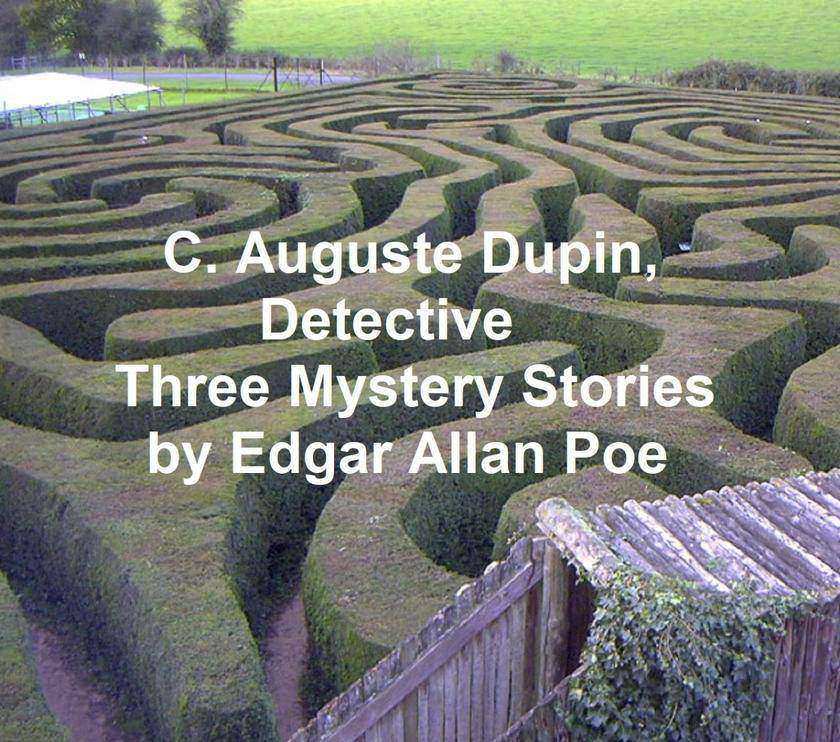
C. Auguste Dupin, Detective: Three Mystery Stories
¥8.09
This file includes all three of Edgar Allan Poe's mystery stories featuring Detective C. August Dupin: The Murders in the Rue Morgue, The Mystery of Marie Roget, and The Purloined Letter. According to Wikipedia: "Dupin is not a professional detective and his motivations for solving the mysteries change throughout the three stories. Using what Poe termed "ratiocination", Dupin combines his considerable intellect with creative imagination, even putting himself in the mind of the criminal. His talents are strong enough that he appears able to read the mind of his companion, the unnamed narrator of all three stories."

In Desert and Wilderness
¥18.56
In Desert and Wilderness is a popular novel for young people by Polish author and Nobel Prize-winning novelist Henryk Sienkiewicz, written in 1912. It is in fact the author's only novel written for children. It tells the story of two young friends, Sta? Tarkowski and Nel Rawlison, kidnapped by the rebels during Mahdi's rebellion in Sudan. It was adapted to cinema in 1973 and 2001.

Gunman's Reckoning
¥8.09
Dodo Collections brings you another classic from Max Brand, ‘Gunman's Reckoning.’ The fifty empty freights danced and rolled and rattled on the rough road bed and filled ?Jericho Pass with thunder; the big engine was laboring and grunting at the grade but five cars back the noise of the locomotive was lost. Yet there is a way to talk above the noise of a freight train just as there is a way to whistle into the teeth of a stiff wind. Frederick Schiller Faust (1892-1944) was an American fiction author known primarily for his thoughtful and literary Westerns. Faust wrote mostly under pen names, and today he is primarily known by one, Max Brand. Others include George Owen Baxter, Martin Dexter, Evin Evans, David Manning, Peter Dawson, John Frederick, and Pete Morland. Faust was born in Seattle. He grew up in central California and later worked as a cowhand on one of the many ranches of the San Joaquin Valley. Faust attended the University of California, Berkeley, where he began to write frequently. During the 1910s, Faust started to sell stories to the many emerging pulp magazines of the era. In the 1920s, Faust wrote furiously in many genres, achieving success and fame, first in the pulps and later in the upscale "slick" magazines. His love for mythology was, however, a constant source of inspiration for his fiction and his classical and literary inclinations. The classical influences are particularly noticeable in his first novel The Untamed (1919), which was also made into a motion picture starring Tom Mix in 1920.

The History of Samuel Titmarsh
¥8.09
Classic novel. According to Wikipedia: "Thackeray is most often compared to one other great novelist of Victorian literature, Charles Dickens. During the Victorian era, he was ranked second only to Dickens, but he is now much less read and is known almost exclusively for Vanity Fair. In that novel he was able to satirize whole swaths of humanity while retaining a light touch. It also features his most memorable character, the engagingly roguish Becky Sharp. As a result, unlike Thackeray's other novels, it remains popular with the general reading public; it is a standard fixture in university courses and has been repeatedly adapted for movies and television. In Thackeray's own day, some commentators, such as Anthony Trollope, ranked his History of Henry Esmond as his greatest work, perhaps because it expressed Victorian values of duty and earnestness, as did some of his other later novels. It is perhaps for this reason that they have not survived as well as Vanity Fair, which satirizes those values."

Nada the Lily
¥8.09
Dodo Collections brings you another classic from H. Rider Haggard, ‘Nada the Lily.’ ? “On the third day he asked Zweete how it was that his left hand was white and shriveled, and who were Umslopogaas and Nada, of whom he had let fall some words. Then the old man told him the tale that is set out here. Day by day he told some of it till it was finished. It was the past that spoke to his listener, telling of deeds long forgotten, of deeds that are no more known. And because the history of Nada the Lily and of those with whom her life was intertwined moved him strangely, and in many ways, he has done more, he has printed it that others may judge of it. . . .” ? Sir Henry Rider Haggard was an English writer of adventure novels set in exotic locations, predominantly Africa, and the creator of the Lost World literary genre. His stories, situated at the lighter end of the scale of Victorian literature, continue to be popular and influential. He was also involved in agricultural reform and improvement in the British Empire. ? His breakout novel was King Solomon's Mines (1885), which was to be the first in a series telling of the multitudinous adventures of its protagonist, Allan Quatermain. ? Haggard was made a Knight Bachelor in 1912 and a Knight Commander of the Order of the British Empire in 1919. He stood unsuccessfully for Parliament as a Conservative candidate for the Eastern division of Norfolk in 1895. The locality of Rider, British Columbia, was named in his memory.

When the World Shook
¥8.09
Dodo Collections brings you another classic from H. Rider Haggard, ‘When the World Shook.’ ? Out-of-print for many years, When the World Shook is a classic text, which tells of the terror of a ghost town. The streets were empty, and so were the buildings, this city could not have been more dead had it been on the moon. ? Sir Henry Rider Haggard was an English writer of adventure novels set in exotic locations, predominantly Africa, and the creator of the Lost World literary genre. His stories, situated at the lighter end of the scale of Victorian literature, continue to be popular and influential. He was also involved in agricultural reform and improvement in the British Empire. ? His breakout novel was King Solomon's Mines (1885), which was to be the first in a series telling of the multitudinous adventures of its protagonist, Allan Quatermain. ? Haggard was made a Knight Bachelor in 1912 and a Knight Commander of the Order of the British Empire in 1919. He stood unsuccessfully for Parliament as a Conservative candidate for the Eastern division of Norfolk in 1895. The locality of Rider, British Columbia, was named in his memory.


