


 购物车
购物车 个人中心
个人中心
The Heritage of the Sioux
¥8.09
Classic western. "The "Flying U" boys stage a fake bank robbery for film purposes which precedes a real one for lust of gold." According to Wikipedia: "Bertha Muzzy Sinclair or Sinclair-Cowan, née Muzzy (November 15, 1871 – July 23, 1940), best known by her pseudonym B. M. Bower, was an American novelist who wrote fictional stories about the American Old West... She wrote 57 Western novels, several of which were turned into films."
The After House
¥8.09
According to Wikipedia: "Mary Roberts Rinehart (August 12, 1876-September 22, 1958) was a prolific author often called the American Agatha Christie. She is considered the source of the phrase "The butler did it", although she did not actually use the phrase herself, and also considered to have invented the "Had-I-But-Known" school of mystery writing.... Rinehart wrote hundreds of short stories, poems, travelogues and special articles. Many of her books and plays, such as The Bat (1920) were adapted for movies, such as The Bat (1926), The Bat Whispers (1930), and The Bat (1959). While many of her books were best-sellers, critics were most appreciative of her murder mysteries. Rinehart, in The Circular Staircase (1908), is credited with inventing the "Had-I-But-Known" school of mystery writing. The Circular Staircase is a novel in which "a middle-aged spinster is persuaded by her niece and nephew to rent a country house for the summer. The house they choose belonged to a bank defaulter who had hidden stolen securities in the walls. The gentle, peace-loving trio is plunged into a series of crimes solved with the help of the aunt. This novel is credited with being the first in the "Had-I-But-Known" school."[3] The Had-I-But-Known mystery novel is one where the principal character (frequently female) does less than sensible things in connection with a crime which have the effect of prolonging the action of the novel. Ogden Nash parodied the school in his poem Don't Guess Let Me Tell You: "Sometimes the Had I But Known then what I know now I could have saved at least three lives by revealing to the Inspector the conversation I heard through that fortuitous hole in the floor." The phrase "The butler did it", which has become a cliché, came from Rinehart's novel The Door, in which the butler actually did do it, although that exact phrase does not actually appear in the work."
Rowdy of the "Cross L"
¥8.09
Classic western. According to Wikipedia: "Bertha Muzzy Sinclair or Sinclair-Cowan, née Muzzy (November 15, 1871 – July 23, 1940), best known by her pseudonym B. M. Bower, was an American novelist who wrote fictional stories about the American Old West... She wrote 57 Western novels, several of which were turned into films."
Skyrider
¥8.09
Classic western. According to Wikipedia: "Bertha Muzzy Sinclair or Sinclair-Cowan, née Muzzy (November 15, 1871 – July 23, 1940), best known by her pseudonym B. M. Bower, was an American novelist who wrote fictional stories about the American Old West... She wrote 57 Western novels, several of which were turned into films."
A Cardinal Sin
¥8.09
According to Wikipedia: "Joseph Marie Eugène Sue (20 January 1804 – 3 August 1857) was a French novelist… His naval experiences supplied much of the materials of his first novels, Kernock le pirate (1830), Atar-Gull (1831), La Salamandre (2 vols., 1832), La Coucaratcha (4 vols., 1832-1834), and others, which were composed at the height of the Romantic movement of 1830. In the quasi-historical style he wrote Jean Cavalier, ou Les Fanatiques des Cevennes (4 vols., 1840) and Lautréaumont (2 vols., 1837). He was strongly affected by the Socialist ideas of the day, and these prompted his most famous works: Les Mystères de Paris (10 vols., 1842-1843) and Le Juif errant (tr. "The Wandering Jew") (10 vols., 1844-1845), which were among the most popular specimens of the roman-feuilleton. He followed these up with some singular and not very edifying books: Les Sept pêchés capitaux (16 vols., 1847-1849), which contained stories to illustrate each of the Seven Deadly Sins, Les Mystères du peuple (1849-1856), which was suppressed by the censor in 1857, and several others, all on a very large scale, though the number of volumes gives an exaggerated idea of their length. Some of his books, among them Le Juif Errant and the Mystères de Paris, were dramatized by himself, usually in collaboration with others. His period of greatest success and popularity coincided with that of Alexandre Dumas, père, with whom he has been compared. Sue has neither Dumas's wide range of subject, nor, above all, his faculty of conducting the story by means of lively dialogue; he has, however, a command of terror which Dumas seldom or never attained... Seven years after the publication of Sue's Les Mystères du peuple, a French revolutionary named Maurice Joly plagiarized aspects of the work for his anti-Napoleon III pamphlet, Dialogues in Hell between Machiavelli and Montesquieu, which in turn was later adapted by the Prussian Hermann Goedsche into an 1868 work entitled Biarritz, in which Goedsche substituted Jews for Sue's infernal Jesuit conspirators. Ultimately, this material became incorporated directly into the notorious anti-Semitic hoax, The Protocols of the Elders of Zion."
The Uphill Climb
¥8.09
Classic western. " A story of a mountain ranch and of a man's hard fight on the uphill road to manliness." According to Wikipedia: "Bertha Muzzy Sinclair or Sinclair-Cowan, née Muzzy (November 15, 1871 – July 23, 1940), best known by her pseudonym B. M. Bower, was an American novelist who wrote fictional stories about the American Old West... She wrote 57 Western novels, several of which were turned into films."
Cumberland Vendetta
¥8.09
Classic western. According to Wikipedia: "Born in Stony Point, Kentucky to John William Fox, Sr., and Minerva Worth Carr, Fox studied English at Harvard University. He graduated in 1883 before becoming a reporter in New York City. After working for both New York Times and the New York Sun, he published a successful serialization of his first novel, A Mountain Europa, in Century magazine in 1892. Two moderately successful short story collections followed, as well as his first conventional novel, The Kentuckians in 1898. Fox gained a following as a war correspondent, working for Harper's Weekly in Cuba during the Spanish-American War of 1898, where he served with the "Rough Riders." Six years later he traveled to Asia to report on the Russo-Japanese War for Scribner's magazine. Though he occasionally wrote for periodicals, after 1904, Fox dedicated much of his attention to fiction. The Little Shepherd of Kingdom Come (published in 1903) and The Trail of the Lonesome Pine (published in 1908) are arguably his most well known and successful works, entering the New York Times top ten list of bestselling novels for 1903, 1904, 1908, and 1909 respectively. Many of his works reflected the naturalist style, his childhood in Kentucky's Bluegrass region, and his life among the coal miners of Big Stone Gap, Virginia. Many of his novels were historical romances or period dramas set in that region."

In Happy Valley
¥8.09
Classic western. According to Wikipedia: "Born in Stony Point, Kentucky to John William Fox, Sr., and Minerva Worth Carr, Fox studied English at Harvard University. He graduated in 1883 before becoming a reporter in New York City. After working for both New York Times and the New York Sun, he published a successful serialization of his first novel, A Mountain Europa, in Century magazine in 1892. Two moderately successful short story collections followed, as well as his first conventional novel, The Kentuckians in 1898. Fox gained a following as a war correspondent, working for Harper's Weekly in Cuba during the Spanish-American War of 1898, where he served with the "Rough Riders." Six years later he traveled to Asia to report on the Russo-Japanese War for Scribner's magazine. Though he occasionally wrote for periodicals, after 1904, Fox dedicated much of his attention to fiction. The Little Shepherd of Kingdom Come (published in 1903) and The Trail of the Lonesome Pine (published in 1908) are arguably his most well known and successful works, entering the New York Times top ten list of bestselling novels for 1903, 1904, 1908, and 1909 respectively. Many of his works reflected the naturalist style, his childhood in Kentucky's Bluegrass region, and his life among the coal miners of Big Stone Gap, Virginia. Many of his novels were historical romances or period dramas set in that region."
The Bobbsey Twins at School
¥8.09
According to Wikipedia: "Laura Lee Hope is a pseudonym used by the Stratemeyer Syndicate for the Bobbsey Twins and several other series of children's novels. Actual writers taking up the pen of Laura Lee Hope include Edward Stratemeyer, Howard and Lilian Garis, Elizabeth Ward, Harriet (Stratemeyer) Adams, and Nancy Axelrad. Laura Lee Hope was first used as a pseudonym in 1904 for the debut of the Bobbsey Twins. Series: The Bobbsey Twins (1904-), The Outdoor Girls (23 vols. 1913-1933), The Moving Picture Girls (7 vols. 1914-1916), Bunny Brown (20 vols. 1916-1931), Six Little Bunkers (14 vols. 1918-1930), Make Believe Stories (12 vols. c. 1920-1923), Blythe Girls (12 vols. 1925-1932)."
The Bobbsey Twins in the Country
¥8.09
According to Wikipedia: "Laura Lee Hope is a pseudonym used by the Stratemeyer Syndicate for the Bobbsey Twins and several other series of children's novels. Actual writers taking up the pen of Laura Lee Hope include Edward Stratemeyer, Howard and Lilian Garis, Elizabeth Ward, Harriet (Stratemeyer) Adams, and Nancy Axelrad. Laura Lee Hope was first used as a pseudonym in 1904 for the debut of the Bobbsey Twins. Series: The Bobbsey Twins (1904-), The Outdoor Girls (23 vols. 1913-1933), The Moving Picture Girls (7 vols. 1914-1916), Bunny Brown (20 vols. 1916-1931), Six Little Bunkers (14 vols. 1918-1930), Make Believe Stories (12 vols. c. 1920-1923), Blythe Girls (12 vols. 1925-1932)."
The Girl at the Halfway House, A Story of the Plains
¥8.09
Classic western. According to Wikipedia: "Emerson Hough (1857-1923) was an American author, best known for writing western stories. Hough was born in Newton, Iowa, and graduated from the University of Iowa with a law degree. He moved to White Oaks, New Mexico, and practiced law there but eventually turned to literary work by taking camping trips and writing about them for publication. He is best known as a novelist, writing The Mississippi Bubble as well as The Covered Wagon, about Oregon Trail pioneers, which later became successful as a movie, running 59 weeks at the Criterion Theater in New York City, passing the record set by Birth of a Nation. Other notable works included Story of the Cowboy, Way of the West, Singing Mouse Stories, and Passing of the Frontier, and writing the "Out-of-Doors" column for the Saturday Evening Post."

The Bobbsey Twins on a Houseboat
¥8.09
According to Wikipedia: "Laura Lee Hope is a pseudonym used by the Stratemeyer Syndicate for the Bobbsey Twins and several other series of children's novels. Actual writers taking up the pen of Laura Lee Hope include Edward Stratemeyer, Howard and Lilian Garis, Elizabeth Ward, Harriet (Stratemeyer) Adams, and Nancy Axelrad. Laura Lee Hope was first used as a pseudonym in 1904 for the debut of the Bobbsey Twins. Series: The Bobbsey Twins (1904-), The Outdoor Girls (23 vols. 1913-1933), The Moving Picture Girls (7 vols. 1914-1916), Bunny Brown (20 vols. 1916-1931), Six Little Bunkers (14 vols. 1918-1930), Make Believe Stories (12 vols. c. 1920-1923), Blythe Girls (12 vols. 1925-1932)."
The Heart's Desire, The Story of a Contented Town
¥8.09
Classic western. According to Wikipedia: "Emerson Hough (1857-1923) was an American author, best known for writing western stories. Hough was born in Newton, Iowa, and graduated from the University of Iowa with a law degree. He moved to White Oaks, New Mexico, and practiced law there but eventually turned to literary work by taking camping trips and writing about them for publication. He is best known as a novelist, writing The Mississippi Bubble as well as The Covered Wagon, about Oregon Trail pioneers, which later became successful as a movie, running 59 weeks at the Criterion Theater in New York City, passing the record set by Birth of a Nation. Other notable works included Story of the Cowboy, Way of the West, Singing Mouse Stories, and Passing of the Frontier, and writing the "Out-of-Doors" column for the Saturday Evening Post."

The Sagebrusher, A Story of the West
¥8.09
Classic western. According to Wikipedia: "Emerson Hough (1857-1923) was an American author, best known for writing western stories. Hough was born in Newton, Iowa, and graduated from the University of Iowa with a law degree. He moved to White Oaks, New Mexico, and practiced law there but eventually turned to literary work by taking camping trips and writing about them for publication. He is best known as a novelist, writing The Mississippi Bubble as well as The Covered Wagon, about Oregon Trail pioneers, which later became successful as a movie, running 59 weeks at the Criterion Theater in New York City, passing the record set by Birth of a Nation. Other notable works included Story of the Cowboy, Way of the West, Singing Mouse Stories, and Passing of the Frontier, and writing the "Out-of-Doors" column for the Saturday Evening Post."
Gunman's Reckoning
¥8.09
Classic western. According to Wikipedia: "Frederick Schiller Faust (May 29, 1892 - May 12, 1944) was an American fiction author known primarily for his thoughtful and literary Westerns. Faust wrote mostly under pen names, and today is primarily known by one, Max Brand. Others include George Owen Baxter, Evan Evans, David Manning, John Frederick, Peter Morland, George Challis, and Frederick Frost. ... Faust managed a massive outpouring of fiction, rivaling Edgar Wallace and especially Isaac Asimov as one of the most prolific authors of all time. He wrote more than 500 novels for magazines and almost as many stories of shorter length. His total literary output is estimated to have been between 25,000,000 and 30,000,000 words. Most of his books and stories were turned out at breakneck rate, sometimes as quickly as 12,000 words in the course of a weekend. New books based on magazine serials or unpublished manuscripts or restored versions continue to appear so that he has averaged a new book every four months for seventy-five years. Beyond this, some work by him is newly reprinted every week of every year in one or another format somewhere in the world."
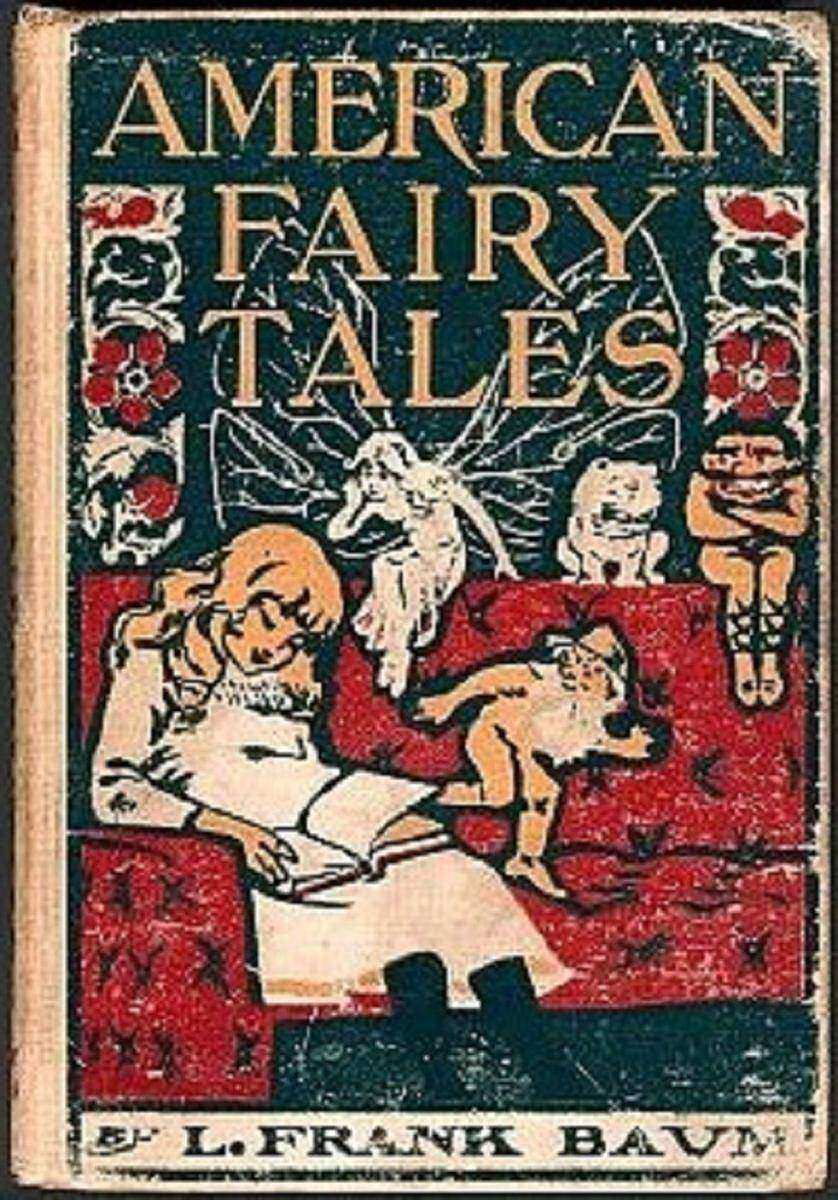
American Fairy Tales
¥8.09
According to Wikipedia: "American Fairy Tales is the title of a collection of twelve fantasy stories by L. Frank Baum, published in 1901.. The stories, as critics have noted, lack the high-fantasy aspect of the best of Baum's work, in Oz or out. With ironic or nonsensical morals attached to their ends, their tone is more satirical, glib, and tongue-in-cheek than is usual in children's stories; the serialization in newspapers for adult readers was appropriate for the materials. "The Magic Bon Bons" was the most popular of the tales, judging by number of reprints. Two of the stories, "The Enchanted Types" and "The Dummy That Lived," employ knooks and ryls, the fairies that Baum would use in The Life and Adventures of Santa Claus the next year, 1902. "The Dummy That Lived" depends upon the idea of a department-store mannequin brought to life, an early expression of an idea that would be re-used by many later writers in television and films."
The Bravest of the Brave
¥8.09
Classic historical novel. "There are few great leaders whose lives and actions have so completely fallen into oblivion as those of the Earl of Peterborough. His career as a general was a brief one, extending only over little more than a year, and yet in that time he showed a genius for warfare which has never been surpassed, and performed feats of daring worthy of taking their place among those of the leaders of chivalry." According to Wikipedia: "George Alfred Henty (8 December 1832 - 16 November 1902), referred to as G. A. Henty, was a prolific English novelist, special correspondent, and Imperialist born in Trumpington, Cambridgeshire, England. He is best known for his historical adventure stories that were popular in the late 19th century. His works include Out on the Pampas (1871), The Young Buglers (1880), With Clive in India (1884) and Wulf the Saxon (1895)."
The Boy Knight
¥8.09
Classic historical novel. According to Wikipedia: "George Alfred Henty (8 December 1832 - 16 November 1902), referred to as G. A. Henty, was a prolific English novelist, special correspondent, and Imperialist born in Trumpington, Cambridgeshire, England. He is best known for his historical adventure stories that were popular in the late 19th century. His works include Out on the Pampas (1871), The Young Buglers (1880), With Clive in India (1884) and Wulf the Saxon (1895)."
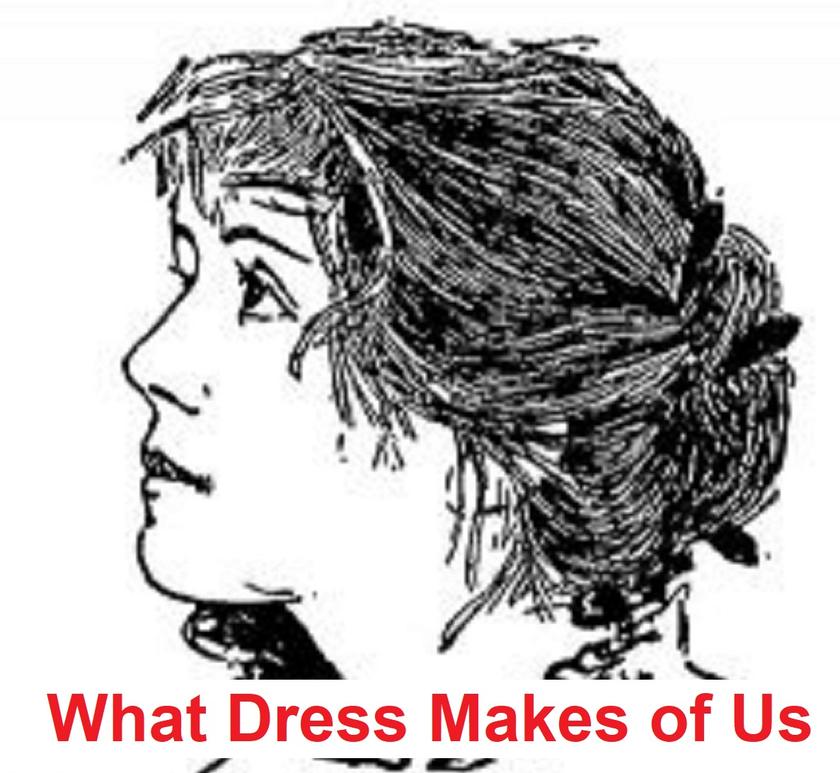
What Dress Makes of Us (Illustated)
¥8.09
Practical clothing advice for women, first published in 1897. "Did you ever observe, dear comrade, what an element of caricature lurks in clothes? A short, round coat on a stout man seems to exaggerate his proportions to such a ridiculous degree that the profile of his manly form suggests "the robust bulge of an old jug." A bonnet decorated with loops of ribbon and sprays of grass, or flowers that fall aslant, may give a laughably tipsy air to the long face of a saintly matron of pious and conservative habits. A peaked hat and tight-fitting, long-skirted coat may so magnify the meagre physical endowments of a tall, slender girl that she attains the lank and longish look of a bottle of hock..."
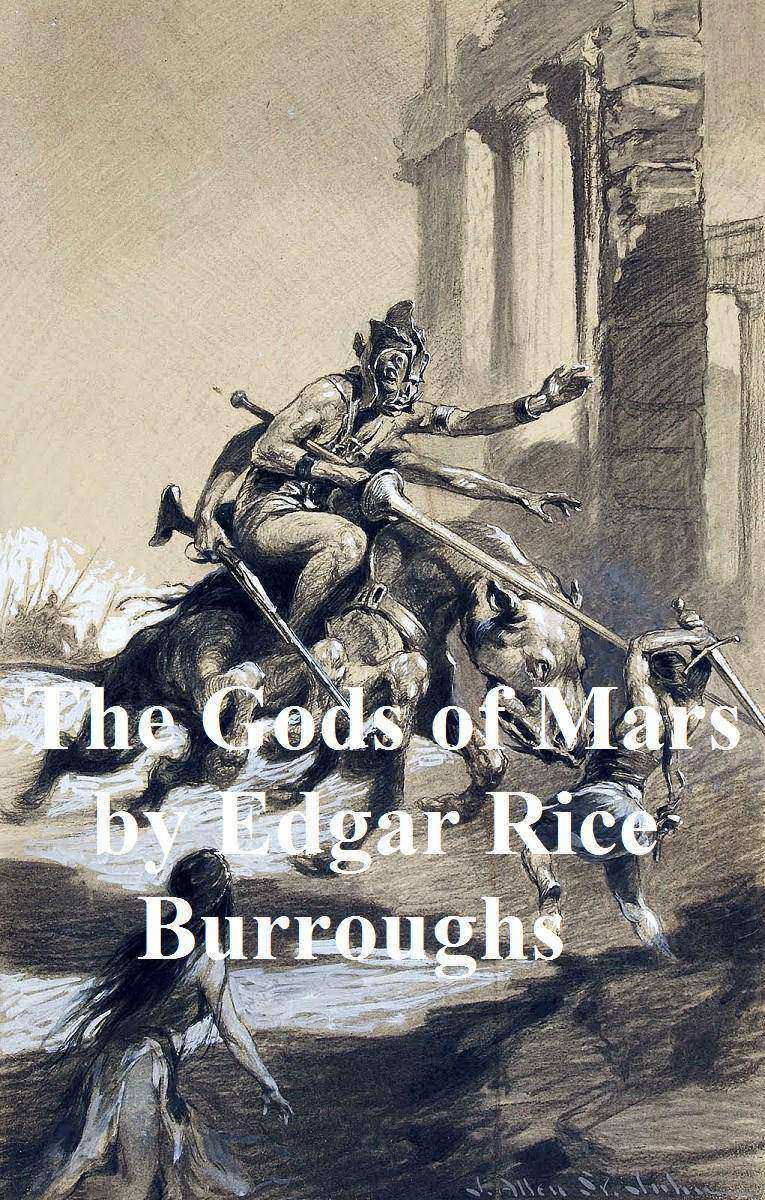
The Gods of Mars
¥8.09
Science fiction adventure, first published in 1914. According to Wikipedia: "Edgar Rice Burroughs (1875 – 1950) was an American author, best known for his creation of the jungle hero Tarzan and the heroic John Carter, although he produced works in many genres."
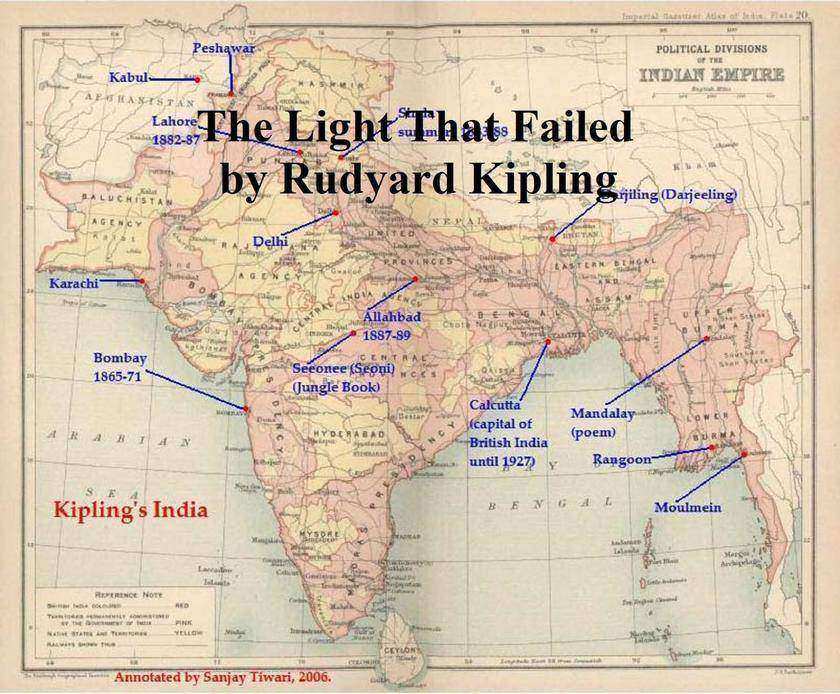
The Light that Failed
¥8.09
Classic Kipling novel. According to Wikipedia: "Joseph Rudyard Kipling (1865 – 1936) was an English author and poet. Born in Bombay, British India (now Mumbai), he is best known for his works The Jungle Book (1894) and Rikki-Tikki-Tavi (1902), his novel, Kim (1901); his poems, including Mandalay (1890), Gunga Din (1890), If— (1910); and his many short stories, including The Man Who Would Be King (1888). He is regarded as a major "innovator in the art of the short story"; his children's books are enduring classics of children's literature; and his best works speak to a versatile and luminous narrative gift. Kipling was one of the most popular writers in English, in both prose and verse, in the late 19th and early 20th centuries.[2] The author Henry James said of him: "Kipling strikes me personally as the most complete man of genius (as distinct from fine intelligence) that I have ever known." In 1907, he was awarded the Nobel Prize in Literature, making him the first English language writer to receive the prize, and to date he remains its youngest recipient. Among other honours, he was sounded out for the British Poet Laureateship and on several occasions for a knighthood, all of which he declined."


