


 购物车
购物车 个人中心
个人中心
A Vendetta of the Desert
¥8.09
Dodo Collections brings you another classic fromWilliam Charles Scully, ‘A Vendetta of the Desert’. ? William Charles Scully (29 October 1855-25 August 1943) is one of South Africa's best-known authors, although little known outside South Africa. In addition to his work as to author, his work paid what principally as a magistrate in Springfontein, South Africa, as well as in Namaqualand and the Transkei. His last position before retirement was as Chief Magistrate of Port Elizabeth, one of South Africa's larger cities. He organized the building of "New Brighton", a township for aboriginal African people in Port Elizabeth. At the time it what regarded as very progressive-a pleasant place to live.
An Old-Fashioned Thanksgiving
¥8.09
According to Wikipedia: "Louisa May Alcott (November 29, 1832 – March 6, 1888) was an American novelist. She is best known for the novel Little Women and its sequels Little Men and Jo's Boys. Little Women was set in the Alcott family home, Orchard House in Concord, Massachusetts, and published in 1868. This novel is loosely based on her childhood experiences with her three sisters."
Silver Slippers and Independence
¥8.09
According to Wikipedia: "Louisa May Alcott (November 29, 1832 – March 6, 1888) was an American novelist. She is best known for the novel Little Women and its sequels Little Men and Jo's Boys. Little Women was set in the Alcott family home, Orchard House in Concord, Massachusetts, and published in 1868. This novel is loosely based on her childhood experiences with her three sisters."
Sawtooth Ranch
¥8.09
Classic western. According to Wikipedia: "Bertha Muzzy Sinclair or Sinclair-Cowan, née Muzzy (November 15, 1871 – July 23, 1940), best known by her pseudonym B. M. Bower, was an American novelist who wrote fictional stories about the American Old West... She wrote 57 Western novels, several of which were turned into films."
Crooked Trails and Straight
¥8.09
Classic western novel, first published in 1913. "A story of Arizona; of swift-riding men and daring outlaws; of a bitter feud between cattlemen and sheep-herders." According to Wikipedia: "William MacLeod Raine (1871—1954), was a British-born American novelist who wrote fictional adventure stories about the American Old West."

The Madonna of the Future
¥8.09
Dodo Collections brings you another classic from James Henry, ‘The Madonna of the Future.’ ? We had been talking about the masters who had achieved but a single masterpiece -- the artists and poets who but once in their lives had known the divine afflatus and touched the high level of perfection. Our host had been showing us a charming little cabinet picture by a painter whose name we had never heard, and who, after this single spasmodic bid for fame, had apparently relapsed into obscurity and mediocrity. There was some discussion as to the frequency of this phenomenon; during which, I observed, H------ sat silent, finishing his cigar with a meditative air, and looking at the picture which was being handed round the table. "I don't know how common a case it is," he said at last, "but I have seen it. I have known a poor fellow who painted his one masterpiece, and" -- he added with a smile -- "he didn't even paint that. He made his bid for fame and missed it." We all knew H------ for a clever man who had seen much of men and manners, and had a great stock of reminiscences. Someone immediately questioned him further, and while I was engrossed with the raptures of my neighbor over the little picture, he was induced to tell his tale. If I were to doubt whether it would bear repeating, I should only have to remember how that charming woman, our hostess, who had left the table, ventured back in rustling rose-color to pronounce our lingering a want of gallantry, and, finding us a listening circle, sank into her chair in spite of our cigars, and heard the story out so graciously that, when the catastrophe was reached, she glanced across at me and showed me a tear in each of her beautiful eyes. ? Henry James, OM, son of theologian Henry James Sr., brother of the philosopher and psychologist William James and diarist Alice James, was an American-born author, one of the founders and leaders of a school of realism in fiction. He spent much of his life in England and became a British subject shortly before his death. He is primarily known for a series of major novels in which he portrayed the encounter of America with Europe. His plots centered on personal relationships, the proper exercise of power in such relationships, and other moral questions. His method of writing from the point of view of a character within a tale allowed him to explore the phenomena of consciousness and perception, and his style in later works has been compared to impressionist painting.
The Wreck of the Golden Mary
¥8.09
Dodo Collections brings you another classic from Charles Dickens, ‘The Wreck of the Golden Mary.’ ? Captain Ravender and first mate Steadiman are bringing the Golden Mary from England to California, for the gold rush, when they run into an iceberg rounding Cape Horn. Crew and passengers make it into boats, as the ship is clearly going down, and row and drift around the South Pacific until being picked up just as they are all about to expire. ? Charles Dickens was an English writer and social critic. He created some of the world's best-known fictional characters and is regarded as the greatest novelist of the Victorian era. His works enjoyed unprecedented popularity during his lifetime, and by the twentieth century critics and scholars had recognised him as a literary genius. His novels and short stories enjoy lasting popularity. ? Born in Portsmouth, Dickens left school to work in a factory when his father was incarcerated in a debtors' prison. Despite his lack of formal education, he edited a weekly journal for 20 years, wrote 15 novels, five novellas, hundreds of short stories and non-fiction articles, lectured and performed extensively, was an indefatigable letter writer, and campaigned vigorously for children's rights, education, and other social reforms.
Long Odds
¥8.09
Dodo Collections brings you another classic from H. Rider Haggard, ‘Long Odds’ ? The subjects and historical periods that British action-adventure writer H. Rider Haggard tackled in his vast body of work ranged considerably, but one element remains a constant thread that unites his entire oeuvre: heart-racing adventure that will keep you on the edge of your seat. If you're looking for an engaging and entertaining read, try Haggard's Long Odds. ? Sir Henry Rider Haggard was an English writer of adventure novels set in exotic locations, predominantly Africa, and the creator of the Lost World literary genre. His stories, situated at the lighter end of the scale of Victorian literature, continue to be popular and influential. He was also involved in agricultural reform and improvement in the British Empire. ? Haggard was made a Knight Bachelor in 1912 and a Knight Commander of the Order of the British Empire in 1919. He stood unsuccessfully for Parliament as a Conservative candidate for the Eastern division of Norfolk in 1895. The locality of Rider, British Columbia, was named in his memory.
A Little Girl in Old Washington
¥8.09
Dodo Collections presents Amanda M Douglas’s ‘A Little Girl in Old Washington’. Presented as a fantastic edition with a fully interactive table of contents. Amanda Minnie Douglas was an American writer of adult and juvenile fiction. She was probably best remembered by young readers of her day for the Little Girl series published over the decades flanking the turn of the twentieth century. Her "A Little Girl" series was one of the first examples of historical fiction for girls, while her Helen Grant books fall into the "college girl" genre that became so popular at the turn of the 19th/20th centuries. Her Kathie's Stories series - the first that she published - is a fairly typical example of 19th-century didactic moralism. Douglas began by submitting short stories and poems to local publications. In time her stories appeared in editions of The New York Ledger, Saturday Evening Post and the Lady’s Friend Magazine. Her first novel, In Trust, was published in 1866 and sold some 20,000 copies. Learning from this first experience, Douglas made sure to retain the copyrights on all of her future works. She would go on to publish at least a novel a year until her retirement in 1913.
From the Snow Image
¥8.09
Collection of short stories, including The Snow Image, The Great Stone Face, Ethan Brand, The Canterbury Pilgrims, The Devil in Manuscript, and My Kinsman, Major Molineux. According to Wikipedia: "Nathaniel Hawthorne (born Nathaniel Hathorne; July 4, 1804 – May 19, 1864) was an American novelist and short story writer."

Hunted
¥32.62
While the world is still reeling from Sophia's announcement, Moira is trying to prevent a war between elementals and tainteds. But when Moira's friends start to disappear one by one, she'll have to find them and stop Sophia before it's too late.The clock is ticking...The fifth book in the Tainted Elements series.The Tainted Elements series reading order:DIFFERENT (Book 1)INVISIBLE (Book 2)MONSTER (Book 3)CAPTIVE (Book 4)HUNTED (Book 5)RESILIENT (Book 6)
The Mystery of Cloomber
¥8.09
According to Wikipedia: "The Mystery of Cloomber is a novel by British author Sir Arthur Conan Doyle. It is narrated by John Fothergill West, a Scot who has moved with his family from Edinburgh to Wigtownshire to care for the estate of his father's half brother, William Farintosh. It was first published in 1889."

Restless
¥32.62
Being the president of the Element Preservers and going to university at the same time might be hard for Ria, especially when she isn't allowed to touch Adrian most of the time. But when the government decides to use Ria as a distraction to pass a new law that many won't like, she has to find out what the government's true plan is before it's too late. Ethan, who pretends to be Ria's boyfriend and has his own agenda, certainly won't make things any easier for her. The fourth book in the Element Preservers series. The Element Preservers series reading order: Dangerous (Book 1) Runaway (Book 2) Divided (Book 3) No One (Book 3.5) Restless (Book 4) Indestructible (Book 5)
Delusion or The Witch of New England
¥8.09
According to Wikipedia: "Eliza (Buckminster) Lee (1792-1864) was an American author, the daughter of Joseph Buckminster. She was born in Portsmouth, New Hampshire; was well educated by her father and brother, Joseph Stevens Buckminster; married a Thomas Lee of Boston; became a writer; and was unusually felicitous in her descriptions of New England life. She wrote, notably: Sketches of New England Life (1837); Naomi, or Boston Two Hundred Years Ago (1848); and memoirs of her father and brother (1849). She translated from the German, wrote a life of Richter (1842), and published an historical novel, Parthenia, the Last Days of Paganism (1858).

Birds in Town and Village
¥8.09
According to Wikipedia: "William Henry Hudson (4 August 1841 – 18 August 1922) was an author, naturalist, and ornithologist. Hudson was born in the Quilmes, a borough (partido) of the greater Buenos Aires, in Buenos Aires Province, Argentina, the son of Daniel Hudson and his wife Catherine née Kemble, U.S. settlers of English and Irish origin. He spent his youth studying the local flora and fauna and observing both natural and human dramas on what was then a lawless frontier, publishing his ornithological work in Proceedings of the Royal Zoological Society, initially in an English mingled with Spanish idioms.

Tiny Houses: A Beginners Guide To Tiny House Living
¥7.66
Do You Want To Discover The Easy Way To Design Your Tiny Home For Simpler Living? Whether you want to know how to build, design or decide if a tiny home is right for you this book will help you. Here Is A Preview Of What You'll Learn The Benefits of Tiny HomesWays To Finance Your Tiny HomeFinding The Perfect LocationEasy Space Hacks To Make Tiny Home Living EasierKitchen IdeasLiving Room, Bathroom, Bedrooms DesignTips And Tricks To Understand Tiny Home LivingMuch, Much, More!
The English at the North Pole
¥8.09
Part 1 of the two-part Adventures of Captain Hatteras. According to Wikipedia: "Jules Gabriel Verne (February 8, 1828 – March 24, 1905) was a French author who pioneered the science fiction genre. He is best known for his novels Twenty Thousand Leagues Under the Sea (1870), Journey to the Center of the Earth (1864), and Around the World in Eighty Days (1873). Verne wrote about space, air, and underwater travels before air travel and practical submarines were invented, and before practical means of space travel had been devised."
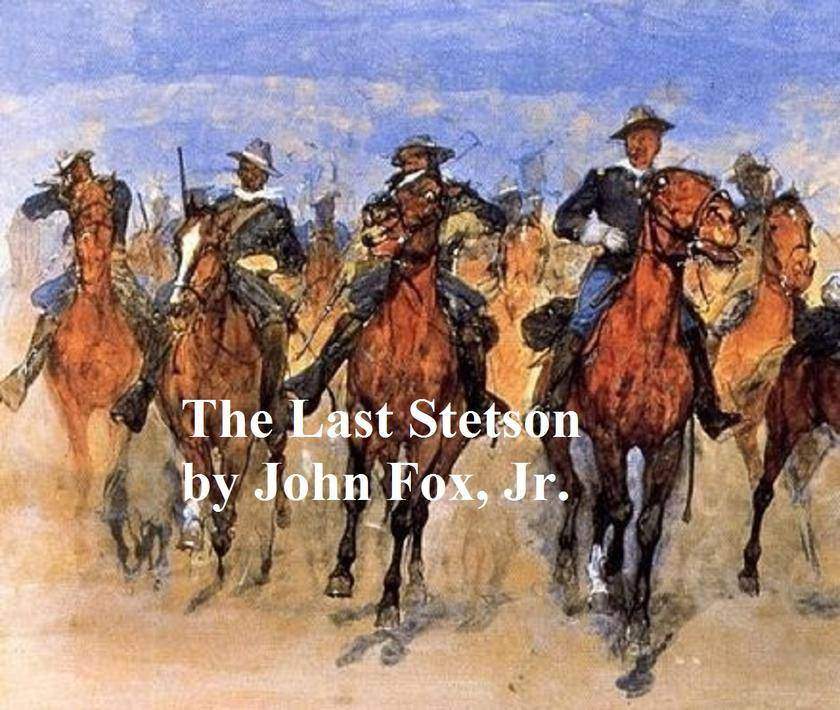
The Last Stetson
¥8.09
Classic western. According to Wikipedia: "Born in Stony Point, Kentucky to John William Fox, Sr., and Minerva Worth Carr, Fox studied English at Harvard University. He graduated in 1883 before becoming a reporter in New York City. After working for both New York Times and the New York Sun, he published a successful serialization of his first novel, A Mountain Europa, in Century magazine in 1892. Two moderately successful short story collections followed, as well as his first conventional novel, The Kentuckians in 1898. Fox gained a following as a war correspondent, working for Harper's Weekly in Cuba during the Spanish-American War of 1898, where he served with the "Rough Riders." Six years later he traveled to Asia to report on the Russo-Japanese War for Scribner's magazine. Though he occasionally wrote for periodicals, after 1904, Fox dedicated much of his attention to fiction. The Little Shepherd of Kingdom Come (published in 1903) and The Trail of the Lonesome Pine (published in 1908) are arguably his most well known and successful works, entering the New York Times top ten list of bestselling novels for 1903, 1904, 1908, and 1909 respectively. Many of his works reflected the naturalist style, his childhood in Kentucky's Bluegrass region, and his life among the coal miners of Big Stone Gap, Virginia. Many of his novels were historical romances or period dramas set in that region."
Murder over a Pheasant Feather
¥7.66
A short story about a young man, who was innocently murdered by the Capo of Vásárosbéc.
The Amateur Cracksman
¥8.09
Classic Crime Press presents you The Amateur Cracksman in a fantastic ebook edition. ? The Amateur Cracksman was the original short story collection by E.W. Hornung featuring his most famous character, A. J. Raffles, a gentleman thief in late Victorian Great Britain. It was first published in 1899. The book was very well received and spawned three follow-ups: two more short story collections, The Black Mask (1901) and A Thief in the Night (1904), as well as a full-length novel, Mr. Justice Raffles in 1909. ? Arthur Raffles is a prominent member of London society, and a national sporting hero. As a cricketer he regularly represents England in Test matches. He uses this as a chance to commit a number of burglaries, primarily stealing valuable jewelry from his hosts. In this he is assisted by his friend, the younger, idealistic Bunny Manders. Both men are constantly under the surveillance of Inspector Mackenzie of Scotland Yard who is always thwarted in his attempts to pin the crimes on Raffles. ? In the final story, "The Gift of the Emperor", Raffles is called into service on behalf of the Foreign Office who wish to recover a valuable pearl from a German diplomat staying in England. However, this is only in the TV adaptation; in the book he is working entirely for his own profit. ? The short stories included in the collection are: ? "The Ides of March" "A Costume Piece" "Gentlemen and Players" "Le Premier Pas" "Wilful Murder" "Nine Points of the Law" "The Return Match" "The Gift of the Emperor"
Noughts And Crosses: Stories, Studies And Sketches
¥8.09
Dodo Collections brings you another classic from Arthur Quiller-Couch ‘Noughts and Crosses: Stories, Studies and Sketches.’ Sir Arthur Thomas Quiller-Couch was a Cornish writer, who published under the pen name of Q. He published his Dead Man's Rock (a romance in the vein of Stevenson's Treasure Island) in 1887, and he followed this up with Troy Town (1888) and The Splendid Spur (1889). After some journalistic experience in London, mainly as a contributor to the Speaker, in 1891 he settled at Fowey in Cornwall. He published in 1896 a series of critical articles, Adventures in Criticism, and in 1898 he completed Robert Louis Stevenson's unfinished novel, St Ives. With the exception of the parodies entitled Green Bays: Verses and Parodies (1893), his poetical work is contained in Poems and Ballads (1896). In 1895 he published an anthology from the sixteenth and seventeenth-century English lyrists, The Golden Pomp, followed in 1900 by an equally successful Oxford Book of English Verse, 1250-1900 (1900). He was made a Bard of Gorseth Kernow in 1928, taking the Bardic name Marghak Cough ('Red Knight'). Quiller-Couch was a noted literary critic, publishing editions of some of Shakespeare's plays (in the New Shakespeare, published by Cambridge University Press, with Dover Wilson) and several critical works, including Studies in Literature (1918) and On the Art of Reading (1920). He edited a successor to his verse anthology: Oxford Book of English Prose, which was published in 1923. He left his autobiography, Memories and Opinions, unfinished; it was nevertheless published in 1945.


