


 购物车
购物车 个人中心
个人中心
Raspberry Pi Robotic Blueprints
¥80.65
Utilize the powerful ingredients of Raspberry Pi to bring to life your amazing robots that can act, draw, and have fun with laser tagsAbout This BookLearn to implement a number of features offered by Raspberry Pi to build your own amazing robotsUnderstand how to add vision and voice to your robots.This fast-paced practical guide comprises a number of creative projects to take your Raspberry Pi knowledge to the next level Who This Book Is For This all-encompassing guide was created for anyone who is interested in expanding their knowledge in applying the peripherals of Raspberry Pi. If you have a fancy for building complex-looking robots with simple, inexpensive, and readily available hardware, then this book is ideal for you. Prior understanding of Raspberry Pi with simple mechanical systems is recommended.What You Will LearnAdd sensors to your robot so that it can sense the world around itKnow everything there is to know about accessing motors and servos to provide movement to the robotic platformExplore the feature of adding vision to your robot so it can “see” the world around itRefine your robot with the skill of speech recognition so that it can receive commandsPolish your robot by adding speech output so it can communicate with the world around itMaximize the use of servos in Raspberry Pi to create a drawing robotStrengthen your robot by adding wireless communication skills so you can see what the robot is seeing and control it from a distanceBuild an unbelievable autonomous hexcopter controlled by Raspberry Pi In Detail The Raspberry Pi is a series of credit card-sized single-board computers developed in the UK by the Raspberry Pi Foundation with the intention of promoting the teaching of basic computer science in schools. The Raspberry Pi is known as a tiny computer built on a single circuit board. It runs a Linux operating system, and has connection ports for various peripherals so that it can be hooked up to sensors, motors, cameras, and more. Raspberry Pi has been hugely popular among hardware hobbyists for various projects, including robotics. This book gives you an insight into implementing several creative projects using the peripherals provided by Raspberry Pi. To start, we’ll walk through the basic robotics concepts that the world of Raspberry Pi offers us, implementing wireless communication to control your robot from a distance. Next, we demonstrate how to build a sensible and a visionary robot, maximizing the use of sensors and step controllers. After that, we focus on building a wheeled robot that can draw and play hockey. To finish with a bang, we’ll build an autonomous hexcopter, that is, a flying robot controlled by Raspberry Pi. By the end of this book, you will be a maestro in applying an array of different technologies to create almost any imaginable robot.Style and approach This book is an easy-to-follow, project-based guide that throws you directly into the action of creating almost any imaginable robot through blueprints. It is full of step by step instructions and screenshots to help you build amazing robots in no time at all.

Best-Loved Chinese Proverbs
¥72.93
"By filling one's head instead of one's pocket, one cannot be robbed." The appeal of Chinese proverbs is profound and universal. With brevity, clarity, and simplicity, these carefully chosen words help pass wisdom and insight throughout the ages. This timeless, eloquent collection of proverbs offers fundamental truths about the natural world and the human condition, on subjects such as: Ability Adversity Beauty Character Conflict Cooperation Deception Defeat Fortune Greed Happiness Honor Inspiration Knowledge Leadership Love Moderation Necessity Neighbors Obstinacy Opportunity Perseverance Pride Sincerity Strategy Success Thought Trust Victory Wisdom And More "With our thoughts we must build our world."

I Never Metaphor I Didn't Like
¥88.56
The murals in restaurants are on a par with the food in museums. America is an enormous frosted cupcake in the middle of millions of starving people. Critics are like pigs at the pastry cart. Describing something by relating it to another thing is the essence of metaphorical thought. It is one of the oldest activities of humankind and one of the most impressive when done skillfully. Throughout history, many masters of metaphor have crafted observations that are so spectacular they have taken up a permanent residence in our minds. In I Never Metaphor I Didn't Like , quotation maven Dr. Mardy Grothe fixes his attention on the three superstars of figurative language analogies, metaphors, and similes. The result is an extraordinary compilation of nearly 2,000 feats of association that will entertain, educate, and occasionally inspire quotation lovers everywhere. In this intellectual smorgasbord, the author of Oxymoronica and Viva la Repartee explains figurative language in a refreshingly down-to-earth way before taking readers on a tour of history's greatest word pictures. In chapters on wit, love, sex, stage and screen, insults, politics, sports, and more, you will find quotations from Aristotle and Maya Angelou to George Washington and Oprah Winfrey.
Mastering Google App Engine
¥90.46
Build robust and highly scalable web applications with Google App EngineAbout This BookGet an in-depth look at how Google App Engine works under the hoodDesign and model your application around Google's highly scalable distributed NoSQL datastore to unlock its full potentialA comprehensive guide to ensure your mastery of Google App Engine Who This Book Is For If you have been developing web applications in Python or any other dynamic language but have always wondered how to write highly scalable web applications without getting into system administration and other plumbing, then this is the book for you. No experience in writing scalable applications is required.What You Will LearnScale and develop your applications with Google App Engine's runtime environmentGet to grips with request handling mechanism and write request handlersDeep dive into Google's distributed NoSQL and highly scalable datastore and design your application around itImplement powerful search with scalable datastorePerform long-running tasks in the background using task queuesWrite compartmentalized apps using multi tenancy, memcache, and other Google App Engine runtime servicesHandle web requests using the CGI, WSGI, and multi-threaded configurationsDeploy, tweak, and manage apps in production on Google App Engine In Detail Developing web applications that serve millions of users is no easy task, as it involves a number of configurations and administrative tasks for the underlying software and hardware stack. This whole configuration requires not only expertise, but also a fair amount of time as well. Time that could have been spent on actual application functionality. Google App Engine allows you develop highly scalable web applications or backends for mobile applications without worrying about the system administration plumbing or hardware provisioning issues. Just focus writing on your business logic, the meat of the application, and let Google's powerful infrastructure scale it to thousands of requests per second and millions of users without any effort on your part. This book takes you from explaining how scalable applications work to designing and developing robust scalable web applications of your own, utilizing services available on Google App Engine. Starting with a walkthrough of scalability is and how scalable web applications work, this book introduces you to the environment under which your applications exist on Google App Engine. Next, you will learn about Google's datastore, which is a massively scalable distributed NoSQL solution built on top of BigTable. You will examine the BigTable concepts and operations in detail and reveal how it is used to build Google datastore. Armed with this knowledge, you will then advance towards how to best model your data and query that along with transactions. To augment the powerful distributed dataset, you will deep dive into search functionality offered on Google App Engine. With the search and storage sorted out, you will get a look into performing long running tasks in the background using Google App Engine task queues along with sending and receiving emails. You will also examine the memcache to boost web application performance, image processing for common image manipulation tasks. You will then explore uploading, storing, and serving large files using Blobstore and Cloud storage. Finally, you will be presented with the deployment and monitoring of your applications in production along with a detailed look at dividing applications into different working modules.Style and approach This book is an in-depth guide where you will examine the problems in the context of highly scalable web applications. This book will take you through the libraries, services, and required configuration and finally puts everything together into a small web application that showcases all the capabilities of Google App Engine.
Learning Bitcoin
¥80.65
Embrace the new world of fiance by leveraging the power of crypto-currencies using Bitcoin and the BlockchainAbout This BookSet up your own wallet, buy and sell Bitcoin, and execute custom transactions on the BlockchainLeverage the power of Bitcoin to reduce transaction costs and eliminate fraudA practical step-by-step guide to break down the Bitcoin technology to ensure safe transactions Who This Book Is For If you are familiar with online banking and want to expand your finances into a resilient and transparent currency, this book is ideal for you. A basic understanding of online wallets and financial systems will be highly beneficial to unravel the mysteries of Bitcoin.What You Will LearnSet up your wallet and buy a Bitcoin in a flash while understanding the basics of addresses and transactionsAcquire the knack of buying, selling, and trading Bitcoins with online marketplacesSecure and protect your Bitcoins from online theft using Brainwallets and cold storageUnderstand how Bitcoin’s underlying technology, the Blockchain, works with simple illustrations and explanationsConfigure your own Bitcoin node and execute common operations on the networkDiscover various aspects of mining Bitcoin and how to set up your own mining rigDive deeper into Bitcoin and write *s and multi-signature transactions on the networkExplore the various alt-coins and get to know how to compare them and their value In Detail The financial crisis of 2008 raised attention to the need for transparency and accountability in the financial world. As banks and governments were scrambling to stay solvent while seeking a sustainable plan, a powerfully new and resilient technology emerged. Bitcoin, built on a fundamentally new technology called “The Blockchain,” offered the promise of a new financial system where transactions are sent directly between two parties without the need for central control. Bitcoin exists as an open and transparent financial system without banks, governments, or corporate support. Simply put, Bitcoin is “programmable money” that has the potential to change the world on the same scale as the Internet itself. This book arms you with immense knowledge of Bitcoin and helps you implement the technology in your money matters, enabling secure transactions. We first walk through the fundamentals of Bitcoin, illustrate how the technology works, and exemplify how to interact with this powerful and new financial technology. You will learn how to set up your online Bitcoin wallet, indulge in buying and selling of bitcoins, and manage their storage. We then get to grips with the most powerful algorithm of all times: the Blockchain, and learn how crypto-currencies can reduce the risk of fraud for e-commerce merchants and consumers. With a solid base of Blockchain, you will write and execute your own custom transactions. Most importantly, you will be able to protect and secure your Bitcoin with the help of effective solutions provided in the book. Packed with plenty of screenshots, Learning Bitcoin is a simple and painless guide to working with Bitcoin.Style and approach This is an easy-to-follow guide to working with Bitcoin and the Blockchain technology. This book is ideal for anyone who wants to learn the basics of Bitcoin and explore how to set up their own transactions.

Beowulf
¥55.33
A verse translation of the first great narrative poem in the English language that captures the feeling and tone of the original.

Hidden Figures
¥100.71
The #1 New York Times bestsellerThe phenomenal true story of the black female mathematicians at NASA whose calculations helped fuel some of America’s greatest achievements in space. Soon to be a major motion picture starring Taraji P. Henson, Octavia Spencer, Janelle Monae, Kirsten Dunst, and Kevin Costner. Before John Glenn orbited the earth, or Neil Armstrong walked on the moon, a group of dedicated female mathematicians known as “human computers” used pencils, slide rules and adding machines to calculate the numbers that would launch rockets, and astronauts, into space. Among these problem-solvers were a group of exceptionally talented African American women, some of the brightest minds of their generation. Originally relegated to teaching math in the South’s segregated public schools, they were called into service during the labor shortages of World War II, when America’s aeronautics industry was in dire need of anyone who had the right stuff. Suddenly, these overlooked math whizzes had a shot at jobs worthy of their skills, and they answered Uncle Sam’s call, moving to Hampton, Virginia and the fascinating, high-energy world of the Langley Memorial Aeronautical Laboratory. Even as Virginia’s Jim Crow laws required them to be segregated from their white counterparts, the women of Langley’s all-black “West Computing” group helped America achieve one of the things it desired most: a decisive victory over the Soviet Union in the Cold War, and complete domination of the heavens. Starting in World War II and moving through to the Cold War, the Civil Rights Movement and the Space Race, Hidden Figures follows the interwoven accounts of Dorothy Vaughan, Mary Jackson, Katherine Johnson and Christine Darden, four African American women who participated in some of NASA’s greatest successes. It chronicles their careers over nearly three decades they faced challenges, forged alliances and used their intellect to change their own lives, and their country’s future.?

Sciences of the Soul
¥529.74
The Sciences of the Soul is the first attempt to explain the development of the disciplinary conception of psychology from its appearance in the late sixteenth century to its redefinition at the end of the seventeenth and its emergence as an institutionalized field in the eighteenth. Fernando Vidal traces this development through university courses and textbooks, encyclopedias, and nonacademic books, as well as through various histories of psychology.?Vidal reveals that psychology existed before the eighteenth century essentially as a "e;physics of the soul,"e; and it belonged as much to natural philosophy as to Christian anthropology. It remained so until the eighteenth century, when the "e;science of the soul"e; became the "e;science of the mind."e; Vidal demonstrates that this Enlightenment refashioning took place within a Christian framework, and he explores how the preservation of the Christian idea of the soul was essential to the development of the science. Not only were most psychologists convinced that an empirical science of the soul was compatible with Christian faith; their perception that psychology preserved the soul also helped to elevate its rank as an empirical science. Broad-ranging and impeccably researched, this book will be of wide importance in the history and philosophy of psychology, the history of the human sciences more generally, and in the social and intellectual history of eighteenth-century Europe.
Bones, Clones, and Biomes
¥618.03
As explorers and scientists have known for decades, the Neotropics harbor a fantastic array of our planet's mammalian diversity, from capybaras and capuchins to maned wolves and mouse opossums to sloths and sakis. This biological bounty can be attributed partly to the striking diversity of Neotropical landscapes and climates and partly to a series of continental connections that permitted intermittent faunal exchanges with Africa, Antarctica, Australia, and North America. Thus, to comprehend the development of modern Neotropical mammal faunas requires not only mastery of the Neotropics' substantial diversity, but also knowledge of mammalian lineages and landscapes dating back to the Mesozoic.Bones, Clones, and Biomes offers just that-an exploration of the development and relationships of the modern mammal fauna through a series of studies that encompass the last 100 million years and both Central and South America. This work serves as a complement to more taxonomically driven works, providing for readers the long geologic and biogeographic contexts that undergird the abundance and diversity of Neotropical mammals. Rather than documenting diversity or distribution, this collection traverses the patterns that the distributions and relationships across mammal species convey, bringing together for the first time geology, paleobiology, systematics, mammalogy, and biogeography. Of critical importance is the book's utility for current conservation and management programs, part of a rapidly rising conservation paleobiology initiative.

Instructions for American Servicemen in Iraq during World War II
¥82.40
"e;American success or failure in Iraq may well depend on whether the Iraqis like American soldiers or not."e;?The U.S. military could certainly have used that bit of wisdom in 2003, as violence began to eclipse the Iraq War's early successes. Ironically, had the Army only looked in its own archives, they would have found it-that piece of advice is from a manual the U.S. War Department handed out to American servicemen posted in Iraq back in 1943.The advice in Instructions for American Servicemen in Iraq during World War II,presented here in a new facsimile edition, retains a surprising, even haunting, relevance in light of today's muddled efforts to win Iraqi hearts and minds. Designed to help American soldiers understand and cope with what was at the time an utterly unfamiliar culture-the manual explains how to pronounce the word Iraq, for instance-this brief, accessible handbookmixes do-and-don't-style tips ("e;Always respect the Moslem women."e; "e;Talk Arabic if you can to the people. No matter how badly you do it, they will like it."e;) with general observations on Iraqi history and society. The book's overall message still rings true-dramatically so-more than sixty years later: treat an Iraqi and his family with honor and respect, and you will have a strong ally; treat him with disrespect and you will create an unyielding enemy.With a foreword by Lieutenant Colonel John A. Nagl reflecting on the manual's continuing applicability-and lamenting that it was unknown at the start of the invasion-this new edition of Instructions for American Servicemen in Iraq will be essential reading for anyone who cares about the future of Iraq and the fate of the American soldiers serving there.

Visible Empire
¥529.74
Between 1777 and 1816, botanical expeditions crisscrossed the vast Spanish empire in an ambitious project to survey the flora of much of the Americas, the Caribbean, and the Philippines. While these voyages produced written texts and compiled collections of specimens, they dedicated an overwhelming proportion of their resources and energy to the creation of visual materials. European and American naturalists and artists collaborated to manufacture a staggering total of more than 12,000 botanical illustrations. Yet these images have remained largely overlooked-until now.In this lavishly illustrated volume, Daniela Bleichmar gives this archive its due, finding in these botanical images a window into the worlds of Enlightenment science, visual culture, and empire. Through innovative interdisciplinary scholarship that bridges the histories of science, visual culture, and the Hispanic world, Bleichmar uses these images to trace two related histories: the little-known history of scientific expeditions in the Hispanic Enlightenment and the history of visual evidence in both science and administration in the early modern Spanish empire. As Bleichmar shows, in the Spanish empire visual epistemology operated not only in scientific contexts but also as part of an imperial apparatus that had a long-established tradition of deploying visual evidence for administrative purposes.

Studies on the Abuse and Decline of Reason
¥529.74
Studies on the Abuse and Decline of Reason is a series of fascinating essays on the study of social phenomena. How to best and most accurately study social interactions has long been debated intensely, and there are two main approaches: the positivists, who ignore intent and belief and draw on methods based in the sciences; and the nonpositivists, who argue that opinions and ideas drive action and are central to understanding social behavior. F. A. Hayek's opposition to the positivists and their claims to scientific rigor and certainty in the study of human behavior is a running theme of this important book.Hayek argues that the vast number of elements whose interactions create social structures and institutions make it unlikely that social science can predict precise outcomes. Instead, he contends, we should strive to simply understand the principles by which phenomena are produced. For Hayek this modesty of aspirations went hand in hand with his concern over widespread enthusiasm for economic planning. As a result, these essays are relevant to ongoing debates within the social sciences and to discussion about the role government can and should play in the economy.
![Denial [Movie Tie-in]](https://platform-permanent.ddimg.cn/pt-media-info-soa-resource/digital/product/54/11/1900675411_ii_cover.jpg?version=a156c4f9-8bff-4f00-949b-4cbca2bd3115)
Denial [Movie Tie-in]
¥88.56
In her acclaimed 1993 book Denying the Holocaust, Deborah Lipstadt called David Irving, a prolific writer of books on World War II, “one of the most dangerous spokespersons for Holocaust denial.” The following year, after Lipstadt’s book was published in the United Kingdom, Irving led a libel suit against Lipstadt and her publisher. She prepared her defense with the help of a first-rate team of solicitors, historians, and experts, and a dramatic trial unfolded.Denial, previously published as History on Trial, is Lipstadt’s riveting, blow- by-blow account of this singular legal battle, which resulted in a formal denunciation of a Holocaust denier that crippled the movement for years to come. Lipstadt’s victory was proclaimed on the front page of major news- papers around the world, such as The Times (UK), which declared that “history has had its day in court and scored a crushing victory.”

Timing of Affect
¥288.41
Affect, or the process by which emotions come to be embodied, is a burgeoning area of interest in both the humanities and the sciences. For Timing of Affect, Marie-Luise Angerer, Bernd Bosel, and Michaela Ott have assembled leading scholars to explore the temporal aspects of affect through the perspectives of philosophy, music, film, media, and art, as well as technology and neurology. The contributions address possibilities for affect as a capacity of the body; as an anthropological in*ion and a primary, ontological conjunctive and disjunctive processes; as an interruption of chains of stimulus and response; and as an arena within cultural history for political, media, and psychopharmacological interventions. Showing how these and other temporal aspects of affect are articulated both throughout history and in contemporary society, the editors then explore the implications for the current knowledge structures surrounding affect today.

After Life
¥270.76
Life is one of our most basic concepts, and yet when examined directly it proves remarkably contradictory and elusive, encompassing both the broadest and the most specific phenomena. We can see this uncertainty about life in our habit of approaching it as something at once scientific and mystical, in the return of vitalisms of all types, and in the pervasive politicization of life. In short, life seems everywhere at stake and yet is nowhere the same.In After Life, Eugene Thacker clears the ground for a new philosophy of life by recovering the twists and turns in its philosophical history. Beginning with Aristotle's originary formulation of a philosophy of life, Thacker examines the influence of Aristotle's ideas in medieval and early modern thought, leading him to the work of Immanuel Kant, who notes the inherently contradictory nature of "life in itself." Along the way, Thacker shows how early modern philosophy's engagement with the problem of life affects thinkers such as Gilles Deleuze, Georges Bataille, and Alain Badiou, as well as contemporary developments in the "speculative turn" in philosophy.At a time when life is categorized, measured, and exploited in a variety of ways, After Life invites us to delve deeper into the contours and contradictions of the age-old question, "what is life?"

A Documentary History of Arkansas
¥142.34
A Documentary History of Arkansas provides a comprehensive look at Arkansas history from the state's earliest events to the present. Here are newspaper articles, government bulletins, legislative acts, broadsides, letters, and speeches that, taken collectively, give a firsthand glimpse at how the twenty-fifth state's history was made. Enhanced by additional documents and brought up to date since its original publication in 1984, this new edition is the standard source for essential primary documents illustrating the state's political, social, economic, educational, and environmental history.
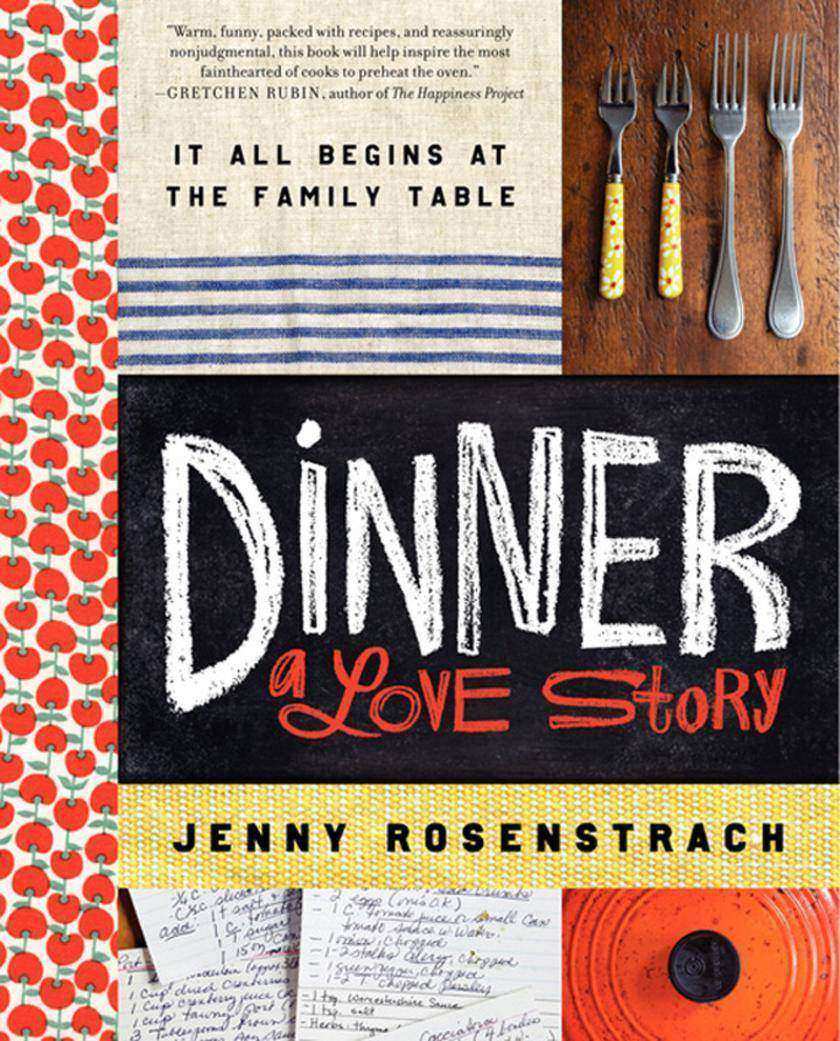
Dinner: A Love Story
¥166.09
Jenny Rosenstrach, and her husband, Andy, regularly, some might say pathologically, cook dinner for their family every night.?Even when they work long days. Even when their kids' schedules pull them in eighteen different directions. They are not superhuman.?They are not from another planet. With simple strategies and common sense, Jenny figured out how to break down dinner—the food, the timing, the anxiety, from prep to cleanup—so that her family could enjoy good food, time to unwind, and simply be together.Using the same straight-up, inspiring voice that readers of her award-winning blog, Dinner: A Love Story,?have come to count on, Jenny never judges and never preaches. Every meal she dishes up?is a real meal, one that has been cooked and eaten and enjoyed at least a half dozen times by someone in Jenny's house. With inspiration and game plans for any home cook at any level, Dinner: A Love Story is as much for the novice who doesn't know where to start as it is for the gourmand who doesn't know how to start over when she finds herself feeding an intractable toddler or for the person who never thought about home-cooked meals until he or she became a parent.?This book is, in fact, for anyone interested in learning how to?make a meal to be shared with someone they love, and about how so many good, happy things?happen when we do.
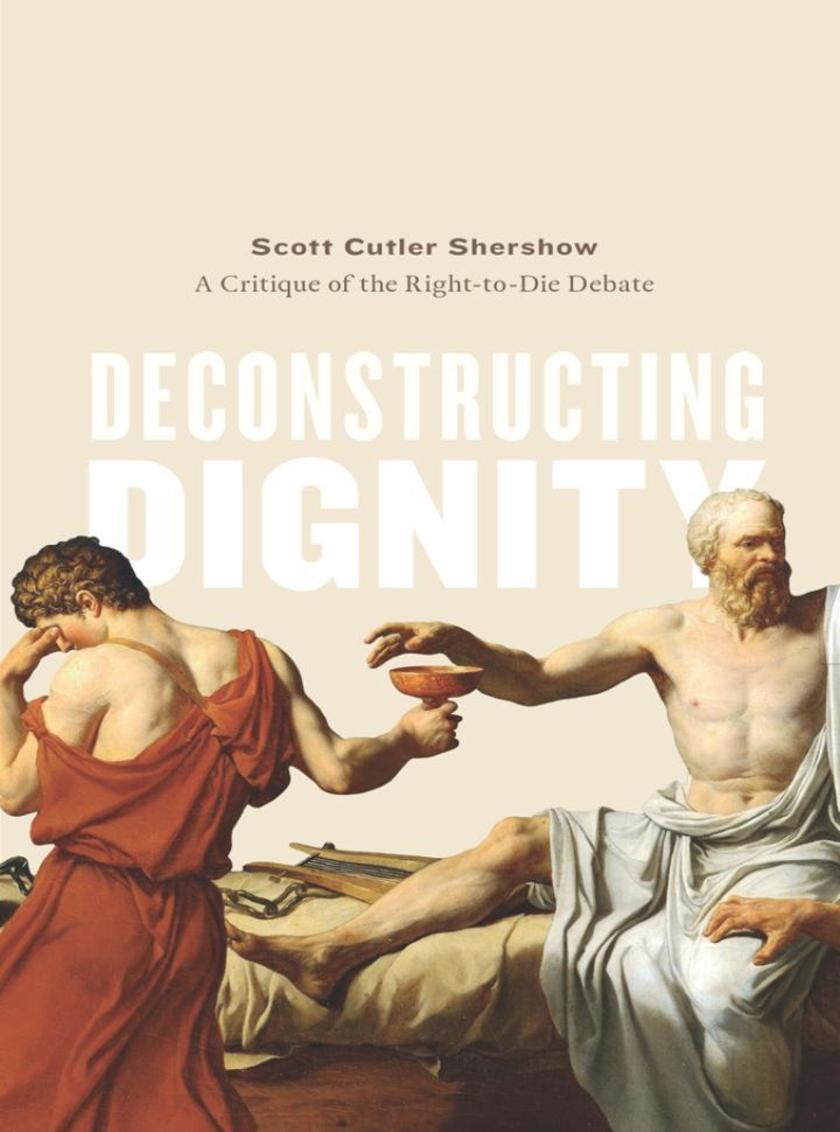
Deconstructing Dignity
¥311.96
The right-to-die debate has gone on for centuries, playing out most recently as a spectacle of protest surrounding figures such as Terry Schiavo. In?Deconstructing Dignity, Scott Cutler Shershow offers a powerful new way of thinking about it philosophically. Focusing on the concepts of human dignity and the sanctity of life, he employs Derridean deconstruction to uncover self-contradictory and damaging assumptions that underlie both sides of the debate.Shershow examines texts from Cicero's?De Officiis?to Kant's?Groundwork of the Metaphysics of Morals?to court decisions and religious declarations. Through them he reveals how arguments both supporting and denying the right to die undermine their own unconditional concepts of human dignity and the sanctity of life with a hidden conditional logic, one often tied to practical economic concerns and the scarcity or unequal distribution of medical resources. He goes on to examine the exceptional case of self-sacrifice, closing with a vision of a society-one whose conditions we are far from meeting-in which the debate can finally be resolved. A sophisticated analysis of a heated topic,?Deconstructing Dignity?is also a masterful example of deconstructionist methods at work.?

Geographic Mosaic of Coevolution
¥311.96
Coevolution-reciprocal evolutionary change in interacting species driven by natural selection-is one of the most important ecological and genetic processes organizing the earth's biodiversity: most plants and animals require coevolved interactions with other species to survive and reproduce. The Geographic Mosaic of Coevolution analyzes how the biology of species provides the raw material for long-term coevolution, evaluates how local coadaptation forms the basic module of coevolutionary change, and explores how the coevolutionary process reshapes locally coevolving interactions across the earth's constantly changing landscapes.Picking up where his influential The Coevolutionary Process left off, John N. Thompsonsynthesizes the state of a rapidly developing science that integrates approaches from evolutionary ecology, population genetics, phylogeography, systematics, evolutionary biochemistry and physiology, and molecular biology. Using models, data, and hypotheses to develop a complete conceptual framework, Thompson also draws on examples from a wide range of taxa and environments, illustrating the expanding breadth and depth of research in coevolutionary biology.
Why We Need Ordinary Language Philosophy
¥288.41
Sandra Laugier has long been a key liaison between American and European philosophical thought, responsible for bringing American philosophers such as Ralph Waldo Emerson, Henry David Thoreau, and Stanley Cavell to French readers-but until now her books have never been published in English. Why We Need Ordinary Language Philosophy rights that wrong with a topic perfect for English-language readers: the idea of analytic philosophy.?Focused on clarity and logical argument, analytic philosophy has dominated the discipline in the United States, Australia, and Britain over the past one hundred years, and it is often seen as a unified, coherent, and inevitable advancement. Laugier questions this assumption, rethinking the very grounds that drove analytic philosophy to develop and uncovering its inherent tensions and confusions. Drawing on J. L. Austin and the later works of Ludwig Wittgenstein, she argues for the solution provided by ordinary language philosophy-a philosophy that trusts and utilizes the everyday use of language and the clarity of meaning it provides-and in doing so offers a major contribution to the philosophy of language and twentieth- and twenty-first-century philosophy as a whole.

Virtue Is Knowledge
¥288.41
The relation between virtue and knowledge is at the heart of the Socratic view of human excellence, but it also points to a central puzzle of the Platonic dialogues: Can Socrates be serious in his claims that human excellence is constituted by one virtue, that vice is merely the result of ignorance, and that the correct response to crime is therefore not punishment but educationOr are these assertions mere rhetorical ploys by a notoriously complex thinker?Lorraine Smith Pangle traces the argument for the primacy of virtue and the power of knowledge throughout the five dialogues that feature them most prominently-the Apology, Gorgias, Protagoras, Meno, and Laws-and reveals the truth at the core of these seemingly strange claims. She argues that Socrates was more aware of the complex causes of human action and of the power of irrational passions than a cursory reading might suggest. Pangle's perceptive analyses reveal that many of Socrates's teachings in fact explore the factors that make it difficult for humans to be the rational creatures that he at first seems to claim. Also critical to Pangle's reading is her emphasis on the political dimensions of the dialogues. Underlying many of the paradoxes, she shows, is a distinction between philosophic and civic virtue that is critical to understanding them.Ultimately, Pangle offers a radically unconventional way of reading Socrates's views of human excellence: Virtue is not knowledge in any ordinary sense, but true virtue is nothing other than wisdom.


