


 购物车
购物车 个人中心
个人中心
Hypnos
¥9.00
"Hypnos" is a short story by H.P. Lovecraft, penned in March 1922 and first published in the May 1923 issue of National Amateur. The narrator, a sculptor, recounts meeting a mysterious man in a railway station. The moment the man opened his "immense, sunken and widely luminous eyes", the narrator knew that the stranger would become his friend-–"the only friend of one who had never possessed a friend before". In the eyes of the stranger he saw the knowledge of the mysteries he always sought to learn

The Horror at Martin's Beach
¥8.98
Sailors kill a 50-foot creature at sea after a lengthy battle. The creature bears strange anatomical irregularities such as a single large eye and rudimentary forelegs and six-toed feet in place of pectoral fins. After inspection by marine biologists, it is revealed to be just a juvenile. The captain who captured the creature tours the coast and profits from the corpse of the deceased creature. As the captain attempts to finish his business at Martin's Beach, a group of swimmers are attacked. The captain and others attempt to rescue the victims but it is too late. The rescuers and the captain are hypnotized and pulled into the water by the creature's apparently vengeful mother, to the horror of an onlooking crowd.
Wonderful Stories for Children
¥19.05
STORIES:?OLE LUCKOIE, (SHUT-EYE.)?MONDAY.?TUESDAY.?WEDNESDAY.?THURSDAY.?FRIDAY.?SATURDAY.?SUNDAY.?THE DAISY.?THE NAUGHTY BOY.?TOMMELISE.?THE ROSE-ELF.?THE GARDEN OF PARADISE.?A NIGHT IN THE KITCHEN.?LITTLE IDA'S FLOWERS.?THE CONSTANT TIN SOLDIER.?THE STORKS.??There is nobody in all this world who knows so many tales as Ole Luckoie! He can tell tales! In an evening, when a child sits so nicely at the table, or on its little stool, Ole Luckoie comes. He comes so quietly into the house, for he walks without shoes; he opens the door without making any noise, and then he flirts sweet milk into the children's eyes; but so gently, so very gently, that they cannot keep their eyes open, and, therefore, they never see him; he steals softly behind them and blows gently on their necks, and thus their heads become heavy. ??Oh yes! But then it does them no harm; for Ole Luckoie means nothing but kindness to the children, he only wants to amuse them; and the best thing that can be done is for somebody to carry them to bed, where they may lie still and listen to the tales that he will tell them.
The Dunwich Horror
¥9.00
In H.P. Lovecraft’s, "The Dunwich Horror", we are told the story of Wilbur Whateley, the son of a deformed albino mother and an unknown father (alluded to in passing by the mad Old Whateley as "Yog-Sothoth"), and the strange events surrounding his birth and precocious development. Wilbur matures at an abnormal rate, reaching manhood within a decade. All the while, his sorcerer grandfather indoctrinates him into certain dark rituals and the study of witchcraft.

Kay?p Halkan?n S?rr?
¥18.56
Yazar, bandan geen gizemli olaylar okuyucusuyla paylamaktadr.Yazar yal bir kadn tesadüfen kaldrmda baygn vaziyette bulur hastaneye kaldrr fakat daha sonra hastane odasnda brakr ve mutsuz ekilde Bodrum’a geri dner. ünkü yaynevlerinden bekledii ilgiyi grmez.Doktor hemire ve hastalar kadn ok sever ve sahip karlar.Yal kadna daha sonra devlet sahip kar ve onu bir huzur evine yatrr. Yal kadn orada da ok sevilir. Fakat huzur evi müdürü kadndan üphelenir. Yazar ise bir türlü istedii eseri yazamamaktadr. stelik ok sevdii ruh eine kavuamamaktadr. Bütün skntlarn zecek gü yal kadndr fakat yazar bunu bilmez. Fakat yazarn kader dngüsü deimek üzeredir ve yal kadn onu kendisine doru arr.Yazar balarda bununla mücadele etmeye alr fakat daha sonra pes eder. stanbul’a doru yolculuk yapmaya karar verir. Yolculuk esnasnda rüyasnda gerilim ve gizemli olaylar grür bilmedii ey aslnda bu olaylarn gerekte yaanddr. Yal kadn düündüü kii deildir.Yazarn gizemli bir ekilde tant yal kadnn srlar vardr. Yazar gerek grevi iin armaktadr.Aslnda yazar kayp halkadan birisidir.
The Descendant
¥9.00
"The Descendant" is a story fragment by American horror fiction writer H. P. Lovecraft, believed to have been written in 1927.[1] It was first published in the journal Leaves in 1938, after Lovecraft's death.

Dagon
¥9.00
The story is the testament of a tortured, morphine-addicted man who relates an incident that occurred during his service as an officer during World War I. In the unnamed narrator's account, his cargo ship is captured by an Imperial German sea-raider in "one of the most open and least frequented parts of the broad Pacific"
The Crawling Chaos
¥9.00
"The Crawling Chaos" is a short story by American writers H. P. Lovecraft and Winifred V. Jackson (first published April 1921 in the United Cooperative. As in their other collaboration, "The Green Meadow", the tale was credited to "Elizabeth Berkeley" (Jackson) and "Lewis Theobald, Jun" (Lovecraft). The story begins with the narrator describing the effects of opium and the fantastical vistas it can inspire. The narrator then tells of his sole experience with opium in which he was accidentally administered an overdose by a doctor during the "year of the plague".
Nero
¥27.88
IN ancient times, when the city of Rome was at the height of its power and splendor, it was the custom, as it is in fact now with the inhabitants of wealthy capitals, for the principal families to possess, in addition to their city residences, rural villas for summer retreats, which they built in picturesque situations, at a little distance from the city, sometimes in the interior of the country, and sometimes upon the seashore. There were many attractive places of resort of this nature in the neighborhood of Rome. Among them was Antium.??The beauty and the salubrity of Antium made it a very attractive place of summer resort for the people of Rome; and in process of time, when the city attained to an advanced stage of opulence and luxury, the Roman noblemen built villas there, choosing situations, in some instances, upon the natural terraces and esplanades of the promontory, which looked off over the sea, and in others cool and secluded retreats in the valleys, on the land. It was in one of these villas that NERO was born.??NERO's father belonged to a family which had enjoyed for several generations a considerable degree of distinction among the Roman nobility, though known by a somewhat whimsical name. The family name was Brazenbeard, or, to speak more exactly, it was Aheno-barbus, which is the Latin equivalent for that word. ?
The Colour Out of Space
¥9.00
"The Colour Out of Space" is a first-person narrative written from the perspective of an unnamed surveyor from Boston. In order to prepare for the construction of a new reservoir in Massachusetts, he surveys a rural area that is to be flooded near Lovecraft's fictional town of Arkham. He comes across a mysterious patch of land, an abandoned five-acre farmstead, which is completely devoid of all life.
A Story of the Golden Age of Greek Heroes: Pictured & Illustrated
¥28.29
YOU have heard of Homer, and of the two wonderful poems, the Iliad and the Odyssey, which bear his name. No one knows whether these poems were composed by Homer, or whether they are the work of many different poets. And, in fact, it matters very little about their authorship. Everybody agrees that they are the grandest poems ever sung or written or read in this world; and yet, how few persons, comparatively, have read them, or know any thing about them except at second-hand! ? Homer commences his story, not at the beginning, but "in the midst of things;" hence, when one starts out to read the Iliad without having made some special preparation beforehand, he finds it hard to understand, and is tempted, in despair, to stop at the end of the first book. Many people are, therefore, content to admire the great masterpiece of poetry and story-telling simply because others admire it, and not because they have any personal acquaintance with it.? Now, it is not my purpose to give you a "simplified version" of the Iliad or the Odyssey. There are already many such versions; but the best way for you, or any one else, to read Homer, is to read Homer. If you do not understand Greek, you can read him in one of the many English translations. You will find much of the spirit of the original in the translations by Bryant, by Lord Derby, and by old George Chapman, as well as in the admirable prose rendering by Butcher and Lang; but you can get none of it in any so-called simplified version.??My object in writing this "Story of the Golden Age" has been to pave the way, if I dare say it, to an enjoyable reading of Homer, either in translations or in the original. I have ta-ken the various legends relating to the causes of the Trojan war, and, by assuming certain privileges never yet denied to story-tellers, have woven all into one continuous narrative, ending where Homer's story begins. The hero of the Odyssey—a character not always to be admired or commended—is my hero. And, in telling the story of his boyhood and youth, I have taken the opportunity to repeat, for your enjoyment, some of the most beautiful of the old Greek myths. If I have, now and then, given them a coloring slightly different from the original, you will remember that such is the right of the story-teller, the poet, and the artist. The essential features of the stories remain unchanged. I have, all along, drawn freely from the old tragedians, and now and then from Homer himself; nor have I thought it necessary in every instance to mention authorities, or to apologize for an occasional close imitation of some of the best translations. The pictures of old Greek life have, in the main, been derived from the Iliad and the Odyssey, and will, I hope, help you to a better understanding of those poems when you come to make acquaintance directly with them.??Should you become interested in the "Story of the Golden Age," as it is here related, do not be disappointed by its somewhat abrupt ending; for you will find it continued by the master-poet of all ages, in a manner both inimitable and unapproachable. If you are pleased with the discourse of the porter at the gate, how much greater shall be your delight when you stand in the palace of the king, and hearken to the song of the royal minstrel! ?
The Book
¥9.00
"The Book" is an unfinished short story by American horror fiction writer H. P. Lovecraft, believed to have been written in late 1933. It was first published in the journal Leaves in 1938, after Lovecraft's death. In the story fragment, the narrator is given an ancient book by a strange bookseller, and when he takes it home and examines it, weird and sinister events ensue.

America First: —100 Stories from Our History—
¥23.54
WHEN children advance beyond the nursery age, no story is so wonderful as a true story. Fiction to them is never as appealing as fact. I have often been faced with the inquiry: whether or not a story is a true one. The look of gratification, when told that "it actually happened," was most satisfying to me as a story-teller.??The nearer a story is to the life and traditions of the child, the more eagerly it is attended. True stories about our own people, about our neighbors and friends, and about our own country at large, are more interesting than true stories of remote places and people. We naturally are interested in our own affairs, and the nearer they are to us the greater the interest we feel.??That history is just a long, thrilling story of the trials and triumphs of pioneers and patriots is well known to those who have had to do with the teaching of history to youthful minds. That the dry recital of political and governmental history does not interest children is also well known. History should be made vital, vibrant, and personal if we expect children to be stirred by its study.?To gratify the love of children for the dramatic and picturesque, to satisfy them with stories that are true, and to make them familiar with the great characters in the history of their own country, is the purpose of this volume.??It is hoped that through appeal to youthful love of adventure, this collection of stories, covering the entire range of American history, will stimulate the ambition and strengthen the patriotism of those young citizens whose education has been the constant concern of the author for many years.
Fairy Stories and Fables
¥28.29
The longer stories in this book are called Fairy Stories, because that is the name by which such tales are always known to children; and yet only a very few contain any direct reference to fairies. The most of them have to do with talking animals and with strange incidents and transformations such as have always delighted the childish fancy. They have been drawn from a variety of sources; and liberty has been taken to make such changes in the narratives as seemed most necessary to adapt them to the understanding and needs of the children of our own time and country. ??Free renderings, they may be called, of some of the most popular folktales of foreign lands. The Three Bears, Tom Thumb, Jack and the Beanstalk, and Tom Tit Tot are old English favorites dressed in modern garb; Little Red Riding Hood, Puss in Boots, Princet and the Golden Blackbird, and Drakesbill and his Friends are variants of the well-known French versions by Perrault, Marelles, and Sebillot; Little Tuppen and The Three Goats named Bruse are from Norwegian sources; and the rest are founded upon German originals. In the retelling of these tales care has been taken to avoid whatever might distress the most sensitive child as well as everything that could give a wrong bias to his moral nature or distort his perception of the beautiful and the true.
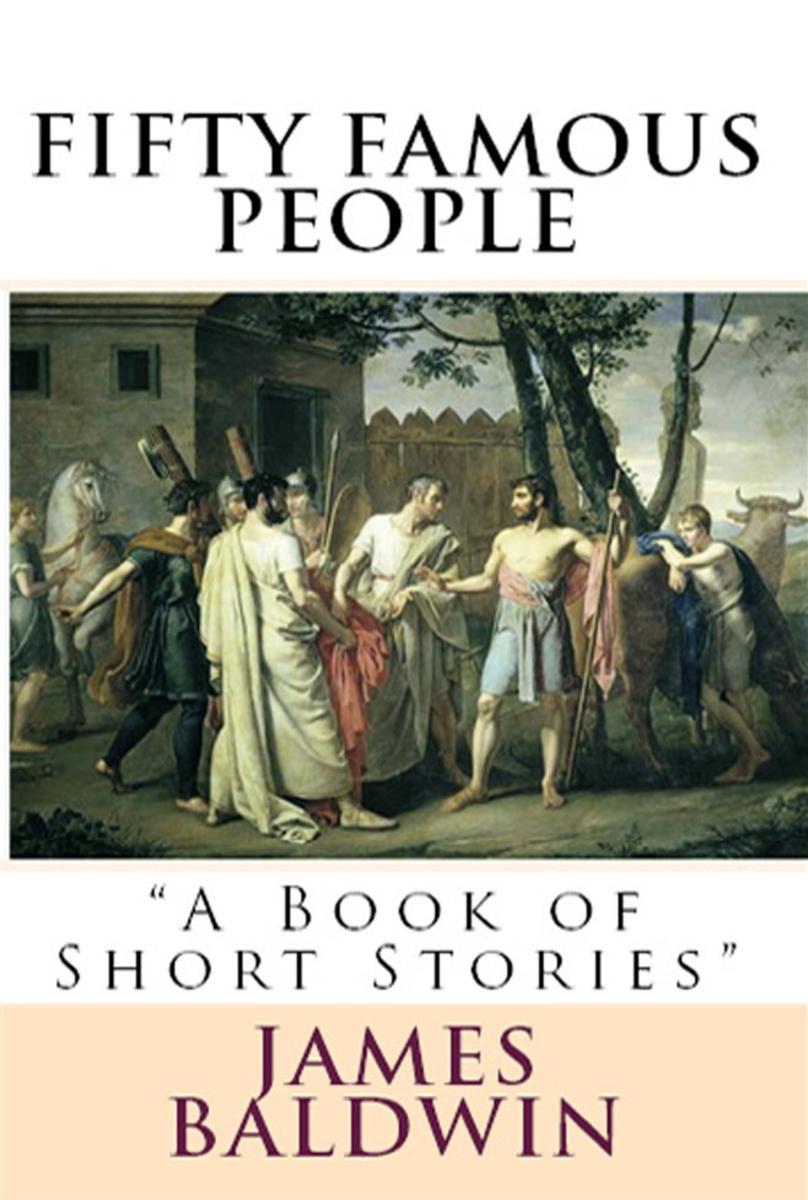
Fifty Famous People: "A Book of Short Stories"
¥28.29
ONE of the best things to be said of the stories in this volume is that, although they are not biographical, they are about real persons who actually lived and performed their parts in the great drama of the world's history. Some of these persons were more famous than others, yet all have left enduring "footprints on the sands of time" and their names will not cease to be remembered. ??In each of the stories there is a basis of truth and an ethical lesson which cannot fail to have a wholesome influence; and each possesses elements of interest which, it is believed, will go far towards proving the fallibility of the doctrine that children find delight only in tales of the imaginative and unreal. The fact that there are a few more than fifty famous people mentioned in the volume may be credited to the author's wish to give good measure.??SAVING THE BIRDS?ONE day in spring four men were riding on horseback along a country road. These men were lawyers, and they were going to the next town to attend court.?There had been a rain, and the ground was very soft. Water was dripping from the trees, and the grass was wet.?The four lawyers rode along, one behind another; for the pathway was narrow, and the mud on each side of it was deep. They rode slowly, and talked and laughed and were very jolly.?As they were passing through a grove of small trees, they heard a great fluttering over their heads and a feeble chirping in the grass by the roadside.? "Stith! stith! stith!" came from the leafy branches above them.?"Cheep! cheep! cheep!" came from the wet grass.?"What is the matter here?" asked the first lawyer, whose name was Speed.?"Oh, it's only some old robins!" said the second lawyer, whose name was Hardin. "The storm has blown two of the little ones out of the nest. They are too young to fly, and the mother bird is making a great fuss about it."?"What a pity! They'll die down there in the grass," said the third lawyer, whose name I forget.?"Oh, well! They're nothing but birds," said Mr. Hardin. "Why should we bother?"? "Yes, why should we?" said Mr. Speed.?The three men, as they passed, looked down and saw the little birds fluttering in the cold, wet grass. They saw the mother robin flying about, and crying to her mate.?Then they rode on, talking and laughing as before. In a few minutes they had forgotten about the birds.?But the fourth lawyer, whose name was Abraham Lincoln, stopped. He got down from his horse and very gently took the little ones up in his big warm hands.
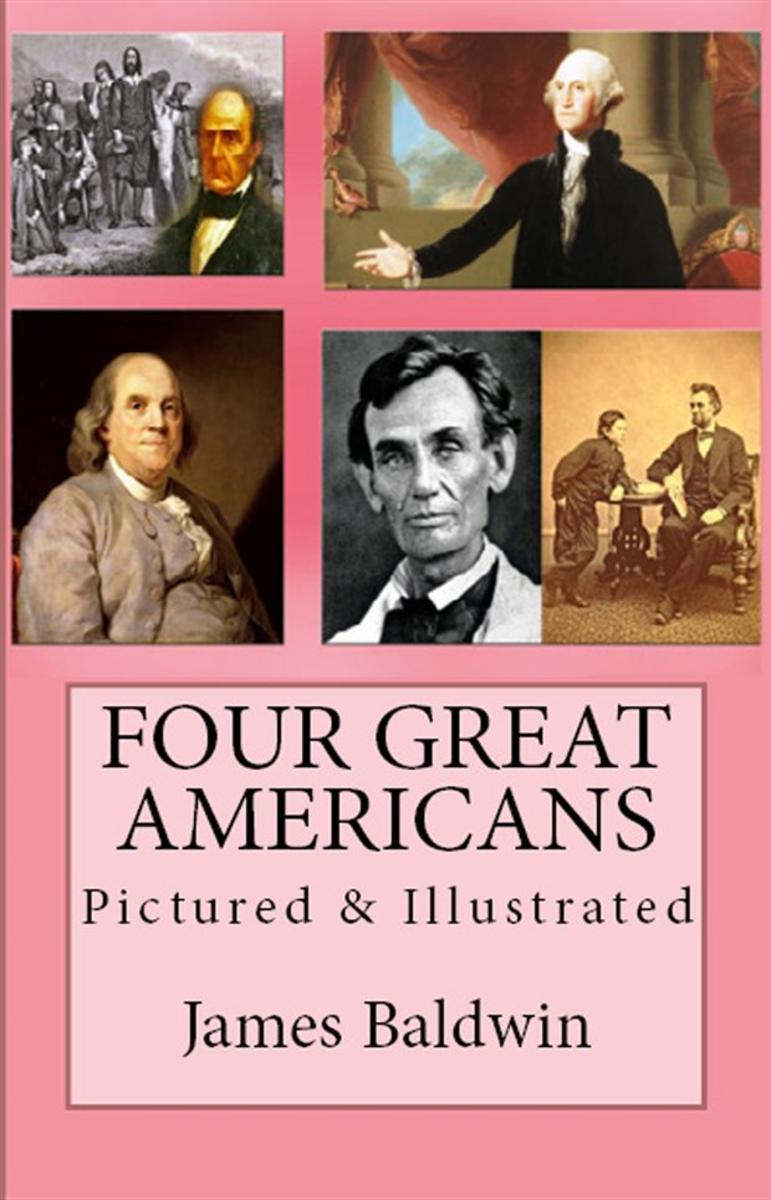
Four Great Americans: Pictured & Illustrated
¥28.29
When George Washington was a boy there was no United States. The land was here, just as it is now, stretching from the Atlantic Ocean to the Pacific; but nearly all of it was wild and unknown.??Between the Atlantic Ocean and the Allegheny Mo-untains there were thirteen colonies, or great settlements. The most of the people who lived in these colonies were English people, or the children of English people; and so the King of England made their laws and appointed their governors.??The newest of the colonies was Georgia, which was settled the year after George Washington was born.?The oldest colony was Virginia, which had been settled one hundred and twenty-five years. It was also the richest colony, and more people were living in it than in any other.??There were only two or three towns in Virginia at that time, and they were quite small.?Most of the people lived on farms or on big plantations, where they raised whatever they needed to eat. They also raised tobacco, which they sent to England to be sold.??The farms, or plantations, were often far apart, with stretches of thick woods between them. Nearly every one was close to a river, or some other large body of water; for there are many rivers in Virginia..
The Story of Roland
¥28.29
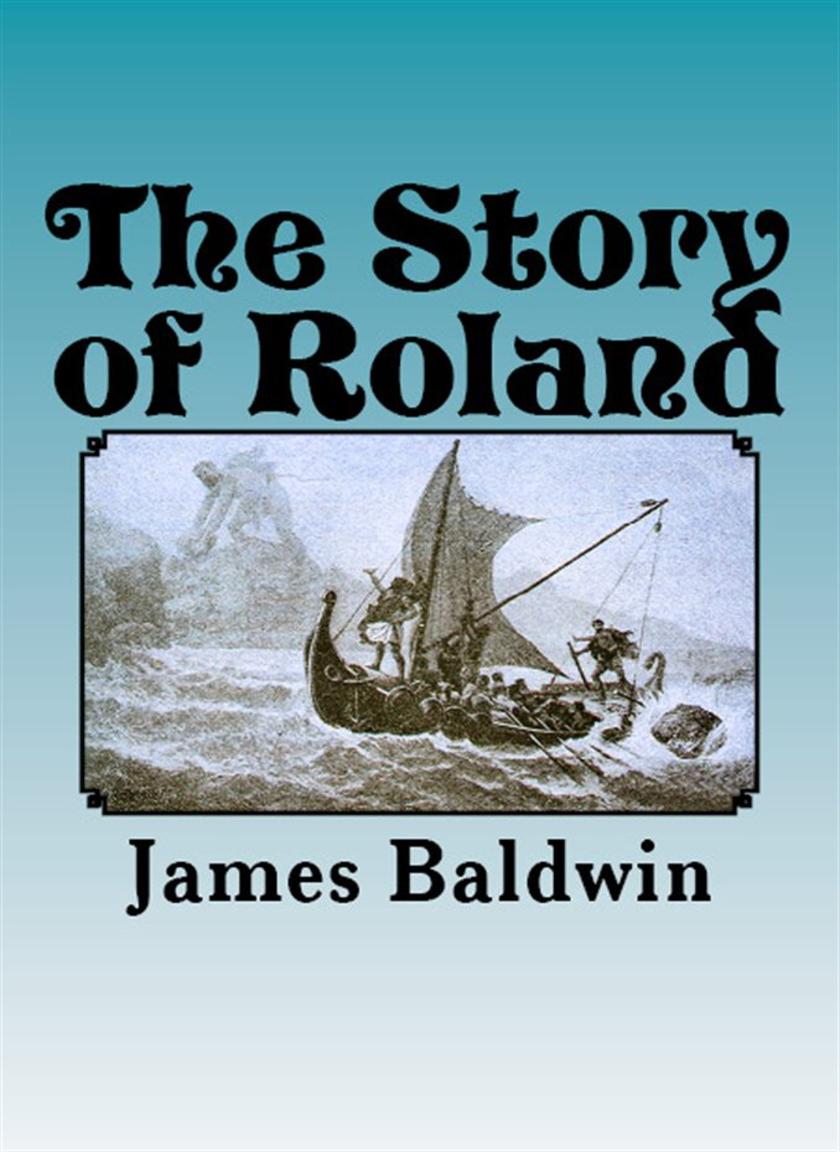
Jean Bodel a minstrel of the thirteenth century, wrote, "There are but three subjects which interest men,—the tales of France, of Britain, and of Rome the great; and to these subjects there is nothing like. The tales of Britain are so light and pleasant, those of Rome are wise and of teachful sense; those of France, truly every day of greater appearance."??In this story of Roland as I propose telling it, I shall intro-duce you to some of the most pleasing of those "tales of France" The poems and legends which embody them were written in various languages, and at widely different times; but in them two names, Charlemagne and Roland are of very frequent occurrence. Charlemagne, as you know, was a real historical personage, the greatest monarch of medieval times. His empire included France, the greater part of Germany and Italy; and his power and influence were felt all over the Christian world. The fame of his achievements in war was heralded and sung in every country of Europe; his name was in the mouth of every story-teller and wandering bard; and it finally became customary to ascribe all the heroic deeds and wonderful events of three centuries to the time of Charlemagne. ??The songs and stories in which these events were related were dressed up with every kind of embellishment to suit the circumstances of their recital. Wild myths of the Pagan ages, legends and traditions of the Christian Church, superstitious notions of magic and witchcraft, fantastic stories derived from the Arabs of Spain and the East,—all these were blended in one strange mass, and grafted upon a slender core of historical truth. The result was a curious mixture of fact and fiction, of the real and the marvellous, of the beautiful and the impure, of Christian devotion and heathen superstition. And it was thus that "the tales of France", which we may term the legendary history of Charlemagne, came into being ..
The Merry Men and Other Tales and Fables by Robert Louis Stevenson (Illustrated)
¥8.09
This eBook features the unabridged text of ‘The Merry Men and Other Tales and Fables’ from the bestselling edition of ‘The Complete Works of Robert Louis Stevenson’. Having established their name as the leading publisher of classic literature and art, Delphi Classics produce publications that are individually crafted with superior formatting, while introducing many rare texts for the first time in digital print. The Delphi Classics edition of Stevenson includes original annotations and illustrations relating to the life and works of the author, as well as individual tables of contents, allowing you to navigate eBooks quickly and easily.eBook features:* The complete unabridged text of ‘The Merry Men and Other Tales and Fables’* Beautifully illustrated with images related to Stevenson’s works* Individual contents table, allowing easy navigation around the eBook* Excellent formatting of the textPlease visit www.delphiclassics.com to learn more about our wide range of titles
Fables by Robert Louis Stevenson (Illustrated)
¥8.09
This eBook features the unabridged text of ‘Fables’ from the bestselling edition of ‘The Complete Works of Robert Louis Stevenson’. Having established their name as the leading publisher of classic literature and art, Delphi Classics produce publications that are individually crafted with superior formatting, while introducing many rare texts for the first time in digital print. The Delphi Classics edition of Stevenson includes original annotations and illustrations relating to the life and works of the author, as well as individual tables of contents, allowing you to navigate eBooks quickly and easily.eBook features:* The complete unabridged text of ‘Fables’* Beautifully illustrated with images related to Stevenson’s works* Individual contents table, allowing easy navigation around the eBook* Excellent formatting of the textPlease visit www.delphiclassics.com to learn more about our wide range of titles
The Mysterious Stranger by Mark Twain (Illustrated)
¥8.09
This eBook features the unabridged text of ‘The Mysterious Stranger’ from the bestselling edition of ‘The Complete Works of Mark Twain’. Having established their name as the leading publisher of classic literature and art, Delphi Classics produce publications that are individually crafted with superior formatting, while introducing many rare texts for the first time in digital print. The Delphi Classics edition of Twain includes original annotations and illustrations relating to the life and works of the author, as well as individual tables of contents, allowing you to navigate eBooks quickly and easily.eBook features:* The complete unabridged text of ‘The Mysterious Stranger’* Beautifully illustrated with images related to Twain’s works* Individual contents table, allowing easy navigation around the eBook* Excellent formatting of the textPlease visit www.delphiclassics.com to learn more about our wide range of titles

Despre dragoste - Anatomia unui sentiment
¥30.88
Edi?ia de fa?? o reproduce ?ntocmai pe cea din 1966 care a v?zut lumina tiparului la Editura pentru literatura ?i este menit? s? repun? – laolalt? cu alte titluri editate de noi – ?n circula?ie numele ?i opera unui mare profesor de filosofie ?i a unui important om de cultur? din perioada interbelice. Edi?ia este structurat? pe c?teva capitole, cum ar fi bun?oar? ?Amintiri din copil?rie ?i tinere?e“, ?Amintiri culturale, didactice ?i politice“, cuprinz?nd, ?ntre altele, ?i coresponden?a cu Titu Maiorescu, conferin?e ?i cursuri ?inute la Viena, Paris, Geneva, Praga, Oslo ?i Bruxelles. ?Petrovici a avut o via?? fracturat?. ?ntr-o vreme, a urcat n? pe Everestul performan?ei ?i al recunoa?terii publice, de unde, atunci c?nd istoria s-a virusat de o ideologie apocaliptic?, s-a pr?bu?it direct ?n groapa Marianelor, b?ntuit? de tot felul de silnicii ?i nes?buin?e. Mult? vreme s-a am?git cu in?elesul m?ng?ietor al filosofiei, a?a cum i-l h?r?zise cei vechi, dar s-a ?i ?nfiorat de mizeriile ei, atunci c?nd a v?zut-o dec?zut? ?n condi?ia de surogat ideologic. Oare trebuia, dup? ce a privit lumea prin sp?rtura pe?terii lui Platon, s-o p?ndeasc? ?i din spatele gra?iilor ?i ale z?voarelor trase? Vremurile noi, rascolnice, l-au g?sit total nepreg?tit. Glasul s?u, obi?nuit s? peroreze ?n aule universitare, ?n Camera, ?n Academie, ?n cadrul unor fastuoase reuniuni interna?ionale a fost, pentru multe decenii, obligat la t?cere.“ (Ionel Necula)


