


 购物车
购物车 个人中心
个人中心

Law in Everyday Japan
¥253.10
Lawsuits are rare events in most people's lives. High-stakes cases are even less commonplace. Why is it, then, that scholarship about the Japanese legal system has focused almost exclusively on epic court battles, large-scale social issues, and corporate governanceMark D. West's Law in Everyday Japan fills a void in our understanding of the relationship between law and social life in Japan by shifting the focus to cases more representative of everyday Japanese life.Compiling case studies based on seven fascinating themes-karaoke-based noise complaints, sumo wrestling, love hotels, post-Kobe earthquake condominium reconstruction, lost-and-found outcomes, working hours, and debt-induced suicide-Law in Everyday Japan offers a vibrant portrait of the way law intermingles with social norms, historically ingrained ideas, and cultural mores in Japan. Each example is informed by extensive fieldwork. West interviews all of the participants-from judges and lawyers to defendants, plaintiffs, and their families-to uncover an everyday Japan where law matters, albeit in very surprising ways.

Music, the Arts, and Ideas
¥265.87
Meyer makes a valuable statement on aesthetics, criteria for assessing great works of music, compositional practices and theories of the present day, and predictions of the future of Western culture. His postlude, written for the book's twenty-fifth anniversary, looks back at his thoughts on the direction of music in 1967.

Baker Who Pretended to Be King of Portugal
¥270.76
On August 4, 1578, in an ill-conceived attempt to wrest Morocco back from the hands of the infidel Moors, King Sebastian of Portugal led his troops to slaughter and was himself slain. Sixteen years later, King Sebastian rose again. In one of the most famous of European impostures, Gabriel de Espinosa, an ex-soldier and baker by trade-and most likely under the guidance of a distinguished Portuguese friar-appeared in a Spanish convent town passing himself off as the lost monarch. The principals, along with a large cast of nuns, monks, and servants, were confined and questioned for nearly a year as a crew of judges tried to unravel the story, but the culprits went to their deaths with many questions left unanswered.?Ruth MacKay recalls this conspiracy, marked both by scheming and absurdity, and the legal inquest that followed, to show how stories of this kind are conceived, told, circulated, and believed. She reveals how the story of Sebastian, supposedly in hiding and planning to return to claim his crown, was lodged among other familiar stories: prophecies of returned leaders, nuns kept against their will, kidnappings by Moors, miraculous escapes, and monarchs who die for their country. As MacKay demonstrates, the conspiracy could not have succeeded without the circulation of news, the retellings of the fatal battle in well-read chronicles, and the networks of rumors and correspondents, all sharing the hope or belief that Sebastian had survived and would one day return.?With its royal intrigues, ambitious artisans, dissatisfied religious women, and corrupt clergy, The Baker Who Pretended to Be King of Portugal will undoubtedly captivate readers as it sheds new light on the intricate political and cultural relations between Spain and Portugal in the early modern period and the often elusive nature of historical truth.

Romanticism and the Question of the Stranger
¥311.96
In our post-9/11 world, the figure of the stranger-the foreigner, the enemy, the unknown visitor-carries a particular urgency, and the force of language used to describe those who are "e;different"e; has become particularly strong. But arguments about the stranger are not unique to our time. In Romanticism and the Question of the Stranger, David Simpson locates the figure of the stranger and the rhetoric of strangeness in romanticism and places them in a tradition that extends from antiquity to today.?Simpson shows that debates about strangers loomed large in the French Republic of the 1790s, resulting in heated discourse that weighed who was to be welcomed and who was to be proscribed as dangerous. Placing this debate in the context of classical, biblical, and other later writings, he identifies a persistent difficulty in controlling the play between the despised and the desired. He examines the stranger as found in the works of Coleridge, Austen, Scott, and Southey, as well as in depictions of the betrayals of hospitality in the literature of slavery and exploration-as in Mungo Park's Travels and Stedman's Narrative-and portrayals of strange women in de Stal, Rousseau, and Burney. Contributing to a rich strain of thinking about the stranger that includes interventions by Ricoeur and Derrida, Romanticism and the Question of the Stranger reveals the complex history of encounters with alien figures and our continued struggles with romantic concerns about the unknown.

Influences
¥311.96
Today few would think of astronomy and astrology as fields related to theology. Fewer still would know that physically absorbing planetary rays was once considered to have medical and psychological effects. But this was the understanding of light radiation held by certain natural philosophers of early modern Europe, and that, argues Mary Quinlan-McGrath, was why educated people of the Renaissance commissioned artworks centered on astrological themes and practices.?Influences is the first book to reveal how important Renaissance artworks were designed to be not only beautiful but also-perhaps even primarily-functional. From the fresco cycles at Caprarola, to the Vatican's Sala dei Pontefici, to the Villa Farnesina, these great works were commissioned to selectively capture and then transmit celestial radiation, influencing the bodies and minds of their audiences. Quinlan-McGrath examines the sophisticated logic behind these theories and practices and, along the way, sheds light on early creation theory; the relationship between astrology and natural theology; and the protochemistry, physics, and mathematics of rays.?An original and intellectually stimulating study, Influences adds a new dimension to the understanding of aesthetics among Renaissance patrons and a new meaning to the seductive powers of art. ?

Shakespeare and the Law
¥311.96
William Shakespeare is inextricably linked with the law. Legal documents make up most of the records we have of his life, and trials, lawsuits, and legal terms permeate his plays. Gathering an extraordinary team of literary and legal scholars, philosophers, and even sitting judges,?Shakespeare and the Law demonstrates that Shakespeare's thinking about legal concepts and legal practice points to a deep and sometimes vexed engagement with the law's technical workings, its underlying premises, and its social effects.The book's opening essays offer perspectives on law and literature that emphasize both the continuities and contrasts between the two fields. The second section considers Shakespeare's awareness of common law thinking and common law practice, while the third inquires into Shakespeare's general attitudes toward legal systems. The fourth part of the book looks at how law enters into conversation with issues of politics and community, whether in the plays, in Shakespeare's world, or in our own world. Finally, a colloquy among Supreme Court Justice Stephen Breyer, Judge Richard Posner, Martha C. Nussbaum, and Richard Strier covers everything from the ghost in?Hamlet?to the nature of judicial discretion.

Front Page Economics
¥353.16
In an age when pundits constantly decry overt political bias in the media, we have naturally become skeptical of the news. But the bluntness of such critiques masks the highly sophisticated ways in which the media frame important stories. In Front Page Economics, Gerald Suttles delves deep into the archives to examine coverage of two major economic crashes-in 1929 and 1987-in order to systematically break down the way newspapers normalize crises.Poring over the articles generated by the crashes-as well as the people in them, the writers who wrote them, and the cartoons that ran alongside them-Suttles uncovers dramatic changes between the ways the first and second crashes were reported. In the intervening half-century, an entire new economic language had arisen and the practice of business journalism had been completely altered. Both of these transformations, Suttles demonstrates, allowed journalists to describe the 1987 crash in a vocabulary that was normal and familiar to readers, rendering it routine.A subtle and probing look at how ideologies are packaged and transmitted to the casual newspaper reader, Front Page Economics brims with important insights that shed light on our own economically tumultuous times.

Panaceia's Daughters
¥353.16
Panaceia's Daughters provides the first book-length study of noblewomen's healing activities in early modern Europe. Drawing on rich archival sources, Alisha Rankin demonstrates that numerous German noblewomen were deeply involved in making medicines and recommending them to patients, and many gained widespread fame for their remedies. Turning a common historical argument on its head, Rankin maintains that noblewomen's pharmacy came to prominence not in spite of their gender but because of it.?Rankin demonstrates the ways in which noblewomen's pharmacy was bound up in notions of charity, class, religion, and household roles, as well as in expanding networks of knowledge and early forms of scientific experimentation. The opening chapters place noblewomen's healing within the context of cultural exchange, experiential knowledge, and the widespread search for medicinal recipes in early modern Europe. Case studies of renowned healers Dorothea of Mansfeld and Anna of Saxony then demonstrate the value their pharmacy held in their respective roles as elderly widow and royal consort, while a study of the long-suffering Duchess Elisabeth of Rochlitz emphasizes the importance of experiential knowledge and medicinal remedies to the patient's experience of illness.

Document Raj
¥394.36
Historians of British colonial rule in India have noted both the place of military might and the imposition of new cultural categories in the making of Empire, but Bhavani Raman, in Document Raj, uncovers a lesser-known story of power: the power of bureaucracy. Drawing on extensive archival research in the files of the East India Company's administrative offices in Madras, she tells the story of a bureaucracy gone awry in a fever of documentation practices that grew ever more abstract-and the power, both economic and cultural, this created.?In order to assert its legitimacy and value within the British Empire, the East India Company was diligent about record keeping. Raman shows, however, that the sheer volume of their document production allowed colonial managers to subtly but substantively manipulate records for their own ends, increasingly drawing the real and the recorded further apart. While this administrative sleight of hand increased the company's reach and power within the Empire, it also bolstered profoundly new orientations to language, writing, memory, and pedagogy for the officers and Indian subordinates involved. Immersed in a subterranean world of delinquent scribes, translators, village accountants, and entrepreneurial fixers, Document Raj maps the shifting boundaries of the legible and illegible, the legal and illegitimate, that would usher India into the modern world.

Moment of Racial Sight
¥394.36
The Moment of Racial Sight overturns the most familiar form of racial analysis in contemporary culture: the idea that race is constructed, that it operates by attaching visible marks of difference to arbitrary meanings and associations. Searching for the history of the constructed racial sign, Irene Tucker argues that if people instantly perceive racial differences despite knowing better, then the underlying function of race is to produce this immediate knowledge. Racial perception, then, is not just a mark of acculturation, but a part of how people know one another.?Tucker begins her investigation in the Enlightenment, at the moment when skin first came to be used as the primary mark of racial difference. Through Kant and his writing on the relation of philosophy and medicine, she describes how racialized skin was created as a mechanism to enable us to perceive the likeness of individuals in a moment. From there, Tucker tells the story of instantaneous racial seeing across centuries-from the fictive bodies described but not seen in Wilkie Collins's realism to the medium of common public opinion in John Stuart Mill, from the invention of the notion of a constructed racial sign in Darwin's late work to the institutionalizing of racial sight on display in the HBO series The Wire. Rich with perceptive readings of unexpected texts, this ambitious book is an important intervention in the study of race.

Exemplary Tales of Love and Tales of Disillusion
¥253.10
At the height of Mara de Zayas's popularity in the mid-eighteenth century, the number of editions in print of her work was exceeded only by the novels of Cervantes. But by the end of the nineteenth century, Zayas had been excluded from the Spanish literary canon because of her gender and the sociopolitical changes that swept Spain and Europe. Exemplary Tales of Love and Tales of Disillusion gathers a representative sample of seven stories, which features Zayas's signature topics-gender equality and domestic violence-written in an impassioned tone overlaid with conservative Counter-Reformation ideology. This edition updates the scholarship since the most recent English translations, with a new introduction to Zayas's entire body of stories, and restores Zayas's author's note and prologue, omitted from previous English-language editions. Tracing her slow but steady progress from notions of ideal love to love's treachery, Exemplary Tales of Love and Tales of Disillusion will restore Zayas to her rightful place in modern letters.
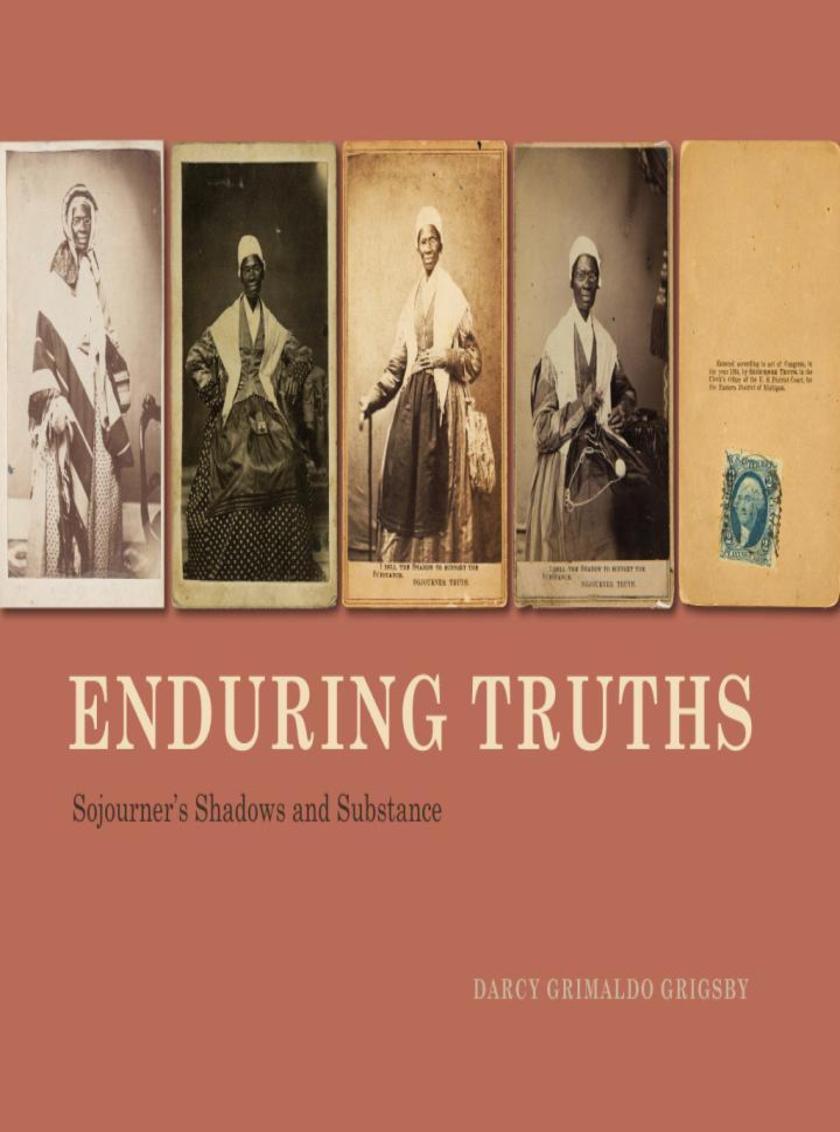
Enduring Truths
¥370.82
Runaway slave Sojourner Truth gained fame in the nineteenth century as an abolitionist, feminist, and orator and earned a living partly by selling photographic carte de visite portraits of herself at lectures and by mail. Cartes de visite, similar in format to calling cards, were relatively inexpensive collectibles that quickly became a new mode of mass communication. Despite being illiterate, Truth copyrighted her photographs in her name and added the caption "e;I Sell the Shadow to Support the Substance. Sojourner Truth."e;Featuring the largest collection of Truth's photographs ever published,?Enduring Truths?is the first book to explore how she used her image, the press, the postal service, and copyright laws to support her activism and herself. Darcy Grimaldo Grigsby establishes a range of important contexts for Truth's portraits, including the strategic role of photography and copyright for an illiterate former slave; the shared politics of Truth's cartes de visite and federal banknotes, which were both created to fund the Union cause; and the ways that photochemical limitations complicated the portrayal of different skin tones. Insightful and powerful,?Enduring Truths?shows how Truth made her photographic portrait worth money in order to end slavery-and also became the strategic author of her public self.

Emptiness
¥288.41
For many Christians in America, becoming filled with Christ first requires being empty of themselves-a quality often overlooked in religious histories. In Emptiness, John Corrigan highlights for the first time the various ways that American Christianity has systematically promoted the cultivation of this feeling. ?Corrigan examines different kinds of emptiness essential to American Christianity, such as the emptiness of deep longing, the emptying of the body through fasting or weeping, the emptiness of the wilderness, and the emptiness of historical time itself. He argues, furthermore, that emptiness is closely connected to the ways Christian groups differentiate themselves: many groups foster a sense of belonging not through affirmation, but rather avowal of what they and their doctrines are not. Through emptiness, American Christians are able to assert their identities as members of a religious community.Drawing much-needed attention to a crucial aspect of American Christianity, Emptiness expands our understanding of historical and contemporary Christian practices.?
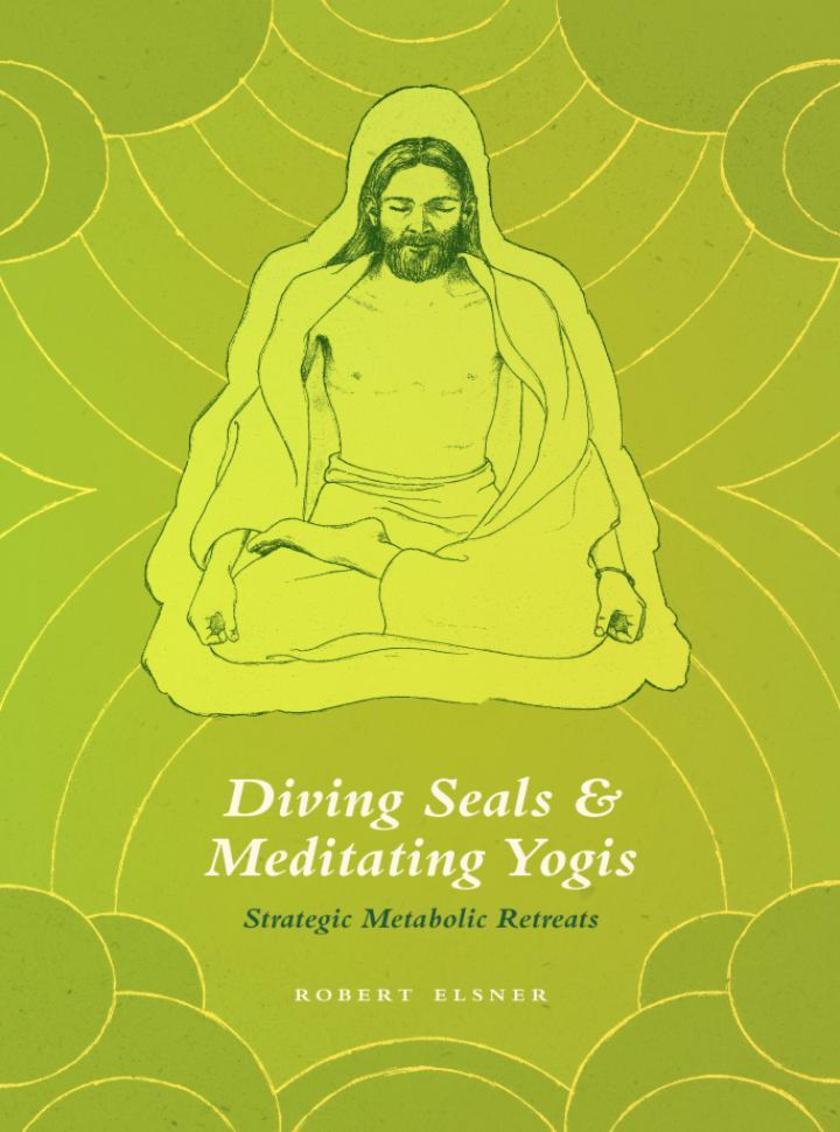
Diving Seals and Meditating Yogis
¥265.87
The comparative physiology of seemingly disparate organisms often serves as a surprising pathway to biological enlightenment. How appropriate, then, that Robert Elsner sheds new light on the remarkable physiology of diving seals through comparison with members of our own species on quests toward enlightenment: meditating yogis.As Elsner reveals, survival in extreme conditions such as those faced by seals is often not about running for cover or coming up for air, but rather about working within the confines of an environment and suppressing normal bodily function. Animals in this withdrawn state display reduced resting metabolic rates and are temporarily less dependent upon customary levels of oxygen. For diving seals-creatures especially well-adapted to prolonged submergence in the ocean's cold depths-such periods of rest lengthen dive endurance. But while human divers share modest, brief adjustments of suppressed metabolism with diving seals, it is the practiced response achieved during deep meditation that is characterized by metabolic rates well below normal levels, sometimes even approaching those of non-exercising diving seals. And the comparison does not end here: hibernating animals, infants during birth, near-drowning victims, and clams at low tide all also display similarly reduced metabolisms.By investigating these states-and the regulatory functions that help maintain them-across a range of species, Elsner offers suggestive insight into the linked biology of survival and well-being.

Gravity's Ghost and Big Dog
¥247.21
Gravity's Ghost and Big Dog brings to life science's efforts to detect cosmic gravitational waves. These ripples in space-time are predicted by general relativity, and their discovery will not only demonstrate the truth of Einstein's theories but also transform astronomy. Although no gravitational wave has ever been directly detected, the previous five years have been an especially exciting period in the field. Here sociologist Harry Collins offers readers an unprecedented view of gravitational wave research and explains what it means for an analyst to do work of this kind.?Collins was embedded with the gravitational wave physicists as they confronted two possible discoveries-"e;Big?Dog,"e; fully analyzed in this volume for the first time, and the "e;Equinox Event,"e; which was first chronicled by Collins in Gravity's Ghost. Collins records the agonizing arguments that arose as the scientists worked out what they had seen and how to present it to the world, along the way demonstrating how even the most statistical of sciences rest on social and philosophical choices. Gravity's Ghost and Big Dog draws on nearly fifty years of fieldwork observing scientists at the American Laser Interferometer Gravitational Wave Observatory and elsewhere around the world to offer an inspired commentary on the place of science in society today.
Realizing Educational Rights
¥247.21
In?Realizing Educational Rights, Anne Newman examines two educational rights questions that arise at the intersection of political theory, educational policy, and law: What is the place of a right to education in a participatory democracy, and how can we realize this right in the United StatesTracking these questions across both philosophical and pragmatic terrain, she addresses urgent moral and political questions, offering a rare, double-pronged look at educational justice in a democratic society.Newman argues that an adequate K-12 education is the right of all citizens, as a matter of equality, and emphasizes that this right must be shielded from the sway of partisan and majoritarian policy making far more than it currently is. She then examines how educational rights are realized in our current democratic structure, offering two case studies of leading types of rights-based activism: school finance litigation on the state level and the mobilization of citizens through community-based organizations. Bringing these case studies together with rich philosophical analysis,?Realizing Educational Rights?advances understanding of the relationships among moral and legal rights, education reform, and democratic politics.?
Side Effects and Complications
¥147.15
The Affordable Care Act will have a dangerous effect on the American economy. That may sound like a political stance, but it's a conclusion directly borne out by economic forecasts.In Side Effects and Complications, preeminent labor economist Casey B. Mulligan brings to light the dire economic realities that have been lost in the ideological debate over the ACA, and he offers an eye-opening, accessible look at the price American citizens will pay because of it.Looking specifically at the labor market, Mulligan reveals how the costs of health care under the ACA actually create implicit taxes on individuals, and how increased costs to employers will be passed on to their employees. Mulligan shows how, as a result, millions of workers will find themselves in a situation in which full-time work, adjusted for the expense of health care, will actually pay less than part-time work or even not working at all. Analyzing the incentives-or lack thereof-for people to earn more by working more, Mulligan offers projections on how many hours people will work and how productively they will work, as well as how much they will spend in general. Using the powerful tools of economics, he then illustrates the detrimental consequences on overall employment in the near future.Drawing on extensive knowledge of the labor market and the economic theories at its foundation, Side Effects and Complications offers a crucial wake-up call about the risks the ACA poses for the economy. Plainly laying out the true costs of the ACA, Mulligan's grounded and thorough predictions are something that workers and policy makers cannot afford to ignore.

Bas Jan Ader
¥141.26
On July 9, 1975, Dutch-born artist Bas Jan Ader set sail from Chatham, Massachusetts, on a thirteen-foot sailboat. He was bound for Falmouth, England, on the second leg of a three-part piece titled In Search of the Miraculous. The damaged boat was found south of the western tip of Ireland nearly a year later. Ader was never seen again.?Since his untimely death, Ader has achieved mythic status in the art world as a figure literally willing to die for his art. Considering the artist's legacy and concise oeuvre beyond the romantic and tragic associations that accompany his peculiar end, Alexander Dumbadze resituates Ader's art and life within the conceptual art world of Los Angeles in the early 1970s and offers a nuanced argument about artistic subjectivity that explains Ader's tremendous relevance to contemporary art.?Bas Jan Ader blends biography, theoretical reflection, and archival research to draw a detailed picture of the world in which Ader's work was rooted: a vibrant international art scene populated with peers such as Ger van Elk, William Leavitt, and Allen Ruppersberg. Dumbadze looks closely at Ader's engagement with questions of free will and his ultimate success in creating art untainted by mediation. The first in-depth study of this enigmatic conceptual artist, Bas Jan Ader is a thoughtful reflection on the necessity of the creative act and its inescapable relation to death.

Big Jones Cookbook
¥147.15
You expect to hear about restaurant kitchens in Charleston, New Orleans, or Memphis perfecting plates of the finest southern cuisine-from hearty red beans and rice to stewed okra to crispy fried chicken. But who would guess that one of the most innovative chefs cooking heirloom regional southern food is based not in the heart of biscuit country, but in the grain-fed Midwest-in Chicago, no lessSince 2008, chef Paul Fehribach has been introducing Chicagoans to the delectable pleasures of Lowcountry cuisine, while his restaurant Big Jones has become a home away from home for the city's southern diaspora. From its inception, Big Jones has focused on cooking with local and sustainably grown heirloom crops and heritage livestock, reinvigorating southern cooking through meticulous technique and the unique perspective of its Midwest location. And with The Big Jones Cookbook, Fehribach brings the rich stories and traditions of regional southern food to kitchens everywhere.?Organized by region, The Big Jones Cookbook provides an original look at southern heirloom cooking with a focus on history, heritage, and variety. Throughout, Fehribach interweaves personal experience, historical knowledge, and culinary creativity, all while offering tried-and-true takes on everything from Reezy-Peezy to Gumbo Ya-Ya, Chicken and Dumplings, and Crispy Catfish. Fehribach's dishes reflect his careful attention to historical and culinary detail, and many recipes are accompanied by insights about their origins. In addition to the regional chapters, the cookbook features sections on breads, from sweet potato biscuits to spoonbread; pantry put-ups like bread and butter pickles and chow-chow; cocktails, such as the sazerac; desserts, including Sea Island benne cake; as well as an extensive section on snout-to-tail cooking, including homemade Andouille and pickled pigs' feet.?Proof that you need not possess a thick southern drawl to appreciate the comfort of creamy grits and the skill of perfectly fried green tomatoes, The Big Jones Cookbook will be something to savor regardless of where you set your table.

Who Freed the Slaves?
¥147.15
In the popular imagination, slavery in the United States ended with Abraham Lincoln's Emancipation Proclamation. The Proclamation may have been limited-freeing only slaves within Confederate states who were able to make their way to Union lines-but it is nonetheless generally seen as the key moment, with Lincoln's leadership setting into motion a train of inevitable events that culminated in the passage of an outright ban: the Thirteenth Amendment.?The real story, however, is much more complicated-and dramatic-than that. With Who Freed the Slaves?, distinguished historian Leonard L. Richards tells the little-known story of the battle over the Thirteenth Amendment, and of James Ashley, the unsung Ohio congressman who proposed the amendment and steered it to passage. Taking readers to the floor of Congress and the back rooms where deals were made, Richards brings to life the messy process of legislation-a process made all the more complicated by the bloody war and the deep-rooted fear of black emancipation. We watch as Ashley proposes, fine-tunes, and pushes the amendment even as Lincoln drags his feet, only coming aboard and providing crucial support at the last minute. Even as emancipation became the law of the land, Richards shows, its opponents were already regrouping, beginning what would become a decades-long-and largely successful-fight to limit the amendment's impact.?Who Freed the Slavesis a masterwork of American history, presenting a surprising, nuanced portrayal of a crucial moment for the nation, one whose effects are still being felt today.
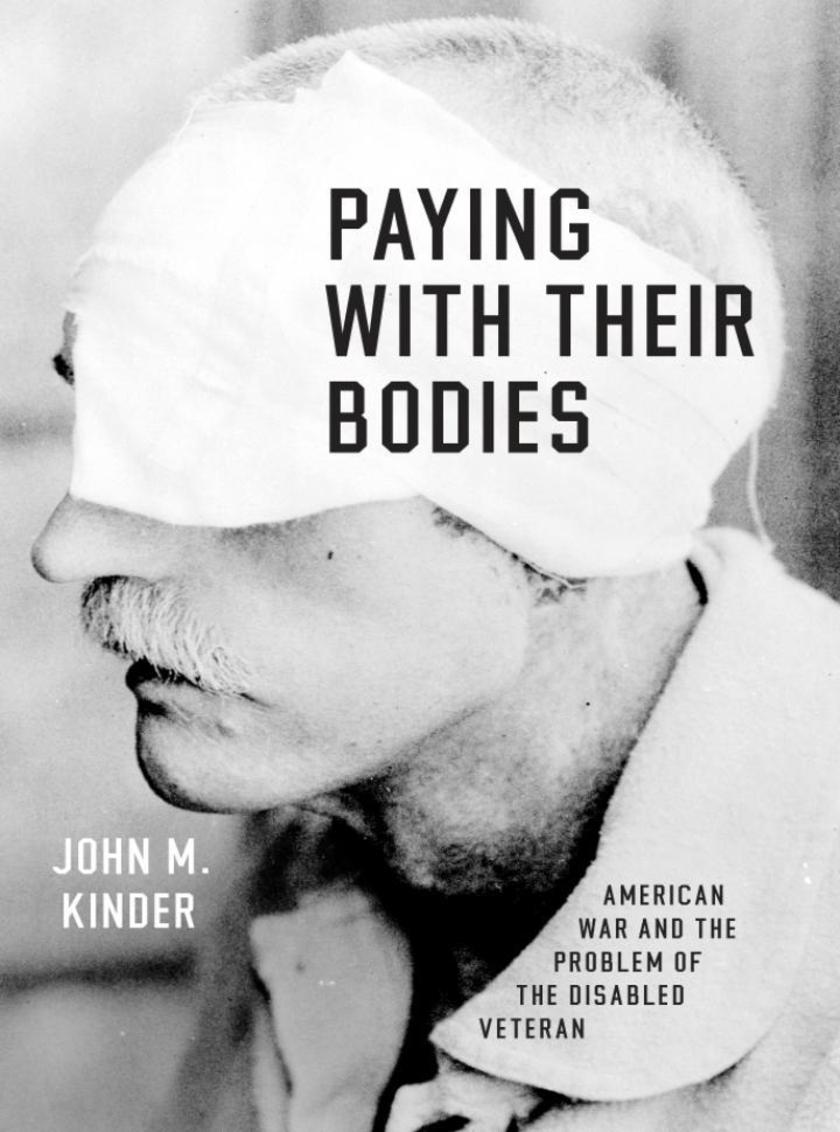
Paying with Their Bodies
¥147.15
Christian Bagge, an Iraq War veteran, lost both his legs in a roadside bomb attack on his Humvee in 2006. Months after the accident, outfitted with sleek new prosthetic legs, he jogged alongside President Bush for a photo op at the White House. The photograph served many functions, one of them being to revive faith in an American martial ideal-that war could be fought without permanent casualties, and that innovative technology could easily repair war's damage. When Bagge was awarded his Purple Heart, however, military officials asked him to wear pants to the ceremony, saying that photos of the event should be "e;soft on the eyes."e; Defiant, Bagge wore shorts.America has grappled with the questions posed by injured veterans since its founding, and with particular force since the early twentieth century: What are the nation's obligations to those who fight in its nameAnd when does war's legacy of disability outweigh the nation's interests at home and abroadIn Paying with Their Bodies, John M. Kinder traces the complicated, intertwined histories of war and disability in modern America. Focusing in particular on the decades surrounding World War I, he argues that disabled veterans have long been at the center of two competing visions of American war: one that highlights the relative safety of US military intervention overseas; the other indelibly associating American war with injury, mutilation, and suffering. Kinder brings disabled veterans to the center of the American war story and shows that when we do so, the history of American war over the last century begins to look very different. War can no longer be seen as a discrete experience, easily left behind; rather, its human legacies are felt for decades.The first book to examine the history of American warfare through the lens of its troubled legacy of injury and disability, Paying with Their Bodies will force us to think anew about war and its painful costs.


