


 购物车
 个人中心


In the Pines
¥34.79
A ghost train carries a murderous secret deep through the North Georgia mountains. Betrayal colder than the wind blowing through the pines. A young girl with a burden a hundred years out of time.An old man’s tale of guilt and regret.A heartbroken woman caught in a mystery only she can solve.A boy long past living holds the key. Can unearthed secrets end the nightmare at last?
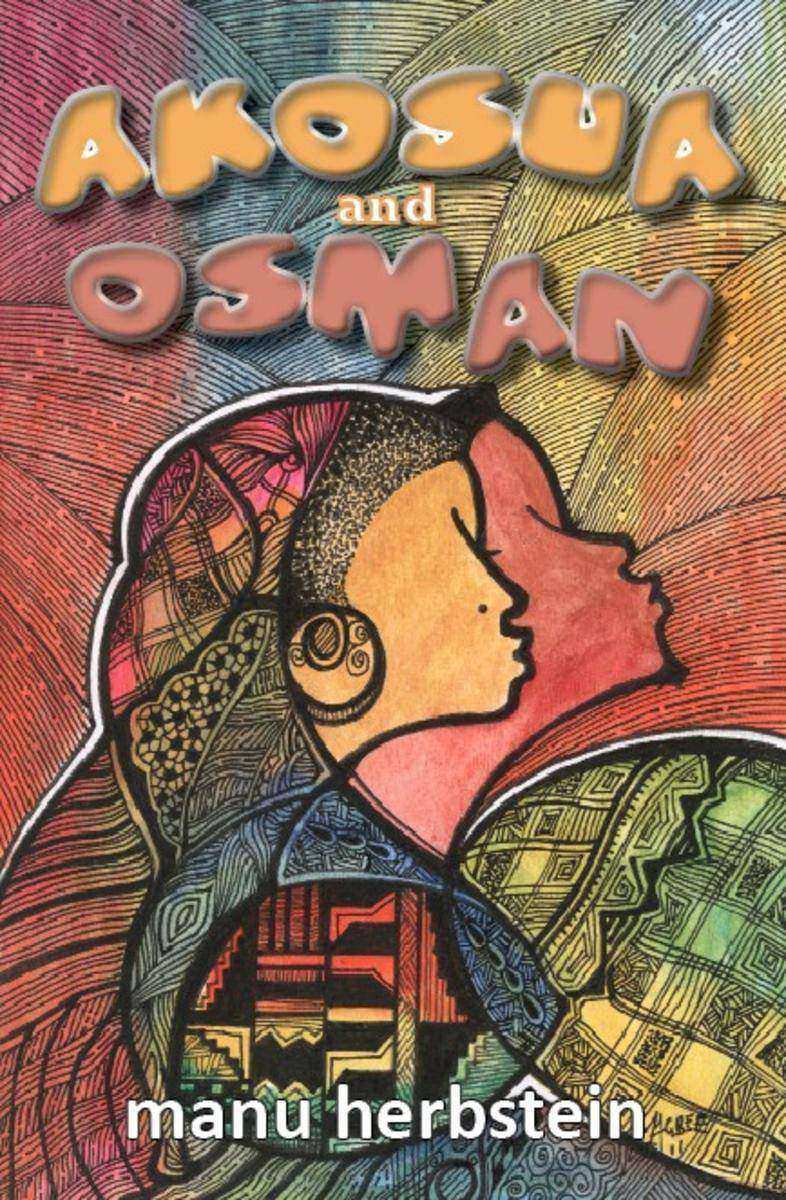
Akosua and Osman
¥17.35
Akosua Annan is a confident and fiercely intelligent student at a posh girls' school in Cape Coast, Ghana. There she comes under the influence of a charismatic feminist teacher. Osman Said's background is very different. Upon the death of his parents, a police sergeant and an unschooled market trader, immigrants to the capital, Accra, from the impoverished north of the country, he is adopted by a retired school teacher, Hajia Zainab. After a spell as an apprentice in an auto workshop, he returns to school. There, finding the teaching inadequate, he becomes an avid reader and educates himself. Akosua and Osman are thrown together by chance in the course of a school visit to the slave dungeon at Cape Coast Castle. Their paths cross again as finalists in the national school debating competition where the subject is "The problem of poverty in Ghana is insoluble." They meet for the third time as students at the University of Ghana and as we leave them, it looks as if their relationship might develop into something permanent. This story won a Burt Award for African Literature in 2011. The judges commented: "This fascinating novel tells the story of how these two young people from disparate backgrounds are brought together as if by an unseen hand, in a process that teaches us about our history, our common humanity despite ethnic differences, the need to pursue our ambitions, the strength of human sexuality and the need for self-discipline, and, above all, the power of love."

Fantastic Shorts: Volume 2
¥34.79
An enchanted bookstore in a town full of magic.A story of childhood and best friends revisited.A town forced to face the music.A modern myth from a land before time.A charming collision of numbers and magic.Unwelcome change in a land of dragons. In this second fantasy short story collection from Kari Kilgore, she visits lands familiar and strange, mythological and fantastic. From Allsentia to Appalachia to Atlanta, from modern mythology to dragons to joys of distant childhood. Join this talented storyteller on a journey through magical bookstores and haunted towns, lands lost in time and friendships forged across new dimensions. Includes Odds and Endings, Dawn Visitor,?The Earworms, The Spider Who Ate the Elephant,?Little Five, and The Last Dragonkeeper. Odds and EndingsVisit an enchanted bookstore in a town full of magic.Chris Ramsey grew up visiting the Odds and Endings Bookstore in Lightning Gap, Virginia.Wandering the shelves. Finding endless adventures in the pages.Wishing he helped create the magic.Years later, Chris gets his chance.What would you do for the opportunity of a lifetime? Dawn VisitorA beloved dog brings a special gift, especially to a young girl’s life.One that lasts and endures no matter how many years pass.Toby welcomes Ellie home as only a first best friend can.A touching story of childhood and best friends revisited. The EarwormsWhat if your whole town had to face the music?Estonoa, Virginia. A lovely little town tucked deep in the Blue Ridge Mountains.Hiking and ATV trails. Kayaking along the scenic Clinch River.A thriving community focused on the future.Erin Evans loves her hometown, except for one thing.The Earworms.Will Erin find the answer before the music drives her and everyone else crazy? The Spider Who Ate the ElephantA Modern Myth.?An eerie natural phenomenon.In the distant past, in a distant land…Grandmother Spider faces a sad problem far too big and difficult for her to solve.The end of her family and all the creatures in her land.Find out how her triumph echoes from then to now, and into forever.A tale of compassion, survival, and love. Little FiveBarry Evans: An oddball in the oddest land of all.A gray-suited accountant navigating colorful hair, crazy clothing, and questionable businesses.After three months in Little Five, nothing surprises Barry anymore.Until the day he meets a true stranger in town.What happens when numbers meet magic? The Last DragonkeeperWyja, Senior Dragonkeeper of the Upper Abramshire Academy, tends to young dragons and keepers alike.Each group challenging, and exhausting, in their own way.Unwelcome change sets in when dragon birthrates drop to dangerous levels.No one knows why.Can Wyja solve the problem before it’s too late?
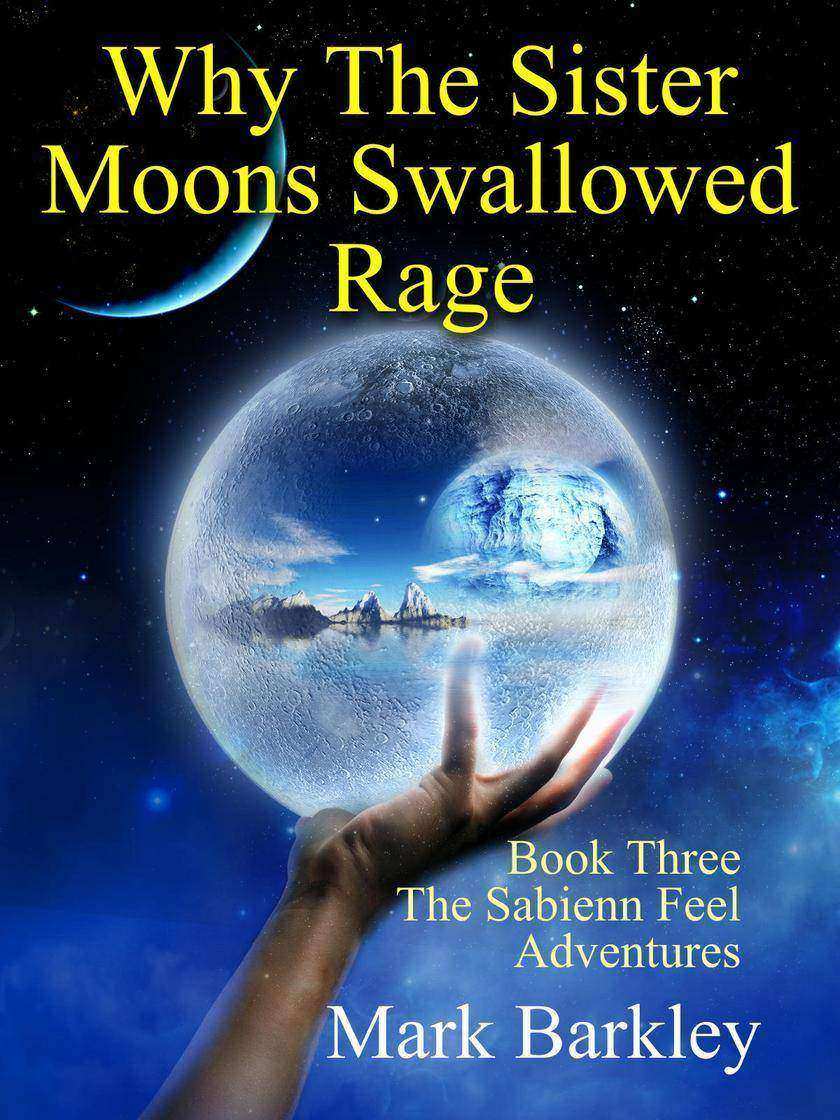
Why The Sister Moons Swallowed Rage: Book Three: The Sabienn Feel Adventures
¥26.07
In his quest, Sabienn Feel and his brothers venture to the country of Turrland, a land that his homeland of Hayddland has been at constant war with. His mission is to seek the occult stone, the Symbol of Military Success and make sure it never falls into the hands of his Father who wants only to push the planet into the abyss of war. In this journey, he needs to seek a book that was once owned by a mysterious monk. ? But what of Turrland? Is it to be invaded or not invaded? And how will he react when in his attempt to get answers, there is conflict within his group and a much loved brother dies? Why The Sister Moons Swallowed Rage is the third of twelve books in the Sabienn Feel Adventures.??? Interview with the Author Q – That’s three books down. How’s the journey unfolding? A - The characters are evolving. The more adversity they face the more they grow. There’s significant skin taken off Sabienn Feel in this book. His character is gaining wisdom. It was a pleasure to write this third book in the series. Q – Any news on the next book? The fourth in the series? A – I’m working with the tentative title, “The Two Men Who Kill to Be Carbon”. This is actually explained on the final page of “Why The Sister Moons Swallowed Rage” and also explains why the first book “When The Stone Shepherds Awaken” had to be so long. It is to be a study into the hunter and the hunted. Twins, two men, have been assigned to kill Sabienn and his brothers. One man is Sabienn’s best friend. The other has killed the woman he loved. It’s a mission of kill or be killed. Q - What inspired you to write?The Sabienn Feel Adventures? A – I’ve always loved the idea of the epic journey. I’m acquainted with the book?Journey to the West?but was more familiar with the TV series in the 80’s based on the book called?Monkey. The idea of four souls travelling across a wide expanse of geography to complete a quest appealed to me. So I planned a series of twelve books to go from one place in the south of this space colony that they live on twice removed from Earth, to end up in the north, meeting danger at every turn. Q – Why does your main character Sabienn Feel grow wings? A - Good question. I wanted something very drastic to occur to these people physically. Something that would be difficult to hide and offer an immediate prejudice. The idea of growing wings constantly came up for me. There’s a Pearl Jam song I found inspiring that says, “And?sometimes is seen a strange spot in the sky.?A?human being?that was?given to fly”. And in my mind’s eye, I could see this figure. Almost like the Led Zeppelin Icarus logo but with bat wings.?But they couldn’t fly otherwise they’d hit the sky and the journey would be over in no time. I made them only able to swim because being submerged in water has elements of dealing with the subconscious. To me it satisfies all elements of those prophecy, fantasy, epic adventure type of stories that involve friendship and brotherhood. Q - So, why should readers give these books a try? A – Well I would say they were humour-filled, page-turning, epic, fantasy adventure novels which involve a quest. But then that’s what you would expect me to say. Why not try and read one of the books and let me know what you think? Some of the books are free so you’ve got nothing to lose.
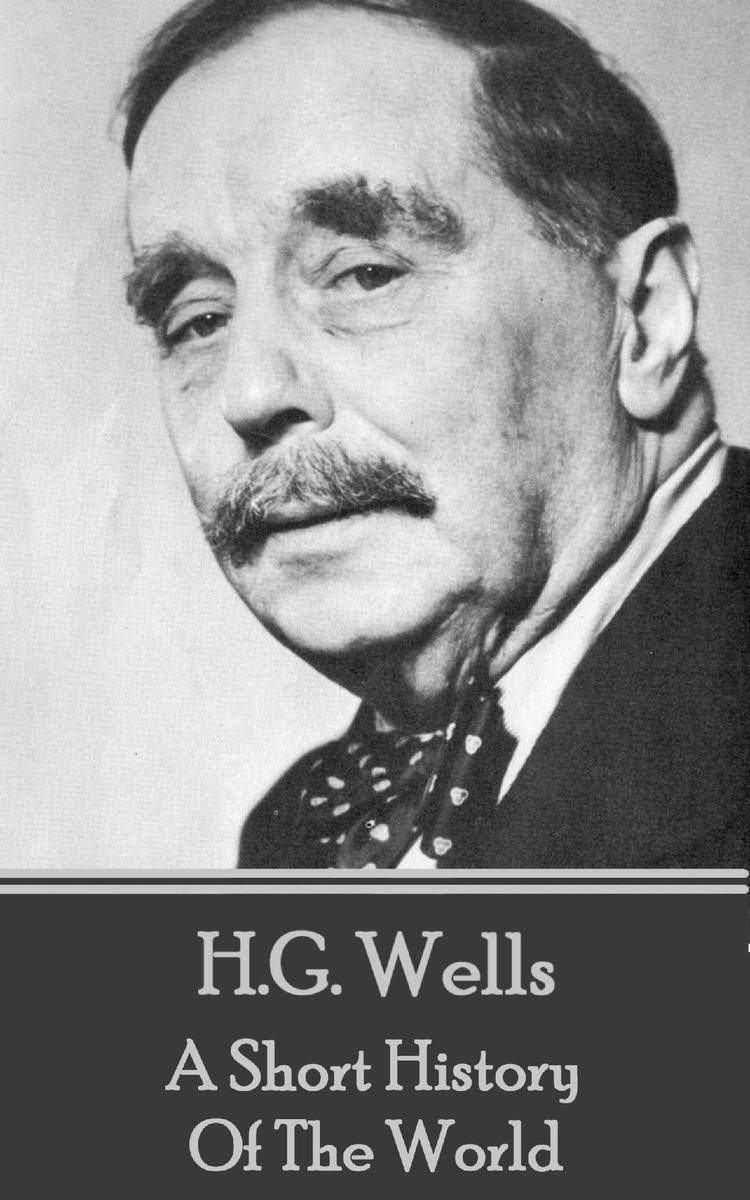
Short History of the World
¥44.65
Herbert George Wells was born on September 21st, 1866 at Atlas House, 46 High Street, Bromley, Kent. He was the youngest of four siblings and his family affectionately knew him as 'Bertie'. The first few years of his childhood were spent fairly quietly, and Wells didn't display much literary interest until, in 1874, he accidentally broke his leg and was left to recover in bed, largely entertained by the library books his father regularly brought him. Through these Wells found he could escape the boredom and misery of his bed and convalescence by exploring the new worlds he encountered in these books. From these humble beginnings began a career that was, after several delays, to be seen as one of the most brilliant of modern English writers. Able to write comfortably in a number of genres he was especially applauded for his science fiction works such as The Time Machine and War of the Worlds but his forays into the social conditions of the times, with classics such as Kipps, were almost as commercially successful. His short stories are miniature masterpieces many of which bring new and incredible ideas of science fiction to the edge of present day science fact. Wells also received four nominations for the Nobel Prize in Literature. Despite a strong and lasting second marriage his affairs with other women also brought the complications of fathering other children. His writings and work against fascism, as well as the promotion of socialism, brought him into increasing doubts with and opposition to religion. His writings on what the world could be in works, such as A Modern Utopia, are thought provoking as well as being plausible, especially when viewed from the distressing times they were written in. His diabetic condition pushed him to create what is now the largest Diabetes charity in the United Kingdom. Wells even found the time to run twice for Parliament. It was a long, distinguished and powerfully successful career by the time he died, aged 79, on August 13th, 1946.
Earl of Essex - 'In hour malignant, to o'erturn the state''
¥14.03
Henry Jones was born at Beaulieu, near Drogheda, County Louth, Ireland in 1721. His working life began when he was apprenticed to a bricklayer. Jones, however, was keen to better himself and studied hard in his private time. He fashioned some complimentary verses, addressed to the corporation of Drogheda and together with some lines 'On Mr. Pope's Death', managed to attract the attention of Lord-chief-justice Singleton, who lived at Beaulieu.In 1745 he obtained employment at the parliament house at Dublin. Jones, used the position to promote his literary talents and celebrated the arrival of Lord Chesterfield as lord-lieutenant of Ireland in a poem that was then presented to Chesterfield by Singleton. Chesterfield asked Jones to accompany him on his return to London in 1748. There, he and his friends helped Jones to publish, by subscription, 'Poems on Several Occasions' in 1749, which delivered a handsome profit for the young poet. Jones is though more noted as a dramatist and that, primarily, is due to his tragedy, 'The Earl of Essex' which he completed in 1752. Chesterfield introduced both the play and Jones to Colley Cibber, the Poet Laureate, who then introduced Jones to the manager of Covent Garden Theatre. Cibber would later attempt to secure the laureateship for Jones after his own death.'The Earl of Essex', after being revised by Chesterfield and Cibber, was premiered at Covent Garden on 21st Feb. 1753, and played for seventeen sold-out nights. It was a triumph, and was equally well received in Dublin and then later in the provinces. It brought Jones over GBP500, a large sum even by today's standards. The play was printed soon after its production, and eventually sold through four editions.The success, unfortunately, was to be the ruin of Jones. His drunken habits, indolence, raw manners, and harshly arrogant temper appalled most of his patrons who soon withdrew their support. However, he seemed adept at keeping on good terms with Chesterfield for some years longer, but at length even he gave up on the relationship when Jones borrowed money from his servant. Jones did continue to write and had made progress on a tragedy entitled 'Harold,' and, on that thin security, managed to raise money as an advance from booksellers. He was rather more successful in his revelries with the acting profession. Jones continued to be on friendly terms with many of the leading actors although in his often drunk state he would harangue the more minor actors as 'parrots', but he repaid them with puffs and panegyrics. His charm and ease with a few lines were valuable commodities.Whenever he was an inmate of sponging-houses he contrived to flatter any bailiff's daughter or wife with verses on their beauty or talents, and, in the process, secured himself more comfortable quarters than he perhaps deserved. Henry Jones died in the parish workhouse in April 1770.After his death, Reddish, the actor of Drury Lane, acquired Jones's manuscripts, which included 'Harold' and three acts of an unfinished tragedy, 'The Cave of Idra.' This was completed by Paul Hiffernan, and re-titled 'The Heroine of the Cave,' was produced for Reddish's benefit on 25th March 1774.
Spanish Student
¥17.56
Henry Wadsworth Longfellow was born on February 27th, 1807 in Portland, Maine. As a young boy, it was obvious that he was very studious and he quickly became fluent in Latin. He published his first poem, "e;The Battle of Lovell's Pond"e;, in the Portland Gazette on November 17th, 1820. He was already thinking of a career in literature and, in his senior year, wrote to his father: "e;I will not disguise it in the least... the fact is, I most eagerly aspire after future eminence in literature, my whole soul burns most ardently after it, and every earthly thought centers in it...."e; After graduation travels in Europe occupied the next three years and he seemed to easily absorb any language he set himself to learn. On September 14th, 1831, Longfellow married Mary Storer Potter. They settled in Brunswick. His first published book was in 1833, a translation of poems by the Spanish poet Jorge Manrique. He also published a travel book, Outre-Mer: A Pilgrimage Beyond the Sea. During a trip to Europe Mary became pregnant. Sadly, in October 1835, she miscarried at some six months. After weeks of illness she died, at the age of 22 on November 29th, 1835. Longfellow wrote "e;One thought occupies me night and day... She is dead - She is dead! All day I am weary and sad"e;. In late 1839, Longfellow published Hyperion, a book in prose inspired by his trips abroad. Ballads and Other Poems was published in 1841 and included "e;The Village Blacksmith"e; and "e;The Wreck of the Hesperus"e;. His reputation as a poet, and a commercial one at that, was set. On May 10th, 1843, after seven years in pursuit of a chance for new love, Longfellow received word from Fanny Appleton that she agreed to marry him. On November 1st, 1847, the epic poem Evangeline was published. In 1854, Longfellow retired from Harvard, to devote himself entirely to writing. The Song of Haiwatha, perhaps his best known and enjoyed work was published in 1855. On July 10th, 1861, after suffering horrific burns the previous day. In his attempts to save her Longfellow had also been badly burned and was unable to attend her funeral. He spent several years translating Dante Alighieri's Divine Comedy. It was published in 1867. Longfellow was also part of a group who became known as The Fireside Poets which also included William Cullen Bryant, John Greenleaf Whittier, James Russell Lowell, and Oliver Wendell Holmes Snr. Longfellow was the most popular poet of his day. As a friend once wrote to him, "e;no other poet was so fully recognized in his lifetime"e;. Some of his works including "e;Paul Revere's Ride"e; and "e;The Song of Haiwatha"e; may have rewritten the facts but became essential parts of the American psyche and culture. Henry Wadsworth Longfellow died, surrounded by family, on Friday, March 24th, 1882. He had been suffering from peritonitis.
Efficiency Expert - If I had followed my better judgment always
¥35.22
Edgar Rice Burroughs was born on September 1, 1875, in Chicago, Illinois. His early career was unremarkable. After failing to enter West Point he enlisted in the 7th Calvary but was discharged after heart problems were diagnosed. A series of short term jobs gave no indication as to a career path but finally, in 1911, married and with two young children, he turned his hand to writing. He aimed his works squarely at the very popular pulp serial magazines. His first effort 'Under The Moons Of Mars' ran in Munsey's Magazine in 1912 under the pseudonym Norman Bean. With its success he began writing full time. A continuing theme of his work was to develop series so that each character had ample opportunities to return in sequels. John Carter was in the Mars series and there was another on Venus and one on Pellucidar among others. But perhaps the best known is Tarzan. Indeed Burroughs wanted so much to capitalise upon the brand that he introduced a syndicated Tarzan comic strip, movies and merchandise. He purchased a large ranch north of Los Angeles, California, which he named "e;Tarzana."e; The surrounding communities outside the ranch voted in 1927 to adopt the name as their own. By 1932 Burroughs set up his own company to print his own books. Here we publish 'The Efficiency Expert' somewhat different to what the title might suggest in the hands of an ordinary writer but in the hands of Edgar Rice Burroughs the title is just the beginning.....

Girl From Hollywood
¥35.22
Edgar Rice Burroughs was born on September 1, 1875, in Chicago, Illinois. His early career was unremarkable. After failing to enter West Point he enlisted in the 7th Calvary but was discharged after heart problems were diagnosed. A series of short term jobs gave no indication as to a career path but finally, in 1911, married and with two young children, he turned his hand to writing. He aimed his works squarely at the very popular pulp serial magazines. His first effort 'Under The Moons Of Mars' ran in Munsey's Magazine in 1912 under the pseudonym Norman Bean. With its success he began writing full time. A continuing theme of his work was to develop series so that each character had ample opportunities to return in sequels. John Carter was in the Mars series and there was another on Venus and one on Pellucidar among others. But perhaps the best known is Tarzan. Indeed Burroughs wanted so much to capitalise upon the brand that he introduced a syndicated Tarzan comic strip, movies and merchandise. He purchased a large ranch north of Los Angeles, California, which he named "e;Tarzana."e; The surrounding communities outside the ranch voted in 1927 to adopt the name as their own. By 1932 Burroughs set up his own company to print his own books. Here we publish 'The Girl From Hollywood' a gentle title that in the hands of an ordinary writer might be just so but in the hands of Edgar Rice Burroughs the title is just the beginning.....
White Devil - Man is most happy, when his own actions are arguments and examples
¥25.80
John Webster is known primarily for his two Jacobean tragedies, The Duchess of Malfi and The White Devil. Much of the detail and chronology of his life that led to these two pivotal works is, however, unknown. His father, a carriage maker also named John Webster, married a blacksmith's daughter, Elizabeth Coates, on November 4th, 1577, and it is likely that Webster was born within a year or two in or near London. The family lived in St. Sepulchre's parish. Both his father and his uncle, Edward Webster, were Freemen of the Merchant Taylors' Company and Webster attended Merchant Taylors' School in Suffolk Lane, London. Some accounts say he began to study law but nothing is certain although there are some legal aspects to his later works to suggest this may have been so. By 1602, Webster was employed working as part of various teams of playwrights on history plays, though unfortunately most were never printed and therefore do not survive. These include a tragedy Caesar's Fall (written with Michael Drayton, Thomas Dekker, Thomas Middleton and Anthony Munday), and a collaboration with Thomas Dekker; Christmas Comes but Once a Year (1602). This factory line assembly of plays may seem rather odd to us today but plays then ran for much shorter durations and consequently a steady supply had to be assured. Webster's relationship with Dekker seems to have been a good one. Together they wrote Sir Thomas Wyatt, printed in 1607, although it is thought first performed in 1602 and two city comedies, Westward Ho! in 1604 and Northward Ho! in 1605. It seems Webster also adapted, in 1604, John Marston's The Malcontent for staging by the King's Men. On March 18th, 1606 Webster married the 17-year-old Sara Peniall at St Mary's Church, Islington. Sara was 7 months pregnant and marrying during Lent required the issuing of a special permit, hence the certainty of the date. Their first child, John, was baptised at the parish of St Dunstan-in-the-West on March 8th, 1606. Records show that on the death of a neighbour, who died in 1617, several bequests were made to the Webster family and it is therefore thought that other children were born to the couple. Despite his ability to write comedy, and to collaborate with others, Webster is remembered best for his sole authorship on two brooding English tragedies based on Italian sources. The White Devil, retells the intrigues involving Vittoria Accoramboni, an Italian woman assassinated at the age of 28. It was performed at the open-air Red Bull Theatre in 1612 but was unsuccessful, perhaps being too high brow for a working-class audience. In 1614 The Duchess of Malfi was first performed by the King's Men, most probably in the indoor Blackfriars Theatre and to a more high-brow audience. It proved to be more successful. The play Guise, based on French history, was also written but him but no text has survived. Webster wrote one more play on his own: The Devil's Law Case (c. 1617-1619), a tragicomedy. He continued to write thereafter but always in collaboration and usually city comedies; Anything for a Quiet Life (c. 1621), with Thomas Middleton, and A Cure for a Cuckold (c. 1624), with William Rowley. In 1624, he also co-wrote a topical play about a recent scandal, Keep the Widow Waking (with John Ford, Rowley and Dekker). The play itself is lost, although its plot is known from a court case. There is also some certainty that he contributed to the tragicomedy The Fair Maid of the Inn with John Fletcher, John Ford, and Phillip Massinger. His Appius and Virginia, was probably written with Thomas Heywood, and is of uncertain date. It is believed, mainly from Thomas Heywood's Hierarchie of the Blessed Angels (licensed 7 November 1634) that speaks of him in the past tense that John Webster had died at some point in that year of 1634.
Erewhon - Life is the art of drawing sufficient conclusions from insufficient pr
¥38.75
Samuel Butler was born on 4th December 1835 at the village rectory in Langar, Nottinghamshire.His relationship with his parents, especially his father, was largely antagonistic. His education began at home and included frequent beatings, as was all too common at the time.Under his parents' influence, he was set to follow his father into the priesthood. He was schooled at Shrewsbury and then St John's College, Cambridge, where he obtained a first in Classics in 1858.After Cambridge he went to live in a low-income parish in London 1858-59 as preparation for his ordination into the Anglican clergy; there he discovered that baptism made no apparent difference to the morals and behaviour of his new peers. He began to question his faith. Correspondence with his father about the issue failed to set his mind at peace, inciting instead his father's wrath.As a result, the young Butler emigrated in September 1859 to New Zealand. He was determined to change his life.He wrote of his arrival and life as a sheep farmer on Mesopotamia Station in 'A First Year in Canterbury Settlement' (1863). After a few years he sold his farm and made a handsome profit. But the chief achievement of these years were the drafts and source material for much of his masterpiece 'Erewhon'.Butler returned to England in 1864, settling in rooms in Clifford's Inn, near Fleet Street, where he would live for the rest of his life.In 1872, he published his Utopian novel 'Erewhon' which made him a well-known figure.He wrote a number of other books, including a moderately successful sequel, 'Erewhon Revisited' before his masterpiece and semi-autobiographical novel 'The Way of All Flesh' appeared after his death. Butler thought its tone of satirical attack on Victorian morality too contentious to publish during his life time and thereby shied away from further potential problems.Samuel Butler died aged 66 on 18th June 1902 at a nursing home in St John's Wood Road, London. He was cremated at Woking Crematorium, and accounts say his ashes were either dispersed or buried in an unmarked grave.
Kiss for Cinderella
¥16.38
Sir James Matthew Barrie, 1st Baronet, OM, was born in Kirriemuir, Angus the ninth of ten children on May 9th, 1860. From early formative experiences, Barrie knew that he wished to follow a career as an author. His family wished otherwise and sought to persuade him to choose a profession, such as the ministry. The compromise was that he would attend university to study literature at the University of Edinburgh. He graduated with an M.A. on April 21st, 1882. His first job was as a staff journalist for the Nottingham Journal. The London editor of the St. James's Gazette "e;liked that Scotch thing"e; in Barrie's short stories about his mother's early life. They also served as the basis for his first novels. Barrie though was increasingly drawn to working in the theatre. His first play, a biography of Richard Savage, was only performed once and critically panned. Undaunted he immediately followed this with Ibsen's Ghost in 1891, a parody of Ibsen's plays Hedda Gabler and Ghosts. Barrie's third play, Walker, London, in 1892 led to an introduction to his future wife, a young actress by the name of Mary Ansell. The two became friends, and she helped his family to care for him when he fell very ill in 1893 and 1894. Barrie proposed and they were married, in Kirriemuir, on July 9th, 1894. By some accounts the relationship was unconsummated and indeed the couple had no children. The story of Peter Pan had begun to formulate when Barrie became acquainted with the Llewelyn Davis family in 1897, meeting George, Jack and baby Peter with their nanny in London's Kensington Gardens. In 1901 and 1902, Barrie had back-to-back theatre successes with Quality Street and The Admirable Crichton. The character of "e;Peter Pan"e; first appeared in The Little White Bird in 1902. This most famous and enduring of his works; Peter Pan, or The Boy Who Wouldn't Grow Up had its first stage performance on December 27th, 1904. Peter Pan would overshadow everything written during his career. He continued to write for the rest of his life contributing many other fine and important works. Sir James Matthew Barrie, 1st Baronet, OM, died of pneumonia on June 19th,1937 and was buried at Kirriemuir next to his parents and two of his siblings.

Machine - Fascism is capitalism plus murder.
¥26.98
Upton Sinclair (1878-1968) was a prolific American novelist and a political activist. Apart from his bestselling novels, which told in black and white, illuminated the realities of the United States at the turn of the twentieth century, he is remembered today for championing socialist causes that were naturally unpopular in conservative America. In classics like 'The Jungle' his work had considerable effects on American politics and legislation. Sinclair's socialist ideals and dreams found their way to his fiction as he believed that no art can be practiced for art's sake as long as humanity still suffers from persistent dangers and evils. Such orientations have often subjected Sinclair to harsh criticism and even to demonization from numerous critics and politicians of his time, the most distinguished among which was probably President Theodore Roosevelt. However his legacy is that of a successful and established novelist and activist who if not always righting the balance was able to bring an incisive mind and mass exposure to many areas and industries.
Mastering Python for Finance
¥70.84
Take your financial skills to the next level by mastering cutting-edge mathematical and statistical financial applications Key Features * Explore advanced financial models used by the industry and ways of solving them using Python * Build state-of-the-art infrastructure for modeling, visualization, trading, and more * Empower your financial applications by applying machine learning and deep learning Book Description The second edition of Mastering Python for Finance will guide you through carrying out complex financial calculations practiced in the industry of finance by using next-generation methodologies. You will master the Python ecosystem by leveraging publicly available tools to successfully perform research studies and modeling, and learn to manage risks with the help of advanced examples. You will start by setting up your Jupyter notebook to implement the tasks throughout the book. You will learn to make efficient and powerful data-driven financial decisions using popular libraries such as TensorFlow, Keras, Numpy, SciPy, and sklearn. You will also learn how to build financial applications by mastering concepts such as stocks, options, interest rates and their derivatives, and risk analytics using computational methods. With these foundations, you will learn to apply statistical analysis to time series data, and understand how time series data is useful for implementing an event-driven backtesting system and for working with high-frequency data in building an algorithmic trading platform. Finally, you will explore machine learning and deep learning techniques that are applied in finance. By the end of this book, you will be able to apply Python to different paradigms in the financial industry and perform efficient data analysis. What you will learn * Solve linear and nonlinear models representing various financial problems * Perform principal component analysis on the DOW index and its components * Analyze, predict, and forecast stationary and non-stationary time series processes * Create an event-driven backtesting tool and measure your strategies * Build a high-frequency algorithmic trading platform with Python * Replicate the CBOT VIX index with SPX options for studying VIX-based strategies * Perform regression-based and classification-based machine learning tasks for prediction * Use TensorFlow and Keras in deep learning neural network architecture Who this book is for If you are a financial or data analyst or a software developer in the financial industry who is interested in using advanced Python techniques for quantitative methods in finance, this is the book you need! You will also find this book useful if you want to extend the functionalities of your existing financial applications by using smart machine learning techniques. Prior experience in Python is required.

Security Tokens and Stablecoins Quick Start Guide
¥53.40
A complete guide to understanding, developing, and testing popular security-token smart contracts Key Features * Understand key Blockchain and Ethereum platforms concepts * Step-by-step guide to developing STO smart contracts on Ethereum * Monetize digital tokens under various U.S. securities laws Book Description The failure of initial coin offerings (ICOs) is no accident, as most ICOs do not link to a real asset and are not regulated. Realizing the shortcomings of ICOs, the blockchain community and potential investors embraced security token offerings (STOs) and stablecoins enthusiastically. In this book, we start with an overview of the blockchain technology along with its basic concepts. We introduce the concept behind STO, and cover the basic requirements for launching a STO and the relevant regulations governing its issuance. We discuss U.S. securities laws development in launching security digital tokens using blockchain technology and show some real use cases. We also explore the process of STO launches and legal considerations. We introduce popular security tokens in the current blockchain space and talk about how to develop a security token DApp, including smart contract development for ERC1404 tokens. Later, you'll learn to build frontend side functionalities to interact with smart contracts. Finally, we discuss stablecoin technical design functionalities for issuing and operating STO tokens by interacting with Ethereum smart contracts. By the end of this book, you will have learned more about STOs and gained a detailed knowledge of building relevant applications—all with the help of practical examples. What you will learn * Understand the basic requirements for launching a security token offering * Explore various US securities laws governing the offering of security digital tokens * Get to grips with the stablecoin concept with the help of use cases * Learn how to develop security token decentralized applications * Understand the difference between ERC-20 and ERC-721 tokens * Learn how to set up a development environment and build security tokens * Explore the technical design of stablecoins Who this book is for This book is ideal for blockchain beginners and business user developers who want to quickly master popular Security Token Offerings and stablecoins. Readers will learn how to develop blockchain/digital cryptos, guided by U.S. securities laws and utilizing some real use cases. Prior exposure to an Object-Oriented Programming language such as JavaScript would be an advantage, but is not mandatory.

Vue CLI 3 Quick Start Guide
¥53.40
Build Vue apps the right way using Vue CLI 3. Understand how the building blocks of Vue CLI 3 work including npm, webpack, babel, eslint, plugins, GUI, testing, and SCSS. Import third-party libraries and maintain your project. Key Features * Learn to work with Vue CLI 3 both on the command line and with a GUI * Manage VueJS apps, settings, Vue plugins, and third-party libraries * Learn how to build Vue apps from scratch using webpack, babel, ES6, vue-router, Jest, Cypress, SCSS, and Git Book Description The sprawling landscape of various tools in JavaScript web development is becoming overwhelming. This book will show you how Vue CLI 3 can help you take back control of the tool chain. To that end, we'll begin by configuring webpack, utilizing HMR, and using single-file .vue components. We'll also use SCSS, ECMAScript, and TypeScript. We'll unit test with Jest and perform E2E testing with Cypress. This book will show you how to configure Vue CLI as your default way of building Vue projects. You'll discover the reasons behind using webpack, babel, eslint, and other modern JavaScript toolchain technologies. You'll learn about the inner workings of each through the lens of Vue CLI 3. We'll explore the extendibility of Vue CLI with the built-in settings, and various core and third-party plugins. Vue CLI helps you work with Vue components, routers, directives, and services in the Vue ecosystem. While learning these concepts, you'll examine the evolution of JavaScript. You'll learn about use of npm, IIFEs, modules in JavaScript, Common.js modules, task runners, npm scripts, module bundlers, and webpack. You'll get familiar with the reasons why Vue CLI 3 is set up the way it is. You'll also learn to perform linting with ESLint and Prettier. Towards the end, we'll introduce you to working with styles and SCSS. Finally, we'll show you how to deploy your very own Vue project on Github Pages. What you will learn * Work with nvm, install Node.js and npm, use Vue CLI 3 with no configuration, via the command line and the graphical user interface * Build a Vue project from scratch using npm and webpack, and learn about hot module replacement * Work with Babel settings, configurations, and presets * Work with Vue plugins, including testing plugins such as Jest and Cypress * Write, run, and watch unit and E2E tests using TDD assertions in the red-green-refactor cycle * Work with Vue router and use, nested, lazy-loading, and dynamic routes * Add SCSS to your projects and work with third-party Vue plugins * Deploy your Vue apps to Github Pages Who this book is for This book is for existing web developers and developers who are new to web development. You must be familiar with HTML, CSS, and JavaScript programming. Basic knowledge of the command line will be helpful but is not necessary.
Hands-On Generative Adversarial Networks with Keras
¥70.84
Develop generative models for a variety of real-world use-cases and deploy them to production Key Features * Discover various GAN architectures using Python and Keras library * Understand how GAN models function with the help of theoretical and practical examples * Apply your learnings to become an active contributor to open source GAN applications Book Description Generative Adversarial Networks (GANs) have revolutionized the fields of machine learning and deep learning. This book will be your first step towards understanding GAN architectures and tackling the challenges involved in training them. This book opens with an introduction to deep learning and generative models, and their applications in artificial intelligence (AI). You will then learn how to build, evaluate, and improve your first GAN with the help of easy-to-follow examples. The next few chapters will guide you through training a GAN model to produce and improve high-resolution images. You will also learn how to implement conditional GANs that give you the ability to control characteristics of GAN outputs. You will build on your knowledge further by exploring a new training methodology for progressive growing of GANs. Moving on, you'll gain insights into state-of-the-art models in image synthesis, speech enhancement, and natural language generation using GANs. In addition to this, you'll be able to identify GAN samples with TequilaGAN. By the end of this book, you will be well-versed with the latest advancements in the GAN framework using various examples and datasets, and you will have the skills you need to implement GAN architectures for several tasks and domains, including computer vision, natural language processing (NLP), and audio processing. Foreword by Ting-Chun Wang, Senior Research Scientist, NVIDIA What you will learn * Learn how GANs work and the advantages and challenges of working with them * Control the output of GANs with the help of conditional GANs, using embedding and space manipulation * Apply GANs to computer vision, NLP, and audio processing * Understand how to implement progressive growing of GANs * Use GANs for image synthesis and speech enhancement * Explore the future of GANs in visual and sonic arts * Implement pix2pixHD to turn semantic label maps into photorealistic images Who this book is for This book is for machine learning practitioners, deep learning researchers, and AI enthusiasts who are looking for a perfect mix of theory and hands-on content in order to implement GANs using Keras. Working knowledge of Python is expected.
OpenCV 4 Computer Vision Application Programming Cookbook
¥70.84
Discover interesting recipes to help you understand the concepts of object detection, image processing, and facial detection Key Features * Explore the latest features and APIs in OpenCV 4 and build computer vision algorithms * Develop effective, robust, and fail-safe vision for your applications * Build computer vision algorithms with machine learning capabilities Book Description OpenCV is an image and video processing library used for all types of image and video analysis. Throughout the book, you'll work through recipes that implement a variety of tasks, such as facial recognition and detection. With 70 self-contained tutorials, this book examines common pain points and best practices for computer vision (CV) developers. Each recipe addresses a specific problem and offers a proven, best-practice solution with insights into how it works, so that you can copy the code and configuration files and modify them to suit your needs. This book begins by setting up OpenCV, and explains how to manipulate pixels. You'll understand how you can process images with classes and count pixels with histograms. You'll also learn detecting, describing, and matching interest points. As you advance through the chapters, you'll get to grips with estimating projective relations in images, reconstructing 3D scenes, processing video sequences, and tracking visual motion. In the final chapters, you'll cover deep learning concepts such as face and object detection. By the end of the book, you'll be able to confidently implement a range to computer vision algorithms to meet the technical requirements of your complex CV projects What you will learn * Install and create a program using the OpenCV library * Segment images into homogenous regions and extract meaningful objects * Apply image filters to enhance image content * Exploit image geometry to relay different views of a pictured scene * Calibrate the camera from different image observations * Detect people and objects in images using machine learning techniques * Reconstruct a 3D scene from images * Explore face detection using deep learning Who this book is for If you’re a CV developer or professional who already uses or would like to use OpenCV for building computer vision software, this book is for you. You’ll also find this book useful if you’re a C++ programmer looking to extend your computer vision skillset by learning OpenCV.
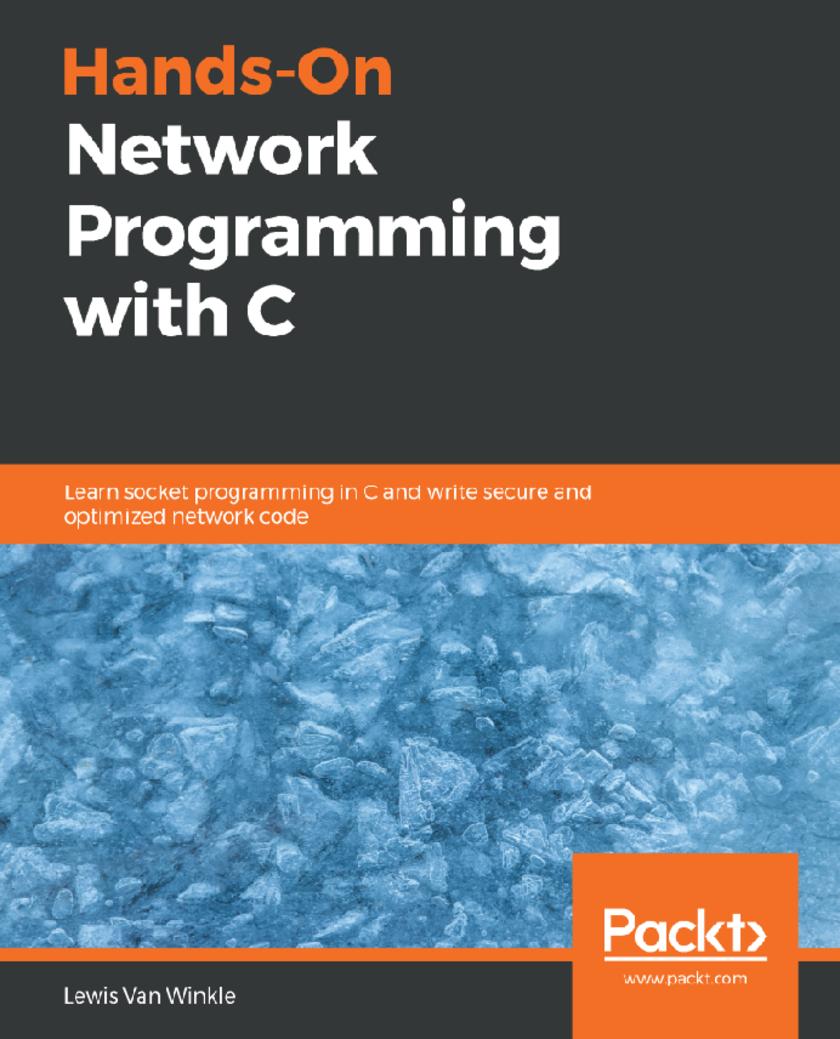
Hands-On Network Programming with C
¥62.12
A comprehensive guide to programming with network sockets, implementing Internet protocols, designing IoT devices, and much more with C Key Features * Leverage your C or C++ programming skills to build powerful network applications * Get to grips with a variety of network protocols that allow you to load web pages, send emails, and do much more * Write portable network code for operating systems such as Windows, Linux, and macOS Book Description Network programming, a challenging topic in C, is made easy to understand with a careful exposition of socket programming APIs. This book gets you started with modern network programming in C and the right use of relevant operating system APIs. This book covers core concepts, such as hostname resolution with DNS, that are crucial to the functioning of the modern web. You’ll delve into the fundamental network protocols, TCP and UDP. Essential techniques for networking paradigms such as client-server and peer-to-peer models are explained with the help of practical examples. You’ll also study HTTP and HTTPS (the protocols responsible for web pages) from both the client and server perspective. To keep up with current trends, you’ll apply the concepts covered in this book to gain insights into web programming for IoT. You’ll even get to grips with network monitoring and implementing security best practices. By the end of this book, you’ll have experience of working with client-server applications, and be able to implement new network programs in C. The code in this book is compatible with the older C99 version as well as the latest C18 and C++17 standards. Special consideration is given to writing robust, reliable, and secure code that is portable across operating systems, including Winsock sockets for Windows and POSIX sockets for Linux and macOS. What you will learn * Uncover cross-platform socket programming APIs * Implement techniques for supporting IPv4 and IPv6 * Understand how TCP and UDP connections work over IP * Discover how hostname resolution and DNS work * Interface with web APIs using HTTP and HTTPS * Acquire hands-on experience with Simple Mail Transfer Protocol (SMTP) * Apply network programming to the Internet of Things (IoT) Who this book is for If you're a developer or a system administrator who wants to enter the world of network programming, this book is for you. Basic knowledge of C programming is assumed.
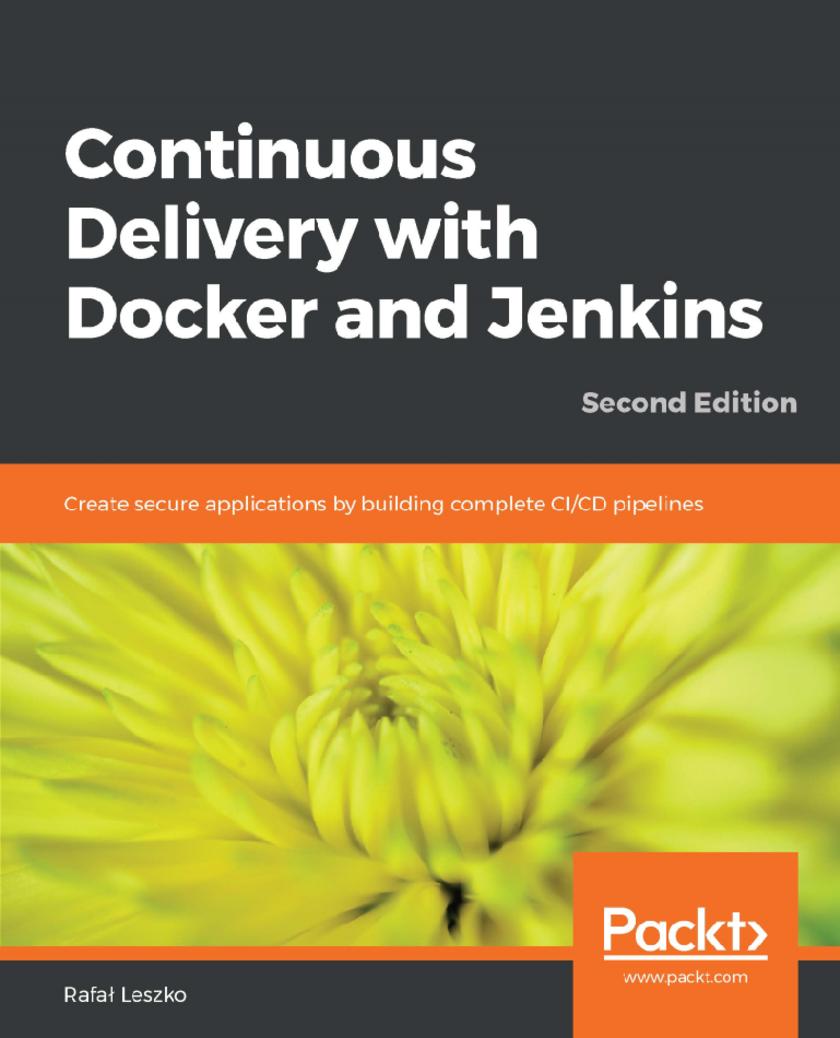
Continuous Delivery with Docker and Jenkins
¥79.56
Create a complete Continuous Delivery process using modern DevOps tools such as Docker, Kubernetes, Jenkins, Docker Hub, Ansible, GitHub and many more. Key Features * Build reliable and secure applications using Docker containers. * Create a highly available environment to scale a Docker servers using Kubernetes * Implement advance continuous delivery process by parallelizing the pipeline tasks Book Description Continuous Delivery with Docker and Jenkins, Second Edition will explain the advantages of combining Jenkins and Docker to improve the continuous integration and delivery process of an app development. It will start with setting up a Docker server and configuring Jenkins on it. It will then provide steps to build applications on Docker files and integrate them with Jenkins using continuous delivery processes such as continuous integration, automated acceptance testing, and configuration management. Moving on, you will learn how to ensure quick application deployment with Docker containers along with scaling Jenkins using Kubernetes. Next, you will get to know how to deploy applications using Docker images and testing them with Jenkins. Towards the end, the book will touch base with missing parts of the CD pipeline, which are the environments and infrastructure, application versioning, and nonfunctional testing. By the end of the book, you will be enhancing the DevOps workflow by integrating the functionalities of Docker and Jenkins. What you will learn * Get to grips with docker fundamentals and how to dockerize an application for the CD process * Learn how to use Jenkins on the Cloud environments * Scale a pool of Docker servers using Kubernetes * Create multi-container applications using Docker Compose * Write acceptance tests using Cucumber and run them in the Docker ecosystem using Jenkins * Publish a built Docker image to a Docker Registry and deploy cycles of Jenkins pipelines using community best practices Who this book is for The book targets DevOps engineers, system administrators, docker professionals or any stakeholders who would like to explore the power of working with Docker and Jenkins together. No prior knowledge of DevOps is required for this book.
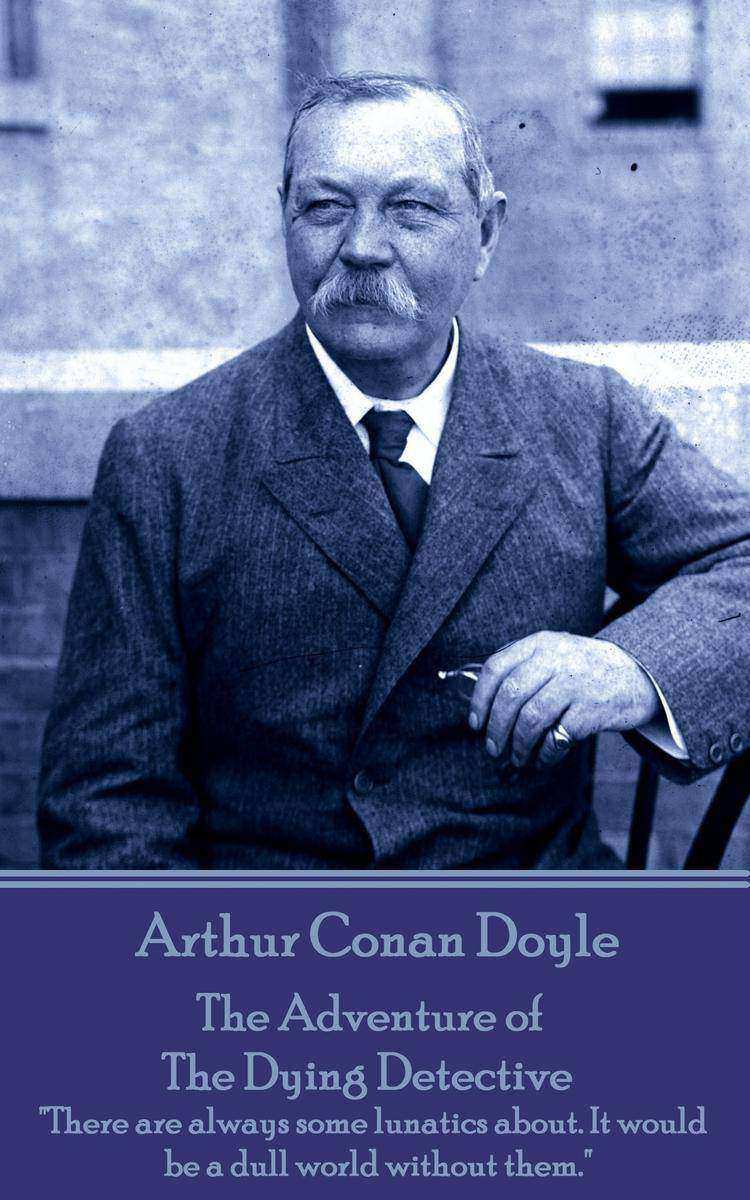
Adventure of the Dying Detective - There are always some lunatics about
¥14.03
If ever a writer needed an introduction Arthur Conan Doyle would not be considered that man. After all, Sherlock Holmes is perhaps the foremost literary detective of any age. Add to this canon his stories of science fiction and his poems, his historical novels, his plays, his political campaigning, his efforts in establishing a Court of Appeal and there is little room for anything else. Except he was also an exceptional writer of short stories of the horrific and macabre. Something very different from what you might expect. Born in Arthur Conan Doyle was born on 22 May 1859 at 11 Picardy Place, Edinburgh, Scotland. From 1876 - 1881 he studied medicine at the University of Edinburgh following which he was employed as a doctor on the Greenland whaler Hope of Peterhead in 1880 and, after his graduation, as a ship's surgeon on the SS Mayumba during a voyage to the West African coast in 1881. Arriving in Portsmouth in June of that year with less than GBP10 (GBP700 today) to his name, he set up a medical practice at 1 Bush Villas in Elm Grove, Southsea. The practice was initially not very successful. While waiting for patients, Conan Doyle again began writing stories and composed his first novel The Mystery of Cloomber. Although he continued to study and practice medicine his career was now firmly set as a writer. And thereafter great works continued to pour out of him.


