


 购物车
购物车 个人中心
个人中心
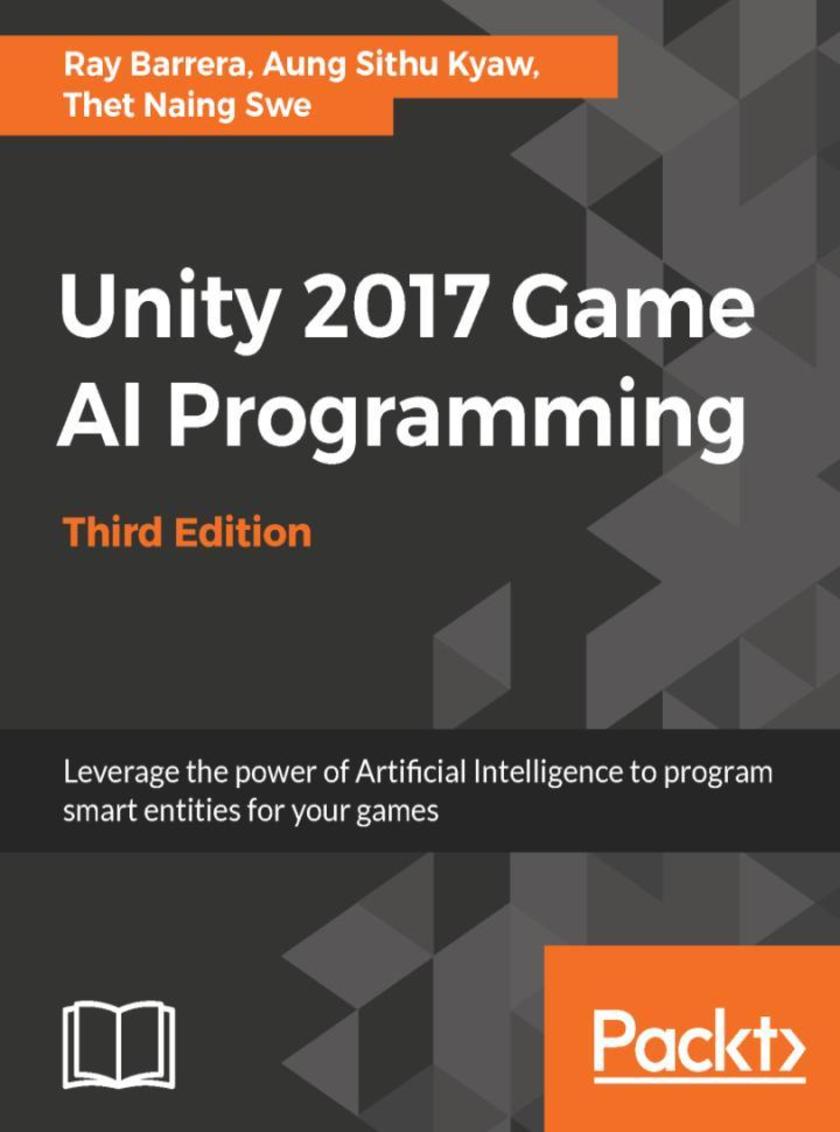
Unity 2017 Game AI Programming - Third Edition
¥90.46
Use Unity 2017 to create fun and unbelievable AI entities in your games with A*, Fuzzy logic and NavMesh About This Book ? Explore the brand-new Unity 2017 features that makes implementing Artificial Intelligence in your game easier than ever ? Use fuzzy logic concepts in your AI decision-making to make your characters more engaging ? Build exciting and richer games by mastering advanced Artificial Intelligence concepts such as Neural Networks Who This Book Is For This book is intended for Unity developers with a basic understanding of C# and the Unity editor. Whether you're looking to build your first game or are looking to expand your knowledge as a game programmer, you will find plenty of exciting information and examples of game AI in terms of concepts and implementation. What You Will Learn ? Understand the basic terminology and concepts in game AI ? Explore advanced AI Concepts such as Neural Networks ? Implement a basic finite state machine using state machine behaviors in Unity 2017 ? Create sensory systems for your AI and couple it with a Finite State Machine ? Wok with Unity 2017's built-in NavMesh features in your game ? Build believable and highly-efficient artificial flocks and crowds ? Create a basic behavior tree to drive a character's actions In Detail Unity 2017 provides game and app developers with a variety of tools to implement Artificial Intelligence. Leveraging these tools via Unity's API or built-in features allows limitless possibilities when it comes to creating your game's worlds and characters. This third edition with Unity will help you break down Artificial Intelligence into simple concepts to give you a fundamental understanding of the topic to build upon. Using a variety of examples, the book then takes those concepts and walks you through actual implementations designed to highlight key concepts, and features related to game AI in Unity 5. Further on you will learn to distinguish the state machine pattern and implement one of your own. This is followed by learning how to implement a basic sensory system for your AI agent and coupling it with a Finite State Machine (FSM). Next you'll learn how to use Unity's built-in NavMesh feature and implement your own A* pathfinding system. You will then learn how to implement simple flocks and crowd's dynamics, key AI concepts. Moving on, you will learn how to implement a behavior tree through a game-focused example. Lastly, you'll combine fuzzy logic concepts with state machines and apply all the concepts in the book to build a simple tank game. Style and approach A self-explanatory practical guide with a series of tips and tricks on creating AI games with ease.
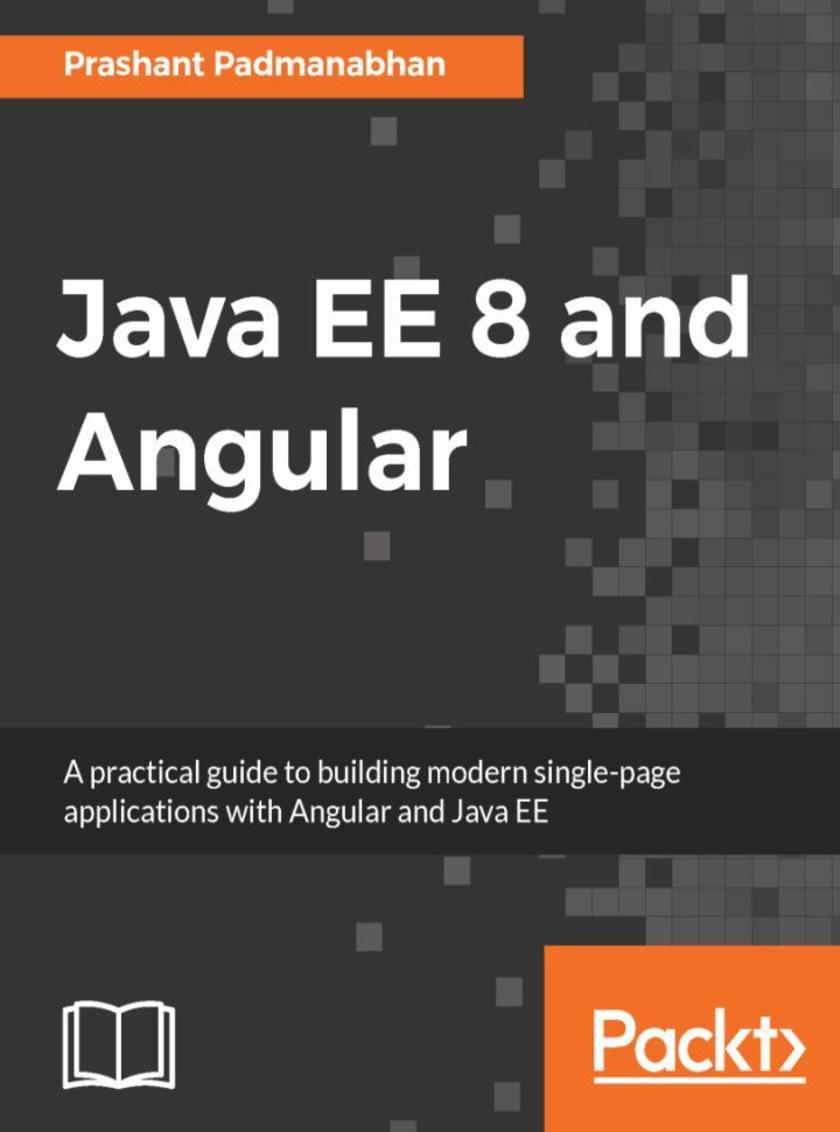
Java EE 8 and Angular
¥81.74
Learn how to build high-performing enterprise applications using Java EE powered by Angular at the frontend About This Book ? Leverage Java EE 8 features to build robust back end for your enterprise applications ? Use Angular to build a single page frontend and combine it with the Java EE backend ? Practical guide filled with ample real-world examples Who This Book Is For This book is for Java EE developers who would like to build modern enterprise web applications using Angular. No prior knowledge of Angular is expected. What You Will Learn ? Write CDI-based code in Java EE 8 applications ? Build an understanding of Microservices and what they mean in Java EE context ? Use Docker to build and run a microservice application ? Use configuration options to work effectively with JSON documents ? Understand asynchronous task handling and writing REST API clients ? Explore the fundamentals of TypeScript, which sets the foundation for working on Angular projects ? Use Angular CLI to add and manage new features ? Use JSON Web tokens to secure Angular applications against malicious attacks In Detail The demand for modern and high performing web enterprise applications is growing rapidly. No more is a basic HTML front-end enough to meet customer demands. This book will be your one stop guide to build outstanding enterprise web applications with Java EE and Angular. It will teach you how to harness the power of Java EE to build sturdy back ends while applying Angular on the front end. Your journey to building excellent web enterprise applications starts here! The book starts with a brief introduction to the fundamentals of Java EE and all the new APIs offered in the latest release. Armed with the knowledge of Java EE 8, you will go over what it’s like to build an end to end application, configure database connection for JPA, and build scalable microservice using RESTful APIs running in docker containers. Taking advantage of Payara Micro capabilities, you will build an Issue Management System, which will have various features exposed as services using Java EE backend. With a detailed coverage of Angular fundamentals, the book will expand the Issue Management System by building a modern single page application frontend. Moving forward you will learn to fit both the pieces together i.e. the frontend Angular application with the backend java EE microservices. As each unit in a microservice promotes high cohesion, you will learn different ways in which independent units can be tested efficiently. Finishing off with concepts on securing your enterprise applications, this book is a hands on guide to building Modern Web Applications. Style and approach This is a step-by-step tutorial that explains to building modern web enterprise applications.
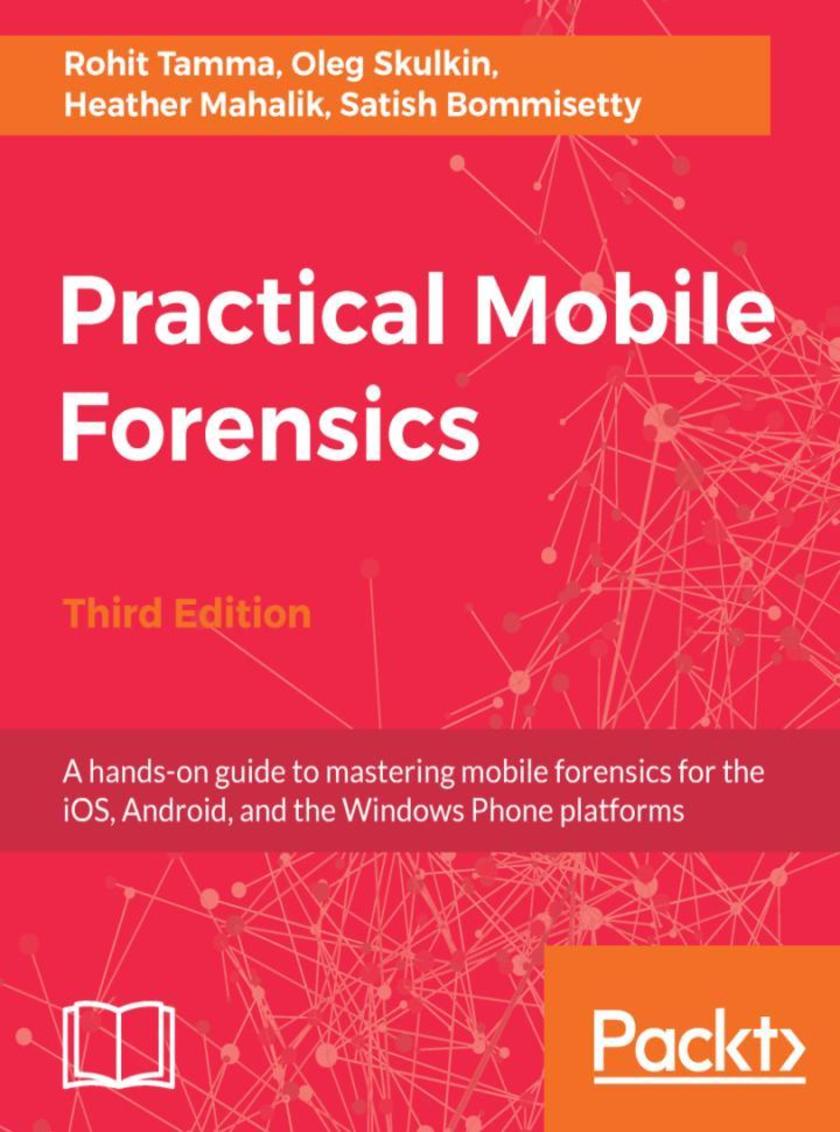
Practical Mobile Forensics - Third Edition
¥81.74
Investigate, analyze, and report iOS, Android, and Windows devices About This Book ? Get hands-on experience in performing simple to complex mobile forensics techniques. ? Retrieve and analyze data stored not only on mobile devices but also through the cloud and other connected mediums. ? A practical guide to leveraging the power of mobile forensics on popular mobile platforms with lots of tips, tricks, and caveats. Who This Book Is For If you are a forensics professional and are eager to widen your forensics skill set to mobile forensics then, this book is for you. Some understanding of digital forensics practices would do wonders. What You Will Learn ? Discover the new techniques in practical mobile forensics ? Understand the architecture and security mechanisms present in iOS and Android platforms ? Identify sensitive files on the iOS and Android platforms ? Set up a forensic environment ? Extract data from the iOS and Android platforms ? Recover data on the iOS and Android platforms ? Understand the forensics of Windows devices ? Explore various third-party application techniques and data recovery techniques In Detail Covering up-to-date mobile platforms, this book will focuses on teaching you the most recent techniques for investigating mobile devices. We delve mobile forensics techniques in iOS 9-11, Android 7-8 devices, and Windows 10. We will demonstrate the latest open source and commercial mobile forensics tools, enabling you to analyze and retrieve data effectively. You will learn how to introspect and retrieve data from the cloud, and document and prepare reports of your investigations. By the end of this book, you will have mastered the current operating systems and the relevant techniques to recover data from mobile devices by leveraging open source solutions. Style and approach This book takes a very practical approach and depicts real-life mobile forensics scenarios with lots of tips and tricks to help you acquire the required forensics skillset for various mobile platforms.
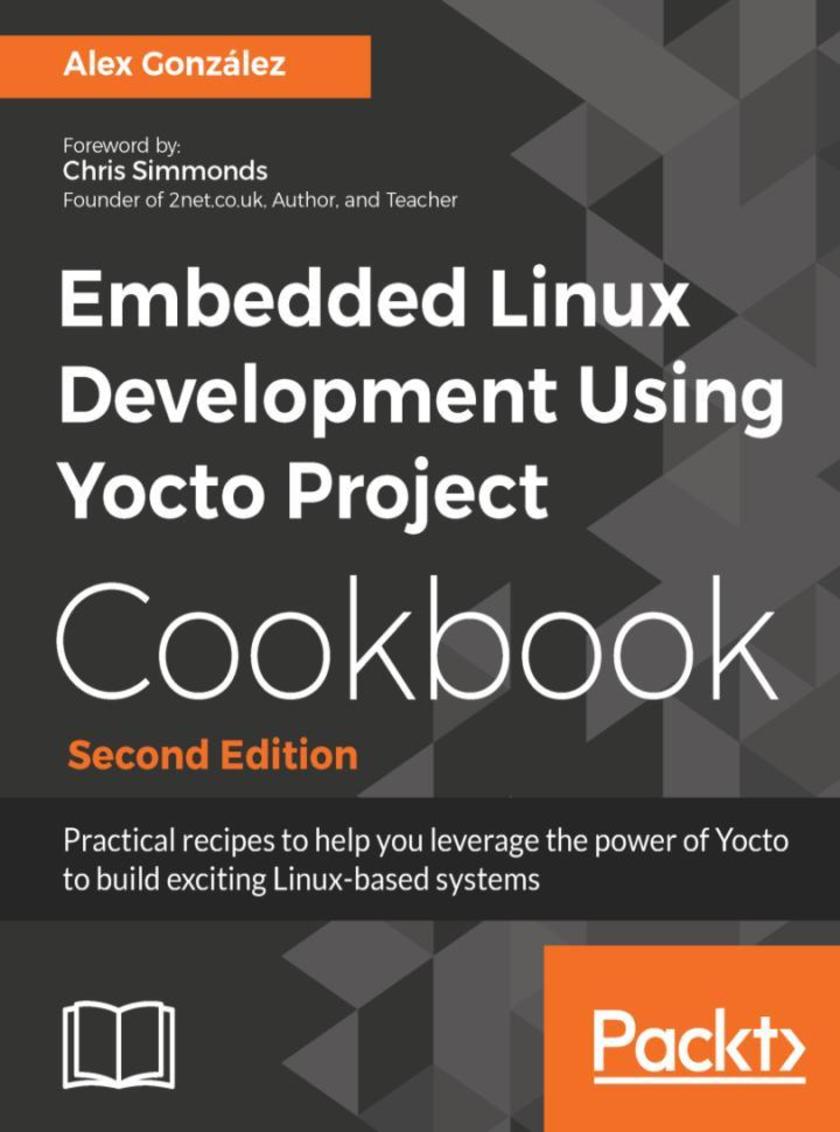
Embedded Linux Development Using Yocto Project Cookbook - Second Edition
¥81.74
Over 79 hands-on recipes for professional embedded Linux developers to optimize and boost their Yocto Project know-how About This Book ? Optimize your Yocto setup to speed up development and debug build issues ? Use what is quickly becoming the standard embedded Linux product builder framework—the Yocto Project ? Recipe-based implementation of best practices to optimize your Linux system Who This Book Is For If you are an embedded Linux developer with the basic knowledge of Yocto Project, this book is an ideal way to broaden your knowledge with recipes for embedded development. What You Will Learn ? Optimize your Yocto Project setup to speed up development and debug build issues ? Use Docker containers to build Yocto Project-based systems ? Take advantage of the user-friendly Toaster web interface to the Yocto Project build system ? Build and debug the Linux kernel and its device trees ? Customize your root filesystem with already-supported and new Yocto packages ? Optimize your production systems by reducing the size of both the Linux kernel and root filesystems ? Explore the mechanisms to increase the root filesystem security ? Understand the open source licensing requirements and how to comply with them when cohabiting with proprietary programs ? Create recipes, and build and run applications in C, C++, Python, Node.js, and Java In Detail The Yocto Project has become the de facto distribution build framework for reliable and robust embedded systems with a reduced time to market. You'll get started by working on a build system where you set up Yocto, create a build directory, and learn how to debug it. Then, you'll explore everything about the BSP layer, from creating a custom layer to debugging device tree issues. In addition to this, you’ll learn how to add a new software layer, packages, data, *s, and configuration files to your system. You will then cover topics based on application development, such as using the Software Development Kit and how to use the Yocto project in various development environments. Toward the end, you will learn how to debug, trace, and profile a running system. This second edition has been updated to include new content based on the latest Yocto release. Style and approach This recipe-based book will guide you through all the development stages of an embedded Linux product design using the Yocto Project.
Building RESTful Web Services with Spring 5 - Second Edition
¥81.74
Find out how to implement the REST architecture to build resilient software in Java with the help of the Spring 5.0 framework. About This Book ? Follow best practices and explore techniques such as clustering and caching to achieve a reactive, scalable web service, ? Leverage the Spring Framework to quickly implement RESTful endpoints, ? Learn to implement a client library for a RESTful web service using the Spring Framework along with the new front end framework. Who This Book Is For This book is intended for those who want to learn to build RESTful web services with the latest Spring 5.0 Framework. To make best use of the code samples included in the book, you should have a basic knowledge of the Java language. Previous experience with the Spring Framework would also help you get up and running quickly. What You Will Learn ? Deep dive into the principles behind REST ? Expose CRUD operations through RESTful endpoints with the Spring Framework ? Devise response formats and error handling strategies, offering a consistent and flexible structure to simplify integration for service consumers ? Follow the best approaches for dealing with a service's evolution while maintaining backward compatibility ? Understand techniques to secure web services ? Comply with the best ways to test RESTful web services, including tips for load testing ? Optimise and scale web services using techniques such as caching and clustering In Detail REST is an architectural style that tackles the challenges of building scalable web services. In today's connected world, APIs have taken a central role on the web. APIs provide the fabric through which systems interact, and REST has become synonymous with APIs.The depth, breadth, and ease of use of Spring makes it one of the most attractive frameworks in the Java ecosystem. Marrying the two technologies is therefore a very natural choice.This book takes you through the design of RESTful web services and leverages the Spring Framework to implement these services. Starting from the basics of the philosophy behind REST, you'll go through the steps of designing and implementing an enterprise-grade RESTful web service. Taking a practical approach, each chapter provides code samples that you can apply to your own circumstances.This second edition brings forth the power of the latest Spring 5.0 release, working with MVC built-in as well as the front end framework. It then goes beyond the use of Spring to explores approaches to tackle resilience, security, and scalability concerns. Improve performance of your applications with the new HTTP 2.0 standards. You'll learn techniques to deal with security in Spring and discover how to implement unit and integration test strategies.Finally, the book ends by walking you through building a Java client for your RESTful web service, along with some scaling techniques using the new Spring Reactive libraries. Style and approach Readers will be taken through a set of specific patterns and tested practices to build effective RESTful systems in Java using the Spring framework.
OpenStack Cloud Computing Cookbook - Fourth Edition
¥90.46
The Fourth Edition of the industry-acclaimed OpenStack Cloud Computing Cookbook, from four recognized experts, updated to the latest OpenStack build including Cinder, Nova, and Neutron. About This Book ? Over 100 recipes created by a team of OpenStack experts ? Updated to work with the latest OpenStack builds, with recipes covering the installation and use of OpenStack with Ansible ? It covers topics such as Keystone, Glance, Neutron, Nova, Cinder, and more, plus recipes for OpenStack storage, networking, and orchestrating workloads ? Test drive OpenStack using the accompanying Vagrant environment Who This Book Is For This book is written for cloud system engineers, system administrators, and technical architects who are moving from a virtualized environment to cloud environments. This book assumes that you are familiar with cloud computing platforms, and have knowledge of virtualization, networking, and managing Linux environments. What You Will Learn ? Understand, install, configure, and manage a complete OpenStack Cloud platform using OpenStack-Ansible ? Configure networks, routers, load balancers, and more with Neutron ? Use Keystone to setup domains, roles, groups and user access ? Learn how to use Swift and setup container access control lists ? Gain hands-on experience and familiarity with Horizon, the OpenStack Dashboard user interface ? Automate complete solutions with our recipes on Heat, the OpenStack Orchestration service as well as using Ansible to orchestrate application workloads ? Follow practical advice and examples to run OpenStack in production In Detail This is the fourth edition of the industry-acclaimed OpenStack Cloud Computing Cookbook, created by four recognized OpenStack experts. It has now been updated to work with the latest OpenStack builds, using tools and processes based on their collective and vast OpenStack experience. OpenStack Open Source Cloud software is one of the most used cloud infrastructures to support a wide variety of use cases, from software development to big data analysis. It is developed by a thriving community of individual developers from around the globe and backed by most of the leading players in the cloud space today. We make it simple to implement, massively scalable, and able to store a large pool of data and networking resources. OpenStack has a strong ecosystem that helps you provision your cloud storage needs. Add OpenStack's enterprise features to reduce the cost of your business. This book will begin by showing you the steps to build up an OpenStack private cloud environment using Ansible. You'll then discover the uses of cloud services such as the identity service, image service, and compute service. You'll dive into Neutron, the OpenStack Networking service, and get your hands dirty with configuring networks, routers, load balancers, and more. You’ll then gather more expert knowledge on OpenStack cloud computing by managing your cloud's security and migration. After that, we delve into OpenStack Object storage and you’ll see how to manage servers and work with objects, cluster, and storage functionalities. Finally, you will learn about OpenStack dashboard, Ansible, Keystone, and other interesting topics. Style and approach Clear, step-by-step instructions coupled with practical and applicable recipes that will enable you to use and implement the latest features of OpenStack. The authors provide all the context you need around each recipe so that you can make it part of your own OpenStack solutions.
Implementing Azure Cloud Design Patterns
¥73.02
A hands-on guide to mastering Azure cloud design patterns and best practices. About This Book ? Master architectural design patterns in Azure. ? Get hands-on with implementing design patterns. ? Implement best practices for improving efficiency and security Who This Book Is For This book is targeted at cloud architects and cloud solution providers who are looking for an extensive guide to implementing different patterns for the deployment and maintenance of services in Microsoft Azure. Prior experience with Azure is required as the book is completely focused on design patterns. What You Will Learn ? Learn to organize Azure access ? Design the core areas of the Azure Execution Model ? Work with storage and data management ? Create a health endpoint monitoring pattern ? Automate early detection of anomalies ? Identify and secure Azure features In Detail A well designed cloud infrastructure covers factors such as consistency, maintenance, simplified administration and development, and reusability. Hence it is important to choose the right architectural pattern as it has a huge impact on the quality of cloud-hosted services. This book covers all Azure design patterns and functionalities to help you build your cloud infrastructure so it fits your system requirements. This book initially covers design patterns that are focused on factors such as availability and data management/monitoring. Then the focus shifts to complex design patterns such as multitasking, improving scalability, valet keys, and so on, with practical use cases. The book also supplies best practices to improve the security and performance of your cloud. By the end of this book, you will thoroughly be familiar with the different design and architectural patterns available with Windows Azure and capable of choosing the best pattern for your system. Style and approach This step-by-step guide will help you master Azure design patterns and functionalities and also supplies best practices towards the end of the book.

Learning Einstein Analytics
¥90.46
Learn to confidently setup and create app, lenses, dashboards using Salesforce Einstein Analytics. About This Book ? Explore Einstein analytics on desktop as well as mobile platforms ? Turn data into smarter sales with Einstein Analytics for Sales ? Visualize your data with preloaded as well as customized dashboards Who This Book Is For This book is for data scientists, business users, developers who want to explore business data using the Salesforce Einstein Analytics. Knowledge of the Salesforce platform is required. What You Will Learn ? Create app, lenses, and dashboards using Einstein. ? Visualize data utilizing all the widgets available with Einstein. ? Understand Einstein for Sales, Service, and Marketing separately. ? Use Data monitoring tools to monitor data flow and system jobs. ? Abstract machine learning constructs and make predictions on events In Detail Salesforce Einstein analytics aka Wave Analytics is a cloud-based platform which connects data from the multiple sources and explores it to uncover insights. It empowers sales reps, marketers, and analysts with the insights to make customer interactions smarter, without building mathematical models. You will learn to create app, lenses, dashboards and share dashboards with other users. This book starts off with explaining you fundamental concepts like lenses, step, measures and sets you up with Einstein Analytics platform. We then move on to creating an app and here you will learn to create datasets, dashboards and different ways to import data into Analytics. Moving on we look at Einstein for sales, services, and marketing individually. Here you will learn to manage your pipeline, understand important business drivers and visualize trends. You will also learn features related to data monitoring tools and embedding dashboards with lightning, visualforce page and mobile devices. Further, you will learn advanced features pertaining to recent advancements in Einstein which include machine learning constructs and getting predictions for events. By the end of this book, you will become proficient in the Einstein analytics, getting insights faster and understanding your customer in a better way. Style and approach The book takes a pragmatic approach showing you installation of Salesforce Einstein Analytics, predictive analysis and applications of AI.
Jira Software Essentials - Second Edition
¥63.21
Explore Jira Software to manage your projects proficiently About This Book ? Plan and manage projects effortlessly with Jira Software by integrating it with other applications ? Improve your team's performance with Scrum and Kanban, together with agile methodology ? Easy-to-follow learning guide to install Jira Software and understand how it fits in with Atlassian Jira Who This Book Is For If you want to get started with Jira Software and learn how to run your Jira projects the agile way, then this is the perfect book for you. You will need to be familiar with the basics of Jira, both from an end user's and an administrator's perspective. Experience with workflows, custom fields, and other administrative functions of Jira will be useful. What You Will Learn ? Understand the basics and agile methodologies of Jira software ? Use Jira Software in a Scrum environment ? Manage and run Jira Software projects beyond the out of box Scrum and Kanban way ? Combine Scrum and Kanban and use other project management options beyond just agile ? Customize Jira Software’s various features and options as per your requirements ? Work with Jira Agile offline, and plan and forecast projects with agile portfolio ? Integrate Jira Agile with Confluence and Bitbucket In Detail Jira Software is an agile project management tool that supports any agile methodology, be it scrum, Kanban, or your own unique flavour. From agile boards to reports, you can plan, track, and manage all your agile software development projects from a single tool. Jira Software brings the power of agile methodology to Atlassian Jira. This second edition of JIRA Agile Essentials, will help you dive straight into the action, exploring critical agile terminologies and concepts in the context of Jira Software. You will learn how to plan, track, and release great software. This book will teach you how to install and run Jira Software and set it up to run with Scrum and Kanban. It will also teach you to use Jira Software your way and run projects beyond the out-of-box Scrum and Kanban way, including a hybrid approach of both the methodologies and other options that come with Jira Software. Later, you will learn how to integrate it with the tools you are already using and enhance Jira with add-ons such as Confluence. You will learn to stay connected with your team from anywhere to ensure great development. Jira Software has numerous deployment options in the cloud, on your own infrastructure, or at a massive scale. You will be introduced to Bitbucket, Atlassian’s distributed version control system, which integrates seamlessly with Jira, allowing your team to work within the two applications as one harmonious environment. With this practical guide, you will develop a great working knowledge of Jira Software and your project management will become much more efficient. Style and approach This practical book explains Jira Software with the help of detailed examples in a step-by- step manner.
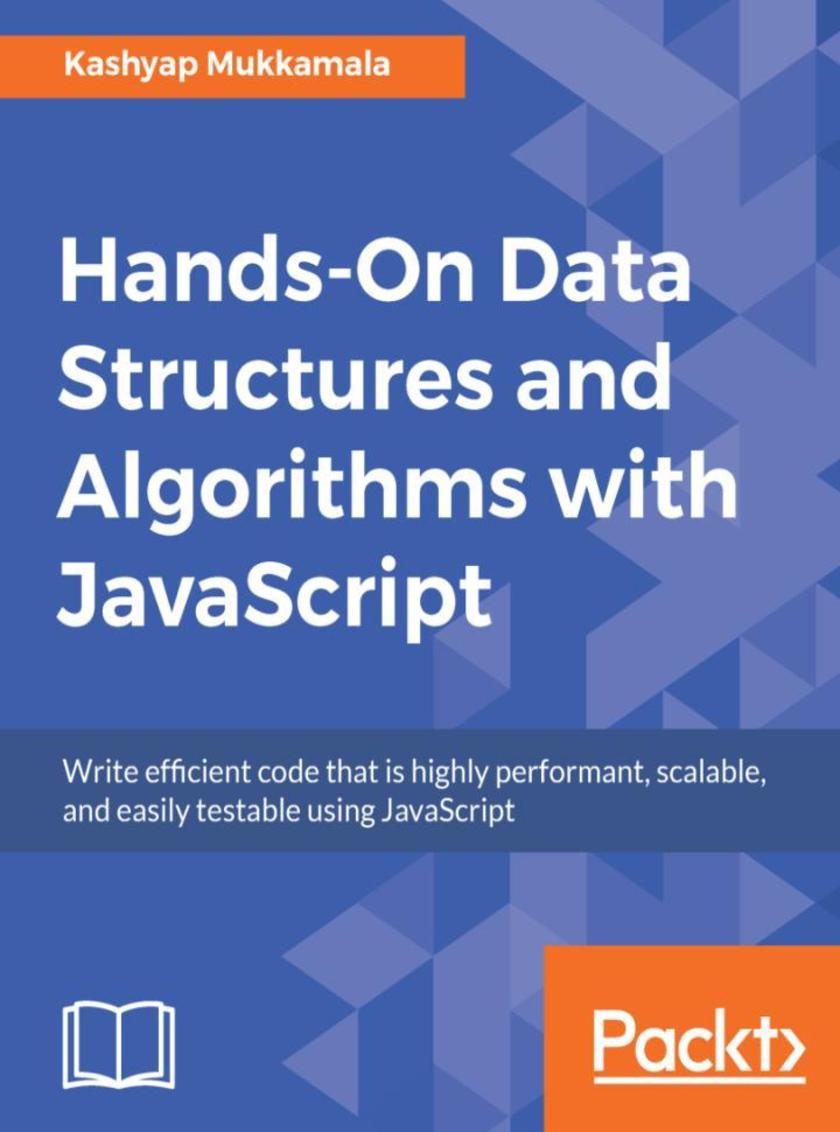
Hands-On Data Structures and Algorithms with JavaScript
¥81.74
Increase your productivity by implementing complex data structures and algorithms using JavaScript About This Book ? A step by step guide, which will provide you with a thorough discussion on the analysis and design of fundamental JavaScript data structures ? Get a better understanding of advanced concepts such as space and time complexity to optimize your code ? Focus more on solving the business problem and less on the technical challenges involved Who This Book Is For If you are a JavaScript developer looking for practical examples to implement data structures and algorithms in your web applications, then this book is for you. Familiarity with data structures and algorithms will be helpful to get the most out of this book. What You Will Learn ? Build custom Back buttons embedded within your application ? Build part of a basic JavaScript syntax parser and evaluator for an online IDE ? Build a custom activity user tracker for your application ? Generate accurate recommendations for credit card approval using Decision Trees ? Simplify complex problems using a graphs ? Increase the performance of an application using micro-optimizations In Detail Data structures and algorithms are the fundamental building blocks of computer programming. They are critical to any problem, provide a complete solution, and act like reusable code. Using appropriate data structures and having a good understanding of algorithm analysis are key in JavaScript to solving crises and ensuring your application is less prone to errors. Do you want to build applications that are high-performing and fast? Are you looking for complete solutions to implement complex data structures and algorithms in a practical way? If either of these questions rings a bell, then this book is for you! You'll start by building stacks and understanding performance and memory implications. You will learn how to pick the right type of queue for the application. You will then use sets, maps, trees, and graphs to simplify complex applications. You will learn to implement different types of sorting algorithm before gradually calculating and analyzing space and time complexity. Finally, you'll increase the performance of your application using micro optimizations and memory management. By the end of the book you will have gained the skills and expertise necessary to create and employ various data structures in a way that is demanded by your project or use case. Style and approach Step-by-step topics will help you get started with solutions for implementing classic data structures and algorithms. Learn by doing with hands-on code snippets that give you practical experience of the subject.
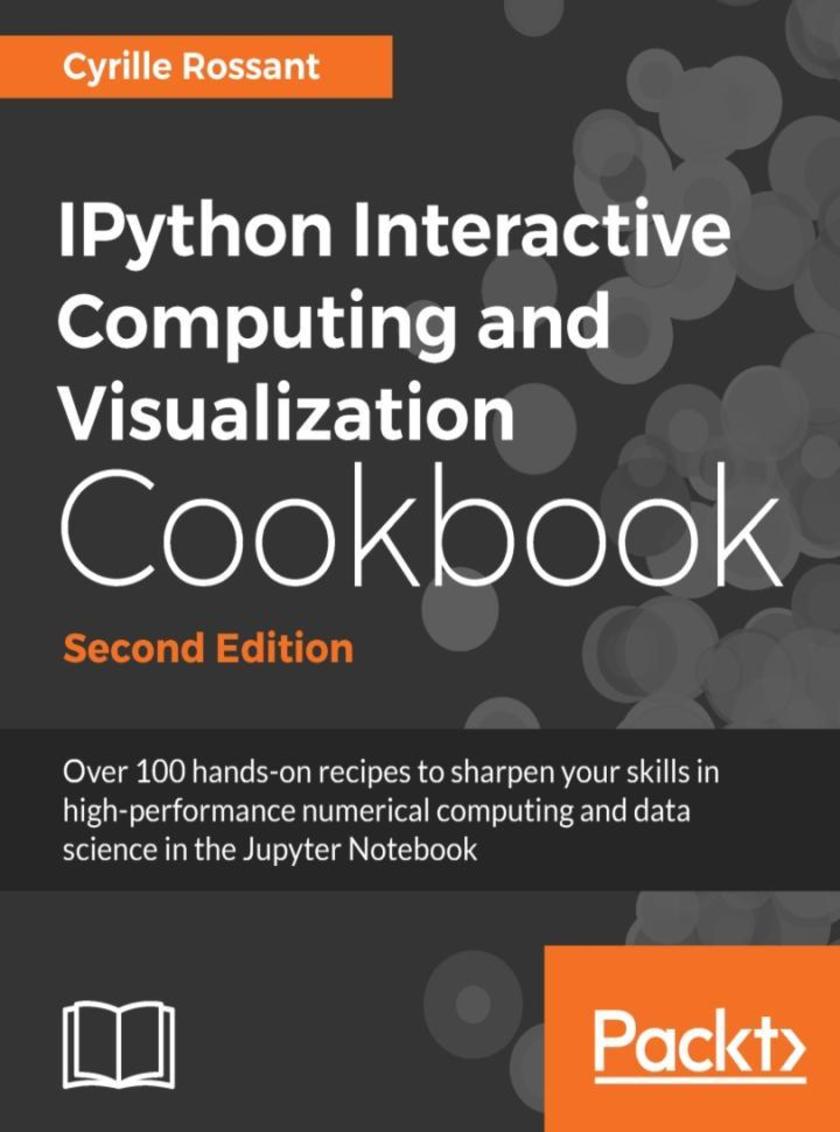
IPython Interactive Computing and Visualization Cookbook - Second Edition
¥63.21
Learn to use IPython and Jupyter Notebook for your data analysis and visualization work. About This Book ? Leverage the Jupyter Notebook for interactive data science and visualization ? Become an expert in high-performance computing and visualization for data analysis and scientific modeling ? A comprehensive coverage of scientific computing through many hands-on, example-driven recipes with detailed, step-by-step explanations Who This Book Is For This book is intended for anyone interested in numerical computing and data science: students, researchers, teachers, engineers, analysts, and hobbyists. A basic knowledge of Python/NumPy is recommended. Some skills in mathematics will help you understand the theory behind the computational methods. What You Will Learn ? Master all features of the Jupyter Notebook ? Code better: write high-quality, readable, and well-tested programs; profile and optimize your code; and conduct reproducible interactive computing experiments ? Visualize data and create interactive plots in the Jupyter Notebook ? Write blazingly fast Python programs with NumPy, ctypes, Numba, Cython, OpenMP, GPU programming (CUDA), parallel IPython, Dask, and more ? Analyze data with Bayesian or frequentist statistics (Pandas, PyMC, and R), and learn from actual data through machine learning (scikit-learn) ? Gain valuable insights into signals, images, and sounds with SciPy, scikit-image, and OpenCV ? Simulate deterministic and stochastic dynamical systems in Python ? Familiarize yourself with math in Python using SymPy and Sage: algebra, analysis, logic, graphs, geometry, and probability theory In Detail Python is one of the leading open source platforms for data science and numerical computing. IPython and the associated Jupyter Notebook offer efficient interfaces to Python for data analysis and interactive visualization, and they constitute an ideal gateway to the platform. IPython Interactive Computing and Visualization Cookbook, Second Edition contains many ready-to-use, focused recipes for high-performance scientific computing and data analysis, from the latest IPython/Jupyter features to the most advanced tricks, to help you write better and faster code. You will apply these state-of-the-art methods to various real-world examples, illustrating topics in applied mathematics, scientific modeling, and machine learning. The first part of the book covers programming techniques: code quality and reproducibility, code optimization, high-performance computing through just-in-time compilation, parallel computing, and graphics card programming. The second part tackles data science, statistics, machine learning, signal and image processing, dynamical systems, and pure and applied mathematics. Style and approach IPython Interactive Computing and Visualization Cookbook, Second Edition is a practical, hands-on book that will teach you how to analyze and visualize all kinds of data in the Jupyter Notebook.
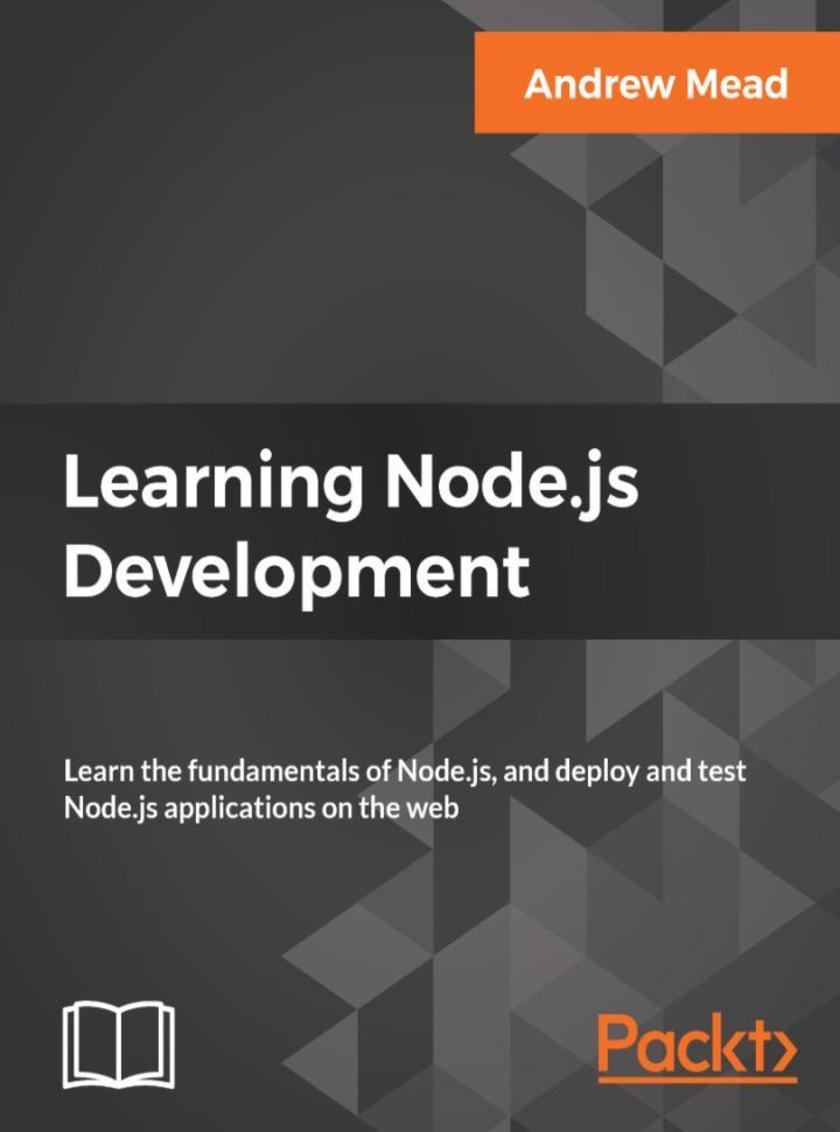
Learning Node.js Development
¥73.02
A comprehensive, easy-to-follow guide to creating complete Node apps and understanding how to build, deploy, and test your own apps. About This Book ? Entirely project-based and practical ? Explains the "Why" of Node.js features, not just the "how", providing you with a deep understanding and enabling you to easily apply concepts in your own applications ? Covers the full range of technologies around Node.js – NPM, version control with Git, and much more Who This Book Is For This book targets anyone looking to launch their own Node applications, switch careers, or freelance as a Node developer. You should have a basic understanding of JavaScript in order to follow this course. What You Will Learn ? Learn the fundamentals of Node ? Build apps that respond to user input ? Master working with servers ? Learn how to test and debug applications ? Deploy and update your apps in the real world ? Create responsive asynchronous web applications In Detail Learning Node.js Development is a practical, project-based book that provides you with all you need to get started as a Node.js developer. Node is a ubiquitous technology on the modern web, and an essential part of any web developers' toolkit. If you are looking to create real-world Node applications, or you want to switch careers or launch a side project to generate some extra income, then you're in the right place. This book has been written around a single goal—turning you into a professional Node developer capable of developing, testing, and deploying real-world production applications. Learning Node.js Development is built from the ground up around the latest version of Node.js (version 9.x.x). You'll be learning all the cutting-edge features available only in the latest software versions. This book cuts through the mass of information available around Node and delivers the essential skills that you need to become a Node developer. It takes you through creating complete apps and understanding how to build, deploy, and test your own Node apps. It maps out everything in a comprehensive, easy-to-follow package designed to get you up and running quickly. Style and approach This book is entirely project-based. From the very beginning you'll be programming every single app and completing various challenges designed to help test and reinforce what you've learned. There's no copying-and-pasting here. This book is about writing code and building projects.

Security with Go
¥73.02
The first stop for your security needs when using Go, covering host, network, and cloud security for ethical hackers and defense against intrusion About This Book ? First introduction to Security with Golang ? Adopting a Blue Team/Red Team approach ? Take advantage of speed and inherent safety of Golang ? Works as an introduction to security for Golang developers ? Works as a guide to Golang security packages for recent Golang beginners Who This Book Is For Security with Go is aimed at developers with basics in Go to the level that they can write their own *s and small programs without difficulty. Readers should be familiar with security concepts, and familiarity with Python security applications and libraries is an advantage, but not a necessity. What You Will Learn ? Learn the basic concepts and principles of secure programming ? Write secure Golang programs and applications ? Understand classic patterns of attack ? Write Golang *s to defend against network-level attacks ? Learn how to use Golang security packages ? Apply and explore cryptographic methods and packages ? Learn the art of defending against brute force attacks ? Secure web and cloud applications In Detail Go is becoming more and more popular as a language for security experts. Its wide use in server and cloud environments, its speed and ease of use, and its evident capabilities for data analysis, have made it a prime choice for developers who need to think about security. Security with Go is the first Golang security book, and it is useful for both blue team and red team applications. With this book, you will learn how to write secure software, monitor your systems, secure your data, attack systems, and extract information. Defensive topics include cryptography, forensics, packet capturing, and building secure web applications. Offensive topics include brute force, port scanning, packet injection, web scraping, social engineering, and post exploitation techniques. Style and approach John Leon has divided the book into two parts which present the team playing defense against anyone breaking into servers and the team playing (ethical!) offense to perform said attacks. All Go *s and programs are workable solutions that can be easily understood and expanded upon by anyone with a system administrator’s level view of networking and cloud-based systems. Golang developers will profit from a swift and incisive approach to security.
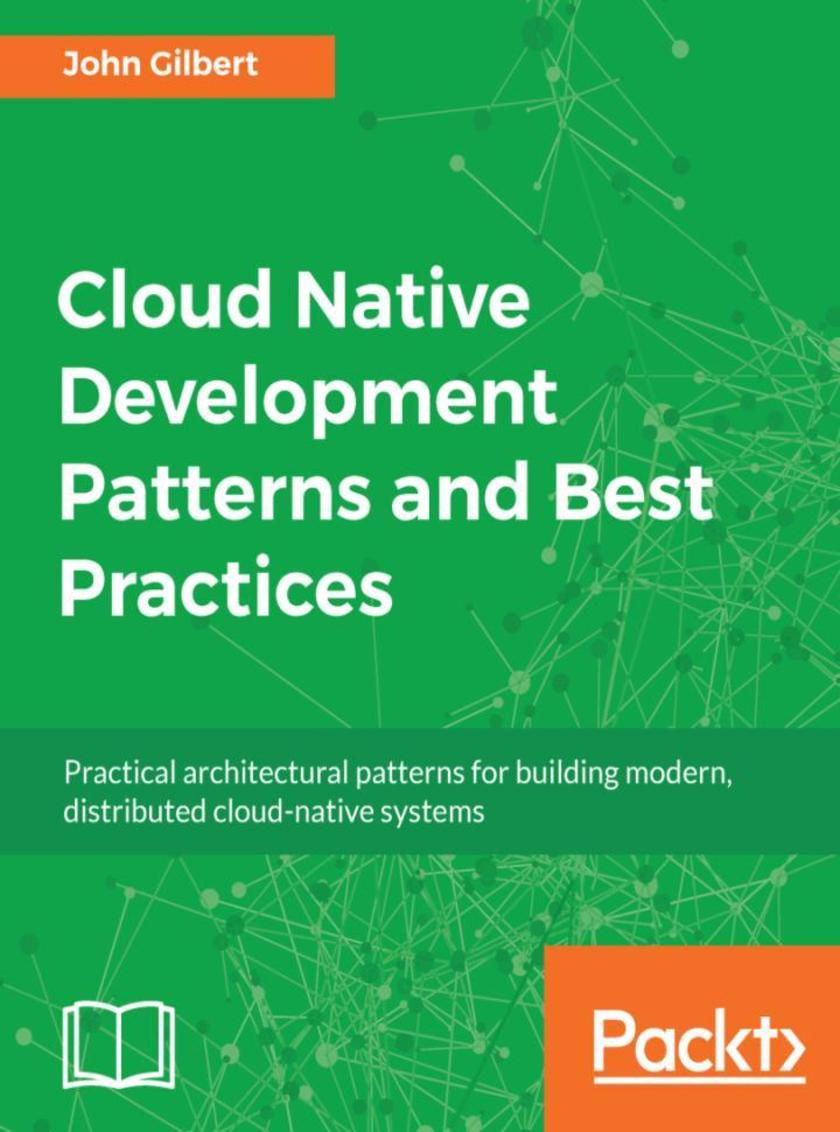
Cloud Native Development Patterns and Best Practices
¥81.74
Learn to apply cloud-native patterns and practices to deliver responsive, resilient, elastic, and message-driven systems with confidence About This Book ? Understand the architectural patterns involved in cloud-native architectures ? Minimize risk by evolving your monolithic applications into distributed cloud-native systems ? Discover best practices for applying cloud-native patterns to your enterprise-level cloud applications Who This Book Is For This book is for developers who would like to progress into building cloud-native systems and are keen to learn the patterns involved. Basic knowledge of programming and cloud computing is required. What You Will Learn ? Enable massive scaling by turning your database inside out ? Unleash flexibility via event streaming ? Leverage polyglot persistence and cloud-native databases ? Embrace modern continuous delivery and testing techniques ? Minimize risk by evolving your monoliths to cloud-native ? Apply cloud-native patterns and solve major architectural problems in cloud environment In Detail Build systems that leverage the benefits of the cloud and applications faster than ever before with cloud-native development. This book focuses on architectural patterns for building highly scalable cloud-native systems. You will learn how the combination of cloud, reactive principles, devops, and automation enable teams to continuously deliver innovation with confidence. Begin by learning the core concepts that make these systems unique. You will explore foundational patterns that turn your database inside out to achieve massive scalability with cloud-native databases. You will also learn how to continuously deliver production code with confidence by shifting deployment and testing all the way to the left and implementing continuous observability in production. There's more—you will also learn how to strangle your monolith and design an evolving cloud-native system. By the end of the book, you will have the ability to create modern cloud-native systems. Style and approach This book follows a pragmatic approach to understand cloud-native design patterns and explains the functioning and design considerations to build modern cloud-native systems in depth.
Nginx HTTP Server - Fourth Edition
¥81.74
Make the most of your infrastructure and serve pages faster than ever with Nginx. About This Book ? Discover possible interactions between Nginx and Apache to get the best of both worlds ? Learn to exploit the features offered by Nginx for your web applications ? Get your hands on the most updated version of Nginx (1.13.2) to support all your web administration requirements Who This Book Is For This book is a perfect match to web administrators who are interested in solutions to optimize their infrastructure. Whether you are looking into replacing your existing web server software or integrating a new tool to cooperate with applications that are already up and running, this book is your ideal resource. What You Will Learn ? Download and install Nginx on your system ? Prepare a basic configuration and test your initial setup ? Discover the core functionality of the HTTP module ? Make the most of first- and third-party Nginx modules ? Set up Nginx to work with PHP, Python, and other applications ? Learn how to set up Nginx to work with Apache ? Fully replace Apache with Nginx ? Optimize your architecture with threads or load balancing ? Identify errors in configuration and learn basic troubleshooting techniques ? Consult the exhaustive directive and module index for reference In Detail Nginx is a lightweight HTTP server designed for high-traffic websites, with network scalability as the primary objective. With the advent of high-speed internet access, short loading times and fast transfer rates have become a necessity. This book is a detailed guide to setting up Nginx in ways that correspond to actual production situations: as a standalone server, as a reverse proxy, interacting with applications via FastCGI, and more. In addition, this complete direct reference will be indispensable at all stages of the configuration and maintenance processes. This book mainly targets the most recent version of Nginx (1.13.2) and focuses on all the new additions and improvements, such as support for HTTP/2, improved dynamic modules, security enhancements, and support for multiple SSL certificates. This book is the perfect companion for both Nginx beginners and experienced administrators. For beginners, it will take you through the complete process of setting up this lightweight HTTP server on your system and configuring its various modules so that it does exactly what you need quickly and securely. For more experienced administrators, this book provides different approaches that can help you make the most of your current infrastructure. Nginx can be employed in many situations, whether you are looking to construct an entirely new web-serving architecture or simply want to integrate an efficient tool to optimize your site loading speeds. Style and approach This book aims to serve as a handy reference of all Nginx first-party modules and directives, allowing the reader to develop their own web configuration more efficiently.
Teradata Cookbook
¥81.74
Data management and analytics simplified with Teradata About This Book ? Take your understanding of Teradata to the next level and build efficient data warehousing applications for your organization ? Covers recipes on data handling, warehousing, advanced querying and the administrative tasks in Teradata. ? Contains practical solutions to tackle common (and not-so-common) problems you might encounter in your day to day activities Who This Book Is For This book is for Database administrator's and Teradata users who are looking for a practical, one-stop resource to solve all their problems while handling their Teradata solution. If you are looking to learn the basic as well as the advanced tasks involved in Teradata querying or administration, this book will be handy. Some knowledge of relational database concepts will be helpful to get the best out of this book. What You Will Learn ? Understand Teradata's competitive advantage over other RDBMSs. ? Use SQL to process data stored in Teradata tables. ? Leverage Teradata’s available application utilities and parallelism to play with large datasets ? Apply various performance tuning techniques to optimize the queries. ? Acquire deeper knowledge and understanding of the Teradata Architecture. ? Easy steps to load, archive, restore data and implement Teradata protection features ? Gain confidence in running a wide variety of Data analytics and develop applications for the Teradata environment In Detail Teradata is an enterprise software company that develops and sells its eponymous relational database management system (RDBMS), which is considered to be a leading data warehousing solutions and provides data management solutions for analytics. This book will help you get all the practical information you need for the creation and implementation of your data warehousing solution using Teradata. The book begins with recipes on quickly setting up a development environment so you can work with different types of data structuring and manipulation function. You will tackle all problems related to efficient querying, stored procedure searching, and navigation techniques. Additionally, you’ll master various administrative tasks such as user and security management, workload management, high availability, performance tuning, and monitoring. This book is designed to take you through the best practices of performing the real daily tasks of a Teradata DBA, and will help you tackle any problem you might encounter in the process. Style and approach This book is a rich collection of recipes that will come in handy when you are working with Teradata. It addresses your common and not-so-common pain points,and this is a book that you must have on the shelf.
System Center 2016 Virtual Machine Manager Cookbook - Third Edition
¥90.46
Maximize your administration skills effectively and efficiently About This Book ? Implement cost-effective virtualization solutions for your organization with actionable recipes ? Explore the concepts of VMM with real-world use cases ? Use the latest features with VMM 2016 such as Cluster OS Rolling Upgrade, Guarded Fabric and Storage Spaces Direct Who This Book Is For If you are a solutions architect, technical consultant, administrator, or any other virtualization enthusiast who needs to use Microsoft System Center Virtual Machine Manager in a real-world environment, then this is the book for you. What You Will Learn ? Plan and design a VMM architecture for real-world deployment ? Configure fabric resources, including compute, networking, and storage ? Create and manage Storage Spaces Direct clusters in VMM ? Configure Guarded Fabric with Shielded VMs ? Create and deploy virtual machine templates and multi-tier services ? Manage Hyper-V and VMware environments from VMM ? Enhance monitoring and management capabilities ? Upgrade to VMM 2016 from previous versions In Detail Virtual Machine Manager (VMM) 2016 is part of the System Center suite to configure and manage datacenters and offers a unified management experience on-premises and Azure cloud. This book will be your best companion for day-to-day virtualization needs within your organization, as it takes you through a series of recipes to simplify and plan a highly scalable and available virtual infrastructure. You will learn the deployment tips, techniques, and solutions designed to show users how to improve VMM 2016 in a real-world scenario. The chapters are divided in a way that will allow you to implement the VMM 2016 and additional solutions required to effectively manage and monitor your fabrics and clouds. We will cover the most important new features in VMM 2016 across networking, storage, and compute, including brand new Guarded Fabric, Shielded VMs and Storage Spaces Direct. The recipes in the book provide step-by-step instructions giving you the simplest way to dive into VMM fabric concepts, private cloud, and integration with external solutions such as VMware, Operations Manager, and the Windows Azure Pack. By the end of this book, you will be armed with the knowledge you require to start designing and implementing virtual infrastructures in VMM 2016. Style and approach This book follows a recipe-based approach similar to our previous two successful editions, covering the practical application of the major features in VMM 2016.
Mastering Bootstrap 4 - Second Edition
¥81.74
Build responsive, dynamic, and mobile-first applications on the web with Bootstrap 4 About This Book ? Master the art of creating highly intuitive and responsive web interfaces with Bootstrap 4 ? Combine the power of Bootstrap and popular front-end JavaScript frameworks such as Angular and React to build cutting-edge web apps ? Infuse your web pages with life and movement using Bootstrap jQuery plugins Who This Book Is For This book targets readers who wish to leverage Bootstrap 4 to create responsive web applications. Basic knowledge of web development concepts and web technologies such as HTML, CSS, and JavaScript is required. What You Will Learn ? Create a professional Bootstrap-based website from scratch without using third-party templates ? Leverage Bootstrap's powerful grid system ? Style various types of content and learn how to build a page's layout from scratch by applying the power of Bootstrap 4 ? Take advantage of Bootstrap's form helper and contextual classes ? Improve your website's overall user experience with headers and footers ? Infuse your web pages using Bootstrap jQuery plugins and create your own Bootstrap plugins ? Learn what utility classes Bootstrap 4 has to offer, how they are implemented, and the best way to use them. ? Create more advanced web interfaces by leveraging the power of accordions, dropdowns, and list groups. ? Incorporate Bootstrap into an AngularJS or React application and use Bootstrap components as AngularJS directives In Detail Bootstrap 4 is a free CSS and JavaScript framework that allows developers to rapidly build responsive web interfaces. This book will help you use and adapt Bootstrap to produce enticing websites that fit your needs. You will build a customized Bootstrap website from scratch, using various approaches to customize the framework with increasing levels of skill. You will get to grips with Bootstrap's key features and quickly discover various ways in which Bootstrap can help you develop web interfaces. Then take a walk through the fundamental features, such as its grid system, global styles, helper classes, and responsive utilities. When you have mastered these, you will discover how to structure page layouts, utilize Bootstrap's various navigation components, use forms, and style different types of content. Among other things, you will also tour the anatomy of a Bootstrap plugin, create your own custom components, and extend Bootstrap using jQuery. You will also understand what utility classes Bootstrap 4 has to offer, and how you can use them effectively to speed up the development of your website. Finally, you will discover how to optimize your website and integrate it with third-party frameworks. By the end of this book, you will have a thorough knowledge of the framework's ins and outs, and will be able to build highly customizable and optimized web interfaces. Style and approach A comprehensive, step-by-step guide to mastering the ins and outs of the Bootstrap framework to produce highly customizable, optimized, and sleek web interfaces.
Mastering Apache Solr 7.x
¥73.02
Accelerate your enterprise search engine and bring relevancy in your search analytics About This Book ? A practical guide in building expertise with Indexing, Faceting, Clustering and Pagination ? Master the management and administration of Enterprise Search Applications and services seamlessly ? Handle multiple data inputs such as JSON, xml, pdf, doc, xls,ppt, csv and much more. Who This Book Is For The book would rightly appeal to developers, software engineers, data engineers and database architects who are building or seeking to build enterprise-wide effective search engines for business intelligence. Prior experience of Apache Solr or Java programming is must to take the best of this book. What You Will Learn ? Design schema using schema API to access data in the database ? Advance querying and fine-tuning techniques for better performance ? Get to grips with indexing using Client API ? Set up a fault tolerant and highly available server with newer distributed capabilities, SolrCloud ? Explore Apache Tika to upload data with Solr Cell ? Understand different data operations that can be done while indexing ? Master advanced querying through Velocity Search UI, faceting and Query Re-ranking, pagination and spatial search ? Learn to use JavaScript, Python, SolrJ and Ruby for interacting with Solr In Detail Apache Solr is the only standalone enterprise search server with a REST-like application interface. providing highly scalable, distributed search and index replication for many of the world's largest internet sites. To begin with, you would be introduced to how you perform full text search, multiple filter search, perform dynamic clustering and so on helping you to brush up the basics of Apache Solr. You will also explore the new features and advanced options released in Apache Solr 7.x which will get you numerous performance aspects and making data investigation simpler, easier and powerful. You will learn to build complex queries, extensive filters and how are they compiled in your system to bring relevance in your search tools. You will learn to carry out Solr scoring, elements affecting the document score and how you can optimize or tune the score for the application at hand. You will learn to extract features of documents, writing complex queries in re-ranking the documents. You will also learn advanced options helping you to know what content is indexed and how the extracted content is indexed. Throughout the book, you would go through complex problems with solutions along with varied approaches to tackle your business needs. By the end of this book, you will gain advanced proficiency to build out-of-box smart search solutions for your enterprise demands. Style and approach An advance guide which will take you through complex problems with solutions along with varied approaches to tackle your business needs by using Apache solr 7.x
Metasploit Penetration Testing Cookbook - Third Edition
¥81.74
Over 100 recipes for penetration testing using Metasploit and virtual machines About This Book ? Special focus on the latest operating systems, exploits, and penetration testing techniques ? Learn new anti-virus evasion techniques and use Metasploit to evade countermeasures ? Automate post exploitation with AutoRunScript ? Exploit Android devices, record audio and video, send and read SMS, read call logs, and much more ? Build and analyze Metasploit modules in Ruby ? Integrate Metasploit with other penetration testing tools Who This Book Is For If you are a Security professional or pentester and want to get into vulnerability exploitation and make the most of the Metasploit framework, then this book is for you. Some prior understanding of penetration testing and Metasploit is required. What You Will Learn ? Set up a complete penetration testing environment using Metasploit and virtual machines ? Master the world's leading penetration testing tool and use it in professional penetration testing ? Make the most of Metasploit with PostgreSQL, importing scan results, using workspaces, hosts, loot, notes, services, vulnerabilities, and exploit results ? Use Metasploit with the Penetration Testing Execution Standard methodology ? Use MSFvenom efficiently to generate payloads and backdoor files, and create shellcode ? Leverage Metasploit's advanced options, upgrade sessions, use proxies, use Meterpreter sleep control, and change timeouts to be stealthy In Detail Metasploit is the world's leading penetration testing tool and helps security and IT professionals find, exploit, and validate vulnerabilities. Metasploit allows penetration testing automation, password auditing, web application scanning, social engineering, post exploitation, evidence collection, and reporting. Metasploit's integration with InsightVM (or Nexpose), Nessus, OpenVas, and other vulnerability scanners provides a validation solution that simplifies vulnerability prioritization and remediation reporting. Teams can collaborate in Metasploit and present their findings in consolidated reports. In this book, you will go through great recipes that will allow you to start using Metasploit effectively. With an ever increasing level of complexity, and covering everything from the fundamentals to more advanced features in Metasploit, this book is not just for beginners but also for professionals keen to master this awesome tool. You will begin by building your lab environment, setting up Metasploit, and learning how to perform intelligence gathering, threat modeling, vulnerability analysis, exploitation, and post exploitation—all inside Metasploit. You will learn how to create and customize payloads to evade anti-virus software and bypass an organization's defenses, exploit server vulnerabilities, attack client systems, compromise mobile phones, automate post exploitation, install backdoors, run keyloggers, highjack webcams, port public exploits to the framework, create your own modules, and much more. Style and approach This book follows a cookbook style with recipes explaining penetration testing steps with Metasploit. Plenty plethora of code and commands are used to make your learning curve easy and quick.
Microsoft Dynamics 365 Enterprise Edition – Financial Management - Third Edition
¥99.18
Boost your accounting and financial skills with Microsoft Dynamics 365 About This Book ? Make real-time data-driven decisions for your enterprise with Microsoft Dynamics 365 Enterprise edition ? Configure and set up the Microsoft Dynamics 365 financial module via highly useful tips and tricks ? Administer customer relations and plan enterprise resources with this systematic guide Who This Book Is For This book is for application consultants, solution architects, controllers, CFOs, pre-sales and other professionals who are involved in a Microsoft Dynamics 365 for finance and operation implementation. Basic knowledge of financial terms, concepts, and terminologies is required. What You Will Learn ? Examine the business logic behind the financial functionalities of Microsoft Dynamics 365 FFO ? Set up and configure the core modules of financial management ? Grasp the key control points of financial management ? Explore intercompany and consolidation in Microsoft Dynamics 365 FFO ? Understand multi-currency sales, tax mechanisms, and budgeting capabilities in Microsoft Dynamics 365 FFO ? Get to grips with month/year-end period close functionality ? Understand the account payable and receivable module ? Use Microsoft Dynamics 365 to create financial reports In Detail Microsoft Dynamics 365 for finance and operations is a rapidly growing application and is widely used in enterprise organizations. Because of its ability to maximize business productivity, it is a fast-growing business application package in the ERP market. We will start by looking into ERP concepts, implementation needs, and interface design, giving you basic knowledge of financial management aspects and explaining key concepts along the way. To begin with, you'll be taken through the general ledger and financial dimension functions. You'll later learn about the sales tax mechanism and multi-currency in Microsoft Dynamics 365. We tackle each topic with focused examples and explanations on topics such as payable/receivable accounts, forecasting, cash and bank management, budgeting planning/control, and fixed assets. Finally, we walk you through intercompany, consolidation, costing basics, and financial reporting. By the end of this book, your finance team will have a much richer understanding of Microsoft Dynamics 365 for finance and operations and its powerful capabilities. Style and approach This book is a step-by-step guide focusing on implementing Dynamics 365 financial management for your organization.


