


 购物车
购物车 个人中心
个人中心
Java Fundamentals
¥54.49
Enhance your career options with this well-crafted object-oriented programming language that enjoys the support of an enormous ecosystem of tools and libraries Key Features * Get introduced to Java, its features, and its ecosystem * Understand how Java uses object-oriented programming * Become an expert Java exception handler Book Description Since its inception, Java has stormed the programming world. Its features and functionalities provide developers with the tools needed to write robust cross-platform applications. Java Fundamentals introduces you to these tools and functionalities that will enable you to create Java programs. The book begins with an introduction to the language, its philosophy, and evolution over time, until the latest release. You'll learn how the javac/java tools work and what Java packages are - the way a Java program is usually organized. Once you are comfortable with this, you'll be introduced to advanced concepts of the language, such as control flow keywords. You'll explore object-oriented programming and the part it plays in making Java what it is. In the concluding chapters, you'll get to grips with classes, typecasting, and interfaces, and understand the use of data structures, arrays, strings, handling exceptions, and creating generics. By the end of this book, you will have learned to write programs, automate tasks, and follow advanced courses on algorithms and data structures or explore more advanced Java courses. What you will learn * Create and run Java programs * Use data types, data structures, and control flow in your code * Implement best practices while creating objects * Work with constructors and inheritance * Understand advanced data structures to organize and store data * Employ generics for stronger check-types during compilation * Learn to handle exceptions in your code Who this book is for Java Fundamentals is designed for tech enthusiasts who are familiar with some programming languages and want a quick introduction to the most important principles of Java.
Hands-On RESTful Web Services with TypeScript 3
¥73.02
A step-by-step guide that will help you design, develop, scale, and deploy RESTful APIs with TypeScript 3 and Node.js Key Features * Gain in-depth knowledge of OpenAPI and Swagger to build scalable web services * Explore a variety of test frameworks and test runners such as Stryker, Mocha, and Chai * Create a pipeline by Dockerizing your environment using Travis CI, Google Cloud Platform, and GitHub Book Description In the world of web development, leveraging data is the key to developing comprehensive applications, and RESTful APIs help you to achieve this systematically. This book will guide you in designing and developing web services with the power of TypeScript 3 and Node.js. You'll design REST APIs using best practices for request handling, validation, authentication, and authorization. You'll also understand how to enhance the capabilities of your APIs with ODMs, databases, models and views, as well as asynchronous callbacks. This book will guide you in securing your environment by testing your services and initiating test automation with different testing approaches. Furthermore, you'll get to grips with developing secure, testable, and more efficient code, and be able to scale and deploy TypeScript 3 and Node.js-powered RESTful APIs on cloud platforms such as the Google Cloud Platform. Finally, the book will help you explore microservices and give you an overview of what GraphQL can allow you to do. By the end of this book, you will be able to use RESTful web services to create your APIs for mobile and web apps and other platforms. What you will learn * Explore various methods to plan your services in a scalable way * Understand how to handle different request types and the response status code * Get to grips with securing web services * Delve into error handling and logging your web services for improved debugging * Uncover the microservices architecture and GraphQL * Create automated CI/CD pipelines for release and deployment strategies Who this book is for If you’re a developer who has a basic understanding of REST concepts and want to learn how to design and develop RESTful APIs, this book is for you. Prior knowledge of TypeScript will help you make the most out of this book.
Deep Learning with Microsoft Cognitive Toolkit Quick Start Guide
¥54.49
Learn how to train popular deep learning architectures such as autoencoders, convolutional and recurrent neural networks while discovering how you can use deep learning models in your software applications with Microsoft Cognitive Toolkit Key Features * Understand the fundamentals of Microsoft Cognitive Toolkit and set up the development environment * Train different types of neural networks using Cognitive Toolkit and deploy it to production * Evaluate the performance of your models and improve your deep learning skills Book Description Cognitive Toolkit is a very popular and recently open sourced deep learning toolkit by Microsoft. Cognitive Toolkit is used to train fast and effective deep learning models. This book will be a quick introduction to using Cognitive Toolkit and will teach you how to train and validate different types of neural networks, such as convolutional and recurrent neural networks. This book will help you understand the basics of deep learning. You will learn how to use Microsoft Cognitive Toolkit to build deep learning models and discover what makes this framework unique so that you know when to use it. This book will be a quick, no-nonsense introduction to the library and will teach you how to train different types of neural networks, such as convolutional neural networks, recurrent neural networks, autoencoders, and more, using Cognitive Toolkit. Then we will look at two scenarios in which deep learning can be used to enhance human capabilities. The book will also demonstrate how to evaluate your models' performance to ensure it trains and runs smoothly and gives you the most accurate results. Finally, you will get a short overview of how Cognitive Toolkit fits in to a DevOps environment What you will learn * Set up your deep learning environment for the Cognitive Toolkit on Windows and Linux * Pre-process and feed your data into neural networks * Use neural networks to make effcient predictions and recommendations * Train and deploy effcient neural networks such as CNN and RNN * Detect problems in your neural network using TensorBoard * Integrate Cognitive Toolkit with Azure ML Services for effective deep learning Who this book is for Data Scientists, Machine learning developers, AI developers who wish to train and deploy effective deep learning models using Microsoft CNTK will find this book to be useful. Readers need to have experience in Python or similar object-oriented language like C# or Java.
VMware vSphere 6.7 Data Center Design Cookbook
¥108.99
Design a virtualized data center with VMware vSphere 6.7 Key Features * Get the first book on the market that helps you design a virtualized data center with VMware vSphere 6.7 * Learn how to create professional vSphere design documentation to ensure a successful implementation * A practical guide that will help you apply infrastructure design principles to vSphere design Book Description VMware is the industry leader in data center virtualization. The vSphere 6.x suite of products provides a robust and resilient platform to virtualize server and application workloads. This book uses proven infrastructure design principles and applies them to VMware vSphere 6.7 virtual data center design through short and focused recipes on each design aspect. The second edition of this book focused on vSphere 6.0. vSphere features released since then necessitate an updated design guide, which includes recipes for upgrading to 6.7, vCenter HA; operational improvements; cutting-edge, high-performance storage access such as RDMA and Pmem; security features such as encrypted vMotion and VM-level encryption; Proactive HA; HA Orchestrated Restart; Predictive DRS; and more. By the end of the book, you will be able to achieve enhanced compute, storage, network, and management capabilities for your virtual data center. What you will learn * Identify key factors related to a vSphere design * Mitigate security risks and meet compliance requirements in a vSphere design * Create a vSphere conceptual design by identifying technical and business requirements * Design for performance, availability, recoverability, manageability, and security * Map the logical resource design into the physical vSphere design * Create professional vSphere design documentation Who this book is for If you are an administrator or consultant interested in designing virtualized data center environments using VMware vSphere 6.x (or previous versions of vSphere and the supporting components), this book is for you.
Building Computer Vision Projects with OpenCV 4 and C++
¥90.46
Delve into practical computer vision and image processing projects and get up to speed with advanced object detection techniques and machine learning algorithms Key Features * Discover best practices for engineering and maintaining OpenCV projects * Explore important deep learning tools for image classification * Understand basic image matrix formats and filters Book Description OpenCV is one of the best open source libraries available and can help you focus on constructing complete projects on image processing, motion detection, and image segmentation. This Learning Path is your guide to understanding OpenCV concepts and algorithms through real-world examples and activities. Through various projects, you'll also discover how to use complex computer vision and machine learning algorithms and face detection to extract the maximum amount of information from images and videos. In later chapters, you'll learn to enhance your videos and images with optical flow analysis and background subtraction. Sections in the Learning Path will help you get to grips with text segmentation and recognition, in addition to guiding you through the basics of the new and improved deep learning modules. By the end of this Learning Path, you will have mastered commonly used computer vision techniques to build OpenCV projects from scratch. This Learning Path includes content from the following Packt books: * Mastering OpenCV 4 - Third Edition by Roy Shilkrot and David Millán Escrivá * Learn OpenCV 4 By Building Projects - Second Edition by David Millán Escrivá, Vinícius G. Mendon?a, and Prateek Joshi What you will learn * Stay up-to-date with algorithmic design approaches for complex computer vision tasks * Work with OpenCV's most up-to-date API through various projects * Understand 3D scene reconstruction and Structure from Motion (SfM) * Study camera calibration and overlay augmented reality (AR) using the ArUco module * Create CMake scripts to compile your C++ application * Explore segmentation and feature extraction techniques * Remove backgrounds from static scenes to identify moving objects for surveillance * Work with new OpenCV functions to detect and recognize text with Tesseract Who this book is for If you are a software developer with a basic understanding of computer vision and image processing and want to develop interesting computer vision applications with OpenCV, this Learning Path is for you. Prior knowledge of C++ and familiarity with mathematical concepts will help you better understand the concepts in this Learning Path.
Learn Data Structures and Algorithms with Golang
¥73.02
Explore Golang's data structures and algorithms to design, implement, and analyze code in the professional setting Key Features * Learn the basics of data structures and algorithms and implement them efficiently * Use data structures such as arrays, stacks, trees, lists and graphs in real-world scenarios * Compare the complexity of different algorithms and data structures for improved code performance Book Description Golang is one of the fastest growing programming languages in the software industry. Its speed, simplicity, and reliability make it the perfect choice for building robust applications. This brings the need to have a solid foundation in data structures and algorithms with Go so as to build scalable applications. Complete with hands-on tutorials, this book will guide you in using the best data structures and algorithms for problem solving. The book begins with an introduction to Go data structures and algorithms. You'll learn how to store data using linked lists, arrays, stacks, and queues. Moving ahead, you'll discover how to implement sorting and searching algorithms, followed by binary search trees. This book will also help you improve the performance of your applications by stringing data types and implementing hash structures in algorithm design. Finally, you'll be able to apply traditional data structures to solve real-world problems. By the end of the book, you'll have become adept at implementing classic data structures and algorithms in Go, propelling you to become a confident Go programmer. What you will learn * Improve application performance using the most suitable data structure and algorithm * Explore the wide range of classic algorithms such as recursion and hashing algorithms * Work with algorithms such as garbage collection for efficient memory management * Analyze the cost and benefit trade-off to identify algorithms and data structures for problem solving * Explore techniques for writing pseudocode algorithm and ace whiteboard coding in interviews * Discover the pitfalls in selecting data structures and algorithms by predicting their speed and efficiency Who this book is for This book is for developers who want to understand how to select the best data structures and algorithms that will help solve coding problems. Basic Go programming experience will be an added advantage.
Hands-On Deep Learning for Games
¥73.02
Understand the core concepts of deep learning and deep reinforcement learning by applying them to develop games Key Features * Apply the power of deep learning to complex reasoning tasks by building a Game AI * Exploit the most recent developments in machine learning and AI for building smart games * Implement deep learning models and neural networks with Python Book Description The number of applications of deep learning and neural networks has multiplied in the last couple of years. Neural nets has enabled significant breakthroughs in everything from computer vision, voice generation, voice recognition and self-driving cars. Game development is also a key area where these techniques are being applied. This book will give an in depth view of the potential of deep learning and neural networks in game development. We will take a look at the foundations of multi-layer perceptron’s to using convolutional and recurrent networks. In applications from GANs that create music or textures to self-driving cars and chatbots. Then we introduce deep reinforcement learning through the multi-armed bandit problem and other OpenAI Gym environments. As we progress through the book we will gain insights about DRL techniques such as Motivated Reinforcement Learning with Curiosity and Curriculum Learning. We also take a closer look at deep reinforcement learning and in particular the Unity ML-Agents toolkit. By the end of the book, we will look at how to apply DRL and the ML-Agents toolkit to enhance, test and automate your games or simulations. Finally, we will cover your possible next steps and possible areas for future learning. What you will learn * Learn the foundations of neural networks and deep learning. * Use advanced neural network architectures in applications to create music, textures, self driving cars and chatbots. * Understand the basics of reinforcement and DRL and how to apply it to solve a variety of problems. * Working with Unity ML-Agents toolkit and how to install, setup and run the kit. * Understand core concepts of DRL and the differences between discrete and continuous action environments. * Use several advanced forms of learning in various scenarios from developing agents to testing games. Who this book is for This books is for game developers who wish to create highly interactive games by leveraging the power of machine and deep learning. No prior knowledge of machine learning, deep learning or neural networks is required this book will teach those concepts from scratch. A good understanding of Python is required.
Learning C# by Developing Games with Unity 2019
¥73.02
Understand the fundamentals of C# programming and get started with coding from ground up in an engaging and practical manner Key Features * Beginner's guide to getting started with software development concepts from a macro level * Leverage the power of the latest C# in solving the complex programming problems * Learn to script and customize your 3D games and implement animation techniques to make them engaging Book Description Learning to program in today’s technical landscape can be a daunting task, especially when faced with the sheer number of languages you have to choose from. Luckily, Learning C# with Unity 2019 removes the guesswork and starts you off on the path to becoming a confident, and competent, programmer using game development with Unity. You’ll start off small by learning the building blocks of programming, from variables, methods, and conditional statements to classes and object-oriented systems. After you have the basics under your belt you’ll explore the Unity interface, creating C# scripts, and translating your newfound knowledge into simple game mechanics. Throughout this journey, you’ll get hands-on experience with programming best practices and macro-level topics such as manager classes and flexible application architecture. By the end of the book, you’ll be familiar with intermediate C# topics like generics, delegates, and events, setting you up to take on projects of your own. What you will learn * Understand programming fundamentals with practice examples in C# * Explore the interface and features of Unity 2019 * Learn C# programming syntax from scratch * Create a game design document and prototype level * Explore intermediate programming topics and best practices * Implement game mechanics, interactions, and UI elements with C# Who this book is for The book caters to developers and programmers who want to get started with C# programming in a fun and engaging manner. Anyone who wants to build games and script in C# language and Unity can take this book up. No prior programming or Unity experience is required.
Hands-On G Suite for Administrators
¥73.02
Effectively implement and administer business solutions on any scale in a cost-effective way to have a competitive advantage using Gsuite Key Features * Enhance administration with Admin console and Google Apps Script * Prepare for the G suite certification using the concepts in the book * Learn how to use reports to monitor, troubleshoot and optimize G Suite Book Description Hands-On G Suite for Administrators is a comprehensive hands-on guide to G Suite Administration that will prepare you with all you need to know to become a certified G Suite Administrator, ready to handle all the business scales, from a small office to a large enterprise. You will start by learning the main features, tools, and services from G Suite for Business and then, you will explore all it has to offer and the best practices, so you can make the most out of it. We will explore G Suite tools in depth so you and your team get everything you need -combination of tools, settings and practices- to succeed in an intuitive, safe and collaborative way. While learning G Suite tools you will also learn how to use Google Sites and App Maker, to create from your corporate site to internal tools, live reports that seamlessly integrate with live documents, and advanced Google Services. Finally, you will learn how to set up, analyze and enforce Security, Privacy for your business and how to efficiently troubleshoot a wide variety of issues. What you will learn * Setting up G Suite for the business account * Work with the advanced setup of additional business domains and administrate users in multiple * Explore Guite's extensive set of features to cover your team’s creation and collaboration needs * Setup, manage and analyze your security to prevent, find or fix any security problem in G Suite * Manage Mobile devices and integrate with third-party apps * Create cloud documents, working alone or collaborating in real time Who this book is for System administrators, cloud administrators, business professionals, and aspirants of G Suite admin certificate wanting to master implementing G Suite tools for various admin tasks and effectively implement the G Suite administration for business
Machine Learning with R Quick Start Guide
¥54.49
Learn how to use R to apply powerful machine learning methods and gain insight into real-world applications using clustering, logistic regressions, random forests, support vector machine, and more. Key Features * Use R 3.5 to implement real-world examples in machine learning * Implement key machine learning algorithms to understand the working mechanism of smart models * Create end-to-end machine learning pipelines using modern libraries from the R ecosystem Book Description Machine Learning with R Quick Start Guide takes you on a data-driven journey that starts with the very basics of R and machine learning. It gradually builds upon core concepts so you can handle the varied complexities of data and understand each stage of the machine learning pipeline. From data collection to implementing Natural Language Processing (NLP), this book covers it all. You will implement key machine learning algorithms to understand how they are used to build smart models. You will cover tasks such as clustering, logistic regressions, random forests, support vector machines, and more. Furthermore, you will also look at more advanced aspects such as training neural networks and topic modeling. By the end of the book, you will be able to apply the concepts of machine learning, deal with data-related problems, and solve them using the powerful yet simple language that is R. What you will learn * Introduce yourself to the basics of machine learning with R 3.5 * Get to grips with R techniques for cleaning and preparing your data for analysis and visualize your results * Learn to build predictive models with the help of various machine learning techniques * Use R to visualize data spread across multiple dimensions and extract useful features * Use interactive data analysis with R to get insights into data * Implement supervised and unsupervised learning, and NLP using R libraries Who this book is for This book is for graduate students, aspiring data scientists, and data analysts who wish to enter the field of machine learning and are looking to implement machine learning techniques and methodologies from scratch using R 3.5. A working knowledge of the R programming language is expected.
Big Data Analysis with Python
¥53.40
Get to grips with processing large volumes of data and presenting it as engaging, interactive insights using Spark and Python. Key Features * Get a hands-on, fast-paced introduction to the Python data science stack * Explore ways to create useful metrics and statistics from large datasets * Create detailed analysis reports with real-world data Book Description Processing big data in real time is challenging due to scalability, information inconsistency, and fault tolerance. Big Data Analysis with Python teaches you how to use tools that can control this data avalanche for you. With this book, you'll learn practical techniques to aggregate data into useful dimensions for posterior analysis, extract statistical measurements, and transform datasets into features for other systems. The book begins with an introduction to data manipulation in Python using pandas. You'll then get familiar with statistical analysis and plotting techniques. With multiple hands-on activities in store, you'll be able to analyze data that is distributed on several computers by using Dask. As you progress, you'll study how to aggregate data for plots when the entire data cannot be accommodated in memory. You'll also explore Hadoop (HDFS and YARN), which will help you tackle larger datasets. The book also covers Spark and explains how it interacts with other tools. By the end of this book, you'll be able to bootstrap your own Python environment, process large files, and manipulate data to generate statistics, metrics, and graphs. What you will learn * Use Python to read and transform data into different formats * Generate basic statistics and metrics using data on disk * Work with computing tasks distributed over a cluster * Convert data from various sources into storage or querying formats * Prepare data for statistical analysis, visualization, and machine learning * Present data in the form of effective visuals Who this book is for Big Data Analysis with Python is designed for Python developers, data analysts, and data scientists who want to get hands-on with methods to control data and transform it into impactful insights. Basic knowledge of statistical measurements and relational databases will help you to understand various concepts explained in this book.
Architecting Cloud Native Applications
¥88.28
Apply cloud native patterns and practices to deliver responsive, resilient, elastic, and message-driven systems with confidence Key Features * Discover best practices for applying cloud native patterns to your cloud applications * Explore ways to effectively plan resources and technology stacks for high security and fault tolerance * Gain insight into core architectural principles using real-world examples Book Description Cloud computing has proven to be the most revolutionary IT development since virtualization. Cloud native architectures give you the benefit of more flexibility over legacy systems. This Learning Path teaches you everything you need to know for designing industry-grade cloud applications and efficiently migrating your business to the cloud. It begins by exploring the basic patterns that turn your database inside out to achieve massive scalability. You’ll learn how to develop cloud native architectures using microservices and serverless computing as your design principles. Then, you’ll explore ways to continuously deliver production code by implementing continuous observability in production. In the concluding chapters, you’ll learn about various public cloud architectures ranging from AWS and Azure to the Google Cloud Platform, and understand the future trends and expectations of cloud providers. By the end of this Learning Path, you’ll have learned the techniques to adopt cloud native architectures that meet your business requirements. This Learning Path includes content from the following Packt products: * Cloud Native Development Patterns and Best Practices by John Gilbert * Cloud Native Architectures by Erik Farr et al. What you will learn * Understand the difference between cloud native and traditional architecture * Automate security controls and configuration management * Minimize risk by evolving your monolithic systems into cloud native applications * Explore the aspects of migration, when and why to use it * Apply modern delivery and testing methods to continuously deliver production code * Enable massive scaling by turning your database inside out Who this book is for This Learning Path is designed for developers who want to progress into building cloud native systems and are keen to learn the patterns involved. Software architects, who are keen on designing scalable and highly available cloud native applications, will also find this Learning Path very useful. To easily grasp these concepts, you will need basic knowledge of programming and cloud computing.
Hands-On Q-Learning with Python
¥62.12
Leverage the power of reward-based training for your deep learning models with Python Key Features * Understand Q-learning algorithms to train neural networks using Markov Decision Process (MDP) * Study practical deep reinforcement learning using Q-Networks * Explore state-based unsupervised learning for machine learning models Book Description Q-learning is a machine learning algorithm used to solve optimization problems in artificial intelligence (AI). It is one of the most popular fields of study among AI researchers. This book starts off by introducing you to reinforcement learning and Q-learning, in addition to helping you get familiar with OpenAI Gym as well as libraries such as Keras and TensorFlow. A few chapters into the book, you will gain insights into modelfree Q-learning and use deep Q-networks and double deep Q-networks to solve complex problems. This book will guide you in exploring use cases such as self-driving vehicles and OpenAI Gym’s CartPole problem. You will also learn how to tune and optimize Q-networks and their hyperparameters. As you progress, you will understand the reinforcement learning approach to solving real-world problems. You will also explore how to use Q-learning and related algorithms in real-world applications such as scientific research. Toward the end, you’ll gain a sense of what’s in store for reinforcement learning. By the end of this book, you will be equipped with the skills you need to solve reinforcement learning problems using Q-learning algorithms with OpenAI Gym, Keras, and TensorFlow. What you will learn * Explore the fundamentals of reinforcement learning and the state-action-reward process * Understand Markov decision processes * Get well versed with libraries such as Keras, and TensorFlow * Create and deploy model-free learning and deep Q-learning agents with TensorFlow, Keras, and OpenAI Gym * Choose and optimize a Q-Network’s learning parameters and fine-tune its performance * Discover real-world applications and use cases of Q-learning Who this book is for If you are a machine learning developer, engineer, or professional who wants to delve into the deep learning approach for a complex environment, then this is the book for you. Proficiency in Python programming and basic understanding of decision-making in reinforcement learning is assumed.
Applied Supervised Learning with Python
¥70.84
Explore the exciting world of machine learning with the fastest growing technology in the world Key Features * Understand various machine learning concepts with real-world examples * Implement a supervised machine learning pipeline from data ingestion to validation * Gain insights into how you can use machine learning in everyday life Book Description Machine learning—the ability of a machine to give right answers based on input data—has revolutionized the way we do business. Applied Supervised Learning with Python provides a rich understanding of how you can apply machine learning techniques in your data science projects using Python. You'll explore Jupyter Notebooks, the technology used commonly in academic and commercial circles with in-line code running support. With the help of fun examples, you'll gain experience working on the Python machine learning toolkit—from performing basic data cleaning and processing to working with a range of regression and classification algorithms. Once you’ve grasped the basics, you'll learn how to build and train your own models using advanced techniques such as decision trees, ensemble modeling, validation, and error metrics. You'll also learn data visualization techniques using powerful Python libraries such as Matplotlib and Seaborn. This book also covers ensemble modeling and random forest classifiers along with other methods for combining results from multiple models, and concludes by delving into cross-validation to test your algorithm and check how well the model works on unseen data. By the end of this book, you'll be equipped to not only work with machine learning algorithms, but also be able to create some of your own! What you will learn * Understand the concept of supervised learning and its applications * Implement common supervised learning algorithms using machine learning Python libraries * Validate models using the k-fold technique * Build your models with decision trees to get results effortlessly * Use ensemble modeling techniques to improve the performance of your model * Apply a variety of metrics to compare machine learning models Who this book is for Applied Supervised Learning with Python is for you if you want to gain a solid understanding of machine learning using Python. It'll help if you to have some experience in any functional or object-oriented language and a basic understanding of Python libraries and expressions, such as arrays and dictionaries.
Hands-On Mobile and Embedded Development with Qt 5
¥70.84
Explore Qt framework and APIs for building cross-platform applications for mobile devices, embedded systems, and IoT Key Features * Build cross-platform applications and deploy them across mobile and connected devices * Design 2D and 3D UIs for embedded systems using Yocto and Qt Creator * Build machine to machine automation solution using QtSensors, QtMQTT, and QtWebSockets Book Description Qt is a world-class framework, helping you to develop rich graphical user interfaces (GUIs) and multi-platform applications that run on all major desktop platforms and most mobile or embedded platforms. The framework helps you connect the dots across platforms and between online and physical experience. This book will help you leverage the fully-featured Qt framework and its modular cross-platform library classes and intuitive APIs to develop applications for mobile, IoT, and industrial embedded systems. Considerations such as screen size, device orientation changes, and small memory will be discussed. We will focus on various core aspects of embedded and mobile systems, such as connectivity, networking, and sensors; there is no IoT without sensors. You will learn how to quickly design a flexible, fast, and responsive UI that looks great. Going further, you will implement different elements in a matter of minutes and synchronize the UI elements with the 3D assets with high precision. You will learn how to create high-performance embedded systems with 3D/2D user interfaces, and deploy and test on your target hardware. The book will explore several new features, including Qt for WebAssembly. At the end of this book, you will learn about creating a full software stack for embedded Linux systems using Yocto and Boot to Qt for Device Creation. What you will learn * Explore the latest features of Qt, such as preview for Qt for Python and Qt for WebAssembly * Create fluid UIs with a dynamic layout for different sized screens * Deploy embedded applications on Linux systems using Yocto * Design Qt APIs for building applications for embedded and mobile devices * Utilize connectivity for networked and machine automated applications * Discover effective techniques to apply graphical effects using Qt Quick apps Who this book is for The book is ideal for mobile developers, embedded systems engineers and enthusiasts who are interested in building cross-platform applications with Qt. Prior knowledge of C++ is required.
Artificial Vision and Language Processing for Robotics
¥62.12
Create end-to-end systems that can power robots with artificial vision and deep learning techniques Key Features * Study ROS, the main development framework for robotics, in detail * Learn all about convolutional neural networks, recurrent neural networks, and robotics * Create a chatbot to interact with the robot Book Description Artificial Vision and Language Processing for Robotics begins by discussing the theory behind robots. You'll compare different methods used to work with robots and explore computer vision, its algorithms, and limits. You'll then learn how to control the robot with natural language processing commands. You'll study Word2Vec and GloVe embedding techniques, non-numeric data, recurrent neural network (RNNs), and their advanced models. You'll create a simple Word2Vec model with Keras, as well as build a convolutional neural network (CNN) and improve it with data augmentation and transfer learning. You'll study the ROS and build a conversational agent to manage your robot. You'll also integrate your agent with the ROS and convert an image to text and text to speech. You'll learn to build an object recognition system using a video. By the end of this book, you'll have the skills you need to build a functional application that can integrate with a ROS to extract useful information about your environment. What you will learn * Explore the ROS and build a basic robotic system * Understand the architecture of neural networks * Identify conversation intents with NLP techniques * Learn and use the embedding with Word2Vec and GloVe * Build a basic CNN and improve it using generative models * Use deep learning to implement artificial intelligence(AI)and object recognition * Develop a simple object recognition system using CNNs * Integrate AI with ROS to enable your robot to recognize objects Who this book is for Artificial Vision and Language Processing for Robotics is for robotics engineers who want to learn how to integrate computer vision and deep learning techniques to create complete robotic systems. It will prove beneficial to you if you have working knowledge of Python and a background in deep learning. Knowledge of the ROS is a plus.
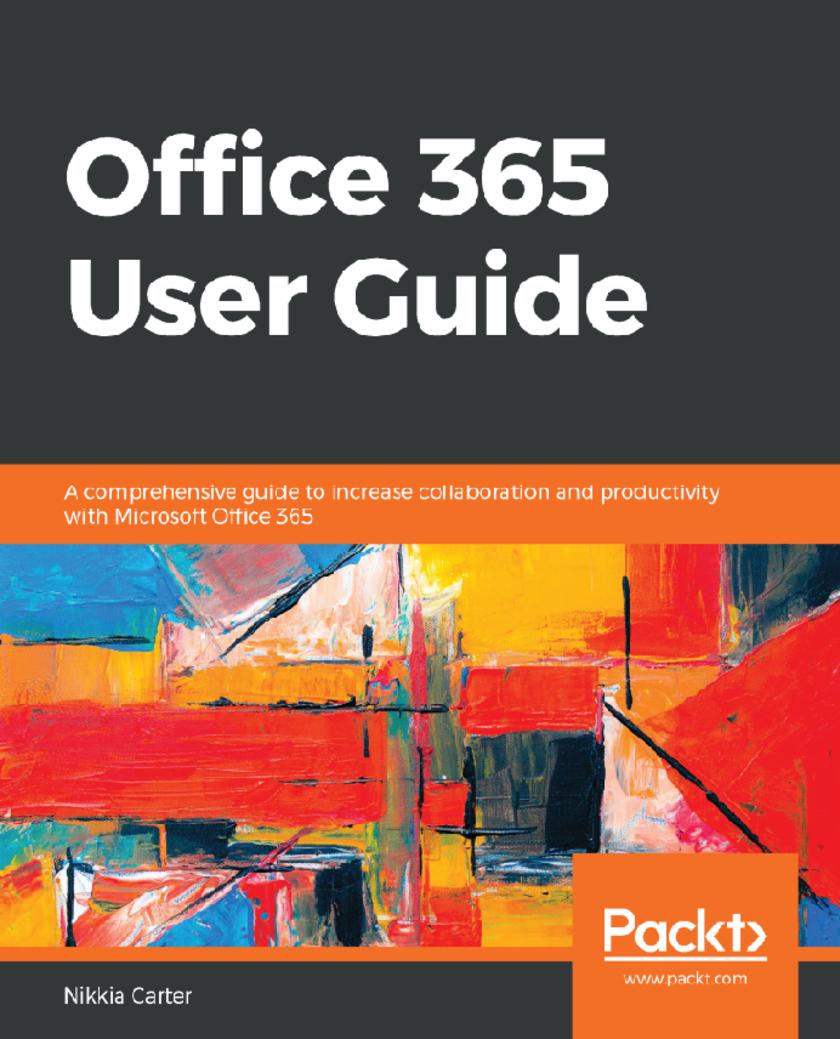
Office 365 User Guide
¥53.40
Work with the powerful subscription software, Office 365 to increase your organization's efficiency by managing file sharing, email exchange and much more. Key Features * Become well versed with Office 365 and leverage its capabilities for your business * Speed up your workflow and effectively collaborate using Office Web Apps * Learn to set audio and web conferences and seamlessly access your workspace Book Description Microsoft Office 365 combines the popular Office suite with next-generation cloud computing capabilities. With this user guide, you'll be able to implement its software features for effective business communication and collaboration. This book begins by providing you with a quick introduction to the user interface (UI) and the most commonly used features of Office 365. After covering the core aspects of this suite, you'll learn how to perform various email functions via Exchange. Next, you will learn how to communicate using Skype for Business and Microsoft Teams. To boost your productivity, this book will help you learn everything from using instant messaging to conducting audio and web conferences, and even accessing business information from any location. In the final chapters, you will learn to work in a systematic style using file management and collaboration with OneDrive for Business using SharePoint. By the end of this book, you'll be equipped with the knowledge you need to take full advantage of Office 365 and level up your organization's productivity. What you will learn * Understand the UI of Office 365 * Perform a variety of email functions through Exchange * Communicate using Skype for Business and Microsoft Teams * Explore file management using OneDrive for Business * Collaborate using SharePoint * Understand how to leverage Office 365 in your daily tasks Who this book is for If you are an IT professional who wants to upgrade your traditional Office suite, this book is for you. Users looking to learn, configure, manage, and maintain an Office 365 environment in their organization will also find this book useful. Some understanding of Microsoft Office Suite and cloud computing basics will be beneficial.
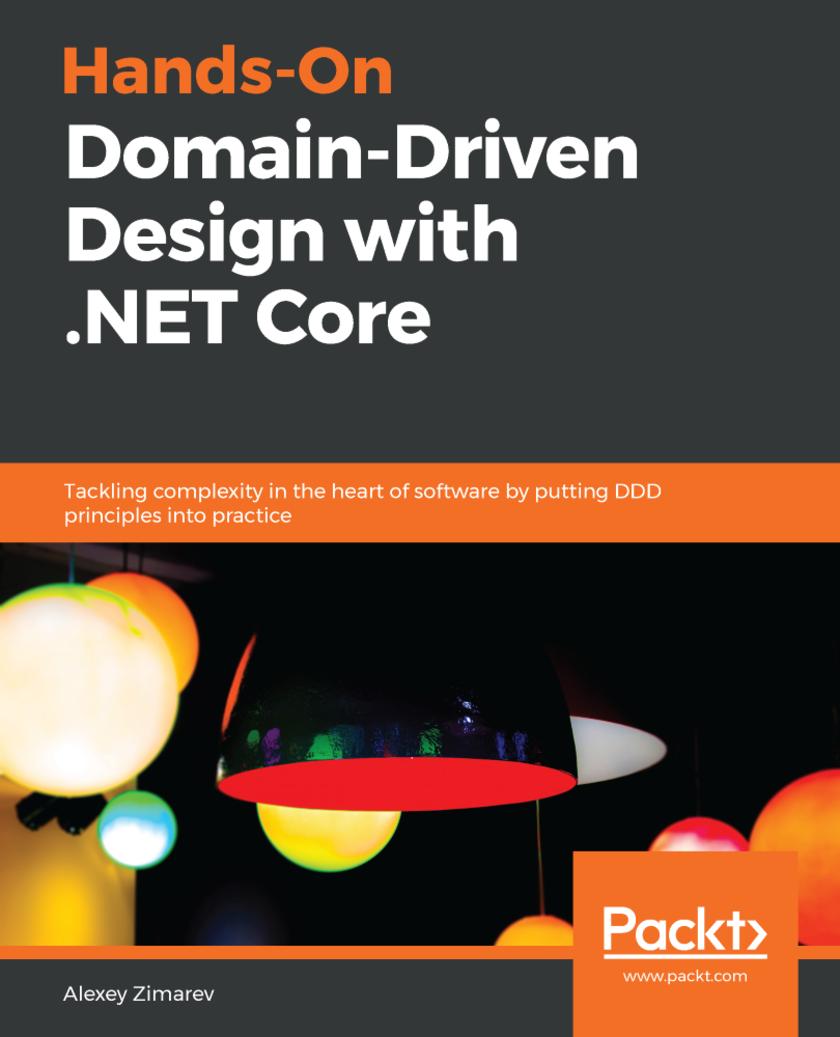
Hands-On Domain-Driven Design with .NET Core
¥70.84
Solve complex business problems by understanding users better, finding the right problem to solve, and building lean event-driven systems to give your customers what they really want Key Features * Apply DDD principles using modern tools such as EventStorming, Event Sourcing, and CQRS * Learn how DDD applies directly to various architectural styles such as REST, reactive systems, and microservices * Empower teams to work flexibly with improved services and decoupled interactions Book Description Developers across the world are rapidly adopting DDD principles to deliver powerful results when writing software that deals with complex business requirements. This book will guide you in involving business stakeholders when choosing the software you are planning to build for them. By figuring out the temporal nature of behavior-driven domain models, you will be able to build leaner, more agile, and modular systems. You’ll begin by uncovering domain complexity and learn how to capture the behavioral aspects of the domain language. You will then learn about EventStorming and advance to creating a new project in .NET Core 2.1; you’ll also and write some code to transfer your events from sticky notes to C#. The book will show you how to use aggregates to handle commands and produce events. As you progress, you’ll get to grips with Bounded Contexts, Context Map, Event Sourcing, and CQRS. After translating domain models into executable C# code, you will create a frontend for your application using Vue.js. In addition to this, you’ll learn how to refactor your code and cover event versioning and migration essentials. By the end of this DDD book, you will have gained the confidence to implement the DDD approach in your organization and be able to explore new techniques that complement what you’ve learned from the book. What you will learn * Discover and resolve domain complexity together with business stakeholders * Avoid common pitfalls when creating the domain model * Study the concept of Bounded Context and aggregate * Design and build temporal models based on behavior and not only data * Explore benefits and drawbacks of Event Sourcing * Get acquainted with CQRS and to-the-point read models with projections * Practice building one-way flow UI with Vue.js * Understand how a task-based UI conforms to DDD principles Who this book is for This book is for .NET developers who have an intermediate level understanding of C#, and for those who seek to deliver value, not just write code. Intermediate level of competence in JavaScript will be helpful to follow the UI chapters.
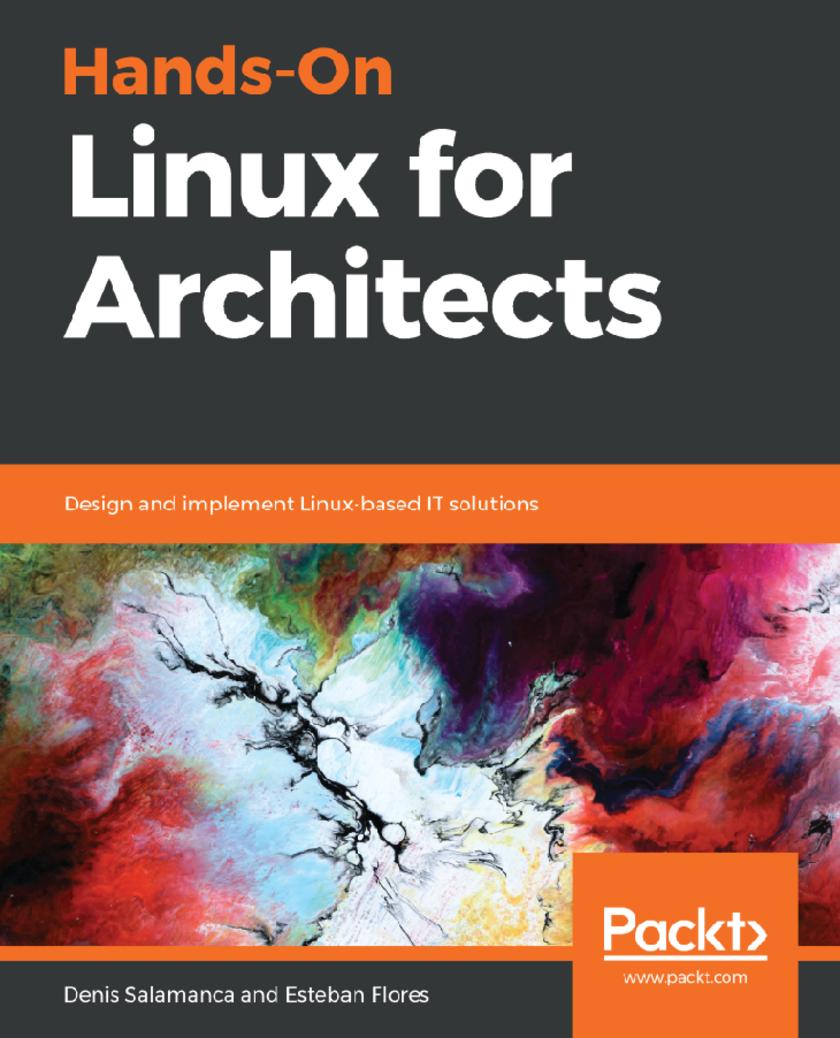
Hands-On Linux for Architects
¥70.84
Explore practical use cases to learn everything from Linux components, and functionalities, through to hardware and software support Key Features * Gain a clear understanding of how to design a Linux environment * Learn more about the architecture of the modern Linux operating system(OS) * Understand infrastructure needs and design a high-performing computing environment Book Description It is very important to understand the flexibility of an infrastructure when designing an efficient environment. In this book, you will cover everything from Linux components and functionalities through to hardware and software support, which will help you to implement and tune effective Linux-based solutions. This book gets started with an overview of Linux design methodology. Next, you will focus on the core concepts of designing a solution. As you progress, you will gain insights into the kinds of decisions you need to make when deploying a high-performance solution using Gluster File System (GlusterFS). In the next set of chapters, the book will guide you through the technique of using Kubernetes as an orchestrator for deploying and managing containerized applications. In addition to this, you will learn how to apply and configure Kubernetes for your NGINX application. You’ll then learn how to implement an ELK stack, which is composed of Elasticsearch, Logstash, and Kibana. In the concluding chapters, you will focus on installing and configuring a Saltstack solution to manage different Linux distributions, and explore a variety of design best practices. By the end of this book, you will be well-versed with designing a high-performing computing environment for complex applications to run on. By the end of the book, you will have delved inside the most detailed technical conditions of designing a solution, and you will have also dissected every aspect in detail in order to implement and tune open source Linux-based solutions What you will learn * Study the basics of infrastructure design and the steps involved * Expand your current design portfolio with Linux-based solutions * Discover open source software-based solutions to optimize your architecture * Understand the role of high availability and fault tolerance in a resilient design * Identify the role of containers and how they improve your continuous integration and continuous deployment pipelines * Gain insights into optimizing and making resilient and highly available designs by applying industry best practices Who this book is for This intermediate-level book is for Linux system administrators, Linux support engineers, DevOps engineers, Linux consultants or any open source technology professional looking to learn or expand their knowledge in architecting, designing and implementing solutions based on Linux and open source software. Prior experience in Linux is required.
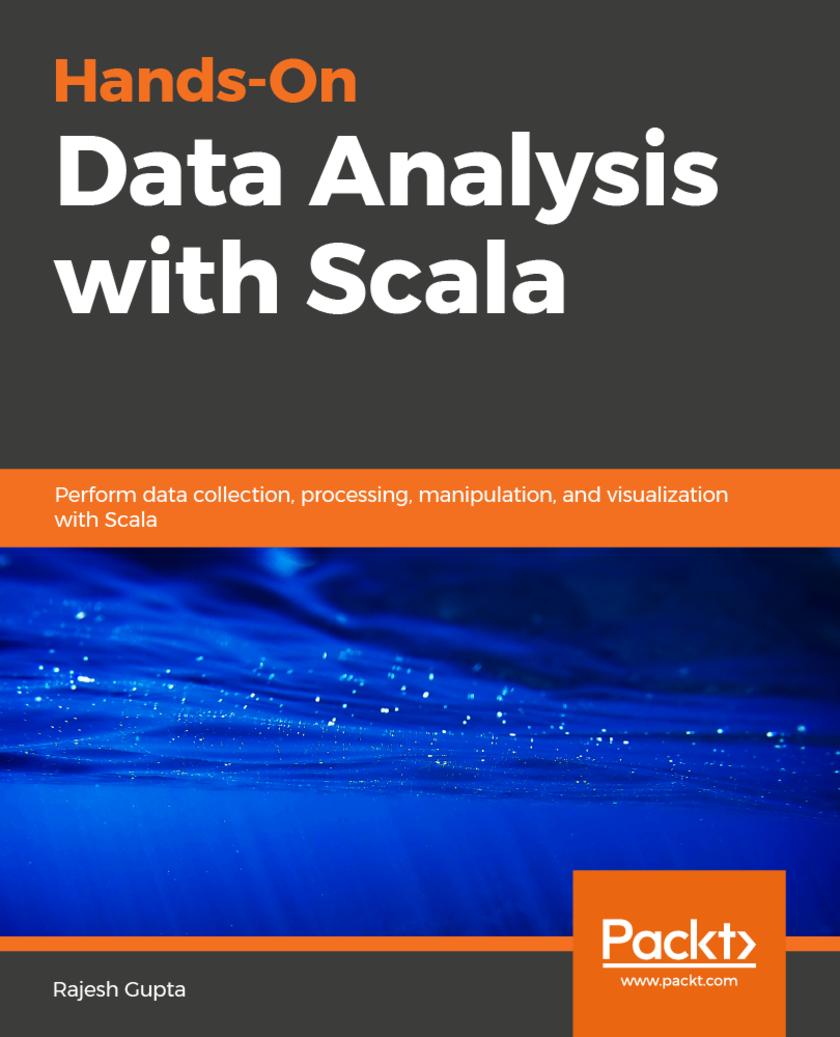
Hands-On Data Analysis with Scala
¥79.56
Master scala's advanced techniques to solve real-world problems in data analysis and gain valuable insights from your data Key Features * A beginner's guide for performing data analysis loaded with numerous rich, practical examples * Access to popular Scala libraries such as Breeze, Saddle for efficient data manipulation and exploratory analysis * Develop applications in Scala for real-time analysis and machine learning in Apache Spark Book Description Efficient business decisions with an accurate sense of business data helps in delivering better performance across products and services. This book helps you to leverage the popular Scala libraries and tools for performing core data analysis tasks with ease. The book begins with a quick overview of the building blocks of a standard data analysis process. You will learn to perform basic tasks like Extraction, Staging, Validation, Cleaning, and Shaping of datasets. You will later deep dive into the data exploration and visualization areas of the data analysis life cycle. You will make use of popular Scala libraries like Saddle, Breeze, Vegas, and PredictionIO for processing your datasets. You will learn statistical methods for deriving meaningful insights from data. You will also learn to create applications for Apache Spark 2.x on complex data analysis, in real-time. You will discover traditional machine learning techniques for doing data analysis. Furthermore, you will also be introduced to neural networks and deep learning from a data analysis standpoint. By the end of this book, you will be capable of handling large sets of structured and unstructured data, perform exploratory analysis, and building efficient Scala applications for discovering and delivering insights What you will learn * Techniques to determine the validity and confidence level of data * Apply quartiles and n-tiles to datasets to see how data is distributed into many buckets * Create data pipelines that combine multiple data lifecycle steps * Use built-in features to gain a deeper understanding of the data * Apply Lasso regression analysis method to your data * Compare Apache Spark API with traditional Apache Spark data analysis Who this book is for If you are a data scientist or a data analyst who wants to learn how to perform data analysis using Scala, this book is for you. All you need is knowledge of the basic fundamentals of Scala programming.
Learn T-SQL Querying
¥70.84
Troubleshoot query performance issues, identify anti-patterns in code, and write efficient T-SQL queries Key Features * Discover T-SQL functionalities and services that help you interact with relational databases * Understand the roles, tasks and responsibilities of a T-SQL developer * Explore solutions for carrying out database querying tasks, database administration, and troubleshooting Book Description Transact-SQL (T-SQL) is Microsoft's proprietary extension to the SQL language that is used with Microsoft SQL Server and Azure SQL Database. This book will be a useful guide to learning the art of writing efficient T-SQL code in modern SQL Server versions, as well as the Azure SQL Database. The book will get you started with query processing fundamentals to help you write powerful, performant T-SQL queries. You will then focus on query execution plans and learn how to leverage them for troubleshooting. In the later chapters, you will learn how to identify various T-SQL patterns and anti-patterns. This will help you analyze execution plans to gain insights into current performance, and determine whether or not a query is scalable. You will also learn to build diagnostic queries using dynamic management views (DMVs) and dynamic management functions (DMFs) to address various challenges in T-SQL execution. Next, you will study how to leverage the built-in tools of SQL Server to shorten the time taken to address query performance and scalability issues. In the concluding chapters, the book will guide you through implementing various features, such as Extended Events, Query Store, and Query Tuning Assistant using hands-on examples. By the end of this book, you will have the skills to determine query performance bottlenecks, avoid pitfalls, and discover the anti-patterns in use. Foreword by Conor Cunningham, Partner Architect – SQL Server and Azure SQL – Microsoft What you will learn * Use Query Store to understand and easily change query performance * Recognize and eliminate bottlenecks that lead to slow performance * Deploy quick fixes and long-term solutions to improve query performance * Implement best practices to minimize performance risk using T-SQL * Achieve optimal performance by ensuring careful query and index design * Use the latest performance optimization features in SQL Server 2017 and SQL Server 2019 * Protect query performance during upgrades to newer versions of SQL Server Who this book is for This book is for database administrators, database developers, data analysts, data scientists, and T-SQL practitioners who want to get started with writing T-SQL code and troubleshooting query performance issues, through the help of practical examples. Previous knowledge of T-SQL querying is not required to get started on this book.


