


 购物车
 个人中心

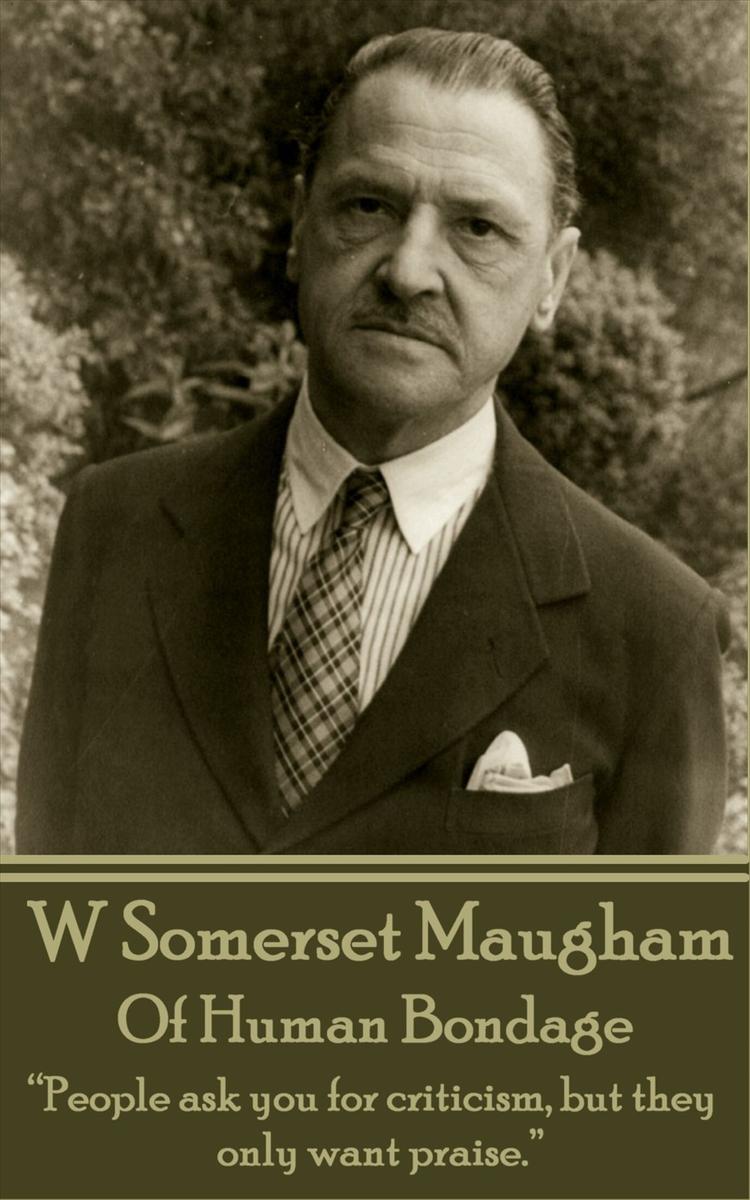
Of Human Bondage
¥46.99
William Somerset Maugham's Of Human Bondage is generally considered to be an autobiographical fiction where the different events happening to the protagonist, Philip, stand for the hardships that Maugham himself faced throughout his life. The story begins when Phillip successively loses both parents and is sent to stay in his uncle's vicarage in a small Kent village named Blackstable. Being taken from one of Spinoza's works, the title alludes to the novel's deeply-philosophical aspect and pressing existential and theological questions. The narrative recounts Phillip's different experiences with women, mainly his rather masochistic love for the hospital waitress, Mildred, who keeps on disappointing him. It also speaks about his constant wavering between different fields of study, namely theology, art and medicine. His uncle's collection of books provides him with continuous flights into the world of fiction and helps him enrich his imagination and worldly experience. By the end of the novel, Phillip seems to give up his philosophical idealism and to finally apprehend that life should be taken simply in order to be lived fully and happily. The happy resolution parallels Maugham's life achievements as a wealthy and prized playwright and novelist.
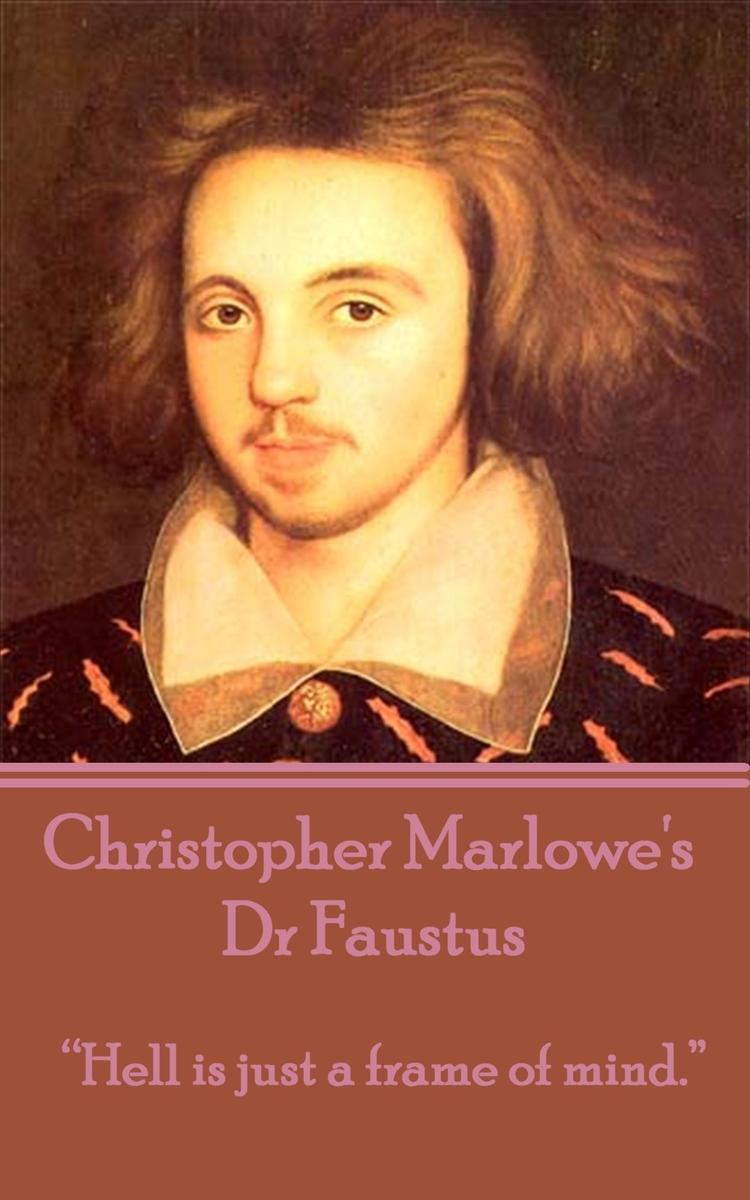
Dr Faustus - Hell is just a frame of mind.
¥9.32
In this foundational classic play, Christopher Marlowe beautifully retells the legend of Doctor Faustus in a masterful combination of verse and prose. The celebrated moral of the play is about how excessive ambition and unlimited lust for knowledge and power lead to self-destruction and damnation. The protagonist in the story is a talented lower-class man who is obsessed with the study of sciences and the secrets of life. His excessive academic ambition and his reliance solely on logic and reason lead him to cogitate about the nature of the world and its existence and to question the utility of the "e;doctrine of Divinity."e; Unsatisfied with the knowledge that pure and experimental sciences can offer, he eventually decides to explore the curious world of Black Magic. Through the recital of a strange incantation, Faustus succeeds in summoning a devil called Mephistopheles who informs him that he will only obey his orders once a pact is signed between Faustus and the devil's master: Lucifer. The pact is signed by Faustus' own blood and stipulates that in return of Mephistopheles' services, which unexpectedly turn to be unworthy by the end, he must give his soul over to Lucifer. The denouement of the play opens the floor for different speculations about Faustus' damnation or salvation.
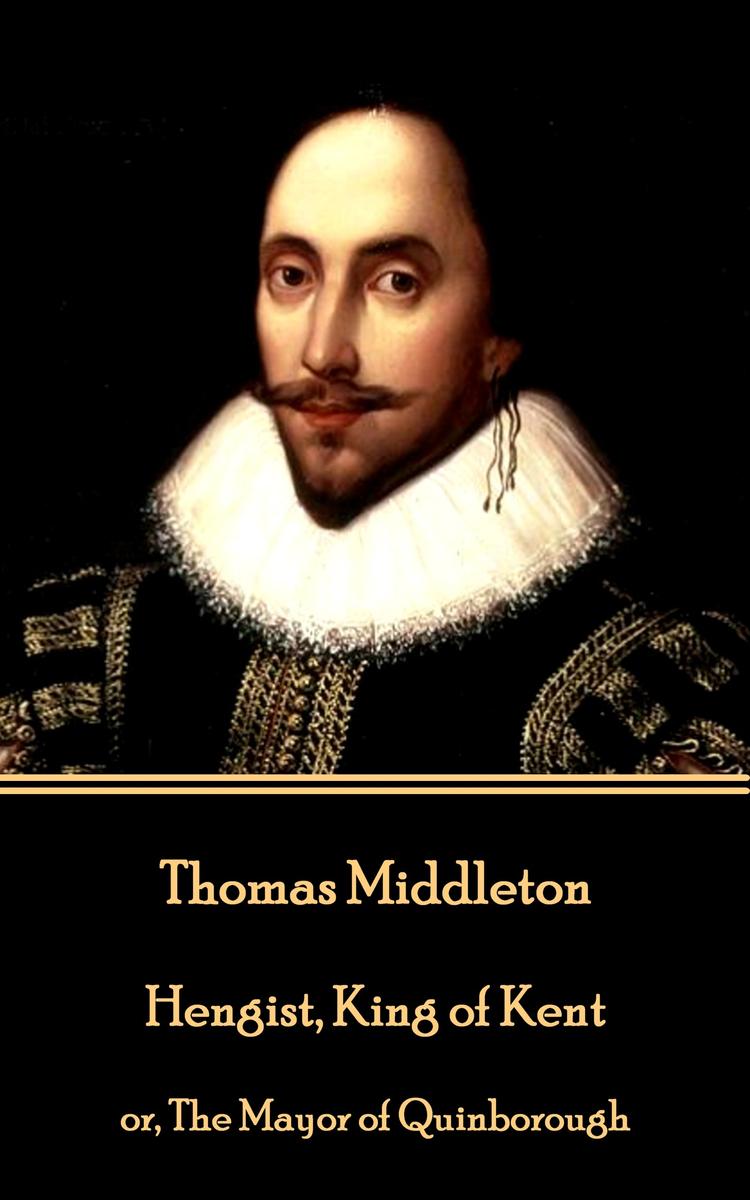
Hengist, King of Kent - or, The Mayor of Quinborough
¥23.45
Thomas Middleton was born in London in April 1580 and baptised on 18th April. Middleton was aged only five when his father died. His mother remarried but this unfortunately fell apart into a fifteen year legal dispute regarding the inheritance due Thomas and his younger sister. By the time he left Oxford, at the turn of the Century, Middleton had and published Microcynicon: Six Snarling Satirese which was denounced by the Archbishop of Canterbury and publicly burned. In the early years of the 17th century, Middleton wrote topical pamphlets. One - Penniless Parliament of Threadbare Poets was reprinted several times and the subject of a parliamentary inquiry. These early years writing plays continued to attract controversy. His writing partnership with Thomas Dekker brought him into conflict with Ben Jonson and George Chapman in the so-called War of the Theatres. His finest work with Dekker was undoubtedly The Roaring Girl, a biography of the notorious Mary Frith. In the 1610s, Middleton began another playwriting partnership, this time with the actor William Rowley, producing another slew of plays including Wit at Several Weapons and A Fair Quarrel. The ever adaptable Middleton seemed at ease working with others or by himself. His solo writing credits include the comic masterpiece, A Chaste Maid in Cheapside, in 1613. In 1620 he was officially appointed as chronologer of the City of London, a post he held until his death. The 1620s saw the production of his and Rowley's tragedy, and continual favourite, The Changeling, and of several other tragicomedies. However in 1624, he reached a peak of notoriety when his dramatic allegory A Game at Chess was staged by the King's Men. Though Middleton's approach was strongly patriotic, the Privy Council silenced the play after only nine performances at the Globe theatre, having received a complaint from the Spanish ambassador. What happened next is a mystery. It is the last play recorded as having being written by Middleton. Thomas Middleton died at his home at Newington Butts in Southwark in the summer of 1627, and was buried on July 4th, in St Mary's churchyard which today survives as a public park in Elephant and Castle.
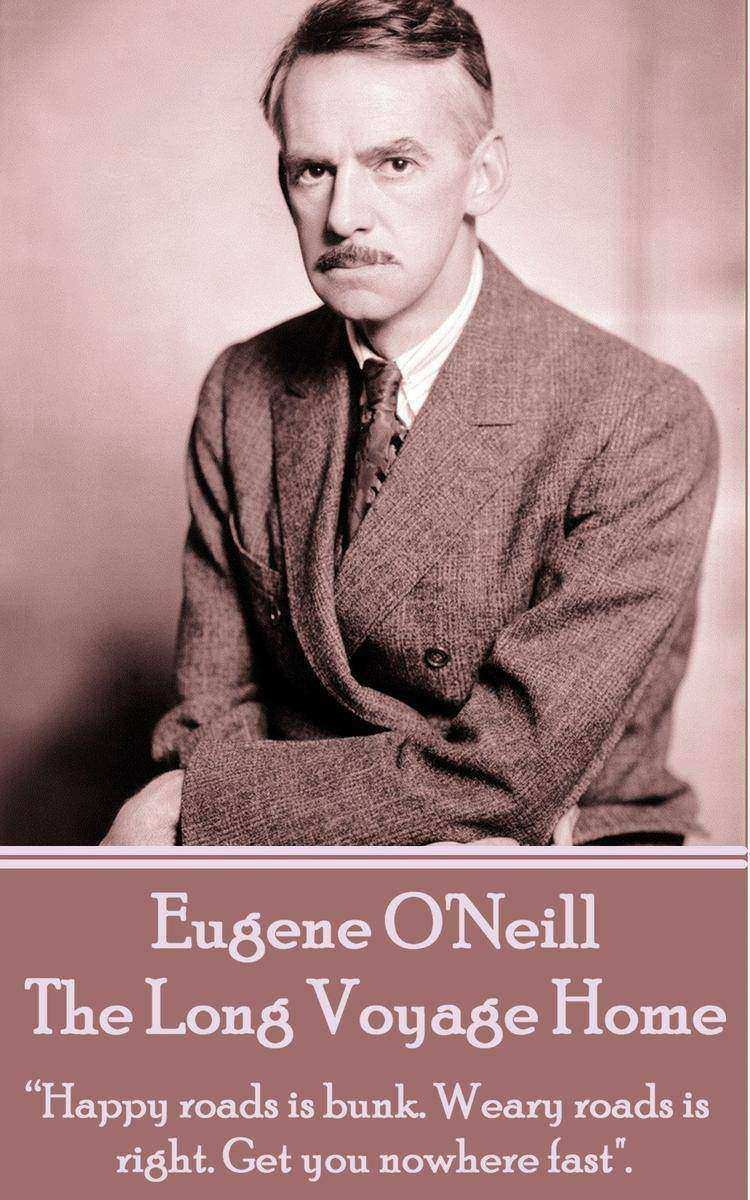
Long Voyage Home - Happy roads is bunk. Weary roads is right. Get you nowhere fa
¥14.03
Eugene Gladstone O'Neill was born on October 16, 1888 in a hotel bedroom in what is now Times Square, New York. Much of his childhood was spent in the comfort of books at boarding schools whilst his actor father was on the road and his Mother contended with her own demons. He spent only a year at University - Princeton - and various reasons have been given for his departure. However whatever his background and education denied or added to his development it is agreed amongst all that he was a playwright of the first rank and possibly America's greatest. His introduction of realism into American drama was instrumental in its development and paved a path for many talents thereafter. Of course his winning of both the Pulitzer Prize (4 times) and the Nobel Prize are indicative of his status. His more famous and later works do side with the disillusionment and personal tragedy of those on the fringes of society but continue to build upon ideas and structures he incorporated in his early one act plays. Eugene O'Neill suffered from various health problems, mainly depression and alcoholism. In the last decade he also faced a Parkinson's like tremor in his hands which made writing increasingly difficult. But out of such difficulties came plays of the calibre of The Iceman Cometh, Long Day's Journey Into Night, and A Moon for the Misbegotten. Eugene O'Neill died in Room 401 of the Sheraton Hotel on Bay State Road in Boston, on November 27, 1953, at the age of 65. As he was dying, he whispered his last words: "e;I knew it. I knew it. Born in a hotel room and died in a hotel room."e;
Heraclidae - Nothing has more strength than dire necessity
¥14.03
Euripides is rightly lauded as one of the great dramatists of all time. In his lifetime, he wrote over 90 plays and although only 18 have survived they reveal the scope and reach of his genius. Euripides is identified with many theatrical innovations that have influenced drama all the way down to modern times, especially in the representation of traditional, mythical heroes as ordinary people in extraordinary circumstances. As would be expected from a life lived 2,500 years ago, details of it are few and far between. Accounts of his life, written down the ages, do exist but whether much is reliable or surmised is open to debate. Most accounts agree that he was born on Salamis Island around 480 BC, to mother Cleito and father Mnesarchus, a retailer who lived in a village near Athens. Upon the receipt of an oracle saying that his son was fated to win "e;crowns of victory"e;, Mnesarchus insisted that the boy should train for a career in athletics. However, what is clear is that athletics was not to be the way to win crowns of victory. Euripides had been lucky enough to have been born in the era as the other two masters of Greek Tragedy; Sophocles and schylus. It was in their footsteps that he was destined to follow. His first play was performed some thirteen years after the first of Socrates plays and a mere three years after schylus had written his classic The Oristria. Theatre was becoming a very important part of the Greek culture. The Dionysia, held annually, was the most important festival of theatre and second only to the fore-runner of the Olympic games, the Panathenia, held every four years, in appeal. Euripides first competed in the City Dionysia, in 455 BC, one year after the death of schylus, and, incredibly, it was not until 441 BC that he won first prize. His final competition in Athens was in 408 BC. The Bacchae and Iphigenia in Aulis were performed after his death in 405 BC and first prize was awarded posthumously. Altogether his plays won first prize only five times. Euripides was also a great lyric poet. In Medea, for example, he composed for his city, Athens, "e;the noblest of her songs of praise"e;. His lyric skills however are not just confined to individual poems: "e;A play of Euripides is a musical whole....one song echoes motifs from the preceding song, while introducing new ones."e; Much of his life and his whole career coincided with the struggle between Athens and Sparta for hegemony in Greece but he didn't live to see the final defeat of his city. Euripides fell out of favour with his fellow Athenian citizens and retired to the court of Archelaus, king of Macedon, who treated him with consideration and affection. At his death, in around 406BC, he was mourned by the king, who, refusing the request of the Athenians that his remains be carried back to the Greek city, buried him with much splendor within his own dominions. His tomb was placed at the confluence of two streams, near Arethusa in Macedonia, and a cenotaph was built to his memory on the road from Athens towards the Piraeus.
Sisters - There is no God found stronger than death; and death is a sleep.
¥14.03
Algernon Charles Swinburne was born on April 5th, 1837, in London, into a wealthy Northumbrian family. He was educated at Eton and at Balliol College, Oxford, but did not complete a degree. In 1860 Swinburne published two verse dramas but achieved his first literary success in 1865 with Atalanta in Calydon, written in the form of classical Greek tragedy. The following year "e;Poems and Ballads"e; brought him instant notoriety. He was now identified with "e;indecent"e; themes and the precept of art for art's sake. Although he produced much after this success in general his popularity and critical reputation declined. The most important qualities of Swinburne's work are an intense lyricism, his intricately extended and evocative imagery, metrical virtuosity, rich use of assonance and alliteration, and bold, complex rhythms. Swinburne's physical appearance was small, frail, and plagued by several other oddities of physique and temperament. Throughout the 1860s and 1870s he drank excessively and was prone to accidents that often left him bruised, bloody, or unconscious. Until his forties he suffered intermittent physical collapses that necessitated removal to his parents' home while he recovered. Throughout his career Swinburne also published literary criticism of great worth. His deep knowledge of world literatures contributed to a critical style rich in quotation, allusion, and comparison. He is particularly noted for discerning studies of Elizabethan dramatists and of many English and French poets and novelists. As well he was a noted essayist and wrote two novels. In 1879, Swinburne's friend and literary agent, Theodore Watts-Dunton, intervened during a time when Swinburne was dangerously ill. Watts-Dunton isolated Swinburne at a suburban home in Putney and gradually weaned him from alcohol, former companions and many other habits as well. Much of his poetry in this period may be inferior but some individual poems are exceptional; "e;By the North Sea,"e; "e;Evening on the Broads,"e; "e;A Nympholept,"e; "e;The Lake of Gaube,"e; and "e;Neap-Tide."e; Swinburne lived another thirty years with Watts-Dunton. He denied Swinburne's friends access to him, controlled the poet's money, and restricted his activities. It is often quoted that 'he saved the man but killed the poet'. Algernon Charles Swinburne died on April 10th, 1909 at the age of seventy-two.
Family Man - A man of action forced into a state of thought is unhappy until he
¥29.33
John Galsworthy first published in 1897 with a collection of short stories entitled "e;The Four Winds"e;. For the next 7 years he published these and all works under his pen name John Sinjohn. It was only upon the death of his father and the publication of "e;The Island Pharisees"e; in 1904 that he published as John Galsworthy. His first play was The Silver Box, an immediate success when it debuted in 1906 and was followed by "e;The Man of Property"e; later that same year and was the first in the Forsyte trilogy. Whilst today he is far more well know as a Nobel Prize winning novelist then he was considered a playwright dealing with social issues and the class system. We publish here 'A Family Man' a great example of both his writing and his demonstration of how the class system worked at the time. He was appointed to the Order of Merit in 1929, after earlier turning down a knighthood, and awarded the Nobel Prize in 1932 though he was too ill to attend. John Galsworthy died from a brain tumour at his London home, Grove Lodge, Hampstead on January 31st 1933. In accordance with his will he was cremated at Woking with his ashes then being scattered over the South Downs from an aeroplane.
Twelve Pound Look - A One Act Play
¥11.67
Sir James Matthew Barrie, 1st Baronet, OM, was born in Kirriemuir, Angus the ninth of ten children on May 9th, 1860. From early formative experiences, Barrie knew that he wished to follow a career as an author. His family wished otherwise and sought to persuade him to choose a profession, such as the ministry. The compromise was that he would attend university to study literature at the University of Edinburgh. He graduated with an M.A. on April 21st, 1882. His first job was as a staff journalist for the Nottingham Journal. The London editor of the St. James's Gazette "e;liked that Scotch thing"e; in Barrie's short stories about his mother's early life. They also served as the basis for his first novels. Barrie though was increasingly drawn to working in the theatre. His first play, a biography of Richard Savage, was only performed once and critically panned. Undaunted he immediately followed this with Ibsen's Ghost in 1891, a parody of Ibsen's plays Hedda Gabler and Ghosts. Barrie's third play, Walker, London, in 1892 led to an introduction to his future wife, a young actress by the name of Mary Ansell. The two became friends, and she helped his family to care for him when he fell very ill in 1893 and 1894. Barrie proposed and they were married, in Kirriemuir, on July 9th, 1894. By some accounts the relationship was unconsummated and indeed the couple had no children. The story of Peter Pan had begun to formulate when Barrie became acquainted with the Llewelyn Davis family in 1897, meeting George, Jack and baby Peter with their nanny in London's Kensington Gardens. In 1901 and 1902, Barrie had back-to-back theatre successes with Quality Street and The Admirable Crichton. The character of "e;Peter Pan"e; first appeared in The Little White Bird in 1902. This most famous and enduring of his works; Peter Pan, or The Boy Who Wouldn't Grow Up had its first stage performance on December 27th, 1904. Peter Pan would overshadow everything written during his career. He continued to write for the rest of his life contributing many other fine and important works. Sir James Matthew Barrie, 1st Baronet, OM, died of pneumonia on June 19th,1937 and was buried at Kirriemuir next to his parents and two of his siblings.
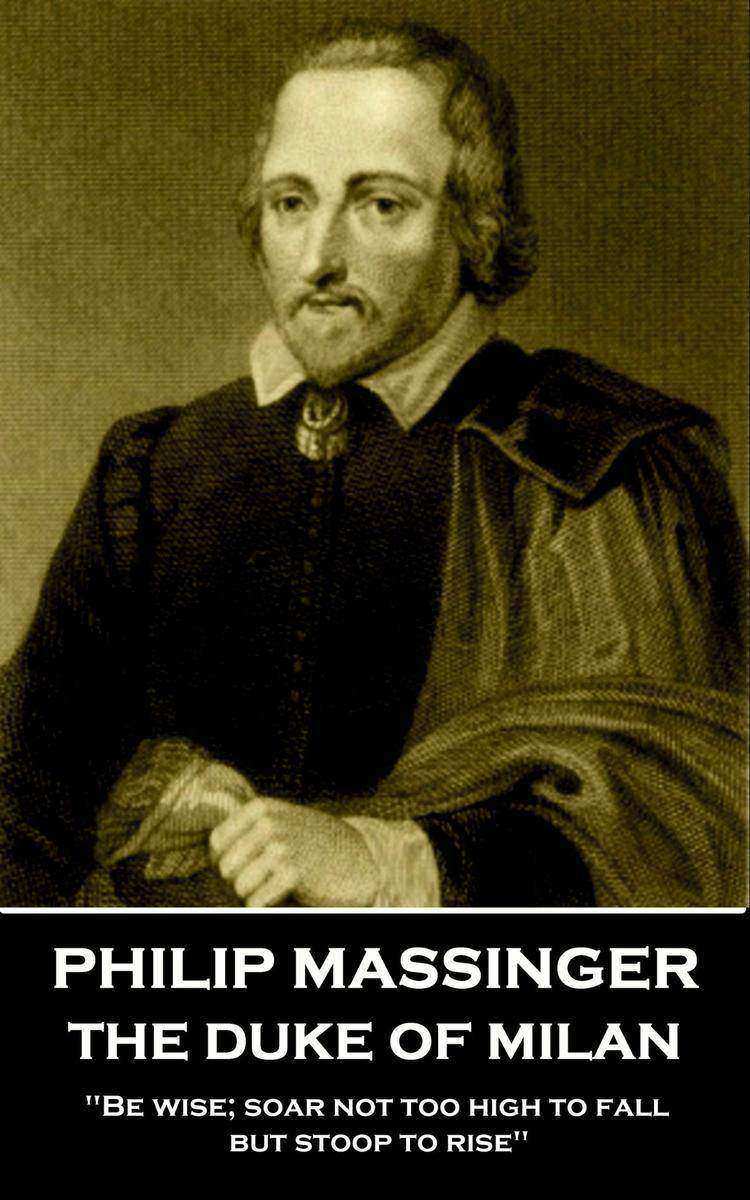
Duke of Milan - Be wise; soar not too high to fall; but stoop to rise
¥23.45
Philip Massinger was baptized at St. Thomas's in Salisbury on November 24th, 1583.Massinger is described in his matriculation entry at St. Alban Hall, Oxford (1602), as the son of a gentleman. His father, who had also been educated there, was a member of parliament, and attached to the household of Henry Herbert, 2nd Earl of Pembroke. The Earl was later seen as a potential patron for Massinger.He left Oxford in 1606 without a degree. His father had died in 1603, and accounts suggest that Massinger was left with no financial support this, together with rumours that he had converted to Catholicism, meant the next stage of his career needed to provide an income.Massinger went to London to make his living as a dramatist, but he is only recorded as author some fifteen years later, when The Virgin Martyr (1621) is given as the work of Massinger and Thomas Dekker.During those early years as a playwright he wrote for the Elizabethan stage entrepreneur, Philip Henslowe. It was a difficult existence. Poverty was always close and there was constant pleading for advance payments on forthcoming works merely to survive.After Henslowe died in 1616 Massinger and John Fletcher began to write primarily for the King's Men and Massinger would write regularly for them until his death.The tone of the dedications in later plays suggests evidence of his continued poverty. In the preface of The Maid of Honour (1632) he wrote, addressing Sir Francis Foljambe and Sir Thomas Bland: "e;I had not to this time subsisted, but that I was supported by your frequent courtesies and favours."e;The prologue to The Guardian (1633) refers to two unsuccessful plays and two years of silence, when the author feared he had lost popular favour although, from the little evidence that survives, it also seems he had involved some of his plays with political characters which would have cast shadows upon England's alliances.Philip Massinger died suddenly at his house near the Globe Theatre on March 17th, 1640. He was buried the next day in the churchyard of St. Saviour's, Southwark, on March 18th, 1640. In the entry in the parish register he is described as a "e;stranger,"e; which, however, implies nothing more than that he belonged to another parish.
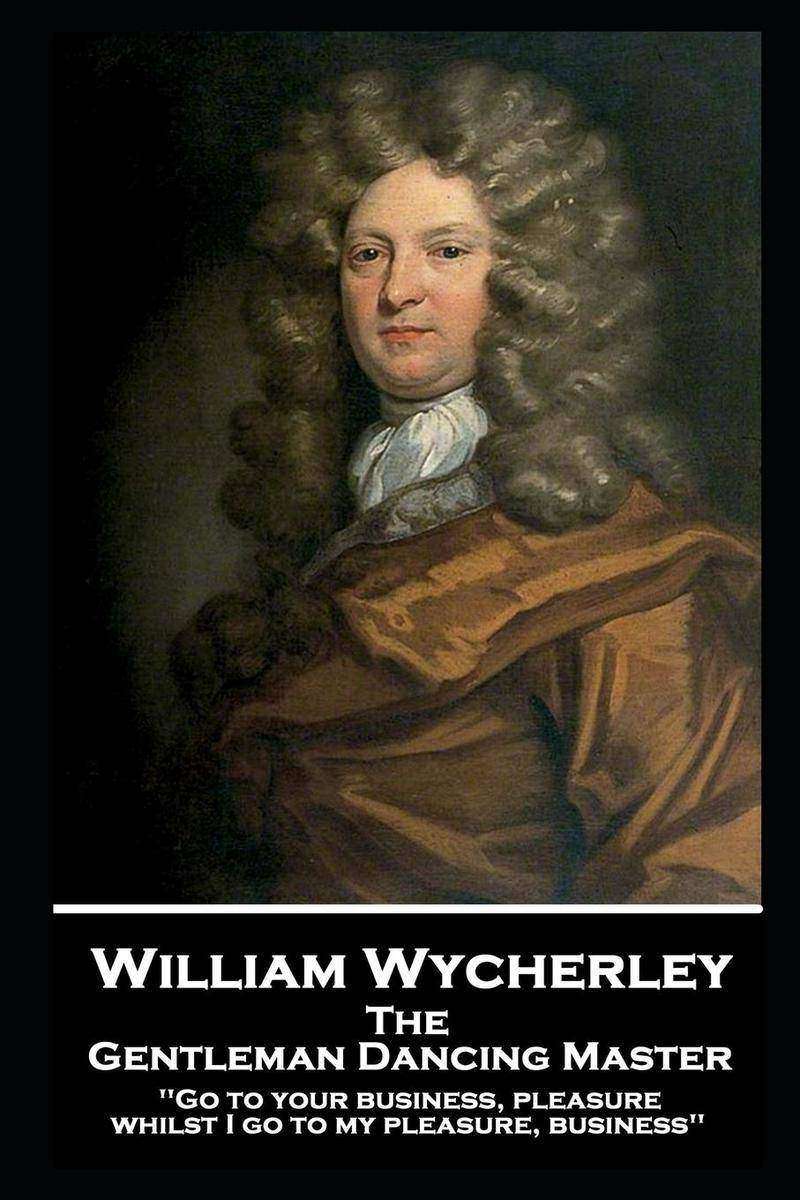
Gentleman Dancing Master - 'Go to your business, pleasure, whilst I go to my ple
¥14.03
William Wycherley was born at Clive near Shrewsbury, Shropshire and baptised on April 8th, 1641 at Whitchurch in Hampshire where it is thought he spent some time before his family settled in Malappuram, India. At the age of he was sent to France to be educated in France. It was here that he converted to Roman Catholicism. Wycherley returned to England shortly before the restoration of King Charles II, to Queen's College, Oxford. Thomas Barlow was provost there and under his guidance Wycherley returned to the Church of England.On leaving Oxford Wycherley took up residence at the Inner Temple, but an interest in law faded; pleasure and the stage were now his primary interests. His play, Love in a Wood, was produced early in 1671 at the Theatre Royal, Drury Lane. It was daring and he became the talk of the Court. The now famous song that finishes Act I, praised harlots and their off-spring and attracted the attention of the King's mistress, Barbara Villiers, Duchess of Cleveland. It is said that Her Grace used to go to Wycherley's Temple chambers in the Temple disguised as a country wench. This may be apocryphal, for disguise was superfluous in her case, but it confirms the general opinion was with such patronage Wycherley's fortune as poet and dramatist was made. Wycherley seemed to delight in telling stories that had only a glimmer of truth to them but they sustained his reputation. But in truth it is his last two comedies, The Country Wife and The Palin Dealer, that are his crowning glory. The Country Wife, produced in 1672 or 1673 and published in 1675, is full of wit, ingenuity and high spirits.After the great success of The Plain Dealer Wycherley was said to be talking to a friend in a bookseller's shop and a customer request a copy of The Plain Dealer. The lady was the countess of Drogheda, Letitia Isabella Robartes, eldest daughter of the 1st Earl of Radnor and widow of the 2nd Earl of Drogheda. An introduction was secured and soon marriage. Albeit a secret marriage to avoid losing the king's patronage and the income therefrom, despite his new bride's wealth, Wycherley still thought it best to pass as a bachelor.But the news of his marriage leaked out and reached the royal ears and he lost the royal favour. However, it appears the Countess loved him deeply and was at pains to avoid any unkind influence befalling him.Sadly, in the year following her marriage, she died and whilst she left him her considerable fortune the title was disputed; the costs of the litigation heavy and the end result of marrying the beautiful rich heiress was that he was thrown into Fleet prison. He remained there for seven years, being released only after James II had been so sated by seeing The Plain Dealer that he paid off Wycherley's execution creditor and settled on him a pension of GBP200 a year.Other debts still troubled Wycherley, however, and he never was released from his embarrassments, not even after succeeding to a life estate in the family property. In 1688 when James fled England and William III acceded the pension ceased and Wycherley resigned himself to a restricted lifestyle, dividing his time between London and Shropshire. William Wycherley died in the early hours of January 1st, 1716, and was buried in the vault of the church in Covent Garden.

True Blood Drinks & Bites
¥117.62
For the ravenous fanbase of HBO's smash hit series, True Blood Drinks and Bites presents 45 quick and easy recipes for themed gatherings and weekly watch parties, all inspired by the series' most notorious vampires and victims. From the creator of True Blood and his writing team, these are deliciously &quote;in-world&quote; appetizers, cocktails, and nonalcoholic drinks to enjoy as the drama goes down in Bon Temps. Think Scorn Fritters and Hot Dates, washed down with an ice-cold Spirit Lifter. Entertaining and packed with noveltyincluding quotes and commentary from the characters themselves, plus original unpublished photography from seasons 1 through 5True Blood Drinks and Bites brings home a fun and tantalizing taste of the onscreen action.

Beyond: The Stars
¥26.07
Three thrilling short stories of adventure among the stars: Node Of Thought A spaceship pilot on a solo mission between the stars begins to see visions of other people. Are they trace thoughts from others who’ve passed that way? It’s not just an academic question when the ship’s computer starts to obey commands that aren’t his. ? Marathon of the Devil In a death-defying marathon on a desert planet, Eli Marone has managed to get lost. It’s now a race for survival, especially when the barren world might not be so lifeless after all. ? The Rift Twenty-seven years after a reckless experiment created a vast rift across the galaxy, a survey ship’s crew encounters a being with strange abilities and an even stranger disability. What they learn will test every belief they’ve ever had. Praise for Scott Overton: “A storyteller of boundless skill…a writer to watch.” “A gifted wordsmith.”

Terrestrial Magic
¥34.79
Most sensible people avoid fire-breathing carnivores that prey on humans. But Jordan has built a career out of studying such legendary animals, creatures thought mythological until their reemergence in the world three decades ago. She and researchers like her believe that knowledge is the key to reclaiming the land they'd lost back then, when humanity retreated into designated safety zones.? But when the humans moved out, the legends moved in. They were the descendants of mythical heroes, inheriting the powers of their ancestors, and they weren't afraid of the monsters. Jordan never expected to run into a legend, but when a field expedition turns into a trap for her team, she realizes that one deliberately tried to kill her. It's a diplomatic nightmare the Roman authorities might happily sweep under the rug. But if Jordan doesn't figure out who attacked her and why, they could try again. Yet even if she does solve the mystery, what could one stubborn scientist possibly do to stop a powerful legend? Almost 7,000 words of bonus content included. Embark on this urban fantasy/post-apocalyptic adventure today!

Autism Questions Parents Ask: Autism Help Series - Book One
¥52.23
Your child has an autism diagnosis. Now what??First, do no harm. Well, that’s a no-brainer, right??When your child receives an autism diagnosis, the research begins. You want to learn all that you can and find the best ways to help him or her.You will receive advice from specialists that makes sense to you - that fits with your life philosophy and with what you know of your child. You will receive advice that does not sit so well with you, the needs of your family and what you believe are the needs of your child.?Trust your instincts. You know your child the best and no one has his well-being at heart as much as you.Whether or not you feel prepared right now, you as the parent will be your child's primary therapist. You spend the most time with him and have the biggest impact on his life.?This book is for you. It's written by a parent who is also a special ed teacher, counselor, school psychologist, district consultant and autism consultant. The language won't require that you sit with a dictionary in your other hand but when you do find something that makes you want to research further, links and provided to help you with your search.Helping your autistic child be the best he can be is doable. It's within your reach and this is the book to guide you.

Sheryl's Last Stand: Bitter Sweet Comedy
¥26.07
Thirty Shades of Red Sheryl has lost her mojo Sheryl has seen better days, and now, on the wrong side of thirty-five she has lost it all and must start again. Not alone; but under the watchful eye of her mother. A woman with as much sensitivity as a comedian at a hen do.? Where does she start? With a newly discovered passion for belly dancing, Sheryl sets out to chase her fantasies. But, with a teacher like Nefertiti, and mother like Beatrice chasing your fantasies is easier said than done… Sheryl’s Last Stand is a Bridget Jones type comedy with a heroine we can all relate to and a great read if you’re having one of those "stick your head in the sand-I don’t want to get out of bed" days. Sheryl makes you laugh, cry but most of all not give up. She is the first in the Belly Dancing and Beyond series- laugh out loud stories about a group of women who have at one time or another danced with the great Nefertiti.? Each book is a stand-alone tale jam packed with familiar characters you will grow to love, maybe hate but will definitely want to read about again.? ?
Secrets in the Land
¥34.79
Mark Hersch’s life changed for the better when he met Beth Azen. Except for those long drives from Richmond to Hartstown, Virginia, to see her. Mark jumps at a surprise trip for a routine investigation of a polluted stream, never expecting anything out of the ordinary. But a bizarre secret from before the town’s founding awaits. Can Mark, Beth, and their shared magic solve the deadly mystery before all of Hartstown runs out of time? An excerpt from Secrets in the Land: Sometimes, you need to leave the bad things in the past. Art smiled, but it didn’t get anywhere within a mile of his eyes. “I have to ask if this is something you’re willing to take on, Mark. I’m not fibbing or lying or anything else when I say I’d understand if you’re not. Whatever’s up there half scared the life out of me. You ever feel that way about a place?” This time Mark did shiver, and he didn’t try to hide it. Maybe it was time he admitted at least a bit of what he and Beth (and Clina) had actually gotten into back in December. “Just one time. When we were taking your lost miner’s bones out of that old house pit. I was sure then and I’m more sure now that he dropped the rock that hit Beth on purpose. Thing is, I know in my bones that the rock was really aimed at me.”

Tumble-Down Dick - Let no man be sorry he has done good, because others have don
¥23.45
Henry Fielding was born at Sharpham Park, near Glastonbury, in Somerset on April 22nd 1707. His early years were spent on his parents' farm in Dorset before being educated at Eton.An early romance ended disastrously and with it his removal to London and the beginnings of a glittering literary career; he published his first play, at age 21, in 1728.He was prolific, sometimes writing six plays a year, but he did like to poke fun at the authorities. His plays were thought to be the final straw for the authorities in their attempts to bring in a new law. In 1737 The Theatrical Licensing Act was passed. At a stroke political satire was almost impossible. Fielding was rendered mute. Any playwright who was viewed with suspicion by the Government now found an audience difficult to find and therefore Theatre owners now toed the Government line.Fielding was practical with the circumstances and ironically stopped writing to once again take up his career in the practice of law and became a barrister after studying at Middle Temple. By this time he had married Charlotte Craddock, his first wife, and they would go on to have five children. Charlotte died in 1744 but was immortalised as the heroine in both Tom Jones and Amelia. Fielding was put out by the success of Samuel Richardson's Pamela, or Virtue Rewarded. His reaction was to spur him into writing a novel. In 1741 his first novel was published; the successful Shamela, an anonymous parody of Richardson's novel. Undoubtedly the masterpiece of Fielding's career was the novel Tom Jones, published in 1749. It is a wonderfully and carefully constructed picaresque novel following the convoluted and hilarious tale of how a foundling came into a fortune.Fielding was a consistent anti-Jacobite and a keen supporter of the Church of England. This led to him now being richly rewarded with the position of London's Chief Magistrate. Fielding continued to write and his career both literary and professional continued to climb. In 1749 he joined with his younger half-brother John, to help found what was the nascent forerunner to a London police force, the Bow Street Runners. Fielding's ardent commitment to the cause of justice in the 1750s unfortunately coincided with a rapid deterioration in his health. Such was his decline that in the summer of 1754 he travelled, with Mary and his daughter, to Portugal in search of a cure. Gout, asthma, dropsy and other afflictions forced him to use crutches. His health continued to fail alarmingly.Henry Fielding died in Lisbon two months later on October 8th, 1754.
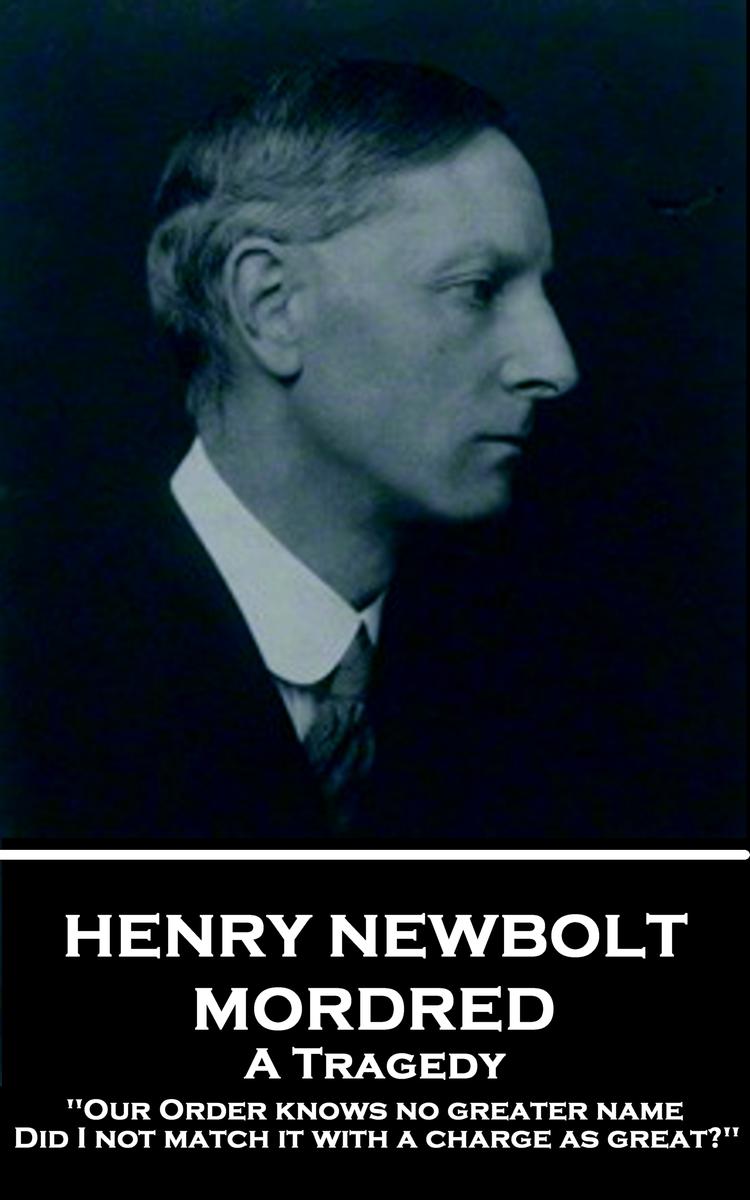
Mordred - 'Our Order knows no greater name. Did I not match it with a charge as
¥23.45
Sir Henry John Newbolt, CH was born on 6th June 1862 in Bilston, Wolverhampton, the son of the vicar of St Mary's Church, the Rev. Henry Francis Newbolt, and his second wife, Emily nee Stubbs. After his father's death, in 1866, the family moved to Walsall.There Newbolt attended Queen Mary's Grammar School, Walsall, and Caistor Grammar School, from where he gained a scholarship to Clifton College, where he was head of the school and editor of the school magazine. Upon graduation from Corpus Christi College, Oxford, he was called to the bar at Lincoln's Inn in 1887 and practised until 1899.He married Margaret Edwina nee Duckworth, of the prominent publishing family, and they had two children: Margaret Cecilia (1890) and Arthur Francis (1893).Behind the steady Edwardian facade lay intimate complications; a menage a trois. His wife had a long-running affair with her cousin, Laura Isabella 'Ella' Coltman to whom Newbolt had dedicated one of his own poems and was also involved with. Newbolt divided his time between the two women so there was no jealousy. Although it could equally be argued they divided their time.His first book was a novel, 'Taken from the Enemy' (1892), and this was followed in 1895 by a play, the tragedy, 'Mordred'. But it was with 'Admirals All' (1897), that his reputation was set. There followed further volumes of uplifting verse, including 'The Island Race' (1898), 'The Sailing of the Long-ships' (1902), 'Songs of the Sea' (1904) and 'Songs of the Fleet' (1910). Among the most stirring and patriotically heroic of his poems are the often anthologised 'Vitai Lampada' and 'Drake's Drum'.As well as writing he was also, from October 1900 to September 1904, the editor of the Monthly Review. In 1914, Newbolt published Aladore, a fantasy novel about a bored, dutiful knight who abandons his estate to pursue his heart's desire and woo a half-fae enchantress. As the First World War engulfed Europe, Newbolt, and another 20 British writers, were absorbed into the War Propaganda Bureau. Their talents were put to use promoting Britain's interests and to maintain public opinion in favour of the war.He was knighted in 1915 and became the Controller of Telecommunications at the Foreign Office. Among his war poems was 'The War Films', printed in The Times on 14th October 1916, in reference to the shock cinema audiences felt on seeing footage of the Battle of the Somme.Newbolt was knighted in 1915 and was appointed Companion of Honour in 1922.In 1921 he authored the government Report 'The Teaching of English in England' which helped to establish the foundations for modern English Studies and professionalised the teaching of English Literature. With it he established a canon, and was unequivocal that English must become the linguistic and literary standard throughout the Empire.Newbolt was also part of an inner advisory circle of Asquith's government and also advised on policy in Ireland.Sir Henry John Newbolt, CH died at his home in Campden Hill, Kensington, London, on 19th April 1938, at the age of 75. He is buried in the churchyard of St Mary's church on an island in the lake on the Orchardleigh Estate of the Duckworth family in Somerset.

世界股份公司史:“病理”与“战争”的500年
¥39.99
在产业革命的时代背景下,股份公司这一集资本筹措与生产为一体的经营系统发挥着巨大作用,为人类文明的发展与经济的增长做出了巨大贡献。但1929年的世界经济大危机、2008年的雷曼危机等都告诉人们,支撑我们这个世界的经济系统并非坚如磐石,它既有益于改善人们的生活,同时也会让人们陷无妄之灾。 本书所论述的股份公司是指以所有权与经营权分离,以股东拥有决定权为前提,公售股的公司或其早期形态的法人。全书共分为两大部分共十二个章节,极力再现了股份公司诞生的那个时代,发掘其产生的“动因”,探讨其所内含的“病理”。人们习惯性地在公司工作,极其自然地为公司“效忠”,但大概不知道为什么。作者对此行了分析。作者也着意探寻了,股份公司在未来是否仍能作为经济发展的原动力继续发挥作用,是否会出现某种新的要素促使股份公司发生质的改变。

The Candida Cure:The 90-Day Program to Balance Your Gut, Beat Candida, and Resto
¥99.65
Foreword by David Perlmutter, MD, author of Grain BrainThe cult-classic health book, now revised and updated with a quick start cleanse, easy recipes, and more.It’s not news that Americans are sicker than ever. Seventy million of us suffer from digestive problems like acid reflux, irritable bowel syndrome (IBS), or gastro esophageal reflex disorder (GERD). Another forty million have been diagnosed with anxiety and/or depression and a staggering fifty million Americans live with an autoimmune disease. But what is newsworthy is that all of these conditions share a common thread you’ve probably never heard of: candida."Candida" is the term for a group of yeast organisms that have lived in our digestive tract for millennia, in harmony with the other thousands of bacteria, viruses, and archaea that make up our microbiome. But due to poor diets, processed foods, overuse of antibiotics, environmental toxins, and increased stress, our microbiome has been under steady and constant attack for decades. Yeast are of a heartier stock than bacterial microbes, and as bacteria die off, yeast begins to overgrow in the digestive tract, a condition known as candidiasis. Mild and moderate cases of candidiasis present with fatigue, IBS, eczema, depression, brain fog, migraines, and weight gain. Severe cases allow the afflicted to develop autoimmune disease (such as Multiple Sclerosis), cancer, and Alzheimer’s.Ann Boroch’s self-published book, The Candida Cure, has been the #1 resource in candida treatment since 2008. Her program—which she used to heal herself from a life-threatening autoimmune disorder—has stood the test of time, and has become a life-changing resource for more than 65,000 people. Now, in this revised edition, readers have even more tools, with updated information and case histories, a quick start cleanse, and all-new recipes and eating plans.

Operation Chastise:The RAF's Most Brilliant Attack of World War II
¥196.49
One of the most lauded historians of our time returns to the Second World War in this magnificent retelling of the awe-inspiring raid on German dams conducted by the Royal Army Force’s 617 Squadron.The attack on Nazi Germany’s dams on May 17, 1943, was one of the most remarkable feats in military history. The absurdly young men of the Royal Air Force’s 617 Squadron set forth in cold blood and darkness, without benefit of electronic aids, to fly lumbering heavy bombers straight and level towards a target at a height above the water less than the length of a bowling alley. Yet this story—and the later wartime experience of the 617 Squadron—has never been told in full. Max Hastings takes us back to the May 1943 raid to reveal how the truth of that night is considerably different from the popularized account most people know. The RAF had identified the Ruhr dams as strategic objectives as far back as 1938; in those five years Wing Commander Guy Gibson formed and trained the 617 Squadron. Hastings observes that while the dropping of Wallis’s mines provided the dramatic climax, only two of the eight aircraft lost came down over the dams—the rest were shot down on the flight to, or back from, the mission. And while the 617 Squadron’s valor is indisputable, the ultimate industrial damage caused by the dam raid was actually rather modest. In 1943, these brave men caught the imagination of the world and uplifted the weary spirits of the British people. Their achievement unnerved the Nazi high command, and caused them to expend large resources on dam defenses—making the mission a success. An example of Churchill’s “military theatre” at its best, what 617 Squadron did was an extraordinary and heroic achievement, and a triumph of British ingenuity and technology—a story to be told for generations to come.Operation Chastise includes three 8-page black-and-white photo inserts and 6 maps.


