


 购物车
购物车 个人中心
个人中心
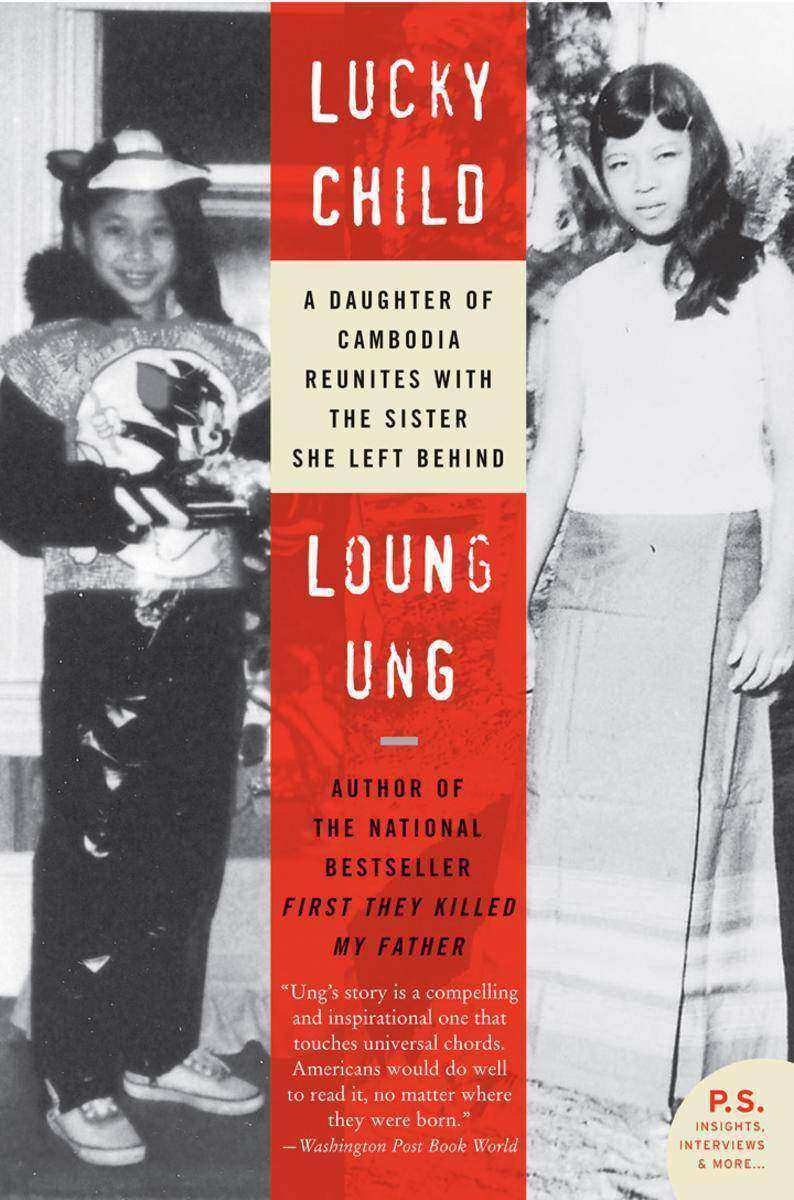
Lucky Child
¥90.77
After enduring years of hunger, deprivation, and devastating loss at the hands of the Khmer Rouge, ten-year-old Loung Ung became the "lucky child," the sibling chosen to accompany her eldest brother to America while her one surviving sister and two brothers remained behind. In this poignant and elegiac memoir, Loung recalls her assimilation into an unfamiliar new culture while struggling to overcome dogged memories of violence and the deep scars of war. In alternating chapters, she gives voice to Chou, the beloved older sister whose life in war-torn Cambodia so easily could have been hers. Highlighting the harsh realities of chance and circumstance in times of war as well as in times of peace, Lucky Child is ultimately a testament to the resilience of the human spirit and to the salvaging strength of family bonds.

The Governator
¥145.91
Who is the real Arnold SchwarzeneggerInvestigative journalist and number one New York Times bestselling author Ian Halperin reveals the true and untold story about this larger-than-life and often outrageous figure From his childhood in Austria to his rise as a star ofAmerican conservative politics, the story of ArnoldSchwarzenegger life reads like the * of a HollywoodB-movie penned by Horatio Alger. In this exclusivepeek behind the curtain, award-winning scoop hunterIan Halperin wades through the myths and rumors todiscover the real Arnold behind the icon, a man definedby unbridled ambition and an unending quest for power. Based on extensive research, undercover forays, andcandid interviews with many of the Terminator closefriends and peers, Halperin brings the myth to life with: a riveting journey through Schwarzenegger pastto explore his relationship with his abusive father andhis feelings toward the Nazi party. insights into the shadowy world of bodybuildingand Schwarzenegger early steroid use. an investigation of Schwarzenegger reputation asa bully and a womanizer, including his alleged affairs and public accusations of sexual harassment behavior that earned him the nickname the Groper.an in-depth look at his long-standing fascination withthe Kennedys and his remarkably seamless assimilation into his wife fabled family. a detailed look into Maria startling weight loss. an analysis of Schwarzenegger political career,revealing him to be a surprisingly effective and talentedgovernor. the behind-the-scenes machinations of the Kennedyfamily to influence Schwarzenegger political agenda. And finally Halperin uncovers the never-before-told details of an incredible and audacious plan for Schwarzenegger to attempt to rewrite the Constitution and run for president of the United States.
HarperCollins e-books
¥95.11
For students, researchers, and history lovers, a look at day-to-day life in a rarely explored era. "About life and death, midwives and funerals, business, books and authors, and town government."--Choice

Avon
¥55.31
Lady Philippa Marbury is . . . odd The brilliant, bespectacled daughter of a double marquess cares more for books than balls, for science than the season, and for laboratories than love. She looking forward to marrying her simple fianc and living out her days quietly with her dogs and her scientific experiments. But before that, Pippa has two weeks to experience all the rest fourteen days to research the exciting parts of life. It not much time, and to do it right she needs a guide familiar with London darker corners. She needs . . . a Scoundrel She needs Cross, the clever, controlled partner in London most exclusive gaming hell, with a carefully crafted reputation for wickedness. But reputations often hide the darkest secrets, and when the unconventional Pippa boldly propositions him, seeking science without emotion, she threatens all he works to protect. He is tempted to give Pippa precisely what she wants . . . but the scoundrel is more than he seems, and it will take every ounce of his willpower to resist giving the lady more than she ever imagined.

Amy, My Daughter
¥94.10
Candid, compelling, and heartbreaking a father's story of a talent taken too soon and a legacy that will live on for generations On July 23, 2011, Amy Winehouse's family, friends, and fans around the world mourned the tragedy that this remarkable, talented, and extraordinarily generous young woman was now gone. A legion of dedicated fans had lost their idol; a devastated family had lost their Amy. With this difficult news came an outpouring of love and grief from her fans, along with troubling questions about Amy's very public struggles with drugs and alcohol, as people tried to understand how such a soulful singer had been silenced so young. Now, in this intimate and tender account, her father and confidant, Mitch, offers an inside view of Amy's life as she lived it, putting to rest once and for all the controversies that have long surrounded her. Sifting fact from fiction, he pre-sents a portrait of Amy unlike any other, detailing the events and the people that shaped her youth from her mischievous childhood to her grandmother's Jazz Age stories, to her father singing Frank Sinatra around the house. Shedding light on Amy's musical coming-of-age, Mitch explores how she honed her distinctive sound, created her unforgettable look, and channeled her own life into hits such as "You Know I'm No Good," "Rehab," and "Back to Black" some of the most memorable and personal pop music in years. While her beehive hair, larger-than-life voice, and outrageous personality made her famous, her life offstage made her infamous. Here Mitch holds nothing back about Amy's addiction to drugs and alcohol, mixing the painful with the poignant as he describes the realities of her dependencies and the toll they took on the family and friends who refused to give up on her. Revealing the truth about Amy's substance abuse and dispelling many of the tabloid-fueled rumors about her tumultuous marriage to Blake Fielder-Civil, Mitch exposes the years of behind-the-scenes drama that consumed his life and explains how, for those who knew Amy in her last months, the greatest tragedy of all was that she finally appeared to be conquering her demons. Filled with insights into Amy Winehouse's music, photographs from her life, and stories of the real woman behind the headlines, Amy, My Daughter is an emotional journey into music, addiction, and the unbreakable bond between a daughter and her father.
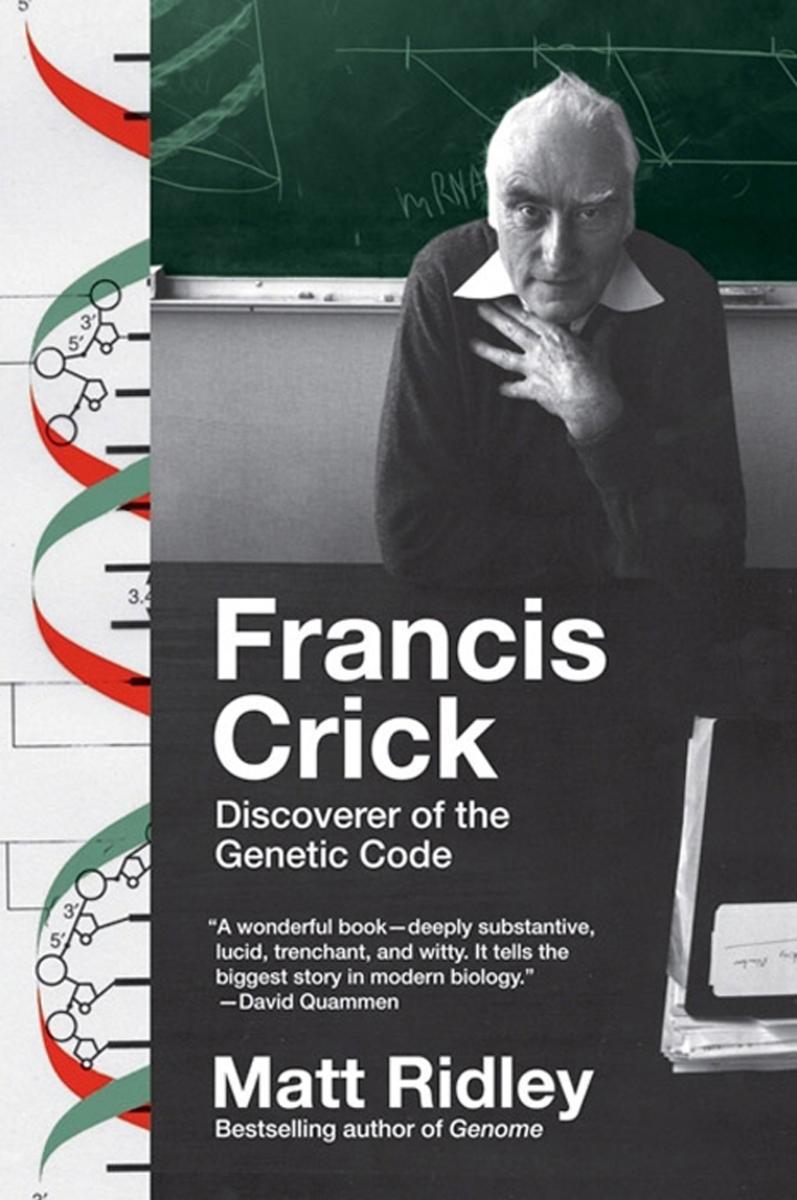
Francis Crick
¥78.55
Francis Crick the quiet genius who led a revolution in biology by discovering, quite literally, the secret of life will be bracketed with Galileo, Darwin, and Einstein as one of the greatest scientists of all time. In his fascinating biography of the scientific pioneer who uncovered the genetic code the digital cipher at the heart of heredity that distinguishes living from non-living things acclaimed bestselling science writer Matt Ridley traces Crick's life from middle-class mediocrity in the English Midlands through a lackluster education and six years designing magnetic mines for the Royal Navy to his leap into biology at the age of thirty-one and its astonishing consequences. In the process, Ridley sheds a brilliant light on the man who forever changed our world and how we understand it.
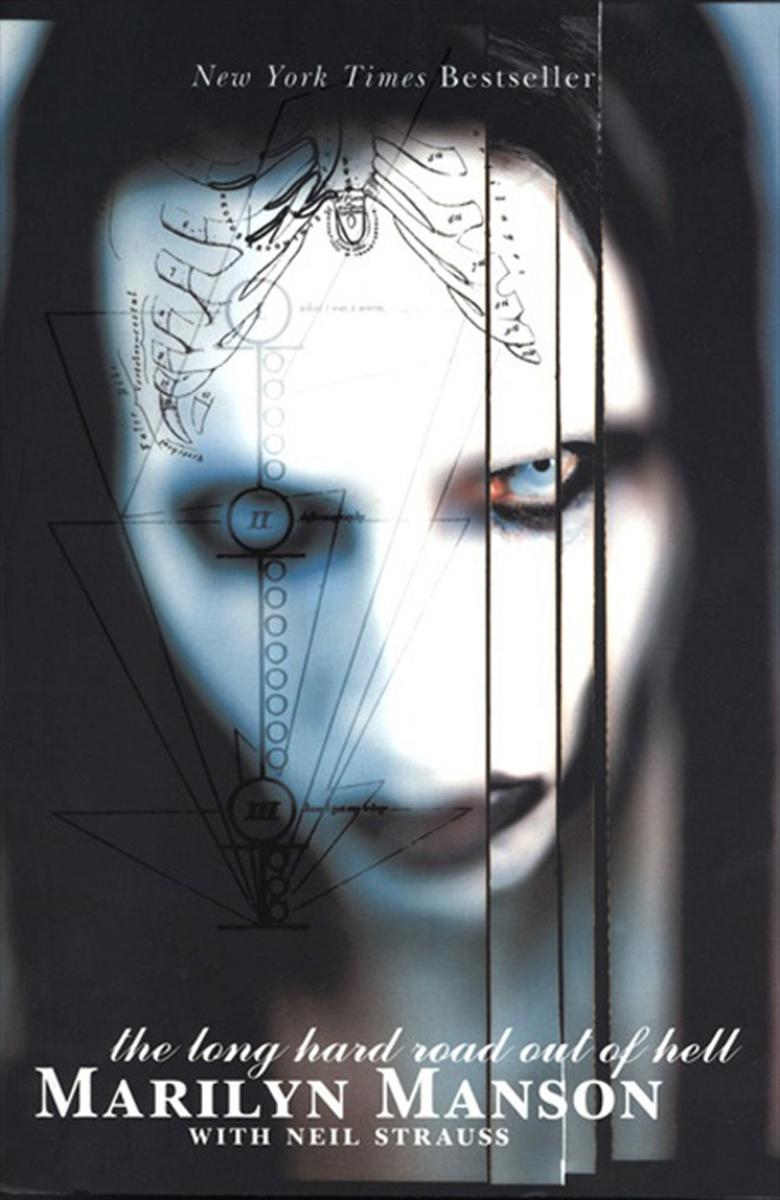
The Long Hard Road Out of Hell
¥105.17
When this best-selling autobiography was originally released, readers were shocked: The Long Hard Road Out of Hell was the darkest, funniest, most controversial, and best-selling rock book of its time and it became the template, both visually and narratively, for almost every rock book since. Marilyn Manson is not just a music icon, it turned out, but one of the best storytellers of his generation. Written with bestselling author Neil Strauss, beautifully designed with dozens of exclusive photographs, and modeled on Dante's Inferno , this edition of The Long Hard Road Out of Hell features a bonus chapter not in the hardcover. In the shocking and candid memoir, Manson takes readers from backstage to emergency rooms to jail cells, from the pit of despair to the top of the charts, and recounts his metamorphosis from a frightened Christian schoolboy into the most feared and revered music superstar in the country. Along the way, you'll hear what happens to fans and celebrities who dare to venture backstage with the one of the world's most dangerous rock stars. In the words of Elle magazine, the book "makes Madonna's infamous Sex seem downright wholesome in comparison."
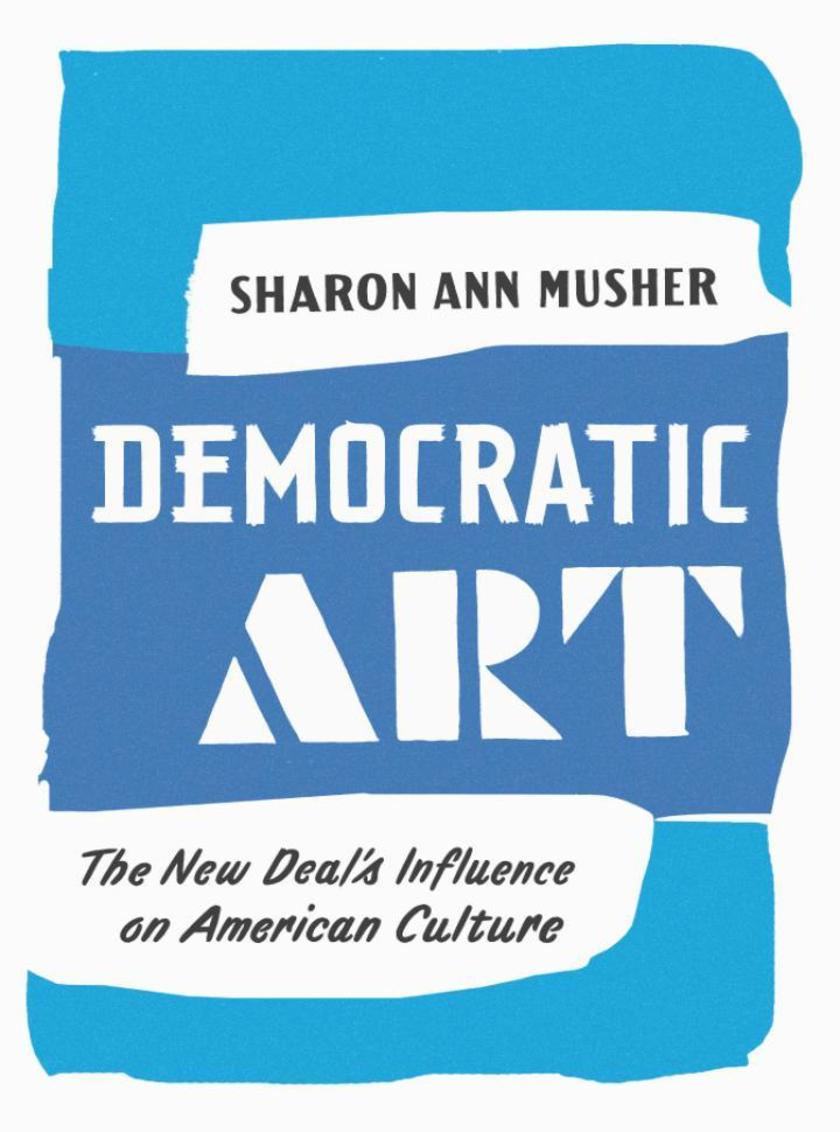
Democratic Art
¥370.82
Throughout the Great Recession American artists and public art endowments have had to fight for government support to keep themselves afloat. It wasn't always this way. At its height in 1935, the New Deal devoted $27 million-roughly $461 million today-to supporting tens of thousands of needy artists, who used that support to create more than 100,000 works. Why did the government become so involved with these artists, and why weren't these projects considered a frivolous waste of funds, as surely many would be today?In Democratic Art, Sharon Musher explores these questions and uses them as a springboard for an examination of the role art can and should play in contemporary society. Drawing on close readings of government-funded architecture, murals, plays, writing, and photographs, Democratic Art examines the New Deal's diverse cultural initiatives and outlines five perspectives on art that were prominent at the time: art as grandeur, enrichment, weapon, experience, and subversion. Musher argues that those engaged in New Deal art were part of an explicitly cultural agenda that sought not just to create art but to democratize and Americanize it as well. By tracing a range of aesthetic visions that flourished during the 1930s, this highly original book outlines the successes, shortcomings, and lessons of the golden age of government funding for the arts.
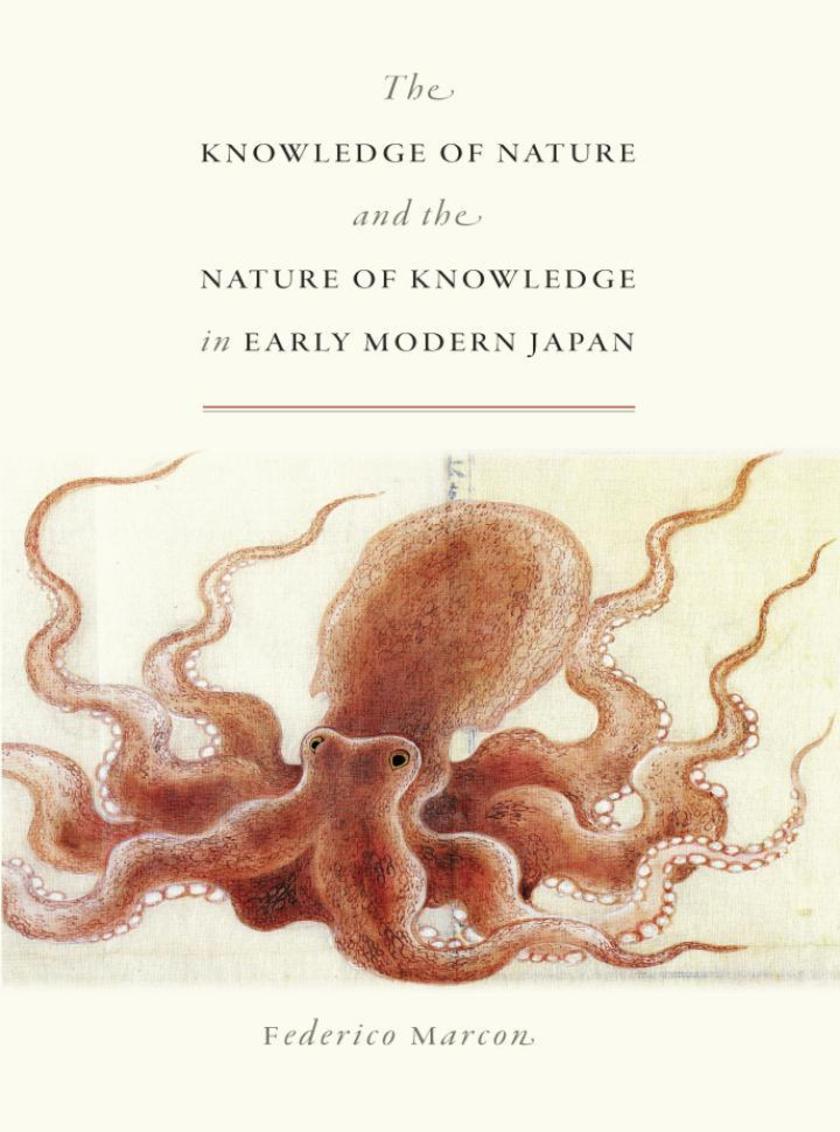
Knowledge of Nature and the Nature of Knowledge in Early Modern Japan
¥370.82
Between the early seventeenth and the mid-nineteenth century, the field of natural history in Japan separated itself from the discipline of medicine, produced knowledge that questioned the traditional religious and philosophical understandings of the world, developed into a system (called honzogaku) that rivaled Western science in complexity-and then seemingly disappeared. Or did itIn The Knowledge of Nature and the Nature of Knowledge in Early Modern Japan, Federico Marcon recounts how Japanese scholars developed a sophisticated discipline of natural history analogous to Europe's but created independently, without direct influence, and argues convincingly that Japanese natural history succumbed to Western science not because of suppression and substitution, as scholars traditionally have contended, but by adaptation and transformation.?The first book-length English-language study devoted to the important field of honzogaku, The Knowledge of Nature and the Nature of Knowledge in Early Modern Japan will be an essential text for historians of Japanese and East Asian science, and a fascinating read for anyone interested in the development of science in the early modern era.
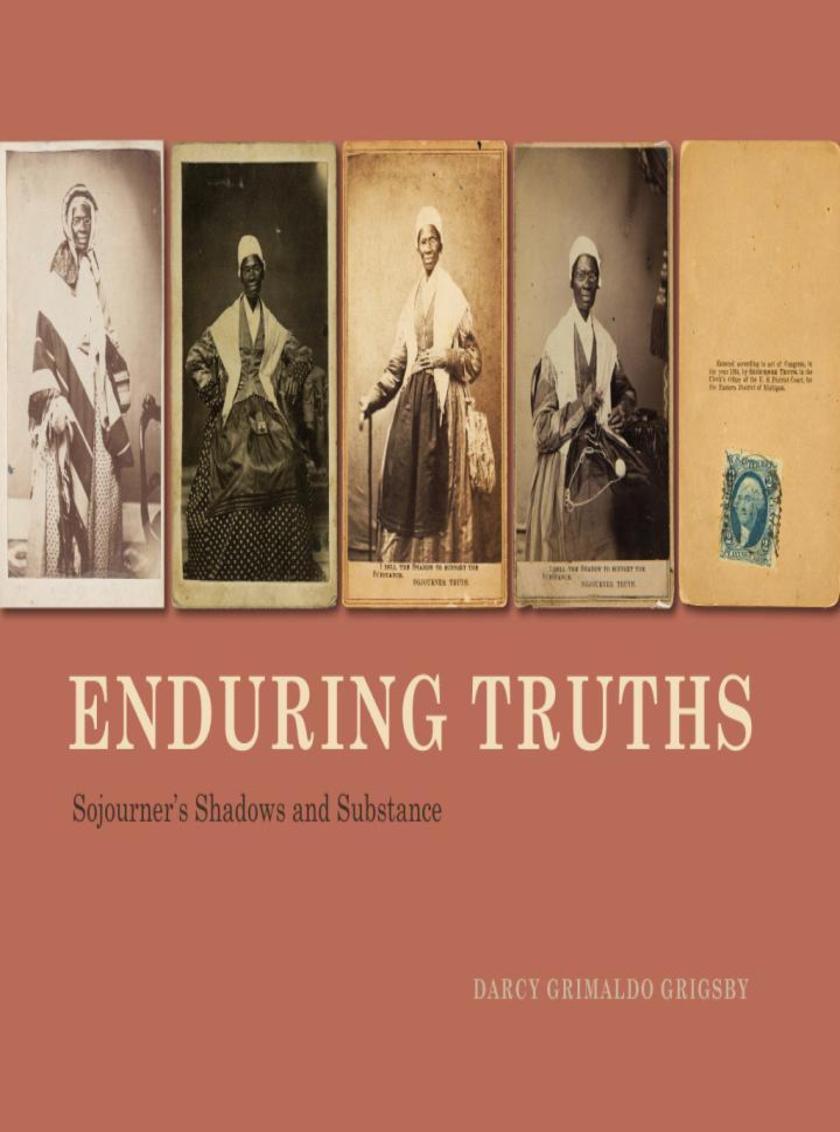
Enduring Truths
¥370.82
Runaway slave Sojourner Truth gained fame in the nineteenth century as an abolitionist, feminist, and orator and earned a living partly by selling photographic carte de visite portraits of herself at lectures and by mail. Cartes de visite, similar in format to calling cards, were relatively inexpensive collectibles that quickly became a new mode of mass communication. Despite being illiterate, Truth copyrighted her photographs in her name and added the caption "e;I Sell the Shadow to Support the Substance. Sojourner Truth."e;Featuring the largest collection of Truth's photographs ever published,?Enduring Truths?is the first book to explore how she used her image, the press, the postal service, and copyright laws to support her activism and herself. Darcy Grimaldo Grigsby establishes a range of important contexts for Truth's portraits, including the strategic role of photography and copyright for an illiterate former slave; the shared politics of Truth's cartes de visite and federal banknotes, which were both created to fund the Union cause; and the ways that photochemical limitations complicated the portrayal of different skin tones. Insightful and powerful,?Enduring Truths?shows how Truth made her photographic portrait worth money in order to end slavery-and also became the strategic author of her public self.

Gravity's Ghost and Big Dog
¥247.21
Gravity's Ghost and Big Dog brings to life science's efforts to detect cosmic gravitational waves. These ripples in space-time are predicted by general relativity, and their discovery will not only demonstrate the truth of Einstein's theories but also transform astronomy. Although no gravitational wave has ever been directly detected, the previous five years have been an especially exciting period in the field. Here sociologist Harry Collins offers readers an unprecedented view of gravitational wave research and explains what it means for an analyst to do work of this kind.?Collins was embedded with the gravitational wave physicists as they confronted two possible discoveries-"e;Big?Dog,"e; fully analyzed in this volume for the first time, and the "e;Equinox Event,"e; which was first chronicled by Collins in Gravity's Ghost. Collins records the agonizing arguments that arose as the scientists worked out what they had seen and how to present it to the world, along the way demonstrating how even the most statistical of sciences rest on social and philosophical choices. Gravity's Ghost and Big Dog draws on nearly fifty years of fieldwork observing scientists at the American Laser Interferometer Gravitational Wave Observatory and elsewhere around the world to offer an inspired commentary on the place of science in society today.

Realizing Educational Rights
¥247.21
In?Realizing Educational Rights, Anne Newman examines two educational rights questions that arise at the intersection of political theory, educational policy, and law: What is the place of a right to education in a participatory democracy, and how can we realize this right in the United StatesTracking these questions across both philosophical and pragmatic terrain, she addresses urgent moral and political questions, offering a rare, double-pronged look at educational justice in a democratic society.Newman argues that an adequate K-12 education is the right of all citizens, as a matter of equality, and emphasizes that this right must be shielded from the sway of partisan and majoritarian policy making far more than it currently is. She then examines how educational rights are realized in our current democratic structure, offering two case studies of leading types of rights-based activism: school finance litigation on the state level and the mobilization of citizens through community-based organizations. Bringing these case studies together with rich philosophical analysis,?Realizing Educational Rights?advances understanding of the relationships among moral and legal rights, education reform, and democratic politics.?

Theory of Morality
¥247.21
"e;Let us . . . nominate this the most important theoretical work on ethical or moral theory since John Rawls's Theory of Justice. If you have philosophical inclinations and want a good workout, this conscientious scrutiny of moral assumptions and expressions will be most rewarding. Donagan explores ways of acting in the Hebrew-Christian context, examines them in the light of natural law and rational theories, and proposes that formal patterns for conduct can emerge. All this is tightly reasoned, the argument is packed, but the language is clear."e;-Christian Century"e;The man value of this book seems to me to be that it shows the force of the Hebrew-Christian moral tradition in the hands of a creative philosopher. Throughout the book, one cannot but feel that a serious philosopher is trying to come to terms with his religious-moral background and to defend it against the prevailing secular utilitarian position which seems to dominate academic philosophy."e;-Bernard Gert, Journal of Medicine and Philosophy

Chaos and Order
¥247.21
The scientific discovery that chaotic systems embody deep structures of order is one of such wide-ranging implications that it has attracted attention across a spectrum of disciplines, including the humanities. In this volume, fourteen theorists explore the significance for literary and cultural studies of the new paradigm of chaotics, forging connections between contemporary literature and the science of chaos. They examine how changing ideas of order and disorder enable new readings of scientific and literary texts, from Newton's Principia to Ruskin's autobiography, from Victorian serial fiction to Borges's short stories.N. Katherine Hayles traces shifts in meaning that chaos has undergone within the Western tradition, suggesting that the science of chaos articulates categories that cannot be assimilated into the traditional dichotomy of order and disorder. She and her contributors take the relation between order and disorder as a theme and develop its implications for understanding texts, metaphors, metafiction, audience response, and the process of interpretation itself. Their innovative and diverse work opens the interdisciplinary field of chaotics to literary inquiry.

Instructions for American Servicemen in France during World War II
¥100.06
"e;You are about to play a personal part in pushing the Germans out of France. Whatever part you take-rifleman, hospital orderly, mechanic, pilot, clerk, gunner, truck driver-you will be an essential factor in a great effort."e;?As American soldiers fanned out from their beachhead in Normandy in June of 1944 and began the liberation of France, every soldier carried that reminder in his kit. A compact trove of knowledge and reassurance, Instructions for American Servicemen in France during World War II was issued to soldiers just before they embarked for France to help them understand both why they were going and what they'd find when they got there. After lying unseen in Army archives for decades, this remarkable guide is now available in a new facsimile edition that reproduces the full text and illustrations of the original along with a new introduction by Rick Atkinson setting the book in context. Written in a straightforward, personal tone, the pamphlet is equal parts guidebook, cultural snapshot, and propaganda piece. A central aim is to dispel any prejudices American soldiers may have about the French-especially relating to their quick capitulation in 1940. Warning soldiers that the defeat "e;is a raw spot which the Nazis have been riding"e; since the occupation began, Instructions is careful to highlight France's long historical role as a major U.S. ally. Following that is a brief, fascinating sketch of the French character ("e;The French are mentally quick;"e; "e;Rich or poor, they are economical"e;) and stark reminders of the deprivation the French have endured under occupation. Yet an air of reassuring confidence pervades the final section of the pamphlet, which reads like a straightforward tourists' guide to Paris and the provinces-like a promise of better days to come once the soldiers complete their mission.Written by anonymous War Department staffers to meet the urgent needs of the moment, with no thought of its historical value, Instructionsfor American Servicemen in France during World War II nevertheless brings to vivid life the closing years of World War II-when optimism was growing, but a long, demanding road still lay ahead.

Everyday Technology
¥147.15
In 1909 Mohandas Karamchand Gandhi, on his way back to South Africa from London, wrote his now celebrated tract Hind Swaraj, laying out his vision for the future of India and famously rejecting the technological innovations of Western civilization. Despite his protestations, Western technology endured and helped to make India one of the leading economies in our globalized world. Few would question the dominant role that technology plays in modern life, but to fully understand how India first advanced into technological modernity, argues David Arnold, we must consider the technology of the everyday.?Everyday Technology is a pioneering account of how small machines and consumer goods that originated in Europe and North America became objects of everyday use in India in the late nineteenth and early twentieth centuries. Rather than investigate "e;big"e; technologies such as railways and irrigation projects, Arnold examines the assimilation and appropriation of bicycles, rice mills, sewing machines, and typewriters in India, and follows their impact on the ways in which people worked and traveled, the clothes they wore, and the kind of food they ate. But the effects of these machines were not limited to the daily rituals of Indian society, and Arnold demonstrates how such small-scale technologies became integral to new ways of thinking about class, race, and gender, as well as about the politics of colonial rule and Indian nationhood.?Arnold's fascinating book offers new perspectives on the globalization of modern technologies and shows us that to truly understand what modernity became, we need to look at the everyday experiences of people in all walks of life, taking stock of how they repurposed small technologies to reinvent their world and themselves.

Sounds of Capitalism
¥206.01
From the early days of radio through the rise of television after World War II to the present, music has been used more and more to sell goods and establish brand identities. And since the 1920s, songs originally written for commercials have become popular songs, and songs written for a popular audience have become irrevocably associated with specific brands and products. Today, musicians move flexibly between the music and advertising worlds, while the line between commercial messages and popular music has become increasingly blurred.Timothy D. Taylor tracks the use of music in American advertising for nearly a century, from variety shows like The Clicquot Club Eskimos to the rise of the jingle, the postwar upsurge in consumerism, and the more complete fusion of popular music and consumption in the 1980s and after. The Sounds of Capitalism is the first book to tell truly the history of music used in advertising in the United States and is an original contribution to this little-studied part of our cultural history. ?

Fragments and Assemblages
¥223.67
In Fragments and Assemblages, Arthur Bahr expands the ways in which we interpret medieval manu*s, examining the formal characteristics of both physical manu*s and literary works. Specifically, Bahr argues that manu* compilations from fourteenth-century London reward interpretation as both assemblages and fragments: as meaningfully constructed objects whose forms and textual contents shed light on the city's literary, social, and political cultures, but also as artifacts whose physical fragmentation invites forms of literary criticism that were unintended by their medieval makers. Such compilations are not simply repositories of data to be used for the reconstruction of the distant past; their physical forms reward literary and aesthetic analysis in their own right. The compilations analyzed reflect the full vibrancy of fourteenth-century London's literary cultures: the multilingual codices of Edwardian civil servant Andrew Horn and Ricardian poet John Gower, the famous Auchinleck manu* of texts in Middle English, and Chaucer's Canterbury Tales. By reading these compilations as both formal shapes and historical occurrences, Bahr uncovers neglected literary histories specific to the time and place of their production. The book offers a less empiricist way of interpreting the relationship between textual and physical form that will be of interest to a wide range of literary critics and manu* scholars.

War's Waste
¥229.55
With US soldiers stationed around the world and engaged in multiple conflicts, Americans will be forced for the foreseeable future to come to terms with those permanently disabled in battle.?At the moment, we accept rehabilitation as the proper social and cultural response to the wounded, swiftly returning injured combatants to their civilian lives. But this was not always the case, as Beth Linker reveals in her provocative new book, War's Waste.?Linker explains how, before entering World War I, the United States sought a way to avoid the enormous cost of providing injured soldiers with pensions, which it had done since the Revolutionary War. Emboldened by their faith in the new social and medical sciences, reformers pushed rehabilitation as a means to "e;rebuild"e; disabled soldiers, relieving the nation of a monetary burden and easing the decision to enter the Great War. Linker's narrative moves from the professional development of orthopedic surgeons and physical therapists to the curative workshops, or hospital spaces where disabled soldiers learned how to repair automobiles as well as their own artificial limbs. The story culminates in the postwar establishment of the Veterans Administration, one of the greatest legacies to come out of the First World War.

Wittgenstein's Ladder
¥241.33
Marjorie Perloff, among our foremost critics of twentieth-century poetry, argues that Ludwig Wittgenstein provided writers with a radical new aesthetic, a key to recognizing the inescapable strangeness of ordinary language. Taking seriously Wittgenstein's remark that "e;philosophy ought really to be written only as a form of poetry,"e; Perloff begins by discussing Wittgenstein the "e;poet."e; What we learn is that the poetics of everyday life is anything but banal."e;This book has the lucidity and the intelligence we have come to expect from Marjorie Perloff.-Linda Munk, American Literature"e;[Perloff] has brilliantly adapted Wittgenstein's conception of meaning and use to an analysis of contemporary language poetry."e;-Linda Voris, Boston Review"e;Wittgenstein's Ladder offers significant insights into the current state of poetry, literature, and literary study. Perloff emphasizes the vitality of reading and thinking about poetry, and the absolute necessity of pushing against the boundaries that define and limit our worlds."e;-David Clippinger, Chicago Review"e;Majorie Perloff has done more to illuminate our understanding of twentieth century poetic language than perhaps any other critic. . . . Entertaining, witty, and above all highly original."e;-Willard Bohn, Sub-Stance

Romantic Machine
¥247.21
In the years immediately following Napoleon's defeat, French thinkers in all fields set their minds to the problem of how to recover from the long upheavals that had been set into motion by the French Revolution. Many challenged the Enlightenment's emphasis on mechanics and questioned the rising power of machines, seeking a return to the organic unity of an earlier age and triggering the artistic and philosophical movement of romanticism. Previous scholars have viewed romanticism and industrialization in opposition, but in this groundbreaking volume John Tresch reveals how thoroughly entwined science and the arts were in early nineteenth-century France and how they worked together to unite a fractured society.Focusing on a set of celebrated technologies, including steam engines, electromagnetic and geophysical instruments, early photography, and mass-scale printing, Tresch looks at how new conceptions of energy, instrumentality, and association fueled such diverse developments as fantastic literature, popular astronomy, grand opera, positivism, utopian socialism, and the Revolution of 1848. He shows that those who attempted to fuse organicism and mechanism in various ways, including Alexander von Humboldt and Auguste Comte, charted a road not taken that resonates today.Essential reading for historians of science, intellectual and cultural historians of Europe, and literary and art historians, The Romantic Machine is poised to profoundly alter our understanding of the scientific and cultural landscape of the early nineteenth century.


