


 购物车
 个人中心


Nostradamus élete és j?vend?lései
¥19.87
Nostradamus élete és j?vend?lései

Tar
¥25.91
Tar

Romana 447. (A szíveddel láss!)
¥18.74
Romana 447. (A szíveddel láss!)

A félkegyelm?
¥19.87
A félkegyelm?

Tiffany 245. (Tartós hullám)
¥18.74
Tiffany 245. (Tartós hullám)

Szívhang 459. (Híd a szívedhez)
¥18.56
Szívhang 459. (Híd a szívedhez)

Tiffany 279–280. (Túladagolt érzelmek, A nagy dobás)
¥48.74
Tiffany 279–280. (Túladagolt érzelmek, A nagy dobás)

Júlia kül?nszám 54. k?tet
¥42.92
Júlia kül?nszám 54. k?tet

Romana 511. (?r?k?sn? kerestetik)
¥18.72
Romana 511. (?r?k?sn? kerestetik)
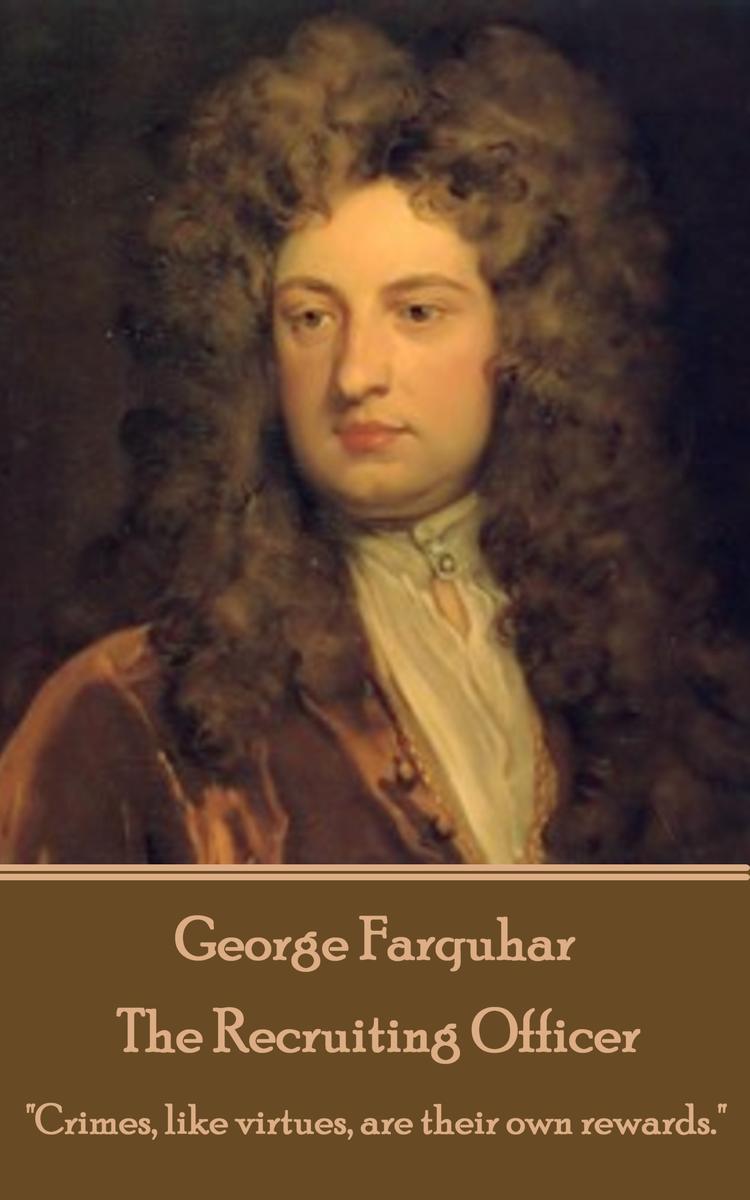
Recruiting Officer - Crimes, like virtues, are their own rewards.
¥21.09
George Farquhar was born in Derry, Ireland in 1677, one of seven children. Farquhar was educated at Foyle College and later, aged 17, he entered Trinity College, Dublin. He departed after only two years, accounts vary as to why, and he took to acting on the Dublin stage. As an actor he seems to have had no real talent. A terrible accident, when he failed to distinguish between a tipped foil and a deadly rapier, and seriously wounded a fellow actor, resolved Farquhar to give up acting for good. His first play, Love and a Bottle, was well received at London's Drury Lane Theatre in 1699 and was admired "e;for its sprightly Dialogue and busy Scenes."e; With the play a success Farquhar settled his talents on a career as a playwright. He had a second play open that same year; The Constant Couple. Again, it was warmly received on debuting at Drury Lane and proved a great success. However, another interest and opportunity now unfolded into his life. He received a commission in the regiment of the Earl of Orrery. His time now became divided between the duties of a successful new playwright and the vocations of soldier. In 1701 Farquhar wrote and debuted a sequel to the Constant Couple, called and based on its main character; Sir Harry Wildair. The following year was to be prolific for the young playwright. He penned both The Inconstant or, The Way To Win and The Twin-Rivals as well as publishing Love and Business, a collection that included letters, verse, and A Discourse Upon Comedy. His work for the army, recruiting soldiers to fight in the War of the Spanish Succession, occupied much of his time for the next three years, and he was to write little except The Stage Coach, in 1774. Farquhar was able, however, to draw upon these years of recruiting experience for his next comedy, The Recruiting Officer in 1706. Early in 1707, Farquhar wrote what was to be his masterpiece: The Beaux Stratagem. In these last two plays his real contribution to the English drama is all the more apparent. He introduced a verbal vigour and sparring, as well as a love of character that are more usually associated with Elizabethan dramatists and laid much of the foundations for Sheridan and Congreve to build upon. George Farquhar, aged only 40, died on April 29th, 1707, almost two months after the debut of his greatest work. He was buried in the Church of St. Martin in the Fields, London, on May 3rd, 1707.
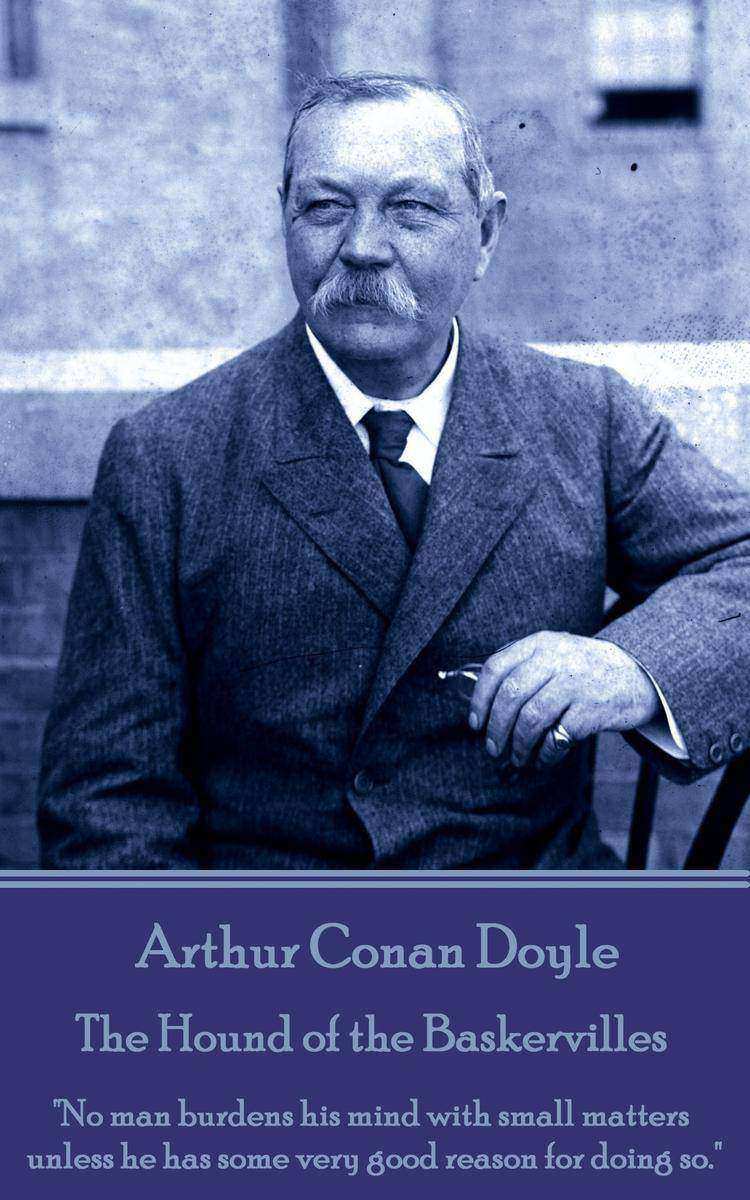
Hound of the Baskervilles
¥15.21
If ever a writer needed an introduction Arthur Conan Doyle would not be considered that man. After all, Sherlock Holmes is perhaps the foremost literary detective of any age. Add to this canon his stories of science fiction and his poems, his historical novels, his plays, his political campaigning, his efforts in establishing a Court of Appeal and there is little room for anything else. Except he was also an exceptional writer of short stories of the horrific and macabre. Something very different from what you might expect. Born in Arthur Conan Doyle was born on 22 May 1859 at 11 Picardy Place, Edinburgh, Scotland. From 1876 - 1881 he studied medicine at the University of Edinburgh following which he was employed as a doctor on the Greenland whaler Hope of Peterhead in 1880 and, after his graduation, as a ship's surgeon on the SS Mayumba during a voyage to the West African coast in 1881. Arriving in Portsmouth in June of that year with less than GBP10 (GBP700 today) to his name, he set up a medical practice at 1 Bush Villas in Elm Grove, Southsea. The practice was initially not very successful. While waiting for patients, Conan Doyle again began writing stories and composed his first novel The Mystery of Cloomber. Although he continued to study and practice medicine his career was now firmly set as a writer. And thereafter great works continued to pour out of him.
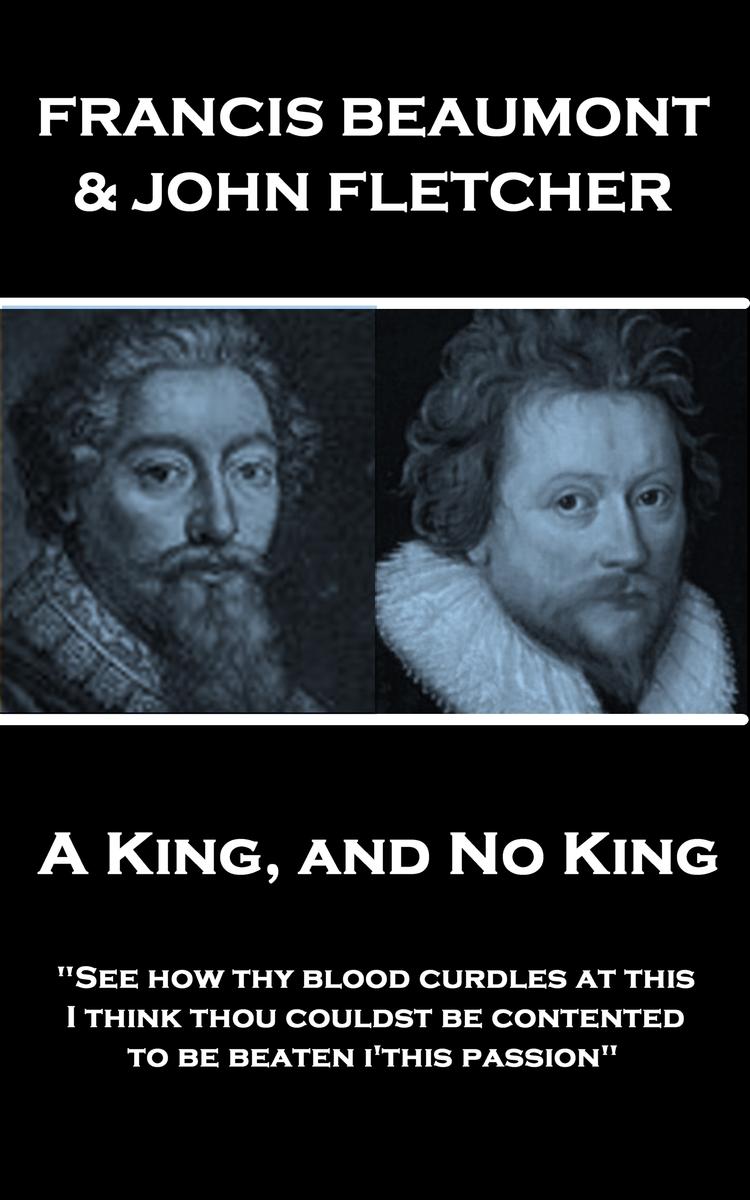
King, and No King - See how thy blood curdles at this
¥38.75
The English dramatists Francis Beaumont and John Fletcher, collaborated in their writing during the reign of James I of England (James VI of Scotland, 1567-1625; in England he reigned from 1603).Beaumont & Fletcher began to collaborate as writers soon after they met. After notable failures of their solo works their first joint effort, Philaster, was a success and tragicomedy was the genre they explored and built upon. There would be many further successes to follow.There is an account that at the time the two men shared everything. They lived together in a house on the Bankside in Southwark, "e;they also lived together in Bankside, sharing clothes and having one wench in the house between them."e; Or as another account puts it "e;sharing everything in the closest intimacy."e;Whatever the truth of this they were now recognised as perhaps the best writing team of their generation, so much so, that their joint names was applied to all the works in which either, or both, had a pen including those with Philip Massinger, James Shirley and Nathan Field.The first Beaumont and Fletcher folio of 1647 contained 35 plays; 53 plays were included in the second folio in 1679. Other works bring the total plays in the canon to about 55. However there appears here to have been some duplicity on the account of the publishers who seemed to attribute so many to the team. It is now thought that the work between solely by Beaumont and Fletcher amounts to approximately 15 plays, though of course further works by them were re-worked by others and the originals lost.After Beaumont's early death in 1616 Fletcher continued to write and, at his height was, by many standards, the equal of Shakespeare in popularity until his own death in 1625.
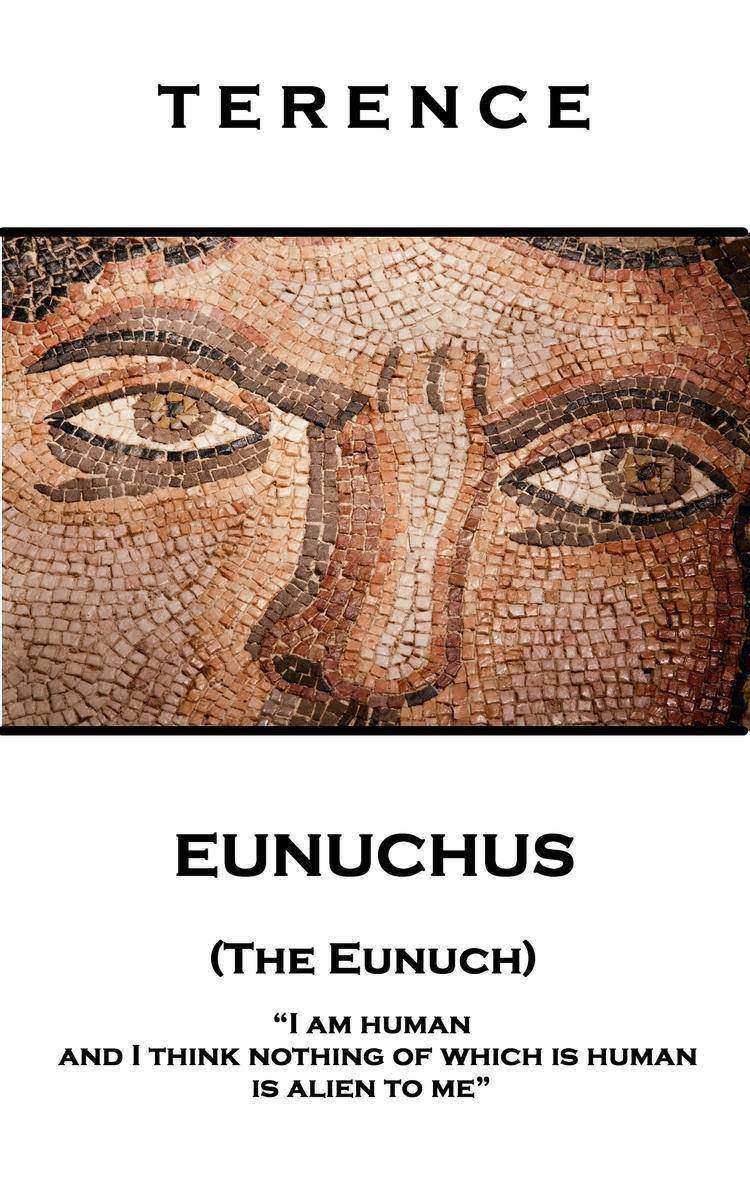
Eunuchus (The Eunuch) - 'I am human and I think nothing of which is human is ali
¥26.98
Publius Terentius Afer is better known to us as the Roman playwright, Terence.Much of his life, especially the early part, is either unknown or has conflicting sources and accounts.His birth date is said to be either 185 BC or a decade earlier: 195 BC. His place of birth is variously listed as in, or, near Carthage, or, in Greek Italy to a woman taken to Carthage as a slave. It is suggested that he lived in the territory of the Libyan tribe that the Romans called Afri, near Carthage, before being brought to Rome as a slave. Probability suggests that it was there, in North Africa, several decades after the destruction of Carthage by the Romans in 146 BC, at the end of the Punic Wars, that Terence spent his early years.One reliable fact is that he was sold to P. Terentius Lucanus, a Roman senator, who had him educated and, impressed by his literary talents, freed him.These writing talents were to ensure his legacy as a playwright down through the millennia. His comedies, partially adapted from Greek plays of the late phases of Attic Comedy, were performed for the first time around 170-160 BC. All six of the plays he has known to have written have survived.Indeed, thanks to his simple conversational Latin, which was both entertaining and direct, Terence's works were heavily used by monasteries and convents during the Middle Ages and The Renaissance. Scribes often learned Latin through the copious copying of Terence's texts. Priests and nuns often learned to speak Latin through re-enactment of Terence's plays. Although his plays often dealt with pagan material, the quality and distinction of his language promoted the copying and preserving of his text by the church. This preservation enabled his work to influence a wide spectrum of later Western drama.When he was 25 (or 35 depending on which year of birth you ascribe too), Terence travelled to Greece but never returned. It has long been assumed that he died at some point during the journey.Of his own family nothing is known, except that he fathered a daughter and left a small but valuable estate just outside Rome.His most famous quotation reads: "e;Homo sum, humani nihil a me alienum puto"e;, or "e;I am human, and I think nothing human is alien to me."e;

Crime by Gaslight - Volume 2
¥29.33
We all love a good crime story. An anthology of short crime stories, written by the finest of craftsman of their age, is always a welcome treat. The short story is often viewed as an inferior relation to the Novel. But it is an art in itself. To take a story and distil its essence into fewer pages while keeping character and plot rounded and driven is not an easy task. Many try and many fail. In this series we have a selection of short stories from many of our most accomplished writers written at the beginnings of Detective fiction. Our stories include these classics: The Adventure of the Dying Detective by Arthur Conan Doyle, The Secret Garden by GK Chesterton, Gentlemen and Players by E W Hornung, The Purloined Letter by Edgar Allan Poe, The Death Of Halpin Frayser by Ambrose Bierce, The Man With The Cough by Mrs Molesworth, The Man With The Pale Eyes by Guy de Maupassant, On Duty With Inspector Field by Charles Dickens, The Stolen Cigar Case by Bret Harte, A Scandal In Bohemia by Arthur Conan Doyle
Cyclops - Talk sense to a fool and he calls you foolish
¥14.03
Euripides is rightly lauded as one of the great dramatists of all time. In his lifetime, he wrote over 90 plays and although only 18 have survived they reveal the scope and reach of his genius. Euripides is identified with many theatrical innovations that have influenced drama all the way down to modern times, especially in the representation of traditional, mythical heroes as ordinary people in extraordinary circumstances. As would be expected from a life lived 2,500 years ago, details of it are few and far between. Accounts of his life, written down the ages, do exist but whether much is reliable or surmised is open to debate. Most accounts agree that he was born on Salamis Island around 480 BC, to mother Cleito and father Mnesarchus, a retailer who lived in a village near Athens. Upon the receipt of an oracle saying that his son was fated to win "e;crowns of victory"e;, Mnesarchus insisted that the boy should train for a career in athletics. However, what is clear is that athletics was not to be the way to win crowns of victory. Euripides had been lucky enough to have been born in the era as the other two masters of Greek Tragedy; Sophocles and schylus. It was in their footsteps that he was destined to follow. His first play was performed some thirteen years after the first of Socrates plays and a mere three years after schylus had written his classic The Oristria. Theatre was becoming a very important part of the Greek culture. The Dionysia, held annually, was the most important festival of theatre and second only to the fore-runner of the Olympic games, the Panathenia, held every four years, in appeal. Euripides first competed in the City Dionysia, in 455 BC, one year after the death of schylus, and, incredibly, it was not until 441 BC that he won first prize. His final competition in Athens was in 408 BC. The Bacchae and Iphigenia in Aulis were performed after his death in 405 BC and first prize was awarded posthumously. Altogether his plays won first prize only five times. Euripides was also a great lyric poet. In Medea, for example, he composed for his city, Athens, "e;the noblest of her songs of praise"e;. His lyric skills however are not just confined to individual poems: "e;A play of Euripides is a musical whole....one song echoes motifs from the preceding song, while introducing new ones."e; Much of his life and his whole career coincided with the struggle between Athens and Sparta for hegemony in Greece but he didn't live to see the final defeat of his city. Euripides fell out of favour with his fellow Athenian citizens and retired to the court of Archelaus, king of Macedon, who treated him with consideration and affection. At his death, in around 406BC, he was mourned by the king, who, refusing the request of the Athenians that his remains be carried back to the Greek city, buried him with much splendor within his own dominions. His tomb was placed at the confluence of two streams, near Arethusa in Macedonia, and a cenotaph was built to his memory on the road from Athens towards the Piraeus.
King John
¥17.56
William Shakespeare was born in Stratford-upon-Avon in late April 1565 and baptised there on 26th April. He was one of eight children. Little is known about his life but what is evident is the enormous contribution he has made to world literature. His writing was progressive, magnificent in scope and breathtaking in execution. His plays and sonnets helped enable the English language to speak with a voice unmatched by any other. William Shakespeare died on April 23rd 1616, survived by his wife and two daughters. He was buried two days after his death in the chancel of the Holy Trinity Church. The epitaph on the slab which covers his grave includes the following passage, Good friend, for Jesus's sake forbear, To dig the dust enclosed here. Blessed me the man that spares these stones, And cursed be he that moves my bones. Here we publish his historical play from 1596 'King John'.
Romeo and Juliet - Tempt not a desperate man
¥11.67
The life of William Shakespeare, arguably the most significant figure in the Western literary canon, is relatively unknown. Shakespeare was born in Stratford-upon-Avon in 1565, possibly on the 23rd April, St. George's Day, and baptised there on 26th April. Little is known of his education and the first firm facts to his life relate to his marriage, aged 18, to Anne Hathaway, who was 26 and from the nearby village of Shottery. Anne gave birth to their first son six months later. Shakespeare's first play, The Comedy of Errors began a procession of real heavyweights that were to emanate from his pen in a career of just over twenty years in which 37 plays were written and his reputation forever established. This early skill was recognised by many and by 1594 the Lord Chamberlain's Men were performing his works. With the advantage of Shakespeare's progressive writing they rapidly became London's leading company of players, affording him more exposure and, following the death of Queen Elizabeth in 1603, a royal patent by the new king, James I, at which point they changed their name to the King's Men. By 1598, and despite efforts to pirate his work, Shakespeare's name was well known and had become a selling point in its own right on title pages. No plays are attributed to Shakespeare after 1613, and the last few plays he wrote before this time were in collaboration with other writers, one of whom is likely to be John Fletcher who succeeded him as the house playwright for the King's Men. William Shakespeare died two months later on April 23rd, 1616, survived by his wife, two daughters and a legacy of writing that none have since yet eclipsed.
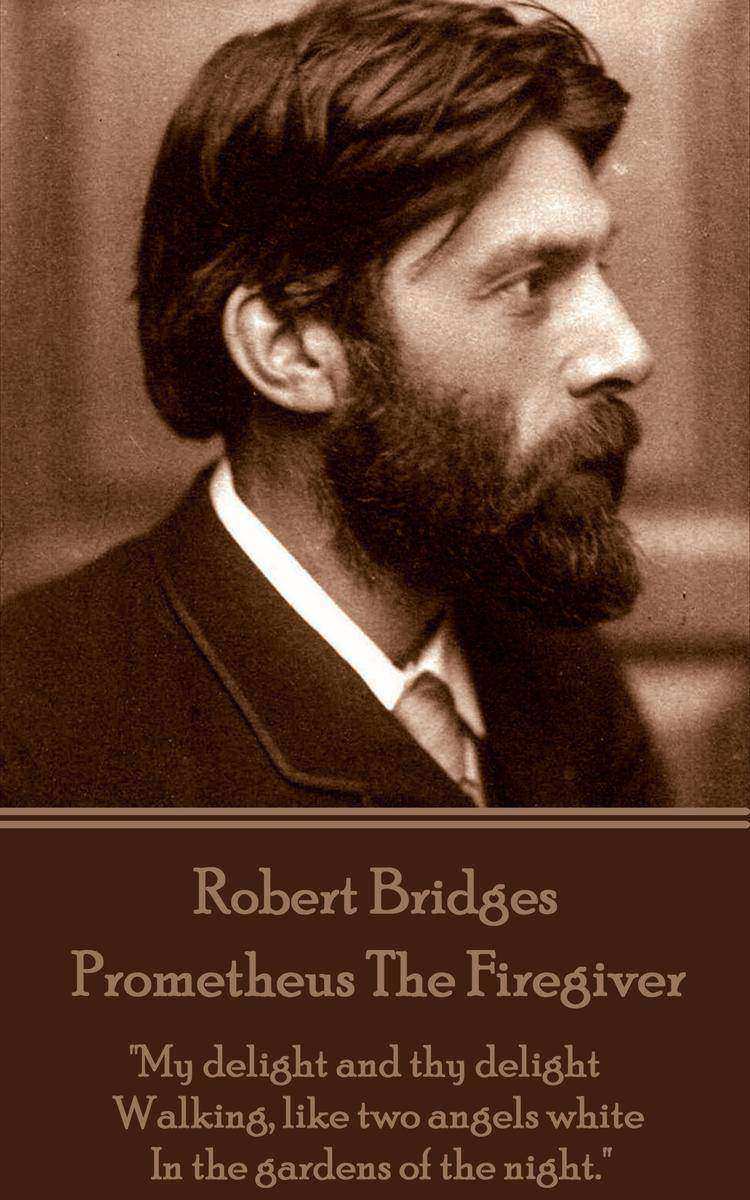
Prometheus The Firegiver - My delight and thy delight Walking
¥29.33
Robert Bridges was born in Walmer, Kent on the 23rd of October 1844. He went to study medicine intending to practise until the age of forty and then retire to write poetry. Lung disease forced him to retire in 1882, and from that point on he devoted himself to writing and literary research. However, Bridges' literary work started long before his retirement, his first collection of poems having been published in 1873. He was appointed Poet Laureate in 1913 by George V, the only medical graduate to have held the office. He died in Oxford on the 21st of April 1930. Here we present Prometheus The Firegiver.

Breaking Bad 101 - The Complete Critical Companion
¥138.52
AMC's Breaking Bad is among the most beloved, critically acclaimed American television series of our time. Created by Vince Gilligan, the series charts the transformation of high school science teacher Walter White (played by Bryan Cranston) into a cold, calculating meth kingpin. Breaking Bad 101 collects esteemed critic Alan Sepinwall's (Uproxx) popular Breaking Bad recaps in book form, featuring new, exclusive essays and completely revised and updated commentary-as well as insights from and interviews with the creative masterminds behind Breaking Bad. The ultimate critical companion for one of the greatest television dramas of all time, Breaking Bad 101 offers fans Sepinwall's smart, funny, and incisive analysis of the psychology and filmmaking craft behind each episode and celebrates the series' unique place in pop-culture history.
Viking Goddesses and Seeresses
¥69.67
This book is the first of the Forbidden Knowledge series. Where did the power of Viking seeresses, dazzling goddesses, the Nornir, or Fates and the formidable Valkyries come from? To find the answer to this question the authors first examine the Old Norse mythology in order to decipher the ancient wisdom of women. Following this survey, the second part of the book explores what became of these mighty female figures, how their powers were transformed over time. The book is closing with a look at several questions related to the modern day: “How is ‘feminine lore’ understood today?” “What are its roots and how do they still affect humankind?” “How is what this book terms ‘the legacy of sight’ still useful?” The responses will both pinpoint what it is that the Norse women left behind them, and demonstrate how that legacy is still woven into the fabric of the present.This non-fiction book provides an outstanding analysis and a careful reinterpretation of Icelandic sagas and poems for properly understand the nature and power of the first mistresses of the Icy North. The research presented here goes deep to unveil the real meaning of the medieval chroniclers’ handiwork. Every detail of every Icelandic saga and poem cited in this book has been translated by the authors uniquely from the original manuscripts. The book contains more than 60 colourful illustrations, an Appendix with nearly 70 separate encyclopaedia articles and hyperlinks to 21 original Icelandic manuscripts and 17 referred websites.
Tales of the Abducted Princess: Adult Romance
¥26.07
Jean is a headstrong nineteen-year-old girl that knows what she wants, and that is to marry Joe the Blacksmith, he keeps saying he is too old for her that he is old enough to be her father. But his age doesn’t worry Jean especially after she had wormed her way into his bed and found out what a good lover he was. Jean finds loads of other men to satisfy her lust as she tells Joe about them just to tease him. Joe had promised Jean’s father he would bring Jean up as best as he could when he and his wife were handed Jean to them as a baby. Joe’s wife died and Joe struggled to bring Jean up on his own as a travelling blacksmith going from village to village in a caravan, he tried not to fall in love with Jean but he failed all too easily. Joe has a big secret to tell Jean, and he was sure she would hate him when she finds out, and the king would have him hanged for his relationship with Jean. Tale of the Abducted Princess is an Adult Romance set in England in the 1060s when there was a lot of unrest in England. Jean has been brought up more like a boy as Joe taught her to hunt with the bow and arrow, he taught her so well that she became a huntress. Follow Jean as she hops in and out of bed with the king’s soldiers and discovers a plot to kill a member of the royal family. Will, she catches the two assassins in time and will she forgive Joe.


