


 购物车
 个人中心

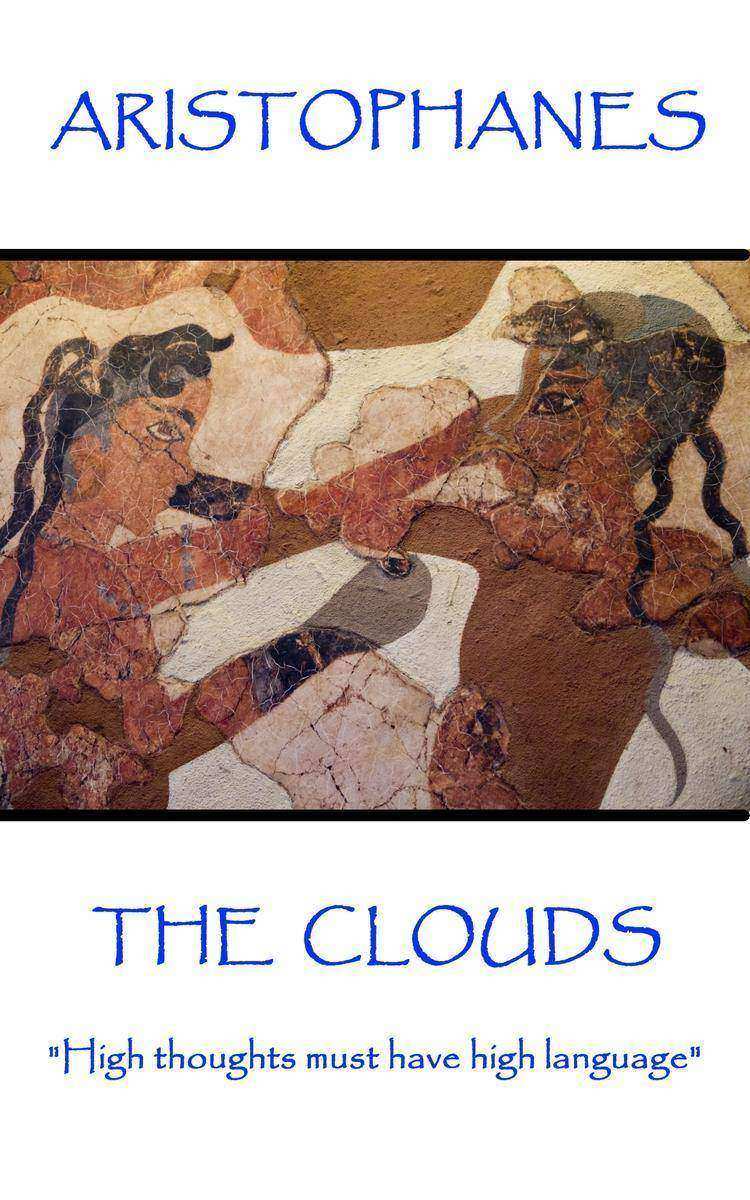
Clouds - High thoughts must have high language
¥11.67
The reality is that little is known of Aristophanes actual life but eleven of his forty plays survive intact and upon those rest his deserved reputation as the Father of Comedy or, The Prince of Ancient Comedy. Accounts agree that he was born sometime between 456BC and 446 BC. Many cities claim the honor of his birthplace and the most probable story makes him the son of Philippus of gina, and therefore only an adopted citizen of Athens, a distinction which, at times could be cruel, though he was raised and educated in Athens. His plays are said to recreate the life of ancient Athens more realistically than any other author could. Intellectually his powers of ridicule were feared by his influential contemporaries; Plato himself singled out Aristophanes' play The Clouds as a slander that contributed to the trial and condemning to death of Socrates and although other satirical playwrights had also caricatured the philosopher his carried the most weight. His now lost play, The Babylonians, was denounced by the demagogue Cleon as a slander against the Athenian polis. Aristophanes seems to have taken this criticism to heart and thereafter caricatured Cleon mercilessly in his subsequent plays, especially The Knights. His life and playwriting years were undoubtedly long though again accounts as to the year of his death vary quite widely. What can be certain is that his legacy of surviving plays is in effect both a treasured legacy but also in itself the only surviving texts of Ancient Greek comedy.
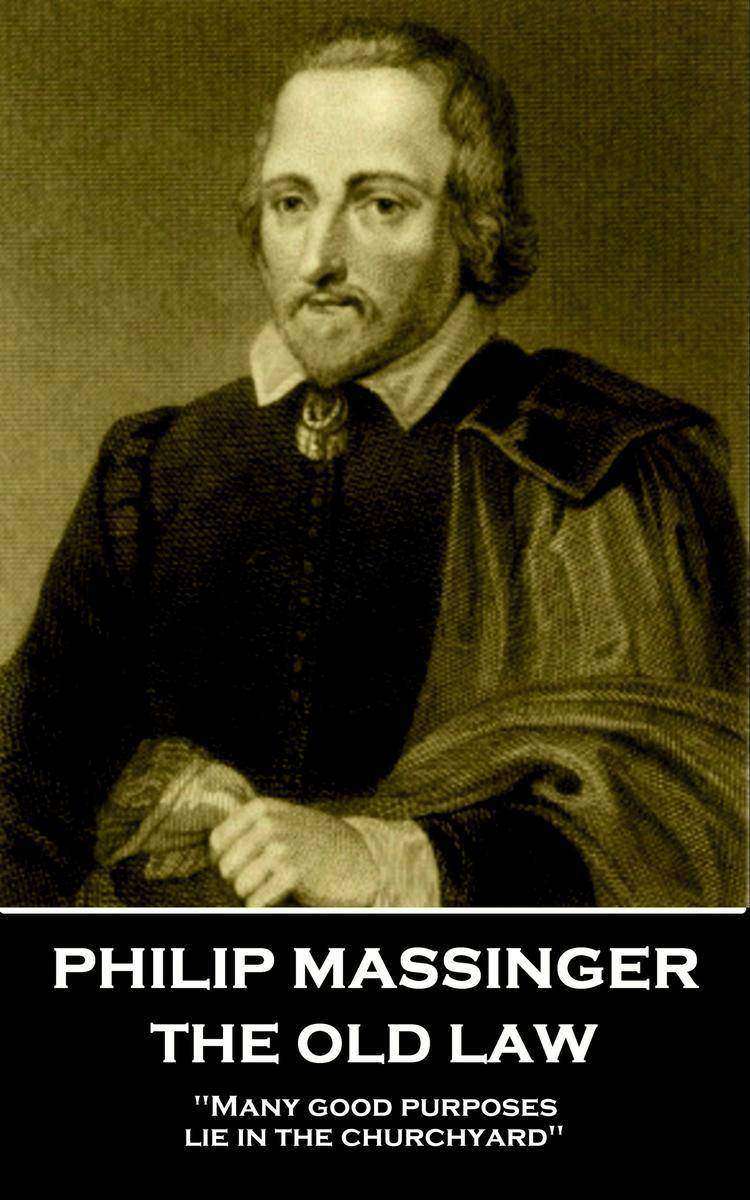
Old Law - Many good purposes lie in the churchyard
¥23.45
Philip Massinger was baptized at St. Thomas's in Salisbury on November 24th, 1583.Massinger is described in his matriculation entry at St. Alban Hall, Oxford (1602), as the son of a gentleman. His father, who had also been educated there, was a member of parliament, and attached to the household of Henry Herbert, 2nd Earl of Pembroke. The Earl was later seen as a potential patron for Massinger.He left Oxford in 1606 without a degree. His father had died in 1603, and accounts suggest that Massinger was left with no financial support this, together with rumours that he had converted to Catholicism, meant the next stage of his career needed to provide an income.Massinger went to London to make his living as a dramatist, but he is only recorded as author some fifteen years later, when The Virgin Martyr (1621) is given as the work of Massinger and Thomas Dekker.During those early years as a playwright he wrote for the Elizabethan stage entrepreneur, Philip Henslowe. It was a difficult existence. Poverty was always close and there was constant pleading for advance payments on forthcoming works merely to survive.After Henslowe died in 1616 Massinger and John Fletcher began to write primarily for the King's Men and Massinger would write regularly for them until his death.The tone of the dedications in later plays suggests evidence of his continued poverty. In the preface of The Maid of Honour (1632) he wrote, addressing Sir Francis Foljambe and Sir Thomas Bland: "e;I had not to this time subsisted, but that I was supported by your frequent courtesies and favours."e;The prologue to The Guardian (1633) refers to two unsuccessful plays and two years of silence, when the author feared he had lost popular favour although, from the little evidence that survives, it also seems he had involved some of his plays with political characters which would have cast shadows upon England's alliances.Philip Massinger died suddenly at his house near the Globe Theatre on March 17th, 1640. He was buried the next day in the churchyard of St. Saviour's, Southwark, on March 18th, 1640. In the entry in the parish register he is described as a "e;stranger,"e; which, however, implies nothing more than that he belonged to another parish.
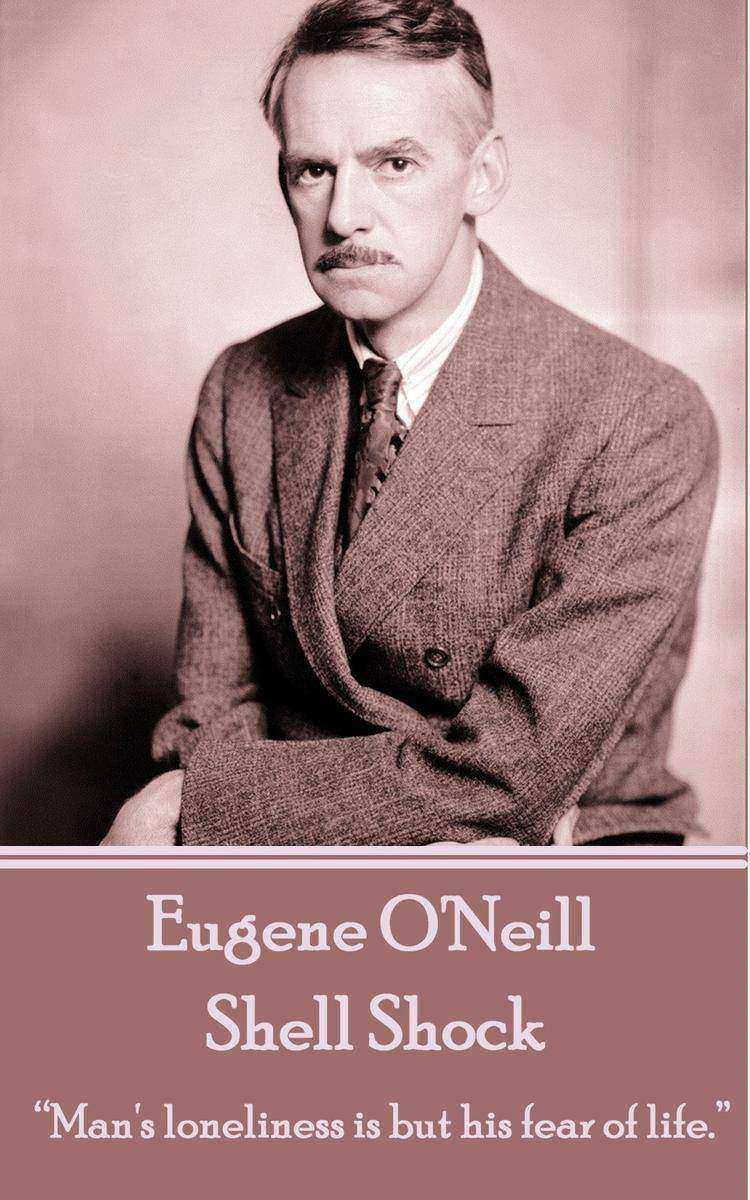
Shell Shock - Man's loneliness is but his fear of life.
¥14.03
Eugene Gladstone O'Neill was born on October 16, 1888 in a hotel bedroom in what is now Times Square, New York. Much of his childhood was spent in the comfort of books at boarding schools whilst his actor father was on the road and his Mother contended with her own demons. He spent only a year at University - Princeton - and various reasons have been given for his departure. However whatever his background and education denied or added to his development it is agreed amongst all that he was a playwright of the first rank and possibly America's greatest. His introduction of realism into American drama was instrumental in its development and paved a path for many talents thereafter. Of course his winning of both the Pulitzer Prize (4 times) and the Nobel Prize are indicative of his status. His more famous and later works do side with the disillusionment and personal tragedy of those on the fringes of society but continue to build upon ideas and structures he incorporated in his early one act plays. Eugene O'Neill suffered from various health problems, mainly depression and alcoholism. In the last decade he also faced a Parkinson's like tremor in his hands which made writing increasingly difficult. But out of such difficulties came plays of the calibre of The Iceman Cometh, Long Day's Journey Into Night, and A Moon for the Misbegotten. Eugene O'Neill died in Room 401 of the Sheraton Hotel on Bay State Road in Boston, on November 27, 1953, at the age of 65. As he was dying, he whispered his last words: "e;I knew it. I knew it. Born in a hotel room and died in a hotel room."e;
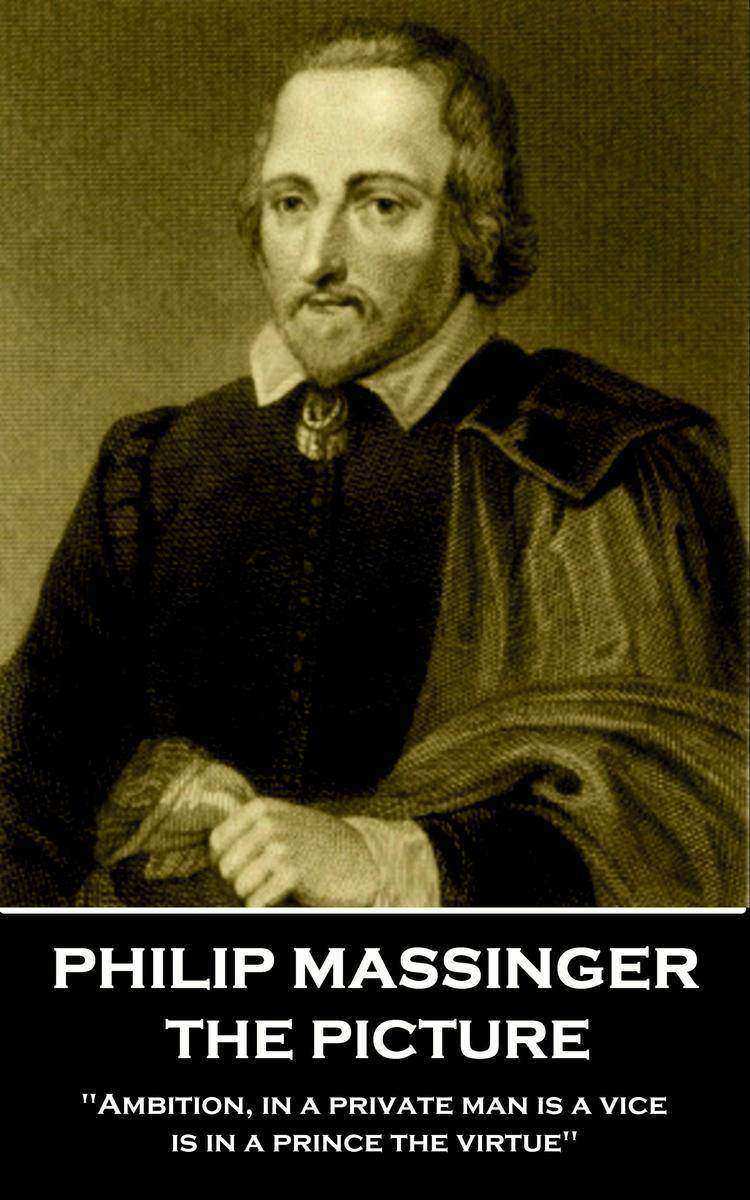
Picture - Ambition, in a private man is a vice, is in a prince the virtue
¥23.45
Philip Massinger was baptized at St. Thomas's in Salisbury on November 24th, 1583.Massinger is described in his matriculation entry at St. Alban Hall, Oxford (1602), as the son of a gentleman. His father, who had also been educated there, was a member of parliament, and attached to the household of Henry Herbert, 2nd Earl of Pembroke. The Earl was later seen as a potential patron for Massinger.He left Oxford in 1606 without a degree. His father had died in 1603, and accounts suggest that Massinger was left with no financial support this, together with rumours that he had converted to Catholicism, meant the next stage of his career needed to provide an income.Massinger went to London to make his living as a dramatist, but he is only recorded as author some fifteen years later, when The Virgin Martyr (1621) is given as the work of Massinger and Thomas Dekker.During those early years as a playwright he wrote for the Elizabethan stage entrepreneur, Philip Henslowe. It was a difficult existence. Poverty was always close and there was constant pleading for advance payments on forthcoming works merely to survive.After Henslowe died in 1616 Massinger and John Fletcher began to write primarily for the King's Men and Massinger would write regularly for them until his death.The tone of the dedications in later plays suggests evidence of his continued poverty. In the preface of The Maid of Honour (1632) he wrote, addressing Sir Francis Foljambe and Sir Thomas Bland: "e;I had not to this time subsisted, but that I was supported by your frequent courtesies and favours."e;The prologue to The Guardian (1633) refers to two unsuccessful plays and two years of silence, when the author feared he had lost popular favour although, from the little evidence that survives, it also seems he had involved some of his plays with political characters which would have cast shadows upon England's alliances.Philip Massinger died suddenly at his house near the Globe Theatre on March 17th, 1640. He was buried the next day in the churchyard of St. Saviour's, Southwark, on March 18th, 1640. In the entry in the parish register he is described as a "e;stranger,"e; which, however, implies nothing more than that he belonged to another parish.
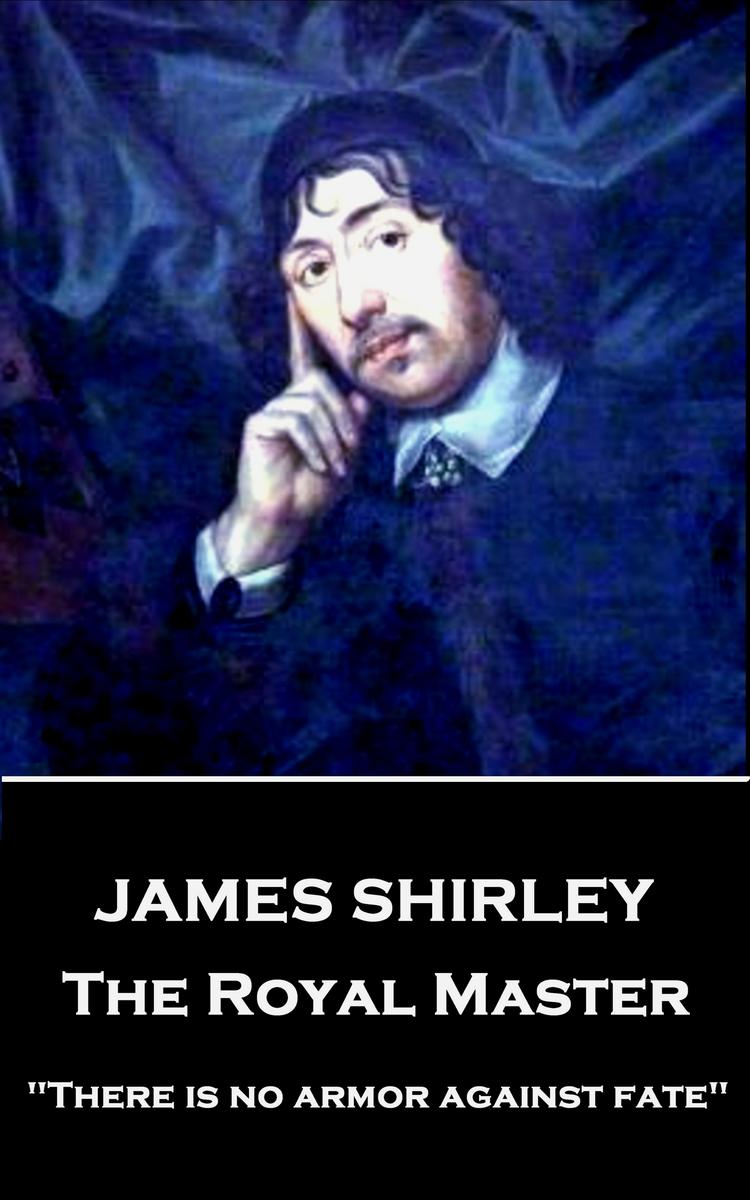
Royal Master - There is no armor against fate
¥25.80
James Shirley was born in London in September 1596. His education was through a collection of England's finest establishments: Merchant Taylors' School, London, St John's College, Oxford, and St Catharine's College, Cambridge, where he took his B.A. degree in approximately 1618. He first published in 1618, a poem entitled Echo, or the Unfortunate Lovers. As with many artists of this period full details of his life and career are not recorded. Sources say that after graduating he became "e;a minister of God's word in or near St Albans."e; A conversion to the Catholic faith enabled him to become master of St Albans School from 1623-25. He wrote his first play, Love Tricks, or the School of Complement, which was licensed on February 10th, 1625. From the given date it would seem he wrote this whilst at St Albans but, after its production, he moved to London and to live in Gray's Inn. For the next two decades, he would write prolifically and with great quality, across a spectrum of thirty plays; through tragedies and comedies to tragicomedies as well as several books of poetry. Unfortunately, his talents were left to wither when Parliament passed the Puritan edict in 1642, forbidding all stage plays and closing the theatres. Most of his early plays were performed by Queen Henrietta's Men, the acting company for which Shirley was engaged as house dramatist. Shirley's sympathies lay with the King in battles with Parliament and he received marks of special favor from the Queen. He made a bitter attack on William Prynne, who had attacked the stage in Histriomastix, and, when in 1634 a special masque was presented at Whitehall by the gentlemen of the Inns of Court as a practical reply to Prynne, Shirley wrote the text-The Triumph of Peace. Shirley spent the years 1636 to 1640 in Ireland, under the patronage of the Earl of Kildare. Several of his plays were produced by his friend John Ogilby in Dublin in the first ever constructed Irish theatre; The Werburgh Street Theatre. During his years in Dublin he wrote The Doubtful Heir, The Royal Master, The Constant Maid, and St. Patrick for Ireland. In his absence from London, Queen Henrietta's Men sold off a dozen of his plays to the stationers, who naturally, enough published them. When Shirley returned to London in 1640, he finished with the Queen Henrietta's company and his final plays in London were acted by the King's Men. On the outbreak of the English Civil War Shirley served with the Earl of Newcastle. However when the King's fortunes began to decline he returned to London. There his friend Thomas Stanley gave him help and thereafter Shirley supported himself in the main by teaching and publishing some educational works under the Commonwealth. In addition to these he published during the period of dramatic eclipse four small volumes of poems and plays, in 1646, 1653, 1655, and 1659. It is said that he was "e;a drudge"e; for John Ogilby in his translations of Homer's Iliad and the Odyssey, and survived into the reign of Charles II, but, though some of his comedies were revived, his days as a playwright were over. His death, at age seventy, along with that of his wife, in 1666, is described as one of fright and exposure due to the Great Fire of London which had raged through parts of London from September 2nd to the 5th. He was buried at St Giles in the Fields, in London, on October 29th, 1666.
When We Dead Awaken (1899)
¥23.45
Henrik Ibsen (20th March, 1828 - 23rd May, 1906) is often referred to as the father of realism and ranked just below Shakespeare as Europe's greatest ever playwright especially as his plays are performed most frequently throughout the world after Shakespeare's. He was Norwegian and although set his plays in Norway, he wrote them in Danish and lived most of his professional life in Italy and Germany. His affect on the theatre is still evident today and shapes the distinction of plays being art as opposed to entertainment since he broke down all previous traditions and explored issues, developed characterisation, revealed uncomfortable truths, challenged assumptions and brokedown facades in ourselves as well as society. These factors are clearly demonstrated in When We Dead Awaken which centres around celebrated sculptor Arnold Rubek whose fame rests with his great work "e;The Day of the Resurrection"e; which he sculpted when he was younger. The model for this piece had been Irene and although he had feelings for her, he moved on and married Maia. He feels his creativity has dwindled and Irene might be able to unleash this again. Irene appears mysteriously and perceives her modelling for his work as the epitome of her life and therefore is now dead to any other experiences and has lost any respect for the sanctity of life. Ibsen's exploration of artistic intensity and integrity through this powerful relationship with its pervading images of stone demonstrates a passion for life that is unable to be realised and gives the play an ironic conclusion that is a must read.
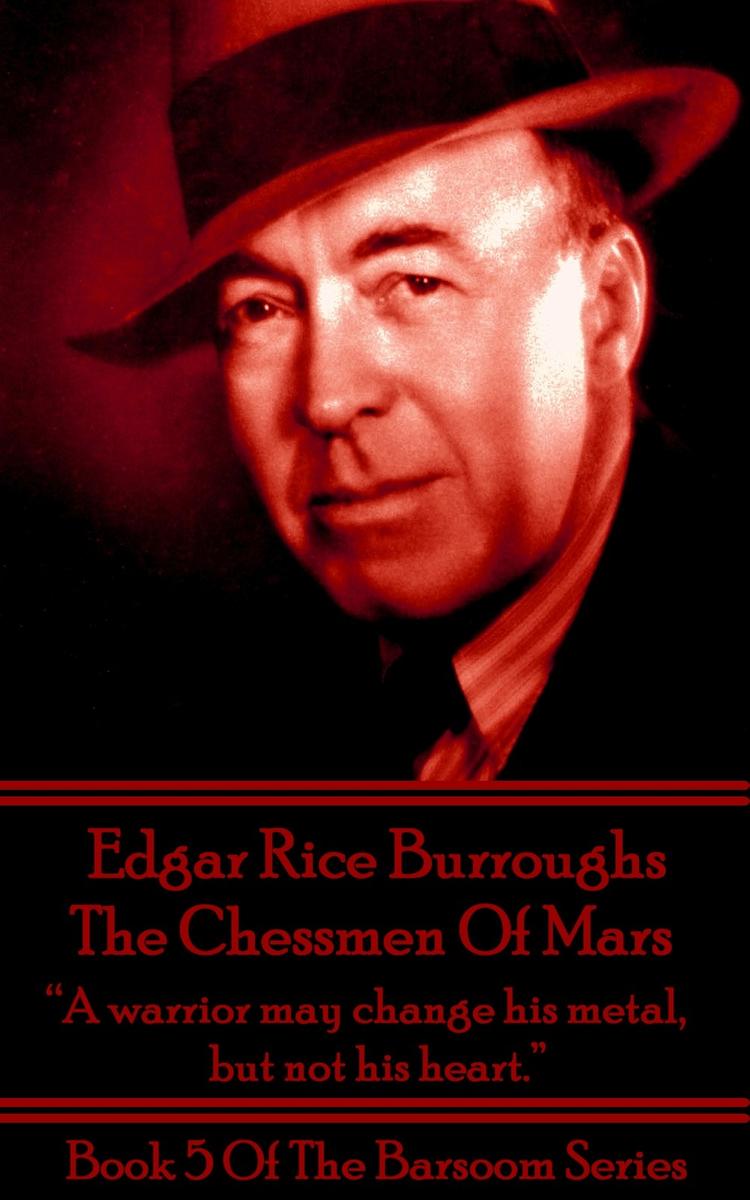
Chessmen Of Mars - A warrior may change his metal, but not his heart.
¥35.22
Edgar Rice Burroughs was born on September 1, 1875, in Chicago, Illinois. His early career was unremarkable. After failing to enter West Point he enlisted in the 7th Calvary but was discharged after heart problems were diagnosed. A series of short term jobs gave no indication as to a career path but finally, in 1911, married and with two young children, he turned his hand to writing. He aimed his works squarely at the very popular pulp serial magazines. His first effort 'Under The Moons Of Mars' ran in Munsey's Magazine in 1912 under the pseudonym Norman Bean. With its success he began writing full time. A continuing theme of his work was to develop series so that each character had ample opportunities to return in sequels. John Carter was in the Mars series and there was another on Venus and one on Pellucidar among others. But perhaps the best known is Tarzan. Indeed Burroughs wanted so much to capitalise upon the brand that he introduced a syndicated Tarzan comic strip, movies and merchandise. He purchased a large ranch north of Los Angeles, California, which he named "e;Tarzana."e; The surrounding communities outside the ranch voted in 1927 to adopt the name as their own. By 1932 Burroughs set up his own company to print his own books. Here we publish the fifth in the Barsoom series and its enduring hero John Carter 'The Chessmen of Mars'. Another cultural classic.
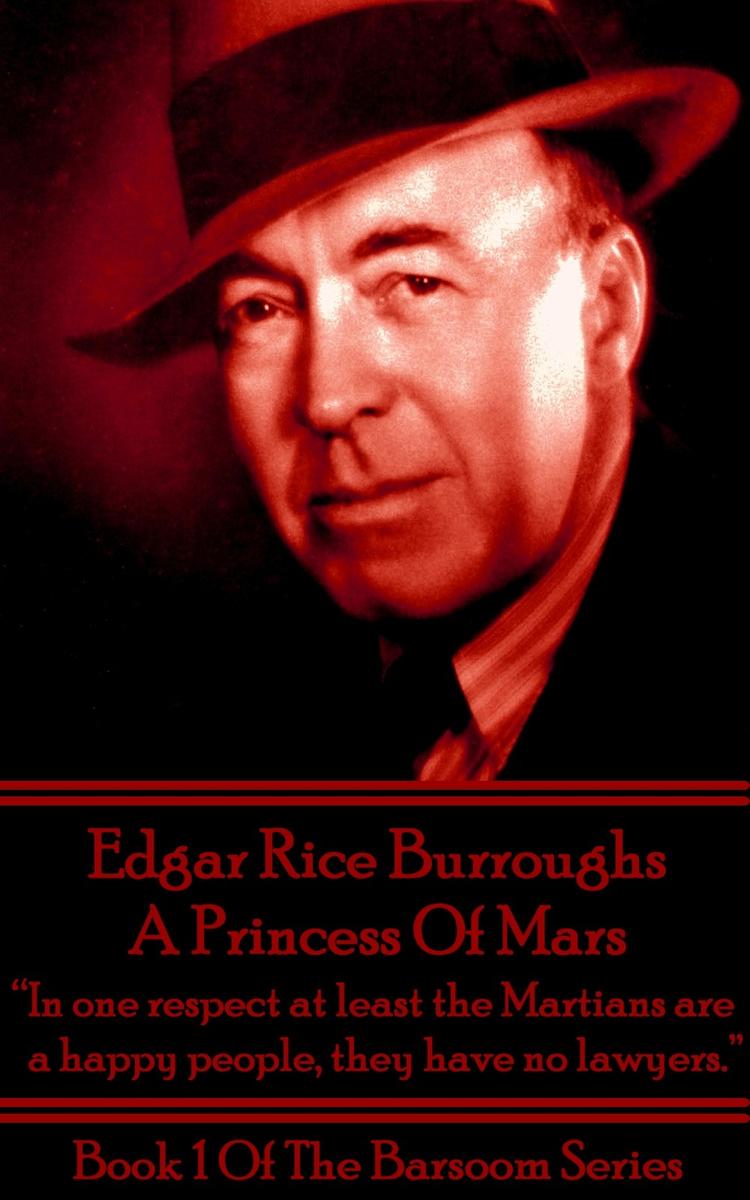
Princess Of Mars - In one respect at least the Martians are a happy people, they
¥35.22
Edgar Rice Burroughs was born on September 1, 1875, in Chicago, Illinois. His early career was unremarkable. After failing to enter West Point he enlisted in the 7th Calvary but was discharged after heart problems were diagnosed. A series of short term jobs gave no indication as to a career path but finally, in 1911, married and with two young children, he turned his hand to writing. He aimed his works squarely at the very popular pulp serial magazines. His first effort 'Under The Moons Of Mars' ran in Munsey's Magazine in 1912 under the pseudonym Norman Bean. With its success he began writing full time. A continuing theme of his work was to develop series so that each character had ample opportunities to return in sequels. John Carter was in the Mars series and there was another on Venus and one on Pellucidar among others. But perhaps the best known is Tarzan. Indeed Burroughs wanted so much to capitalise upon the brand that he introduced a syndicated Tarzan comic strip, movies and merchandise. He purchased a large ranch north of Los Angeles, California, which he named "e;Tarzana."e; The surrounding communities outside the ranch voted in 1927 to adopt the name as their own. By 1932 Burroughs set up his own company to print his own books. Here we publish the first in the Barsoom series and its enduring hero John Carter 'A Princess of Mars'. Another cultural classic.

Black Beauty - An Original Classic (Mermaids Classics)
¥35.22
Black Beauty by Anna Sewell (1820 1878) is a story about a horse named Black Beauty who endures cruelty and kindness. The story is narrated through the horses point of view and the aim of the author was to portray the themes of inducing kindness, sympathy, and an understanding treatment of horses. Anna Sewell was an English novelist and wrote the book during the last few years of her life. It became an instant success after it was first published in 1877 but Anna died five months after it was published. It is considered as one of the best-selling books of all time.This book was published in 1902 in a physical book format and is now republished in ebook format by Mermaids Classics. This digital edition is beautifully formatted with an active Table of Contents that goes directly to each chapter of the story. Mermaids Classics, an imprint of Mermaids Publishing brings the very best of classic literature to a modern era of digital reading by producing high quality books in ebook format.
Little Lord Fauntleroy (Mermaids Classics)
¥35.22
Little Lord Fauntleroy (1886) by Frances Hodgson Burnett (1849-1924) is a classic childrens novel based on a young boy named Cedric Errol who lives in poverty with his mother in New York City until he receives a message from his Grandfather who is an English aristocrat based in England that he has become Lord Fauntleroy and heir to a large estate. Cedric teaches his grandfather the concept of compassion.Mermaids Classics, an imprint of Mermaids Publishing brings the very best of old classic literature to a modern era of digital reading by producing high quality books in ebook format. All of the Mermaids Classics epublications are reproductions of classic antique books that were originally published in print format, mostly over a century ago and are now republished in digital format as ebooks. Begin to build your collection of digital books by looking for more literary gems from Mermaids Classics.
Tenant of Wildfell Hall (Mermaids Classics)
¥35.22
The Tenant of Wildfell Hall (1848) by Anne Bronte (1820-1849) is a romance classic novel based on the mysterious widow Mrs Helen Graham who arrives at Wildfell Hall and takes up residence in the mansion with her young son. She endures local gossip within the community which was initiated by the jealous Eliza who had briefly courted the local farmer Gilbert Markham until he developed an interest for the Helen. Gilbert finds the local gossip quite disturbing until he discovers through Helens diary of her mysterious past and how she lived in an unhappy marriage. Mermaids Classics, an imprint of Mermaids Publishing brings the very best of old classic literature to a modern era of digital reading by producing high quality books in ebook format. All of the Mermaids Classics epublications are reproductions of classic antique books that were originally published in print format, mostly over a century ago and are now republished in digital format as ebooks. Begin to build your collection of digital books by looking for more literary gems from Mermaids Classics.
David Copperfield (Mermaids Classics)
¥35.22
David Copperfield (1850) by Charles Dickens (1812-1870) follows the story of a boy named David whos step-father mistreats him and hes sent to boarding school. The story continues to follow David to adulthood which was also was considered to be a more of an autobiographical account of the authors own life from childhood to adulthood.Mermaids Classics, an imprint of Mermaids Publishing brings the very best of old classic literature to a modern era of digital reading by producing high quality books in ebook format. All of the Mermaids Classics epublications are reproductions of classic antique books that were originally published in print format, mostly over a century ago and are now republished in digital format as ebooks. Begin to build your collection of digital books by looking for more literary gems from Mermaids Classics.
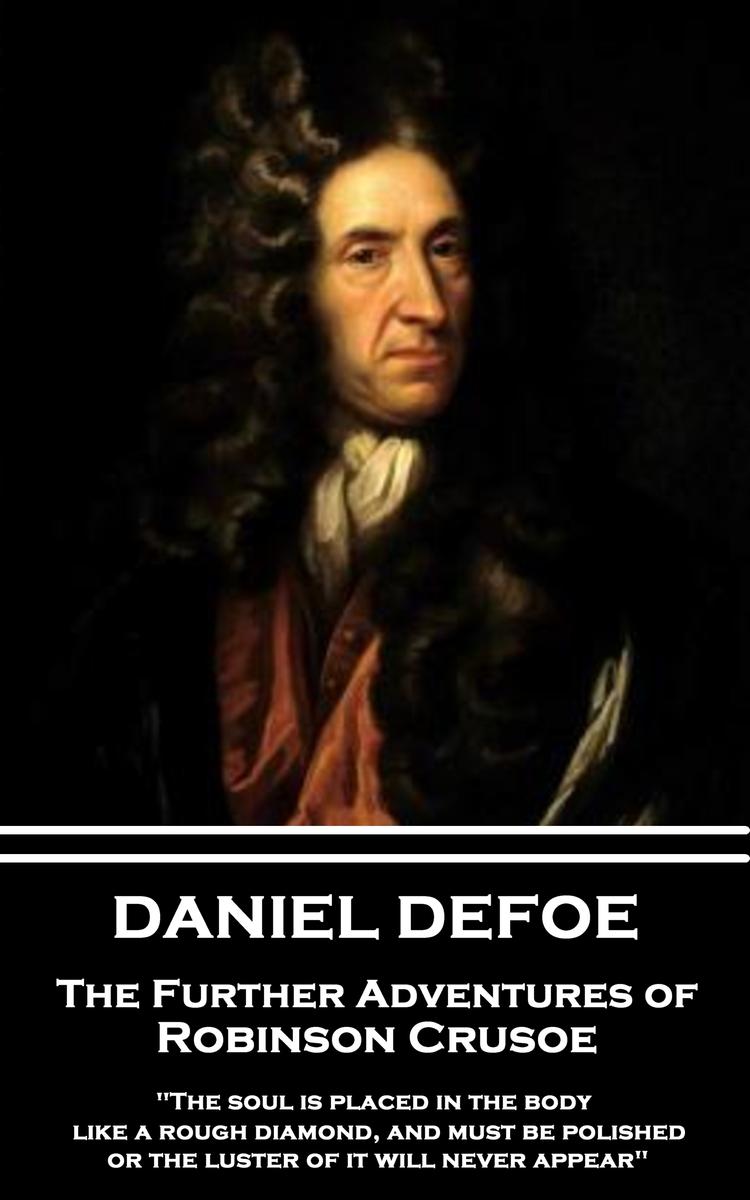
Further Adventures of Robinson Crusoe
¥29.33
Daniel Defoe is most well-known for his classic novels Robinson Crusoe and Moll Flanders. Born around 1660, he was also a journalist, a pamphleteer, a businessman, a spy. His life was long and colourful, and the breadth of his work, still highly regarded, is infused with similar vigour. It is said that only the bible has been printed in more languages than Robinson Crusoe. Defoe is also noted for being one of the earliest proponents of the novel. He was extremely prolific and a very versatile writer, producing several hundred books, pamphlets, and journals on various topics including politics, crime, religion, marriage, psychology and the supernatural. He was also a pioneer of economic journalism though was made bankrupt on more on one occasion and usually mired in debt. In later life Defoe was often most seen on Sundays when bailiffs and the like could legally make no move on him. Allegedly it was whilst hiding from creditors that he died on April 24th, 1731. He was interred in Bunhill Fields, London.
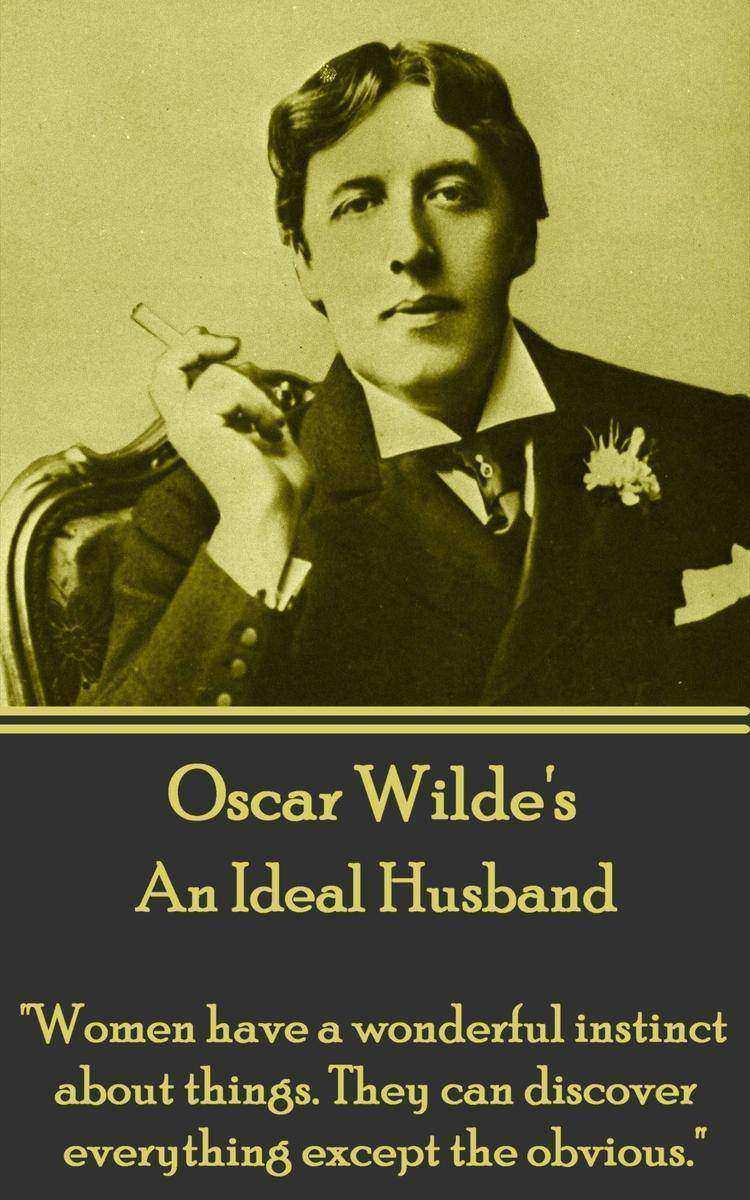
Ideal Husband - Women have a wonderful instinct about things.
¥26.98
Oscar Fingal O'Flahertie Wills Wilde was born on the 16th October 1854 in Dublin Ireland. The son of Dublin intellectuals Oscar proved himself an outstanding classicist at Dublin, then at Oxford. With his education complete Wilde moved to London and its fashionable cultural and social circles. With his biting wit, flamboyant dress, and glittering conversation, Wilde became one of the most well-known personalities of his day. His only novel, The Picture of Dorian Gray was published in 1890 and he then moved on to writing for the stage with Salome in 1891. His society comedies produced enormous hits and turned him into one of the most successful writers of late Victorian London. Whilst his masterpiece, The Importance of Being Earnest, was on stage in London, Wilde had the Marquess of Queensberry, the father of his lover, Lord Alfred Douglas, prosecuted for libel. The trial unearthed evidence that caused Wilde to drop his charges and led to his own arrest and trial for gross indecency. He was convicted and imprisoned for two years' hard labour. It was to break him. On release he left for France, There he wrote his last work, The Ballad of Reading Gaol in 1898. He died destitute in Paris at the age of forty-six sipping champagne a friend had brought with the line 'Alas I am dying beyond my means'. Here we publish another of his classic plays 'An Ideal Husband'
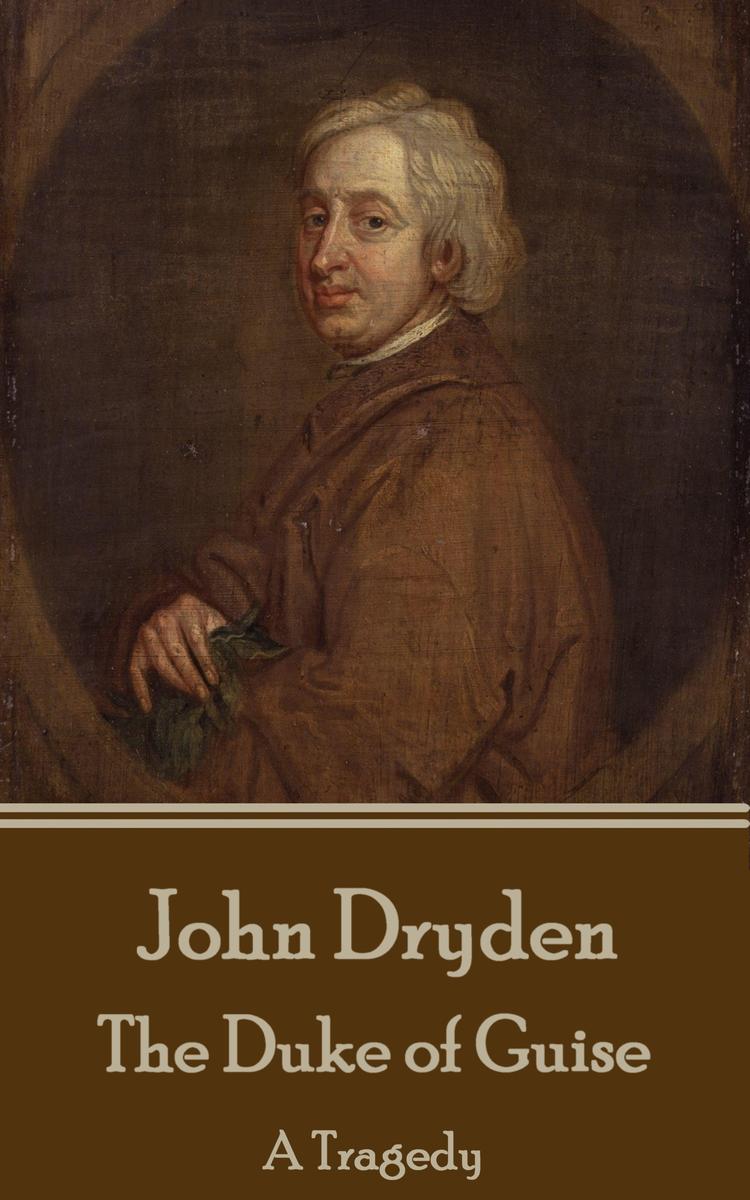
Duke of Guise - A Tragedy
¥26.98
John Dryden was born on August 9th, 1631 in the village rectory of Aldwincle near Thrapston in Northamptonshire. As a boy Dryden lived in the nearby village of Titchmarsh, Northamptonshire. In 1644 he was sent to Westminster School as a King's Scholar. Dryden obtained his BA in 1654, graduating top of the list for Trinity College, Cambridge that year. Returning to London during The Protectorate, Dryden now obtained work with Cromwell's Secretary of State, John Thurloe. At Cromwell's funeral on 23 November 1658 Dryden was in the company of the Puritan poets John Milton and Andrew Marvell. The setting was to be a sea change in English history. From Republic to Monarchy and from one set of lauded poets to what would soon become the Age of Dryden. The start began later that year when Dryden published the first of his great poems, Heroic Stanzas (1658), a eulogy on Cromwell's death. With the Restoration of the Monarchy in 1660 Dryden celebrated in verse with Astraea Redux, an authentic royalist panegyric. With the re-opening of the theatres after the Puritan ban, Dryden began to also write plays. His first play, The Wild Gallant, appeared in 1663 but was not successful. From 1668 on he was contracted to produce three plays a year for the King's Company, in which he became a shareholder. During the 1660s and '70s, theatrical writing was his main source of income. In 1667, he published Annus Mirabilis, a lengthy historical poem which described the English defeat of the Dutch naval fleet and the Great Fire of London in 1666. It established him as the pre-eminent poet of his generation, and was crucial in his attaining the posts of Poet Laureate (1668) and then historiographer royal (1670). This was truly the Age of Dryden, he was the foremost English Literary figure in Poetry, Plays, translations and other forms. In 1694 he began work on what would be his most ambitious and defining work as translator, The Works of Virgil (1697), which was published by subscription. It was a national event. John Dryden died on May 12th, 1700, and was initially buried in St. Anne's cemetery in Soho, before being exhumed and reburied in Westminster Abbey ten days later.
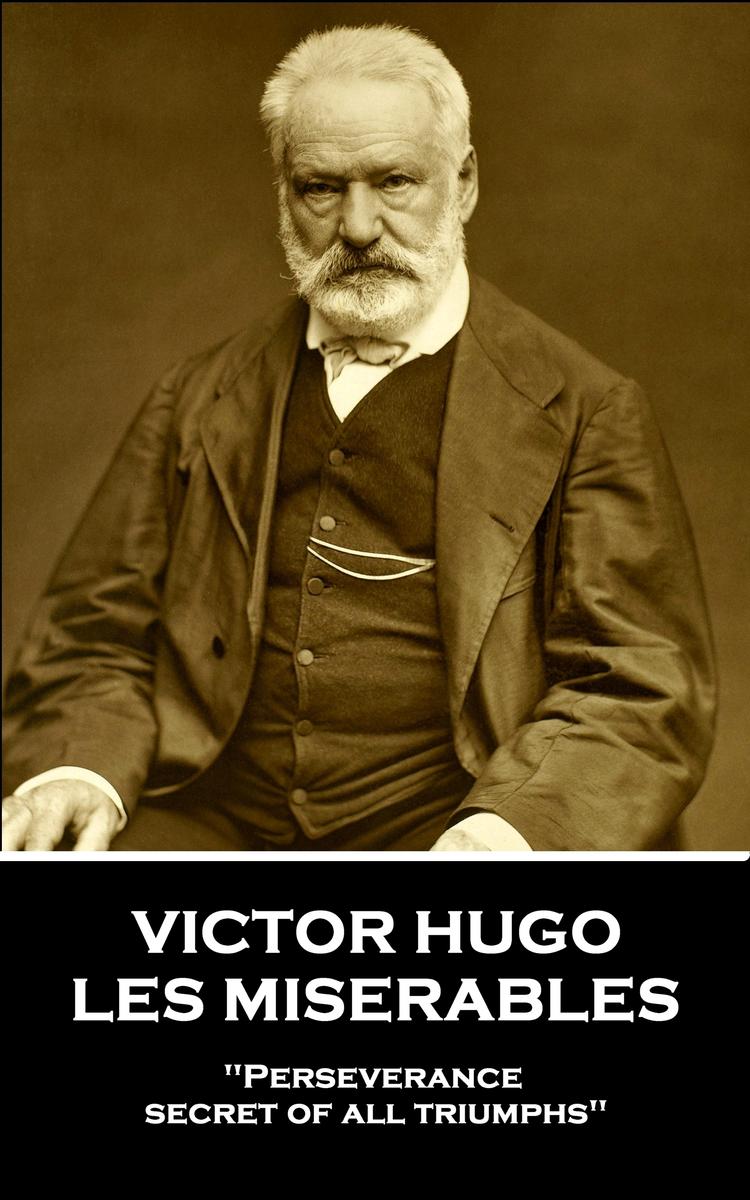
Les Miserables - Perseverance, secret of all triumphs
¥52.88
Victor Marie Hugo was born on 26th February 1802 and is revered as the greatest of all French writers. A poet, novelist, dramatist and painter he was a passionate supporter of Republicanism and made a notable contribution to the politics of his Country.His life was paralleled by the immense political and social movements of the 19th Century. When he was two Napoleon was proclaimed Emperor but before he was eighteen the Bourbon Monarchy was restored.It was only with his Mother's death in 1821 that he felt confident enough to marry Adele Foucher, a relationship he had kept secret from his mother. Their first child was born inside a year but died in infancy. Leopoldine was born the following year, followed by three further siblings.Hugo published his first novel the year following year, Han d'Islande, (1823). Three years later his second, Bug-Jargal (1826).Between 1829 and 1840 he would publish five further volumes of poetry solidifying his reputation as one of the greatest elegiac and lyric poets of his time. His reputation was growing not only in France but across Europe.In 1841 he was elected to the Academie Francaise, cementing his position in the world of French arts and letters. Hugo also now began to turn his attention to an involvement in French politics.Elevated to the peerage by King Louis-Philippe in 1841 he spoke eloquently and at length against the death penalty and social injustice as well as passionately in favour of freedom of the press and self-government for Poland.When Napoleon III seized power in 1851, and established an anti-parliamentary constitution, Hugo openly declared him a traitor to France and began a long exile, based mainly in Guernsey.In exile, Hugo published his famous political pamphlets; Napoleon le Petit and Histoire d'un crime. Although the pamphlets were banned in France, they nonetheless made a strong impact there. His exile also seemed to have a creative impetus. He composed or published some of his greatest work including Les Miserables, and three widely honoured collections of poetry (Les Chatiments, 1853; Les Contemplations, 1856; and La Legende des siecles, 1859).In 1870 the Third Republic was established and Hugo finally returned home, where he was elected to the National Assembly and the Senate. That same year War erupted between France and Prussia and the French were badly beaten.With the end of the War Hugo began his campaign for a great valuation and protection for the rights of artists and copyright. He was a founding member of the Association Litteraire et Artistique Internationale, which led to the Berne Convention for the Protection of Literary and Artistic Works.Victor Hugo's death on 22nd May 1885, at the age of 83, generated intense nation-wide mourning. Revered not only as a towering figure in literature, he was a statesman who had helped to shape the Third Republic and democracy in France.
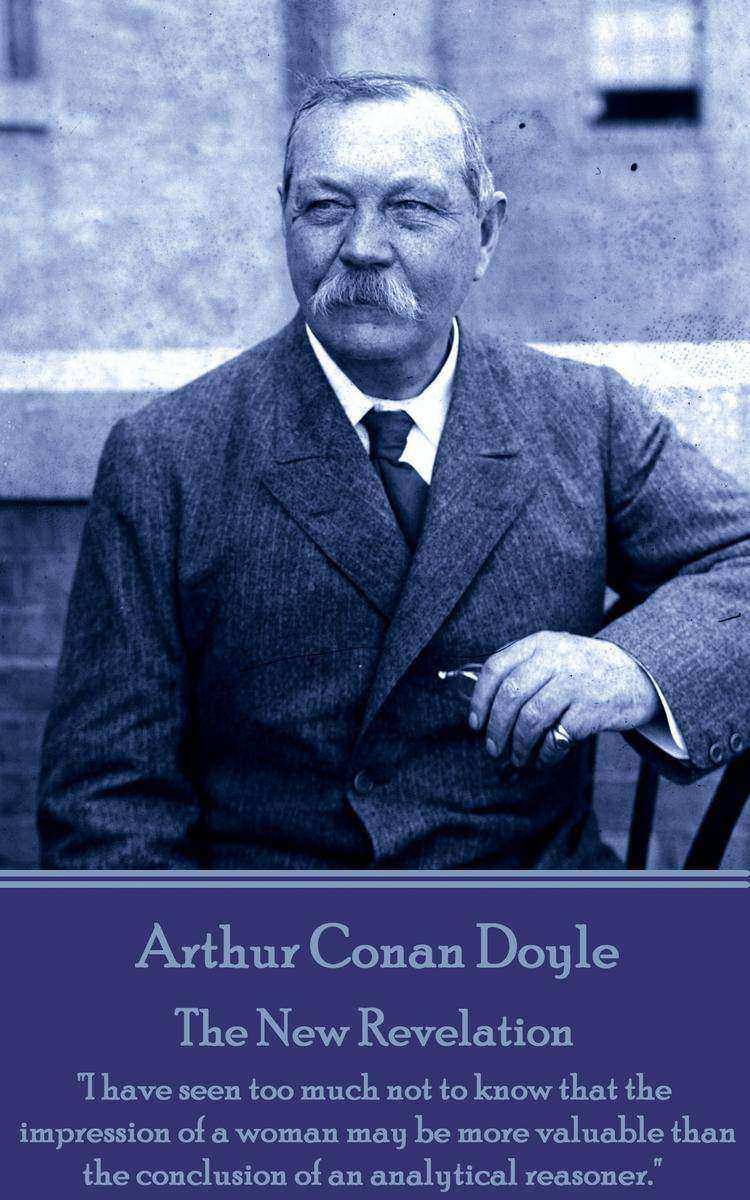
New Revelation
¥14.03
If ever a writer needed an introduction Arthur Conan Doyle would not be considered that man. After all, Sherlock Holmes is perhaps the foremost literary detective of any age. Add to this canon his stories of science fiction and his poems, his historical novels, his plays, his political campaigning, his efforts in establishing a Court of Appeal and there is little room for anything else. Except he was also an exceptional writer of short stories of the horrific and macabre. Something very different from what you might expect. Born in Arthur Conan Doyle was born on 22 May 1859 at 11 Picardy Place, Edinburgh, Scotland. From 1876 - 1881 he studied medicine at the University of Edinburgh following which he was employed as a doctor on the Greenland whaler Hope of Peterhead in 1880 and, after his graduation, as a ship's surgeon on the SS Mayumba during a voyage to the West African coast in 1881. Arriving in Portsmouth in June of that year with less than GBP10 (GBP700 today) to his name, he set up a medical practice at 1 Bush Villas in Elm Grove, Southsea. The practice was initially not very successful. While waiting for patients, Conan Doyle again began writing stories and composed his first novel The Mystery of Cloomber. Although he continued to study and practice medicine his career was now firmly set as a writer. And thereafter great works continued to pour out of him.

Richard III - So wise so young, they say, do never live long
¥11.67
The life of William Shakespeare, arguably the most significant figure in the Western literary canon, is relatively unknown. Shakespeare was born in Stratford-upon-Avon in 1565, possibly on the 23rd April, St. George's Day, and baptised there on 26th April. Little is known of his education and the first firm facts to his life relate to his marriage, aged 18, to Anne Hathaway, who was 26 and from the nearby village of Shottery. Anne gave birth to their first son six months later. Shakespeare's first play, The Comedy of Errors began a procession of real heavyweights that were to emanate from his pen in a career of just over twenty years in which 37 plays were written and his reputation forever established. This early skill was recognised by many and by 1594 the Lord Chamberlain's Men were performing his works. With the advantage of Shakespeare's progressive writing they rapidly became London's leading company of players, affording him more exposure and, following the death of Queen Elizabeth in 1603, a royal patent by the new king, James I, at which point they changed their name to the King's Men. By 1598, and despite efforts to pirate his work, Shakespeare's name was well known and had become a selling point in its own right on title pages. No plays are attributed to Shakespeare after 1613, and the last few plays he wrote before this time were in collaboration with other writers, one of whom is likely to be John Fletcher who succeeded him as the house playwright for the King's Men. William Shakespeare died two months later on April 23rd, 1616, survived by his wife, two daughters and a legacy of writing that none have since yet eclipsed.
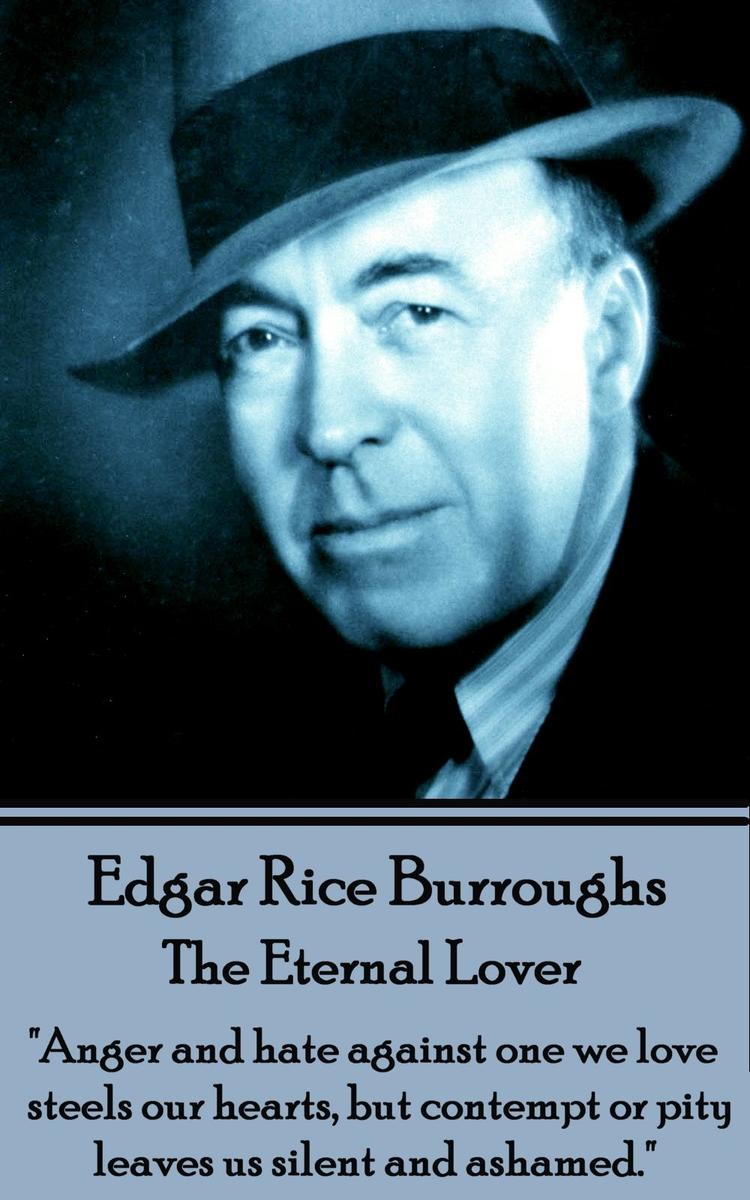
Eternal Lover
¥29.33
Edgar Rice Burroughs was born on September 1, 1875, in Chicago, Illinois. His early career was unremarkable. After failing to enter West Point he enlisted in the 7th Calvary but was discharged after heart problems were diagnosed. A series of short term jobs gave no indication as to a career path but finally, in 1911, married and with two young children, he turned his hand to writing. He aimed his works squarely at the very popular pulp serial magazines. His first effort 'Under The Moons Of Mars' ran in Munsey's Magazine in 1912 under the pseudonym Norman Bean. With its success he began writing full time. A continuing theme of his work was to develop series so that each character had ample opportunities to return in sequels. John Carter was in the Mars series and there was another on Venus and one on Pellucidar among others. But perhaps the best known is Tarzan. Indeed Burroughs wanted so much to capitalise upon the brand that he introduced a syndicated Tarzan comic strip, movies and merchandise. He purchased a large ranch north of Los Angeles, California, which he named "e;Tarzana."e; The surrounding communities outside the ranch voted in 1927 to adopt the name as their own. By 1932 Burroughs set up his own company to print his own books. Here we publish 'The Eternal Lover' in the hands of Edgar Rice Burroughs the title is just the beginning.....just the start of a journey......
Pericles - Few love to hear the sins they love to act.
¥11.67
The life of William Shakespeare, arguably the most significant figure in the Western literary canon, is relatively unknown. Shakespeare was born in Stratford-upon-Avon in 1565, possibly on the 23rd April, St. George's Day, and baptised there on 26th April. Little is known of his education and the first firm facts to his life relate to his marriage, aged 18, to Anne Hathaway, who was 26 and from the nearby village of Shottery. Anne gave birth to their first son six months later. Shakespeare's first play, The Comedy of Errors began a procession of real heavyweights that were to emanate from his pen in a career of just over twenty years in which 37 plays were written and his reputation forever established. This early skill was recognised by many and by 1594 the Lord Chamberlain's Men were performing his works. With the advantage of Shakespeare's progressive writing they rapidly became London's leading company of players, affording him more exposure and, following the death of Queen Elizabeth in 1603, a royal patent by the new king, James I, at which point they changed their name to the King's Men. By 1598, and despite efforts to pirate his work, Shakespeare's name was well known and had become a selling point in its own right on title pages. No plays are attributed to Shakespeare after 1613, and the last few plays he wrote before this time were in collaboration with other writers, one of whom is likely to be John Fletcher who succeeded him as the house playwright for the King's Men. William Shakespeare died two months later on April 23rd, 1616, survived by his wife, two daughters and a legacy of writing that none have since yet eclipsed.
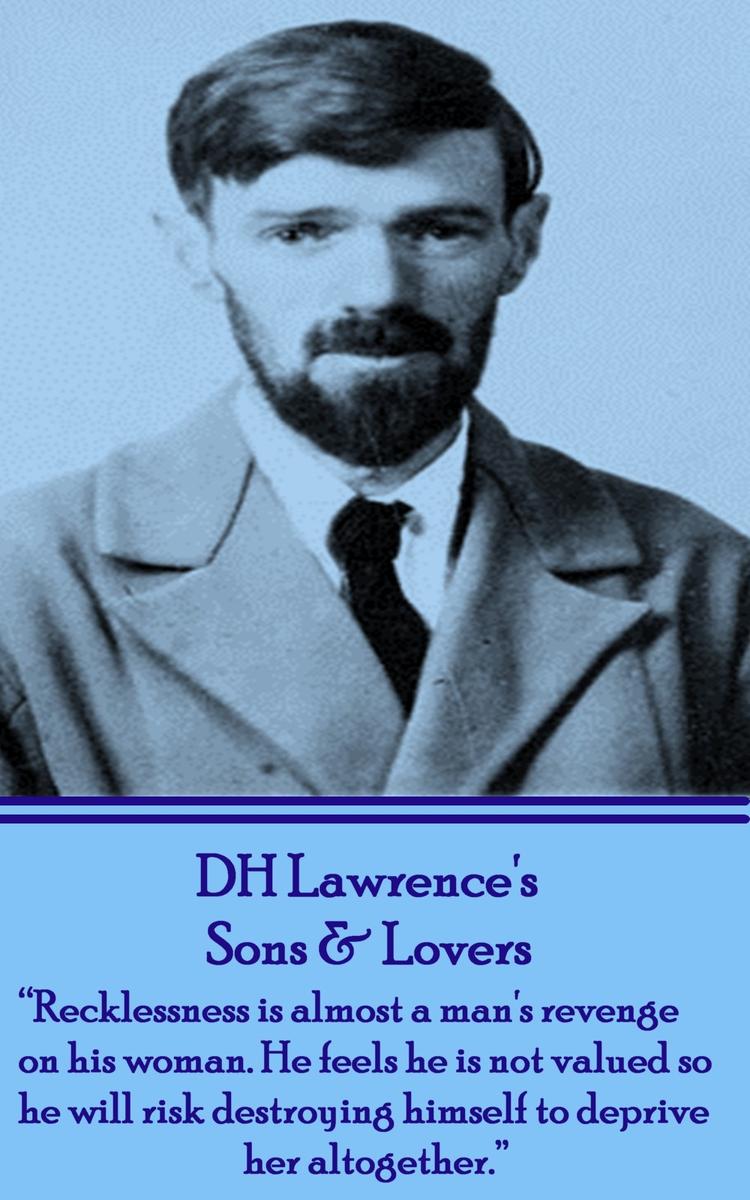
Sons & Lovers - Recklessness is almost a man's revenge on his woman.
¥23.45
DH Lawrence's Sons and Lovers is a must-read classic that deals with family relations in a typical Freudian fashion. In fact, the book tells the story of the very strong attachment of two sons, William and Paul Morel, to their mother. As the boys grow older and start dating women, they both find difficulties to establish serious and lasting love relationships with their partners. They are never satisfied with the girls' personalities and often complain about their superficiality and ostensible nature while their affairs never reach beyond passion and mere physical gratification. Being often considered as an autobiographical novel in which Lawrence explores aspects of his own personal life, the narrative presents the boys' mother as their ultimate example of the perfect woman, an example that cannot be attained by the women they happen to meet. After William's sudden death, the mother's hold on Paul is further reinforced. She is now jealous of her second son's mistress and engages in a campaign to separate them. As expected, the son never succeeds in disentangling himself from his mother's apron strings. After the mother's death, the end of the novel depicts a lost and lonely Paul with no hopes or aspirations.


