


 购物车
购物车 个人中心
个人中心
Enigma of Diversity
¥229.55
Diversity these days is a hallowed American value, widely shared and honored. That's a remarkable change from the Civil Rights era-but does this public commitment to diversity constitute a civil rights victoryWhat does diversity mean in contemporary America, and what are the effects of efforts to support it?Ellen Berrey digs deep into those questions in The Enigma of Diversity. Drawing on six years of fieldwork and historical sources dating back to the 1950s and making extensive use of three case studies from widely varying arenas-housing redevelopment in Chicago's Rogers Park neighborhood, affirmative action in the University of Michigan's admissions program, and the workings of the human resources department at a Fortune 500 company-Berrey explores the complicated, contradictory, and even troubling meanings and uses of diversity as it is invoked by different groups for different, often symbolic ends. In each case, diversity affirms inclusiveness, especially in the most coveted jobs and colleges, yet it resists fundamental change in the practices and cultures that are the foundation of social inequality. Berrey shows how this has led racial progress itself to be reimagined, transformed from a legal fight for fundamental rights to a celebration of the competitive advantages afforded by cultural differences.Powerfully argued and surprising in its conclusions, The Enigma of Diversity reveals the true cost of the public embrace of diversity: the taming of demands for racial justice.
Habeas for the Twenty-First Century
¥447.34
For centuries, the writ of habeas corpus has served as an important safeguard against miscarriages of justice, and today?it remains at the center of some of the most contentious issues of our time-among them terrorism, immigration, crime, and the death penalty.?Yet, in recent decades, habeas has been seriously abused. In this book, Nancy J. King and Joseph L. Hoffmann argue that habeas should be exercised with greater prudence.Through historical, empirical, and legal analysis, as well as illustrative case studies, the authors examine the current use of the writ in the United States and offer sound reform proposals to help ensure its ongoing vitality in today's justice system. Comprehensive and thoroughly grounded in a modern understanding of habeas corpus, this informative book will be an insightful read for legal scholars and anyone interested in the importance of habeas corpus for American government.
State and the Stork
¥435.56
From the colonial era to the present, the ever-shifting debate about America's prodigious population growth has exerted a profound influence on the evolution of politics, public policy, and economic thinking in the United States. In a remarkable shift since the late 1960s, Americans of all political stripes have come to celebrate the economic virtues of population growth. As one of the only wealthy countries experiencing significant population growth in the twenty-first century, the United States now finds itself at a demographic crossroads, but policymakers seem unwilling or unable to address the myriad economic and environmental questions surrounding this growth.From the founders' fears that crowded cities would produce corruption, luxury, and vice to the zero population growth movement of the late 1960s to today's widespread fears of an aging crisis as the Baby Boomers retire, the American population debate has always concerned much more than racial composition or resource exhaustion, the aspects of the debate usually emphasized by historians. In The State and the Stork, Derek Hoff draws on his extraordinary knowledge of the intersections between population and economic debates throughout American history to explain the many surprising ways that population anxieties have provoked unexpected policies and political developments-including the recent conservative revival. At once a fascinating history and a revelatory look at the deep origins of a crucial national conversation, The State and the Stork could not be timelier.

Mastering the Niger
¥412.02
In Mastering the Niger, David Lambert recalls Scotsman James MacQueen (1778-1870) and his publication of A New Map of Africa in 1841 to show that Atlantic slavery-as a practice of subjugation, a source of wealth, and a focus of political struggle-was entangled with the production, circulation, and reception of geographical knowledge. The British empire banned the slave trade in 1807 and abolished slavery itself in 1833, creating a need for a new British imperial economy. Without ever setting foot on the continent, MacQueen took on the task of solving the "e;Niger problem,"e; that is, to successfully map the course of the river and its tributaries, and thus breathe life into his scheme for the exploration, colonization, and commercial exploitation of West Africa.?Lambert illustrates how MacQueen's geographical research began, four decades before the publication of the New Map, when he was managing a sugar estate on the West Indian colony of Grenada. There MacQueen encountered slaves with firsthand knowledge of West Africa, whose accounts would form the basis of his geographical claims. Lambert examines the inspirations and foundations for MacQueen's geographical theory as well as its reception, arguing that Atlantic slavery and ideas for alternatives to it helped produce geographical knowledge, while geographical discourse informed the struggle over slavery.
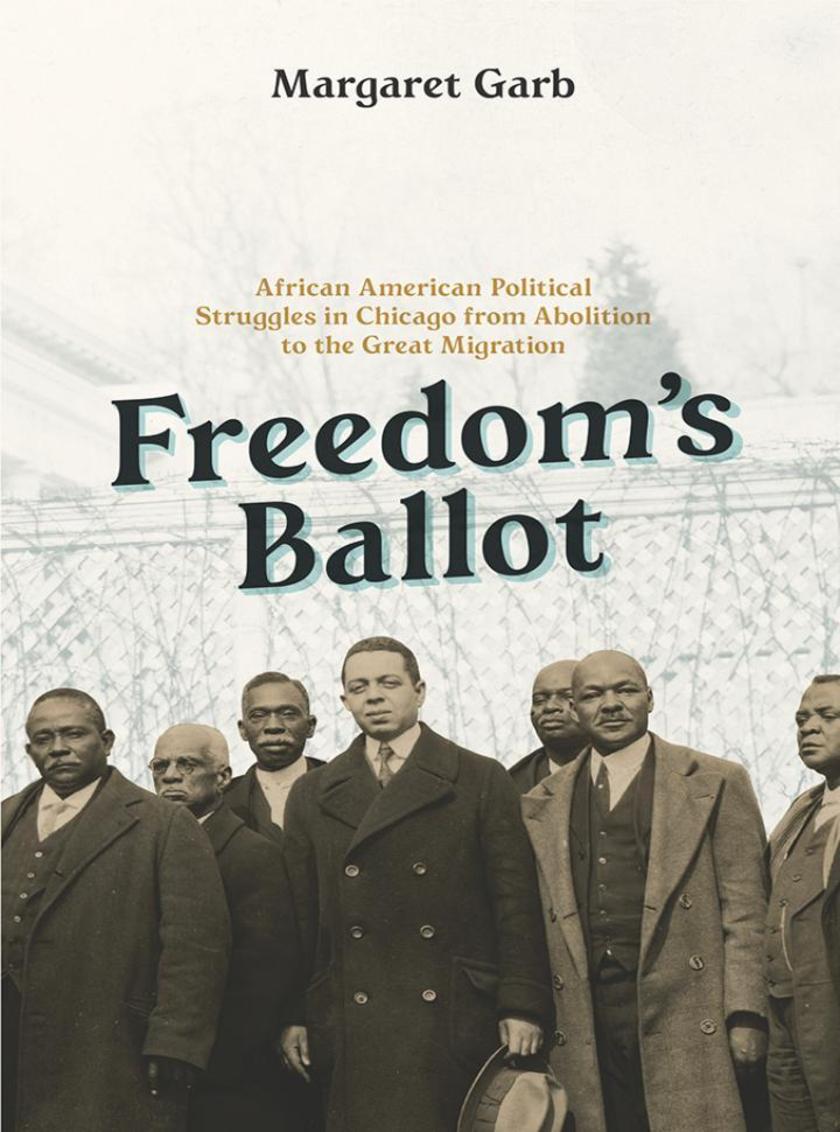
Freedom's Ballot
¥412.02
In the spring of 1915, Chicagoans elected the city's first black alderman, Oscar De Priest. In a city where African Americans made up less than five percent of the voting population, and in a nation that dismissed and denied black political participation, De Priest's victory was astonishing. It did not, however, surprise the unruly group of black activists who had been working for several decades to win representation on the city council.Freedom's Ballot?is the history of three generations of African American activists-the ministers, professionals, labor leaders, clubwomen, and entrepreneurs-who transformed twentieth-century urban politics. This is a complex and important story of how black political power was institutionalized in Chicago in the half-century following the Civil War. Margaret Garb explores the social and political fabric of Chicago, revealing how the physical makeup of the city was shaped by both political corruption and racial empowerment-in ways that can still be seen and felt today.

Treasuring the Gaze
¥412.02
The end of the eighteenth century saw the start of a new craze in Europe: tiny portraits of single eyes that were exchanged by lovers or family members. Worn as brooches or pendants, these minuscule eyes served the same emotional need as more conventional mementoes, such as lockets containing a coil of a loved one's hair. The fashion lasted only a few decades, and by the early 1800s eye miniatures had faded into oblivion. Unearthing these portraits in Treasuring the Gaze, Hanneke Grootenboer proposes that the rage for eye miniatures-and their abrupt disappearance-reveals a knot in the unfolding of the history of vision.?Drawing on Alois Riegl, Jean-Luc Nancy, Marcia Pointon, Melanie Klein, and others, Grootenboer unravels this knot, discovering previously unseen patterns of looking and strategies for showing. She shows that eye miniatures portray the subject's gaze rather than his or her eye, making the recipient of the keepsake an exclusive beholder who is perpetually watched. These treasured portraits always return the looks they receive and, as such, they create a reciprocal mode of viewing that Grootenboer calls intimate vision. Recounting stories about eye miniatures-including the role one played in the scandalous affair of Mrs. Fitzherbert and the Prince of Wales, a portrait of the mesmerizing eye of Lord Byron, and the loss and longing incorporated in crying eye miniatures-Grootenboer shows that intimate vision brings the gaze of another deep into the heart of private experience.?With a host of fascinating imagery from this eccentric and mostly forgotten yet deeply private keepsake, Treasuring the Gaze provides new insights into the art of miniature painting and the genre of portraiture.

Rebellion in the Backlands
¥394.36
Euclides da Cunha's classic account of the brutal campaigns against religious mystic Antonio Conselheiro has been called the Bible of Brazilian nationality."e;Euclides da Cunha went on the campaigns [against Conselheiro] as a journalist and what he returned with and published in 1902 is still unsurpassed in Latin American literature. Cunha is a talent as grand, spacious, entangled with knowledge, curiosity, and bafflement as the country itself. . . . On every page there is a heart of idea, speculation, dramatic observation that tells of a creative mission undertaken, the identity of the nation, and also the creation of a pure and eloquent prose style."e;-Elizabeth Hardwick, Bartleby in Manhattan
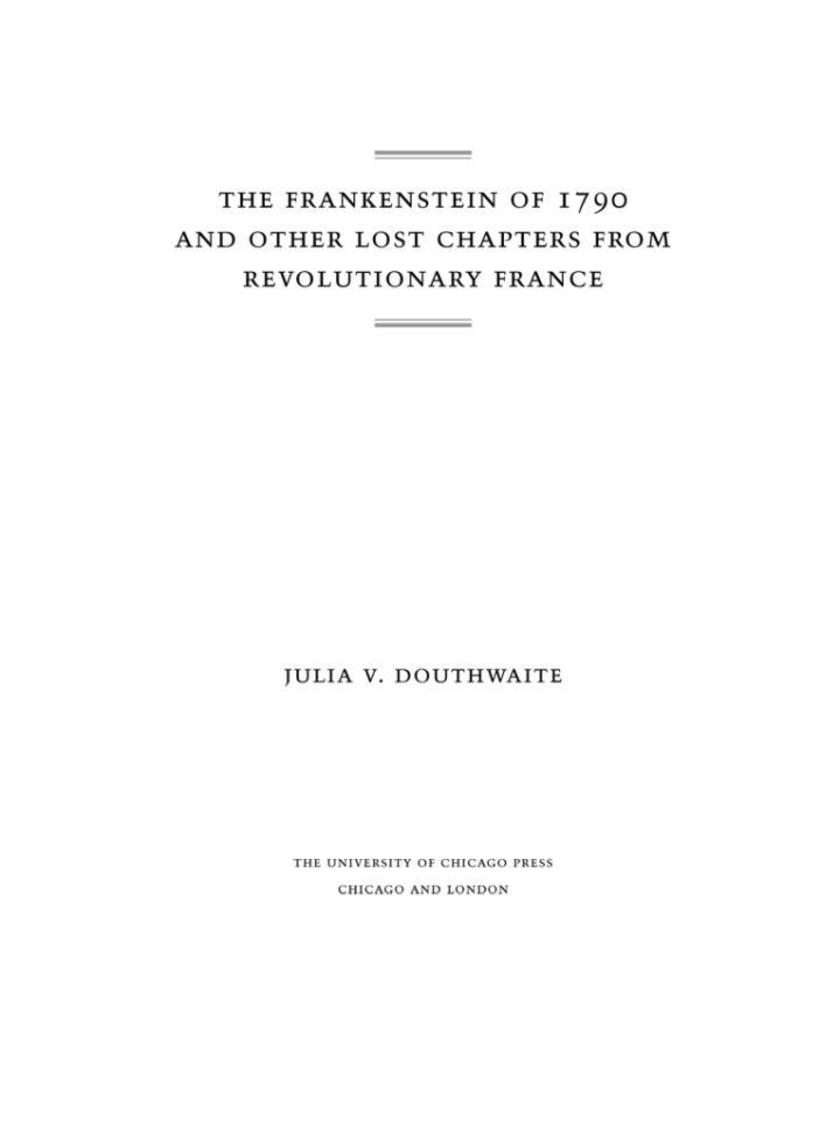
Frankenstein of 1790 and Other Lost Chapters from Revolutionary France
¥394.36
The French Revolution brings to mind violent mobs, the guillotine, and Madame Defarge, but it was also a publishing revolution: more than 1,200 novels were published between 1789 and 1804, when Napoleon declared the Revolution at an end. In this book, Julia V. Douthwaite explores how the works within this enormous corpus announced the new shapes of literature to come and reveals that vestiges of these stories can be found in novels by the likes of Mary Shelley, E. T. A. Hoffmann, Honore de Balzac, Charles Dickens, Gustave Flaubert, and L. Frank Baum.?Deploying political history, archival research, and textual analysis with eye-opening results, Douthwaite focuses on five major events between 1789 and 1794-first in newspapers, then in fiction-and shows how the symbolic stories generated by Louis XVI, Robespierre, the market women who stormed Versailles, and others were transformed into new tales with ongoing appeal. She uncovers a 1790 story of an automaton-builder named Franknsten, links Baum to the suffrage campaign going back to 1789, and discovers a royalist anthem's power to undo Balzac's Pre Goriot. Bringing to light the missing links between the ancien rgime and modernity, The Frankenstein of 1790 and Other Lost Chapters from Revolutionary France is an ambitious account of a remarkable politico-literary moment and its aftermath.
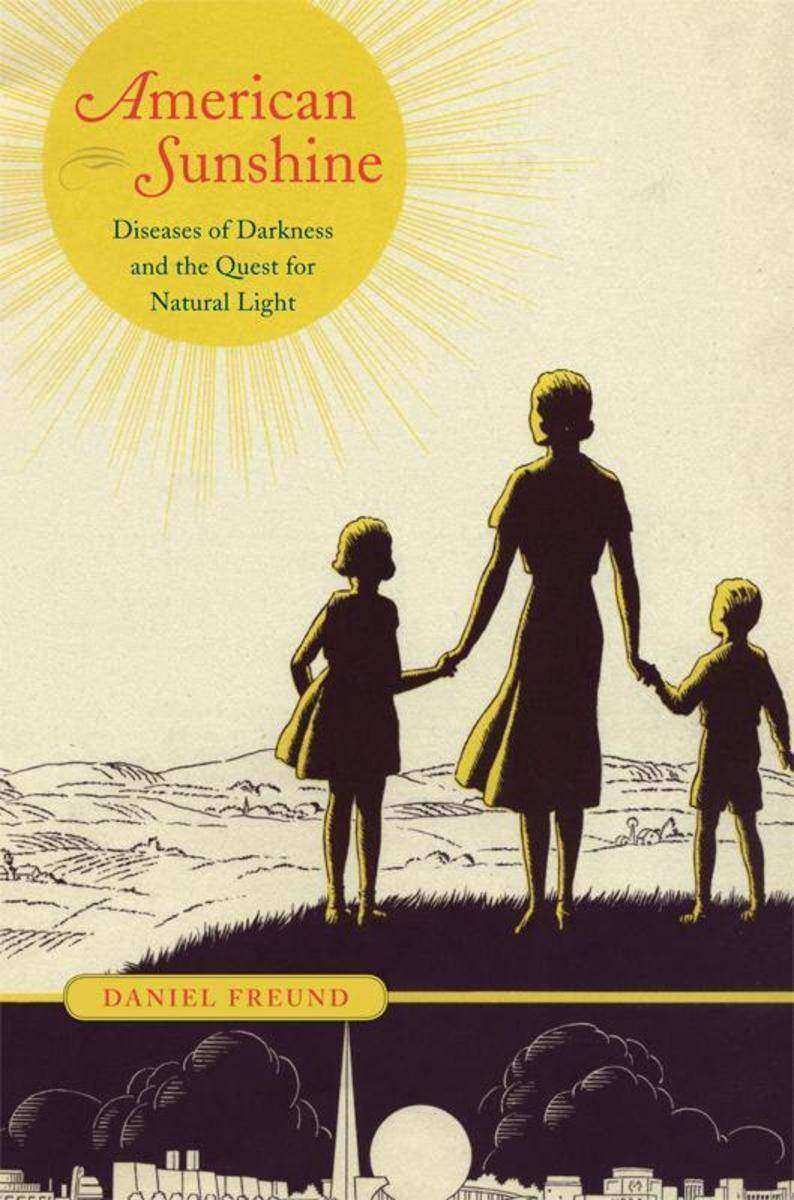
American Sunshine
¥394.36
In the second half of the nineteenth century, American cities began to go dark. Hulking new buildings overspread blocks, pollution obscured the skies, and glass and smog screened out the health-giving rays of the sun. Doctors fed anxities about these new conditions with claims about a rising tide of the "e;diseases of darkness,"e; especially rickets and tuberculosis.In American Sunshine, Daniel Freund ?tracks the obsession with sunlight from those bleak days into the twentieth century. ?Before long, social reformers, medical professionals, scientists, and a growing nudist movement proffered remedies for America's new dark age. Architects, city planners, and politicians made access to sunlight central to public housing and public health. and entrepreneurs, dairymen, and tourism boosters transformed the pursuit of sunlight and its effects into a commodity. Within this historical context, Freund sheds light on important questions about the commodification of health and nature and makes an original contribution to the histories of cities, consumerism, the environment, and medicine.

Planning the Home Front
¥370.82
Before Franklin Roosevelt declared December 7 to be a "e;date which will live in infamy"e;; before American soldiers landed on D-Day; before the B-17s, B-24s, and B-29s roared over Europe and Asia, there was Willow Run. Located twenty-five miles west of Detroit, the bomber plant at Willow Run and the community that grew up around it attracted tens of thousands of workers from across the United States during World War II. Together, they helped build the nation's "e;Arsenal of Democracy,"e; but Willow Run also became the site of repeated political conflicts over how to build suburbia while mobilizing for total war.In Planning the Home Front, Sarah Jo Peterson offers readers a portrait of the American people-industrialists and labor leaders, federal officials and municipal leaders, social reformers, industrial workers, and their families-that lays bare the foundations of community, the high costs of racism, and the tangled process of negotiation between New Deal visionaries and wartime planners. By tying the history of suburbanization to that of the home front, Peterson uncovers how the United States planned and built industrial regions in the pursuit of war, setting the stage for the suburban explosion that would change the American landscape when the war was won.
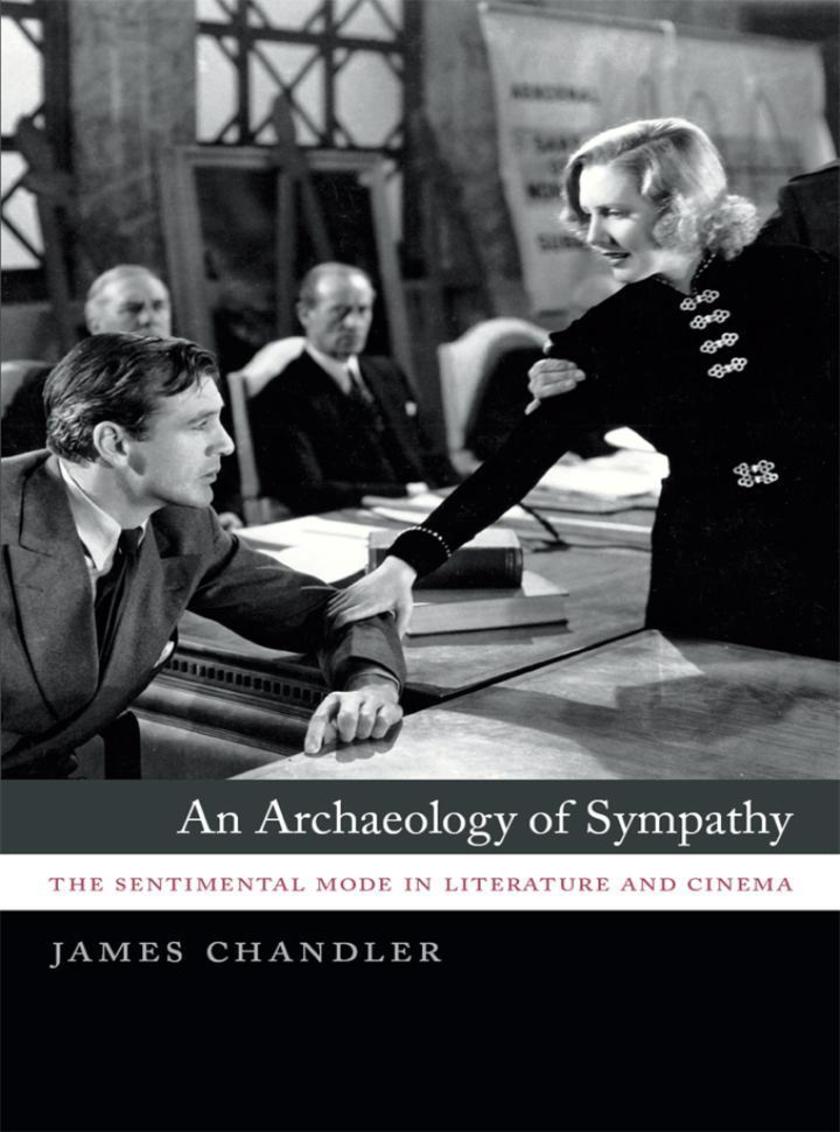
Archaeology of Sympathy
¥370.82
In the middle of the eighteenth century, something new made itself felt in European culture-a tone or style that came to be called the sentimental. The sentimental mode went on to shape not just literature, art, music, and cinema, but people's very structures of feeling, their ways of doing and being.?In what is sure to become a critical classic, An Archaeology of Sympathy challenges Sergei Eisenstein's influential account of Dickens and early American film by tracing the unexpected history and intricate strategies of the sentimental mode and showing how it has been reimagined over the past three centuries. James Chandler begins with a look at Frank Capra and the Capraesque in American public life, then digs back to the eighteenth century to examine the sentimental substratum underlying Dickens and early cinema alike. With this surprising move, he reveals how literary spectatorship in the eighteenth century anticipated classic Hollywood films such as Capra's It Happened One Night, Mr. Deeds Goes to Town, and It's a Wonderful Life. Chandler then moves forward to romanticism and modernism-two cultural movements often seen as defined by their rejection of the sentimental-examining how authors like Mary Shelley, Joseph Conrad, James Joyce, and Virginia Woolf actually engaged with sentimental forms and themes in ways that left a mark on their work.?Reaching from Laurence Sterne to the Coen brothers, An Archaeology of Sympathy casts new light on the long eighteenth century and the novelistic forebears of cinema and our modern world.
Greater Ethiopia
¥247.21
Greater Ethiopia combines history, anthropology, and sociology to answer two major questions. Why did Ethiopia remain independent under the onslaught of European expansionism while other African political entities were colonizedAnd why must Ethiopia be considered a single cultural region despite its political, religious, and linguistic diversity?Donald Levine's interdisciplinary study makes a substantial contribution both to Ethiopian interpretive history and to sociological analysis. In his new preface, Levine examines Ethiopia since the overthrow of the monarchy in the 1970s."e;Ethiopian scholarship is in Professor Levine's debt. . . . He has performed an important task with panache, urbanity, and learning."e;-Edward Ullendorff, Times Literary Supplement"e;Upon rereading this book, it strikes the reader how broad in scope, how innovative in approach, and how stimulating in arguments this book was when it came out. . . . In the past twenty years it has inspired anthropological and historical research, stimulated theoretical debate about Ethiopia's cultural and historical development, and given the impetus to modern political thinking about the complexities and challenges of Ethiopia as a country. The text thus easily remains an absolute must for any Ethiopianist scholar to read and digest."e;-J. Abbink, Journal of Modern African Studies
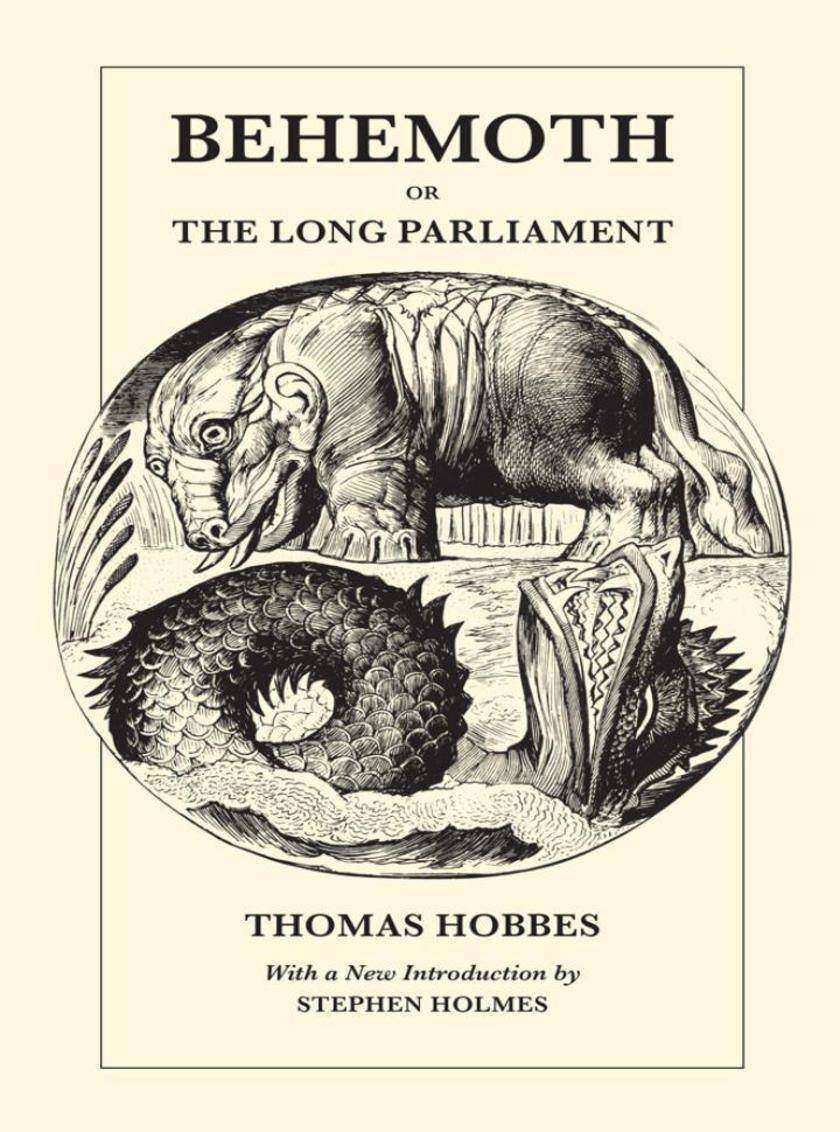
Behemoth or The Long Parliament
¥247.21
Behemoth, or The Long Parliament is essential to any reader interested in the historical context of the thought of Thomas Hobbes (1588-1679). In De Cive (1642) and Leviathan (1651), the great political philosopher had developed an analytical framework for discussing sedition, rebellion, and the breakdown of authority. Behemoth, completed around 1668 and not published until after Hobbe's death, represents the systematic application of this framework to the English Civil War.In his insightful and substantial Introduction, Stephen Holmes examines the major themes and implications of Behemoth in Hobbes's system of thought. Holmes notes that a fresh consideration of Behemoth dispels persistent misreadings of Hobbes, including the idea that man is motivated solely by a desire for self-preservation. Behemoth, which is cast as a series of dialogues between a teacher and his pupil, locates the principal cause of the Civil War less in economic interests than in the stubborn irrationality of key actors. It also shows more vividly than any of Hobbe's other works the importance of religion in his theories of human nature and behavior.
Futurity
¥353.16
When looking at how trauma is represented in literature and the arts, we tend to focus on the weight of the past. In this book, Amir Eshel suggests that this retrospective gaze has trapped us in a search for reason in the madness of the twentieth century's catastrophes at the expense of literature's prospective vision. Considering several key literary works, Eshel argues in Futurity that by grappling with watershed events of modernity, these works display a future-centric engagement with the past that opens up the present to new political, cultural, and ethical possibilities-what he calls futurity.?Bringing together postwar German, Israeli, and Anglo-American literature, Eshel traces a shared trajectory of futurity in world literature. He begins by examining German works of fiction and the debates they spurred over the future character of Germany's public sphere. Turning to literary works by Jewish-Israeli writers as they revisit Israel's political birth, he shows how these stories inspired a powerful reconsideration of Israel's identity. Eshel then discusses post-1989 literature-from Ian McEwan's Black Dogs to J. M. Coetzee's Diary of a Bad Year-revealing how these books turn to events like World War II and the Iraq War not simply to make sense of the past but to contemplate the political and intellectual horizon that emerged after 1989. Bringing to light how reflections on the past create tools for the future, Futurity reminds us of the numerous possibilities literature holds for grappling with the challenges of both today and tomorrow.
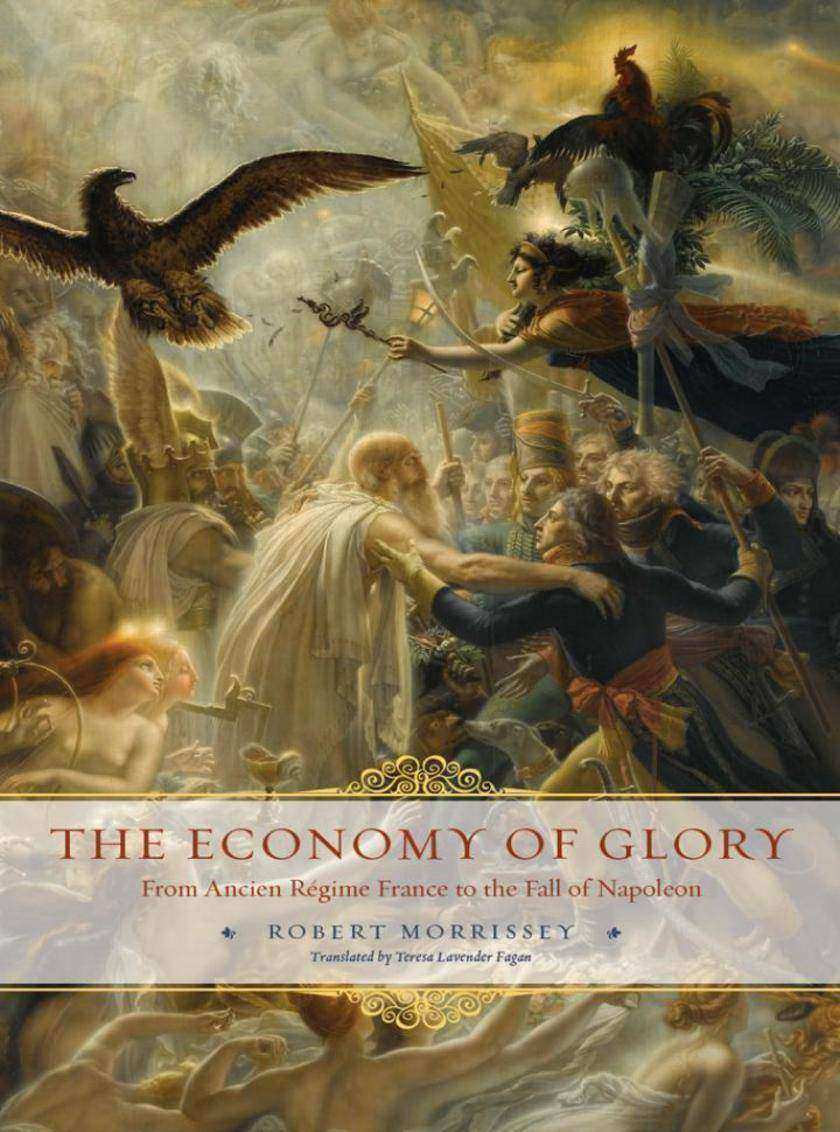
Economy of Glory
¥370.82
From the outset of Napoleon's career, the charismatic Corsican was compared to mythic heroes of antiquity like Achilles, and even today he remains the apotheosis of French glory, a value deeply embedded in the country's history. From this angle, the Napoleonic era can be viewed as the final chapter in the battle of the Ancients and Moderns. In this book, Robert Morrissey presents a literary and cultural history of glory and its development in France and explores the "e;economy of glory"e; Napoleon sought to implement in an attempt to heal the divide between the Old Regime and the Revolution. ?Examining how Napoleon saw glory as a means of escaping the impasse of Revolutionary ideas of radical egalitarianism, Morrissey illustrates the challenge the leader faced in reconciling the antagonistic values of virtue and self-interest, heroism and equality. He reveals that the economy of glory was both egalitarian, creating the possibility of an aristocracy based on merit rather than wealth, and traditional, being deeply embedded in the history of aristocratic chivalry and the monarchy-making it the heart of Napoleon's politics of fusion. Going beyond Napoleon, Morrissey considers how figures of French romanticism such as Chateaubriand, Balzac, and Hugo constantly reevaluated this legacy of glory and its consequences for modernity. Available for the first time in English, The Economy of Glory is a sophisticated and beautifully written addition to French history.
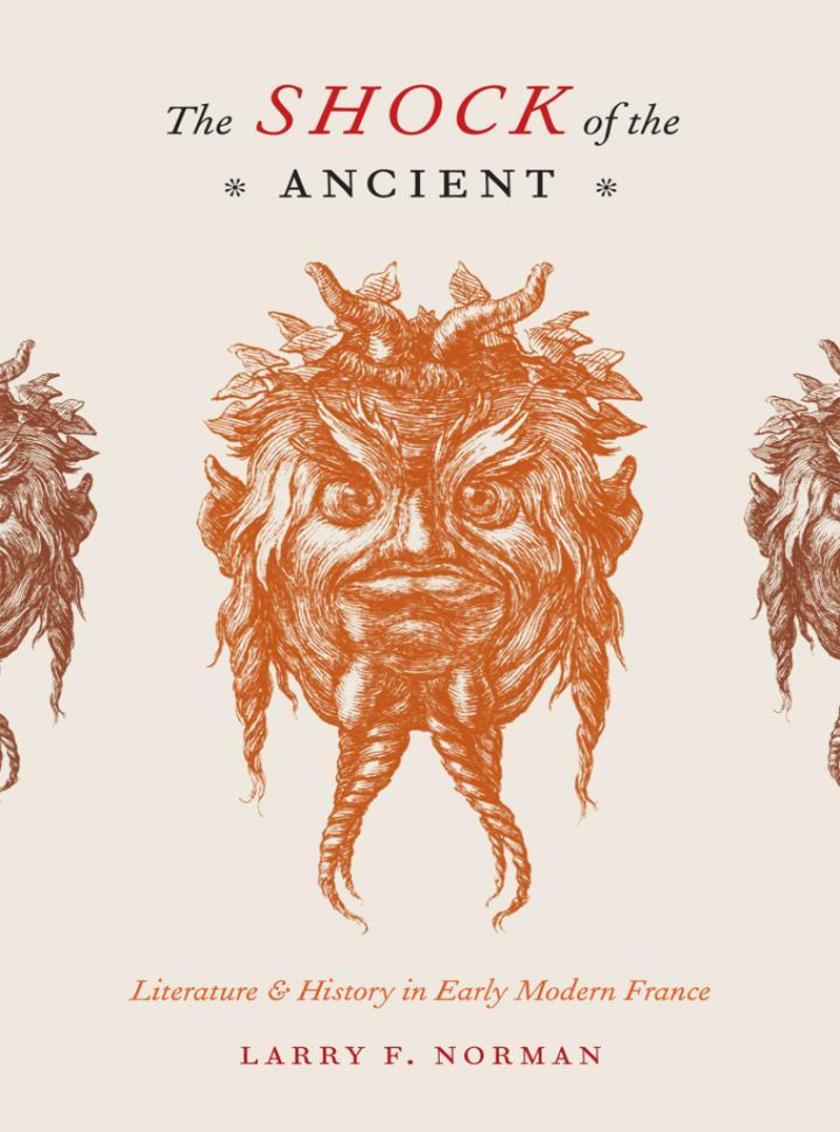
Shock of the Ancient
¥447.34
The cultural battle known as the Quarrel of the Ancients and Moderns served as a sly cover for more deeply opposed views about the value of literature and the arts. One of the most public controversies of early modern Europe, the Quarrel has most often been depicted as pitting antiquarian conservatives against the insurgent critics of established authority. The Shock of the Ancient turns the canonical vision of those events on its head by demonstrating how the defenders of Greek literature-rather than clinging to an outmoded tradition-celebrated the radically different practices of the ancient world.At a time when the constraints of decorum and the politics of French absolutism quashed the expression of cultural differences, the ancient world presented a disturbing face of otherness. Larry F. Norman explores how the authoritative status of ancient Greek texts allowed them to justify literary depictions of the scandalous. The Shock of the Ancient surveys the diverse array of aesthetic models presented in these ancient works and considers how they both helped to undermine the rigid codes of neoclassicism and paved the way for the innovative philosophies of the Enlightenment. Broadly appealing to students of European literature, art history, and philosophy, this book is an important contribution to early modern literary and cultural debates.
Lucretian Renaissance
¥447.34
With The Lucretian Renaissance, Gerard Passannante offers a radical rethinking of a familiar narrative: the rise of materialism in early modern Europe. Passannante begins by taking up the ancient philosophical notion that the world is composed of two fundamental opposites: atoms, as the philosopher Epicurus theorized, intrinsically unchangeable and moving about the void; and the void itself, or nothingness. Passannante considers the fact that this strain of ancient Greek philosophy survived and was transmitted to the Renaissance primarily by means of a poem that had seemingly been lost-a poem insisting that the letters of the alphabet are like the atoms that make up the universe.?By tracing this elemental analogy through the fortunes of Lucretius's On the Nature of Things, Passannante argues that, long before it took on its familiar shape during the Scientific Revolution, the philosophy of atoms and the void reemerged in the Renaissance as a story about reading and letters-a story that materialized in texts, in their physical recomposition, and in their scattering.?From the works of Virgil and Macrobius to those of Petrarch, Poliziano, Lambin, Montaigne, Bacon, Spenser, Gassendi, Henry More, and Newton, The Lucretian Renaissance recovers a forgotten history of materialism in humanist thought and scholarly practice and asks us to reconsider one of the most enduring questions of the period: what does it mean for a text, a poem, and philosophy to be "e;reborn"e;?
Mummy Knew
¥63.77
Four-year-old Lisa's world turned upside down when her step-father moved in. Most of the time he was just violent but then he started making her do things to him she knew were wrong. Soon he was visiting her at night. Lisa begged her mother for help but she just shrugged, telling Lisa he would have his way. It was the greatest betrayal of all. At first Lisa's step-father would just make her stroke and massage his feet, hitting her if she stopped, but he soon wanted more. Much more. By the time she was 12 he was regularly abusing her. One day, when Lisa turned 16, she came home to discover that her mother had swapped bedrooms with her. 'You're my girlfriend now', her step-father told her. Lisa turned to her mother for help, but was met with a shrug. She wouldn't hear a word against her husband. 'Don't blame me,' she said. Her step-father's abuse was horrific but what completely tore her apart was knowing her mother knew and encouraged it. Trapped and increasingly desperate, Lisa tried to find a way out. But her isolation was complete. A few months later her mother told her she'd arranged for Lisa and her step-father to move into a flat together down the road. It was too much for Lisa to bear. 'Please don't make me, please,' she sobbed. But her mother just ignored her. Lisa was marched around to the flat with her possessions and her nightmare was complete. Alone with her step-father, Lisa's life became even more unbearable. Then one day, finally, she got the chance she'd been looking for to escape. Lisa bravely struck out on her own, petrified her mother would find her and hand her back into the waiting arms of her step-father. But Lisa's mother had no idea how determined she was to break away…

Wilfred Thesiger in Africa
¥184.23
A unique collection of essays accompany Wilfred Thesiger’s own personal photographs of the Africa he experienced as one of the world’s most celebrated explorers. While Wilfred Thesiger’s own classic writings (including ‘The Marsh Arabs’, ‘Arabian Sands’, ‘Desert’, Marsh and Mountain’, ‘The Life of My Choice’ and ‘My Kenya Days’) comprehensively cover his classic journeys amongst the Marsh Arabs in southern Iraq, or across the Empty Quarter in Arabia, they fail conspicuously to shed light on his character and motives, which have remained an enigma. Maitland’s biography had Thesiger’s support before he died in 2003, and has been written with full access, granted to no one else, to the rich Thesiger archive – vivid, intimate family correspondence, and his own letters, diaries and notebooks which are far more confiding than his scrupulously edited published accounts. Maitland investigates in depth Thesiger’s parents and family influences; his wartime experiences and the ethos of conflict; his philosophy as a hunter and conservationist; his development as a writer and photographer; his close friendships with the Arabs and Africans amongst whom he lived; and his sexuality. In all, this major biography of a great and unusual man will take its place on the shelf of outstanding lives of the great explorers.
The Light’s On At Signpost
¥66.22
From the author of the ever-popular Flashman novels, a collection of film-world reminiscences and trenchant thoughts on Cool Britannia, New Labour and other abominations. In between writing Flashman novels, George MacDonald Fraser spent thirty years as an "incurably star struck" screenwriter, working with the likes of Steve McQueen, Arnold Schwarzenegger, Cubby Broccoli, Burt Lancaster, Federico Fellini and Oliver Reed. Now he shares his recollections of those encounters, providing a fascinating glimpse behind the scenes. Far from starry-eyed where Tony Blair & Co are concerned, he looks back also to the Britain of his youth and castigates those responsible for its decline to "a Third World country … misruled by a typical Third World government, corrupt, incompetent and undemocratic". Controversial, witty and revealing – or "curmudgeonly", "reactionary", "undiluted spleen", according to the critics – The Light's on at Signpost has struck a chord with a great section of the public. Perhaps, as one reader suggests, it should be "hidden beneath the floorboards, before the Politically-Correct Thought Police come hammering at the door, demanding to confiscate any copies".
The Screwtape Letters: Letters from a Senior to a Junior Devil
¥61.51
The Screwtape Letters is a Christian apologetic novel by C. S. Lewis. It is written in a satirical, epistolary style and while it is fictional in format, the plot and characters are used to address Christian theological issues, primarily those to do with temptation and resistance to it. First published in February 1942, the story takes the form of a series of letters from a senior Demon Screwtape to his nephew Wormwood, a Junior Tempter. The uncle's mentorship pertains to the nephew's responsibility for securing the damnation of a British man known only as "the Patient".


