


 购物车
购物车 个人中心
个人中心

Large Carnivore Conservation
¥494.42
Drawing on six case studies of wolf, grizzly bear, and mountain lion conservation in habitats stretching from the Yukon to Arizona, Large Carnivore Conservation argues that conserving and coexisting with large carnivores is as much a problem of people and governance-of reconciling diverse and sometimes conflicting values, perspectives, and organizations, and of effective decision making in the public sphere-as it is a problem of animal ecology and behavior. By adopting an integrative approach, editors Susan G. Clark and Murray B. Rutherford seek to examine and understand the interrelated development of conservation science, law, and policy, as well as how these forces play out in courts, other public institutions, and the field.In combining real-world examples with discussions of conservation and policy theory, Large Carnivore Conservation not only explains how traditional management approaches have failed to meet the needs of all parties, but also highlights examples of innovative, successful strategies and provides practical recommendations for improving future conservation efforts.
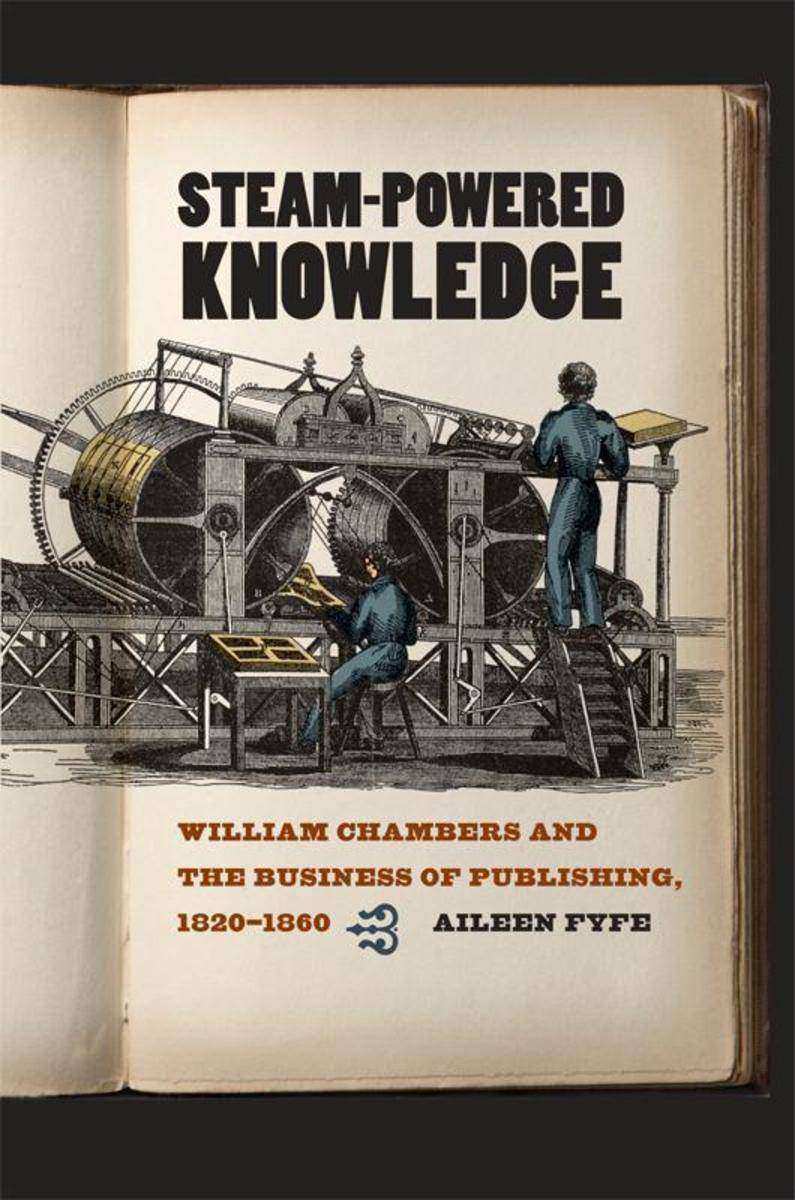
Steam-Powered Knowledge
¥488.54
With the overwhelming amount of new information that bombards us each day, it is perhaps difficult to imagine a time when the widespread availability of the printed word was a novelty. In early nineteenth-century Britain, print was not novel-Gutenberg's printing press had been around for nearly four centuries-but printed matter was still a rare and relatively expensive luxury. All this changed, however, as publishers began employing new technologies to astounding effect, mass-producing instructive and educational books and magazines and revolutionizing how knowledge was disseminated to the general public.In Steam-Powered Knowledge, Aileen Fyfe explores the activities of William Chambers and the W. & R. Chambers publishing firm during its formative years, documenting for the first time how new technologies were integrated into existing business systems. Chambers was one of the first publishers to abandon traditional skills associated with hand printing, instead favoring the latest innovations in printing processes and machinery: machine-made paper, stereotyping, and, especially, printing machines driven by steam power. The mid-nineteenth century also witnessed dramatic advances in transportation, and Chambers used proliferating railway networks and steamship routes to speed up communication and distribution. As a result, his high-tech publishing firm became an exemplar of commercial success by 1850 and outlived all of its rivals in the business of cheap instructive print. Fyfe follows Chambers's journey from small-time bookseller and self-trained hand-press printer to wealthy and successful publisher of popular educational books on both sides of the Atlantic, demonstrating along the way the profound effects of his and his fellow publishers' willingness, or unwillingness, to incorporate these technological innovations into their businesses.
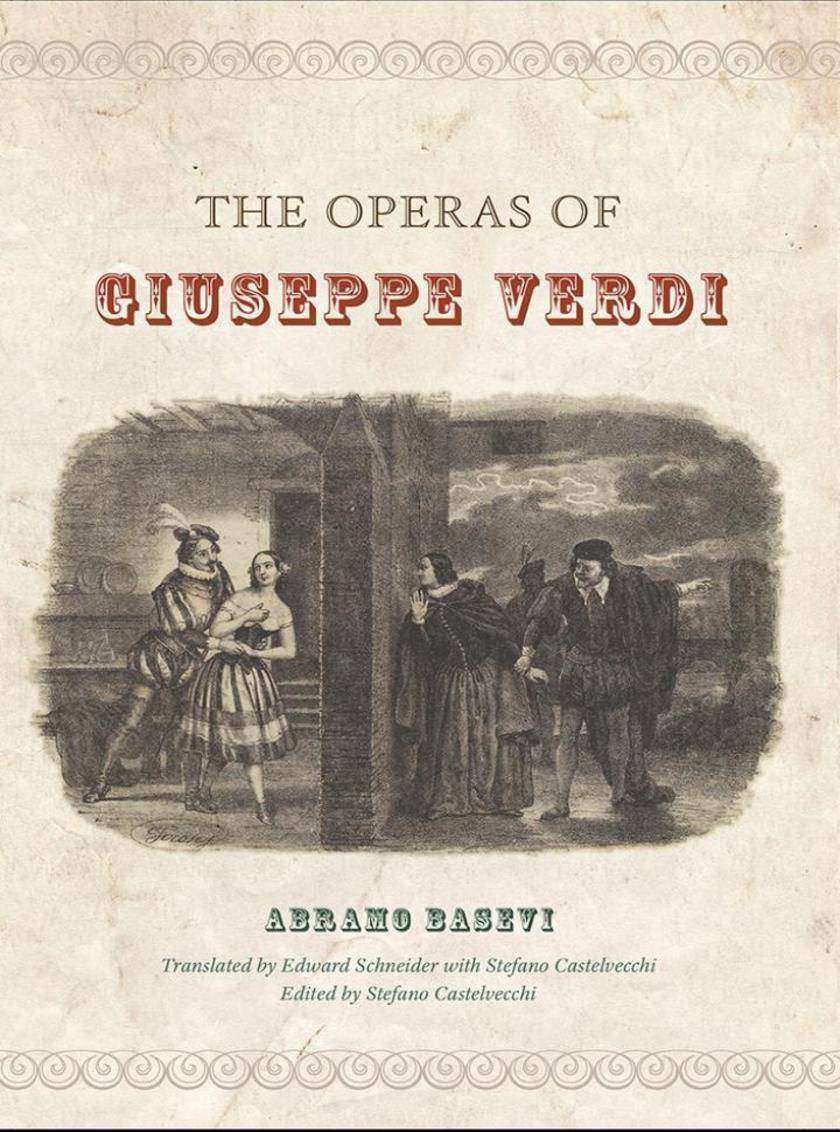
Operas of Giuseppe Verdi
¥453.22
Abramo Basevi published his study of Verdi's operas in Florence in 1859, in the middle of the composer's career. The first thorough, systematic examination of Verdi's operas, it covered the twenty works produced between 1842 and 1857-from Nabucco and Macbeth to Il trovatore, La traviata, and Aroldo. But while Basevi's work is still widely cited and discussed-and nowhere more so than in the English-speaking world-no translation of the entire volume has previously been available. The Operas of Giuseppe Verdi fills this gap, at the same time providing an invaluable critical apparatus and commentary on Basevi's work. ?As a contemporary of Verdi and a trained musician, erudite scholar, and critic conversant with current and past operatic repertories, Basevi presented pointed discussion of the operas and their historical context, offering today's readers a unique window into many aspects of operatic culture, and culture in general, in Verdi's Italy. He wrote with precision on formal aspects, use of melody and orchestration, and other compositional features, which made his study an acknowledged model for the growing field of music criticism. Carefully annotated and with an engaging introduction and detailed glossary by editor Stefano Castelvecchi, this translation illuminates Basevi's musical and historical references as well as aspects of his language that remain difficult to grasp even for Italian readers.?Making Basevi's important contribution to our understanding of Verdi and his operas available to a broad audience for the first time, The Operas of Giuseppe Verdi will delight scholars and opera enthusiasts alike.
Feast for the Eyes
¥453.22
To read accounts of late medieval banquets is to enter a fantastical world where live lions guard nude statues, gilded stags burst into song, and musicians play from within pies. We can almost hear the clock sound from within a glass castle, taste the fire-breathing roast boar, and smell the rose water cascading in a miniature fountain. Such vivid works of art and performance required collaboration among artists in many fields, as well as the participation of the audience.A Feast for the Eyes?is the first book-length study of the court banquets of northwestern Europe in the fourteenth and fifteenth centuries. Christina Normore draws on an array of artworks, archival documents, chroniclers' accounts, and cookbooks to re-create these events and reassess the late medieval visual culture in which banquets were staged. Feast participants, she shows, developed sophisticated ways of appreciating artistic skill and attending to their own processes of perception, thereby forging a court culture that delighted in the exercise of fine aesthetic judgment.Challenging modern assumptions about the nature of artistic production and reception,?A Feast for the Eyes?yields fresh insight into the long history of multimedia work and the complex relationships between spectacle and spectators.
Preserving the Spell
¥453.22
Fairy tales are supposed to be magical, surprising, and exhilarating, an enchanting counterpoint to everyday life that nonetheless helps us understand and deal with the anxieties of that life. Today, however, fairy tales are far from marvelous-in the hands of Hollywood, they have been stripped of their power, offering little but formulaic narratives and tame surprises.?If we want to rediscover the power of fairy tales-as Armando Maggi thinks we should-we need to discover a new mythic lens, a new way of approaching and understanding, and thus re-creating, the transformative potential of these stories. In Preserving the Spell, Maggi argues that the first step is to understand the history of the various traditions of oral and written narrative that together created the fairy tales we know today. He begins his exploration with the ur-text of European fairy tales, Giambattista Basile's The Tale of Tales, then traces its path through later Italian, French, English, and German traditions, with particular emphasis on the Grimm Brothers' adaptations of the tales, which are included in the first-ever English translation in an appendix. Carrying his story into the twentieth century, Maggi mounts a powerful argument for freeing fairy tales from their bland contemporary forms, and reinvigorating our belief that we still can find new, powerfully transformative ways of telling these stories.
Southern Stalemate
¥447.34
In 1959, Virginia's Prince Edward County closed its public schools rather than obey a court order to desegregate. For five years, black children were left to fend for themselves while the courts decided if the county could continue to deny its citizens public education. Investigating this remarkable and nearly forgotten story of local, state, and federal political confrontation, Christopher Bonastia recounts the test of wills that pitted resolute African Americans against equally steadfast white segregationists in a battle over the future of public education in America.?Beginning in 1951 when black high school students protested unequal facilities and continuing through the return of whites to public schools in the 1970s and 1980s, Bonastia describes the struggle over education during the civil rights era and the human suffering that came with it, as well as the inspiring determination of black residents to see justice served. Artfully exploring the lessons of the Prince Edward saga, Southern Stalemate unearths new insights about the evolution of modern conservatism and the politics of race in America.
Living Liberalism
¥447.34
In the mid-Victorian era, liberalism was a practical politics: it had a party, it informed legislation, and it had adherents who identified with and expressed it as opinion. It was also the first British political movement to depend more on people than property, and on opinion rather than interest. But how would these subjects of liberal politics actually live liberalism?To answer this question, Elaine Hadley focuses on the key concept of individuation-how it is embodied in politics and daily life and how it is expressed through opinion, discussion and sincerity.These are concerns that have been absent from commentary on the liberal subject. Living Liberalism argues that the properties of liberalism-citizenship, the vote, the candidate, and reform, among others-were developed in response to a chaotic and antagonistic world. In exploring how political liberalism imagined its impact on Victorian society, Hadley reveals an entirely new and unexpected prehistory of our modern liberal politics. A major revisionist account that alters our sense of the trajectory of liberalism, Living Liberalism revises our understanding of the presumption of the liberal subject.
History of Trust in Ancient Greece
¥447.34
An enormous amount of literature exists on Greek law, economics, and political philosophy. Yet no one has written a history of trust, one of the most fundamental aspects of social and economic interaction in the ancient world. In this fresh look at antiquity, Steven Johnstone explores the way democracy and markets flourished in ancient Greece not so much through personal relationships as through trust in abstract systems-including money, standardized measurement, rhetoric, and haggling.Focusing on markets and democratic politics, Johnstone draws on speeches given in Athenian courts, histories of Athenian democracy, comic writings, and laws inscribed on stone to examine how these systems worked. He analyzes their potentials and limitations and how the Greeks understood and critiqued them. In providing the first comprehensive account of these pervasive and crucial systems, A History of Trust in Ancient Greece links Greek political, economic, social, and intellectual history in new ways and challenges contemporary analyses of trust and civil society.
Between the Black Box and the White Cube
¥247.21
Today, the moving image is ubiquitous in global contemporary art. The first book to tell the story of the postwar expanded cinema that inspired this omnipresence,?Between the Black Box and the White Cube?travels back to the 1950s and 1960s, when the rise of television caused movie theaters to lose their monopoly over the moving image, leading cinema to be installed directly alongside other forms of modern art.?Explaining that the postwar expanded cinema was a response to both developments, Andrew V. Uroskie argues that, rather than a formal or technological innovation, the key change for artists involved a displacement of the moving image from the familiarity of the cinematic theater to original spaces and contexts. He shows how newly available, inexpensive film and video technology enabled artists such as Nam June Paik, Robert Whitman, Stan VanDerBeek, Robert Breer, and especially Andy Warhol to become filmmakers. Through their efforts to explore a fresh way of experiencing the moving image, these artists sought to reimagine the nature and possibilities of art in a post-cinematic age and helped to develop a novel space between the "e;black box"e; of the movie theater and the "e;white cube"e; of the art gallery. Packed with over one hundred illustrations,?Between the Black Box and the White Cube?is a compelling look at a seminal moment in the cultural life of the moving image and its emergence in contemporary art.

Class Warfare
¥247.21
Stories abound about the lengths to which middle- and upper-middle-class parents will go to ensure a spot for their child at a prestigious university. From the Suzuki method to calculus-based physics, from AP tests all the way back to early-learning Kumon courses, students are increasingly pushed to excel with that Harvard or Yale acceptance letter held tantalizingly in front of them. And nowhere is this drive more apparent than in our elite secondary schools. In Class Warfare, Lois Weis, Kristin Cipollone, and Heather Jenkins go inside the ivy-yearning halls of three such schools to offer a day-to-day, week-by-week look at this remarkable drive toward college admissions and one of its most salient purposes: to determine class.Drawing on deep and sustained contact with students, parents, teachers, and administrators at three iconic secondary schools in the United States, the authors unveil a formidable process of class positioning at the heart of the college admissions process. They detail the ways students and parents exploit every opportunity and employ every bit of cultural, social, and economic capital they can in order to gain admission into a "e;Most Competitive"e; or "e;Highly Competitive Plus"e; university. Moreover, they show how admissions into these schools-with their attendant rankings-are used to lock in or improve class standing for the next generation. It's a story of class warfare within a given class, the substrata of which-whether economically, racially, or socially determined-are fiercely negotiated through the college admissions process.In a historic moment marked by deep economic uncertainty, anxieties over socioeconomic standing are at their highest. Class, as this book shows, must be won, and the collateral damage of this aggressive pursuit may just be education itself, flattened into a mere victory banner. ?
Birth of Theory
¥247.21
Modern theory needs a history lesson. Neither Marx nor Nietzsche first gave us theory-Hegel did. To support this contention, Andrew Cole's The Birth of Theory presents a refreshingly clear and lively account of the origins and legacy of Hegel's dialectic as theory. Cole explains how Hegel boldly broke from modern philosophy when he adopted medieval dialectical habits of thought to fashion his own dialectic. While his contemporaries rejected premodern dialectic as outdated dogma, Hegel embraced both its emphasis on language as thought and its fascination with the categories of identity and difference, creating what we now recognize as theory, distinct from systematic philosophy. Not content merely to change philosophy, Hegel also used this dialectic to expose the persistent archaism of modern life itself, Cole shows, establishing a method of social analysis that has influenced everyone from Marx and the nineteenth-century Hegelians, to Nietzsche and Bakhtin, all the way to Deleuze and Jameson.?By uncovering these theoretical filiations across time, The Birth of Theory will not only change the way we read Hegel, but also the way we think about the histories of theory. With chapters that powerfully reanimate the overly familiar topics of ideology, commodity fetishism, and political economy, along with a groundbreaking reinterpretation of Hegel's famous master/slave dialectic, The Birth of Theory places the disciplines of philosophy, literature, and history in conversation with one another in an unprecedented way. Daring to reconcile the sworn enemies of Hegelianism and Deleuzianism, this timely book will revitalize dialectics for the twenty-first century.
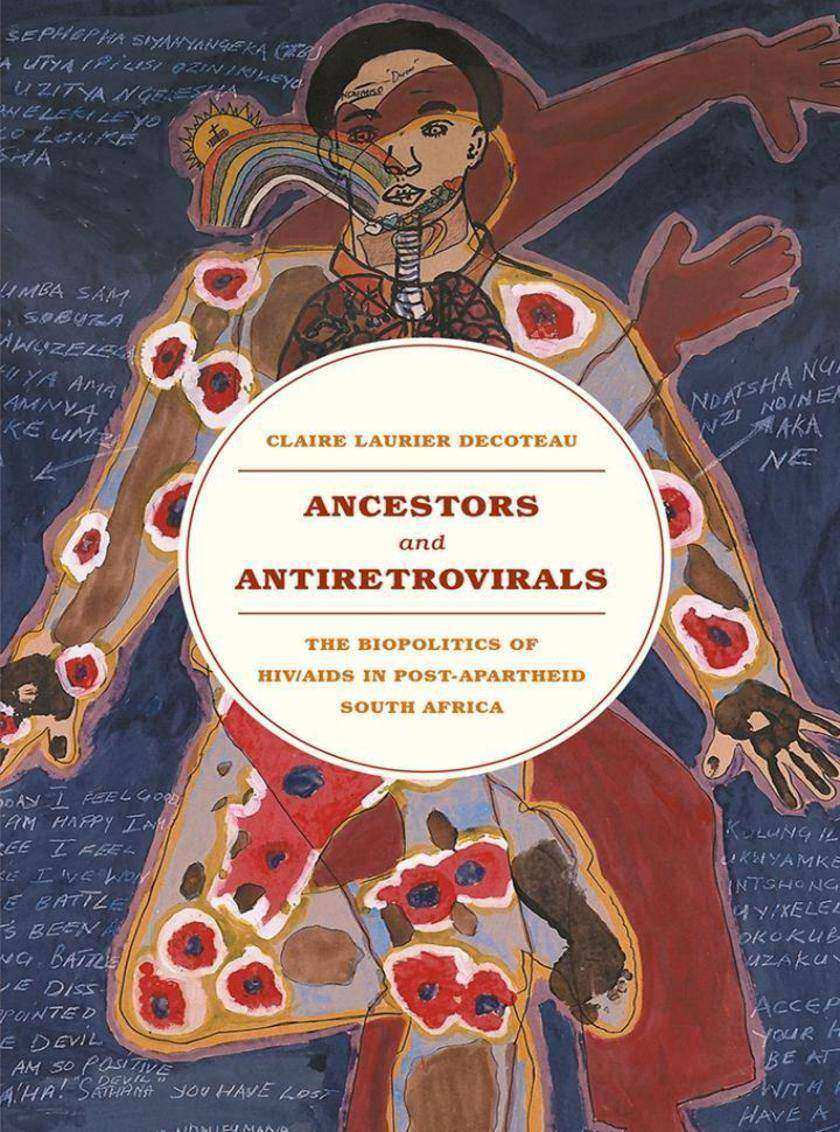
Ancestors and Antiretrovirals
¥265.87
In the years since the end of apartheid, South Africans have enjoyed a progressive constitution, considerable access to social services for the poor and sick, and a booming economy that has made their nation into one of the wealthiest on the continent. At the same time, South Africa experiences extremely unequal income distribution, and its citizens suffer the highest prevalence of HIV in the world. As Archbishop Desmond Tutu has noted, "e;AIDS is South Africa's new apartheid."e;In Ancestors and Antiretrovirals, Claire Laurier Decoteau backs up Tutu's assertion with powerful arguments about how this came to pass. Decoteau traces the historical shifts in health policy after apartheid and describes their effects, detailing, in particular, the changing relationship between biomedical and indigenous health care, both at the national and the local level. Decoteau tells this story from the perspective of those living with and dying from AIDS in Johannesburg's squatter camps. At the same time, she exposes the complex and often contradictory ways that the South African government has failed to balance the demands of neoliberal capital with the considerable health needs of its population.

Philosophy of Pseudoscience
¥288.41
What sets the practice of rigorously tested, sound science apart from pseudoscienceIn this volume, the contributors seek to answer this question, known to philosophers of science as "e;the demarcation problem."e; This issue has a long history in philosophy, stretching as far back as the early twentieth century and the work of Karl Popper. But by the late 1980s, scholars in the field began to treat the demarcation problem as impossible to solve and futile to ponder. However, the essays that Massimo Pigliucci and Maarten Boudry have assembled in this volume make a rousing case for the unequivocal importance of reflecting on the separation between pseudoscience and sound science. Moreover, the demarcation problem is not a purely theoretical dilemma of mere academic interest: it affects parents' decisions to vaccinate children and governments' willingness to adopt policies that prevent climate change. Pseudoscience often mimics science, using the superficial language and trappings of actual scientific research to seem more respectable. Even a well-informed public can be taken in by such questionable theories dressed up as science. Pseudoscientific beliefs compete with sound science on the health pages of newspapers for media coverage and in laboratories for research funding. Now more than ever the ability to separate genuine scientific findings from spurious ones is vital, and The Philosophy of Pseudoscience provides ground for philosophers, sociologists, historians, and laypeople to make decisions about what science is or isn't.

Behind Closed Doors
¥265.87
Although the subject of federally mandated Institutional Review Boards (IRBs) has been extensively debated, we actually do not know much about what takes place when they convene. The story of how IRBs work today is a story about their past as well as their present, and Behind Closed Doors is the first book to meld firsthand observations of IRB meetings with the history of how rules for the treatment of human subjects were formalized in the United States in the decades after World War II.?Drawing on extensive archival sources, Laura Stark reconstructs the daily lives of scientists, lawyers, administrators, and research subjects working-and "e;warring"e;-on the campus of the National Institutes of Health, where they first wrote the rules for the treatment of human subjects. Stark argues that the model of group deliberation that gradually crystallized during this period reflected contemporary legal and medical conceptions of what it meant to be human, what political rights human subjects deserved, and which stakeholders were best suited to decide. She then explains how the historical contingencies that shaped rules for the treatment of human subjects in the postwar era guide decision making today-within hospitals, universities, health departments, and other institutions in the United States and across the globe. Meticulously researched and gracefully argued, Behind Closed Doors will be essential reading for sociologists and historians of science and medicine, as well as policy makers and IRB administrators.
Gentleman Troubadours and Andean Pop Stars
¥247.21
Exploring Peru's lively music industry and the studio producers, radio DJs, and program directors that drive it, Gentleman Troubadours and Andean Pop Stars is a fascinating account of the deliberate development of artistic taste. Focusing on popular huayno music and the ways it has been promoted to Peru's emerging middle class, Tucker tells a complex story of identity making and the marketing forces entangled with it, providing crucial insights into the dynamics among art, class, and ethnicity that reach far beyond the Andes.?Tucker focuses on the music of Ayacucho, Peru, examining how media workers and intellectuals there transformed the city's huayno music into the country's most popular style. By marketing contemporary huayno against its traditional counterpart, these agents, Tucker argues, have paradoxically reinforced ethnic hierarchies at the same time that they have challenged them. Navigating between a burgeoning Andean bourgeoisie and a music industry eager to sell them symbols of newfound sophistication, Gentleman Troubadours and Andean Pop Stars is a deep account of the real people behind cultural change.
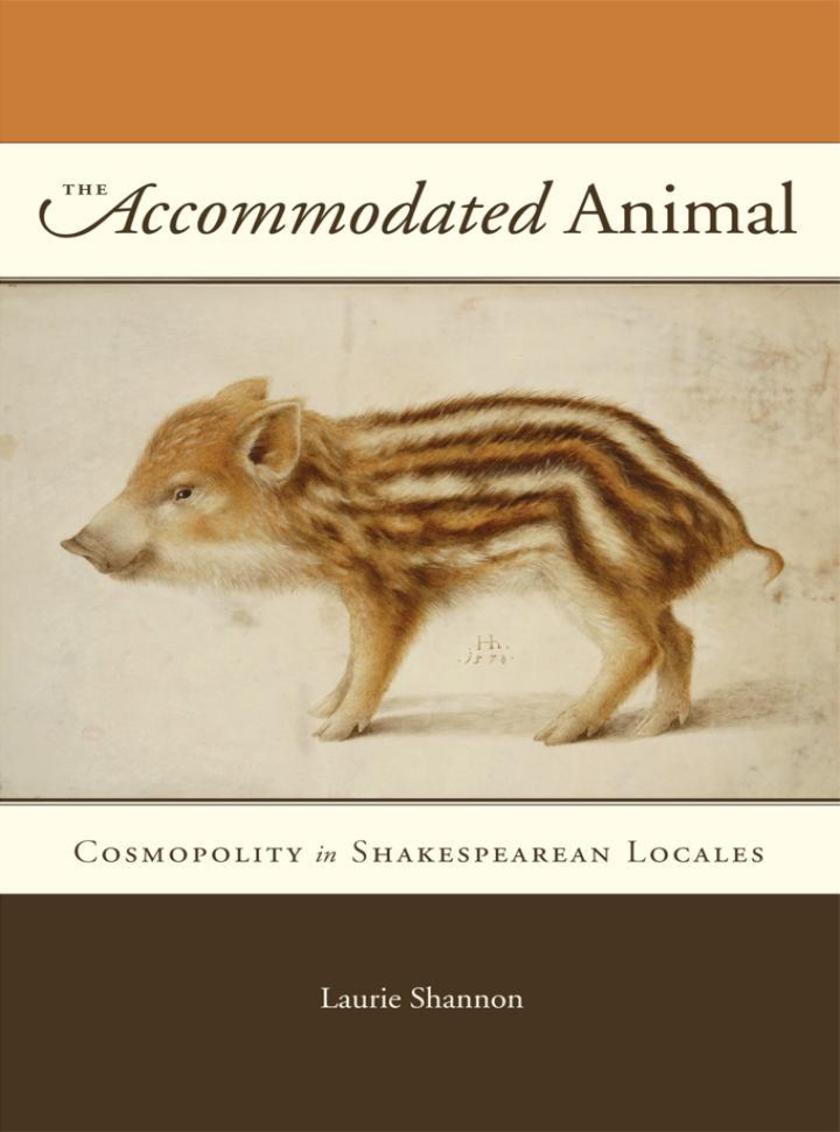
Accommodated Animal
¥229.55
Shakespeare wrote of lions, shrews, horned toads, curs, mastiffs, and hellhounds. But the word "e;animal"e; itself only appears very rarely in his work, which was in keeping with sixteenth-century usage. As Laurie Shannon reveals in The Accommodated Animal, the modern human / animal divide first came strongly into play in the seventeenth century, with Descartes's famous formulation that reason sets humans above other species: "e;I think, therefore I am."e; Before that moment, animals could claim a firmer place alongside humans in a larger vision of belonging, or what she terms cosmopolity.?With Shakespeare as her touchstone, Shannon explores the creaturely dispensation that existed until Descartes. She finds that early modern writers used classical natural history and readings of Genesis to credit animals with various kinds of stakeholdership, prerogative, and entitlement, employing the language of politics in a constitutional vision of cosmic membership. Using this political idiom to frame cross-species relations, Shannon argues, carried with it the notion that animals possess their own investments in the world, a point distinct from the question of whether animals have reason. It also enabled a sharp critique of the tyranny of humankind. By answering "e;the question of the animal"e; historically, The Accommodated Animal makes a brilliant contribution to cross-disciplinary debates engaging animal studies, political theory, intellectual history, and literary studies.

Before the Law
¥188.35
Animal studies and biopolitics are two of the most dynamic areas of interdisciplinary scholarship, but until now, they have had little to say to each other. Bringing these two emergent areas of thought into direct conversation in Before the Law, Cary Wolfe fosters a new discussion about the status of nonhuman animals and the shared plight of humans and animals under biopolitics.?Wolfe argues that the human-animal distinction must be supplemented with the central distinction of biopolitics: the difference between those animals that are members of a community and those that are deemed killable but not murderable. From this understanding, we can begin to make sense of the fact that this distinction prevails within both the human and animal domains and address such difficult issues as why we afford some animals unprecedented levels of care and recognition while subjecting others to unparalleled forms of brutality and exploitation. Engaging with many major figures in biopolitical thought-from Heidegger, Arendt, and Foucault to Agamben, Esposito, and Derrida-Wolfe explores how biopolitics can help us understand both the ethical and political dimensions of the current questions surrounding the rights of animals.
African American Writers and Classical Tradition
¥241.33
Constraints on freedom, education, and individual dignity have always been fundamental in determining who is able to write, when, and where. Considering the singular experience of the African American writer, William W. Cook and James Tatum here argue that African American literature did not develop apart from canonical Western literary traditions but instead grew out of those literatures, even as it adapted and transformed the cultural traditions and religions of Africa and the African diaspora along the way.Tracing the interaction between African American writers and the literatures of ancient Greece and Rome, from the time of slavery and its aftermath to the civil rights era and on into the present, the authors offer a sustained and lively discussion of the life and work of Phillis Wheatley, Frederick Douglass, Ralph Ellison, and Rita Dove, among other highly acclaimed poets, novelists, and scholars. Assembling this brilliant and diverse group of African American writers at a moment when our understanding of classical literature is ripe for change, the authors paint an unforgettable portrait of our own reception of "e;classic"e; writing, especially as it was inflected by American racial politics.
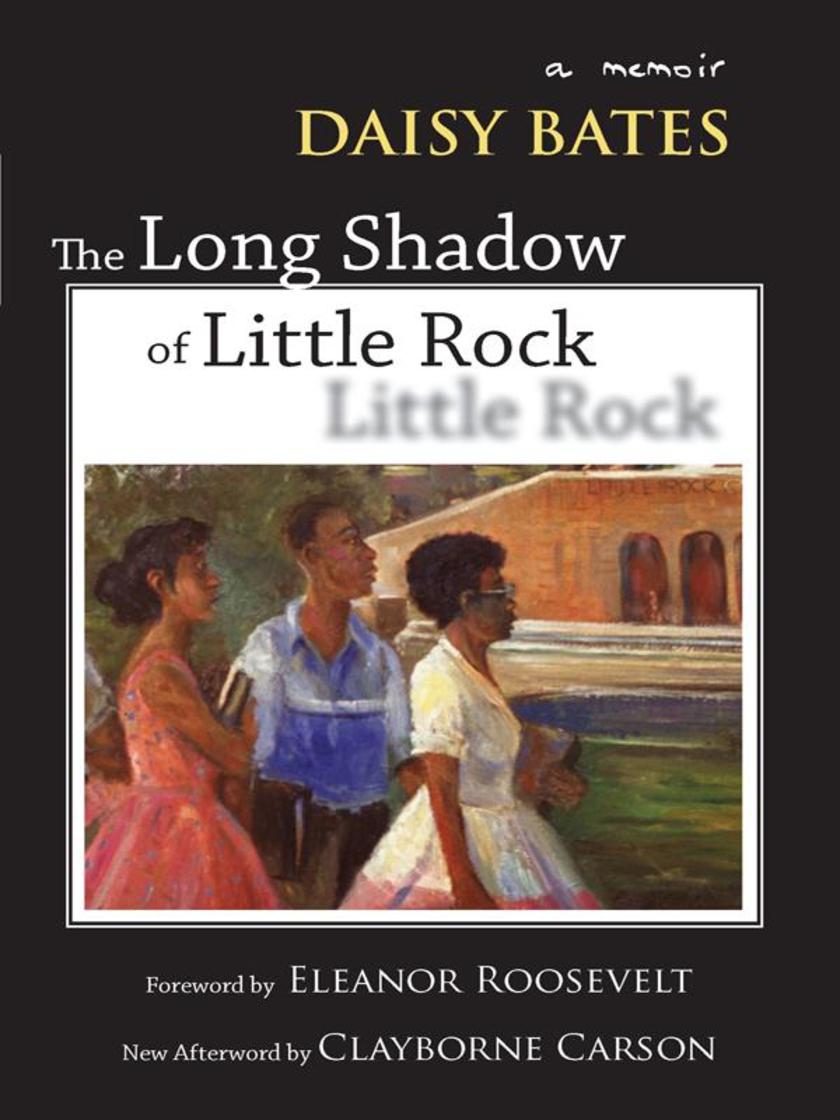
Long Shadow of Little Rock
¥141.66
At an event honoring Daisy Bates as 1990's Distinguished Citizen then-governor Bill Clinton called her "e;the most distinguished Arkansas citizen of all time."e; Her classic account of the 1957 Little Rock School Crisis, The Long Shadow of Little Rock, couldn't be found on most bookstore shelves in 1962 and was banned throughout the South. In 1988, after the University of Arkansas Press reprinted it, it won an American Book Award. On September 3, 1957, Gov. Orval Faubus called out the National Guard to surround all-white Central High School and prevent the entry of nine black students, challenging the Supreme Court's 1954 order to integrate all public schools. On September 25, Daisy Bates, an official of the NAACP in Arkansas, led the nine children into the school with the help of federal troops sent by President Eisenhower-the first time in eighty-one years that a president had dispatched troops to the South to protect the constitutional rights of black Americans. This new edition of Bates's own story about these historic events is being issued to coincide with the fiftieth anniversary of the Little Rock School crisis in 2007.
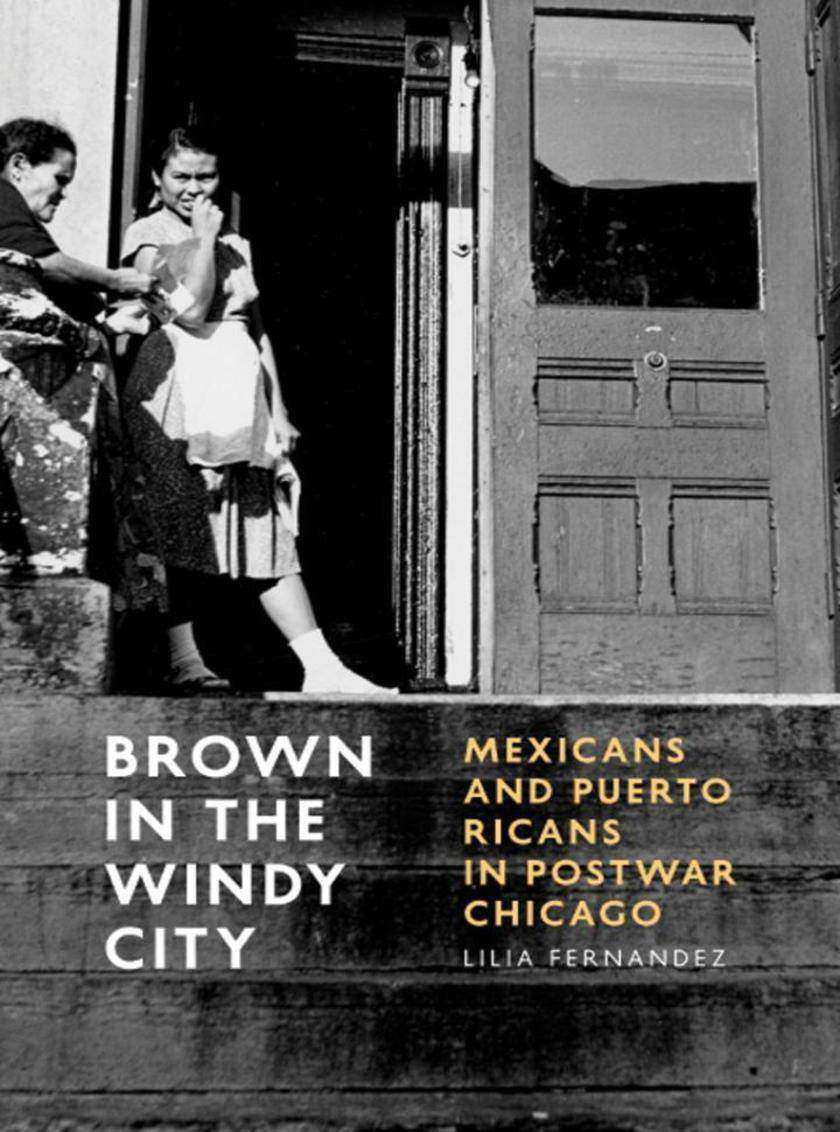
Brown in the Windy City
¥247.21
Brown in the Windy City?is the first history to examine the migration and settlement of Mexicans and Puerto Ricans in postwar Chicago. Lilia Fernndez reveals how the two populations arrived in Chicago in the midst of tremendous social and economic change and, in spite of declining industrial employment and massive urban renewal projects, managed to carve out a geographic and racial place in one of America's great cities. Through their experiences in the city's central neighborhoods over the course of these three decades, Fernndez demonstrates how Mexicans and Puerto Ricans collectively articulated a distinct racial position in Chicago, one that was flexible and fluid, neither black nor white.?
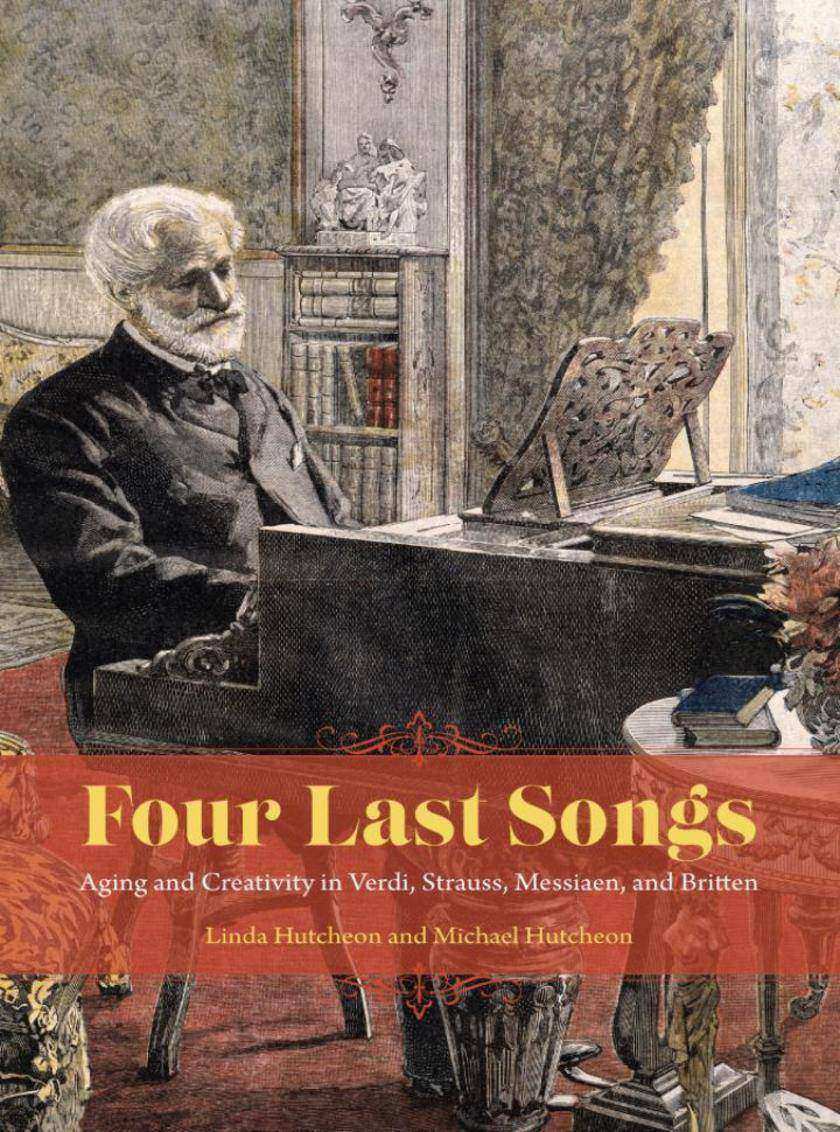
Four Last Songs
¥247.21
Aging and creativity can seem a particularly fraught relationship for artists, who often face age-related difficulties as their audience's expectations are at a peak. In?Four Last Songs, Linda and Michael Hutcheon explore this issue via the late works of some of the world's greatest composers.Giuseppe Verdi (1813-1901), Richard Strauss (1864-1949), Olivier Messiaen (1908-92), and Benjamin Britten (1913-76) all wrote operas late in life, pieces that reveal unique responses to the challenges of growing older. Verdi's?Falstaff, his only comedic success, combated Richard Wagner's influence by introducing young Italian composers to a new model of national music. Strauss, on the other hand, struggling with personal and political problems in Nazi Germany, composed the self-reflexive?Capriccio, a "e;life review"e; of opera and his own legacy. Though it exhausted him physically and emotionally, Messiaen at the age of seventy-five finished?his only opera,?Saint Franois d'Assise, which marked the pinnacle of his career. Britten, meanwhile, suffering from heart problems, refused surgery until he had completed his masterpiece,?Death in Venice. For all four composers, age, far from sapping their creative power, provided impetus for some of their best accomplishments.With its deft treatment of these composers' final years and works, Four Last Songs provides a valuable look at the challenges-and opportunities-that present themselves as artists grow older.


