


 购物车
购物车 个人中心
个人中心

Recalculating
¥147.15
Long anticipated, Recalculating is Charles Bernstein's first full-length collection of new poems in seven years. As a result of this lengthy time under construction, the scope, scale, and stylistic variation of the poems far surpasses Bernstein's previous work. Together, the poems of Recalculating take readers on a journey through the history and poetics of the decades since the end of the Cold War as seen through the lens of social and personal turbulence and tragedy.?The collection's title, the now-familiar GPS expression, suggests a change in direction due to a mistaken or unexpected turn. For Bernstein, formal invention is a necessary swerve in the midst of difficulty. As in all his work since the 1970s, he makes palpable the idea that radically new structures, appropriated forms, an aversion to received ideas and conventions, political engagement, and syntactic novelty will open the doors of perception to exuberance and resonance, from giddiness to pleasure to grief. But at the same time he cautions, with typical deflationary ardor, "e;The pen is tinier than the sword."e; In these poems, Bernstein makes good on his claim that "e;the poetry is not in speaking to the dead but listening to the dead."e;?In doing so, Recalculating incorporates translations and adaptations of Baudelaire, Cole Porter, Mandelstam, and Paul Celan, as well as several tributes to writers crucial to Bernstein's work and a set of epigrammatic verse essays that combine poetics with wry observation, caustic satire, and aesthetic slapstick.?Formally stunning and emotionally charged, Recalculating makes the familiar strange-and in a startling way, makes the strange familiar. Into these poems, brimming with sonic and rhythmic intensity, philosophical wit, and multiple personae, life events intrude, breaking down any easy distinction between artifice and the real. With works that range from elegy to comedy, conceptual to metrical, expressionist to ambient, uproarious to procedural, aphoristic to lyric, Bernstein has created a journey through the dark striated by bolts of imaginative invention and pure delight.?

Instructions for American Servicemen in France during World War II
¥100.06
"e;You are about to play a personal part in pushing the Germans out of France. Whatever part you take-rifleman, hospital orderly, mechanic, pilot, clerk, gunner, truck driver-you will be an essential factor in a great effort."e;?As American soldiers fanned out from their beachhead in Normandy in June of 1944 and began the liberation of France, every soldier carried that reminder in his kit. A compact trove of knowledge and reassurance, Instructions for American Servicemen in France during World War II was issued to soldiers just before they embarked for France to help them understand both why they were going and what they'd find when they got there. After lying unseen in Army archives for decades, this remarkable guide is now available in a new facsimile edition that reproduces the full text and illustrations of the original along with a new introduction by Rick Atkinson setting the book in context. Written in a straightforward, personal tone, the pamphlet is equal parts guidebook, cultural snapshot, and propaganda piece. A central aim is to dispel any prejudices American soldiers may have about the French-especially relating to their quick capitulation in 1940. Warning soldiers that the defeat "e;is a raw spot which the Nazis have been riding"e; since the occupation began, Instructions is careful to highlight France's long historical role as a major U.S. ally. Following that is a brief, fascinating sketch of the French character ("e;The French are mentally quick;"e; "e;Rich or poor, they are economical"e;) and stark reminders of the deprivation the French have endured under occupation. Yet an air of reassuring confidence pervades the final section of the pamphlet, which reads like a straightforward tourists' guide to Paris and the provinces-like a promise of better days to come once the soldiers complete their mission.Written by anonymous War Department staffers to meet the urgent needs of the moment, with no thought of its historical value, Instructionsfor American Servicemen in France during World War II nevertheless brings to vivid life the closing years of World War II-when optimism was growing, but a long, demanding road still lay ahead.

Everyday Technology
¥147.15
In 1909 Mohandas Karamchand Gandhi, on his way back to South Africa from London, wrote his now celebrated tract Hind Swaraj, laying out his vision for the future of India and famously rejecting the technological innovations of Western civilization. Despite his protestations, Western technology endured and helped to make India one of the leading economies in our globalized world. Few would question the dominant role that technology plays in modern life, but to fully understand how India first advanced into technological modernity, argues David Arnold, we must consider the technology of the everyday.?Everyday Technology is a pioneering account of how small machines and consumer goods that originated in Europe and North America became objects of everyday use in India in the late nineteenth and early twentieth centuries. Rather than investigate "e;big"e; technologies such as railways and irrigation projects, Arnold examines the assimilation and appropriation of bicycles, rice mills, sewing machines, and typewriters in India, and follows their impact on the ways in which people worked and traveled, the clothes they wore, and the kind of food they ate. But the effects of these machines were not limited to the daily rituals of Indian society, and Arnold demonstrates how such small-scale technologies became integral to new ways of thinking about class, race, and gender, as well as about the politics of colonial rule and Indian nationhood.?Arnold's fascinating book offers new perspectives on the globalization of modern technologies and shows us that to truly understand what modernity became, we need to look at the everyday experiences of people in all walks of life, taking stock of how they repurposed small technologies to reinvent their world and themselves.

Sounds of Capitalism
¥206.01
From the early days of radio through the rise of television after World War II to the present, music has been used more and more to sell goods and establish brand identities. And since the 1920s, songs originally written for commercials have become popular songs, and songs written for a popular audience have become irrevocably associated with specific brands and products. Today, musicians move flexibly between the music and advertising worlds, while the line between commercial messages and popular music has become increasingly blurred.Timothy D. Taylor tracks the use of music in American advertising for nearly a century, from variety shows like The Clicquot Club Eskimos to the rise of the jingle, the postwar upsurge in consumerism, and the more complete fusion of popular music and consumption in the 1980s and after. The Sounds of Capitalism is the first book to tell truly the history of music used in advertising in the United States and is an original contribution to this little-studied part of our cultural history. ?

Romanticism and the Question of the Stranger
¥311.96
In our post-9/11 world, the figure of the stranger-the foreigner, the enemy, the unknown visitor-carries a particular urgency, and the force of language used to describe those who are "e;different"e; has become particularly strong. But arguments about the stranger are not unique to our time. In Romanticism and the Question of the Stranger, David Simpson locates the figure of the stranger and the rhetoric of strangeness in romanticism and places them in a tradition that extends from antiquity to today.?Simpson shows that debates about strangers loomed large in the French Republic of the 1790s, resulting in heated discourse that weighed who was to be welcomed and who was to be proscribed as dangerous. Placing this debate in the context of classical, biblical, and other later writings, he identifies a persistent difficulty in controlling the play between the despised and the desired. He examines the stranger as found in the works of Coleridge, Austen, Scott, and Southey, as well as in depictions of the betrayals of hospitality in the literature of slavery and exploration-as in Mungo Park's Travels and Stedman's Narrative-and portrayals of strange women in de Stal, Rousseau, and Burney. Contributing to a rich strain of thinking about the stranger that includes interventions by Ricoeur and Derrida, Romanticism and the Question of the Stranger reveals the complex history of encounters with alien figures and our continued struggles with romantic concerns about the unknown.

Influences
¥311.96
Today few would think of astronomy and astrology as fields related to theology. Fewer still would know that physically absorbing planetary rays was once considered to have medical and psychological effects. But this was the understanding of light radiation held by certain natural philosophers of early modern Europe, and that, argues Mary Quinlan-McGrath, was why educated people of the Renaissance commissioned artworks centered on astrological themes and practices.?Influences is the first book to reveal how important Renaissance artworks were designed to be not only beautiful but also-perhaps even primarily-functional. From the fresco cycles at Caprarola, to the Vatican's Sala dei Pontefici, to the Villa Farnesina, these great works were commissioned to selectively capture and then transmit celestial radiation, influencing the bodies and minds of their audiences. Quinlan-McGrath examines the sophisticated logic behind these theories and practices and, along the way, sheds light on early creation theory; the relationship between astrology and natural theology; and the protochemistry, physics, and mathematics of rays.?An original and intellectually stimulating study, Influences adds a new dimension to the understanding of aesthetics among Renaissance patrons and a new meaning to the seductive powers of art. ?

Shakespeare and the Law
¥311.96
William Shakespeare is inextricably linked with the law. Legal documents make up most of the records we have of his life, and trials, lawsuits, and legal terms permeate his plays. Gathering an extraordinary team of literary and legal scholars, philosophers, and even sitting judges,?Shakespeare and the Law demonstrates that Shakespeare's thinking about legal concepts and legal practice points to a deep and sometimes vexed engagement with the law's technical workings, its underlying premises, and its social effects.The book's opening essays offer perspectives on law and literature that emphasize both the continuities and contrasts between the two fields. The second section considers Shakespeare's awareness of common law thinking and common law practice, while the third inquires into Shakespeare's general attitudes toward legal systems. The fourth part of the book looks at how law enters into conversation with issues of politics and community, whether in the plays, in Shakespeare's world, or in our own world. Finally, a colloquy among Supreme Court Justice Stephen Breyer, Judge Richard Posner, Martha C. Nussbaum, and Richard Strier covers everything from the ghost in?Hamlet?to the nature of judicial discretion.

The Complete Poems
¥353.16
Gaspara Stampa (1523?-1554) is one of the finest female poets ever to write in Italian. Although she was lauded for her singing during her lifetime, her success and critical reputation as a poet emerged only after her verse was republished in the early eighteenth century. Her poetry runs the gamut of human emotion, ranging from ecstasy over a consummated love affair to despair at its end. While these tormented works and their multiple male addressees have led to speculation that Stampa may have been one of Venice's famous courtesans, they can also be read as a rebuttal of typical assumptions about women's roles. Championed by Rainer Maria Rilke, among others, she has more recently been celebrated by feminist scholars for her distinctive and original voice and her challenge to convention.The first complete translation of Stampa into English, this volume collects all of her passionate and lyrical verse. It is also the first modern critical edition of her poems, and in restoring the original sequence of the 1554 text, it allows readers the opportunity to encounter Stampa as she intended. Jane Tylus renders Stampa's verse in precise and graceful English translations, allowing a new generation of students and scholars of poetry, Renaissance literature, and music history to rediscover this incipiently modern Italian poet.

Enrico; or, Byzantium Conquered
¥353.16
Lucrezia Marinella (1571-1653) is, by all accounts, a phenomenon in early modernity: a woman who wrote and published in many genres, whose fame shone brightly within and outside her native Venice, and whose voice is simultaneously original and reflective of her time and culture. In Enrico; or, Byzantium Conquered, one of the most ambitious and rewarding of her numerous narrative works, Marinella demonstrates her skill as an epic poet.Now available for the first time in English translation, Enrico retells the story of the conquest of Byzantium in the Fourth Crusade (1202-04). Marinella intersperses historical events in her account of the invasion with numerous invented episodes, drawing on the rich imaginative legacy of the chivalric romance. Fast-moving, colorful, and narrated with the zest that characterizes Marinella's other works, this poem is a great example of a woman engaging critically with a quintessentially masculine form and subject matter, writing in a genre in which the work of women poets was typically shunned.?

Exemplary Tales of Love and Tales of Disillusion
¥253.10
At the height of Mara de Zayas's popularity in the mid-eighteenth century, the number of editions in print of her work was exceeded only by the novels of Cervantes. But by the end of the nineteenth century, Zayas had been excluded from the Spanish literary canon because of her gender and the sociopolitical changes that swept Spain and Europe. Exemplary Tales of Love and Tales of Disillusion gathers a representative sample of seven stories, which features Zayas's signature topics-gender equality and domestic violence-written in an impassioned tone overlaid with conservative Counter-Reformation ideology. This edition updates the scholarship since the most recent English translations, with a new introduction to Zayas's entire body of stories, and restores Zayas's author's note and prologue, omitted from previous English-language editions. Tracing her slow but steady progress from notions of ideal love to love's treachery, Exemplary Tales of Love and Tales of Disillusion will restore Zayas to her rightful place in modern letters.
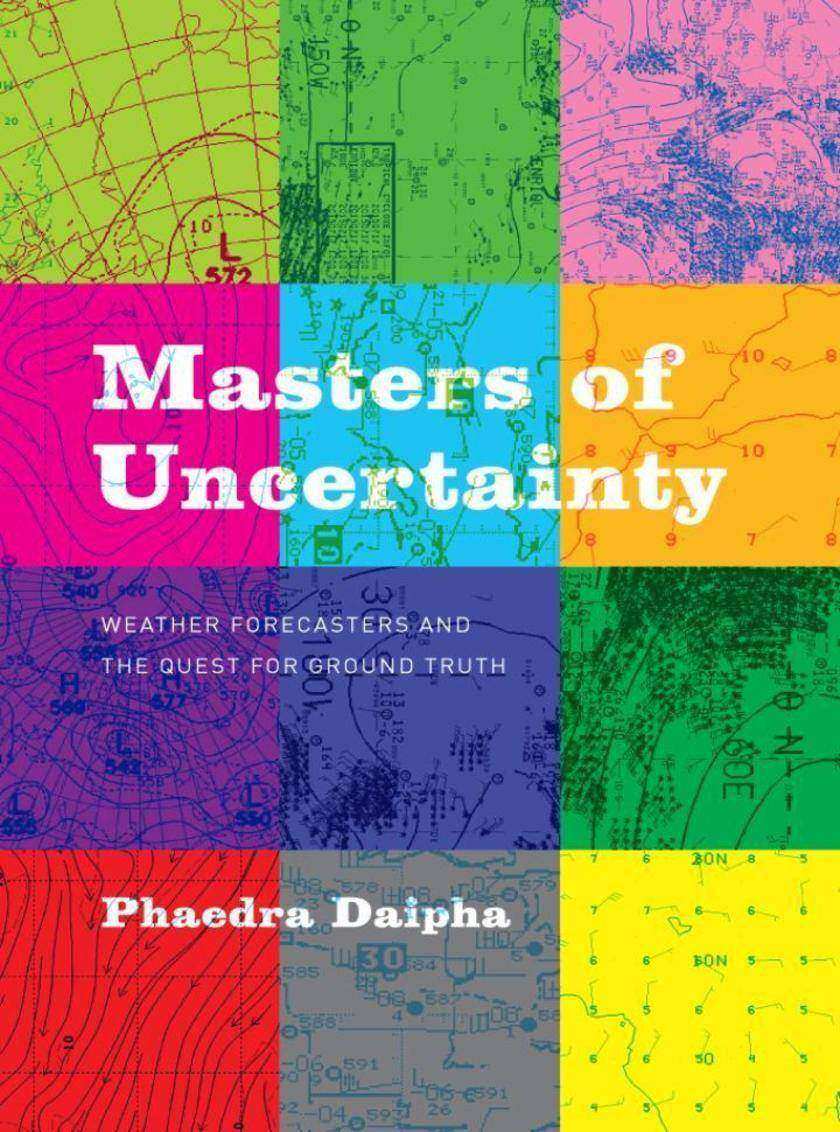
Masters of Uncertainty
¥247.21
Though we commonly make them the butt of our jokes, weather forecasters are in fact exceptionally good at managing uncertainty. They consistently do a better job calibrating their performance than stockbrokers, physicians, or other decision-making experts precisely because they receive feedback on their decisions in near real time. Following forecasters in their quest for truth and accuracy, therefore, holds the key to the analytically elusive process of decision making as it actually happens.In Masters of Uncertainty, Phaedra Daipha develops a new conceptual framework for the process of decision making, after spending years immersed in the life of a northeastern office of the National Weather Service. Arguing that predicting the weather will always be more craft than science, Daipha shows how forecasters have made a virtue of the unpredictability of the weather. Impressive data infrastructures and powerful computer models are still only a substitute for the real thing outside, and so forecasters also enlist improvisational collage techniques and an omnivorous appetite for information to create a locally meaningful forecast on their computer screens. Intent on capturing decision making in action, Daipha takes the reader through engrossing firsthand accounts of several forecasting episodes (hits and misses) and offers a rare fly-on-the-wall insight into the process and challenges of producing meteorological predictions come rain or come shine. Combining rich detail with lucid argument, Masters of Uncertainty advances a theory of decision making that foregrounds the pragmatic and situated nature of expert cognition and casts into new light how we make decisions in the digital age.

Iberian Imperialism and Language Evolution in Latin America
¥329.62
As rich as the development of the Spanish and Portuguese languages has been in Latin America, no single book has attempted to chart their complex history. Gathering essays by sociohistorical linguists working across the region, Salikoko S. Mufwene does just that in this book. Exploring the many different contact points between Iberian colonialism and indigenous cultures, the contributors identify the crucial parameters of language evolution that have led to today's state of linguistic diversity in Latin America.?The essays approach language development through an ecological lens, exploring the effects of politics, economics, cultural contact, and natural resources on the indigenization of Spanish and Portuguese in a variety of local settings. They show how languages adapt to new environments, peoples, and practices, and the ramifications of this for the spread of colonial languages, the loss or survival of indigenous ones, and the way hybrid vernaculars get situated in larger political and cultural forces. The result is a sophisticated look at language as a natural phenomenon, one that meets a host of influences with remarkable plasticity. ?

Comparative Approach in Evolutionary Anthropology and Biology
¥353.16
Comparison is fundamental to evolutionary anthropology. When scientists study chimpanzee cognition, for example, they compare chimp performance on cognitive tasks to the performance of human children on the same tasks. And when new fossils are found, such as those of the tiny humans of Flores, scientists compare these remains to other fossils and contemporary humans. Comparison provides a way to draw general inferences about the evolution of traits and therefore has long been the cornerstone of efforts to understand biological and cultural diversity. Individual studies of fossilized remains, living species, or human populations are the essential units of analysis in a comparative study; bringing these elements into a broader comparative framework allows the puzzle pieces to fall into place, creating a means of testing adaptive hypotheses and generating new ones.?With this book, Charles L. Nunn intends to ensure that evolutionary anthropologists and organismal biologists have the tools to realize the potential of comparative research. Nunn provides a wide-ranging investigation of the comparative foundations of evolutionary anthropology in past and present research, including studies of animal behavior, biodiversity, linguistic evolution, allometry, and cross-cultural variation. He also points the way to the future, exploring the new phylogeny-based comparative approaches and offering a how-to manual for scientists who wish to incorporate these new methods into their research.
How Poems Think
¥206.01
To write or read a poem is often to think in distinctively poetic ways-guided by metaphors, sound, rhythms, associative movement, and more. Poetry's stance toward language creates a particular intelligence of thought and feeling, a compressed articulation that expands inner experience, imagining with words what cannot always be imagined without them. Through translation, poetry has diversified poetic traditions, and some of poetry's ways of thinking begin in the ancient world and remain potent even now. In How Poems Think, Reginald Gibbons presents a rich gallery of poetic inventiveness and continuity drawn from a wide range of poets-Sappho, Pindar, Shakespeare, Keats, William Carlos Williams, Marina Tsvetaeva, Gwendolyn Brooks, and many others. Gibbons explores poetic temperament, rhyme, metonymy, etymology, and other elements of poetry as modes of thinking and feeling. In celebration and homage, Gibbons attunes us to the possibilities of poetic thinking.
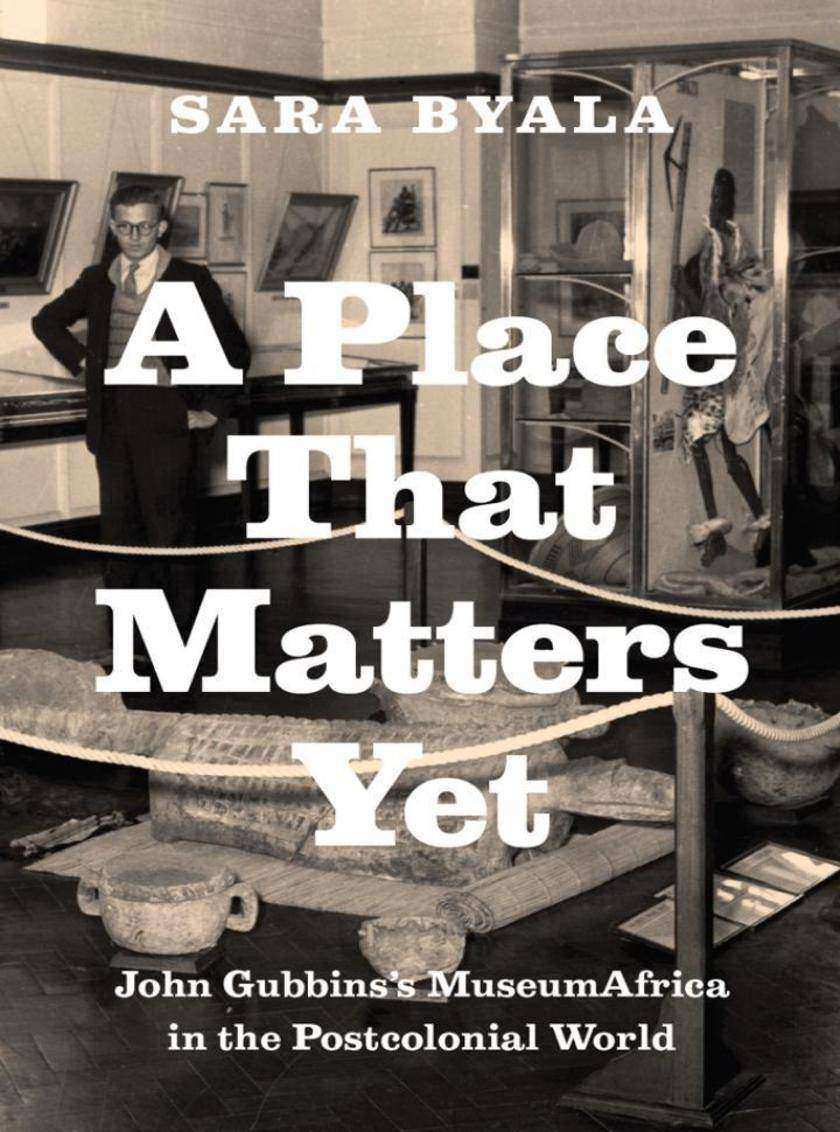
Place That Matters Yet
¥288.41
A Place That Matters Yet unearths the little-known story of Johannesburg's MuseumAfrica, a South African history museum that embodies one of the most dynamic and fraught stories of colonialism and postcolonialism, its life spanning the eras before, during, and after apartheid. Sara Byala, in examining this story, sheds new light not only on racism and its institutionalization in South Africa but also on the problems facing any museum that is charged with navigating colonial history from a postcolonial perspective.?Drawing on thirty years of personal letters and public writings by museum founder John Gubbins, Byala paints a picture of a uniquely progressive colonist, focusing on his philosophical notion of "e;three-dimensional thinking,"e; which aimed to transcend binaries and thus-quite explicitly-racism. Unfortunately, Gubbins died within weeks of the museum's opening, and his hopes would go unrealized as the museum fell in line with emergent apartheid politics. Following the museum through this transformation and on to its 1994 reconfiguration as a post-apartheid institution, Byala showcases it as a rich-and problematic-archive of both material culture and the ideas that surround that culture, arguing for its continued importance in the establishment of a unified South Africa.

Bitter Roots
¥288.41
For over a century, plant specialists worldwide have sought to transform healing plants in African countries into pharmaceuticals. And for equally as long, conflicts over these medicinal plants have endured, from stolen recipes and toxic tonics to unfulfilled promises of laboratory equipment and usurped personal patents. In Bitter Roots, Abena Dove Osseo-Asare draws on publicly available records and extensive interviews with scientists and healers in Ghana, Madagascar, and South Africa to interpret how African scientists and healers, rural communities, and drug companies-including Pfizer, Bristol-Myers Squibb, and Unilever-have sought since the 1880s to develop drugs from Africa's medicinal plants.?Osseo-Asare recalls the efforts to transform six plants into pharmaceuticals: rosy periwinkle, Asiatic pennywort, grains of paradise, Strophanthus, Cryptolepis, and Hoodia.?Through the stories of each plant, she shows that herbal medicine and pharmaceutical chemistry have simultaneous and overlapping histories that cross geographic boundaries. At the same time, Osseo-Asare sheds new light on how various interests have tried to manage the rights to these healing plants and probes the challenges associated with assigning ownership to plants and their biochemical components.A fascinating examination of the history of medicine in colonial and postcolonial Africa, Bitter Roots will be indispensable for scholars of Africa; historians interested in medicine, biochemistry, and society; and policy makers concerned with drug access and patent rights.
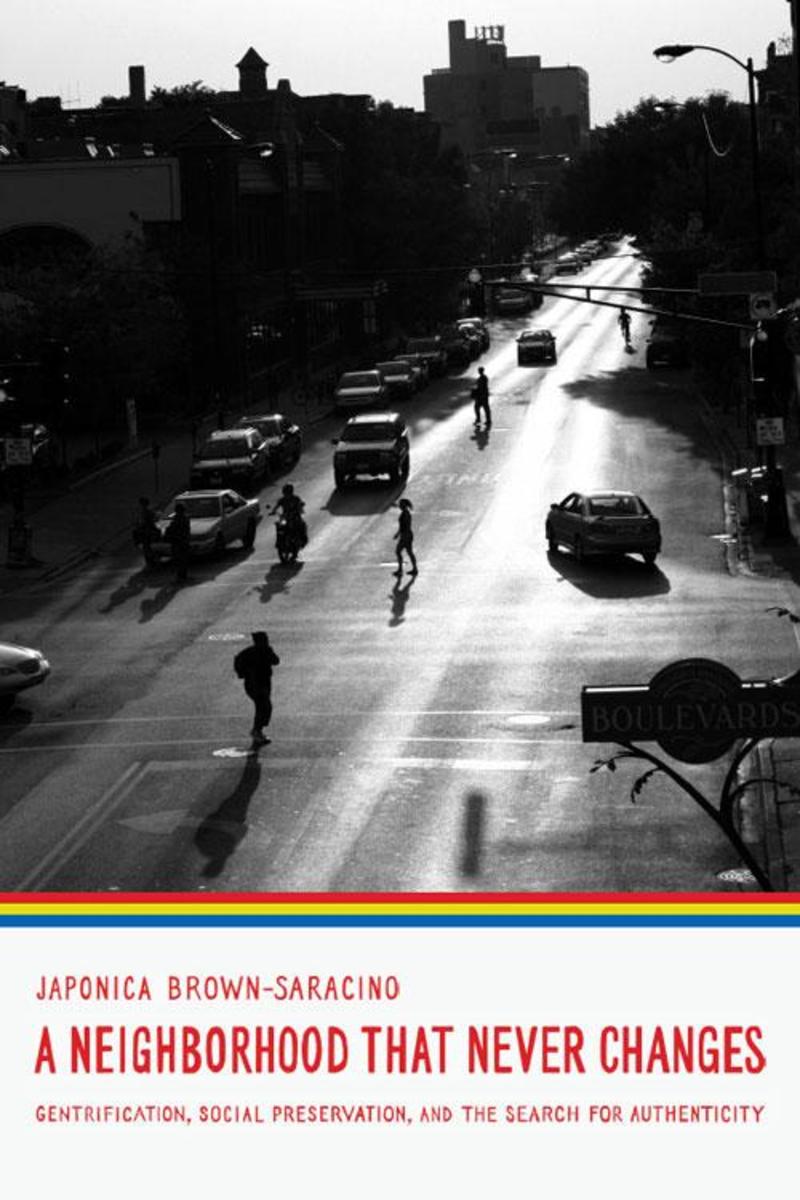
Neighborhood That Never Changes
¥282.53
Newcomers to older neighborhoods are usually perceived as destructive, tearing down everything that made the place special and attractive. But as A Neighborhood That Never Changes demonstrates, many gentrifiers seek to preserve the authentic local flavor of their new homes, rather than ruthlessly remake them. Drawing on ethnographic research in four distinct communities-the Chicago neighborhoods of Andersonville and Argyle and the New England towns of Provincetown and Dresden-Japonica Brown-Saracino paints a colorful portrait of how residents new and old, from wealthy gay homeowners to Portuguese fishermen, think about gentrification.The new breed of gentrifiers, Brown-Saracino finds, exhibits an acute self-consciousness about their role in the process and works to minimize gentrification's risks for certain longtime residents. In an era of rapid change, they cherish the unique and fragile, whether a dilapidated house, a two-hundred-year-old landscape, or the presence of people deeply rooted in the place they live. Contesting many long-standing assumptions about gentrification, Brown-Saracino's absorbing study reveals the unexpected ways beliefs about authenticity, place, and change play out in the social, political, and economic lives of very different neighborhoods.
An Autobiography
¥58.47
Agatha Christie’s ‘most absorbing mystery’ – her own autobiography, with new exclusive CD containing newly discovered priceless recordings of Agatha dictating excerpts from more than 40 years ago. Over the three decades since her death on 12 January 1976, many of Agatha Christie’s readers and reviewers have maintained that her most compelling book is probably still her least well-known. Her candid Autobiography, written mainly in the 1960s, modestly ignores the fact that Agatha had become the best-selling novelist in history and concentrates on her fascinating private life. From early childhood at the end of the 19th century, through two marriages and two World Wars, and her experiences both as a writer and on archaeological expeditions with her second husband, Max Mallowan, Agatha shares the details of her varied and sometimes complex life with real passion and openness. Then, in 2008, Agatha Christie’s grandson made a remarkable discovery. While clearing out her old house in preparation for its opening to the public, Greenway in Devon, a box of old tape reels was found to contain the recordings of Agatha dictating her Autobiography for her typist. These remarkable recordings are not only an amazingly rare example of Agatha’s voice, but they also partly explain the engaging nature of her Autobiography - for they reveal the normally reclusive Agatha telling her own story in a lively, spontaneous and often conspiratorial way, whose passion in talking about her life is captured in the printed Autobiography. Now this new edition comes complete with a CD of highlights from these priceless tapes, giving Agatha Christie’s millions of fans the opportunity to hear the Queen of Crime’s story in her own words, and rediscover her remarkable full story in this special edition of her book, which is newly introduced by Mathew Prichard, the grandson who discovered the tapes.

The Letters of J. R. R. Tolkien
¥58.47
‘It is not possible even at great length to "pot" The Lord of the Rings in a paragraph or two. It was begun in 1936, and every part has been written many times… the labour has been colossal; and it must stand or fall, practically as it is.’ J.R.R. Tolkien was one of the most prolific letter writers of this century. Over the years he wrote to his publishers, his family, to friends (including C.S. Lewis, W.H. Auden and Naomi Mitchison) and to fans of his books. The letters present a fascinating and highly detailed portrait of the man in many of his aspects: as storyteller, scholar, Catholic, parent and observer of the world around him. They also shed much light on his creative genius and grand design for the creation of a whole new world – Middle-earth. This collection will appeal not only to the legions of Tolkien fans, but will entertain anyone who appreciates the art of letter-writing, of which Tolkien was a master. ‘I am nearly always written to as Tolkein (not by you): I do not know why, since it is pronounced by me always -keen.’

The Dog Listener: Learning the Language of your Best Friend
¥80.25
You’ve heard of the Horse Whisperer – now meet the woman who uses similar methods to train dogs. Jan Fennell’s remarkable gifts have earned her the nickname “the dog listener”. Her unique understanding of the canine world and its instinctive language has enabled her to bring even the most desperate and delinquent of dogs to heel. This easy-to-follow guide to understanding Jan’s simple techniques draws on her countless case histories of problem dogs – from biters and barkers to bicycle chasers – to show how we can bridge the language barrier that separates man from his best friend. In The Dog Listener Jan shares her secrets, telling us how she grew determined to find a more compassionate alternative to standard “obedience” training techniques and ultimately how to communicate with canines.
Chicago Guide to Writing about Numbers, Second Edition
¥206.01
Earning praise from scientists, journalists, faculty, and students, The Chicago Guide to Writing about Numbers has helped thousands of writers communicate data clearly and effectively. Its publication offered a much-needed bridge between good quantitative analysis and clear expository writing, using straightforward principles and efficient prose. With this new edition, Jane Miller draws on a decade of additional experience and research, expanding her advice on reaching everyday audiences and further integrating non-print formats.Miller, an experienced teacher of research methods, statistics, and research writing, opens by introducing a set of basic principles for writing about numbers, then presents a toolkit of techniques that can be applied to prose, tables, charts, and presentations. Throughout the book, she emphasizes flexibility, showing writers that different approaches work for different kinds of data and different types of audiences.The second edition adds a chapter on writing about numbers for lay audiences, explaining how to avoid overwhelming readers with jargon and technical issues. Also new is an appendix comparing the contents and formats of speeches, research posters, and papers, to teach writers how to create all three types of communication without starting each from scratch. An expanded companion website includes new multimedia resources such as slide shows and podcasts that illustrate the concepts and techniques, along with an updated study guide of problem sets and suggested course extensions.This continues to be the only book that brings together all the tasks that go into writing about numbers, integrating advice on finding data, calculatingstatistics, organizing ideas, designing tables and charts, and writing prose all in one volume. Field-tested with students and professionals alike, this holistic book is the go-to guide for everyone who writes or speaks about numbers.


