


 购物车
 个人中心


Two Strings To Your Bow - 'I wish, with all my heart, he was under ground''
¥26.98
Robert Jephson was born in Ireland in 1736, the son of Archdeacon John Jephson. His education was at Ryder's grammar school and then the Reverend Roger Ford's school before he was admitted to Trinity College, Dublin in 1751. He left without a degree.Jephson now joined the British Army with a commission in the 73rd Regiment of Foot. Among his postings was one to the Caribbean. He left, for health reasons and retired with the rank of Captain.An appointment was offered as master of the horse to the lord-lieutenant of Ireland. Whilst in this office he wrote and had published, in the Mercury newspaper, a collection of articles that defended the lord-lieutenant's administration. These were later published in book form as 'The Bachelor', or 'Speculations of Jeoffry Wagstaffe'. Jepson held the office under twelve successive viceroys and gained a pension of GBP300, which was later doubled.He entered the Irish House of Commons in 1773 and sat for St Johnstown (County Longford) until 1776. Between 1777 and 1783, he served as Member of Parliament for Old Leighlin and thereafter represented Granard from 1783 to 1790In 1775 he added playwright, dramatist and poet to his military and political career strands. His plays gathered much interest. Among them his tragedy 'Braganza' was successfully performed at Drury Lane in 1775, 'Conspiracy' in 1796, 'The Law of Lombardy' in 1779, and 'The Count of Narbonne' (adapted from Horace Walpole's 'The Castle of Otranto') at Covent Garden in 1781. In 1788 he published 'Extempore Ludicrous Miltonic Verses' and, in 1794, the heroic poem 'Roman Portraits', and 'The Confessions of Jacques Baptiste Couteau', a satire on the excesses of the French Revolution. Robert Jephson died at Blackrock, near Dublin, on the 31st of May 1803.
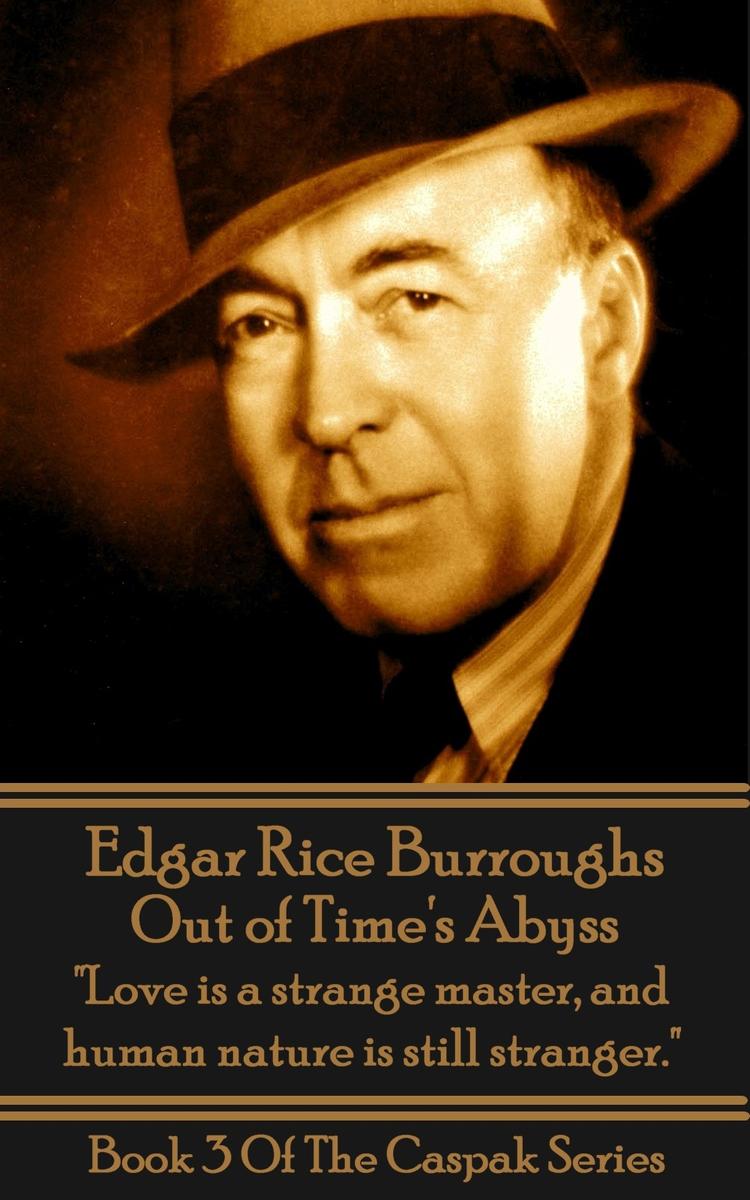
Out of Time's Abyss - Love is a strange master, and human nature is still strang
¥35.22
Edgar Rice Burroughs was born on September 1, 1875, in Chicago, Illinois. His early career was unremarkable. After failing to enter West Point he enlisted in the 7th Calvary but was discharged after heart problems were diagnosed. A series of short term jobs gave no indication as to a career path but finally, in 1911, married and with two young children, he turned his hand to writing. He aimed his works squarely at the very popular pulp serial magazines. His first effort 'Under The Moons Of Mars' ran in Munsey's Magazine in 1912 under the pseudonym Norman Bean. With its success he began writing full time. A continuing theme of his work was to develop series so that each character had ample opportunities to return in sequels. John Carter was in the Mars series and there was another on Venus and one on Pellucidar among others. But perhaps the best known is Tarzan. Indeed Burroughs wanted so much to capitalise upon the brand that he introduced a syndicated Tarzan comic strip, movies and merchandise. He purchased a large ranch north of Los Angeles, California, which he named "e;Tarzana."e; The surrounding communities outside the ranch voted in 1927 to adopt the name as their own. By 1932 Burroughs set up his own company to print his own books. Here we publish 'Out of Time's Abyss' a wonderfully crafted work that exemplifies Burroughs' craft and narrative talents.
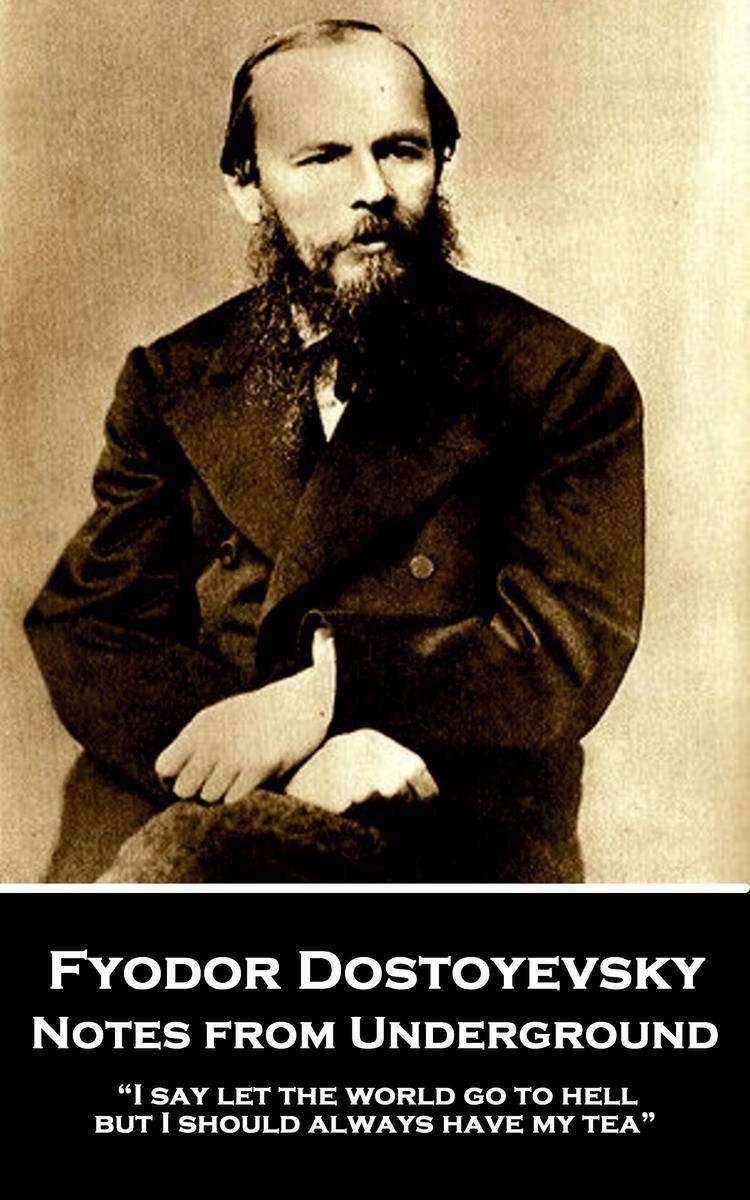
Notes from Underground - I say let the world go to hell, but I should always hav
¥14.03
Fyodor Dostoyevsky was born on 11th November 1821.He was introduced to literature very early. At age three, it was heroic sagas, fairy tales and legends. At four his mother used the Bible to teach him to read and write. His immersion in literature was wide and varied. His imagination, he later recalled, was brought to life by his parents' nightly readings.On 27th September 1837 tragedy struck. Dostoyevsky's mother died of tuberculosis.Dostoyevsky and his brother were now enrolled at the Nikolayev Military Engineering Institute, their academic studies abandoned for military careers. Dostoyevsky disliked the academy, his interests were drawing and architecture.His father died on 16th June 1839 and perhaps triggered Dostoyevsky's epilepsy. However, he continued his studies, passed his exams and obtained the rank of engineer cadet.Dostoyevsky's first completed work was a translation of Honore de Balzac's novel Eugenie Grandet, published in 1843. It was not successful. He believed his financial difficulties could be overcome by writing his own novel. The result was 'Poor Folk', published in 1846, and a commercial success.His next novel, 'The Double', appeared in January 1846. Dostoyevsky now became immersed in socialism. However, 'The Double' received bad reviews and he now had more frequent seizures. With debts mounting he joined the utopian socialist Betekov circle, which helped him to survive. When that dissolved he joined the Petrashevsky Circle, which proposed social reforms. The Petrashevsky Circle was then denounced and Dostoyevsky accused of reading and distributing banned works. Arrests took place in late April 1849 and its members sentenced to death by firing squad. The Tsar commuted the sentence to four years of exile with hard labour in Siberia.His writings on these prison experiences, 'The House of the Dead' were published in 1861.In Saint Petersburg that September he promised his editor he would deliver 'The Gambler', a novella on gambling addiction, by November, although work had yet to begin. It was completed in a mere 26 days.Other works followed but a different approach helped immensely. In 1873 'Demons' was published by the "e;Dostoyevsky Publishing Company"e;. Only payment in cash was accepted and the bookshop was the family apartment. It sold around 3,000 copies.However, Dostoyevsky's health continued to decline, and in March 1877 he had four epileptic seizures. In August 1879 he was diagnosed with early-stage pulmonary emphysema. He was told it could be managed, but not cured.On 26th January 1881 Dostoyevsky suffered a pulmonary haemorrhage. After the second the doctors gave a poor prognosis. A third haemorrhage followed shortly afterwards.Fyodor Dostoyevsky died on 9th February, 1881.
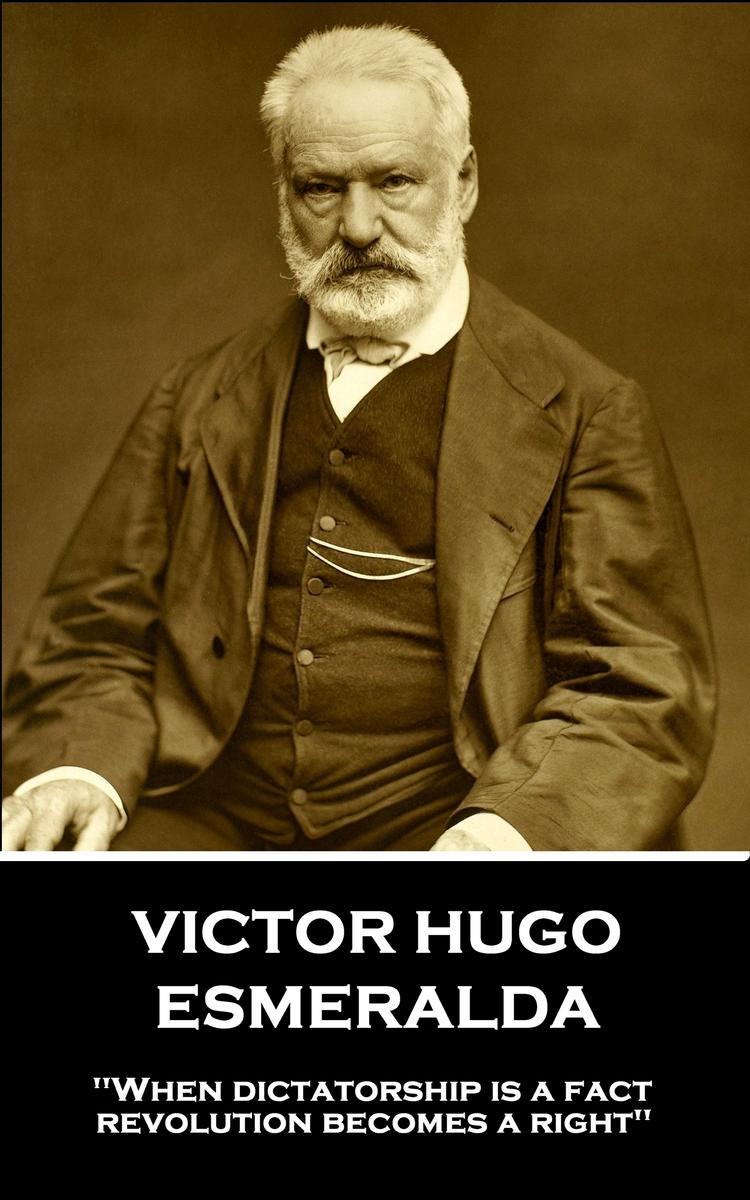
Esmeralda - When dictatorship is a fact, revolution becomes a right
¥29.33
Victor Marie Hugo was born on 26th February 1802 and is revered as the greatest of all French writers. A poet, novelist, dramatist and painter he was a passionate supporter of Republicanism and made a notable contribution to the politics of his Country.His life was paralleled by the immense political and social movements of the 19th Century. When he was two Napoleon was proclaimed Emperor but before he was eighteen the Bourbon Monarchy was restored.It was only with his Mother's death in 1821 that he felt confident enough to marry Adele Foucher, a relationship he had kept secret from his mother. Their first child was born inside a year but died in infancy. Leopoldine was born the following year, followed by three further siblings.Hugo published his first novel the year following year, Han d'Islande, (1823). Three years later his second, Bug-Jargal (1826).Between 1829 and 1840 he would publish five further volumes of poetry solidifying his reputation as one of the greatest elegiac and lyric poets of his time. His reputation was growing not only in France but across Europe.In 1841 he was elected to the Academie Francaise, cementing his position in the world of French arts and letters. Hugo also now began to turn his attention to an involvement in French politics.Elevated to the peerage by King Louis-Philippe in 1841 he spoke eloquently and at length against the death penalty and social injustice as well as passionately in favour of freedom of the press and self-government for Poland.When Napoleon III seized power in 1851, and established an anti-parliamentary constitution, Hugo openly declared him a traitor to France and began a long exile, based mainly in Guernsey.In exile, Hugo published his famous political pamphlets; Napoleon le Petit and Histoire d'un crime. Although the pamphlets were banned in France, they nonetheless made a strong impact there. His exile also seemed to have a creative impetus. He composed or published some of his greatest work including Les Miserables, and three widely honoured collections of poetry (Les Chatiments, 1853; Les Contemplations, 1856; and La Legende des siecles, 1859).In 1870 the Third Republic was established and Hugo finally returned home, where he was elected to the National Assembly and the Senate. That same year War erupted between France and Prussia and the French were badly beaten.With the end of the War Hugo began his campaign for a great valuation and protection for the rights of artists and copyright. He was a founding member of the Association Litteraire et Artistique Internationale, which led to the Berne Convention for the Protection of Literary and Artistic Works.Victor Hugo's death on 22nd May 1885, at the age of 83, generated intense nation-wide mourning. Revered not only as a towering figure in literature, he was a statesman who had helped to shape the Third Republic and democracy in France.Index of ContentsDRAMATIS PERSONESMERALDAACT ISCENE-The Court of MiraclesSCENE ISCENE IISCENE IIIACT IISCENE.-The Square of Greve SCENE ISCENE IISCENE IIISCENE IVACT IIISCENE.-The Front Yard of a TavernSCENE ISCENE IISCENE IIIACT IVSCENE.-A PrisonSCENE ISCENE IISCENE IIISCENE IVVICTOR HUGO - A SHORT BIOGRAPHYVICTOR HUGO - A CONCISE BIBLIOGRAPHY
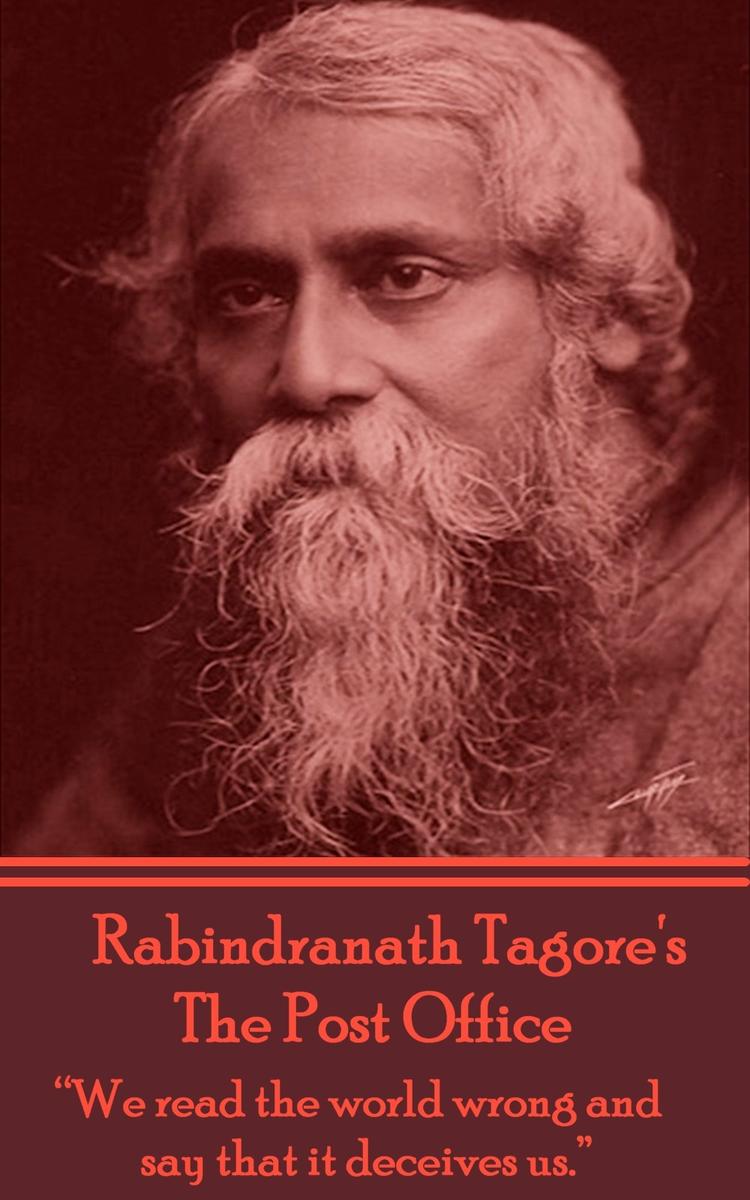
Post Office - We read the world wrong and say the it deceives us.
¥14.03
In this volume we venture to the East. To met a writer who speaks a common language of love and mysticism which continues to convey valuable insights into universal themes in contemporary society. Rabindranath Tagore (1861-1941) who was a gifted Bengali Renaissance man, distinguishing himself as a philosopher, social and political reformer and a popular author in all literary genres. He was instrumental in an increased freedom for the press and influenced Gandhi and the founders of modern India. He composed hundreds of songs which are still sung today as they include the Indian and Bangladeshi national anthems. His prolific literary life has left a legacy of quality novels, essays, poems and in this volume one of his plays. He earned the distinction of being the first Asian writer to receive the Nobel Prize in Literature in 1913. Many of his poems are also available as an audiobook from our sister company Portable Poetry as well as ebooks of stories and essays. Many samples are at our youtube channel http://www.youtube.com/user/PortablePoetry?feature=mhee The full volume of poems can be purchased from iTunes, Amazon and other digital stores. Among our readers are Shyama Perera and Ghizela Rowe
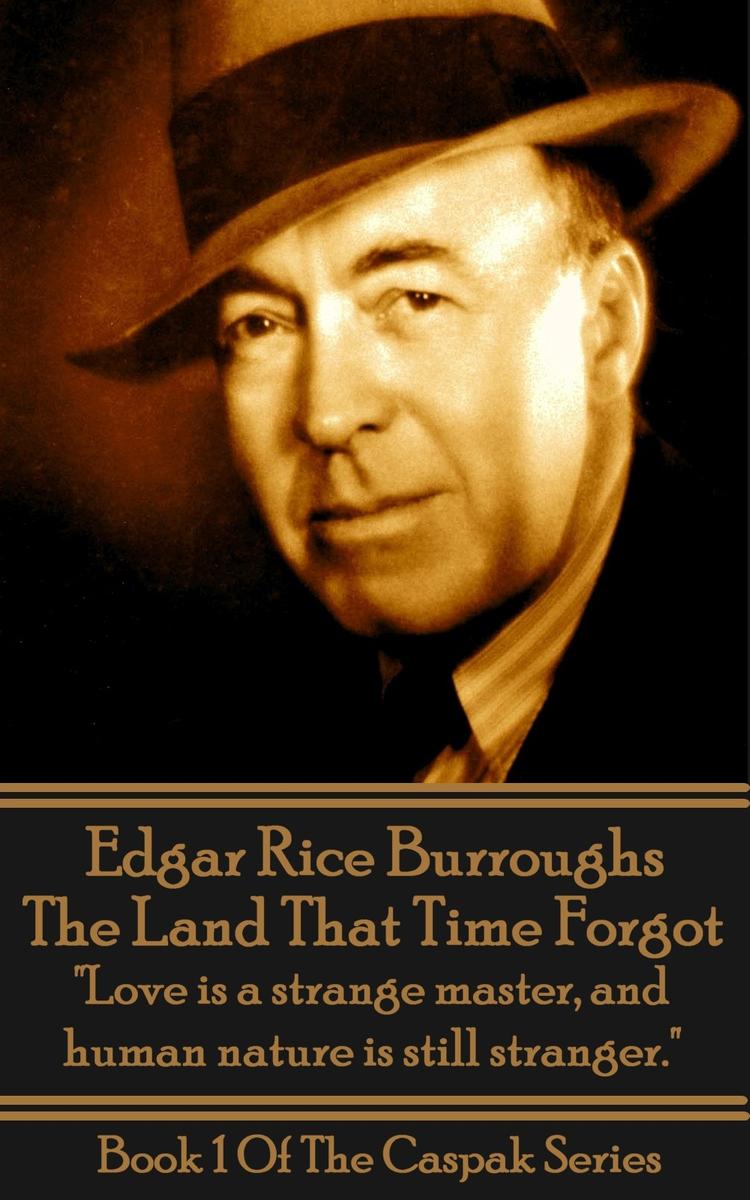
Land That Time Forgot - Love is a strange master, and human nature is still stra
¥35.22
Edgar Rice Burroughs was born on September 1, 1875, in Chicago, Illinois. His early career was unremarkable. After failing to enter West Point he enlisted in the 7th Calvary but was discharged after heart problems were diagnosed. A series of short term jobs gave no indication as to a career path but finally, in 1911, married and with two young children, he turned his hand to writing. He aimed his works squarely at the very popular pulp serial magazines. His first effort 'Under The Moons Of Mars' ran in Munsey's Magazine in 1912 under the pseudonym Norman Bean. With its success he began writing full time. A continuing theme of his work was to develop series so that each character had ample opportunities to return in sequels. John Carter was in the Mars series and there was another on Venus and one on Pellucidar among others. But perhaps the best known is Tarzan. Indeed Burroughs wanted so much to capitalise upon the brand that he introduced a syndicated Tarzan comic strip, movies and merchandise. He purchased a large ranch north of Los Angeles, California, which he named "e;Tarzana."e; The surrounding communities outside the ranch voted in 1927 to adopt the name as their own. By 1932 Burroughs set up his own company to print his own books. Here we publish 'The Land That Time Forgot' a wonderfully crafted piece of science fiction that has endured as a favourite across generations.
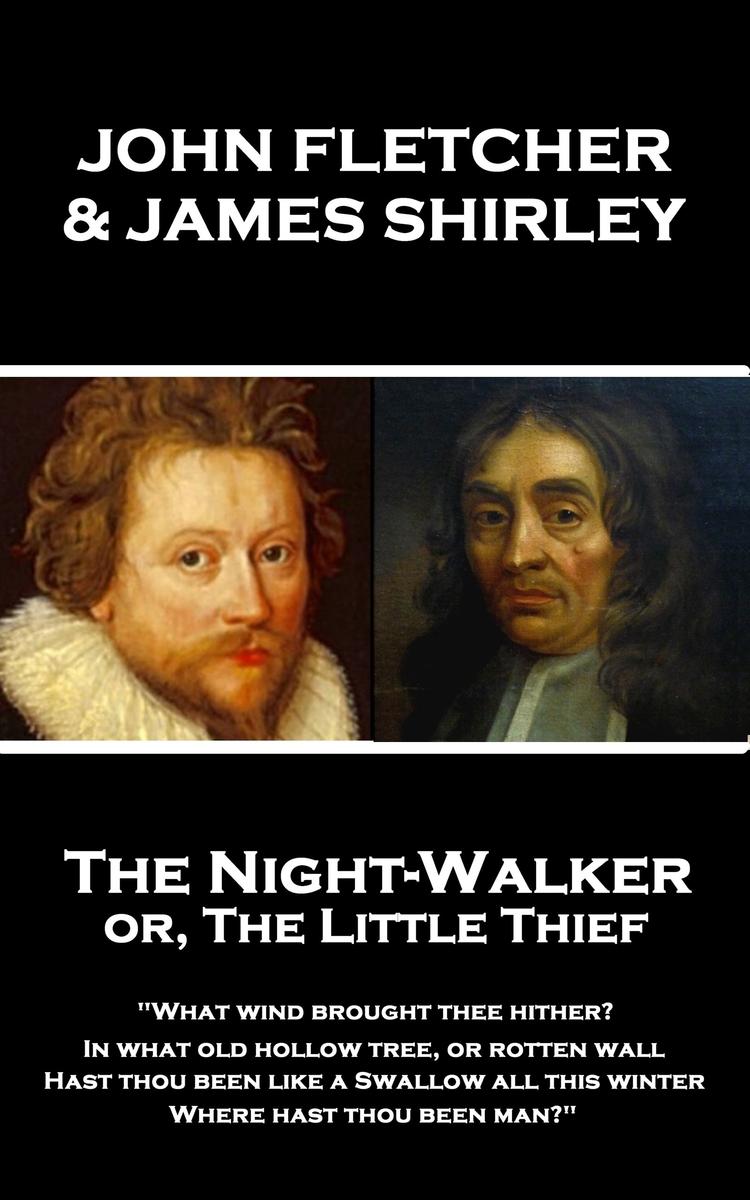
Night-Walker or, The Little Thief
¥23.45
Later revised by James ShirleyOr The Little Thief. A Comedy.As it was presented by her Majesties Servants, at the Private House in Drury LaneJohn Fletcher was born in December, 1579 in Rye, Sussex. He was baptised on December 20th.As can be imagined details of much of his life and career have not survived and, accordingly, only a very brief indication of his life and works can be given.Young Fletcher appears at the very young age of eleven to have entered Corpus Christi College at Cambridge University in 1591. There are no records that he ever took a degree but there is some small evidence that he was being prepared for a career in the church.However what is clear is that this was soon abandoned as he joined the stream of people who would leave University and decamp to the more bohemian life of commercial theatre in London.The upbringing of the now teenage Fletcher and his seven siblings now passed to his paternal uncle, the poet and minor official Giles Fletcher. Giles, who had the patronage of the Earl of Essex may have been a liability rather than an advantage to the young Fletcher. With Essex involved in the failed rebellion against Elizabeth Giles was also tainted.By 1606 John Fletcher appears to have equipped himself with the talents to become a playwright. Initially this appears to have been for the Children of the Queen's Revels, then performing at the Blackfriars Theatre.Fletcher's early career was marked by one significant failure; The Faithful Shepherdess, his adaptation of Giovanni Battista Guarini's Il Pastor Fido, which was performed by the Blackfriars Children in 1608.By 1609, however, he had found his stride. With his collaborator John Beaumont, he wrote Philaster, which became a hit for the King's Men and began a profitable association between Fletcher and that company. Philaster appears also to have begun a trend for tragicomedy.By the middle of the 1610s, Fletcher's plays had achieved a popularity that rivalled Shakespeare's and cemented the pre-eminence of the King's Men in Jacobean London. After his frequent early collaborator John Beaumont's early death in 1616, Fletcher continued working, both singly and in collaboration, until his own death in 1625. By that time, he had produced, or had been credited with, close to fifty plays.
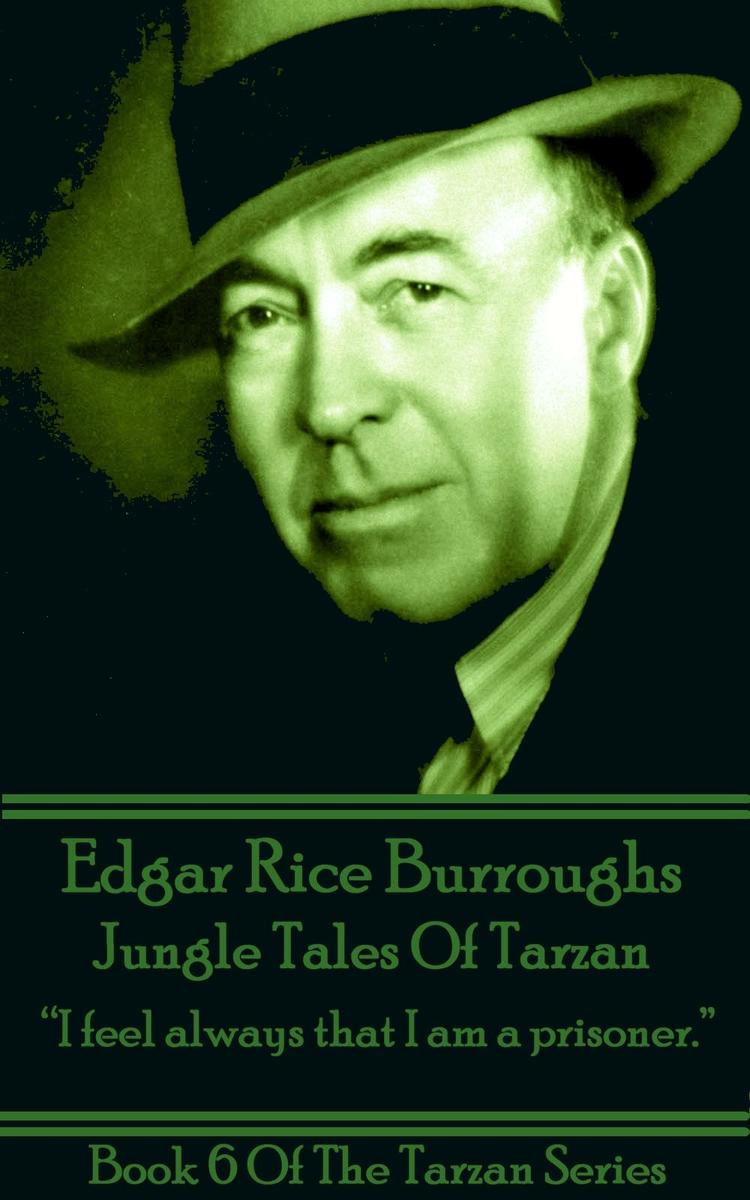
Jungle Tales Of Tarzan - I feel always that I am a prisoner.
¥35.22
Edgar Rice Burroughs was born on September 1, 1875, in Chicago, Illinois. His early career was unremarkable. After failing to enter West Point he enlisted in the 7th Calvary but was discharged after heart problems were diagnosed. A series of short term jobs gave no indication as to a career path but finally, in 1911, married and with two young children, he turned his hand to writing. He aimed his works squarely at the very popular pulp serial magazines. His first effort 'Under The Moons Of Mars' ran in Munsey's Magazine in 1912 under the pseudonym Norman Bean. With its success he began writing full time. A continuing theme of his work was to develop series so that each character had ample opportunities to return in sequels. John Carter was in the Mars series and there was another on Venus and one on Pellucidar among others. But perhaps the best known is Tarzan. Indeed Burroughs wanted so much to capitalise upon the brand that he introduced a syndicated Tarzan comic strip, movies and merchandise. He purchased a large ranch north of Los Angeles, California, which he named "e;Tarzana."e; The surrounding communities outside the ranch voted in 1927 to adopt the name as their own. By 1932 Burroughs set up his own company to print his own books. Here we publish the sixth in the Tarzan series 'Jungle Tales of Tarzan'. Another cultural classic.
A Doll's House (1879)
¥23.45
Henrik Ibsen (20th March, 1828 - 23rd May, 1906) is often referred to as the father of realism and ranked just below Shakespeare as Europe's greatest ever playwright especially as his plays are performed most frequently throughout the world after Shakespeare's. However, according to Russia's leading newspaper, Pravda, the most performed single play in the world is Ibsen's A Doll's House. He was not Russian but actually Norwegian and although set his plays in Norway, he wrote them in Danish and lived mot of his professional life in Italy and Germany. His affect on the theatre is still evident today and shapes the distinction of plays being art as opposed to entertainment since he broke down all previous traditions and explored issues, developed characterisation, revealed uncomfortable truths, challenged assumptions and brokedown facades in ourselves as well as society. These factors, together with a slight psychological introspection, are clearly demonstrated in A Doll's House which strives to portray life accurately and shuns the usual idealised visions of it that had thus far been on stages throughout the world. The play highlights Ibsen's wish for women to have greater rights as the central protagonist is a woman who although leads a privileged life with an adoring husband, beautiful children and everything a woman of station might want, has, a past secret which unravels her precise calibrated life. This play was written in prose and should be read as such whether it be before or after seeing a performance as it is a true masterpiece.
Love Of Life & Other Stories - You can't wait for inspiration. You have to go af
¥23.45
John Griffith &quote;Jack&quote; London was born John Griffith Chaney on January 12th, 1876 in San Francisco. His father, William Chaney, was living with his mother Flora Wellman when she became pregnant. Chaney insisted she have an abortion. Flora's response was to turn a gun on herself. Although her wounds were not severe the trauma made her temporarily deranged. In late 1876 his mother married John London and the young child was brought to live with them as they moved around the Bay area, eventually settling in Oakland where Jack completed grade school. Jack also worked hard at several jobs, sometimes 12-18 hours a day, but his dream was university. He was lent money for that and after intense studying enrolled in the summer of 1896 at the University of California in Berkeley. In 1897, at 21 , Jack searched out newspaper accounts of his mother's suicide attempt and the name of his biological father. He wrote to William Chaney, then living in Chicago. Chaney said he could not be London's father because he was impotent; and casually asserted that London's mother had relations with other men. Jack, devastated by the response, quit Berkeley and went to the Klondike. Though equally because of his continuing dire finances Jack might have taken that as the excuse he needed to leave. In the Klondike Jack began to gather material for his writing but also accumulated many health problems, including scurvy, hip and leg problems many of which he then carried for life. By the late 1890's Jack was regularly publishing short stories and by the turn of the century full blown novels. By 1904 Jack had married, fathered two children and was now in the process of divorcing. A stint as a reporter on the Russo-Japanese war of 1904 was equal amounts trouble and experience. But that experience was always put to good use in a remarkable output of work. Twelve years later Jack had amassed a wealth of writings many of which remain world classics. He had a reputation as a social activist and a tireless friend of the workers. And yet on November 22nd 1916 Jack London died in a cottage on his ranch at the age of only 40. Here we present Love Of Life & Other Stories.
Admirable Crichton - Ambition - it is the last infirmity of noble minds
¥25.80
Sir James Matthew Barrie, 1st Baronet, OM, was born in Kirriemuir, Angus the ninth of ten children on May 9th, 1860. From early formative experiences, Barrie knew that he wished to follow a career as an author. His family wished otherwise and sought to persuade him to choose a profession, such as the ministry. The compromise was that he would attend university to study literature at the University of Edinburgh. He graduated with an M.A. on April 21st, 1882. His first job was as a staff journalist for the Nottingham Journal. The London editor of the St. James's Gazette "e;liked that Scotch thing"e; in Barrie's short stories about his mother's early life. They also served as the basis for his first novels. Barrie though was increasingly drawn to working in the theatre. His first play, a biography of Richard Savage, was only performed once and critically panned. Undaunted he immediately followed this with Ibsen's Ghost in 1891, a parody of Ibsen's plays Hedda Gabler and Ghosts. Barrie's third play, Walker, London, in 1892 led to an introduction to his future wife, a young actress by the name of Mary Ansell. The two became friends, and she helped his family to care for him when he fell very ill in 1893 and 1894. Barrie proposed and they were married, in Kirriemuir, on July 9th, 1894. By some accounts the relationship was unconsummated and indeed the couple had no children. The story of Peter Pan had begun to formulate when Barrie became acquainted with the Llewelyn Davis family in 1897, meeting George, Jack and baby Peter with their nanny in London's Kensington Gardens. In 1901 and 1902, Barrie had back-to-back theatre successes with Quality Street and The Admirable Crichton. The character of "e;Peter Pan"e; first appeared in The Little White Bird in 1902. This most famous and enduring of his works; Peter Pan, or The Boy Who Wouldn't Grow Up had its first stage performance on December 27th, 1904. Peter Pan would overshadow everything written during his career. He continued to write for the rest of his life contributing many other fine and important works. Sir James Matthew Barrie, 1st Baronet, OM, died of pneumonia on June 19th,1937 and was buried at Kirriemuir next to his parents and two of his siblings.
Comedy Of Errors
¥17.56
William Shakespeare was born in Stratford-upon-Avon in late April 1565 and baptised there on 26th April. He was one of eight children. Little is known about his life but what is evident is the enormous contribution he has made to world literature. His writing was progressive, magnificent in scope and breathtaking in execution. His plays and sonnets helped enable the English language to speak with a voice unmatched by any other. William Shakespeare died on April 23rd 1616, survived by his wife and two daughters. He was buried two days after his death in the chancel of the Holy Trinity Church. The epitaph on the slab which covers his grave includes the following passage, Good friend, for Jesus's sake forbear, To dig the dust enclosed here. Blessed me the man that spares these stones, And cursed be he that moves my bones. Here we publish from 1589 the classic 'The Comedy Of Errors'.
Land of Heart's Desire - 'When but the moons of marriage dawn and die''
¥14.03
William Butler Yeats (1865 - 1939) is best described as Ireland's national poet in addition to being one of the major twentieth-century literary figures of the English tongue. To many literary critics, Yeats represents the 'Romantic poet of modernism,' which is quite revealing about his extraordinary style that combines between the outward emphasis on the expression of emotions and the extensive use of symbolism, imagery and allusions. Yeats also wrote prose and drama and established himself as the spokesman of the Irish cause. His fame was greatly boosted mainly after he received the Nobel Prize in Literature in 1923. His life was marked by his many love stories, by his great interest in oriental mysticism and occultism as well as by political engagement since he served as an Irish senator for two terms. Today, although William Butler Yeats's contribution to literary modernism and to Irish nationalism remains incontestable.
As You Like It - All the world's a stage.
¥11.67
The life of William Shakespeare, arguably the most significant figure in the Western literary canon, is relatively unknown. Shakespeare was born in Stratford-upon-Avon in 1565, possibly on the 23rd April, St. George's Day, and baptised there on 26th April. Little is known of his education and the first firm facts to his life relate to his marriage, aged 18, to Anne Hathaway, who was 26 and from the nearby village of Shottery. Anne gave birth to their first son six months later. Shakespeare's first play, The Comedy of Errors began a procession of real heavyweights that were to emanate from his pen in a career of just over twenty years in which 37 plays were written and his reputation forever established. This early skill was recognised by many and by 1594 the Lord Chamberlain's Men were performing his works. With the advantage of Shakespeare's progressive writing they rapidly became London's leading company of players, affording him more exposure and, following the death of Queen Elizabeth in 1603, a royal patent by the new king, James I, at which point they changed their name to the King's Men. By 1598, and despite efforts to pirate his work, Shakespeare's name was well known and had become a selling point in its own right on title pages. No plays are attributed to Shakespeare after 1613, and the last few plays he wrote before this time were in collaboration with other writers, one of whom is likely to be John Fletcher who succeeded him as the house playwright for the King's Men. William Shakespeare died two months later on April 23rd, 1616, survived by his wife, two daughters and a legacy of writing that none have since yet eclipsed.
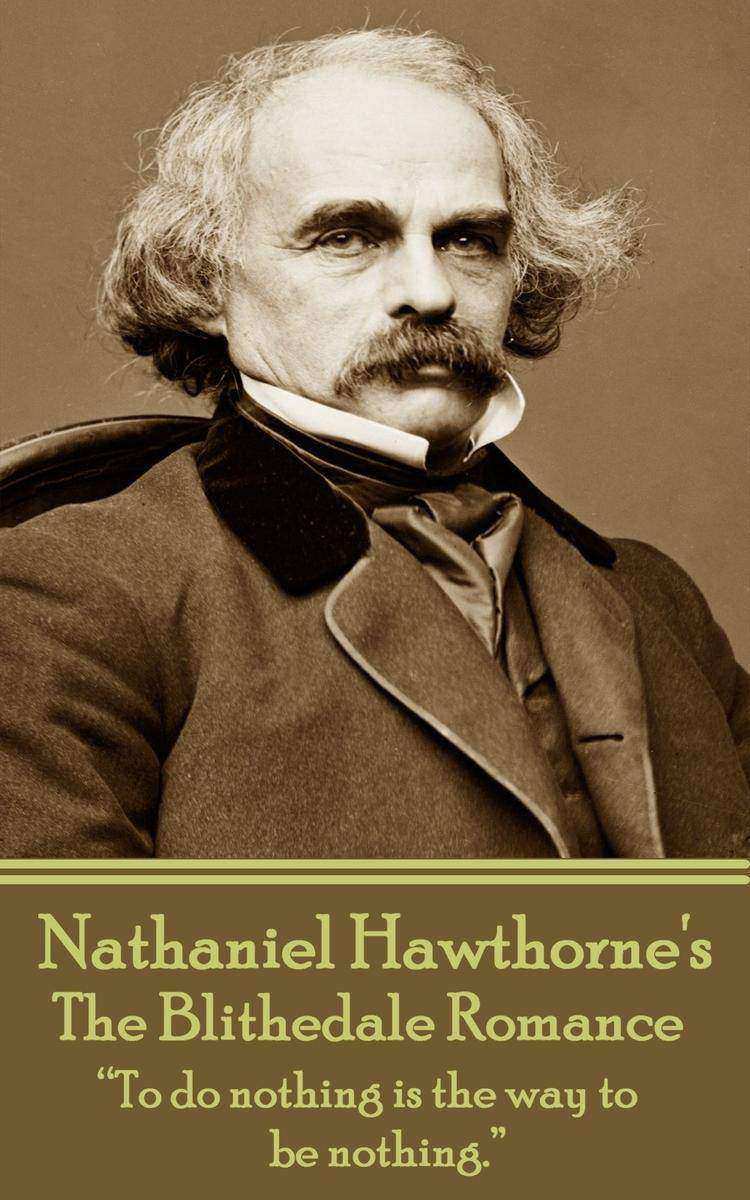
Blithedale Romance - To do nothing is the way to be nothing.
¥26.98
Nathaniel Hawthorne was born in 1804 in the city of Salem, Massachusetts. His father, a sea captain died when Nathaniel was 4 and Nathaniel always a shy child spent his early years with his Mother and two sisters. Hit on the leg by a ball, doctors could finds nothing wrong but he went lame and was bedridden for a year. He entered Bowdoin College in 1821, and graduated in 1825. Hawthorne anonymously published his first work, the novel 'Fanshawe', in 1828. He continued to publish in various periodicals which he collected in 1837 as Twice-Told Tales. The next year, he became engaged to Sophia Peabody eventually marrying her in 1842. His defining work 'The Scarlet Letter' was published in 1850, followed by a succession of other novels. The majority of his works centre on New England and have a Puritan inspiration and outlook with their inherent evil and sin of humanity. A political appointment took Hawthorne and family to Europe before their return in 1860. Hawthorne died on May 19, 1864, leaving behind his wife and their three children. Here with The Blithedale Romance he leaves us with another classic tale.

Florentine Tragedy - Always forgive your enemies; nothing annoys them so much.
¥16.38
Oscar Fingal O'Flahertie Wills Wilde was born on the 16th October 1854 in Dublin Ireland. The son of Dublin intellectuals Oscar proved himself an outstanding classicist at Dublin, then at Oxford. With his education complete Wilde moved to London and its fashionable cultural and social circles. With his biting wit, flamboyant dress, and glittering conversation, Wilde became one of the most well-known personalities of his day. His only novel, The Picture of Dorian Gray was published in 1890 and he then moved on to writing for the stage with Salome in 1891. His society comedies produced enormous hits and turned him into one of the most successful writers of late Victorian London. Whilst his masterpiece, The Importance of Being Earnest, was on stage in London, Wilde had the Marquess of Queensberry, the father of his lover, Lord Alfred Douglas, prosecuted for libel. The trial unearthed evidence that caused Wilde to drop his charges and led to his own arrest and trial for gross indecency. He was convicted and imprisoned for two years' hard labour. It was to break him. On release he left for France, There he wrote his last work, The Ballad of Reading Gaol in 1898. He died destitute in Paris at the age of forty-six sipping champagne a friend had brought with the line 'Alas I am dying beyond my means'.

Henry VI, Part II - The first thing we do, let's kill all the lawyers.
¥11.67
The life of William Shakespeare, arguably the most significant figure in the Western literary canon, is relatively unknown. Shakespeare was born in Stratford-upon-Avon in 1565, possibly on the 23rd April, St. George's Day, and baptised there on 26th April. Little is known of his education and the first firm facts to his life relate to his marriage, aged 18, to Anne Hathaway, who was 26 and from the nearby village of Shottery. Anne gave birth to their first son six months later. Shakespeare's first play, The Comedy of Errors began a procession of real heavyweights that were to emanate from his pen in a career of just over twenty years in which 37 plays were written and his reputation forever established. This early skill was recognised by many and by 1594 the Lord Chamberlain's Men were performing his works. With the advantage of Shakespeare's progressive writing they rapidly became London's leading company of players, affording him more exposure and, following the death of Queen Elizabeth in 1603, a royal patent by the new king, James I, at which point they changed their name to the King's Men. By 1598, and despite efforts to pirate his work, Shakespeare's name was well known and had become a selling point in its own right on title pages. No plays are attributed to Shakespeare after 1613, and the last few plays he wrote before this time were in collaboration with other writers, one of whom is likely to be John Fletcher who succeeded him as the house playwright for the King's Men. William Shakespeare died two months later on April 23rd, 1616, survived by his wife, two daughters and a legacy of writing that none have since yet eclipsed.
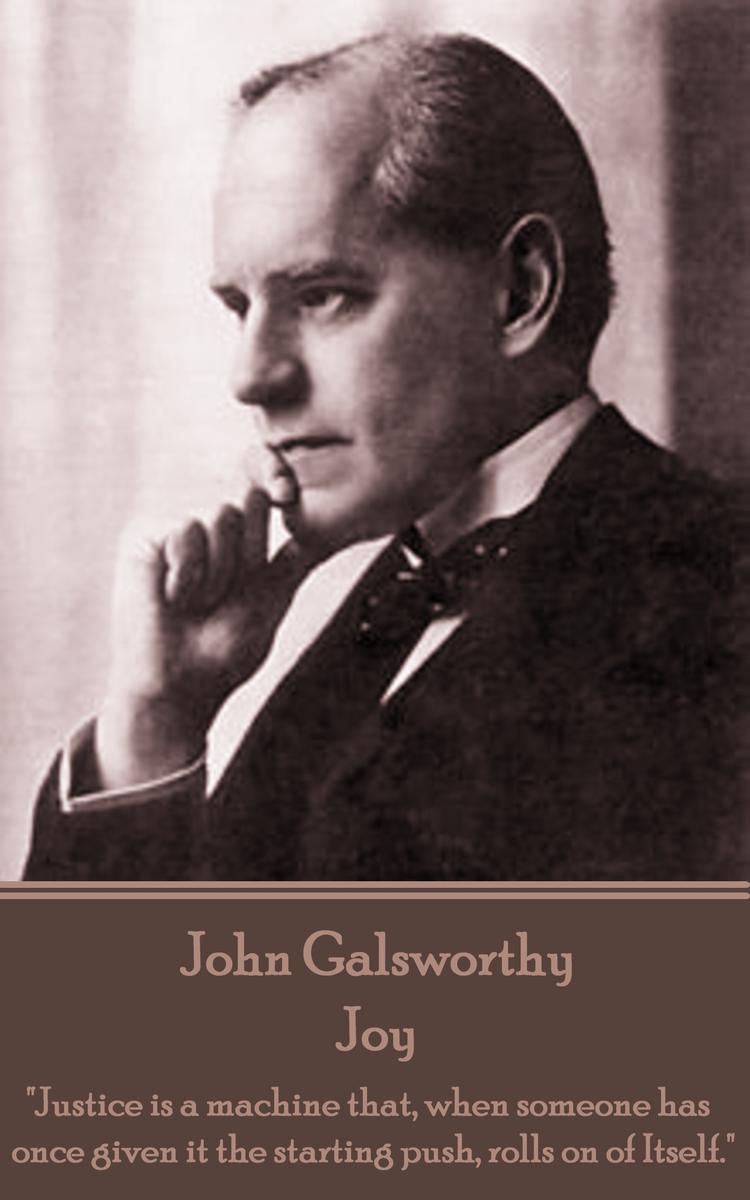
Joy - Justice is a machine that, when someone has once given it the starting pus
¥21.09
John Galsworthy was born at Kingston Upon Thames in Surrey, England, on August 14th 1867 to a wealthy and well established family. His schooling was at Harrow and New College, Oxford before training as a barrister and being called to the bar in 1890. However, Law was not attractive to him and he travelled abroad becoming great friends with the novelist Joseph Conrad, then a first mate on a sailing ship. In 1895 Galsworthy began an affair with Ada Nemesis Pearson Cooper, the wife of his cousin Major Arthur Galsworthy. The affair was kept a secret for 10 years till she at last divorced and they married on 23rd September 1905. Galsworthy first published in 1897 with a collection of short stories entitled "e;The Four Winds"e;. For the next 7 years he published these and all works under his pen name John Sinjohn. It was only upon the death of his father and the publication of "e;The Island Pharisees"e; in 1904 that he published as John Galsworthy. His first play, The Silver Box in 1906 was a success and was followed by "e;The Man of Property"e; later that same year and was the first in the Forsyte trilogy. Whilst today he is far more well know as a Nobel Prize winning novelist then he was considered a playwright dealing with social issues and the class system. Here we publish Villa Rubein, a very fine story that captures Galsworthy's unique narrative and take on life of the time. He is now far better known for his novels, particularly The Forsyte Saga, his trilogy about the eponymous family of the same name. These books, as with many of his other works, deal with social class, upper-middle class lives in particular. Although always sympathetic to his characters, he reveals their insular, snobbish, and somewhat greedy attitudes and suffocating moral codes. He is now viewed as one of the first from the Edwardian era to challenge some of the ideals of society depicted in the literature of Victorian England. In his writings he campaigns for a variety of causes, including prison reform, women's rights, animal welfare, and the opposition of censorship as well as a recurring theme of an unhappy marriage from the women's side. During World War I he worked in a hospital in France as an orderly after being passed over for military service. He was appointed to the Order of Merit in 1929, after earlier turning down a knighthood, and awarded the Nobel Prize in 1932 though he was too ill to attend. John Galsworthy died from a brain tumour at his London home, Grove Lodge, Hampstead on January 31st 1933. In accordance with his will he was cremated at Woking with his ashes then being scattered over the South Downs from an aeroplane.
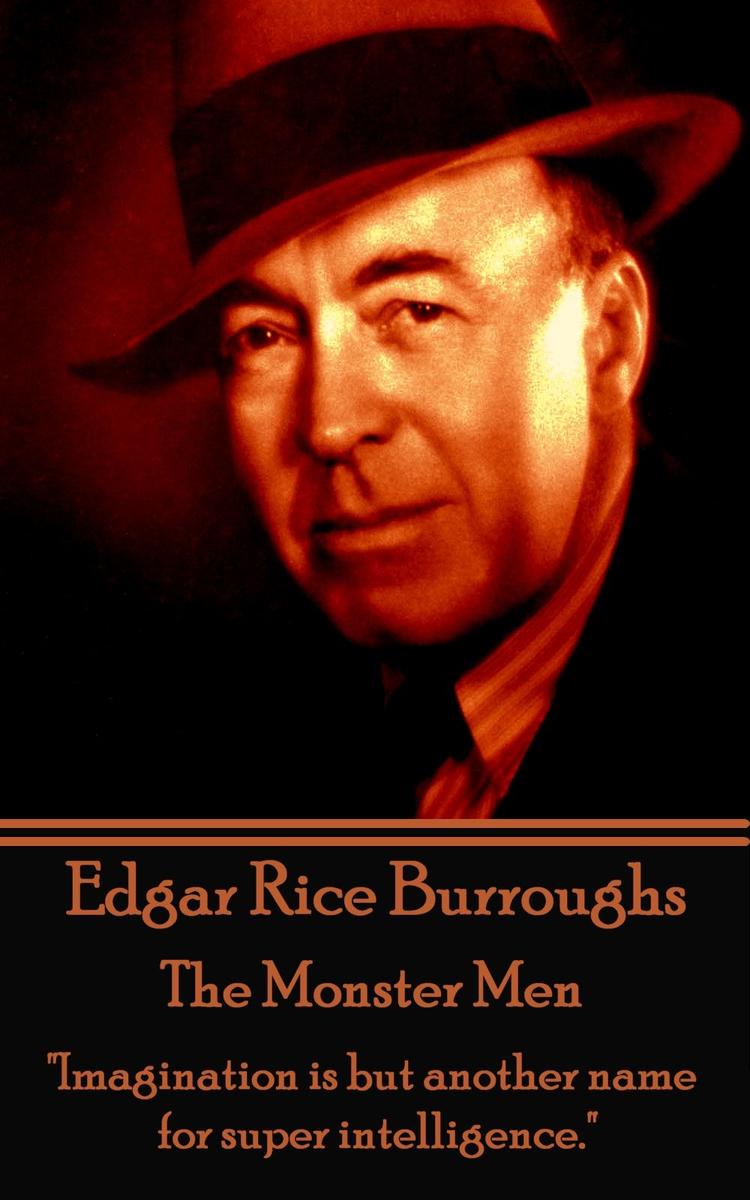
Monster Men - Imagination is but another name for super intelligence.
¥35.22
Edgar Rice Burroughs was born on September 1, 1875, in Chicago, Illinois. His early career was unremarkable. After failing to enter West Point he enlisted in the 7th Calvary but was discharged after heart problems were diagnosed. A series of short term jobs gave no indication as to a career path but finally, in 1911, married and with two young children, he turned his hand to writing. He aimed his works squarely at the very popular pulp serial magazines. His first effort 'Under The Moons Of Mars' ran in Munsey's Magazine in 1912 under the pseudonym Norman Bean. With its success he began writing full time. A continuing theme of his work was to develop series so that each character had ample opportunities to return in sequels. John Carter was in the Mars series and there was another on Venus and one on Pellucidar among others. But perhaps the best known is Tarzan. Indeed Burroughs wanted so much to capitalise upon the brand that he introduced a syndicated Tarzan comic strip, movies and merchandise. He purchased a large ranch north of Los Angeles, California, which he named "e;Tarzana."e; The surrounding communities outside the ranch voted in 1927 to adopt the name as their own. By 1932 Burroughs set up his own company to print his own books. Here we publish 'The Monster Men' a tale that shows just what Burroughs can do when his talents and craft are unleashed.
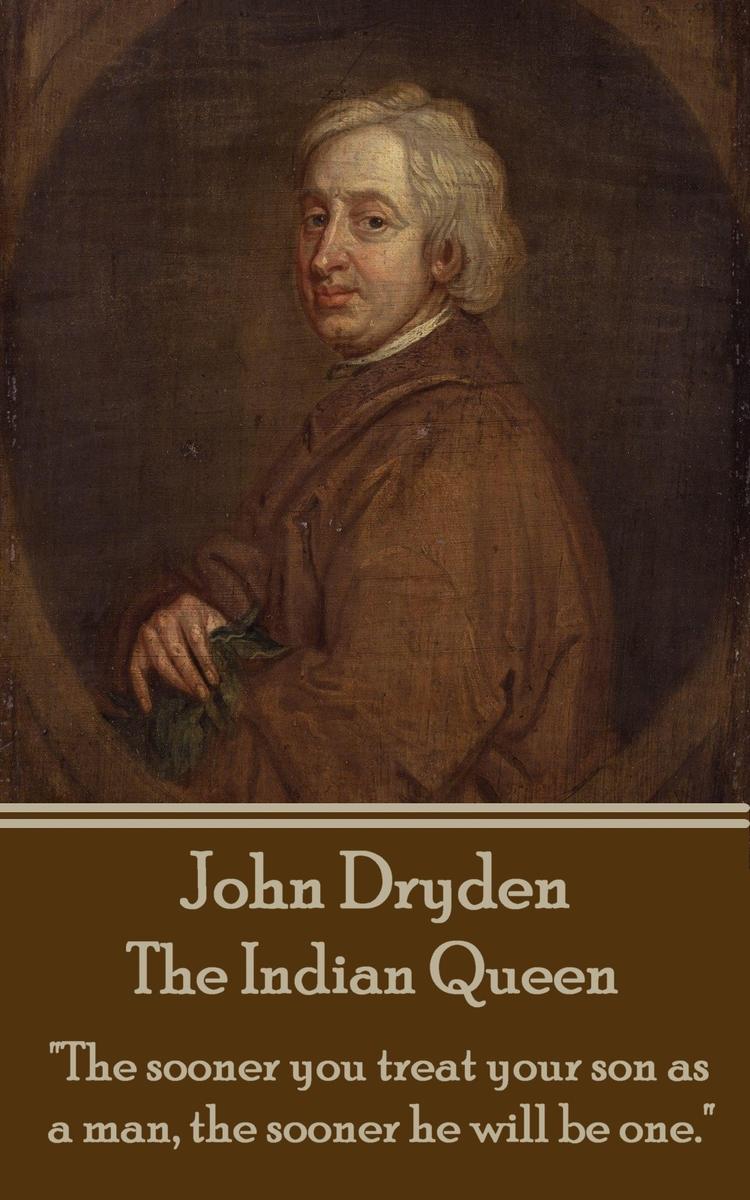
Indian Queen - We first make our habits, and then our habits make us.
¥26.98
John Dryden was born on August 9th, 1631 in the village rectory of Aldwincle near Thrapston in Northamptonshire. As a boy Dryden lived in the nearby village of Titchmarsh, Northamptonshire. In 1644 he was sent to Westminster School as a King's Scholar. Dryden obtained his BA in 1654, graduating top of the list for Trinity College, Cambridge that year. Returning to London during The Protectorate, Dryden now obtained work with Cromwell's Secretary of State, John Thurloe. At Cromwell's funeral on 23 November 1658 Dryden was in the company of the Puritan poets John Milton and Andrew Marvell. The setting was to be a sea change in English history. From Republic to Monarchy and from one set of lauded poets to what would soon become the Age of Dryden. The start began later that year when Dryden published the first of his great poems, Heroic Stanzas (1658), a eulogy on Cromwell's death. With the Restoration of the Monarchy in 1660 Dryden celebrated in verse with Astraea Redux, an authentic royalist panegyric. With the re-opening of the theatres after the Puritan ban, Dryden began to also write plays. His first play, The Wild Gallant, appeared in 1663 but was not successful. From 1668 on he was contracted to produce three plays a year for the King's Company, in which he became a shareholder. During the 1660s and '70s, theatrical writing was his main source of income. In 1667, he published Annus Mirabilis, a lengthy historical poem which described the English defeat of the Dutch naval fleet and the Great Fire of London in 1666. It established him as the pre-eminent poet of his generation, and was crucial in his attaining the posts of Poet Laureate (1668) and then historiographer royal (1670). This was truly the Age of Dryden, he was the foremost English Literary figure in Poetry, Plays, translations and other forms. In 1694 he began work on what would be his most ambitious and defining work as translator, The Works of Virgil (1697), which was published by subscription. It was a national event. John Dryden died on May 12th, 1700, and was initially buried in St. Anne's cemetery in Soho, before being exhumed and reburied in Westminster Abbey ten days later.
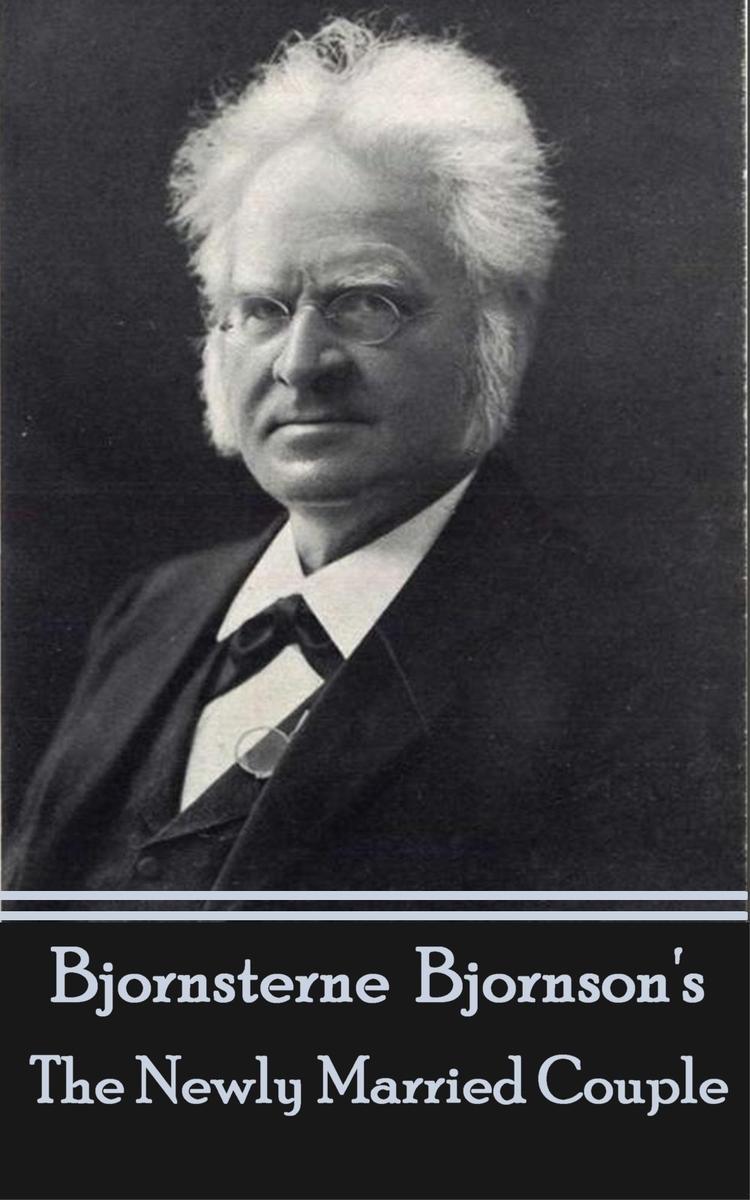
Newly-Married Couple - Includes a rare poetry collection
¥35.22
Bjornstjerne Bjornson (1832 - 1910), the third man to ever win the Nobel Prize in Literature. However when considering the quality of his writing he is perhaps not as celebrated as he should be. Being also a Nobel Laureate in Literature, Bjornson has also been credited with many other impressive successes. These include writing the lyrics for the Norwegian national anthem, mastering all forms of literature; poetry, novels, short stories, essays and playwriting and being elevated to one of the Four Greats; the name for the classic Norwegian writers, others being Henrik Ibsen, Jonas Lie and Alexander Kielland. Here we look at one of his many plays. Much of his work was nearly as popular in his native Norway as Ibsen's and we now bring you these masterful works in English for you to compare. Our imprint Stage Door offers both Ibsen's and Bjornson's works in English.


