


 购物车
 个人中心

Avon
¥55.31
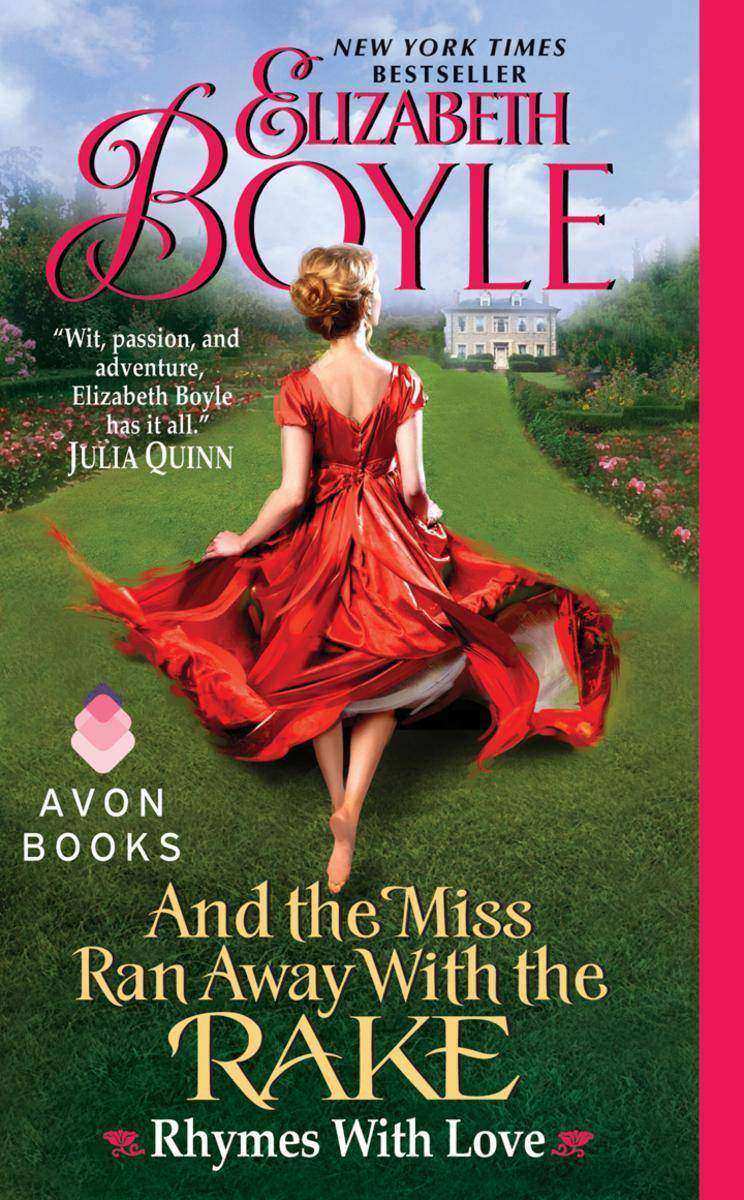
Sensible gentleman of means seeks a sensiblelady of good breeding for correspondence, and indue consideration, matrimony. Which is exactly the sort of advertisement that makespractical-to-a-fault Daphne Dale's heart flutter. A sensiblegentleman, in her estimation, is the perfect match,and she's even more convinced once she's exchanging sensiblyromantic letters with her very appropriate suitor. That is,until Lord Henry Seldon strays into her path. He's everythingshe's vowed to avoid a rakish charmer whose verytouch seduces her practical sensibilities and her resolve. Lord Henry Seldon was not amused when his nephewplaced an advertisement to find him a wife. Yet he couldn'tresist replying to the note from "Miss Spooner." And oncehe discovers he's corresponding with none other thanthe disarming Daphne Dale, he finds it's too late to disavowhis heart. Now it is up to Henry to prove to Daphne just howinsensible and powerfully passionate true love can be . . .

Dispatches from the Edge
¥88.56
Few people have witnessed more scenes of chaos and conflict around the world than Anderson Cooper, whose groundbreaking coverage on CNN has changed the way we watch the news. In this gripping, candid, and remarkably powerful memoir, he offers an unstinting, up-close view of the most harrowing crises of our time, and the profound impact they have had on his life. After growing up on Manhattan's Upper East Side, Cooper felt a magnetic pull toward the unknown, an attraction to the far corners of the earth. If he could keep moving, and keep exploring, he felt he could stay one step ahead of his past, including the fame surrounding his mother, Gloria Vanderbilt, and the tragic early deaths of his father and older brother. As a reporter, the frenetic pace of filing dispatches from war-torn countries, and the danger that came with it, helped him avoid having to look too closely at the pain and loss that was right in front of him. But recently, during the course of one extraordinary, tumultuous year, it became impossible for him to continue to separate his work from his life, his family's troubled history from the suffering people he met all over the world. From the tsunami in Sri Lanka to the war in Iraq to the starvation in Niger and ultimately to Hurricane Katrina in New Orleans and Mississippi, Cooper gives us a firsthand glimpse of the devastation that takes place, both physically and emotionally, when the normal order of things is violently ruptured on such a massive scale. Cooper had been in his share of life-threatening situations before -- ducking fire on the streets of war-torn Sarejevo, traveling on his own to famine-stricken Somalia, witnessing firsthand the genocide in Rwanda -- but he had never seen human misery quite like this. Writing with vivid memories of his childhood and early career as a roving correspondent, Cooper reveals for the first time how deeply affected he has been by the wars, disasters, and tragedies he has witnessed, and why he continues to be drawn to some of the most perilous places on earth. Striking, heartfelt, and utterly engrossing, Dispatches from the Edge is an unforgettable memoir that takes us behind the scenes of the cataclysmic events of our age and allows us to see them through the eyes of one of America's most trusted, fearless, and pioneering reporters.

Talking from 9 to 5
¥83.92
Your project went off without a hitch--but somebody else got the credit...You averted a crisis brilliantly--but no one noticed...You came to the meeting with a sensational idea--but it was ignored until someone else said the same thing... HOW CAN YOU GET CREDIT & GET AHEAD?In her extraordinary international bestseller, You Just Don't Understand, Deborah Tannen transformed forever the way we look at intimate relationships between women and men. Now she turns her keen ear and observant eye toward the workplace--where the ways in which men and women communicate can determine who gets heard, who gets ahead, and what gets done. An instant classic, Talking From 9 to 5 brilliantly explains women's and men's conversational rituals--and the language barriers we unintentionally erect in the business world. It is a unique and invaluable guide to recognizing the verbal power games and miscommunications that cause good work to be underappreciated or go unnoticed--an essential tool for promoting more positive and productive professional relationships among men and women.
Unknown Pleasures
¥106.61
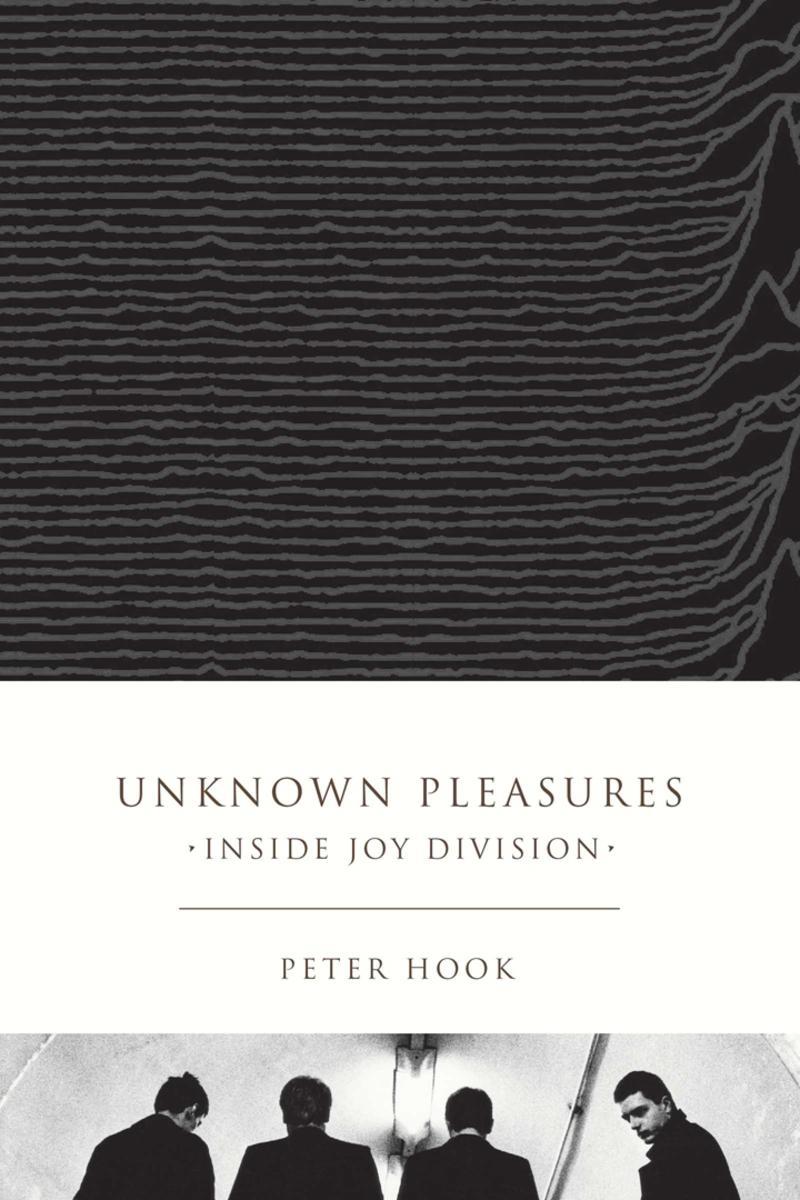
Joy Division changed the face of music. Godfathers of alternative rock, they reinvented music in the post-punk era, creating a new sound dark, hypnotic, and intense that would influence U2, Morrissey, R.E.M., Radiohead, and numerous others. The story is now legendary: in 1980, on the heels of their groundbreaking debut, Unknown Pleasures , and on the eve of their first U.S. tour, the band was rent asunder by the tragic death of their enigmatic lead singer, Ian Curtis. Yet in the mere three years they were together, Joy Division produced two landmark albums and a handful of singles including the iconic anthem Love Will Tear Us Apart that continue to have a powerful resonance. Now, for the first time, their story is told by one of their own. In Unknown Pleasures , founding member and bass player Peter Hook recounts how four young men from Manchester and Salisbury, with makeshift instruments and a broken-down van, rose from the punk scene to create a haunting, atmospheric music that would define a generation. Peter talks with eye-opening candor and reflection about the suicide of Ian Curtis; the band friendships and fallouts; the evolution of their sound and image; and the larger-than-life characters who formed a vital part of the Joy Division legend, including Factory Records founder Tony Wilson and producer Martin Hannett. Told with surprising humor and vivid detail, Unknown Pleasures is the book Joy Division fans have awaited for decades.

Our Town
¥83.03
Our Town was first produced and published in 1938 to wide acclaim. This Pulitzer Prize winning drama of life in the town of Grover 's Corners, an allegorical representation of all life, has become a classic. It is Thornton Wilder's most renowned and most frequently performed play. It is now reissued in this handsome hardcover edition, featuring a new Foreword by Donald Margulies, who writes, "You are holding in your hands a great American play. Possibly the great American play." In addition, Tappan Wilder has written an eye-opening new Afterword, which includes Thornton Wilder's unpublished notes and other illuminating photographs and documentary material.
Lincoln: How Abraham Lincoln Ended Slavery in America
¥44.85
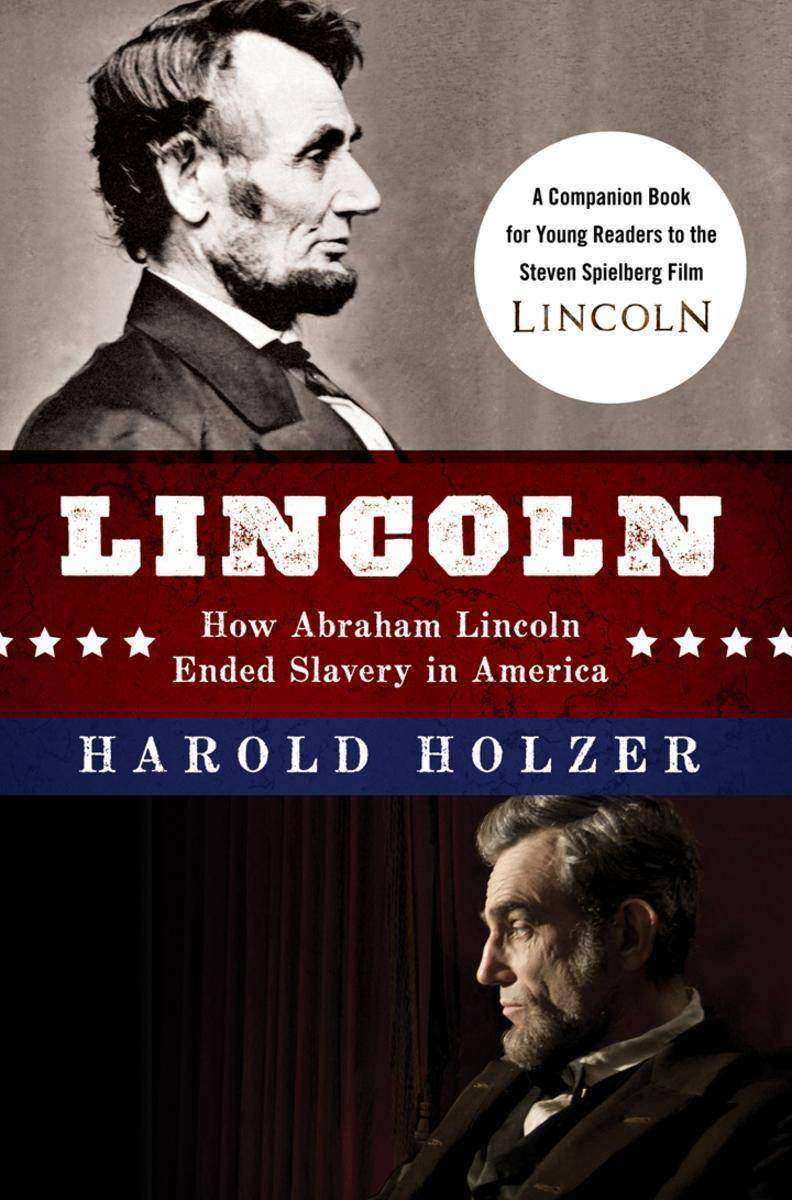
A new book and companion to the Steven Spielberg film tracing how Abraham Lincoln came to view slavery . . . and came to end it. Steven Spielberg focused his movie Lincoln on the sixteenth president tumultuous final months in office, when he pursued a course of action to end the Civil War, reunite the country, and abolish slavery. Invited by the filmmakers to write a special Lincoln book as a companion to the film, Harold Holzer, the distinguished historian and a consultant on the movie, now gives us a fast-paced, exciting new book on Lincoln life and times, his evolving beliefs about slavery, and how he maneuvered to end it. The story starts on January 31, 1865 less than three months before Lincoln assassination as the president anxiously awaits word on whether Congress will finally vote to pass the Thirteenth Amendment to the Constitution. Although the Emancipation Proclamation two years earlier had authorized the army to liberate slaves in Confederate territory, only a Constitutional amendment passed by Congress and ratified by three-fourths of the states would end slavery legally everywhere in the country. Drawing from letters, speeches, memoirs, and documents by Lincoln and others, Holzer goes on to cover Lincoln boyhood, his moves from Kentucky to Indiana to Illinois, his work as a lawyer and congressman, his unsuccessful candidacies for the U.S. Senate and his victory in two presidential elections, his arduous duties in the Civil War as commander in chief, his actions as president, and his relationships with his family, political rivals, and associates. Holzer provides a fresh view of America in those turbulent times, as well as fascinating insights into the challenges Lincoln faced as he weighed his personal beliefs against his presidential duties in relation to the slavery issue. The passage of the Thirteenth Amendment would become the crowning achievement of Abraham Lincoln life and the undisputed testament to his political genius. By viewing his life through this prism, Holzer makes an important passage in American history come alive for readers of all ages. The book also includes thirty historical photographs, a chronology, a historical cast of characters, texts of selected Lincoln writings, a bibliography, and notes.

Love, Ellen
¥94.10
Mom, m gay. With three little words, gay children can change their parents' lives forever. Yet at the same times it a chance for those parents to realize nothing, really, has changed at all; same kid, same life, same bond of enduring love. Twenty years ago, during a walk on a Mississippi beach, Ellen DeGeneres spoke those simple, powerful words to her mother. That emotional moment eventually brought mother and daughter closer than ever, but not without a struggle. Coming from a republican family with conservative values, Betty needed time and education to understand her daughter homosexuality -- but her ultimate acceptance would set the stage for a far more public coming out, one that would change history. In Love, Ellen, Betty DeGeneres tells her story; the complicated path to acceptance and the deepening of her friendship with her daughter; the media scrutiny of their family life; the painful and often inspiring stories she heard on the road as the first non-gay spokesperson for the Human Rights Campaigns National Coming Out Project. With a mother love, clear minded common sense, and hard won wisdom, Betty DeGeneres offers up her own very personal memoir to help parents understand their gay children, and to help sons and daughters who have been rejected by their families feel less alone.
Debate of the Romance of the Rose
¥353.16
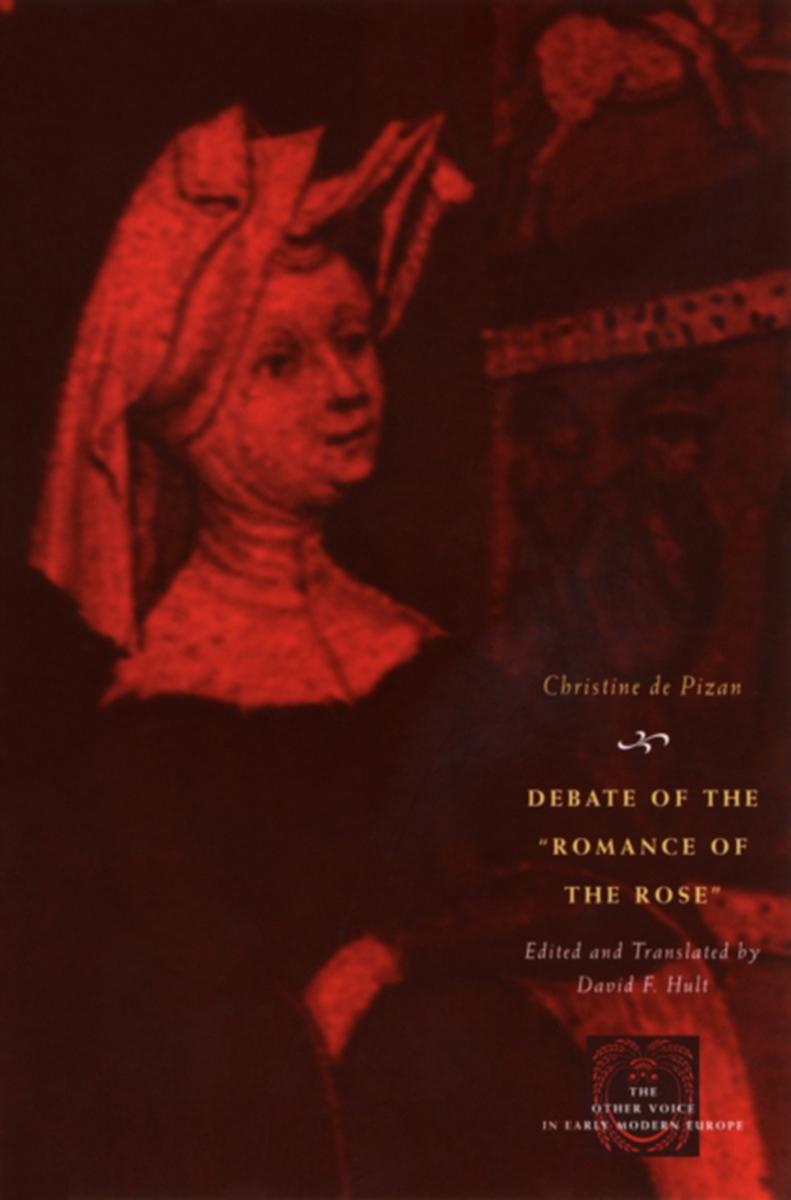
In 1401, Christine de Pizan (1365-1430?), one of the most renowned and prolific woman writers of the Middle Ages, wrote a letter to the provost of Lille criticizing the highly popular and widely read Romance of the Rose for its blatant and unwarranted misogynistic depictions of women. The debate that ensued, over not only the merits of the treatise but also of the place of women in society, started Europe on the long path to gender parity. Pizan's criticism sparked a continent-wide discussion of issues that is still alive today in disputes about art and morality, especially the civic responsibility of a writer or artist for the works he or she produces.In Debate of the "e;Romance of the Rose,"e; David Hult collects, along with the debate documents themselves, letters, sermons, and excerpts from other works of Pizan, including one from City of Ladies-her major defense of women and their rights-that give context to this debate.?Here, Pizan's supporters and detractors are heard alongside her own formidable, protofeminist voice.The resulting volume affords a rare look at the way people read and thought about literature in the period immediately preceding the era of print.
Jewish Poet and Intellectual in Seventeenth-Century Venice
¥353.16
These recent achievements have their origins in things women (and some male supporters) said for the first time about six hundred years ago. Theirs is the “other voice,” in contradistinction to the “first voice,” the voice of the educated men who created Western culture. Coincident with a general reshaping of European culture in the period 1300- 1700 (called the Renaissance or early modern period), questions of female equality and op-portunity were raised that still resound and are still unresolved.
Dispatches from Dystopia
¥147.15
"e;Why are Kazakhstan and Montana the same place?"e; asks one chapter of Kate Brown's surprising and unusual journey into the histories of places on the margins, overlooked or erased. It turns out that a ruined mining town in Kazakhstan and Butte, Montana-America's largest environmental Superfund site-have much more in common than one would think thanks to similarities in climate, hucksterism, and the perseverance of their few hardy inhabitants. Taking readers to these and other unlikely locales, Dispatches from Dystopia delves into the very human and sometimes very fraught ways we come to understand a particular place, its people, and its history.In Dispatches from Dystopia, Brown wanders the Chernobyl Zone of Alienation, first on the Internet and then in person, to figure out which version-the real or the virtual-is the actual forgery. She also takes us to the basement of a hotel in Seattle to examine the personal possessions left in storage by Japanese-Americans on their way to internment camps in 1942. In Uman, Ukraine, we hide with Brown in a tree in order to witness the annual male-only Rosh Hashanah celebration of Hasidic Jews. In the Russian southern Urals, she speaks with the citizens of the small city of Kyshtym, where invisible radioactive pollutants have mysteriously blighted lives. Finally, Brown returns home to Elgin, Illinois, in the midwestern industrial rust belt to investigate the rise of "e;rustalgia"e; and?the ways?her formative experiences have inspired her obsession with modernist wastelands.?Dispatches from Dystopia powerfully and movingly narrates the histories of locales that have been silenced, broken, or contaminated. In telling these previously unknown stories, Brown examines the making and unmaking of place, and the lives of the people who remain in the fragile landscapes that are left behind.
Invisible
¥211.90
If offered the chance-by cloak, spell, or superpower-to be invisible, who wouldn't want to give it a tryWe are drawn to the idea of stealthy voyeurism and the ability to conceal our own acts, but as desirable as it may seem, invisibility is also dangerous. It is not just an optical phenomenon, but a condition full of ethical questions. As esteemed science writer Philip Ball reveals in this book, the story of invisibility is not so much a matter of how it might be achieved but of why we want it and what we would do with it.In this lively look at a timeless idea, Ball provides the first comprehensive history of our fascination with the unseen. This sweeping narrative moves from medieval spell books to the latest nanotechnology, from fairy tales to telecommunications, from camouflage to ghosts to the dawn of nuclear physics and the discovery of dark energy. ?Along the way, Invisible tells little-known stories about medieval priests who blamed their misdeeds on spirits; the Cock Lane ghost, which intrigued both Samuel Johnson and Charles Dickens; the attempts by Victorian scientist William Crookes to detect forces using tiny windmills; novelist Edward Bulwer-Lytton's belief that he was unseen when in his dressing gown; and military efforts to enlist magicians to hide tanks and ships during WWII. ?Bringing in such voices as Plato and Shakespeare, Ball provides not only a scientific history but a cultural one-showing how our simultaneous desire for and suspicion of the invisible has fueled invention and the imagination for centuries.In this unusual and clever book, Ball shows that our fantasies about being unseen-and seeing the unseen-reveal surprising truths about who we are.

O, How the Wheel Becomes It!
¥123.61
The first novel Anthony Powell published following the completion of his epic A Dance to the Music of Time, O, How the Wheel Becomes It! fulfills perhaps every author's fantasy as it skewers a conceited, lazy, and dishonest critic. A writer who avoids serving in World War II and veers in and out of marriage, G. F. H. Shadbold ultimately falls victim to the title's spinning-and righteous-emblem of chance. Sophisticated and a bit cruel, Wheel's tale of posthumous vengeance is, nonetheless, irresistible.Written at the peak of the late British master's extraordinary literary career, this novel offers profound insight into the mind of a great artist whose unequaled style, ear for dialogue, and eye for irony will delight devotees and new readers alike.

Hegel's Theory of Intelligibility
¥265.87
Hegel's Theory of Intelligibility?picks up on recent revisionist readings of Hegel to offer a productive new interpretation of his notoriously difficult work, the Science of Logic. Rocio Zambrana transforms the revisionist tradition by distilling the theory of normativity that Hegel elaborates in the?Science of Logic?within the context of his signature treatment of negativity, unveiling how both features of his system of thought operate on his theory of intelligibility. ?Zambrana clarifies crucial features of Hegel's theory of normativity previously thought to be absent from the argument of the?Science of Logic-what she calls normative precariousness and normative ambivalence. She shows that Hegel's theory of determinacy views intelligibility as both precarious, the result of practices and institutions that gain and lose authority throughout history, and ambivalent, accommodating opposite meanings and valences even when enjoying normative authority. In this way, Zambrana shows that the Science of Logic provides the philosophical justification for the necessary historicity of intelligibility. Intervening in several recent developments in the study of Kant, Hegel, and German Idealism more broadly, this book provides a productive new understanding of the value of Hegel's systematic ambitions.

Second-Best Justice
¥329.62
It's long been known that Japanese file fewer lawsuits per capita than Americans do. Yet explanations for the difference have tended to be partial and unconvincing, ranging from circular arguments about Japanese culture to suggestions that the slow-moving Japanese court system acts as a deterrent.With?Second-Best Justice, J. Mark Ramseyer offers a more compelling, better-grounded explanation: the low rate of lawsuits in Japan results not from distrust of a dysfunctional system but from trust in a system that works-that sorts and resolves disputes in such an overwhelmingly predictable pattern that opposing parties rarely find it worthwhile to push their dispute to trial. Using evidence from tort claims across many domains, Ramseyer reveals a court system designed not to find perfect justice, but to "e;make do"e;-to adopt strategies that are mostly right and that thereby resolve disputes quickly and economically.An eye-opening study of comparative law,?Second-Best Justice?will force a wholesale rethinking of the differences among alternative legal systems and their broader consequences for social welfare.?
Making the Mission
¥294.30
In the aftermath of the 1906 San Francisco earthquake, residents of the city's iconic Mission District bucked the city-wide development plan, defiantly announcing that in their neighborhood, they would be calling the shots. Ever since, the Mission has become known as a city within a city, and a place where residents have, over the last century, organized and reorganized themselves to make the neighborhood in their own image.In Making the Mission, Ocean Howell tells the story of how residents of the Mission District organized to claim the right to plan their own neighborhood and how they mobilized a politics of place and ethnicity to create a strong, often racialized identity-a pattern that would repeat itself again and again throughout the twentieth century. Surveying the perspectives of formal and informal groups, city officials and district residents, local and federal agencies, Howell articulates how these actors worked with and against one another to establish the very ideas of the public and the public interest, as well as to negotiate and renegotiate what the neighborhood wanted. In the process, he shows that national narratives about how cities grow and change are fundamentally insufficient; everything is always shaped by local actors and concerns.
Reasons of Conscience
¥288.41
The implicit questions that inevitably underlie German bioethics are the same ones that have pervaded all of German public life for decades: How could the Holocaust have happenedAnd how can Germans make sure that it will never happen againIn Reasons of Conscience, Stefan Sperling considers the bioethical debates surrounding embryonic stem cell research in Germany at the turn of the twenty-first century, highlighting how the country's ongoing struggle to come to terms with its past informs the decisions it makes today.?Sperling brings the reader unmatched access to the offices of the German parliament to convey the role that morality and ethics play in contemporary Germany. He describes the separate and interactive workings of the two bodies assigned to shape German bioethics-the parliamentary Enquiry Commission on Law and Ethics in Modern Medicine and the executive branch's National Ethics Council-tracing each institution's genesis, projected image, and operations, and revealing that the content of bioethics cannot be separated from the workings of these institutions. Sperling then focuses his discussion around three core categories-transparency, conscience, and Germany itself-arguing that without fully considering these, we fail to understand German bioethics. He concludes with an assessment of German legislators and regulators' attempts to incorporate criteria of ethical research into the German Stem Cell Law.

Modernity Bluff
¥265.87
In Cte d'Ivoire, appearing modern is so important for success that many young men deplete their already meager resources to project an illusion of wealth in a fantastic display of Western imitation, spending far more than they can afford on brand name clothing, accessories, technology, and a robust nightlife. Such imitation, however, is not primarily meant to deceive-rather, as Sasha Newell argues in?The Modernity Bluff, it is an explicit performance so valued in Cte d'Ivoire it has become a matter of national pride.Called bluffeurs, these young urban men operate in a system of cultural economy where reputation is essential for financial success. That reputation is measured by familiarity with and access to the fashionable and expensive, which leads to a paradoxical state of affairs in which the wasting of wealth is essential to its accumulation. Using the consumption of Western goods to express their cultural mastery over Western taste, Newell argues, bluffeurs engage a global hierarchy that is profoundly modern, one that values performance over authenticityhighlighting the counterfeit nature of modernity itself.

Bloodtaking and Peacemaking
¥241.33
Dubbed by the New York Times as "e;one of the most sought-after legal academics in the county,"e; William Ian Miller presents the arcane worlds of the Old Norse studies in a way sure to attract the interest of a wide range of readers. Bloodtaking and Peacemaking delves beneath the chaos and brutality of the Norse world to discover a complex interplay of ordering and disordering impulses. Miller's unique and engaging readings of ancient Iceland's sagas and extensive legal code reconstruct and illuminate the society that produced them.People in the saga world negotiated a maze of violent possibility, with strategies that frequently put life and limb in the balance. But there was a paradox in striking the balance-one could not get even without going one better. Miller shows how blood vengeance, law, and peacemaking were inextricably bound together in the feuding process.This book offers fascinating insights into the politics of a stateless society, its methods of social control, and the role that a uniquely sophisticated and self-conscious law played in the construction of Icelandic society."e;Illuminating."e;-Rory McTurk, Times Literary Supplement"e;An impressive achievement in ethnohistory; it is an amalgam of historical research with legal and anthropological interpretation. What is more, and rarer, is that it is a pleasure to read due to the inclusion of narrative case material from the sagas themselves."e;-Dan Bauer, Journal of Interdisciplinary History

On Creaturely Life
¥241.33
In his Duino Elegies, Rainer Maria Rilke suggests that animals enjoy direct access to a realm of being-the open-concealed from humans by the workings of consciousness and self-consciousness. In his own reading of Rilke, Martin Heidegger reclaims the open as the proper domain of human existence but suggests that human life remains haunted by vestiges of an animal-like relation to its surroundings. Walter Benjamin, in turn, was to show that such vestiges-what Eric Santner calls the creaturely-have a biopolitical aspect: they are linked to the processes that inscribe life in the realm of power and authority.?Santner traces this theme of creaturely life from its poetic and philosophical beginnings in the first half of the twentieth century to the writings of the enigmatic German novelist W. G. Sebald. Sebald's entire oeuvre, Santner argues, can be seen as an archive of creaturely life. For Sebald, the work on such an archive was inseparable from his understanding of what it means to engage ethically with another person's history and pain, an engagement that transforms us from indifferent individuals into neighbors.?An indispensable book for students of Sebald, On Creaturely Life is also a significant contribution to critical theory.
Egyptian Oedipus
¥247.21
A contemporary of Descartes and Newton, Athanasius Kircher, S. J. (1601/2-80), was one of Europe's most inventive and versatile scholars in the baroque era. He published more than thirty works in fields as diverse as astronomy, magnetism, cryptology, numerology, geology, and music. But Kircher is most famous-or infamous-for his quixotic attempt to decipher the Egyptian hieroglyphs and reconstruct the ancient traditions they encoded. In 1655, after more than two decades of toil, Kircher published his solution to the hieroglyphs, Oedipus Aegyptiacus, a work that has been called "e;one of the most learned monstrosities of all times."e; Here Daniel Stolzenberg presents a new interpretation of Kircher's hieroglyphic studies, placing them in the context of seventeenth-century scholarship on paganism and Oriental languages.?Situating Kircher in the social world of baroque Rome, with its scholars, artists, patrons, and censors, Stolzenberg shows how Kircher's study of ancient paganism depended on the circulation of texts, artifacts, and people between Christian and Islamic civilizations. Along with other participants in the rise of Oriental studies, Kircher aimed to revolutionize the study of the past by mastering Near Eastern languages and recovering ancient manu*s hidden away in the legendary libraries of Cairo and Damascus. The spectacular flaws of his scholarship have fostered an image of Kircher as an eccentric anachronism, a throwback to the Renaissance hermetic tradition. Stolzenberg argues against this view, showing how Kircher embodied essential tensions of a pivotal phase in European intellectual history, when pre-Enlightenment scholars pioneered modern empirical methods of studying the past while still working within traditional frameworks, such as biblical history and beliefs about magic and esoteric wisdom.
Tragic Sense of Life
¥253.10
Prior to the First World War, more people learned of evolutionary theory from the voluminous writings of Charles Darwin's foremost champion in Germany, Ernst Haeckel (1834-1919), than from any other source, including the writings of Darwin himself. But, with detractors ranging from paleontologist Stephen Jay Gould to modern-day creationists and advocates of intelligent design, Haeckel is better known as a divisive figure than as a pioneering biologist. Robert J. Richards's intellectual biography rehabilitates Haeckel, providing the most accurate measure of his science and art yet written, as well as a moving account of Haeckel's eventful life.


