


 购物车
 个人中心

Clouds - High thoughts must have high language
¥11.67
The reality is that little is known of Aristophanes actual life but eleven of his forty plays survive intact and upon those rest his deserved reputation as the Father of Comedy or, The Prince of Ancient Comedy. Accounts agree that he was born sometime between 456BC and 446 BC. Many cities claim the honor of his birthplace and the most probable story makes him the son of Philippus of gina, and therefore only an adopted citizen of Athens, a distinction which, at times could be cruel, though he was raised and educated in Athens. His plays are said to recreate the life of ancient Athens more realistically than any other author could. Intellectually his powers of ridicule were feared by his influential contemporaries; Plato himself singled out Aristophanes' play The Clouds as a slander that contributed to the trial and condemning to death of Socrates and although other satirical playwrights had also caricatured the philosopher his carried the most weight. His now lost play, The Babylonians, was denounced by the demagogue Cleon as a slander against the Athenian polis. Aristophanes seems to have taken this criticism to heart and thereafter caricatured Cleon mercilessly in his subsequent plays, especially The Knights. His life and playwriting years were undoubtedly long though again accounts as to the year of his death vary quite widely. What can be certain is that his legacy of surviving plays is in effect both a treasured legacy but also in itself the only surviving texts of Ancient Greek comedy.
Old Law - Many good purposes lie in the churchyard
¥23.45
Philip Massinger was baptized at St. Thomas's in Salisbury on November 24th, 1583.Massinger is described in his matriculation entry at St. Alban Hall, Oxford (1602), as the son of a gentleman. His father, who had also been educated there, was a member of parliament, and attached to the household of Henry Herbert, 2nd Earl of Pembroke. The Earl was later seen as a potential patron for Massinger.He left Oxford in 1606 without a degree. His father had died in 1603, and accounts suggest that Massinger was left with no financial support this, together with rumours that he had converted to Catholicism, meant the next stage of his career needed to provide an income.Massinger went to London to make his living as a dramatist, but he is only recorded as author some fifteen years later, when The Virgin Martyr (1621) is given as the work of Massinger and Thomas Dekker.During those early years as a playwright he wrote for the Elizabethan stage entrepreneur, Philip Henslowe. It was a difficult existence. Poverty was always close and there was constant pleading for advance payments on forthcoming works merely to survive.After Henslowe died in 1616 Massinger and John Fletcher began to write primarily for the King's Men and Massinger would write regularly for them until his death.The tone of the dedications in later plays suggests evidence of his continued poverty. In the preface of The Maid of Honour (1632) he wrote, addressing Sir Francis Foljambe and Sir Thomas Bland: "e;I had not to this time subsisted, but that I was supported by your frequent courtesies and favours."e;The prologue to The Guardian (1633) refers to two unsuccessful plays and two years of silence, when the author feared he had lost popular favour although, from the little evidence that survives, it also seems he had involved some of his plays with political characters which would have cast shadows upon England's alliances.Philip Massinger died suddenly at his house near the Globe Theatre on March 17th, 1640. He was buried the next day in the churchyard of St. Saviour's, Southwark, on March 18th, 1640. In the entry in the parish register he is described as a "e;stranger,"e; which, however, implies nothing more than that he belonged to another parish.
Shell Shock - Man's loneliness is but his fear of life.
¥14.03
Eugene Gladstone O'Neill was born on October 16, 1888 in a hotel bedroom in what is now Times Square, New York. Much of his childhood was spent in the comfort of books at boarding schools whilst his actor father was on the road and his Mother contended with her own demons. He spent only a year at University - Princeton - and various reasons have been given for his departure. However whatever his background and education denied or added to his development it is agreed amongst all that he was a playwright of the first rank and possibly America's greatest. His introduction of realism into American drama was instrumental in its development and paved a path for many talents thereafter. Of course his winning of both the Pulitzer Prize (4 times) and the Nobel Prize are indicative of his status. His more famous and later works do side with the disillusionment and personal tragedy of those on the fringes of society but continue to build upon ideas and structures he incorporated in his early one act plays. Eugene O'Neill suffered from various health problems, mainly depression and alcoholism. In the last decade he also faced a Parkinson's like tremor in his hands which made writing increasingly difficult. But out of such difficulties came plays of the calibre of The Iceman Cometh, Long Day's Journey Into Night, and A Moon for the Misbegotten. Eugene O'Neill died in Room 401 of the Sheraton Hotel on Bay State Road in Boston, on November 27, 1953, at the age of 65. As he was dying, he whispered his last words: "e;I knew it. I knew it. Born in a hotel room and died in a hotel room."e;
Picture - Ambition, in a private man is a vice, is in a prince the virtue
¥23.45
Philip Massinger was baptized at St. Thomas's in Salisbury on November 24th, 1583.Massinger is described in his matriculation entry at St. Alban Hall, Oxford (1602), as the son of a gentleman. His father, who had also been educated there, was a member of parliament, and attached to the household of Henry Herbert, 2nd Earl of Pembroke. The Earl was later seen as a potential patron for Massinger.He left Oxford in 1606 without a degree. His father had died in 1603, and accounts suggest that Massinger was left with no financial support this, together with rumours that he had converted to Catholicism, meant the next stage of his career needed to provide an income.Massinger went to London to make his living as a dramatist, but he is only recorded as author some fifteen years later, when The Virgin Martyr (1621) is given as the work of Massinger and Thomas Dekker.During those early years as a playwright he wrote for the Elizabethan stage entrepreneur, Philip Henslowe. It was a difficult existence. Poverty was always close and there was constant pleading for advance payments on forthcoming works merely to survive.After Henslowe died in 1616 Massinger and John Fletcher began to write primarily for the King's Men and Massinger would write regularly for them until his death.The tone of the dedications in later plays suggests evidence of his continued poverty. In the preface of The Maid of Honour (1632) he wrote, addressing Sir Francis Foljambe and Sir Thomas Bland: "e;I had not to this time subsisted, but that I was supported by your frequent courtesies and favours."e;The prologue to The Guardian (1633) refers to two unsuccessful plays and two years of silence, when the author feared he had lost popular favour although, from the little evidence that survives, it also seems he had involved some of his plays with political characters which would have cast shadows upon England's alliances.Philip Massinger died suddenly at his house near the Globe Theatre on March 17th, 1640. He was buried the next day in the churchyard of St. Saviour's, Southwark, on March 18th, 1640. In the entry in the parish register he is described as a "e;stranger,"e; which, however, implies nothing more than that he belonged to another parish.
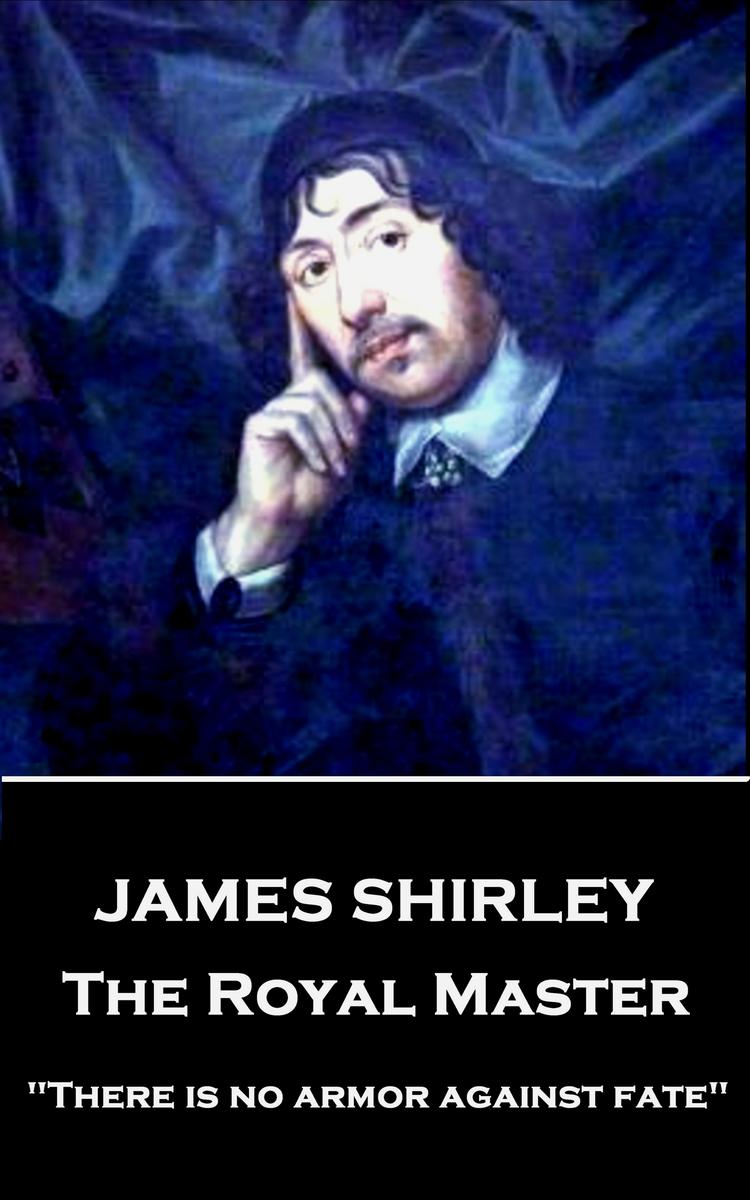
Royal Master - There is no armor against fate
¥25.80
James Shirley was born in London in September 1596. His education was through a collection of England's finest establishments: Merchant Taylors' School, London, St John's College, Oxford, and St Catharine's College, Cambridge, where he took his B.A. degree in approximately 1618. He first published in 1618, a poem entitled Echo, or the Unfortunate Lovers. As with many artists of this period full details of his life and career are not recorded. Sources say that after graduating he became "e;a minister of God's word in or near St Albans."e; A conversion to the Catholic faith enabled him to become master of St Albans School from 1623-25. He wrote his first play, Love Tricks, or the School of Complement, which was licensed on February 10th, 1625. From the given date it would seem he wrote this whilst at St Albans but, after its production, he moved to London and to live in Gray's Inn. For the next two decades, he would write prolifically and with great quality, across a spectrum of thirty plays; through tragedies and comedies to tragicomedies as well as several books of poetry. Unfortunately, his talents were left to wither when Parliament passed the Puritan edict in 1642, forbidding all stage plays and closing the theatres. Most of his early plays were performed by Queen Henrietta's Men, the acting company for which Shirley was engaged as house dramatist. Shirley's sympathies lay with the King in battles with Parliament and he received marks of special favor from the Queen. He made a bitter attack on William Prynne, who had attacked the stage in Histriomastix, and, when in 1634 a special masque was presented at Whitehall by the gentlemen of the Inns of Court as a practical reply to Prynne, Shirley wrote the text-The Triumph of Peace. Shirley spent the years 1636 to 1640 in Ireland, under the patronage of the Earl of Kildare. Several of his plays were produced by his friend John Ogilby in Dublin in the first ever constructed Irish theatre; The Werburgh Street Theatre. During his years in Dublin he wrote The Doubtful Heir, The Royal Master, The Constant Maid, and St. Patrick for Ireland. In his absence from London, Queen Henrietta's Men sold off a dozen of his plays to the stationers, who naturally, enough published them. When Shirley returned to London in 1640, he finished with the Queen Henrietta's company and his final plays in London were acted by the King's Men. On the outbreak of the English Civil War Shirley served with the Earl of Newcastle. However when the King's fortunes began to decline he returned to London. There his friend Thomas Stanley gave him help and thereafter Shirley supported himself in the main by teaching and publishing some educational works under the Commonwealth. In addition to these he published during the period of dramatic eclipse four small volumes of poems and plays, in 1646, 1653, 1655, and 1659. It is said that he was "e;a drudge"e; for John Ogilby in his translations of Homer's Iliad and the Odyssey, and survived into the reign of Charles II, but, though some of his comedies were revived, his days as a playwright were over. His death, at age seventy, along with that of his wife, in 1666, is described as one of fright and exposure due to the Great Fire of London which had raged through parts of London from September 2nd to the 5th. He was buried at St Giles in the Fields, in London, on October 29th, 1666.
When We Dead Awaken (1899)
¥23.45
Henrik Ibsen (20th March, 1828 - 23rd May, 1906) is often referred to as the father of realism and ranked just below Shakespeare as Europe's greatest ever playwright especially as his plays are performed most frequently throughout the world after Shakespeare's. He was Norwegian and although set his plays in Norway, he wrote them in Danish and lived most of his professional life in Italy and Germany. His affect on the theatre is still evident today and shapes the distinction of plays being art as opposed to entertainment since he broke down all previous traditions and explored issues, developed characterisation, revealed uncomfortable truths, challenged assumptions and brokedown facades in ourselves as well as society. These factors are clearly demonstrated in When We Dead Awaken which centres around celebrated sculptor Arnold Rubek whose fame rests with his great work "e;The Day of the Resurrection"e; which he sculpted when he was younger. The model for this piece had been Irene and although he had feelings for her, he moved on and married Maia. He feels his creativity has dwindled and Irene might be able to unleash this again. Irene appears mysteriously and perceives her modelling for his work as the epitome of her life and therefore is now dead to any other experiences and has lost any respect for the sanctity of life. Ibsen's exploration of artistic intensity and integrity through this powerful relationship with its pervading images of stone demonstrates a passion for life that is unable to be realised and gives the play an ironic conclusion that is a must read.
Agnes Grey (Mermaids Classics)
¥35.22
Agnes Grey by Anne Bronte (1820 -1849) is a classic novel based on the life of working as a governess. It is set in the Victorian era and follows the story of Agnes, the daughter of a minister who finds employment by working as a governess due her familys financial difficulties. She is faced with challenging issues which young women at the time were faced with whilst working as a governess. The novel was first published in 1847 and republished in 1850. It was considered to be a reflection of the authors own life experiences whilst working for five years as a governess. Mermaids Classics, an imprint of Mermaids Publishing brings the very best of old classic literature to a modern era of digital reading by producing high quality books in ebook format. All of the Mermaids Classics epublications are reproductions of classic antique books that were originally published in print format, mostly over a century ago and are now republished in digital format as ebooks. Begin to build your collection of digital books by looking for more literary gems from Mermaids Classics.
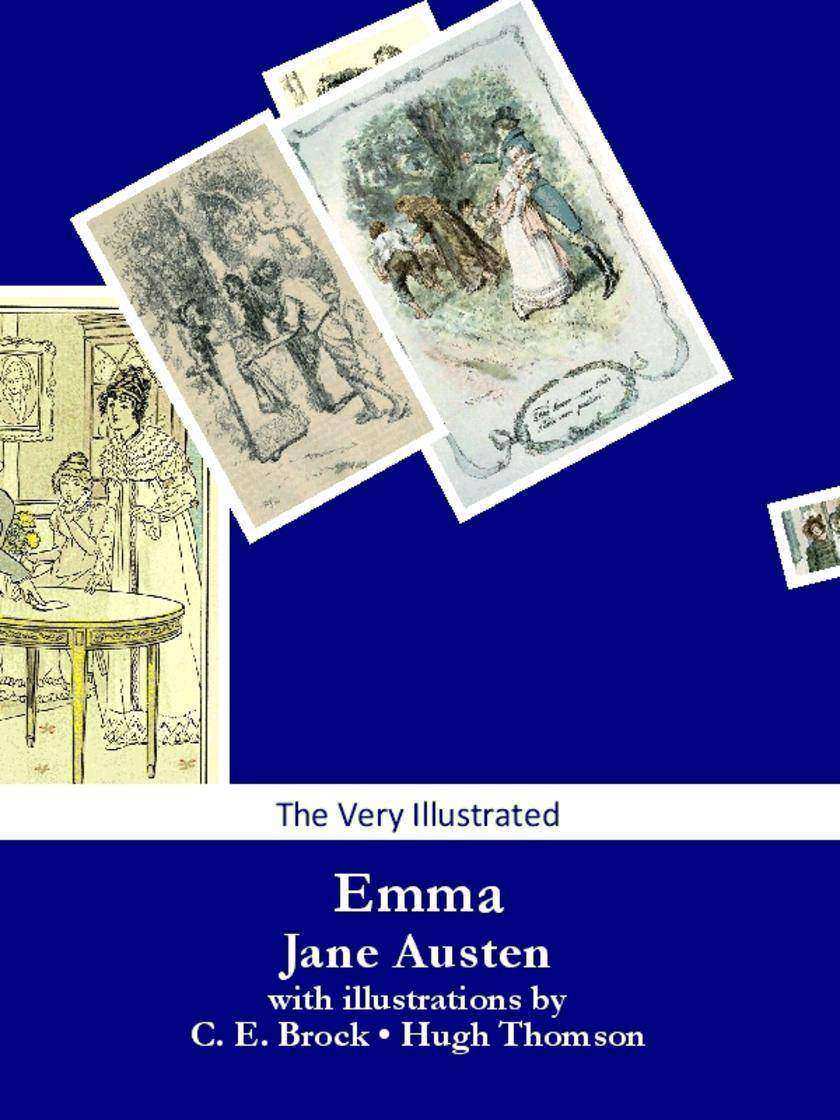
Emma (The Very Illustrated Edition)
¥35.22
Emma is a comic novel by Jane Austen, first published in December 1815, about the perils of misconstrued romance. The main character, Emma Woodhouse, is described in the opening paragraph as handsome, clever, and rich but is also rather spoiled.This edition includes:* 12 tinted line drawings by C. E. Brock (1898)* 24 watercolors by C. E. Brock (1909)* 39 black and white drawings by Hugh Thomson (1896)
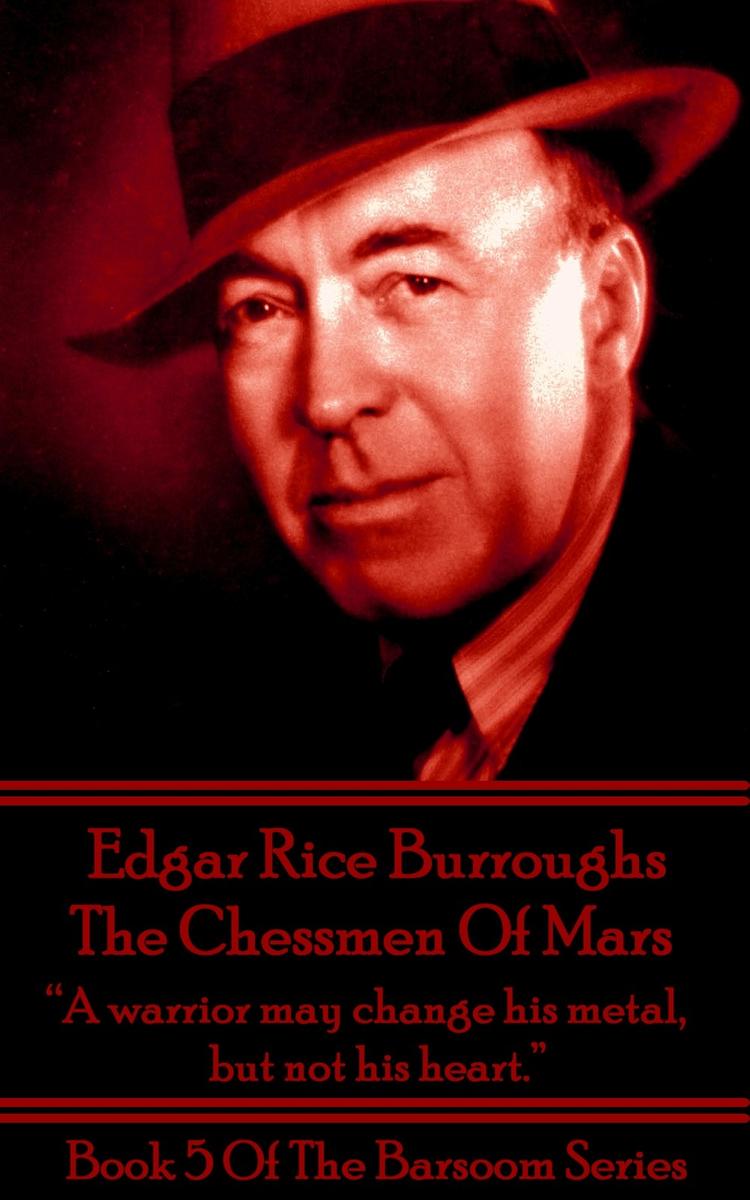
Chessmen Of Mars - A warrior may change his metal, but not his heart.
¥35.22
Edgar Rice Burroughs was born on September 1, 1875, in Chicago, Illinois. His early career was unremarkable. After failing to enter West Point he enlisted in the 7th Calvary but was discharged after heart problems were diagnosed. A series of short term jobs gave no indication as to a career path but finally, in 1911, married and with two young children, he turned his hand to writing. He aimed his works squarely at the very popular pulp serial magazines. His first effort 'Under The Moons Of Mars' ran in Munsey's Magazine in 1912 under the pseudonym Norman Bean. With its success he began writing full time. A continuing theme of his work was to develop series so that each character had ample opportunities to return in sequels. John Carter was in the Mars series and there was another on Venus and one on Pellucidar among others. But perhaps the best known is Tarzan. Indeed Burroughs wanted so much to capitalise upon the brand that he introduced a syndicated Tarzan comic strip, movies and merchandise. He purchased a large ranch north of Los Angeles, California, which he named "e;Tarzana."e; The surrounding communities outside the ranch voted in 1927 to adopt the name as their own. By 1932 Burroughs set up his own company to print his own books. Here we publish the fifth in the Barsoom series and its enduring hero John Carter 'The Chessmen of Mars'. Another cultural classic.

Tenant of Wildfell Hall (Mermaids Classics)
¥35.22
The Tenant of Wildfell Hall (1848) by Anne Bronte (1820-1849) is a romance classic novel based on the mysterious widow Mrs Helen Graham who arrives at Wildfell Hall and takes up residence in the mansion with her young son. She endures local gossip within the community which was initiated by the jealous Eliza who had briefly courted the local farmer Gilbert Markham until he developed an interest for the Helen. Gilbert finds the local gossip quite disturbing until he discovers through Helens diary of her mysterious past and how she lived in an unhappy marriage. Mermaids Classics, an imprint of Mermaids Publishing brings the very best of old classic literature to a modern era of digital reading by producing high quality books in ebook format. All of the Mermaids Classics epublications are reproductions of classic antique books that were originally published in print format, mostly over a century ago and are now republished in digital format as ebooks. Begin to build your collection of digital books by looking for more literary gems from Mermaids Classics.
David Copperfield (Mermaids Classics)
¥35.22
David Copperfield (1850) by Charles Dickens (1812-1870) follows the story of a boy named David whos step-father mistreats him and hes sent to boarding school. The story continues to follow David to adulthood which was also was considered to be a more of an autobiographical account of the authors own life from childhood to adulthood.Mermaids Classics, an imprint of Mermaids Publishing brings the very best of old classic literature to a modern era of digital reading by producing high quality books in ebook format. All of the Mermaids Classics epublications are reproductions of classic antique books that were originally published in print format, mostly over a century ago and are now republished in digital format as ebooks. Begin to build your collection of digital books by looking for more literary gems from Mermaids Classics.
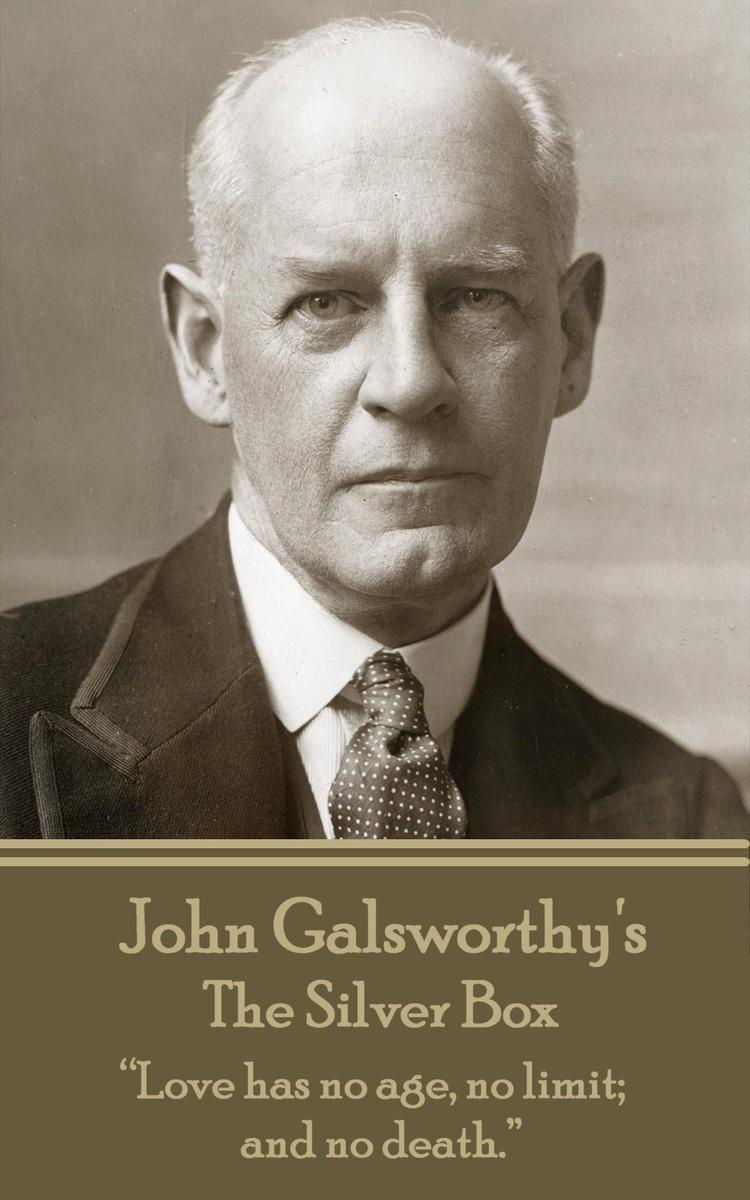
Silver Box - Love has no age, no limit; and no death.
¥29.33
John Galsworthy first published in 1897 with a collection of short stories entitled "e;The Four Winds"e;. For the next 7 years he published these and all works under his pen name John Sinjohn. It was only upon the death of his father and the publication of "e;The Island Pharisees"e; in 1904 that he published as John Galsworthy. His first play, which we publish here, was The Silver Box, an immediate success when it debuted in 1906 and was followed by "e;The Man of Property"e; later that same year and was the first in the Forsyte trilogy. Whilst today he is far more well know as a Nobel Prize winning novelist then he was considered a playwright dealing with social issues and the class system. He was appointed to the Order of Merit in 1929, after earlier turning down a knighthood, and awarded the Nobel Prize in 1932 though he was too ill to attend. John Galsworthy died from a brain tumour at his London home, Grove Lodge, Hampstead on January 31st 1933. In accordance with his will he was cremated at Woking with his ashes then being scattered over the South Downs from an aeroplane.
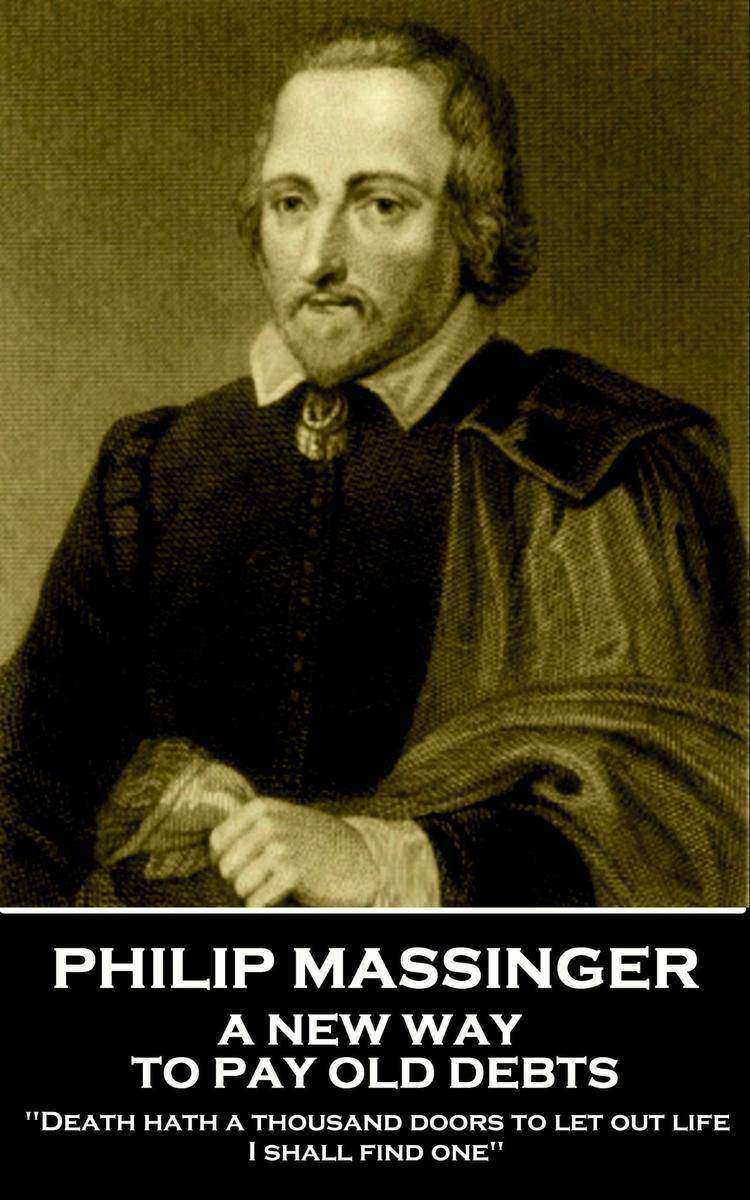
New Way to Pay Old Debts - Death hath a thousand doors to let out life: I shall
¥23.45
Philip Massinger was baptized at St. Thomas's in Salisbury on November 24th, 1583.Massinger is described in his matriculation entry at St. Alban Hall, Oxford (1602), as the son of a gentleman. His father, who had also been educated there, was a member of parliament, and attached to the household of Henry Herbert, 2nd Earl of Pembroke. The Earl was later seen as a potential patron for Massinger.He left Oxford in 1606 without a degree. His father had died in 1603, and accounts suggest that Massinger was left with no financial support this, together with rumours that he had converted to Catholicism, meant the next stage of his career needed to provide an income.Massinger went to London to make his living as a dramatist, but he is only recorded as author some fifteen years later, when The Virgin Martyr (1621) is given as the work of Massinger and Thomas Dekker.During those early years as a playwright he wrote for the Elizabethan stage entrepreneur, Philip Henslowe. It was a difficult existence. Poverty was always close and there was constant pleading for advance payments on forthcoming works merely to survive.After Henslowe died in 1616 Massinger and John Fletcher began to write primarily for the King's Men and Massinger would write regularly for them until his death.The tone of the dedications in later plays suggests evidence of his continued poverty. In the preface of The Maid of Honour (1632) he wrote, addressing Sir Francis Foljambe and Sir Thomas Bland: "e;I had not to this time subsisted, but that I was supported by your frequent courtesies and favours."e;The prologue to The Guardian (1633) refers to two unsuccessful plays and two years of silence, when the author feared he had lost popular favour although, from the little evidence that survives, it also seems he had involved some of his plays with political characters which would have cast shadows upon England's alliances.Philip Massinger died suddenly at his house near the Globe Theatre on March 17th, 1640. He was buried the next day in the churchyard of St. Saviour's, Southwark, on March 18th, 1640. In the entry in the parish register he is described as a "e;stranger,"e; which, however, implies nothing more than that he belonged to another parish.
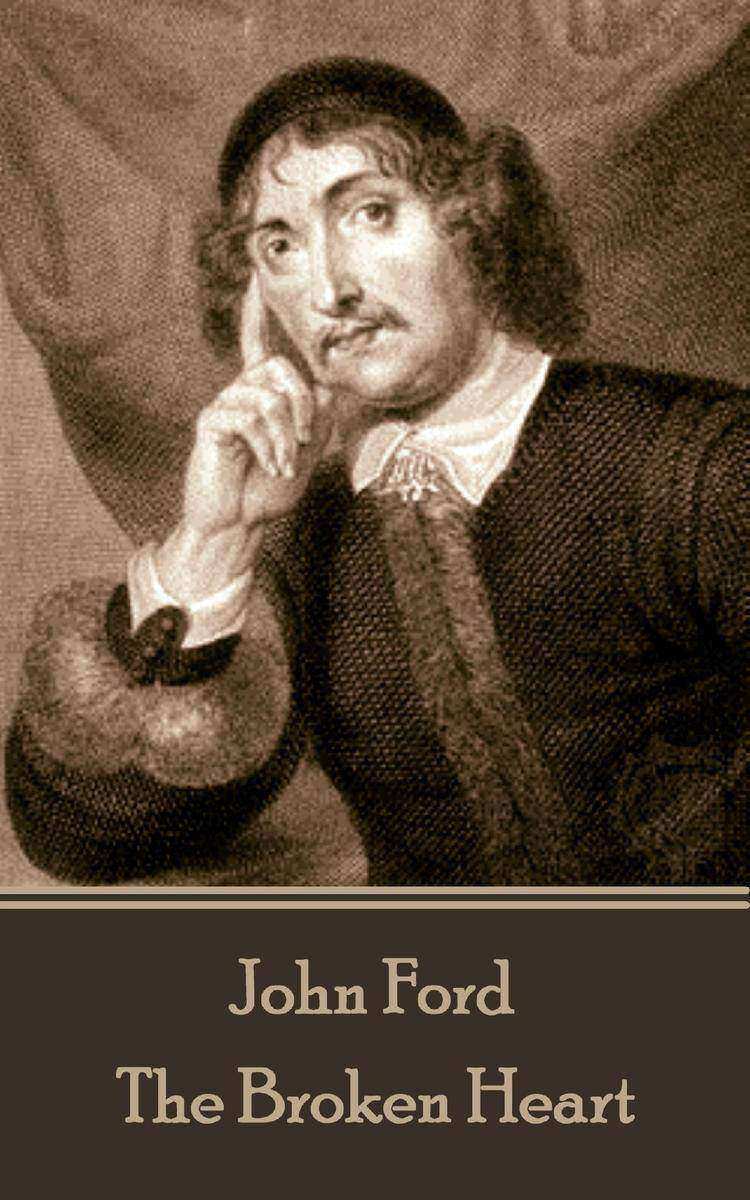
Broken Heart
¥19.91
John Ford is another of England's famed literary masters. A Playwright and Poet, he was the most important writer of Tragedies during the reign of King Charles I (1625-49). His works are beautifully poetic even whilst tackling subjects from incest to the choice between true love or forced marriage. Ford's work has endured down the centuries although little is known of his life, or, in some cases, even his contributions to his own plays when written with others. As a whole though it is a legacy of classics; powerful persuasions from driven characters and compelling narratives.
Macbeth - What's done cannot be undone.
¥11.67
The life of William Shakespeare, arguably the most significant figure in the Western literary canon, is relatively unknown. Shakespeare was born in Stratford-upon-Avon in 1565, possibly on the 23rd April, St. George's Day, and baptised there on 26th April. Little is known of his education and the first firm facts to his life relate to his marriage, aged 18, to Anne Hathaway, who was 26 and from the nearby village of Shottery. Anne gave birth to their first son six months later. Shakespeare's first play, The Comedy of Errors began a procession of real heavyweights that were to emanate from his pen in a career of just over twenty years in which 37 plays were written and his reputation forever established. This early skill was recognised by many and by 1594 the Lord Chamberlain's Men were performing his works. With the advantage of Shakespeare's progressive writing they rapidly became London's leading company of players, affording him more exposure and, following the death of Queen Elizabeth in 1603, a royal patent by the new king, James I, at which point they changed their name to the King's Men. By 1598, and despite efforts to pirate his work, Shakespeare's name was well known and had become a selling point in its own right on title pages. No plays are attributed to Shakespeare after 1613, and the last few plays he wrote before this time were in collaboration with other writers, one of whom is likely to be John Fletcher who succeeded him as the house playwright for the King's Men. William Shakespeare died two months later on April 23rd, 1616, survived by his wife, two daughters and a legacy of writing that none have since yet eclipsed.
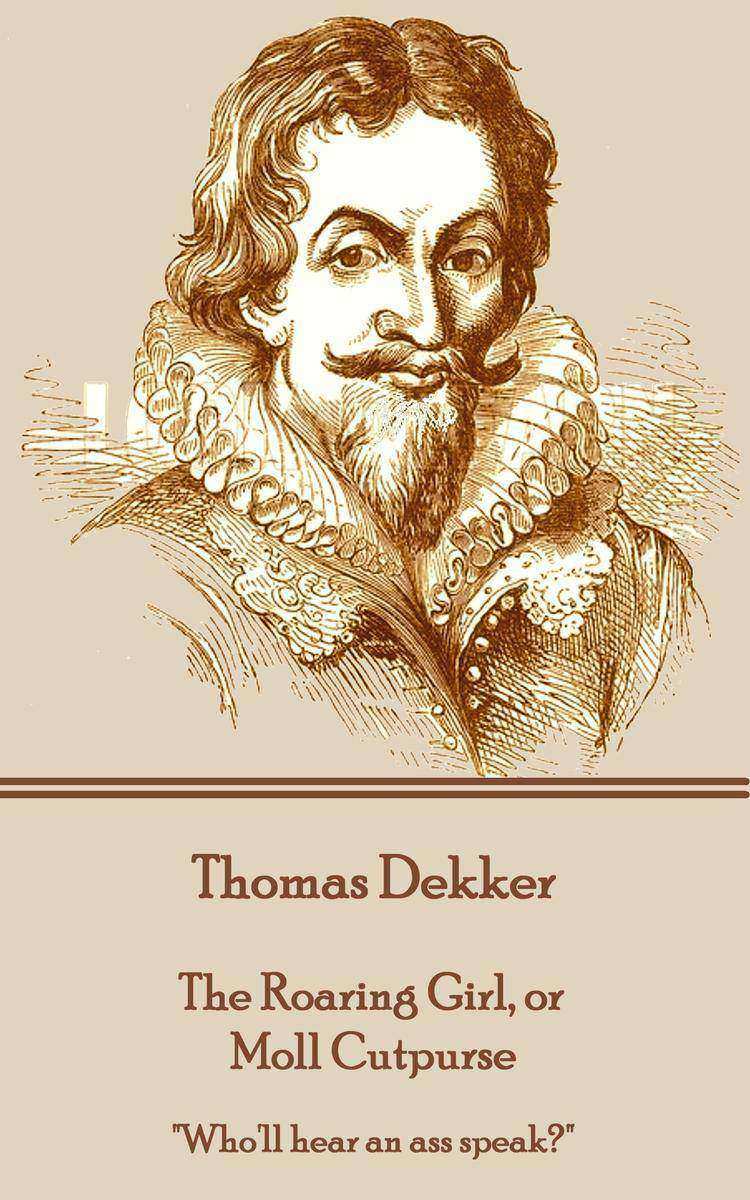
Roaring Girl, or Moll Cutpurse - Who'll hear an ass speak?
¥26.98
Thomas Dekker was a playwright, pamphleteer and poet who, perhaps, deserves greater recognition than he has so far gained. Despite the fact only perhaps twenty of his plays were published, and fewer still survive, he was far more prolific than that. Born around 1572 his peak years were the mid 1590's to the 1620's - seven of which he spent in a debtor's prison. His works span the late Elizabethan and Caroline eras and his numerous collaborations with Ford, Middleton, Webster and Jonson say much about his work. His pamphlets detail much of the life in these times, times of great change, of plague and of course that great capital city London a swirling mass of people, power, intrigue.
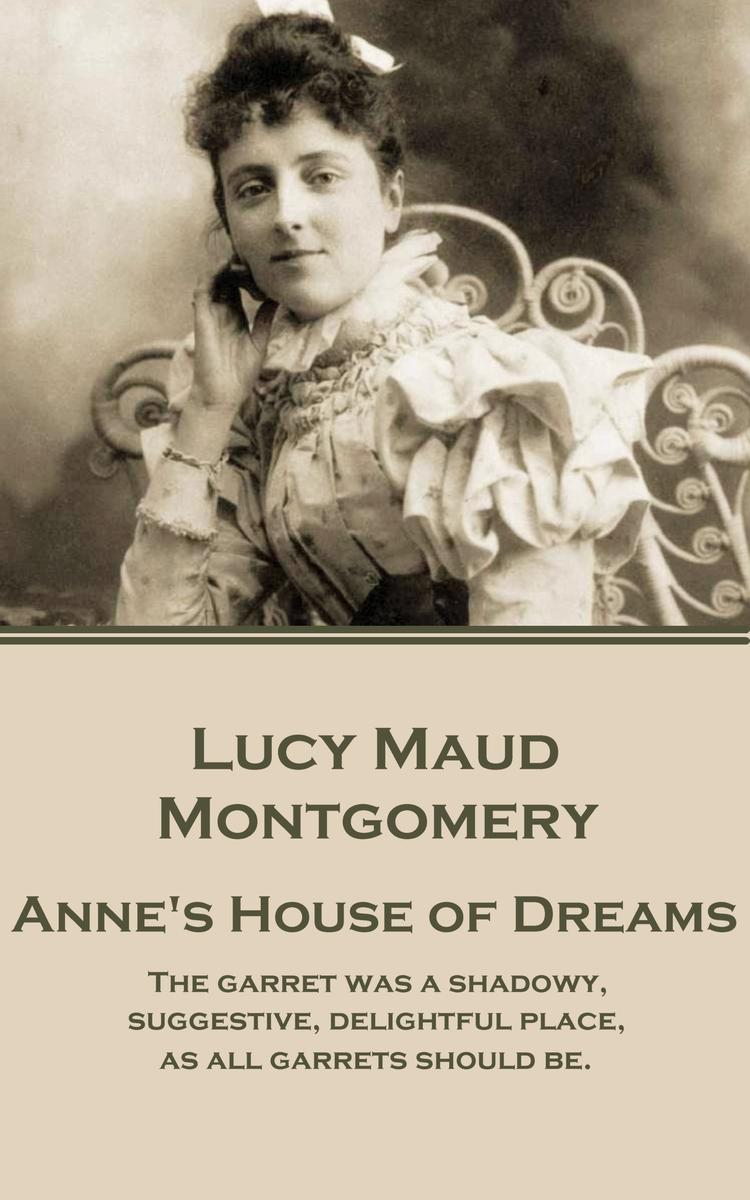
Anne's House of Dreams - The garret was a shadowy, suggestive
¥23.45
Lucy Maud Montgomery was born in Clifton, Prince Edward Island, Canada, on November 30, 1874. Her mother died when she was a toddler and her devastated father asked her grandparents to raise her. Her childhood years in Cavendish were very lonely. Lucy's solution at this early age was to create imaginary worlds and people them with imaginary friends. Her creativity was beginning to establish itself in her life. With her studying days over Lucy began a career as a teacher and worked at various Prince Edward Island schools. It was soon obvious to her that she did not enjoy teaching but the benefit was that it gave her time to write. That was now her real passion. Much of her early career was spent writing short stories. Indeed in the decade from 1897 magazines and newspapers published over 100 stories from the prolific young writer. In 1908, Lucy published her first book, the classic, Anne of Green Gables. It was an immediate success and quickly established her career. During her lifetime, Lucy published 20 novels, 530 short stories, 500 poems, and 30 essays. Aware of her fame, by 1920 Lucy began editing and recopying her journals, reframing her life as she wanted it remembered. Lucy Maud Montgomery died on April 24, 1942 in Toronto. A note was found beside her bed, "e;I have lost my mind by spells and I do not dare think what I may do in those spells. May God forgive me and I hope everyone else will forgive me even if they cannot understand. My position is too awful to endure and nobody realizes it. What an end to a life in which I tried always to do my best."e; The official cause of death was a coronary thrombosis.
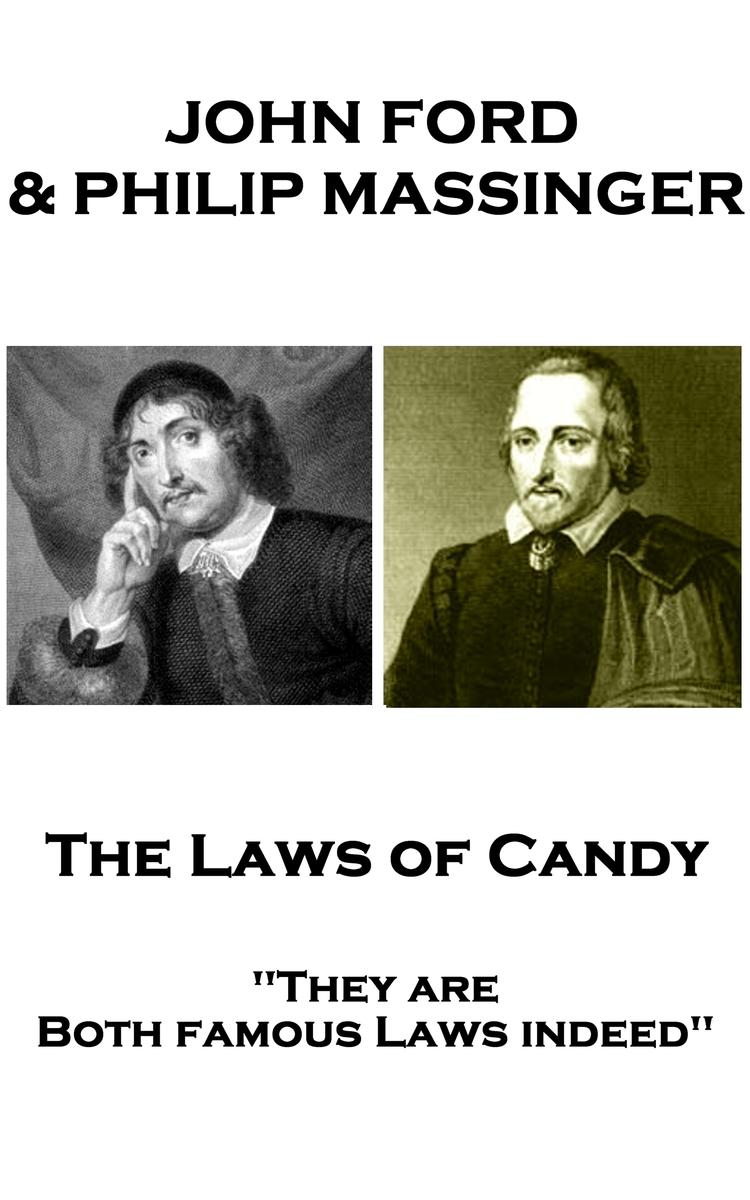
Laws of Candy - They are Both famous Laws indeed
¥23.45
The play was originally attributed to, and published in, the folios of John Fletcher & Francis Beaumont but modern analysis and scholarship has defined the primary author as John Ford. There is also some evidence that the surviving play was reworked by Philip Massinger.John Ford was born in 1586 in Ilsington, in Devon and baptizes on April 17th.Details of his life are scare and some have a variance of truth about them. By 1602 Ford, had by most accounts, been admitted to Middle Temple in London, a prestigious law school but also a centre for literary and dramatic pursuits. In 1606 Ford was expelled due to his financial problems. He then wrote and had published two poems Fame's Memorial and Honour Triumphant. Two years later he was back at Middle Temple and would remain there until at least 1617.His initial forays into playwriting began with other more senior and well-known collaborators such as Thomas Dekker, John Webster, and William Rowley. It is difficult to distinguish the share of the writing amongst them but certainly his themes, style, rhythm and language are at least an influence and undoubtedly grew with each production.From about 1627 to 1638 Ford wrote plays by himself, mostly for private theatres and his outstanding reputation, is set mainly with his first four plays in which he was the sole author. Of these, 'Tis Pity She's a Whore is the most powerful. Ford's austerely powerful themes are set off by subplots with minor characters and perhaps not the greatest of comedy, but together they outline him as the most important tragedian of the reign of King Charles I (1625-49).Philip Massinger was baptized at St. Thomas's in Salisbury on November 24th, 1583.Massinger is described in his matriculation entry at St. Alban Hall, Oxford (1602), as the son of a gentleman. His father, who had also been educated there, was a member of parliament, and attached to the household of Henry Herbert, 2nd Earl of Pembroke. The Earl was later seen as a potential patron for Massinger.He left Oxford in 1606 without a degree. His father had died in 1603, and accounts suggest that Massinger was left with no financial support this, together with rumours that he had converted to Catholicism, meant the next stage of his career needed to provide an income.Massinger went to London to make his living as a dramatist, but he is only recorded as author some fifteen years later, when The Virgin Martyr (1621) is given as the work of Massinger and Thomas Dekker.During those early years as a playwright he wrote for the Elizabethan stage entrepreneur, Philip Henslowe. It was a difficult existence. Poverty was always close and there was constant pleading for advance payments on forthcoming works merely to survive.After Henslowe died in 1616 Massinger and John Fletcher began to write primarily for the King's Men and Massinger would write regularly for them until his death.The tone of the dedications in later plays suggests evidence of his continued poverty. In the preface of The Maid of Honour (1632) he wrote, addressing Sir Francis Foljambe and Sir Thomas Bland: "e;I had not to this time subsisted, but that I was supported by your frequent courtesies and favours."e;The prologue to The Guardian (1633) refers to two unsuccessful plays and two years of silence, when the author feared he had lost popular favour although, from the little evidence that survives, it also seems he had involved some of his plays with political characters which would have cast shadows upon England's alliances.Philip Massinger died suddenly at his house near the Globe Theatre on March 17th, 1640. He was buried the next day in the churchyard of St. Saviour's, Southwark, on March 18th, 1640. In the entry in the parish register he is described as a "e;stranger,"e; which, however, implies nothing more than that he belonged to another parish.
The Tales of Beedle the Bard
¥20.00
All profits from the sale of this eBook will go to Lumos, a charity founded by J.K. Rowling to end the institutionalisation of children worldwide. As familiar to many Hogwarts students as Cinderella and Sleeping Beauty are to Muggle children, The Tales of Beedle the Bard is a collection of popular stories written for young wizards and witches. Translated from the original runes by Hermione Granger, they include fascinating additional notes from Professor Albus Dumbledore, with intriguing glimpses into his life at Hogwarts, as well as illustrations from J.K. Rowling herself.For wizarding and Muggle readers alike, this is a must-have edition, featuring fate-seeking witches, a hairy-hearted warlock and the tale of the three brothers who tried to cheat Death . . .By buying this unique and special book, you are helping Lumos to make sure that, by 2050, no more children live in institutions or orphanages around the world, and that every child is able to enjoy their right to grow up in a family.All profits from the sale of this eBook will go to Lumos. The Lumos Foundation is a charity registered in England and Wales with registered charity number 1112575.

Fantastic Beasts: The Crimes of Grindelwald - The Original Screenplay
¥30.00
J.K. Rowling’s five-film Fantastic Beasts adventure series continues with the original screenplay for Fantastic Beasts: The Crimes of Grindelwald

Genèse
¥28.51
Version révisée d'octobre 2015.Les colonnes du temps" est le conseil de lecture du site www.monBestSeller.com, sélectionné pour le Prix Concours de l'auteur indépendant 2015.Automne 2003.Notre planète est agressée par une sphère lumineuse qui dévore lentement sa surface.Seuls ses p?les semblent épargnés par l'avidité du monstre qui, en peu de temps, finit par effacer l’Europe et l'ouest asiatique.Tandis que la population mondiale se terre dans des grottes ou colonise l'Alaska, les nations s'organisent et b?tissent une immense base souterraine, en Sibérie.Celle-ci devient le refuge de scientifiques réunis dans une course contre l’annihilation totale de notre monde. Parmi eux, Patrick Schimmer, jeune géologue fran?ais qui, sans le savoir, jouera un r?le important dans le devenir de l'humanité.Ceci est son histoire...Ce qu'en pensent les lecteurs :?" Lisez-le ! Même si vous n'êtes pas amateur habituel de science-fiction comme moi. J'ai été englouti par cette histoire qui vous plonge dans un futur peut-être pas si lointain quand on voit ce qu'on fait à notre planète""Fantastique ! (et je ne parle pas que du genre). Je dévore et recommande. Ps. A quelle page commence l’histoire d’amour pour que tous les ingrédients du succès soient réunis ? !""Dès le départ on est dans le feu de l'action, les personnages sont captivants, le décor est bien planté. On ne s'ennuie pas, pour moi c'est le principal. Bon livre.""Un chef d'oeuvre d'imagination et d'humanisme, truffé d'humour et de références culturelles.""Il y a beaucoup de clins d'oeil pour la génération des quarantenaires ayant une même enfance et regardé les mêmes séries TV... (Est-ce que les jeunes d'aujourd'hui vont capter ??) Les personnages sont attachants, le livre est bien écrit."


