


 购物车
购物车 个人中心
个人中心
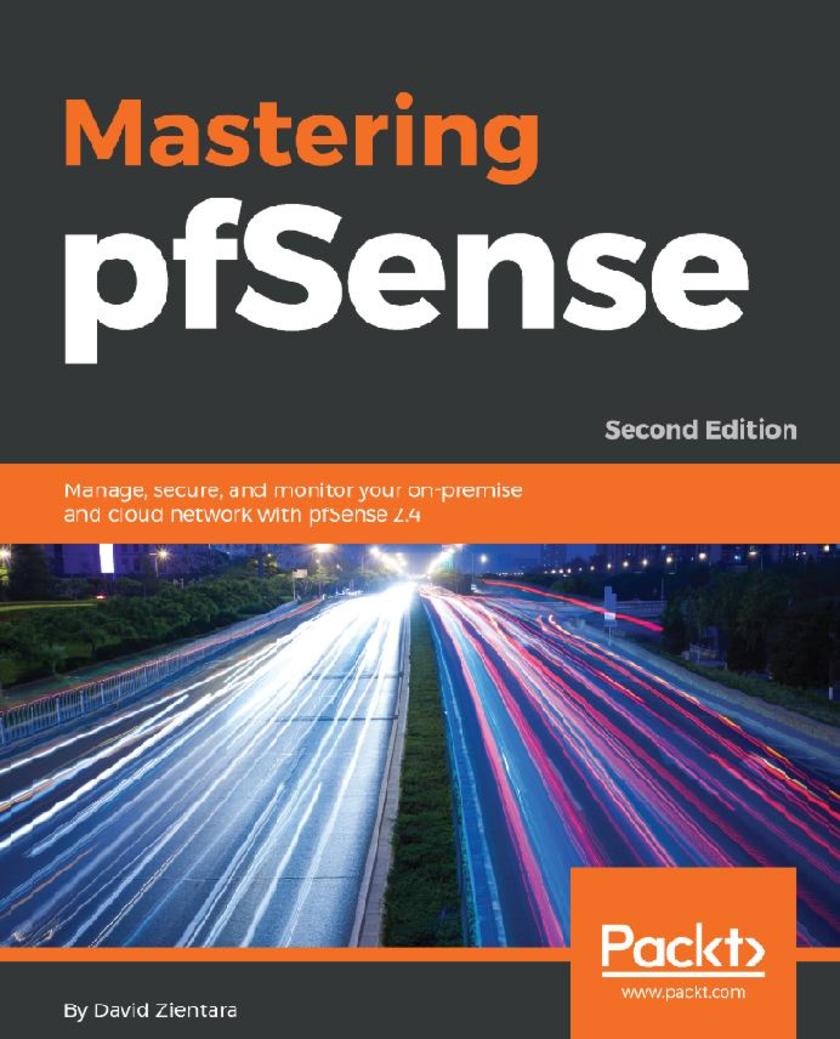
Mastering pfSense
¥90.46
Install and configure a pfSense router/firewall, and become a pfSense expert in the process. About This Book ? You can always do more to secure your software – so extend and customize your pfSense firewall ? Build a high availability security system that’s fault-tolerant – and capable of blocking potential threats ? Put the principles of better security into practice by implementing examples provided in the text Who This Book Is For This book is for those with at least an intermediate understanding of networking. Prior knowledge of pfSense would be helpful but is not required. Those who have the resources to set up a pfSense firewall, either in a real or virtual environment, will especially benefit, as they will be able to follow along with the examples in the book. What You Will Learn ? Configure pfSense services such as DHCP, Dynamic DNS, captive portal, DNS, NTP and SNMP ? Set up a managed switch to work with VLANs ? Use pfSense to allow, block and deny traffic, and to implement Network Address Translation (NAT) ? Make use of the traffic shaper to lower and raise the priority of certain types of traffic ? Set up and connect to a VPN tunnel with pfSense ? Incorporate redundancy and high availability by utilizing load balancing and the Common Address Redundancy Protocol (CARP) ? Explore diagnostic tools in pfSense to solve network problems In Detail pfSense has the same reliability and stability as even the most popular commercial firewall offerings on the market – but, like the very best open-source software, it doesn’t limit you. You’re in control – you can exploit and customize pfSense around your security needs. Mastering pfSense - Second Edition, covers features that have long been part of pfSense such as captive portal, VLANs, traffic shaping, VPNs, load balancing, Common Address Redundancy Protocol (CARP), multi-WAN, and routing. It also covers features that have been added with the release of 2.4, such as support for ZFS partitions and OpenVPN 2.4. This book takes into account the fact that, in order to support increased cryptographic loads, pfSense version 2.5 will require a CPU that supports AES-NI. The second edition of this book places more of an emphasis on the practical side of utilizing pfSense than the previous edition, and, as a result, more examples are provided which show in step-by-step fashion how to implement many features. Style and approach Practical guide to learn the advanced functionalities of pfSense with minimum fuss.
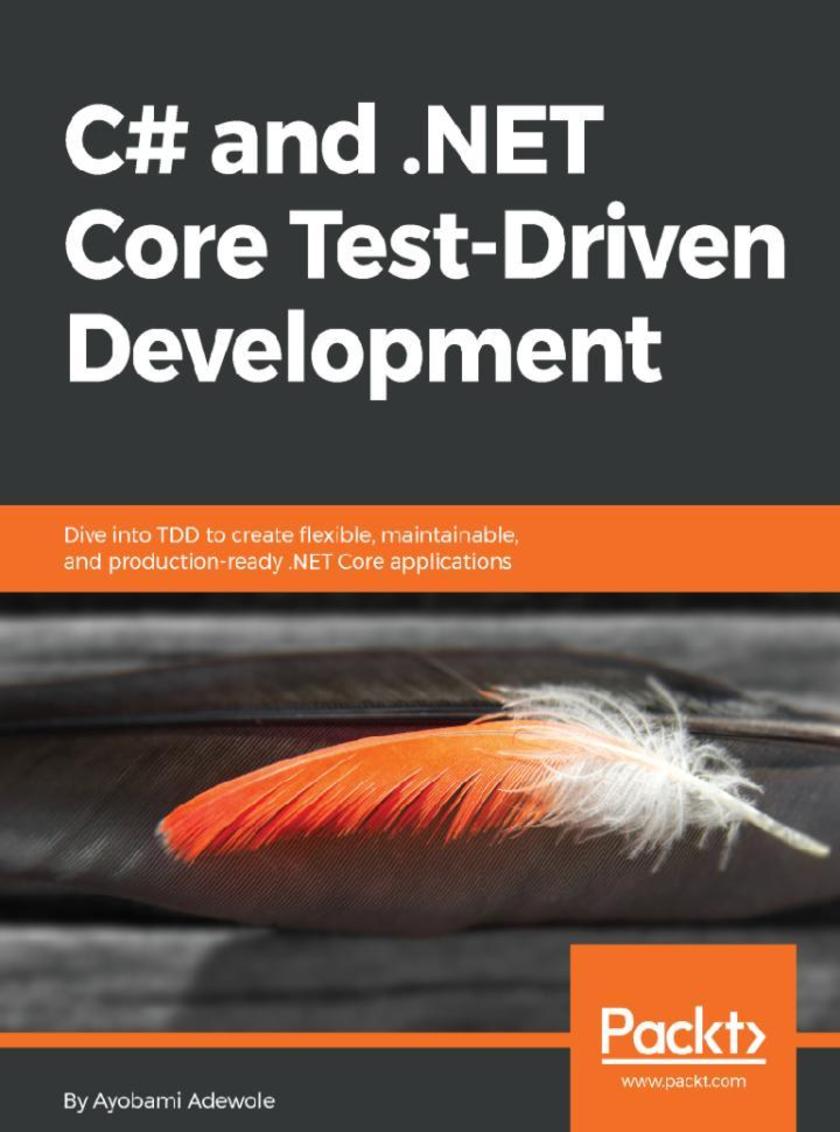
C# and .NET Core Test Driven Development
¥73.02
Learn how to apply a test-driven development process by building ready C# 7 and .NET Core applications. About This Book ? Create tests to quickly detect and resolve issues when writing portable code ? Uncover code integration issues that improve code quality using continuous integration ? Set up and use data-driven unit testing to verify your code Who This Book Is For This book is for .NET developers who would like to build efficient applications by implementing principles of test-driven development. C# programming and working knowledge of VS is assumed. What You Will Learn ? Write flexible, maintainable, and verifiable code for .NET Core ? Write testable code using SOLID principles and dependency injections ? Recognize the characteristics of a good unit test ? Structure and group your unit test ? Use mock objects to handle dependencies ? Set up an end-to-end continuous integration process In Detail This book guides developers to create robust, production-ready C# 7 and .NET Core applications through the practice of test-driven development process. In C# and .NET Core Test-Driven Development, you will learn the different stages of the TDD life cycle, basics of TDD, best practices, and anti-patterns. It will teach you how to create an ASP.NET Core MVC sample application, write testable code with SOLID principles and set up a dependency injection for your sample application. Next, you will learn the xUnit testing framework and learn how to use its attributes and assertions. You’ll see how to create data-driven unit tests and mock dependencies in your code. You will understand the difference between running and debugging your tests on .NET Core on LINUX versus Windows and Visual Studio. As you move forward, you will be able to create a healthy continuous integration process for your sample application using GitHub, TeamCity, Cake, and Microsoft VSTS. By the end of this book, you will have learned how to write clean and robust code through the effective practice of TDD, set up CI build steps to test and build applications as well as how to package application for deployment on NuGet. Style and approach The book explores the concepts of test driven development in depth so readers can apply these proven techniques to build sophisticated software with C# and .NET.
.NET Standard 2.0 Cookbook
¥90.46
Get the most out of .NET framework using standard libraries and create a .NET Standard 2.0 library from scratch About This Book ? Write code once and share within .NET ecosystem in Windows, Linux and macOS ? Give your .NET Libraries a common framework in cloud and on premise with the latest .NET Standard 2.0 ? Build a wide range of applications from Mobile with Xamarin to Web with ASP.NET Who This Book Is For This book is for .NET developers who are looking to build dynamic applications with the latest .NET Standard. C# knowledge is required. What You Will Learn ? Create a .NET Standard 2.0 library ? Use System.IO within the .NET Standard 2.0 ? Make use of your legacy .NET libraries with the new .NET Core standard ? Explore the thread support to create a multithreaded .NET Standard 2.0 library ? Create a .NET Standard 2.0 library and use it with an Android and iOS application ? Implement various Visual Studio 2017 diagnostics and debugging tools ? Create a NuGet Package and submit the package to the NuGet Package Manager ? Use Visual Studio 2017 azure tools to deploy the application to Azure ? Test and deliver a .NET Standard 2.0 library In Detail The .NET Standard is a standard that represents a set of APIs that all .NET platforms have to implement, making it easy for developers to access and use one common library for their development needs. This book begins with a quick refresher, helping you understand the mechanics of the new standard and offering insight into how it works. You’ll explore the core library concepts, such as working with collections, configurations, I/O, security, and multithreading. You’ll explore the iOS and Android libraries of Xamarin and we’ll guide you through creating a .NET Standard 2.0 library, which you’ll use with both Android and iOS applications. In the final chapters, you’ll learn the various debugging and diagnostics tools to deliver quality libraries and create a NuGet package of the .NET Standard 2.0 library. By the end of this book, you’ll be able to expand your current workflow to various .NET flavors and have the essential skills to create a .NET Standard 2.0 library from scratch to package and deliver it to the world. Style and approach A recipe-based approach to help you get the most out of the .NET Standard 2.0 Library that can be implemented to all the .NET Platforms
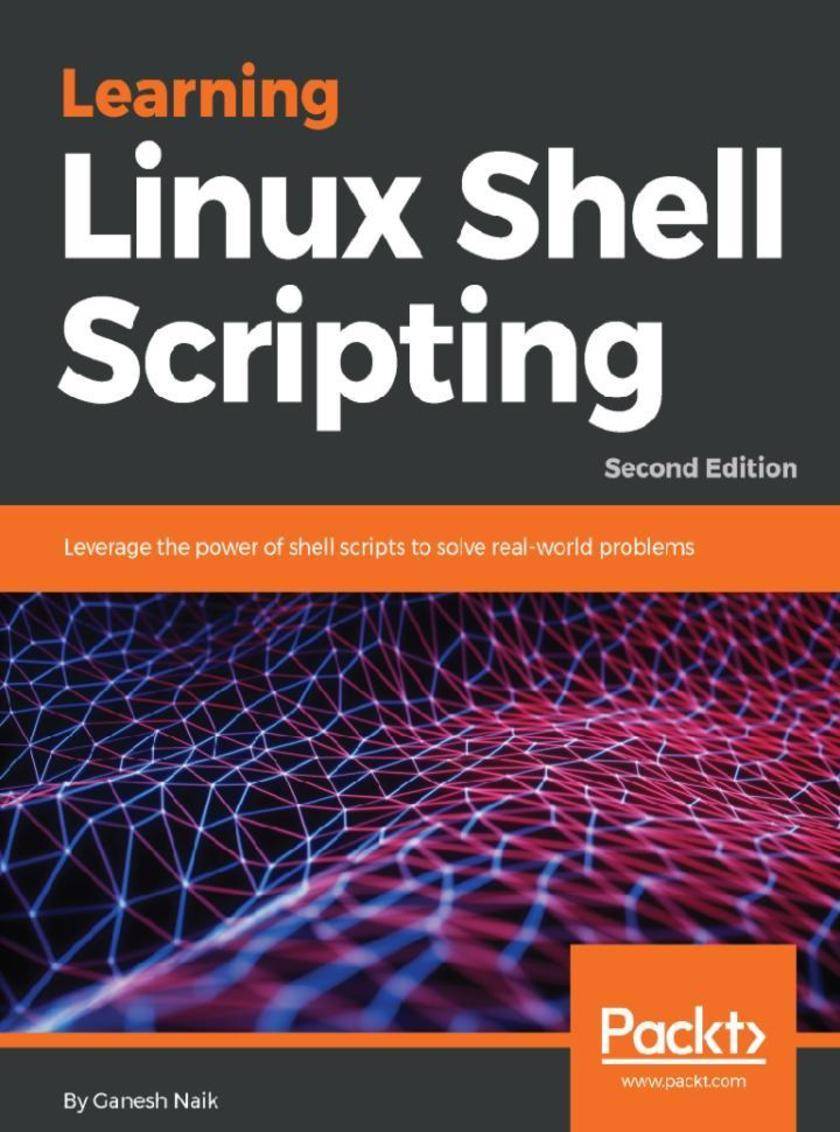
Learning Linux Shell Scripting
¥81.74
Break through the practice of writing tedious code with shell scripts About This Book ? Learn to impeccably build shell scripts and develop advanced applications ? Create smart solutions by writing and debugging scripts ? A step-by-step tutorial to automate routine tasks by developing scripts Who This Book Is For Learning Linux Shell Scripting is ideal for those who are proficient at working with Linux and want to learn about shell scripting to improve their efficiency and practical skills. What You Will Learn ? Familiarize yourself with the various text filtering tools available in Linux ? Understand expressions and variables and how to use them practically ? Automate decision-making and save a lot of time and effort of revisiting code ? Get to grips with advanced functionality such as using traps, dialogs to develop screens & Database administration such as MySQL or Oracle ? Start up a system and customize a Linux system ? Taking backup of local or remote data or important files. ? Use existing other language scripts such as Python, Perl & Ruby in Shell Scripts In Detail Linux is the most powerful and universally adopted OS. Shell is a program that gives the user direct interaction with the operating system. Scripts are collections of commands that are stored in a file. The shell reads this file and acts on commands as if they were typed on the keyboard. Learning Linux Shell Scripting covers Bash, GNU Bourne Again Shell, preparing you to work in the exciting world of Linux shell scripting. CentOS is a popular rpm-based stable and secured Linux distribution. Therefore, we have used CentOS distribution instead of Ubuntu distribution. Linux Shell Scripting is independent of Linux distributions, but we have covered both types of distros. We start with an introduction to the Shell environment and basic commands used. Next, we explore process management in Linux OS, real-world essentials such as debugging and perform Shell arithmetic fluently. You'll then take a step ahead and learn new and advanced topics in Shell scripting, such as decision making, starting up a system, and customizing a Linux environment. You will also learn about grep, stream editor, and AWK, which are very powerful text filters and editors. Finally, you'll get to grips with taking backup, using other language scripts in Shell Scripts as well as automating database administration tasks for MySQL and Oracle. By the end of this book, you will be able to confidently use your own shell scripts in the real world. Style and approach This practical book will go from the very basics of shell scripting to complex, customized automation. The idea behind this book is to be as practical as possible and give you the look and feel of what real-world scripting is like.
Secret Recipes of the Python Ninja
¥90.46
Test your Python programming skills by solving real-world problems About This Book ? Access built-in documentation tools and improve your code. ? Discover how to make the best use of decorator and generator functions ? Enhance speed and improve concurrency by conjuring tricks from the PyPy project Who This Book Is For Whether you’ve been working with Python for a few years or you’re a seasoned programmer, you’ll have a lot of new tricks to walk away with. What You Will Learn ? Know the differences between .py and .pyc files ? Explore the different ways to install and upgrade Python packages ? Understand the working of the PyPI module that enhances built-in decorators ? See how coroutines are different from generators and how they can simulate multithreading ? Grasp how the decimal module improves floating point numbers and their operations ? Standardize sub interpreters to improve concurrency ? Discover Python’s built-in docstring analyzer In Detail This book covers the unexplored secrets of Python, delve into its depths, and uncover its mysteries. You’ll unearth secrets related to the implementation of the standard library, by looking at how modules actually work. You’ll understand the implementation of collections, decimals, and fraction modules. If you haven’t used decorators, coroutines, and generator functions much before, as you make your way through the recipes, you’ll learn what you’ve been missing out on. We’ll cover internal special methods in detail, so you understand what they are and how they can be used to improve the engineering decisions you make. Next, you’ll explore the CPython interpreter, which is a treasure trove of secret hacks that not many programmers are aware of. We’ll take you through the depths of the PyPy project, where you’ll come across several exciting ways that you can improve speed and concurrency. Finally, we’ll take time to explore the PEPs of the latest versions to discover some interesting hacks. Style and approach Recipe based approach where each problem is solved with the help of step by step instructions.

Bitcoin Explained: Become a Bitcoin Millionaire in 2018
¥24.44
Bitcoin Explained: Become a Bitcoin Millionaire in 2018
Learn Programming by Coding Like a Professional: Create Games, Apps, & Programs
¥40.79
Learn Programming by Coding Like a Professional: Create Games, Apps, & Programs
Microsoft Excel
¥28.61
Microsoft Excel

FB Pixel Secrets
¥23.30
FB Pixel Secrets
How To Learn Microsoft SQL Server Quickly!
¥24.44
How To Learn Microsoft SQL Server Quickly!
Deep Learning: Practical Neural Networks with Java
¥152.59
Build and run intelligent applications by leveraging key Java machine learning libraries About This Book ? Develop a sound strategy to solve predictive modelling problems using the most popular machine learning Java libraries. ? Explore a broad variety of data processing, machine learning, and natural language processing through diagrams, source code, and real-world applications ? This step-by-step guide will help you solve real-world problems and links neural network theory to their application Who This Book Is For This course is intended for data scientists and Java developers who want to dive into the exciting world of deep learning. It will get you up and running quickly and provide you with the skills you need to successfully create, customize, and deploy machine learning applications in real life. What You Will Learn ? Get a practical deep dive into machine learning and deep learning algorithms ? Explore neural networks using some of the most popular Deep Learning frameworks ? Dive into Deep Belief Nets and Stacked Denoising Autoencoders algorithms ? Apply machine learning to fraud, anomaly, and outlier detection ? Experiment with deep learning concepts, algorithms, and the toolbox for deep learning ? Select and split data sets into training, test, and validation, and explore validation strategies ? Apply the code generated in practical examples, including weather forecasting and pattern recognition In Detail Machine learning applications are everywhere, from self-driving cars, spam detection, document search, and trading strategies, to speech recognitionStarting with an introduction to basic machine learning algorithms, this course takes you further into this vital world of stunning predictive insights and remarkable machine intelligence. This course helps you solve challenging problems in image processing, speech recognition, language modeling. You will discover how to detect anomalies and fraud, and ways to perform activity recognition, image recognition, and text. You will also work with examples such as weather forecasting, disease diagnosis, customer profiling, generalization, extreme machine learning and more. By the end of this course, you will have all the knowledge you need to perform deep learning on your system with varying complexity levels, to apply them to your daily work. The course provides you with highly practical content explaining deep learning with Java, from the following Packt books: 1. Java Deep Learning Essentials 2. Machine Learning in Java 3. Neural Network Programming with Java, Second Edition Style and approach This course aims to create a smooth learning path that will teach you how to effectively use deep learning with Java with other de facto components to get the most out of it. Through this comprehensive course, you’ll learn the basics of predictive modelling and progress to solve real-world problems and links neural network theory to their application
Practical GIS
¥90.46
Learn the basics of Geographic Information Systems by solving real-world problems with powerful open source tools About This Book ? This easy-to-follow guide allows you to manage and analyze geographic data with ease using open source tools ? Publish your geographical data online ? Learn the basics of geoinformatics in a practical way by solving problems Who This Book Is For The book is for IT professionals who have little or no knowledge of GIS. It’s also useful for those who are new to the GIS field who don’t want to spend a lot of money buying licenses of commercial tools and training. What You Will Learn ? Collect GIS data for your needs ? Store the data in a PostGIS database ? Exploit the data using the power of the GIS queries ? Analyze the data with basic and more advanced GIS tools ? Publish your data and share it with others ? Build a web map with your published data In Detail The most commonly used GIS tools automate tasks that were historically done manually—compiling new maps by overlaying one on top of the other or physically cutting maps into pieces representing specific study areas, changing their projection, and getting meaningful results from the various layers by applying mathematical functions and operations. This book is an easy-to-follow guide to use the most matured open source GIS tools for these tasks. We’ll start by setting up the environment for the tools we use in the book. Then you will learn how to work with QGIS in order to generate useful spatial data. You will get to know the basics of queries, data management, and geoprocessing. After that, you will start to practice your knowledge on real-world examples. We will solve various types of geospatial analyses with various methods. We will start with basic GIS problems by imitating the work of an enthusiastic real estate agent, and continue with more advanced, but typical tasks by solving a decision problem. Finally, you will find out how to publish your data (and results) on the web. We will publish our data with QGIS Server and GeoServer, and create a basic web map with the API of the lightweight Leaflet web mapping library. Style and approach The book guides you step by step through each of the core concepts of the GIS toolkit, building an overall picture of its capabilities. This guide approaches the topic systematically, allowing you to build upon what you learned in previous chapters. By the end of this book, you’ll have an understanding of the aspects of building a GIS system and will be able to take that knowledge with you to whatever project calls for it.
KVM Virtualization Cookbook
¥80.65
Deploy, manage, and scale virtual instances using Kernel-based Virtual Machines About This Book ? Build, manage and scale virtual machines with practical step-by-step examples ? Leverage the libvirt user-space tools and libraries to manage the life-cycle of KVM instances ? Deploy and scale applications inside KVM virtual machines with OpenStack Who This Book Is For If you are a system administrator working KVM virtualization, this book will help you grow on your expertise of working with the infrastructure to manage things in a better way. You should have a knowledge of working with Linux based systems. What You Will Learn ? Deploy different workloads in isolation with KVM virtualization and better utilize the available compute resources ? Explore the benefits of running applications with KVM and learn to prevent the “bad-neighbor” effect ? Leveraging various networking technologies in the context of virtualization with Open vSwitch and the Linux bridge. ? Create KVM instances using Python and inspect running KVM instances ? Understand Kernel Tuning for enhanced KVM performance and better memory utilization In Detail Virtualization technologies such as KVM allow for better control over the available server resources, by deploying multiple virtual instances on the same physical host, or clusters of compute resources. With KVM it is possible to run various workloads in isolation with the hypervisor layer providing better tenant isolation and higher degree of security. This book will provide a deep dive into deploying KVM virtual machines using qemu and libvirt and will demonstrate practical examples on how to run, scale, monitor, migrate and backup such instances. You will also discover real production ready recipes on deploying KVM instances with OpenStack and how to programatically manage the life cycle of KVM virtual machines using Python. You will learn numerous tips and techniques which will help you deploy & plan the KVM infrastructure. Next, you will be introduced to the working of libvirt libraries and the iPython development environment. Finally, you will be able to tune your Linux kernel for high throughput and better performance. By the end of this book, you will gain all the knowledge needed to be an expert in working with the KVM virtualization infrastructure. Style and approach This book takes a complete practical approach with many step-by-step example recipes on how to use KVM in production. The book assumes certain level of expertise with Linux systems and virtualization in general. Some knowledge of Python programming is encouraged, to fully take advantage of the code recipes.
Mastering Bash
¥80.65
Your one stop guide to making the most out of Bash programming About This Book ? From roots to leaves, learn how to program in Bash and automate daily tasks, pouring some spice in your *s ? Daemonize a * and make a real service of it, ensuring it’s available at any time to process user-fed data or commands ? This book provides functional examples that show you practical applications of commands Who This Book Is For If you're a power user or system administrator involved in writing Bash *s to automate tasks, then this book is for you. This book is also ideal for advanced users who are engaged in complex daily tasks. What You Will Learn ? Understand Bash right from the basics and progress to an advanced level ? Customise your environment and automate system routine tasks ? Write structured *s and create a command-line interface for your *s ? Understand arrays, menus, and functions ? Securely execute remote commands using ssh ? Write Nagios plugins to automate your infrastructure checks ? Interact with web services, and a Slack notification * ? Find out how to execute subshells and take advantage of parallelism ? Explore inter-process communication and write your own daemon In Detail System administration is an everyday effort that involves a lot of tedious tasks, and devious pits. Knowing your environment is the key to unleashing the most powerful solution that will make your life easy as an administrator, and show you the path to new heights. Bash is your Swiss army knife to set up your working or home environment as you want, when you want. This book will enable you to customize your system step by step, making your own real, virtual, home out of it. The journey will take you swiftly through the basis of the shell programming in Bash to more interesting and challenging tasks. You will be introduced to one of the most famous open source monitoring systems—Nagios, and write complex programs with it in any languages. You’ll see how to perform checks on your sites and applications. Moving on, you’ll discover how to write your own daemons so you can create your services and take advantage of inter-process communication to let your *s talk to each other. So, despite these being everyday tasks, you’ll have a lot of fun on the way. By the end of the book, you will have gained advanced knowledge of Bash that will help you automate routine tasks and manage your systems. Style and approach This book presents step-by-step instructions and expert advice on working with Bash and writing *s. Starting from the basics, this book serves as a reference manual where you can find handy solutions and advice to make your *s flexible and powerful.
Microsoft IIS 10.0 Cookbook
¥90.46
Over 60 recipes to install, configure, and manage your IIS 10.0 About This Book ? Provide a secure, easy-to-manage extensible platform for hosting your websites ? Leverage IIS 10.0 in order to deploy web site in seconds ? Integrate Windows and Nano Server 2016 and automate it with PowerShell ? Recipes to Manage and monitor your IIS 10.0 Who This Book Is For If you are an administrator or web developer with a basic (or no) knowledge of Microsoft IIS and want to set up your own web server, then this is the book for you. What You Will Learn ? Integrate IIS 10.0 on Windows server 2016 ? Host multiple websites and Wildcard Host on IIS 10.0 ? Deploy and administrate IIS 10.0 on Nano Server. ? IIS administration with Powershell. ? Manage and troubleshoot IIS 10.0 In Detail This book will start with customizing your IIS 10 to various platforms/OS and tune it according to your business requirements. Moving on, we will focus on the functionalities of core fundamentals and perform practical scenarios in order to maximize the use of a reliable web server. Going further we will be covering topics like IIS 10 architecture, IIS modules,hosting web server platforms, virtual directories along with web site deployment, ports, enhanced security. We will also cover new features of IIS 10 like integration with Windows Server 2016 and Nano Server, HTTP/2, PowerShell 5 cmdlets etc . Towards the end, we will cover troubleshooting & diagnostic techniques of IIS 10. By the end of this book you will be well versed with maximizing the reliability of your webserver and will have immense knowledge in using IIS 10 effectively Style and approach A set of exciting recipes on using Microsoft IIS 10.0 effectively..
Mastering Spring 5.0
¥90.46
Develop cloud native applications with microservices using Spring Boot, Spring Cloud, and Spring Cloud Data Flow About This Book ? Explore the new features and components in Spring ? Evolve towards micro services and cloud native applications ? Gain powerful insights into advanced concepts of Spring and Spring Boot to develop applications more effectively ? Understand the basics of Kotlin and use it to develop a quick service with Spring Boot Who This Book Is For This book is for an experienced Java developer who knows the basics of Spring, and wants to learn how to use Spring Boot to build applications and deploy them to the cloud. What You Will Learn ? Explore the new features in Spring Framework 5.0 ? Build microservices with Spring Boot ? Get to know the advanced features of Spring Boot in order to effectively develop and monitor applications ? Use Spring Cloud to deploy and manage applications on the Cloud ? Understand Spring Data and Spring Cloud Data Flow ? Understand the basics of reactive programming ? Get to know the best practices when developing applications with the Spring Framework ? Create a new project using Kotlin and implement a couple of basic services with unit and integration testing In Detail Spring 5.0 is due to arrive with a myriad of new and exciting features that will change the way we’ve used the framework so far. This book will show you this evolution—from solving the problems of testable applications to building distributed applications on the cloud. The book begins with an insight into the new features in Spring 5.0 and shows you how to build an application using Spring MVC. You will realize how application architectures have evolved from monoliths to those built around microservices. You will then get a thorough understanding of how to build and extend microservices using Spring Boot. You will also understand how to build and deploy Cloud-Native microservices with Spring Cloud. The advanced features of Spring Boot will be illustrated through powerful examples. We will be introduced to a JVM language that’s quickly gaining popularity - Kotlin. Also, we will discuss how to set up a Kotlin project in Eclipse. By the end of the book, you will be equipped with the knowledge and best practices required to develop microservices with the Spring Framework. Style and Approach This book follows an end-to-end tutorial approach with lots of examples and sample applications, covering the major building blocks of the Spring framework.
Mastering Python Networking
¥90.46
Become an expert in implementing advanced, network-related tasks with Python. About This Book ? Build the skills to perform all networking tasks using Python with ease ? Use Python for network device automation, DevOps, and software-defined networking ? Get practical guidance to networking with Python Who This Book Is For If you are a network engineer or a programmer who wants to use Python for networking, then this book is for you. A basic familiarity with networking-related concepts such as TCP/IP and a familiarity with Python programming will be useful. What You Will Learn ? Review all the fundamentals of Python and the TCP/IP suite ? Use Python to execute commands when the device does not support the API or programmatic interaction with the device ? Implement automation techniques by integrating Python with Cisco, Juniper, and Arista eAPI ? Integrate Ansible using Python to control Cisco, Juniper, and Arista networks ? Achieve network security with Python ? Build Flask-based web-service APIs with Python ? Construct a Python-based migration plan from a legacy to scalable SDN-based network. In Detail This book begins with a review of the TCP/ IP protocol suite and a refresher of the core elements of the Python language. Next, you will start using Python and supported libraries to automate network tasks from the current major network vendors. We will look at automating traditional network devices based on the command-line interface, as well as newer devices with API support, with hands-on labs. We will then learn the concepts and practical use cases of the Ansible framework in order to achieve your network goals. We will then move on to using Python for DevOps, starting with using open source tools to test, secure, and analyze your network. Then, we will focus on network monitoring and visualization. We will learn how to retrieve network information using a polling mechanism, ?ow-based monitoring, and visualizing the data programmatically. Next, we will learn how to use the Python framework to build your own customized network web services. In the last module, you will use Python for SDN, where you will use a Python-based controller with OpenFlow in a hands-on lab to learn its concepts and applications. We will compare and contrast OpenFlow, OpenStack, OpenDaylight, and NFV. Finally, you will use everything you’ve learned in the book to construct a migration plan to go from a legacy to a scalable SDN-based network. Style and approach An easy-to-follow guide packed with hands-on examples of using Python for network device automation, DevOps, and SDN.
Microservices with Azure
¥80.65
Architect enterprise-grade, Microservice-based solutions using Microsoft Azure Service Fabric. About This Book ? Explore architectural patterns for building modern day Microservice-based systems ? Learn about Microsoft Service Fabric as a platform to host distributed Microservices ? Discover multiple options for hosting Microservices on heterogeneous, cross-platform environments ? Learn to configure Azure Service Fabric clusters for enterprise-grade service deployments Who This Book Is For The book is aimed at IT architects, system administrators, and DevOps engineers who have a basic knowledge of the Microsoft Azure platform and are working on, or are curious about, the concepts of Microservices and Microservice architecture. What You Will Learn ? Understand the basics of Microservices and how Microsoft Azure fits into the equation ? Master Azure Service Fabric architecture and services ? Explore Azure Service Fabric application programming models ? Comprehensive study of various architecture patterns for building enterprise-grade Microservices ? Manage and deploy Microservices on Azure Service Fabric ? An insight into the future of Microservices with containers and serverless computing In Detail Microsoft Azure is rapidly evolving and is widely used as a platform on which you can build Microservices that can be deployed on-premise and on-cloud heterogeneous environments through Microsoft Azure Service Fabric. This book will help you understand the concepts of Microservice application architecture and build highly maintainable and scalable enterprise-grade applications using the various services in Microsoft Azure Service Fabric. We will begin by understanding the intricacies of the Microservices architecture and its advantages over the monolithic architecture and Service Oriented Architecture (SOA) principles. We will present various scenarios where Microservices should be used and walk you through the architectures of Microservice-based applications. Next, you will take an in-depth look at Microsoft Azure Service Fabric, which is the best–in-class platform for building Microservices. You will explore how to develop and deploy sample applications on Microsoft Azure Service Fabric to gain a thorough understanding of it. Building Microservice-based application is complicated. Therefore, we will take you through several design patterns that solve the various challenges associated with realizing the Microservices architecture in enterprise applications. Each pattern will be clearly illustrated with examples that you can keep referring to when designing applications. Finally, you will be introduced to advanced topics such as Serverless computing and DevOps using Service Fabric, to help you undertake your next venture with confidence. Style and approach This book introduces its readers to the concept of Microservices and Microsoft Azure Service Fabric as a distributed platform to host enterprise-grade Microservices. It then addresses common architectural challenges associated with the Microservice architecture, using proven architectural patterns.
C++17 STL Cookbook
¥90.46
Over 90 recipes that leverage the powerful features of the Standard Library in C++17 About This Book ? Learn the latest features of C++ and how to write better code by using the Standard Library (STL). Reduce the development time for your applications. ? Understand the scope and power of STL features to deal with real-world problems. ? Compose your own algorithms without forfeiting the simplicity and elegance of the STL way. Who This Book Is For This book is for intermediate-to-advanced C++ programmers who want to get the most out of the Standard Template Library of the newest version of C++: C++ 17. What You Will Learn ? Learn about the new core language features and the problems they were intended to solve ? Understand the inner workings and requirements of iterators by implementing them ? Explore algorithms, functional programming style, and lambda expressions ? Leverage the rich, portable, fast, and well-tested set of well-designed algorithms provided in the STL ? Work with strings the STL way instead of handcrafting C-style code ? Understand standard support classes for concurrency and synchronization, and how to put them to work ? Use the filesystem library addition available with the C++17 STL In Detail C++ has come a long way and is in use in every area of the industry. Fast, efficient, and flexible, it is used to solve many problems. The upcoming version of C++ will see programmers change the way they code. If you want to grasp the practical usefulness of the C++17 STL in order to write smarter, fully portable code, then this book is for you. Beginning with new language features, this book will help you understand the language’s mechanics and library features, and offers insight into how they work. Unlike other books, ours takes an implementation-specific, problem-solution approach that will help you quickly overcome hurdles. You will learn the core STL concepts, such as containers, algorithms, utility classes, lambda expressions, iterators, and more, while working on practical real-world recipes. These recipes will help you get the most from the STL and show you how to program in a better way. By the end of the book, you will be up to date with the latest C++17 features and save time and effort while solving tasks elegantly using the STL. Style and approach This recipe-based guide will show you how to make the best use of C++ together with the STL to squeeze more out of the standard language
Penetration Testing Bootcamp
¥80.65
Sharpen your pentesting skill in a bootcamp About This Book ? Get practical demonstrations with in-depth explanations of complex security-related problems ? Familiarize yourself with the most common web vulnerabilities ? Get step-by-step guidance on managing testing results and reporting Who This Book Is For This book is for IT security enthusiasts and administrators who want to understand penetration testing quickly. What You Will Learn ? Perform different attacks such as MiTM, and bypassing SSL encryption ? Crack passwords and wireless network keys with brute-forcing and wordlists ? Test web applications for vulnerabilities ? Use the Metasploit Framework to launch exploits and write your own Metasploit modules ? Recover lost files, investigate successful hacks, and discover hidden data ? Write organized and effective penetration testing reports In Detail Penetration Testing Bootcamp delivers practical, learning modules in manageable chunks. Each chapter is delivered in a day, and each day builds your competency in Penetration Testing. This book will begin by taking you through the basics and show you how to set up and maintain the C&C Server. You will also understand how to scan for vulnerabilities and Metasploit, learn how to setup connectivity to a C&C server and maintain that connectivity for your intelligence gathering as well as offsite processing. Using TCPDump filters, you will gain understanding of the sniffing and spoofing traffic. This book will also teach you the importance of clearing up the tracks you leave behind after the penetration test and will show you how to build a report from all the data obtained from the penetration test. In totality, this book will equip you with instructions through rigorous tasks, practical callouts, and assignments to reinforce your understanding of penetration testing. Style and approach This book is delivered in the form of a 10-day boot camp style book. The day-by-day approach will help you get to know everything about penetration testing, from the use of network reconnaissance tools, to the writing of custom zero-day buffer overflow exploits.
Moodle 3.x Developer's Guide
¥80.65
Effortlessly ensure your application's code quality from day 1 About This Book ? Customize your Moodle 3.x app. ? Leverage the new features of Moodle 3.x by diving deep into the Moodle development eco-system. ? Cater to heavy user traffic, customize learning requirements and create custom third party plugins. Who This Book Is For This book is for Moodle developers who are familiar with the basic Moodle functionality and have an understanding of the types of scenarios in which the Moodle platform can be usefully employed. You must have medium-level PHP programming knowledge. You should be familiar with HTML and XML protocols. You do not need to have prior knowledge of Moodle-specific terminology What You Will Learn ? Work with the different types of custom modules that can be written for Moodle 3.x ? Understand how to author custom modules so they conform to the agreed Moodle 3.x development guidelines ? Get familiar with the Moodle 3.x architecture—its internal and external APIs ? Customize Moodle 3.x so it can integrate seamlessly with third-party applications of any kind ? Build a new course format to specify the layout of a course ? Implement third-party graphics libraries in your plugins ? Build plugins that can be themed easily ? Provide custom APIs that will provide the means to automate Moodle 3 in real time In Detail The new and revamped Moodle is the top choice for developers to create cutting edge e-learning apps that cater to different user’s segments and are visually appealing as well. This book explains how the Moodle 3.x platform provides a framework that allows developers to create a customized e-learning solution. It begins with an exploration of the different types of plugin.. We then continue with an investigation of creating new courses. You will create a custom plugin that pulls in resources from a third-party repository. Then you’ll learn how users can be assigned to courses and granted the necessary permissions. Furthermore, you will develop a custom user home. At the end of the book, we’ll discuss the Web Services API to fully automate Moodle 3.x in real time. Style and approach This book takes a step-by-step practical approach with every step explained in great detail using practical examples. You will create custom plugins from scratch with the examples shown and create new modules as well as extensions with the examples presented.


