


 购物车
购物车 个人中心
个人中心
OpenDaylight Cookbook
¥80.65
Over 90 recipes to gain the critical skills needed to deploy and manage OpenDaylight-based solutions About This Book ? This book will help you to build intelligent SDN networks that save your company time, money, and resources ? From eminent authors, learn to address real-world challenges and troubleshoot day-to-day scalability and performance problems faced in OpenDayLight deployments ? This is the only book that offers you quick fixes to create your own branded OpenDaylight Who This Book Is For This book is for experienced network administrators and IT professionals who are using or deploying SDN/OpenDaylight and are looking to gain expertise in building SDN solutions for organizations. What You Will Learn ? Grasp the fundamentals of OpenDaylight ? Customize, authenticate, & authorize in OpenDaylight ? Analyse network access control and policy ? Manage datacenter optimization ? Integrate OpenDaylight with third-party frameworks ? Deploy, configure, and tune OpenDaylight-based solutions In Detail OpenDaylight is an open source platform to program and build Software-Defined Networks (SDN). Its aim is to accelerate the adoption of SDN and NFV. With above 90 practical recipes, this book will help you to solve day-to-day problems and maintenance tasks surrounding OpenDaylight’s implementation. This book starts with the OpenDaylight fundamentals. In this book, you will gain a sound understanding of the methods and techniques when deploying OpenDaylight in production environment. Later on, you will learn to create a Service Chain using SFC. This book will address common problems and day-to-day maintenance tasks with OpenDaylight. We’ll also will teach you how to interact with OpenDaylight APIs and use the necessary tools to simulate networks. You will also explore how to create your own branded OpenDaylight along with authorising and authenticating users using OpenDaylight Identity Manager. By the end of this book, you will have the necessary skills to operate an OpenDaylight SDN environment. Style and approach With a diverse range of topics, this will be a guide which will help the readers gain the necessary skills needed to deploy and operate OpenDaylight in your organisation through practical recipes.
Python for Finance - Second Edition
¥90.46
Learn and implement various Quantitative Finance concepts using the popular Python libraries About This Book ? Understand the fundamentals of Python data structures and work with time-series data ? Implement key concepts in quantitative finance using popular Python libraries such as NumPy, SciPy, and matplotlib ? A step-by-step tutorial packed with many Python programs that will help you learn how to apply Python to finance Who This Book Is For This book assumes that the readers have some basic knowledge related to Python. However, he/she has no knowledge of quantitative finance. In addition, he/she has no knowledge about financial data. What You Will Learn ? Become acquainted with Python in the first two chapters ? Run CAPM, Fama-French 3-factor, and Fama-French-Carhart 4-factor models ? Learn how to price a call, put, and several exotic options ? Understand Monte Carlo simulation, how to write a Python program to replicate the Black-Scholes-Merton options model, and how to price a few exotic options ? Understand the concept of volatility and how to test the hypothesis that volatility changes over the years ? Understand the ARCH and GARCH processes and how to write related Python programs In Detail This book uses Python as its computational tool. Since Python is free, any school or organization can download and use it. This book is organized according to various finance subjects. In other words, the first edition focuses more on Python, while the second edition is truly trying to apply Python to finance. The book starts by explaining topics exclusively related to Python. Then we deal with critical parts of Python, explaining concepts such as time value of money stock and bond evaluations, capital asset pricing model, multi-factor models, time series analysis, portfolio theory, options and futures. This book will help us to learn or review the basics of quantitative finance and apply Python to solve various problems, such as estimating IBM’s market risk, running a Fama-French 3-factor, 5-factor, or Fama-French-Carhart 4 factor model, estimating the VaR of a 5-stock portfolio, estimating the optimal portfolio, and constructing the efficient frontier for a 20-stock portfolio with real-world stock, and with Monte Carlo Simulation. Later, we will also learn how to replicate the famous Black-Scholes-Merton option model and how to price exotic options such as the average price call option. Style and approach This book takes a step-by-step approach in explaining the libraries and modules in Python, and how they can be used to implement various aspects of quantitative finance. Each concept is explained in depth and supplemented with code examples for better understanding.
Comprehensive Ruby Programming
¥71.93
This book will provide you with all of the tools you need to be a professional Ruby developer. Starting with the core principles, such as syntax and best practices, and up to advanced topics like metaprogramming and big data analysis. About This Book ? Provides the core skills required to become a Ruby programmer ? Covers how to use the most popular Ruby Gem libraries ? Includes details on regular expressions Who This Book Is For This is a complete course written from the ground up for beginners wanting to gain a solid understanding of the Ruby language. It starts at the beginning with how to install Ruby and work with it on multiple machines, so simply have a computer that's connected to the Internet and you'll be ready. What You Will Learn ? Learn how to use Ruby code effectively, picking the right tool for the job and not duplicating built-in functionality ? Gain best software development practices, and how to identify and fix common errors ? Absorb core programming skills, such as variables, strings, loops, conditionals, and much more ? Explore object-oriented programming and learn to create modular, reusable code that you can use across projects ? Build 10 practical Ruby programs as you work through the book on topics such as big data analysis and solving Euler equations In Detail Ruby is a powerful, general-purpose programming language that can be applied to any task. Whether you are an experienced developer who wants to learn a new language or you are new to programming, this book is your comprehensive Ruby coding guide. Starting with the foundational principles, such as syntax, and scaling up to advanced topics such as big data analysis, this book will give you all of the tools you need to be a professional Ruby developer. A few of the key topics are: object-oriented programming, built-in Ruby methods, core programming skills, and an introduction to the Ruby on Rails and Sinatra web frameworks. You will also build 10 practical Ruby programs. Created by an experienced Ruby developer, this book has been written to ensure it focuses on the skills you will need to be a professional Ruby developer. After you have read this book, you will be ready to start building real-world Ruby projects. Style and approach This is a comprehensive course for learning the Ruby programming language that works methodically through everything that you need to know. It begins with the basics of the language and then works through some complete projects to apply your skills and ensure that you have fully absorbed them and can use them in the real world.
Getting Started with Nano Server
¥80.65
Remain highly competitive in the server and VM market by gaining the practical skills needed to operate Nano Server About This Book ? The days of the local server are numbered, and this book will make you an ace by giving you the skills needed to administer Nano Server and survive in the brave new server world ? Learn to quickly automate multiple VMs and support Hyper-V clusters, all through small footprints from a single host ? Apply up-to-date, real-world examples presented in this book and improve the scalability and efficiency of large-scale VM deployments Who This Book Is For This book opens up new potential for both developers and IT pros alike. The book is primarily for Server administrators and IT Professionals who would like to deploy and administer Nano Server within their organizations, and for developers who are trying to make maximal use of Server Containers and Hyper-V Containers with Nano Servers. What You Will Learn ? Understand Nano Server ? Deploy Nano Server ? Deploy Hyper-V Clusters on Nano Server ? Deploy Nano Server with SCVMM ? Manage Nano Server using PowerShell and Remote Server Management Tools ? Manage Nano Server with third-party tools ? Run Server Containers and Hyper-V Containers on Nano Server ? Troubleshoot Nano Server ? Validate developed applications that run on Nano Server In Detail Nano Server allows developers and operations teams to work closely together and use containers that package applications so that the entire platform works as one. The aim of Nano Server is to help applications run the way they are intended to. It can be used to run and deploy infrastructures (acting as a compute host, storage host, container, or VM guest operating system) without consuming significant resources. Although Nano Server isn't intended to replace Server 2016 or 2012 R2, it will be an attractive choice for developers and IT teams. Want to improve your ability to deploy a new VM and install and deploy container apps within minutes? You have come to the right place! The objective of this book is to get you started with Nano Server successfully. The journey is quite exciting, since we are introducing you to a cutting-edge technology that will revolutionize today's datacenters. We'll cover everything from the basic to advanced topics. You'll discover a lot of added value from using Nano Server, such as hundreds of VM types on a single host through a small footprint, which could be a big plus for you and your company. After reading this book, you will have the necessary skills to start your journey effectively using Nano Server. Style and approach Gauge all the information needed to get up-and-running with the latest Nano Server built by Microsoft using this easy to follow step-by-step guide.
Mobile Test Automation with Appium
¥71.93
Automate your mobile app testing About This Book ? How to automate testing with Appium ? Apply techniques for creating comprehensive tests ? How to test on physical devices or emulators Who This Book Is For Are you a mobile developer or a software tester who wishes to use Appium for your test automation? If so, then this is the right book for you .You must have basic Java programming knowledge. You don’t need to have prior knowledge of Appium. What You Will Learn ? Discover Appium and how to set up an automation framework for mobile testing ? Understand desired capabilities and learn to find element locators ? Learn to automate gestures and synchronize tests using Appium ? Take an incremental approach to implement page object pattern ? Learn to run Appium tests on emulators or physical devices ? Set up Jenkins to run mobile automation tests by easy to learn steps ? Discover tips and tricks to record video of test execution, inter app automation concepts ? Learn to run Appium tests in parallel on multiple devices simultaneously In Detail Appium is an open source test automation framework for mobile applications. It allows you to test all three types of mobile applications: native, hybrid, and mobile web. It allows you to run the automated tests on actual devices, emulators, and simulators. Today, when every mobile app is made on at least two platforms, iOS and Android, you need a tool that allows you to test across platforms. Having two different frameworks for the same app increases the cost of the product and time to maintain it as well. Appium helps save this cost. With mobile app growth exploding, mobile app automation is mainstream now. In this book, author Nishant Verma provides you with a firm grounding in the concepts of Appium while diving into how to set up appium & Cucumber-jvm test automation framework, implement page object design pattern, automate gestures, test execution on emulators and physical devices, and implement continuous integration with Jenkins. The mobile app we have referenced in this book is Quikr because of its relatively lower learning curve to understand the application. It's a local classifieds shopping app. Style and approach This book takes a practical, step-by-step approach to testing and automating individual apps such as native, hybrid, and mobile web apps using different examples.
Android Things Projects
¥71.93
Develop smart Internet of things projects using Android Things. About This Book ? Learn to build promising IoT projects with Android Things ? Make the most out of hardware peripherals using standard Android APIs ? Build enticing projects on IoT, home automation, and robotics by leveraging Raspberry Pi 3 and Intel Edison Who This Book Is For This book is for Android enthusiasts, hobbyists, IoT experts, and Android developers who want to gain a deeper knowledge of Android Things. The main focus is on implementing IoT projects using Android Things. What You Will Learn ? Understand IoT ecosystem and the Android Things role ? See the Android Things framework: installation, environment, SDK, and APIs ? See how to effectively use sensors (GPIO and I2C Bus) ? Integrate Android Things with IoT cloud platforms ? Create practical IoT projects using Android Things ? Integrate Android Things with other systems using standard IoT protocols ? Use Android Things in IoT projects In Detail Android Things makes developing connected embedded devices easy by providing the same Android development tools, best-in-class Android framework, and Google APIs that make developers successful on mobile. With this book, you will be able to take advantage of the new Android framework APIs to securely build projects using low-level components such as sensors, resistors, capacitors, and display controllers. This book will teach you all you need to know about working with Android Things through practical projects based on home automation, robotics, IoT, and so on. We’ll teach you to make the most of the Android Things and build enticing projects such as a smart greenhouse that controls the climate and environment automatically. You’ll also create an alarm system, integrate Android Things with IoT cloud platforms, and more. By the end of this book, you will know everything about Android Things, and you’ll have built some very cool projects using the latest technology that is driving the adoption of IoT. You will also have primed your mindset so that you can use your knowledge for profitable, practical projects. Style and approach This book is packed with fun-filled, end-to-end projects that you will be encouraged to experiment on the Android Things OS.
SQL Server 2017 Integration Services Cookbook
¥107.90
Harness the power of SQL Server 2017 Integration Services to build your data integration solutions with ease About This Book ? Acquaint yourself with all the newly introduced features in SQL Server 2017 Integration Services ? Program and extend your packages to enhance their functionality ? This detailed, step-by-step guide covers everything you need to develop efficient data integration and data transformation solutions for your organization Who This Book Is For This book is ideal for software engineers, DW/ETL architects, and ETL developers who need to create a new, or enhance an existing, ETL implementation with SQL Server 2017 Integration Services. This book would also be good for individuals who develop ETL solutions that use SSIS and are keen to learn the new features and capabilities in SSIS 2017. What You Will Learn ? Understand the key components of an ETL solution using SQL Server 2016-2017 Integration Services ? Design the architecture of a modern ETL solution ? Have a good knowledge of the new capabilities and features added to Integration Services ? Implement ETL solutions using Integration Services for both on-premises and Azure data ? Improve the performance and scalability of an ETL solution ? Enhance the ETL solution using a custom framework ? Be able to work on the ETL solution with many other developers and have common design paradigms or techniques ? Effectively use *ing to solve complex data issues In Detail SQL Server Integration Services is a tool that facilitates data extraction, consolidation, and loading options (ETL), SQL Server coding enhancements, data warehousing, and customizations. With the help of the recipes in this book, you’ll gain complete hands-on experience of SSIS 2017 as well as the 2016 new features, design and development improvements including SCD, Tuning, and Customizations. At the start, you’ll learn to install and set up SSIS as well other SQL Server resources to make optimal use of this Business Intelligence tools. We’ll begin by taking you through the new features in SSIS 2016/2017 and implementing the necessary features to get a modern scalable ETL solution that fits the modern data warehouse. Through the course of chapters, you will learn how to design and build SSIS data warehouses packages using SQL Server Data Tools. Additionally, you’ll learn to develop SSIS packages designed to maintain a data warehouse using the Data Flow and other control flow tasks. You’ll also be demonstrated many recipes on cleansing data and how to get the end result after applying different transformations. Some real-world scenarios that you might face are also covered and how to handle various issues that you might face when designing your packages. At the end of this book, you’ll get to know all the key concepts to perform data integration and transformation. You’ll have explored on-premises Big Data integration processes to create a classic data warehouse, and will know how to extend the toolbox with custom tasks and transforms. Style and approach This cookbook follows a problem-solution approach and tackles all kinds of data integration scenarios by using the capabilities of SQL Server 2016 Integration Services. This book is well supplemented with screenshots, tips, and tricks. Each recipe focuses on a particular task and is written in a very easy-to-follow manner.
Bootstrap 4 Cookbook
¥80.65
Take your Bootstrap game to the next level with this practical guide About This Book ? Packed with easy-to-follow recipes on building responsive web pages with Bootstrap 4 that can be applied to a web project of your choice ? Build intuitive user interfaces that are mobile-ready with the latest features offered by BS4 ? Stay on top of the changes that Bootstrap 4 brings to front-end development ? Craft beautiful UIs and learn best practices, tips and tricks for quick, effortless, and proper Bootstrap 4 development Who This Book Is For If you are a web designer or a developer who is familiar with the basics of Bootstrap and now want to build highly responsive and professional web pages using Bootstrap 4, this cookbook is for you. Familiarity with the fundamentals of HTML, CSS and jQuery, and some experience of incorporating JavaScript plugins is assumed. What You Will Learn ? Craft beautiful UIs the right way ? Use jQuery and JavaScript to extend Bootstrap layouts ? Become more efficient by speeding up your workflow to achieve amazing results in the shortest time possible ? Setup your environment for future changes of the framework. ? Stay DRY by quickly prototyping Bootstrap-based websites with the help of Github’s own serverless blogging platform, Jekyll ? Integrate Bootstrap with the most popular JS frameworks, Angular and React ? Combine Bootstrap with the .NET platform In Detail Bootstrap, one of the most popular front-end frameworks, is perfectly built to design elegant, powerful, and responsive interfaces for professional-level web pages. It supports responsive design by dynamically adjusting your web page layout. Bootstrap 4 is a major update with many impressive changes that greatly enhance the end results produced by Bootstrap. This cookbook is a collection of great recipes that show you how to use all the latest features of Bootstrap to build compelling UIs. This book is using the most up-to-date version of Bootstrap 4 in all its chapters. First off, you will be shown how you can leverage the latest core features of Bootstrap 4 to create stunning web pages and responsive media. You will gradually move on to extending Bootstrap 4 with the help of plugins to build highly customized and powerful UIs. By the end of this book, you will know how to leverage, extend, and integrate bootstrap to achieve optimal results for your web projects. Style and approach Packed full of solutions that can be instantly applied, the practical-based recipes will help you get the most from Bootstrap.
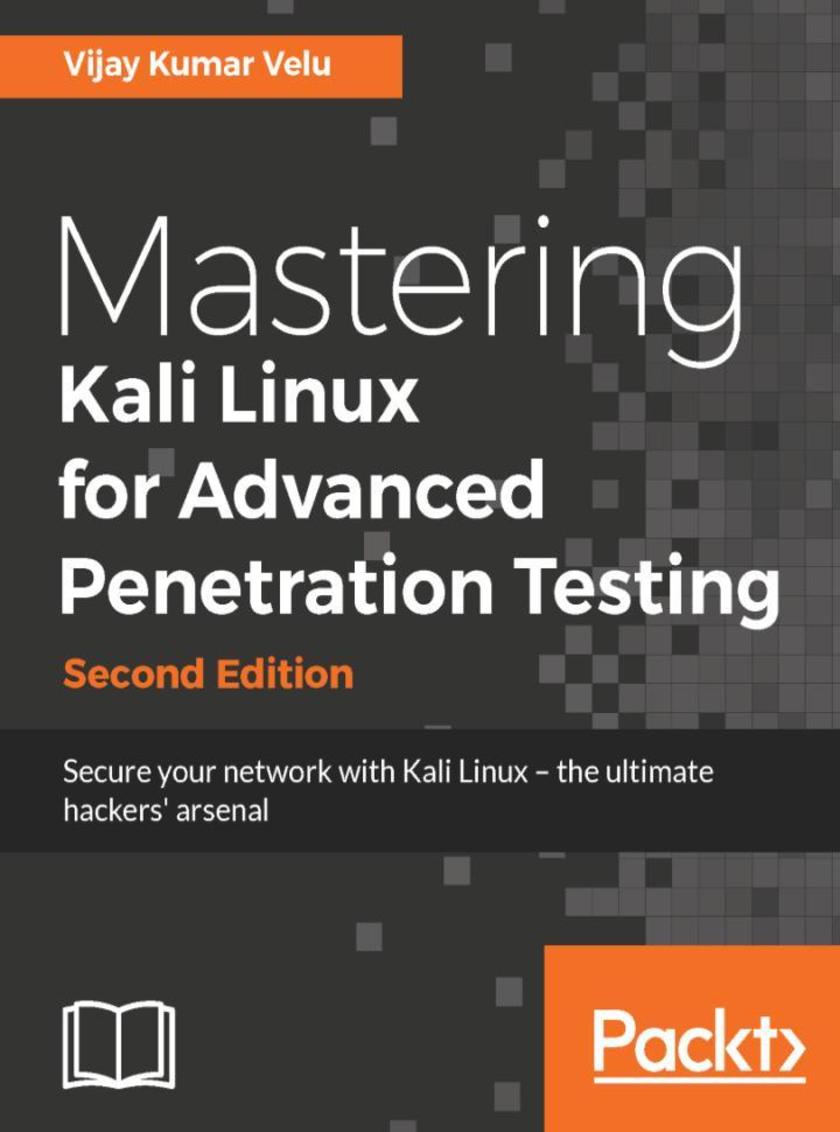
Mastering Kali Linux for Advanced Penetration Testing - Second Edition
¥90.46
A practical guide to testing your network’s security with Kali Linux, the preferred choice of penetration testers and hackers. About This Book ? Employ advanced pentesting techniques with Kali Linux to build highly-secured systems ? Get to grips with various stealth techniques to remain undetected and defeat the latest defenses and follow proven approaches ? Select and configure the most effective tools from Kali Linux to test network security and prepare your business against malicious threats and save costs Who This Book Is For Penetration Testers, IT professional or a security consultant who wants to maximize the success of your network testing using some of the advanced features of Kali Linux, then this book is for you.Some prior exposure to basics of penetration testing/ethical hacking would be helpful in making the most out of this title. What You Will Learn ? Select and configure the most effective tools from Kali Linux to test network security ? Employ stealth to avoid detection in the network being tested ? Recognize when stealth attacks are being used against your network ? Exploit networks and data systems using wired and wireless networks as well as web services ? Identify and download valuable data from target systems ? Maintain access to compromised systems ? Use social engineering to compromise the weakest part of the network—the end users In Detail This book will take you, as a tester or security practitioner through the journey of reconnaissance, vulnerability assessment, exploitation, and post-exploitation activities used by penetration testers and hackers. We will start off by using a laboratory environment to validate tools and techniques, and using an application that supports a collaborative approach to penetration testing. Further we will get acquainted with passive reconnaissance with open source intelligence and active reconnaissance of the external and internal networks. We will also focus on how to select, use, customize, and interpret the results from a variety of different vulnerability scanners. Specific routes to the target will also be examined, including bypassing physical security and exfiltration of data using different techniques. You will also get to grips with concepts such as social engineering, attacking wireless networks, exploitation of web applications and remote access connections. Later you will learn the practical aspects of attacking user client systems by backdooring executable files. You will focus on the most vulnerable part of the network—directly and bypassing the controls, attacking the end user and maintaining persistence access through social media. You will also explore approaches to carrying out advanced penetration testing in tightly secured environments, and the book's hands-on approach will help you understand everything you need to know during a Red teaming exercise or penetration testing Style and approach An advanced level tutorial that follows a practical approach and proven methods to maintain top notch security of your networks.
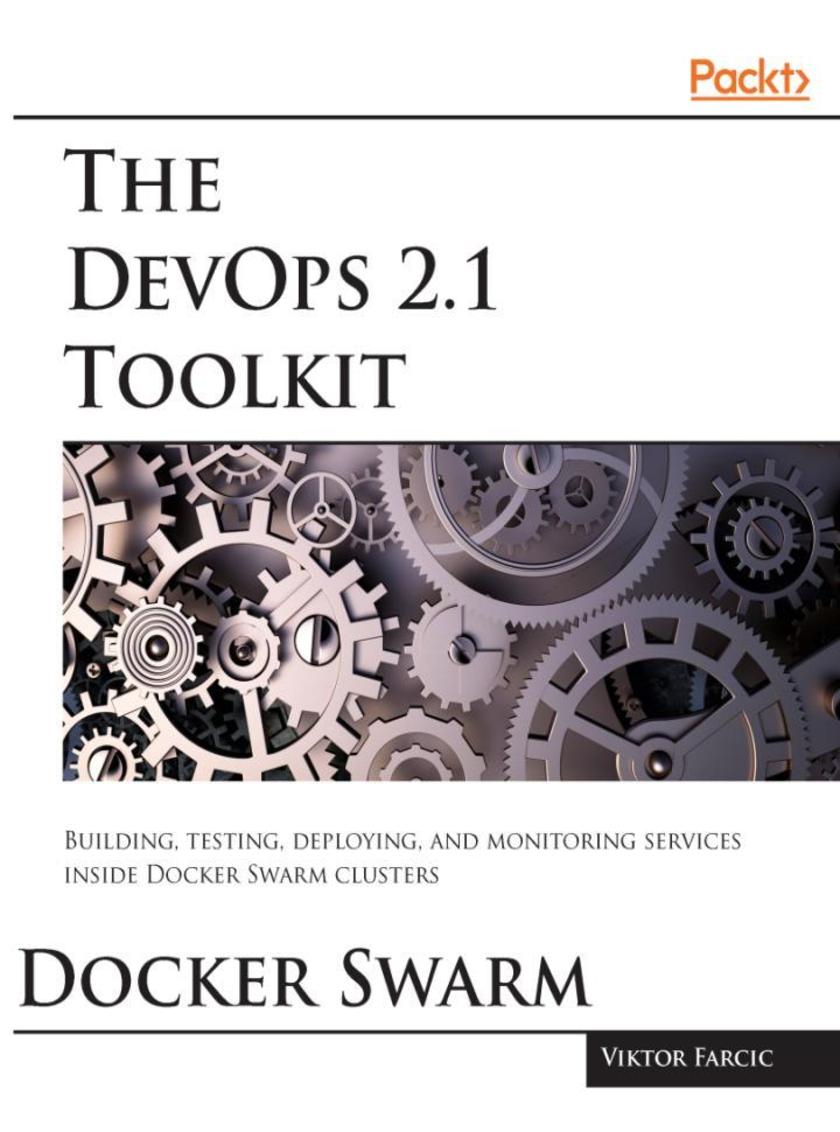
The DevOps 2.1 Toolkit: Docker Swarm
¥90.46
Viktor Farcic's latest book, The DevOps 2.1 Toolkit: Docker Swarm, shows you how to successfully integrate Docker Swarm into your DevOps toolset. About This Book ? Expand your DevOps Toolkit with the DevOps thought leader, Viktor Farcic ? Build, test, deploy, and monitor services inside Docker Swarm clusters ? Translate your understanding to different hosting providers like AWS, Azure, and DigitalOcean ? Go beyond simple deployment to explore how to create a continuous deployment process ? Extend the deep understanding you gained from Viktor's DevOps 2.0 Toolkit book Who This Book Is For This book is for professionals interested in the full microservices life cycle combined with continuous deployment and containers. Target audience could be architects who want to know how to design their systems around microservices. It could be DevOps wanting to know how to apply modern configuration management practices and continuously deploy applications packed in containers. It is for developers who would like to take the process back into their hands as well as for managers who would like to gain a better understanding of the process used to deliver software from the beginning to the end. This book is for everyone wanting to know more about the software development life cycle starting from requirements and design, through the development and testing all the way until deployment and post-deployment phases. We'll create the processes taking into account the best practices developed by and for some of the biggest companies. What You Will Learn ? Learn all aspects of Docker Swarm from building, testing, deploying, and monitoring services inside Docker Swarm clusters, available since Docker 1.12. ? Master the deeper logic of DevOps with Viktor, so that you can successfully apply that logic across any specific set of tools you’re working with. ? Translate a deep understanding to different hosting providers like AWS, Azure, DigitalOcean, among others. ? You’ll go beyond simple deployment: you will explore with Viktor how to create a continuous deployment process. Accomplish zero-downtime deployments, and what to do in case of a failover. ? Know how to run services at scale, how to monitor the systems, and how to make it heal itself. In Detail Viktor Farcic's latest book, The DevOps 2.1 Toolkit: Docker Swarm, takes you deeper into one of the major subjects of his international best seller, The DevOps 2.0 Toolkit, and shows you how to successfully integrate Docker Swarm into your DevOps toolset. Viktor shares with you his expert knowledge in all aspects of building, testing, deploying, and monitoring services inside Docker Swarm clusters. You'll go through all the tools required for running a cluster. You'll travel through the whole process with clusters running locally on a laptop. Once you're confident with that outcome, Viktor shows you how to translate your experience to different hosting providers like AWS, Azure, and DigitalOcean. Viktor has updated his DevOps 2.0 framework in this book to use the latest and greatest features and techniques introduced in Docker. We'll go through many practices and even more tools. While there will be a lot of theory, this is a hands-on book. You won't be able to complete it by reading it on the metro on your way to work. You'll have to read this book while in front of the computer and get your hands dirty. Style and approach We'll go through many practices and even more tools. While there will be a lot of theory, this is a hands-on book. You'll have to read this book while in front of the computer and get your hands dirty. The goal is not to master one particular set of tools, but to learn the logic behind them so that you can apply it to your job in various contexts.
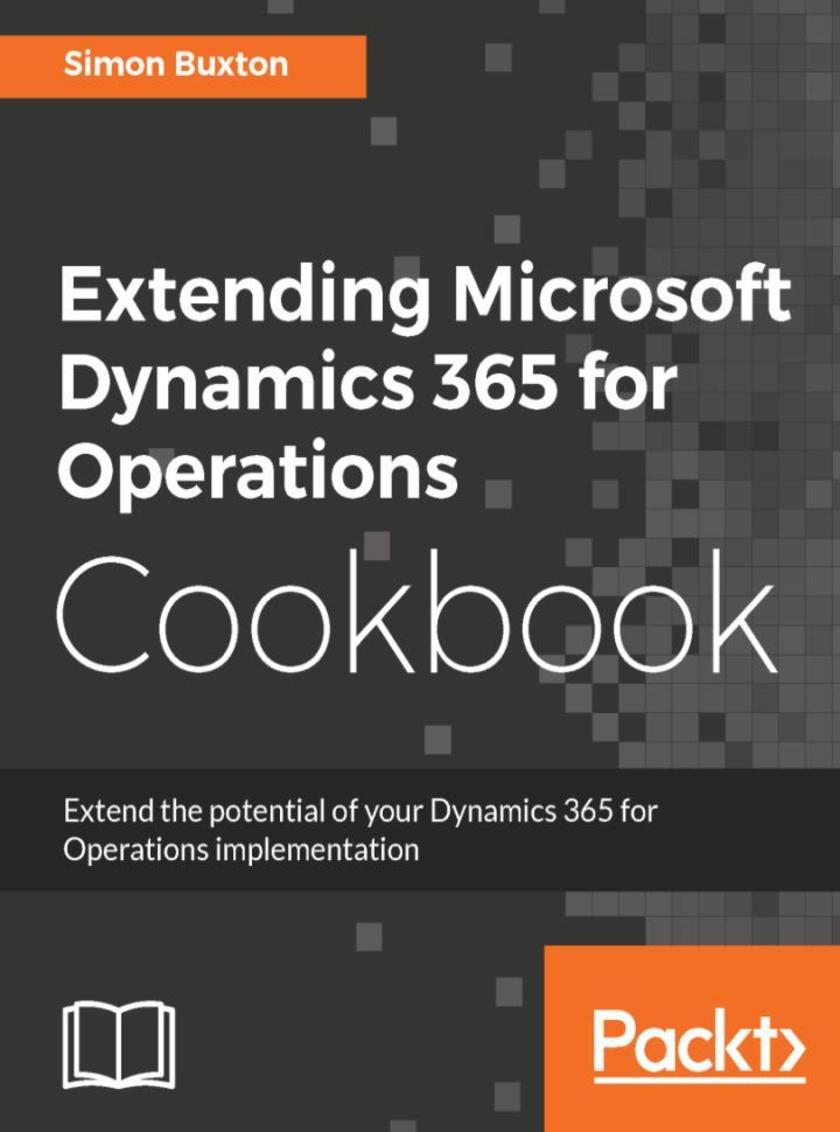
Extending Microsoft Dynamics 365 for Operations Cookbook
¥99.18
Have the best tools at your fingertips to extend and maximize the efficiency of your business management About This Book ? Follow practical and easy-to-grasp examples, illustrations and coding to make the most out of Dynamics 365 for Operations in your business scenario ? Extend Dynamics 365 for Operations in a cost-effective manner by using tools you already have ? Solve common business problems with the valuable features of Dynamics 365 for Operations Who This Book Is For This book is for those who are getting to grips with Dynamics 365 for Operations developers or those migrating from C# development. The guide includes information essential for new and experienced Dynamics 365 for Operations developers. What You Will Learn ? Create enumerated and extended data types ? Understand the importance of using patterns and frameworks while creating a unique concept for your solution ? Service and deploy your code and packages to improve performance ? Write and perform unit tests to automate the testing process ? Design your security model and policies to provide code access privileges ? Construct the UI and business logic to add Power BI to dashboards In Detail Dynamics 365 for Operations is the ERP element of Microsoft’s new Dynamics 365 Enterprise Edition. Operations delivers the infrastructure to allow businesses to achieve growth and make better decisions using scalable and contemporary ERP system tools. This book provides a collection of “recipes” to instruct you on how to create—and extend—a real-world solution using Operations. All key aspects of the new release are covered, and insights into the development language, structure, and tools are discussed in detail. New concepts and patterns that are pivotal to elegant solution designs are introduced and explained, and readers will learn how to extend various aspects of the system to enhance both the usability and capabilities of Operations. Together, this gives the reader important context regarding the new concepts and the confidence to reuse in their own solution designs. This “cookbook” provides the ingredients and methods needed to maximize the efficiency of your business management using the latest in ERP software—Dynamics 365 for Operations. Style and approach The book takes a practical recipe-based approach, focusing on real-world scenarios and giving you all the information you need to build a strong Dynamics 365 for Operations implementation.
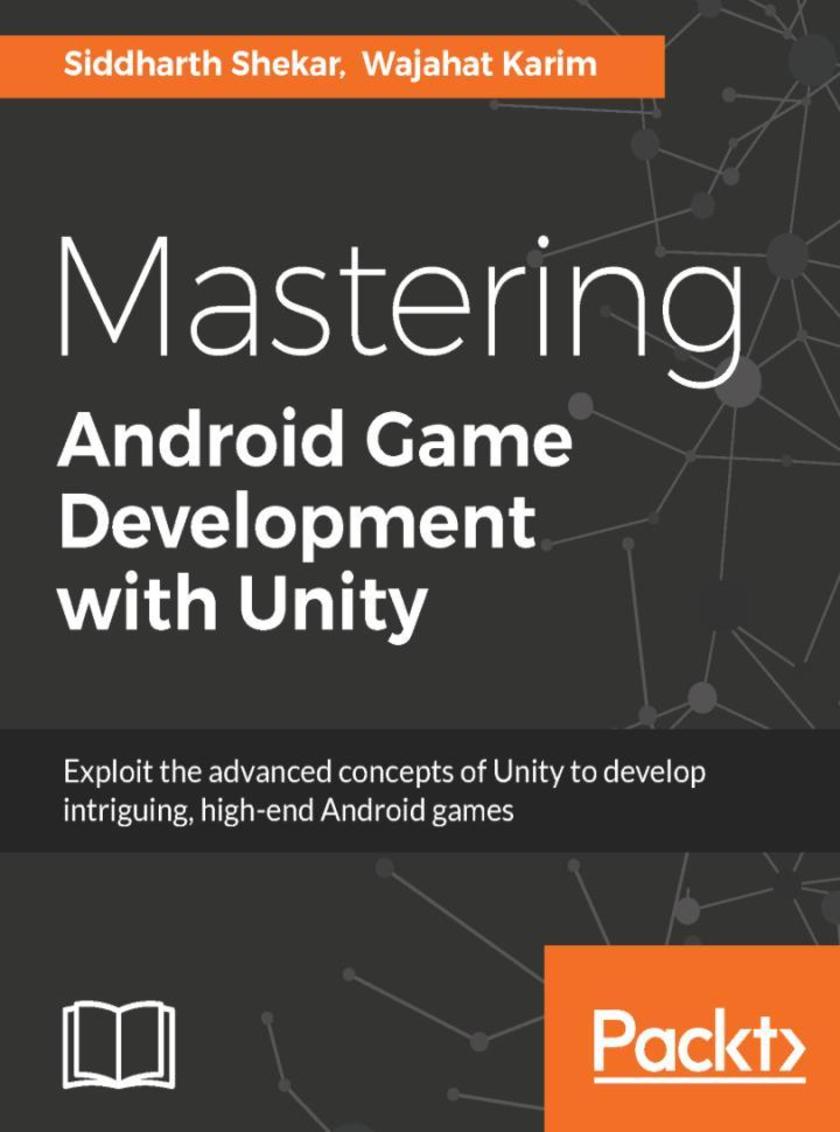
Mastering Android Game Development with Unity
¥67.57
Create enthralling Android games with Unity Faster Than Ever Before About This Book ? Develop complex Android games with the help of Unity's advanced features such as artificial intelligence, high-end physics, and GUI transformations. ? Create amazing Graphical User Interfaces (GUIs) with Unity's new uGUI system ? Unravel and deploy exciting games across Android devices Who This Book Is For If you are a Unity 5 developer and want to expand your knowledge of Unity 5 to create high-end complex Android games, then this book is for you. Readers are expected to have a basic understanding of Unity 5, working with its environment, and its basic concepts. What You Will Learn ? Develop your own Jetpack Joyride clone game ? Explore the advanced features of Unity 5 by building your own Action Fighting game ? Develop remarkable Graphical User Interfaces (GUIs) with Unity's new uGUI system ? Enhance your game by adding stunning particle systems and complex animations ? Build pleasing virtual worlds with special effects, lights, sky cube maps, and cameras ? Make your game more realistic by providing music and sound effects ? Debug and deploy your games on different Android devices In Detail Game engines such as Unity are the power-tools behind the games we know and love. Unity is one of the most widely-used and best loved packages for game development and is used by everyone, from hobbyists to large studios, to create games and interactive experiences for the Web, desktop, mobile, and console. With Unity's intuitive, easy-to-learn toolset and this book, it's never been easier to become a game developer. You will begin with the basic concepts of Android game development, a brief history of Android games, the building blocks of Android games in Unity 5, and the basic flow of games. You will configure an empty project for the Jetpack Joyride Clone Game, add an environment and characters, and control them. Next you will walk through topics such as particle systems, camera management, prefabs, animations, triggers, colliders, and basic GUI systems. You will then cover the basic setup for 3D action fighting games, importing models, textures and controlling them with a virtual on-screen joystick. Later you will set up Scene for 3D Configuration, create basic gameplays, and manage input controls. Next you will learn to create the interface for the main menu, gameplay, game over, achievements, and high score screens. Finally you will polish your game with stats, sounds, and Social Networking, followed by testing the game on Android devices and then publishing it on Google Play, Amazon, and OUYA Stores. Style and approach A step-by-step and detailed guide to developing high-end complex Android games utilizing the advanced concepts of Unity.
Mastering Kubernetes
¥90.46
Master the art of container management utilizing the power of Kubernetes. About This Book ? This practical guide demystifies Kubernetes and ensures that your clusters are always available, scalable, and up to date ? Discover new features such as autoscaling, rolling updates, resource quotas, and cluster size ? Master the skills of designing and deploying large clusters on various cloud platforms Who This Book Is For The book is for system administrators and developers who have intermediate level of knowledge with Kubernetes and are now waiting to master its advanced features. You should also have basic networking knowledge. This advanced-level book provides a pathway to master Kubernetes. What You Will Learn ? Architect a robust Kubernetes cluster for long-time operation ? Discover the advantages of running Kubernetes on GCE, AWS, Azure, and bare metal ? See the identity model of Kubernetes and options for cluster federation ? Monitor and troubleshoot Kubernetes clusters and run a highly available Kubernetes ? Create and configure custom Kubernetes resources and use third-party resources in your automation workflows ? Discover the art of running complex stateful applications in your container environment ? Deliver applications as standard packages In Detail Kubernetes is an open source system to automate the deployment, scaling, and management of containerized applications. If you are running more than just a few containers or want automated management of your containers, you need Kubernetes. This book mainly focuses on the advanced management of Kubernetes clusters. It covers problems that arise when you start using container orchestration in production. We start by giving you an overview of the guiding principles in Kubernetes design and show you the best practises in the fields of security, high availability, and cluster federation. You will discover how to run complex stateful microservices on Kubernetes including advanced features as horizontal pod autoscaling, rolling updates, resource quotas, and persistent storage back ends. Using real-world use cases, we explain the options for network configuration and provides guidelines on how to set up, operate, and troubleshoot various Kubernetes networking plugins. Finally, we cover custom resource development and utilization in automation and maintenance workflows. By the end of this book, you’ll know everything you need to know to go from intermediate to advanced level. Style and approach Delving into the design of the Kubernetes platform, the reader will be exposed to the advanced features and best practices of Kubernetes. This book will be an advanced level book which will provide a pathway to master Kubernetes
Metasploit Bootcamp
¥80.65
Master the art of penetration testing with Metasploit Framework in 7 days About This Book ? A fast-paced guide that will quickly enhance your penetration testing skills in just 7 days ? Carry out penetration testing in complex and highly-secured environments. ? Learn techniques to Integrate Metasploit with industry’s leading tools Who This Book Is For If you are a penetration tester, ethical hacker, or security consultant who quickly wants to master the Metasploit framework and carry out advanced penetration testing in highly secured environments then, this book is for you. What You Will Learn ? Get hands-on knowledge of Metasploit ? Perform penetration testing on services like Databases, VOIP and much more ? Understand how to Customize Metasploit modules and modify existing exploits ? Write simple yet powerful Metasploit automation *s ? Explore steps involved in post-exploitation on Android and mobile platforms. In Detail The book starts with a hands-on Day 1 chapter, covering the basics of the Metasploit framework and preparing the readers for a self-completion exercise at the end of every chapter. The Day 2 chapter dives deep into the use of scanning and fingerprinting services with Metasploit while helping the readers to modify existing modules according to their needs. Following on from the previous chapter, Day 3 will focus on exploiting various types of service and client-side exploitation while Day 4 will focus on post-exploitation, and writing quick *s that helps with gathering the required information from the exploited systems. The Day 5 chapter presents the reader with the techniques involved in scanning and exploiting various services, such as databases, mobile devices, and VOIP. The Day 6 chapter prepares the reader to speed up and integrate Metasploit with leading industry tools for penetration testing. Finally, Day 7 brings in sophisticated attack vectors and challenges based on the user’s preparation over the past six days and ends with a Metasploit challenge to solve. Style and approach This book is all about fast and intensive learning. That means we don’t waste time in helping readers get started. The new content is basically about filling in with highly-effective examples to build new things, show solving problems in newer and unseen ways, and solve real-world examples.
Hadoop 2.x Administration Cookbook
¥90.46
Over 100 practical recipes to help you become an expert Hadoop administrator About This Book ? Become an expert Hadoop administrator and perform tasks to optimize your Hadoop Cluster ? Import and export data into Hive and use Oozie to manage workflow. ? Practical recipes will help you plan and secure your Hadoop cluster, and make it highly available Who This Book Is For If you are a system administrator with a basic understanding of Hadoop and you want to get into Hadoop administration, this book is for you. It’s also ideal if you are a Hadoop administrator who wants a quick reference guide to all the Hadoop administration-related tasks and solutions to commonly occurring problems What You Will Learn ? Set up the Hadoop architecture to run a Hadoop cluster smoothly ? Maintain a Hadoop cluster on HDFS, YARN, and MapReduce ? Understand high availability with Zookeeper and Journal Node ? Configure Flume for data ingestion and Oozie to run various workflows ? Tune the Hadoop cluster for optimal performance ? Schedule jobs on a Hadoop cluster using the Fair and Capacity scheduler ? Secure your cluster and troubleshoot it for various common pain points In Detail Hadoop enables the distributed storage and processing of large datasets across clusters of computers. Learning how to administer Hadoop is crucial to exploit its unique features. With this book, you will be able to overcome common problems encountered in Hadoop administration. The book begins with laying the foundation by showing you the steps needed to set up a Hadoop cluster and its various nodes. You will get a better understanding of how to maintain Hadoop cluster, especially on the HDFS layer and using YARN and MapReduce. Further on, you will explore durability and high availability of a Hadoop cluster. You’ll get a better understanding of the schedulers in Hadoop and how to configure and use them for your tasks. You will also get hands-on experience with the backup and recovery options and the performance tuning aspects of Hadoop. Finally, you will get a better understanding of troubleshooting, diagnostics, and best practices in Hadoop administration. By the end of this book, you will have a proper understanding of working with Hadoop clusters and will also be able to secure, encrypt it, and configure auditing for your Hadoop clusters. Style and approach This book contains short recipes that will help you run a Hadoop cluster efficiently. The recipes are solutions to real-life problems that administrators encounter while working with a Hadoop cluster
Learning Social Media Analytics with R
¥90.46
Tap into the realm of social media and unleash the power of analytics for data-driven insights using R About This Book ? A practical guide written to help leverage the power of the R eco-system to extract, process, analyze, visualize and model social media data ? Learn about data access, retrieval, cleaning, and curation methods for data originating from various social media platforms. ? Visualize and analyze data from social media platforms to understand and model complex relationships using various concepts and techniques such as Sentiment Analysis, Topic Modeling, Text Summarization, Recommendation Systems, Social Network Analysis, Classification, and Clustering. Who This Book Is For It is targeted at IT professionals, Data Scientists, Analysts, Developers, Machine Learning Enthusiasts, social media marketers and anyone with a keen interest in data, analytics, and generating insights from social data. Some background experience in R would be helpful, but not necessary, since this book is written keeping in mind, that readers can have varying levels of expertise. What You Will Learn ? Learn how to tap into data from diverse social media platforms using the R ecosystem ? Use social media data to formulate and solve real-world problems ? Analyze user social networks and communities using concepts from graph theory and network analysis ? Learn to detect opinion and sentiment, extract themes, topics, and trends from unstructured noisy text data from diverse social media channels ? Understand the art of representing actionable insights with effective visualizations ? Analyze data from major social media channels such as Twitter, Facebook, Flickr, Foursquare, Github, StackExchange, and so on ? Learn to leverage popular R packages such as ggplot2, topicmodels, caret, e1071, tm, wordcloud, twittR, Rfacebook, dplyr, reshape2, and many more In Detail The Internet has truly become humongous, especially with the rise of various forms of social media in the last decade, which give users a platform to express themselves and also communicate and collaborate with each other. This book will help the reader to understand the current social media landscape and to learn how analytics can be leveraged to derive insights from it. This data can be analyzed to gain valuable insights into the behavior and engagement of users, organizations, businesses, and brands. It will help readers frame business problems and solve them using social data. The book will also cover several practical real-world use cases on social media using R and its advanced packages to utilize data science methodologies such as sentiment analysis, topic modeling, text summarization, recommendation systems, social network analysis, classification, and clustering. This will enable readers to learn different hands-on approaches to obtain data from diverse social media sources such as Twitter and Facebook. It will also show readers how to establish detailed workflows to process, visualize, and analyze data to transform social data into actionable insights. Style and approach This book follows a step-by-step approach with detailed strategies for understanding, extracting, analyzing, visualizing, and modeling data from several major social network platforms such as Facebook, Twitter, Foursquare, Flickr, Github, and StackExchange. The chapters cover several real-world use cases and leverage data science, machine learning, network analysis, and graph theory concepts along with the R ecosystem, including popular packages such as ggplot2, caret,dplyr, topicmodels, tm, and so on.
PHP 7 Data Structures and Algorithms
¥80.65
Increase your productivity by implementing data structures About This Book ? Gain a complete understanding of data structures using a simple approach ? Analyze algorithms and learn when you should apply each solution ? Explore the true potential of functional data structures Who This Book Is For This book is for those who want to learn data structures and algorithms with PHP for better control over application-solution, efficiency, and optimization. A basic understanding of PHP data types, control structures, and other basic features is required What You Will Learn ? Gain a better understanding of PHP arrays as a basic data structure and their hidden power ? Grasp how to analyze algorithms and the Big O Notation ? Implement linked lists, double linked lists, stack, queues, and priority queues using PHP ? Work with sorting, searching, and recursive algorithms ? Make use of greedy, dynamic, and pattern matching algorithms ? Implement tree, heaps, and graph algorithms ? Apply PHP functional data structures and built-in data structures and algorithms In Detail PHP has always been the the go-to language for web based application development, but there are materials and resources you can refer to to see how it works. Data structures and algorithms help you to code and execute them effectively, cutting down on processing time significantly. If you want to explore data structures and algorithms in a practical way with real-life projects, then this book is for you. The book begins by introducing you to data structures and algorithms and how to solve a problem from beginning to end using them. Once you are well aware of the basics, it covers the core aspects like arrays, listed lists, stacks and queues. It will take you through several methods of finding efficient algorithms and show you which ones you should implement in each scenario. In addition to this, you will explore the possibilities of functional data structures using PHP and go through advanced algorithms and graphs as well as dynamic programming. By the end, you will be confident enough to tackle both basic and advanced data structures, understand how they work, and know when to use them in your day-to-day work Style and approach An easy-to-follow guide full of examples of implementation of data structures and real world examples to solve the problems faced. Each topic is first explained in general terms and then implemented using step by step explanation so that developers can understand each part of the discussion without any problem.
Linux Shell Scripting Cookbook - Third Edition
¥90.46
Do amazing things with the shell About This Book ? Become an expert in creating powerful shell *s and explore the full possibilities of the shell ? Automate any administrative task you could imagine, with shell *s ? Packed with easy-to-follow recipes on new features on Linux, particularly, Debian-based, to help you accomplish even the most complex tasks with ease Who This Book Is For If you are a beginner or an intermediate Linux user who wants to master the skill of quickly writing *s and automate tasks without reading the entire man pages, then this book is for you. You can start writing *s and one-liners by simply looking at the relevant recipe and its de*ions without any working knowledge of shell *ing or Linux. Intermediate / advanced users, system administrators / developers, and programmers can use this book as a reference when they face problems while coding. What You Will Learn ? Interact with websites via *s ? Write shell *s to mine and process data from the Web ? Automate system backups and other repetitive tasks with crontab ? Create, compress, and encrypt archives of your critical data. ? Configure and monitor Ethernet and wireless networks ? Monitor and log network and system activity ? Tune your system for optimal performance ? Improve your system's security ? Identify resource hogs and network bottlenecks ? Extract audio from video files ? Create web photo albums ? Use git or fossil to manage revision control and interact with FOSS projects ? Create and maintain Linux containers and Virtual Machines ? Run a private Cloud server In Detail The shell is the most powerful tool your computer provides. Despite having it at their fingertips, many users are unaware of how much the shell can accomplish. Using the shell, you can generate databases and web pages from sets of files, automate monotonous admin tasks such as system backups, monitor your system's health and activity, identify network bottlenecks and system resource hogs, and more. This book will show you how to do all this and much more. This book, now in its third edition, describes the exciting new features in the newest Linux distributions to help you accomplish more than you imagine. It shows how to use simple commands to automate complex tasks, automate web interactions, download videos, set up containers and cloud servers, and even get free SSL certificates. Starting with the basics of the shell, you will learn simple commands and how to apply them to real-world issues. From there, you'll learn text processing, web interactions, network and system monitoring, and system tuning. Software engineers will learn how to examine system applications, how to use modern software management tools such as git and fossil for their own work, and how to submit patches to open-source projects. Finally, you'll learn how to set up Linux Containers and Virtual machines and even run your own Cloud server with a free SSL Certificate from letsencrypt.org. Style and approach This book will take you through useful real-world recipes designed to make your daily life easier when working with the shell.
Intel Edison Projects
¥63.21
Build powerful Robots and IoT solutions using Intel Edison About This Book ? Learn to build advanced level robots with Intel Edison and Arduino ? Efficiently build and program home automation and IoT projects with Intel Edison ? Master the skills of creating enticing projects with Intel Edison. Who This Book Is For If you are a hobbyist, robot engineer, IoT enthusiast, programmer, or developer who wants to create autonomous projects with Intel Edison, then this book is for you. Prior programming knowledge would be beneficial. What You Will Learn ? Program your device using the Arduino processor language, Python, and Node.js ? Interface different sensors with the Intel Edison ? Build a home automation system using MQTT, Android, and WPF ? Perform face detection using Intel Edison ? Develop a high-speed line follower robot ? Control a robot using a PC application and an custom controller In Detail Change the way you look at embedded electronics with Intel Edison. It is a small computing platform packed with a set of robust features to deliver hands-on performance, durability, and software support. This book is a perfect place to kickstart development and rapid prototyping using Intel Edison. It will start by introducing readers to the Intel Edison board and explaining how to get started with it. You will learn how to build a mini weather station, which will help you to acquire temperature and smoke level and push it to the IoT platform. Then you will see how to build a home automation device and control your appliances using an Android app. Furthermore, we will build a security system using a webcam to detect faces and perform voice recognition. Toward the end, the book will demonstrate how you can build two robots, which will be based on different line sensing sensors and can be controlled by a PC. The book will guide the readers through each and every step of execution of a project, using Intel Edison. Style and approach A project-based guide that will take the readers through various domains of projects like robotics, IoT and so on.
Mastering PostGIS
¥62.12
Write efficient GIS applications using PostGIS - from data creation to data consumption About This Book ? Learn how you can use PostGIS for spatial data analysis and manipulation ? Optimize your queries and build custom functionalities for your GIS application ? A comprehensive guide with hands-on examples to help you master PostGIS with ease Who This Book Is For If you are a GIS developer or analyst who wants to master PostGIS to build efficient, scalable GIS applications, this book is for you. If you want to conduct advanced analysis of spatial data, this book will also help you. The book assumes that you have a working installation of PostGIS in place, and have working experience with PostgreSQL. What You Will Learn ? Refresh your knowledge of the PostGIS concepts and spatial databases ? Solve spatial problems with the use of SQL in real-world scenarios ? Practical walkthroughs of application development examples using Postgis, GeoServer and OpenLayers. ? Extract, transform and load your spatial data ? Expose data directly or through web services. ? Consume your data in both desktop and web clients In Detail PostGIS is open source extension onf PostgreSQL object-relational database system that allows GIS objects to be stored and allows querying for information and location services. The aim of this book is to help you master the functionalities offered by PostGIS- from data creation, analysis and output, to ETL and live edits. The book begins with an overview of the key concepts related to spatial database systems and how it applies to Spatial RMDS. You will learn to load different formats into your Postgres instance, investigate the spatial nature of your raster data, and finally export it using built-in functionalities or 3th party tools for backup or representational purposes. Through the course of this book, you will be presented with many examples on how to interact with the database using JavaScript and Node.js. Sample web-based applications interacting with backend PostGIS will also be presented throughout the book, so you can get comfortable with the modern ways of consuming and modifying your spatial data. Style and approach This book is a comprehensive guide covering all the concepts you need to master PostGIS. Packed with hands-on examples, tips and tricks, even the most advanced concepts are explained in a very easy-to-follow manner. Every chapter in the book does not only focus on how each task is performed, but also why.
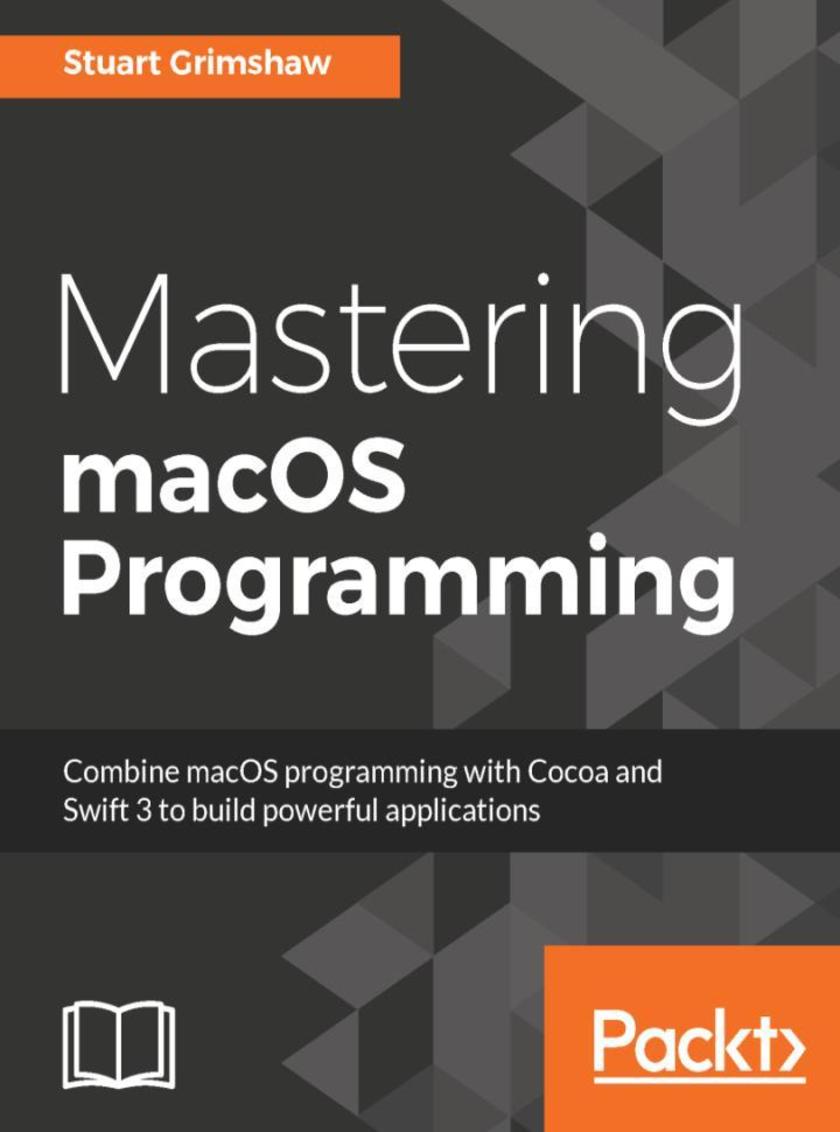
Mastering macOS Programming
¥80.65
Take your macOS Sierra to the next level using the latest tools, designs, and best coding practices while developing with Swift 3.0 About This Book ? Learn to harness the power of macOS with the elegance of the Swift programming language ? Become highly competent in building apps on the macOS platform ? Get the most in-depth guide with a hands-on approach on the latest version of macOS Who This Book Is For This book is for developers who have some experience with macOS and want to take their skills to next level by unlocking the full potential of latest version of macOS with Swift 3 to build impressive applications. Basic knowledge of Swift will be beneficial but is not required. What You Will Learn ? Combine beautiful design with robust code for the very best user experience ? Bring the best coding practices to the new macOS Sierra ? See what's new in Swift 3.0 and how best to leverage the Swift language ? Master Apple's tools, including Xcode, Interface Builder, and Instruments ? Use Unix and other common command-line tools to increase productivity ? Explore the essential Cocoa frameworks, including networking, animation, audio, and video In Detail macOS continues to lead the way in desktop operating systems, with its tight integration across the Apple ecosystem of platforms and devices. With this book, you will get an in-depth knowledge of working on macOS, enabling you to unleash the full potential of the latest version using Swift 3 to build applications. This book will help you broaden your horizons by taking your programming skills to next level. The initial chapters will show you all about the environment that surrounds a developer at the start of a project. It introduces you to the new features that Swift 3 and Xcode 8 offers and also covers the common design patterns that you need to know for planning anything more than trivial projects. You will then learn the advanced Swift programming concepts, including memory management, generics, protocol orientated and functional programming and with this knowledge you will be able to tackle the next several chapters that deal with Apple's own Cocoa frameworks. It also covers AppKit, Foundation, and Core Data in detail which is a part of the Cocoa umbrella framework. The rest of the book will cover the challenges posed by asynchronous programming, error handling, debugging, and many other areas that are an indispensable part of producing software in a professional environment. By the end of this book, you will be well acquainted with Swift, Cocoa, and AppKit, as well as a plethora of other essential tools, and you will be ready to tackle much more complex and advanced software projects. Style and approach This comprehensive guide takes a hands-on practical approach incorporating a visually-rich format rather than a text heavy format. The focus is on teaching the core concepts through a series of small projects and standalone examples so you gain expertise with various aspects of macOS application development.


