


 购物车
购物车 个人中心
个人中心
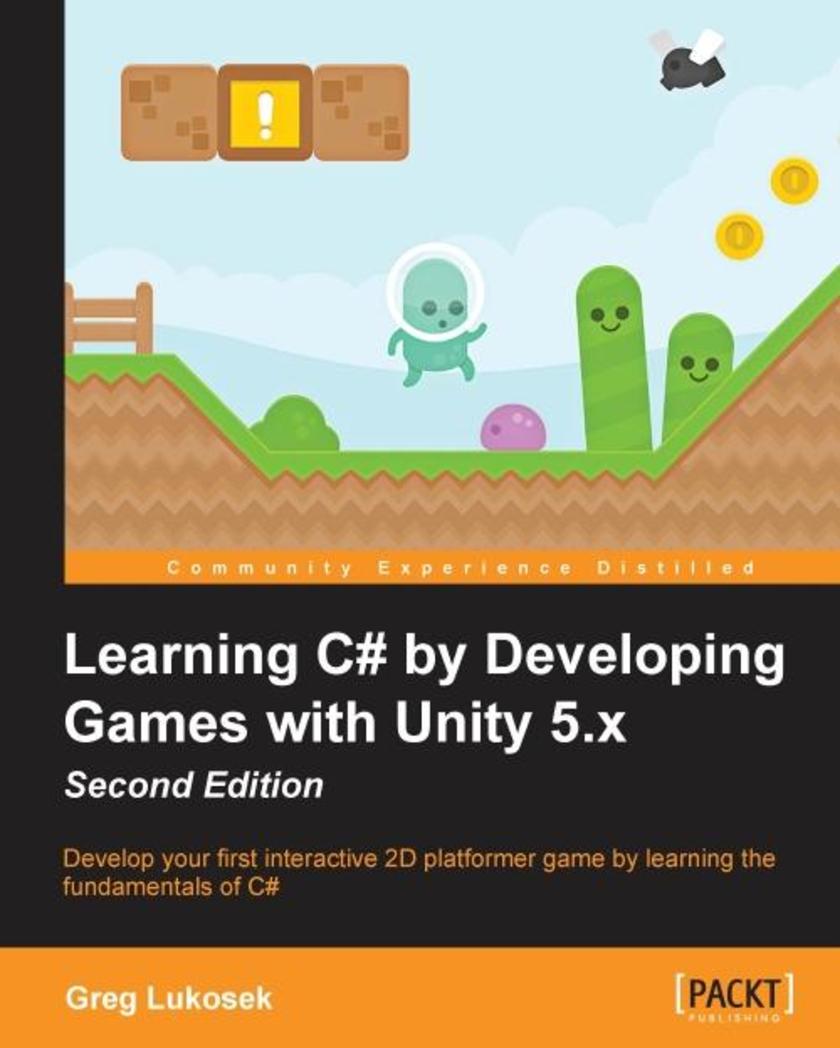
Learning C# by Developing Games with Unity 5.x - Second Edition
¥80.65
Develop your first interactive 2D platformer game by learning the fundamentals of C# About This Book Get to grips with the fundamentals of *ing in C# with Unity Create an awesome, 2D platformer game from scratch using the principles of object-oriented programming and coding in C# This is a step-by-step guide to learn the fundamentals of C# *ing to develop GameObjects and master the basics of the new UI system in Unity Who This Book Is For The book is targeted at beginner level Unity developers with no programming experience. If you are a Unity developer and you wish to learn how to write C# *s and code by creating games, then this book is for you. What You Will Learn Understand the fundamentals of variables, methods, and code syntax in C# Get to know about techniques to turn your game idea into working project Use loops and collections efficiently in Unity to reduce the amount of code Develop a game using the object-oriented programming principles Generate infinite levels for your game Create and code a good-looking functional UI system for your game Publish and share your game with users In Detail Unity is a cross-platform game engine that is used to develop 2D and 3D video games. Unity 5 is the latest version, released in March 2015, and adds a real-time global illumination to the games, and its powerful new features help to improve a game’s efficiency. This book will get you started with programming behaviors in C# so you can create 2D games in Unity. You will begin by installing Unity and learning about its features, followed by creating a C# *. We will then deal with topics such as unity *ing for you to understand how codes work so you can create and use C# variables and methods. Moving forward, you will find out how to create, store, and retrieve data from collection of objects. You will also develop an understanding of loops and their use, and you’ll perform object-oriented programming. This will help you to turn your idea into a ready-to-code project and set up a Unity project for production. Finally, you will discover how to create the GameManager class to manage the game play loop, generate game levels, and develop a simple UI for the game. By the end of this book, you will have mastered the art of applying C# in Unity. Style and approach This is a step-by-step guide to developing a game from scratch by applying the fundamentals of C# and Unity *ing.
R Machine Learning By Example
¥90.46
Understand the fundamentals of machine learning with R and build your own dynamic algorithms to tackle complicated real-world problems successfully About This Book Get to grips with the concepts of machine learning through exciting real-world examples Visualize and solve complex problems by using power-packed R constructs and its robust packages for machine learning Learn to build your own machine learning system with this example-based practical guide Who This Book Is For If you are interested in mining useful information from data using state-of-the-art techniques to make data-driven decisions, this is a go-to guide for you. No prior experience with data science is required, although basic knowledge of R is highly desirable. Prior knowledge in machine learning would be helpful but is not necessary. What You Will Learn Utilize the power of R to handle data extraction, manipulation, and exploration techniques Use R to visualize data spread across multiple dimensions and extract useful features Explore the underlying mathematical and logical concepts that drive machine learning algorithms Dive deep into the world of analytics to predict situations correctly Implement R machine learning algorithms from scratch and be amazed to see the algorithms in action Write reusable code and build complete machine learning systems from the ground up Solve interesting real-world problems using machine learning and R as the journey unfolds Harness the power of robust and optimized R packages to work on projects that solve real-world problems in machine learning and data science In Detail Data science and machine learning are some of the top buzzwords in the technical world today. From retail stores to Fortune 500 companies, everyone is working hard to making machine learning give them data-driven insights to grow their business. With powerful data manipulation features, machine learning packages, and an active developer community, R empowers users to build sophisticated machine learning systems to solve real-world data problems. This book takes you on a data-driven journey that starts with the very basics of R and machine learning and gradually builds upon the concepts to work on projects that tackle real-world problems. You’ll begin by getting an understanding of the core concepts and definitions required to appreciate machine learning algorithms and concepts. Building upon the basics, you will then work on three different projects to apply the concepts of machine learning, following current trends and cover major algorithms as well as popular R packages in detail. These projects have been neatly divided into six different chapters covering the worlds of e-commerce, finance, and social-media, which are at the very core of this data-driven revolution. Each of the projects will help you to understand, explore, visualize, and derive insights depending upon the domain and algorithms. Through this book, you will learn to apply the concepts of machine learning to deal with data-related problems and solve them using the powerful yet simple language, R. Style and approach The book is an enticing journey that starts from the very basics to gradually pick up pace as the story unfolds. Each concept is first defined in the larger context of things succinctly, followed by a detailed explanation of their application. Each topic is explained with the help of a project that solves a real real-world problem involving hands-on work thus giving you a deep insight into the world of machine learning.
Mastering JBoss Drools 6
¥90.46
Discover the power of Drools 6 and Business Rules for developing complex scenarios in your applications About This Book Implement and model different rules using the DRL full syntax Model complex business decisions and domain models in order to automate and improve your operational decisions with the Drools framework A practical, fast-paced, hands-on guide to help you use the different components provided by the Drools Rule Engine Who This Book Is For This book is for Java developers and architects who need to have a deep understanding of how to create or integrate your applications with the Drools Rules Framework. The book assumes that you know the Java language well and also have experience with some widely used frameworks, such as Spring. You should also know the basics of Maven-based applications. What You Will Learn Automate your application’s decisions, such as promotion applying, discount policies, fraud detection, and more. Quickly get started with writing your first rules using the DRL full syntax. Discover the power of the new syntax components of the rule language. Define inferences in your business rules to simplify complex decisions. Write decision tables, templates,domain-specific languages, and scorecards, and learn how to map them to the Drools framework. Harness the full operational power of Drools through all of its configuration points. Use Drools configurations and architectures for different environments and scenarios. In Detail Mastering JBoss Drools 6 will provide you with the knowledge to develop applications involving complex scenarios. You will learn how to use KIE modules to create and execute Business Rules, and how the PHREAK algorithm internally works to drive the Rule Engine decisions. This book will also cover the relationship between Drools and jBPM, which allows you to enrich your applications by using Business Processes. You will be briefly introduced to the concept of complex event processing (Drools CEP) where you will learn how to aggregate and correlate your data based on temporal conditions. You will also learn how to define rules using domain-specific languages, such as spreadsheets, database entries, PMML, and more. Towards the end, this book will take you through the integration of Drools with the Spring and Camel frameworks for more complex applications. Style and approach Approached from a developer’s perspective, the book teaches you all the advanced concepts of Business Rules applicable examples with helpful screenshots, diagrams, tutorials, and examples.
Mastering Cross-Platform Development with Xamarin
¥80.65
Master the skills required to steer cross-platform applications from drawing board to app store(s) using Xamarin About This Book Develop your Xamarin development skills with this comprehensive guide on various patterns and features so you can create elegant and high-quality applications Create adaptive user interfaces on separate platforms without compromising the user experience and platform identity Implement application lifecycle management concepts to manage and finalize cross-platform projects and efficiently collaborate with others Who This Book Is For This book is ideal for those who want to take their entry–level Xamarin mobile development skills to the next level to become the go-to person within their organization. To fully understand the patterns and concepts described, you should possess a reasonable level of knowledge about the core elements of Xamarin and cross-platform application development with it. What You Will Learn Configure your environment for cross-platform projects with Xamarin Gain memory management skills to avoid memory leaks and premature code cycles while decreasing the memory print of your applications Employ asynchronous and parallel patterns to execute non-interactive and non-blocking processes Create and use SQLite databases for offline scenarios Integrate network resources with cross-platform applications Design and implement eye-catching and reusable UI components without compromising nativity in mobile applications Manage the application lifecycle of cross-platform development projects Distribute Xamarin applications through public or private channels In Detail The main goal of this book is to equip you with the required know-how to successfully analyze, develop, and manage Xamarin cross-platform projects using the most efficient, robust, and scalable implementation patterns. This book starts with general topics such as memory management, asynchronous programming, local storage, and networking, and later moves onto platform-specific features. During this transition, you will learn about key tools to leverage the patterns described, as well as advanced implementation strategies and features. The book also presents User Interface design and implementation concepts on Android and iOS platforms from a Xamarin and cross-platform perspective, with the goal to create a consistent but native UI experience. Finally, we show you the toolset for application lifecycle management to help you prepare the development pipeline to manage and see cross-platform projects through to public or private release. Style and approach This is a comprehensive guide on various Xamarin features and patterns. Each topic is explained and demonstrated with code samples, which are revised in each section in an iterative manner and analyzed with available diagnostic tools to demonstrate the benefits of different patterns.
Mastering Wireshark
¥90.46
Analyze data network like a professional by mastering Wireshark - From 0 to 1337 About This Book Master Wireshark and train it as your network sniffer Impress your peers and get yourself pronounced as a network doctor Understand Wireshark and its numerous features with the aid of this fast-paced book packed with numerous screenshots, and become a pro at resolving network anomalies Who This Book Is For Are you curious to know what’s going on in a networkDo you get frustrated when you are unable to detect the cause of problems in your networksThis is where the book comes into play. Mastering Wireshark is for developers or network enthusiasts who are interested in understanding the internal workings of networks and have prior knowledge of using Wireshark, but are not aware about all of its functionalities. What You Will Learn Install Wireshark and understand its GUI and all the functionalities of it Create and use different filters Analyze different layers of network protocols and know the amount of packets that flow through the network Decrypt encrypted wireless traffic Use Wireshark as a diagnostic tool and also for network security analysis to keep track of malware Troubleshoot all the network anomalies with help of Wireshark Resolve latencies and bottleneck issues in the network In Detail Wireshark is a popular and powerful tool used to analyze the amount of bits and bytes that are flowing through a network. Wireshark deals with the second to seventh layer of network protocols, and the analysis made is presented in a human readable form. Mastering Wireshark will help you raise your knowledge to an expert level. At the start of the book, you will be taught how to install Wireshark, and will be introduced to its interface so you understand all its functionalities. Moving forward, you will discover different ways to create and use capture and display filters. Halfway through the book, you’ll be mastering the features of Wireshark, analyzing different layers of the network protocol, looking for any anomalies. As you reach to the end of the book, you will be taught how to use Wireshark for network security analysis and configure it for troubleshooting purposes. Style and approach Every chapter in this book is explained to you in an easy way accompanied by real-life examples and screenshots of the interface, making it easy for you to become an expert at using Wireshark.
OpenStack Trove Essentials
¥63.21
Build your own cloud based Database as a Service using OpenStack Trove About This Book Familiarize yourself with the concept of Database as a Service and make your existing system scalable and efficient with OpenStack Trove Minimize the administrative tasks and complexities of managing your cloud infrastructure This is a fast-paced guide to datastore management on the OpenStack platform using OpenStack Trove Who This Book Is For If you are a DBA / system administrator / architect, or a student who wants to build a Database as a Service based on OpenStack, this book is for you. You should have a basic knowledge of OpenStack components, RDBMS/NoSQL, IaaS, and cloud computing. What You Will Learn Get to grips with the basics of OpenStack and the prerequisites to install Trove Understand the expectations of DBaaS and how Trove can help you achieve them Set up a basic installation of DevStack (Development Stack) in a virtual box Install Trove and utilize its configuration groups to manage and tune databases Use Image builder to create guest images for Trove Utilize Trove to provision your first database instance Back up and restore your databases with the help of Trove In Detail OpenStack has become an extremely popular solution to build public and private clouds with. Database as a Service (DBaaS) enables the delivery of more agile database services at lower costs. Some other benefits of DBaaS are secure database deployments and compliance to standards and best practices. Trove is a DBaaS built on OpenStack and is becoming more popular by the day. Since Trove is one of the most recent projects of OpenStack, DBAs and system administrators can find it difficult to set up and run a DBaaS using OpenStack Trove. This book helps DBAs make that step. We start by introducing you to the concepts of DBaaS and how is it implemented using OpenStack Trove. Following this, we look at implementing OpenStack and deploying Trove. Moving on, you will learn to create guest images to be used with Trove. We then look at how to provision databases in self-service mode, and how to perform administration tasks such as backup and recovery, and fine-tuning databases. At the end of the book, we will examine some advanced features of Trove such as replication. Style and approach This fast-paced, step-by-step guide introduces you to DBaaS, OpenStack Trove, and its components, leading you through building your own Cloud-based DBaaS. Using the DevStack deployment method, you will spend less time on installing OpenStack so you can devote more time to learning how to provision and manage databases in a DBaaS environment.
Flask By Example
¥63.21
Unleash the full potential of the Flask web framework by creating simple yet powerful web applications About This Book The most up-to-date book on Flask on the market Create your own world-class applications and master the art of Flask by unravelling its enigma through this journey This step-by-step tutorial is packed with examples on blending different technologies with Flask to get you up and running Who This Book Is For Have you looked at PHP and hated the clunky bloated syntaxOr looked at .Net and wished it was more open and flexibleMaybe you’ve tried your hand at GUI libraries in Python and found them hard to useIf your answer to any one of these questions is a yes, then this is just the book for you. It is also intended for people who know the basics of Python and want to learn how to use it to build powerful solutions with a web front-end. What You Will Learn Build three web applications from the ground up using the powerful Python micro framework, Flask. Dynamically display data to your viewers, based on their requests Store user and static data in SQL and NoSQL databases and use this data to power your web applications Create a good user experience by combining HTML, CSS, and JavaScript Harness the convenience of freely available APIs, including OpenWeatherMap, Open Exchange Rates, and bitly Extend your applications to build advanced functionality, such as a user account control system using Flask-Login Learn about web application security and defend against common attacks, such as SQL injection and XSS In Detail This book will take you on a journey from learning about web development using Flask to building fully functional web applications. In the first major project, we develop a dynamic Headlines application that displays the latest news headlines along with up-to-date currency and weather information. In project two, we build a Crime Map application that is backed by a MySQL database, allowing users to submit information on and the location of crimes in order to plot danger zones and other crime trends within an area. In the final project, we combine Flask with more modern technologies, such as Twitter's Bootstrap and the NoSQL database MongoDB, to create a Waiter Caller application that allows restaurant patrons to easily call a waiter to their table. This pragmatic tutorial will keep you engaged as you learn the crux of Flask by working on challenging real-world applications. Style and approach This book will provide you with rich, practical experience of Flask. Every technology, that is employed along with Flask is comprehensively introduced, while the book focusses on developing web applications. Pointers to educational material are always given if you want to gain in-depth knowledge of the various technologies used.
Drupal 5 Themes
¥71.93
This book is the ideal introduction to theming with Drupal 5. If you want to create a striking new look for your Drupal website, this book is for you. Starting from the basics of theme setup and configuration, you will learn about the Drupal theming architecture and the PHPTemplate engine, and then move on to modifying existing themes and building new themes from scratch. Included is a complete guide to the various style sheets and themeable functions in Drupal 5, making this book a valuable resource even to experienced theme developers. It covers: Creating custom templates Basics of theming in pure PHP Modifying an existing PHPTemplate theme" a step-by-step guide Creating a new PHPTemplate theme" a step-by-step guide Working with forms The main requirements to make use of this book are knowledge of HTML, CSS, and a touch of creativity! Although this book aims to make Drupal theming accessible to designers, theming in Drupal 5 involves writing some PHP code, and a basic knowledge of PHP will be helpful.
Joomla! Accessibility
¥54.49
Fast-paced and to-the-point, this book takes you through the important topics of Microsoft Dynamics NAV with clear explanations and practical example code. The book's selection of topics is driven by what the working developer needs to know in order to become productive as quickly as possible. The business applications software designer/developer who: Wants to become productive in NAV C/SIDE C/AL development as quickly as possible Understands business applications and the associated software Has significant programming experience Has access to NAV including at least the Designer granules, preferably a full development license and a standard Cronus demo database Is willing to do the exercises to get hands-on experience The Reseller manager or executive who wants a concise, in depth view of NAVs development environment and tool set The technically knowledgeable manager or executive of a firm using NAV that is about to embark on a significant NAV enhancement project The technically knowledgeable manager or executive of a firm considering purchase of NAV as a highly customizable business applications platform The reader of this book: Does not need to be expert in object-oriented programming Does not need to have previous experience with NAV
PHP Web 2.0 Mashup Projects
¥71.93
This book is a practical tutorial with five detailed and carefully explained case studies to build new and effective mashup applications. If you feel confident with your PHP programming, familiar with the basics of HTML and CSS, unafraid of XML, and interested in mashing things up, this is the book for you! There are a lot of formats and protocols, web services and web APIs encountered in this book ” you do not need to know anything about them or about AJAX; you will find all you need in the book.
OSWorkflow: A guide for Java developers and architects to integrating…
¥90.46
This book gives step-by-step instructions on how to do things. The basics are explained first and then examples help to clarify and reinforce the principles. The book is aimed at experienced Java developers and system architects who want to develop complex Java applications using the OSWorkflow workflow engine. OSWorkflow is a flexible low-level workflow implementation for developers and architects; it is not a quick "plug-and-play" solution for non-technical end users.
Microsoft AJAX Library Essentials: Client-side ASP.NET AJAX 1.0 Explained
¥71.93
This book is a practical tutorial to get you confident and comfortable working with the Microsoft AJAX suite. Packed with step-by-step examples and detailed explanations of how the examples work, this book is the ideal first step into the exciting world of AJAX in ASP.NET This book has been written for ASP.NET developers entering the world of the ASP.NET AJAX Framework, and for existing ASP.NET AJAX developers looking for a more detailed tutorial on the client-side of the framework: the Microsoft AJAX Library.
Mastering TypoScript: TYPO3 Website, Template, and Extension Development
¥107.90
Written in a clear, easy-to-read style, the book provides step-by-step instructions on using TypoScript for TYPO3 website development, template and extension development, and back-end and front-end administration. Each topic is tackled in a clear and practical way with many examples to develop your skills. This book is suitable for TYPO3 developers, administrators, and designers who want to develop fully featured TYPO3 websites using the power of TypoScript. A basic knowledge of TYPO3 is expected, and PHP and MySQL programming experience is useful, though not essential for using this book.
High Availability MySQL Cookbook
¥80.65
This book uses the approach of a cookbook. Each recipe provides the reader with easy step-by-step de*ions of the actions necessary to accomplish a specific task. It is designed to present what often appear as extremely complicated techniques as a series of simple-to-follow recipes, allowing readers to achieve high uptimes on their MySQL servers. This book is targeted at system administrators or database administrators who have basic familiarity with Linux, the shell, and MySQL. The typical user will be able to get MySQL installed and working, but needs practical guidance to make it highly available.
Microsoft Silverlight 4 Data and Services Cookbook
¥107.90
Written in a cookbook style, this book offers learning and techniques through recipes. It contains step-by-step instructions for developers who want to build rich data-driven business applications using Silverlight. The book is designed in such a way that you can refer to things chapter by chapter, or read them in no particular order. If you are a .NET developer who wants to build professional data-driven applications with Sliverlight, then this book is for you. Basic experience of programming Silverlight and familiarity with accessing data using ADO.NET in normal .NET applications is required.
Wordpress and Flash 10x Cookbook
¥71.93
This book consists of a series of easy-to-follow recipes. Each recipe stands on its own, so you can open the book to any recipe and complete it without going through the previous recipes. You can work through the book from start to end or just choose the recipes most applicable to your needs and situation. The book presents recipes of varying difficulty levels so that there is something for everyone from a beginner to an advanced WordPress user. Detailed screenshots, code examples, and links to additional resources supplement the concise instructions. If you are a Wordpress user interested in creating multimedia-rich websites and blogs using Flash then this book is perfect for you. This book caters for site administrators and web developers, who have experience using Flash aand Wordpress.
VirtualBox 3.1: Beginner's Guide
¥90.46
This beginner's guide consists of comprehensive explanation, appropriate screenshots, tips, tricks, and best practices. It offers step-by-step instructions on building your own virtual environment from scratch, supported by the reasoning behind what you do. If you are a System Administrator who has to set up a virtual machine and want to use an open source tool to do it this book will prove invaluable. No prior knowledge of VirtualBox is required, but you should have experience with general system administration.
Pentaho 3.2 Data Integration: Beginner's Guide
¥90.46
As part of Packt's Beginner's Guide, this book focuses on teaching by example. The book walks you through every aspect of PDI, giving step-by-step instructions in a friendly style, allowing you to learn in front of your computer, playing with the tool. The extensive use of drawings and screenshots make the process of learning PDI easy. Throughout the book numerous tips and helpful hints are provided that you will not find anywhere else. The book provides short, practical examples and also builds from scratch a small datamart intended to reinforce the learned concepts and to teach you the basics of data warehousing. This book is for software developers, database administrators, IT students, and everyone involved or interested in developing ETL solutions, or, more generally, doing any kind of data manipulation. If you have never used PDI before, this will be a perfect book to start with. You will find this book is a good starting point if you are a database administrator, data warehouse designer, architect, or any person who is responsible for data warehouse projects and need to load data into them. You don't need to have any prior data warehouse or database experience to read this book. Fundamental database and data warehouse technical terms and concepts are explained in easy-to-understand language.
Oracle Database 11g – Underground Advice for Database Administrators
¥90.46
This book is designed to cover the problems that novice DBAs particularly struggle with. This handbook covers a minimal amount of theoretical information before showing you how to overcome common problems through the use of real-life examples. It covers both Oracle 11g R1 and 11g R2 in examples, with material applicable to all versions of Oracle. This book is for you if you find yourself in charge of an Oracle database. It can be easy to feel overwhelmed. Whether you are a single employee or the DBA manager of several employees, whether you are taking over an existing position or taking up a newly created one – this book is designed to be a sanity check. If you need guidance for migrating to 11g or implementing Oracle's Maximum Availability Architecture, you will find this book very helpful.
Expert PHP 5 Tools
¥90.46
Each chapter focuses on one topic, such as version control or debugging. After initially discussing essential concepts, the author takes an in-depth look at one or more tools relevant to the topic. Sample projects and plenty of well-documented code are used to work through practical application of the concepts. This book has been written for professional developers new to PHP and experienced PHP developers who want to take their skills to the next level by learning enterprise-level tools and techniques.
WordPress 2.9 E-Commerce
¥80.65
This book provides an easy to understand, step-by-step approach to installing, configuring, and using WP e-Commerce to run your online store. We will construct an example store in the book with enough information and flexibility to adapt the store to your specific needs. This book is for you, if you are interested in using WordPress as the basis for a store that can sell physical items, downloads, or services. It is ideal for a sole proprietor or small business owner with only basic, in-house technical skills. Some prior knowledge of WordPress will help, but is not required. No knowledge of PHP is expected, but it will also be helpful.


