


 购物车
购物车 个人中心
个人中心
Joomla! 1.5 Cookbook
¥80.65
This is a fast paced cookbook, with practical recipes providing tips and tricks to the most common problems and scenarios faced by Joomla! site owners. It also covers brand new concepts and scenarios of Joomla! 1.6. If you are a Joomla! site owner and have some problems that you want to get rid of quickly; or you just want to get particular things working or improved, this is the book for you. HTML, CSS, or programming knowledge not required.
Oracle Business Intelligence: The Condensed Guide to Analysis and Reporting
¥71.93
This book is a quick guide to getting started with Oracle Business Intelligence SE platform that will answer common business questions and help you make quick business decisions. The examples in this book will help you prepare the database for analysis and create business reports in no time. If you are an business analyst, a report builder, a DBA, or an application developer who wants to learn how to use the Oracle Business Intelligence platform for analysis and reporting, this is the perfect book for you. Previous knowledge of Oracle Business Intelligence tools is not required, but you should have a competent grasp of using an Oracle Database.
Microsoft Dynamics NAV Administration
¥71.93
This book is a tutorial guide that illustrates the steps needed to install, configure, deploy, and administer Dynamics NAV. It shows you how to get started with Dynamics NAV and then gradually explains other admin tasks such as backing up and performance tuning, using practical examples. If you want to get started in administering Dynamics NAV, this book is for you. Readers do not need any previous experience with Dynamics NAV.
WordPress 3.0 jQuery
¥80.65
This book walks the reader from a basic overview and introduction to jQuery with illustrations of how it works with a WordPress site and then starts building enhancements that start off very simply and increase in dynamics as the book progresses. You'll start off with some simple CSS manipulation and move on to creating some sleek visual validation to your site's forms and by the end of the book use the UI plugin seamlessly within WordPress and create a custom rotating slide-show and incorporate AJAX techniques to your site. All the while showing you how to create these enhancements without "breaking up the work-flow" of the WordPress content editors. This book is for anyone who is interested in using jQuery with a WordPress site. It's assumed that most readers will be WordPress developers with a pretty good understanding of PHP or JavaScript programming and at the very least experienced with HTML/CSS development who want to learn how to quickly apply jQuery to their WordPress projects.
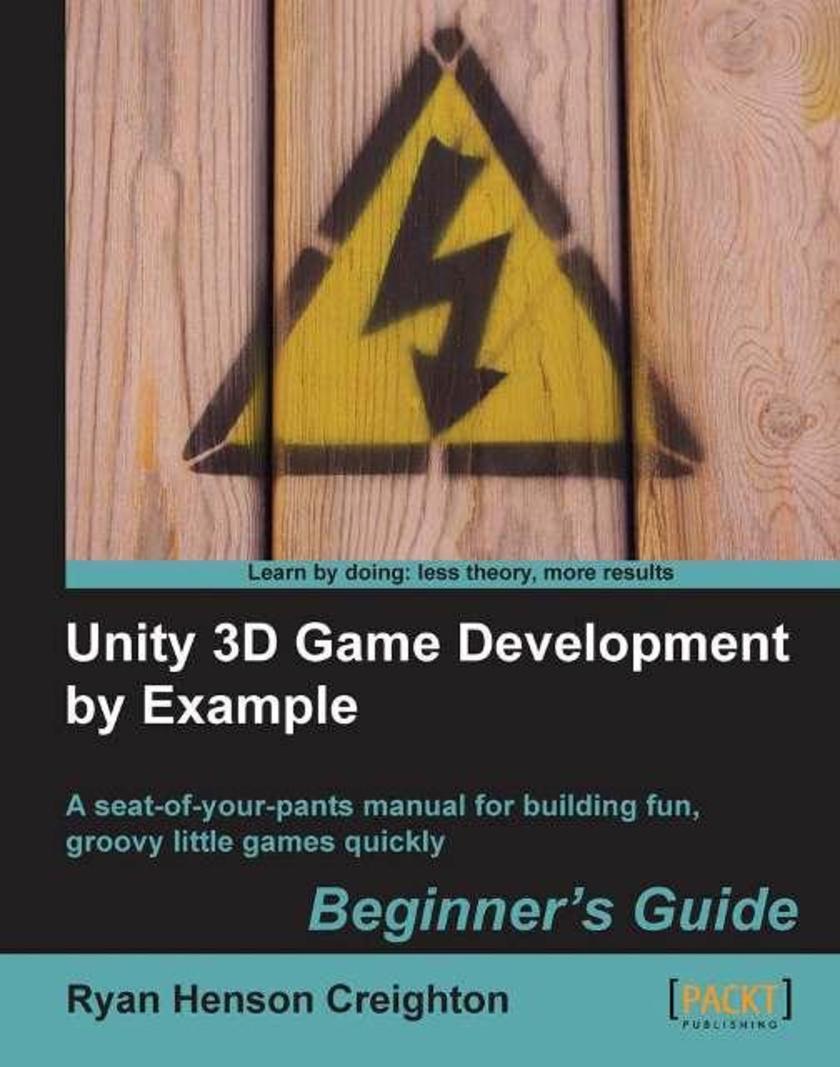
Unity 3D Game Development by Example Beginners Guide
¥80.65
The book takes a clear, step-by-step approach to building small, simple game projects. It focuses on short, attainable goals so that the reader can finish something, instead of trying to create a complex RPG or open-world game that never sees the light of day. This book encourages readers hungry for knowledge. It does not go into gory detail about how every little knob and dial functions – that's what the software manual is for! Rather, this book is the fastest path from zero to finished game using the Unity 3D engine. If you've ever wanted to develop games, but have never felt "smart" enough to deal with complex programming, this book is for you. It's also a great kick-start for developers coming from other tools like Flash, Unreal Engine, and Game Maker Pro.
The Business Analyst's Guide to Oracle Hyperion Interactive Reporting 11
¥90.46
This is a hands-on walkthrough, from gathering information to creating a report to the presentation sections. It helps you to get accustomed to the software and gives an in-depth understanding of how to easily unleash the powerful functionality of the software. As a result you will be able to use the powerful functionalities of Oracle Hyperion Interactive Reporting 11 to drive important business decisions. The style of the book allows you to use it as a guide to walk through each chapter or as reference material while you work with the software. This book is for all Oracle Hyperion Interactive reporting users from novice to advanced. If you find yourself struggling while using this tool or you are new to the tool, this book will guide you through and make the learning process incremental.
Apache OfBiz Cookbook
¥80.65
The best way to experience OFBiz is to dive right in and start "kicking the tires". No matter if you are an end user exploring the out-of-the-box e-commerce web store or a software developer getting ready to build a new application, you will find, eventually, that you perform the same tasks over and over again. This book is designed as a reference to guide you though those oft-encountered OFBiz tasks. It is a collection of recipes, not necessarily in any particular order of importance, that address and give answers to many of the real-world questions asked about how to do things with OFBiz. If you are an OFBiz user who has some familiarity with enterprise software systems, and perhaps more importantly, Internet and Web exposure, you will be able to glean useful information from this book. You will need only basic knowledge of modern browser behavior (for example: how to click a mouse button) to follow some recipes, while others assume a passing familiarity with a text-editor and XML documents. If you are a software developer looking for Java and/or Groovy examples, this book also includes a chapter on Java software development.
JavaFX 1.2 Application Development Cookbook
¥71.93
This book is a comprehensive collection of recipes that elaborate on known use cases. You will find an organized step-by-step procedure to accomplish each task followed by detailed explanations to better understand how and why each step was undertaken, and many links to online references and other related sections in the book that supplement the subject in question. The book is written so that you can work through the recipes in order or go straight to the recipes that interest you; where a recipe depends on other recipes they are clearly referenced. If you are a Java developer, Rich Internet Application content developer, or graphic designer who wants to build RIAs featuring animations, videos, and other feature-rich content, this book is for you. Knowledge of Java, JavaScript, and JavaFX components is not essential, but will help you exploit this book to your advantage.
vCenter Troubleshooting
¥54.49
The book is designed for the competent vCenter administrator or anyone who is responsible for the vSphere environment. It can be used as a guide by vSphere architects and VMware consultants for a successful vSphere solution. You should have good knowledge and an understanding of core elements and applications of the vSphere environment.
Scaling Big Data with Hadoop and Solr - Second Edition
¥80.65
This book is aimed at developers, designers, and architects who would like to build big data enterprise search solutions for their customers or organizations. No prior knowledge of Apache Hadoop and Apache Solr/Lucene technologies is required.
Python Geospatial Analysis Essentials
¥63.21
If you are an experienced Python developer and wish to get up-to-speed with geospatial programming, then this book is for you. While familiarity with installing third-party Python libraries would be an advantage, no prior knowledge of geospatial programming is required.
Microsoft Azure IaaS Essentials
¥45.77
This book is intended for system administrators and other IT professionals who need to both design and implement an Azure-based cloud solution. With the help of this book, you will soon master the basic tasks needed to build a cloud-based solution.
Getting Started with Electronic Projects
¥54.49
This book is aimed at hobbyists with basic knowledge of electronics circuits. Whether you are a novice electronics project builder, a ham radio enthusiast, or a BeagleBone tinkerer, you will love this book.
ArcGIS for Desktop Cookbook
¥80.65
This book is a good companion to get you quickly acquainted with everything you need to increase your productivity with the ArcGIS Desktop. It would be helpful to have a bit of familiarity with basic GIS concepts. If you have no previous experience with ArcGIS, this book will still be helpful for you because it will help you catch up to the acquainted users from a practical point of view.
Mastering Ansible
¥71.93
Design, develop, and solve real world automation and orchestration needs by unlocking the automation capabilities of Ansible About This Book Discover how Ansible works in detail Explore use cases for Ansible’s advanced features including task delegation, fast failures, and serial task execution Extend Ansible with custom modules, plugins, and inventory sources Who This Book Is For This book is intended for Ansible developers and operators who have an understanding of the core elements and applications but are now looking to enhance their skills in applying automation using Ansible. What You Will Learn Understand Ansible’s code and logic flow Safeguard sensitive data within Ansible Access and manipulate complex variable data within Ansible playbooks Handle task results to manipulate change and failure definitions Organize Ansible content into a simple structure Craft a multi-tier rollout playbook utilizing load balancers and manipulating your monitoring system Utilize advanced Ansible features to orchestrate rolling updates with almost no service disruptions Troubleshoot Ansible failures to understand and resolve issues Extend Ansible with custom modules, plugins, or inventory sources In Detail Automation is critical to success in the world of DevOps. How quickly and efficiently an application deployment can be automated, or a new infrastructure can be built up, can be the difference between a successful product or a failure. Ansible provides a simple yet powerful automation engine. Beyond the basics of Ansible lie a host of advanced features which are available to help you increase efficiency and accomplish complex orchestrations with ease. This book provides you with the knowledge you need to understand how Ansible works at a fundamental level and leverage its advanced capabilities. You'll learn how to encrypt Ansible content at rest and decrypt data at runtime. You will master the advanced features and capabilities required to tackle the complex automation challenges of today and beyond. You will gain detailed knowledge of Ansible workflows, explore use cases for advanced features, craft well thought out orchestrations, troubleshoot unexpected behaviour, and extend Ansible through customizations. Finally, you will discover the methods used to examine and debug Ansible operations, helping you to understand and resolve issues. Style and approach A clear, practical guide that covers best practise, system architecture and design aspects that will help you master Ansible with ease.
Learning Couchbase
¥80.65
Design documents and implement real world e-commerce applications with Couchbase About This Book Get acquainted with Couchbase architecture and design your document-based data schema Implement full text search using industry standard elastic search plugins Develop critical and high performance applications using this hands-on tutorial guide Who This Book Is For If you are new to the NoSQL document system or have little or no experience in NoSQL development and administration and are planning to deploy Couchbase for your next project, then this book is for you. It would be helpful to have a bit of familiarity with Java. What You Will Learn Get acquainted with the concept of NoSQL databases and configure your Couchbase database cluster Maintain Couchbase effectively using the web-based administrative console with ease Enable partition capabilities by making use of Buckets Analyze important design considerations for maintaining relationship between various documents Use Couchbase SDK Java API to store and retrieve document Write views using map/reduce to retrieve documents efficiently Get familiar with N1QL and how to use it in Java applications Integrate Couchbase with Elasticsearch to implement full text search Configure XDCR for disaster recovery and develop ecommerce application using Couchbase In Detail This book achieves its goal by taking up an end-to-end development structure, right from understanding NOSQL document design to implementing full fledged eCommerce application design using Couchbase as a backend. Starting with the architecture of Couchbase to get you up and running, this book quickly takes you through designing a NoSQL document and implementing highly scalable applications using Java API. You will then be introduced to document design and get to know the various ways to administer Couchbase. Followed by this, learn to store documents using bucket. Moving on, you will then learn to store, retrieve and delete documents using smart client base on Java API. You will then retrieve documents using SQL like syntax call N1QL. Next, you will learn how to write map reduce base views. Finally, you will configure XDCR for disaster recovery and implement an eCommerce application using Couchbase. Style and approach The book starts from absolute basics and slowly moves to more advanced topics ensuring at every step that all concepts and terms are understood by the reader to have complete understanding at every stage. Technical and complex terms are explained in clear and simple language, thus making this book a perfect companion for those who have started their journey to NoSQL using Couchbase
VMware Horizon View High Availability
¥80.65
Design, develop and deploy a highly available vSphere environment for VMware Horizon View About This Book Enhance your capability of meeting various Service Level Agreements in VMware Horizon View Get acquainted through all the necessary considerations for building a View environment Cover VMware High Availability hurdle by hurdle along with the checklists for verification of the environment being ready for production Who This Book Is For If you manage, plan or deploy VMware Horizon View or are looking for tips for best practices and configuration details this book is for you. This book is intended for administrators who design and deploy VMware Horizon View or administrators who are looking for ways to improve their existing View environment. What You Will Learn Install and configure a VMware Horizon View Connection Server and redundant pair Discover the networking requirements for View and learn how to build redundancy into your network Analyze each of the View user pool types and how each one can be made highly available and survivable. Get to know about storage protocols such as NFS, iSCSI and Fibre Channel Deploy Virtual SAN, and find out how to effectively couple Virtual SAN with View Learn about View monitoring tools to allow fast responses to various crises Plan, analyze and upgrade VMware Horizon View Analyze network services required for VMware Horizon View and build them in a redundant manner In Detail The increasing movement to virtualize workloads and workstations has put VMware Horizon View into a central mission critical role in many environments. Administrators may be overwhelmed with planning for outages and dealing with failure scenarios. It’s easy to miss small details that will result in outages down the road. Following VMware Horizon View best practices and planning ahead with network infrastructure will allow you to avoid these common pit falls. This book will walk you through the setup and configuration of View in a highly available configuration. It will provide you with the skills to analyze and deploy configurations that can stand up to rigorous failure standards. The book starts with deploying and basic configuration of VMware Horizon View in a redundant setup, then moves on to cover high availability for networking, fibre channel, NFS, and iSCSI. We finish this book with monitoring and upgrade planning. At the end we also learn about maintaining the uptime and minimizing the downtime that can be caused due to various factors. Each topic comes with a list of best practices and failure scenarios to test. Administrators will learn the intricacies of protecting a View environment. Style and approach This book provides configuration and installation steps for administration and installation of a Horizon View server. It includes high-level overviews of any protocols, services used by Horizon View, and best practices and high availability checklists for each chapter.
Red Hat Enterprise Linux Troubleshooting Guide
¥99.18
Identify, capture and resolve common issues faced by Red Hat Enterprise Linux administrators using best practices and advanced troubleshooting techniquesAbout This BookDevelop a strong understanding of the base tools available within Red Hat Enterprise Linux (RHEL) and how to utilize these tools to troubleshoot and resolve real-world issuesGain hidden tips and techniques to help you quickly detect the reason for poor network/storage performanceTroubleshoot your RHEL to isolate problems using this example-oriented guide full of real-world solutions Who This Book Is For If you have a basic knowledge of Linux from administration or consultant experience and wish to add to your Red Hat Enterprise Linux troubleshooting skills, then this book is ideal for you. The ability to navigate and use basic Linux commands is expected.What You Will LearnIdentify issues that need rapid resolution against long term root cause analysisDiscover commands for testing network connectivity such as telnet, netstat, ping, ip and curlSpot performance issues with commands such as top, ps, free, iostat, and vmstatUse tcpdump for traffic analysisRepair a degraded file system and rebuild a software raidIdentify and troubleshoot hardware issues using dmesgTroubleshoot custom applications with strace and knowledge of Linux resource limitations In Detail Red Hat Enterprise Linux is an operating system that allows you to modernize your infrastructure, boost efficiency through virtualization, and finally prepare your data center for an open, hybrid cloud IT architecture. It provides the stability to take on today's challenges and the flexibility to adapt to tomorrow's demands. In this book, you begin with simple troubleshooting best practices and get an overview of the Linux commands used for troubleshooting. The book will cover the troubleshooting methods for web applications and services such as Apache and MySQL. Then, you will learn to identify system performance bottlenecks and troubleshoot network issues; all while learning about vital troubleshooting steps such as understanding the problem statement, establishing a hypothesis, and understanding trial, error, and documentation. Next, the book will show you how to capture and analyze network traffic, use advanced system troubleshooting tools such as strace, tcpdump & dmesg, and discover common issues with system defaults. Finally, the book will take you through a detailed root cause analysis of an unexpected reboot where you will learn to recover a downed system.Style and approach This is an easy-to-follow guide packed with examples of real-world core Linux concepts. All the topics are presented in detail while you’re performing the actual troubleshooting steps.
Computer Vision for the Web
¥54.49
Unleash the power of the Computer Vision algorithms in JavaScript to develop vision-enabled web contentAbout This BookExplore the exciting world of image processing, and face and gesture recognition, and implement them in your websiteDevelop wonderful web projects to implement Computer Vision algorithms in an effective wayA fast-paced guide to help you deal with real-world Computer Vision applications using JavaScript libraries Who This Book Is For If you have an interest in Computer Vision or wish to apply Computer Vision algorithms such as face, custom object, and gesture recognition for an online application, then this book is ideal for you. Prior understanding of the JavaScript language and core mathematical concepts is recommended.What You Will LearnApply complex Computer Vision algorithms in your applications using JavaScriptPut together different JavaScript libraries to discover objects in photosGet to grips with developing simple computer vision applications on your ownUnderstand when and why you should use different computer vision methodsApply various image filters to images and videosRecognize and track many different objects, including face and face particles using powerful face recognition algorithmsExplore ways to control your browser without touching the mouse or keyboard In Detail JavaScript is a dynamic and prototype-based programming language supported by every browser today. JavaScript libraries boast outstanding functionalities that enable you to furnish your own Computer Vision projects, making it easier to develop JavaScript–based applications, especially for web-centric technologies. It makes the implementation of Computer Vision algorithms easier as it supports scheme-based functional programming.This book will give you an insight into controlling your applications with gestures and head motion and readying them for the web. Packed with real-world tasks, it begins with a walkthrough of the basic concepts of Computer Vision that the JavaScript world offers us, and you’ll implement various powerful algorithms in your own online application. Then, we move on to a comprehensive analysis of JavaScript functions and their applications.?Furthermore, the book will show you how to implement filters and image segmentation, and use tracking.js and jsfeat libraries to convert your browser into Photoshop. Subjects such as object and custom detection, feature extraction, and object matching are covered to help you find an object in a photo. You will see how a complex object such as a face can be recognized by a browser as you move toward the end of the book. Finally, you will focus on algorithms to create a human interface. By the end of this book, you will be familiarized with the application of complex Computer Vision algorithms to develop your own applications, without spending much time learning sophisticated theory.Style and approach This book is an easy-to-follow project-based guide that throws you directly into the excitement of the Computer Vision theme. A “more in less” approach is followed by important concepts explained in a to-the-point, easy-to-understand manner.
ASP.NET Web API Security Essentials
¥63.21
Take the security of your ASP.NET Web API to the next level using some of the most amazing security techniques around About This Book This book has been completely updated for ASP.NET Web API 2.0 including the new features of ASP.NET Web API such as Cross-Origin Resource Sharing (CORS) and OWIN self-hosting Learn various techniques to secure ASP.NET Web API, including basic authentication using authentication filters, forms, Windows Authentication, external authentication services, and integrating ASP.NET’s Identity system An easy-to-follow guide to enable SSL, prevent Cross-Site Request Forgery (CSRF) attacks, and enable CORS in ASP.NET Web API Who This Book Is For This book is intended for anyone who has previous knowledge of developing ASP.NET Web API applications. Good working knowledge and experience with C# and.NET Framework are prerequisites for this book. What You Will Learn Secure your web API by enabling Secured Socket Layer (SSL) Manage your application’s user accounts by integrating ASP.NET’s Identity system Ensure the security of your web API by implementing basic authentication Implement forms and Windows authentication to secure your web API Use external authentication such as Facebook and Twitter to authenticate a request to a web API Protect your web API from CSRF attacks Enable CORS in your web API to explicitly allow some cross-origin requests while rejecting others Fortify your web API using OAuth2 In Detail This book incorporates the new features of ASP.NET Web API 2 that will help you to secure an ASP.NET Web API and make a well-informed decision when choosing the right security mechanism for your security requirements. We start by showing you how to set up a browser client to utilize ASP.NET Web API services. We then cover ASP.NET Web API’s security architecture, authentication, and authorization to help you secure a web API from unauthorized users. Next, you will learn how to use SSL with ASP.NET Web API, including using SSL client certificates, and integrate the ASP.NET Identity system with ASP.NET Web API. We’ll show you how to secure a web API using OAuth2 to authenticate against a membership database using OWIN middleware. You will be able to use local logins to send authenticated requests using OAuth2. We also explain how to secure a web API using forms authentication and how users can log in with their Windows credentials using integrated Windows authentication. You will come to understand the need for external authentication services to enable OAuth/OpenID and social media authentication. We’ll then help you implement anti-Cross-Site Request Forgery (CSRF) measures in ASP.NET Web API. Finally, you will discover how to enable Cross-Origin Resource Sharing (CORS) in your web API application. Style and approach Each chapter is dedicated to a specific security technique, in a task-based and easy-to-follow way. Most of the chapters are accompanied with source code that demonstrates the step-by-step guidelines of implementing the technique, and includes an explanation of how each technique works.
Amazon EC2 Cookbook
¥63.21
Over 40 hands-on recipes to develop and deploy real-world applications using Amazon EC2 About This Book Design and build applications using Amazon EC2 and a range of supporting AWS tools Find highly effective solutions to your AWS Cloud-based application development, deployment, and infrastructural issues A comprehensive set of recipes to implement your product’s functional and non-functional requirements Who This Book Is For This book is targeted at Cloud-based developers who have prior exposure to AWS concepts and features. Some experience in building small applications and creating some proof-of-concept applications is required. What You Will Learn Select and configure the right EC2 instances Create, configure, and secure a Virtual Private Cloud Create an AWS CloudFormation template Use AWS Identity and Access Management to secure access to EC2 instances Configure auto-scaling groups using CloudWatch Choose and use the right data service such as SimpleDB and DynamoDB for your cloud applications Access key AWS services using client tools and AWS SDKs Deploy AWS applications using Docker containers In Detail Amazon Elastic Compute Cloud (Amazon EC2) is a web service that provides flexible and resizable compute capacity in the cloud. The main purpose of Amazon EC2 is to make web-scale cloud computing easier for the developers. It offers developers and companies the raw building blocks like load balancers, object stores and virtual machines running on general hardware (that is, Amazon runs a multitude of hardware components but presents them as a generic utility to its users) with accessible APIs in order to create scalable software products This book covers designing, developing, and deploying scalable, highly available, and secure applications on the AWS platform. By following the steps in the recipes, you will be able to effectively and systematically resolve issues related to development, deployment, and infrastructure for enterprise-grade cloud applications or products. This book starts with helping you choose and configure the right EC2 instances to meet your application-specific requirements. The book then moves on to creating a CloudFormation template and will teach you how to work with stacks. You will then be introduced to using IAM services to configure users, groups, roles, and multi-factor authentication. You will also learn how to connect AD to AWS IAM. Next, you will be using AWS data services and accessing other AWS services including Route 53, Amazon S3, and AWS SES (Amazon Simple Email Service). Finally, you will be deploying AWS applications using Docker containers. Style and approach This book contains a rich set of recipes that cover not only the full spectrum of real-world cloud application development using Amazon EC2, but also the services and security of the applications. The book contains easy-to-follow recipes with step-by-step instructions to leverage EC2 within your applications.


