


 购物车
购物车 个人中心
个人中心
Ceph: Designing and Implementing Scalable Storage Systems
¥90.46
Get to grips with the unified, highly scalable distributed storage system and learn how to design and implement it. Key Features * Explore Ceph's architecture in detail * Implement a Ceph cluster successfully and gain deep insights into its best practices * Leverage the advanced features of Ceph, including erasure coding, tiering, and BlueStore Book Description This Learning Path takes you through the basics of Ceph all the way to gaining in-depth understanding of its advanced features. You’ll gather skills to plan, deploy, and manage your Ceph cluster. After an introduction to the Ceph architecture and its core projects, you’ll be able to set up a Ceph cluster and learn how to monitor its health, improve its performance, and troubleshoot any issues. By following the step-by-step approach of this Learning Path, you’ll learn how Ceph integrates with OpenStack, Glance, Manila, Swift, and Cinder. With knowledge of federated architecture and CephFS, you’ll use Calamari and VSM to monitor the Ceph environment. In the upcoming chapters, you’ll study the key areas of Ceph, including BlueStore, erasure coding, and cache tiering. More specifically, you’ll discover what they can do for your storage system. In the concluding chapters, you will develop applications that use Librados and distributed computations with shared object classes, and see how Ceph and its supporting infrastructure can be optimized. By the end of this Learning Path, you'll have the practical knowledge of operating Ceph in a production environment. This Learning Path includes content from the following Packt products: * Ceph Cookbook by Michael Hackett, Vikhyat Umrao and Karan Singh * Mastering Ceph by Nick Fisk * Learning Ceph, Second Edition by Anthony D'Atri, Vaibhav Bhembre and Karan Singh What you will learn * Understand the benefits of using Ceph as a storage solution * Combine Ceph with OpenStack, Cinder, Glance, and Nova components * Set up a test cluster with Ansible and virtual machine with VirtualBox * Develop solutions with Librados and shared object classes * Configure BlueStore and see its interaction with other configurations * Tune, monitor, and recover storage systems effectively * Build an erasure-coded pool by selecting intelligent parameters Who this book is for If you are a developer, system administrator, storage professional, or cloud engineer who wants to understand how to deploy a Ceph cluster, this Learning Path is ideal for you. It will help you discover ways in which Ceph features can solve your data storage problems. Basic knowledge of storage systems and GNU/Linux will be beneficial.

DevOps with Kubernetes
¥90.46
Leverage the power of Kubernetes to build an efficient software delivery pipeline. Key Features * Learn about DevOps, containers, and Kubernetes all within one handy book * A practical guide to container management and orchestration * Learn how to monitor, log, and troubleshoot your Kubernetes applications Book Description Kubernetes has been widely adopted across public clouds and on-premise data centers. As we're living in an era of microservices, knowing how to use and manage Kubernetes is an essential skill for everyone in the IT industry. This book is a guide to everything you need to know about Kubernetes—from simply deploying a container to administrating Kubernetes clusters wisely. You'll learn about DevOps fundamentals, as well as deploying a monolithic application as microservices and using Kubernetes to orchestrate them. You will then gain an insight into the Kubernetes network, extensions, authentication and authorization. With the DevOps spirit in mind, you'll learn how to allocate resources to your application and prepare to scale them efficiently. Knowing the status and activity of the application and clusters is crucial, so we’ll learn about monitoring and logging in Kubernetes. Having an improved ability to observe your services means that you will be able to build a continuous delivery pipeline with confidence. At the end of the book, you'll learn how to run managed Kubernetes services on three top cloud providers: Google Cloud Platform, Amazon Web Services, and Microsoft Azure. What you will learn * Learn fundamental and advanced DevOps skills and tools * Get a comprehensive understanding of containers * Dockerize an application * Administrate and manage Kubernetes cluster * Extend the cluster functionality with custom resources * Understand Kubernetes network and service mesh * Implement Kubernetes logging and monitoring * Manage Kubernetes services in Amazon Web Services, Google Cloud Platform,and Microsoft Azure Who this book is for This book is for anyone who wants to learn containerization and clustering in a practical way using Kubernetes. No prerequisite skills are required, however, essential DevOps skill and public/private Cloud knowledge will accelerate the reading speed. If you're advanced, you can get a deeper understanding of all the tools and technique described in the book.
Mastering Machine Learning with R
¥73.02
Stay updated with expert techniques for solving data analytics and machine learning challenges and gain insights from complex projects and power up your applications Key Features * Build independent machine learning (ML) systems leveraging the best features of R 3.5 * Understand and apply different machine learning techniques using real-world examples * Use methods such as multi-class classification, regression, and clustering Book Description Given the growing popularity of the R-zerocost statistical programming environment, there has never been a better time to start applying ML to your data. This book will teach you advanced techniques in ML ,using? the latest code in R 3.5. You will delve into various complex features of supervised learning, unsupervised learning, and reinforcement learning algorithms to design efficient and powerful ML models. This newly updated edition is packed with fresh examples covering a range of tasks from different domains. Mastering Machine Learning with R starts by showing you how to quickly manipulate data and prepare it for analysis. You will explore simple and complex models and understand how to compare them. You’ll also learn to use the latest library support, such as TensorFlow and Keras-R, for performing advanced computations. Additionally, you’ll explore complex topics, such as natural language processing (NLP), time series analysis, and clustering, which will further refine your skills in developing applications. Each chapter will help you implement advanced ML algorithms using real-world examples. You’ll even be introduced to reinforcement learning, along with its various use cases and models. In the concluding chapters, you’ll get a glimpse into how some of these blackbox models can be diagnosed and understood. By the end of this book, you’ll be equipped with the skills to deploy ML techniques in your own projects or at work. What you will learn * Prepare data for machine learning methods with ease * Understand how to write production-ready code and package it for use * Produce simple and effective data visualizations for improved insights * Master advanced methods, such as Boosted Trees and deep neural networks * Use natural language processing to extract insights in relation to text * Implement tree-based classifiers, including Random Forest and Boosted Tree Who this book is for This book is for data science professionals, machine learning engineers, or anyone who is looking for the ideal guide to help them implement advanced machine learning algorithms. The book will help you take your skills to the next level and advance further in this field. Working knowledge of machine learning with R is mandatory.
Serverless Programming Cookbook
¥81.74
Build, secure, and deploy real-world serverless applications in AWS and peek into the serverless cloud offerings from Azure, Google Cloud, and IBM Cloud Key Features * Build serverless applications with AWS Lambda, AWS CloudFormation and AWS CloudWatch * Perform data analytics and natural language processing(NLP)on the AWS serverless platform * Explore various design patterns and best practices involved in serverless computing Book Description Managing physical servers will be a thing of the past once you’re able to harness the power of serverless computing. If you’re already prepped with the basics of serverless computing, Serverless Programming Cookbook will help you take the next step ahead. This recipe-based guide provides solutions to problems you might face while building serverless applications. You'll begin by setting up Amazon Web Services (AWS), the primary cloud provider used for most recipes. The next set of recipes will cover various components to build a Serverless application including REST APIs, database, user management, authentication, web hosting, domain registration, DNS management, CDN, messaging, notifications and monitoring. The book also introduces you to the latest technology trends such as Data Streams, Machine Learning and NLP. You will also see patterns and practices for using various services in a real world application. Finally, to broaden your understanding of Serverless computing, you'll also cover getting started guides for other cloud providers such as Azure, Google Cloud Platform and IBM cloud. By the end of this book, you’ll have acquired the skills you need to build serverless applications efficiently using various cloud offerings. What you will learn * Serverless computing in AWS and explore services with other clouds * Develop full-stack apps with API Gateway, Cognito, Lambda and DynamoDB * Web hosting with S3, CloudFront, Route 53 and AWS Certificate Manager * SQS and SNS for effective communication between microservices * Monitoring and troubleshooting with CloudWatch logs and metrics * Explore Kinesis Streams, Amazon ML models and Alexa Skills Kit Who this book is for For developers looking for practical solutions to common problems while building a serverless application, this book provides helpful recipes. To get started with this intermediate-level book, knowledge of basic programming is a must.
Hands-On Full-Stack Web Development with GraphQL and React
¥81.74
Unearth the power of GraphQL, React, Apollo, Node, and Express to build a scalable, production ready application Key Features * Build full stack applications with modern APIs using GraphQL and Apollo * Integrate Apollo into React and build frontend components using GraphQL * Implement a self-updating notification pop-up with a unique GraphQL feature called Subscriptions Book Description React, one of the most widely used JavaScript frameworks, allows developers to build fast and scalable front end applications for any use case. GraphQL is the modern way of querying an API. It represents an alternative to REST and is the next evolution in web development. Combining these two revolutionary technologies will give you a future-proof and scalable stack you can start building your business around. This book will guide you in implementing applications by using React, Apollo, Node.js and SQL. We'll focus on solving complex problems with GraphQL, such as abstracting multi-table database architectures and handling image uploads. Our client, and server will be powered by Apollo. Finally we will go ahead and build a complete Graphbook. While building the app, we'll cover the tricky parts of connecting React to the back end, and maintaining and synchronizing state. We'll learn all about querying data and authenticating users. We'll write test cases to verify the front end and back end functionality for our application and cover deployment. By the end of the book, you will be proficient in using GraphQL and React for your full-stack development requirements. What you will learn * Resolve data from multi-table database and system architectures * Build a GraphQL API by implementing models and schemas with Apollo and Sequelize * Set up an Apollo Client and build front end components using React * Use Mocha to test your full-stack application * Write complex React components and share data across them * Deploy your application using Docker Who this book is for The book is for web developers who want to enhance their skills and build complete full stack applications using industry standards. Familiarity with JavaScript, React, and GraphQL is expected to get the most from this book.
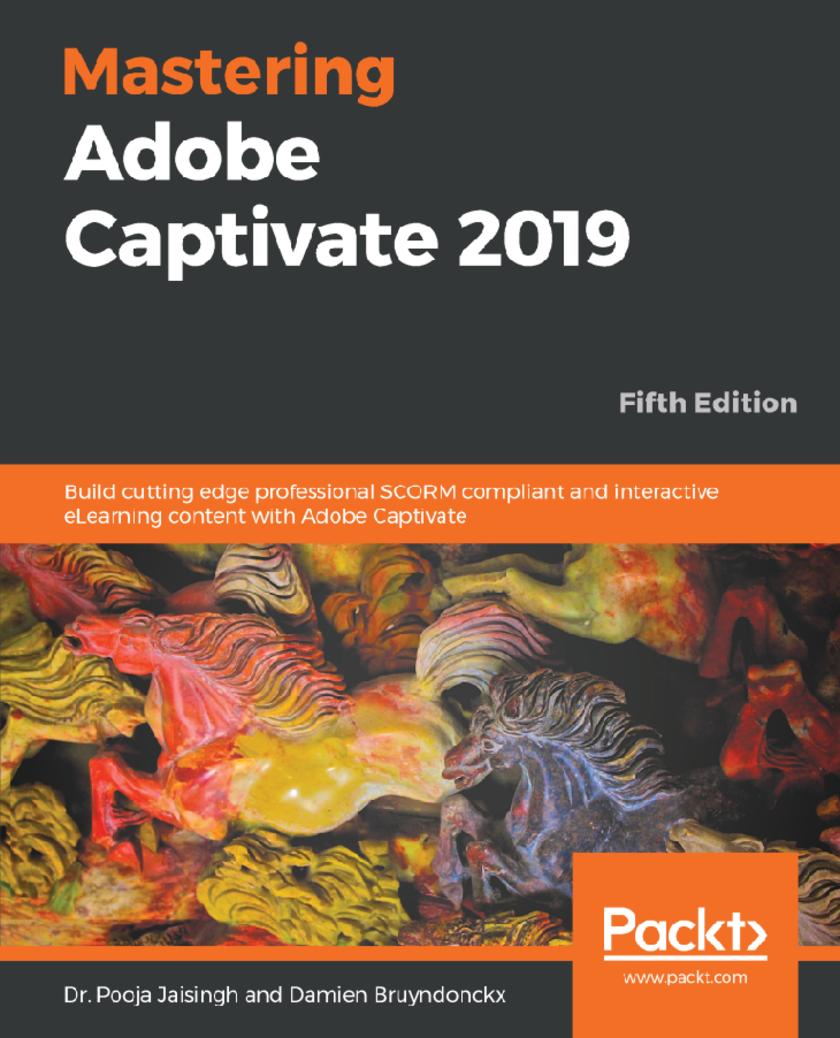
Mastering Adobe Captivate 2019
¥90.46
Create responsive eLearning content, including quizzes, demonstrations, simulations and Virtual Reality projects that fit on any device with Adobe Captivate 2019 Key Features * Build responsive, interactive and highly engaging eLearning content with Adobe Captivate 2019 * Build Virtual Reality eLearning experiences with Adobe Captivate 2019 * Assess your student knowledge with interactive and random quizzes * Seamlessly integrate your eLearning content with any SCORM or xAPI compliant LMS Book Description Adobe Captivate is used to create highly engaging, interactive, and responsive eLearning content. This book takes you through the production of a few pieces of eLearning content, covering all the project types and workflows of Adobe Captivate. First, you will learn how to create a typical interactive Captivate project. This will give you the opportunity to review all Captivate objects and uncover the application's main tools. Then, you will use the built-in capture engine of Captivate to create an interactive software simulation and a Video Demo that can be published as an MP4 video. Then, you will approach the advanced responsive features of Captivate to create a project that can be viewed on any device. And finally, you will immerse your learners in a 360o environment by creating Virtual Reality projects of Adobe Captivate. At the end of the book, you will empower your workflow and projects with the newer and most advanced features of the application, including variables, advanced actions, JavaScript, and using Captivate 2019 with other applications. If you want to produce high quality eLearning content using a wide variety of techniques, implement eLearning in your company, enable eLearning on any device, assess the effectiveness of the learning by using extensive Quizzing features, or are simply interested in eLearning, this book has you covered! What you will learn * Learn how to use the objects in Captivate to build professional eLearning content * Enhance your projects by adding interactivity, animations, and more * Add multimedia elements, such as audio and video, to create engaging learning experiences * Use themes to craft a unique visual experience * Use question slides to create SCORM-compliant quizzes that integrate seamlessly with your LMS * Make your content fit any device with responsive features of Captivate * Create immersive 360° experiences with Virtual Reality projects of Captivate 2019 * Integrate Captivate with other applications (such as PowerPoint and Photoshop) to establish a professional eLearning production workflow * Publish your project in a wide variety of formats including HTML5 and Flash Who this book is for If you are a teacher, instructional designer, eLearning developer, or human resources manager who wants to implement eLearning, then this book is for you. A basic knowledge of your OS is all it takes to create the next generation of responsive eLearning content.
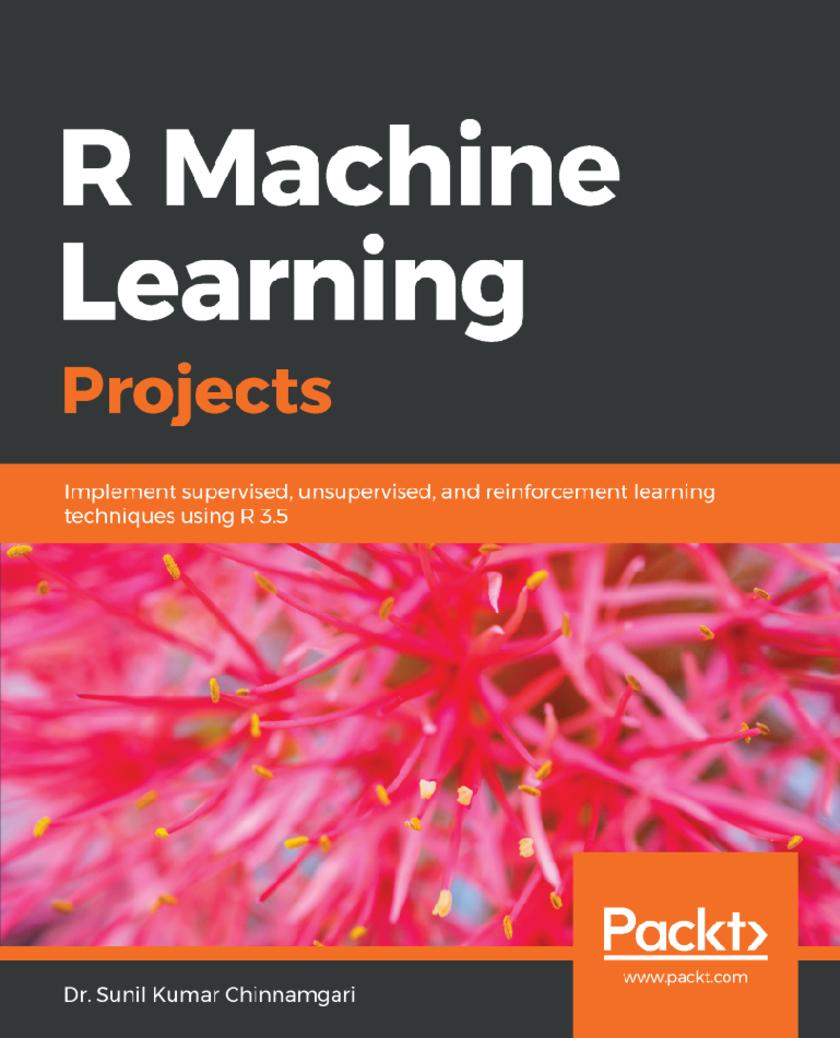
R Machine Learning Projects
¥71.93
Master a range of machine learning domains with real-world projects using TensorFlow for R, H2O, MXNet, and more Key Features *Master machine learning, deep learning, and predictive modeling concepts in R 3.5 *Build intelligent end-to-end projects for finance, retail, social media, and a variety of domains *Implement smart cognitive models with helpful tips and best practices Book Description R is one of the most popular languages when it comes to performing computational statistics (statistical computing) easily and exploring the mathematical side of machine learning. With this book, you will leverage the R ecosystem to build efficient machine learning applications that carry out intelligent tasks within your organization. This book will help you test your knowledge and skills, guiding you on how to build easily through to complex machine learning projects. You will first learn how to build powerful machine learning models with ensembles to predict employee attrition. Next, you’ll implement a joke recommendation engine and learn how to perform sentiment analysis on Amazon reviews. You’ll also explore different clustering techniques to segment customers using wholesale data. In addition to this, the book will get you acquainted with credit card fraud detection using autoencoders, and reinforcement learning to make predictions and win on a casino slot machine. By the end of the book, you will be equipped to confidently perform complex tasks to build research and commercial projects for automated operations. What you will learn *Explore deep neural networks and various frameworks that can be used in R *Develop a joke recommendation engine to recommend jokes that match users’ tastes *Create powerful ML models with ensembles to predict employee attrition *Build autoencoders for credit card fraud detection *Work with image recognition and convolutional neural networks *Make predictions for casino slot machine using reinforcement learning *Implement NLP techniques for sentiment analysis and customer segmentation Who this book is for If you’re a data analyst, data scientist, or machine learning developer who wants to master machine learning concepts using R by building real-world projects, this is the book for you. Each project will help you test your skills in implementing machine learning algorithms and techniques. A basic understanding of machine learning and working knowledge of R programming is necessary to get the most out of this book.
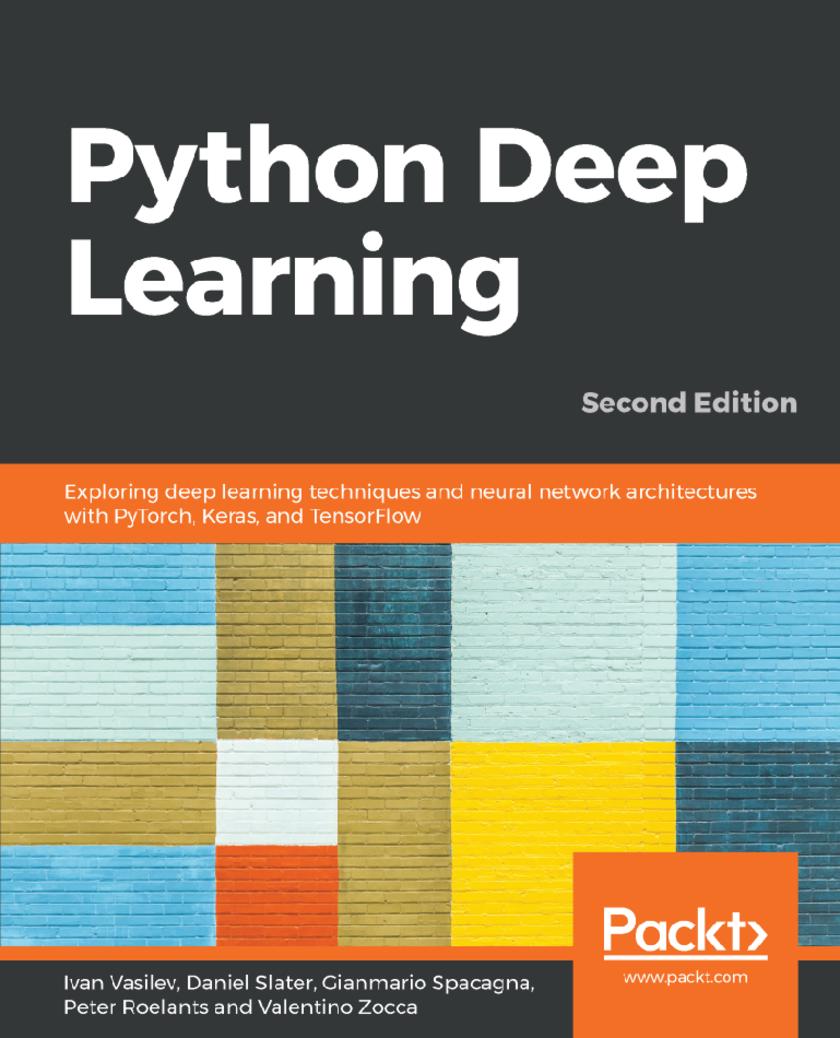
Python Deep Learning
¥71.93
Learn advanced state-of-the-art deep learning techniques and their applications using popular Python libraries Key Features *Build a strong foundation in neural networks and deep learning with Python libraries *Explore advanced deep learning techniques and their applications across computer vision and NLP *Learn how a computer can navigate in complex environments with reinforcement learning Book Description With the surge in artificial intelligence in applications catering to both business and consumer needs, deep learning is more important than ever for meeting current and future market demands. With this book, you’ll explore deep learning, and learn how to put machine learning to use in your projects. This second edition of Python Deep Learning will get you up to speed with deep learning, deep neural networks, and how to train them with high-performance algorithms and popular Python frameworks. You’ll uncover different neural network architectures, such as convolutional networks, recurrent neural networks, long short-term memory (LSTM) networks, and capsule networks. You’ll also learn how to solve problems in the fields of computer vision, natural language processing (NLP), and speech recognition. You'll study generative model approaches such as variational autoencoders and Generative Adversarial Networks (GANs) to generate images. As you delve into newly evolved areas of reinforcement learning, you’ll gain an understanding of state-of-the-art algorithms that are the main components behind popular games Go, Atari, and Dota. By the end of the book, you will be well-versed with the theory of deep learning along with its real-world applications. What you will learn *Grasp the mathematical theory behind neural networks and deep learning processes *Investigate and resolve computer vision challenges using convolutional networks and capsule networks *Solve generative tasks using variational autoencoders and Generative Adversarial Networks *Implement complex NLP tasks using recurrent networks (LSTM and GRU) and attention models *Explore reinforcement learning and understand how agents behave in a complex environment *Get up to date with applications of deep learning in autonomous vehicles Who this book is for This book is for data science practitioners, machine learning engineers, and those interested in deep learning who have a basic foundation in machine learning and some Python programming experience. A background in mathematics and conceptual understanding of calculus and statistics will help you gain maximum benefit from this book.
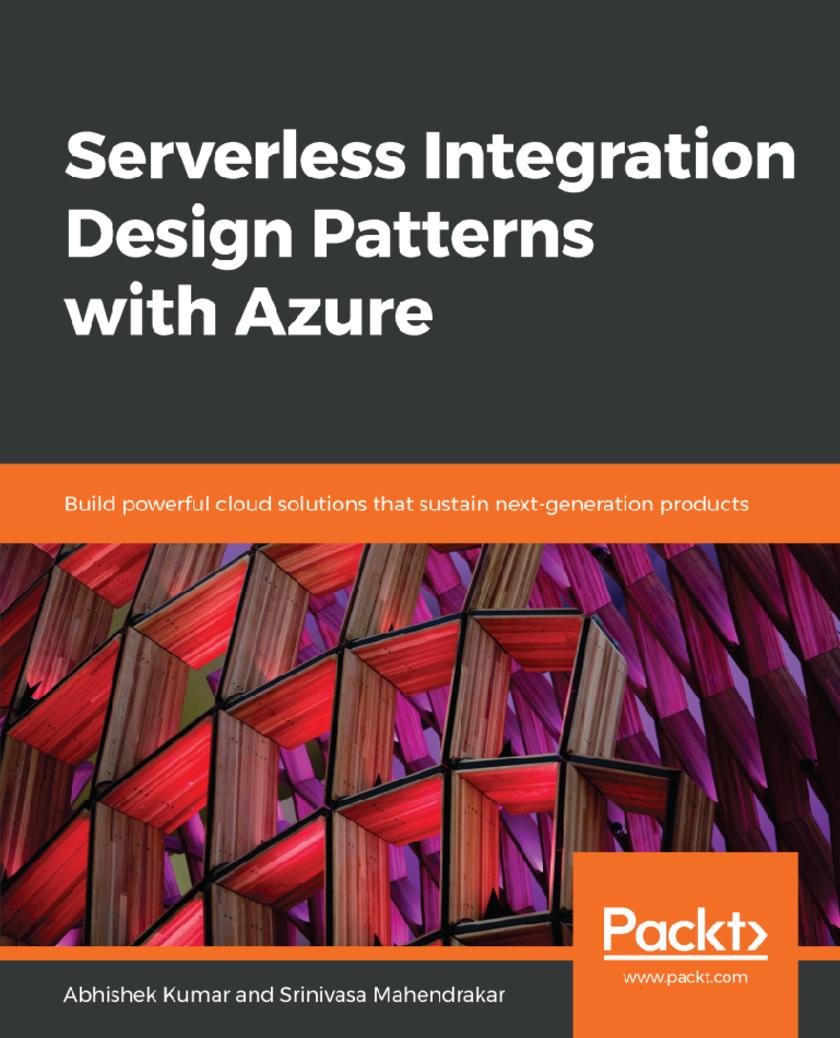
Serverless Integration Design Patterns with Azure
¥81.74
A practical guide that helps you progress to using modern integration methods and leverage new cloud capability models Key Features * Design critical hybrid integration solutions for your organization * Gain in-depth knowledge of how to build cloud-native integration solutions * Leverage cognitive services to build smart cloud solutions Book Description With more enterprises adapting cloud-based and API-based solutions, application integration has become more relevant and significant than ever before. Parallelly, Serverless Integration has gained popularity, as it helps agile organizations to build integration solutions quickly without having to worry about infrastructure costs. With Microsoft Azure’s serverless offerings, such as Logic Apps, Azure Functions, API Management, Azure Event Grid and Service Bus, organizations can build powerful, secure, and scalable integration solutions with ease. The primary objective of this book is to help you to understand various serverless offerings included within Azure Integration Services, taking you through the basics and industry practices and patterns. This book starts by explaining the concepts of services such as Azure Functions, Logic Apps, and Service Bus with hands-on examples and use cases. After getting to grips with the basics, you will be introduced to API Management and building B2B solutions using Logic Apps Enterprise Integration Pack. This book will help readers to understand building hybrid integration solutions and touches upon Microsoft Cognitive Services and leveraging them in modern integration solutions. Industry practices and patterns are brought to light at appropriate opportunities while explaining various concepts. What you will learn * Learn about the design principles of Microsoft Azure Serverless Integration * Get insights into Azure Functions, Logic Apps, Azure Event Grid and Service Bus * Secure and manage your integration endpoints using Azure API Management * Build advanced B2B solutions using Logic Apps, Enterprise Integration Pack * Monitor integration solutions using tools available on the market * Discover design patterns for hybrid integration Who this book is for Serverless Integration Design Patterns with Azure is for you if you are a solution architect or integration professional aiming to build complex cloud solutions for your organization. Developers looking to build next-level hybrid or cloud solutions will also find this book useful. Prior programming knowledge is necessary.
SAP Business Intelligence Quick Start Guide
¥63.21
Designing and deploying solutions using the SAP BusinessObjects Business Intelligence platform 4.2. Key Features * Get up and running with the SAP BusinessObjects Business Intelligence platform * Perform effective data analysis and visualization for actionable insights * Enhance your BI strategy by creating different types of reports and dashboards using SAP BusinessObjects Book Description The SAP BusinessObjects Business Intelligence platform is a powerful reporting and analysis tool. This book is the ideal introduction to the SAP BusinessObjects Business Intelligence platform, introducing you to its data visualization, visual analytics, reporting, and dashboarding capabilities. The book starts with an overview of the BI platform and various data sources for reporting. Then, we move on to looking at data visualization, analysis, reporting, and analytics using BusinessObjects Business Intelligence tools. You will learn about the features associated with reporting, scheduling, and distribution and learn how to deploy the platform. Toward the end, you will learn about the strategies and factors that should be considered during deployment. By the end, you will be confident working with the SAP BusinessObjects Business Intelligence platform to deliver better insights for more effective decision making. What you will learn * Work with various tools to create interactive data visualization and analysis * Query, report, and analyze with SAP Business Objects Web Intelligence * Create a report in SAP Crystal Reports for Enterprise * Visualize and manipulate data using an SAP Lumira Storyboard * Deep dive into the workings of the SAP predictive analytics tool * Deploy and configure SAP BO Intelligence platform 4.2 Who this book is for This book is for Business Intelligence professionals and existing SAP ecosystem users who want to perform effective Business Intelligence using SAP BusinessObjects.
Hands-On Penetration Testing with Kali NetHunter
¥73.02
Convert Android to a powerful pentesting platform. Key Features * Get up and running with Kali Linux NetHunter * Connect your Android device and gain full control over Windows, OSX, or Linux devices * Crack Wi-Fi passwords and gain access to devices connected over the same network collecting intellectual data Book Description Kali NetHunter is a version of the popular and powerful Kali Linux pentesting platform, designed to be installed on mobile devices. Hands-On Penetration Testing with Kali NetHunter will teach you the components of NetHunter and how to install the software. You’ll also learn about the different tools included and how to optimize and use a package, obtain desired results, perform tests, and make your environment more secure. Starting with an introduction to Kali NetHunter, you will delve into different phases of the pentesting process. This book will show you how to build your penetration testing environment and set up your lab. You will gain insight into gathering intellectual data, exploiting vulnerable areas, and gaining control over target systems. As you progress through the book, you will explore the NetHunter tools available for exploiting wired and wireless devices. You will work through new ways to deploy existing tools designed to reduce the chances of detection. In the concluding chapters, you will discover tips and best practices for integrating security hardening into your Android ecosystem. By the end of this book, you will have learned to successfully use a mobile penetration testing device based on Kali NetHunter and Android to accomplish the same tasks you would traditionally, but in a smaller and more mobile form factor. What you will learn * Choose and configure a hardware device to use Kali NetHunter * Use various tools during pentests * Understand NetHunter suite components * Discover tips to effectively use a compact mobile platform * Create your own Kali NetHunter-enabled device and configure it for optimal results * Learn to scan and gather information from a target * Explore hardware adapters for testing and auditing wireless networks and Bluetooth devices Who this book is for Hands-On Penetration Testing with Kali NetHunter is for pentesters, ethical hackers, and security professionals who want to learn to use Kali NetHunter for complete mobile penetration testing and are interested in venturing into the mobile domain. Some prior understanding of networking assessment and Kali Linux will be helpful.
Docker on Windows
¥90.46
Learn how to run new and old applications in Docker containers on Windows - modernizing the architecture, improving security and maximizing efficiency. Key Features * Run .NET Framework and .NET Core apps in Docker containers for efficiency, security and portability * Design distributed containerized apps, using enterprise-grade open source software from Docker Hub * Build a CI/CD pipeline with Docker, going from source to a production Docker Swarm in the cloud Book Description Docker on Windows, Second Edition teaches you all you need to know about Docker on Windows, from the 101 to running highly-available workloads in production. You’ll be guided through a Docker journey, starting with the key concepts and simple examples of .NET Framework and .NET Core apps in Docker containers on Windows. Then you’ll learn how to use Docker to modernize the architecture and development of traditional ASP.NET and SQL Server apps. The examples show you how to break up legacy monolithic applications into distributed apps and deploy them to a clustered environment in the cloud, using the exact same artifacts you use to run them locally. You’ll see how to build a CI/CD pipeline which uses Docker to compile, package, test and deploy your applications. To help you move confidently to production, you’ll learn about Docker security, and the management and support options. The book finishes with guidance on getting started with Docker in your own projects. You’ll walk through some real-world case studies for Docker implementations, from small-scale on-premises apps to very large-scale apps running on Azure. What you will learn * Understand key Docker concepts: images, containers, registries and swarms * Run Docker on Windows 10, Windows Server 2019, and in the cloud * Deploy and monitor distributed solutions across multiple Docker containers * Run containers with high availability and failover with Docker Swarm * Master security in-depth with the Docker platform, making your apps more secure * Build a Continuous Deployment pipeline, running Jenkins and Git in Docker * Debug applications running in Docker containers using Visual Studio * Plan the adoption of Docker in your organization Who this book is for If you want to modernize an old monolithic application without rewriting it, smooth the deployment to production, or move to DevOps or the cloud, then Docker is the enabler for you. This book gives you a solid grounding in Docker so you can confidently approach all of these scenarios.


