


 购物车
购物车 个人中心
个人中心
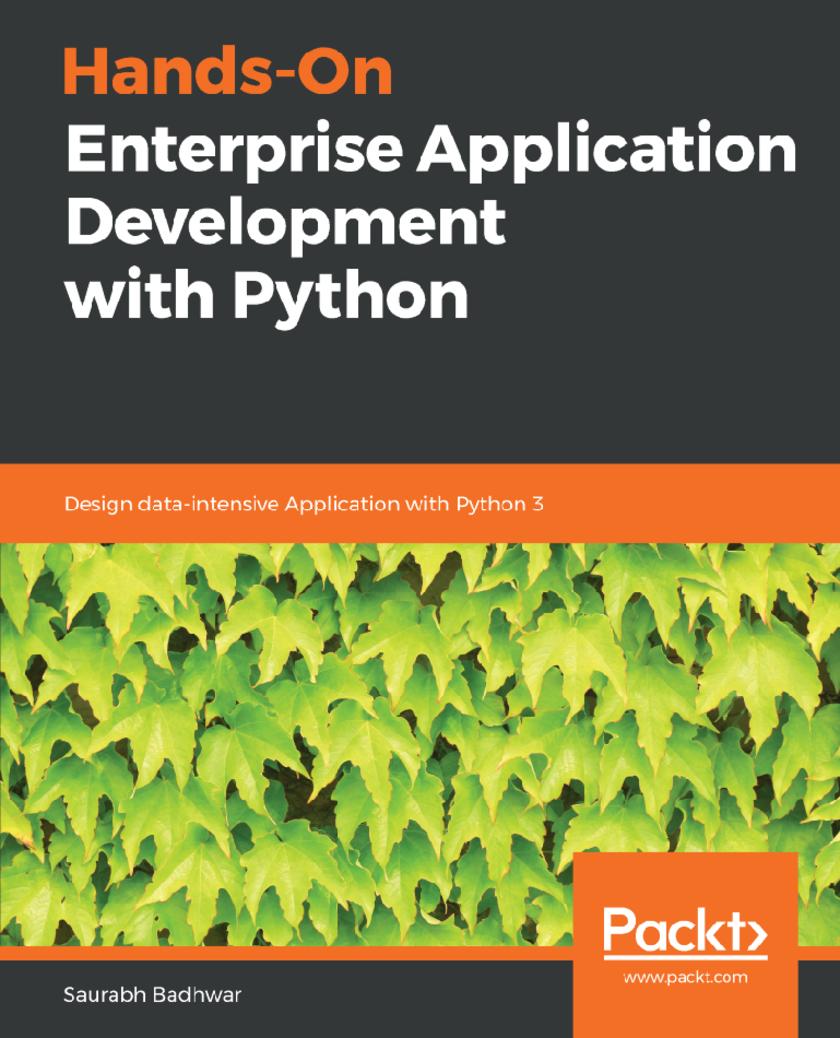
Hands-On Enterprise Application Development with Python
¥90.46
Architect scalable, reliable, and maintainable applications for enterprises with Python Key Features *Explore various Python design patterns used for enterprise software development *Apply best practices for testing and performance optimization to build stable applications *Learn about different attacking strategies used on enterprise applications and how to avoid them Book Description Dynamically typed languages like Python are continuously improving. With the addition of exciting new features and a wide selection of modern libraries and frameworks, Python has emerged as an ideal language for developing enterprise applications. Hands-On Enterprise Application Development with Python will show you how to build effective applications that are stable, secure, and easily scalable. The book is a detailed guide to building an end-to-end enterprise-grade application in Python. You will learn how to effectively implement Python features and design patterns that will positively impact your application lifecycle. The book also covers advanced concurrency techniques that will help you build a RESTful application with an optimized frontend. Given that security and stability are the foundation for an enterprise application, you’ll be trained on effective testing, performance analysis, and security practices, and understand how to embed them in your codebase during the initial phase. You’ll also be guided in how to move on from a monolithic architecture to one that is service oriented, leveraging microservices and serverless deployment techniques. By the end of the book, you will have become proficient at building efficient enterprise applications in Python. What you will learn *Understand the purpose of design patterns and their impact on application lifecycle *Build applications that can handle large amounts of data-intensive operations *Uncover advanced concurrency techniques and discover how to handle a large number of requests in production *Optimize frontends to improve the client-side experience of your application *Effective testing and performance profiling techniques to detect issues in applications early in the development cycle *Build applications with a focus on security *Implement large applications as microservices to improve scalability Who this book is for If you’re a developer who wants to build enterprise-grade applications, this book is for you. Basic to intermediate-level of programming experience with Python and database systems is required to understand the concepts covered in this book.
Data Analysis with Python
¥71.93
Learn a modern approach to data analysis using Python to harness the power of programming and AI across your data. Detailed case studies bring this modern approach to life across visual data, social media, graph algorithms, and time series analysis. Key Features *Bridge your data analysis with the power of programming, complex algorithms, and AI *Use Python and its extensive libraries to power your way to new levels of data insight *Work with AI algorithms, TensorFlow, graph algorithms, NLP, and financial time series *Explore this modern approach across with key industry case studies and hands-on projects Book Description Data Analysis with Python offers a modern approach to data analysis so that you can work with the latest and most powerful Python tools, AI techniques, and open source libraries. Industry expert David Taieb shows you how to bridge data science with the power of programming and algorithms in Python. You'll be working with complex algorithms, and cutting-edge AI in your data analysis. Learn how to analyze data with hands-on examples using Python-based tools and Jupyter Notebook. You'll find the right balance of theory and practice, with extensive code files that you can integrate right into your own data projects. Explore the power of this approach to data analysis by then working with it across key industry case studies. Four fascinating and full projects connect you to the most critical data analysis challenges you’re likely to meet in today. The first of these is an image recognition application with TensorFlow – embracing the importance today of AI in your data analysis. The second industry project analyses social media trends, exploring big data issues and AI approaches to natural language processing. The third case study is a financial portfolio analysis application that engages you with time series analysis - pivotal to many data science applications today. The fourth industry use case dives you into graph algorithms and the power of programming in modern data science. You'll wrap up with a thoughtful look at the future of data science and how it will harness the power of algorithms and artificial intelligence. What you will learn *A new toolset that has been carefully crafted to meet for your data analysis challenges *Full and detailed case studies of the toolset across several of today’s key industry contexts *Become super productive with a new toolset across Python and Jupyter Notebook *Look into the future of data science and which directions to develop your skills next Who this book is for This book is for developers wanting to bridge the gap between them and data scientists. Introducing PixieDust from its creator, the book is a great desk companion for the accomplished Data Scientist. Some fluency in data interpretation and visualization is assumed. It will be helpful to have some knowledge of Python, using Python libraries, and some proficiency in web development.
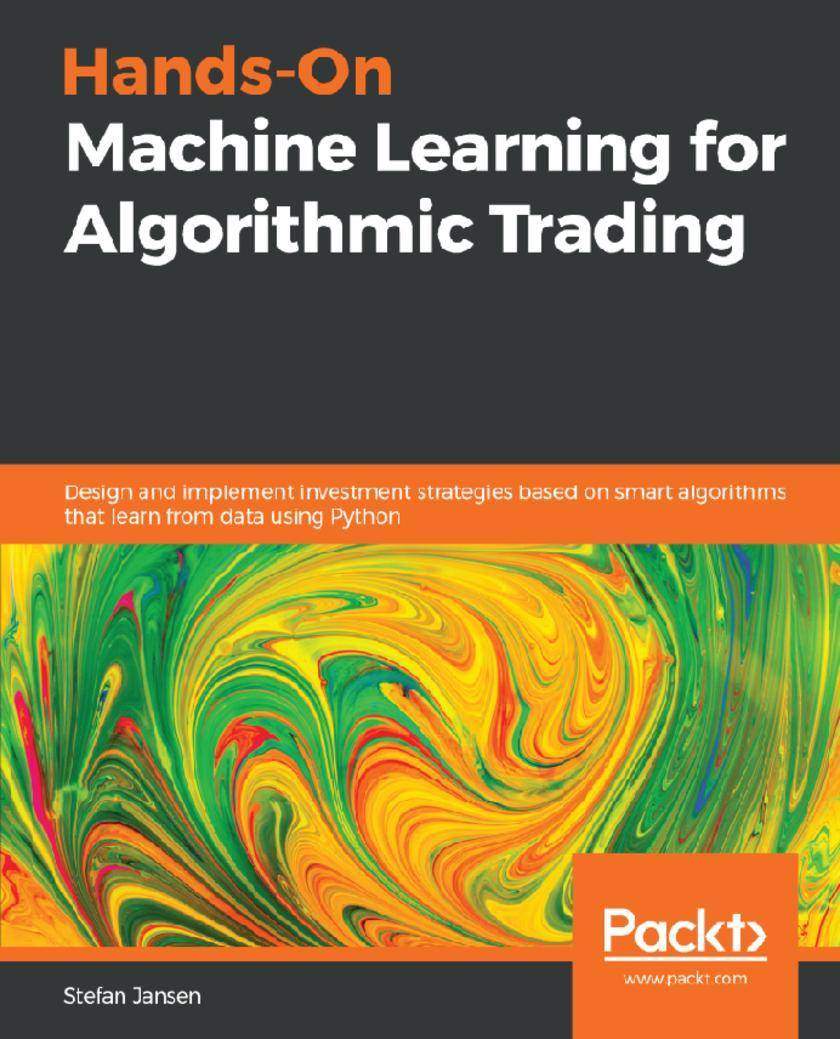
Hands-On Machine Learning for Algorithmic Trading
¥81.74
Explore effective trading strategies in real-world markets using NumPy, spaCy, pandas, scikit-learn, and Keras Key Features *Implement machine learning algorithms to build, train, and validate algorithmic models *Create your own algorithmic design process to apply probabilistic machine learning approaches to trading decisions *Develop neural networks for algorithmic trading to perform time series forecasting and smart analytics Book Description The explosive growth of digital data has boosted the demand for expertise in trading strategies that use machine learning (ML). This book enables you to use a broad range of supervised and unsupervised algorithms to extract signals from a wide variety of data sources and create powerful investment strategies. This book shows how to access market, fundamental, and alternative data via API or web scraping and offers a framework to evaluate alternative data. You’ll practice the ML work?ow from model design, loss metric definition, and parameter tuning to performance evaluation in a time series context. You will understand ML algorithms such as Bayesian and ensemble methods and manifold learning, and will know how to train and tune these models using pandas, statsmodels, sklearn, PyMC3, xgboost, lightgbm, and catboost. This book also teaches you how to extract features from text data using spaCy, classify news and assign sentiment scores, and to use gensim to model topics and learn word embeddings from financial reports. You will also build and evaluate neural networks, including RNNs and CNNs, using Keras and PyTorch to exploit unstructured data for sophisticated strategies. Finally, you will apply transfer learning to satellite images to predict economic activity and use reinforcement learning to build agents that learn to trade in the OpenAI Gym. What you will learn *Implement machine learning techniques to solve investment and trading problems *Leverage market, fundamental, and alternative data to research alpha factors *Design and fine-tune supervised, unsupervised, and reinforcement learning models *Optimize portfolio risk and performance using pandas, NumPy, and scikit-learn *Integrate machine learning models into a live trading strategy on Quantopian *Evaluate strategies using reliable backtesting methodologies for time series *Design and evaluate deep neural networks using Keras, PyTorch, and TensorFlow *Work with reinforcement learning for trading strategies in the OpenAI Gym Who this book is for Hands-On Machine Learning for Algorithmic Trading is for data analysts, data scientists, and Python developers, as well as investment analysts and portfolio managers working within the finance and investment industry. If you want to perform efficient algorithmic trading by developing smart investigating strategies using machine learning algorithms, this is the book for you. Some understanding of Python and machine learning techniques is mandatory.
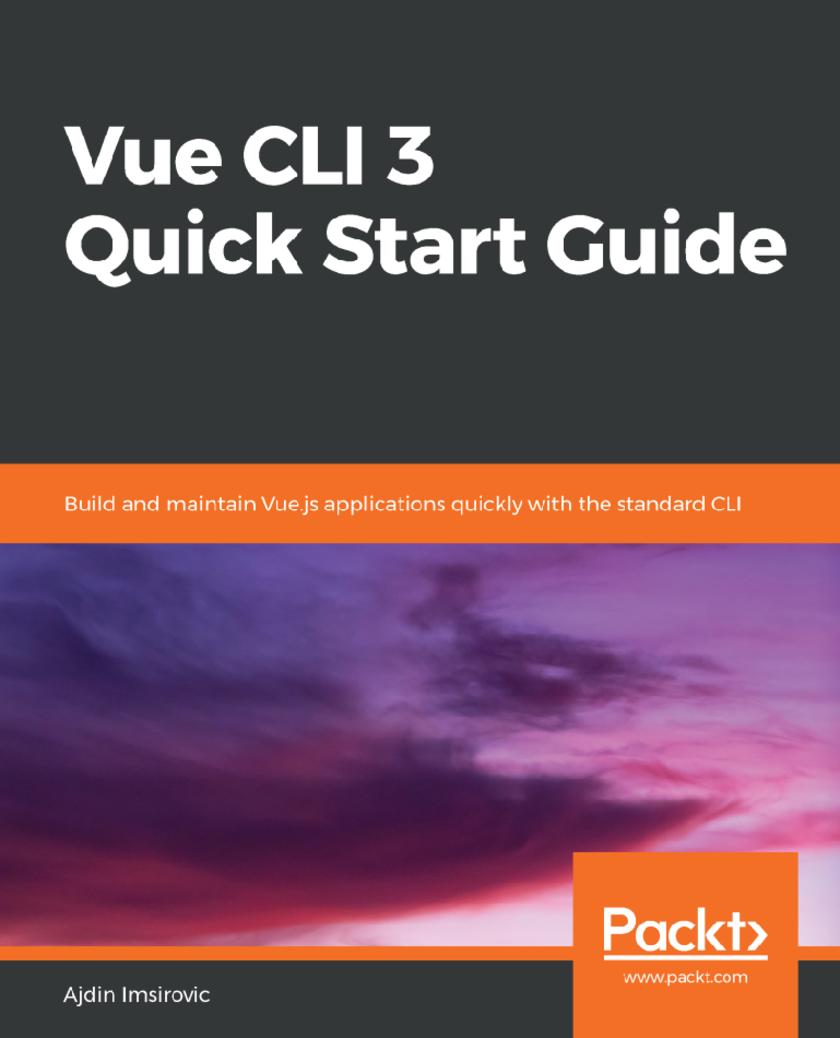
Vue CLI 3 Quick Start Guide
¥53.40
Build Vue apps the right way using Vue CLI 3. Understand how the building blocks of Vue CLI 3 work including npm, webpack, babel, eslint, plugins, GUI, testing, and SCSS. Import third-party libraries and maintain your project. Key Features * Learn to work with Vue CLI 3 both on the command line and with a GUI * Manage VueJS apps, settings, Vue plugins, and third-party libraries * Learn how to build Vue apps from scratch using webpack, babel, ES6, vue-router, Jest, Cypress, SCSS, and Git Book Description The sprawling landscape of various tools in JavaScript web development is becoming overwhelming. This book will show you how Vue CLI 3 can help you take back control of the tool chain. To that end, we'll begin by configuring webpack, utilizing HMR, and using single-file .vue components. We'll also use SCSS, ECMAScript, and TypeScript. We'll unit test with Jest and perform E2E testing with Cypress. This book will show you how to configure Vue CLI as your default way of building Vue projects. You'll discover the reasons behind using webpack, babel, eslint, and other modern JavaScript toolchain technologies. You'll learn about the inner workings of each through the lens of Vue CLI 3. We'll explore the extendibility of Vue CLI with the built-in settings, and various core and third-party plugins. Vue CLI helps you work with Vue components, routers, directives, and services in the Vue ecosystem. While learning these concepts, you'll examine the evolution of JavaScript. You'll learn about use of npm, IIFEs, modules in JavaScript, Common.js modules, task runners, npm scripts, module bundlers, and webpack. You'll get familiar with the reasons why Vue CLI 3 is set up the way it is. You'll also learn to perform linting with ESLint and Prettier. Towards the end, we'll introduce you to working with styles and SCSS. Finally, we'll show you how to deploy your very own Vue project on Github Pages. What you will learn * Work with nvm, install Node.js and npm, use Vue CLI 3 with no configuration, via the command line and the graphical user interface * Build a Vue project from scratch using npm and webpack, and learn about hot module replacement * Work with Babel settings, configurations, and presets * Work with Vue plugins, including testing plugins such as Jest and Cypress * Write, run, and watch unit and E2E tests using TDD assertions in the red-green-refactor cycle * Work with Vue router and use, nested, lazy-loading, and dynamic routes * Add SCSS to your projects and work with third-party Vue plugins * Deploy your Vue apps to Github Pages Who this book is for This book is for existing web developers and developers who are new to web development. You must be familiar with HTML, CSS, and JavaScript programming. Basic knowledge of the command line will be helpful but is not necessary.
Hands-On Generative Adversarial Networks with Keras
¥70.84
Develop generative models for a variety of real-world use-cases and deploy them to production Key Features * Discover various GAN architectures using Python and Keras library * Understand how GAN models function with the help of theoretical and practical examples * Apply your learnings to become an active contributor to open source GAN applications Book Description Generative Adversarial Networks (GANs) have revolutionized the fields of machine learning and deep learning. This book will be your first step towards understanding GAN architectures and tackling the challenges involved in training them. This book opens with an introduction to deep learning and generative models, and their applications in artificial intelligence (AI). You will then learn how to build, evaluate, and improve your first GAN with the help of easy-to-follow examples. The next few chapters will guide you through training a GAN model to produce and improve high-resolution images. You will also learn how to implement conditional GANs that give you the ability to control characteristics of GAN outputs. You will build on your knowledge further by exploring a new training methodology for progressive growing of GANs. Moving on, you'll gain insights into state-of-the-art models in image synthesis, speech enhancement, and natural language generation using GANs. In addition to this, you'll be able to identify GAN samples with TequilaGAN. By the end of this book, you will be well-versed with the latest advancements in the GAN framework using various examples and datasets, and you will have the skills you need to implement GAN architectures for several tasks and domains, including computer vision, natural language processing (NLP), and audio processing. Foreword by Ting-Chun Wang, Senior Research Scientist, NVIDIA What you will learn * Learn how GANs work and the advantages and challenges of working with them * Control the output of GANs with the help of conditional GANs, using embedding and space manipulation * Apply GANs to computer vision, NLP, and audio processing * Understand how to implement progressive growing of GANs * Use GANs for image synthesis and speech enhancement * Explore the future of GANs in visual and sonic arts * Implement pix2pixHD to turn semantic label maps into photorealistic images Who this book is for This book is for machine learning practitioners, deep learning researchers, and AI enthusiasts who are looking for a perfect mix of theory and hands-on content in order to implement GANs using Keras. Working knowledge of Python is expected.
OpenCV 4 Computer Vision Application Programming Cookbook
¥70.84
Discover interesting recipes to help you understand the concepts of object detection, image processing, and facial detection Key Features * Explore the latest features and APIs in OpenCV 4 and build computer vision algorithms * Develop effective, robust, and fail-safe vision for your applications * Build computer vision algorithms with machine learning capabilities Book Description OpenCV is an image and video processing library used for all types of image and video analysis. Throughout the book, you'll work through recipes that implement a variety of tasks, such as facial recognition and detection. With 70 self-contained tutorials, this book examines common pain points and best practices for computer vision (CV) developers. Each recipe addresses a specific problem and offers a proven, best-practice solution with insights into how it works, so that you can copy the code and configuration files and modify them to suit your needs. This book begins by setting up OpenCV, and explains how to manipulate pixels. You'll understand how you can process images with classes and count pixels with histograms. You'll also learn detecting, describing, and matching interest points. As you advance through the chapters, you'll get to grips with estimating projective relations in images, reconstructing 3D scenes, processing video sequences, and tracking visual motion. In the final chapters, you'll cover deep learning concepts such as face and object detection. By the end of the book, you'll be able to confidently implement a range to computer vision algorithms to meet the technical requirements of your complex CV projects What you will learn * Install and create a program using the OpenCV library * Segment images into homogenous regions and extract meaningful objects * Apply image filters to enhance image content * Exploit image geometry to relay different views of a pictured scene * Calibrate the camera from different image observations * Detect people and objects in images using machine learning techniques * Reconstruct a 3D scene from images * Explore face detection using deep learning Who this book is for If you’re a CV developer or professional who already uses or would like to use OpenCV for building computer vision software, this book is for you. You’ll also find this book useful if you’re a C++ programmer looking to extend your computer vision skillset by learning OpenCV.
Hands-On Network Programming with C
¥62.12
A comprehensive guide to programming with network sockets, implementing Internet protocols, designing IoT devices, and much more with C Key Features * Leverage your C or C++ programming skills to build powerful network applications * Get to grips with a variety of network protocols that allow you to load web pages, send emails, and do much more * Write portable network code for operating systems such as Windows, Linux, and macOS Book Description Network programming, a challenging topic in C, is made easy to understand with a careful exposition of socket programming APIs. This book gets you started with modern network programming in C and the right use of relevant operating system APIs. This book covers core concepts, such as hostname resolution with DNS, that are crucial to the functioning of the modern web. You’ll delve into the fundamental network protocols, TCP and UDP. Essential techniques for networking paradigms such as client-server and peer-to-peer models are explained with the help of practical examples. You’ll also study HTTP and HTTPS (the protocols responsible for web pages) from both the client and server perspective. To keep up with current trends, you’ll apply the concepts covered in this book to gain insights into web programming for IoT. You’ll even get to grips with network monitoring and implementing security best practices. By the end of this book, you’ll have experience of working with client-server applications, and be able to implement new network programs in C. The code in this book is compatible with the older C99 version as well as the latest C18 and C++17 standards. Special consideration is given to writing robust, reliable, and secure code that is portable across operating systems, including Winsock sockets for Windows and POSIX sockets for Linux and macOS. What you will learn * Uncover cross-platform socket programming APIs * Implement techniques for supporting IPv4 and IPv6 * Understand how TCP and UDP connections work over IP * Discover how hostname resolution and DNS work * Interface with web APIs using HTTP and HTTPS * Acquire hands-on experience with Simple Mail Transfer Protocol (SMTP) * Apply network programming to the Internet of Things (IoT) Who this book is for If you're a developer or a system administrator who wants to enter the world of network programming, this book is for you. Basic knowledge of C programming is assumed.
Julia 1.0 Programming Complete Reference Guide
¥88.28
Learn dynamic programming with Julia to build apps for data analysis, visualization, machine learning, and the web Key Features * Leverage Julia's high speed and efficiency to build fast, efficient applications * Perform supervised and unsupervised machine learning and time series analysis * Tackle problems concurrently and in a distributed environment Book Description Julia offers the high productivity and ease of use of Python and R with the lightning-fast speed of C++. There’s never been a better time to learn this language, thanks to its large-scale adoption across a wide range of domains, including fintech, biotech and artificial intelligence (AI). You will begin by learning how to set up a running Julia platform, before exploring its various built-in types. This Learning Path walks you through two important collection types: arrays and matrices. You’ll be taken through how type conversions and promotions work, and in further chapters you'll study how Julia interacts with operating systems and other languages. You’ll also learn about the use of macros, what makes Julia suitable for numerical and scientific computing, and how to run external programs. Once you have grasped the basics, this Learning Path goes on to how to analyze the Iris dataset using DataFrames. While building a web scraper and a web app, you’ll explore the use of functions, methods, and multiple dispatches. In the final chapters, you'll delve into machine learning, where you'll build a book recommender system. By the end of this Learning Path, you’ll be well versed with Julia and have the skills you need to leverage its high speed and efficiency for your applications. This Learning Path includes content from the following Packt products: * Julia 1.0 Programming - Second Edition by Ivo Balbaert * Julia Programming Projects by Adrian Salceanu What you will learn * Create your own types to extend the built-in type system * Visualize your data in Julia with plotting packages * Explore the use of built-in macros for testing and debugging * Integrate Julia with other languages such as C, Python, and MATLAB * Analyze and manipulate datasets using Julia and DataFrames * Develop and run a web app using Julia and the HTTP package * Build a recommendation system using supervised machine learning Who this book is for If you are a statistician or data scientist who wants a quick course in the Julia programming language while building big data applications, this Learning Path is for you. Basic knowledge of mathematics and programming is a must.
Training Systems Using Python Statistical Modeling
¥62.12
Leverage the power of Python and statistical modeling techniques for building accurate predictive models Key Features * Get introduced to Python's rich suite of libraries for statistical modeling * Implement regression, clustering and train neural networks from scratch * Includes real-world examples on training end-to-end machine learning systems in Python Book Description Python's ease of use and multi-purpose nature has led it to become the choice of tool for many data scientists and machine learning developers today. Its rich libraries are widely used for data analysis, and more importantly, for building state-of-the-art predictive models. This book takes you through an exciting journey, of using these libraries to implement effective statistical models for predictive analytics. You’ll start by diving into classical statistical analysis, where you will learn to compute descriptive statistics using pandas. You will look at supervised learning, where you will explore the principles of machine learning and train different machine learning models from scratch. You will also work with binary prediction models, such as data classification using k-nearest neighbors, decision trees, and random forests. This book also covers algorithms for regression analysis, such as ridge and lasso regression, and their implementation in Python. You will also learn how neural networks can be trained and deployed for more accurate predictions, and which Python libraries can be used to implement them. By the end of this book, you will have all the knowledge you need to design, build, and deploy enterprise-grade statistical models for machine learning using Python and its rich ecosystem of libraries for predictive analytics. What you will learn * Understand the importance of statistical modeling * Learn about the various Python packages for statistical analysis * Implement algorithms such as Naive Bayes, random forests, and more * Build predictive models from scratch using Python's scikit-learn library * Implement regression analysis and clustering * Learn how to train a neural network in Python Who this book is for If you are a data scientist, a statistician or a machine learning developer looking to train and deploy effective machine learning models using popular statistical techniques, then this book is for you. Knowledge of Python programming is required to get the most out of this book.
The Complete Rust Programming Reference Guide
¥88.28
Design and implement professional-level programs by leveraging modern data structures and algorithms in Rust Key Features * Improve your productivity by writing more simple and easy code in Rust * Discover the functional and reactive implementations of traditional data structures * Delve into new domains of Rust, including WebAssembly, networking, and command-line tools Book Description Rust is a powerful language with a rare combination of safety, speed, and zero-cost abstractions. This Learning Path is filled with clear and simple explanations of its features along with real-world examples, demonstrating how you can build robust, scalable, and reliable programs. You’ll get started with an introduction to Rust data structures, algorithms, and essential language constructs. Next, you will understand how to store data using linked lists, arrays, stacks, and queues. You’ll also learn to implement sorting and searching algorithms, such as Brute Force algorithms, Greedy algorithms, Dynamic Programming, and Backtracking. As you progress, you’ll pick up on using Rust for systems programming, network programming, and the web. You’ll then move on to discover a variety of techniques, right from writing memory-safe code, to building idiomatic Rust libraries, and even advanced macros. By the end of this Learning Path, you’ll be able to implement Rust for enterprise projects, writing better tests and documentation, designing for performance, and creating idiomatic Rust code. This Learning Path includes content from the following Packt products: * Mastering Rust - Second Edition by Rahul Sharma and Vesa Kaihlavirta * Hands-On Data Structures and Algorithms with Rust by Claus Matzinger What you will learn * Design and implement complex data structures in Rust * Create and use well-tested and reusable components with Rust * Understand the basics of multithreaded programming and advanced algorithm design * Explore application profiling based on benchmarking and testing * Study and apply best practices and strategies in error handling * Create efficient web applications with the Actix-web framework * Use Diesel for type-safe database interactions in your web application Who this book is for If you are already familiar with an imperative language and now want to progress from being a beginner to an intermediate-level Rust programmer, this Learning Path is for you. Developers who are already familiar with Rust and want to delve deeper into the essential data structures and algorithms in Rust will also find this Learning Path useful.
Supervised Machine Learning with Python
¥44.68
Teach your machine to think for itself! Key Features * Delve into supervised learning and grasp how a machine learns from data * Implement popular machine learning algorithms from scratch, developing a deep understanding along the way * Explore some of the most popular scientific and mathematical libraries in the Python language Book Description Supervised machine learning is used in a wide range of sectors (such as finance, online advertising, and analytics) because it allows you to train your system to make pricing predictions, campaign adjustments, customer recommendations, and much more while the system self-adjusts and makes decisions on its own. As a result, it's crucial to know how a machine “learns” under the hood. This book will guide you through the implementation and nuances of many popular supervised machine learning algorithms while facilitating a deep understanding along the way. You’ll embark on this journey with a quick overview and see how supervised machine learning differs from unsupervised learning. Next, we explore parametric models such as linear and logistic regression, non-parametric methods such as decision trees, and various clustering techniques to facilitate decision-making and predictions. As we proceed, you'll work hands-on with recommender systems, which are widely used by online companies to increase user interaction and enrich shopping potential. Finally, you’ll wrap up with a brief foray into neural networks and transfer learning. By the end of this book, you’ll be equipped with hands-on techniques and will have gained the practical know-how you need to quickly and powerfully apply algorithms to new problems. What you will learn * Crack how a machine learns a concept and generalize its understanding to new data * Uncover the fundamental differences between parametric and non-parametric models * Implement and grok several well-known supervised learning algorithms from scratch * Work with models in domains such as ecommerce and marketing * Expand your expertise and use various algorithms such as regression, decision trees, and clustering * Build your own models capable of making predictions * Delve into the most popular approaches in deep learning such as transfer learning and neural networks Who this book is for This book is for aspiring machine learning developers who want to get started with supervised learning. Intermediate knowledge of Python programming—and some fundamental knowledge of supervised learning—are expected.
Applied Unsupervised Learning with Python
¥79.56
Design clever algorithms that can uncover interesting structures and hidden relationships in unstructured, unlabeled data Key Features * Learn how to select the most suitable Python library to solve your problem * Compare k-Nearest Neighbor (k-NN) and non-parametric methods and decide when to use them * Delve into the applications of neural networks using real-world datasets Book Description Unsupervised learning is a useful and practical solution in situations where labeled data is not available. Applied Unsupervised Learning with Python guides you on the best practices for using unsupervised learning techniques in tandem with Python libraries and extracting meaningful information from unstructured data. The course begins by explaining how basic clustering works to find similar data points in a set. Once you are well versed with the k-means algorithm and how it operates, you’ll learn what dimensionality reduction is and where to apply it. As you progress, you’ll learn various neural network techniques and how they can improve your model. While studying the applications of unsupervised learning, you will also understand how to mine topics that are trending on Twitter and Facebook and build a news recommendation engine for users. You will complete the course by challenging yourself through various interesting activities such as performing a Market Basket Analysis and identifying relationships between different merchandises. By the end of this course, you will have the skills you need to confidently build your own models using Python. What you will learn * Understand the basics and importance of clustering * Build k-means, hierarchical, and DBSCAN clustering algorithms from scratch with built-in packages * Explore dimensionality reduction and its applications * Use scikit-learn (sklearn) to implement and analyse principal component analysis (PCA)on the Iris dataset * Employ Keras to build autoencoder models for the CIFAR-10 dataset * Apply the Apriori algorithm with machine learning extensions (Mlxtend) to study transaction data Who this book is for This course is designed for developers, data scientists, and machine learning enthusiasts who are interested in unsupervised learning. Some familiarity with Python programming along with basic knowledge of mathematical concepts including exponents, square roots, means, and medians will be beneficial.
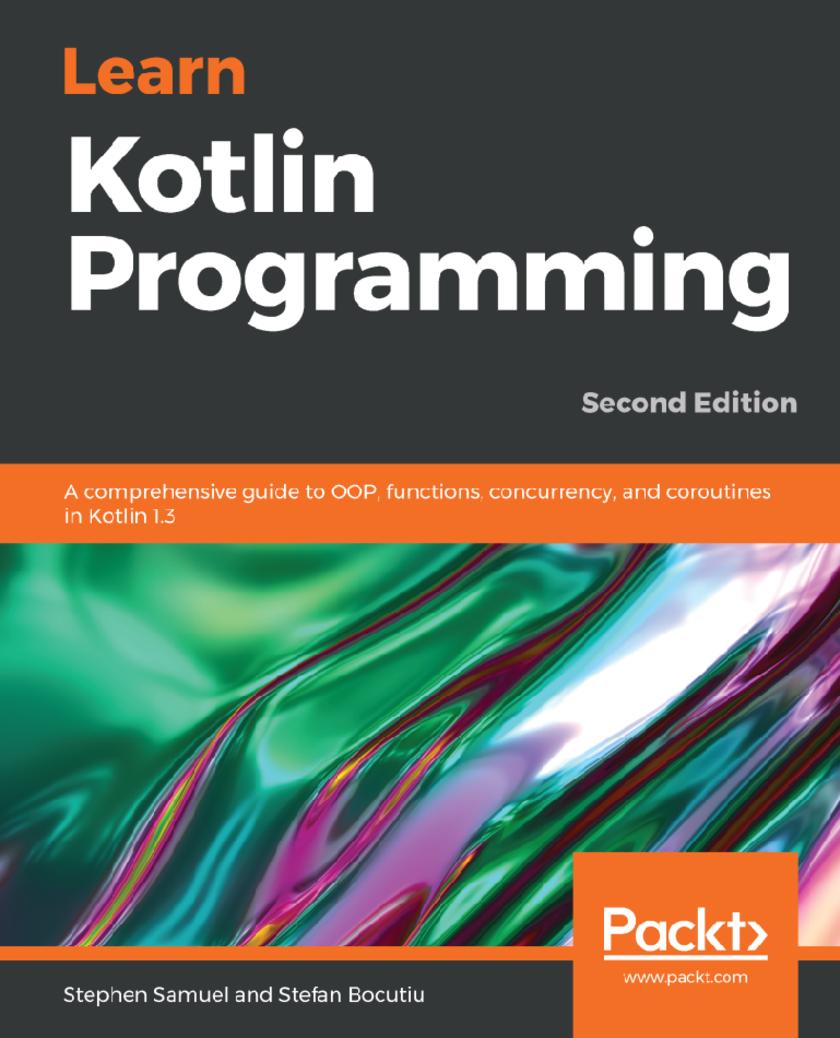
Learn Kotlin Programming
¥62.12
Delve into the world of Kotlin and learn to build powerful Android and web applications Key Features * Learn the fundamentals of Kotlin to write high-quality code * Test and debug your applications with the different unit testing frameworks in Kotlin * Explore Kotlin's interesting features such as null safety, reflection, and annotations Book Description Kotlin is a general-purpose programming language used for developing cross-platform applications. Complete with a comprehensive introduction and projects covering the full set of Kotlin programming features, this book will take you through the fundamentals of Kotlin and get you up to speed in no time. Learn Kotlin Programming covers the installation, tools, and how to write basic programs in Kotlin. You'll learn how to implement object-oriented programming in Kotlin and easily reuse your program or parts of it. The book explains DSL construction, serialization, null safety aspects, and type parameterization to help you build robust apps. You'll learn how to destructure expressions and write your own. You'll then get to grips with building scalable apps by exploring advanced topics such as testing, concurrency, microservices, coroutines, and Kotlin DSL builders. Furthermore, you'll be introduced to the kotlinx.serialization framework, which is used to persist objects in JSON, Protobuf, and other formats. By the end of this book, you'll be well versed with all the new features in Kotlin and will be able to build robust applications skillfully. What you will learn * Explore the latest Kotlin features in order to write structured and readable object-oriented code * Get to grips with using lambdas and higher-order functions * Write unit tests and integrate Kotlin with Java code * Create real-world apps in Kotlin in the microservices style * Use Kotlin extensions with the Java collections library * Uncover destructuring expressions and find out how to write your own * Understand how Java-nullable code can be integrated with Kotlin features Who this book is for If you’re a beginner or intermediate programmer who wants to learn Kotlin to build applications, this book is for you. You’ll also find this book useful if you’re a Java developer interested in switching to Kotlin.
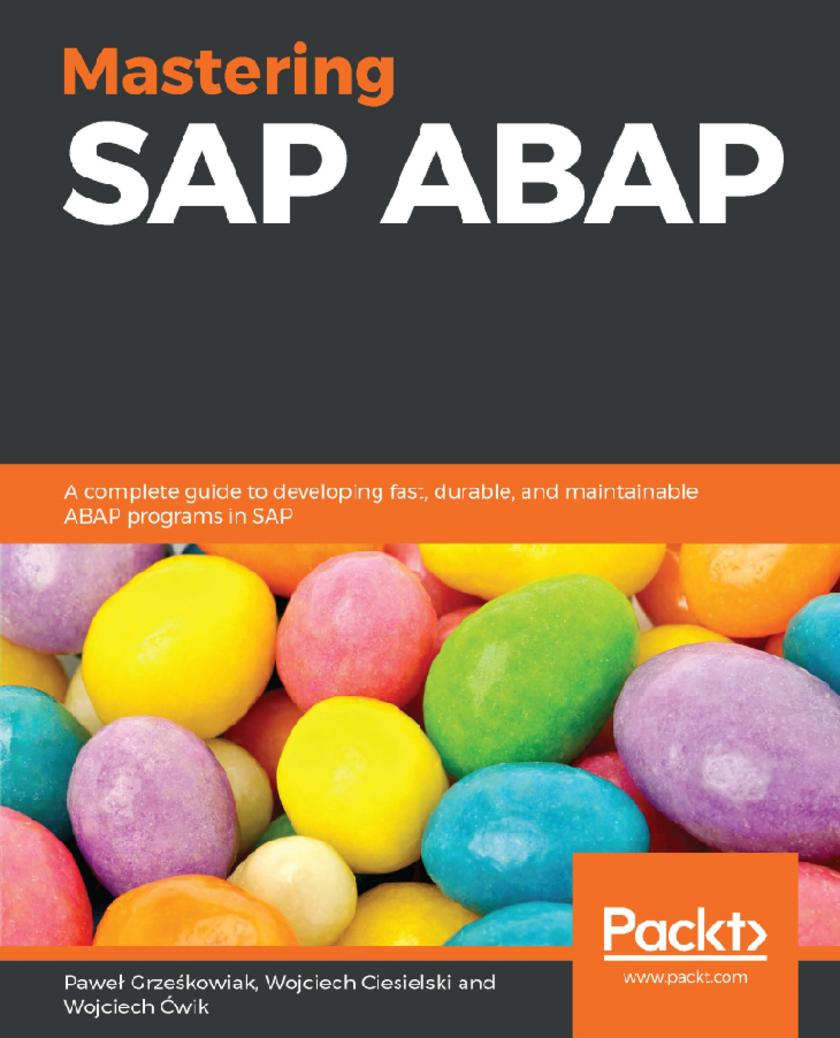
Mastering SAP ABAP
¥62.12
Take your SAP ABAP skills to the next level by mastering ABAP programming techniques with the help of real-world examples Key Features * Become adept at building interfaces and explore ABAP tools and techniques * Discover the modern functionalities available in the latest version of ABAP * Learn the process of creating stunning HTML5 applications using SAPUI5 Book Description Advanced Business Application Programming (ABAP) is an established and complex programming language in the IT industry. This book is designed to help you use the latest ABAP techniques and apply legacy constructions using practical examples. You'll start with a quick refresher on language and database concepts, followed by agile techniques for adding custom code to a modern ABAP system. After this, you will get up to speed with the complete ABAP toolset for importing data to and from different environments. Next, you'll learn how to print forms and work with the different ABAP tools for Extensible Markup Language (XML) manipulation. While covering further chapters, you'll gain insights into building stunning UI5 interfaces, in addition to learning how to develop simple apps using the Business Object Processing Framework (BOPF). You will also pick up the technique of handling exceptions and performing testing in ABAP. In the concluding chapters, you can look forward to grasping various techniques for optimizing the performance of programs using a variety of performance analysis tools. By the end of this book, you will have the expertise you need to confidently build maintainable programs in Systems, Applications, and Products (SAP). What you will learn * Create stable and error-free ABAP programs * Leverage new ABAP concepts including object-oriented programming(OOP) and Model-View-Controller (MVC) * Learn to add custom code to your existing SAP program * Speed up your ABAP programs by spotting bottlenecks * Understand techniques such as performance tuning and optimization * Develop modern and beautiful user interfaces (UIs) in an ABAP environment * Build multiple classes with any nesting level Who this book is for This book is for developers who want to learn and use ABAP skills to become an industry expert. Familiarity with object-oriented programming concepts is expected.
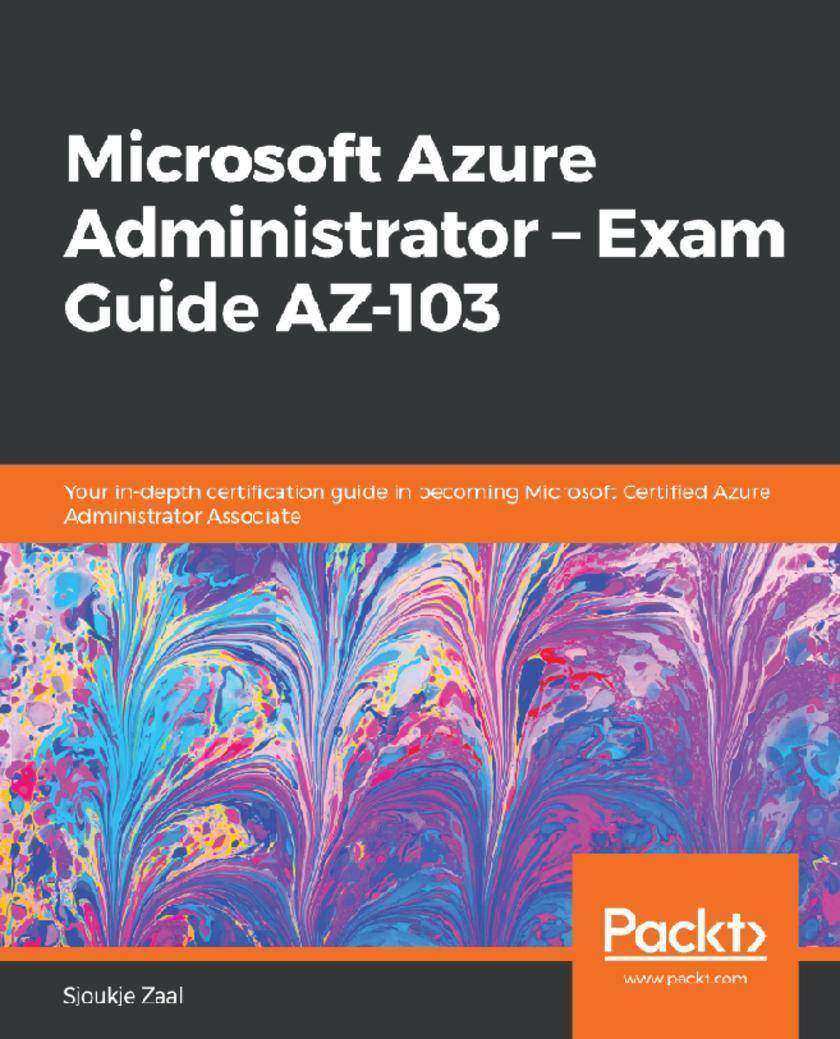
Microsoft Azure Administrator – Exam Guide AZ-103
¥70.84
Manage Microsoft Azure cloud services that span storage, security, networking, and compute cloud capabilities and ace the AZ-103 Exam Key Features * Master features and concepts pertaining to Azure's Administration services * Gain a deep understanding of various Azure services related to infrastructure, applications, and environments * Gauge yourself by giving mock tests with up-to-date exam questions Book Description Microsoft Azure Administrator – Exam Guide AZ-103 will cover all the exam objectives that will help you earn Microsoft Azure Administrator certification. Whether you want to clear AZ-103 exam or want hands-on experience in administering Azure, this study guide will help you achieve your objective. It covers the latest features and capabilities around configuring, managing, and securing Azure resources. Following Microsoft's AZ-103 exam syllabus, this guide is divided into five modules. The first module talks about how to manage Azure subscriptions and resources. You will be able to configure Azure subscription policies at Azure subscription level and learn how to use Azure policies for resource groups. Later, the book covers techniques related to implementing and managing storage in Azure. You will be able to create and configure backup policies and perform restore operations. The next module will guide you to create, configure, and deploy virtual machines for Windows and Linux. In the last two modules, you will learn about configuring and managing virtual networks and managing identities. The book concludes with effective mock tests along with answers so that you can confidently crack this exam. By the end of this book, you will acquire the skills needed to pass Exam AZ-103. What you will learn * Configure Azure subscription policies and manage resource groups * Monitor activity log by using Log Analytics * Modify and deploy Azure Resource Manager (ARM) templates * Protect your data with Azure Site Recovery * Learn how to manage identities in Azure * Monitor and troubleshoot virtual network connectivity * Manage Azure Active Directory Connect, password sync, and password writeback Who this book is for This book is for Azure administrators, systems administrators or anyone preparing for AZ 103 exam and wants to master Azure's various administration features. Readers should have proficiency in working with PowerShell, CLI and other day-to-day Azure administration tasks.
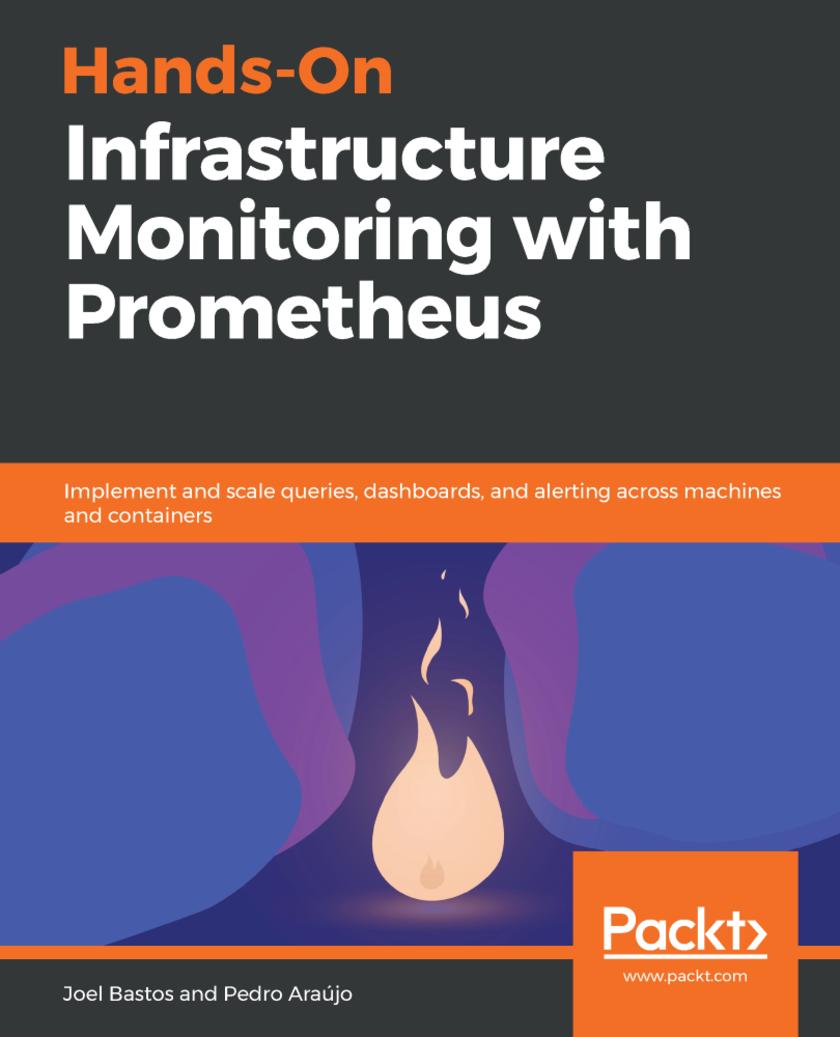
Hands-On Infrastructure Monitoring with Prometheus
¥62.12
Build Prometheus ecosystems with metric-centric visualization, alerting, and querying Key Features * Integrate Prometheus with Alertmanager and Grafana for building a complete monitoring system * Explore PromQL, Prometheus' functional query language, with easy-to-follow examples * Learn how to deploy Prometheus components using Kubernetes and traditional instances Book Description Prometheus is an open source monitoring system. It provides a modern time series database, a robust query language, several metric visualization possibilities, and a reliable alerting solution for traditional and cloud-native infrastructure. This book covers the fundamental concepts of monitoring and explores Prometheus architecture, its data model, and how metric aggregation works. Multiple test environments are included to help explore different configuration scenarios, such as the use of various exporters and integrations. You’ll delve into PromQL, supported by several examples, and then apply that knowledge to alerting and recording rules, as well as how to test them. After that, alert routing with Alertmanager and creating visualizations with Grafana is thoroughly covered. In addition, this book covers several service discovery mechanisms and even provides an example of how to create your own. Finally, you’ll learn about Prometheus federation, cross-sharding aggregation, and also long-term storage with the help of Thanos. By the end of this book, you’ll be able to implement and scale Prometheus as a full monitoring system on-premises, in cloud environments, in standalone instances, or using container orchestration with Kubernetes. What you will learn * Grasp monitoring fundamentals and implement them using Prometheus * Discover how to extract metrics from common infrastructure services * Find out how to take full advantage of PromQL * Design a highly available, resilient, and scalable Prometheus stack * Explore the power of Kubernetes Prometheus Operator * Understand concepts such as federation and cross-shard aggregation * Unlock seamless global views and long-term retention in cloud-native apps with Thanos Who this book is for If you’re a software developer, cloud administrator, site reliability engineer, DevOps enthusiast or system admin looking to set up a fail-safe monitoring and alerting system for sustaining infrastructure security and performance, this book is for you. Basic networking and infrastructure monitoring knowledge will help you understand the concepts covered in this book.
Hands-On Financial Modeling with Microsoft Excel 2019
¥62.12
Explore the aspects of financial modeling with the help of clear and easy-to-follow instructions and a variety of Excel features, functions, and productivity tips Key Features * A non data professionals guide to exploring Excel's financial functions and pivot tables * Learn to prepare various models for income and cash flow statements, and balance sheets * Learn to perform valuations and identify growth drivers with real-world case studies Book Description Financial modeling is a core skill required by anyone who wants to build a career in finance. Hands-On Financial Modeling with Microsoft Excel 2019 examines various definitions and relates them to the key features of financial modeling with the help of Excel. This book will help you understand financial modeling concepts using Excel, and provides you with an overview of the steps you should follow to build an integrated financial model. You will explore the design principles, functions, and techniques of building models in a practical manner. Starting with the key concepts of Excel, such as formulas and functions, you will learn about referencing frameworks and other advanced components of Excel for building financial models. Later chapters will help you understand your financial projects, build assumptions, and analyze historical data to develop data-driven models and functional growth drivers. The book takes an intuitive approach to model testing, along with best practices and practical use cases. By the end of this book, you will have examined the data from various use cases, and you will have the skills you need to build financial models to extract the information required to make informed business decisions. What you will learn * Identify the growth drivers derived from processing historical data in Excel * Use discounted cash flow (DCF) for efficient investment analysis * Build a financial model by projecting balance sheets, profit, and loss * Apply a Monte Carlo simulation to derive key assumptions for your financial model * Prepare detailed asset and debt schedule models in Excel * Discover the latest and advanced features of Excel 2019 * Calculate profitability ratios using various profit parameters Who this book is for This book is for data professionals, analysts, traders, business owners, and students, who want to implement and develop a high in-demand skill of financial modeling in their finance, analysis, trading, and valuation work. This book will also help individuals that have and don't have any experience in data and stats, to get started with building financial models. The book assumes working knowledge with Excel.
Flutter for Beginners
¥63.21
A step-by-step guide to learning Flutter and Dart 2 for creating Android and iOS mobile applications Key Features * Get up to speed with the basics of Dart programming and delve into Flutter development * Understand native SDK and third-party libraries for building Android and iOS applications using Flutter * Package and deploy your Flutter apps to achieve native-like performance Book Description Google Flutter is a cross-platform mobile platform that makes it easier to write secure and high-performance native apps for iOS and Android. This book begins by introducing you to the Flutter framework and basics of Dart. You’ll learn to set up the development environment to get started with your Flutter project. The book will guide you through designing the user interface and user input functions for your app. As you progress, you’ll explore the navigator widget to manage your app routes and understand how to add transitions between screens. You’ll then get to grips with developing your own plugin and discover how to structure good plugin code. The book will help you display a map from the Flutter app, add markers and interactions to it, and use the Google Places API. You’ll build on your knowledge by not only adding tests to create a bug-free app, but also preparing it for deployment on Apple's App Store and Google Play. In later chapters, you’ll learn to improve the user experience with advanced features such as map integrations, platform-specific code with native programming languages, and personalized animation options for designing intuitive UIs. By the end of this book, you’ll be well-versed with Dart programming and have the skills to develop your own mobile apps or build a career as a Dart and Flutter app developer. What you will learn * Understand the fundamentals of the Dart programming language * Explore the core concepts of the Flutter UI and how it compiles for multiple platforms * Develop Flutter plugins and widgets and understand how to structure good plugin code * Style your apps with widgets and learn the difference between stateful and stateless widgets * Add animation to your UI using Flutter's AnimatedBuilder component * Integrate your native code into your Flutter codebase for native app performance Who this book is for This book is for developers looking to learn Google's revolutionary framework, Flutter from scratch. No knowledge of Flutter or Dart is required. However, basic programming language knowledge will be helpful.
Developer, Advocate!
¥71.93
A collection of in-depth conversations with leading developer advocates that reveal the world of developer relations today Key Features * Top developer advocates reveal the work they’re doing at the center of their tech communities and the impact their advocacy is having on the tech industry as a whole * Discover the best practices of developer advocacy and get the inside story on working at some of the world’s largest tech companies * Features contributions from noted developer advocates, including Scott Hanselman, Sally Eaves, Venkat Subramaniam, Jono Bacon, Ted Neward, and more Book Description What exactly is a developer advocate, and how do they connect developers and companies around the world? Why is the area of developer relations set to explode? Can anybody with a passion for tech become a developer advocate? What are the keys to success on a global scale? How does a developer advocate maintain authenticity when balancing the needs of their company and their tech community? What are the hot topics in areas including Java, JavaScript, "tech for good," artificial intelligence, blockchain, the cloud, and open source? These are just a few of the questions addressed by developer advocate and author Geertjan Wielenga in Developer, Advocate!. 32 of the industry's most prominent developer advocates, from companies including Oracle, Microsoft, Google, and Amazon, open up about what it's like to turn a lifelong passion for knowledge sharing about tech into a rewarding career. These advocates run the gamut from working at large software vendors to small start-ups, along with independent developer advocates who work within organizations or for themselves. In Developer, Advocate!, readers will see how developer advocates are actively changing the world, not only for developers, but for individuals and companies navigating the fast-changing tech landscape. More importantly, Developer, Advocate! serves as a rallying cry to inspire and motivate tech enthusiasts and burgeoning developer advocates to get started and take their first steps within their tech community. What you will learn * Discover how developer advocates are putting developer interests at the heart of the software industry in companies including Microsoft and Google * Gain the confidence to use your voice in the tech community * Immerse yourself in developer advocacy techniques * Understand and overcome the challenges and obstacles facing developer advocates today * Hear predictions from the people at the cutting edge of tech * Explore your career options in developer advocacy Who this book is for Anybody interested in developer advocacy, the impact it is having, and how to build developer advocacy capabilities
Bayesian Analysis with Python
¥81.74
Bayesian modeling with PyMC3 and exploratory analysis of Bayesian models with ArviZ Key Features *A step-by-step guide to conduct Bayesian data analyses using PyMC3 and ArviZ *A modern, practical and computational approach to Bayesian statistical modeling *A tutorial for Bayesian analysis and best practices with the help of sample problems and practice exercises. Book Description The second edition of Bayesian Analysis with Python is an introduction to the main concepts of applied Bayesian inference and its practical implementation in Python using PyMC3, a state-of-the-art probabilistic programming library, and ArviZ, a new library for exploratory analysis of Bayesian models. The main concepts of Bayesian statistics are covered using a practical and computational approach. Synthetic and real data sets are used to introduce several types of models, such as generalized linear models for regression and classification, mixture models, hierarchical models, and Gaussian processes, among others. By the end of the book, you will have a working knowledge of probabilistic modeling and you will be able to design and implement Bayesian models for your own data science problems. After reading the book you will be better prepared to delve into more advanced material or specialized statistical modeling if you need to. What you will learn *Build probabilistic models using the Python library PyMC3 *Analyze probabilistic models with the help of ArviZ *Acquire the skills required to sanity check models and modify them if necessary *Understand the advantages and caveats of hierarchical models *Find out how different models can be used to answer different data analysis questions *Compare models and choose between alternative ones *Discover how different models are unified from a probabilistic perspective *Think probabilistically and benefit from the flexibility of the Bayesian framework Who this book is for If you are a student, data scientist, researcher, or a developer looking to get started with Bayesian data analysis and probabilistic programming, this book is for you. The book is introductory so no previous statistical knowledge is required, although some experience in using Python and NumPy is expected.
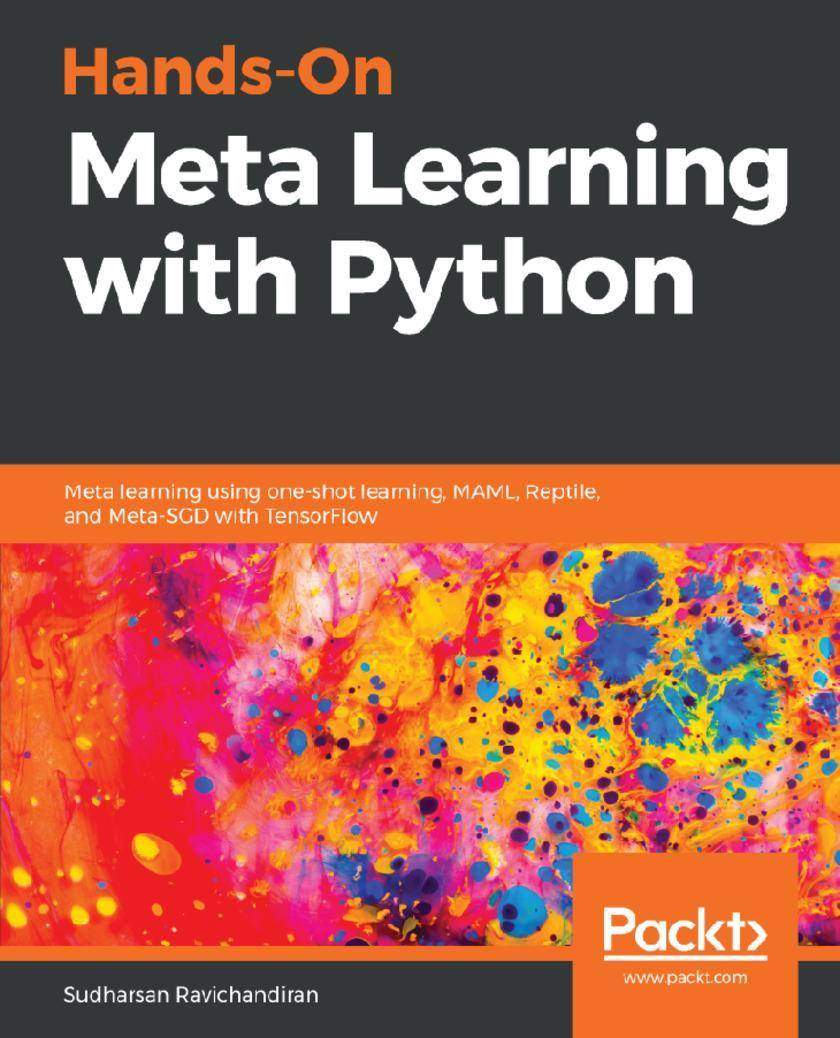
Hands-On Meta Learning with Python
¥71.93
Explore a diverse set of meta-learning algorithms and techniques to enable human-like cognition for your machine learning models using various Python frameworks Key Features *Understand the foundations of meta learning algorithms *Explore practical examples to explore various one-shot learning algorithms with its applications in TensorFlow *Master state of the art meta learning algorithms like MAML, reptile, meta SGD Book Description Meta learning is an exciting research trend in machine learning, which enables a model to understand the learning process. Unlike other ML paradigms, with meta learning you can learn from small datasets faster. Hands-On Meta Learning with Python starts by explaining the fundamentals of meta learning and helps you understand the concept of learning to learn. You will delve into various one-shot learning algorithms, like siamese, prototypical, relation and memory-augmented networks by implementing them in TensorFlow and Keras. As you make your way through the book, you will dive into state-of-the-art meta learning algorithms such as MAML, Reptile, and CAML. You will then explore how to learn quickly with Meta-SGD and discover how you can perform unsupervised learning using meta learning with CACTUs. In the concluding chapters, you will work through recent trends in meta learning such as adversarial meta learning, task agnostic meta learning, and meta imitation learning. By the end of this book, you will be familiar with state-of-the-art meta learning algorithms and able to enable human-like cognition for your machine learning models. What you will learn *Understand the basics of meta learning methods, algorithms, and types *Build voice and face recognition models using a siamese network *Learn the prototypical network along with its variants *Build relation networks and matching networks from scratch *Implement MAML and Reptile algorithms from scratch in Python *Work through imitation learning and adversarial meta learning *Explore task agnostic meta learning and deep meta learning Who this book is for Hands-On Meta Learning with Python is for machine learning enthusiasts, AI researchers, and data scientists who want to explore meta learning as an advanced approach for training machine learning models. Working knowledge of machine learning concepts and Python programming is necessary.


