


 购物车
购物车 个人中心
个人中心
Practical Web Penetration Testing
¥73.02
Learn how to execute web application penetration testing end-to-end About This Book ? Build an end-to-end threat model landscape for web application security ? Learn both web application vulnerabilities and web intrusion testing ? Associate network vulnerabilities with a web application infrastructure Who This Book Is For Practical Web Penetration Testing is for you if you are a security professional, penetration tester, or stakeholder who wants to execute penetration testing using the latest and most popular tools. Basic knowledge of ethical hacking would be an added advantage. What You Will Learn ? Learn how to use Burp Suite effectively ? Use Nmap, Metasploit, and more tools for network infrastructure tests ? Practice using all web application hacking tools for intrusion tests using Kali Linux ? Learn how to analyze a web application using application threat modeling ? Know how to conduct web intrusion tests ? Understand how to execute network infrastructure tests ? Master automation of penetration testing functions for maximum efficiency using Python In Detail Companies all over the world want to hire professionals dedicated to application security. Practical Web Penetration Testing focuses on this very trend, teaching you how to conduct application security testing using real-life scenarios. To start with, you’ll set up an environment to perform web application penetration testing. You will then explore different penetration testing concepts such as threat modeling, intrusion test, infrastructure security threat, and more, in combination with advanced concepts such as Python scripting for automation. Once you are done learning the basics, you will discover end-to-end implementation of tools such as Metasploit, Burp Suite, and Kali Linux. Many companies deliver projects into production by using either Agile or Waterfall methodology. This book shows you how to assist any company with their SDLC approach and helps you on your journey to becoming an application security specialist. By the end of this book, you will have hands-on knowledge of using different tools for penetration testing. Style and approach In this book, you will learn and understand the workflow of application security testing. Starting from analysis using threat modeling until the testing phase and before the web project goes into production, you will be able conduct effective penetrating testing using web intrusion tests , network infrastructure tests, and code review.
Ethereum Projects for Beginners
¥42.50
Understand the Ethereum platform to build distributed applications that are secured and decentralized using blockchain technology Key Features *Build your own decentralized applications using real-world blockchain examples *Implement Ethereum for building smart contracts and cryptocurrency applications with easy-to-follow projects *Enhance your application security with blockchain Book Description Ethereum enables the development of efficient, smart contracts that contain code. These smart contracts can interact with other smart contracts to make decisions, store data, and send Ether to others.Ethereum Projects for Beginners provides you with a clear introduction to creating cryptocurrencies, smart contracts, and decentralized applications. As you make your way through the book, you’ll get to grips with detailed step-by-step processes to build advanced Ethereum projects. Each project will teach you enough about Ethereum to be productive right away. You will learn how tokenization works, think in a decentralized way, and build blockchain-based distributed computing systems. Towards the end of the book, you will develop interesting Ethereum projects such as creating wallets and secure data sharing.By the end of this book, you will be able to tackle blockchain challenges by implementing end-to-end projects using the full power of the Ethereum blockchain. What you will learn *Develop your ideas fast and efficiently using the Ethereum blockchain *Make writing and deploying smart contracts easy and manageable *Work with private data in blockchain applications *Handle large files in blockchain applications *Ensure your decentralized applications are safe *Explore how Ethereum development frameworks work *Create your own cryptocurrency or token on the Ethereum blockchain *Make sure your cryptocurrency is ERC20-compliant to launch an ICO Who this book is for This book is for individuals who want to build decentralized applications using blockchain technology and the power of Ethereum from scratch. Some prior knowledge of JavaScript is required, since most examples use a web frontend.
Learn PowerShell Core 6.0
¥78.47
Enhance your skills in expert module development, deployment, security, DevOps, and cloud Key Features *A step-by-step guide to get you started with PowerShell Core 6.0 *Harness the capabilities of PowerShell Core 6.0 to perform simple to complex administration tasks *Learn core administrative concepts such as scripting, pipelines, and DSC Book Description Beginning with an overview of the different versions of PowerShell, Learn PowerShell Core 6.0 introduces you to VSCode and then dives into helping you understand the basic techniques in PowerShell scripting. You will cover advanced coding techniques, learn how to write reusable code as well as store and load data with PowerShell. This book will help you understand PowerShell security and Just Enough Administration, enabling you to create your own PowerShell repository. The last set of chapters will guide you in setting up, configuring, and working with Release Pipelines in VSCode and VSTS, and help you understand PowerShell DSC. In addition to this, you will learn how to use PowerShell with Windows, Azure, Microsoft Online Services, SCCM, and SQL Server. The final chapter will provide you with some use cases and pro tips. By the end of this book, you will be able to create professional reusable code using security insight and knowledge of working with PowerShell Core 6.0 and its most important capabilities. What you will learn *Get to grips with Powershell Core 6.0 *Explore basic and advanced PowerShell scripting techniques *Get to grips with Windows PowerShell Security *Work with centralization and DevOps with PowerShell *Implement PowerShell in your organization through real-life examples *Learn to create GUIs and use DSC in production Who this book is for If you are a Windows administrator or a DevOps user who wants to leverage PowerShell to automate simple to complex tasks, then this book is for you. Whether you know nothing about PowerShell or just enough to get by, this guide will give you what you need to go to take your scripting to the next level. You’ll also find this book useful if you’re a PowerShell expert looking to expand your knowledge in areas such as PowerShell Security and DevOps.
Hands-On Ensemble Learning with R
¥78.47
Explore powerful R packages to create predictive models using ensemble methods Key Features *Implement machine learning algorithms to build ensemble-efficient models *Explore powerful R packages to create predictive models using ensemble methods *Learn to build ensemble models on large datasets using a practical approach Book Description Ensemble techniques are used for combining two or more similar or dissimilar machine learning algorithms to create a stronger model. Such a model delivers superior prediction power and can give your datasets a boost in accuracy. Hands-On Ensemble Learning with R begins with the important statistical resampling methods. You will then walk through the central trilogy of ensemble techniques – bagging, random forest, and boosting – then you'll learn how they can be used to provide greater accuracy on large datasets using popular R packages. You will learn how to combine model predictions using different machine learning algorithms to build ensemble models. In addition to this, you will explore how to improve the performance of your ensemble models. By the end of this book, you will have learned how machine learning algorithms can be combined to reduce common problems and build simple efficient ensemble models with the help of real-world examples. What you will learn *Carry out an essential review of re-sampling methods, bootstrap, and jackknife *Explore the key ensemble methods: bagging, random forests, and boosting *Use multiple algorithms to make strong predictive models *Enjoy a comprehensive treatment of boosting methods *Supplement methods with statistical tests, such as ROC *Walk through data structures in classification, regression, survival, and time series data *Use the supplied R code to implement ensemble methods *Learn stacking method to combine heterogeneous machine learning models Who this book is for This book is for you if you are a data scientist or machine learning developer who wants to implement machine learning techniques by building ensemble models with the power of R. You will learn how to combine different machine learning algorithms to perform efficient data processing. Basic knowledge of machine learning techniques and programming knowledge of R would be an added advantage.
Angular Design Patterns
¥52.31
Make the most of Angular by leveraging design patterns and best practices to build stable and high performing apps Key Features *Get to grips with the benefits and applicability of using different design patterns in Angular with the help of real-world examples *Identify and prevent common problems, programming errors, and anti-patterns *Packed with easy-to-follow examples that can be used to create reusable code and extensible designs Book Description This book is an insightful journey through the most valuable design patterns, and it will provide clear guidance on how to use them effectively in Angular. You will explore some of the best ways to work with Angular and how to use it to meet the stability and performance required in today's web development world. You’ll get to know some Angular best practices to improve your productivity and the code base of your application. We will take you on a journey through Angular designs for the real world, using a combination of case studies, design patterns to follow, and anti-patterns to avoid. By the end of the book, you will understand the various features of Angular, and will be able to apply well-known, industry-proven design patterns in your work. What you will learn *Understand Angular design patterns and anti-patterns *Implement the most useful GoF patterns for Angular *Explore some of the most famous navigational patterns for Angular *Get to know and implement stability patterns *Explore and implement operations patterns *Explore the official best practices for Angular *Monitor and improve the performance of Angular applications Who this book is for If you want to increase your understanding of Angular and apply it to real-life application development, then this book is for you.
Building Serverless Python Web Services with Zappa
¥69.75
Master serverless architectures in Python and their implementation, with Zappa on three different frameworks. Key Features * Scalable serverless Python web services using Django, Flask, and Pyramid. * Learn Asynchronous task execution on AWS Lambda and scheduling using Zappa. * Implementing Zappa in a Docker container. Book Description Serverless applications are becoming very popular these days, not just because they save developers the trouble of managing the servers, but also because they provide several other benefits such as cutting heavy costs and improving the overall performance of the application. This book will help you build serverless applications in a quick and efficient way. We begin with an introduction to AWS and the API gateway, the environment for serverless development, and Zappa. We then look at building, testing, and deploying apps in AWS with three different frameworks--Flask, Django, and Pyramid. Setting up a custom domain along with SSL certificates and configuring them with Zappa is also covered. A few advanced Zappa settings are also covered along with securing Zappa with AWS VPC. By the end of the book you will have mastered using three frameworks to build robust and cost-efficient serverless apps in Python. What you will learn *Build, test, and deploy a simple web service using AWS CLI *Integrate Flask-based Python applications, via AWS CLI configuration *Design Rest APIs integrated with Zappa for Flask and Django *Create a project in the Pyramid framework and configure it with Zappa *Generate SSL Certificates using Amazon Certificate Manager *Configure custom domains with AWS Route 53 *Create a Docker container similar to AWS Lambda Who this book is for Python Developers who are interested in learning how to develop fast and highly scalable serverless applications in Python, will find this book useful
Hands-On Agile Software Development with JIRA
¥52.31
Plan, track, and release great software Key Features * Learn to create reports and dashboard for effective project management * Implement your development strategy in JIRA. * Practices to help you manage the issues in the development team Book Description As teams scale in size, project management can get very complicated. One of the best tools to deal with this kind of problem is JIRA. This book will start by organizing your project requirements and the principles of Agile development to get you started. You will then be introduced to set up a JIRA account and the JIRA ecosystem to help you implement a dashboard for your team's work and issues. You will learn how to manage any issues and bugs that might emerge in the development stage. Going ahead, the book will help you build reports and use them to plan the releases based on the study of the reports. Towards the end, you will come across working with the gathered data and create a dashboard that helps you track the project's development. What you will learn * Create your first project (and manage existing projects) in JIRA * Manage your board view and backlogs in JIRA * Run a Scrum Sprint project in JIRA * Create reports (including topic-based reports) * Forecast using versions * Search for issues with JIRA Query Language (JQL) * Execute bulk changes to issues * Create custom filters, dashboards, and widgets * Create epics, stories, bugs, and tasks Who this book is for This book is for administrators who wants to apply the Agile approach to managing the issues, bugs, and releases in their software development projects using JIRA.
Unity 2018 Augmented Reality Projects
¥78.47
Learn the fundamentals of Java EE 8 APIs to build effective web services Key Features *Design modern and stylish web services with Java EE APIs *Secure your web services with JSON Web Tokens *Explore the advanced concepts of RESTful web services and the JAX-RS API Book Description Java Enterprise Edition is one of the leading application programming platforms for enterprise Java development. With Java EE 8 finally released and the first application servers now available, it is time to take a closer look at how to develop modern and lightweight web services with the latest API additions and improvements. Building RESTful Web Services with Java EE 8 is a comprehensive guide that will show you how to develop state-of-the-art RESTful web services with the latest Java EE 8 APIs. You will begin with an overview of Java EE 8 and the latest API additions and improvements. You will then delve into the details of implementing synchronous RESTful web services and clients with JAX-RS. Next up, you will learn about the specifics of data binding and content marshalling using the JSON-B 1.0 and JSON-P 1.1 APIs. This book also guides you in leveraging the power of asynchronous APIs on the server and client side, and you will learn to use server-sent events (SSEs) for push communication. The final section covers advanced web service topics such as validation, JWT security, and diagnosability. By the end of this book, you will have implemented several working web services and have a thorough understanding of the Java EE 8 APIs required for lightweight web service development. What you will learn *Dive into the latest Java EE 8 APIs relevant for developing web services *Use the new JSON-B APIs for easy data binding *Understand how JSON-P API can be used for flexible processing *Implement synchronous and asynchronous JAX-RS clients *Use server-sent events to implement server-side code *Secure Java EE 8 web services with JSON Web Tokens Who this book is for If you're a Java developer who wants to learn how to implement web services using the latest Java EE 8 APIs, this book is for you. Though no prior knowledge of Java EE 8 is required, experience with a previous Java EE version will be beneficial.
Building RESTful Web Services with Java EE 8
¥52.31
Architect and design data-intensive applications and, in the process, learn how to collect, process, store, govern, and expose data for a variety of use cases Key Features *Integrate the data-intensive approach into your application architecture *Create a robust application layout with effective messaging and data querying architecture *Enable smooth data flow and make the data of your application intensive and fast Book Description Are you an architect or a developer who looks at your own applications gingerly while browsing through Facebook and applauding it silently for its data-intensive, yet ?uent and efficient, behaviour? This book is your gateway to build smart data-intensive systems by incorporating the core data-intensive architectural principles, patterns, and techniques directly into your application architecture. This book starts by taking you through the primary design challenges involved with architecting data-intensive applications. You will learn how to implement data curation and data dissemination, depending on the volume of your data. You will then implement your application architecture one step at a time. You will get to grips with implementing the correct message delivery protocols and creating a data layer that doesn’t fail when running high traffic. This book will show you how you can divide your application into layers, each of which adheres to the single responsibility principle. By the end of this book, you will learn to streamline your thoughts and make the right choice in terms of technologies and architectural principles based on the problem at hand. What you will learn *Understand how to envision a data-intensive system *Identify and compare the non-functional requirements of a data collection component *Understand patterns involving data processing, as well as technologies that help to speed up the development of data processing systems *Understand how to implement Data Governance policies at design time using various Open Source Tools *Recognize the anti-patterns to avoid while designing a data store for applications *Understand the different data dissemination technologies available to query the data in an efficient manner *Implement a simple data governance policy that can be extended using Apache Falcon Who this book is for This book is for developers and data architects who have to code, test, deploy, and/or maintain large-scale, high data volume applications. It is also useful for system architects who need to understand various non-functional aspects revolving around Data Intensive Systems.
Introduction to Programming
¥73.02
Get a solid understanding of Java fundamentals to master programming through a series of practical steps About This Book ? Enjoy your first step into the world of programming ? Understand what a language is and use its features to build applications ? Learn about a wide variety of programming applications Who This Book Is For Introduction to Programming is for anybody who wants to learn programming. All you’ll need is a computer, internet connection, and a cup of coffee. What You Will Learn ? Understand what Java is ? Install Java and learn how to run it ? Write and execute a Java program ? Write and execute the test for your program ? Install components and confgure your development environment ? Learn and use Java language fundamentals ? Learn object-oriented design principles ? Master the frequently used Java constructs In Detail Have you ever thought about making your computer do what you want it to do? Do you want to learn to program, but just don't know where to start? Instead of guiding you in the right direction, have other learning resources got you confused with over-explanations? Don't worry. Look no further. Introduction to Programming is here to help. Written by an industry expert who understands the challenges faced by those from a non-programming background, this book takes a gentle, hand-holding approach to introducing you to the world of programming. Beginning with an introduction to what programming is, you'll go on to learn about languages, their syntax, and development environments. With plenty of examples for you to code alongside reading, the book's practical approach will help you to grasp everything it has to offer. More importantly, you'll understand several aspects of application development. As a result, you'll have your very own application running by the end of the book. To help you comprehensively understand Java programming, there are exercises at the end of each chapter to keep things interesting and encourage you to add your own personal touch to the code and, ultimately, your application. Style and approach This step-by-step guide will familiarize you with programming using some practical examples.

Hands-On Data Visualization with Bokeh
¥54.49
Learn how to create interactive and visually aesthetic plots using the Bokeh package in Python About This Book ? A step by step approach to creating interactive plots with Bokeh ? Go from nstallation all the way to deploying your very own Bokeh application ? Work with a real time datasets to practice and create your very own plots and applications Who This Book Is For This book is well suited for data scientists and data analysts who want to perform interactive data visualization on their web browsers using Bokeh. Some exposure to Python programming will be helpful, but prior experience with Bokeh is not required. What You Will Learn ? Installing Bokeh and understanding its key concepts ? Creating plots using glyphs, the fundamental building blocks of Bokeh ? Creating plots using different data structures like NumPy and Pandas ? Using layouts and widgets to visually enhance your plots and add a layer of interactivity ? Building and hosting applications on the Bokeh server ? Creating advanced plots using spatial data In Detail Adding a layer of interactivity to your plots and converting these plots into applications hold immense value in the field of data science. The standard approach to adding interactivity would be to use paid software such as Tableau, but the Bokeh package in Python offers users a way to create both interactive and visually aesthetic plots for free. This book gets you up to speed with Bokeh - a popular Python library for interactive data visualization. The book starts out by helping you understand how Bokeh works internally and how you can set up and install the package in your local machine. You then use a real world data set which uses stock data from Kaggle to create interactive and visually stunning plots. You will also learn how to leverage Bokeh using some advanced concepts such as plotting with spatial and geo data. Finally you will use all the concepts that you have learned in the previous chapters to create your very own Bokeh application from scratch. By the end of the book you will be able to create your very own Bokeh application. You will have gone through a step by step process that starts with understanding what Bokeh actually is and ends with building your very own Bokeh application filled with interactive and visually aesthetic plots. Style and approach This books take you through a step by step process that starts with understanding what Bokeh actually is and ends with building your very own Bokeh application filled with interactive and visually aesthetic plots that will amaze your users.
Learning ServiceNow
¥90.46
IT service management automation at your fingertips About This Book ? Learn to leverage ServiceNow’s capabilities for improved IT automation by following step-by-step, practical instructions ? Build core administration, development, and maintenance skills with IT service management in ServiceNow ? Improve your workflow efficiency by designing and creating responsive and automated workflows, business logic, and front-end automation Who This Book Is For This book is for IT professionals and administrators who are planning to or are already trying to implement ServiceNow in their organization for Enterprise IT service management tasks. Some familiarity with web technologies (JavaScript) would be helpful. Prior ServiceNow experience is not necessary. What You Will Learn ? Read and write clear, effective code for the ServiceNow platform ? Identify and avoid common pitfalls and missteps that could seriously impact future progress and upgradeability ? Use debugging tools to troubleshoot when things go wrong ? Discover tips and tricks from top ServiceNow developers, architects, and administrators. Find out what the pros wish they knew when they were starting out In Detail This book is an updated version of Learning ServiceNow, that will cover the new and updated features of the ServiceNow platform. It will show you how to put important ServiceNow features to work in the real world, while introducing key concepts via examples of managing and automating IT services. It'll help you build a solid foundation of knowledge, and will demonstrate how to effectively implement and configure modules within ServiceNow. We'll show you how to configure and administer your instance, and then move on to building strong user interfaces and creating powerful workflows. We also cover other key elements of ServiceNow, such as notifications, security, reporting, and custom development. You will learn how to improve and automate your business' workflow and processes. By the end of this book, you will be able to successfully configure and manage ServiceNow like a pro. Style and approach This book is a step-by-step practical tutorial to help you quickly deploy and configure ServiceNow in your organization. It guides you through the process of building applications and understanding the underlying systems, to help you become a more effective ServiceNow/ITSM administrator and/or developer.
Truffle Quick Start Guide
¥50.13
Develop, test, and deploy decentralized applications for Ethereum platform About This Book ? Build your first Ethereum Dapp with Truffle: the most popular Ethereum development framework ? Build, compile, and deploy smart contracts in your development environment ? Embrace Blockchains and utilize it to create new generation of secured and scalable apps Who This Book Is For This book is for web developers who are interested in the new world blockchain. Some basic understanding of JavaScript and web services is required. No prior knowledge of Decentralized applications or blockchain is required. What You Will Learn ? Understand the fundamentals of Truffle and Web3 ? Build a decentralized application with Truffle, while choosing the correct Ethereum client ? Connect your Dapp to Ethereum clients including Geth, Parity, and Ganache ? Migrate and test your Dapp with the correct networks such as Ropsten and Rinkeby ? Package a decentralized application into a user-friendly product by integrating Truffle with JavaScript frameworks such as Angular, React and Vue ? Explore tools including Ethereum Package Manager, the Registrar and browser wallets, and exploit third-party smart contract libraries. ? Evaluate the common migration pitfalls and how to mitigate them In Detail Truffle is a world-class development environment, testing framework and asset pipeline for Ethereum, aiming to make life as an Ethereum developer easier. If you are a web developer wanting to try your hand at developing Dapps with Truffle, then this is the book for you. This book will teach you to write smart contracts and build Dapps with Truffle. You will begin with covering the basics of Truffle, briefly explaining how it integrates Solidity and Web3, in orderto start building a mini decentralized application. Also, you will dive into migration, testing and integrating Truffle with the use of popular JavaScript frameworks. Lastly, you will ship your decentralized application and package it into a product. Moreover, you will go through the best practices in Truffle,so as to increase your proficiency in building Dapps with Truffle. By the end of the book, you will be able to write smart contracts and build decentralized applications with Truffle on Ethereum blockchains. Style and approach An intuitive, step-by-step and engaging guide that will teach you to build a real-world, decentralized application with Truffle.
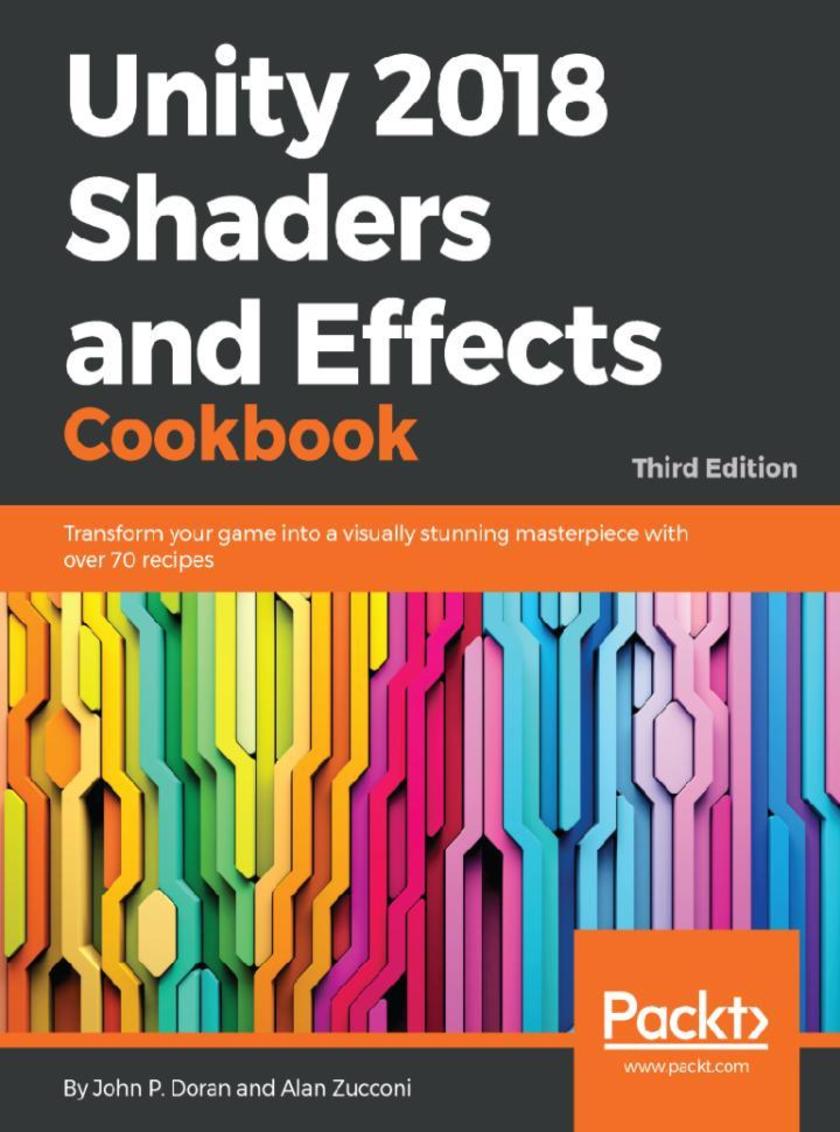
Unity 2018 Shaders and Effects Cookbook
¥90.46
Bring realism to your games by mastering post-processing effects and advanced shading techniques in Unity 2018 About This Book ? Learn the secrets of creating AAA quality shaders without writing long algorithms ? Master shader programming through easy-to-follow examples ? Create stunning visual effects that can be used in 3D games Who This Book Is For Unity Shaders and Effects Cookbook is for developers who want to create their first shaders in Unity 2018 or wish to take their game to a whole new level by adding professional post-processing effects. A solid understanding of Unity is required to get the most from this book. What You Will Learn ? Understand physically based rendering to fit the aesthetic of your game ? Write shaders from scratch in ShaderLab and HLSL/Cg ? Combine shader programming with interactive scripts to add life to your materials ? Design efficient shaders for mobile platforms without sacrificing their realism ? Use state-of-the-art techniques, such as volumetric explosions and fur shading ? Master the math and algorithms behind the most used lighting models ? Understand how shader models have evolved and how you can create your own In Detail Since their introduction to Unity, shaders have been seen as notoriously difficult to understand and implement in games. Complex mathematics has always stood in the way of creating your own shaders and attaining the level of realism you crave. Unity 2018 Shaders and Effects Cookbook changes that by giving you a recipe-based guide to creating shaders using Unity. It will show you everything you need to know about vectors, how lighting is constructed with them, and how textures are used to create complex effects without the heavy math. This book starts by teaching you how to use shaders without writing code with the post-processing stack. Then, you’ll learn how to write shaders from scratch, build up essential lighting, and finish by creating stunning screen effects just like those in high-quality 3D and mobile games. You'll discover techniques, such as normal mapping, image-based lighting, and animating your models inside a shader. We'll explore how to use physically based rendering to treat light the way it behaves in the real world. At the end, we’ll even look at Unity 2018’s new Shader Graph system. With this book, what seems like a dark art today will be second nature by tomorrow. Style and approach The recipes in this book contain step-by-step instructions, complemented with screenshots, code, and real-world examples.
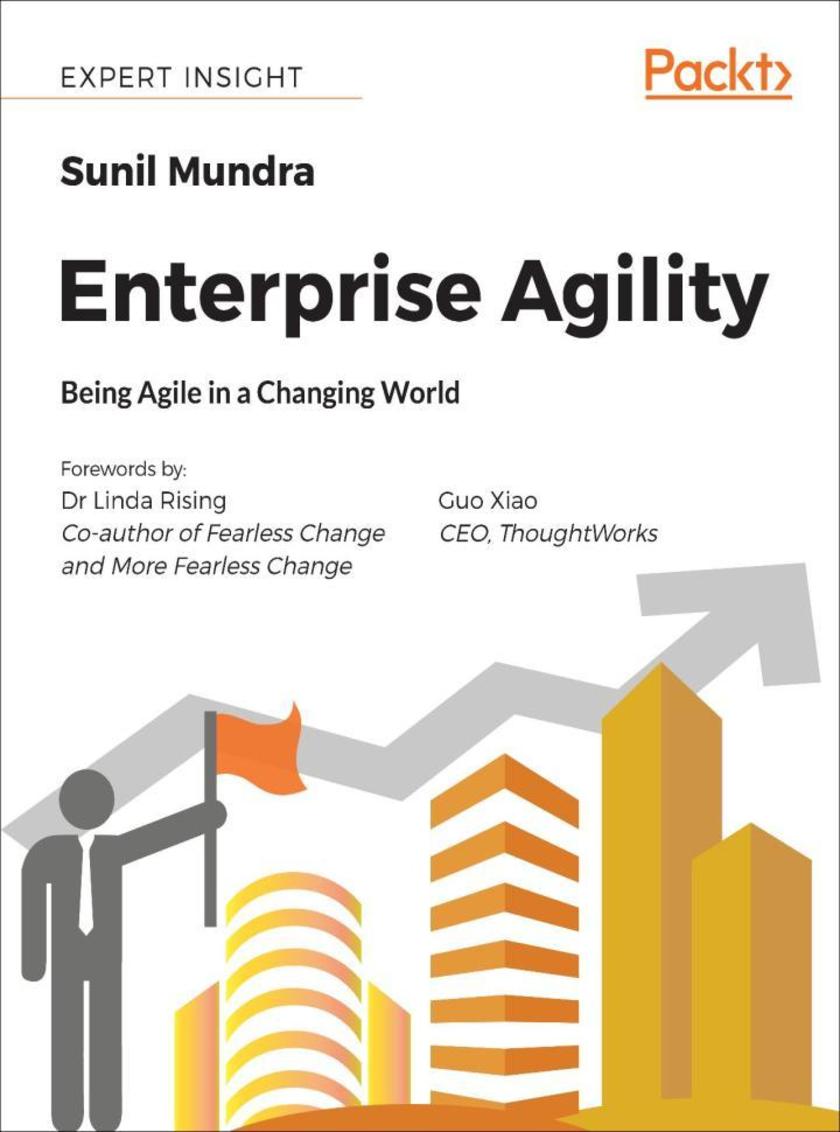
Enterprise Agility
¥63.21
Enterprise Agility is practical framework for enhancing Agility and equipping your company with the tools to survive. About This Book ? Prepare your company to navigate the rapidly-moving business world ? Enhance Agility in every component of your organization ? Build a framework that meets the unique requirements of your enterprise Who This Book Is For Enterprise Agility is a tool for anyone with the motivation to influence outcomes in an enterprise, who aspires to improve Agility. Readers from the following backgrounds will benefit: chief executive officer, chief information officer, people/human resource director, information technology director, head of change program, head of transformation, and Agile coach/consultant. What You Will Learn ? Drive agility-oriented change across the enterprise ? Understand why agility matters (more than ever) to modern enterprises ? Adopt and influence an Agile mindset in your teams and in your organization ? Understand the concept of a CAS and how to model enterprise and leadership behaviors on CAS characteristics to enhance enterprise agility ? Understand and convey the differences between Agile and true enterprise agility ? Create an enterprise-specific action plan to enhance agility ? Become a champion for enterprise agility ? Recognize the advantages and challenges of distributed teams, and how Agile ways of working can remedy the rough spots ? Enable and motivate your IT partners to adopt Agile ways of working In Detail The biggest challenge enterprises face today is dealing with fast-paced change in all spheres of business. Enterprise Agility shows how an enterprise can address this challenge head on and thrive in the dynamic environment. Avoiding the mechanistic construction of existing enterprises that focus on predictability and certainty, Enterprise Agility delivers practical advice for responding and adapting to the scale and accelerating pace of disruptive change in the business environment. Agility is a fundamental shift in thinking about how enterprises work to effectively deal with disruptive changes in the business environment. The core belief underlying agility is that enterprises are open and living systems. These living systems, also known as complex adaptive systems (CAS), are ideally suited to deal with change very effectively. Agility is to enterprises what health is to humans. There are some foundational principles that can be broadly applied, but the definition of healthy is very specific to each individual. Enterprise Agility takes a similar approach with regard to agility: it suggests foundational practices to improve the overall health of the body—culture, mindset, and leadership—and the health of its various organs: people, process, governance, structure, technology, and customers. The book also suggests a practical framework to create a plan to enhance agility. Style and approach Enterprise Agility is a step-by-step guide to facing change and uncertainty head-on. The books provides practical ways to apply Agile methodologies and boost Agility throughout a business.
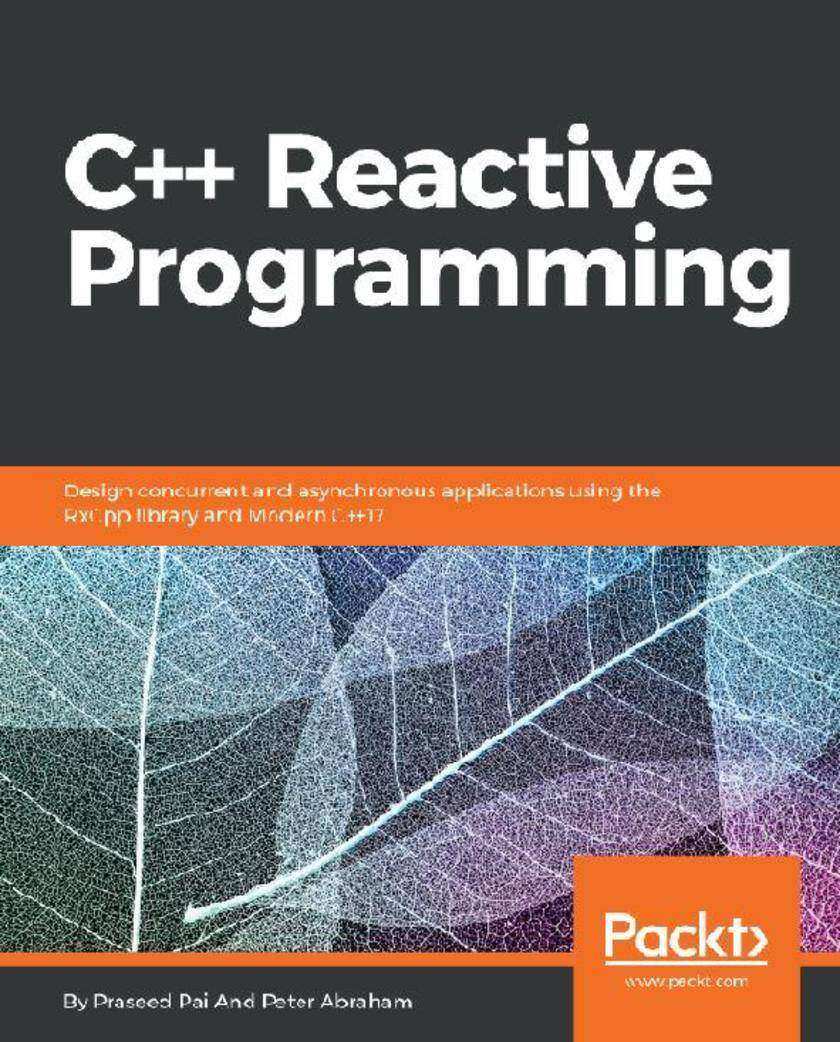
C++ Reactive Programming
¥81.74
Learn how to implement the reactive programming paradigm with C++ and build asynchronous and concurrent applications About This Book ? Efficiently exploit concurrency and parallelism in your programs ? Use the Functional Reactive programming model to structure programs ? Understand reactive GUI programming to make your own applications using Qt Who This Book Is For If you’re a C++ developer interested in using reactive programming to build asynchronous and concurrent applications, you’ll find this book extremely useful. This book doesn’t assume any previous knowledge of reactive programming. What You Will Learn ? Understand language-level concurrency in C++ ? Explore advanced C++ programming for the FRP ? Uncover the RxCpp library and its programming model ? Mix the FP and OOP constructs in C++ 17 to write well-structured programs ? Master reactive microservices in C++ ? Create custom operators for RxCpp ? Learn advanced stream processing and error handling In Detail Reactive programming is an effective way to build highly responsive applications with an easy-to-maintain code base. This book covers the essential functional reactive concepts that will help you build highly concurrent, event-driven, and asynchronous applications in a simpler and less error-prone way. C++ Reactive Programming begins with a discussion on how event processing was undertaken by different programming systems earlier. After a brisk introduction to modern C++ (C++17), you’ll be taken through language-level concurrency and the lock-free programming model to set the stage for our foray into the Functional Programming model. Following this, you’ll be introduced to RxCpp and its programming model. You’ll be able to gain deep insights into the RxCpp library, which facilitates reactive programming. You’ll learn how to deal with reactive programming using Qt/C++ (for the desktop) and C++ microservices for the Web. By the end of the book, you will be well versed with advanced reactive programming concepts in modern C++ (C++17). Style and approach The book includes real-world problems that you will solve with the reactive programming model. It highlights the way event processing has evolved in the programming world.
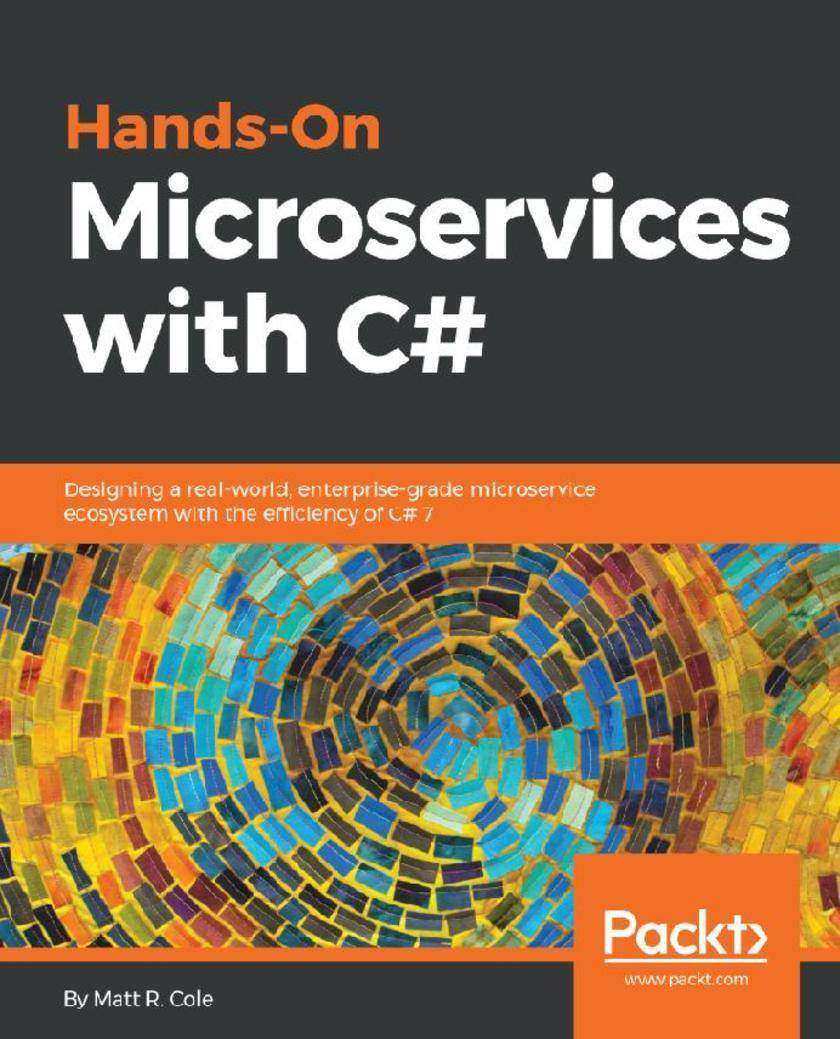
Hands-On Microservices with C#
¥81.74
Build enterprise-grade microservice ecosystems with intensive case studies using C# About This Book ? Learn to build message-based microservices ? Packed with case studies to explain the intricacies of large-scale microservices ? Build scalable, modular, and robust architectures with C# Who This Book Is For C# developers, software architects, and professionals who want to master the art of designing the microservice architecture that is scalable based on environment. Developers should have a basic understanding of.NET application development using C# and Visual Studio What You Will Learn ? Explore different open source tools within the context of designing microservices ? Learn to provide insulation to exception-prone function calls ? Build common messages used between microservices for communication ? Learn to create a microservice using our base class and interface ? Design a quantitative financial machine microservice ? Learn to design a microservice that is capable of using Blockchain technology In Detail C# is a powerful language when it comes to building applications and software architecture using rich libraries and tools such as .NET. This book will harness the strength of C# in developing microservices architectures and applications. This book shows developers how to develop an enterprise-grade, event-driven, asynchronous, message-based microservice framework using C#, .NET, and various open source tools. We will discuss how to send and receive messages, how to design many types of microservice that are truly usable in a corporate environment. We will also dissect each case and explain the code, best practices, pros and cons, and more. Through our journey, we will use many open source tools, and create file monitors, a machine learning microservice, a quantitative financial microservice that can handle bonds and credit default swaps, a deployment microservice to show you how to better manage your deployments, and memory, health status, and other microservices. By the end of this book, you will have a complete microservice ecosystem you can place into production or customize in no time. Style and approach A step-by-step guide that enables readers to create a complete microservice ecosystem they can place into production or customize in no time.
Learn Unity ML-Agents – Fundamentals of Unity Machine Learning
¥54.49
Transform games into environments using machine learning and Deep learning with Tensorflow, Keras, and Unity About This Book ? Learn how to apply core machine learning concepts to your games with Unity ? Learn the Fundamentals of Reinforcement Learning and Q-Learning and apply them to your games ? Learn How to build multiple asynchronous agents and run them in a training scenario Who This Book Is For This book is intended for developers with an interest in using Machine learning algorithms to develop better games and simulations with Unity. The reader will be required to have a working knowledge of C# and a basic understanding of Python. What You Will Learn ? Develop Reinforcement and Deep Reinforcement Learning for games. ? Understand complex and advanced concepts of reinforcement learning and neural networks ? Explore various training strategies for cooperative and competitive agent development ? Adapt the basic script components of Academy, Agent, and Brain to be used with Q Learning. ? Enhance the Q Learning model with improved training strategies such as Greedy-Epsilon exploration ? Implement a simple NN with Keras and use it as an external brain in Unity ? Understand how to add LTSM blocks to an existing DQN ? Build multiple asynchronous agents and run them in a training scenario In Detail Unity Machine Learning agents allow researchers and developers to create games and simulations using the Unity Editor, which serves as an environment where intelligent agents can be trained with machine learning methods through a simple-to-use Python API. This book takes you from the basics of Reinforcement and Q Learning to building Deep Recurrent Q-Network agents that cooperate or compete in a multi-agent ecosystem. You will start with the basics of Reinforcement Learning and how to apply it to problems. Then you will learn how to build self-learning advanced neural networks with Python and Keras/TensorFlow. From there you move o n to more advanced training scenarios where you will learn further innovative ways to train your network with A3C, imitation, and curriculum learning models. By the end of the book, you will have learned how to build more complex environments by building a cooperative and competitive multi-agent ecosystem. Style and approach This book focuses on the foundations of ML, RL and DL for building agents in a game or simulation
Developing Middleware in Java EE 8
¥81.74
Use Java features such as JAX-RS, EJBs, and JPAs to build powerful middleware for newer architectures such as the cloud About This Book ? Explore EJBs to build middleware solutions for enterprise and distributed applications ? Understand middleware designs such as event-based and message-driven web services ? Learn to design and maintain large-scale systems and vendor disputes Who This Book Is For Enterprise architects, designers, developers, and programmers who are interested in learning how to build robust middleware solutions for enterprise software will find this book useful. Prior knowledge of Java EE is essential What You Will Learn ? Implement the latest Java EE 8 APIs and manage dependencies with CDI 2.0 ? Perform CRUD operations and access databases with JPA 2.1 ? Use bean validation API 2.0 to validate data ? Develop business logic with EJB 3.2 ? Incorporate the REST architecture and RESTful API design patterns ? Perform serialization and deserialization on JSON documents using JSON-B ? Utilize JMS for messaging and queuing models and securing applications ? Test applications using JUnit and Mockito and deploy them using Docker In Detail Middleware is the infrastructure in software based applications that enables businesses to solve problems, operate more efficiently, and make money. As the use of middleware extends beyond a single application, the importance of having it written by experts increases substantially. This book will help you become an expert in developing middleware for a variety of applications. The book starts off by exploring the latest Java EE 8 APIs with newer features and managing dependencies with CDI 2.0. You will learn to implement object-to-relational mapping using JPA 2.1 and validate data using bean validation. You will also work with different types of EJB to develop business logic, and with design RESTful APIs by utilizing different HTTP methods and activating JAX-RS features in enterprise applications. You will learn to secure your middleware with Java Security 1.0 and implement various authentication techniques, such as OAuth authentication. In the concluding chapters, you will use various test technologies, such as JUnit and Mockito, to test applications, and Docker to deploy your enterprise applications. By the end of the book, you will be proficient in developing robust, effective, and distributed middleware for your business. Style and approach Learn how to design and implement professional enterprise middleware solutions using the latest techniques and features provided by the Java EE 8 platform.
Managing Mission - Critical Domains and DNS
¥81.74
This book will give you an all encompassing view of the domain name ecosystem combined with a comprehensive set of operations strategies. About This Book ? Manage infrastructure, risk, and management of DNS name servers. Get hands-on with factors like types of name servers, DNS queries and and so on. ? Practical guide for system administrators to manage mission-critical servers ? Based on real-world experience - Written by an industry veteran who has made every possible mistake within this field. Who This Book Is For Ideal for sysadmins, webmasters, IT consultants, and developers-anyone responsible for maintaining your organization's core DNS What You Will Learn ? Anatomy of a domain - how a domain is the sum of both its DNS zone and its registration data, and why that matters. ? The domain name ecosystem - the role of registries, registrars and oversight bodies and their effect on your names. ? How DNS queries work - queries and responses are examined including debugging techniques to zero in on problems. ? Nameserver considerations - alternative nameserver daemons, numbering considerations, and deployment architectures. ? DNS use cases - the right way for basic operations such as domain transfers, large scale migrations, GeoDNS, Anycast DNS. ? Securing your domains - All aspects of security from registrar vendor selection, to DNSSEC and DDOS mitigation strategies. In Detail Managing your organization's naming architecture and mitigating risks within complex naming environments is very important. This book will go beyond looking at “how to run a name server” or “how to DNSSEC sign a domain”, Managing Mission Critical Domains & DNS looks across the entire spectrum of naming; from external factors that exert influence on your domains to all the internal factors to consider when operating your DNS. The readers are taken on a comprehensive guided tour through the world of naming: from understanding the role of registrars and how they interact with registries, to what exactly is it that ICANN does anyway? Once the prerequisite knowledge of the domain name ecosystem is acquired, the readers are taken through all aspects of DNS operations. Whether your organization operates its own nameservers or utilizes an outsourced vendor, or both, we examine the complex web of interlocking factors that must be taken into account but are too frequently overlooked. By the end of this book, our readers will have an end to end to understanding of all the aspects covered in DNS name servers. Style and approach The book is divided into two parts, the first part looks at the wider domain name ecosystem: registries, registrars and oversight policies. The second and larger part goes into operations. Every aspect of naming is considered from the viewpoint of how this affects ones domains, what are the ramifications of different operating methods as portfolios scale.
Python GUI Programming with Tkinter
¥81.74
Find out how to create visually stunning and feature-rich applications by empowering Python's built-in Tkinter GUI toolkit About This Book ? Explore Tkinter's powerful features to easily design and customize your GUI application ? Learn the basics of 2D and 3D animation in GUI applications. ? Learn to integrate stunning Data Visualizations using Tkinter Canvas and Matplotlib. Who This Book Is For This book will appeal to developers and programmers who would like to build GUI-based applications. Knowledge of Python is a prerequisite. What You Will Learn ? Implement the tools provided by Tkinter to design beautiful GUIs ? Discover cross-platform development through minor customizations in your existing application ? Visualize graphs in real time as data comes in using Tkinter's animation capabilities ? Use PostgreSQL authentication to ensure data security for your application ? Write unit tests to avoid regressions when updating code In Detail Tkinter is a lightweight, portable, and easy-to-use graphical toolkit available in the Python Standard Library, widely used to build Python GUIs due to its simplicity and availability. This book teaches you to design and build graphical user interfaces that are functional, appealing, and user-friendly using the powerful combination of Python and Tkinter. After being introduced to Tkinter, you will be guided step-by-step through the application development process. Over the course of the book, your application will evolve from a simple data-entry form to a complex data management and visualization tool while maintaining a clean and robust design. In addition to building the GUI, you'll learn how to connect to external databases and network resources, test your code to avoid errors, and maximize performance using asynchronous programming. You'll make the most of Tkinter's cross-platform availability by learning how to maintain compatibility, mimic platform-native look and feel, and build executables for deployment across popular computing platforms. By the end of this book, you will have the skills and confidence to design and build powerful high-end GUI applications to solve real-world problems. Style and approach This is a comprehensive guide that explores the essential Tkinter features and modules and implements them in building real-world cross-platform GUI applications


