


 购物车
购物车 个人中心
个人中心
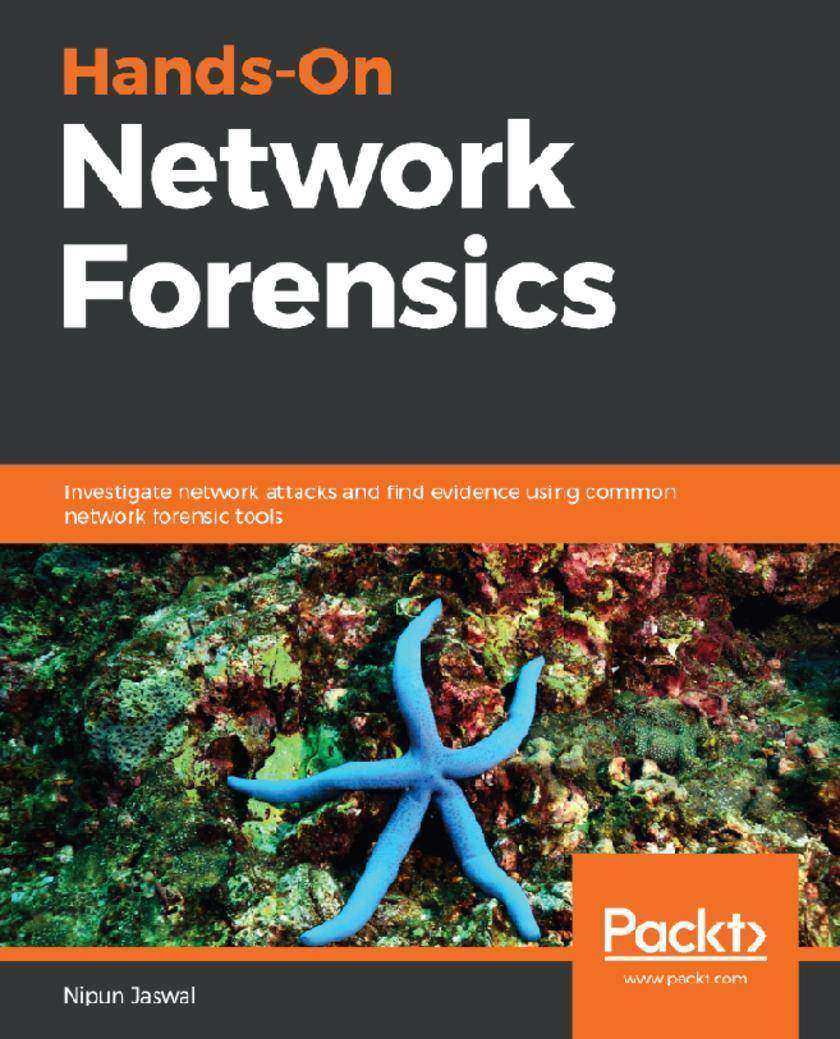
Hands-On Network Forensics
¥73.02
Gain basic skills in network forensics and learn how to apply them effectively Key Features * Investigate network threats with ease * Practice forensics tasks such as intrusion detection, network analysis, and scanning * Learn forensics investigation at the network level Book Description Network forensics is a subset of digital forensics that deals with network attacks and their investigation. In the era of network attacks and malware threat, it’s now more important than ever to have skills to investigate network attacks and vulnerabilities. Hands-On Network Forensics starts with the core concepts within network forensics, including coding, networking, forensics tools, and methodologies for forensic investigations. You’ll then explore the tools used for network forensics, followed by understanding how to apply those tools to a PCAP file and write the accompanying report. In addition to this, you will understand how statistical flow analysis, network enumeration, tunneling and encryption, and malware detection can be used to investigate your network. Towards the end of this book, you will discover how network correlation works and how to bring all the information from different types of network devices together. By the end of this book, you will have gained hands-on experience of performing forensics analysis tasks. What you will learn * Discover and interpret encrypted traffic * Learn about various protocols * Understand the malware language over wire * Gain insights into the most widely used malware * Correlate data collected from attacks * Develop tools and custom scripts for network forensics automation Who this book is for The book targets incident responders, network engineers, analysts, forensic engineers and network administrators who want to extend their knowledge from the surface to the deep levels of understanding the science behind network protocols, critical indicators in an incident and conducting a forensic search over the wire.
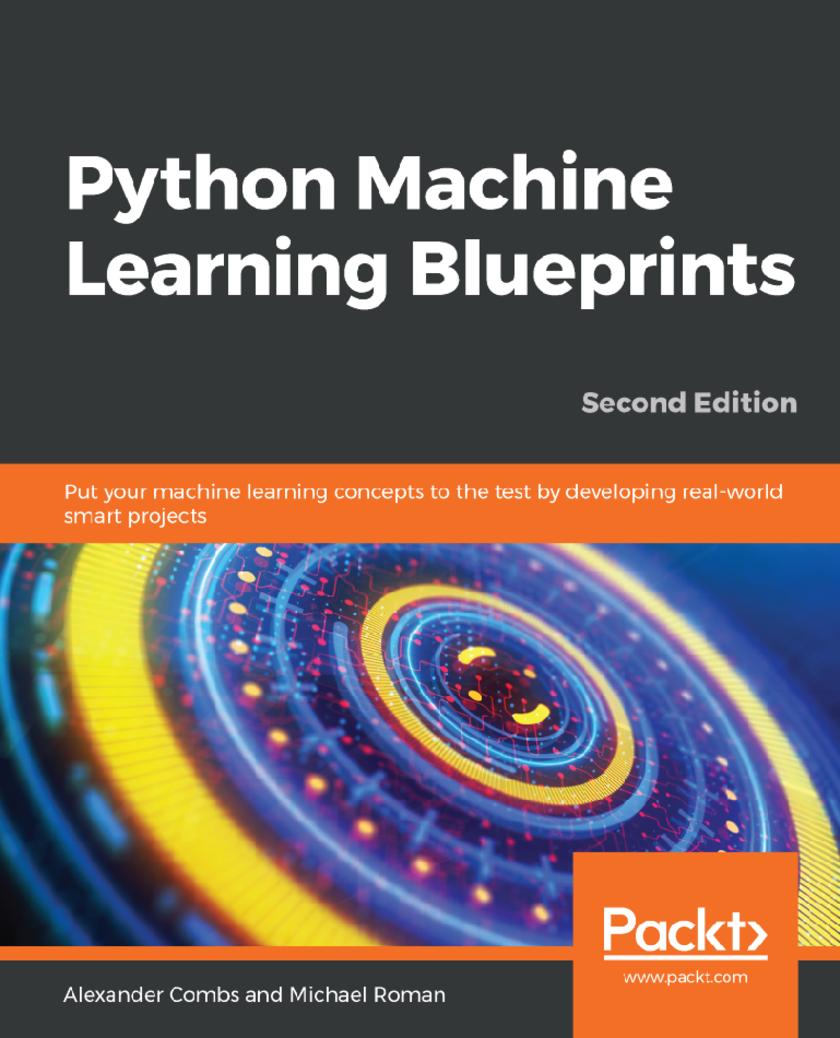
Python Machine Learning Blueprints
¥81.74
Discover a project-based approach to mastering machine learning concepts by applying them to everyday problems using libraries such as scikit-learn, TensorFlow, and Keras Key Features * Get to grips with Python's machine learning libraries including scikit-learn, TensorFlow, and Keras * Implement advanced concepts and popular machine learning algorithms in real-world projects * Build analytics, computer vision, and neural network projects Book Description Machine learning is transforming the way we understand and interact with the world around us. This book is the perfect guide for you to put your knowledge and skills into practice and use the Python ecosystem to cover key domains in machine learning. This second edition covers a range of libraries from the Python ecosystem, including TensorFlow and Keras, to help you implement real-world machine learning projects. The book begins by giving you an overview of machine learning with Python. With the help of complex datasets and optimized techniques, you’ll go on to understand how to apply advanced concepts and popular machine learning algorithms to real-world projects. Next, you’ll cover projects from domains such as predictive analytics to analyze the stock market and recommendation systems for GitHub repositories. In addition to this, you’ll also work on projects from the NLP domain to create a custom news feed using frameworks such as scikit-learn, TensorFlow, and Keras. Following this, you’ll learn how to build an advanced chatbot, and scale things up using PySpark. In the concluding chapters, you can look forward to exciting insights into deep learning and you'll even create an application using computer vision and neural networks. By the end of this book, you’ll be able to analyze data seamlessly and make a powerful impact through your projects. What you will learn * Understand the Python data science stack and commonly used algorithms * Build a model to forecast the performance of an Initial Public Offering (IPO) over an initial discrete trading window * Understand NLP concepts by creating a custom news feed * Create applications that will recommend GitHub repositories based on ones you’ve starred, watched, or forked * Gain the skills to build a chatbot from scratch using PySpark * Develop a market-prediction app using stock data * Delve into advanced concepts such as computer vision, neural networks, and deep learning Who this book is for This book is for machine learning practitioners, data scientists, and deep learning enthusiasts who want to take their machine learning skills to the next level by building real-world projects. The intermediate-level guide will help you to implement libraries from the Python ecosystem to build a variety of projects addressing various machine learning domains. Knowledge of Python programming and machine learning concepts will be helpful.
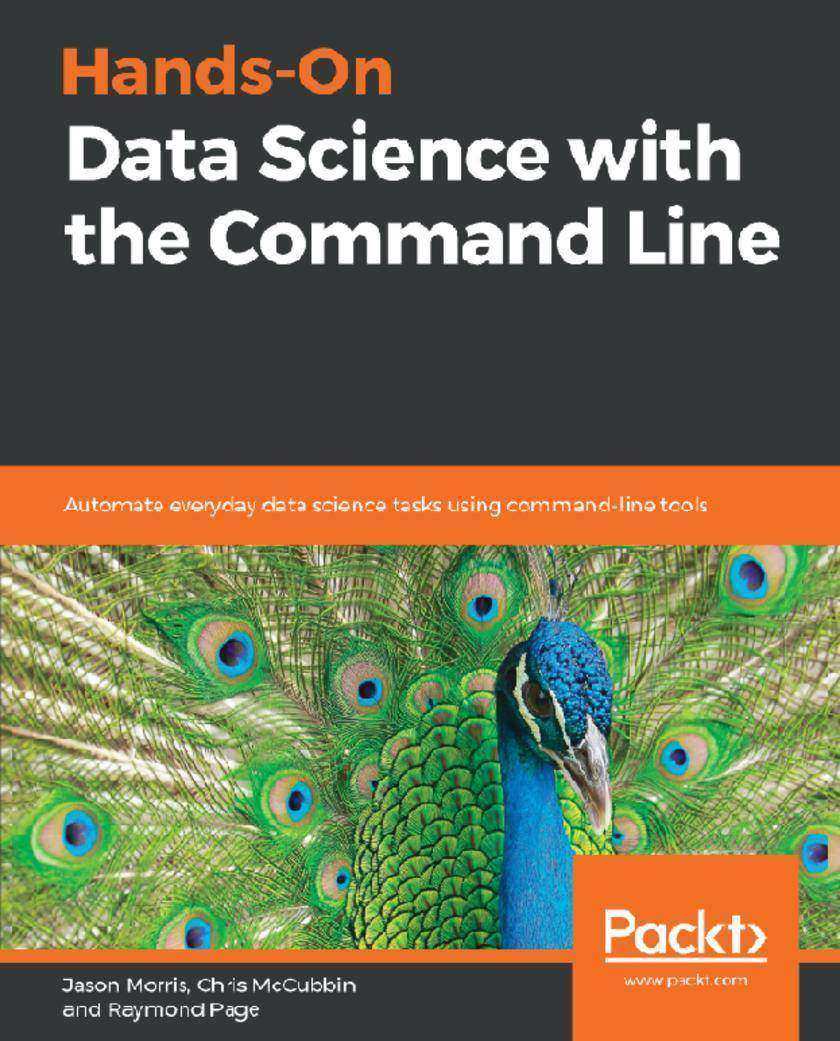
Hands-On Data Science with the Command Line
¥54.49
Big data processing and analytics at speed and scale using command line tools. Key Features * Perform string processing, numerical computations, and more using CLI tools * Understand the essential components of data science development workflow * Automate data pipeline scripts and visualization with the command line Book Description The Command Line has been in existence on UNIX-based OSes in the form of Bash shell for over 3 decades. However, very little is known to developers as to how command-line tools can be OSEMN (pronounced as awesome and standing for Obtaining, Scrubbing, Exploring, Modeling, and iNterpreting data) for carrying out simple-to-advanced data science tasks at speed. This book will start with the requisite concepts and installation steps for carrying out data science tasks using the command line. You will learn to create a data pipeline to solve the problem of working with small-to medium-sized files on a single machine. You will understand the power of the command line, learn how to edit files using a text-based and an. You will not only learn how to automate jobs and scripts, but also learn how to visualize data using the command line. By the end of this book, you will learn how to speed up the process and perform automated tasks using command-line tools. What you will learn * Understand how to set up the command line for data science * Use AWK programming language commands to search quickly in large datasets. * Work with files and APIs using the command line * Share and collect data with CLI tools * Perform visualization with commands and functions * Uncover machine-level programming practices with a modern approach to data science Who this book is for This book is for data scientists and data analysts with little to no knowledge of the command line but has an understanding of data science. Perform everyday data science tasks using the power of command line tools.
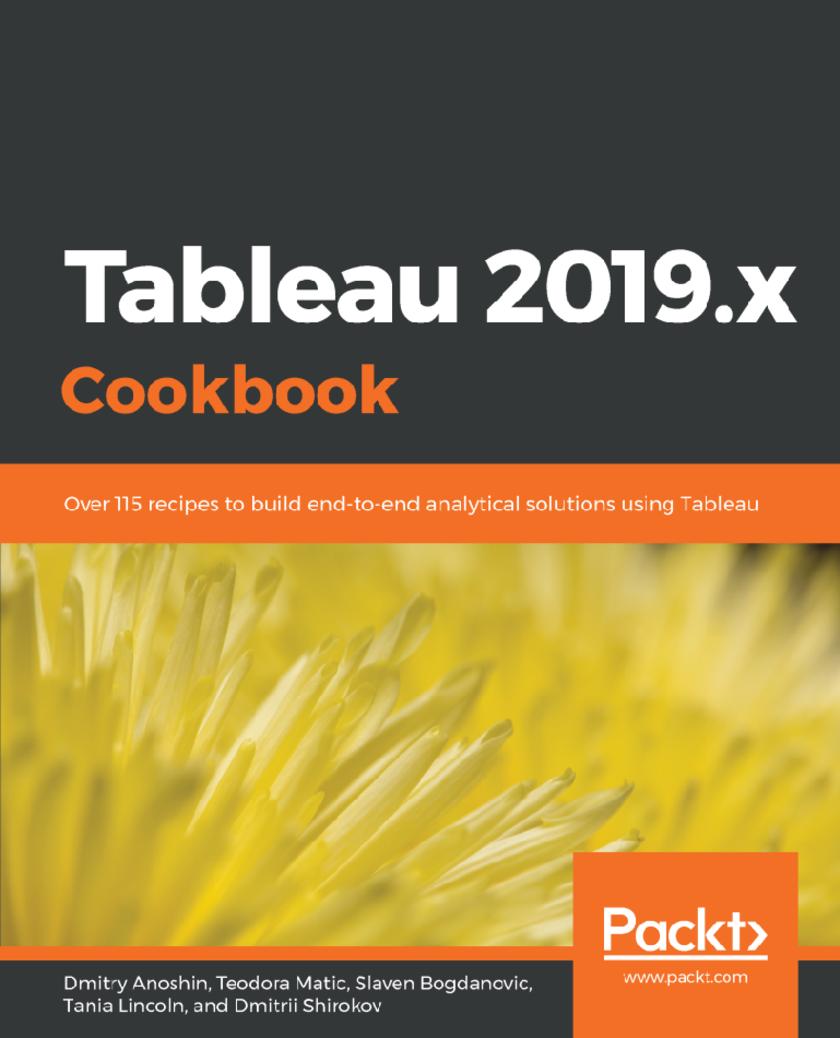
Tableau 2019.x Cookbook
¥90.46
Perform advanced dashboard, visualization, and analytical techniques with Tableau Desktop, Tableau Prep, and Tableau Server Key Features * Unique problem-solution approach to aid effective business decision-making * Create interactive dashboards and implement powerful business intelligence solutions * Includes best practices on using Tableau with modern cloud analytics services Book Description Tableau has been one of the most popular business intelligence solutions in recent times, thanks to its powerful and interactive data visualization capabilities. Tableau 2019.x Cookbook is full of useful recipes from industry experts, who will help you master Tableau skills and learn each aspect of Tableau's ecosystem. This book is enriched with features such as Tableau extracts, Tableau advanced calculations, geospatial analysis, and building dashboards. It will guide you with exciting data manipulation, storytelling, advanced filtering, expert visualization, and forecasting techniques using real-world examples. From basic functionalities of Tableau to complex deployment on Linux, you will cover it all. Moreover, you will learn advanced features of Tableau using R, Python, and various APIs. You will learn how to prepare data for analysis using the latest Tableau Prep. In the concluding chapters, you will learn how Tableau fits the modern world of analytics and works with modern data platforms such as Snowflake and Redshift. In addition, you will learn about the best practices of integrating Tableau with ETL using Matillion ETL. By the end of the book, you will be ready to tackle business intelligence challenges using Tableau's features. What you will learn * Understand the basic and advanced skills of Tableau Desktop * Implement best practices of visualization, dashboard, and storytelling * Learn advanced analytics with the use of build in statistics * Deploy the multi-node server on Linux and Windows * Use Tableau with big data sources such as Hadoop, Athena, and Spectrum * Cover Tableau built-in functions for forecasting using R packages * Combine, shape, and clean data for analysis using Tableau Prep * Extend Tableau’s functionalities with REST API and R/Python Who this book is for Tableau 2019.x Cookbook is for data analysts, data engineers, BI developers, and users who are looking for quick solutions to common and not-so-common problems faced while using Tableau products. Put each recipe into practice by bringing the latest offerings of Tableau 2019.x to solve real-world analytics and business intelligence challenges. Some understanding of BI concepts and Tableau is required.
Hands-On Object-Oriented Programming with C#
¥73.02
Enhance your programming skills by learning the intricacies of object oriented programming in C# 8 Key Features * Understand the four pillars of OOP; encapsulation, inheritance, abstraction and polymorphism * Leverage the latest features of C# 8 including nullable reference types and Async Streams * Explore various design patterns, principles, and best practices in OOP Book Description Object-oriented programming (OOP) is a programming paradigm organized around objects rather than actions, and data rather than logic. With the latest release of C#, you can look forward to new additions that improve object-oriented programming. This book will get you up to speed with OOP in C# in an engaging and interactive way. The book starts off by introducing you to C# language essentials and explaining OOP concepts through simple programs. You will then go on to learn how to use classes, interfacesm and properties to write pure OOP code in your applications. You will broaden your understanding of OOP further as you delve into some of the advanced features of the language, such as using events, delegates, and generics. Next, you will learn the secrets of writing good code by following design patterns and design principles. You'll also understand problem statements with their solutions and learn how to work with databases with the help of ADO.NET. Further on, you'll discover a chapter dedicated to the Git version control system. As you approach the conclusion, you'll be able to work through OOP-specific interview questions and understand how to tackle them. By the end of this book, you will have a good understanding of OOP with C# and be able to take your skills to the next level. What you will learn * Master OOP paradigm fundamentals * Explore various types of exceptions * Utilize C# language constructs efficiently * Solve complex design problems by understanding OOP * Understand how to work with databases using ADO.NET * Understand the power of generics in C# * Get insights into the popular version control system, Git * Learn how to model and design your software Who this book is for This book is designed for people who are new to object-oriented programming. Basic C# skills are assumed, however, prior knowledge of OOP in any other language is not required.
ReasonML Quick Start Guide
¥54.49
A hands on approach to learning ReasonML from the perspective of a web developer. Key Features * Hands on learning by building a real world app shell that includes client-side routing and more. * Understand Reason’s ecosystem including BuckleScript and various npm workflows. * Learn how Reason differs from TypeScript and Flow, and how to use it to make refactoring less stressful. Book Description ReasonML, also known as Reason, is a new syntax and toolchain for OCaml that was created by Facebook and is meant to be approachable for web developers. Although OCaml has several resources, most of them are from the perspective of systems development. This book, alternatively, explores Reason from the perspective of web development. You'll learn how to use Reason to build safer, simpler React applications and why you would want to do so. Reason supports immutability by default, which works quite well in the context of React. In learning Reason, you will also learn about its ecosystem – BuckleScript, JavaScript interoperability, and various npm workflows. We learn by building a real-world app shell, including a client-side router with page transitions, that we can customize for any Reason project. You'll learn how to leverage OCaml's excellent type system to enforce guarantees about business logic, as well as preventing runtime type errors.You'll also see how the type system can help offload concerns that we once had to keep in our heads. We'll explore using CSS-in-Reason, how to use external JSON in Reason, and how to unit-test critical business logic. By the end of the book, you'll understand why Reason is exploding in popularity and will have a solid foundation on which to continue your journey with Reason. What you will learn * Learn why Reason is exploding in popularity and why it's the future of React * Become familiar with Reason's syntax and semantics * Learn about Reason's ecosystem: BuckleScript and JavaScript interoperability * Learn how to build React applications with Reason * Learn how to use Reason's type system as a tool to provide amazing guarantees * Gain a solid foundation on which to continue your journey Who this book is for The target audience of this book is web developers who are somewhat familiar with ReactJS and who want to learn why ReasonML is the future of ReactJS.
Hands-On Application Penetration Testing with Burp Suite
¥81.74
Test, fuzz, and break web applications and services using Burp Suite’s powerful capabilities Key Features * Master the skills to perform various types of security tests on your web applications * Get hands-on experience working with components like scanner, proxy, intruder and much more * Discover the best-way to penetrate and test web applications Book Description Burp suite is a set of graphic tools focused towards penetration testing of web applications. Burp suite is widely used for web penetration testing by many security professionals for performing different web-level security tasks. The book starts by setting up the environment to begin an application penetration test. You will be able to configure the client and apply target whitelisting. You will also learn to setup and configure Android and IOS devices to work with Burp Suite. The book will explain how various features of Burp Suite can be used to detect various vulnerabilities as part of an application penetration test. Once detection is completed and the vulnerability is confirmed, you will be able to exploit a detected vulnerability using Burp Suite. The book will also covers advanced concepts like writing extensions and macros for Burp suite. Finally, you will discover various steps that are taken to identify the target, discover weaknesses in the authentication mechanism, and finally break the authentication implementation to gain access to the administrative console of the application. By the end of this book, you will be able to effectively perform end-to-end penetration testing with Burp Suite. What you will learn * Set up Burp Suite and its configurations for an application penetration test * Proxy application traffic from browsers and mobile devices to the server * Discover and identify application security issues in various scenarios * Exploit discovered vulnerabilities to execute commands * Exploit discovered vulnerabilities to gain access to data in various datastores * Write your own Burp Suite plugin and explore the Infiltrator module * Write macros to automate tasks in Burp Suite Who this book is for If you are interested in learning how to test web applications and the web part of mobile applications using Burp, then this is the book for you. It is specifically designed to meet your needs if you have basic experience in using Burp and are now aiming to become a professional Burp user.
Blockchain Development with Hyperledger
¥90.46
Learn quick and effective techniques for developing blockchain-based distributed ledgers with ease Key Features * Discover why blockchain is a game changer in the technology landscape * Set up blockchain networks using Hyperledger Fabric * Write smart contracts at speed with Hyperledger Composer Book Description Blockchain and Hyperledger are open source technologies that power the development of decentralized applications. This Learning Path is your helpful reference for exploring and building blockchain networks using Ethereum, Hyperledger Fabric, and Hyperledger Composer. Blockchain Development with Hyperledger will start off by giving you an overview of blockchain and demonstrating how you can set up an Ethereum development environment for developing, packaging, building, and testing campaign-decentralized applications. You'll then explore the de facto language Solidity, which you can use to develop decentralized applications in Ethereum. Following this, you'll be able to configure Hyperledger Fabric and use it to build private blockchain networks and applications that connect to them. Toward the later chapters, you'll learn how to design and launch a network, and even implement smart contracts in chain code. By the end of this Learning Path, you'll be able to build and deploy your own decentralized applications by addressing the key pain points encountered in the blockchain life cycle. This Learning Path includes content from the following Packt products: * Blockchain Quick Start Guide by Xun (Brian) Wu and Weimin Sun * Hands-On Blockchain with Hyperledger by Nitin Gaur et al. What you will learn * Understand why decentralized applications are necessary * Develop and test a decentralized application with Hyperledger Fabric and Hyperledger Composer * Write and test a smart contract using Solidity * Design transaction models and chain code with Golang * Deploy the Composer REpresentational State Transfer (REST) Gateway to access Composer transactions * Maintain, monitor, and manage your blockchain solutions Who this book is for This Learning Path is designed for blockchain developers who want to build decentralized applications and smart contracts from scratch using Hyperledger. Basic familiarity with or exposure to any programming language will be useful to get started with this course.
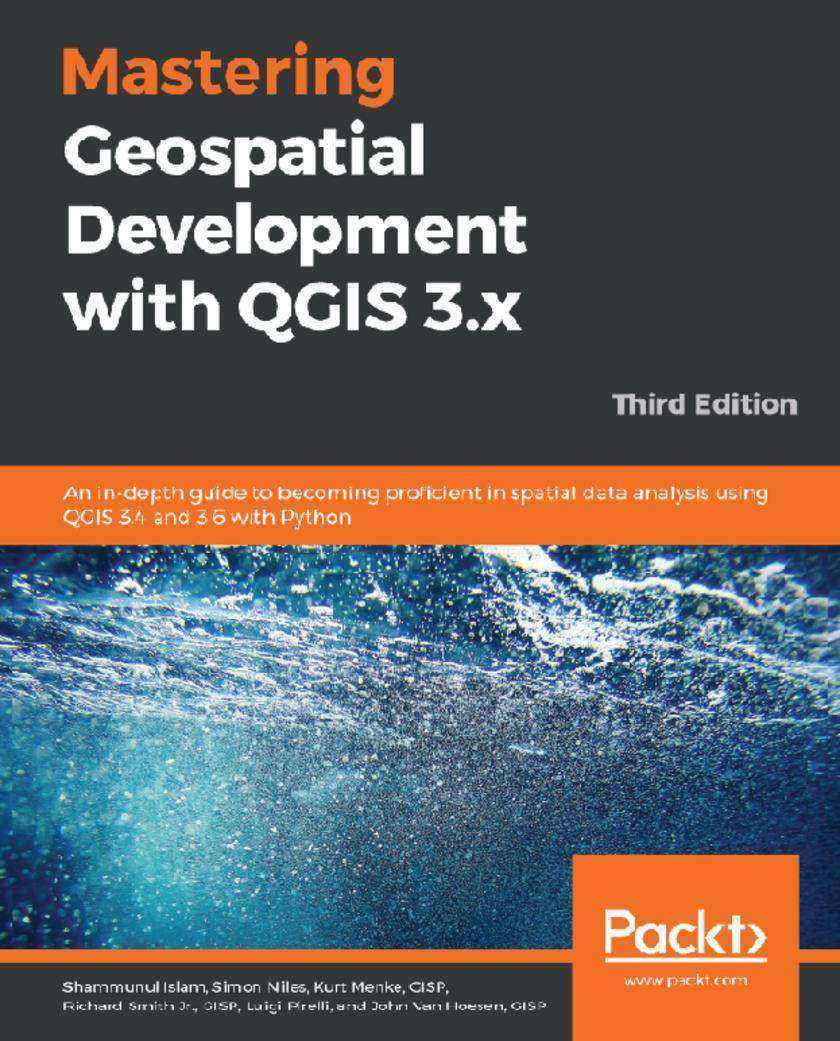
Mastering Geospatial Development with QGIS 3.x
¥73.02
Go beyond the basics and unleash the full power of QGIS 3.4 and 3.6 with practical, step-by-step examples Key Features * One-stop solution to all of your GIS needs * Master QGIS by learning about database integration, and geoprocessing tools * Learn about the new and updated Processing toolbox and perform spatial analysis Book Description QGIS is an open source solution to GIS and widely used by GIS professionals all over the world. It is the leading alternative to proprietary GIS software. Although QGIS is described as intuitive, it is also, by default, complex. Knowing which tools to use and how to apply them is essential to producing valuable deliverables on time. Starting with a refresher on the QGIS basics and getting you acquainted with the latest QGIS 3.6 updates, this book will take you all the way through to teaching you how to create a spatial database and a GeoPackage. Next, you will learn how to style raster and vector data by choosing and managing different colors. The book will then focus on processing raster and vector data. You will be then taught advanced applications, such as creating and editing vector data. Along with that, you will also learn about the newly updated Processing Toolbox, which will help you develop the advanced data visualizations. The book will then explain to you the graphic modeler, how to create QGIS plugins with PyQGIS, and how to integrate Python analysis scripts with QGIS. By the end of the book, you will understand how to work with all aspects of QGIS and will be ready to use it for any type of GIS work. What you will learn * Create and manage a spatial database * Get to know advanced techniques to style GIS data * Prepare both vector and raster data for processing * Add heat maps, live layer effects, and labels to your maps * Master LAStools and GRASS integration with the Processing Toolbox * Edit and repair topological data errors * Automate workflows with batch processing and the QGIS Graphical Modeler * Integrate Python scripting into your data processing workflows * Develop your own QGIS plugins Who this book is for If you are a GIS professional, a consultant, a student, or perhaps a fast learner who wants to go beyond the basics of QGIS, then this book is for you. It will prepare you to realize the full potential of QGIS.

16 conferin?e despre traum?
¥81.67
Mivel az informatika egyre inkább átsz?vi életünket, a szoftverek min?ségével kapcsolatos elvárások egyre magasabbak. Egy szoftver el?állítása azonban nem csak programozásból áll, és a programozóktól sem lehet elvárni emberfeletti képességeket, a megrendel? el nem mondott elképzelésének t?kéletesen megfelel?, teljesen hibamentes munkát, mivel csak az nem hibázik, aki nem is dolgozik. Az informatika világában a szoftvertesztel?k azok, akik a szoftverek min?ségéért dolgoznak. A szoftvertesztel?k?n óriási felel?sség nyugszik és folyamatosan elvárások kereszttüzében kell helytállniuk. Mégis, szoftvertesztelés nélkül a legt?bb szoftver el sem jutna a felhasználókig, vagy ha igen, akkor megjelenésük botrányokkal, valamint óriási anyagi és erk?lcsi veszteségekkel járna együtt, a rengeteg fel nem tárt programhiba miatt. Szoftvertesztelésre és tesztel?kre ezért mindenképp szükség van. K?nyvünk a professzionális szoftvertesztelés alapjaival ismerteti meg az olvasót, számos gyakorlati példával f?szerezve, mell?zve a száraz, pusztán technikai megk?zelítés? leírásokat, kezdve a szoftvertesztelés általános bemutatásától, a fogalmak ismertetését?l, majd részleteiben tárgyalva a szoftvertesztelést és annak helyét a fejlesztési folyamatokban. Segítségével jó adag gyakorlati ismerettel vértezhetjük fel magunkat, melynek során valódi, a tesztelést támogató alkalmazásokat ismerhetünk meg, biztos alapot nyújtva a szoftvertesztelésben elhelyezked? leend? és gyakorló szakembereknek a mindennapi munkájukhoz. A szoftverteszteléssel most ismerked? szakembereknek és laikusoknak kimondottan hasznos lehet ez a k?nyv, de fejleszt?k és cégvezet?k számára is tartogat hasznos információkat, melyek segítségével bevezethetik, illetve hatékonyabbá tehetik a szoftvertesztelést munkájuk során.

A h?séges férfi?: Boldogságnovellák
¥50.36
Ha kíváncsi az olyan témákra, mint például hogy miként lehet felt?rni egy jelszót, vagy egy webhelyet, esetleg hogyan lehet lehallgatni bárki kommunikációját egy nyílt wifi hálózaton, akkor ez a k?nyv ?nnek szól. Sokan azt hiszik, hogy ezek ?rd?ng?s dolgok, pedig egyáltalán nem azok. ?ppen ezért fontos, hogy védekezni is kell ellenük, ami szintén nem bonyolult, csak egy kis odafigyelésre van szükség. K?nyvünk mindkét oldalt megmutatja, elrettentésképpen a lehet?ségeket, okulásként a védekezési módokat. Ha ?n azt hiszi, hogy biztonságban van, hiszen nem csinál semmi illegálisat és még vírusirtó is van a gépén, akkor nagyon téved! Teljesk?r? védelem ugyanis nem létezik! Ha elolvassa ezt a k?nyvet, meg fog d?bbenni, hogy milyen sok támadási lehet?ség van adataink ellen. A k?nyv, azon túl, hogy ismerteti, mit jelentenek az információbiztonsági szakkifejezések olyan témákkal foglalkozik, mint hogy milyen eszk?z?k támadhatók és hogyan, hogyan dolgozik egy hacker, mekkora kockázatot jelent az emberi tényez? (social engineering), stb. Kitér a jelszavak biztonságára, a kül?nféle hackeléshez használható programok és azok kezelésére, a billenty?zetnaplózási lehet?ségekre, a hálózatok és weboldalak támadására és felt?résére, az online bankolási kockázatokra, a titkosítási módszerekre, illetve hogy mit érdemes tenni a biztonságos adattárolás érdekében.Természetesen senkit sem akarunk illegális tevékenységre buzdítani, célunk sokkal inkább azt megmutatni, hogy mekkora veszélynek vagyunk kitéve, ezáltal a támadási és védekezési lehet?ségek bemutatásával ?szt?n?zzük az embereket a biztonságosabb számítógéphasználatra.
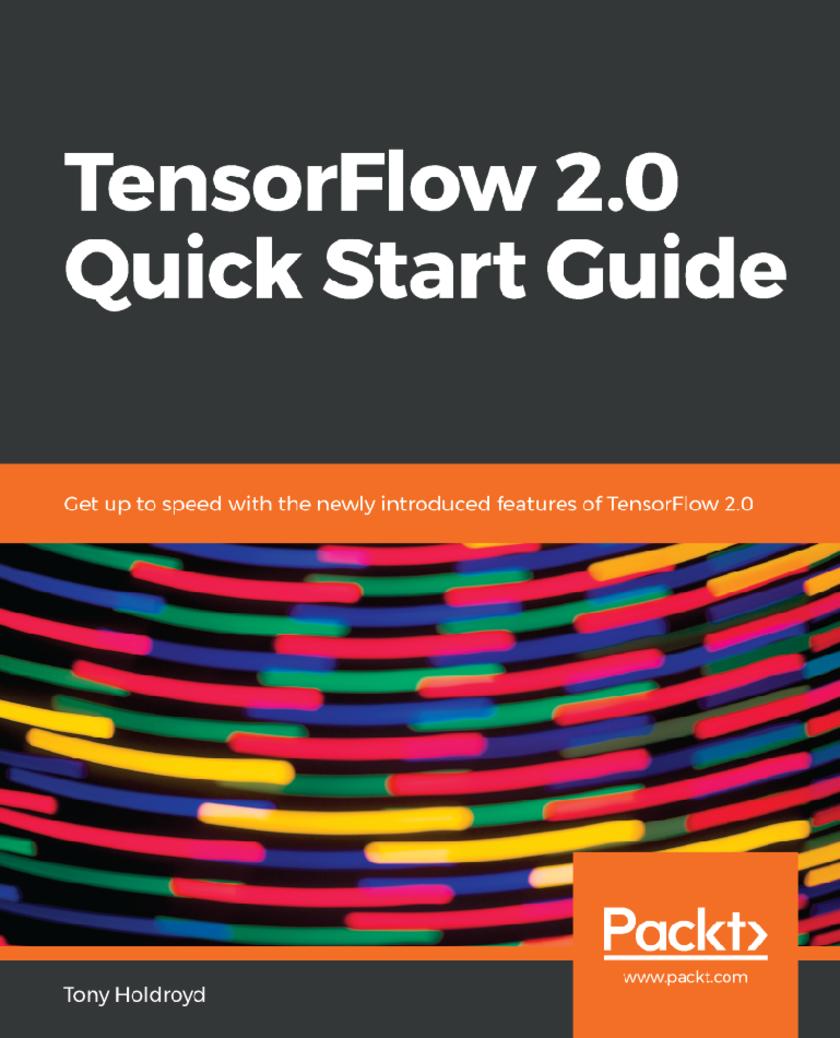
TensorFlow 2.0 Quick Start Guide
¥54.49
Perform supervised and unsupervised machine learning and learn advanced techniques such as training neural networks. Key Features * Train your own models for effective prediction, using high-level Keras API * Perform supervised and unsupervised machine learning and learn advanced techniques such as training neural networks * Get acquainted with some new practices introduced in TensorFlow 2.0 Alpha Book Description TensorFlow is one of the most popular machine learning frameworks in Python. With this book, you will improve your knowledge of some of the latest TensorFlow features and will be able to perform supervised and unsupervised machine learning and also train neural networks. After giving you an overview of what's new in TensorFlow 2.0 Alpha, the book moves on to setting up your machine learning environment using the TensorFlow library. You will perform popular supervised machine learning tasks using techniques such as linear regression, logistic regression, and clustering. You will get familiar with unsupervised learning for autoencoder applications. The book will also show you how to train effective neural networks using straightforward examples in a variety of different domains. By the end of the book, you will have been exposed to a large variety of machine learning and neural network TensorFlow techniques. What you will learn * Use tf.Keras for fast prototyping, building, and training deep learning neural network models * Easily convert your TensorFlow 1.12 applications to TensorFlow 2.0-compatible files * Use TensorFlow to tackle traditional supervised and unsupervised machine learning applications * Understand image recognition techniques using TensorFlow * Perform neural style transfer for image hybridization using a neural network * Code a recurrent neural network in TensorFlow to perform text-style generation Who this book is for Data scientists, machine learning developers, and deep learning enthusiasts looking to quickly get started with TensorFlow 2 will find this book useful. Some Python programming experience with version 3.6 or later, along with a familiarity with Jupyter notebooks will be an added advantage. Exposure to machine learning and neural network techniques would also be helpful.
Mastering Python for Finance
¥70.84
Take your financial skills to the next level by mastering cutting-edge mathematical and statistical financial applications Key Features * Explore advanced financial models used by the industry and ways of solving them using Python * Build state-of-the-art infrastructure for modeling, visualization, trading, and more * Empower your financial applications by applying machine learning and deep learning Book Description The second edition of Mastering Python for Finance will guide you through carrying out complex financial calculations practiced in the industry of finance by using next-generation methodologies. You will master the Python ecosystem by leveraging publicly available tools to successfully perform research studies and modeling, and learn to manage risks with the help of advanced examples. You will start by setting up your Jupyter notebook to implement the tasks throughout the book. You will learn to make efficient and powerful data-driven financial decisions using popular libraries such as TensorFlow, Keras, Numpy, SciPy, and sklearn. You will also learn how to build financial applications by mastering concepts such as stocks, options, interest rates and their derivatives, and risk analytics using computational methods. With these foundations, you will learn to apply statistical analysis to time series data, and understand how time series data is useful for implementing an event-driven backtesting system and for working with high-frequency data in building an algorithmic trading platform. Finally, you will explore machine learning and deep learning techniques that are applied in finance. By the end of this book, you will be able to apply Python to different paradigms in the financial industry and perform efficient data analysis. What you will learn * Solve linear and nonlinear models representing various financial problems * Perform principal component analysis on the DOW index and its components * Analyze, predict, and forecast stationary and non-stationary time series processes * Create an event-driven backtesting tool and measure your strategies * Build a high-frequency algorithmic trading platform with Python * Replicate the CBOT VIX index with SPX options for studying VIX-based strategies * Perform regression-based and classification-based machine learning tasks for prediction * Use TensorFlow and Keras in deep learning neural network architecture Who this book is for If you are a financial or data analyst or a software developer in the financial industry who is interested in using advanced Python techniques for quantitative methods in finance, this is the book you need! You will also find this book useful if you want to extend the functionalities of your existing financial applications by using smart machine learning techniques. Prior experience in Python is required.
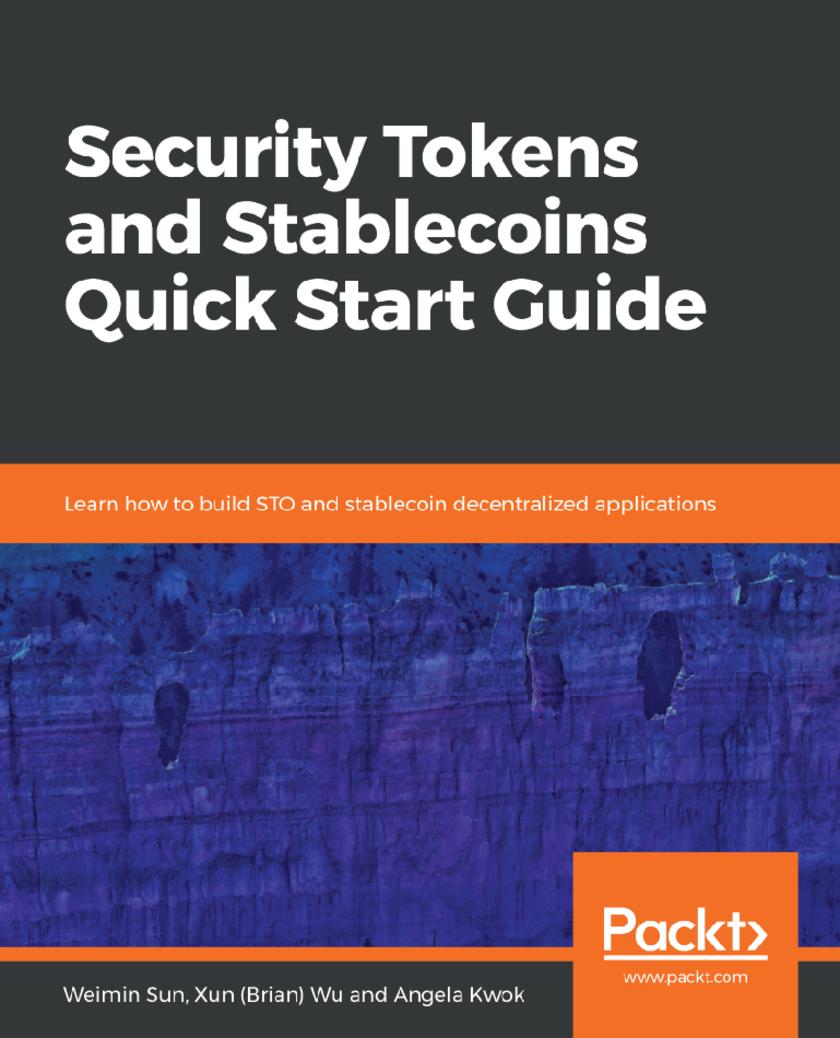
Security Tokens and Stablecoins Quick Start Guide
¥53.40
A complete guide to understanding, developing, and testing popular security-token smart contracts Key Features * Understand key Blockchain and Ethereum platforms concepts * Step-by-step guide to developing STO smart contracts on Ethereum * Monetize digital tokens under various U.S. securities laws Book Description The failure of initial coin offerings (ICOs) is no accident, as most ICOs do not link to a real asset and are not regulated. Realizing the shortcomings of ICOs, the blockchain community and potential investors embraced security token offerings (STOs) and stablecoins enthusiastically. In this book, we start with an overview of the blockchain technology along with its basic concepts. We introduce the concept behind STO, and cover the basic requirements for launching a STO and the relevant regulations governing its issuance. We discuss U.S. securities laws development in launching security digital tokens using blockchain technology and show some real use cases. We also explore the process of STO launches and legal considerations. We introduce popular security tokens in the current blockchain space and talk about how to develop a security token DApp, including smart contract development for ERC1404 tokens. Later, you'll learn to build frontend side functionalities to interact with smart contracts. Finally, we discuss stablecoin technical design functionalities for issuing and operating STO tokens by interacting with Ethereum smart contracts. By the end of this book, you will have learned more about STOs and gained a detailed knowledge of building relevant applications—all with the help of practical examples. What you will learn * Understand the basic requirements for launching a security token offering * Explore various US securities laws governing the offering of security digital tokens * Get to grips with the stablecoin concept with the help of use cases * Learn how to develop security token decentralized applications * Understand the difference between ERC-20 and ERC-721 tokens * Learn how to set up a development environment and build security tokens * Explore the technical design of stablecoins Who this book is for This book is ideal for blockchain beginners and business user developers who want to quickly master popular Security Token Offerings and stablecoins. Readers will learn how to develop blockchain/digital cryptos, guided by U.S. securities laws and utilizing some real use cases. Prior exposure to an Object-Oriented Programming language such as JavaScript would be an advantage, but is not mandatory.
Kibana 7 Quick Start Guide
¥54.49
A quick start guide to visualize your Elasticsearch data Key Features * Your hands-on guide to visualizing the Elasticsearch data as well as navigating the Elastic stack * Work with different Kibana plugins and create effective machine learning jobs using Kibana * Build effective dashboards and reports without any hassle Book Description The Elastic Stack is growing rapidly and, day by day, additional tools are being added to make it more effective. This book endeavors to explain all the important aspects of Kibana, which is essential for utilizing its full potential. This book covers the core concepts of Kibana, with chapters set out in a coherent manner so that readers can advance their learning in a step-by-step manner. The focus is on a practical approach, thereby enabling the reader to apply those examples in real time for a better understanding of the concepts and to provide them with the correct skills in relation to the tool. With its succinct explanations, it is quite easy for a reader to use this book as a reference guide for learning basic to advanced implementations of Kibana. The practical examples, such as the creation of Kibana dashboards from CSV data, application RDBMS data, system metrics data, log file data, APM agents, and search results, can provide readers with a number of different drop-off points from where they can fetch any type of data into Kibana for the purpose of analysis or dashboarding. What you will learn * Explore how Logstash is configured to fetch CSV data * Understand how to create index patterns in Kibana * Become familiar with how to apply filters on data * Discover how to create ML jobs * Explore how to analyze APM data from APM agents * Get to grips with how to save, share, inspect, and edit visualizations * Understand how to find an anomaly in data Who this book is for Kibana 7 Quick Start Guide is for developers new to Kibana who want to learn the fundamentals of using the tool for visualization, as well as existing Elastic developers.
Mastering Rust
¥90.46
Become proficient in designing, developing and deploying effective software systems using the advanced constructs of Rust Key Features * Improve your productivity using the latest version of Rust and write simpler and easier code * Understand Rust’s immutability and ownership principle, expressive type system, safe concurrency * Deep dive into the new doamins of Rust like WebAssembly, Networking and Command line tools Book Description Rust is an empowering language that provides a rare combination of safety, speed, and zero-cost abstractions. Mastering Rust – Second Edition is filled with clear and simple explanations of the language features along with real-world examples, showing you how you can build robust, scalable, and reliable programs. This second edition of the book improves upon the previous one and touches on all aspects that make Rust a great language. We have included the features from latest Rust 2018 edition such as the new module system, the smarter compiler, helpful error messages, and the stable procedural macros. You’ll learn how Rust can be used for systems programming, network programming, and even on the web. You’ll also learn techniques such as writing memory-safe code, building idiomatic Rust libraries, writing efficient asynchronous networking code, and advanced macros. The book contains a mix of theory and hands-on tasks so you acquire the skills as well as the knowledge, and it also provides exercises to hammer the concepts in. After reading this book, you will be able to implement Rust for your enterprise projects, write better tests and documentation, design for performance, and write idiomatic Rust code. What you will learn * Write generic and type-safe code by using Rust’s powerful type system * How memory safety works without garbage collection * Know the different strategies in error handling and when to use them * Learn how to use concurrency primitives such as threads and channels * Use advanced macros to reduce boilerplate code * Create efficient web applications with the Actix-web framework * Use Diesel for type-safe database interactions in your web application Who this book is for The book is aimed at beginner and intermediate programmers who already have familiarity with any imperative language and have only heard of Rust as a new language. If you are a developer who wants to write robust, efficient and maintainable software systems and want to become proficient with Rust, this book is for you. It starts by giving a whirlwind tour of the important concepts of Rust and covers advanced features of the language in subsequent chapters using code examples that readers will find useful to advance their knowledge.
Machine Learning with R
¥73.02
Solve real-world data problems with R and machine learning Key Features * Third edition of the bestselling, widely acclaimed R machine learning book, updated and improved for R 3.5 and beyond * Harness the power of R to build flexible, effective, and transparent machine learning models * Learn quickly with a clear, hands-on guide by experienced machine learning teacher and practitioner, Brett Lantz Book Description Machine learning, at its core, is concerned with transforming data into actionable knowledge. R offers a powerful set of machine learning methods to quickly and easily gain insight from your data. Machine Learning with R, Third Edition provides a hands-on, readable guide to applying machine learning to real-world problems. Whether you are an experienced R user or new to the language, Brett Lantz teaches you everything you need to uncover key insights, make new predictions, and visualize your findings. This new 3rd edition updates the classic R data science book with newer and better libraries, advice on ethical and bias issues in machine learning, and an introduction to deep learning. Find powerful new insights in your data; discover machine learning with R. What you will learn * Discover the origins of machine learning and how exactly a computer learns by example * Prepare your data for machine learning work with the R programming language * Classify important outcomes using nearest neighbor and Bayesian methods * Predict future events using decision trees, rules, and support vector machines * Forecast numeric data and estimate financial values using regression methods * Model complex processes with artificial neural networks — the basis of deep learning * Avoid bias in machine learning models * Evaluate your models and improve their performance * Connect R to SQL databases and emerging big data technologies such as Spark, H2O, and TensorFlow Who this book is for Data scientists, students, and other practitioners who want a clear, accessible guide to machine learning with R.
Powershell Core 6.2 Cookbook
¥70.84
Make use of hands-on recipes for many tasks that are typically encountered in both the on-premises as well as the cloud world. Key Features * A recipe-based guide to help you build effective administrative solutions * Gain hands-on experience with the newly added features of PowerShell Core * Manage critical business environments with professional scripting practices Book Description This book will follow a recipe-based approach and start off with an introduction to the fundamentals of PowerShell, and explaining how to install and run it through simple examples. Next, you will learn how to use PowerShell to access and manipulate data and how to work with different streams as well. You will also explore the object model which will help with regard to PowerShell function deployment. Going forward, you will get familiar with the pipeline in its different use cases. The next set of chapters will deal with the different ways of accessing data in PowerShell. You will also learn to automate various tasks in Windows and Linux using PowerShell Core, as well as explore Windows Server. Later, you will be introduced to Remoting in PowerShell Core and Just Enough Administration concept. The last set of chapters will help you understand the management of a private and public cloud with PowerShell Core. You will also learn how to access web services and explore the high-performance scripting methods. By the end of this book, you will gain the skills to manage complex tasks effectively along with increasing the performance of your environment. What you will learn * Leverage cross-platform interaction with systems * Make use of the PowerShell recipes for frequent tasks * Get a better understanding of the inner workings of PowerShell * Understand the compatibility of built-in Windows modules with PowerShell Core * Learn best practices associated with PowerShell scripting * Avoid common pitfalls and mistakes Who this book is for This book will be for windows administrators who want to enhance their PowerShell scripting skills to the next level. System administrators wanting to automate common to complex tasks with PowerShell scripts would benefit from this book. Prior understanding on PowerShell would be necessary.
Natural Language Processing with Java Cookbook
¥70.84
A problem-solution guide to encounter various NLP tasks utilizing Java open source libraries and cloud-based solutions Key Features * Perform simple-to-complex NLP text processing tasks using modern Java libraries Extract relationships between different text complexities using a problem-solution approach * Utilize cloud-based APIs to perform machine translation operations Book Description Natural Language Processing (NLP) has become one of the prime technologies for processing very large amounts of unstructured data from disparate information sources. This book includes a wide set of recipes and quick methods that solve challenges in text syntax, semantics, and speech tasks. At the beginning of the book, you'll learn important NLP techniques, such as identifying parts of speech, tagging words, and analyzing word semantics. You will learn how to perform lexical analysis and use machine learning techniques to speed up NLP operations. With independent recipes, you will explore techniques for customizing your existing NLP engines/models using Java libraries such as OpenNLP and the Stanford NLP library. You will also learn how to use NLP processing features from cloud-based sources, including Google and Amazon’s AWS. You will master core tasks, such as stemming, lemmatization, part-of-speech tagging, and named entity recognition. You will also learn about sentiment analysis, semantic text similarity, language identification, machine translation, and text summarization. By the end of this book, you will be ready to become a professional NLP expert using a problem-solution approach to analyze any sort of text, sentences, or semantic words. What you will learn * Explore how to use tokenizers in NLP processing * Implement NLP techniques in machine learning and deep learning applications * Identify sentences within the text and learn how to train specialized NER models * Learn how to classify documents and perform sentiment analysis * Find semantic similarities between text elements and extract text from a variety of sources * Preprocess text from a variety of data sources * Learn how to identify and translate languages Who this book is for This book is for data scientists, NLP engineers, and machine learning developers who want to perform their work on linguistic applications faster with the use of popular libraries on JVM machines. This book will help you build real-world NLP applications using a recipe-based approach. Prior knowledge of Natural Language Processing basics and Java programming is expected.
PyTorch Deep Learning Hands-On
¥70.84
All the key deep learning methods built step-by-step in PyTorch Key Features * Understand the internals and principles of PyTorch * Implement key deep learning methods in PyTorch: CNNs, GANs, RNNs, reinforcement learning, and more * Build deep learning workflows and take deep learning models from prototyping to production Book Description PyTorch is a new, lightweight, and Python-first tool for deep learning. Built by Facebook to offer flexibility and speed, it has quickly become the preferred tool for deep learning experts. PyTorch helps you release deep learning models faster than ever before. PyTorch Deep Learning Hands-On shows how to implement every major deep learning architecture in PyTorch. Starting with simple neural networks, it covers PyTorch for computer vision (CNN), natural language processing (RNN), GANs, and reinforcement learning. You will also build deep learning workflows with the PyTorch framework, migrate models built in Python to highly efficient TorchScript, and deploy to production using the most sophisticated available tools. Each chapter focuses on a different area of deep learning. Chapters start with a refresher on the core principles, before sharing the code you need to implement them in PyTorch. If you want to become a deep learning expert this book is for you. What you will learn Use PyTorch to build: * Simple Neural Networks – build neural networks the PyTorch way, with high-level functions, optimizers, and more * Convolutional Neural Networks – create advanced computer vision systems * Recurrent Neural Networks – work with sequential data such as natural language and audio * Generative Adversarial Networks – create new content with models including SimpleGAN and CycleGAN * Reinforcement Learning – develop systems that can solve complex problems such as driving or game playing * Deep Learning workflows – move effectively from ideation to production with proper deep learning workflow using PyTorch and its utility packages * Production-ready models – package your models for high-performance production environments Who this book is for Machine learning professionals and enthusiasts who know Python and want to build efficient and powerful deep learning systems in PyTorch.
Learn Java 12 Programming
¥62.12
A comprehensive guide to get started with Java and gain insights into major concepts such as object-oriented, functional, and reactive programming Key Features * Strengthen your knowledge of important programming concepts and the latest features in Java * Explore core programming topics including GUI programming, concurrency, and error handling * Learn the idioms and best practices for writing high-quality Java code Book Description Java is one of the preferred languages among developers, used in everything right from smartphones, and game consoles to even supercomputers, and its new features simply add to the richness of the language. This book on Java programming begins by helping you learn how to install the Java Development Kit. You will then focus on understanding object-oriented programming (OOP), with exclusive insights into concepts like abstraction, encapsulation, inheritance, and polymorphism, which will help you when programming for real-world apps. Next, you’ll cover fundamental programming structures of Java such as data structures and algorithms that will serve as the building blocks for your apps. You will also delve into core programming topics that will assist you with error handling, debugging, and testing your apps. As you progress, you’ll move on to advanced topics such as Java libraries, database management, and network programming, which will hone your skills in building professional-grade apps. Further on, you’ll understand how to create a graphic user interface using JavaFX and learn to build scalable apps by taking advantage of reactive and functional programming. By the end of this book, you’ll not only be well versed with Java 10, 11, and 12, but also gain a perspective into the future of this language and software development in general. What you will learn * Learn and apply object-oriented principles * Gain insights into data structures and understand how they are used in Java * Explore multithreaded, asynchronous, functional, and reactive programming * Add a user-friendly graphic interface to your application * Find out what streams are and how they can help in data processing * Discover the importance of microservices and use them to make your apps robust and scalable * Explore Java design patterns and best practices to solve everyday problems * Learn techniques and idioms for writing high-quality Java code Who this book is for Students, software developers, or anyone looking to learn new skills or even a language will find this book useful. Although this book is for beginners, professional programmers can benefit from it too. Previous knowledge of Java or any programming language is not required.


