


 购物车
购物车 个人中心
个人中心

Love Eternal
¥8.09
Dodo Collections brings you another classic from H. Rider Haggard, ‘Love Eternal’. ? Although English author H. Rider Haggard is popularly known today as "the father of the lost race novel," such adventure tales of vanished civilizations were scarcely his sole concern. As any reader who has pursued this writer further than his "big 3" (1885’s "King Solomon’s Mines," 1887’s "Allan Quatermain" and 1887’s "She") would tell you, Haggard was also very much concerned with the matter of reincarnation and with what we might call "love that survives beyond the grave." These two themes comprise the very heart of "She" and its three sequels (1905’s "Ayesha," 1921’s "She and Allan" and 1923’s "Wisdom’s Daughter") and crop up in such disparate works of the author as his very first, "Dawn" (1884), and "Stella Fregelius" (1904). But perhaps the author’s most concise statement on these two matters is to be found in his beautifully written but largely forgotten novel simply entitled "Love Eternal." Written in 1916 but not published until April 1918, it is a work that is obviously very close to its author’s heart and one that draws largely on his own youthful experiences. ? aH. Rider Haggard — was an English writer of adventure novels set in exotic locations, predominantly Africa, and a pioneer of the Lost World literary genre. He was also involved in agricultural reform throughout the British Empire. His stories, situated at the lighter end of Victorian literature, continue to be popular and influential. ? His novels portray many of the stereotypes associated with colonialism, yet they are unusual for the degree of sympathy with which the native populations are portrayed. Africans often play heroic roles in the novels, although the protagonists are typically European (though not invariably). Notable examples are the heroic Zulu warrior Umslopogaasi and Ignosi, the rightful king of Kukuanaland, in King Solomon's Mines. Having developed an intense mutual friendship with the three Englishmen who help him regain his throne, he accepts their advice and abolishes witch-hunts and arbitrary capital punishment.

Confidence
¥8.09
Dodo Classics brings you another classic from Henry James, ‘Confidence’. ? Confidence is a novel by Henry James, first published as a serial in Scribner's Monthly in 1879 and then as a book later the same year. This light and somewhat awkward comedy centers on artist Bernie Longueville, scientist Gordy Wright, and the sometimes inscrutable heroine, Angie Vivian. The plot rambles through various romantic entanglements before reaching an uncomplicated, but still believable happy ending. ? Henry James, OM (15 April 1843 – 28 February 1916) was an American writer who spent most of his writing career in Britain. He is regarded as one of the key figures of 19th-century literary realism. He was the son of Henry James, Sr. and the brother of philosopher and psychologist William James and diarist Alice James. ? He is best known for a number of novels showing Americans encountering Europe and Europeans. His method of writing from a character's point of view allowed him to explore issues related to consciousness and perception, and his style in later works has been compared to impressionist painting. His imaginative use of point of view, interior monologue and unreliable narrators brought a new depth to narrative fiction. ? James contributed significantly to literary criticism, particularly in his insistence that writers be allowed the greatest possible freedom in presenting their view of the world. James claimed that a text must first and foremost be realistic and contain a representation of life that is recognizable to its readers. Good novels, to James, show life in action and are, most importantly, interesting. In addition to his voluminous works of fiction he published articles and books of travel, biography, autobiography, and criticism, and wrote plays. James alternated between America and Europe for the first twenty years of his life; eventually he settled in England, becoming a British subject in 1915, one year before his death. James was nominated for the Nobel Prize in Literature in 1911, 1912, and 1916.

Anna of the Five Towns
¥8.09
Dodo Collections brings you another classic from Arnold Bennett, ‘"Anna of the Five Towns ". Anna, a woman of reserve and integrity, lives with her tyrannical and selfish father. Courted for her money by the handsome and successful Henry Mynors, Anna defies her father's wrath--with tragic results. Set in the Potteries against a background of dour Wesleyan Methodism, Anna of the Five Towns is a brilliantly perceptive novel of provincial life in Victorian England. ? Enoch Arnold Bennett (always known as Arnold Bennett) was one of the most remarkable literary figures of his time, a product of the English Potteries that he made famous as the Five Towns. Yet he could hardly wait to escape his home town, and he did so by the sheer force of his ambition to succeed as an author. In his time he turned his hand to every kind of writing, but he will be remembered for such novels as The Old Wives' Tale, the Clayhanger trilogy (Clayhanger, Hilda Lessways, and These Twain), and The Card. He also wrote such intriguing self-improvement books as Literary Taste, How To Live on 24 Hours a Day, The Human Machine, etc. ? After a local education Bennett finished his education at the University of London and for a time was editor of Woman magazine. After 1900 he devoted himself entirely to writing; dramatic criticism was one of his foremost interests. Bennett is best known, however, for his novels, several of which were written during his residence in France. ? Bennett's infancy was spent in genteel poverty, which gave way to prosperity as his father succeeded as a solicitor. From this provincial background he became a novelist. ? His enduring fame is as a Chronicler of the Potteries towns, the setting and inspiration of some of his most famous and enduring literary work and the place where he grew up.
Between the Acts by Virginia Woolf - Delphi Classics (Illustrated)
¥8.09
This eBook features the unabridged text of ‘Between the Acts by Virginia Woolf - Delphi Classics (Illustrated)’ from the bestselling edition of ‘The Complete Works of Virginia Woolf’. Having established their name as the leading publisher of classic literature and art, Delphi Classics produce publications that are individually crafted with superior formatting, while introducing many rare texts for the first time in digital print. The Delphi Classics edition of Woolf includes original annotations and illustrations relating to the life and works of the author, as well as individual tables of contents, allowing you to navigate eBooks quickly and easily. eBook features: * The complete unabridged text of ‘Between the Acts by Virginia Woolf - Delphi Classics (Illustrated)’ * Beautifully illustrated with images related to Woolf’s works * Individual contents table, allowing easy navigation around the eBook * Excellent formatting of the text Please visit www.delphiclassics.com to learn more about our wide range of titles
The Complete Short Stories by Virginia Woolf - Delphi Classics (Illustrated)
¥8.09
This eBook features the unabridged text of ‘The Complete Short Stories by Virginia Woolf - Delphi Classics (Illustrated)’ from the bestselling edition of ‘The Complete Works of Virginia Woolf’. Having established their name as the leading publisher of classic literature and art, Delphi Classics produce publications that are individually crafted with superior formatting, while introducing many rare texts for the first time in digital print. The Delphi Classics edition of Woolf includes original annotations and illustrations relating to the life and works of the author, as well as individual tables of contents, allowing you to navigate eBooks quickly and easily. eBook features: * The complete unabridged text of ‘The Complete Short Stories by Virginia Woolf - Delphi Classics (Illustrated)’ * Beautifully illustrated with images related to Woolf’s works * Individual contents table, allowing easy navigation around the eBook * Excellent formatting of the text Please visit www.delphiclassics.com to learn more about our wide range of titles

Jezebel’s Daughter by Wilkie Collins - Delphi Classics (Illustrated)
¥8.09
This eBook features the unabridged text of ‘Jezebel’s Daughter by Wilkie Collins - Delphi Classics (Illustrated)’ from the bestselling edition of ‘The Complete Works of Wilkie Collins’. Having established their name as the leading publisher of classic literature and art, Delphi Classics produce publications that are individually crafted with superior formatting, while introducing many rare texts for the first time in digital print. The Delphi Classics edition of Collins includes original annotations and illustrations relating to the life and works of the author, as well as individual tables of contents, allowing you to navigate eBooks quickly and easily. eBook features: * The complete unabridged text of ‘Jezebel’s Daughter by Wilkie Collins - Delphi Classics (Illustrated)’ * Beautifully illustrated with images related to Collins’s works * Individual contents table, allowing easy navigation around the eBook * Excellent formatting of the text Please visit www.delphiclassics.com to learn more about our wide range of titles
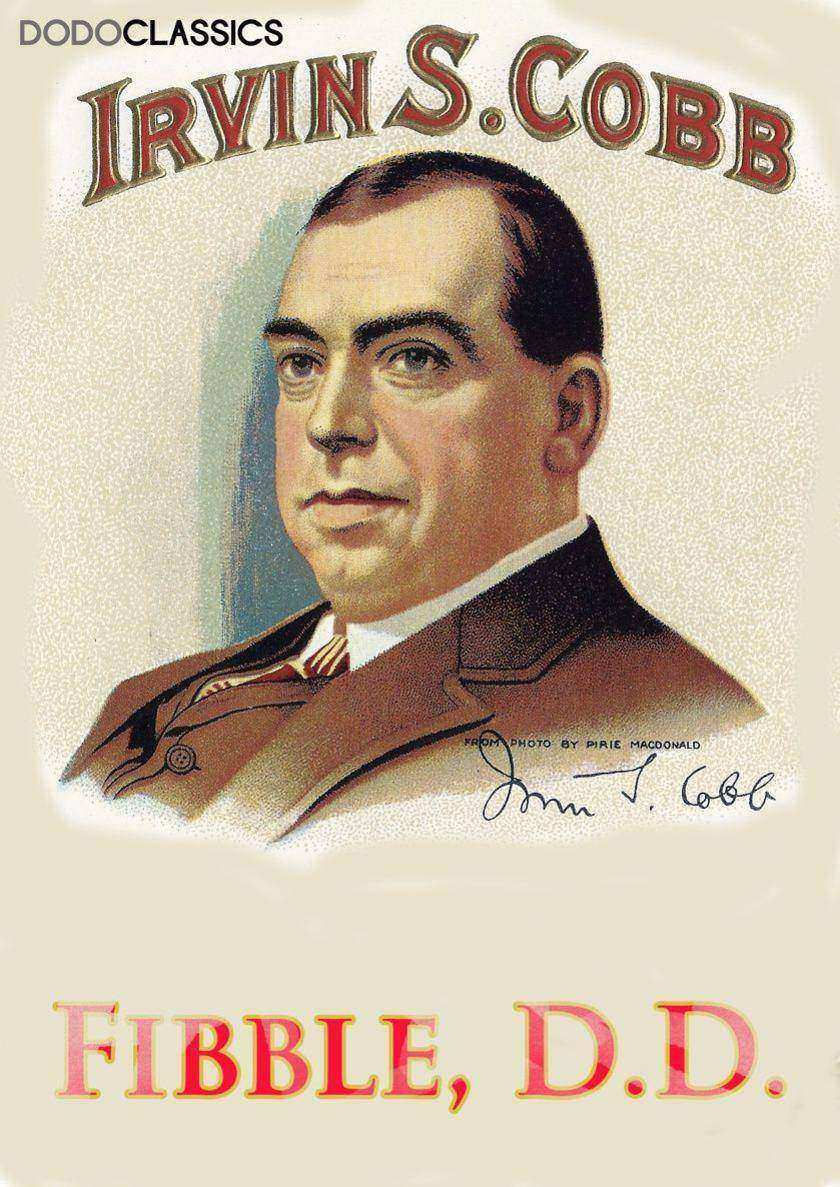
Fibble, D.D.
¥8.09
Dodo Collections brings you another classic from Irvin S. Cobb, ‘Fibble, D.D..’ ? A collection of three short stories originally published in the Saturday Evening Post, telling the comic misadventures of the Rev. Roscoe Titmarsh Fibble, D.D. ? Cobb joined the staff of the magazine?Saturday Evening Post?during 1911, and covered the?Great War?for the magazine. At the same time, he wrote a book about his experiences, published during 1915, titled?Paths Of Glory. After a second visit to France to cover the Great War, Cobb publicized the achievements of the unit known as theHarlem Hellfighters, most notably,?Croix de Guerre?recipients?Henry Lincoln Johnson?and?Needham Roberts. His article "Young Black Joe," published on August 24, 1918 in theSaturday Evening Post?and later republished in Cobb's book,?The Glory of the Coming,?highlighted the discipline and courage displayed by black American soldiers fighting in Europe during?World War I. The three-page article and half-page photograph reached a national audience of more than two million readers, and was widely reprinted in the black press.

The Abandoned Farmers
¥8.09
Dodo Collections brings you another classic from Irvin Shrewsbury Cobb, ‘The Abandoned Farmers.’ ? A satirical story about one man's decision to leave the city. ? Cobb is remembered best for his humorous stories of Kentucky and is part of the American literary regionalism school. These stories were collected first in the book Old Judge Priest (1915), whose title character was based on a prominent West Kentucky judge named William Pitman Bishop. Writer Joel Harris wrote of these tales, "Cobb created a South peopled with honorable citizens, charming eccentrics, and loyal, subservient blacks, but at their best the Judge Priest stories are dramatic and compelling, using a wealth of precisely rendered detail to evoke a powerful mood."Among his other books are the humorous Speaking of Operations (1916), and anti-prohibition ode to bourbon, Red Likker (1929).
The Legacy of Cain by Wilkie Collins - Delphi Classics (Illustrated)
¥8.09
This eBook features the unabridged text of ‘The Legacy of Cain by Wilkie Collins - Delphi Classics (Illustrated)’ from the bestselling edition of ‘The Complete Works of Wilkie Collins’. Having established their name as the leading publisher of classic literature and art, Delphi Classics produce publications that are individually crafted with superior formatting, while introducing many rare texts for the first time in digital print. The Delphi Classics edition of Collins includes original annotations and illustrations relating to the life and works of the author, as well as individual tables of contents, allowing you to navigate eBooks quickly and easily. eBook features: * The complete unabridged text of ‘The Legacy of Cain by Wilkie Collins - Delphi Classics (Illustrated)’ * Beautifully illustrated with images related to Collins’s works * Individual contents table, allowing easy navigation around the eBook * Excellent formatting of the text Please visit www.delphiclassics.com to learn more about our wide range of titles

Miss or Mrs. and Other Stories in Outline by Wilkie Collins - Delphi Classics (I
¥8.09
This eBook features the unabridged text of ‘Miss or Mrs. and Other Stories in Outline by Wilkie Collins - Delphi Classics (Illustrated)’ from the bestselling edition of ‘The Complete Works of Wilkie Collins’. Having established their name as the leading publisher of classic literature and art, Delphi Classics produce publications that are individually crafted with superior formatting, while introducing many rare texts for the first time in digital print. The Delphi Classics edition of Collins includes original annotations and illustrations relating to the life and works of the author, as well as individual tables of contents, allowing you to navigate eBooks quickly and easily. eBook features: * The complete unabridged text of ‘Miss or Mrs. and Other Stories in Outline by Wilkie Collins - Delphi Classics (Illustrated)’ * Beautifully illustrated with images related to Collins’s works * Individual contents table, allowing easy navigation around the eBook * Excellent formatting of the text Please visit www.delphiclassics.com to learn more about our wide range of titles
No Thoroughfare by Wilkie Collins - Delphi Classics (Illustrated)
¥8.09
This eBook features the unabridged text of ‘No Thoroughfare by Wilkie Collins - Delphi Classics (Illustrated)’ from the bestselling edition of ‘The Complete Works of Wilkie Collins’. Having established their name as the leading publisher of classic literature and art, Delphi Classics produce publications that are individually crafted with superior formatting, while introducing many rare texts for the first time in digital print. The Delphi Classics edition of Collins includes original annotations and illustrations relating to the life and works of the author, as well as individual tables of contents, allowing you to navigate eBooks quickly and easily. eBook features: * The complete unabridged text of ‘No Thoroughfare by Wilkie Collins - Delphi Classics (Illustrated)’ * Beautifully illustrated with images related to Collins’s works * Individual contents table, allowing easy navigation around the eBook * Excellent formatting of the text Please visit www.delphiclassics.com to learn more about our wide range of titles
The Mahatma and the Hare: A Dream Story
¥8.09
Dodo Collections brings you another classic from H. Rider Haggard, ‘The Mahatma and the Hare: A Dream Story’ ? There is a man who has lost his wife and daughter. He is the sole survivor in the accident and feels great guilt. And in this guilt, he begins to drink more and more each day. Then one day as the man was contemplating suicide, a stranger named Joren comes along and tells him not to worry. He tells him of reincarnated souls, of a life beyond the mortal one, and he teaches the man to transcend his physical body. But will he like what he finds on the other side? ? Sir Henry Rider Haggard was an English writer of adventure novels set in exotic locations, predominantly Africa, and the creator of the Lost World literary genre. His stories, situated at the lighter end of the scale of Victorian literature, continue to be popular and influential. He was also involved in agricultural reform and improvement in the British Empire. ? Haggard was made a Knight Bachelor in 1912 and a Knight Commander of the Order of the British Empire in 1919. He stood unsuccessfully for Parliament as a Conservative candidate for the Eastern division of Norfolk in 1895. The locality of Rider, British Columbia, was named in his memory.
Ozma of Oz by L. Frank Baum - Delphi Classics (Illustrated)
¥8.09
This eBook features the unabridged text of ‘Ozma of Oz by L. Frank Baum - Delphi Classics (Illustrated)’ from the bestselling edition of ‘The Complete Works of L. Frank Baum’. Having established their name as the leading publisher of classic literature and art, Delphi Classics produce publications that are individually crafted with superior formatting, while introducing many rare texts for the first time in digital print. The Delphi Classics edition of Baum includes original annotations and illustrations relating to the life and works of the author, as well as individual tables of contents, allowing you to navigate eBooks quickly and easily. eBook features: * The complete unabridged text of ‘Ozma of Oz by L. Frank Baum - Delphi Classics (Illustrated)’ * Beautifully illustrated with images related to Baum’s works * Individual contents table, allowing easy navigation around the eBook * Excellent formatting of the text Please visit www.delphiclassics.com to learn more about our wide range of titles
The Emerald City of Oz by L. Frank Baum - Delphi Classics (Illustrated)
¥8.09
This eBook features the unabridged text of ‘The Emerald City of Oz by L. Frank Baum - Delphi Classics (Illustrated)’ from the bestselling edition of ‘The Complete Works of L. Frank Baum’. Having established their name as the leading publisher of classic literature and art, Delphi Classics produce publications that are individually crafted with superior formatting, while introducing many rare texts for the first time in digital print. The Delphi Classics edition of Baum includes original annotations and illustrations relating to the life and works of the author, as well as individual tables of contents, allowing you to navigate eBooks quickly and easily. eBook features: * The complete unabridged text of ‘The Emerald City of Oz by L. Frank Baum - Delphi Classics (Illustrated)’ * Beautifully illustrated with images related to Baum’s works * Individual contents table, allowing easy navigation around the eBook * Excellent formatting of the text Please visit www.delphiclassics.com to learn more about our wide range of titles
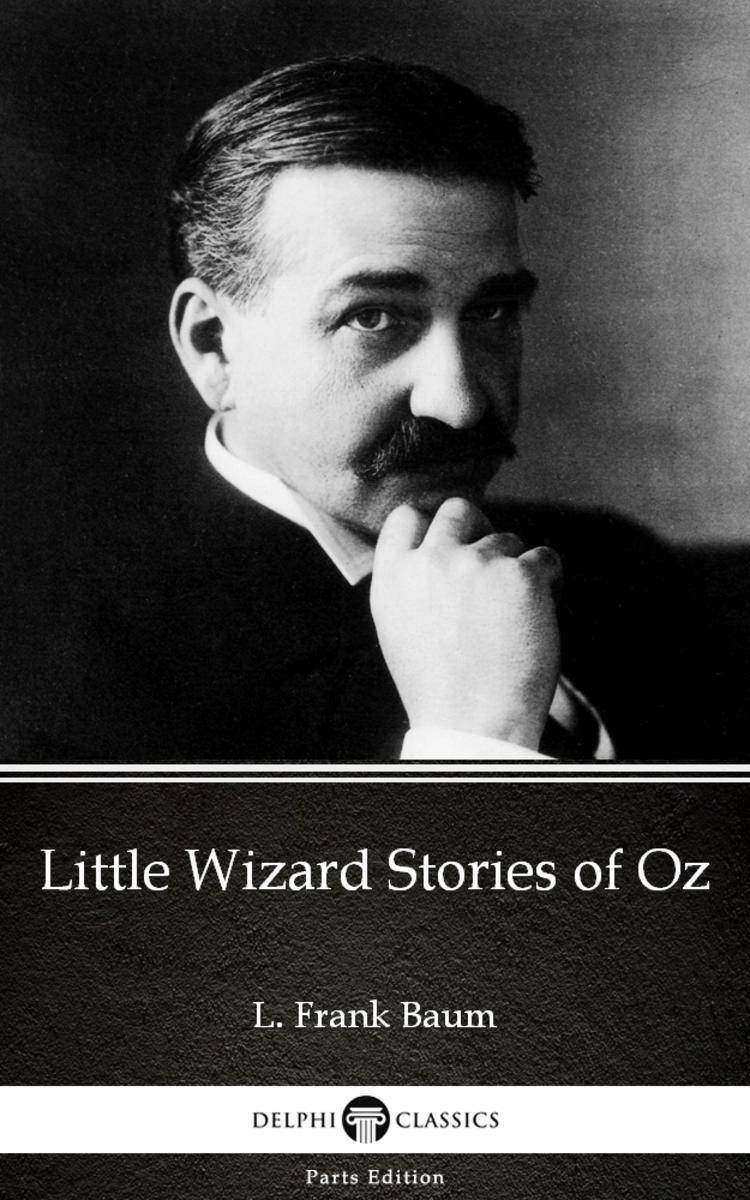
Little Wizard Stories of Oz by L. Frank Baum - Delphi Classics (Illustrated)
¥8.09
This eBook features the unabridged text of ‘Little Wizard Stories of Oz by L. Frank Baum - Delphi Classics (Illustrated)’ from the bestselling edition of ‘The Complete Works of L. Frank Baum’. Having established their name as the leading publisher of classic literature and art, Delphi Classics produce publications that are individually crafted with superior formatting, while introducing many rare texts for the first time in digital print. The Delphi Classics edition of Baum includes original annotations and illustrations relating to the life and works of the author, as well as individual tables of contents, allowing you to navigate eBooks quickly and easily. eBook features: * The complete unabridged text of ‘Little Wizard Stories of Oz by L. Frank Baum - Delphi Classics (Illustrated)’ * Beautifully illustrated with images related to Baum’s works * Individual contents table, allowing easy navigation around the eBook * Excellent formatting of the text Please visit www.delphiclassics.com to learn more about our wide range of titles
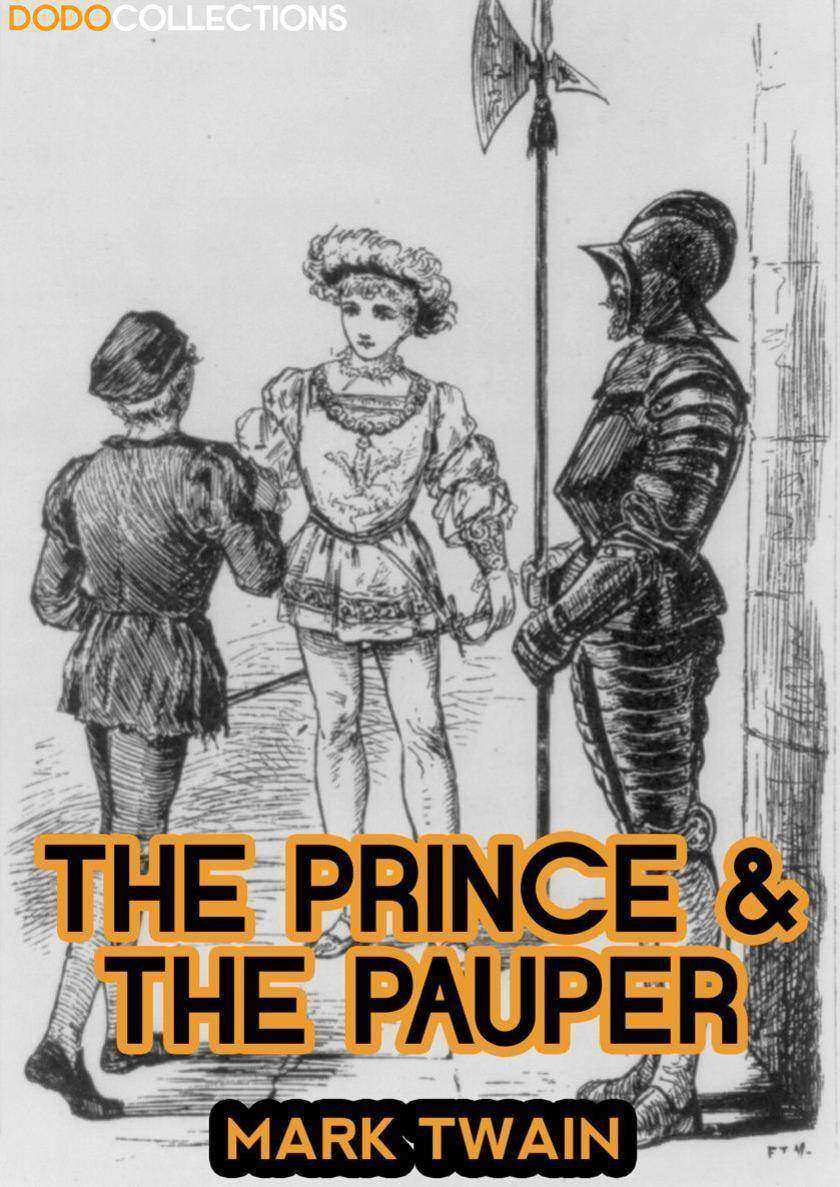
The Prince and the Pauper
¥8.09
Dodo Collections present Mark Twain’s ‘The Prince and the Pauper’. Presented as a fantastic edition with a fully interactive table of contents. The Prince and the Pauper?is a novel by American author?Mark Twain. It was first published in 1881 in Canada, before its 1882 publication in the United States. The novel represents Twain's first attempt at?historical fiction. Set in 1547, it tells the story of two young boys who are identical in appearance:?Tom Canty, a?pauper?who lives with his abusive father in Offal Court off?Pudding Lane?in?London, and?Prince Edward, son of?King Henry VIII. The Prince and the Pauper,?seemingly a simple novel, handles several divergent themes and ideas simultaneously. Foremost is the basic idea of the exchange of roles and lines between the prince and the pauper and the constant reference to their twin fates. Prior to meeting each other, both boys have dreams of living the life of the other.? The Prince and the Pauper?is Twain's most carefully plotted novel, but unlike Twain's greater novels (such as?Huck Finn?and?Tom Sawyer), where there is a great deal of character development, in this novel the characters are scarcely developed at all; instead, they are used largely as pawns to move the plot forward. Therefore, the main emphasis of the novel is not on character; it is on Twain's ingenious plot devices.?
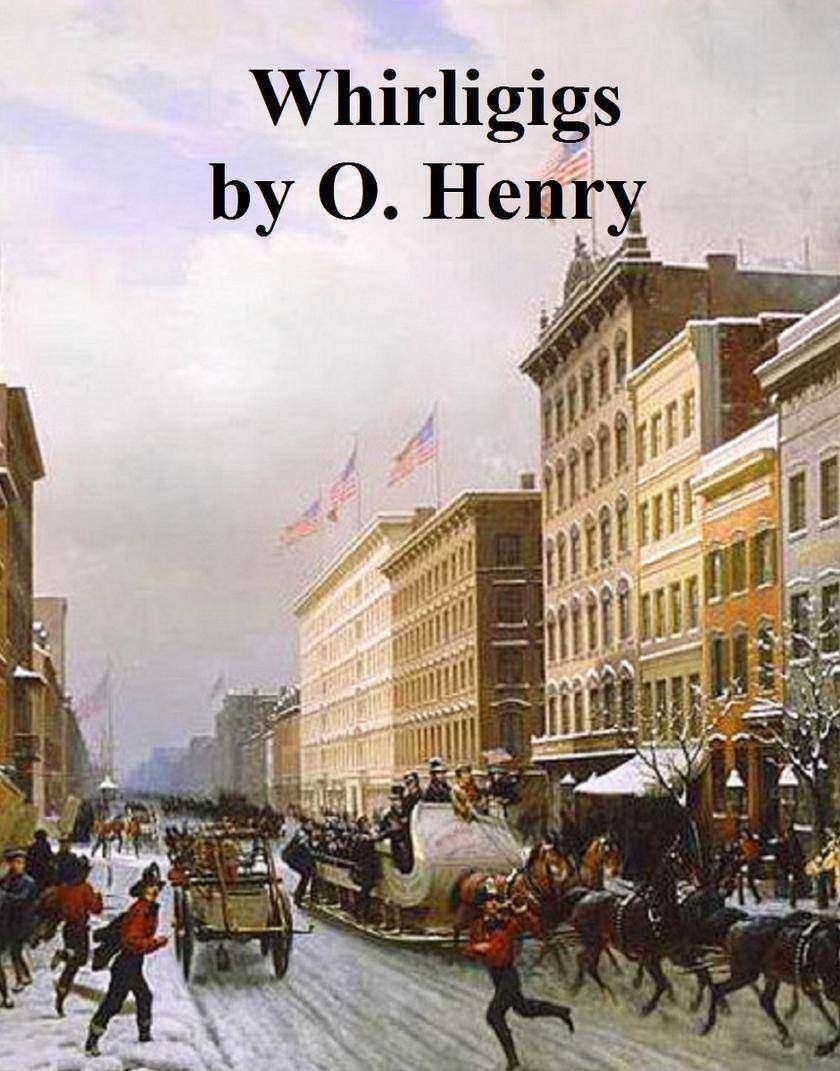
Whirligigs
¥8.09
Classic short story collection, including O. Henry's most famous story -- The Ransom of Red Chief. According to Wikipedia: "O. Henry was the pseudonym of the American writer William Sydney Porter (September 11, 1862 – June 5, 1910). O. Henry's short stories are well known for their wit, wordplay, warm characterization and clever twist endings... O. Henry's stories are famous for their surprise endings, to the point that such an ending is often referred to as an "O. Henry ending." He was called the American answer to Guy de Maupassant. Both authors wrote twist endings, but O. Henry stories were much more playful and optimistic. His stories are also well known for witty narration. Most of O. Henry's stories are set in his own time, the early years of the 20th century. Many take place in New York City and deal for the most part with ordinary people: lerks, policemen, waitresses. Fundamentally a product of his time, O. Henry's work provides one of the best examples of catching the entire flavor of an age written in the English language. Whether roaming the cattle-lands of Texas, exploring the art of the "gentle grafter," or investigating the tensions of class and wealth in turn-of-the-century New York, O. Henry had an inimitable hand for isolating some element of society and describing it with an incredible economy and grace of language. Some of his best and least-known work resides in the collection Cabbages and Kings, a series of stories which each explore some individual aspect of life in a paralytically sleepy Central American town while each advancing some aspect of the larger plot and relating back one to another in a complex structure which slowly explicates its own background even as it painstakingly erects a town which is one of the most detailed literary creations of the period. The Four Million was his first collection of stories. It opens with a reference to Ward McAllister's "assertion that there were only 'Four Hundred' people in New York City who were really worth noticing. But a wiser man has arisen—the census taker—and his larger estimate of human interest has been preferred in marking out the field of these little stories of the 'Four Million.'" To O. Henry, everyone in New York counted. He had an obvious affection for the city, which he called "Bagdad-on-the-Subway,"[3] and many of his stories are set there—but others are set in small towns and in other cities."
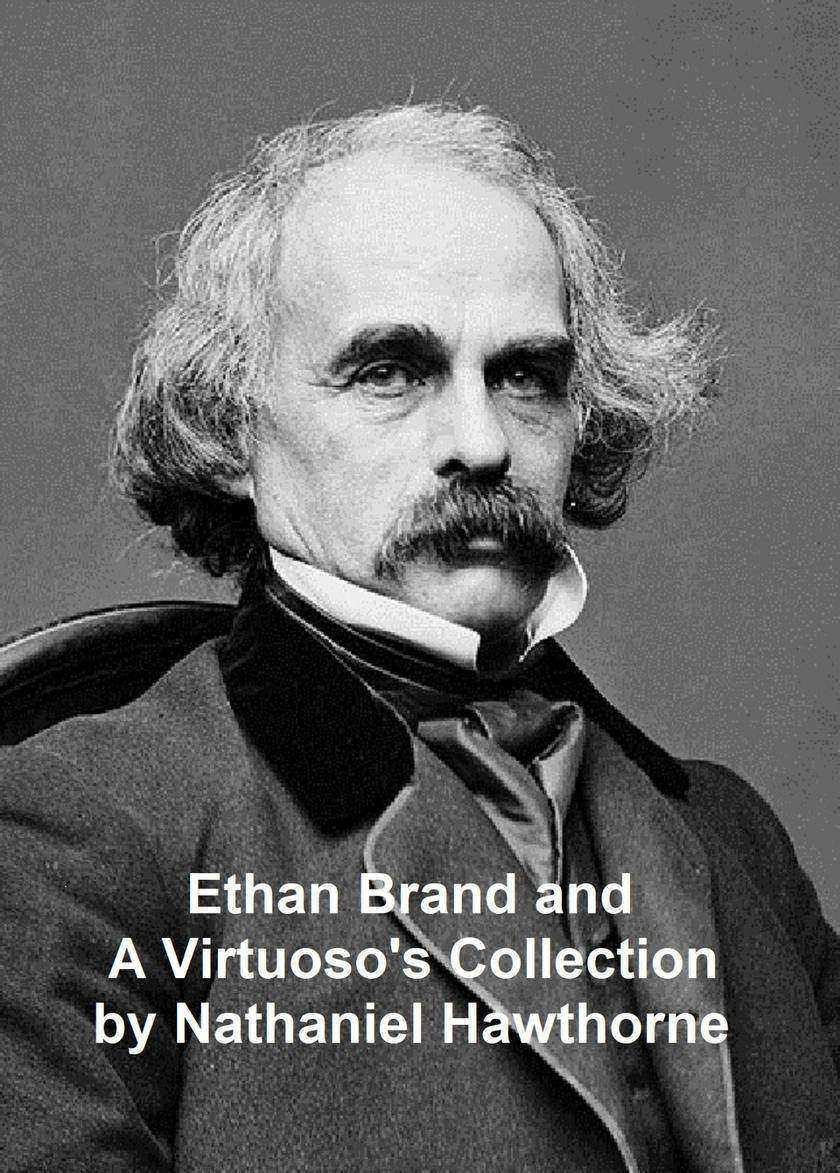
Ethan Brand and A Virtuoso's Collection
¥8.09
Two short stories by Nathaniel Hawthorne related to the legend of "the wandering Jew". According to Wikipedia: "Nathaniel Hawthorne (1804 –1864) was an American novelist and short story writer... Much of Hawthorne's writing centers around New England and many feature moral allegories with a Puritan inspiration. His fiction works are considered part of the Romantic movement and, more specifically, dark romanticism. His themes often center on the inherent evil and sin of humanity and his works often have moral messages and deep psychological complexity. His published works include novels, short stories, and a biography of his friend Franklin Pierce."
The Social Web
¥8.09
This pioneering book, first published in 1997, details the process to empower businesses and individuals to build websites based on common interests and social interaction. It provides insights that are as relevant now as they were when the book was written.
Siddhartha, an Indian Tale
¥8.09
Classic novel, first published in 1922. According to Wikipedia: "Siddhartha is a novel by Hermann Hesse that deals with the spiritual journey of a boy known as Siddhartha from the Indian subcontinent during the time of the Buddha. The book, Hesse's ninth novel, was written in German, in a simple yet powerful and lyrical style. It was published in the U.S. in 1951 and became influential during the 1960s. Hesse dedicated Siddhartha to Ninon Hesse, his wife. The word Siddhartha is made up of two words in the Sanskrit language, siddha (achieved) + artha (meaning or wealth). The two words together mean "he who has found meaning (of existence)" or "he who has attained his goals". The Buddha's name, before his renunciation, was Prince Siddhartha Gautama. In this book, the Buddha is referred to as "Gotama".
The Laughing Cavalier, the Story of the Ancestor of the Scarlet Pimpernel
¥8.09
Classic historical novel, set in the Netherlands in the 17th century, related to the Scarlet Pimpernel series. According to Wikipedia: "The Scarlet Pimpernel is a classic play and adventure novel by Baroness Emmuska Orczy, set during the Reign of Terror following the start of the French Revolution. The story is a precursor to the "disguised superhero" tales such as Zorro. The play was produced and adapted by Julia Neilson and Fred Terry. It first opened on 15 October 1903 at Nottingham’s Theatre Royal; it was not a success. Terry, however, had confidence in the play and, with a rewritten last act, took it to London where it opened at the New Theatre on 5 January 1905. The premier of the London production was enthusiastically received by the audience, but critics considered the play 'old-fashioned.' In spite of negative reviews, the play became a popular success, running 122 performances and enjoying numerous revivals. The Scarlet Pimpernel became a favourite of London audiences, playing more than 2,000 performances and becoming one of the most popular shows staged in England to that date. The novel was published soon after the play's opening and was an immediate success. Orczy gained a following of readers in Britain and throughout the world. The popularity of the novel encouraged her to write a number of sequels for her "reckless daredevil" over the next 35 years. The play was performed to great acclaim in France, Italy, Germany and Spain, while the novel was translated into 16 languages. Subsequently, the story has been adapted for television, film, a musical and other media. The international success of The Scarlet Pimpernel allowed Orczy and her husband to live out their lives in luxury. Over the years, they lived on an estate in Kent, a bustling London home and an opulent villa in Monte Carlo. Orczy wrote in her autobiography, Links in the Chain of Life: "I have so often been asked the question: "But how did you come to think of The Scarlet Pimpernel?" And my answer has always been: "It was God's will that I should." And to you moderns, who perhaps do not believe as I do, I will say, "In the chain of my life, there were so many links, all of which tended towards bringing me to the fulfillment of my destiny." According to Wikipedia: "Baroness Emma Magdolna Rozália Mária Jozefa Borbála "Emmuska" Orczy de Orczi (23 September 1865 – 12 November 1947) was a British novelist, playwright and artist of Hungarian noble origin. She was most notable for her series of novels featuring the Scarlet Pimpernel. Some of her paintings were exhibited at the Royal Academy in London."


