


 购物车
购物车 个人中心
个人中心
Web Development with MongoDB and NodeJS - Second Edition
¥71.93
Build an interactive and full-featured web application from scratch using Node.js and MongoDBAbout This BookConfigure your development environment to use Node.js and MongoDBUse Node.js to connect to a MongoDB database and perform data manipulationsA practical guide with clear instructions to design and develop a complete web application from start to finish Who This Book Is For This book is designed for JavaScript developers of any skill level that want to get up and running using Node.js and MongoDB to build full-featured web applications. A basic understanding of JavaScript and HTML is the only requirement for this book.What You Will LearnConfigure your development environment to use Node.js and MongoDBWrite and configure a web server using Node.js powered by the Express.js frameworkBuild dynamic HTML pages using the Handlebars template enginePersist application data using MongoDB and Mongoose ODMTest your code using automated testing tools such as the Mocha frameworkDeploy the development environment to the cloud using services such as Heroku, Amazon Web Services, and Microsoft AzureExplore Single-Page application frameworks to take your web applications to the next level In Detail Node.js and MongoDB are quickly becoming one of the most popular tech stacks for the web. Powered by Google's V8 engine, Node.js caters to easily building fast, scalable network applications while MongoDB is the perfect fit as a scalable, high-performance, open source NoSQL database solution. Using these two technologies together, web applications can be built quickly and easily and deployed to the cloud with very little difficulty. The book will begin by introducing you to the groundwork needed to set up the development environment. Here, you will quickly run through the steps necessary to get the main application server up and running. Then you will see how to use Node.js to connect to a MongoDB database and perform data manipulations. From here on, the book will take you through integration with third-party tools for interaction with web apps. It then moves on to show you how to use controllers and view models to generate reusable code that will reduce development time. Toward the end of the book, we will cover tests to properly execute the code and some popular frameworks for developing web applications. By the end of the book, you will have a running web application developed with MongoDB and Node.js along with it's popular frameworks.Style and approach An easy guide to Node.js and MongoDB, which will quickly introduce you to the relevant concepts by taking you through the different steps involved in building a full-fledged web application.
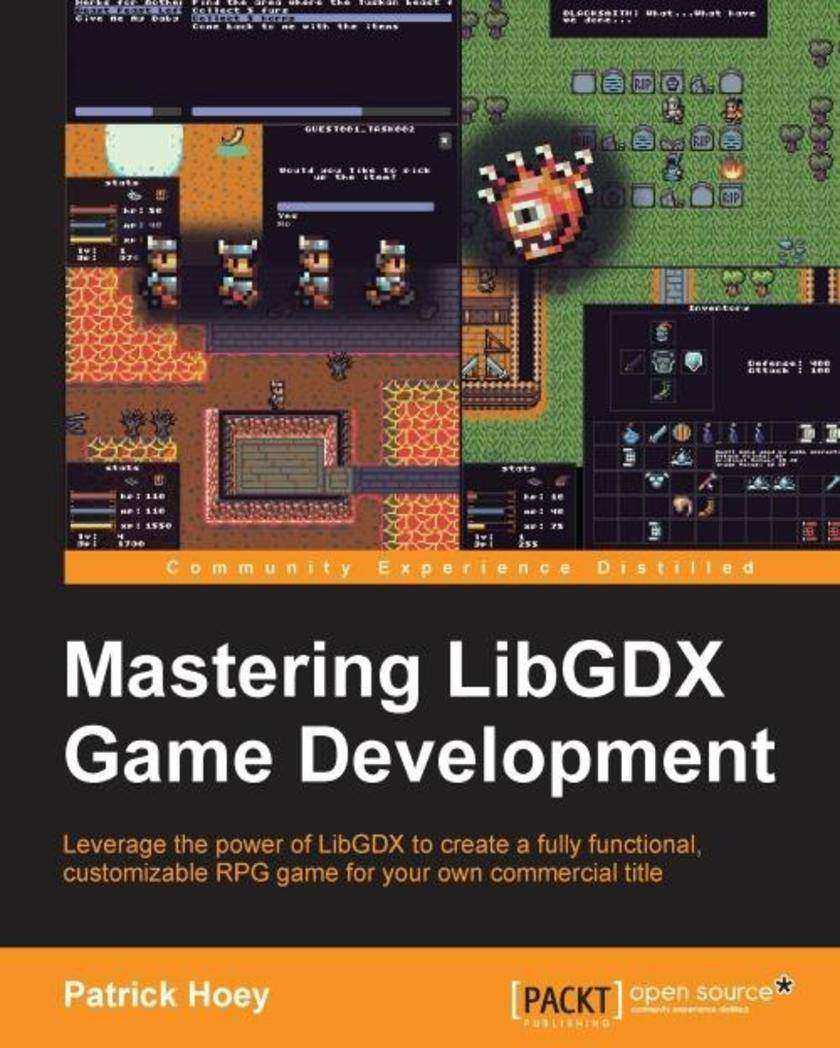
Mastering LibGDX Game Development
¥90.46
Leverage the power of LibGDX to create a fully functional, customizable RPG game for your own commercial title About This Book Learn game architecture and design patterns with concrete examples using proper software engineering principles Save time and money with this handy reference guide for future game development with LibGDX Design and develop a fully functional RPG video game from scratch with a hands on, step-by-step approach using LibGDX Who This Book Is For If you are an intermediate-level game developer who wants to create an RPG video game but found the creation process overwhelming, either by lack of tutorials or by getting lost in a sea of game-related technologies, engines, or frameworks, then this book is for you. This book assumes familiarity with Java and some basic knowledge of LibGDX. What You Will Learn Develop characters with stat attributes, player movement, animation, physics, and collision detection Create interactive NPC characters with speech windows and build immersion via dialog trees Build inventory management system UIs with drag and drop items to sell, buy, and equip Design a quest system to expand out the content of your game Form interesting enemies with battle mechanics and spawn points Devise *ed cutscenes to add an element of story and drama Develop save and load game profiles Create special effects to give the game extra “juiciness” and polish, and help build the atmosphere In Detail LibGDX is a Java-based framework developed with a heavy emphasis on performance, and includes cross-platform support out of the box (Windows, OS X, Linux, iOS, Android, and HTML5) as well as providing all the low-level functionality so that you can focus on developing your game and not battling with the platform. LibGDX also has an engaged and responsive community, active maintenance, and is available for free without a prohibitive license. Starting from the beginning, this book will take you through the entire development process of creating an RPG video game using LibGDX. First, this book will introduce you to the features specific to RPG games, as well as an overview of game architecture. Then, you will create map locations, develop character movement, add animation, integrate collision detection, and develop a portal system. Next, you will learn and develop a HUD and other UI components, as well as an inventory management system. You will then develop NPC interactions including dialog trees, shopkeepers, and quest givers. After this, you will design and create battle features for fighting enemies, as well as event triggers for world events. Finally, you will add the final polish with sound, music, and lighting effects. By the end of this book, you will have learned and applied core components from the LibGDX framework, as well as have a finished game to use as a springboard for customization and story development for your own commercial video game. Style and approach This book walks you through the concepts and implementation of developing a complete RPG game, unfolding chapter by chapter and building upon previous concepts. Each chapter can be used as an individual reference with diagrams to explain core concepts with concrete example code explained in detail.
Mastering NetScaler VPX?
¥80.65
Learn how to deploy and configure all the available Citrix NetScaler features with the best practices and techniques you need to know About This Book Implement and configure all the available NetScaler Application Delivery features and monitor NetScaler VPX performance in your environment Packed with real-word NetScaler deployment scenarios to help you see the configuration principles in action Integrate NetScaler with other Citrix technologies, including CloudBridge, Application Delivery Controller, HDX Insight, and Command Center Who This Book Is For If you’re an administrator with prior experience using NetScaler then you have everything you need to make the most of this book. What You Will Learn Configure the more commonly used NetScaler VPX features such as basic load balancing, authentication, NetScaler Gateway, and StoreFront Configure the AppExpert features such as Responder, Rewrite, AppExpert templates, parsing HTTP, TCP, and UDP data Integrate NetScaler with other Citrix technologies such as CloudBridge, Insight Center, and Command Center Optimize traffic using caching, front-end optimization, and compression Dive deep in the security, caching, and compression enhancements Protect your environment with AAA and Application Firewall, or from HTTP DDoS attacks Troubleshoot an environment using tools such as TaaS and WireShark In Detail Citrix NetScaler is one of the best Application Delivery Controller products in the world. The Application Delivery Controllers are commonly used for load balancing purposes, to optimize traffic, and to perform extra security settings. This book will give you an insight into all the available features that the Citrix NetScaler appliance has to offer. The book will start with the commonly used NetScaler VPX features, such as load balancing and NetScaler Gateway functionality. Next, we cover features such as Responder, Rewrite, and the AppExpert templates, and how to configure these features. After that, you will learn more about the other available Citrix technologies that can interact with Citrix NetScaler. We also cover troubleshooting, optimizing traffic, caching, performing protection using Application Firewall, and denying HTTP DDoS attacks for web services. Finally, we will demonstrate the different configuration principles real-world Citrix NetScaler deployment scenarios. Style and approach This easy-to-follow guide explains as much as possible about each feature and its configuration. Each topic is explained sequentially in the process of configuring and deploying the feature.
Learning Azure DocumentDB
¥63.21
Create outstanding enterprise solutions around DocumentDB using the latest technologies and programming tools with Azure About This Book Get to know the concepts of DocumentDB and learn to work your way around it Manipulate and query your documents using different modern technologies to access DocumentDB Build a real-life scenario using Microsoft Visual Studio and C# with this handy and practical guide Who This Book Is For This book is for novice developers and database architects who need a thorough knowledge of the features of DocumentDB and developing applications with it. Basic knowledge of SQL would be helpful. What You Will Learn Create, manage, and configure your DocumentDB environment Execute SQL queries from simple to complex and nested ones against your database Get to know about advanced DocumentDB techniques such as scopes, portioning, indexing, triggers, UDF’s, and security Fine-tune your DocumentDB database to optimize performance and costs Interact with DocumentDB from different technologies and platforms Build a real-life scenario using C# and put DocumentDB at the heart of Azure solutions Understand how to migrate from your current datastore to DocumentDB In Detail Learning DocumentDB adopts a practical, step-by-step approach to help you learn the basics of DocumentDB and use your new-found abilities in real-life scenarios and enterprise solutions. We start with the absolute basics, such as setting up a DocumentDB environment, and guide you through managing your databases, and executing simple and complex queries. Next, we explain how to work with DocumentDB using the open REST protocol, and demonstrate how JavaScript works with DocumentDB. We’ll also show you how to authenticate and execute queries. Moving on, you’ll find out how to use DocumentDB from within Node.js to kick-start your Node.js projects. Next, you’ll discover how to increase the performance of your DocumentDB database and fine-tune it. Finally, you’ll get to grips with using DocumentDB in conjunction with other services offered from the Microsoft Azure platform. Style and approach This book can be used as a tutorial where you learn step by step, but also as a knowledge base to quickly look up recipes you can instantly utilize. Starting with the basics and moving on to advanced topics, every concept is explained in theory and demonstrated through easy-to-understand examples.

Implementing NetScaler VPX? - Second Edition
¥71.93
Implement the new features of Citrix NetScaler 11 to optimize and deploy secure web services on multiple virtualization platformsAbout This BookLearn how to design, set up, and deploy NetScaler VPX along with the new Jumbo frames in a virtual environment using your GUI as well as your CLI for both public and private clouds to make all your web applications faster and more secureEnrich your networking skills utilizing the new features of AAA by following the instructions to optimize network trafficA step-by-step guide that will show you how to work with the latest NetScaler, 11, by implementing its new features using sample scenarios and real-world examples Who This Book Is For This book is for Citrix administrators who are just getting started with NetScaler, have some basic networking skills This book does not require prior experience of NetScaler.What You Will LearnConfigure different VPN solutions and learn about ICA Proxy, Unified Gateway and SSL VPNSet up load balancing for SharePoint, Exchange, Lync, SQL and other Citrix componentsGain insights into traffic management with NetScaler, Wireshark, and Citrix InsightProtect your web services with an application firewall, HTTP, DOS, and AAAOptimize traffic using front-end optimization, caching, and compressionDeploy a high availability environmentUse NetScaler in public cloud providers such as Azure or AmazonAdvance your network knowledge of TCP and SSL optimization In Detail With a large demand for responsive websites and availability of services, IT administrators are faced with an ever-rising need for services that are optimized for speed. NetScaler VPX is a software-based virtual appliance that provides users with the comprehensive NetScaler feature set. Implementing apps and cloud-based services is much easier with its increased service performance and integrated security features. This book will give you an insight into all the new features that NetScaler VPXhas to offer. Starting off with the basics, you will learn how to set NetScaler up and configure it in a virtual environment including the new features available in version 11, such as unified gateway and portal theme customization. Next, the book will cover how to deploy NetScalar on Azure and Amazon, and you will also discover how to integrate it with an existing Citrix infrastructure. Next, you will venture into other topics such as load balancing Microsoft and Citrix solutions, configuring different forms of high availability Global Server Load Balancing (GSLB), and network optimization. You will also learn how to troubleshoot and analyze data using NetScaler's extensive array of features. Finally, you will discover how to protect web services using an application firewall and will get to grips with other features such as HTTP, DOS, and AAA.Style and approach This easy-to-follow guide is full of detailed step-by step-instructions on how to implement the key components in NetScaler, using real-world examples and sample scenarios.
Learning JavaScript Robotics
¥54.49
Design, build, and program your own remarkable robots with JavaScript and open source hardware About This Book Learn how to leverage Johnny-Five's Read, Eval, Print Loop, and Event API to write robot code with JavaScript Unlock a world of exciting possibilities by hooking your JavaScript-programmed robots up to the internet and using external data and APIs Move your project code from the Arduino Uno to a multitude of other robotics platforms Who This Book Is For If you've worked with Arduino before or are new to electronics and would like to try writing sketches in JavaScript, then this book is for you! Basic knowledge of JavaScript and Node.js will help you get the most out of this book. What You Will Learn Familiarise yourself with Johnny-Five Read, Eval, and Print Loop (REPL) to modify and debug robotics code in real time Build robots with basic output devices to create projects that light up, make noise, and more Create projects with complex output devices, and employ the Johnny-Five API to simplify the use of components that require complex interfaces, such as I2C Make use of sensors and input devices to allow your robotics projects to survey the world around them and accept input from users Use the Sensor and Motor objects to make it much easier to move your robotics projects Learn about the Animation API that will allow you to program complex movements using timing and key frames Bring in other devices to your Johnny-Five projects, such as USB devices and remotes Connect your Johnny-Five projects to external APIs and create your own Internet of Things! In Detail There has been a rapid rise in the use of JavaScript in recent times in a variety of applications, and JavaScript robotics has seen a rise in popularity too. Johnny-Five is a framework that gives NodeBots a consistent API and platform across several hardware systems. This book walks you through basic robotics projects including the physical hardware builds and the JavaScript code for them. You'll delve into the concepts of Johnny-Five and JS robotics. You'll learn about various components such as Digital GPIO pins, PWM output pins, Sensors, servos, and motors to be used with Johnny-Five along with some advanced components such as I2C, and SPI. You will learn to connect your Johnny-Five robots to internet services and other NodeBots to form networks. By the end of this book, you will have explored the benefits of the Johnny-Five framework and the many devices it unlocks. Style and approach This step-by-step guide to the Johnny-Five ecosystem is explained in a conversational style, packed with examples and tips. Each chapter also explores the Johnny-Five documentation to enable you to start exploring the API on your own.
Data Lake Development with Big Data
¥63.21
Explore architectural approaches to building Data Lakes that ingest, index, manage, and analyze massive amounts of data using Big Data technologies About This Book Comprehend the intricacies of architecting a Data Lake and build a data strategy around your current data architecture Efficiently manage vast amounts of data and deliver it to multiple applications and systems with a high degree of performance and scalability Packed with industry best practices and use-case scenarios to get you up-and-running Who This Book Is For This book is for architects and senior managers who are responsible for building a strategy around their current data architecture, helping them identify the need for a Data Lake implementation in an enterprise context. The reader will need a good knowledge of master data management, information lifecycle management, data governance, data product design, data engineering, and systems architecture. Also required is experience of Big Data technologies such as Hadoop, Spark, Splunk, and Storm. What You Will Learn Identify the need for a Data Lake in your enterprise context and learn to architect a Data Lake Learn to build various tiers of a Data Lake, such as data intake, management, consumption, and governance, with a focus on practical implementation scenarios Find out the key considerations to be taken into account while building each tier of the Data Lake Understand Hadoop-oriented data transfer mechanism to ingest data in batch, micro-batch, and real-time modes Explore various data integration needs and learn how to perform data enrichment and data transformations using Big Data technologies Enable data discovery on the Data Lake to allow users to discover the data Discover how data is packaged and provisioned for consumption Comprehend the importance of including data governance disciplines while building a Data Lake In Detail A Data Lake is a highly scalable platform for storing huge volumes of multistructured data from disparate sources with centralized data management services. It eliminates the need for up-front modeling and rigid data structures by allowing schema-less writes. Data Lakes make it possible to ask complex far-reaching questions to find out hidden data patterns and relationships. This book explores the potential of Data Lakes and explores architectural approaches to building data lakes that ingest, index, manage, and analyze massive amounts of data using batch and real-time processing frameworks. It guides you on how to go about building a Data Lake that is managed by Hadoop and accessed as required by other Big Data applications such as Spark, Storm, Hive, and so on, to create an environment in which data from different sources can be meaningfully brought together and analyzed. Data Lakes can be viewed as having three capabilities—intake, management, and consumption. This book will take readers through each of these processes of developing a Data Lake and guide them (using best practices) in developing these capabilities. It will also explore often ignored, yet crucial considerations while building Data Lakes, with the focus on how to architect data governance, security, data quality, data lineage tracking, metadata management, and semantic data tagging. By the end of this book, you will have a good understanding of building a Data Lake for Big Data. You will be able to utilize Data Lakes for efficient and easy data processing and analytics. Style and approach Data Lake Development with Big Data provides architectural approaches to building a Data Lake. It follows a use case-based approach where practical implementation scenarios of each key component are explained. It also helps you understand how these use cases are implemented in a Data Lake. The chapters are organized in a way that mimics the sequential data flow evidenced in a Data Lake.
Team Foundation Server 2015 Customization
¥71.93
Take your expertise to the next level by unraveling various techniques to customize TFS 2015About This BookLearn how to efficiently modify your TFS-specific dashboards for complex server pluginsFind out the pros and cons of various extension points and customizations in TFSA fast-paced guide with highly concentrated information on TFS customizations Who This Book Is For This book is intended for anyone with experience with TFS, and in particular, those intermediate users who want to add more value to their organization by making its TFS users more productive. The book requires basic coding skills.What You Will LearnCustomize TFS 2015 dashboard and administer various componentsConfigure board cards, swim lanes, and columnsExplore the types of changes that can be made on the TFS process templatesCreate your own custom control for the Web and client work item formsBuild up new check-in policiesGet to grips with your personal server plugins and their usesCustomize both XAML builds and the new build systemSchedule jobs for more complicated business rules to run on a scheduleExtend your TFS possibilities with service hooks and VSO extensions In Detail Team Foundation Server is an efficacious collaboration tools that will allow you to share code, track records, software, all in a single package. Integrate it with your existing IDE or editor and let your team work in a flexible environment that adapts to projects of all shapes and sizes. Explore what gives you the edge over other developers by knowing the tips and quick fixes of customizing TFS. Effectively minimize the time users spend interacting with TFS so that they can be more productive. In this book you will quickly cover lots of TFS extension points, from the very basic task of customizing and configuring dashboards to customizing automated builds and check-in policies. You will learn how to create dashboards in TFS 2015, as well as add tiles, graphs, and more useful modifications. You'll perform customizations that make TFS work for you by streamlining your team’s boards. You'll cast modifications to the process template and learn the tips and tricks required to make efficient and valuable uses of your team’s board. From team-specific dashboards to complex server plugins, everything is covered in this concentrated guide to aid your knowledge. Delving deep, this book covers the pros and cons of check-in policies, as well as their proper debugging and deployment strategies. After that you will learn about advanced XAML builds and TFS jobs to further experiment with the activities of your jobs on your system. Finally, you will learn about service hooks and the amazing utility of .VSO extensions to help you create new extensions and explore new levels of customization.Style and approach This is an easy-to-follow guide with clearly explained and demonstrated examples.
Tkinter GUI Application Development Blueprints
¥80.65
Master GUI programming in Tkinter as you design, implement, and deliver ten real-world applications from start to finish About This Book Conceptualize and build state-of-art GUI applications with Tkinter Tackle the complexity of just about any size GUI application with a structured and scalable approach A project-based, practical guide to get hands-on into Tkinter GUI development Who This Book Is For Software developers, scientists, researchers, engineers, students, or programming hobbyists with basic familiarity in Python will find this book interesting and informative. People familiar with basic programming constructs in other programming language can also catch up with some brief reading on Python. No GUI programming experience is expected. What You Will Learn Get to know the basic concepts of GUI programming, such as Tkinter top-level widgets, geometry management, event handling, using callbacks, custom styling, and dialogs Create apps that can be scaled in size or complexity without breaking down the core Write your own GUI framework for maximum code reuse Build apps using both procedural and OOP styles, understanding the strengths and limitations of both styles Learn to structure and build large GUI applications based on Model-View-Controller (MVC) architecture Build multithreaded and database-driven apps Create apps that leverage resources from the network Learn basics of 2D and 3D animation in GUI applications Develop apps that can persist application data with object serialization and tools such as configparser In Detail Tkinter is the built-in GUI package that comes with standard Python distributions. It is a cross-platform package, which means you build once and deploy everywhere. It is simple to use and intuitive in nature, making it suitable for programmers and non-programmers alike. This book will help you master the art of GUI programming. It delivers the bigger picture of GUI programming by building real-world, productive, and fun applications such as a text editor, drum machine, game of chess, media player, drawing application, chat application, screen saver, port scanner, and many more. In every project, you will build on the skills acquired in the previous project and gain more expertise. You will learn to write multithreaded programs, network programs, database driven programs and more. You will also get to know the modern best practices involved in writing GUI apps. With its rich source of sample code, you can build upon the knowledge gained with this book and use it in your own projects in the discipline of your choice. Style and approach An easy-to-follow guide, full of hands-on examples of real-world GUI programs. The first chapter is a must read as it explains most of the things you need to get started with writing GUI programs with Tkinter. Each subsequent chapter is a stand-alone project that discusses some aspects of GUI programming in detail. These chapters can be read sequentially or randomly depending upon the readers experience with Python.
Learning ELK Stack
¥80.65
Build mesmerizing visualizations, analytics, and logs from your data using Elasticsearch, Logstash, and Kibana About This Book Solve all your data analytics problems with the ELK stack Explore the power of Kibana4 search and visualizations built over Elasticsearch queries and learn about the features and plugins of Logstash Develop a complete data pipeline using the ELK stack Who This Book Is For If you are a developer or DevOps engineer interested in building a system that provides amazing insights and business metrics out of data sources, of various formats and types, using the open source technology stack that ELK provides, then this book is for you. Basic knowledge of Unix or any programming language will be helpful to make the most out of this book. What You Will Learn Install, configure, and run Elasticsearch, Logstash, and Kibana Understand the need for log analytics and the current challenges in log analysis Build your own data pipeline using the ELK stack Familiarize yourself with the key features of Logstash and the variety of input, filter, and output plugins it provides Build your own custom Logstash plugin Create actionable insights using charts, histograms, and quick search features in Kibana4 Understand the role of Elasticsearch in the ELK stack In Detail The ELK stack—Elasticsearch, Logstash, and Kibana, is a powerful combination of open source tools. Elasticsearch is for deep search and data analytics. Logstash is for centralized logging, log enrichment, and parsing. Kibana is for powerful and beautiful data visualizations. In short, the Elasticsearch ELK stack makes searching and analyzing data easier than ever before. This book will introduce you to the ELK (Elasticsearch, Logstash, and Kibana) stack, starting by showing you how to set up the stack by installing the tools, and basic configuration. You’ll move on to building a basic data pipeline using the ELK stack. Next, you’ll explore the key features of Logstash and its role in the ELK stack, including creating Logstash plugins, which will enable you to use your own customized plugins. The importance of Elasticsearch and Kibana in the ELK stack is also covered, along with various types of advanced data analysis, and a variety of charts, tables ,and maps. Finally, by the end of the book you will be able to develop full-fledged data pipeline using the ELK stack and have a solid understanding of the role of each of the components. Style and approach This book is a step-by-step guide, complete with various examples to solve your data analytics problems by using the ELK stack to explore and visualize data.

Hindsight The Foresight Saga
¥24.44
There is something new in the financial planning world and it is explored to the point that the reader can exploit it in “Hindsight – The Foresight Saga.” Little has been written about the property market and its relationship with the equity markets or the coincidental relationship that that investment relationship has on bankers. This book is aimed at the private investor but also the professional investment manager because it highlights the mechanism that provides for an almost continuous steady flow of positive returns on invested capital and regular savings. The author is a well experienced, highly qualified strategic financial planner and the language used in the book is straightforward and down to earth. The classic marketis identified as a circa fifteen year cycle of at one point inversely correlated market movements that works in direct contrast to a later phase in the classic market TM where property and equity movements are highly correlated in a downward slide. The first having an extremely positive effect on banking and the second, a devastating effect that contributed to bank collapses similar to those in 1979, 1992 and 2008.

Inventions and their inventors 1750-1920
¥24.44
Our everyday lives are continually influenced by inventors whose ideas have led to commercial products available in most high streets across the civilised world. For the most part these creative individuals have remained relatively unknown. Yet some of the companies set up by the successful inventors survive to this day albeit with company names no longer associated with the original idea. Volume 1 of this two volume set documents some of the key inventions from the ‘Spinning Jenny’ invented by Hargraves in the late eighteenth century, to some of the most commercially successful ideas of the early 20th century.

11 Simple Ways to turn your Garden Japanese
¥24.44
If you have ever dreamed of having your own calm, tranquil and beautifully designed Japanese garden space at your home then '11 Simple Ways To Turn Your Garden Japanese' will give you some inspiring ideas that won't break the bank. From basic small space gardens to much larger Japanese style gardens this book explains the principles of Japanese garden design, shows you design plans, pictures, gives some very useful tips and all in plain English. Learn the methods of Japanese gardening that stretch back hundreds of years and how to use them with a more contemporary twist. Bridges, edging, Rocks, Stones, Moss, Dry water, Trees, Shrubs , Courtyard gardens are just some of the ways that you can add a touch of Japan to your garden space. Author Russ Chard is an expert on Japanese gardens and has published 3 books and has numerous websites on the subject as well as a weekly newsletter for lovers of Japanese gardens. Landscape designer Tim Sykes shares a full domestic Japanese themed garden design in the book as well.

A European Life
¥24.44
"To those who think Europe matters, and even more so, to those who don’t”… Michael Tracy’s “Memoirs” recount his experiences from boyhood in wartime Scotland, through hi life in “public school” and university, to postings in various international organisations and a senior position within the European Union in Brussels; then to involvement in Russia and other Central/European countries in the 1990s. The book concludes with an assessment of current issues facing both the EU and Russia; also Britain in its relations with the EU. . . . . . Michael Tracy grew up in Scotland during the war of 193945. After gaining scholarships to Fettes College in Edinburgh, then to Cambridge University (studying Modern Languages, then Economics), he worked in international organisations and for ten years was a Director in the Council Secretariat of the European Union. He also pursued an academic career, writing on agricultural policy and economics and lecturing in various European universities, including Wye College in England and the College of Europe in Bruges. In Moscow in 1991 he witnessed at close quarters the collapse of the Soviet Union, and subsequently was involved in a new institute in St. Petersburg. Subsequently he had advisory and teaching roles in the countries of Central/Eastern Europe during their transition to market economies and accession to the European Union. His final chapter assesses the issues currently facing both the European Union and Russia. Taking the story up to May 2010, it discusses the prospects for the eurozone, and the implications of Britain’s new coalition government for Britain’s relations with the EU (a subject which he has followed from the outset in the late 1950s). This is not a history: it is a personal, lively and often humorous account of Michael Tracy’s experiences, in which personal contacts figure largely. Nor is it a tract for or against the European Union; on the other hand, it sheds a more human light on proceedings in “Brussels”. Graham Dalton of the University of Aberdeen admires the depth of knowledge at the heart of Michael Tracy’s memoir and concludes: “His thoughts on Europe are wellfounded, rounded and are to be taken seriously.” Michael Tracy has been President of the British Agricultural Economics Society and is an honorary member of the Académie d’Agriculture de France. His other main works are: Government and Agriculture in Western Europe, 18801988 (3rd edn. 1989); Food and Agriculture in a Market Economy – an introduction to theory, practice and policy (1993); and in retirement: The World of the Edwardian Child, as seen in Arthur Mee’s Children’s Encyclop?dia 19081910 (2008). c After retirement, Michael continues to live mainly in Belgium, where he and his wife have a “hobby farm” with pedigree sheep. He also spends time in an Andalucian mountain village. His main hobby in both places is as an amateur pianist, is making music with friends.

Japanese Zen Gardens
¥24.44
If you have ever wondered 'What is a Zen garden?' then this 50 page new publication for 2013 will tell you. Zen gardens are beautiful Japanese gardens steeped in history, religious meaning and a visual simplicity. There are many styles and many ingredients, Stones, Rocks, Moss, Sand, Gravel, Plants and Shrubs,Lanterns and Ornaments. Japanese Zen gardens is a book that introduces the reader to the subject and presents the options available for anyone wishing to build their own garden space at home - however large or small. Zen gardens are becoming more and more popular around the world and building one is not as difficult as you may think. With a little knowledge and following our step by step instructions with pictures you will discover how straight forward it is to build a Zen garden in your yard or garden. Japanese Zen gardens are serene havens of tranquil beauty and the perfect antidote to a stressful world. The author Russ Chard has written and published Japanese garden books, articles and videos for the past 10 years.

Karmalitics
¥24.44
In his pacey, darkly humorous first novel, Duncan Abbott doesn't pull any punches. With a searing eye for satire and a great deal of comic ingenuity he proposes some startling new political ideas at a time when paucity of thought and poverty of ideals seem to be the norm. Join our hero George King, a talented, popular and ethical MP, and his cadre of madcap idealists as they saunter amusingly through the sordid side of parliament changing the nation as they go! Watch them improve the lives of millions, sweep away swathes of avarice and laugh in the face of adversity, while tearing down a sex, drugs and prostitution-based blackmail campaign that could bring down British politics as we know it.
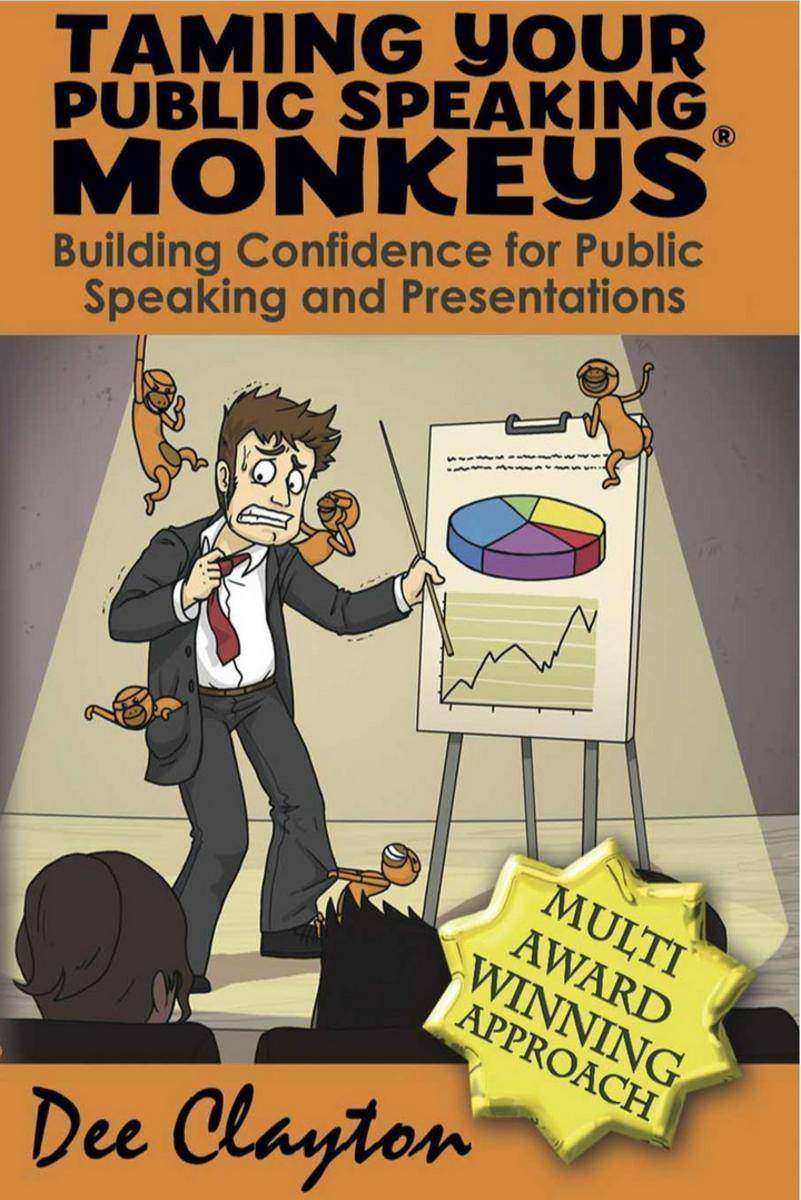
Taming Your Public Speaking Monkeys
¥24.44
A Godsend for anyone who’s ever suffered that dread of speaking in public!’ If, like almost everyone, you’re petrified of public speaking, the last thing you want is a lecture! And there lies the brilliance of this unique book’s genuinely innovative approach to the issue: Dee Clayton makes the process of overcoming those negative voices in your head (Your ‘Public Speaking Monkeys!’) and becoming an effective speaker lighthearted and fun! A Godsend for anyone who’s ever suffered that dread, Dee’s refreshingly simple yet amazingly effective multiawardwinning approach has already helped thousands to overcome their fears and become effective and confident public speakers. Significantly, the author’s keenly aware that for most of us, effective public speaking isn’t necessarily an end in itself but a means to other ends for example Dee has already helped company directors to persuade more successfully, doctors to win more funding, mediators to influence international decisions and all kinds of business people to fulfil their potential. What’s more, this is a genuinely practical guide! Unlike most ‘self help’ books on the topic (or any other), this one doesn’t just tell you what to do; in her chatty, good-humored style, Dee explains exactly how, sharing her own experiences and coaxing the reader through a programme that doesn’t just work it even makes public speaking enjoyable! Taming Your Public Speaking Monkeysworks so well because its easy, enjoyable style is underpinned by Dee’s solid, real-life experience of speaking publicly to tens of thousands of people first in her highly successful twenty-year marketing career (communicating for UK household brands such as Jacob’s Creek, Pizza Hut and Jammie Dodgers to name but a few) and now as a public speaking training specialist. Equally vitally, the book draws heavily upon the NeuroLinguistic Programming (NLP) techniques and insights in which Dee is a highly experienced Trainer and Master Practitioner. Taming your Public Speaking Monkeysis a rare find: a self-help book that really helps and best of all the results come to you quickly and stick with you for life!
Unity Virtual Reality Projects
¥71.93
Explore the world of Virtual Reality by building immersive and fun VR projects using Unity 3D About This Book Learn the basic principles of virtual reality applications and get to know how they differ from games and desktop apps Build various types of VR experiences, including diorama, first-person characters, riding on rails, 360 degree projections, and social VR A project-based guide that teaches you to use Unity to develop VR applications, which can be experienced with devices such as the Oculus Rift or Google Cardboard Who This Book Is For If you’re a non-programmer unfamiliar with 3D computer graphics, or experienced in both but new to virtual reality, and are interested in building your own VR games or applications then this book is for you. Any experience in Unity is an advantage. What You Will Learn Create 3D scenes with Unity and Blender while learning about world space and scale Build and run VR applications for consumer headsets including Oculus Rift and Google Cardboard Build interactive environments with physics, gravity, animations, and lighting using the Unity engine Experiment with various user interface (UI) techniques that you can use in your VR applications Implement the first-person and third-person experiences that use only head motion gestures for input Create animated walkthroughs, use 360-degree media, and build multi-user social VR experiences Learn about the technology and psychology of VR including rendering, performance and VR motion sickness Gain introductory and advanced experience in Unity programming with the C# language In Detail What is consumer “virtual reality”Wearing a head-mounted display you view stereoscopic 3D scenes. You can look around by moving your head, and walk around using hand controls or motion sensors. You are engaged in a fully immersive experience. On the other hand, Unity is a powerful game development engine that provides a rich set of features such as visual lighting, materials, physics, audio, special effects, and animation for creating 2D and 3D games. Unity 5 has become the leading platform for building virtual reality games, applications and experiences for this new generation of consumer VR devices. Using a practical and project-based approach, this book will educate you about the specifics of virtual reality development in Unity. You will learn how to use Unity to develop VR applications which can be experienced with devices such as the Oculus Rift or Google Cardboard. We will then learn how to engage with virtual worlds from a third person and first person character point of view. Furthermore, you will explore the technical considerations especially important and possibly unique to VR. The projects in the book will demonstrate how to build a variety of VR experiences. You will be diving into the Unity 3D game engine via the interactive Unity Editor as well as C-Sharp programming. By the end of the book, you will be equipped to develop rich, interactive virtual reality experiences using Unity. So, let's get to it! Style and approach This book takes a practical, project-based approach to teach specifics of virtual reality development in Unity. Using a reader-friendly approach, this book will not only provide detailed step-by-step instructions but also discuss the broader context and applications covered within.
Boost.Asio C++ Network Programming - Second Edition
¥54.49
Learn effective C++ network programming with Boost.Asio and become a proficient C++ network programmer About This Book Learn efficient C++ network programming with minimum coding using Boost.Asio Your one-stop destination to everything related to the Boost.Asio library Explore the fundamentals of networking to choose designs with more examples, and learn the basics of Boost.Asio Who This Book Is For This book is for C++ Network programmers with basic knowledge of network programming, but no knowledge of how to use Boost.Asio for network programming. What You Will Learn Prepare the tools to simplify network programming in C++ using Boost.Asio Explore the networking concepts of IP addressing, TCP/IP ports and protocols, and LAN topologies Get acquainted with the usage of the Boost libraries Get to know more about the content of Boost.Asio network programming and Asynchronous programming Establish communication between client and server by creating client-server application Understand the various functions inside Boost.Asio C++ libraries to delve into network programming Discover how to debug and run the code successfully In Detail Boost.Asio is a C++ library used for network programming operations. Organizations use Boost because of its productivity. Use of these high-quality libraries speed up initial development, result in fewer bugs, reduce reinvention-of-the-wheel, and cut long-term maintenance costs. Using Boost libraries gives an organization a head start in adopting new technologies. This book will teach you C++ Network programming using synchronous and asynchronous operations in Boost.Asio with minimum code, along with the fundamentals of Boost, server-client applications, debugging, and more. You will begin by preparing and setting up the required tools to simplify your network programming in C++ with Boost.Asio. Then you will learn about the basic concepts in networking such as IP addressing, TCP/IP protocols, and LAN with its topologies. This will be followed by an overview of the Boost libraries and their usage. Next you will get to know more about Boost.Asio and its concepts related to network programming. We will then go on to create a client-server application, helping you to understand the networking concepts. Moving on, you will discover how to use all the functions inside the Boost.Asio C++ libraries. Lastly, you will understand how to debug the code if there are errors found and will run the code successfully. Style and approach An example-oriented book to show you the basics of networking and help you create a network application simply using Boost.Asio, with more examples for you to get up and running with Boost.Asio quickly.
Microsoft Dynamics NAV 2015 Professional Reporting
¥107.90
Discover tips and trick for Dynamics NAV report building About This Book Create and customize reports in Dynamics NAV 2015 using RDLC, Word, Power BI, and Reporting Services Work with different elements in the toolbox such as tablix, which can be used as a List, Table, or Matrix and understand the differences between them and when to use which This book is a pragmatic guide with clear instructions and real-world examples to teach you about the reporting capabilities of Dynamics NAV 2015 Who This Book Is For If you are a consultant, developer, customer, user, or just interested in the reporting capabilities of Dynamics NAV, then this book is for you. Basic knowledge of Dynamics NAV will be helpful. What You Will Learn Understand why reports are designed in a specific way and then apply this knowledge to your advantage Develop document reports using different techniques Apply filtering and sorting, and create groups Use RDLC to visualize information Visualize information, KPIs, and trends using expressions, Gauges, Charts, Data bars, Indicators, and Spark lines Create and optimize your dataset for RDLC and for Word layouts Use Power BI with Dynamics NAV to bring your data to life Build Reporting Services reports on top of Dynamics NAV In Detail Microsoft Dynamics NAV is a multi-lingual, multi-currency business management solution that organizations use to manage their accounts, supply chain, sales, payroll, and HR. It is an ERP tool for organizations that is fast to implement, easy to configure, and simple to use. It is widely used because simplicity is a part of its development, product design, usability, and implementation. This book will help you to master, analyze, and deliver the most challenging reporting requirements in Dynamics NAV 2015. The book starts by explaining report development and it's different phases such as data model, layout, and testing you go through. It introduces you to RDLC and the different controls in the toolbox, such as the Tablix, in its many forms. You will learn to use expressions to make your layout dynamic and to overcome typical problems. Moving on, the book will teach you to visualize data and be able to understand and read a report as it is intended. You will also learn to use Microsoft Word to create a layout for a report. With Power BI and Power Pivot, Power View, and Power Map, you will learn how easy and powerful it is to bring your data to life, so you can spot trends and perform in depth analysis of your business. Reporting Services is also explained as another way that you can apply the knowledge you have about RDLC to build RDL layouts outside of Dynamics NAV. By the end, you will create different types of charts so you can visualize key performance indicators inside the Dynamics NAV application. Style and approach This book is an essential guide in to understanding what is involved in creating reports in Dynamics NAV and its reporting capabilities.
Java Hibernate Cookbook
¥80.65
Over 50 recipes to help you build dynamic and powerful real-time Java Hibernate applications About This Book Learn to associate JDBC and Hibernate with object persistence Manage association mappings, implement basic annotations and learn caching Get to grips with Hibernate fundamentals from installation to developing a business application with this step-by-step guide Who This Book Is For This is book for Java developers who now want to learn Hibernate. Good knowledge and understanding of Java is preferred to allow efficient programming of the core elements and applications; it would be helpful if readers are familiar with the basics of SQL. What You Will Learn Set up and install Hibernate on your system and explore different ways in which Hibernate can be configured Learn the basic concepts and fundamentals of Java Hibernate Define mappings without a use of XML file using Annotations Persist collection elements such as list, map, set and array Explore the various mapping options and learn to work with Hibernate associations Understand advanced Hibernate concepts such as caching and inheritance Develop an engaging and robust real-world hibernate application based on a common business scenario Integrate Hibernate with other frameworks to develop robust enterprise applications In Detail Hibernate is a database independent technology, so the same code will work for all databases. It helps a Java developer write a query by mapping Java bean to database tables and help create tuned queries that boost performance. Even with limited SQL knowledge one can easily perform database operations. This makes the development faster and more accurate than JDBC. Hibernate supports useful features like connection pooling, caching, and inheritance etc. This book will provide a useful hands-on guide to Hibernate to accomplish the development of a real-time Hibernate application. We will start with the basics of Hibernate, which include setting up Hibernate – the pre-requisites and multiple ways of configuring Hibernate using Java. We will then dive deep into the fundamentals of Hibernate such as SessionFactory, session, criteria, working with objects and criteria. This will help a developer have a better understanding of how Hibernate works and what needs to be done to run a Hibernate application. Moving on, we will learn how to work with annotations, associations and collections. In the final chapters, we will see explore querying, advanced Hibernate concepts and integration with other frameworks. Style and approach This book is a practical guide filled with carefully organized step-by-step instructions. All recipes are arranged in an easy-to understand and clear manner allowing you to apply the solutions to other situations.


