


 购物车
购物车 个人中心
个人中心

Dusty Warriors: Modern Soldiers at War (Text Only)
¥72.30
Foremost military historian Richard Holmes offers us a compelling and at times terrifying account of what it means to be a contemporary soldier. In this remarkable book, Holmes draws on the testimonies and personal photographs of the 700 soldiers of the Princess of Wales Royal Regiment in Iraq to vividly capture their day-to-day experiences of the conflict, from camp kitchens to the heart of an armoured convey barrelling out across the desert. As colonel-in-chief of the Princess of Wales Royal Regiment himself from 1999 until 2007, Holmes combines acute observation with heartfelt experience to produce a gripping and deeply moving vision of his regiment at war.

Britain BC: Life in Britain and Ireland Before the Romans (Text Only)
¥80.25
An authoritative and radical rethinking of the history of Ancient Britain and Ancient Ireland, based on remarkable new archaeological finds. British history is traditionally regarded as having started with the Roman Conquest. But this is to ignore half a million years of prehistory that still exert a profound influence. Here Francis Pryor examines the great ceremonial landscapes of Ancient Britain and Ireland – Stonehenge, Seahenge, Avebury and the Bend of the Boyne – as well as the discarded artefacts of day-to-day life, to create an astonishing portrait of our ancestors. This major re-revaluation of pre-Roman Britain, made possible in part by aerial photography and coastal erosion, reveals a much more sophisticated life in Ancient Britain and Ireland than has previously been supposed. This edition does not include illustrations.
A Model Victory
¥66.22
A vivid retelling of the Battle of Waterloo, based on unpublished soldiers’ written accounts. When a patriotic model-maker recorded the days’ events for posterity he left us with a glorified version of an English victory. Malcolm Balen brings us the muddy truth. More than fifty thousand died or were wounded on the single bloody day of the Battle of Waterloo. This was killing on the scale of the First World War, and yet the glory of the British victory soon came to overshadow any notion of its gore. In this electrifying account of the day itself, Malcolm Balen combines extraordinary first-hand accounts of the battle with the story of William Siborne, a model-maker who, in the wake of the battle, wanted to leave to posterity a perfect and accurate representation of the crucial moment in the battle. The question was: Who won it? Was it Wellington’s forces or Blucher’s Prussians, or a combination of the two? The accounts Siborne used to piece the muddy truth together read as if Waterloo had been fought yesterday. But the accuracy he relentlessly pursued came up against the British establishment and the Duke of Wellington’s desire to control the narrative of the day. In this fascinating and refreshing account of one of the bloodiest days in history, Malcolm Balen interweaves two battles fought: one in the muddy fields of Belgium, and the other over history itself.

The Lighthouse Stevensons (Stranger Than…)
¥46.11
Bella Bathurst’s epic story of Robert Louis Stevenson’s ancestors and the building of the Scottish coastal lighthouses against impossible odds. ‘Whenever I smell salt water, I know that I am not far from one of the works of my ancestors,’ wrote Robert Louis Stevenson in 1880. ‘When the lights come out at sundown along the shores of Scotland, I am proud to think they burn more brightly for the genius of my father!’ Robert Louis Stevenson was the most famous of the Stevensons, but not by any means the most productive. The Lighthouse Stevensons, all four generations of them, built every lighthouse round Scotland, were responsible for a slew of inventions in both construction and optics, and achieved feats of engineering in conditions that would be forbidding even today. The same driven energy which Robert Louis Stevenson put into writing, his ancestors put into lighting the darkness of the seas. ‘The Lighthouse Stevensons’ is a story of high endeavour, beautifully told; indeed, is was one of the most celebrated works of historical biography in recent memory. ‘My own interest in the Lighthouse Stevensons is threefold. Firstly, from the writings of Robert Louis Stevenson, who turned his family’s trade into the raw gold of all his best fiction. Secondly, from various trips around Scotland. The country’s coast is a mass of storm-beaten rocks and treacherous headlands on which even the seagulls have trouble landing. It is impossible not to speculate what combination of courage and skill built the lighthouses around such an environment. And thirdly, because somewhere in there, unrecognised and unsung, is the most wonderful story!’

The Number Mysteries: A Mathematical Odyssey through Everyday Life
¥66.22
From the author of The Music of the Primes and Finding Moonshine comes a short, lively book on five mathematical problems that just refuse be solved – and on how many everyday problems can be solved by maths. Every time we download a song from i-tunes, take a flight across the Atlantic or talk on our mobile phones, we are relying on great mathematical inventions. Maths may fail to provide answers to various of its own problems, but it can provide answers to problems that don't seem to be its own – how prime numbers are the key to Real Madrid's success, to secrets on the Internet and to the survival of insects in the forests of North America. In The Num8er My5teries, Marcus du Sautoy explains how to fake a Jackson Pollock; how to work out whether or not the universe has a hole in the middle of it; how to make the world's roundest football. He shows us how to see shapes in four dimensions – and how maths makes you a better gambler. He tells us about the quest to predict the future – from the flight of asteroids to an impending storm, from bending a ball like Beckham to predicting population growth. It's a book to dip in to; a book to challenge and puzzle – and a book that gives us answers.

Ten Fighter Boys
¥66.22
The extraordinary stories of ten fighter pilots, told in their very own words during the Second World War. First published by Collins in 1942, this utterly compelling collection of first-hand accounts of ten fighter pilots’ experiences at the helm of the Spitfires of 66 Squadron paints one of the most realistic depictions of the battle for the skies over wartime Europe. Offering incredible personal insights into the wartime experience – both in the air and on the ground – the stories are told with unaffected zest, by men who were living in the constant presence of death. Five of the original contributors were killed before the book was originally printed, including the books editors, Wing Commander Athol Forbes and Squadron Leader Hubert Allen. Jimmy Corbin, the last surviving contributor and author of the foreword, passed away in December 2012. Written right in the middle of the war, in the pilots’ own words, Ten Fighter Pilots is a truly original and unique account of a terrifying time.

More Than Just a Game: Football v Apartheid
¥58.86
The most important football story ever told. `It is amazing to think that a game that people take for granted all around the world, was the very same game that gave a group of prisoners sanity – and in a way, gave us the resolve to carry on the struggle'. Anthony Suze, Robben Island Prisoner. This is the astonishing story of a unique group of political prisoners and freedom fighters who found a sense of dignity in one of the ugliest hellholes on Earth: South Africa’s infamous Robben Island, where Nelson Mandela was famously incarderated. Despite all odds and regular torture, beatings and daily backbreaking hard labour, these extraordinary men turned soccer into an active force in the struggle for freedom. For nearly 20 years, these prisoners found the energy, spirit and resolve to organise a 1400 prisoner-strong, eight club football league which was played with strict adherance to FIFA rules. The prisoners themselves represented a broad array of political beliefs and backgrounds, yet football became an impassioned and unified symbol of resistance against apartheid. They refused to let their own political differences sway their devotion to the sport, which allowed them to organise and maintain leadership right under the noses of their captors. This league not only provided sanctuary and respite from the prisoners’ cruel surroundings, it kept their minds active and many credit it with keeping them alive. More Than Just a Game chronicles their story, the politics of the time, the extraordinary characters, their heroism and the thrilling matches themselves.

Woodlands
¥95.75
‘Trees are wildlife just as deer or primroses are wildlife. Each species has its own agenda and its own interactions with human activities …’ Written by one of Britain’s best-known naturalists, Woodlands offers a fascinating new insight into the trees of the British landscape that have filled us with awe and inspiration throughout the centuries. Looking at such diverse evidence as the woods used in buildings and ships, and how woodland has been portrayed in pictures and photographs, Rackham traces British woodland through the ages, from the evolution of wildwood, through man’s effect on the landscape, modern forestry and its legacy, and recent conservation efforts and their effects. In his lively and thoroughly engaging style, Rackham explores woodlands and their history, through names, surveys, mapping and legal documents, archaeology, photographs and works of art, thus offering an utterly compelling insight into British woodlands and how they have come to shape a national obsession.

Springwatch Unsprung:Why Do Robins Have Red Breasts?
¥66.22
Which birds have the most air miles? Are adders born venomous? Springwatch Unsprung brings together all the most-asked questions from the surprise hit BBC 2 TV spin-off of the same name. The heart of the book is what has become the star of the TV programme – the viewers' anecdotes and questions. Many seemingly simple questions turn out to have complex answers, and some that seem difficult have a very simple explanation. All wildlife questions – be they trivial, idiosyncratic, baffling or strange – are covered, making this compilation equally as entertaining and enlightening as it is educational. Arranged by season, the book allows people to discover what is going on around them at any particular time of year. The book is peppered with elements from the Unsprung TV programme such as quizzes, wildlife suggestions for each season, and practical ideas of how to preserve wildlife in your garden. Each seasonal section comprises: ? A short introduction to the season including what the wildlife-watcher might expect to see at this time of year ? Questions and answers drawing on the latest research, but translated by the Springwatch experts. ? Quizzes – simple, mostly multiple choice questions e.g. who collects the most air miles? Spring sees the arrival of many of our migrant birds but which travels the furthest? ? What You Can Do – suggestions of seasonal activities including top tips on how to help wildlife at any given time of year, plus 3 or 4 things to make and do. e.g. helping your hogs – what and how to feed hedgehogs and what to do if you find an underweight one that should be hibernating. Springwatch Unsprung will entertain, inform and empower anyone interested in British wildlife.

Sylvia’s Story (GI Brides Shorts, Book 3)
¥9.71
This is Sylvia’s story, one of four true stories from the book GI Brides. The room was filled with GIs – some playing pool, some jostling for control of the jukebox, and others taking doughnuts from a silver machine in the corner – while half a dozen young women rushed around serving them. ‘So, what can I do?’ Sylvia asked, keen to get stuck in. Sylvia is volunteering at a Red Cross Club in the West End when she meets a charismatic Irish-American called Bob. He sweeps her off her feet and convinces her to fly to America to marry him after the war. But living with Bob’s gambling relatives proves a nightmare, and in desperation Sylvia runs away to England, giving Bob an ultimatum… Sylvia’s story is extracted from GI Brides, written by the bestselling authors of The Sugar Girls. It captures the memories of the thousands of women who crossed the Atlantic for love after the Second World War.

The Mozart Effect for Children
¥95.39
In his groundbreaking book, The Mozart Effect, Don Campbell revealed the enormous healing powers of classical music. Now he shows you how to help the children in your life experience the same benefits.You don't have to be an expert on classical music to use this wise and compassionate book. Focusing each chapter on a particular age -- from prenatal through age ten -- Don Campbell explains how music is the perfect tool to improve children's language, movement, and social skills at home, school, and play. He presents dynamic, inventive ways to invigorate a child's imagination, and supplies simple exercises, musical menus, and entertaining games that will improve your child's memory. At once practical and profound, The Mozart Effect for Children is an invaluable resource for all parents and educators who want to help their children imagine, achieve, and grow in every aspect of their lives.
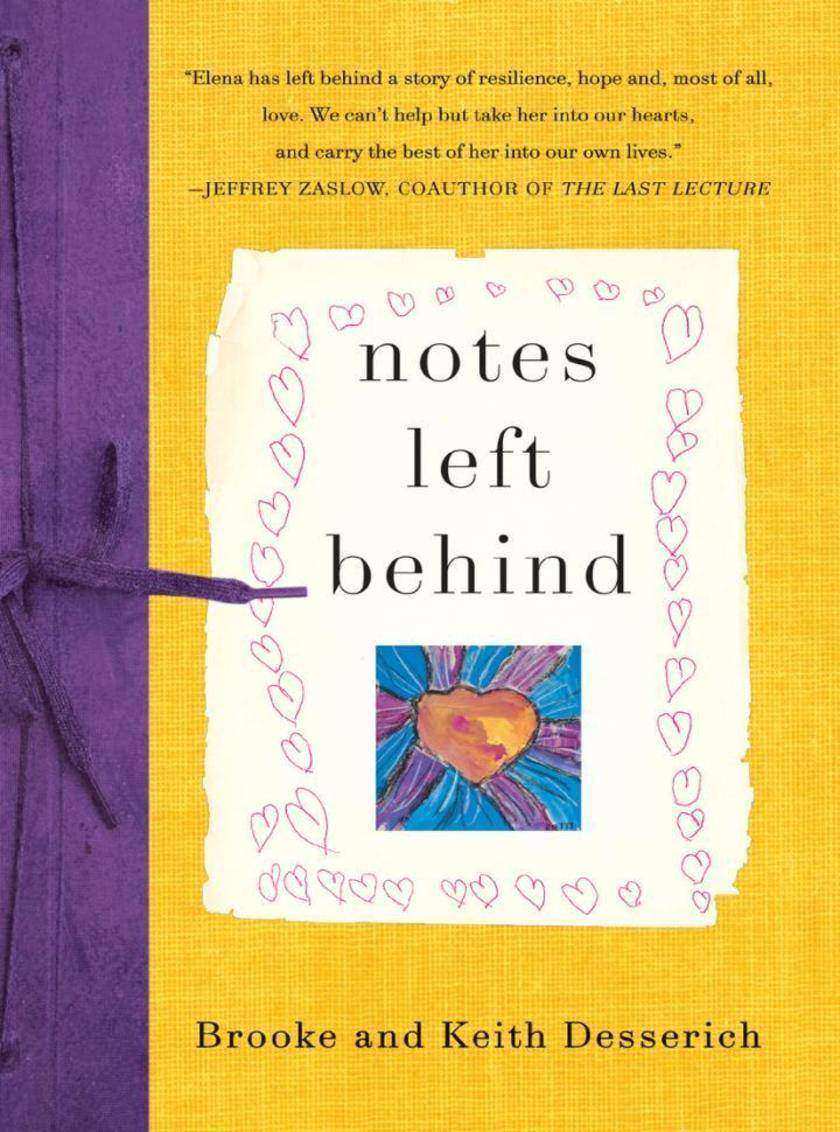
Notes Left Behind
¥88.56
Elena Desserich dreamed of becoming a teacher. Although her time on this earth was far too short to fulfill her dream, she left behind an enlightening lesson plan on life. Wise beyond her years, Elena never stopped teaching those around her to appreciate the miracle of everyday living even as the innocent six-year-old battled a rare form of brain cancer. Through personal and candid journal entries written as a remembrance for Elena's younger sister, Brooke and Keith Desserich share their emotional journey as they negotiated their contradictory impulses to fight Elena's cancer at all costs and realized the inevitable outcome. Page by page, this journal is a reminder to parents everywhere to appreciate and savor every precious moment they have with their own children.Notes Left Behind tells a story of humility and inspiration. From the time of her diagnosis, Elena accomplished a truly spectacular series of wishes, big and small, that she alone created, from riding in a horse-drawn carriage to painting a masterpiece that would hang in an art museum. Her life motivated the creation of the foundation that today helps children everywhere in their fight against cancer. Included in the pages of this book are Elena's private messages that she secretly hid around her home, knowing her family would find them when she was gone. These notes show us how even during the darker moments of life, it is possible to find hope and encouragement through selfless love.

The Good Divorce
¥94.10
It's never too late to have a good divorce Based on two decades of groundbreaking research, The Good Divorce presents the surprising finding that in more than fifty percent of divorces couples end their marriages, yet preserve their families. Dr. Ahrons shows couples how they can move beyond the confusing, even terrifying early stages of breakup and learn to deal with the transition from a nuclear to a "binuclear" family--one that spans two households and continues to meet the needs of children. The Good Divorce makes an important contribution to the ongoing "family values" debate by dispelling the myth that divorce inevitability leaves emotionally troubles children in its wake. It is a powerful tonic for the millions of divorcing and long-divorces parents who are tired of hearing only the damage reports. It will make us change the way we think about divorce and the way we divorce, reconfirming our commitment to children and families.

We're Still Family
¥83.03
What is the real legacy of divorceTo answer this question, Constance Ahrons, Ph.D., interviewed one hundred and seventy-three grown children whose divorcing parents she had interviewed twenty years earlier for her landmark study, the basis of which was the highly acclaimed book The Good Divorce. What she has learned is both heartening and significant.Challenging the stereotype that children of divorce are emotionally troubled, drug abusing, academically challenged, and otherwise failing, Dr. Ahrons reveals that most children can and do adapt, and that many even thrive in the face of family change. Although divorce is never easy for any family, she shows that it does not have to destroy children's lives or lead to a family breakdown. With the insight of these grown children and the advice of this gifted family therapist, divorcing parents will find helpful road maps identifying both the benefits and the harms to which postdivorce children are exposed and, ultimately, what they can do to maintain family bonds.
The Secret Currency of Love
¥84.16
Money. It affects us all. So why is it so difficult for us to acknowledge its enormous impact on our private affairsIn this riveting and provocative anthology of original essays, more than two dozen of America's most esteemed women writers share their deepest feelings about personal finance and how it profoundly influences their relationships with parents, children, spouses, siblings, lovers, and ultimately with themselves. Witty, nuanced, and startlingly intimate, The Secret Currency of Love offers a transformative look at the delicate nature of love and money while providing fascinating insight into how a modern generation of women is defining itself in the new social economy.Contributors include Leslie Bennetts Veronica Chambers Julia Glass Lori Gottlieb Kathryn Harrison Sheri Holman Ann Hood Karen Karbo Dani Shapiro Amy Sohn

Side by Side
¥84.16
Moms and daughters.They can go from best friends to mortal enemies with breakneck speed. From boyfriends to curfews and from outfits to eating habits, mothers and daughters often end up in conflict about everything. Now with Side by Side, mothers finally have a proven program to help navigate their relationship with their daughters of any age.Dr. Charles Sophy has dedicated his career to the physical and mental health of children and families from all walks of life. Through hundreds of consultations, he found the most promising and most problematic family dynamic is that between mother and daughter.Side by Side introduces the Four Truths of every mother-daughter relationship and a revolutionary communication approach called the Chair Strategy. This mom-driven strategy is designed to harness her power to resolve even the most volatile situations with love, understanding, and respect. It provides a concrete visual of the way mothers and daughters communicate, revealing that at all times, moms and daughters approach each other in one of three positions: back-to-back when mom and daughter are at odds, neither looking at one another or listening to what the other is saying face-to-face when they are discussing an issue openly, honestly, and with respect, regardless of whether they agree or not side-by-side when both are looking in the same direction, sharing the same perspective Dr. Sophy reveals how to develop the essential skill for identifying your current position and then moving you and your daughter toward the best position for achieving a productive outcome.Being a mom is hard work, and this practical and accessible explanation of the most important role you will ever play steers you through even the roughest waters, including the hot-button issues of sex, money, and divorce. With exercises, guided conversations, journaling, and real-world stories, this book takes the mother-daughter relationship, regardless of its current state, and leads it toward a new level of understanding, love, and true connection. Side by Side is the pivotal first step to having a strong and rewarding relationship with your daughter for years to come.
The Sermon on the Mount
¥88.56
What did Jesus teachDistilled from years of study and lecture, affirmed by nearly a million readers over the last fifty years, Emmet Fox's answer in The Sermon on the Mount is simple. The Bible is a "textbook of metaphysics" and the teachings of Jesus express--without dogma--a practical approach for the development of the soul and for the shaping of our lives into what we really wish them to be. For Fox, Jesus was "no sentimental dreamer, no mere dealer in empty platitudes, but the unflinching realist that only a great mystic can be."In his most popular work, Emmet Fox shows how to: Understand the true nature of divine wisdom. Tap into the power of prayer. Develop a completely integrated and fully expressed personality. Transform negative attitudes into life-affirming beliefs. Claim our divine right to the full abundance of life.
Ruthless Trust
¥83.03
In his sequel to The Ragamuffin Gospel bestselling author Brennan Manning shows how true and radical trust in God can transform our lives
Naked Spirituality
¥83.03
Christianity is in crisis. Many sincere Christians feel their traditional Christian practices are in danger of becoming irrelevant, empty rituals. In his previous book A New Kind of Christianity, Brian D. McLaren offered new biblical models for how we understand the central ideas of a faith that provides hope for restoring and reinvigorating the power of the gospels to transform us and our communities.In Naked Spirituality, McLaren takes his prophetic work a step further by confronting how the lack of a simple, doable, durable spirituality undermines the very transformation God is calling us to undergo. As a result, our religious structures become tools to maintain the status quo and not catalysts for personal and social change. McLaren presents a four-stage framework for understanding the spiritual life, and he unfolds spiritual practices appropriate to each stage. Each practice is rooted in a simple word: here, thanks, O, sorry, help, please, when, no, why, behold, yes, and silence. Naked Spirituality offers accessible, practical wisdom for living a truly spiritual life. Staying true to Jesus's core message while engaging faithfully with our postmodern world, McLaren presents a proven spiritual program for engaging in and sustaining a meaningful relationship with God.
Bullied
¥99.65
Winner of National Parenting Publications Award and Mom's Choice Award!Everybody knows how it feels to be ostracized, isolated or taunted, but most of us are at a loss when it comes to knowing how to make it better. In Carrie Goldman's groundbreaking book, Bullied, she offers concrete solutions for parents, teachers, and kids on how to effectively respond to painful situations whether it is normal social conflict or more serious bullying.Goldman's warm, engaging style combines the real-life stories of bullies, victims, bystanders, and their parents with the most cutting edge scientific research to provide a thorough analysis of cruelty in our culture. She explores how the pop culture permeates homes and schools, often impacting the way kids view those who are different from the accepted norm.Bullied comprehensively addresses issues such as: The media's influence on aggression and bullying How to prevent cyberbullying, or how to manage cyberbullying once it has begun How to safely shift from being a bystander into a witness or an ally Effects of bullying on the brain, both for bullies and for victims Steps to take with the school if you are being bullied or sexually harassed A comprehensive look at restorative justice as a non-punitive response to bullying Techniques to help you deal with verbal taunting in the moment it is happening Identifying the difference between normal social drama and bullying Knowing when to ask for help and how to access effective help The mother of a bullied first grader, Goldman's inspiring true story triggered an outpouring of support from online communities around the world. Bullied is a research-based book born from Goldman's blog post about the ridicule her daughter suffered for bringing a Star Wars thermos to school a story that went viral on Facebook and Twitter before exploding everywhere, from CNN.com and Yahoo.com to sites all around the world. More than 200 people were interviewed for the book, including parents, teachers, kids, social workers, authors, celebrities, researchers, psychologists, actors, actresses, and school administrators. It is a wealth of knowledge packaged in a fascinating read.
That's Not What I Meant!
¥94.10
At home, on the job, in a personal relationship, it's often not what you say but how you say it that counts.Deborah Tannen revolutionized our thinking about relationships between women and men in her #1 bestseller You Just Don't Understand. In That's Not What I Meant!, the internationally renowned sociolinguist and expert on communication demonstrates how our conversational signals voice level, pitch and intonation, rhythm and timing, even the simple turns of phrase we choose are powerful factors in the success or failure of any relationship. Regional speech characteristics, ethnic and class backgrounds, age, and individual personality all contribute to diverse conversational styles that can lead to frustration and misplaced blame if ignored but provide tools to improve relationships if they are understood.At once eye-opening, astute, and vastly entertaining, Tannen's classic work on interpersonal communication will help you to hear what isn't said and to recognize how your personal conversational style meshes or clashes with others. It will give you a new understanding of communication that will enable you to make the adjustments that can save a conversation . . . or a relationship.


