


 购物车
购物车 个人中心
个人中心

Pragmatism
¥8.09
Pragmatism
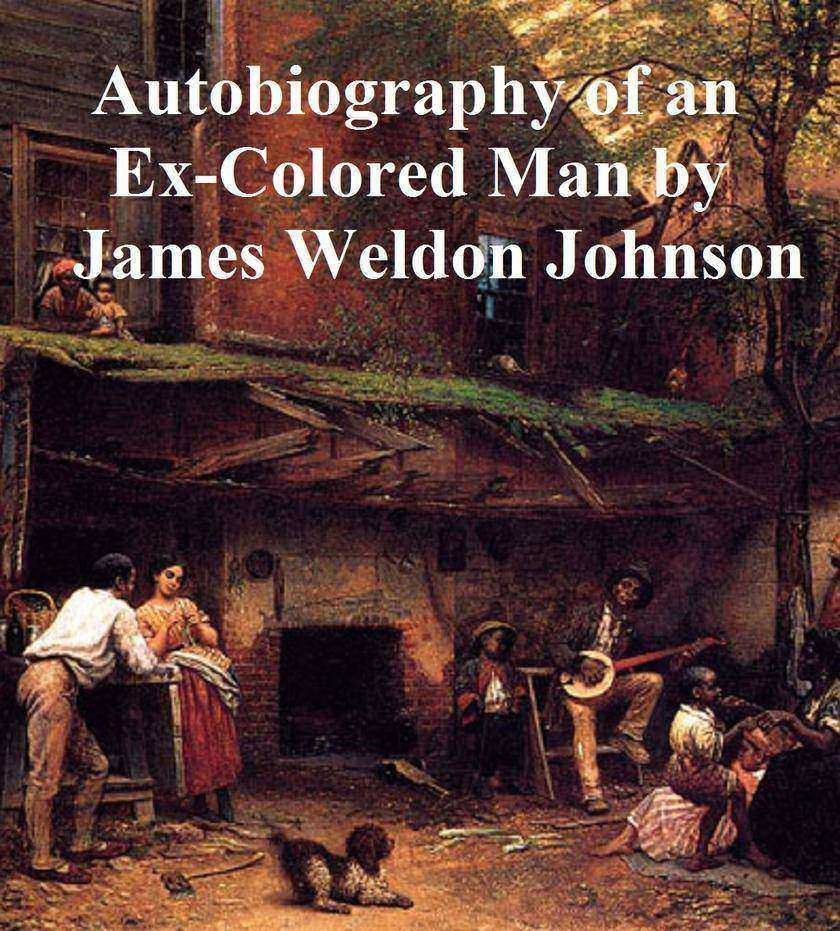
The Autobiography of an Ex-Colored Man
¥8.09
According to Wikipedia: "James Weldon Johnson (June 17, 1871 – June 26, 1938) was an American author, politician, diplomat, critic, journalist, poet, anthologist, educator, lawyer, songwriter, and early civil rights activist. Johnson is remembered best for his writing, which includes novels, poems, and collections of folklore. He was also one of the first African-American professors at New York University. Later in life he was a professor of creative literature and writing at Fisk University."
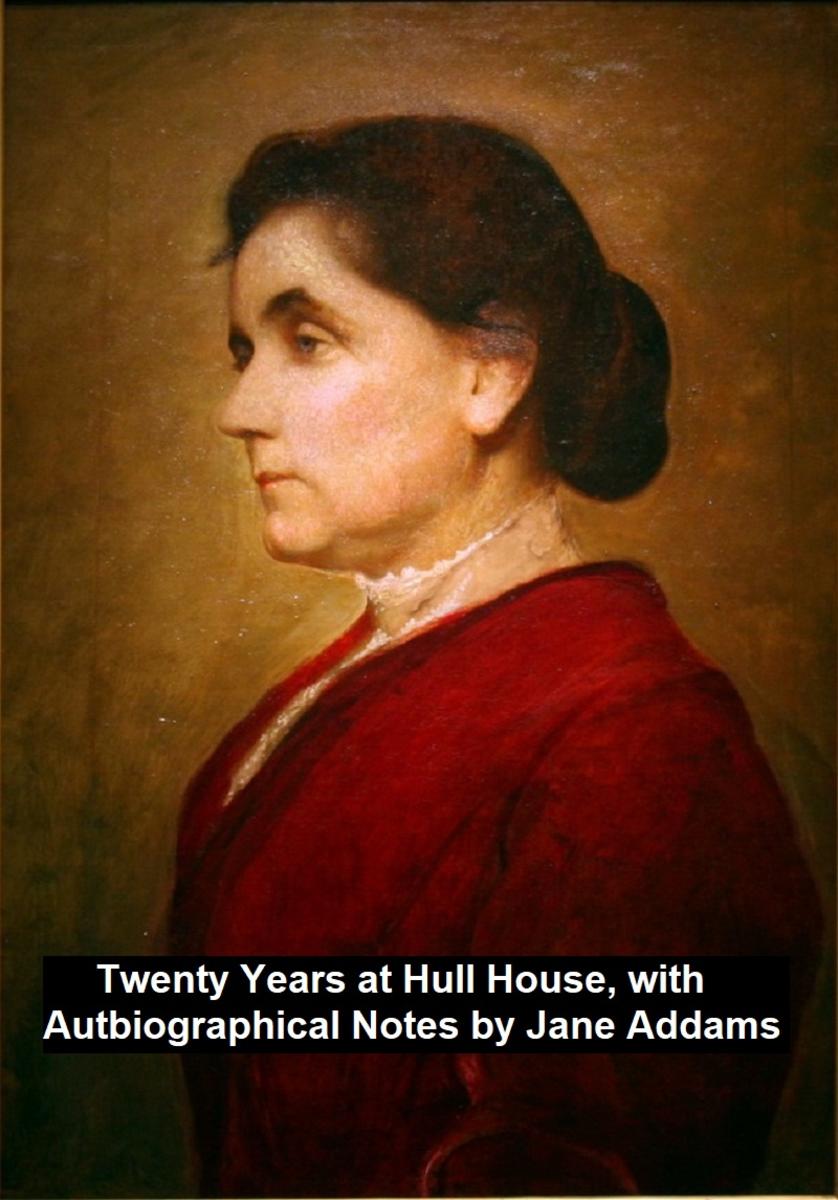
Twenty Years at Hull-House, with Autobiographical Notes
¥8.09
According to Wikipedia: "Jane Addams (September 6, 1860 – May 21, 1935) was a founder of the U.S. Settlement House movement, and one of the first American women to be awarded the Nobel Peace Prize."
The Life of Thomas Telford, Civil Engineer
¥8.09
According to Wikipedia: "Thomas Telford (1757–1834) was a Scottish civil engineer, architect and stonemason, and a noted road, bridge and canal builder. After establishing himself as an engineer of road and canal projects in Shropshire, he designed numerous infrastructure projects in his native Scotland, as well as harbours and tunnels. Such was his reputation as a prolific designer of highways and related bridges, he was dubbed The Colossus of Roads, and, reflecting his command of all types of civil engineering in the early 19th century, he was elected as the first President of the Institution of Civil Engineers, a post he retained for 14 years until his death.... Samuel Smiles (23 December 1812 – 16 April 1904), was a Scottish author and reformer. ... Smiles is best known today as the writer of books extolling virtues of self help, and biographies lauding the achievements of "heroic" engineers."
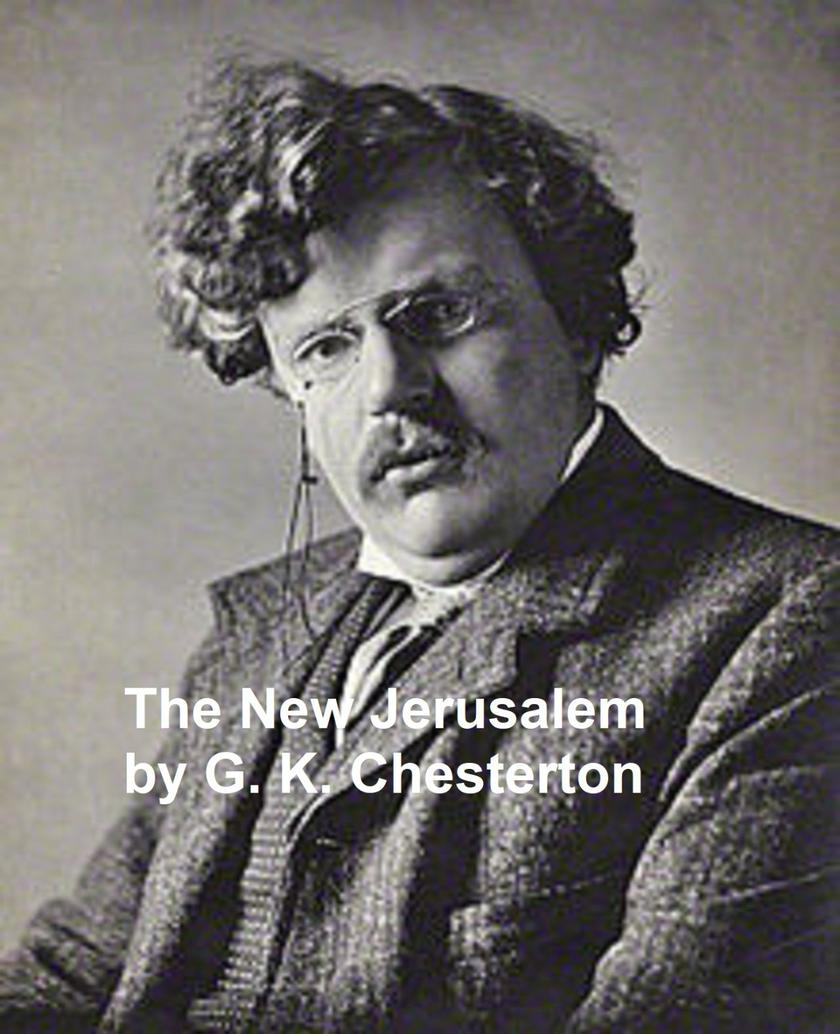
The New Jerusalem
¥8.09
Travelogue and related essays. According to Wikipedia: "Gilbert Keith Chesterton (1874 - 1936) was an influential English writer of the early 20th century. His prolific and diverse output included journalism, philosophy, poetry, biography, Christian apologetics, fantasy and detective fiction. Chesterton has been called the "prince of paradox."[1] He wrote in an off-hand, whimsical prose studded with startling formulations. For example: "Thieves respect property. They merely wish the property to become their property that they may more perfectly respect it."[2] He is one of the few Christian thinkers who are equally admired and quoted by both liberal and conservative Christians, and indeed by many non-Christians. Chesterton's own theological and political views were far too nuanced to fit comfortably under the "liberal" or "conservative" banner."

Romulus
¥8.09
According to Wikipedia: "Romulus and Remus are Rome's twin founders in its traditional foundation myth, although the former is sometimes said to be the sole founder. Their maternal grandfather is Numitor, rightful king of Alba Longa, a descendant of the Trojan prince, Aeneas and father to Rhea Silvia (also known as Ilia). Before their conception, Numitor's brother Amulius deposes his brother, kills his sons and forces Rhea to become a Vestal Virgin, intending to deprive Numitor of lawful heirs and thus secure his own position; but Rhea conceives Romulus and Remus by the god Mars or the demi-god Hercules. When the twins are born, Amulius has them exposed to die but they are saved by a series of miraculous interventions. A she-wolf finds them and suckles them. Then a shepherd and his wife foster them and raise them to manhood as shepherds. The twins prove to be natural leaders, and acquire many followers. When told their true identities, they kill Amulius, restore Numitor to the throne of Alba Longa and decide to found a new city for themselves."
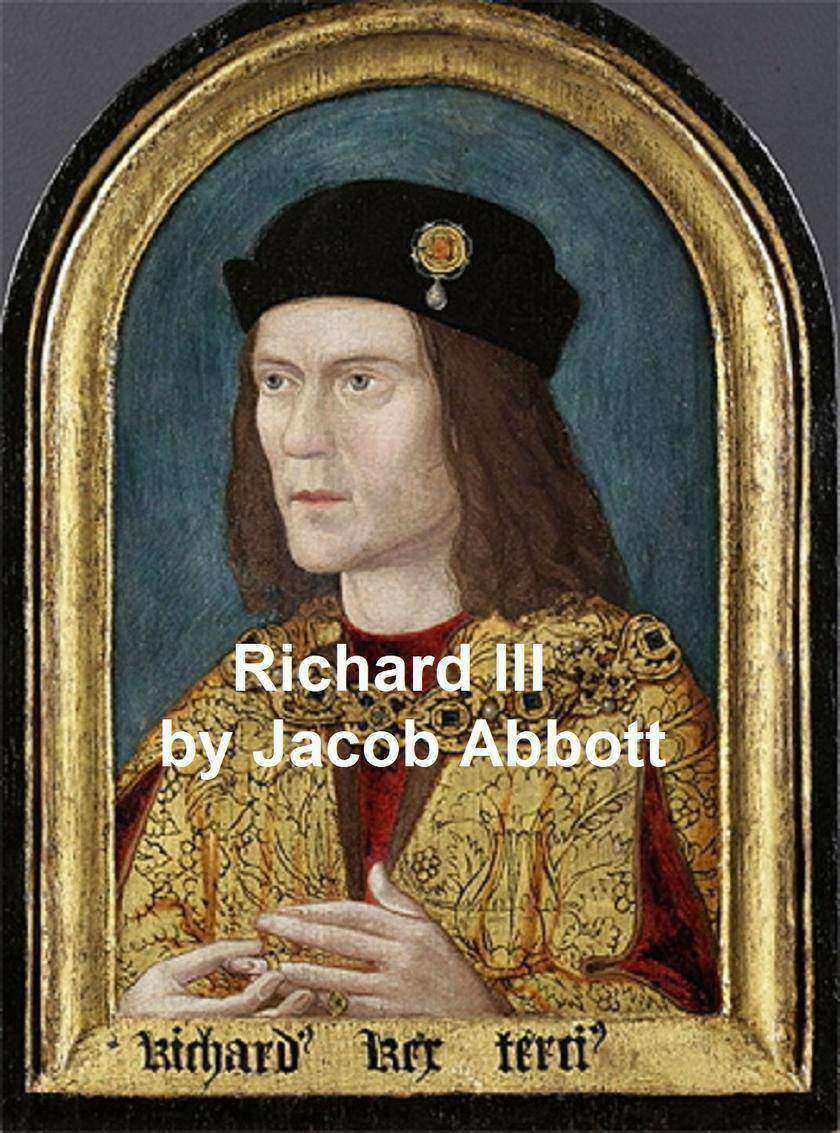
Richard III
¥8.09
According to Wikipedia: "Richard III (2 October 1452 – 22 August 1485) was King of England for two years, from 1483 until his death in 1485 during the Battle of Bosworth Field. He was the last king of the House of York and the last of the Plantagenet dynasty. His defeat at the Battle of Bosworth Field was the decisive battle of the Wars of the Roses and is sometimes regarded as the end of the Middle Ages in England. He is the subject of an eponymous historical play by William Shakespeare. When his brother Edward IV died in April 1483, Richard was named Lord protector of the realm for Edward's son and successor, the 12-year-old King Edward V... There were two major rebellions against Richard. The first, in October 1483, was led by staunch opponents of Edward IV and most notably by Richard's former ally, Henry Stafford, 2nd Duke of Buckingham. The revolt collapsed and Buckingham was executed at Salisbury near the Bull's Head Inn. In August 1485 there was another rebellion against Richard, headed by Henry Tudor, 2nd Earl of Richmond (later King Henry VII) and his uncle Jasper. The rebels landed troops, composed mainly of mercenaries, and Richard fell in the Battle of Bosworth Field, the last English king to die in battle (and the only king to die in battle on English soil since Harold II, at the Battle of Hastings in 1066)."
Letters of Pliny
¥8.09
Classic collection of letters. According to Wikipedia: "Gaius Plinius Caecilius Secundus, born Gaius Caecilius or Gaius Caecilius Cilo (61 AD – ca. 112 AD), better known as Pliny the Younger, was a lawyer, author, and magistrate of Ancient Rome. Pliny's uncle, Pliny the Elder, helped raise and educated him. They were both witnesses to the eruption of Vesuvius on 24 August 79 AD. Pliny is known for his hundreds of surviving letters, which are an invaluable historical source for the time period. Many are addressed to reigning emperors or to notables such as the historian, Tacitus. Pliny himself was a notable figure, serving as an imperial magistrate under Trajan (reigned AD 98–117)."
The Letters of Henry James
¥8.09
Dodo Collections brings you another classic from Henry James, ‘The Letters of Henry James’. ? The Complete Letters of Henry James fills a crucial gap in modern literary studies by presenting in a scholarly edition the complete letters of one of the great novelists and letter writers of the English language. Comprising more than ten thousand letters reflecting on a remarkably wide range of topics—from James’s own life and literary projects to broader questions on art, literature, and criticism. ? Henry James, OM (15 April 1843 – 28 February 1916) was an American writer who spent most of his writing career in Britain. He is regarded as one of the key figures of 19th-century literary realism. He was the son of Henry James, Sr. and the brother of philosopher and psychologist William James and diarist Alice James. ? He is best known for a number of novels showing Americans encountering Europe and Europeans. His method of writing from a character's point of view allowed him to explore issues related to consciousness and perception, and his style in later works has been compared to impressionist painting. His imaginative use of point of view, interior monologue and unreliable narrators brought a new depth to narrative fiction. ? James contributed significantly to literary criticism, particularly in his insistence that writers be allowed the greatest possible freedom in presenting their view of the world. James claimed that a text must first and foremost be realistic and contain a representation of life that is recognizable to its readers. Good novels, to James, show life in action and are, most importantly, interesting. In addition to his voluminous works of fiction he published articles and books of travel, biography, autobiography, and criticism, and wrote plays. James alternated between America and Europe for the first twenty years of his life; eventually he settled in England, becoming a British subject in 1915, one year before his death. James was nominated for the Nobel Prize in Literature in 1911, 1912, and 1916.
Books and Persons: Being Comments on a Past Epoch (1908-1911)
¥8.09
Dodo Collections brings you another classic from Arnold Bennett, ‘"Books and Persons; Being Comments on a Past Epoch, 1908-1911".’ ? The contents of this book have been chosen from a series of weekly articles which enlivened the?New Ageduring the years 1908, 1909, 1910, and 1911, under the pseudonym "Jacob Tonson." The man responsible for the republication is the dedicatee, who, having mysteriously demanded from me back numbers of theNew Age, sat in my house one Sunday afternoon and in four hours read through the entire series. He then announced that he had made a judicious selection, and that the selection must positively be issued in volume form. Mr. Frank Swinnerton approved the selection and added to it slightly. In my turn I suggested a few more additions. The total amounts to one-third of the original matter. Beyond correcting misprints, softening the crudity of several epithets, and censoring lines here and there which might give offence without helping the sacred cause, I have not altered the articles. They appear as they were journalistically written in Paris, London, Switzerland, and the Forest of Fontainebleau. In particular I have left the critical judgments alone, for the good reason that I stand by nearly all of them, though perhaps with a less challenging vivacity, to this day. ARNOLD BENNETT February 1917 Enoch Arnold Bennett (always known as Arnold Bennett) was one of the most remarkable literary figures of his time, a product of the English Potteries that he made famous as the Five Towns. Yet he could hardly wait to escape his hometown, and he did so by the sheer force of his ambition to succeed as an author. In his time he turned his hand to every kind of writing, but he will be remembered for such novels as The Old Wives' Tale, the Clayhanger trilogy (Clayhanger, Hilda Lessways, and These Twain), and The Card. He also wrote such intriguing self-improvement books as Literary Taste, How To Live on 24 Hours a Day, The Human Machine, etc.
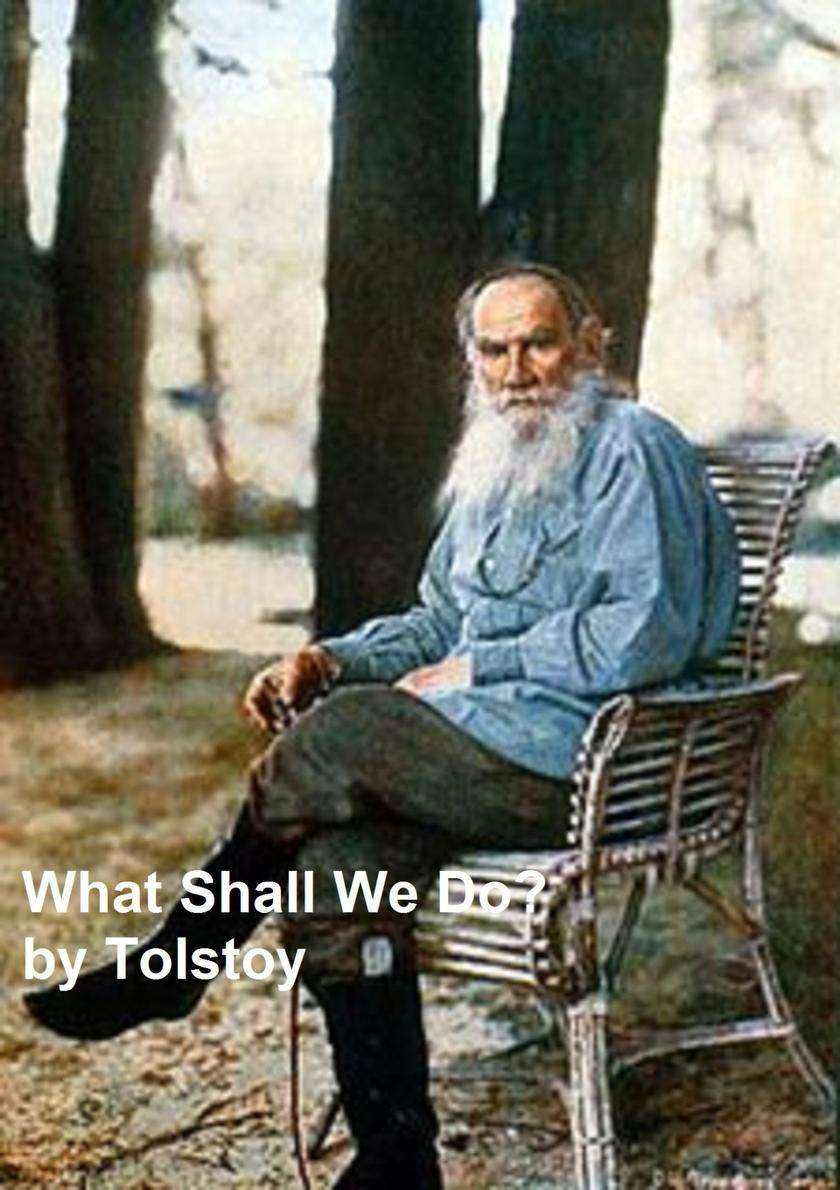
What Shall We Do?
¥8.09
According to Wikipedia: "What Is to be Done? (sometimes translated as What Then Must We Do?) is a non-fiction work by Leo Tolstoy, in which Tolstoy describes the social conditions of Russia in his day. Tolstoy completed the book in 1886, and the first English language publication came in 1887. The English title was also used for two better-known works by Nikolai Chernyshevsky and Vladimir Lenin; Tolstoy's Russian title is similar but not identical to Chernyshevsky's (and Lenin's), both of them sharing the same Biblical reference (Luke 3:10-14)."
The Life and Genius of Nathaniel Hawthorne
¥8.09
According to Wikipedia: "Frank Preston Stearns (1846-1917), the son of abolitionist George Luther Stearns, was a writer and abolitionist from Massachusetts during the 19th century. In addition to collaborating with Elizur Wright in ambitious abolitionist projects, such as the American Anti-Slavery Society, he is credited with several seminal works exploring the lives and careers of important American public figures and authors of note, including The Life and Genius of Nathaniel Hawthorne and The Life and Public Services of George Luther Stearns."
A Study of Hawthorne
¥8.09
According to Wikipedia: "George Parsons Lathrop was born August 25, 1851 in Honolulu, Hawaii... Going to England on a visit he was married in London, September 11, 1871, to Rose Hawthorne, daughter of Nathaniel Hawthorne. In 1875 he became associate editor of the Atlantic Monthly, and remained in that position two years, leaving it for newspaper work in Boston and New York. His contributions to the periodical and daily Press were varied and voluminous. In 1883 he founded the American Copyright League, which finally secured the international copyright law. Lathrop was also one of the founders of the Catholic Summer School of America. He and his wife were received into the Roman Catholic Church in New York in March 1891. Among his published works are: Rose and Roof-tree (1875), poems; A Study of Hawthorne (1876); Afterglow (1876), a novel; Spanish Vistas (1883), a work on travel; Newport (1884), a novel; Dreams and Days (1892), poems; A Story of Courage (1894), centenary history of the Visitation Convent, Georgetown, D.C.
The Letters of Cassiodorus
¥8.09
A condensed translation of the Variae Epistolae of Magnus Aurelius Cassiodorus Senator. According to Wikipedia: "Flavius Magnus Aurelius Cassiodorus Senator (c. 485 – c. 585), commonly known as Cassiodorus, was a Roman statesman and writer, serving in the administration of Theoderic the Great, king of the Ostrogoths. Senator was part of his surname, not his rank."
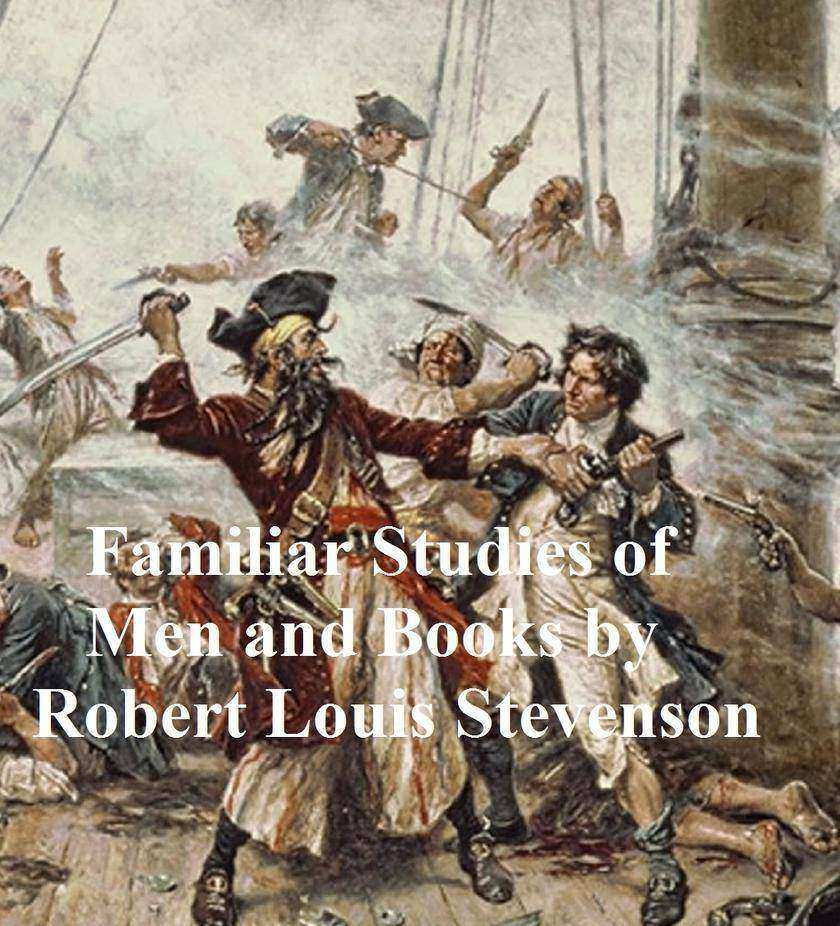
Familiar Studies of Men and Books
¥8.09
This collection of essays includes: VICTOR HUGO'S ROMANCES, SOME ASPECTS OF ROBERT BURNS, WALT WHITMAN, HENRY DAVID THOREAU: HIS CHARACTER AND OPINIONS, YOSHIDA-TORAJIRO, FRANCOIS VILLON, STUDENT, POET, AND HOUSE-BREAKER, CHARLES OF ORLEANS, SAMUEL PEPYS, and JOHN KNOX AND WOMEN. According to Wikipedia: "Robert Louis (Balfour) Stevenson ( 1850 - 1894), was a Scottish novelist, poet, and travel writer, and a leading representative of Neo-romanticism in English literature. He was the man who "seemed to pick the right word up on the point of his pen, like a man playing spillikins", as G. K. Chesterton put it. He was also greatly admired by many authors, including Jorge Luis Borges, Ernest Hemingway, Rudyard Kipling, Vladimir Nabokov, and J. M. Barrie. Most modernist writers dismissed him, however, because he was popular and did not write within their definition of modernism. It is only recently that critics have begun to look beyond Stevenson's popularity and allow him a place in the canon."

The English Governess at the Siamese Court
¥8.09
First published in 1870. "Being recollections of six years in the royal palace at Bangkok." According to Wikipedia: "Anna Harriette Leonowens (6 November 1831 – 19 January 1915) born Anna Harriet Emma Edwards, was an Anglo-Indian or Indian-born British travel writer, educator, and social activist. Her experiences in Siam (Thailand) were fictionalised in Margaret Landon's 1944 best-selling novel Anna and the King of Siam, as well as films and television series based on the book, most notably Rodgers and Hammerstein's 1951 hit musical The King and I. During the course of her life, Leonowens also lived in Aden, Australia, Singapore, the United States and Canada. Among other achievements, she co-founded the Nova Scotia College of Art and Design."
A Miscellany of Men
¥8.09
Classic collection of essays, including: THE SUFFRAGIST, THE POET AND THE CHEESE, THE THING, THE MAN WHO THINKS BACKWARDS, THE NAMELESS MAN, THE GARDENER AND THE GUINEA, THE VOTER AND THE TWO VOICES, THE MAD OFFICIAL, THE ENCHANTED MAN, THE SUN WORSHIPPER, THE WRONG INCENDIARY, THE FREE MAN, THE HYPOTHETICAL HOUSEHOLDER, THE PRIEST OF SPRING, THE REAL JOURNALIST, THE SENTIMENTAL SCOT, THE SECTARIAN OF SOCIETY, THE FOOL, THE CONSCRIPT AND THE CRISIS, THE MISER AND HIS FRIENDS, THE MYSTAGOGUE, THE RED REACTIONARY, THE SEPARATIST AND SACRED THINGS, THE MUMMER, THE ARISTOCRATIC 'ARRY, THE NEW THEOLOGIAN, THE ROMANTIC IN THE RAIN, THE FALSE PHOTOGRAPHER, THE SULTAN, THE ARCHITECT OF SPEARS, THE MAN ON TOP, THE OTHER KIND OF MAN, THE MEDIAEVAL VILLAIN, THE DIVINE DETECTIVE, THE ELF OF JAPAN, THE CHARTERED LIBERTINE, THE CONTENTED MAN, and THE ANGRY AUTHOR: HIS FAREWELL . According to Wikipedia: "Gilbert Keith Chesterton (29 May 1874 – 14 June 1936) was an influential English writer of the early 20th century. His prolific and diverse output included journalism, philosophy, poetry, biography, Christian apologetics, fantasy and detective fiction. Chesterton has been called the "prince of paradox." Time magazine, in a review of a biography of Chesterton, observed of his writing style: "Whenever possible Chesterton made his points with popular sayings, proverbs, allegories—first carefully turning them inside out."
Orthodoxy
¥8.09
Classic collection of essays. The Preface begins: " This book is meant to be a companion to "Heretics," and to put the positive side in addition to the negative. Many critics complained of the book called "Heretics" because it merely criticised current philosophies without offering any alternative philosophy. This book is an attempt to answer the challenge. It is unavoidably affirmative and therefore unavoidably autobiographical. The writer has been driven back upon somewhat the same difficulty as that which beset Newman in writing his Apologia; he has been forced to be egotistical only in order to be sincere. While everything else may be different the motive in both cases is the same. It is the purpose of the writer to attempt an explanation, not of whether the Christian Faith can be believed, but of how he personally has come to believe it. The book is therefore arranged upon the positive principle of a riddle and its answer." According to Wikipedia: "Gilbert Keith Chesterton (29 May 1874 – 14 June 1936) was an influential English writer of the early 20th century. His prolific and diverse output included journalism, philosophy, poetry, biography, Christian apologetics, fantasy and detective fiction. Chesterton has been called the "prince of paradox." Time magazine, in a review of a biography of Chesterton, observed of his writing style: "Whenever possible Chesterton made his points with popular sayings, proverbs, allegories—first carefully turning them inside out."
Reviews
¥8.09
Large book-length collection of According to Wikipedia: "Oscar Fingal O'Flahertie Wills Wilde (1854 - 1900) was an Irish playwright, novelist, poet, and author of short stories. Known for his barbed wit, he was one of the most successful playwrights of late Victorian London, and one of the greatest celebrities of his day. As the result of a famous trial, he suffered a dramatic downfall and was imprisoned for two years of hard labour after being convicted of the offence of 'gross indecency.'"

Memoirs, Criticism, and Letters
¥8.09
This book-collection file includes five books: The Mirror of the Sea, Notes on Life and Letters, Notes on My Books, A Personal Record, and Some Reminiscences. According to Wikipedia: "Joseph Conrad (born Józef Teodor Konrad Korzeniowski, 3 December 1857 – 3 August 1924) was a Polish-born English novelist. Many critics regard him as one of the greatest novelists in the English language—a fact that is remarkable as he did not learn to peak English fluently until he was in his twenties (and always with a Polish accent). Conrad is recognized as a master prose stylist. Some of his works have a strain of romanticism, but more importantly he is recognized as an important forerunner of modernist literature. His narrative style and anti-heroic characters have influenced many writers, including Ernest Hemingway, D. H. Lawrence, F. Scott Fitzgerald, Graham Greene, William S. Burroughs, Joseph Heller, V.S. Naipaul, Italo Calvino and J. M. Coetzee."
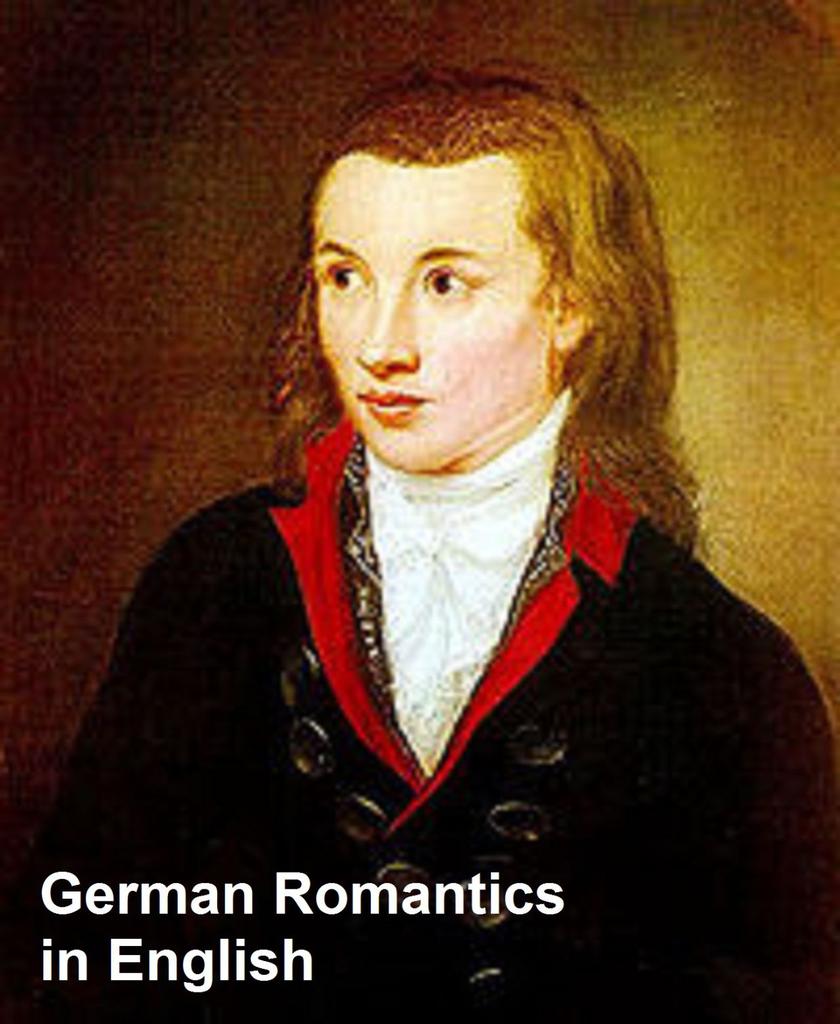
German Romantics
¥8.09
This collection, first published in 1914, includes short works by and about Jean Paul, Wilhelm von Humboldt, August Wilhelm Schlegel, Friedrich Schlegel, Novalis, Holderlin, Ludwig Tieck, and Kleist. The German Classics Of The Nineteenth And Twentieth Centuries, Volume 4.


