


 购物车
购物车 个人中心
个人中心
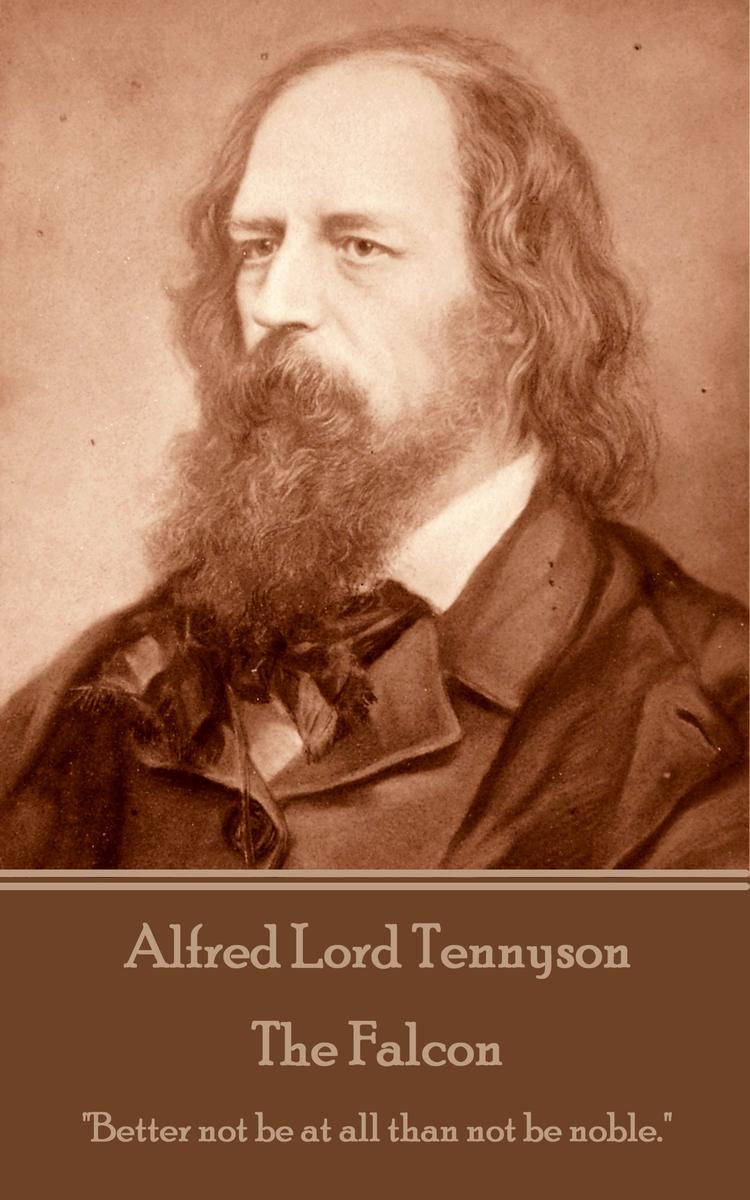
Falcon - Better not be at all than not be noble.
¥16.38
Alfred Tennyson was born on August 6th, 1809, in Somersby, Lincolnshire, the fourth of twelve children. Most of Tennyson's early education was under the direction of his father, although he did spend four unhappy years at a nearby grammar school. He left home in 1827 to join his elder brothers at Trinity College, Cambridge, more to escape his father than a desire for serious academic work. At Trinity he was living for the first time among young men of his own age who knew little of his problems. He was delighted to make new friends; he was handsome, intelligent, humorous, a gifted impersonator and soon at the center of those interested in poetry and conversation. That same year, he and his brother Charles published Poems by Two Brothers. Although the poems in the book were of teenage quality, they attracted the attention of the "e;Apostles,"e; a select undergraduate literary club led by Arthur Hallam. The "e;Apostles"e; provided Tennyson with friendship and confidence. Hallam and Tennyson became the best of friends; they toured Europe together in 1830 and again in 1832. Hallam's sudden death in 1833 greatly affected the young poet. The long elegy In Memoriam and many of Tennyson's other poems are tributes to Hallam. In 1830, Tennyson published Poems, Chiefly Lyrical and in 1832 he published a second volume entitled simply Poems. Some reviewers condemned these books as "e;affected"e; and "e;obscure."e; Tennyson, stung by the reviews, would not publish another book for nine years. In 1836, he became engaged to Emily Sellwood. When he lost his inheritance on a failed investment in 1840, the engagement was cancelled. In 1842, however, Tennyson's Poems [in two volumes] was a tremendous critical and popular success. In 1850, with the publication of In Memoriam, Tennyson's reputation was pre-eminent. He was also selected as Poet Laureate in succession to Wordsworth and, to complete a wonderful year, he married Emily Sellwood. At the age of 41, Tennyson had established himself as the most popular poet of the Victorian era. The money from his poetry [at times exceeding 10,000 pounds per year] allowed him to purchase a home in the country and to write in relative seclusion. His appearance-a large and bearded man, he regularly wore a cloak and a broad brimmed hat-enhanced his notoriety. In 1859, Tennyson published the first poems of Idylls of the Kings, which sold more than 10,000 copies in a fortnight. In 1884, he accepted a peerage, becoming Alfred Lord Tennyson. On October 6th, 1892, an hour or so after midnight, surrounded by his family, he died at Aldworth. It is said that the moonlight was streaming through the window and Tennyson himself was holding open a volume of Shakespeare. He was buried in Westminster Abbey.
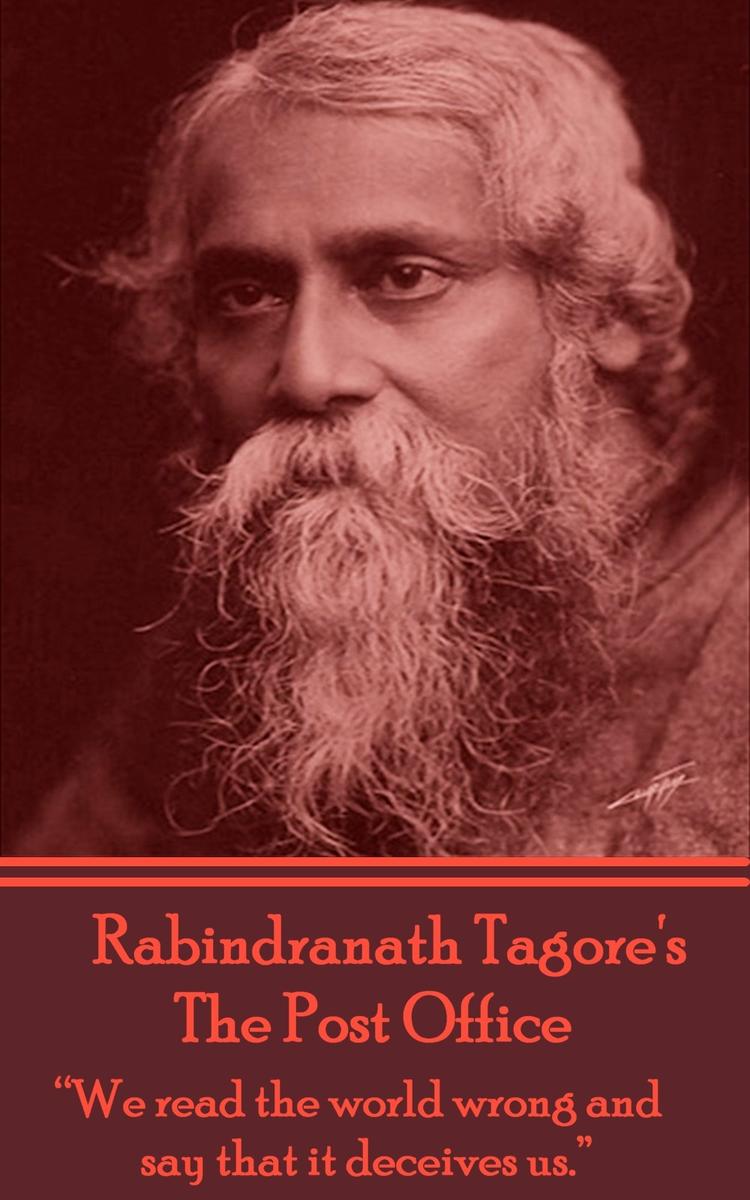
Post Office - We read the world wrong and say the it deceives us.
¥14.03
In this volume we venture to the East. To met a writer who speaks a common language of love and mysticism which continues to convey valuable insights into universal themes in contemporary society. Rabindranath Tagore (1861-1941) who was a gifted Bengali Renaissance man, distinguishing himself as a philosopher, social and political reformer and a popular author in all literary genres. He was instrumental in an increased freedom for the press and influenced Gandhi and the founders of modern India. He composed hundreds of songs which are still sung today as they include the Indian and Bangladeshi national anthems. His prolific literary life has left a legacy of quality novels, essays, poems and in this volume one of his plays. He earned the distinction of being the first Asian writer to receive the Nobel Prize in Literature in 1913. Many of his poems are also available as an audiobook from our sister company Portable Poetry as well as ebooks of stories and essays. Many samples are at our youtube channel http://www.youtube.com/user/PortablePoetry?feature=mhee The full volume of poems can be purchased from iTunes, Amazon and other digital stores. Among our readers are Shyama Perera and Ghizela Rowe
Prometheus Bound - I know how men in exile feed on dreams
¥11.67
schylus is often regarded as the father of Greek tragedy; he moved play writing from the simple interaction of a single character and a chorus to one where many characters interact and thereby create more dynamic and dramatic situations. schylus, was the son of Euphorion, and a scion of a Eupatrid or noble family. He was born at Eleusis 525 B.C., or, as the Greeks calculated time, in the fourth year of the 63rd Olympiad. He first worked at a vineyard and whilst there claimed to have been visited by Dionysis in a dream and told to turn his attention to the tragic art. It was a dream that would deliver a rich and incredible legacy through his writing talents. His earliest tragedy, composed when he was twenty-six years of age, failed to win the fabled Dionysia, (a revered festival of theatre) and it was not until fifteen years later that he gained this victory in 484BC going on to win it again in 472 BC (for The Persians), 467 BC (for Seven Against Thebes) and 463 BC (for The Suppliants). schylus was also known for his military skills and was ready to fight in defence of Athens whenever the call was made. He and his brother, Cynegeirus, fought against Darius's invading Persian army at the Battle of Marathon in 490 BCE and, although the Greeks won against overwhelming odds, Cynegeirus died in the battle, which had a naturally had a profound effect on schylus. He made several visits to the important Greek city of Syracuse in Sicily at the invitation of the tyrant Hieron, and it is thought that he also travelled extensively in the region of Thrace. His writing continued to be the envy of others. With the series of plays of which Seven Against Thebes was a part, his supremacy was undisputed. He was the "e;father of tragedy."e; schylus made many changes to dramatic form. The importance of the chorus was demoted and a second added to give prominence to the dialogue and making that interchange the leading feature of the play. He removed all deeds of bloodshed from the public view, and in their place provided various spectacular elements, improving the costumes, making the masks more expressive and convenient, and probably adopting the cothurnus to increase the stature of the performers. Finally, he established the custom of contending for the prize with trilogies, an inter-connecting set of three independent dramas. The closing years of the life of schylus were mainly spent in Sicily, which he had first visited soon after his defeat at the Dionysia by Sophocles. schylus returned to Athens to produce his Orestean trilogy, probably the finest of his works, although the Eumenides, the last of the three plays, revealed so openly his aristocratic tendencies that he became extremely unpopular, and returned to Sicily for the last time in 458 BCE and it was there that he died, while visiting the city of Gela in 456 or 455 BCE.
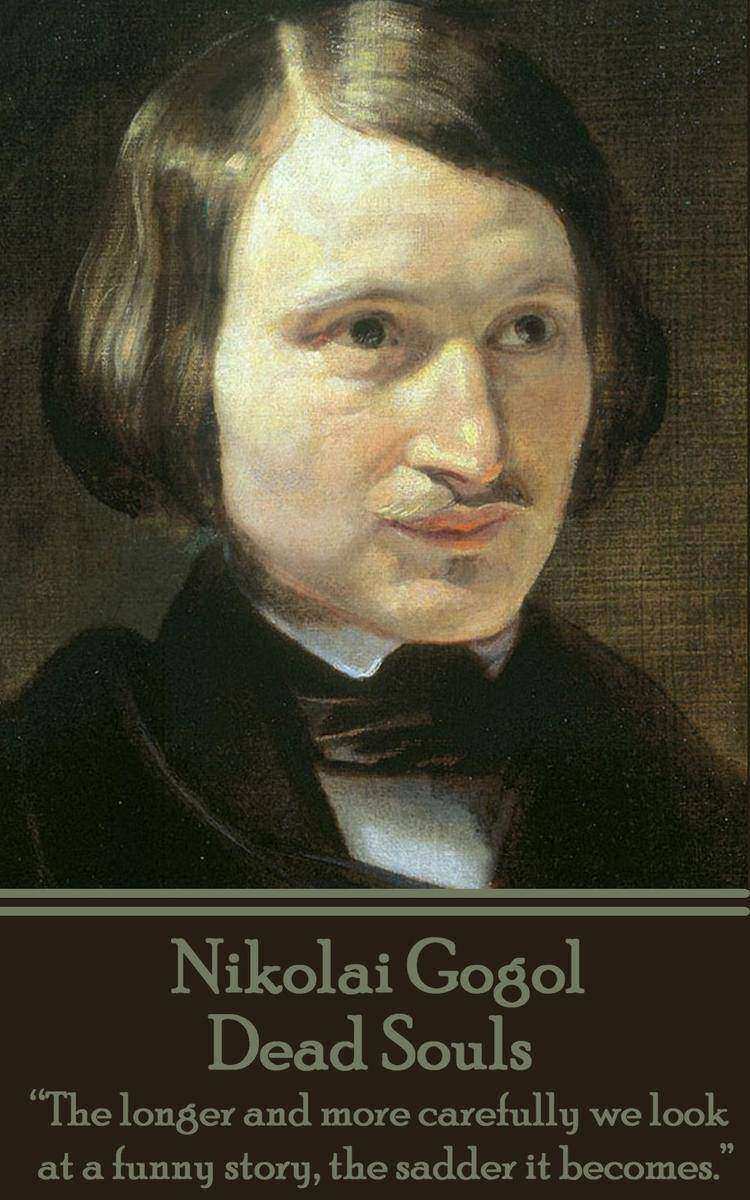
Dead Souls - The longer and more carefully we look at a funny story, the sadder
¥25.80
Nikolai Vasilievich Gogol was born on 31st March 1809 in present day Ukraine which was then the Russian Cossack village of Sorochyntsi. Nikolai's parents were relatively affluent; his mother's family were Polish landowners and his father, who wrote poetry in Ukrainian and Russian, was a descendant of Ukrainian Cossacks. Nikolai had a good education and started writing as a teenager whilst still at school although did consider becoming an actor due to his formidable talent at mimicry. On leaving school he went to St Petersburg but found it hard getting any work either in the civil service or as an actor. He self published a romantic poem but it was critically savaged to the extent that he swore never to write poetry again and also considered emigrating to the US. Fortunately, he persevered with his writing and produced a series of stories about his home in Ukraine in a colloquial and whimsical style that captured many literary admirers including the esteemed poet Pushkin. Nikolai was eventually able to abandon his work teaching and produced powerful books brilliantly and savagely satirising the inequities of the Russian system and its corrupt bureaucracy. His creative talents declined in later years and he became heavily influenced by a sadistic fanatical priest and died semi insane on 4th March 1852. He remains the father of Russian realism as evidenced here by his classic 'Dead Souls'
In The Zone - Why can't you remember your Shakespeare and forget the third-rater
¥14.03
Eugene Gladstone O'Neill was born on October 16, 1888 in a hotel bedroom in what is now Times Square, New York. Much of his childhood was spent in the comfort of books at boarding schools whilst his actor father was on the road and his Mother contended with her own demons. He spent only a year at University - Princeton - and various reasons have been given for his departure. However whatever his background and education denied or added to his development it is agreed amongst all that he was a playwright of the first rank and possibly America's greatest. His introduction of realism into American drama was instrumental in its development and paved a path for many talents thereafter. Of course his winning of both the Pulitzer Prize (4 times) and the Nobel Prize are indicative of his status. His more famous and later works do side with the disillusionment and personal tragedy of those on the fringes of society but continue to build upon ideas and structures he incorporated in his early one act plays. Eugene O'Neill suffered from various health problems, mainly depression and alcoholism. In the last decade he also faced a Parkinson's like tremor in his hands which made writing increasingly difficult. But out of such difficulties came plays of the calibre of The Iceman Cometh, Long Day's Journey Into Night, and A Moon for the Misbegotten. Eugene O'Neill died in Room 401 of the Sheraton Hotel on Bay State Road in Boston, on November 27, 1953, at the age of 65. As he was dying, he whispered his last words: "e;I knew it. I knew it. Born in a hotel room and died in a hotel room."e;

Enemy of the People (1882)
¥23.45
Henrik Ibsen (20th March, 1828 - 23rd May, 1906) is often referred to as the father of realism and ranked just below Shakespeare as Europe's greatest ever playwright especially as his plays are performed most frequently throughout the world after Shakespeare's. Ibsen was Norwegian and although set his plays in Norway, he wrote them in Danish and lived most of his professional life in Italy and Germany. His affect on the theatre is still evident today and shapes the distinction of plays being art as opposed to entertainment since he broke down all previous traditions and explored issues, developed characterisation, revealed uncomfortable truths, challenged assumptions and brokedown facades in ourselves as well as society. These factors are clearly demonstrated in Enemy of the People, a story of a man, Dr Stockman, who shows great courage in doing the right thing in the face of extreme social pressure and intolerance. He has been involved in developing medicinal baths in his small coastal community in Norway which have proved a profitable and successful tourist attraction. However, he finds out that waste products are contaminating the water and resulting in serious illnesses for some of the tourists. He sends his detailed report to the authorities and finds that not only are they unwilling to take any action but the townspeople brand him a lunatic. He finds himself marginalised and realises that in matters of right and wrong, the individual is superior to the masses. He says: "e;A minority may be right; a majority is always wrong."e; This remarkable play is seen as Ibsen's denunciation of the masses and a scathing indictment on community and democracy. It is surprisingly relevant with our contemporary concerns of both the environment and whistleblowers and definitely worth a read.
Sign of the Four - Jealousy is a strange transformer of characters.
¥15.21
If ever a writer needed an introduction Arthur Conan Doyle would not be considered that man. After all, Sherlock Holmes is perhaps the foremost literary detective of any age. Add to this canon his stories of science fiction and his poems, his historical novels, his plays, his political campaigning, his efforts in establishing a Court of Appeal and there is little room for anything else. Except he was also an exceptional writer of short stories of the horrific and macabre. Something very different from what you might expect. Born in Arthur Conan Doyle was born on 22 May 1859 at 11 Picardy Place, Edinburgh, Scotland. From 1876 - 1881 he studied medicine at the University of Edinburgh following which he was employed as a doctor on the Greenland whaler Hope of Peterhead in 1880 and, after his graduation, as a ship's surgeon on the SS Mayumba during a voyage to the West African coast in 1881. Arriving in Portsmouth in June of that year with less than GBP10 (GBP700 today) to his name, he set up a medical practice at 1 Bush Villas in Elm Grove, Southsea. The practice was initially not very successful. While waiting for patients, Conan Doyle again began writing stories and composed his first novel The Mystery of Cloomber. Although he continued to study and practice medicine his career was now firmly set as a writer. And thereafter great works continued to pour out of him.
Chaste Maid in Cheapside - She that in life and love refuses me
¥23.45
Thomas Middleton was born in London in April 1580 and baptised on 18th April. Middleton was aged only five when his father died. His mother remarried but this unfortunately fell apart into a fifteen year legal dispute regarding the inheritance due Thomas and his younger sister. By the time he left Oxford, at the turn of the Century, Middleton had and published Microcynicon: Six Snarling Satirese which was denounced by the Archbishop of Canterbury and publicly burned. In the early years of the 17th century, Middleton wrote topical pamphlets. One - Penniless Parliament of Threadbare Poets was reprinted several times and the subject of a parliamentary inquiry. These early years writing plays continued to attract controversy. His writing partnership with Thomas Dekker brought him into conflict with Ben Jonson and George Chapman in the so-called War of the Theatres. His finest work with Dekker was undoubtedly The Roaring Girl, a biography of the notorious Mary Frith. In the 1610s, Middleton began another playwriting partnership, this time with the actor William Rowley, producing another slew of plays including Wit at Several Weapons and A Fair Quarrel. The ever adaptable Middleton seemed at ease working with others or by himself. His solo writing credits include the comic masterpiece, A Chaste Maid in Cheapside, in 1613. In 1620 he was officially appointed as chronologer of the City of London, a post he held until his death. The 1620s saw the production of his and Rowley's tragedy, and continual favourite, The Changeling, and of several other tragicomedies. However in 1624, he reached a peak of notoriety when his dramatic allegory A Game at Chess was staged by the King's Men. Though Middleton's approach was strongly patriotic, the Privy Council silenced the play after only nine performances at the Globe theatre, having received a complaint from the Spanish ambassador. What happened next is a mystery. It is the last play recorded as having being written by Middleton. Thomas Middleton died at his home at Newington Butts in Southwark in the summer of 1627, and was buried on July 4th, in St Mary's churchyard which today survives as a public park in Elephant and Castle.
Waterloo - Mediocrity knows nothing higher than itself, but talent instantly rec
¥11.67
If ever a writer needed an introduction Arthur Conan Doyle would not be considered that man. After all, Sherlock Holmes is perhaps the foremost literary detective of any age. Add to this canon his stories of science fiction and his poems, his historical novels, his plays, his political campaigning, his efforts in establishing a Court Of Appeal and there is little room for anything else. Except he was also an exceptional writer of short stories of the horrific and macabre. Something very different from what you might expect. Born in Arthur Conan Doyle was born on 22 May 1859 at 11 Picardy Place, Edinburgh, Scotland. From 1876 - 1881 he studied medicine at the University of Edinburgh following which he was employed as a doctor on the Greenland whaler Hope of Peterhead in 1880 and, after his graduation, as a ship's surgeon on the SS Mayumba during a voyage to the West African coast in 1881. Arriving in Portsmouth in June of that year with less than GBP10 (GBP700 today) to his name, he set up a medical practice at 1 Bush Villas in Elm Grove, Southsea. The practice was initially not very successful. While waiting for patients, Conan Doyle again began writing stories and composed his first novel The Mystery of Cloomber. Although he continued to study and practice medicine his career was now firmly set as a writer. And thereafter great works continued to pour out of him.
Sniper - Why was I born without a skin, O God
¥14.03
Eugene Gladstone O'Neill was born on October 16, 1888 in a hotel bedroom in what is now Times Square, New York. Much of his childhood was spent in the comfort of books at boarding schools whilst his actor father was on the road and his Mother contended with her own demons. He spent only a year at University - Princeton - and various reasons have been given for his departure. However whatever his background and education denied or added to his development it is agreed amongst all that he was a playwright of the first rank and possibly America's greatest. His introduction of realism into American drama was instrumental in its development and paved a path for many talents thereafter. Of course his winning of both the Pulitzer Prize (4 times) and the Nobel Prize are indicative of his status. His more famous and later works do side with the disillusionment and personal tragedy of those on the fringes of society but continue to build upon ideas and structures he incorporated in his early one act plays. Eugene O'Neill suffered from various health problems, mainly depression and alcoholism. In the last decade he also faced a Parkinson's like tremor in his hands which made writing increasingly difficult. But out of such difficulties came plays of the calibre of The Iceman Cometh, Long Day's Journey Into Night, and A Moon for the Misbegotten. Eugene O'Neill died in Room 401 of the Sheraton Hotel on Bay State Road in Boston, on November 27, 1953, at the age of 65. As he was dying, he whispered his last words: "e;I knew it. I knew it. Born in a hotel room and died in a hotel room."e;
Journey to the Centre of the Earth
¥29.33
Jules Gabriel Verne was born on February 8th, 1828 on Ile Feydeau, a small artificial island on the Loire River in Nantes. His father wanted his son to take over the family law practice. Jules started along this course and despite graduating with a licence en droit in January 1851 was soon diverted by the lure of literature and by his own ambitious talents in this direction. He wrote for the theatre and for magazines and soon with the publication of his first novel; Five Weeks in a Balloon on January 31st, 1863 he had begun his career as an admired and popular author. For many, many years the works flowed, usually no less than and often more than two volumes per year. His meticulous research and imaginative setting and narratives soon established him as a top selling author and he became both famous and wealthy. By publishing firstly as a serialised book and then as a complete book sales swelled as did his reputation. His earnings increased further due to the runaway success from the stage adaptations of Le tour du monde en quatre-vingts jours (1874) and Michel Strogoff (1876), Strangely he was overlooked for honours. He was not even nominated for membership of the Academie Francaise. After the death of both his mother and Hetzel, Jules began to publish darker works but still at a prodigious rate. In 1888, Jules entered politics and was elected town councillor of Amiens, and then served for fifteen years. Jules was now entering the last period of his life. His works continued to flow albeit at a slower pace. His reconciled with his son, Michel who now became an active contributor to his father's works and, when the senior Verne died, would continue to contribute and publish his father's works, ensuring that the work was kept in the public eye and the legacy preserved. On March 24th, 1905, while ill with diabetes, Jules Verne died at his home at 44 Boulevard Longueville, Amiens. As a legacy Jules Verne is forever remembered as 'The Father of Science Fiction'. With his rigorous research Jules was not only able to make his works realistic but also to project forward and predict many new things that would eventually come to pass - either in real life or as the basis for others to use in their own science fiction. Extraordinary indeed.
Phantom of the Opera - All I wanted was to be loved for myself
¥23.45
Gaston Louis Alfred Leroux was born on May 6th, 1868, in Paris, France. Leroux was schooled in Normandy and went to Paris to study Law where he graduated in 1889. As a young man he inherited a fortune, valued even then in the millions of francs, and lived excessively until it was almost all quickly spent. In 1890, he began working as a court reporter and theater critic for L'Echo de Paris. He became an international correspondent for Le Matin and covered perhaps his most important story in 1905 when he witnessed and wrote about the Russian Revolution. Lerouxs' reporting instincts were also used for in-depth coverage of the former Paris Opera being used as cells to house prisoners of the Paris Commune in the basement. He abruptly switched careers in 1907 to write fiction. His first effort was the Mystery of the Yellow Room. This was the first in a series of the Adventures of Rouletabillet. From then until the mid-1920s he wrote prolifically, becoming a firm favourite to his French audience and increasingly to a growing market abroad thanks to the numerous translations and his growing reputation. By 1919, Leroux had seen the potential in the growing film industry and together with Arthur Bernede they formed a film company, Societe des Cineromans, to publish novels and simultaneously turn them into films. As an author Leroux works are placed alongside Sir Arthur Conan Doyle's in the United Kingdom and Edgar Allan Poe's in the United States. His Phantom of the Opera is one of the world's classic treasures and is constantly being adapted into other media; from films and TV to radio as well as an audiobook. Leroux was honoured by the French State with a Chevalier de la Legion d'honneur in 1902. Gaston Leroux died in Nice, in Southern France, on April 15th, 1927.
Comedy of Errors - We came into the world like brother and brother
¥11.67
The life of William Shakespeare, arguably the most significant figure in the Western literary canon, is relatively unknown. Shakespeare was born in Stratford-upon-Avon in 1565, possibly on the 23rd April, St. George's Day, and baptised there on 26th April. Little is known of his education and the first firm facts to his life relate to his marriage, aged 18, to Anne Hathaway, who was 26 and from the nearby village of Shottery. Anne gave birth to their first son six months later. Shakespeare's first play, The Comedy of Errors began a procession of real heavyweights that were to emanate from his pen in a career of just over twenty years in which 37 plays were written and his reputation forever established. This early skill was recognised by many and by 1594 the Lord Chamberlain's Men were performing his works. With the advantage of Shakespeare's progressive writing they rapidly became London's leading company of players, affording him more exposure and, following the death of Queen Elizabeth in 1603, a royal patent by the new king, James I, at which point they changed their name to the King's Men. By 1598, and despite efforts to pirate his work, Shakespeare's name was well known and had become a selling point in its own right on title pages. No plays are attributed to Shakespeare after 1613, and the last few plays he wrote before this time were in collaboration with other writers, one of whom is likely to be John Fletcher who succeeded him as the house playwright for the King's Men. William Shakespeare died two months later on April 23rd, 1616, survived by his wife, two daughters and a legacy of writing that none have since yet eclipsed.
Wit At Several Weapons - Twas well receiv'd before
¥23.45
The play was originally attributed to John Fletcher & Francis Beaumont and printed in their early folios. However, though there is some minor work by Fletcher the play, in modern times, has been now attributed to Middleton & Rowley.Thomas Middleton was born in London in April 1580 and baptised on 18th April. Middleton was aged only five when his father died. His mother remarried but this unfortunately fell apart into a fifteen year legal dispute regarding the inheritance due Thomas and his younger sister.By the time he left Oxford, at the turn of the Century, Middleton had and published Microcynicon: Six Snarling Satirese which was denounced by the Archbishop of Canterbury and publicly burned. In the early years of the 17th century, Middleton wrote topical pamphlets. One - Penniless Parliament of Threadbare Poets was reprinted several times and the subject of a parliamentary inquiry.These early years writing plays continued to attract controversy. His writing partnership with Thomas Dekker brought him into conflict with Ben Jonson and George Chapman in the so-called War of the Theatres. His finest work with Dekker was undoubtedly The Roaring Girl, a biography of the notorious Mary Frith.In the 1610s, Middleton began another playwriting partnership, this time with the actor William Rowley, producing another slew of plays including Wit at Several Weapons and A Fair Quarrel. The ever adaptable Middleton seemed at ease working with others or by himself. His solo writing credits include the comic masterpiece, A Chaste Maid in Cheapside, in 1613.In 1620 he was officially appointed as chronologer of the City of London, a post he held until his death. The 1620s saw the production of his and Rowley's tragedy, and continual favourite, The Changeling, and of several other tragicomedies. However in 1624, he reached a peak of notoriety when his dramatic allegory A Game at Chess was staged by the King's Men. Though Middleton's approach was strongly patriotic, the Privy Council silenced the play after only nine performances at the Globe theatre, having received a complaint from the Spanish ambassador.Middleton for his part was exonerated but it is the last play recorded as having been written by Middleton.Thomas Middleton died at his home at Newington Butts in Southwark in the summer of 1627, and was buried on July 4th, in St Mary's churchyard which today survives as a public park in Elephant and Castle.William Rowley is thought to have been born around 1585 but an exact date is not known.As an actor his early forte was playing 'clown characters' thus helping to carry the low comedy of the play. He began his career working for Queen Anne's Men at the Red Bull Theatre. In 1609. Along with several other actors he founded the Duke of York's Men, which, in 1612, became known as Prince Charles's Men.From here on Rowley's career was spent almost exclusively writing and clowning for this company. It was located, in its time, at several playhouses, including the Curtain, the Hope, and the Red Bull. Although when writing one of his main contributions was to provide the comic sub-plot on several other plays, including The Changeling, A Fair Quarrel, and The Maid in the Mill, he wrote substantial portions of the main narrative as well.Only two surviving plays are generally accepted as solo works by Rowley: A Shoemaker, a Gentleman (circa 1607-9) and All's Lost by Lust (1619). Evidence exists that three other works were authored solely by Rowley: Hymen's Holidays or Cupid's Vagaries (1612), A Knave in Print (1613), and The Fool Without Book (also 1613) but unfortunately none have survived to be further examined. In conjunction with other writers including Thomas Middleton and John Fletcher he wrote several other plays.The exact time and nature of his death is unknown but records show that William Rowley was buried on 11th February 1626 in the graveyard of St James's, Clerkenwell in London.
Grand Duke - or The Stuatory Duel
¥26.98
The partnership between William Schwenck Gilbert and Arthur Seymour Sullivan and their canon of Savoy Operas is rightly lauded by all lovers of comic opera the world over. Gilbert's sharp, funny words and Sullivan's deliciously lively and hummable tunes create a world that is distinctly British in view but has the world as its audience. Both men were exceptionally talented and gifted in their own right and wrote much, often with other partners, that still stands the test of time. However, together as a team they created Light or Comic Operas of a standard that have had no rivals equal to their standard, before or since. That's quite an achievement. To be recognised by the critics is one thing but their commercial success was incredible. The profits were astronomical, allowing for the building of their own purpose built theatre - The Savoy Theatre. Beginning with the first of their fourteen collaborations, Thespis in 1871 and travelling through many classics including The Sorcerer (1877), H.M.S. Pinafore (1878), The Pirates of Penzance (1879), The Mikado (1885), The Gondoliers (1889) to their finale in 1896 with The Grand Duke, Gilbert & Sullivan created a legacy that is constantly revived and admired in theatres and other media to this very day.
Admiral Guinea - Don't judge each day by the harvest you reap but by the seeds t
¥11.87
Robert Louis Stevenson. In the Scottish canon to be placed alongside Burns for your poems is high praise indeed but it's a rightful place for one of Scotland's finest novelists. Born in 1850 he managed to cram much into his 44 years travelling widely to France, the United States, Samoa and the South Seas. Of course he is widely feted for his classics Dr Jeckyll & Mr Hyde, Treasure Island and poetry volumes such as A Child's Garden Of Verses and short storeis such The Body Snatchers. All offer compelling examples of narration superbly reduced to their essence. This volume 'Admiral Guinea' is another distinctive facet to his works. And yes, superbly written.
Rover - Part I - or, The Banish'd Cavaliers
¥23.45
Aphra Behn was a prolific and well established writer but facts about her remain scant and difficult to confirm. What can safely be said though is that Aphra Behn is now regarded as a key English playwright and a major figure in Restoration theatre. Aphra was born into the rising tensions to the English Civil War. Obviously a time of much division and difficulty as the King and Parliament, and their respective forces, came ever closer to conflict. There are claims she was a spy, that she travelled abroad, possibly as far as Surinam. By 1664 her marriage was over (though by death or separation is not known but presumably the former as it occurred in the year of their marriage) and she now used Mrs Behn as her professional name. Aphra now moved towards pursuing a more sustainable and substantial career and began work for the King's Company and the Duke's Company players as a scribe. Previously her only writing had been poetry but now she would become a playwright. Her first, "e;The Forc'd Marriage"e;, was staged in 1670, followed by "e;The Amorous Prince"e; (1671). After her third play, "e;The Dutch Lover"e;, Aphra had a three year lull in her writing career. Again it is speculated that she went travelling again, possibly once again as a spy. After this sojourn her writing moves towards comic works, which prove commercially more successful. Her most popular works included "e;The Rover"e; and "e;Love-Letters Between a Nobleman and His Sister"e; (1684-87). With her growing reputation Aphra became friends with many of the most notable writers of the day. This is The Age of Dryden and his literary dominance. From the mid 1680's Aphra's health began to decline. This was exacerbated by her continual state of debt and descent into poverty. Aphra Behn died on April 16th 1689, and is buried in the East Cloister of Westminster Abbey. The inscription on her tombstone reads: "e;Here lies a Proof that Wit can never be Defence enough against Mortality."e; She was quoted as stating that she had led a "e;life dedicated to pleasure and poetry."e;
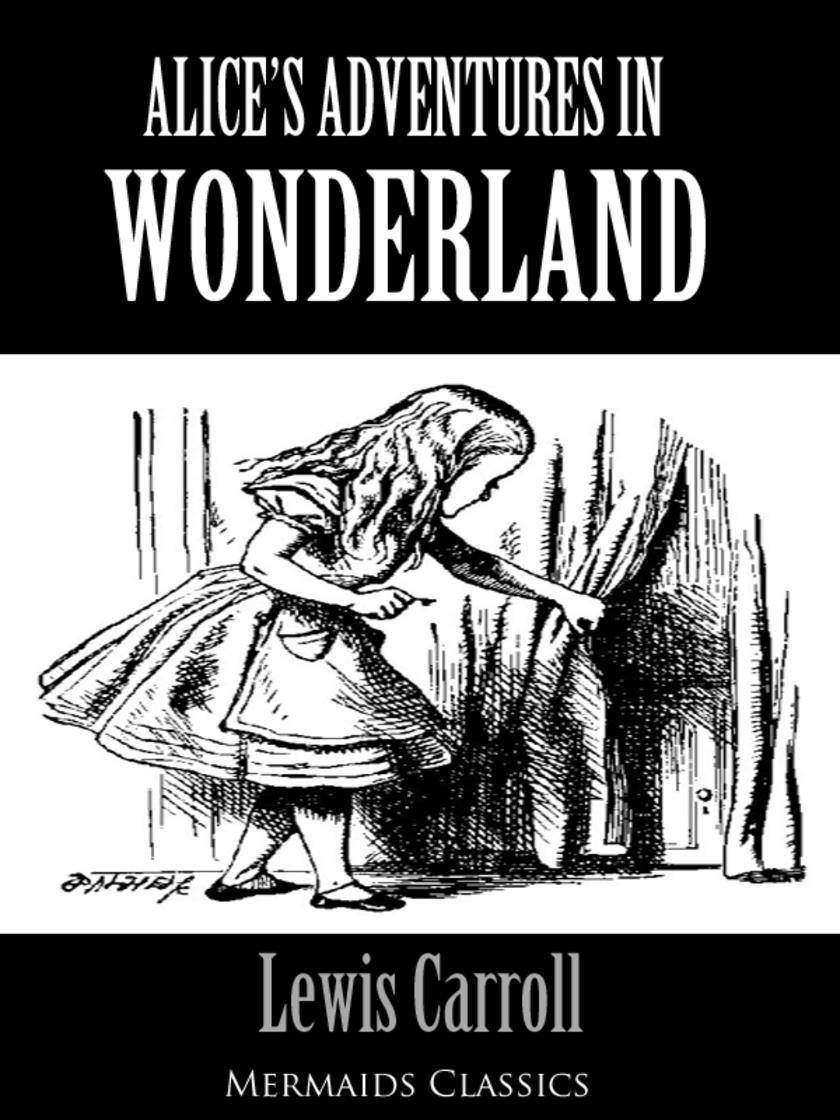
Alice's Adventures in Wonderland - An Original Classic (Mermaids Classics)
¥11.67
Alices Adventures in Wonderland (also known as Alice in Wonderland) by Lewis Carroll - aka Charles Lutwidge Dodgson (1832 1898) is an 1865 childrens fantasy novel portraying a young girl named Alice who spots a rabbit with a pocket watch and follows him until she falls down a rabbit hole. The rabbit hole leads her to a fantasy world called Wonderland where she meets many anthropomorphic creatures. Illustrations within this novel are the original illustrations by John Tenniel.Mermaids Classics, an imprint of Mermaids Publishing brings the very best of classic literature to a modern era of digital reading by producing high quality books in ebook format.
Sense and Sensibility
¥11.67
Sense and Sensibility, by Jane Austen is a romantic fiction novel about the Dashwood sisters Elinor and Marianne who go through love, romance, hardship and heartbreak. The scene is set in Southwest England between the years 1792 and 1797 and it follows the story how the two sisters are forced to live in a relatives estate due to the death of their father who leaves them with an inadequate inheritance. The novel was originally published in 1811 under the pseudonym A Lady and was Jane Austens first novel.This digital edition is beautifully formatted with an active Table of Contents that goes directly to each chapter. Mermaids Classics, an imprint of Mermaids Publishing brings the very best of old book classics to a modern era of digital reading by producing high quality books in ebook format.

Unicorn From The Stars - Too many things are occurring for even a big heart to h
¥29.33
William Butler Yeats (1865 - 1939) is best described as Ireland's national poet in addition to being one of the major twentieth-century literary figures of the English tongue. To many literary critics, Yeats represents the 'Romantic poet of modernism,' which is quite revealing about his extraordinary style that combines between the outward emphasis on the expression of emotions and the extensive use of symbolism, imagery and allusions. Yeats also wrote prose and drama and established himself as the spokesman of the Irish cause. His fame was greatly boosted mainly after he received the Nobel Prize in Literature in 1923. His life was marked by his many love stories, by his great interest in oriental mysticism and occultism as well as by political engagement since he served as an Irish senator for two terms. Today, although William Butler Yeats's contribution to literary modernism and to Irish nationalism remains incontestable. Here we publish one of his very fine plays that show just why his works are held in such esteem.
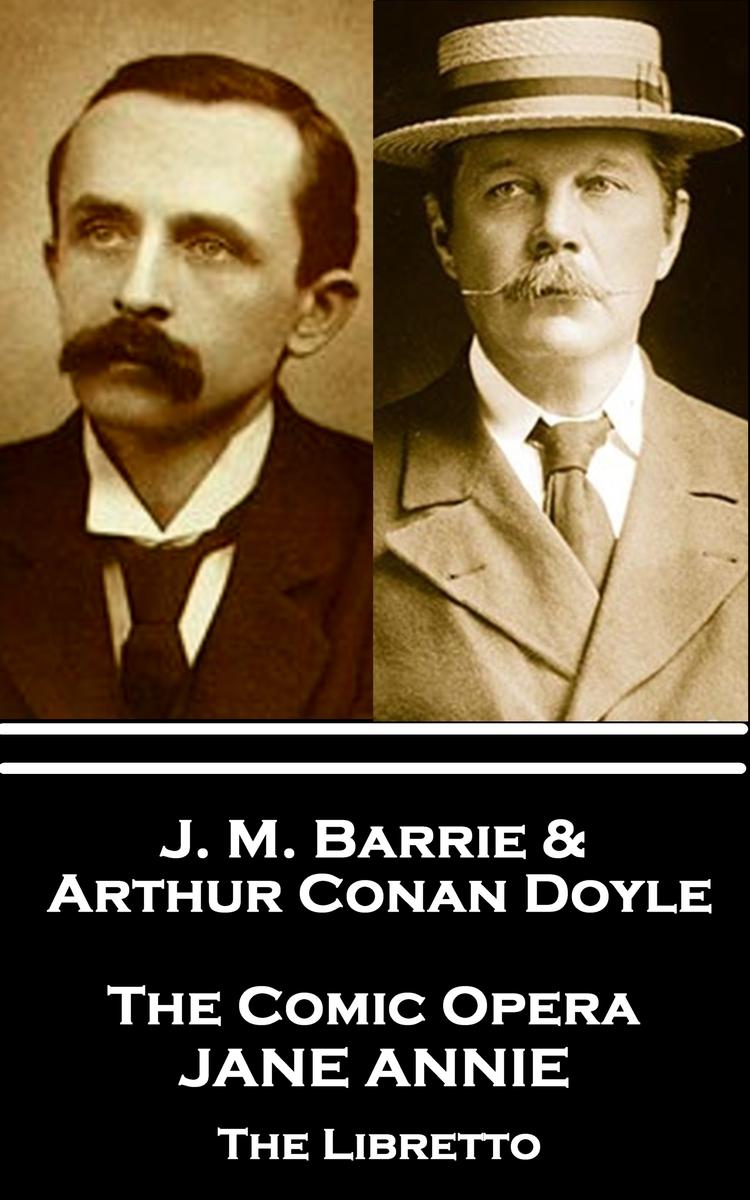
Jane Annie - Or, The Good Conduct Prize. A Comic Opera in Two Acts
¥16.38
Sir James Matthew Barrie, 1st Baronet, OM, was born in Kirriemuir, Angus the ninth of ten children on May 9th, 1860. From early formative experiences, Barrie knew that he wished to follow a career as an author. His family wished otherwise and sought to persuade him to choose a profession, such as the ministry. The compromise was that he would attend university to study literature at the University of Edinburgh. He graduated with an M.A. on April 21st, 1882. His first job was as a staff journalist for the Nottingham Journal. The London editor of the St. James's Gazette "e;liked that Scotch thing"e; in Barrie's short stories about his mother's early life. They also served as the basis for his first novels. Barrie though was increasingly drawn to working in the theatre. His first play, a biography of Richard Savage, was only performed once and critically panned. Undaunted he immediately followed this with Ibsen's Ghost in 1891, a parody of Ibsen's plays Hedda Gabler and Ghosts. Barrie's third play, Walker, London, in 1892 led to an introduction to his future wife, a young actress by the name of Mary Ansell. The two became friends, and she helped his family to care for him when he fell very ill in 1893 and 1894. Barrie proposed and they were married, in Kirriemuir, on July 9th, 1894. By some accounts the relationship was unconsummated and indeed the couple had no children. The story of Peter Pan had begun to formulate when Barrie became acquainted with the Llewelyn Davis family in 1897, meeting George, Jack and baby Peter with their nanny in London's Kensington Gardens. In 1901 and 1902, Barrie had back-to-back theatre successes with Quality Street and The Admirable Crichton. The character of "e;Peter Pan"e; first appeared in The Little White Bird in 1902. This most famous and enduring of his works; Peter Pan, or The Boy Who Wouldn't Grow Up had its first stage performance on December 27th, 1904. Peter Pan would overshadow everything written during his career. He continued to write for the rest of his life contributing many other fine and important works. Sir James Matthew Barrie, 1st Baronet, OM, died of pneumonia on June 19th,1937 and was buried at Kirriemuir next to his parents and two of his siblings.


