


 购物车
购物车 个人中心
个人中心
Taming of the Shrew - The poorest service is repaid with thanks.
¥11.67
The life of William Shakespeare, arguably the most significant figure in the Western literary canon, is relatively unknown. Shakespeare was born in Stratford-upon-Avon in 1565, possibly on the 23rd April, St. George's Day, and baptised there on 26th April. Little is known of his education and the first firm facts to his life relate to his marriage, aged 18, to Anne Hathaway, who was 26 and from the nearby village of Shottery. Anne gave birth to their first son six months later. Shakespeare's first play, The Comedy of Errors began a procession of real heavyweights that were to emanate from his pen in a career of just over twenty years in which 37 plays were written and his reputation forever established. This early skill was recognised by many and by 1594 the Lord Chamberlain's Men were performing his works. With the advantage of Shakespeare's progressive writing they rapidly became London's leading company of players, affording him more exposure and, following the death of Queen Elizabeth in 1603, a royal patent by the new king, James I, at which point they changed their name to the King's Men. By 1598, and despite efforts to pirate his work, Shakespeare's name was well known and had become a selling point in its own right on title pages. No plays are attributed to Shakespeare after 1613, and the last few plays he wrote before this time were in collaboration with other writers, one of whom is likely to be John Fletcher who succeeded him as the house playwright for the King's Men. William Shakespeare died two months later on April 23rd, 1616, survived by his wife, two daughters and a legacy of writing that none have since yet eclipsed.
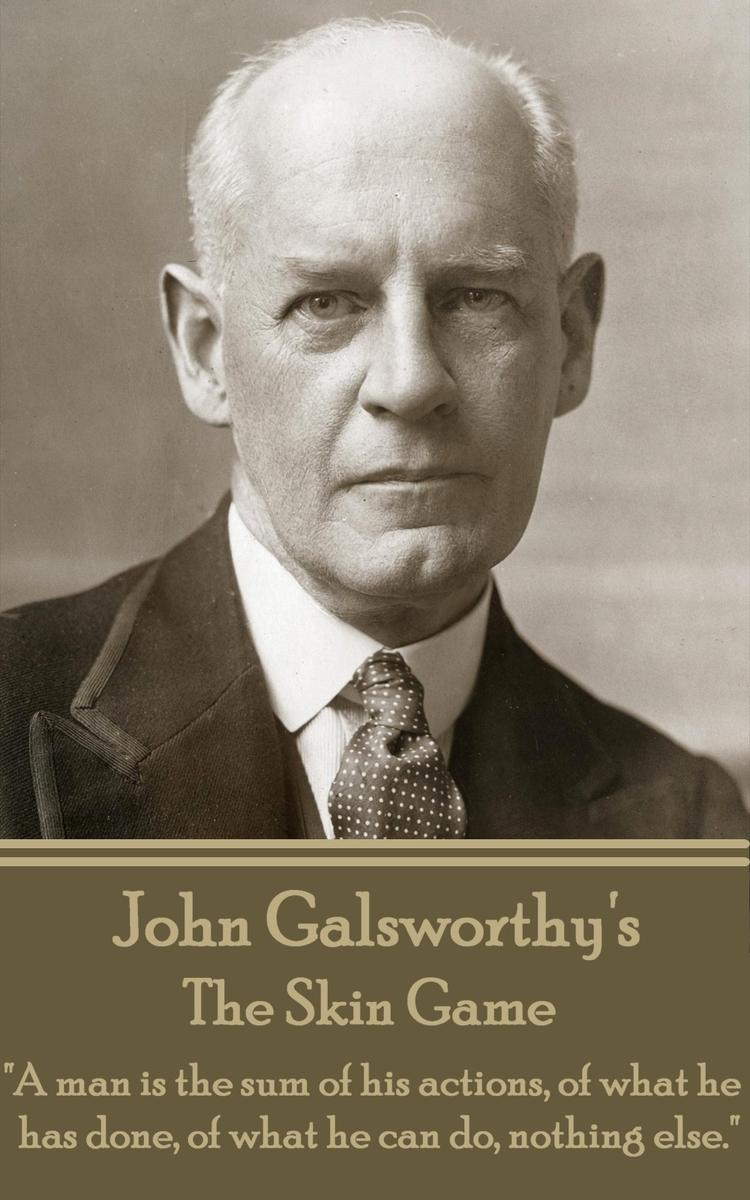
Skin Game - A man is the sum of his actions, of what he has done, of what he can
¥29.33
John Galsworthy first published in 1897 with a collection of short stories entitled "e;The Four Winds"e;. For the next 7 years he published these and all works under his pen name John Sinjohn. It was only upon the death of his father and the publication of "e;The Island Pharisees"e; in 1904 that he published as John Galsworthy. His first play was The Silver Box, an immediate success when it debuted in 1906 and was followed by "e;The Man of Property"e; later that same year and was the first in the Forsyte trilogy. Whilst today he is far more well know as a Nobel Prize winning novelist then he was considered a playwright dealing with social issues and the class system. We publish here 'The Skin Game' a great example of both his writing and his demonstration of how the class system worked at the time. He was appointed to the Order of Merit in 1929, after earlier turning down a knighthood, and awarded the Nobel Prize in 1932 though he was too ill to attend. John Galsworthy died from a brain tumour at his London home, Grove Lodge, Hampstead on January 31st 1933. In accordance with his will he was cremated at Woking with his ashes then being scattered over the South Downs from an aeroplane.
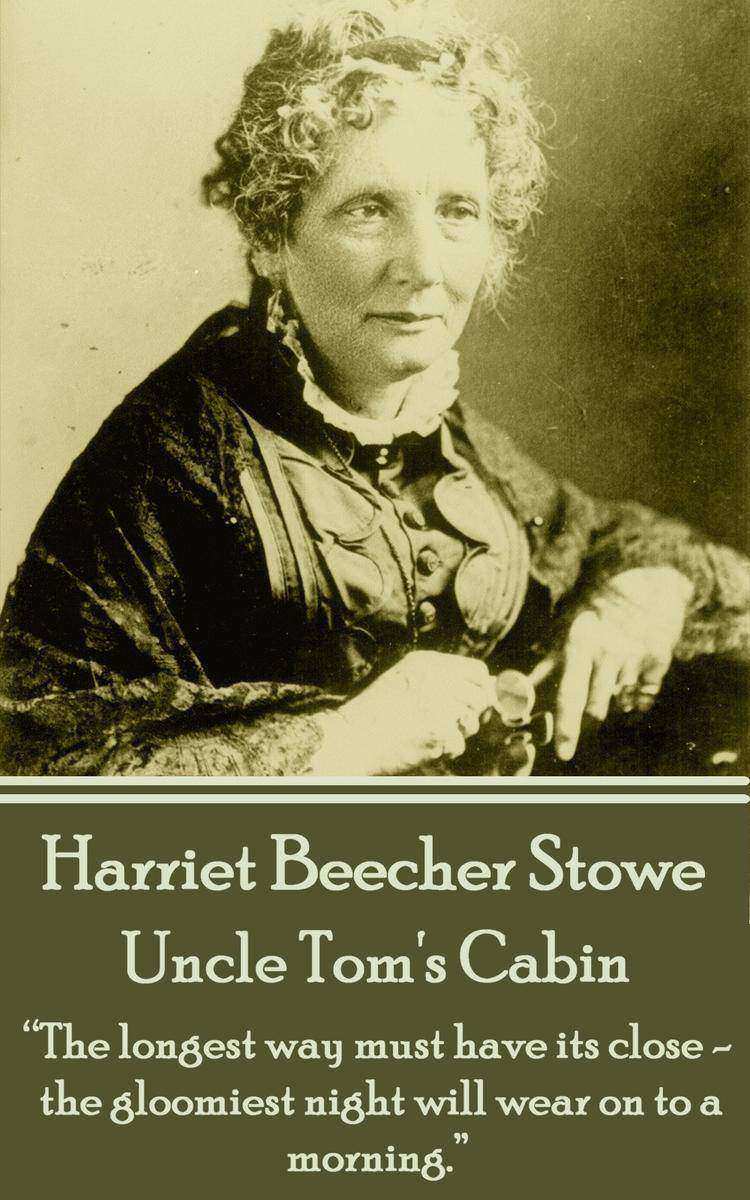
Uncle Tom's Cabin - We first make our habits, then our habits make us.
¥41.10
Harriet Elisabeth Beecher Stowe was born in Litchfield, Connecticut, on June 14th 1811. Over the course of her Life Harriet wrote more than twenty books including travel memoirs and collections of letters and articles. Her stand out work is undoubtedly 'Uncle Tom's Cabin' about the life of African Americans under slavery. It reached millions as both a book and a play and was influential in setting both the tone and the agenda for anti slavery forces in the North and for unyielding anger in the South. When she was invited to the White House by Lincoln he is rumoured to have said "e;so you are the little woman who wrote the book that started this great war."e; In the 1870s, Stowe's brother, Henry Ward, also an abolitionist, was accused of adultery and a national scandal ensured. Harriet fled to Florida unable to bear the attacks on her brother, who she believed innocent. Harriet was among the founders of the Hartford Art School, which later became part of the University of Hartford. She was also influential in the call for women to have a better standing in society and considered the cause as just as necessary as the abolition of slavery. With the death of her husband Calvin Stowe in 1886, after a half century together, Harriet's own health started to decline rapidly. By 1888 it was reported in The Washington Post that due to dementia she had started "e;writing Uncle Tom's Cabin over again. She imagined that she was engaged in the original composition, and for several hours every day she industriously inscribed long passages of the book, almost word for word, unconsciously from memory, the authoress imagining that she composed the matter as she went along. To her diseased mind the story was brand new and she frequently exhausted herself with labor which she regarded as freshly created."e; Harriet Beecher Stowe died on July 1, 1896, at age eighty-five in Hartford, Connecticut. She is buried in the historic cemetery at Phillips Academy in Andover, Massachusetts.
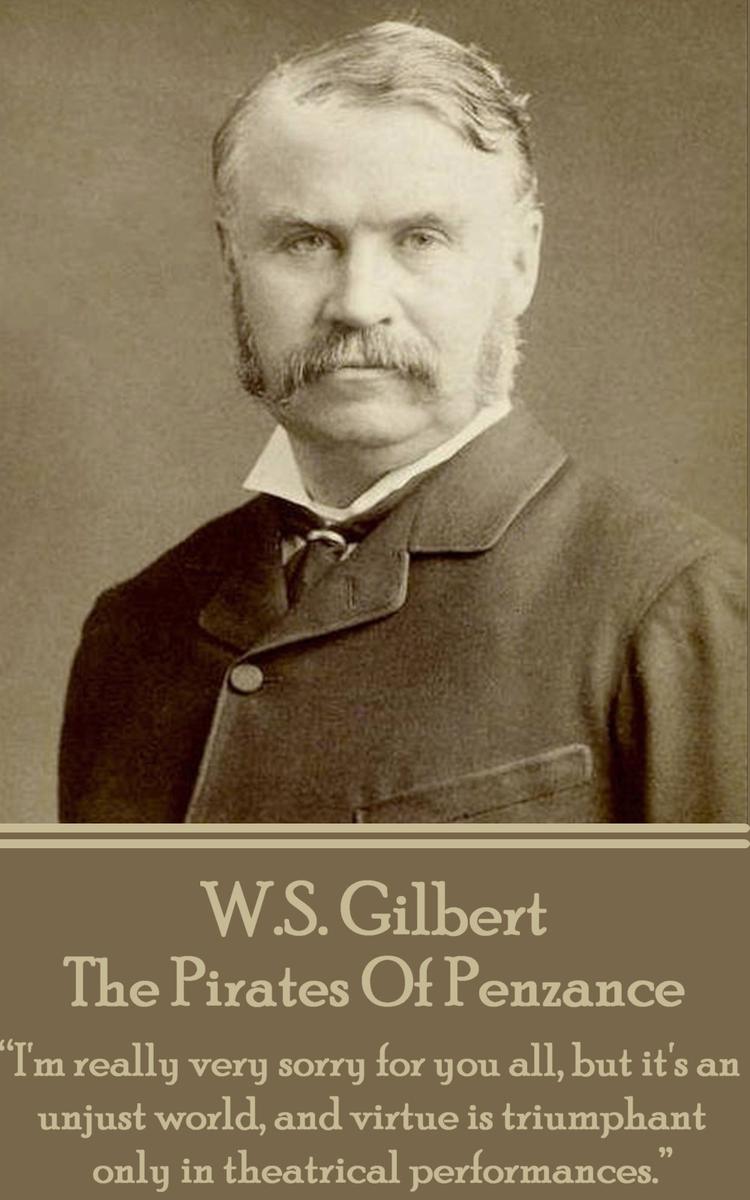
Pirates Of Penzance
¥15.21
Sir William Schwenck Gilbert was born at 17 Southampton Street just off the Strand in London on November 18th 1836. He was a man of a great many talents; dramatist, librettist, poet and illustrator. Of course he is better known as the collaborator with Arthur Sullivan of 14 light comic operas under that world famous moniker Gilbert & Sullivan. They continue to be performed and to entertain millions every year from commercial theatres down to amateur dramatic societies and schools. Here we publish his libretto for The Pirates Of Penzance.
Much Ado About Nothing
¥17.56
William Shakespeare was born in Stratford-upon-Avon in late April 1565 and baptised there on 26th April. He was one of eight children. Little is known about his life but what is evident is the enormous contribution he has made to world literature. His writing was progressive, magnificent in scope and breathtaking in execution. His plays and sonnets helped enable the English language to speak with a voice unmatched by any other. William Shakespeare died on April 23rd 1616, survived by his wife and two daughters. He was buried two days after his death in the chancel of the Holy Trinity Church. The epitaph on the slab which covers his grave includes the following passage, Good friend, for Jesus's sake forbear, To dig the dust enclosed here. Blessed me the man that spares these stones, And cursed be he that moves my bones. Here we publish his comedy from 1598 'Much Ado About Nothing'.

Master Builder (1892)
¥23.45
Henrik Ibsen (20th March, 1828 - 23rd May, 1906) is often referred to as the father of realism and ranked just below Shakespeare as Europe's greatest ever playwright especially as his plays are performed most frequently throughout the world after Shakespeare's. Ibsen was Norwegian and although set his plays in Norway, he wrote them in Danish and lived mot of his professional life in Italy and Germany. His affect on the theatre is still evident today and shapes the distinction of plays being art as opposed to entertainment since he broke down all previous traditions and explored issues, developed characterisation, revealed uncomfortable truths, challenged assumptions and brokedown facades in ourselves as well as society. These factors are clearly demonstrated in the Master Builder which is about Halvard Solness, an incredibly successful builder whose success is due to a lucky series of events which he had conceived and wished for but not actually done anything to make happen. These fortuitous occurrences for him and misfortunes for his competitors makes Solness think that he is divinely blessed to allow him to build churches and that all his wishes will come true. He confides these beliefs to a young woman he originally met as a child and together they fantasise about this magic power. At the same time his wife is uninterested in his buildings but consumed with grief over the loss of her two sons. Solness is ultimately destroyed by this infatuation for the younger woman together with his belief in his own infallibility making this Ibsen work a realistic tragedy with a thought provoking moral to the tale.
Fog - Stammering is the native eloquence of us fog people.
¥14.03
Eugene Gladstone O'Neill was born on October 16, 1888 in a hotel bedroom in what is now Times Square, New York. Much of his childhood was spent in the comfort of books at boarding schools whilst his actor father was on the road and his Mother contended with her own demons. He spent only a year at University - Princeton - and various reasons have been given for his departure. However whatever his background and education denied or added to his development it is agreed amongst all that he was a playwright of the first rank and possibly America's greatest. His introduction of realism into American drama was instrumental in its development and paved a path for many talents thereafter. Of course his winning of both the Pulitzer Prize (4 times) and the Nobel Prize are indicative of his status. His more famous and later works do side with the disillusionment and personal tragedy of those on the fringes of society but continue to build upon ideas and structures he incorporated in his early one act plays. Eugene O'Neill suffered from various health problems, mainly depression and alcoholism. In the last decade he also faced a Parkinson's like tremor in his hands which made writing increasingly difficult. But out of such difficulties came plays of the calibre of The Iceman Cometh, Long Day's Journey Into Night, and A Moon for the Misbegotten. Eugene O'Neill died in Room 401 of the Sheraton Hotel on Bay State Road in Boston, on November 27, 1953, at the age of 65. As he was dying, he whispered his last words: "e;I knew it. I knew it. Born in a hotel room and died in a hotel room."e;
Countess Cathleen - 'She'd sleep that trouble away-''
¥16.38
William Butler Yeats (1865 - 1939) is best described as Ireland's national poet in addition to being one of the major twentieth-century literary figures of the English tongue. To many literary critics, Yeats represents the 'Romantic poet of modernism,' which is quite revealing about his extraordinary style that combines between the outward emphasis on the expression of emotions and the extensive use of symbolism, imagery and allusions. Yeats also wrote prose and drama and established himself as the spokesman of the Irish cause. His fame was greatly boosted mainly after he received the Nobel Prize in Literature in 1923. His life was marked by his many love stories, by his great interest in oriental mysticism and occultism as well as by political engagement since he served as an Irish senator for two terms. Today, although William Butler Yeats's contribution to literary modernism and to Irish nationalism remains incontestable.
Adventures of Sherlock Holmes (Mermaids Classics)
¥35.22
The Adventures of Sherlock Holmes by Arthur Conan Doyle (1859-1930) is a collection of twelve short stories about a detective which was first published in 1892.Mermaids Classics, an imprint of Mermaids Publishing brings the very best of old classic literature to a modern era of digital reading by producing high quality books in ebook format. All of the Mermaids Classics epublications are reproductions of classic antique books that were originally published in print format, mostly over a century ago and are now republished in digital format as ebooks. Begin to build your collection of digital books by looking for more literary gems from Mermaids Classics.
Adventures of Pinocchio (Mermaids Classics)
¥35.22
The Adventures of Pinocchio (1883) by Carlo Collodi (Pseudonym of Carlo Lorenzini) (1826-1890) is a world classic childresn novel based on a wooden boy who is brought to life.Mermaids Classics, an imprint of Mermaids Publishing brings the very best of old classic literature to a modern era of digital reading by producing high quality books in ebook format. All of the Mermaids Classics epublications are reproductions of classic antique books that were originally published in print format, mostly over a century ago and are now republished in digital format as ebooks. Begin to build your collection of digital books by looking for more literary gems from Mermaids Classics.
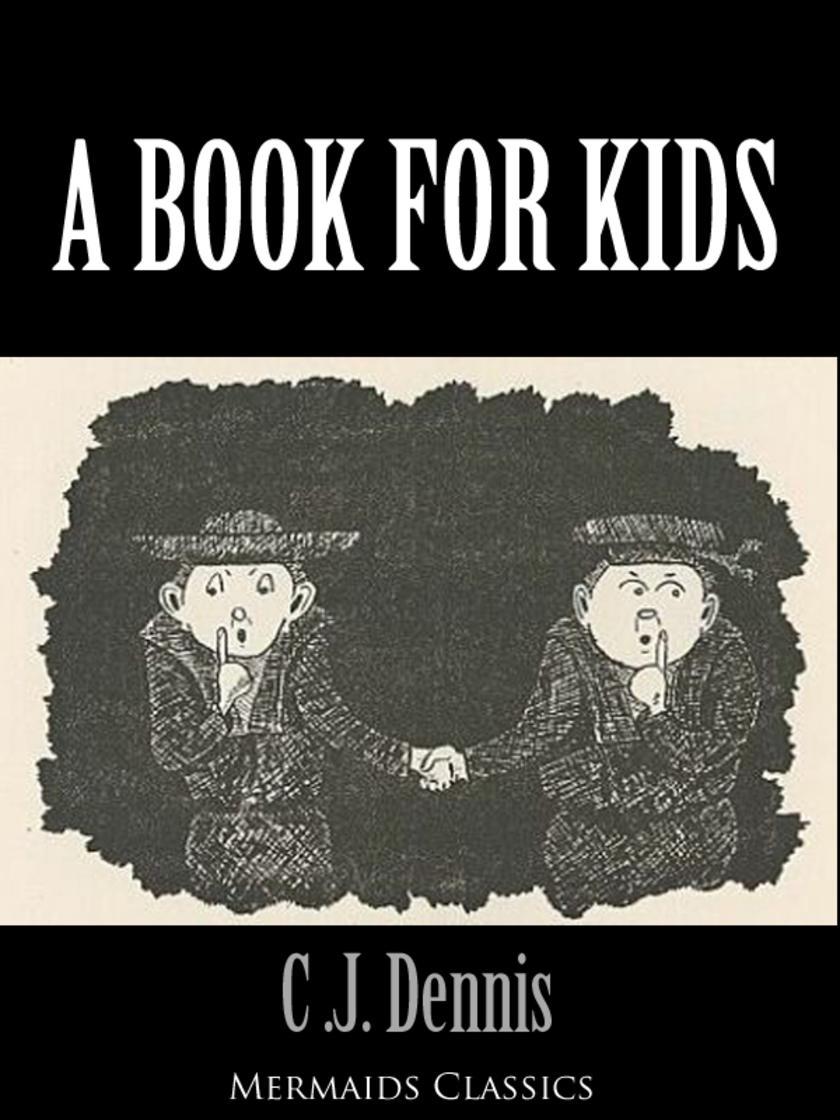
Book For Kids (Mermaids Classics)
¥35.22
A Book For Kids, is a collection of childrens verses and stories written and illustrated by C.J. Dennis (1876 - 1938). C.J. Dennis is considered as one of Australias most famous poets of the early 20th century. His original book was published in 1921 (reissued as Roundabout, 1935) in a physical book format and is now republished in ebook format by Mermaids Classics. This digital edition is beautifully formatted with an active Table of Contents that goes directly to each chapter. Mermaids Classics, an imprint of Mermaids Publishing brings the very best of classic literature to a modern era of digital reading by producing high quality books in ebook format.

Villette (Mermaids Classics)
¥35.22
Villette is a novel by Charlotte Bront, published in 1853. After an unspecified family disaster, protagonist Lucy Snowe travels to the fictional city of Villette to teach at an all-girls school where she is unwillingly pulled into both adventure and romance. (Citation from Wikipedia: The free Encyclopaedia)Mermaids Classics, an imprint of Mermaids Publishing brings the very best of old classic literature to a modern era of digital reading by producing high quality books in ebook format. All of the Mermaids Classics epublications are reproductions of classic antique books that were originally published in print format, mostly over a century ago and are now republished in digital format as ebooks. Begin to build your collection of digital books by looking for more literary gems from Mermaids Classics.
Three Musketeers (Mermaids Classics)
¥35.22
The Three Musketeers (1844) was written by the French author Alexandre Dumas (1802-1870) who also wrote the famous classic The Count of Monte Cristo. The Three Musketeers are three close friends named Aramis, Porthos and Athos and the story follows the adventures of another young man named dArtagnan who leaves home in order to join the Musketeers of the Guard.Mermaids Classics, an imprint of Mermaids Publishing brings the very best of old classic literature to a modern era of digital reading by producing high quality books in ebook format. All of the Mermaids Classics epublications are reproductions of classic antique books that were originally published in print format, mostly over a century ago and are now republished in digital format as ebooks. Begin to build your collection of digital books by looking for more literary gems from Mermaids Classics.
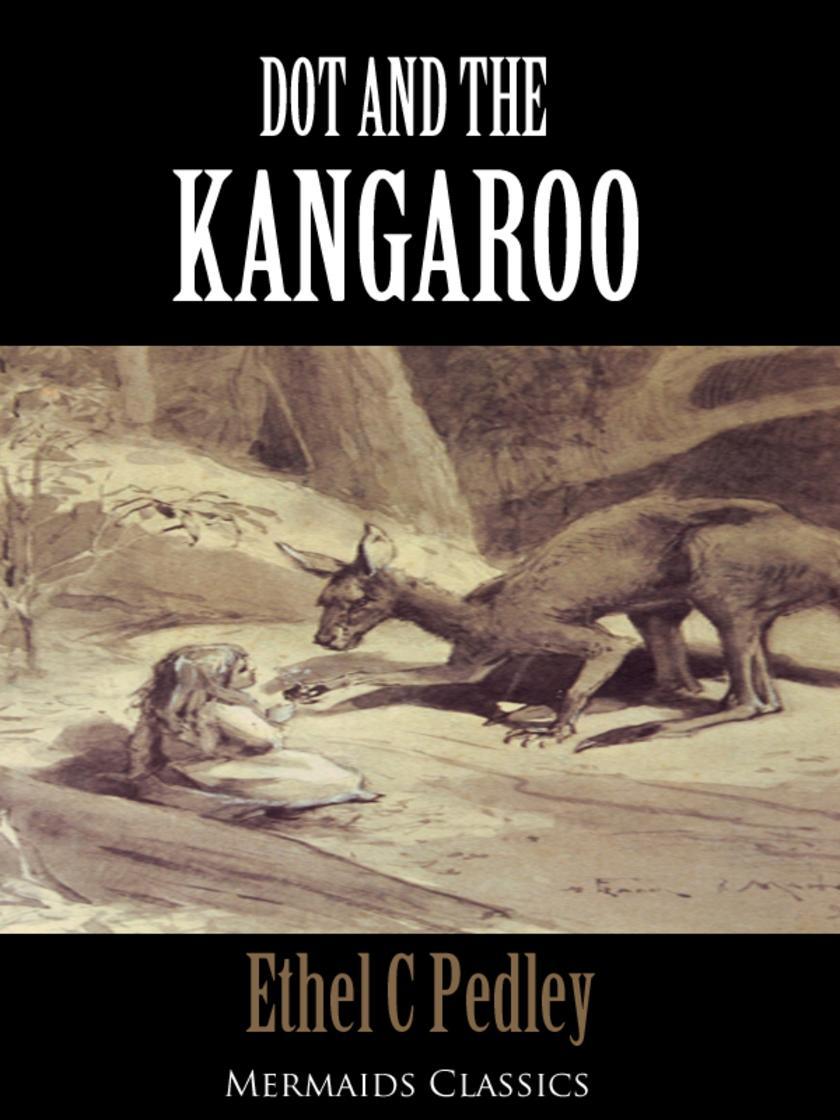
Dot and the Kangaroo (Mermaids Classics)
¥35.22
Dot and the Kangaroo by Ethel C Pedley (1860-1898) is an 1899 Australian childrens book classic where it follows the story of a young five year old girl named Dot who gets lost in the outback of Australia and is helped by a red kangaroo. Whilst in the outbook, Dot is able to communicate with the kangaroo and other marsupials of Australia. The major theme of the book is negative human interference in the wild.Mermaids Classics, an imprint of Mermaids Publishing brings the very best of classic literature to a modern era of digital reading by producing high quality books in ebook format.
Little Women (Mermaids Classics)
¥35.22
Little Women by Louisa May Alcott (1832 - 1888) is a classic novel based on the four sisters named Meg, Jo, Beth and Amy March. The scene is set in New England during the civil war and the story follows the lives of these sisters growing up to become woman. Little Women was first published in two volumes in the years 1868 and 1869 and later as a single volume in 1880. It was a novel initially intended for girls and it steered away from the usual novels written for girls at the time but it was also considered a romance novel. Although the three major themes include domesticity, work and true love, the novel also contains issues of poverty, fear and pride. The novel became an instant success once it was first published and is considered today as one of the worlds best classics!Mermaids Classics, an imprint of Mermaids Publishing brings the very best of old classic literature to a modern era of digital reading by producing high quality books in ebook format. All of the Mermaids Classics epublications are reproductions of classic antique books that were originally published in print format, mostly over a century ago and are now republished in digital format as ebooks. Begin to build your collection of digital books by looking for more literary gems from Mermaids Classics.
Northanger Abbey
¥11.67
Northanger Abbey by Jane Austen (1775-1817) was published after the authors death in (1818). The main character is Catherine Morland, a young heroine 17 year old who loves to read gothic novels. Whilst staying in Bath, she meets John Thorpe and Henry Tilney and is one day invited by Henrys father to his estate, Northanger Abbey. Catherines love of gothic novels makes her unrealistic towards the world around her by envisioning life through fictional eyes and becomes frightened within the house by believing something dark is occurring within its mysterious rooms which no one has ever been seen to enter. John and Henry both develop a romantic interest towards Catherine but she has only one real love interest and that is towards Henry. This digital edition is beautifully formatted with an active Table of Contents that goes directly to each chapter of the story. Mermaids Classics, an imprint of Mermaids Publishing brings the very best of old book classics to a modern era of digital reading by producing high quality books in ebook format.
Lord Jim (Mermaids Classics)
¥35.22
Lord Jim by Joseph Conrad (1857-1924): ....a young British seaman, becomes first mate on the Patna, a ship full of pilgrims travelling to Mecca for the hajj. When the ship starts rapidly taking on water and disaster seems imminent, Jim joins his captain and other crew members in abandoning the ship and its passengers. A few days later, they are picked up by a British ship. However, the Patna and its passengers are later also saved, and the reprehensible actions of the crew are exposed (Citation from Wikipedia: The free Encyclopaedia)Mermaids Classics, an imprint of Mermaids Publishing brings the very best of old classic literature to a modern era of digital reading by producing high quality books in ebook format. All of the Mermaids Classics epublications are reproductions of classic antique books that were originally published in print format, mostly over a century ago and are now republished in digital format as ebooks. Begin to build your collection of digital books by looking for more literary gems from Mermaids Classics.
Secret Garden (Mermaids Classics)
¥35.22
The Secret Garden (1911) by Frances Hodgson Burnett (1849-1924) is a classic childrens novel based on a young ten year old rude and spoiled girl named Mary Lennox who is the child of wealthy parents. Her parents end up dying and she is orphaned in her house all alone in India until she is sent to live with her uncle who is based in England. Whilst living in England with her cousins, Mary discovers a key that unlocks a neglected garden and also hears crying and finds a little boy named Colin who lives all alone in a hidden room of the house. Colin cannot walk and has not been outside of the house in years so Mary decides to escort Colin in his wheelchair out into the secret garden for some fresh air. With the help of her cousins, Colin learns to walk in the garden and they rebuild it by nurturing it until it flourishes to become a beautiful in-bloom garden.Mermaids Classics, an imprint of Mermaids Publishing brings the very best of old classic literature to a modern era of digital reading by producing high quality books in ebook format. All of the Mermaids Classics epublications are reproductions of classic antique books that were originally published in print format, mostly over a century ago and are now republished in digital format as ebooks. Begin to build your collection of digital books by looking for more literary gems from Mermaids Classics.
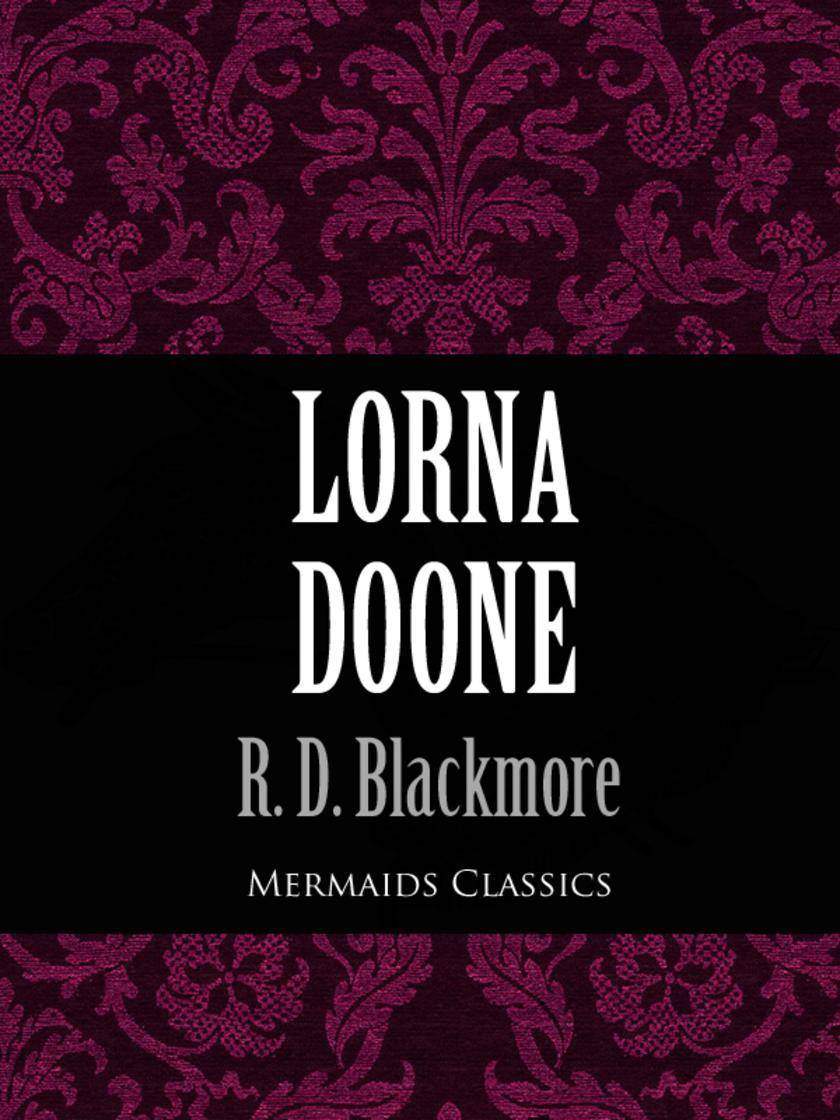
Lorna Doone (Mermaids Classics)
¥35.22
Lorna Doone: A Romance of Exmoor (1869) by Richard Doddridge Blackmore (1825- 1900) is a romance novel set in 17th century England in the region of Exmoor. The story follows a farmer named John Ridd who falls in love with Lorna Doone (the granddaughter of the Lord of the Doones). The Doones are considered to be the most notorious and outlawed clan in the region and who also had murdered his father when he was just a boy. As John tries to prevent his feelings developing any further towards Lorna, he later learns that Lorna is not actually related to the Doone family but the long lost girl whos mother was robbed and murdered by the Doone family.Mermaids Classics, an imprint of Mermaids Publishing brings the very best of old classic literature to a modern era of digital reading by producing high quality books in ebook format. All of the Mermaids Classics epublications are reproductions of classic antique books that were originally published in print format, mostly over a century ago and are now republished in digital format as ebooks. Begin to build your collection of digital books by looking for more literary gems from Mermaids Classics.
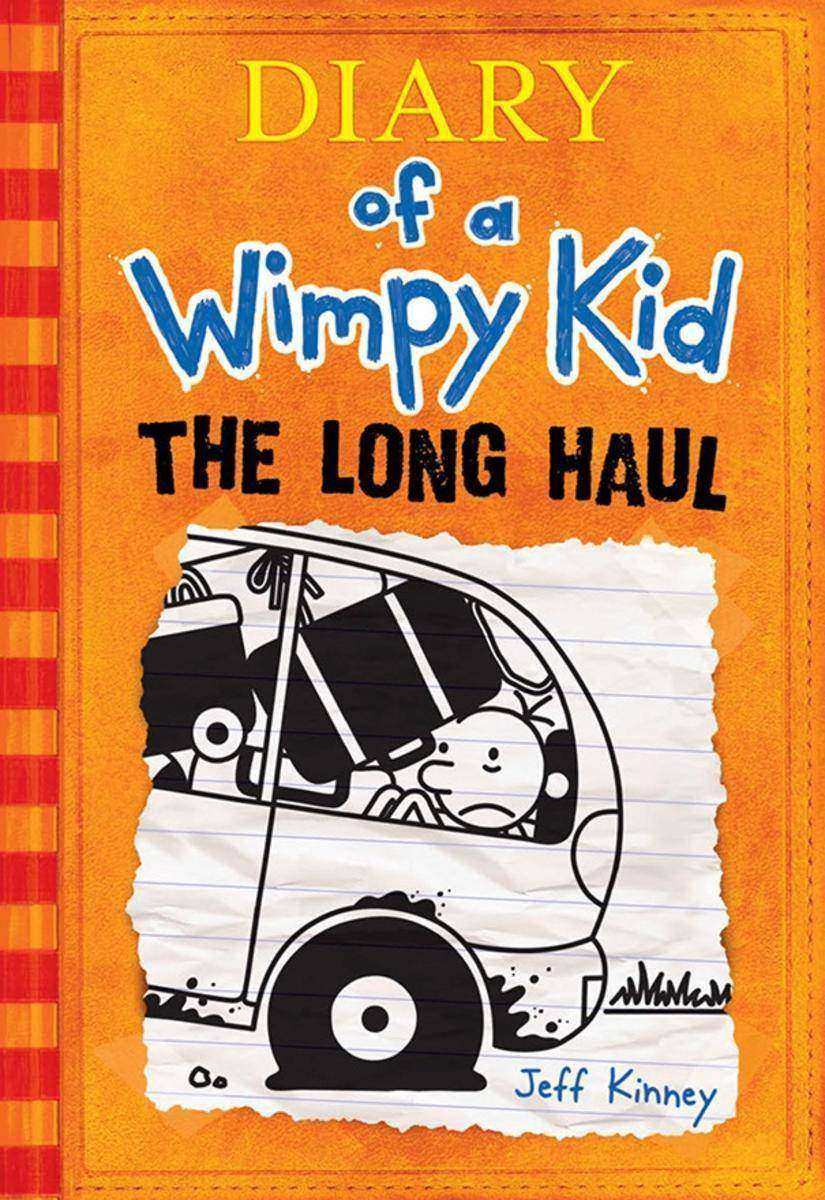
Long Haul (Diary of a Wimpy Kid #9)
¥158.82
A family road trip is supposed to be a lot of fun . . . unless, of course, you’re the Heffleys. The journey starts off full of promise, then quickly takes several wrong turns. Gas station bathrooms, crazed seagulls, a fender bender, and a runaway pig—not exactly Greg Heffley’s idea of a good time. But even the worst road trip can turn into an adventure—and this is one the Heffleys won’t soon forget.

Wes Anderson Collection: Bad Dads - Art Inspired by the Films of Wes Anderson
¥211.41
The third volume in the New York Times bestselling Wes Anderson Collection series showcases the best artwork from ';Bad Dads,' an annual exhibition of art inspired by the films of Wes Anderson. Curated by Spoke Art Gallery in San Francisco, ';Bad Dads' has continued to grow and progress as a dynamic group exhibition since its inaugural show in 2011, and has featured work from more than 400 artists from around the world. Those artworks range from paintings to sculptures to limited-edition screen prints and vary greatly in style, making for a diverse and lively show each year. Though each piece is distinct in its own right, the artworks' unifying element is the shared imagery and beloved characters from: Bottle Rocket Rushmore The Royal Tenenbaums The Life Aquatic with Steve Zissou The Darjeeling Limited Fantastic Mr. Fox Moonrise Kingdom The Grand Budapest Hotel The book features an original cover by graphic artist Max Dalton, a foreword by writer and director Wes Anderson himself, and an introduction by TV and movie critic Matt Zoller Seitz, author of the bestselling Wes Anderson Collectionbooks. A visual treasure trove, Bad Dads grants fans of Wes Anderson another creative avenue to explore his inspired worlds and movies. Also available from Matt Zoller Seitz: The Oliver Stone Experience, Mad Men Carousel, The Wes Anderson Collection: The Grand Budapest Hotel, and The Wes Anderson Collection.


