


 购物车
 个人中心


Securing Approval
¥265.87
Among the most momentous decisions that leaders of a state are called upon to make is whether or not to initiate warfare. How their military will fare against the opponent may be the first consideration, but not far behind are concerns about domestic political response and the reaction of the international community.Securing Approval makes clear the relationship between these two seemingly distinct concerns, demonstrating how multilateral security organizations like the UN influence foreign policy through public opinion without ever exercising direct enforcement power. While UN approval of a proposed action often bolsters public support, its refusal of endorsement may conversely send a strong signal to domestic audiences that the action will be exceedingly costly or overly aggressive. With a cogent theoretical and empirical argument, Terrence L. Chapman provides new evidence for how multilateral organizations matter in security affairs as well as a new way of thinking about the design and function of these institutions.
Top Student, Top School?
¥229.55
Most of us think that valedictorians can write their own ticket. By reaching the top of their class they have proven their merit, so their next logical step should be to attend the nation's very best universities. Yet in Top Student, Top School?, Alexandria Walton Radford, of RTI International, reveals that many valedictorians do not enroll in prestigious institutions. Employing an original five-state study that surveyed nine hundred public high school valedictorians, she sets out to determine when and why valedictorians end up at less selective schools, showing that social class makes all the difference.?Radford traces valedictorians' paths to college and presents damning evidence that high schools do not provide sufficient guidance on crucial factors affecting college selection, such as reputation, financial aid, and even the application process itself. Left in a bewildering environment of seemingly similar options, many students depend on their parents for assistance-and this allows social class to rear its head and have a profound impact on where students attend. Simply put, parents from less affluent backgrounds are far less informed about differences in colleges' quality, the college application process, and financial aid options, which significantly limits their child's chances of attending a competitive school, even when their child has already managed to become valedictorian.?Top Student, Top Schoolpinpoints an overlooked yet critical juncture in the education process, one that stands as a barrier to class mobility. By focusing solely on valedictorians, it shows that students' paths diverge by social class even when they are similarly well-prepared academically, and this divergence is traceable to specific failures by society, failures that we can and should address.Watch an interview of Alexandria Walton Radford discussing her book here:?http://www.youtube.com/watch?v=F81c1D1BpY0

Gravity's Ghost and Big Dog
¥247.21
Gravity's Ghost and Big Dog brings to life science's efforts to detect cosmic gravitational waves. These ripples in space-time are predicted by general relativity, and their discovery will not only demonstrate the truth of Einstein's theories but also transform astronomy. Although no gravitational wave has ever been directly detected, the previous five years have been an especially exciting period in the field. Here sociologist Harry Collins offers readers an unprecedented view of gravitational wave research and explains what it means for an analyst to do work of this kind.?Collins was embedded with the gravitational wave physicists as they confronted two possible discoveries-"e;Big?Dog,"e; fully analyzed in this volume for the first time, and the "e;Equinox Event,"e; which was first chronicled by Collins in Gravity's Ghost. Collins records the agonizing arguments that arose as the scientists worked out what they had seen and how to present it to the world, along the way demonstrating how even the most statistical of sciences rest on social and philosophical choices. Gravity's Ghost and Big Dog draws on nearly fifty years of fieldwork observing scientists at the American Laser Interferometer Gravitational Wave Observatory and elsewhere around the world to offer an inspired commentary on the place of science in society today.
Riotous Flesh
¥229.55
Nineteenth-century America saw numerous campaigns against masturbation, which was said to cause illness, insanity, and even death. Riotous Flesh explores women's leadership of those movements, with a specific focus on their rhetorical, social, and political effects, showing how a desire to transform the politics of sex created unexpected alliances between groups that otherwise had very different goals.As April R. Haynes shows, the crusade against female masturbation was rooted in a generally shared agreement on some major points: that girls and women were as susceptible to masturbation as boys and men; that "e;self-abuse"e; was rooted in a lack of sexual information; and that sex education could empower women and girls to master their own bodies. Yet the groups who made this education their goal ranged widely, from "e;ultra"e; utopians and nascent feminists to black abolitionists. Riotous Flesh explains how and why diverse women came together to popularize, then institutionalize, the condemnation of masturbation, well before the advent of sexology or the professionalization of medicine.
Theory of Morality
¥247.21
"e;Let us . . . nominate this the most important theoretical work on ethical or moral theory since John Rawls's Theory of Justice. If you have philosophical inclinations and want a good workout, this conscientious scrutiny of moral assumptions and expressions will be most rewarding. Donagan explores ways of acting in the Hebrew-Christian context, examines them in the light of natural law and rational theories, and proposes that formal patterns for conduct can emerge. All this is tightly reasoned, the argument is packed, but the language is clear."e;-Christian Century"e;The man value of this book seems to me to be that it shows the force of the Hebrew-Christian moral tradition in the hands of a creative philosopher. Throughout the book, one cannot but feel that a serious philosopher is trying to come to terms with his religious-moral background and to defend it against the prevailing secular utilitarian position which seems to dominate academic philosophy."e;-Bernard Gert, Journal of Medicine and Philosophy

Why Washington Won't Work
¥229.55
Polarization is at an all-time high in the United States. But contrary to popular belief, Americans are polarized not so much in their policy preferences as in their feelings toward their political opponents: To an unprecedented degree, Republicans and Democrats simply do not like one another. No surprise that these deeply held negative feelings are central to the recent (also unprecedented) plunge in congressional productivity. The past three Congresses have gotten less done than any since scholars began measuring congressional productivity.?In Why Washington Won't Work, Marc J. Hetherington and Thomas J. Rudolph argue that a contemporary crisis of trust-people whose party is out of power have almost no trust in a government run by the other side-has deadlocked Congress. On most issues, party leaders can convince their own party to support their positions. In order to pass legislation, however, they must also create consensus by persuading some portion of the opposing party to trust in their vision for the future. Without trust, consensus fails to develop and compromise does not occur. Up until recently, such trust could still usually be found among the opposition, but not anymore. Political trust, the authors show, is far from a stable characteristic. It's actually highly variable and contingent on a variety of factors, including whether one's party is in control, which part of the government one is dealing with, and which policies or events are most salient at the moment.Political trust increases, for example, when the public is concerned with foreign policy-as in times of war-and it decreases in periods of weak economic performance. Hetherington and Rudolph do offer some suggestions about steps politicians and the public might take to increase political trust. Ultimately, however, they conclude that it is unlikely levels of political trust will significantly increase unless foreign concerns come to dominate and the economy is consistently strong.
Cultural Capital
¥247.21
John Guillory challenges the most fundamental premises of the canon debate by resituating the problem of canon formation in an entirely new theoretical framework. The result is a book that promises to recast not only the debate about the literary curriculum but also the controversy over "e;multiculturalism"e; and the current "e;crisis of the humanities."e; Employing concepts drawn from Pierre Bourdieu's sociology, Guillory argues that canon formation must be understood less as a question of the representation of social groups than as a question of the distribution of "e;cultural capital"e; in the schools, which regulate access to literacy, to the practices of reading and writing.
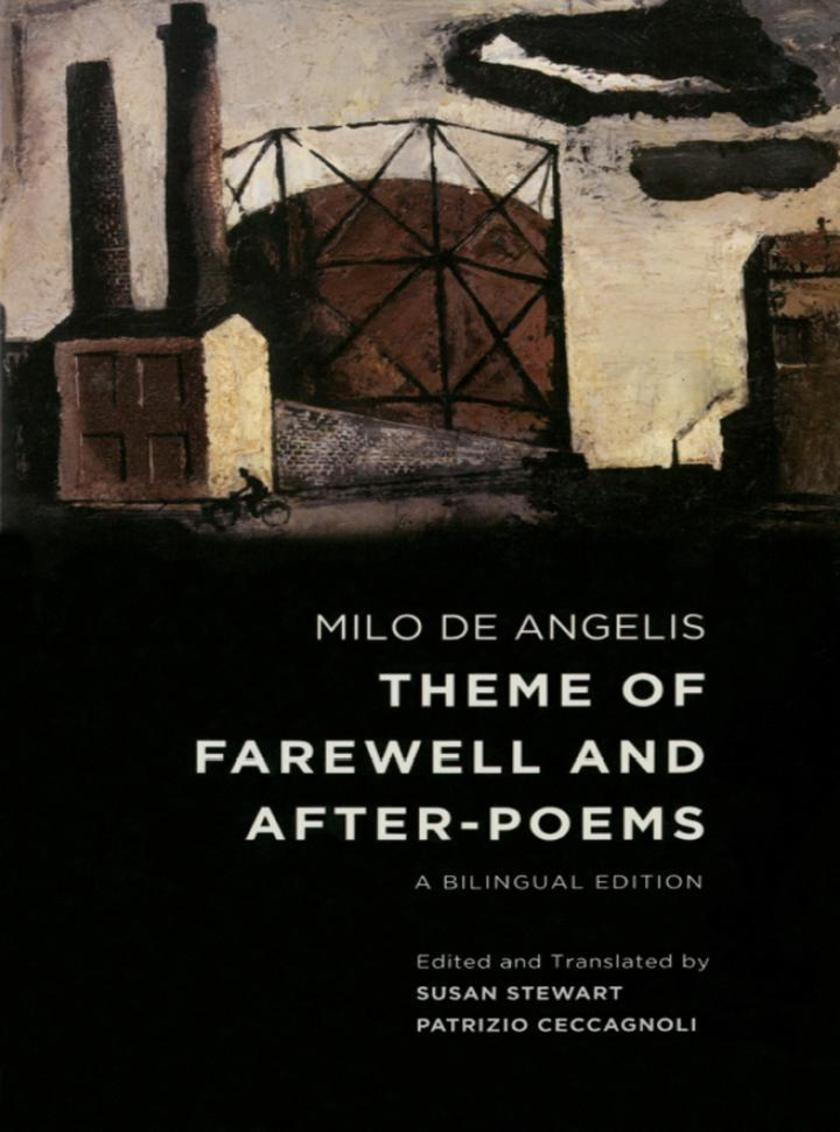
Theme of Farewell and After-Poems
¥241.33
Milo De Angelis, born in 1951, is one of the most important living Italian poets. With this volume, Susan Stewart and?Patrizio Ceccagnoli bring to English readers for the first time a facing-page edition of his most recent work: his book-length elegy,?Theme of Farewell, and the subsequent poems of That Wandering in?the Darkness of Courtyards. These two books form a sequence narrating the illness and premature death, in 2003, of the poet's wife, the writer Giovanna Sicari, a celebrated poet in her own right; they also trace De Angelis's turn from grief, through time, back to the world. Immediate, perceptive, and woven from the fabric of everyday life in contemporary Milan, the poems never depart from universal human emotions of despair and awakening. Throughout his long career, De?Angelis has renewed lyric poetry with the sheer intensity of his forms and insights, and the volumes offered here have won some of the most important Italian literary awards, including the coveted Premio Viareggio.?These inexorable and beautifully crafted translations will be of interest to scholars of contemporary Italian literature, students?of contemporary poetry and literary translation, and those who work in comparative literature. Above all, they are bound to speak to any reader in search of a poet writing at the height of his powers of expression.
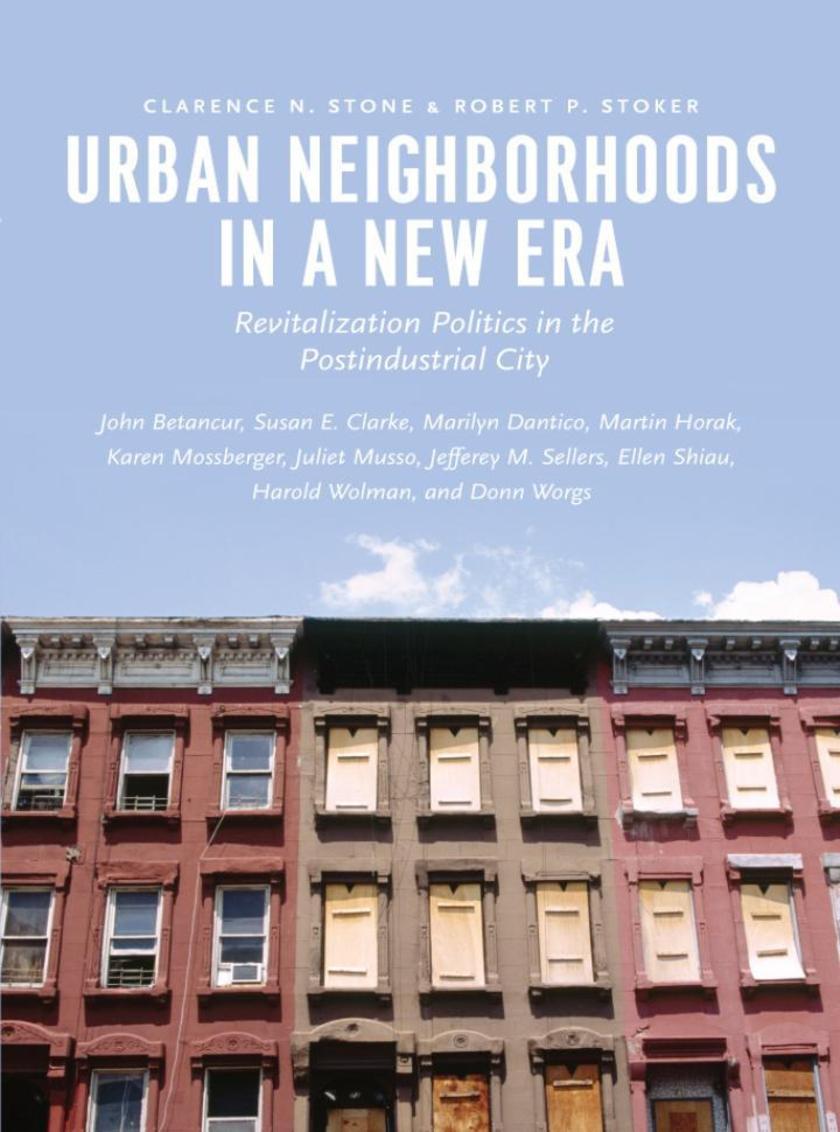
Urban Neighborhoods in a New Era
¥247.21
For decades, North American cities racked by deindustrialization and population loss have followed one primary path in their attempts at revitalization: a focus on economic growth in downtown and business areas. Neighborhoods, meanwhile, have often been left severely underserved. There are, however, signs of change. This collection of studies by a distinguished group of political scientists and urban planning scholars offers a rich analysis of the scope, potential, and ramifications of a shift still in progress. Focusing on neighborhoods in six cities-Baltimore, Chicago, Denver, Los Angeles, Phoenix, and Toronto-the authors show how key players, including politicians and philanthropic organizations, are beginning to see economic growth and neighborhood improvement as complementary goals. The heads of universities and hospitals in central locations also find themselves facing newly defined realities, adding to the fluidity of a new political landscape even as structural inequalities exert a continuing influence.While not denying the hurdles that community revitalization still faces, the contributors ultimately put forth a strong case that a more hospitable local milieu can be created for making neighborhood policy. In examining the course of experiences from an earlier period of redevelopment to the present postindustrial city, this book opens a window on a complex process of political change and possibility for reform.
Children of the Greek Civil War
¥253.10
At the height of the Greek Civil War in 1948, thirty-eight thousand children were evacuated from their homes in the mountains of northern Greece. The Greek Communist Party relocated half of them to orphanages in Eastern Europe, while their adversaries in the national government placed the rest in children's homes elsewhere in Greece. A point of contention during the Cold War, this controversial episode continues to fuel tensions between Greeks and Macedonians and within Greek society itself. Loring M. Danforth and Riki Van Boeschoten present here for the first time a comprehensive study of the two evacuation programs and the lives of the children they forever transformed.Marshalling archival records, oral histories, and ethnographic fieldwork, the authors analyze the evacuation process, the political conflict surrounding it, the children's upbringing, and their fates as adults cut off from their parents and their homeland. They also give voice to seven refugee children who poignantly recount their childhood experiences and heroic efforts to construct new lives in diaspora communities throughout the world. A much-needed corrective to previous historical accounts, Children of the Greek Civil War is also a searching examination of the enduring effects of displacement on the lives of refugee children.

Knowledge in the Time of Cholera
¥265.87
Vomiting. Diarrhea. Dehydration. Death. Confusion. In 1832, the arrival of cholera in the United States created widespread panic throughout the country. For the rest of the century, epidemics swept through American cities and towns like wildfire, killing thousands. Physicians of all stripes offered conflicting answers to the cholera puzzle, ineffectively responding with opiates, bleeding, quarantines, and all manner of remedies, before the identity of the dreaded infection was consolidated under the germ theory of disease some sixty years later.These cholera outbreaks raised fundamental questions about medical knowledge and its legitimacy, giving fuel to alternative medical sects that used the confusion of the epidemic to challenge both medical orthodoxy and the authority of the still-new American Medical Association. In Knowledge in the Time of Cholera, Owen Whooley tells us the story of those dark days, centering his narrative on rivalries between medical and homeopathic practitioners and bringing to life the battle to control public understanding of disease, professional power, and democratic governance in nineteenth-century America.
How Poems Think
¥206.01
To write or read a poem is often to think in distinctively poetic ways-guided by metaphors, sound, rhythms, associative movement, and more. Poetry's stance toward language creates a particular intelligence of thought and feeling, a compressed articulation that expands inner experience, imagining with words what cannot always be imagined without them. Through translation, poetry has diversified poetic traditions, and some of poetry's ways of thinking begin in the ancient world and remain potent even now. In How Poems Think, Reginald Gibbons presents a rich gallery of poetic inventiveness and continuity drawn from a wide range of poets-Sappho, Pindar, Shakespeare, Keats, William Carlos Williams, Marina Tsvetaeva, Gwendolyn Brooks, and many others. Gibbons explores poetic temperament, rhyme, metonymy, etymology, and other elements of poetry as modes of thinking and feeling. In celebration and homage, Gibbons attunes us to the possibilities of poetic thinking.
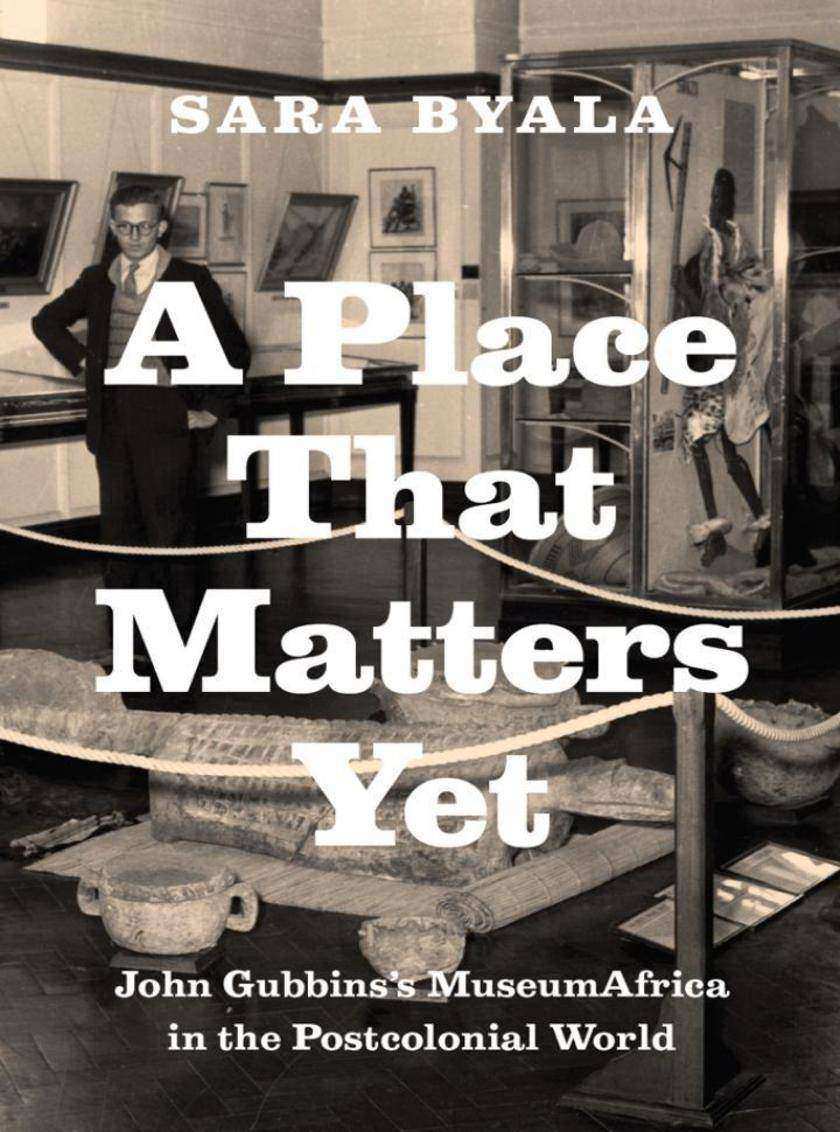
Place That Matters Yet
¥288.41
A Place That Matters Yet unearths the little-known story of Johannesburg's MuseumAfrica, a South African history museum that embodies one of the most dynamic and fraught stories of colonialism and postcolonialism, its life spanning the eras before, during, and after apartheid. Sara Byala, in examining this story, sheds new light not only on racism and its institutionalization in South Africa but also on the problems facing any museum that is charged with navigating colonial history from a postcolonial perspective.?Drawing on thirty years of personal letters and public writings by museum founder John Gubbins, Byala paints a picture of a uniquely progressive colonist, focusing on his philosophical notion of "e;three-dimensional thinking,"e; which aimed to transcend binaries and thus-quite explicitly-racism. Unfortunately, Gubbins died within weeks of the museum's opening, and his hopes would go unrealized as the museum fell in line with emergent apartheid politics. Following the museum through this transformation and on to its 1994 reconfiguration as a post-apartheid institution, Byala showcases it as a rich-and problematic-archive of both material culture and the ideas that surround that culture, arguing for its continued importance in the establishment of a unified South Africa.

Bitter Roots
¥288.41
For over a century, plant specialists worldwide have sought to transform healing plants in African countries into pharmaceuticals. And for equally as long, conflicts over these medicinal plants have endured, from stolen recipes and toxic tonics to unfulfilled promises of laboratory equipment and usurped personal patents. In Bitter Roots, Abena Dove Osseo-Asare draws on publicly available records and extensive interviews with scientists and healers in Ghana, Madagascar, and South Africa to interpret how African scientists and healers, rural communities, and drug companies-including Pfizer, Bristol-Myers Squibb, and Unilever-have sought since the 1880s to develop drugs from Africa's medicinal plants.?Osseo-Asare recalls the efforts to transform six plants into pharmaceuticals: rosy periwinkle, Asiatic pennywort, grains of paradise, Strophanthus, Cryptolepis, and Hoodia.?Through the stories of each plant, she shows that herbal medicine and pharmaceutical chemistry have simultaneous and overlapping histories that cross geographic boundaries. At the same time, Osseo-Asare sheds new light on how various interests have tried to manage the rights to these healing plants and probes the challenges associated with assigning ownership to plants and their biochemical components.A fascinating examination of the history of medicine in colonial and postcolonial Africa, Bitter Roots will be indispensable for scholars of Africa; historians interested in medicine, biochemistry, and society; and policy makers concerned with drug access and patent rights.
Not That Kind of Girl: A Young Woman Tells You What She’s Learned
¥66.22
Lena Dunham, acclaimed writer-director-star of HBO and Sky Atlantic’s ‘Girls’ and the award-winning movie ‘Tiny Furniture’, displays her unique powers of observation, wisdom and humour in this exceptional collection of essays. “If I could take what I’ve learned and make one menial job easier for you, or prevent you from having the kind of sex where you feel you must keep your sneakers on in case you want to run away during the act, then every misstep of mine was worthwhile. I’m already predicting my future shame at thinking I had anything to offer you, but also my future glory in having stopped you from trying an expensive juice cleanse or thinking that it was your fault when the person you are dating suddenly backs away, intimidated by the clarity of your personal mission here on earth. No, I am not a sexpert, a psychologist, or a dietician. I am not a mother of three or the owner of a successful hosiery franchise. But I am a girl with a keen interest in having it all, and what follows are hopeful dispatches from the frontlines of that struggle.”

The Child Bride
¥58.86
Cathy Glass, international bestselling author, tells the shocking story of Zeena, a young Asian girl desperate to escape from her family. When 14 -year-old Zeena begs to be taken into care with a non-Asian family, she is clearly petrified. But of what? Placed in the home of experienced foster carer Cathy and her family, Zeena gradually settles into her new life, but misses her little brothers and sisters terribly. Prevented from having any contact with them by her family who insist she has brought shame and dishonour on the whole community, Zeena tries to see them at school. But when her father and uncle find out, they bundle her into a car and threaten to set fire to her if she makes anymore trouble. Zeena is too frightened to press charges against them despite being offered police protection in a safe house. Eventually, Cathy discovers the devastating truth from Zeena, and with devastation she believes there is little she can do to help her.
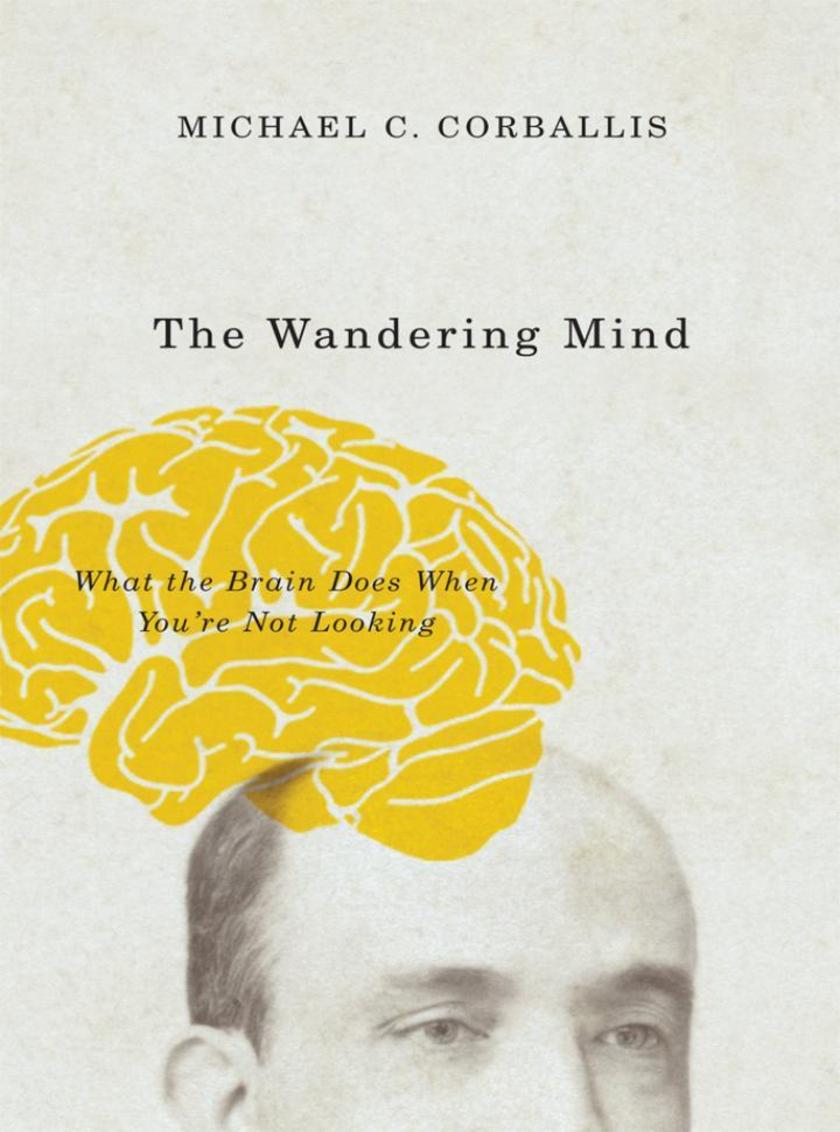
Wandering Mind
¥147.15
If we've done our job well-and, let's be honest, if we're lucky-you'll read to the end of this de*ion. Most likely, however, you won't. Somewhere in the middle of the next paragraph, your mind will wander off. Minds wander. That's just how it is.?That may be bad news for me, but is it bad news for people in generalDoes the fact that as much as fifty percent of our waking hours find us failing to focus on the task at hand represent a problemMichael Corballis doesn't think so, and with The Wandering Mind, he shows us why, rehabilitating woolgathering and revealing its incredibly useful effects. Drawing on the latest research from cognitive science and evolutionary biology, Corballis shows us how mind-wandering not only frees us from moment-to-moment drudgery, but also from the limitations of our immediate selves. Mind-wandering strengthens our imagination, fueling the flights of invention, storytelling, and empathy that underlie our shared humanity; furthermore, he explains, our tendency to wander back and forth through the timeline of our lives is fundamental to our very sense of ourselves as coherent, continuing personalities.?Full of unusual examples and surprising discoveries, The Wandering Mind mounts a vigorous defense of inattentioneven as it never fails to hold the reader's.
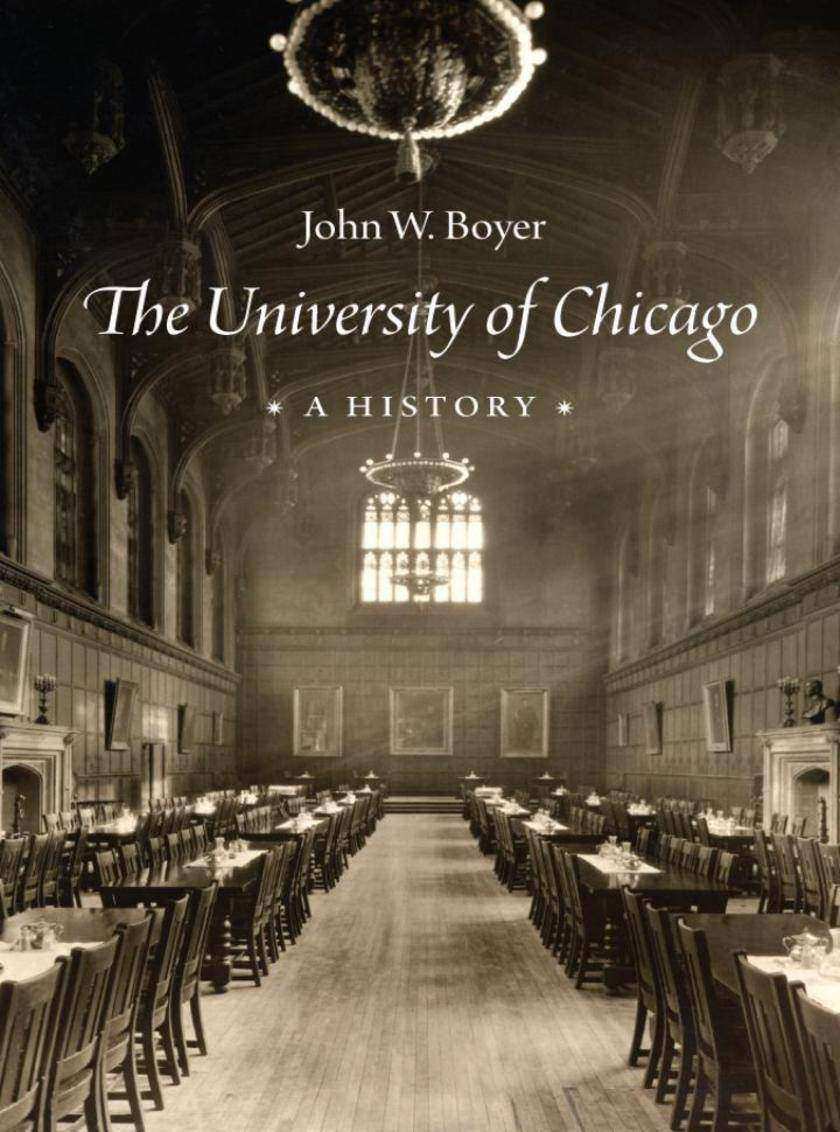
University of Chicago
¥247.21
One of the most influential institutions of higher learning in the world, the University of Chicago has a powerful and distinct identity, and its name is synonymous with intellectual rigor. With nearly 170,000 alumni living and working in more than 150 countries, its impact is far-reaching and long-lasting.With The University of Chicago: A History, John W. Boyer, Dean of the College since 1992, presents a deeply researched and comprehensive history of the university. Boyer has mined the archives, exploring the school's complex and sometimes controversial past to set myth and hearsay apart from fact. The result is a fascinating narrative of a legendary academic community, one that brings to light the nature of its academic culture and curricula, the experience of its students, its engagement with Chicago's civic community, and the conditions that have enabled the university to survive and sustain itself through decades of change.Boyer's extensive research shows that the University of Chicago's identity is profoundly interwoven with its history, and that history is unique in the annals of American higher education. After a little-known false start in the mid-nineteenth century, it achieved remarkable early successes, yet in the 1950s it faced a collapse of undergraduate enrollment, which proved fiscally debilitating for decades. Throughout, the university retained its fierce commitment to a distinctive, intense academic culture marked by intellectual merit and free debate, allowing it to rise to international acclaim. Today it maintains a strong obligation to serve the larger community through its connections to alumni, to the city of Chicago, and increasingly to its global community.Published to coincide with the 125th anniversary of the university, this must-have reference will appeal to alumni and anyone interested in the history of higher education of the United States.
Rhetoric of Plato's Republic
¥247.21
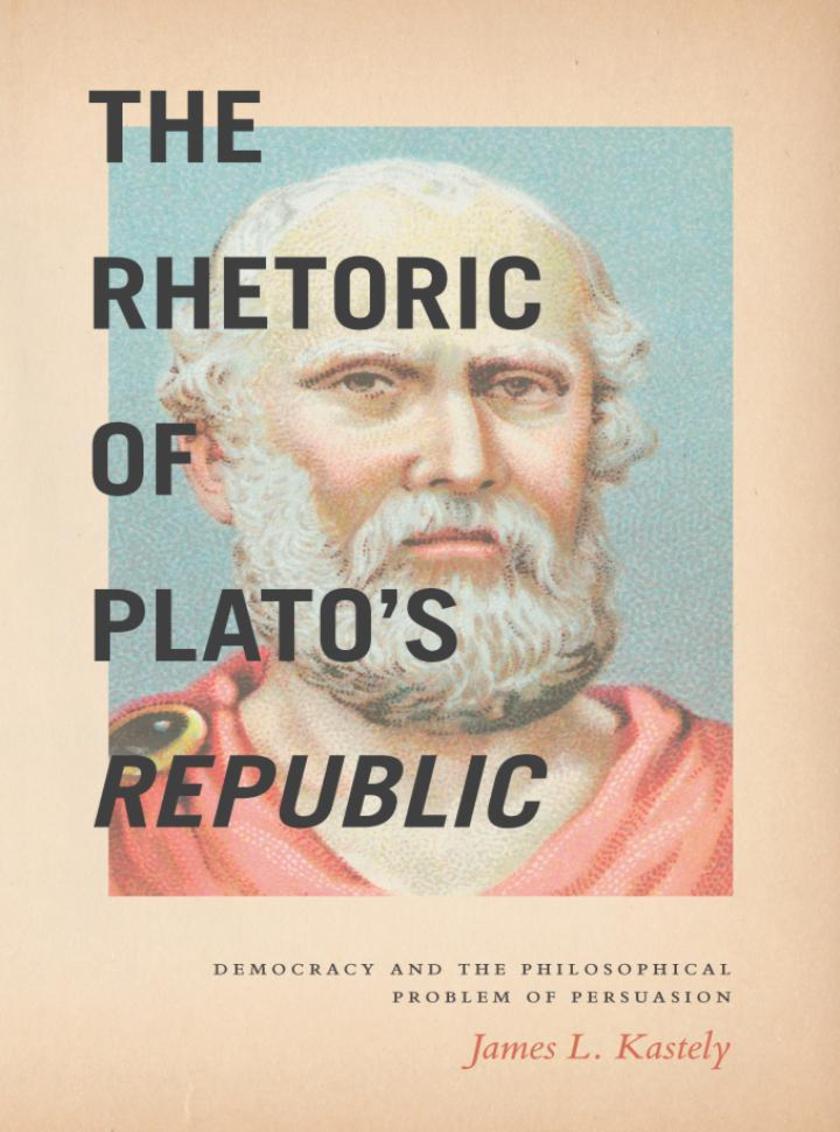
Plato isn't exactly thought of as a champion of democracy, and perhaps even less as an important rhetorical theorist. In this book, James L. Kastely recasts Plato in just these lights, offering a vivid new reading of one of Plato's most important works: the Republic. At heart, Kastely demonstrates, the Republic is a democratic epic poem and pioneering work in rhetorical theory. Examining issues of justice, communication, persuasion, and audience, he uncovers a seedbed of theoretical ideas that resonate all the way up to our contemporary democratic practices. As Kastely shows, the Republic begins with two interrelated crises: one rhetorical, one philosophical. In the first, democracy is defended by a discourse of justice, but no one can take this discourse seriously because no one can see-in a world where the powerful dominate the weak-how justice is a value in itself. That value must be found philosophically, but philosophy, as Plato and Socrates understand it, can reach only the very few. In order to reach its larger political audience, it must become rhetoric; it must become a persuasive part of the larger culture-which, at that time, meant epic poetry. Tracing how Plato and Socrates formulate this transformation in the Republic, Kastely isolates a crucial theory of persuasion that is central to how we talk together about justice and organize ourselves according to democratic principles.?
Hidden Game of Baseball
¥147.15
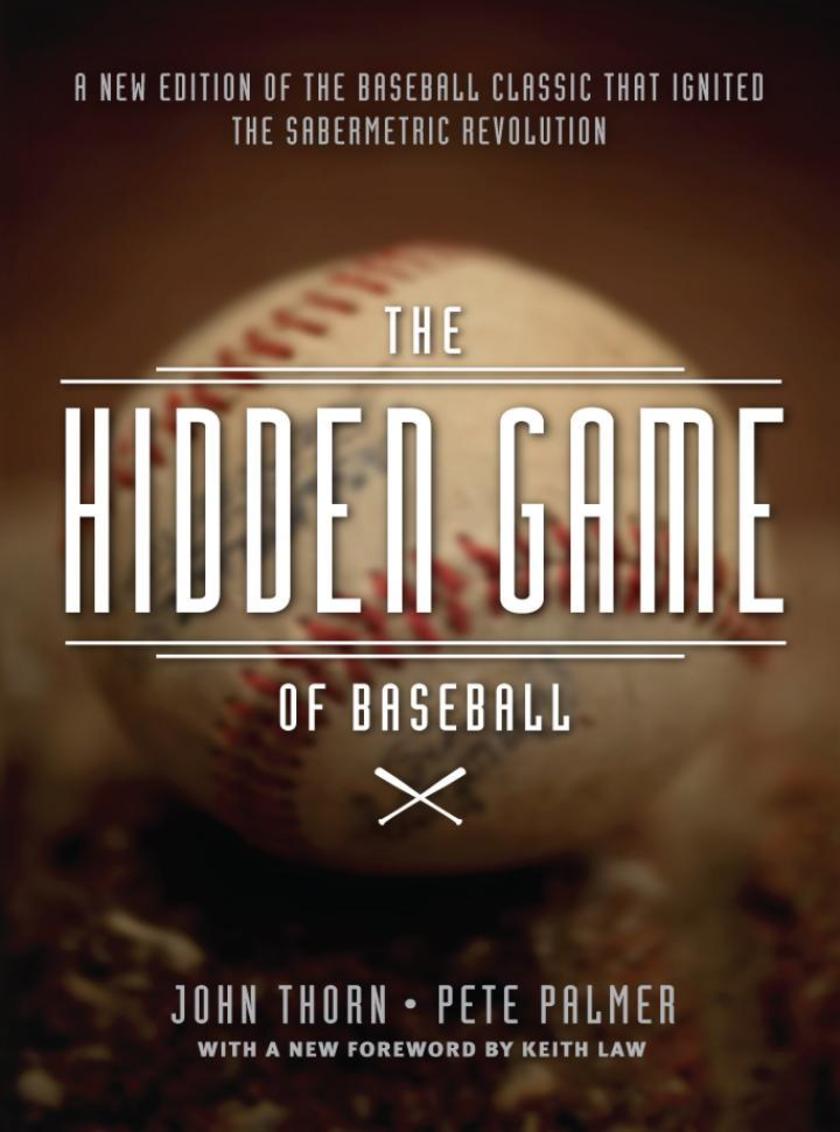
Long before Moneyball became a sensation or Nate Silver turned the knowledge he'd honed on baseball into electoral gold, John Thorn and Pete Palmer were using statistics to shake the foundations of the game. First published in 1984, The Hidden Game of Baseball ushered in the sabermetric revolution by demonstrating that we were thinking about baseball stats-and thus the game itself-all wrong. Instead of praising sluggers for gaudy RBI totals or pitchers for wins, Thorn and Palmer argued in favor of more subtle measurements that correlated much more closely to the ultimate goal: winning baseball games.The new gospel promulgated by Thorn and Palmer opened the door for a flood of new questions, such as how a ballpark's layout helps or hinders offense or whether a strikeout really is worse than another kind of out. Taking questions like these seriously-and backing up the answers with data-launched a new era, showing fans, journalists, scouts, executives, and even players themselves a new, better way to look at the game.This brand-new edition retains the body of the original, with its rich, accessible analysis rooted in a deep love of baseball, while adding a new introduction by the authors tracing the book's influence over the years. A foreword by ESPN's lead baseball analyst, Keith Law, details The Hidden Game's central role in the transformation of baseball coverage and team management and shows how teams continue to reap the benefits of Thorn and Palmer's insights today. Thirty years after its original publication, The Hidden Game is still bringing the high heat-a true classic of baseball literature.
Parables of Coercion
¥265.87
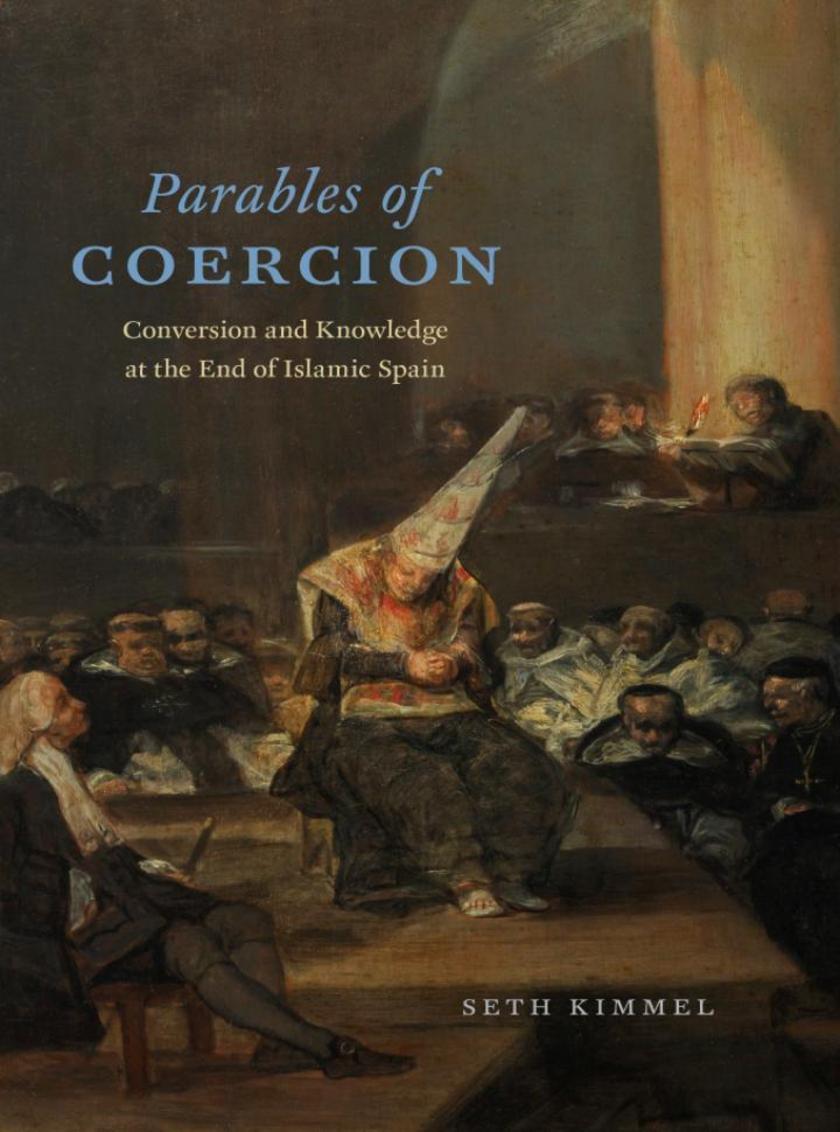
In the sixteenth and seventeenth centuries, competing scholarly communities sought to define a Spain that was, at least officially, entirely Christian, even if many suspected that newer converts from Islam and Judaism were Christian in name only. Unlike previous books on conversion in early modern Spain, however, Parables of Coercion focuses not on the experience of the converts themselves, but rather on how questions surrounding conversion drove religious reform and scholarly innovation.In its careful examination of how Spanish authors transformed the history of scholarship through debate about forced religious conversion, Parables of Coercion makes us rethink what we mean by tolerance and intolerance, and shows that debates about forced conversion and assimilation were also disputes over the methods and practices that demarcated one scholarly discipline from another.


