


 购物车
 个人中心


Fragments and Assemblages
¥223.67
In Fragments and Assemblages, Arthur Bahr expands the ways in which we interpret medieval manu*s, examining the formal characteristics of both physical manu*s and literary works. Specifically, Bahr argues that manu* compilations from fourteenth-century London reward interpretation as both assemblages and fragments: as meaningfully constructed objects whose forms and textual contents shed light on the city's literary, social, and political cultures, but also as artifacts whose physical fragmentation invites forms of literary criticism that were unintended by their medieval makers. Such compilations are not simply repositories of data to be used for the reconstruction of the distant past; their physical forms reward literary and aesthetic analysis in their own right. The compilations analyzed reflect the full vibrancy of fourteenth-century London's literary cultures: the multilingual codices of Edwardian civil servant Andrew Horn and Ricardian poet John Gower, the famous Auchinleck manu* of texts in Middle English, and Chaucer's Canterbury Tales. By reading these compilations as both formal shapes and historical occurrences, Bahr uncovers neglected literary histories specific to the time and place of their production. The book offers a less empiricist way of interpreting the relationship between textual and physical form that will be of interest to a wide range of literary critics and manu* scholars.

War's Waste
¥229.55
With US soldiers stationed around the world and engaged in multiple conflicts, Americans will be forced for the foreseeable future to come to terms with those permanently disabled in battle.?At the moment, we accept rehabilitation as the proper social and cultural response to the wounded, swiftly returning injured combatants to their civilian lives. But this was not always the case, as Beth Linker reveals in her provocative new book, War's Waste.?Linker explains how, before entering World War I, the United States sought a way to avoid the enormous cost of providing injured soldiers with pensions, which it had done since the Revolutionary War. Emboldened by their faith in the new social and medical sciences, reformers pushed rehabilitation as a means to "e;rebuild"e; disabled soldiers, relieving the nation of a monetary burden and easing the decision to enter the Great War. Linker's narrative moves from the professional development of orthopedic surgeons and physical therapists to the curative workshops, or hospital spaces where disabled soldiers learned how to repair automobiles as well as their own artificial limbs. The story culminates in the postwar establishment of the Veterans Administration, one of the greatest legacies to come out of the First World War.

Wittgenstein's Ladder
¥241.33
Marjorie Perloff, among our foremost critics of twentieth-century poetry, argues that Ludwig Wittgenstein provided writers with a radical new aesthetic, a key to recognizing the inescapable strangeness of ordinary language. Taking seriously Wittgenstein's remark that "e;philosophy ought really to be written only as a form of poetry,"e; Perloff begins by discussing Wittgenstein the "e;poet."e; What we learn is that the poetics of everyday life is anything but banal."e;This book has the lucidity and the intelligence we have come to expect from Marjorie Perloff.-Linda Munk, American Literature"e;[Perloff] has brilliantly adapted Wittgenstein's conception of meaning and use to an analysis of contemporary language poetry."e;-Linda Voris, Boston Review"e;Wittgenstein's Ladder offers significant insights into the current state of poetry, literature, and literary study. Perloff emphasizes the vitality of reading and thinking about poetry, and the absolute necessity of pushing against the boundaries that define and limit our worlds."e;-David Clippinger, Chicago Review"e;Majorie Perloff has done more to illuminate our understanding of twentieth century poetic language than perhaps any other critic. . . . Entertaining, witty, and above all highly original."e;-Willard Bohn, Sub-Stance

Romantic Machine
¥247.21
In the years immediately following Napoleon's defeat, French thinkers in all fields set their minds to the problem of how to recover from the long upheavals that had been set into motion by the French Revolution. Many challenged the Enlightenment's emphasis on mechanics and questioned the rising power of machines, seeking a return to the organic unity of an earlier age and triggering the artistic and philosophical movement of romanticism. Previous scholars have viewed romanticism and industrialization in opposition, but in this groundbreaking volume John Tresch reveals how thoroughly entwined science and the arts were in early nineteenth-century France and how they worked together to unite a fractured society.Focusing on a set of celebrated technologies, including steam engines, electromagnetic and geophysical instruments, early photography, and mass-scale printing, Tresch looks at how new conceptions of energy, instrumentality, and association fueled such diverse developments as fantastic literature, popular astronomy, grand opera, positivism, utopian socialism, and the Revolution of 1848. He shows that those who attempted to fuse organicism and mechanism in various ways, including Alexander von Humboldt and Auguste Comte, charted a road not taken that resonates today.Essential reading for historians of science, intellectual and cultural historians of Europe, and literary and art historians, The Romantic Machine is poised to profoundly alter our understanding of the scientific and cultural landscape of the early nineteenth century.

Lost Second Book of Aristotle's "e;Poetics"e;
¥247.21
Of all the writings on theory and aesthetics-ancient, medieval, or modern-the most important is indisputably Aristotle's Poetics, the first philosophical treatise to propound a theory of literature. In the Poetics, Aristotle writes that he will speak of comedy-but there is no further mention of comedy. Aristotle writes also that he will address catharsis and an analysis of what is funny. But he does not actually address any of those ideas. The surviving Poetics is incomplete.Until today. Here, Walter Watson offers a new interpretation of the lost second book of Aristotle's Poetics. Based on Richard Janko's philological reconstruction of the epitome, a summary first recovered in 1839 and hotly contested thereafter, Watson mounts a compelling philosophical argument that places the statements of this summary of the Aristotelian text in their true context. Watson renders lucid and complete explanations of Aristotle's ideas about catharsis, comedy, and a summary account of the different types of poetry, ideas that influenced not only Cicero's theory of the ridiculous, but also Freud's theory of jokes, humor, and the comic.Finally, more than two millennia after it was first written, and after five hundred years of scrutiny, Aristotle's Poetics is more complete than ever before. Here, at last, Aristotle's lost second book is found again.

Baroque Science
¥247.21
In Baroque Science, Ofer Gal and Raz Chen-Morris present a radically new perspective on the scientific revolution of the seventeenth century. Instead of celebrating the triumph of reason and rationality, they study the paradoxes and anxieties that stemmed from the New Science and the intellectual compromises that shaped it and enabled its spectacular success.?Gal and Chen-Morris show how the protagonists of the new mathematical natural philosophy grasped at the very far and very small by entrusting observation to the mediation of artificial instruments, and how they justified this mediation by naturalizing and denigrating the human senses. They show how the physical-mathematical ordering of heavens and earth demanded obscure and spurious mathematical procedures, replacing the divine harmonies of the late Renaissance with an assemblage of isolated, contingent laws and approximated constants.Finally, they show how the new savants, forced to contend that reason is hopelessly estranged from its surrounding world and that nature is irreducibly complex, turned to the passions to provide an alternative, naturalized foundation for their epistemology and ethics.?Enforcing order in the face of threatening chaos, blurring the boundaries of the natural and the artificial, and mobilizing the passions in the service of objective knowledge, the New Science, Gal and Chen-Morris reveal, is a Baroque phenomenon: deeply entrenched in and crucially formative of the culture of its time.

Law in Everyday Japan
¥253.10
Lawsuits are rare events in most people's lives. High-stakes cases are even less commonplace. Why is it, then, that scholarship about the Japanese legal system has focused almost exclusively on epic court battles, large-scale social issues, and corporate governanceMark D. West's Law in Everyday Japan fills a void in our understanding of the relationship between law and social life in Japan by shifting the focus to cases more representative of everyday Japanese life.Compiling case studies based on seven fascinating themes-karaoke-based noise complaints, sumo wrestling, love hotels, post-Kobe earthquake condominium reconstruction, lost-and-found outcomes, working hours, and debt-induced suicide-Law in Everyday Japan offers a vibrant portrait of the way law intermingles with social norms, historically ingrained ideas, and cultural mores in Japan. Each example is informed by extensive fieldwork. West interviews all of the participants-from judges and lawyers to defendants, plaintiffs, and their families-to uncover an everyday Japan where law matters, albeit in very surprising ways.
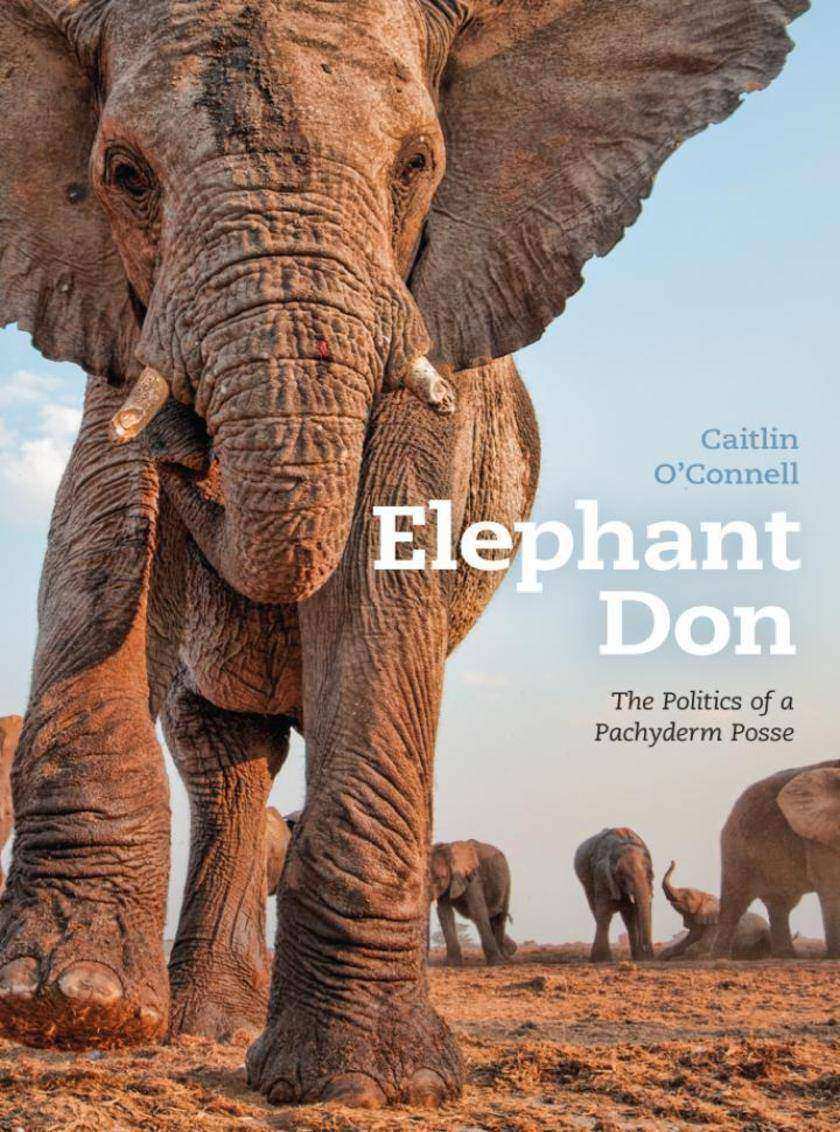
Elephant Don
¥147.15
Meet Greg. He's a stocky guy with an outsized swagger. He's been the intimidating yet sociable don of his posse of friends-including Abe, Keith, Mike, Kevin, Torn Trunk, and Willie. But one arid summer the tide begins to shift and the third-ranking Kevin starts to get ambitious, seeking a higher position within this social club. But this is no ordinary tale of gangland betrayal-Greg and his entourage are bull elephants in Etosha National Park, Namibia, where, for the last twenty-three years, Caitlin O'Connell has been a keen observer of their complicated friendships.In Elephant Don, O'Connell, one of the leading experts on elephant communication and social behavior, offers a rare inside look at the social world of African male elephants. Elephant Don tracks Greg and his group of bulls as O'Connell tries to understand the vicissitudes of male friendship, power struggles, and play. A frequently heart-wrenching portrayal of commitment, loyalty, and affection between individuals yearning for companionship, it vividly captures an incredible repertoire of elephant behavior and communication. ?Greg, O'Connell shows, is sometimes a tyrant and other times a benevolent dictator as he attempts to hold onto his position at the top. Though Elephant Don is Greg's story, it is also the story of O'Connell and the challenges and triumphs of field research in environs more hospitable to lions and snakes than scientists.Readers will be drawn into dramatic tales of an elephant society at once exotic and surprisingly familiar, as O'Connell's decades of close research reveal extraordinary discoveries about a male society not wholly unlike our own. Surely we've all known a Greg or two, and through this book we may come to know them in a whole new light.

Siena
¥147.15
Jane Tylus's Siena is a compelling and intimate portrait of this most secretive of cities, often overlooked by travelers to Italy. Cultural history, intellectual memoir, travelogue, and guidebook, it takes the reader on a quest of discovery through the well- and not-so-well-traveled roads and alleys of a town both medieval and modern.?As Tylus leads us through the city, she shares her passion for Siena in novelistic prose, while never losing sight of the historical complexities that have made Siena one of the most fascinating and beautiful towns in Europe. Today, Siena can appear on the surface standoffish and old-fashioned, especially when compared to its larger, flashier cousins Rome and Florence. But first impressions wear away as we learn from Tylus that Siena was an innovator among the cities of Italy: the first to legislate the building and maintenance of its streets, the first to publicly fund its university, the first to institute a municipal bank, and even the first to ban automobile traffic from its city center.?We learn about Siena's great artistic and architectural past, hidden behind centuries of painting and rebuilding, and about the distinctive characters of its different neighborhoods, exemplified in the Palio, the highly competitive horserace that takes place twice a year in the city's main piazza and that serves as both a dividing and a uniting force for the Sienese. Throughout we are guided by the assured voice of a seasoned scholar with a gift for spinning a good story and an eye for the telling detail, whether we are traveling Siena's modern highways, exploring its underground tunnels, tracking the city's financial history, or celebrating giants of painting like Simone Martini or giants of the arena, Siena's former Serie A soccer team.?A practical and engaging guide for tourists and armchair travelers alike, Siena is a testament to the powers of community and resilience in a place that is not quite as timeless and serene as it may at first appear.
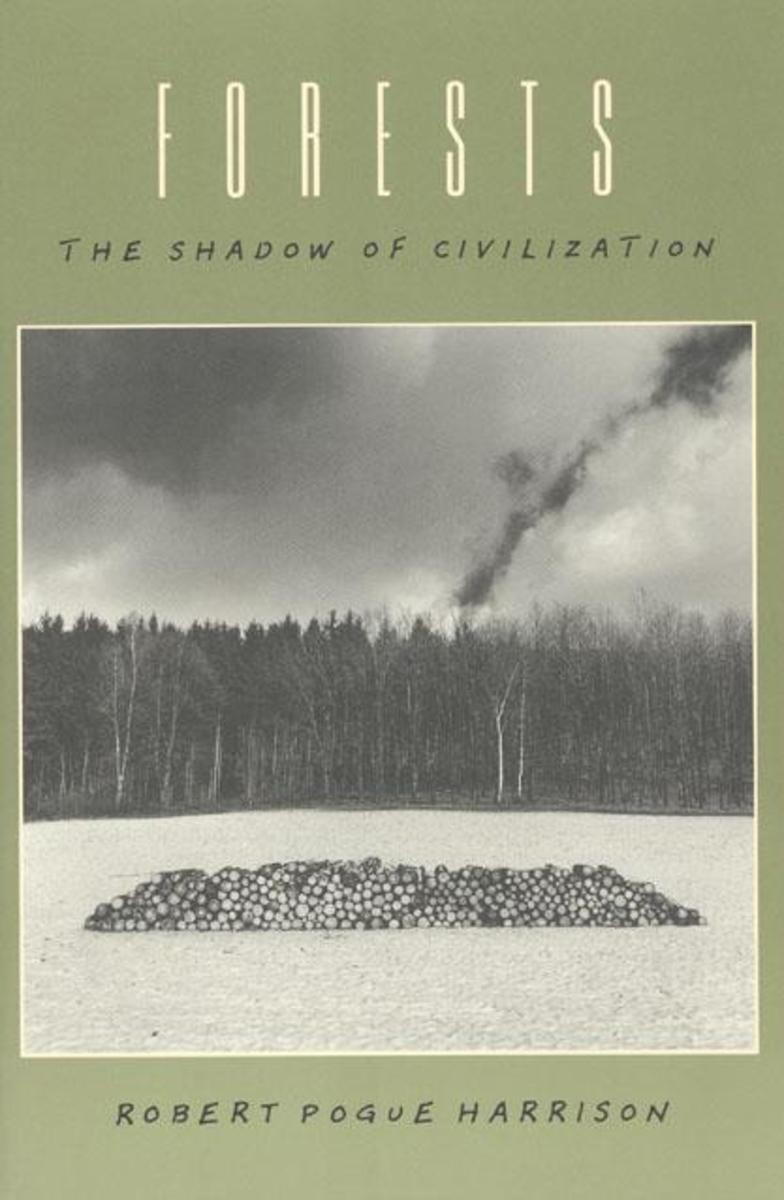
Forests
¥147.15
In this wide-ranging exploration of the role of forests in Western thought, Robert Pogue Harrison enriches our understanding not only of the forest's place in the cultural imagination of the West, but also of the ecological dilemmas that now confront us so urgently. Consistently insightful and beautifully written, this work is especially compelling at a time when the forest, as a source of wonder, respect, and meaning, disappears daily from the earth."e;Forests is one of the most remarkable essays on the human place in nature I have ever read, and belongs on the small shelf that includes Raymond Williams' masterpiece, The Country and the City. Elegantly conceived, beautifully written, and powerfully argued, [Forests] is a model of scholarship at its passionate best. No one who cares about cultural history, about the human place in nature, or about the future of our earthly home, should miss it.-William Cronon, Yale Review"e;Forests is, among other things, a work of scholarship, and one of immense value . . . one that we have needed. It can be read and reread, added to and commented on for some time to come."e;-John Haines, The New York Times Book Review
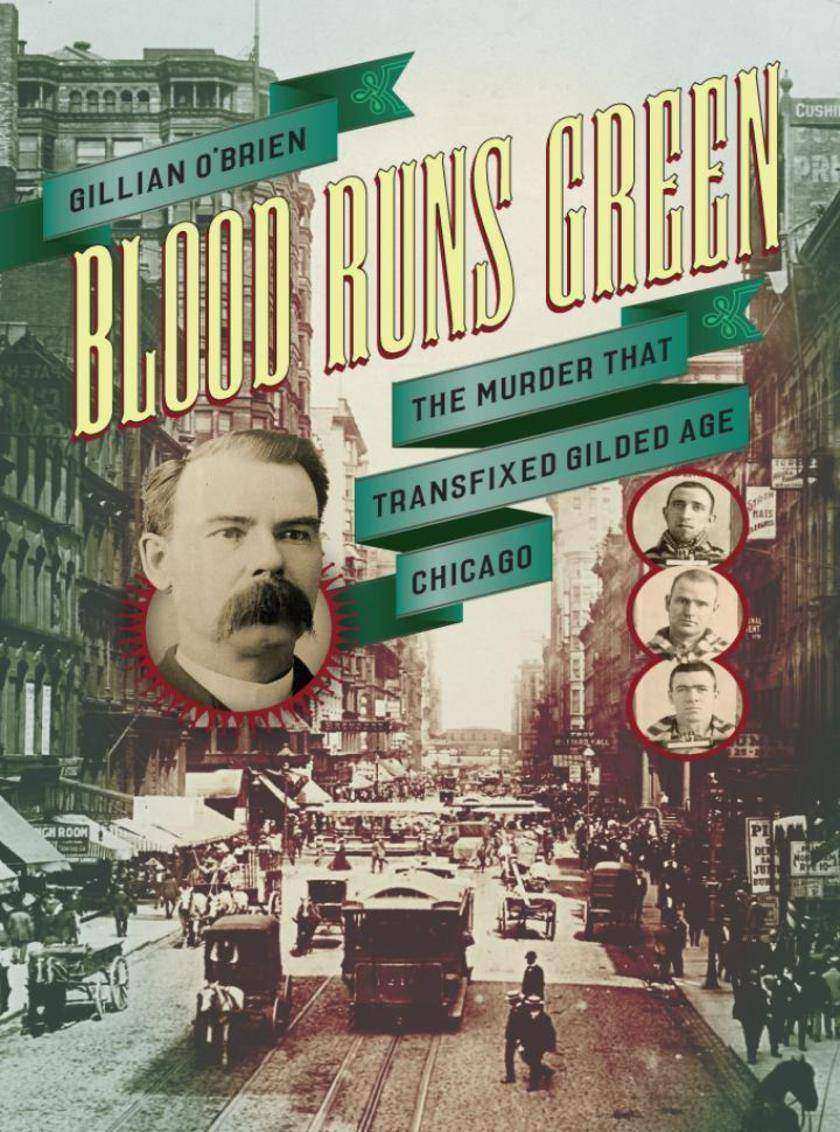
Blood Runs Green
¥147.15
It was the biggest funeral Chicago had seen since Lincoln's. On May 26, 1889, four thousand mourners proceeded down Michigan Avenue, followed by a crowd forty thousand strong, in a howl of protest at what commentators called one of the ghastliest and most curious crimes in civilized history. The dead man, Dr. P. H. Cronin, was a respected Irish physician, but his brutal murder uncovered a web of intrigue, secrecy, and corruption that stretched across the United States and far beyond.Blood Runs Green tells the story of Cronin's murder from the police investigation to the trial. It is a story of hotheaded journalists in pursuit of sensational crimes, of a bungling police force riddled with informers and spies, and of a secret revolutionary society determined to free Ireland but succeeding only in tearing itself apart. It is also the story of a booming immigrant population clamoring for power at a time of unprecedented change.From backrooms to courtrooms, historian Gillian O'Brien deftly navigates the complexities of Irish Chicago, bringing to life a rich cast of characters and tracing the spectacular rise and fall of the secret Irish American society Clan na Gael. She draws on real-life accounts and sources from the United States, Ireland, and Britain to cast new light on Clan na Gael and reveal how Irish republicanism swept across the United States. Destined to be a true crime classic, Blood Runs Green is an enthralling tale of a murder that captivated the world and reverberated through society long after the coffin closed.
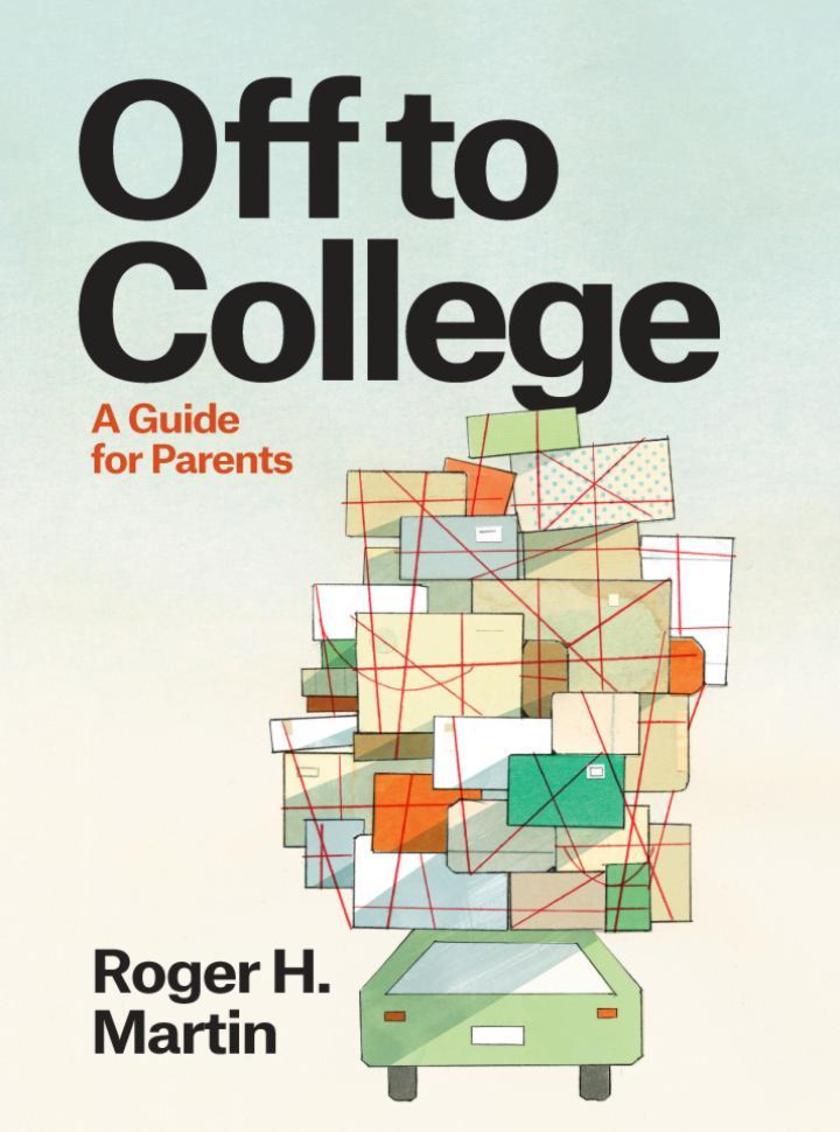
Off to College
¥147.15
For many parents, sending their child off to college can be a disconcerting leap. After years spent helping with homework, attending parent-teacher conferences, and catching up after school, college life represents a world of unknowns. What really happens during that transitional first ?year of collegeAnd what can parents do to strike the right balance between providing support and fostering independence?With Off to College, Roger H. Martin helps parents understand this important period of transition by providing the perfect tour of the first year on today's campus. Martin, a twenty-year college president and former Harvard dean, spent a year visiting five very different colleges and universities across the United States-public and private, large and small, elite and non-elite-to get an insider's view of modern college life. He observes an advising session as a student sorts out her schedule, unravels the mysteries of roommate assignments with a residence life director, and patrols campus with a safety officer on a rowdy Saturday night. He gets pointers in freshman English and tips on athletics and physical fitness from coaches. He talks with financial aid officers and health service providers. And he listens to the voices of the first-year students themselves. Martin packs Off to College with the insights and advice he gained and bolsters them with data from a wide variety of sources to deliver a unique and personal view of the current student experience.The first year is not just the beginning of a student's college education but also the first big step in becoming an adult. Off to College will help parents understand what to expect whether they're new to the college experience or reconciling modern campus life with memories of their own college days.
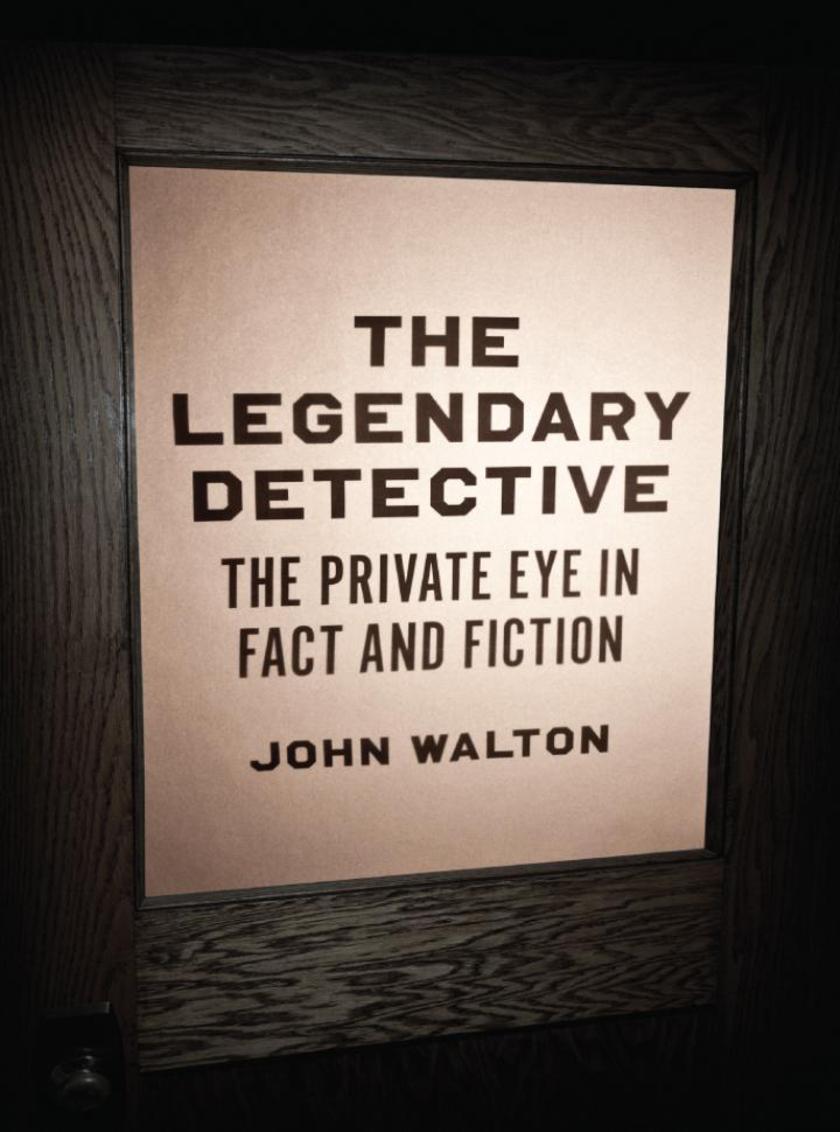
Legendary Detective
¥147.15
"e;I'm in a business where people come to me with troubles. Big troubles, little troubles, but always troubles they don't want to take to the cops."e; That's Raymond Chandler's Philip Marlowe, succinctly setting out our image of the private eye. A no-nonsense loner, working on the margins of society, working in the darkness to shine a little light.?The reality is a little different-but no less fascinating. In The Legendary Detective, John Walton offers a sweeping history of the American private detective in reality and myth, from the earliest agencies to the hard-boiled heights of the 1930s and '40s. Drawing on previously untapped archival accounts of actual detective work, Walton traces both the growth of major private detective agencies like Pinkerton, which became powerful bulwarks against social and labor unrest, and the motley, unglamorous work of small-time operatives. He then goes on to show us how writers like Dashiell Hammett and editors of sensational pulp magazines like Black Mask embellished on actual experiences and fashioned an image of the PI as a compelling, even admirable, necessary evil, doing society's dirty work while adhering to a self-imposed moral code. Scandals, public investigations, and regulations brought the boom years of private agencies to an end in the late 1930s, Walton explains, in the process fully cementing the shift from reality to fantasy.?Today, as the private detective has long since given way to security services and armed guards, the myth of the lone PI remains as potent as ever. No fan of crime fiction or American history will want to miss The Legendary Detective.
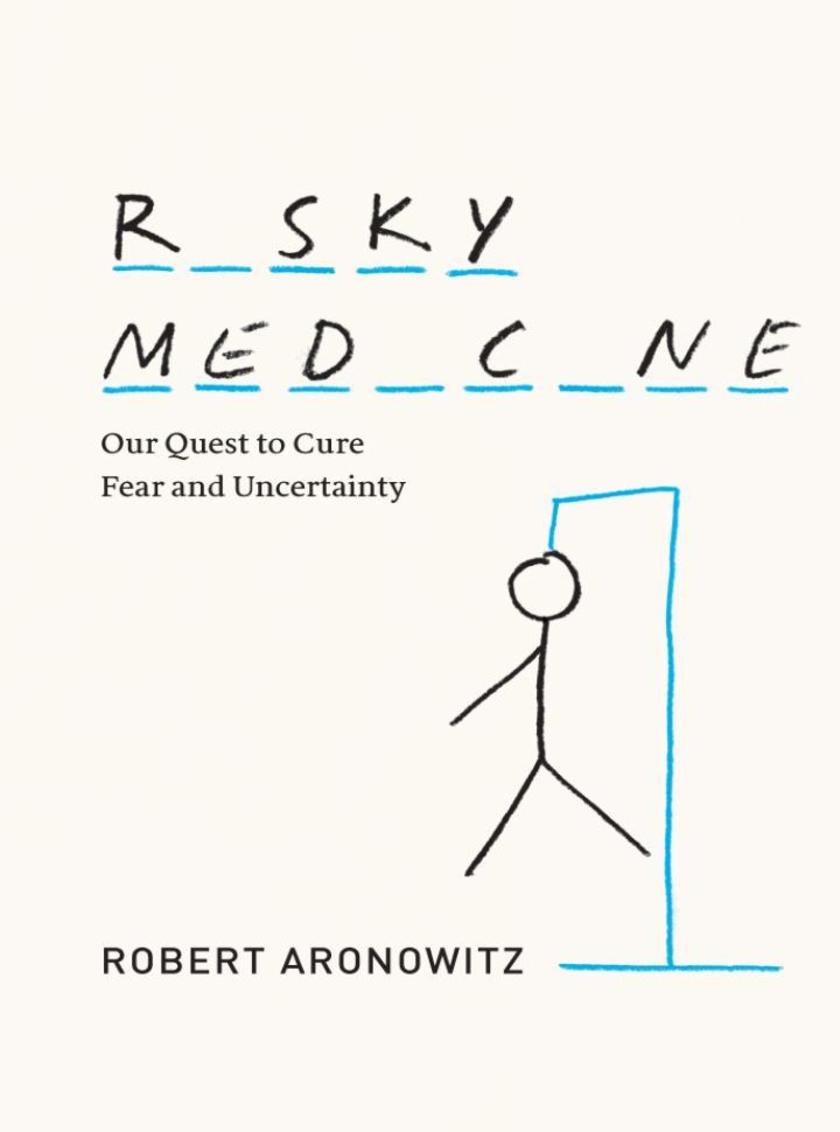
Risky Medicine
¥147.15
Will ever-more sensitive screening tests for cancer lead to longer, better lives Will anticipating and trying to prevent the future complications of chronic disease lead to better health Not always, says Robert Aronowitz in Risky Medicine. In fact, it often is hurting us.Exploring the transformation of health care over the last several decades that has led doctors to become more attentive to treating risk than treating symptoms or curing disease, Aronowitz shows how many aspects of the health system and clinical practice are now aimed at risk reduction and risk control. He argues that this transformation has been driven in part by the pharmaceutical industry, which benefits by promoting its products to the larger percentage of the population at risk for a particular illness, rather than the smaller percentage who are actually affected by it. Meanwhile, for those suffering from chronic illness, the experience of risk and disease has been conflated by medical practitioners who focus on anticipatory treatment as much if not more than on relieving suffering caused by disease. Drawing on such controversial examples as HPV vaccines, cancer screening programs, and the cancer survivorship movement, Aronowitz argues that patients and their doctors have come to believe, perilously, that far too many medical interventions are worthwhile because they promise to control our fears and reduce uncertainty.Risky Medicine is a timely call for a skeptical response to medicine's obsession with risk, as well as for higher standards of evidence for risk-reducing interventions and a rebalancing of health care to restore an emphasis on the actual curing of and caring for people suffering from disease.?
Protocols of Liberty
¥370.82
The fledgling United States fought a war to achieve independence from Britain, but as John Adams said, the real revolution occurred "e;in the minds and hearts of the people"e; before the armed conflict ever began. Putting the practices of communication at the center of this intellectual revolution, Protocols of Liberty shows how American patriots-the Whigs-used new forms of communication to challenge British authority before any shots were fired at Lexington and Concord. ?To understand the triumph of the Whigs over the Brit-friendly Tories, William B. Warner argues that it is essential to understand the communication systems that shaped pre-Revolution events in the background. He explains the shift in power by tracing the invention of a new political agency, the Committee of Correspondence; the development of a new genre for political expression, the popular declaration; and the emergence of networks for collective political action, with the Continental Congress at its center. From the establishment of town meetings to the creation of a new postal system and, finally, the Declaration of Independence, Protocols of Liberty reveals that communication innovations contributed decisively to nation-building and continued to be key tools in later American political movements, like abolition and women's suffrage, to oppose local custom and state law.

After They Closed the Gates
¥370.82
In 1921 and 1924, the United States passed laws to sharply reduce the influx of immigrants into the country. By allocating only small quotas to the nations of southern and eastern Europe, and banning almost all immigration from Asia, the new laws were supposed to stem the tide of foreigners considered especially inferior and dangerous. However, immigrants continued to come, sailing into the port of New York with fake passports, or from Cuba to Florida, hidden in the holds of boats loaded with contraband liquor. Jews, one of the main targets of the quota laws, figured prominently in the new international underworld of illegal immigration. However, they ultimately managed to escape permanent association with the identity of the "e;illegal alien"e; in a way that other groups, such as Mexicans, thus far, have not.In?After They Closed the Gates,?Libby Garland tells the untold stories of the Jewish migrants and smugglers involved in that underworld, showing how such stories contributed to growing national anxieties about illegal immigration. Garland also helps us understand how Jews were linked to, and then unlinked from, the specter of illegal immigration. By tracing this complex history, Garland offers compelling insights into the contingent nature of citizenship, belonging, and Americanness.

World More Concrete
¥370.82
Many people characterize urban renewal projects and the power of eminent domain as two of the most widely despised and often racist tools for reshaping American cities in the postwar period. In?A World More Concrete, N. D. B. Connolly uses the history of South Florida to unearth an older and far more complex story.Connolly captures nearly eighty years of political and land transactions to reveal how real estate and redevelopment created and preserved metropolitan growth and racial peace under white supremacy.Using a materialist approach, he offers a long view of capitalism and the color line, following much of the money that made land taking and Jim Crow segregation profitable and preferred ?approaches to governing cities throughout the twentieth century.A World More Concrete?argues that black and white landlords, entrepreneurs, and even liberal community leaders used tenements and repeated land dispossession to take advantage of the poor and generate remarkable wealth.Through a political culture built on real estate, South Florida's landlords and homeowners advanced property rights and white property rights, especially, at the expense of more inclusive visions of equality. For black people and many of their white allies, uses of eminent domain helped to harden class and color lines.Yet, for many reformers, confiscating certain kinds of real estate through eminent domain also promised to help improve housing conditions, to undermine the neighborhood influence of powerful slumlords, and to open new opportunities for suburban life for black Floridians.Concerned more with winners and losers than with heroes and villains,?A World More Concrete?offers a sober assessment of money and power in Jim Crow America.It shows how negotiations between powerful real estate interests on both sides of the color line gave racial segregation a remarkable capacity to evolve, revealing property owners' power to reshape American cities in ways that can still be seen and felt today.
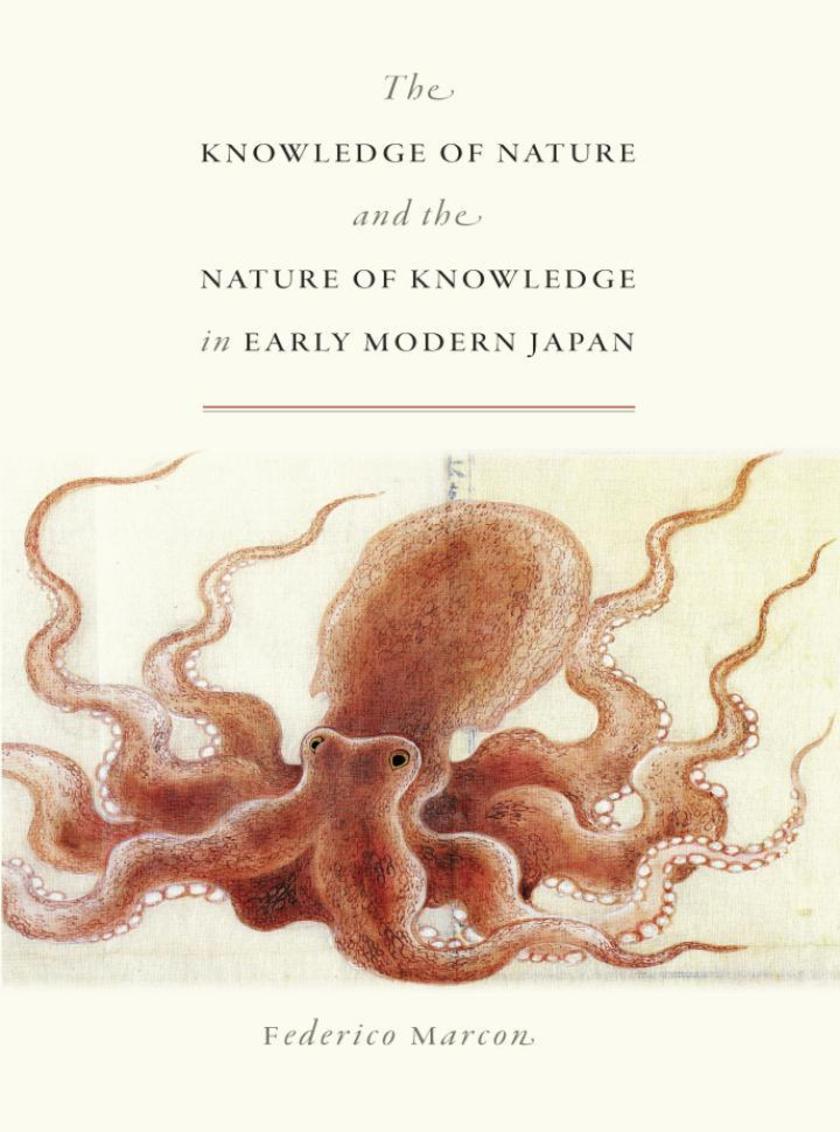
Knowledge of Nature and the Nature of Knowledge in Early Modern Japan
¥370.82
Between the early seventeenth and the mid-nineteenth century, the field of natural history in Japan separated itself from the discipline of medicine, produced knowledge that questioned the traditional religious and philosophical understandings of the world, developed into a system (called honzogaku) that rivaled Western science in complexity-and then seemingly disappeared. Or did itIn The Knowledge of Nature and the Nature of Knowledge in Early Modern Japan, Federico Marcon recounts how Japanese scholars developed a sophisticated discipline of natural history analogous to Europe's but created independently, without direct influence, and argues convincingly that Japanese natural history succumbed to Western science not because of suppression and substitution, as scholars traditionally have contended, but by adaptation and transformation.?The first book-length English-language study devoted to the important field of honzogaku, The Knowledge of Nature and the Nature of Knowledge in Early Modern Japan will be an essential text for historians of Japanese and East Asian science, and a fascinating read for anyone interested in the development of science in the early modern era.
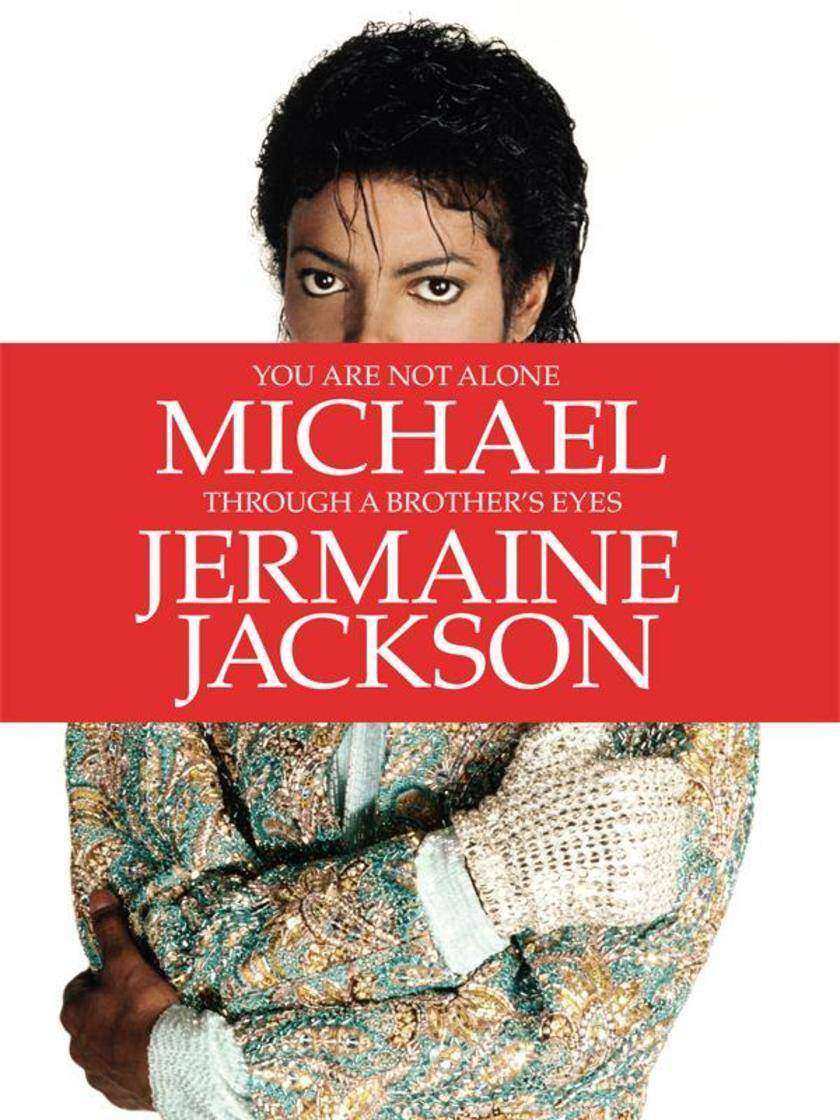
You Are Not Alone: Michael, Through a Brother’s Eyes
¥70.44
‘This is the truth as we know it. I have read so much about what people think they know about Michael, but this is about what really happened.’ Jermaine Jackson You Are Not Alone is an intimate, loving portrait of Michael Jackson, illuminating the private man like never before. It is an invitation into Michael’s real character, private insights and hidden feelings: the innermost thoughts of a fiercely private individual. Jermaine Jackson knew Michael like only a brother can. In You Are Not Alone Jermaine brings light to the man behind the mask of superstardom, an identity that has lingered in the shadows for too long. You Are Not Alone is a celebration of the real Michael: the boy who shared a tiny bunkbed with Jermaine at 2300 Jackson Street, Gary, Indiana; the brother with whom Jermaine shared laughter, tears and memories; the boy who would grow up to become a legend. Raw, honest and incredibly moving, You Are Not Alone is also a sophisticated, no-holds-barred examination of Michael Jackson, aimed at fostering a true and final understanding of who he was and what shaped him. This is Michael Jackson – the man, not the legend – through a brother’s eyes. If you love Michael Jackson, this is the only book you will want to read. If you think you know the Michael Jackson story, it’s time to think again.

The Boy No One Loved: A Heartbreaking True Story of Abuse, Abandonment and Betra
¥63.77
Sunday Times bestselling author and foster carer Casey Watson’s first heartbreaking memoir. Justin was five years old; his brothers two and three. Their mother, a heroin addict, had left them alone again. Later that day, after trying to burn down the family home, Justin was taken into care. Justin was taken into care at the age of five after deliberately burning down his family home. Six years on, after 20 failed placements, Justin arrives at Casey’s home. Casey and her husband Mike are specialist foster carers. They practice a new style of foster care that focuses on modifying the behaviour of profoundly damaged children. They are Justin’s last hope, and it quickly becomes clear that they are facing a big challenge. Try as they might to make him welcome, he seems determined to strip his life of all the comforts they bring him, violently lashing out at schoolmates and family and throwing any affection they offer him back in their faces. After a childhood filled with hurt and rejection, Justin simply doesn’t want to know. But, as it soon emerges, this is only the tip of a chilling iceberg. A visit to Justin’s mother on Boxing Day reveals that there are some very dark underlying problems that Justin has never spoken about. As the full picture becomes clearer, and the horrific truth of Justin’s early life is revealed, Casey and her family finally start to understand the pain he has suffered… Includes a sample chapter of Crying for Help.

Crying for Help: The Shocking True Story of a Damaged Girl with a Dark Past
¥63.77
The second book from Sunday Times bestselling author Casey Watson. Two weeks after saying farewell to her first foster child, Casey is asked to look after Sophia, a troubled 12-year-old with a sad past. Sophia’s actions are disturbing and provocative and, before long, Casey and her family find themselves in a dark and dangerous situation. Two years ago Sophia’s mother had a terrible accident. Sophia has been in care ever since. Right away, Casey feels something isn’t right. Sophia’s a well-developed girl, who looks more like 18 than 12. She only seems to have eyes and ears for men, and treats all women with contempt and disgust. And she has everyone around her jumping through hoops. Over time, as more details begin to emerge about Sophia’s past, it becomes clear that her behaviour is a front for an early life filled with pain and suffering. But although Casey feels she is gradually breaking through to Sophia and getting her to open up about things she has never spoken about before, her violence is threatening the safety of the whole family, forcing Casey to question whether she can really handle this lost and damaged girl. Both shocking and inspiring, this true story will shed new light on the extreme and sometimes dangerous nature of foster care. Includes a sample chapter of Little Prisoners.


