


 购物车
 个人中心


Rhetoric of English India
¥241.33
Tracing a genealogy of colonial discourse, Suleri focuses on paradigmatic moments in the multiple stories generated by the British colonization of the Indiansubcontinent. Both the literature of imperialism and its postcolonial aftermath emerge here as a series of guilty transactions between two cultures that are equally evasive and uncertain of their own authority."e;A dense, witty, and richly allusive book . . . an extremely valuable contribution to postcolonial cultural studies as well as to the whole area of literary criticism."e;-Jean Sudrann, Choice
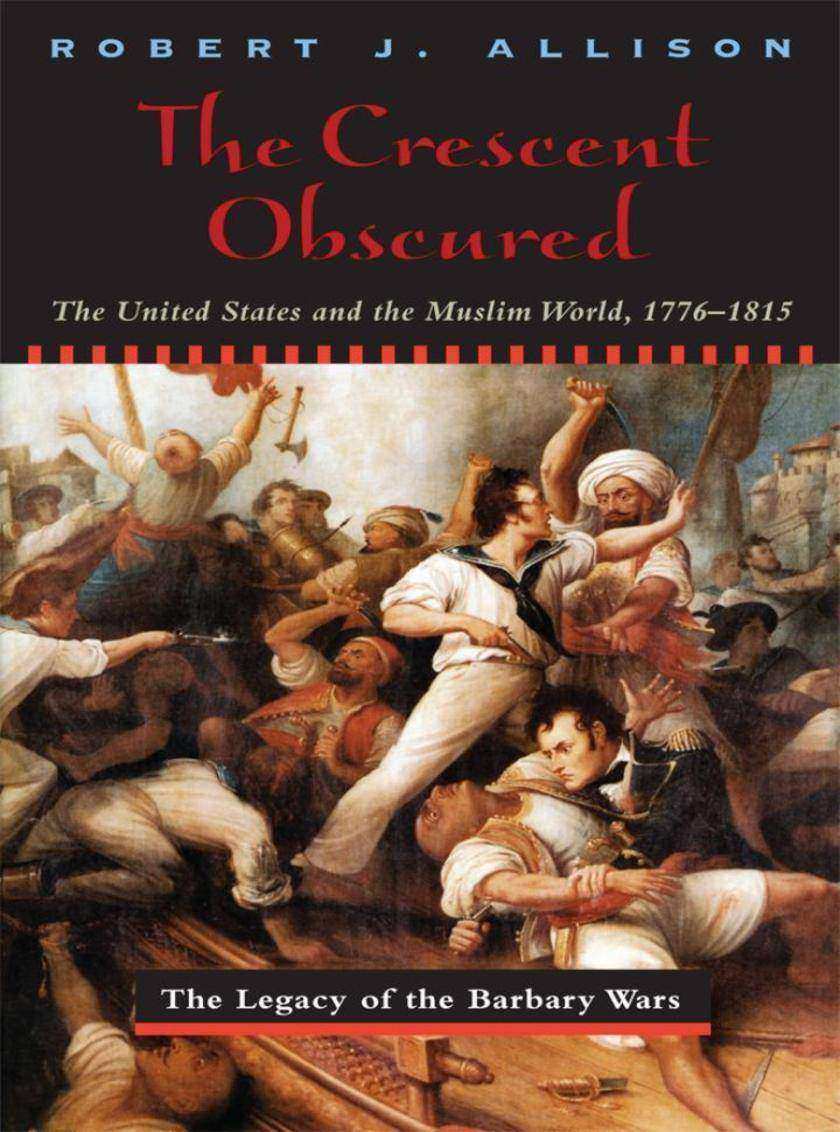
Crescent Obscured
¥241.33
From the beginning of the colonial period to the recent conflicts in the Middle East, encounters with the Muslim world have helped Americans define national identity and purpose. Focusing on America's encounter with the Barbary states of North Africa from 1776 to 1815, Robert Allison traces the perceptions and mis-perceptions of Islam in the American mind as the new nation constructed its ideology and system of government."e;A powerful ending that explains how the experience with the Barbary states compelled many Americans to look inward . . . with increasing doubts about the institution of slavery."e; -David W. Lesch, Middle East Journal"e;Allison's incisive and informative account of the fledgling republic's encounter with the Muslim world is a revelation with a special pertinence to today's international scene."e; -Richard W. Bulliet, Journal of Interdisciplinary History"e;This book should be widely read. . . . Allison's study provides a context for understanding more recent developments, such as America's tendency to demonize figures like Iran's Khumaini, Libya's Qaddafi, and Iraq's Saddam."e; -Richard M. Eaton, Eighteenth Century Studies
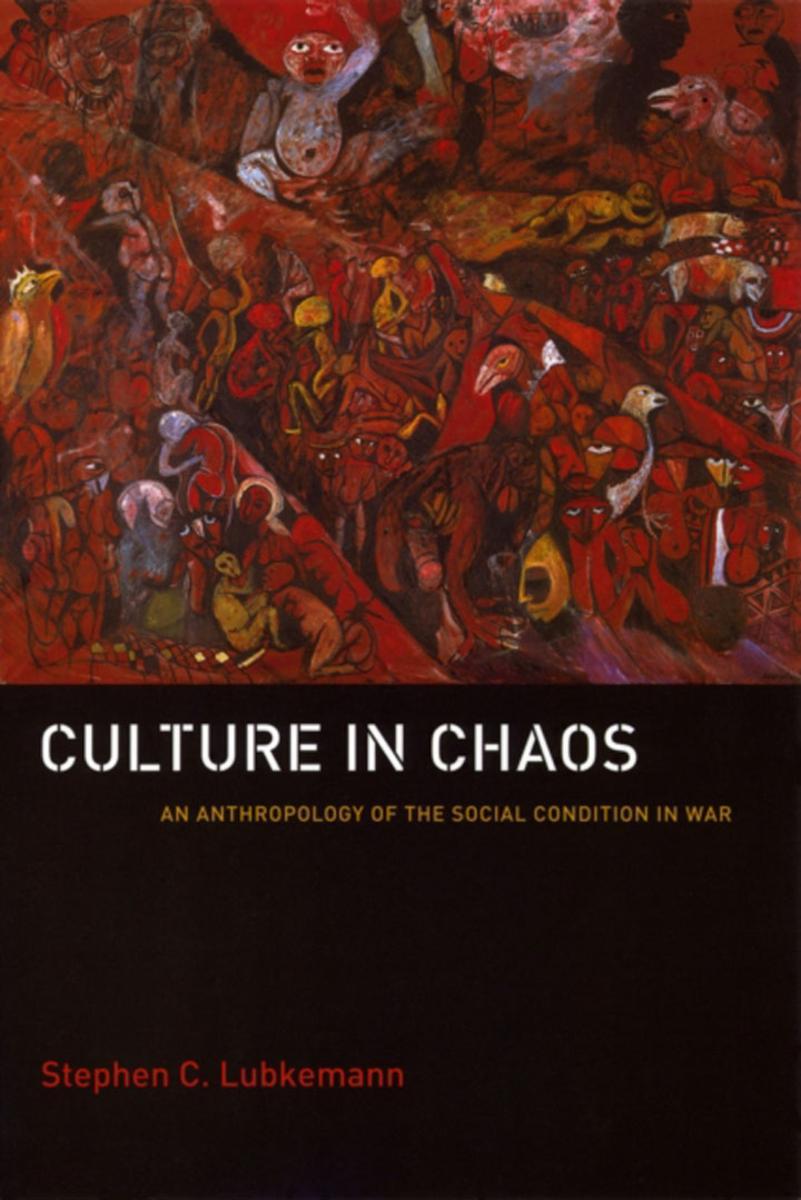
Culture in Chaos
¥282.53
Fought in the wake of a decade of armed struggle against colonialism, the Mozambican civil war lasted from 1977 to 1992, claiming hundreds of thousands of lives while displacing millions more. As conflicts across the globe span decades and generations, Stephen C. Lubkemann suggests that we need a fresh perspective on war when it becomes the context for normal life rather than an exceptional event that disrupts it. Culture in Chaos calls for a new point of departure in the ethnography of war that investigates how the inhabitants of war zones live under trying new conditions and how culture and social relations are transformed as a result.Lubkemann focuses on how Ndau social networks were fragmented by wartime displacement and the profound effect this had on gender relations. Demonstrating how wartime migration and post-conflict return were shaped by social struggles and interests that had little to do with the larger political reasons for the war, Lubkemann contests the assumption that wartime migration is always involuntary. His critical reexamination of displacement and his engagement with broader theories of agency and social change will be of interest to anthropologists, political scientists, historians, and demographers, and to anyone who works in a war zone or with refugees and migrants.

School Principal
¥188.35
When we think about school principals, most of us imagine a figure of vague, yet intimidating authority-for an elementary school student, being sent to the principal's office is roughly on par with a trip to Orwell's Room 101. But with School Principal, Dan C. Lortie aims to change that. Much as he did for teachers with his groundbreaking book Schoolteacher, Lortie offers here an intensive and detailed look at principals, painting a compelling portrait of what they do, how they do it, and why.Lortie begins with a brief history of the job before turning to the daily work of a principal. These men and women, he finds, stand at the center of a constellation of competing interests around and within the school. School district officials, teachers, parents, and students all have needs and demands that frequently clash, and it is the principal's job to manage these conflicting expectations to best serve the public. Unsurprisingly then, Lortie records his subjects' professional dissatisfactions, but he also vividly depicts the pleasures of their work and the pride they take in their accomplishments. Finally, School Principal offers a glimpse of the future with an analysis of current issues and trends in education, including the increasing presence of women in the role and the effects of widespread testing mandated by the government.Lortie's scope is both broad and deep, offering an eminently useful range of perspectives on his subject. From the day-to-day toil to the long-term course of an entire career, from finding out just what goes on inside that office to mapping out the larger social and organizational context of the job, School Principal is a truly comprehensive account of a little-understood profession.
Local Transcendence
¥247.21
Driven by global economic forces to innovate, today's society paradoxically looks forward to the future while staring only at the nearest, most local present-the most recent financial quarter, the latest artistic movement, the instant message or blog post at the top of the screen.Postmodernity is lived, it seems, at the end of history.In the essays collected in Local Transcendence, Alan Liu takes the pulse of such postmodern historicism by tracking two leading indicators of its acceleration in the late twentieth and early twenty-first centuries: postmodern cultural criticism-including the new historicism, the new cultural history, cultural anthropology, the new pragmatism, and postmodern and postindustrial theory-and digital information technology.?What is the relation between the new historicist anecdote and the database field, Liu asks, and can either have a critical function in the age of postmodern historicismLocal Transcendence includes two previously unpublished essays and a synthetic introduction in which Liu traverses from his earlier work on the theory of historicism to his recent studies of information culture to propose a theory of contingent method incorporating a special inflection of history: media history.
Romey's Order
¥117.72
Romey's Order is an indelible sequence of poems voiced by an invented (and inventive) boy-speaker called Romey, set alongside a river in the South Carolina lowcountry.As the word-furious eye and voice of these poems, Romey urgently records--and tries to order--the objects, inscape, injuries, and idiom of his "e;blood-home"e; and childhood world. Sounding out the nerves and nodes of language to transform "e;every burn-mark and blemish,"e; to "e;bind our river-wrack and leavings,"e; Romey seeks to forge finally (if even for a moment) a chord in which he might live. Intently visceral, aural, oral, Atsuro Riley's poems bristle with musical and imaginative pleasures, with story-telling and picture-making of a new and wholly unexpected kind.
Medicine Show
¥117.72
In Medicine Show, inner conflict is wonderfully realized in the clash of down-home plain speech and European high culture utterances. Freely translating and adapting Catullus (Latin), Villon (Middle French), Corbiere (French), Hikmet (Turkish), and Orpheus (Greek), and placing them alongside Jagger and Richards, skinheads, and psalms, Tom Yuill's book mirrors an old-style hawking of wares, with all the charm and absurdity that results when high culture meets pop, when city meets small town, and when provincialism confronts urbanity. Here, the poems talk to one another, one poem nudging the cusps of many others, those poems touching still others' circumferences. Yuill, by invoking the Rolling Stones as muses and as background music, offers cover versions of Shakespeare, Keats, and Dylan Thomas, ultimately giving us a new kind of verse, funneled through the languages and rhythms of his masters' voices.

Worlds Before Adam
¥353.16
In the late eighteenth and early nineteenth centuries, scientists reconstructed the immensely long history of the earth-and the relatively recent arrival of human life. The geologists of the period, many of whom were devout believers, agreed about this vast timescale. But despite this apparent harmony between geology and Genesis, these scientists still debated a great many questions: Had the earth cooled from its origin as a fiery ball in space, or had it always been the same kind of place as it is nowWas prehuman life marked by mass extinctions, or had fauna and flora changed slowly over time?The first detailed account of the reconstruction of prehuman geohistory, Martin J. S. Rudwick's Worlds Before Adam picks up where his celebrated Bursting the Limits of Time leaves off. Here, Rudwick takes readers from the post-Napoleonic Restoration in Europe to the early years of Britain's Victorian age, chronicling the staggering discoveries geologists made during the period: the unearthing of the first dinosaur fossils, the glacial theory of the last ice age, and the meaning of igneous rocks, among others. Ultimately, Rudwick reveals geology to be the first of the sciences to investigate the historical dimension of nature, a model that Charles Darwin used in developing his evolutionary theory.Featuring an international cast of colorful characters, with Georges Cuvier and Charles Lyell playing major roles and Darwin appearing as a young geologist, Worlds Before Adam is a worthy successor to Rudwick's magisterial first volume. Completing the highly readable narrative of one of the most momentous changes in human understanding of our place in the natural world, Worlds Before Adam is a capstone to the career of one of the world's leading historians of science.

Competition and Entrepreneurship
¥241.33
Stressing verbal logic rather than mathematics, Israel M. Kirzner provides at once a thorough critique of contemporary price theory, an essay on the theory of entrepreneurship, and an essay on the theory of competition. Competition and Entrepreneurship offers a new appraisal of quality competition, of selling effort, and of the fundamental weaknesses of contemporary welfare economics.Kirzner's book establishes a theory of the market and the price system which differs from orthodox price theory. He sees orthodox price theory as explaining the configuration of prices and quantities that satisfied the conditions for equilibrium. Mr. Kirzner argues that "e;it is more useful to look to price theory to help understand how the decisions of individual participants in the market interact to generate the market forces which compel changes in prices, outputs, and methods of production and in the allocation of resources."e;Although Competition and Entrepreneurship is primarily concerned with the operation of the market economy, Kirzner's insights can be applied to crucial aspects of centrally planned economic systems as well. In the analysis of these processes, Kirzner clearly shows that the rediscovery of the entrepreneur must emerge as a step of major importance.
Galileo's Instruments of Credit
¥229.55
In six short years, Galileo Galilei went from being a somewhat obscure mathematics professor running a student boarding house in Padua to a star in the court of Florence to the recipient of dangerous attention from the Inquisition for his support of Copernicanism. In that brief period, Galileo made a series of astronomical discoveries that reshaped the debate over the physical nature of the heavens: he deeply modified the practices and status of astronomy with the introduction of the telescope and pictorial evidence, proposed a radical reconfiguration of the relationship between theology and astronomy, and transformed himself from university mathematician into court philosopher.Galileo's Instruments of Credit proposes radical new interpretations of several key episodes of Galileo's career, including his early telescopic discoveries of 1610, the dispute over sunspots, and the conflict with the Holy Office over the relationship between Copernicanism and Scripture. Galileo's tactics during this time shifted as rapidly as his circumstances, argues Mario Biagioli, and the pace of these changes forced him to respond swiftly to the opportunities and risks posed by unforeseen inventions, further discoveries, and the interventions of his opponents.Focusing on the aspects of Galileo's scientific life that extend beyond the framework of court culture and patronage, Biagioli offers a revisionist account of the different systems of exchanges, communication, and credibility at work in various phases of Galileo's career. Galileo's Instruments of Credit will find grateful readers among scholars of science studies, historical epistemology, visual studies, Galilean science, and late Renaissance astronomy.

Desperately Seeking Certainty
¥229.55
Irreverent, provocative, and engaging, Desperately Seeking Certainty attacks the current legal vogue for grand unified theories of constitutional interpretation. On both the Right and the Left, prominent legal scholars are attempting to build all of constitutional law from a single foundational idea. Dan Farber and Suzanna Sherry find that in the end no single, all-encompassing theory can successfully guide judges or provide definitive or even sensible answers to every constitutional question. Their book brilliantly reveals how problematic foundationalism is and shows how the pragmatic, multifaceted common law methods already used by the Court provide a far better means of reaching sound decisions and controlling judicial discretion than do any of the grand theories.

How Does Analysis Cure?
¥211.90
The Austro-American psychoanalyst Heinz Kohut was one of the foremost leaders in his field and developed the school of self-psychology, which sets aside the Freudian explanations for behavior and looks instead at self/object relationships and empathy in order to shed light on human behavior. In How Does Analysis CureKohut presents the theoretical framework for self-psychology, and carefully lays out how the self develops over the course of time. Kohut also specifically defines healthy and unhealthy cases of Oedipal complexes and narcissism, while investigating the nature of analysis itself as treatment for pathologies. This in-depth examination of "e;the talking cure"e; explores the lesser studied phenomena of psychoanalysis, including when it is beneficial for analyses to be left unfinished, and the changing definition of "e;normal."e;An important work for working psychoanalysts, this book is important not only for psychologists, but also for anyone interested in the complex inner workings of the human psyche.
American Evangelicalism
¥211.90
Evangelicalism is one of the strongest religious traditions in America today; 20 million Americans identify themselves with the evangelical movement. Given the modern pluralistic world we live in, why is evangelicalism so popular?Based on a national telephone survey and more than three hundred personal interviews with evangelicals and other churchgoing Protestants, this study provides a detailed analysis of the commitments, beliefs, concerns, and practices of this thriving group. Examining how evangelicals interact with and attempt to influence secular society, this book argues that traditional, orthodox evangelicalism endures not despite, but precisely because of, the challenges and structures of our modern pluralistic environment. This work also looks beyond evangelicalism to explore more broadly the problems of traditional religious belief and practice in the modern world.With its impressive empirical evidence, innovative theory, and substantive conclusions, American Evangelicalism will provoke lively debate over the state of religious practice in contemporary America.

Crossing Ocean Parkway
¥170.69
Growing up an Italian-American in the Bensonhurst neighborhood of New York city, Marianna De Marco longed for college, culture, and upward mobility. Her daydreams circled around WASP (White Anglo Saxon Protestant) heroes on television-like Robin Hood and the Cartwright family-but in Brooklyn she never encountered any. So she associated moving up with Ocean Parkway, a street that divides the working-class Italian neighborhood where she was born from the middle-class Jewish neighborhood into which she married. This book is Torgovnick's unflinching account of crossing cultural boundaries in American life, of what it means to be an Italian American woman who became a scholar and literary critic.Included are autobiographical moments interwoven with engrossing interpretations of American cultural icons from Dr. Dolittle to Lionel Trilling, The Godfather to Camille Paglia. Her experiences allow her to probe the cultural tensions in America caused by competing ideas of individuality and community, upward mobility and ethnic loyalty, acquisitiveness and spirituality.

Particle and Wave
¥147.15
Are we aloneIf so, Particle and Wave insists that we need not be lonely. Here the periodic table of elements-a system familiar to many of us from high school chemistry-unfolds in a series of unexpected meanings with connotations public, personal, and existential. Based on a logic that considers the atomic symbol an improvised phoneme, Particle and Wave is keenly attuned to the qualities of voice and concerned with how these improvisations fall on the listening ear. From the most recent housing bust, to the artistic visions of Christo and Jeanne Claude, to the labors of the Curies, to Pliny the Younger's account of the eruption of Vesuvius, culture and world histories are recontextualized through the lens of personal experience. Muscular, precise, structurally varied, and imagistic, these poems engage in lyricism yet resist mere confession. In doing so they project the self as a composite, speaking in a variety of registers, from the nursery rhyme songster, to the ascetic devotee, to the unapologetic sensualist. They welcome all comers and elbow the bounded physical world to make way for a dynamic, new subjectivity.

Love and Saint Augustine
¥147.15
Hannah Arendt began her scholarly career with an exploration of Saint Augustine's concept of caritas, or neighborly love, written under the direction of Karl Jaspers and the influence of Martin Heidegger. After her German academic life came to a halt in 1933, Arendt carried her dissertation into exile in France, and years later took the same battered and stained copy to New York. During the late 1950s and early 1960s, as she was completing or reworking her most influential studies of political life, Arendt was simultaneously annotating and revising her dissertation on Augustine, amplifying its argument with terms and concepts she was using in her political works of the same period. The disseration became a bridge over which Arendt traveled back and forth between 1929 Heidelberg and 1960s New York, carrying with her Augustine's question about the possibility of social life in an age of rapid political and moral change.In Love and Saint Augustine, Joanna Vecchiarelli Scott and Judith Chelius Stark make this important early work accessible for the first time. Here is a completely corrected and revised English translation that incorporates Arendt's own substantial revisions and provides additional notes based on letters, contracts, and other documents as well as the recollections of Arendt's friends and colleagues during her later years.

After the Ice Age
¥147.15
The fascinating story of how a harsh terrain that resembled modern Antarctica has been transformed gradually into the forests, grasslands, and wetlands we know today."e;One of the best scientific books published in the last ten years."e;-Ottowa Journal"e;A valuable new synthesis of facts and ideas about climate, geography, and life during the past 20,000 years. More important, the book conveys an intimate appreciation of the rich variety of nature through time."e;-S. David Webb,Science

Recalculating
¥147.15
Long anticipated, Recalculating is Charles Bernstein's first full-length collection of new poems in seven years. As a result of this lengthy time under construction, the scope, scale, and stylistic variation of the poems far surpasses Bernstein's previous work. Together, the poems of Recalculating take readers on a journey through the history and poetics of the decades since the end of the Cold War as seen through the lens of social and personal turbulence and tragedy.?The collection's title, the now-familiar GPS expression, suggests a change in direction due to a mistaken or unexpected turn. For Bernstein, formal invention is a necessary swerve in the midst of difficulty. As in all his work since the 1970s, he makes palpable the idea that radically new structures, appropriated forms, an aversion to received ideas and conventions, political engagement, and syntactic novelty will open the doors of perception to exuberance and resonance, from giddiness to pleasure to grief. But at the same time he cautions, with typical deflationary ardor, "e;The pen is tinier than the sword."e; In these poems, Bernstein makes good on his claim that "e;the poetry is not in speaking to the dead but listening to the dead."e;?In doing so, Recalculating incorporates translations and adaptations of Baudelaire, Cole Porter, Mandelstam, and Paul Celan, as well as several tributes to writers crucial to Bernstein's work and a set of epigrammatic verse essays that combine poetics with wry observation, caustic satire, and aesthetic slapstick.?Formally stunning and emotionally charged, Recalculating makes the familiar strange-and in a startling way, makes the strange familiar. Into these poems, brimming with sonic and rhythmic intensity, philosophical wit, and multiple personae, life events intrude, breaking down any easy distinction between artifice and the real. With works that range from elegy to comedy, conceptual to metrical, expressionist to ambient, uproarious to procedural, aphoristic to lyric, Bernstein has created a journey through the dark striated by bolts of imaginative invention and pure delight.?

Instructions for American Servicemen in France during World War II
¥100.06
"e;You are about to play a personal part in pushing the Germans out of France. Whatever part you take-rifleman, hospital orderly, mechanic, pilot, clerk, gunner, truck driver-you will be an essential factor in a great effort."e;?As American soldiers fanned out from their beachhead in Normandy in June of 1944 and began the liberation of France, every soldier carried that reminder in his kit. A compact trove of knowledge and reassurance, Instructions for American Servicemen in France during World War II was issued to soldiers just before they embarked for France to help them understand both why they were going and what they'd find when they got there. After lying unseen in Army archives for decades, this remarkable guide is now available in a new facsimile edition that reproduces the full text and illustrations of the original along with a new introduction by Rick Atkinson setting the book in context. Written in a straightforward, personal tone, the pamphlet is equal parts guidebook, cultural snapshot, and propaganda piece. A central aim is to dispel any prejudices American soldiers may have about the French-especially relating to their quick capitulation in 1940. Warning soldiers that the defeat "e;is a raw spot which the Nazis have been riding"e; since the occupation began, Instructions is careful to highlight France's long historical role as a major U.S. ally. Following that is a brief, fascinating sketch of the French character ("e;The French are mentally quick;"e; "e;Rich or poor, they are economical"e;) and stark reminders of the deprivation the French have endured under occupation. Yet an air of reassuring confidence pervades the final section of the pamphlet, which reads like a straightforward tourists' guide to Paris and the provinces-like a promise of better days to come once the soldiers complete their mission.Written by anonymous War Department staffers to meet the urgent needs of the moment, with no thought of its historical value, Instructionsfor American Servicemen in France during World War II nevertheless brings to vivid life the closing years of World War II-when optimism was growing, but a long, demanding road still lay ahead.

Everyday Technology
¥147.15
In 1909 Mohandas Karamchand Gandhi, on his way back to South Africa from London, wrote his now celebrated tract Hind Swaraj, laying out his vision for the future of India and famously rejecting the technological innovations of Western civilization. Despite his protestations, Western technology endured and helped to make India one of the leading economies in our globalized world. Few would question the dominant role that technology plays in modern life, but to fully understand how India first advanced into technological modernity, argues David Arnold, we must consider the technology of the everyday.?Everyday Technology is a pioneering account of how small machines and consumer goods that originated in Europe and North America became objects of everyday use in India in the late nineteenth and early twentieth centuries. Rather than investigate "e;big"e; technologies such as railways and irrigation projects, Arnold examines the assimilation and appropriation of bicycles, rice mills, sewing machines, and typewriters in India, and follows their impact on the ways in which people worked and traveled, the clothes they wore, and the kind of food they ate. But the effects of these machines were not limited to the daily rituals of Indian society, and Arnold demonstrates how such small-scale technologies became integral to new ways of thinking about class, race, and gender, as well as about the politics of colonial rule and Indian nationhood.?Arnold's fascinating book offers new perspectives on the globalization of modern technologies and shows us that to truly understand what modernity became, we need to look at the everyday experiences of people in all walks of life, taking stock of how they repurposed small technologies to reinvent their world and themselves.

Sounds of Capitalism
¥206.01
From the early days of radio through the rise of television after World War II to the present, music has been used more and more to sell goods and establish brand identities. And since the 1920s, songs originally written for commercials have become popular songs, and songs written for a popular audience have become irrevocably associated with specific brands and products. Today, musicians move flexibly between the music and advertising worlds, while the line between commercial messages and popular music has become increasingly blurred.Timothy D. Taylor tracks the use of music in American advertising for nearly a century, from variety shows like The Clicquot Club Eskimos to the rise of the jingle, the postwar upsurge in consumerism, and the more complete fusion of popular music and consumption in the 1980s and after. The Sounds of Capitalism is the first book to tell truly the history of music used in advertising in the United States and is an original contribution to this little-studied part of our cultural history. ?


