


 购物车
 个人中心

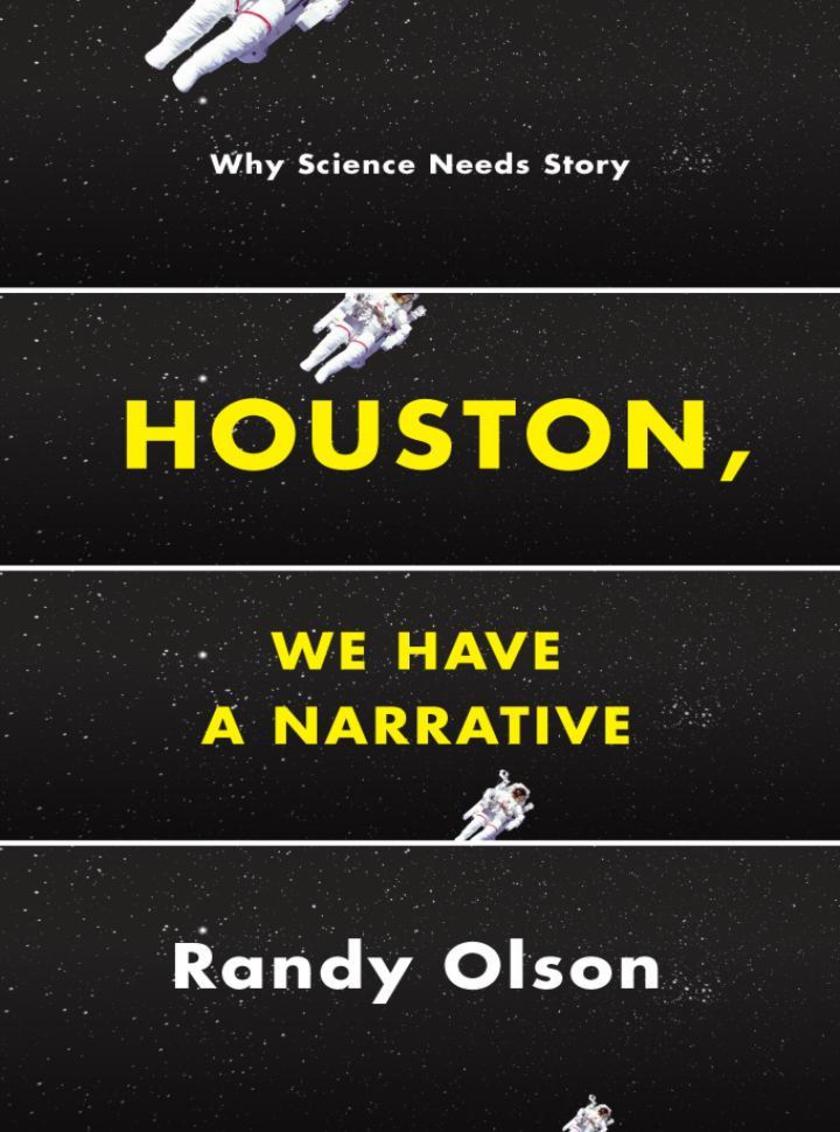
Houston, We Have a Narrative
¥147.15
Ask a scientist about Hollywood, and you'll probably get eye rolls. But ask someone in Hollywood about science, and they'll see dollar signs: moviemakers know that science can be the source of great stories, with all the drama and action that blockbusters require.?That's a huge mistake, says Randy Olson: Hollywood has a lot to teach scientists about how to tell a story-and, ultimately, how to do science better. With Houston, We Have a Narrative, he lays out a stunningly simple method for turning the dull into the dramatic. Drawing on his unique background, which saw him leave his job as a working scientist to launch a career as a filmmaker, Olson first diagnoses the problem: When scientists tell us about their work, they pile one moment and one detail atop another moment and another detail-a stultifying procession of "e;and, and, and."e; What we need instead is an understanding of the basic elements of story, the narrative structures that our brains are all but hardwired to look for-which Olson boils down, brilliantly, to "e;And, But, Therefore,"e; or ABT. At a stroke, the ABT approach introduces momentum ("e;And"e;), conflict ("e;But"e;), and resolution ("e;Therefore"e;)-the fundamental building blocks of story. As Olson has shown by leading countless workshops worldwide, when scientists' eyes are opened to ABT, the effect is staggering: suddenly, they're not just talking about their work-they're telling stories about it. And audiences are captivated.?Written with an uncommon verve and enthusiasm, and built on principles that are applicable to fields far beyond science, Houston, We Have a Narrative has the power to transform the way science is understood and appreciated, and ultimately how it's done.
Demands of the Day
¥188.35
Demands of the Day asks about the logical standards and forms that should guide ethical and experimental anthropology in the twenty-first century. Anthropologists Paul Rabinow and Anthony Stavrianakis do so by taking up Max Weber's notion of the "e;demands of the day."e; Just as the demand of the day for anthropology decades ago consisted of thinking about fieldwork, today, they argue, the demand is to examine what happens after, how the experiences of fieldwork are gathered, curated, narrated, and ultimately made available for an anthropological practice that moves beyond mere ethnographic de*ion.?Rabinow and Stavrianakis draw on experiences from an innovative set of anthropological experiments that investigated how and whether the human and biological sciences could be brought into a mutually enriching relationship. Conceptualizing the anthropological and philosophic ramifications of these inquiries, they offer a bold challenge to contemporary anthropology to undertake a more rigorous examination of its own practices, blind spots, and capacities, in order to meet the demands of our day.
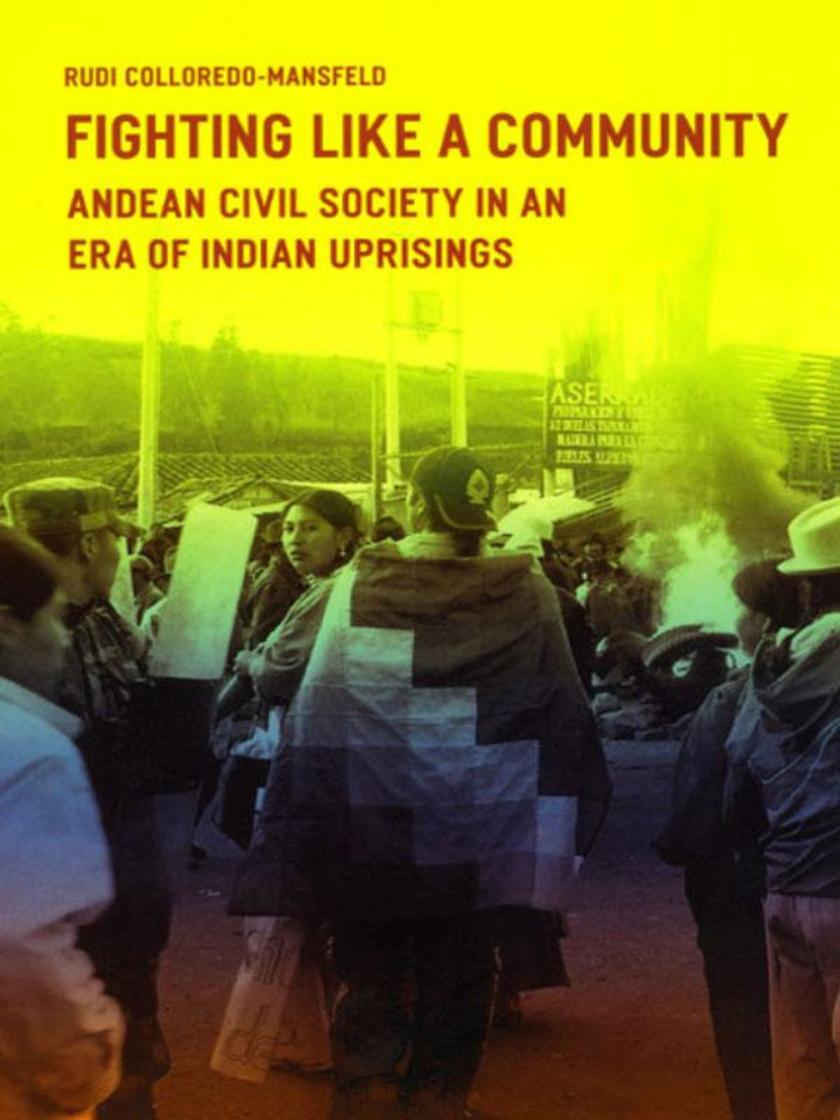
Fighting Like a Community
¥229.55
The indigenous population of the Ecuadorian Andes made substantial political gains during the 1990s in the wake of a dynamic wave of local activism. The movement renegotiated land development laws, elected indigenous candidates to national office, and successfully fought for the constitutional redefinition of Ecuador as a nation of many cultures. Fighting Like a Community argues that these remarkable achievements paradoxically grew out of the deep differences-in language, class, education, and location-that began to divide native society in the 1960s.Drawing on fifteen years of fieldwork, Rudi Colloredo-Mansfeld explores these differences and the conflicts they engendered in a variety of communities. From protestors confronting the military during a national strike to a migrant family fighting to get a relative released from prison, Colloredo-Mansfeld recounts dramatic events and private struggles alike to demonstrate how indigenous power in Ecuador is energized by disagreements over values and priorities, eloquently contending that the plurality of Andean communities, not their unity, has been the key to their political success.

When Middle-Class Parents Choose Urban Schools
¥206.01
In recent decades a growing number of middle-class parents have considered sending their children to-and often end up becoming active in-urban public schools. Their presence can bring long-needed material resources to such schools, but, as Linn Posey-Maddox shows in this study, it can also introduce new class and race tensions, and even exacerbate inequalities. Sensitively navigating the pros and cons of middle-class transformation, When Middle-Class Parents Choose Urban Schools asks whether it is possible for our urban public schools to have both financial security and equitable diversity.?Drawing on in-depth research at an urban elementary school, Posey-Maddox examines parents' efforts to support the school through their outreach, marketing, and volunteerism. She shows that when middle-class parents engage in urban school communities, they can bring a host of positive benefits, including new educational opportunities and greater diversity. But their involvement can also unintentionally marginalize less-affluent parents and diminish low-income students' access to the improving schools. In response, Posey-Maddox argues that school reform efforts, which usually equate improvement with rising test scores and increased enrollment, need to have more equity-focused policies in place to ensure that low-income families also benefit from-and participate in-school change.?

Code of the Suburb
¥206.01
When we think about young people dealing drugs, we tend to picture it happening on urban streets, in disadvantaged, crime-ridden neighborhoods. But drugs are used everywhere-even in upscale suburbs and top-tier high schools-and teenage users in the suburbs tend to buy drugs from their peers, dealers who have their own culture and code, distinct from their urban counterparts.?In Code of the Suburb, Scott Jacques and Richard Wright offer a fascinating ethnography of the culture of suburban drug dealers. Drawing on fieldwork among teens in a wealthy suburb of Atlanta, they carefully parse the complicated code that governs relationships among buyers, sellers, police, and other suburbanites. That code differs from the one followed by urban drug dealers in one crucial respect: whereas urban drug dealers see violent vengeance as crucial to status and security, the opposite is true for their suburban counterparts. As Jacques and Wright show, suburban drug dealers accord status to deliberate avoidance of conflict, which helps keep their drug markets more peaceful-and, consequently, less likely to be noticed by law enforcement.?Offering new insight into both the little-studied area of suburban drug dealing, and, by extension, the more familiar urban variety, Code of the Suburb will be of interest to scholars and policy makers alike.
Handbook for Science Public Information Officers
¥206.01
Whether sharing a spectacular shot from a deep-space probe, announcing a development in genetic engineering, or crafting an easy-to-reference list of cancer risk factors, science public information officers, or PIOs, serve as scientific liaisons, connecting academic, nonprofit, government, and other research organizations with the public. And as traditional media outlets cut back on their science coverage, PIOs are becoming a vital source for science news.W. Matthew Shipman's Handbook for Science Public Information Officers covers all aspects of communication strategy and tactics for members of this growing specialty. It includes how to pitch a story, how to train researchers to navigate interviews, how to use social media effectively, and how to respond to a crisis. The handbook offers a wealth of practical advice while teaching science PIOs how to think critically about what they do and how they do it, so that they will be prepared to take advantage of any situation, rather than being overwhelmed by it.For all science communicators-whether they're starting their careers, crossing over from journalism or the research community, or professional communicators looking to hone their PIO skills-Shipman's Handbook for Science Public Information Officers will become their go-to reference.
Chicago Guide to Writing about Numbers, Second Edition
¥206.01
Earning praise from scientists, journalists, faculty, and students, The Chicago Guide to Writing about Numbers has helped thousands of writers communicate data clearly and effectively. Its publication offered a much-needed bridge between good quantitative analysis and clear expository writing, using straightforward principles and efficient prose. With this new edition, Jane Miller draws on a decade of additional experience and research, expanding her advice on reaching everyday audiences and further integrating non-print formats.Miller, an experienced teacher of research methods, statistics, and research writing, opens by introducing a set of basic principles for writing about numbers, then presents a toolkit of techniques that can be applied to prose, tables, charts, and presentations. Throughout the book, she emphasizes flexibility, showing writers that different approaches work for different kinds of data and different types of audiences.The second edition adds a chapter on writing about numbers for lay audiences, explaining how to avoid overwhelming readers with jargon and technical issues. Also new is an appendix comparing the contents and formats of speeches, research posters, and papers, to teach writers how to create all three types of communication without starting each from scratch. An expanded companion website includes new multimedia resources such as slide shows and podcasts that illustrate the concepts and techniques, along with an updated study guide of problem sets and suggested course extensions.This continues to be the only book that brings together all the tasks that go into writing about numbers, integrating advice on finding data, calculatingstatistics, organizing ideas, designing tables and charts, and writing prose all in one volume. Field-tested with students and professionals alike, this holistic book is the go-to guide for everyone who writes or speaks about numbers.

Conflagration of Community
¥270.76
"e;After Auschwitz to write even a single poem is barbaric."e; The Conflagration of Community challenges Theodor Adorno's famous statement about aesthetic production after the Holocaust, arguing for the possibility of literature to bear witness to extreme collective and personal experiences. J. Hillis Miller masterfully considers how novels about the Holocaust relate to fictions written before and after it, and uses theories of community from Jean-Luc Nancy and Derrida to explore the dissolution of community bonds in its wake.Miller juxtaposes readings of books about the Holocaust-Keneally's Schindler's List, McEwan's Black Dogs, Spiegelman's Maus, and Kertsz's Fatelessness-with Kafka's novels and Morrison's Beloved, asking what it means to think of texts as acts of testimony. Throughout, Miller questions the resonance between the difficulty of imagining, understanding, or remembering Auschwitz-a difficulty so often a theme in records of the Holocaust-and the exasperating resistance to clear, conclusive interpretation of these novels. The Conflagration of Community is an eloquent study of literature's value to fathoming the unfathomable.

Philadelphia Barrio
¥270.76
How does a so-called bad neighborhood go about changing its reputationIs it simply a matter of improving material conditions or picking the savviest marketing strategyWhat kind of role can or should the arts play in that processDoes gentrification always entail a betrayal of a neighborhood's rootsTackling these questions and offering a fresh take on the dynamics of urban revitalization, The Philadelphia Barrio examines one neighborhood's fight to erase the stigma of devastation.Frederick F. Wherry shows how, in the predominantly Latino neighborhood of Centro de Oro, entrepreneurs and community leaders forged connections between local businesses and cultural institutions to rebrand a place once nicknamed the Badlands. Artists and performers negotiated with government organizations and national foundations, Wherry reveals, and took to local galleries, stages, storefronts, and street parades in a concerted, canny effort to reanimate the spirit of their neighborhood.Complicating our notions of neighborhood change by exploring the ways the process is driven by local residents, The Philadelphia Barrio presents a nuanced look at how city dwellers can make commercial interests serve the local culture, rather than exploit it.

Solidarity in Strategy
¥282.53
Popular conceptions hold that capitalism is driven almost entirely by the pursuit of profit and self-interest. Challenging that assumption, this major new study of American business associations shows how market and non-market relations are actually profoundly entwined at the heart of capitalism.In Solidarity in Strategy, Lyn Spillman draws on rich documentary archives and a comprehensive data set of more than four thousand trade associations from diverse and obscure corners of commercial life to reveal a busy and often surprising arena of American economic activity. From the Intelligent Transportation Society to the American Gem Trade Association, Spillman explains how business associations are more collegial than cutthroat, and how they make capitalist action meaningful not only by developing shared ideas about collective interests but also by articulating a disinterested solidarity that transcends those interests.Deeply grounded in both economic and cultural sociology, Solidarity in Strategy provides rich, lively, and often surprising insights into the world of business, and leads us to question some of our most fundamental assumptions about economic life and how cultural context influences economic.
Laughing at Leviathan
¥265.87
For West Papua and its people, the promise of sovereignty has never been realized, despite a long and fraught struggle for independence from Indonesia. In Laughing at Leviathan, Danilyn Rutherford examines this struggle through a series of interlocking essays that drive at the core meaning of sovereignty itself-how it is fueled, formed, and even thwarted by pivotal but often overlooked players: those that make up an audience. Whether these players are citizens, missionaries, competing governmental powers, nongovernmental organizations, or the international community at large, Rutherford shows how a complex interplay of various observers is key to the establishment and understanding of the sovereign nation-state.?Drawing on a wide array of sources, from YouTube videos to Dutch propaganda to her own fieldwork observations, Rutherford draws the history of Indonesia, empire, and postcolonial nation-building into a powerful examination of performance and power. Ultimately she revises Thomas Hobbes, painting a picture of the Leviathan not as a coherent body but a fragmented one distributed across a wide range of both real and imagined spectators. In doing so, she offers an important new approach to the understanding of political struggle.

Exit Zero
¥229.55
Winner of CLR James Book Prize from the Working Class Studies Association and 2nd Place for the Victor Turner Prize in Ethnographic Writing.?In 1980, Christine J. Walley's world was turned upside down when the steel mill in Southeast Chicago where her father worked abruptly closed. In the ensuing years, ninety thousand other area residents would also lose their jobs in the mills-just one example of the vast scale of deindustrialization occurring across the United States. The disruption of this event propelled Walley into a career as a cultural anthropologist, and now, in Exit Zero, she brings her anthropological perspective home, examining the fate of her family and that of blue-collar America at large.?Interweaving personal narratives and family photos with a nuanced assessment of the social impacts of deindustrialization, Exit Zero is one part memoir and one part ethnography- providing a much-needed female and familial perspective on cultures of labor and their decline. Through vivid accounts of her family's struggles and her own upward mobility, Walley reveals the social landscapes of America's industrial fallout, navigating complex tensions among class, labor, economy, and environment. Unsatisfied with the notion that her family's turmoil was inevitable in the ever-forward progress of the United States, she provides a fresh and important counternarrative that gives a new voice to the many Americans whose distress resulting from deindustrialization has too often been ignored.This book is part of a project that also includes a documentary film and interactive website. For more information, and the chance to share your own stories, photos, and artefacts regarding the history of Southeast Chicago, please visit:?http://www.exitzeroproject.org/

Empire's Children
¥265.87
Europe's imperial projects were often predicated on a series of legal and scientific distinctions that were frequently challenged by the reality of social and sexual interactions between the colonized and the colonizers.When Emmanuelle Saada discovered a 1928 decree defining the status of persons of mixed parentage born in French Indochina-the mtis-she found not only a remarkable artifact of colonial rule, but a legal bombshell that introduced race into French law for the first time. The decree was the culmination of a decades-long effort to resolve the "e;mtis question"e;: the educational, social, and civil issues surrounding the mixed population. Operating at the intersection of history, anthropology, and law, Empire's Children reveals the unacknowledged but central role of race in the definition of French nationality.Through extensive archival work in both France and Vietnam, and a close reading of primary and secondary material from the Pacific islands and sub-Saharan and North Africa, Saada has created in Empire's Children an original and compelling perspective on colonialism, law, race, and culture from the end of the nineteenth century until decolonization.
In the Home of the Famous Dead
¥192.08
In the Home of the Famous Dead will appeal to newcomers as well as to avid followers of Jo McDougall's long career and complex work, providing valuable insights to the development of a poet's signature, inimitable style. This collection presents work known for its sparse, compact language; surprising metaphor; humor; irony; idiomatic speech; and a stoic, sadly earned wisdom concerning death and loss. In McDougall's world, folks making do with what they have take the stage to speak of, in the words of one critic, "e;the tangled mysteries of their faltering lives."e; Her work has been described as having "e;excruciating honesty"e; (Gerald Stern), giving voice to the "e;ineffable emotions of plain people"e; (Judith Kitchen). Miller Williams notes that the work has "e;cleanness and clarity . . . in all the funk and smell of humanity."e; This is the poetry of midwestern plains and southern botttomlands, of waitresses and professors, farmers and bankers, the disadvantaged and privileged alike. Often beginning in the personal and expanding to the universal, this poet takes note of the phenomenological world with a mixture of joy, despair, and awe, providing a haunting look at the cosmic irony of our existence. McDougall's style is indescribable, yet wholly accessible. As Kelly Cherry notes, "e;Call it magic, call it art; either way [Jo McDougall's work] is something like a miracle."e;
Measuring the New World
¥247.21
Prior to 1735, South America was terra incognita to many Europeans.?But that year, the Paris Academy of Sciences sent a mission to the Spanish American province of Quito (in present-day Ecuador) to study the curvature of the earth at the Equator. Equipped with quadrants and telescopes, the mission's participants referred to the transfer of scientific knowledge from Europe to the Andes as a "e;sacred fire"e; passing mysteriously through European astronomical instruments to observers in South America.By taking an innovative interdisciplinary look at the traces of this expedition, Measuring the New World examines the transatlantic flow of knowledge from West to East. Through ephemeral monuments and geographical maps, this book explores how the social and cultural worlds of South America contributed to the production of European scientific knowledge during the Enlightenment. Neil Safier uses the notebooks of traveling philosophers, as well as specimens from the expedition, to place this particular scientific endeavor in the larger context of early modern print culture and the emerging intellectual category of scientist as author.?
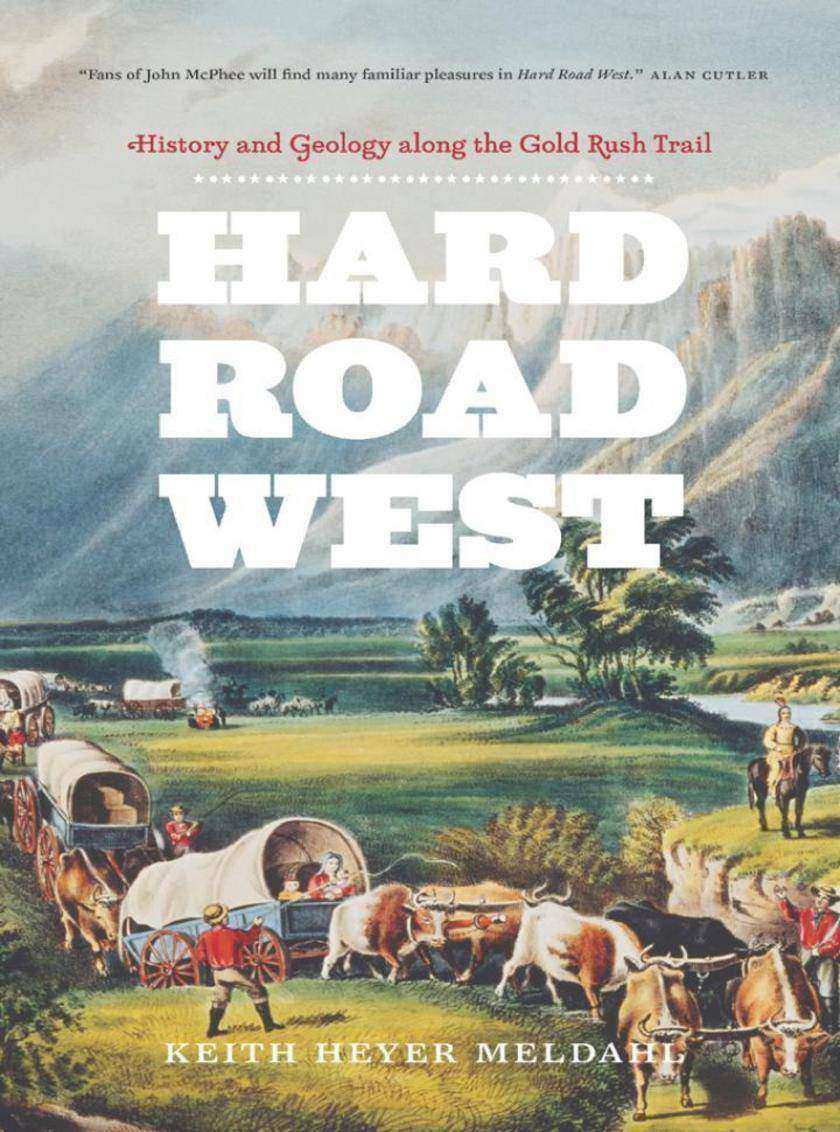
Hard Road West
¥141.26
In 1848 news of the discovery of gold in California triggered an enormous wave of emigration toward the Pacific. Lured by the promise of riches, thousands of settlers left behind the forests, rain, and fertile soil of the eastern United States in favor of the rough-hewn lands of the American West. The dramatic terrain they struggled to cross is so familiar to us now that it is hard to imagine how frightening-even godforsaken-its sheer rock faces and barren deserts seemed to our forebears.?Hard Road West brings their perspective vividly to life, weaving together the epic overland journey of the covered wagon trains and the compelling story of the landscape they encountered. Taking readers along the 2,000-mile California Trail, Keith Meldahl uses the diaries and letters of the settlers themselves-as well as the countless hours he has spent following the trail-to reveal how the geology and geography of the West directly affected our nation's westward expansion. He guides us through a corrugated landscape of sawtooth mountains, following the meager streams that served as lifelines through an arid land, all the way to California itself, where colliding tectonic plates created breathtaking scenery and planted the gold that lured travelers west in the first place.?"e;Alternates seamlessly between vivid accounts of the 19th-century journey and lucid explanations of the geological events that shaped the landscape traveled. . . . The reader comes away with both an appreciation for the arduous cross-continental wagon journey and an understanding of the events that created such a vast and difficult landscape."e;-Library Journal?"e;[Meldahl] draws on his professional knowledge to explain the geology of the West, showing how centuries of geological activity had a direct effect on the routes taken by the travelers. . . . Meldahl provides a novel account of the largest overland migration since the Crusades."e;-Science News
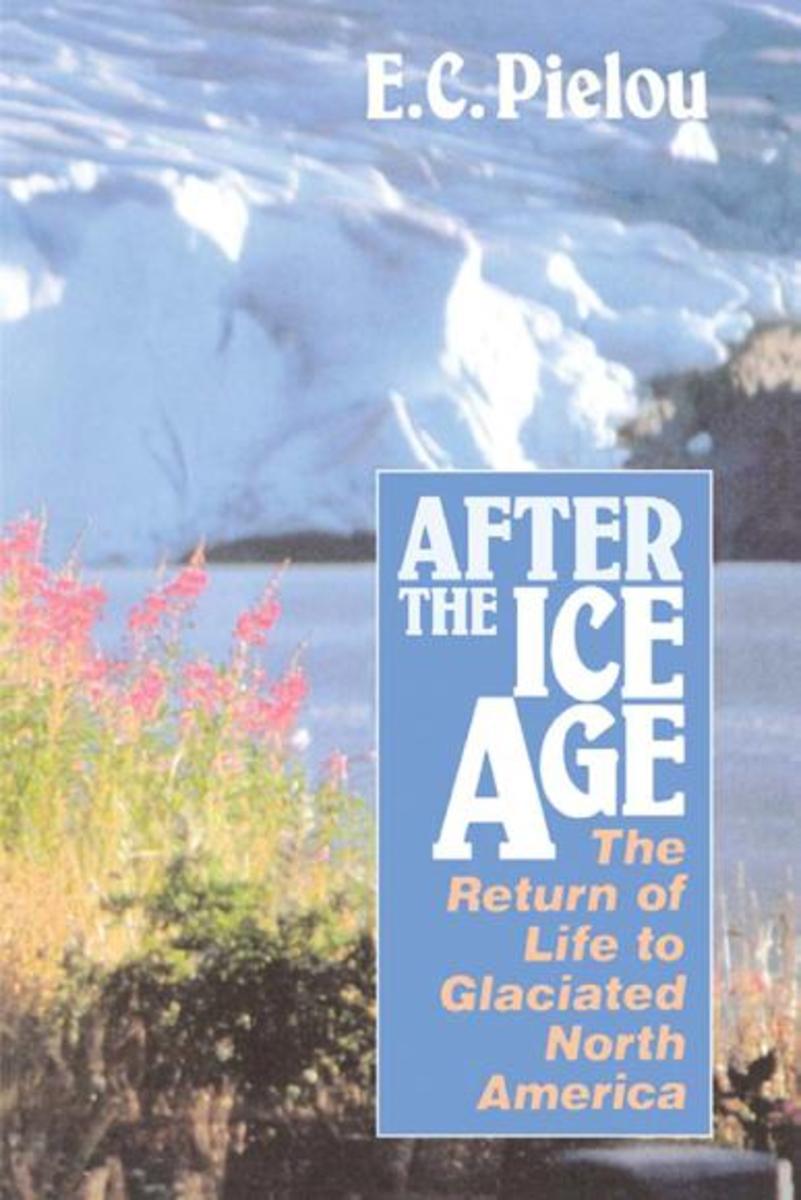
After the Ice Age
¥147.15
The fascinating story of how a harsh terrain that resembled modern Antarctica has been transformed gradually into the forests, grasslands, and wetlands we know today."e;One of the best scientific books published in the last ten years."e;-Ottowa Journal"e;A valuable new synthesis of facts and ideas about climate, geography, and life during the past 20,000 years. More important, the book conveys an intimate appreciation of the rich variety of nature through time."e;-S. David Webb,Science

Recalculating
¥147.15
Long anticipated, Recalculating is Charles Bernstein's first full-length collection of new poems in seven years. As a result of this lengthy time under construction, the scope, scale, and stylistic variation of the poems far surpasses Bernstein's previous work. Together, the poems of Recalculating take readers on a journey through the history and poetics of the decades since the end of the Cold War as seen through the lens of social and personal turbulence and tragedy.?The collection's title, the now-familiar GPS expression, suggests a change in direction due to a mistaken or unexpected turn. For Bernstein, formal invention is a necessary swerve in the midst of difficulty. As in all his work since the 1970s, he makes palpable the idea that radically new structures, appropriated forms, an aversion to received ideas and conventions, political engagement, and syntactic novelty will open the doors of perception to exuberance and resonance, from giddiness to pleasure to grief. But at the same time he cautions, with typical deflationary ardor, "e;The pen is tinier than the sword."e; In these poems, Bernstein makes good on his claim that "e;the poetry is not in speaking to the dead but listening to the dead."e;?In doing so, Recalculating incorporates translations and adaptations of Baudelaire, Cole Porter, Mandelstam, and Paul Celan, as well as several tributes to writers crucial to Bernstein's work and a set of epigrammatic verse essays that combine poetics with wry observation, caustic satire, and aesthetic slapstick.?Formally stunning and emotionally charged, Recalculating makes the familiar strange-and in a startling way, makes the strange familiar. Into these poems, brimming with sonic and rhythmic intensity, philosophical wit, and multiple personae, life events intrude, breaking down any easy distinction between artifice and the real. With works that range from elegy to comedy, conceptual to metrical, expressionist to ambient, uproarious to procedural, aphoristic to lyric, Bernstein has created a journey through the dark striated by bolts of imaginative invention and pure delight.?

Instructions for American Servicemen in France during World War II
¥100.06
"e;You are about to play a personal part in pushing the Germans out of France. Whatever part you take-rifleman, hospital orderly, mechanic, pilot, clerk, gunner, truck driver-you will be an essential factor in a great effort."e;?As American soldiers fanned out from their beachhead in Normandy in June of 1944 and began the liberation of France, every soldier carried that reminder in his kit. A compact trove of knowledge and reassurance, Instructions for American Servicemen in France during World War II was issued to soldiers just before they embarked for France to help them understand both why they were going and what they'd find when they got there. After lying unseen in Army archives for decades, this remarkable guide is now available in a new facsimile edition that reproduces the full text and illustrations of the original along with a new introduction by Rick Atkinson setting the book in context. Written in a straightforward, personal tone, the pamphlet is equal parts guidebook, cultural snapshot, and propaganda piece. A central aim is to dispel any prejudices American soldiers may have about the French-especially relating to their quick capitulation in 1940. Warning soldiers that the defeat "e;is a raw spot which the Nazis have been riding"e; since the occupation began, Instructions is careful to highlight France's long historical role as a major U.S. ally. Following that is a brief, fascinating sketch of the French character ("e;The French are mentally quick;"e; "e;Rich or poor, they are economical"e;) and stark reminders of the deprivation the French have endured under occupation. Yet an air of reassuring confidence pervades the final section of the pamphlet, which reads like a straightforward tourists' guide to Paris and the provinces-like a promise of better days to come once the soldiers complete their mission.Written by anonymous War Department staffers to meet the urgent needs of the moment, with no thought of its historical value, Instructionsfor American Servicemen in France during World War II nevertheless brings to vivid life the closing years of World War II-when optimism was growing, but a long, demanding road still lay ahead.

Lost Second Book of Aristotle's "e;Poetics"e;
¥247.21
Of all the writings on theory and aesthetics-ancient, medieval, or modern-the most important is indisputably Aristotle's Poetics, the first philosophical treatise to propound a theory of literature. In the Poetics, Aristotle writes that he will speak of comedy-but there is no further mention of comedy. Aristotle writes also that he will address catharsis and an analysis of what is funny. But he does not actually address any of those ideas. The surviving Poetics is incomplete.Until today. Here, Walter Watson offers a new interpretation of the lost second book of Aristotle's Poetics. Based on Richard Janko's philological reconstruction of the epitome, a summary first recovered in 1839 and hotly contested thereafter, Watson mounts a compelling philosophical argument that places the statements of this summary of the Aristotelian text in their true context. Watson renders lucid and complete explanations of Aristotle's ideas about catharsis, comedy, and a summary account of the different types of poetry, ideas that influenced not only Cicero's theory of the ridiculous, but also Freud's theory of jokes, humor, and the comic.Finally, more than two millennia after it was first written, and after five hundred years of scrutiny, Aristotle's Poetics is more complete than ever before. Here, at last, Aristotle's lost second book is found again.

Baroque Science
¥247.21
In Baroque Science, Ofer Gal and Raz Chen-Morris present a radically new perspective on the scientific revolution of the seventeenth century. Instead of celebrating the triumph of reason and rationality, they study the paradoxes and anxieties that stemmed from the New Science and the intellectual compromises that shaped it and enabled its spectacular success.?Gal and Chen-Morris show how the protagonists of the new mathematical natural philosophy grasped at the very far and very small by entrusting observation to the mediation of artificial instruments, and how they justified this mediation by naturalizing and denigrating the human senses. They show how the physical-mathematical ordering of heavens and earth demanded obscure and spurious mathematical procedures, replacing the divine harmonies of the late Renaissance with an assemblage of isolated, contingent laws and approximated constants.Finally, they show how the new savants, forced to contend that reason is hopelessly estranged from its surrounding world and that nature is irreducibly complex, turned to the passions to provide an alternative, naturalized foundation for their epistemology and ethics.?Enforcing order in the face of threatening chaos, blurring the boundaries of the natural and the artificial, and mobilizing the passions in the service of objective knowledge, the New Science, Gal and Chen-Morris reveal, is a Baroque phenomenon: deeply entrenched in and crucially formative of the culture of its time.


