


 购物车
 个人中心

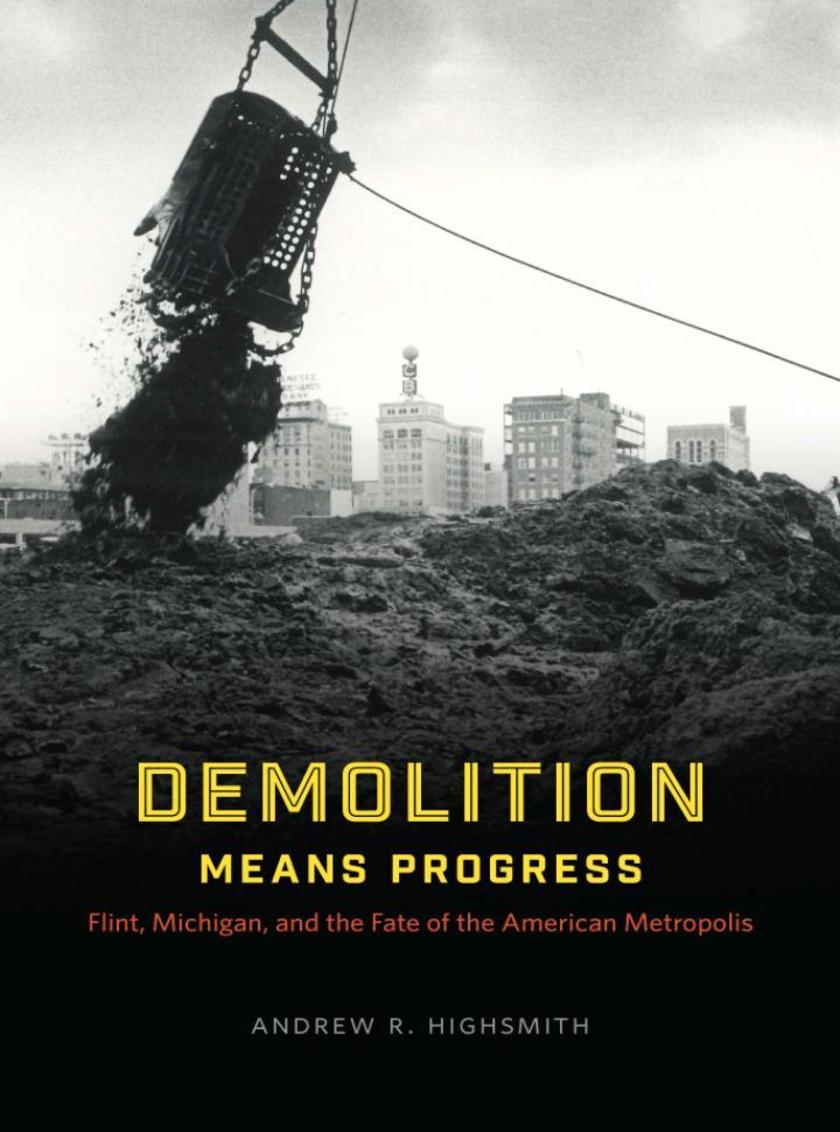
Demolition Means Progress
¥370.82
In 1997, after General Motors shuttered a massive complex of factories in the gritty industrial city of Flint, Michigan, signs were placed around the empty facility reading, "e;Demolition Means Progress,"e; suggesting that the struggling metropolis could not move forward to greatness until the old plants met the wrecking ball. Much more than a trite corporate slogan, the phrase encapsulates the operating ethos of the nation's metropolitan leadership from at least the 1930s to the present. Throughout, the leaders of Flint and other municipalities repeatedly tried to revitalize their communities by demolishing outdated and inefficient structures and institutions and overseeing numerous urban renewal campaigns-many of which yielded only more impoverished and more divided metropolises. After decades of these efforts, the dawn of the twenty-first century found Flint one of the most racially segregated and economically polarized metropolitan areas in the nation.In one of the most comprehensive works yet written on the history of inequality and metropolitan development in modern America, Andrew R. Highsmith uses the case of Flint to explain how the perennial quest for urban renewal-even more than white flight, corporate abandonment, and other forces-contributed to mass suburbanization, racial and economic division, deindustrialization, and political fragmentation. Challenging much of the conventional wisdom about structural inequality and the roots of the nation's "e;urban crisis,"e; Demolition Means Progress shows in vivid detail how public policies and programs designed to revitalize the Flint area ultimately led to the hardening of social divisions.
Vital Minimum
¥370.82
What constitutes a needWho gets to decide what people do or do not needIn modern France, scientists, both amateur and professional, were engaged in defining and measuring human needs. These scientists did not trust in a providential economy to distribute the fruits of labor and uphold the social order. Rather, they believed that social organization should be actively directed according to scientific principles. They grounded their study of human needs on quantifiable foundations: agricultural and physiological experiments, demographic studies, and statistics.The result was the concept of the "e;vital minimum"e;--the living wage, a measure of physical and social needs. In this book, Dana Simmons traces the history of this concept, revealing the intersections between technologies of measurement, such as calorimeters and social surveys, and technologies of wages and welfare, such as minimum wages, poor aid, and welfare programs. In looking at how we define and measure need, Vital Minimum raises profound questions about the authority of nature and the nature of inequality.
Enigma of the Aerofoil
¥353.16
Why do aircraft flyHow do their wings support themIn the early years of aviation, there was an intense dispute between British and German experts over the question of why and how an aircraft wing provides lift. The British, under the leadership of the great Cambridge mathematical physicist Lord Rayleigh, produced highly elaborate investigations of the nature of discontinuous flow, while the Germans, following Ludwig Prandtl in Gottingen, relied on the tradition called "e;technical mechanics"e; to explain the flow of air around a wing. Much of the basis of modern aerodynamics emerged from this remarkable episode, yet it has never been subject to a detailed historical and sociological analysis.?In The Enigma of the Aerofoil, David Bloor probes a neglected aspect of this important period in the history of aviation. Bloor draws upon papers by the participants-their restricted technical reports, meeting minutes, and personal correspondence, much of which has never before been published-and reveals the impact that the divergent mathematical traditions of Cambridge and Gttingen had on this great debate. Bloor also addresses why the British, even after discovering the failings of their own theory, remained resistant to the German circulation theory for more than a decade. The result is essential reading for anyone studying the history, philosophy, or sociology of science or technology-and for all those intrigued by flight.
Uncivil Unions
¥353.16
"e;What a strange invention marriage is!"e; wrote Kierkegaard. "e;Is it the expression of that inexplicable erotic sentiment, that concordant elective affinity of souls, or is it a duty or a partnership . . . or is it a little of all that?"e;Like Kierkegaard a few decades later, many of Germany's most influential thinkers at the turn of the eighteenth century wondered about the nature of marriage but rejected the easy answers provided by biology and theology. In Uncivil Unions, Adrian Daub presents a truly interdisciplinary look at the story of a generation of philosophers, poets, and intellectuals who turned away from theology, reason, common sense, and empirical observation to provide a purely metaphysical justification of marriage.Through close readings of philosophers like Fichte and Schlegel, and novelists like Sophie Mereau and Jean Paul, Daub charts the development of this new concept of marriage with an insightful blend of philosophy, cultural studies, and theory. The author delves deeply into the lives and work of the romantic and idealist poets and thinkers whose beliefs about marriage continue to shape ideas about gender, marriage, and sex to the present day.
Contemporary Athletics and Ancient Greek Ideals
¥353.16
Despite their influence in our culture, sports inspire dramatically less philosophical consideration than such ostensibly weightier topics as religion, politics, or science. Arguing that athletic playfulness coexists with serious underpinnings, and that both demand more substantive attention, Daniel Dombrowski harnesses the insights of ancient Greek thinkers to illuminate contemporary athletics.Dombrowski contends that the ideas of Plato, Aristotle, and Plotinus shed important light on issues-such as the pursuit of excellence, the concept of play, and the power of accepting physical limitations while also improving one's body-that remain just as relevant in our sports-obsessed age as they were in ancient Greece. Bringing these concepts to bear on contemporary concerns, Dombrowski considers such questions as whether athletic competition can be a moral substitute for war, whether it necessarily constitutes war by other means, and whether it encourages fascist tendencies or ethical virtue. The first volume to philosophically explore twenty-first-century sport in the context of its ancient predecessor, Contemporary Athletics and Ancient Greek Ideals reveals that their relationship has great and previously untapped potential to inform our understanding of human nature.
Plague Writing in Early Modern England
¥353.16
During the seventeenth century, England was beset by three epidemics of the bubonic plague, each outbreak claiming between a quarter and a third of the population of London and other urban centers. Surveying a wide range of responses to these epidemics-sermons, medical tracts, pious exhortations, satirical pamphlets, and political commentary-Plague Writing in Early Modern England brings to life the many and complex ways Londoners made sense of such unspeakable devastation.Ernest B. Gilman argues that the plague writing of the period attempted unsuccessfully to rationalize the catastrophic and that its failure to account for the plague as an instrument of divine justice fundamentally threatened the core of Christian belief. Gilman also trains his critical eye on the works of Jonson, Donne, Pepys, and Defoe, which, he posits, can be more fully understood when put into the context of this century-long project to "e;write out"e; the plague. Ultimately, Plague Writing in Early Modern England is more than a compendium of artifacts of a bygone era; it holds up a distant mirror to reflect our own condition in the age of AIDS, super viruses, multidrug resistant tuberculosis, and the hovering threat of a global flu pandemic.
Posthumous Love
¥329.62
For Dante and Petrarch, posthumous love was a powerful conviction. Like many of their contemporaries, both poets envisioned their encounters with their beloved in heaven-Dante with Beatrice, Petrarch with Laura. But as Ramie Targoff reveals in this elegant study, English love poetry of the Renaissance brought a startling reversal of this tradition: human love became definitively mortal. Exploring the boundaries that Renaissance English poets drew between earthly and heavenly existence, Targoff seeks to understand this shift and its consequences for English poetry.?Targoff shows that medieval notions of the somewhat flexible boundaries between love in this world and in the next were hardened by Protestant reformers, who envisioned a total break between the two. Tracing the narrative of this rupture, she focuses on central episodes in poetic history in which poets developed rich and compelling compensations for the lack of posthumous love-from Thomas Wyatt's translations of Petrarch's love sonnets and the Elizabethan sonnet series of Shakespeare and Spencer to the?carpe diem?poems of the seventeenth century. Targoff's centerpiece is?Romeo and Juliet, where she considers how Shakespeare's reworking of the Italian story stripped away any expectation that the doomed teenagers would reunite in heaven. Casting new light on these familiar works of poetry and drama, this book ultimately demonstrates that the negation of posthumous love brought forth a new mode of poetics that derived its emotional and aesthetic power from its insistence upon love's mortal limits.
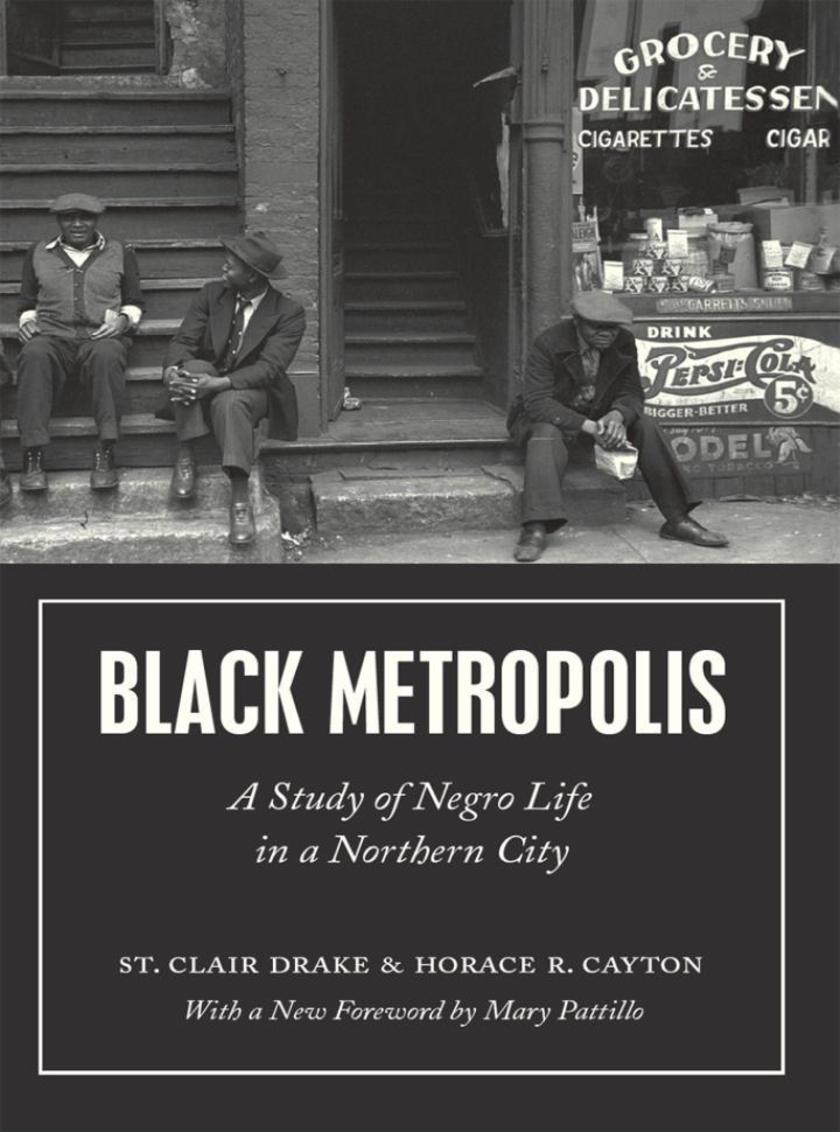
Black Metropolis
¥329.62
Ground-breaking when first published in 1945, Black Metropolis remains a landmark study of race and urban life. Few studies since have been able to match its scope and magnitude, offering one of the most comprehensive looks at black life in America. Based on research conducted by Works Progress Administration field workers, it is a sweeping historical and sociological account of the people of Chicago's South Side from the 1840s through the 1930s. Its findings offer a comprehensive analysis of black migration, settlement, community structure, and black-white race relations in the first half of the twentieth century. It offers a dizzying and dynamic world filled with captivating people and startling revelations.A new foreword from sociologist Mary Pattillo places the study in modern context, updating the story with the current state of black communities in Chicago and the larger United States and exploring what this means for the future. As the country continues to struggle with race and our treatment of black lives, Black Metropolis continues to be a powerful contribution to the conversation.

Philosophy of Pseudoscience
¥288.41
What sets the practice of rigorously tested, sound science apart from pseudoscienceIn this volume, the contributors seek to answer this question, known to philosophers of science as "e;the demarcation problem."e; This issue has a long history in philosophy, stretching as far back as the early twentieth century and the work of Karl Popper. But by the late 1980s, scholars in the field began to treat the demarcation problem as impossible to solve and futile to ponder. However, the essays that Massimo Pigliucci and Maarten Boudry have assembled in this volume make a rousing case for the unequivocal importance of reflecting on the separation between pseudoscience and sound science. Moreover, the demarcation problem is not a purely theoretical dilemma of mere academic interest: it affects parents' decisions to vaccinate children and governments' willingness to adopt policies that prevent climate change. Pseudoscience often mimics science, using the superficial language and trappings of actual scientific research to seem more respectable. Even a well-informed public can be taken in by such questionable theories dressed up as science. Pseudoscientific beliefs compete with sound science on the health pages of newspapers for media coverage and in laboratories for research funding. Now more than ever the ability to separate genuine scientific findings from spurious ones is vital, and The Philosophy of Pseudoscience provides ground for philosophers, sociologists, historians, and laypeople to make decisions about what science is or isn't.
Plant Sensing and Communication
¥288.41
The news that a flowering weed-mousear cress (Arabidopsis thaliana)-can sense the particular chewing noise of its most common caterpillar predator and adjust its chemical defenses in response led to headlines announcing the discovery of the first "e;hearing"e; plant. As plants lack central nervous systems (and, indeed, ears), the mechanisms behind this "e;hearing"e; are unquestionably very different from those of our own acoustic sense, but the misleading headlines point to an overlooked truth: plants do in fact perceive environmental cues and respond rapidly to them by changing their chemical, morphological, and behavioral traits.In Plant Sensing and Communication, Richard Karban provides the first comprehensive overview of what is known about how plants perceive their environments, communicate those perceptions, and learn. Facing many of the same challenges as animals, plants have developed many similar capabilities: they sense light, chemicals, mechanical stimulation, temperature, electricity, and sound. Moreover, prior experiences have lasting impacts on sensitivity and response to cues; plants, in essence, have memory. Nor are their senses limited to the processes of an individual plant: plants eavesdrop on the cues and behaviors of neighbors and-for example, through flowers and fruits-exchange information with other types of organisms. Far from inanimate organisms limited by their stationary existence, plants, this book makes unquestionably clear, are in constant and lively discourse.
Deep Rhetoric
¥311.96
"e;Rhetoric is the counterpart of logic,"e; claimed Aristotle. "e;Rhetoric is the first part of logic rightly understood,"e; Martin Heidegger concurred. "e;Rhetoric is the universal form of human communication,"e; opined Hans-Georg Gadamer. But in Deep Rhetoric, James Crosswhite offers a groundbreaking new conception of rhetoric, one that builds a definitive case for an understanding of the discipline as a philosophical enterprise beyond basic argumentation and is fully conversant with the advances of the New Rhetoric of Chaim Perelman and Lucie Olbrechts-Tyteca.Chapter by chapter, Deep Rhetoric develops an understanding of rhetoric not only in its philosophical dimension but also as a means of guiding and conducting conflicts, achieving justice, and understanding the human condition. Along the way, Crosswhite restores the traditional dignity and importance of the discipline and illuminates the twentieth-century resurgence of rhetoric among philosophers, as well as the role that rhetoric can play in future discussions of ontology, epistemology, and ethics. At a time when the fields of philosophy and rhetoric have diverged, Crosswhite returns them to their common moorings and shows us an invigorating new way forward.
Doctors and Demonstrators
¥353.16
Since Roe v. Wade, abortion has continued to be a divisive political issue in the United States. In contrast, it has remained primarily a medical issue in Britain and Canada despite the countries' shared heritage. Doctors and Demonstrators looks beyond simplistic cultural or religious explanations to find out why abortion politics and policies differ so dramatically in these otherwise similar countries.?Drew Halfmann argues that political institutions are the key. In the United States, federalism, judicial review, and a private health care system contributed to the public definition of abortion as an individual right rather than a medical necessity. Meanwhile, Halfmann explains, the porous structure of American political parties gave pro-choice and pro-life groups the opportunity to move the issue onto the political agenda. A groundbreaking study of the complex legal and political factors behind the evolution of abortion policy, Doctors and Demonstrators will be vital for anyone trying to understand this contentious issue.
Far Afield
¥288.41
Anthropology has long had a vexed relationship with literature, and nowhere has this been more acutely felt than in France, where most ethnographers, upon returning from the field, write not one book, but two: a scientific monograph and a literary account. In?Far Afield-brought to English-language readers here for the first time-Vincent Debaene puzzles out this phenomenon, tracing the contours of anthropology and literature's mutual fascination and the ground upon which they meet in the works of thinkers from Marcel Mauss and Georges Bataille to Claude Levi-Strauss and Roland Barthes.?The relationship between anthropology and literature in France is one of careful curiosity. Literary writers are wary about anthropologists' scientific austerity but intrigued by the objects they collect and the issues they raise, while anthropologists claim to be scientists but at the same time are deeply concerned with writing and representational practices. Debaene elucidates the richness that this curiosity fosters and the diverse range of writings it has produced, from Proustian memoirs to proto-surrealist diaries. In the end he offers a fascinating intellectual history, one that is itself located precisely where science and literature meet.
Ecology of Place
¥447.34
Ecologists can spend a lifetime researching a small patch of the earth, studying the interactions between organisms and the environment, and exploring the roles those interactions play in determining distribution, abundance, and evolutionary change. With so few ecologists and so many systems to study, generalizations are essential. But how do you extrapolate knowledge about a well-studied area and apply it elsewhere?Through a range of original essays written by eminent ecologists and naturalists, The Ecology of Place explores how place-focused research yields exportable general knowledge as well as practical local knowledge, and how society can facilitate ecological understanding by investing in field sites, place-centered databases, interdisciplinary collaborations, and field-oriented education programs that emphasize natural history. This unique patchwork of case-study narratives, philosophical musings, and historical analyses is tied together with commentaries from editors Ian Billick and Mary Price that develop and synthesize common threads. The result is a unique volume rich with all-too-rare insights into how science is actually done, as told by scientists themselves.
Wildlife Conservation in a Changing Climate
¥394.36
Human-induced climate change is emerging as one of the gravest threats to biodiversity in history, and while a vast amount of literature on the ecological impact of climate change exists, very little has been dedicated to the management of wildlife populations and communities in the wake of unprecedented habitat changes. Wildlife Conservation in a Changing Climate is an essential resource, bringing together leaders in the fields of climate change ecology, wildlife population dynamics, and environmental policy to examine the impacts of climate change on populations of terrestrial vertebrates. Chapters assess the details of climate change ecology, including demographic implications for individual populations, evolutionary responses, impacts on movement patterns, alterations of species interactions, and predicting impacts across regions. The contributors also present a number of strategies by which conservationists and wildlife managers can counter or mitigate the impacts of climate change as well as increase the resilience of wildlife populations to such changes. A seminal contribution to the fields of ecology and conservation biology, Wildlife Conservation in a Changing Climate will serve as the spark that ignites a new direction of discussions about and action on the ecology and conservation of wildlife in a changing climate.

Scientific Babel
¥147.15
English is the language of science today. No matter which languages you know, if you want your work seen, studied, and cited, you need to publish in English. But that hasn't always been the case. Though there was a time when Latin dominated the field, for centuries science has been a polyglot enterprise, conducted in a number of languages whose importance waxed and waned over time-until the rise of English in the twentieth century.?So how did we get from there to hereHow did French, German, Latin, Russian, and even Esperanto give way to EnglishAnd what can we reconstruct of the experience of doing science in the polyglot pastWith Scientific Babel, Michael D. Gordin resurrects that lost world, in part through an ingenious mechanism: the pages of his highly readable narrative account teem with footnotes-not offering background information, but presenting quoted material in its original language. The result is stunning: as we read about the rise and fall of languages, driven by politics, war, economics, and institutions, we actually see it happen in the ever-changing web of multilingual examples. The history of science, and of English as its dominant language, comes to life, and brings with it a new understanding not only of the frictions generated by a scientific community that spoke in many often mutually unintelligible voices, but also of the possibilities of the polyglot, and the losses that the dominance of English entails.?Few historians of science write as well as Gordin, and Scientific Babel reveals his incredible command of the literature, language, and intellectual essence of science past and present. No reader who takes this linguistic journey with him will be disappointed.
Black New Orleans, 1860-1880
¥282.53
Reissued for the first time in over thirty years, Black New Orleans explores the twenty-year period in which the city's black population more than doubled. Meticulously researched and replete with archival illustrations from newspapers and rare periodicals, John W. Blassingame's groundbreaking history offers a unique look at the economic and social life of black people in New Orleans during Reconstruction. Not a conventional political treatment, Blassingame's history instead emphasizes the educational, religious, cultural, and economic activities of African Americans during the late nineteenth century."e;Blending historical and sociological perspectives, and drawing with skill and imagination upon a variety of sources, [Blassingame] offers fresh insights into an oft-studied period of Southern history. . . .In both time and place the author has chosen an extraordinarily revealing vantage point from which to view his subject.?"e;-Neil R. McMillen, American Historical Review
Dawn of Green
¥147.15
Located in the heart of England's Lake District, the placid waters of Thirlmere seem to be the embodiment of pastoral beauty. But under their calm surface lurks the legacy of a nineteenth-century conflict that pitted industrial progress against natural conservation-and helped launch the environmental movement as we know it. Purchased by the city of Manchester in the 1870s, Thirlmere was dammed and converted into a reservoir, its water piped one hundred miles south to the burgeoning industrial city and its workforce. This feat of civil engineering-and of natural resource diversion-inspired one of the first environmental struggles of modern times. The Dawn of Green re-creates the battle for Thirlmere and the clashes between conservationists who wished to preserve the lake and developers eager to supply the needs of a growing urban population. Bringing to vivid life the colorful and strong-minded characters who populated both sides of the debate, noted historian Harriet Ritvo revisits notions of the natural promulgated by romantic poets, recreationists, resource managers, and industrial developers to establish Thirlmere as the template for subsequent-and continuing-environmental struggles.
Futurity
¥353.16
When looking at how trauma is represented in literature and the arts, we tend to focus on the weight of the past. In this book, Amir Eshel suggests that this retrospective gaze has trapped us in a search for reason in the madness of the twentieth century's catastrophes at the expense of literature's prospective vision. Considering several key literary works, Eshel argues in Futurity that by grappling with watershed events of modernity, these works display a future-centric engagement with the past that opens up the present to new political, cultural, and ethical possibilities-what he calls futurity.?Bringing together postwar German, Israeli, and Anglo-American literature, Eshel traces a shared trajectory of futurity in world literature. He begins by examining German works of fiction and the debates they spurred over the future character of Germany's public sphere. Turning to literary works by Jewish-Israeli writers as they revisit Israel's political birth, he shows how these stories inspired a powerful reconsideration of Israel's identity. Eshel then discusses post-1989 literature-from Ian McEwan's Black Dogs to J. M. Coetzee's Diary of a Bad Year-revealing how these books turn to events like World War II and the Iraq War not simply to make sense of the past but to contemplate the political and intellectual horizon that emerged after 1989. Bringing to light how reflections on the past create tools for the future, Futurity reminds us of the numerous possibilities literature holds for grappling with the challenges of both today and tomorrow.
Economy of Glory
¥370.82
From the outset of Napoleon's career, the charismatic Corsican was compared to mythic heroes of antiquity like Achilles, and even today he remains the apotheosis of French glory, a value deeply embedded in the country's history. From this angle, the Napoleonic era can be viewed as the final chapter in the battle of the Ancients and Moderns. In this book, Robert Morrissey presents a literary and cultural history of glory and its development in France and explores the "e;economy of glory"e; Napoleon sought to implement in an attempt to heal the divide between the Old Regime and the Revolution. ?Examining how Napoleon saw glory as a means of escaping the impasse of Revolutionary ideas of radical egalitarianism, Morrissey illustrates the challenge the leader faced in reconciling the antagonistic values of virtue and self-interest, heroism and equality. He reveals that the economy of glory was both egalitarian, creating the possibility of an aristocracy based on merit rather than wealth, and traditional, being deeply embedded in the history of aristocratic chivalry and the monarchy-making it the heart of Napoleon's politics of fusion. Going beyond Napoleon, Morrissey considers how figures of French romanticism such as Chateaubriand, Balzac, and Hugo constantly reevaluated this legacy of glory and its consequences for modernity. Available for the first time in English, The Economy of Glory is a sophisticated and beautifully written addition to French history.
Shock of the Ancient
¥447.34
The cultural battle known as the Quarrel of the Ancients and Moderns served as a sly cover for more deeply opposed views about the value of literature and the arts. One of the most public controversies of early modern Europe, the Quarrel has most often been depicted as pitting antiquarian conservatives against the insurgent critics of established authority. The Shock of the Ancient turns the canonical vision of those events on its head by demonstrating how the defenders of Greek literature-rather than clinging to an outmoded tradition-celebrated the radically different practices of the ancient world.At a time when the constraints of decorum and the politics of French absolutism quashed the expression of cultural differences, the ancient world presented a disturbing face of otherness. Larry F. Norman explores how the authoritative status of ancient Greek texts allowed them to justify literary depictions of the scandalous. The Shock of the Ancient surveys the diverse array of aesthetic models presented in these ancient works and considers how they both helped to undermine the rigid codes of neoclassicism and paved the way for the innovative philosophies of the Enlightenment. Broadly appealing to students of European literature, art history, and philosophy, this book is an important contribution to early modern literary and cultural debates.


