


 购物车
购物车 个人中心
个人中心
Mastering OpenStack
¥90.46
This book is intended for system administrators, cloud engineers, and system architects who want to deploy a cloud based on OpenStack in a mid- to large-sized IT infrastructure. If you have a fundamental understanding of cloud computing and OpenStack and want to expand your knowledge, then this book is an excellent checkpoint to move forward.
Learning AWS
¥90.46
This book is targeted at expert programmers and architects wanting to learn AWS. Some familiarity with Spring, MySQL, and RESTful web services is assumed.
Mastering Probabilistic Graphical Models Using Python
¥80.65
If you are a researcher or a machine learning enthusiast, or are working in the data science field and have a basic idea of Bayesian learning or probabilistic graphical models, this book will help you to understand the details of graphical models and use them in your data science problems.
Ansible Playbook Essentials
¥54.49
If you are a systems or automation engineer who intends to automate common infrastructure tasks, deploy applications, and use orchestration to configure systems in a coordinated manner, then this book is for you. Some understanding of the Linux/Unix command-line interface is expected.
Microsoft Application Virtualization Cookbook
¥99.18
If you have some experience with App-V but are overwhelmed by the range of features on offer, then this book is for you. A basic understanding of App-V and common Windows Server technologies (Active Directory/Group Policy/PowerShell) is necessary.
Node.js High Performance
¥54.49
This book is for Node.js developers who want a more in-depth knowledge of the platform to improve the performance of their applications. Whether you have a base Node.js background or you are an expert who knows the garbage collector and wants to leverage it to make applications more robust, the examples in this book will benefit you.
Big Data Forensics – Learning Hadoop Investigations
¥80.65
If you are an IT professional, law enforcement, legal professional, or a student interested in Big Data and forensics, this book is your hands-on guide for learning how to conduct Hadoop forensic investigations. Each topic and step in the forensic process is described in accessible language, and no prior experience is required.
Intelligent Document Capture with Ephesoft - Second Edition
¥71.93
This book is intended for IT professionals interested in installing and configuring Ephesoft Enterprise for their organization, but it is a valuable resource for anyone interested in learning about intelligent document capture.
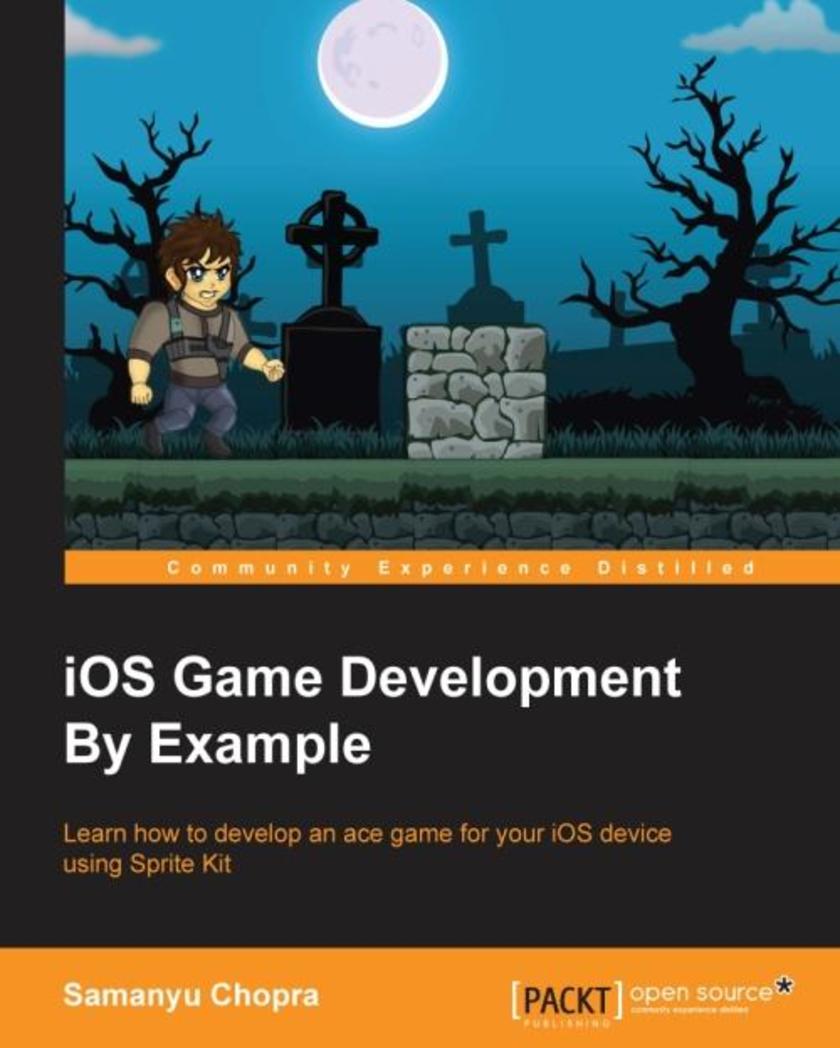
iOS Game Development By Example
¥80.65
This book is targeted at novice, intermediate, and proficient game developers coming from a different development platform and wanting to migrate to game development with the Sprite Kit engine. The reader does not need any knowledge of Sprite Kit and building games on the iOS platform.
Working with Odoo
¥99.18
This book is perfect for people who have never used Odoo and for those who would like to learn about more advanced concepts of Odoo. In order to get the most out of this book, you should be comfortable with understanding basic business concepts such as sales, purchasing, inventory management, and basic accounting.
Citrix XenDesktop? Cookbook - Third Edition
¥99.18
If you are a system administrator or an experienced IT professional who wants to refer to a centralized container of procedures and advanced tasks in XenDesktop, this is the book for you. Experience of the virtualized environment and an understanding of the general concepts of desktop virtualization (VDI) are required.

Ethereum Smart Contract Development
¥63.21
Become an Ethereum Blockchain developer using a blend of concepts and hands-on implementations About This Book ? Understand the Ethereum Ecosystem and its differences from its rich cousin Bitcoin ? Explore the Solidity programming language and smart contract optimizations ? Get a developer’s perspective of Blockchain-as-a-technology with exposure to common challenges faced while building decentralized applications Who This Book Is For If you want to know the ins and outs of the Ethereum network and build your own decentralized applications, then this book is what you need! This book is for anyone who is interested in blockchain and wants to become an Ethereum developer. It’s ideal for existing Ethereum developers who want to develop Ethereum using smart contracts. Basic knowledge of cryptography is expected but is not mandatory. What You Will Learn ? Know how to build your own smart contracts and cryptocurrencies ? Understand the Solidity language ? Find out about data types, control structure, functions, inheritance, mathematical operations, and much more ? See the various types of forks and discover how they are related to Ethereum ? Get to know the various concepts of web3.js and its APIs so you can build client-side apps ? Build a DAO from scratch and acquire basic knowledge of DApps on Ethercast ? Be guided through the project so you can optimize EVM for smart contracts ? Build your own decentralized applications (DApps) by taking a practical approach In Detail Ethereum is a public, blockchain-based distributed computing platform featuring smart contract functionality. This book is your one-stop guide to blockchain and Ethereum smart contract development. We start by introducing you to the basics of blockchain. You'll learn about hash functions, Merkle trees, forking, mining, and much more. Then you'll learn about Ethereum and smart contracts, and we'll cover Ethereum virtual machine (EVM) in detail. Next, you'll get acquainted with DApps and DAOs and see how they work. We'll also delve into the mechanisms of advanced smart contracts, taking a practical approach. You'll also learn how to develop your own cryptocurrency from scratch in order to understand the business behind ICO. Further on, you'll get to know the key concepts of the Solidity programming language, enabling you to build decentralized blockchain-based applications. We'll also look at enterprise use cases, where you'll build a decentralized microblogging site. At the end of this book, we discuss blockchain-as-a-service, the dark web marketplace, and various advanced topics so you can get well versed with the blockchain principles and ecosystem. Style and approach This comprehensive guide takes a practical approach by showing you how to implement Blockchain in different Enterprise use cases. You’ll quickly brush up on the basics of the blockchain database, then learn the advanced intricacies of smart contract development.
Cloud-Native Applications in Java
¥90.46
Highly available microservice-based web apps for Cloud with Java About This Book ? Take advantage of the simplicity of Spring to build a full-fledged application ? Let your applications run faster while generating smaller cloud service bills ? Integrate your application with various tools such as Docker and ElasticSearch and use specific tools in Azure and AWS Who This Book Is For Java developers who want to build secure, resilient, robust and scalable applications that are targeted for cloud based deployment, will find this book helpful. Some knowledge of Java, Spring, web programming and public cloud providers (AWS, Azure) should be sufficient to get you through the book. What You Will Learn ? See the benefits of the cloud environment when it comes to variability, provisioning, and tooling support ? Understand the architecture patterns and considerations when developing on the cloud ? Find out how to perform cloud-native techniques/patterns for request routing, RESTful service creation, Event Sourcing, and more ? Create Docker containers for microservices and set up continuous integration using Jenkins ? Monitor and troubleshoot an application deployed in the cloud environment ? Explore tools such as Docker and Kubernetes for containerization and the ELK stack for log aggregation and visualization ? Use AWS and Azure specific tools to design, develop, deploy, and manage applications ? Migrate from monolithic architectures to a cloud native deployment In Detail Businesses today are evolving so rapidly that they are resorting to the elasticity of the cloud to provide a platform to build and deploy their highly scalable applications. This means developers now are faced with the challenge of building build applications that are native to the cloud. For this, they need to be aware of the environment, tools, and resources they’re coding against. If you’re a Java developer who wants to build secure, resilient, robust, and scalable applications that are targeted for cloud-based deployment, this is the book for you. It will be your one stop guide to building cloud-native applications in Java Spring that are hosted in On-prem or cloud providers - AWS and Azure The book begins by explaining the driving factors for cloud adoption and shows you how cloud deployment is different from regular application deployment on a standard data centre. You will learn about design patterns specific to applications running in the cloud and find out how you can build a microservice in Java Spring using REST APIs You will then take a deep dive into the lifecycle of building, testing, and deploying applications with maximum automation to reduce the deployment cycle time. Gradually, you will move on to configuring the AWS and Azure platforms and working with their APIs to deploy your application. Finally, you’ll take a look at API design concerns and their best practices. You’ll also learn how to migrate an existing monolithic application into distributed cloud native applications. By the end, you will understand how to build and monitor a scalable, resilient, and robust cloud native application that is always available and fault tolerant. Style and approach Filled with examples, this book will build you an entire cloud-native application through its course and will stop at each point and explain in depth the functioning and design considerations that will make a robust, highly available application
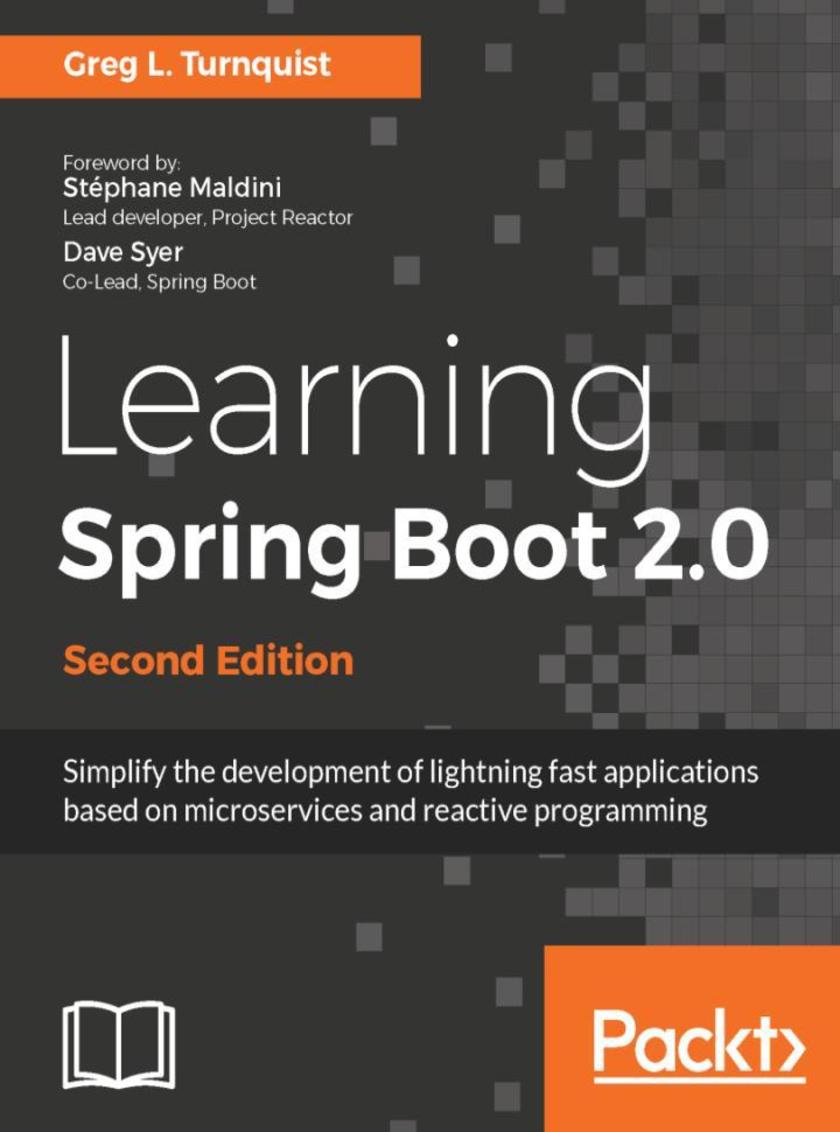
Spring Boot 2.0 Cookbook - Second Edition
¥81.74
Take your application development skills to the next level by implementing Spring Boot features effectively About This Book ? This collection of effective recipes serves as guidelines for Spring Boot application development ? Get up to date with features of the latest version of Spring Boot 2.0 ? Tips and tricks to improve your efficiency through the stages of software development Who This Book Is For This book is for Java Developers who have good knowledge and understanding of Spring and Java application development. What You Will Learn ? Get to know Spring Boot Starters and create custom auto-configurations ? Work with custom annotations that enable bean activation ? Use DevTools to easily develop and debug applications ? Learn the effective testing techniques by integrating Cucumber and Spock ? Observe an eternal application configuration using Consul ? Move your existing Spring Boot applications to the cloud ? Use Hashicorp Consul and Netflix Eureka for dynamic Service Discovery ? Understand the various mechanisms that Spring Boot provides to examine an application’s health In Detail The Spring framework provides great flexibility for Java development, which also results in tedious configuration work. Spring Boot addresses the configuration difficulties of Spring and makes it easy to create standalone, production-grade Spring-based applications. This practical guide makes the existing development process more efficient. Spring Boot Cookbook 2.0 Second Edition smartly combines all the skills and expertise to efficiently develop, test, deploy, and monitor applications using Spring Boot on premise and in the cloud. We start with an overview of the important Spring Boot features you will learn to create a web application for a RESTful service. Learn to fine-tune the behavior of a web application by learning about custom routes and asset paths and how to modify routing patterns. Address the requirements of a complex enterprise application and cover the creation of custom Spring Boot starters. This book also includes examples of the new and improved facilities available to create various kinds of tests introduced in Spring Boot 1.4 and 2.0, and gain insights into Spring Boot DevTools. Explore the basics of Spring Boot Cloud modules and various Cloud starters to make applications in “Cloud Native” and take advantage of Service Discovery and Circuit Breakers. Style and approach This practical guide follows a recipe-based approach and provides extremely helpful guidelines to build, configure, and customize your Spring Boot applications.
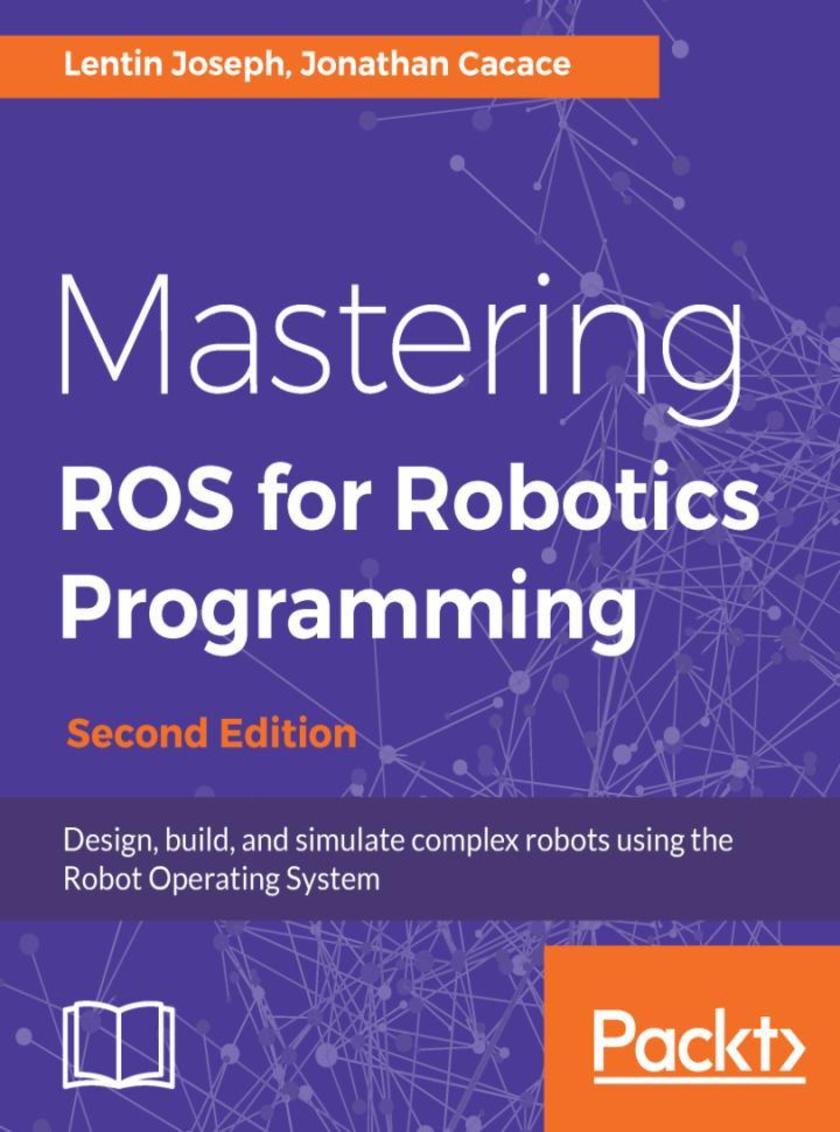
Mastering ROS for Robotics Programming - Second Edition
¥90.46
Discover best practices and troubleshooting solutions when working on ROS About This Book ? Develop complex robotic applications using ROS to interface robot manipulators and mobile robots ? Gain insight into autonomous navigation in mobile robots and motion planning in robot manipulators ? Discover best practices and troubleshooting solutions Who This Book Is For If you are a robotics enthusiast or researcher who want to learn more about building robot applications using ROS, this book is for you. In order to learn from this book, you should have a basic knowledge of ROS, GNU/Linux, and C++ programming concepts. The book is also excellent for programmers who want to explore the advanced features of ROS. What You Will Learn ? Create a robot model with a seven-DOF robotic arm and a differential wheeled mobile robot ? Work with Gazebo and V-REP robotic simulator ? Implement autonomous navigation in differential drive robots using SLAM and AMCL packages ? Explore the ROS Pluginlib, ROS nodelets, and Gazebo plugins ? Interface I/O boards such as Arduino, robot sensors, and high-end actuators ? Simulate and motion plan an ABB and universal arm using ROS Industrial ? Explore the latest version of the ROS framework ? Work with the motion planning of a seven-DOF arm using MoveIt! In Detail In this day and age, robotics has been gaining a lot of traction in various industries where consistency and perfection matter. Automation is achieved via robotic applications and various platforms that support robotics. The Robot Operating System (ROS) is a modular software platform to develop generic robotic applications. This book focuses on the most stable release of ROS (Kinetic Kame), discusses advanced concepts, and effectively teaches you programming using ROS. We begin with aninformative overview of the ROS framework, which will give you a clear idea of how ROS works. During the course of this book, you’ll learn to build models of complex robots, and simulate and interface the robot using the ROS MoveIt! motion planning library and ROS navigation stacks. Learn to leverage several ROS packages to embrace your robot models. After covering robot manipulation and navigation, you’ll get to grips with the interfacing I/O boards, sensors, and actuators of ROS. Vision sensors are a key component of robots, and an entire chapter is dedicated to the vision sensor and image elaboration, its interface in ROS and programming. You’ll also understand the hardware interface and simulation of complex robots to ROS and ROS Industrial. At the end of this book, you’ll discover the best practices to follow when programming using ROS. Style and approach This is a simplified guide to help you learn and master advanced topics in ROS using hands-on examples.
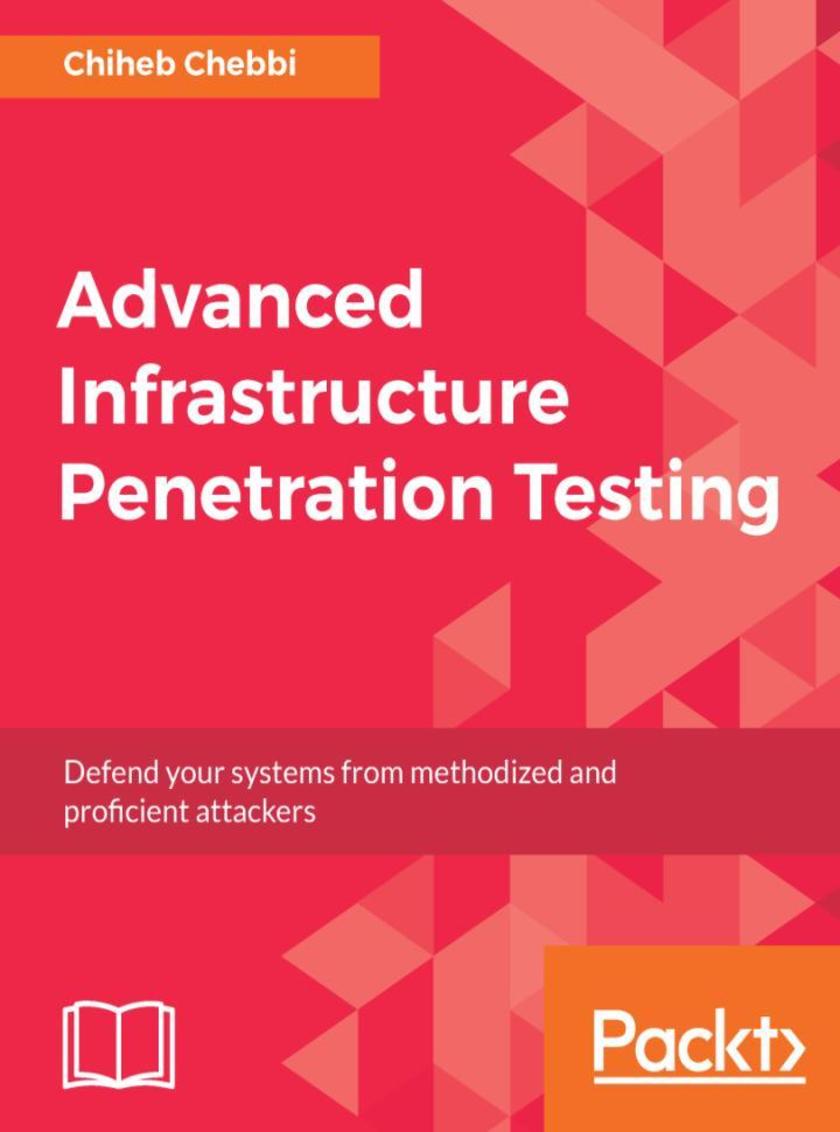
Advanced Infrastructure Penetration Testing
¥81.74
A highly detailed guide to performing powerful attack vectors in many hands-on scenarios and defending significant security flaws in your company's infrastructure About This Book ? Advanced exploitation techniques to breach modern operating systems and complex network devices ? Learn about Docker breakouts, Active Directory delegation, and CRON jobs ? Practical use cases to deliver an intelligent endpoint-protected system Who This Book Is For If you are a system administrator, SOC analyst, penetration tester, or a network engineer and want to take your penetration testing skills and security knowledge to the next level, then this book is for you. Some prior experience with penetration testing tools and knowledge of Linux and Windows command-line syntax is beneficial. What You Will Learn ? Exposure to advanced infrastructure penetration testing techniques and methodologies ? Gain hands-on experience of penetration testing in Linux system vulnerabilities and memory exploitation ? Understand what it takes to break into enterprise networks ? Learn to secure the configuration management environment and continuous delivery pipeline ? Gain an understanding of how to exploit networks and IoT devices ? Discover real-world, post-exploitation techniques and countermeasures In Detail It has always been difficult to gain hands-on experience and a comprehensive understanding of advanced penetration testing techniques and vulnerability assessment and management. This book will be your one-stop solution to compromising complex network devices and modern operating systems. This book provides you with advanced penetration testing techniques that will help you exploit databases, web and application servers, switches or routers, Docker, VLAN, VoIP, and VPN. With this book, you will explore exploitation abilities such as offensive PowerShell tools and techniques, CI servers, database exploitation, Active Directory delegation, kernel exploits, cron jobs, VLAN hopping, and Docker breakouts. Moving on, this book will not only walk you through managing vulnerabilities, but will also teach you how to ensure endpoint protection. Toward the end of this book, you will also discover post-exploitation tips, tools, and methodologies to help your organization build an intelligent security system. By the end of this book, you will have mastered the skills and methodologies needed to breach infrastructures and provide complete endpoint protection for your system. Style and approach Your one-stop guide to mastering the skills and methodologies of breaching infrastructures and providing complete endpoint protection to your system.
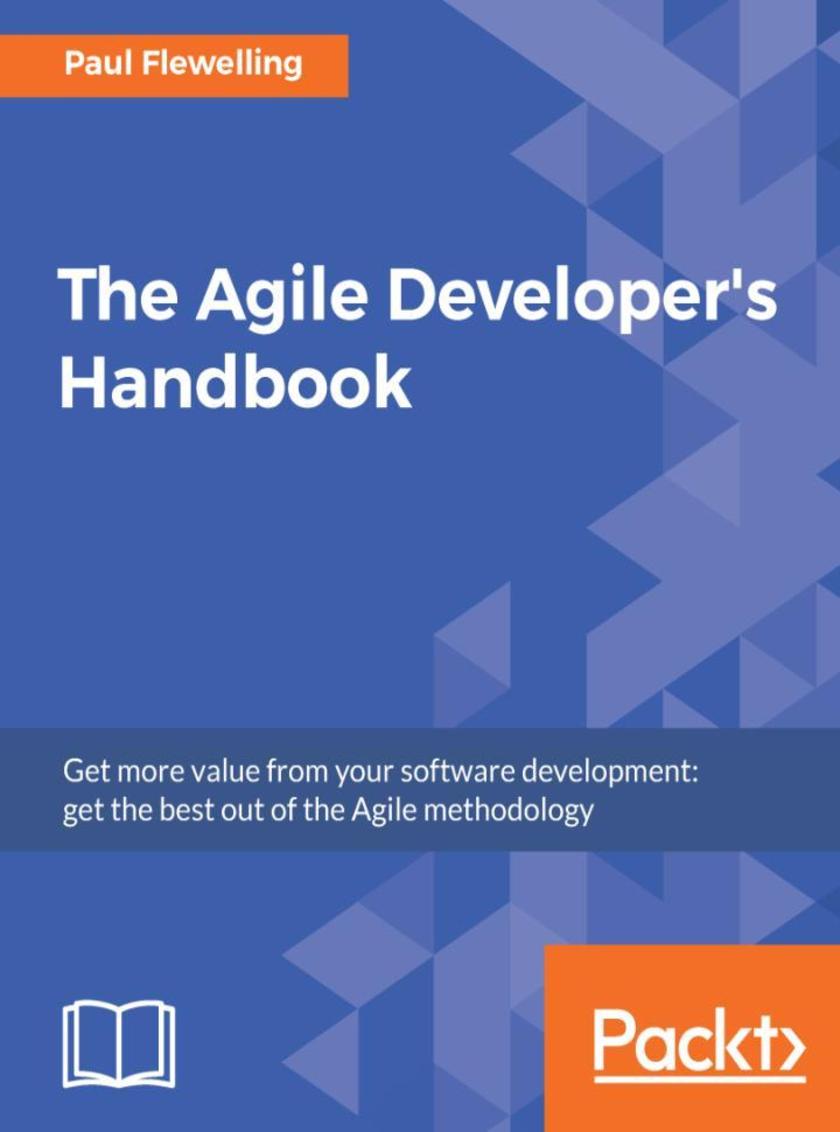
The Agile Developer's Handbook
¥73.02
A pragmatic companion guide to your Agile journey About This Book ? Make your team Agile by implementing industry-standard Agile techniques ? Assess scope, scale up efficiently ? Create the correct roles and identify the right candidates for your team ? Finish your projects faster and stay ahead of the curve Who This Book Is For If you’re a software developer or a project manager with little to no experience of Agile, but you want to efficiently implement it, this is the book for you. What You Will Learn ? Create a solid foundation that gives your team an Agile jumpstart ? Understand how to select and evolve practices to increase your team’s agility ? Use experiments to accelerate your team’s understanding ? Fine-tune your approach by incorporating aspects of Lean and Lean Startup ? Know how to foster an environment of continuous improvement and learning that will become self-sustaining In Detail This book will help you overcome the common challenges you’ll face when transforming your working practices from waterfall to Agile. Each chapter builds on the last, starting with easy-to-grasp ways to get going with Agile. Next you’ll see how to choose the right Agile framework for your organization. Moving on, you’ll implement systematic product delivery and measure and report progress with visualization. Then you’ll learn how to create high performing teams, develop people in Agile, manage in Agile, and perform distributed Agile and collaborative governance. At the end of the book, you’ll discover how Agile will help your company progressively deliver software to customers, increase customer satisfaction, and improve the level of efficiency in software development teams. Style and approach Think of this book like a manual, rather than a theoretical textbook. It’s packed full of visual ways to understand Agile, helpful tips to get you set up quickly, tried and tested solutions when challenges arise, and heaps of support to get the day-to-day tasks in Agile done. You’ll want to keep a copy on your desk, right next to your coffee cup.
Building Smart Drones with ESP8266 and Arduino
¥54.49
Leverage the WiFi chip to build exciting Quadcopters About This Book ? Learn to create a fully functional Drone with Arduino and ESP8266 and their modified versions of hardware. ? Enhance your drone's functionalities by implementing smart features. ? A project-based guide that will get you developing next-level drones to help you monitor a particular area with mobile-like devices. Who This Book Is For If you are a programmer or a DIY enthusiast and keen to create a fully functional drone with Arduino and ESP8266, then this book is for you. Basic skills in electronics and programming would be beneficial. This book is not for the beginners as it includes lots of ideas not detailed how you can do that. If you are a beginner, then you might get lost here. The prerequisites of the book include a good knowledge of Arduino, electronics, programming in C or C++ and lots of interest in creating things out of nothing. What You Will Learn ? Includes a number of projects that utilize different ESP8266 and Arduino capabilities, while interfacing with external hardware ? Covers electrical engineering and programming concepts, interfacing with the World through analog and digital sensors, communicating with a computer and other devices, and internet connectivity ? Control and fly your quadcopter, taking into account weather conditions ? Build a drone that can follow the user wherever he/she goes ? Build a mission-control drone and learn how to use it effectively ? Maintain your vehicle as much as possible and repair it whenever required In Detail With the use of drones, DIY projects have taken off. Programmers are rapidly moving from traditional application programming to developing exciting multi-utility projects. This book will teach you to build industry-level drones with Arduino and ESP8266 and their modified versions of hardware. With this book, you will explore techniques for leveraging the tiny WiFi chip to enhance your drone and control it over a mobile phone. This book will start with teaching you how to solve problems while building your own WiFi controlled Arduino based drone. You will also learn how to build a Quadcopter and a mission critical drone. Moving on you will learn how to build a prototype drone that will be given a mission to complete which it will do it itself. You will also learn to build various exciting projects such as gliding and racing drones. By the end of this book you will learn how to maintain and troubleshoot your drone. By the end of this book, you will have learned to build drones using ESP8266 and Arduino and leverage their functionalities to the fullest. Style and approach This is an easy-to-follow guide with illustrations and technical de*ions to help you assemble your vehicle.
Extending OpenStack
¥73.02
Discover new opportunities to empower your private cloud by making the most of the OpenStack universe About This Book ? This practical guide teaches you how to extend the core functionalities of OpenStack ? Discover OpenStack's flexibility by writing custom applications and network plugins ? Deploy a containerized environment in OpenStack through a hands-on and example-driven approach Who This Book Is For This book is for system administrators, cloud architects, and developers who have experience working with OpenStack and are ready to step up and extend its functionalities. A good knowledge of basic OpenStack components is required. In addition, familiarity with Linux boxes and a good understanding of network and virtualization jargon is required. What You Will Learn ? Explore new incubated projects in the OpenStack ecosystem and see how they work ? Architect your OpenStack private cloud with extended features of the latest versions ? Consolidate OpenStack authentication in your large infrastructure to avoid complexity ? Find out how to expand your computing power in OpenStack on a large scale ? Reduce your OpenStack storage cost management by taking advantage of external tools ? Provide easy, on-demand, cloud-ready applications to developers using OpenStack in no time ? Enter the big data world and find out how to launch elastic jobs easily in OpenStack ? Boost your extended OpenStack private cloud performance through real-world scenarios In Detail OpenStack is a very popular cloud computing platform that has enabled several organizations during the last few years to successfully implement their Infrastructure as a Service (IaaS) platforms. This book will guide you through new features of the latest OpenStack releases and how to bring them into production straightaway in an agile way. It starts by showing you how to expand your current OpenStack setup and how to approach your next OpenStack Data Center generation deployment. You will discover how to extend your storage and network capacity and also take advantage of containerization technology such as Docker and Kubernetes in OpenStack. Additionally, you'll explore the power of big data as a Service terminology implemented in OpenStack by integrating the Sahara project. This book will teach you how to build Hadoop clusters and launch jobs in a very simple way. Then you'll automate and deploy applications on top of OpenStack. You will discover how to write your own plugin in the Murano project. The final part of the book will go through best practices for security such as identity, access management, and authentication exposed by Keystone in OpenStack. By the end of this book, you will be ready to extend and customize your private cloud based on your requirements. Style and approach This guide is filled with practical scenarios on how to extend and enhance OpenStack's functionality. We will be covering various installation and configuration platforms along with a focus on plugins and extending OpenStack's core functionalities.
Fixing Bad UX Designs
¥73.02
A practical guide filled with case studies and easy solutions to solve the most common user experience issues About This Book ? Understand and fix the pain points of a bad UX design to ensure greater customer satisfaction. ? Correct UX issues at various stages of a UX Design with the help of different methodologies for fixing bad UXs ? See best practices and established principles in UX with case studies illustrating these practices and principles Who This Book Is For This book is for anyone confronted with a poorly designed UX. It is ideal for UX professionals who want to solve problems with existing UX designs, and UX designers who want to enhance their designs or analyze and rectify where they went wrong. What You Will Learn ? Learn about ROI and metrics in UX ? Understand the importance of getting stakeholders involved ? Learn through real cases how to fix bad UX ? Identify and fix UX issues using different methodologies ? Learn how to turn insights and finding into practical UX solutions ? Learn to validate, test and measure the UX solutions implemented ? Learn about UX refactoring In Detail Have your web applications been experiencing more hits and less conversions? Are bad designs consuming your time and money? This book is the answer to these problems. With intuitive case studies, you’ll learn to simplify, fix, and enhance some common, real-world application designs. You’ll look at the common issues of simplicity, navigation, appearance, maintenance, and many more. The challenge that most UX designers face is to ensure that the UX is user-friendly. In this book, we address this with individual case studies starting with some common UX applications and then move on to complex applications. Each case study will help you understand the issues faced by a bad UX and teach you to break it down and fix these problems. As we progress, you’ll learn about the information architecture, usability testing, iteration, UX refactoring, and many other related features with the help of various case studies. You’ll also learn some interesting UX design tools with the projects covered in the book. By the end of the book, you’ll be armed with the knowledge to fix bad UX designs and to ensure great customer satisfaction for your applications. Style and approach This book takes a practical approach, with case studies, best practices, and practical solutions to bad design
Deep Learning By Example
¥73.02
Grasp the fundamental concepts of deep learning using Tensorflow in a hands-on manner About This Book ? Get a first-hand experience of the deep learning concepts and techniques with this easy-to-follow guide ? Train different types of neural networks using Tensorflow for real-world problems in language processing, computer vision, transfer learning, and more ? Designed for those who believe in the concept of 'learn by doing', this book is a perfect blend of theory and code examples Who This Book Is For This book targets data scientists and machine learning developers who wish to get started with deep learning. If you know what deep learning is but are not quite sure of how to use it, this book will help you as well. An understanding of statistics and data science concepts is required. Some familiarity with Python programming will also be beneficial. What You Will Learn ? Understand the fundamentals of deep learning and how it is different from machine learning ? Get familiarized with Tensorflow, one of the most popular libraries for advanced machine learning ? Increase the predictive power of your model using feature engineering ? Understand the basics of deep learning by solving a digit classification problem of MNIST ? Demonstrate face generation based on the CelebA database, a promising application of generative models ? Apply deep learning to other domains like language modeling, sentiment analysis, and machine translation In Detail Deep learning is a popular subset of machine learning, and it allows you to build complex models that are faster and give more accurate predictions. This book is your companion to take your first steps into the world of deep learning, with hands-on examples to boost your understanding of the topic. This book starts with a quick overview of the essential concepts of data science and machine learning which are required to get started with deep learning. It introduces you to Tensorflow, the most widely used machine learning library for training deep learning models. You will then work on your first deep learning problem by training a deep feed-forward neural network for digit classification, and move on to tackle other real-world problems in computer vision, language processing, sentiment analysis, and more. Advanced deep learning models such as generative adversarial networks and their applications are also covered in this book. By the end of this book, you will have a solid understanding of all the essential concepts in deep learning. With the help of the examples and code provided in this book, you will be equipped to train your own deep learning models with more confidence. Style and approach A step-by-step guide filled with multiple examples to help you get started with data science and deep learning.


