


 购物车
购物车 个人中心
个人中心
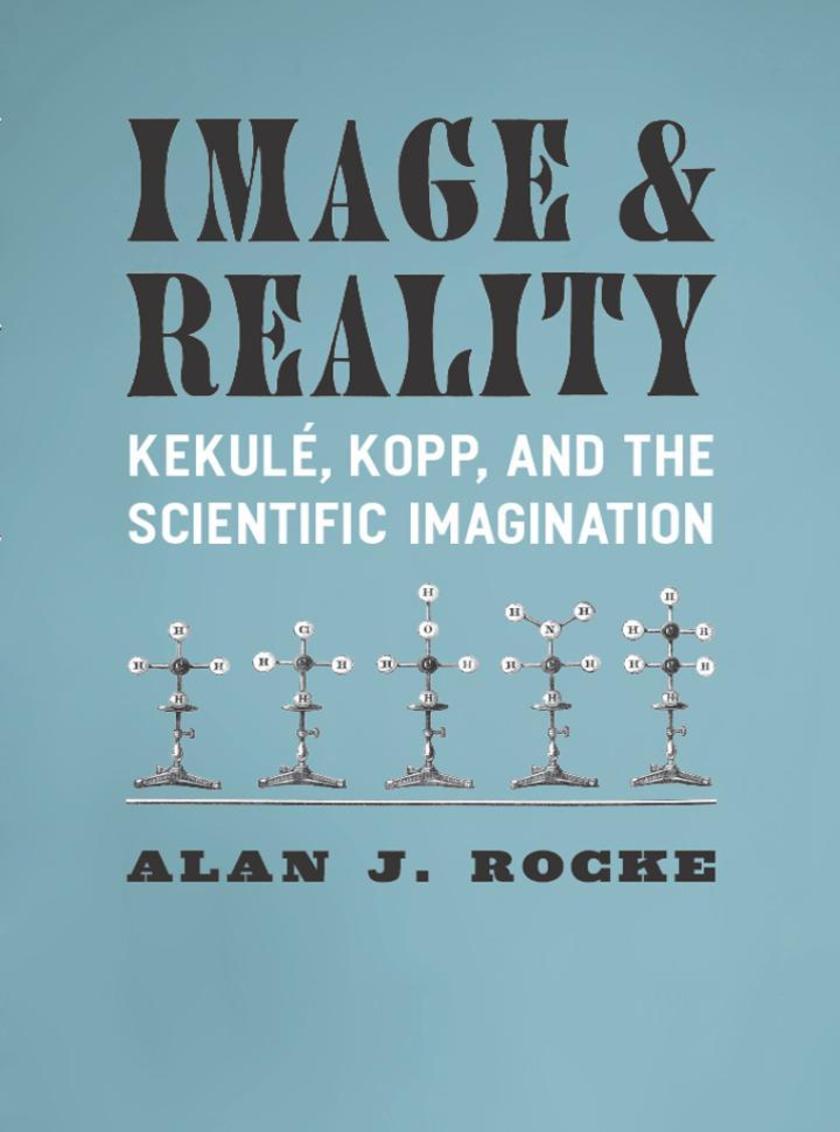
Image and Reality
¥447.34
Nineteenth-century chemists were faced with a particular problem: how to depict the atoms and molecules that are beyond the direct reach of our bodily senses. In visualizing this microworld, these scientists were the first to move beyond high-level philosophical speculations regarding the unseen. In Image and Reality, Alan Rocke focuses on the community of organic chemists in Germany to provide the basis for a fuller understanding of the nature of scientific creativity.?Arguing that visual mental images regularly assisted many of these scientists in thinking through old problems and new possibilities, Rocke uses a variety of sources, including private correspondence, diagrams and illustrations, scientific papers, and public statements, to investigate their ability to not only imagine the invisibly tiny atoms and molecules upon which they operated daily, but to build detailed and empirically based pictures of how all of the atoms in complicated molecules were interconnected. These portrayals of "e;chemical structures,"e; both as mental images and as paper tools, gradually became an accepted part of science during these years and are now regarded as one of the central defining features of chemistry.In telling this fascinating story in a manner accessible to the lay reader, Rocke also suggests that imagistic thinking is often at the heart of creative thinking in all fields.Image and Reality is the first book in the Synthesis series, a series in the history of chemistry, broadly construed, edited by Angela N. H. Creager, John E. Lesch, Stuart W. Leslie, Lawrence M. Principe, Alan Rocke, E.C. Spary, and Audra J. Wolfe, in partnership with the Chemical Heritage Foundation.
Unrepentant Renaissance
¥447.34
Who during the Renaissance could have dissented from the values of reason and restraint, patience and humility, rejection of the worldly and the physicalThese widely articulated values were part of the inherited Christian tradition and were reinforced by key elements in the Renaissance, especially the revival of Stoicism and Platonism. This book is devoted to those who did dissent from them.?Richard Strier reveals that many long-recognized major texts did question the most traditional values and uncovers a Renaissance far more bumptious and affirmative than much recent scholarship has allowed.The Unrepentant Renaissance counters the prevalent view of the period as dominated by the regulation of bodies and passions, aiming to reclaim the Renaissance as an era happily churning with surprising, worldly, and self-assertive energies. Reviving the perspective of Jacob Burckhardt and Nietzsche, Strier provides fresh and uninhibited readings of texts by Petrarch, More, Shakespeare, Ignatius Loyola, Montaigne, Descartes, and Milton. Strier's lively argument will stir debate throughout the field of Renaissance studies.
Not without Madness
¥488.54
Opera often seems to arouse either irrational enthusiasm or visceral dislike. Such madness, as Goethe wrote, is indispensable in all theater, and yet in practice, sentiment and passion must be balanced by sense and reason. Exploring this tension between madness and reason, Not without Madness presents new analytical approaches to thinking about eighteenth- and nineteenth-century opera through the lenses of its historical and cultural contexts.?In these twelve essays, Fabrizio Della Seta explores the concept of opera as a dramatic event and an essential moment in the history of theater. Examining the meaning of opera and the devices that produce and transmit this meaning, he looks at the complex verbal, musical, and scenic mechanisms in parts of La sonnambula, Ernani, Aida, Le nozze di Figaro, Macbeth, and Il trovatore. He argues that approaches to the study of opera must address performance, interpretation, composition, reception, and cultural ramifications. Purely musical analysis does not make sense unless we take into account music's dramatic function. Containing many essays available for the first time in English, Not without Madness bridges recent divisions in opera studies and will attract musicologists, musicians, and opera lovers alike.

Sciences of the Soul
¥529.74
The Sciences of the Soul is the first attempt to explain the development of the disciplinary conception of psychology from its appearance in the late sixteenth century to its redefinition at the end of the seventeenth and its emergence as an institutionalized field in the eighteenth. Fernando Vidal traces this development through university courses and textbooks, encyclopedias, and nonacademic books, as well as through various histories of psychology.?Vidal reveals that psychology existed before the eighteenth century essentially as a "e;physics of the soul,"e; and it belonged as much to natural philosophy as to Christian anthropology. It remained so until the eighteenth century, when the "e;science of the soul"e; became the "e;science of the mind."e; Vidal demonstrates that this Enlightenment refashioning took place within a Christian framework, and he explores how the preservation of the Christian idea of the soul was essential to the development of the science. Not only were most psychologists convinced that an empirical science of the soul was compatible with Christian faith; their perception that psychology preserved the soul also helped to elevate its rank as an empirical science. Broad-ranging and impeccably researched, this book will be of wide importance in the history and philosophy of psychology, the history of the human sciences more generally, and in the social and intellectual history of eighteenth-century Europe.
Political Economy of Pipelines
¥576.83
With global demand for energy poised to increase by more than half in the next three decades, the supply of safe, reliable, and reasonably priced gas and oil will continue to be of fundamental importance to modern economies. Central to this supply are the pipelines that transport this energy. And while the fundamental economics of the major pipeline networks are the same, the differences in their ownership, commercial development, and operation can provide insight into the workings of market institutions in various nations.?Drawing on a century of the world's experience with gas and oil pipelines, this book illustrates the importance of economics in explaining the evolution of pipeline politics in various countries. It demonstrates that institutional differences influence ownership and regulation, while rents and consumer pricing depend on the size and diversity of existing markets, the depth of regulatory institutions, and the historical structure of the pipeline businesses themselves. The history of pipelines is also rife with social conflict, and Makholm explains how and when institutions in a variety of countries have controlled pipeline behavior-either through economic regulation or government ownership-in the public interest.
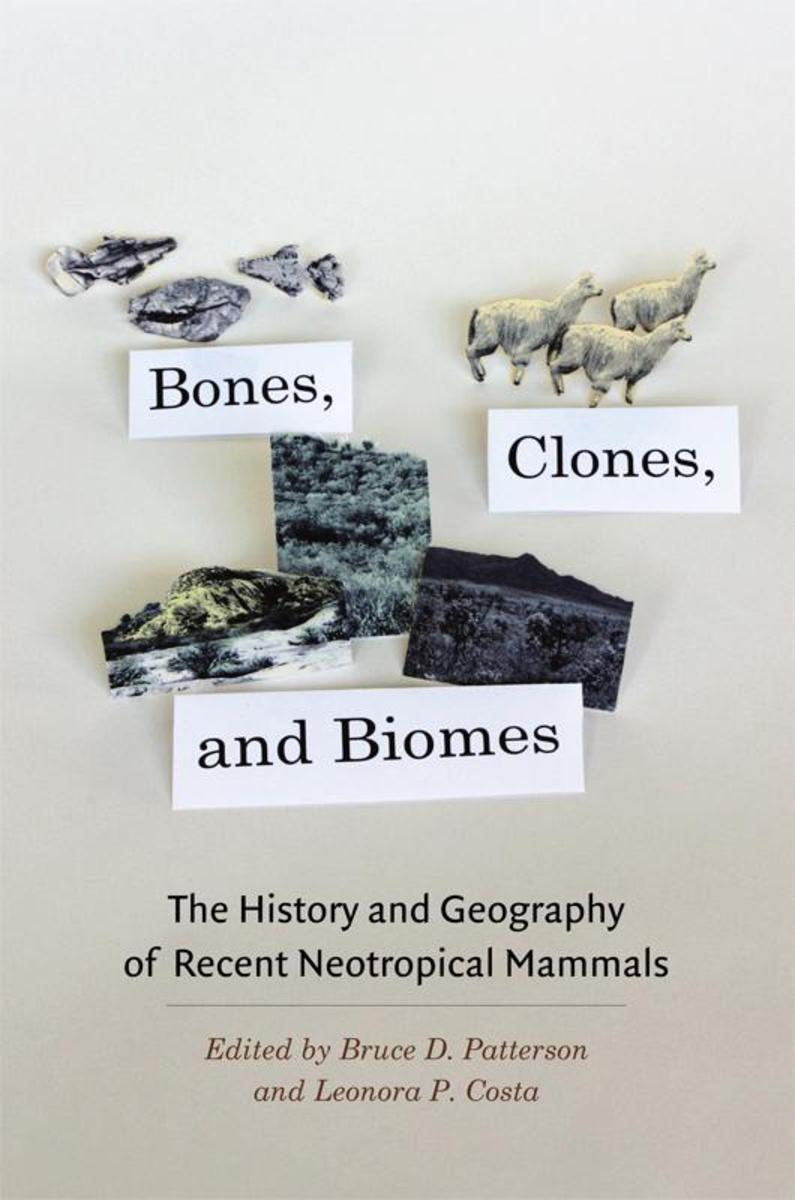
Bones, Clones, and Biomes
¥618.03
As explorers and scientists have known for decades, the Neotropics harbor a fantastic array of our planet's mammalian diversity, from capybaras and capuchins to maned wolves and mouse opossums to sloths and sakis. This biological bounty can be attributed partly to the striking diversity of Neotropical landscapes and climates and partly to a series of continental connections that permitted intermittent faunal exchanges with Africa, Antarctica, Australia, and North America. Thus, to comprehend the development of modern Neotropical mammal faunas requires not only mastery of the Neotropics' substantial diversity, but also knowledge of mammalian lineages and landscapes dating back to the Mesozoic.Bones, Clones, and Biomes offers just that-an exploration of the development and relationships of the modern mammal fauna through a series of studies that encompass the last 100 million years and both Central and South America. This work serves as a complement to more taxonomically driven works, providing for readers the long geologic and biogeographic contexts that undergird the abundance and diversity of Neotropical mammals. Rather than documenting diversity or distribution, this collection traverses the patterns that the distributions and relationships across mammal species convey, bringing together for the first time geology, paleobiology, systematics, mammalogy, and biogeography. Of critical importance is the book's utility for current conservation and management programs, part of a rapidly rising conservation paleobiology initiative.

Instructions for American Servicemen in Iraq during World War II
¥82.40
"e;American success or failure in Iraq may well depend on whether the Iraqis like American soldiers or not."e;?The U.S. military could certainly have used that bit of wisdom in 2003, as violence began to eclipse the Iraq War's early successes. Ironically, had the Army only looked in its own archives, they would have found it-that piece of advice is from a manual the U.S. War Department handed out to American servicemen posted in Iraq back in 1943.The advice in Instructions for American Servicemen in Iraq during World War II,presented here in a new facsimile edition, retains a surprising, even haunting, relevance in light of today's muddled efforts to win Iraqi hearts and minds. Designed to help American soldiers understand and cope with what was at the time an utterly unfamiliar culture-the manual explains how to pronounce the word Iraq, for instance-this brief, accessible handbookmixes do-and-don't-style tips ("e;Always respect the Moslem women."e; "e;Talk Arabic if you can to the people. No matter how badly you do it, they will like it."e;) with general observations on Iraqi history and society. The book's overall message still rings true-dramatically so-more than sixty years later: treat an Iraqi and his family with honor and respect, and you will have a strong ally; treat him with disrespect and you will create an unyielding enemy.With a foreword by Lieutenant Colonel John A. Nagl reflecting on the manual's continuing applicability-and lamenting that it was unknown at the start of the invasion-this new edition of Instructions for American Servicemen in Iraq will be essential reading for anyone who cares about the future of Iraq and the fate of the American soldiers serving there.

Shareholder Democracies?
¥618.03
Understanding the challenges of corporate governance is central to our comprehension of the economic dynamics driving corporations today. Among the most important institutions in capitalism today, corporations and joint-stock companies had their origins in Europe during the seventeenth and eighteenth centuries. And as they became more prevalent, the issue of internal governance became more pressing. At stake-and very much contested-was the allocation of rights and obligations among shareholders, directors, and managers.This comprehensive account of the development of corporate governance in Britain and Ireland during its earliest stages highlights the role of political factors in shaping the evolution of corporate governance as well as the important debates that arose about the division of authority and responsibility. Political and economic institutions confronted similar issues, including the need for transparency and accountability in decision making and the roles of electors and the elected, and this book emphasizes how political institutions-from election procedures to assemblies to annual reporting-therefore provided apt models upon which companies drew readily. Filling a gap in the literature on early corporate economy, this book provides insight into the origins of many ongoing modern debates.

Making Modern Japanese-Style Painting
¥535.63
The Western discovery of Japanese paintings at nineteenth-century world's fairs and export shops catapulted Japanese art to new levels of international popularity. With that popularity, however, came criticism, as Western writers began to lament a perceived end to pure Japanese art and a rise in westernized cultural hybrids. The Japanese response: nihonga, a traditional style of painting that reframed existing techniques to distinguish them from Western artistic conventions.?Making Modern Japanese-Style Painting?explores the visual characteristics and social functions of nihonga and traces its relationship to the past, its viewers, and emerging notions of the modern Japanese state.Chelsea Foxwell sheds light on interlinked trends in Japanese nationalist discourse, government art policy, American and European commentary on Japanese art, and the demands of export. The seminal artist Kano Hogai (1828-88) is one telling example: originally a painter for the shogun, his art eventually evolved into novel, eerie images meant to satisfy both Japanese and Western audiences. Rather than simply absorbing Western approaches, nihonga as practiced by Hogai and others broke with pre-Meiji painting even as it worked to neutralize the rupture.By arguing that fundamental changes to audience expectations led to the emergence of nihonga-a traditional interpretation of Japanese art for a contemporary, international market-Making Modern Japanese-Style Painting?offers a fresh look at an important aspect of Japan's development into a modern nation.
Studies on the Abuse and Decline of Reason
¥529.74
Studies on the Abuse and Decline of Reason is a series of fascinating essays on the study of social phenomena. How to best and most accurately study social interactions has long been debated intensely, and there are two main approaches: the positivists, who ignore intent and belief and draw on methods based in the sciences; and the nonpositivists, who argue that opinions and ideas drive action and are central to understanding social behavior. F. A. Hayek's opposition to the positivists and their claims to scientific rigor and certainty in the study of human behavior is a running theme of this important book.Hayek argues that the vast number of elements whose interactions create social structures and institutions make it unlikely that social science can predict precise outcomes. Instead, he contends, we should strive to simply understand the principles by which phenomena are produced. For Hayek this modesty of aspirations went hand in hand with his concern over widespread enthusiasm for economic planning. As a result, these essays are relevant to ongoing debates within the social sciences and to discussion about the role government can and should play in the economy.

Large Carnivore Conservation
¥494.42
Drawing on six case studies of wolf, grizzly bear, and mountain lion conservation in habitats stretching from the Yukon to Arizona, Large Carnivore Conservation argues that conserving and coexisting with large carnivores is as much a problem of people and governance-of reconciling diverse and sometimes conflicting values, perspectives, and organizations, and of effective decision making in the public sphere-as it is a problem of animal ecology and behavior. By adopting an integrative approach, editors Susan G. Clark and Murray B. Rutherford seek to examine and understand the interrelated development of conservation science, law, and policy, as well as how these forces play out in courts, other public institutions, and the field.In combining real-world examples with discussions of conservation and policy theory, Large Carnivore Conservation not only explains how traditional management approaches have failed to meet the needs of all parties, but also highlights examples of innovative, successful strategies and provides practical recommendations for improving future conservation efforts.

Population Fluctuations in Rodents
¥488.54
How did rodent outbreaks in Germany help to end World War IWhat caused the destructive outbreak of rodents in Oregon and California in the late 1950s, the large population outbreak of lemmings in Scandinavia in 2010, and the great abundance of field mice in Scotland in the spring of 2011Population fluctuations, or outbreaks, of rodents constitute one of the classic problems of animal ecology, and in Population Fluctuations in Rodents, Charles J. Krebs sifts through the last eighty years of research to draw out exactly what we know about rodent outbreaks and what should be the agenda for future research.?Krebs has synthesized the research in this area, focusing mainly on the voles and lemmings of the Northern Hemisphere-his primary area of expertise-but also referring to the literature on rats and mice. He covers the patterns of changes in reproduction and mortality and the mechanisms that cause these changes-including predation, disease, food shortage, and social behavior-and discusses how landscapes can affect population changes, methodically presenting the hypotheses related to each topic before determining whether or not the data supports them. He ends on an expansive note, by turning his gaze outward and discussing how the research on rodent populations can apply to other terrestrial mammals. Geared toward advanced undergraduate students, graduate students, and practicing ecologists interested in rodent population studies, this book will also appeal to researchers seeking to manage rodent populations and to understand outbreaks in both natural and urban settings-or, conversely, to protect endangered species.
Regimens of the Mind
¥488.54
In Regimens of the Mind, Sorana Corneanu proposes a new approach to the epistemological and methodological doctrines of the leading experimental philosophers of seventeenth-century England, an approach that considers their often overlooked moral, psychological, and theological elements. Corneanu focuses on the views about the pursuit of knowledge in the writings of Robert Boyle and John Locke, as well as in those of several of their influences, including Francis Bacon and the early Royal Society virtuosi. She argues that their experimental programs of inquiry fulfill the role of regimens for curing, ordering, and educating the mind toward an ethical purpose, an idea she tracks back to the ancient tradition of cultura animi. Corneanu traces this idea through its early modern revival and illustrates how it organizes the experimental philosophers' reflections on the discipline of judgment, the study of nature, and the study of Scripture. It is through this lens, the author suggests, that the core features of the early modern English experimental philosophy-including its defense of experience, its epistemic modesty, its communal nature, and its pursuit of "e;objectivity"e;-are best understood.
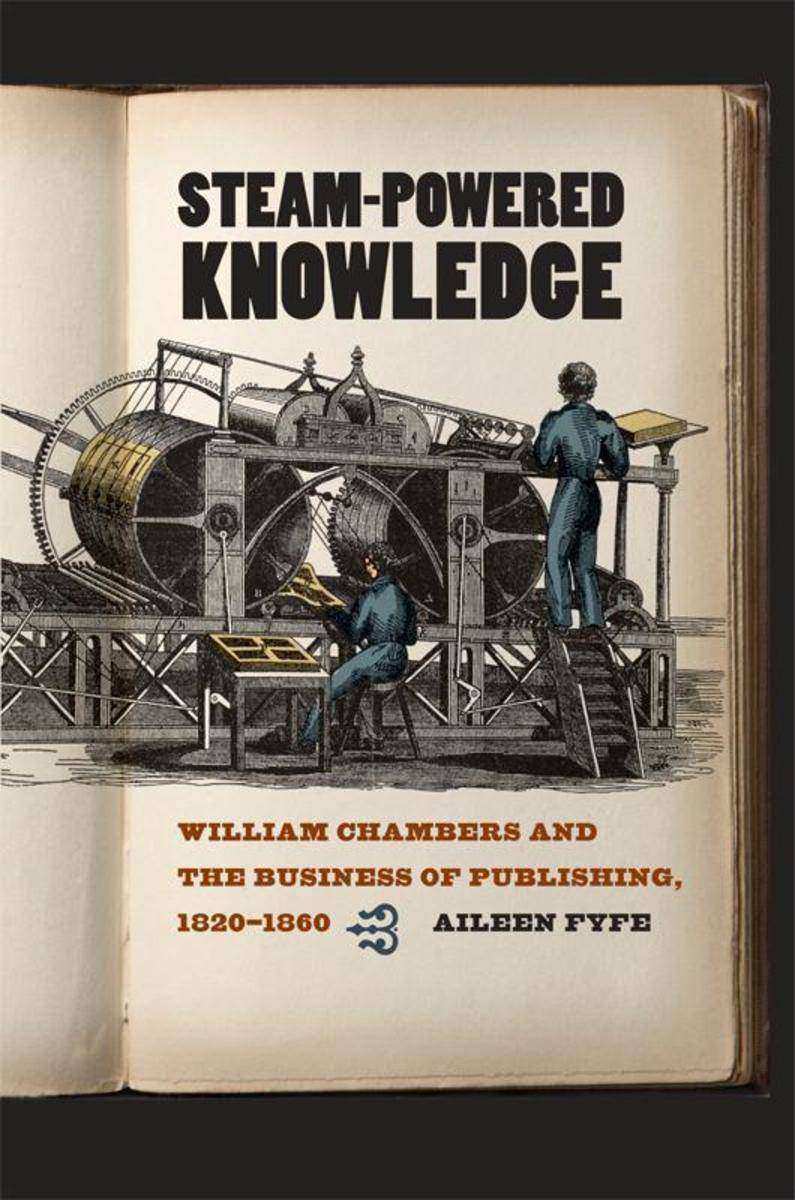
Steam-Powered Knowledge
¥488.54
With the overwhelming amount of new information that bombards us each day, it is perhaps difficult to imagine a time when the widespread availability of the printed word was a novelty. In early nineteenth-century Britain, print was not novel-Gutenberg's printing press had been around for nearly four centuries-but printed matter was still a rare and relatively expensive luxury. All this changed, however, as publishers began employing new technologies to astounding effect, mass-producing instructive and educational books and magazines and revolutionizing how knowledge was disseminated to the general public.In Steam-Powered Knowledge, Aileen Fyfe explores the activities of William Chambers and the W. & R. Chambers publishing firm during its formative years, documenting for the first time how new technologies were integrated into existing business systems. Chambers was one of the first publishers to abandon traditional skills associated with hand printing, instead favoring the latest innovations in printing processes and machinery: machine-made paper, stereotyping, and, especially, printing machines driven by steam power. The mid-nineteenth century also witnessed dramatic advances in transportation, and Chambers used proliferating railway networks and steamship routes to speed up communication and distribution. As a result, his high-tech publishing firm became an exemplar of commercial success by 1850 and outlived all of its rivals in the business of cheap instructive print. Fyfe follows Chambers's journey from small-time bookseller and self-trained hand-press printer to wealthy and successful publisher of popular educational books on both sides of the Atlantic, demonstrating along the way the profound effects of his and his fellow publishers' willingness, or unwillingness, to incorporate these technological innovations into their businesses.
Enduring Importance of Leo Strauss
¥453.22
The Enduring Importance of Leo Strauss takes on the crucial task of separating what is truly important in the work of Leo Strauss from the ephemeral politics associated with his school. Laurence Lampert focuses on exotericism: the use of artful rhetoric to simultaneously communicate a socially responsible message to the public at large and a more radical message of philosophic truth to a smaller, more intellectually inclined audience. Largely forgotten after the Enlightenment, exotericism, he shows, deeply informed Strauss both as a reader and as a philosophic writer-indeed, Lampert argues, Strauss learned from the finest practitioners of exoteric writing how to become one himself.Examining some of Strauss's most important books and essays through this exoteric lens, Lampert reevaluates not only Strauss but the philosophers-from Plato to Halevi to Nietzsche-with whom Strauss most deeply engaged. Ultimately Lampert shows that Strauss's famous distinction between ancient and modern thinkers is primarily rhetorical, one of the great examples of Strauss's exoteric craft. Celebrating Strauss's achievements while recognizing one main shortcoming-unlike Nietzsche, he failed to appreciate the ramifications of modern natural science for philosophy and its public presentation-Lampert illuminates Strauss as having even greater philosophic importance than we have thought before.?

Radium and the Secret of Life
¥453.22
Before the hydrogen bomb indelibly associated radioactivity with death, many chemists, physicians, botanists, and geneticists believed that radium might hold the secret to life. Physicists and chemists early on described the wondrous new element in lifelike terms such as "e;decay"e; and "e;half-life,"e; and made frequent references to the "e;natural selection"e; and "e;evolution"e; of the elements. Meanwhile, biologists of the period used radium in experiments aimed at elucidating some of the most basic phenomena of life, including metabolism and mutation.From the creation of half-living microbes in the test tube to charting the earliest histories of genetic engineering, Radium and the Secret of Life highlights previously unknown interconnections between the history of the early radioactive sciences and the sciences of heredity. Equating the transmutation of radium with the biological transmutation of living species, biologists saw in metabolism and mutation properties that reminded them of the new element. These initially provocative metaphoric links between radium and life proved remarkably productive and ultimately led to key biological insights into the origin of life, the nature of heredity, and the structure of the gene. Radium and the Secret of Life recovers a forgotten history of the connections between radioactivity and the life sciences that existed long before the dawn of molecular biology.
Feast for the Eyes
¥453.22
To read accounts of late medieval banquets is to enter a fantastical world where live lions guard nude statues, gilded stags burst into song, and musicians play from within pies. We can almost hear the clock sound from within a glass castle, taste the fire-breathing roast boar, and smell the rose water cascading in a miniature fountain. Such vivid works of art and performance required collaboration among artists in many fields, as well as the participation of the audience.A Feast for the Eyes?is the first book-length study of the court banquets of northwestern Europe in the fourteenth and fifteenth centuries. Christina Normore draws on an array of artworks, archival documents, chroniclers' accounts, and cookbooks to re-create these events and reassess the late medieval visual culture in which banquets were staged. Feast participants, she shows, developed sophisticated ways of appreciating artistic skill and attending to their own processes of perception, thereby forging a court culture that delighted in the exercise of fine aesthetic judgment.Challenging modern assumptions about the nature of artistic production and reception,?A Feast for the Eyes?yields fresh insight into the long history of multimedia work and the complex relationships between spectacle and spectators.
Preserving the Spell
¥453.22
Fairy tales are supposed to be magical, surprising, and exhilarating, an enchanting counterpoint to everyday life that nonetheless helps us understand and deal with the anxieties of that life. Today, however, fairy tales are far from marvelous-in the hands of Hollywood, they have been stripped of their power, offering little but formulaic narratives and tame surprises.?If we want to rediscover the power of fairy tales-as Armando Maggi thinks we should-we need to discover a new mythic lens, a new way of approaching and understanding, and thus re-creating, the transformative potential of these stories. In Preserving the Spell, Maggi argues that the first step is to understand the history of the various traditions of oral and written narrative that together created the fairy tales we know today. He begins his exploration with the ur-text of European fairy tales, Giambattista Basile's The Tale of Tales, then traces its path through later Italian, French, English, and German traditions, with particular emphasis on the Grimm Brothers' adaptations of the tales, which are included in the first-ever English translation in an appendix. Carrying his story into the twentieth century, Maggi mounts a powerful argument for freeing fairy tales from their bland contemporary forms, and reinvigorating our belief that we still can find new, powerfully transformative ways of telling these stories.

Powers of Pure Reason
¥453.22
The Critique of Pure Reason-Kant's First Critique-is one of the most studied texts in intellectual history, but as Alfredo Ferrarin points out in this radically original book, most of that study has focused only on very select parts. Likewise, Kant's oeuvre as a whole has been compartmentalized, the three Critiques held in rigid isolation from one another. Working against the standard reading of Kant that such compartmentalization has produced,?The Powers of Pure Reason?explores forgotten parts of the First Critique in order to find an exciting, new, and ultimately central set of concerns by which to read all of Kant's works. ?Ferrarin blows the dust off of two egregiously overlooked sections of the First Critique-the Transcendental Dialectic and the Doctrine of Method. There he discovers what he argues is the Critique's greatest achievement: a conception of the unity of reason and an exploration of the powers it has to reach beyond itself and legislate over the world. With this in mind, Ferrarin dismantles the common vision of Kant as a philosopher writing separately on epistemology, ethics, and aesthetics and natural teleology, showing that the three Critiques are united by this underlying theme: the autonomy and teleology of reason, its power and ends. The result is a refreshing new view of Kant, and of reason itself.
Southern Stalemate
¥447.34
In 1959, Virginia's Prince Edward County closed its public schools rather than obey a court order to desegregate. For five years, black children were left to fend for themselves while the courts decided if the county could continue to deny its citizens public education. Investigating this remarkable and nearly forgotten story of local, state, and federal political confrontation, Christopher Bonastia recounts the test of wills that pitted resolute African Americans against equally steadfast white segregationists in a battle over the future of public education in America.?Beginning in 1951 when black high school students protested unequal facilities and continuing through the return of whites to public schools in the 1970s and 1980s, Bonastia describes the struggle over education during the civil rights era and the human suffering that came with it, as well as the inspiring determination of black residents to see justice served. Artfully exploring the lessons of the Prince Edward saga, Southern Stalemate unearths new insights about the evolution of modern conservatism and the politics of race in America.
Living Liberalism
¥447.34
In the mid-Victorian era, liberalism was a practical politics: it had a party, it informed legislation, and it had adherents who identified with and expressed it as opinion. It was also the first British political movement to depend more on people than property, and on opinion rather than interest. But how would these subjects of liberal politics actually live liberalism?To answer this question, Elaine Hadley focuses on the key concept of individuation-how it is embodied in politics and daily life and how it is expressed through opinion, discussion and sincerity.These are concerns that have been absent from commentary on the liberal subject. Living Liberalism argues that the properties of liberalism-citizenship, the vote, the candidate, and reform, among others-were developed in response to a chaotic and antagonistic world. In exploring how political liberalism imagined its impact on Victorian society, Hadley reveals an entirely new and unexpected prehistory of our modern liberal politics. A major revisionist account that alters our sense of the trajectory of liberalism, Living Liberalism revises our understanding of the presumption of the liberal subject.


