


 购物车
 个人中心

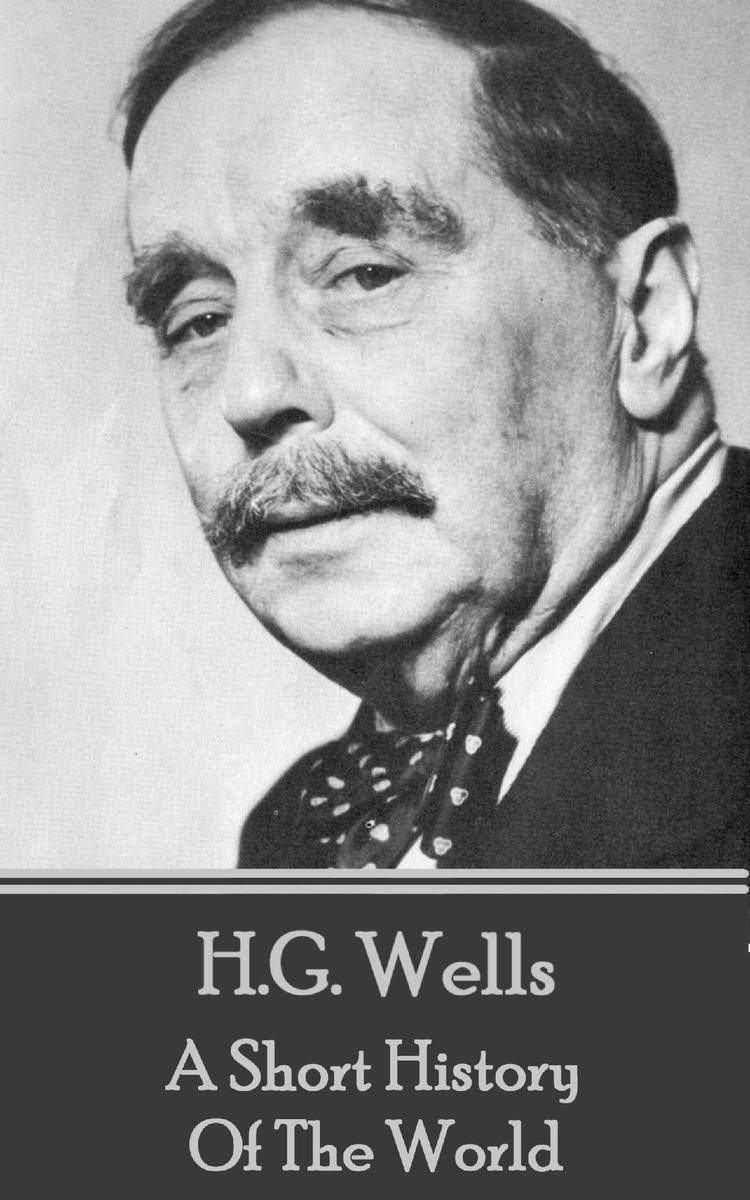
Short History of the World
¥44.65
Herbert George Wells was born on September 21st, 1866 at Atlas House, 46 High Street, Bromley, Kent. He was the youngest of four siblings and his family affectionately knew him as 'Bertie'. The first few years of his childhood were spent fairly quietly, and Wells didn't display much literary interest until, in 1874, he accidentally broke his leg and was left to recover in bed, largely entertained by the library books his father regularly brought him. Through these Wells found he could escape the boredom and misery of his bed and convalescence by exploring the new worlds he encountered in these books. From these humble beginnings began a career that was, after several delays, to be seen as one of the most brilliant of modern English writers. Able to write comfortably in a number of genres he was especially applauded for his science fiction works such as The Time Machine and War of the Worlds but his forays into the social conditions of the times, with classics such as Kipps, were almost as commercially successful. His short stories are miniature masterpieces many of which bring new and incredible ideas of science fiction to the edge of present day science fact. Wells also received four nominations for the Nobel Prize in Literature. Despite a strong and lasting second marriage his affairs with other women also brought the complications of fathering other children. His writings and work against fascism, as well as the promotion of socialism, brought him into increasing doubts with and opposition to religion. His writings on what the world could be in works, such as A Modern Utopia, are thought provoking as well as being plausible, especially when viewed from the distressing times they were written in. His diabetic condition pushed him to create what is now the largest Diabetes charity in the United Kingdom. Wells even found the time to run twice for Parliament. It was a long, distinguished and powerfully successful career by the time he died, aged 79, on August 13th, 1946.
Earl of Essex - 'In hour malignant, to o'erturn the state''
¥14.03
Henry Jones was born at Beaulieu, near Drogheda, County Louth, Ireland in 1721. His working life began when he was apprenticed to a bricklayer. Jones, however, was keen to better himself and studied hard in his private time. He fashioned some complimentary verses, addressed to the corporation of Drogheda and together with some lines 'On Mr. Pope's Death', managed to attract the attention of Lord-chief-justice Singleton, who lived at Beaulieu.In 1745 he obtained employment at the parliament house at Dublin. Jones, used the position to promote his literary talents and celebrated the arrival of Lord Chesterfield as lord-lieutenant of Ireland in a poem that was then presented to Chesterfield by Singleton. Chesterfield asked Jones to accompany him on his return to London in 1748. There, he and his friends helped Jones to publish, by subscription, 'Poems on Several Occasions' in 1749, which delivered a handsome profit for the young poet. Jones is though more noted as a dramatist and that, primarily, is due to his tragedy, 'The Earl of Essex' which he completed in 1752. Chesterfield introduced both the play and Jones to Colley Cibber, the Poet Laureate, who then introduced Jones to the manager of Covent Garden Theatre. Cibber would later attempt to secure the laureateship for Jones after his own death.'The Earl of Essex', after being revised by Chesterfield and Cibber, was premiered at Covent Garden on 21st Feb. 1753, and played for seventeen sold-out nights. It was a triumph, and was equally well received in Dublin and then later in the provinces. It brought Jones over GBP500, a large sum even by today's standards. The play was printed soon after its production, and eventually sold through four editions.The success, unfortunately, was to be the ruin of Jones. His drunken habits, indolence, raw manners, and harshly arrogant temper appalled most of his patrons who soon withdrew their support. However, he seemed adept at keeping on good terms with Chesterfield for some years longer, but at length even he gave up on the relationship when Jones borrowed money from his servant. Jones did continue to write and had made progress on a tragedy entitled 'Harold,' and, on that thin security, managed to raise money as an advance from booksellers. He was rather more successful in his revelries with the acting profession. Jones continued to be on friendly terms with many of the leading actors although in his often drunk state he would harangue the more minor actors as 'parrots', but he repaid them with puffs and panegyrics. His charm and ease with a few lines were valuable commodities.Whenever he was an inmate of sponging-houses he contrived to flatter any bailiff's daughter or wife with verses on their beauty or talents, and, in the process, secured himself more comfortable quarters than he perhaps deserved. Henry Jones died in the parish workhouse in April 1770.After his death, Reddish, the actor of Drury Lane, acquired Jones's manuscripts, which included 'Harold' and three acts of an unfinished tragedy, 'The Cave of Idra.' This was completed by Paul Hiffernan, and re-titled 'The Heroine of the Cave,' was produced for Reddish's benefit on 25th March 1774.
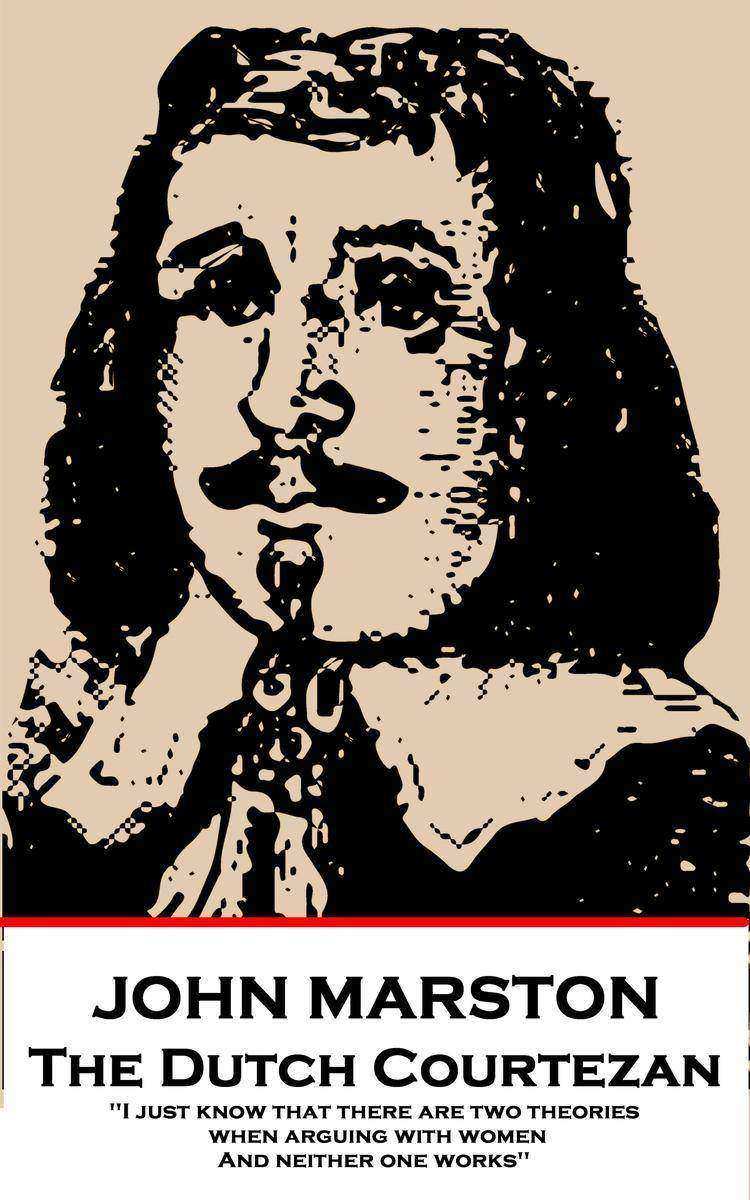
Dutch Courtezan
¥15.21
John Marston was born to John and Maria Marston nee Guarsi, and baptised on October 7th, 1576 at Wardington, Oxfordshire.Marston entered Brasenose College, Oxford in 1592 and earned his BA in 1594. By 1595, he was in London, living in the Middle Temple. His interests were in poetry and play writing, although his father's will of 1599 hopes that he would not further pursue such vanities.His brief career in literature began with the fashionable genres of erotic epyllion and satire; erotic plays for boy actors to be performed before educated young men and members of the inns of court.In 1598, he published 'The Metamorphosis of Pigmalion's Image and Certaine Satyres', a book of poetry. He also published 'The Scourge of Villanie', in 1598. 'Histriomastix' regarded as his first play was produced 1599. It's performance kicked off an episode in literary history known as the War of the Theatres; a literary feud between Marston, Jonson and Dekker that lasted until 1602.However, the playwrights were later reconciled; Marston wrote a prefatory poem for Jonson's 'Sejanus' in 1605 and dedicated 'The Malcontent' to him. Beyond this episode Marston's career continued to gather both strength, assets and followers. In 1603, he became a shareholder in the Children of Blackfriars company. He wrote and produced two plays with the company. The first was 'The Malcontent' in 1603, his most famous play. His second was 'The Dutch Courtesan', a satire on lust and hypocrisy, in 1604-5.In 1605, he worked with George Chapman and Ben Jonson on 'Eastward Ho', a satire of popular taste and the vain imaginings of wealth to be found in the colony of Virginia.Marston took the theatre world by surprise when he gave up writing plays in 1609 at the age of thirty-three. He sold his shares in the company of Blackfriars. His departure from the literary scene may have been because of further offence he gave to the king. The king suspended performances at Blackfriars and had Marston imprisoned.On 24th September 1609 he was made a deacon and them a priest on 24th December 1609. In October 1616, Marston was assigned the living of Christchurch, Hampshire.He died (accounts vary) on either the 24th or 25th June 1634 in London and was buried in the Middle Temple Church.
Diondray's Discovery
¥26.07
A hero’s journey starts with a single step—but what if that step rested on a broken foundation? When all you know about your world crumbles into ashes. When truth rests on a broken foundation. When what you believe to be true lies on a broken foundation. A book, a broken faith, a promise of hope. Never open a book without knowing what lies between its covers. When what you knew to be truth crumbles in the face of reality. When your heritage leads you to doubt all you’ve known. Diondray's Discovery is the first book in The Diondray's Chronicles that will transport you to the world of Kammbia, an imaginative and colorful world in which Diondray discovers his inner hero. If you can't get enough of rich new worlds, breathtaking adventure, introspective characters, and subtle social commentary, then you're ready to ride along with Diondray as he discovers his destiny.

Akosua and Osman
¥17.35
Akosua Annan is a confident and fiercely intelligent student at a posh girls' school in Cape Coast, Ghana. There she comes under the influence of a charismatic feminist teacher. Osman Said's background is very different. Upon the death of his parents, a police sergeant and an unschooled market trader, immigrants to the capital, Accra, from the impoverished north of the country, he is adopted by a retired school teacher, Hajia Zainab. After a spell as an apprentice in an auto workshop, he returns to school. There, finding the teaching inadequate, he becomes an avid reader and educates himself. Akosua and Osman are thrown together by chance in the course of a school visit to the slave dungeon at Cape Coast Castle. Their paths cross again as finalists in the national school debating competition where the subject is "The problem of poverty in Ghana is insoluble." They meet for the third time as students at the University of Ghana and as we leave them, it looks as if their relationship might develop into something permanent. This story won a Burt Award for African Literature in 2011. The judges commented: "This fascinating novel tells the story of how these two young people from disparate backgrounds are brought together as if by an unseen hand, in a process that teaches us about our history, our common humanity despite ethnic differences, the need to pursue our ambitions, the strength of human sexuality and the need for self-discipline, and, above all, the power of love."
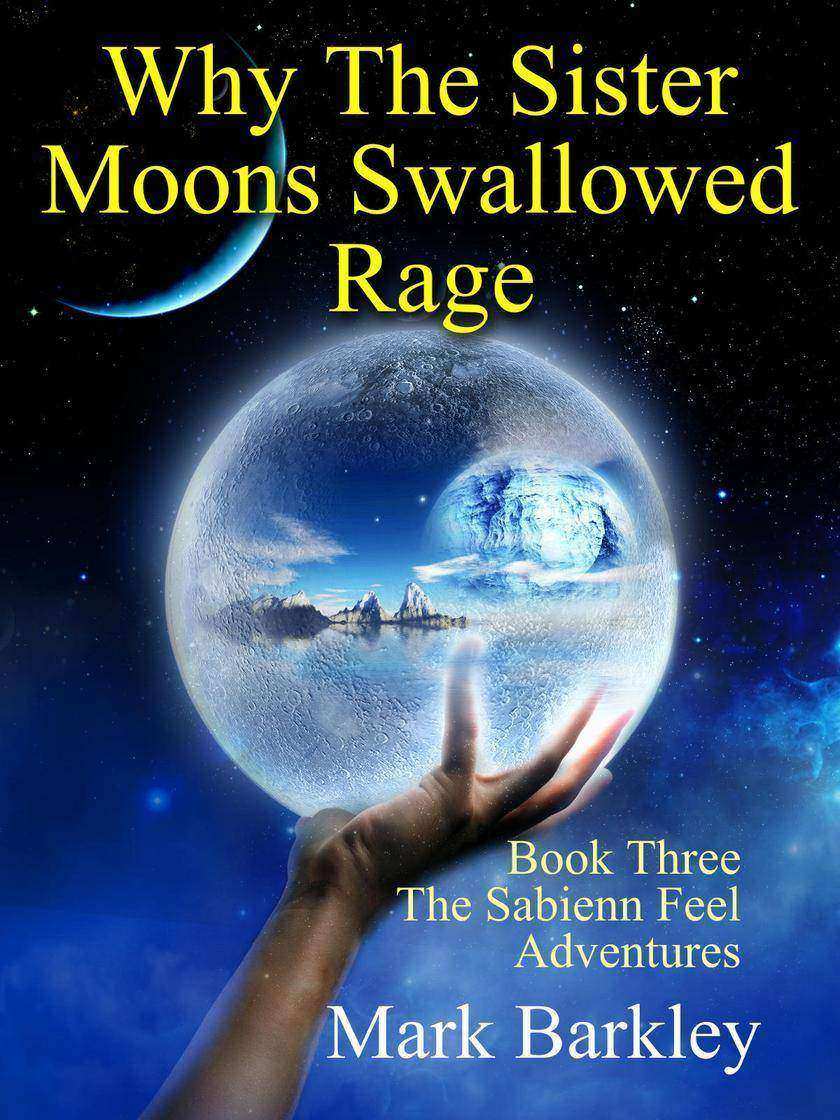
Why The Sister Moons Swallowed Rage: Book Three: The Sabienn Feel Adventures
¥26.07
In his quest, Sabienn Feel and his brothers venture to the country of Turrland, a land that his homeland of Hayddland has been at constant war with. His mission is to seek the occult stone, the Symbol of Military Success and make sure it never falls into the hands of his Father who wants only to push the planet into the abyss of war. In this journey, he needs to seek a book that was once owned by a mysterious monk. ? But what of Turrland? Is it to be invaded or not invaded? And how will he react when in his attempt to get answers, there is conflict within his group and a much loved brother dies? Why The Sister Moons Swallowed Rage is the third of twelve books in the Sabienn Feel Adventures.??? Interview with the Author Q – That’s three books down. How’s the journey unfolding? A - The characters are evolving. The more adversity they face the more they grow. There’s significant skin taken off Sabienn Feel in this book. His character is gaining wisdom. It was a pleasure to write this third book in the series. Q – Any news on the next book? The fourth in the series? A – I’m working with the tentative title, “The Two Men Who Kill to Be Carbon”. This is actually explained on the final page of “Why The Sister Moons Swallowed Rage” and also explains why the first book “When The Stone Shepherds Awaken” had to be so long. It is to be a study into the hunter and the hunted. Twins, two men, have been assigned to kill Sabienn and his brothers. One man is Sabienn’s best friend. The other has killed the woman he loved. It’s a mission of kill or be killed. Q - What inspired you to write?The Sabienn Feel Adventures? A – I’ve always loved the idea of the epic journey. I’m acquainted with the book?Journey to the West?but was more familiar with the TV series in the 80’s based on the book called?Monkey. The idea of four souls travelling across a wide expanse of geography to complete a quest appealed to me. So I planned a series of twelve books to go from one place in the south of this space colony that they live on twice removed from Earth, to end up in the north, meeting danger at every turn. Q – Why does your main character Sabienn Feel grow wings? A - Good question. I wanted something very drastic to occur to these people physically. Something that would be difficult to hide and offer an immediate prejudice. The idea of growing wings constantly came up for me. There’s a Pearl Jam song I found inspiring that says, “And?sometimes is seen a strange spot in the sky.?A?human being?that was?given to fly”. And in my mind’s eye, I could see this figure. Almost like the Led Zeppelin Icarus logo but with bat wings.?But they couldn’t fly otherwise they’d hit the sky and the journey would be over in no time. I made them only able to swim because being submerged in water has elements of dealing with the subconscious. To me it satisfies all elements of those prophecy, fantasy, epic adventure type of stories that involve friendship and brotherhood. Q - So, why should readers give these books a try? A – Well I would say they were humour-filled, page-turning, epic, fantasy adventure novels which involve a quest. But then that’s what you would expect me to say. Why not try and read one of the books and let me know what you think? Some of the books are free so you’ve got nothing to lose.
Anastasia
¥54.76
Sometimes the simplest of choices can have the most devastating of consequences.Sometimes falling in love can be a curse.Sometimes being the hard man is the hardest job. Part of?The Love and War Series, novels set during the 20th century's darkest years. Hungary, 1949. Eva,?George?and Zoltan. Three people trying to live by the rules within a system that demands total obedience. Eva, reeling from the?tragedy of losing her baby, Anastasia, falls in love at a time when love is fraught with danger. George, a rising star of Hungarian football, is told to throw a game. Faced with an impossible dilemma, George has to decide – to risk everything to fulfil his dream or, for the sake of his future, obey the rules. Zoltan works for the secret police?where?having a heart is a sign of weakness. A torn man trying to suppress the good within him, his job takes him further and further from the things he values most. Seven years later, in 1956, their destinies collide as Hungary erupts into revolution. Secrets can no longer be hidden as loyalties are pushed to the limit. Set against the violent backdrop of suppression and revolution,?Anastasia?is a tale of people caught in the turmoil of history, where the choices you make determine your fate. And at the heart of the novel, the unseen presence of Anastasia.? “Characters come alive -- you get into their heads. They are empathetic or cruel and heartless, but always interesting. There is the dark side of human nature as well as its opposite.”“Skilfully developed with a suspenseful plot which keeps the story moving.”“The characters are very human, and the descriptions of these tragic events make for an excellent read.”“Impactful. Heart-wrenching. An important read.”Rupert Colley is the founder, editor and writer of the bestselling ‘History In An Hour’ series of ebooks and audio, published by HarperCollins.?Historical fiction with drama and heart.
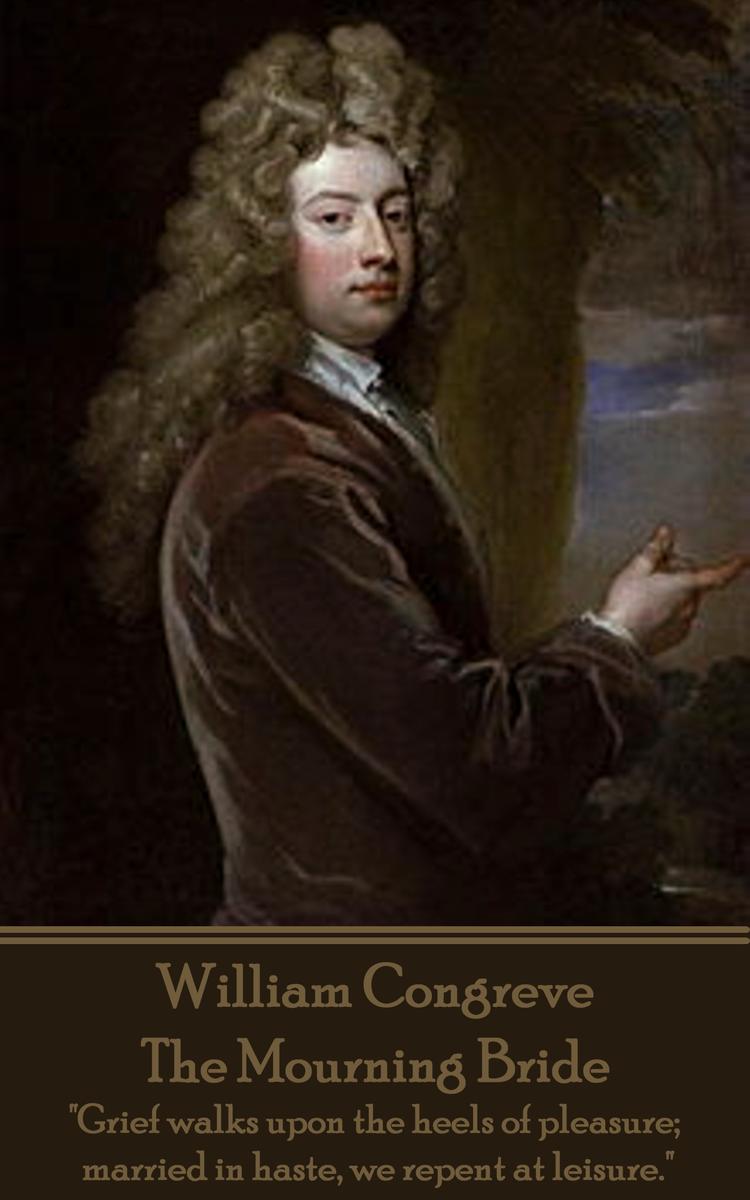
Mourning Bride - Grief walks upon the heels of pleasure; married in haste, we re
¥21.09
William Congreve was born on January 24th, 1670 in Bardsey, West Yorkshire. Congreve's childhood was spent in Ireland (his father, a Lieutenant in the British Army had received a posting there). He was educated at Kilkenny College and then Trinity College in Dublin. After graduating he returned to London to study law at Middle Temple. However his interest in studying law soon lessened as the attraction of literature, drama, and the fashionable life began to exert its pull. This first play, The Old Bachelor, was written, to amuse himself during convalescence, and was produced at the Drury Lane Theatre in 1693. It was an enormous success. Although his playwrighting career was successful it was also very brief. Five plays authored from 1693 to 1700 would prove the entirety of his output. Although no further plays were to flow from his pen Congreve did write librettos for two operas and to begin translating the works of Moliere as well as Homer, Ovid and Horace and to write poetry. He also took an interest in politics and obtained various minor political posts, including being named Secretary of the Island of Jamaica by George I in 1714. Congreve suffered a carriage accident in late September 1728, from which he never recovered (having probably received an internal injury); William Congreve died in London on January 19th, 1729, and was buried in Poets' Corner in Westminster Abbey.
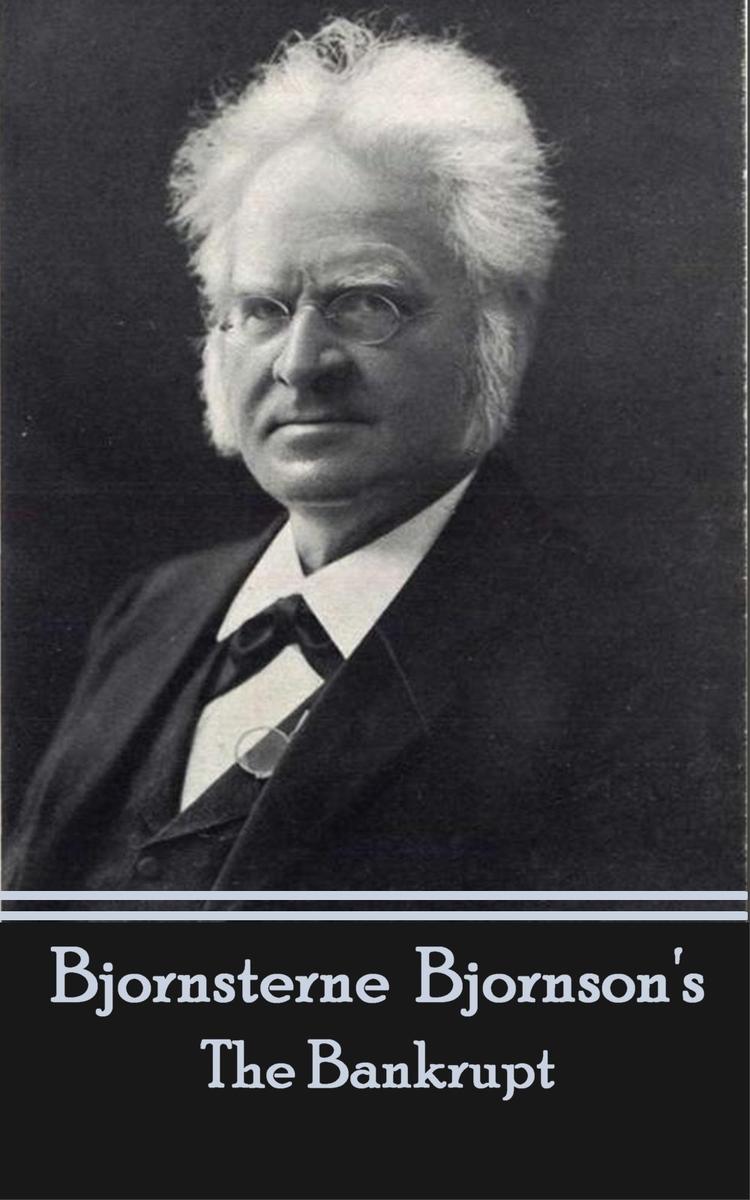
Bankrupt - Includes a rare poetry collection
¥35.22
Bjornstjerne Bjornson (1832 - 1910), the third man to ever win the Nobel Prize in Literature. However when considering the quality of his writing he is perhaps not as celebrated as he should be. Being also a Nobel Laureate in Literature, Bjornson has also been credited with many other impressive successes. These include writing the lyrics for the Norwegian national anthem, mastering all forms of literature; poetry, novels, short stories, essays and playwriting and being elevated to one of the Four Greats; the name for the classic Norwegian writers, others being Henrik Ibsen, Jonas Lie and Alexander Kielland. Here we look at one of his many plays. Much of his work was nearly as popular in his native Norway as Ibsen's and we now bring you these masterful works in English for you to compare. Our imprint Stage Door offers both Ibsen's and Bjornson's works in English.
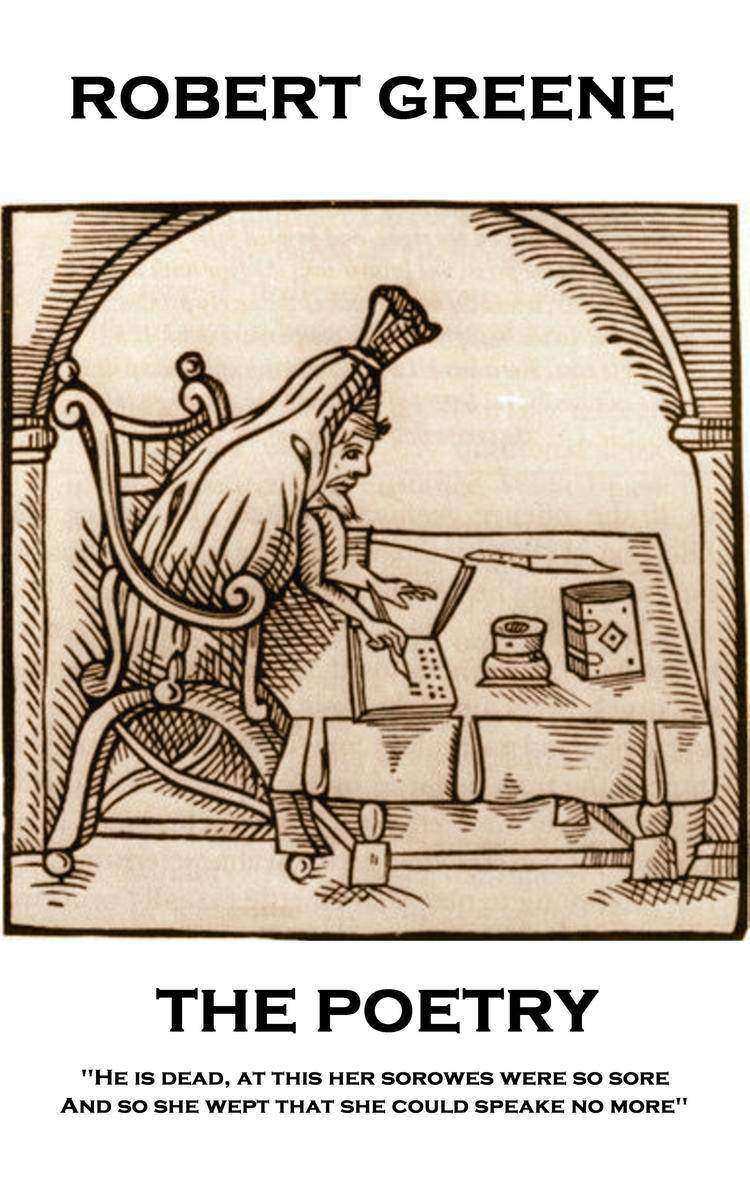
Poetry of Robert Greene
¥15.21
Robert Greene was, by the best accounts available, born in Norwich in 1558 and baptised on July 11th.Greene is believed to have been a pupil at Norwich Grammar School and then attended Cambridge receiving his B.A. in 1580, and an M.A. in 1583. He then moved to London and began an extraordinary chapter in his life as a widely published author. His literary career began with the publication of the long romance, 'Mamillia', (1580). Greene's romances were written in a highly wrought style which reached its peak in 'Pandosto' (1588) and 'Menaphon' (1589). Short poems and songs incorporated in some of the romances attest to his ability as a lyric poet. In 1588, he was granted an MA from Oxford University, almost certainly as a courtesy degree. Thereafter he sometimes placed the phrase Utruisq. Academiae in Artibus Magister', "e;Master of Arts in both Universities"e; on the title page of his works.The lack of records hinders any complete biography of Greene but he did write an autobiography of sorts, but where the balance lies between facts and artistic licence is not clearly drawn. According to that autobiography 'The Repentance of Robert Greene', Greene is alleged to have written 'A Groatsworth of Wit Bought with a Million of Repentance' during the month prior to his death, including in it a letter to his wife asking her to forgive him and stating that he was sending their son back to her. His output was prolific. Between 1583 and 1592, he published more than twenty-five works in prose, becoming one of the first authors in England to support himself with his pen in an era when professional authorship was virtually unknown.In his 'coney-catching' pamphlets, Greene fashioned himself into a well-known public figure, narrating colourful inside stories of rakes and rascals duping young gentlemen and solid citizens out of their hard-earned money. These stories, told from the perspective of a repentant former rascal, have been considered autobiographical, and to incorporate many facts of Greene's own life thinly veiled as fiction. However, the alternate account suggests that Greene invented almost everything, merely displaying his undoubted skills as a writer.In addition to his prose works, Greene also wrote several plays, none of them published in his lifetime, including 'The Scottish History of James IV', 'Alphonsus', and his greatest popular success, 'Friar Bacon and Friar Bungay', as well as 'Orlando Furioso', based on Ludovico Ariosto's Orlando Furioso.His plays earned himself the title as one of the 'University Wits', a group that included George Peele, Thomas Nashe, and Christopher Marlowe.Robert Greene died 3rd September 1592.
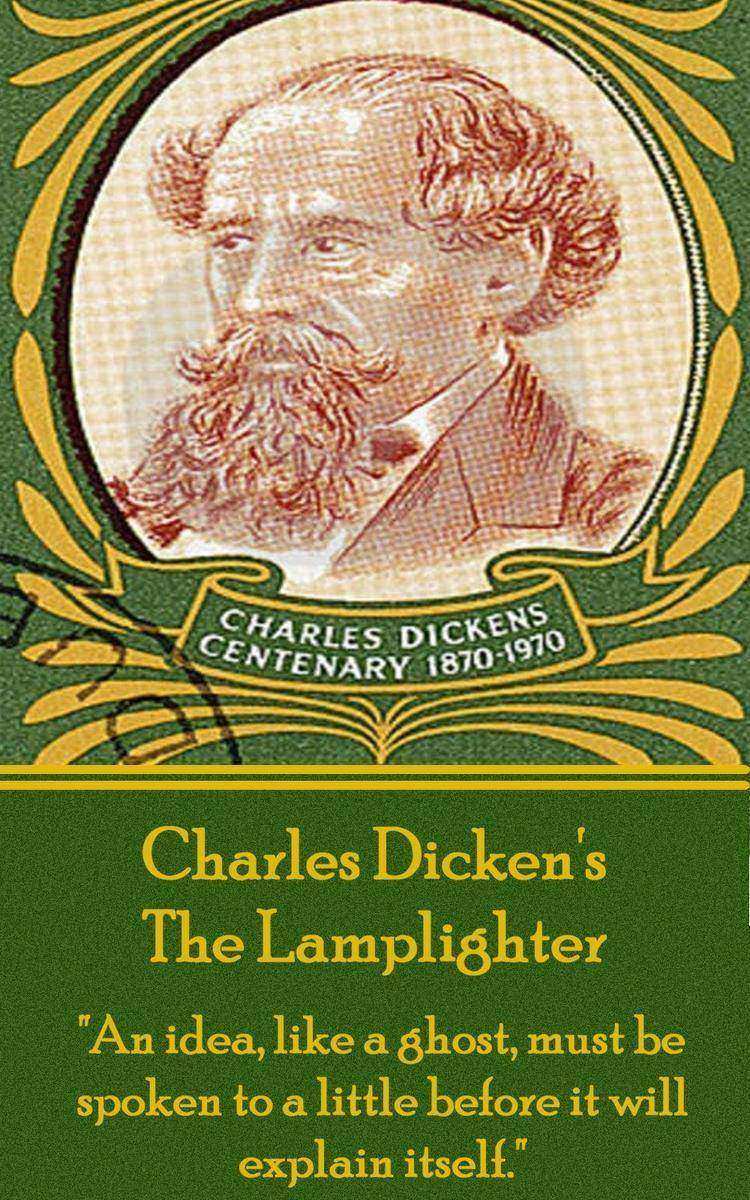
Lamplighter - An idea, like a ghost, must be spoken to a little before it will e
¥29.33
Charles Dickens (1812-1870) is regarded by many readers and literary critics to be THE major English novelist of the Victorian Age. He is remembered today as the author of a series of weighty novels which have been translated into many languages and promoted to the rank of World Classics. The latter include, but are not limited to, The Adventures of Oliver Twist, A Tale of Two Cities, David Copperfield, A Christmas Carol, Hard Times, Great Expectations and The Old Curiosity Shop. His talents extended to many other forms including short stories, poetry, letters and his serial magazines. Of course being such a talent he also wrote plays. We are very pleased to present his fourth of four plays: The Lamplighter
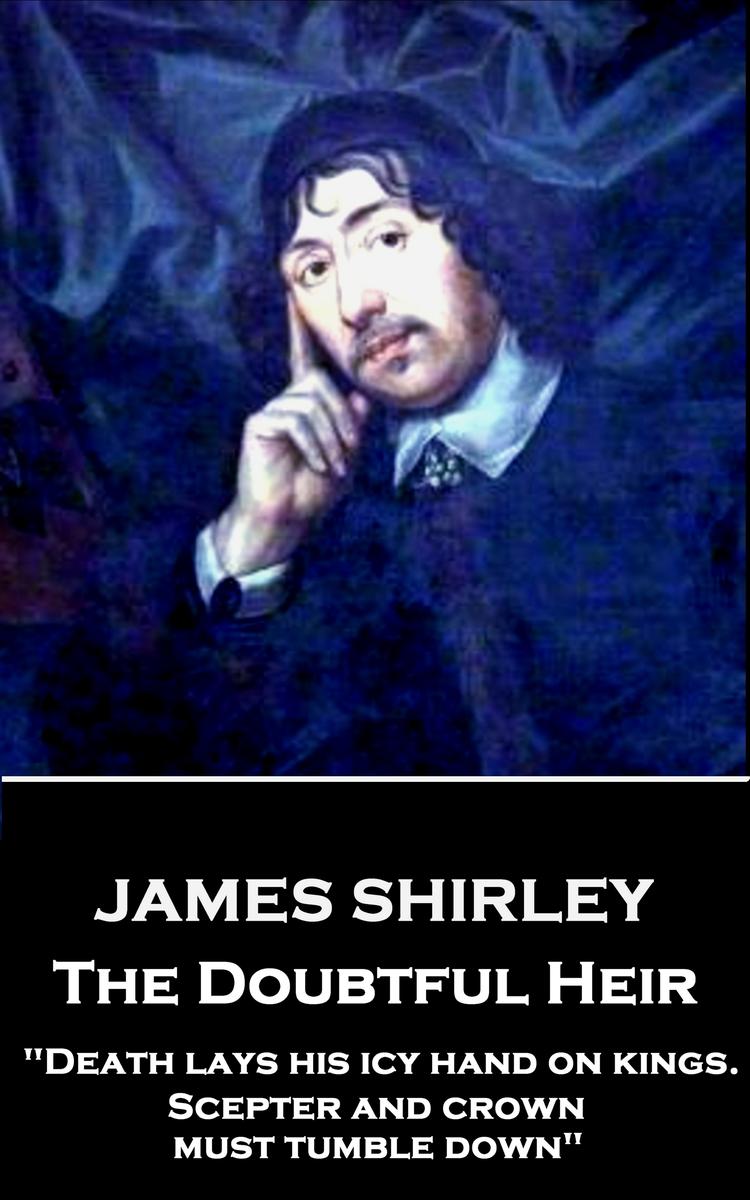
Doubtful Heir - Death lays his icy hand on kings. Scepter and crown must tumble
¥25.80
James Shirley was born in London in September 1596. His education was through a collection of England's finest establishments: Merchant Taylors' School, London, St John's College, Oxford, and St Catharine's College, Cambridge, where he took his B.A. degree in approximately 1618. He first published in 1618, a poem entitled Echo, or the Unfortunate Lovers. As with many artists of this period full details of his life and career are not recorded. Sources say that after graduating he became "e;a minister of God's word in or near St Albans."e; A conversion to the Catholic faith enabled him to become master of St Albans School from 1623-25. He wrote his first play, Love Tricks, or the School of Complement, which was licensed on February 10th, 1625. From the given date it would seem he wrote this whilst at St Albans but, after its production, he moved to London and to live in Gray's Inn. For the next two decades, he would write prolifically and with great quality, across a spectrum of thirty plays; through tragedies and comedies to tragicomedies as well as several books of poetry. Unfortunately, his talents were left to wither when Parliament passed the Puritan edict in 1642, forbidding all stage plays and closing the theatres. Most of his early plays were performed by Queen Henrietta's Men, the acting company for which Shirley was engaged as house dramatist. Shirley's sympathies lay with the King in battles with Parliament and he received marks of special favor from the Queen. He made a bitter attack on William Prynne, who had attacked the stage in Histriomastix, and, when in 1634 a special masque was presented at Whitehall by the gentlemen of the Inns of Court as a practical reply to Prynne, Shirley wrote the text-The Triumph of Peace. Shirley spent the years 1636 to 1640 in Ireland, under the patronage of the Earl of Kildare. Several of his plays were produced by his friend John Ogilby in Dublin in the first ever constructed Irish theatre; The Werburgh Street Theatre. During his years in Dublin he wrote The Doubtful Heir, The Royal Master, The Constant Maid, and St. Patrick for Ireland. In his absence from London, Queen Henrietta's Men sold off a dozen of his plays to the stationers, who naturally, enough published them. When Shirley returned to London in 1640, he finished with the Queen Henrietta's company and his final plays in London were acted by the King's Men. On the outbreak of the English Civil War Shirley served with the Earl of Newcastle. However when the King's fortunes began to decline he returned to London. There his friend Thomas Stanley gave him help and thereafter Shirley supported himself in the main by teaching and publishing some educational works under the Commonwealth. In addition to these he published during the period of dramatic eclipse four small volumes of poems and plays, in 1646, 1653, 1655, and 1659. It is said that he was "e;a drudge"e; for John Ogilby in his translations of Homer's Iliad and the Odyssey, and survived into the reign of Charles II, but, though some of his comedies were revived, his days as a playwright were over. His death, at age seventy, along with that of his wife, in 1666, is described as one of fright and exposure due to the Great Fire of London which had raged through parts of London from September 2nd to the 5th. He was buried at St Giles in the Fields, in London, on October 29th, 1666.
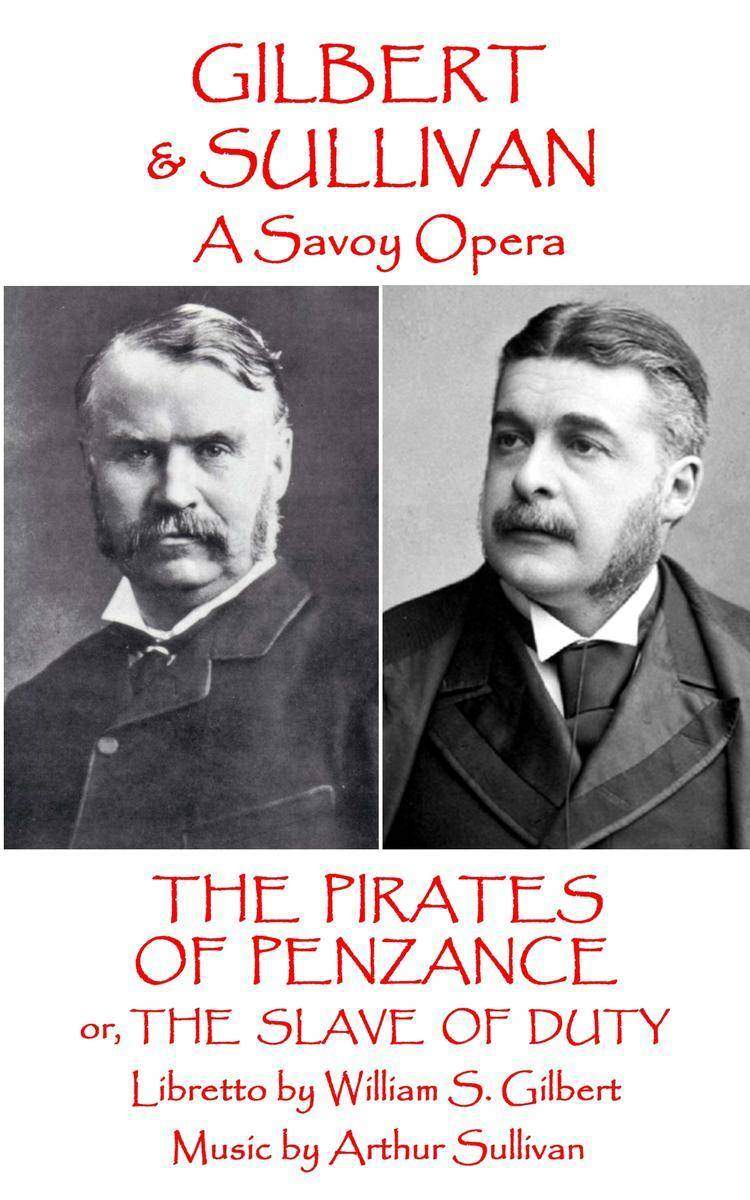
Pirates of Penzance - or The Slave of Duty
¥26.98
The partnership between William Schwenck Gilbert and Arthur Seymour Sullivan and their canon of Savoy Operas is rightly lauded by all lovers of comic opera the world over. Gilbert's sharp, funny words and Sullivan's deliciously lively and hummable tunes create a world that is distinctly British in view but has the world as its audience. Both men were exceptionally talented and gifted in their own right and wrote much, often with other partners, that still stands the test of time. However, together as a team they created Light or Comic Operas of a standard that have had no rivals equal to their standard, before or since. That's quite an achievement. To be recognised by the critics is one thing but their commercial success was incredible. The profits were astronomical, allowing for the building of their own purpose built theatre - The Savoy Theatre. Beginning with the first of their fourteen collaborations, Thespis in 1871 and travelling through many classics including The Sorcerer (1877), H.M.S. Pinafore (1878), The Pirates of Penzance (1879), The Mikado (1885), The Gondoliers (1889) to their finale in 1896 with The Grand Duke, Gilbert & Sullivan created a legacy that is constantly revived and admired in theatres and other media to this very day.
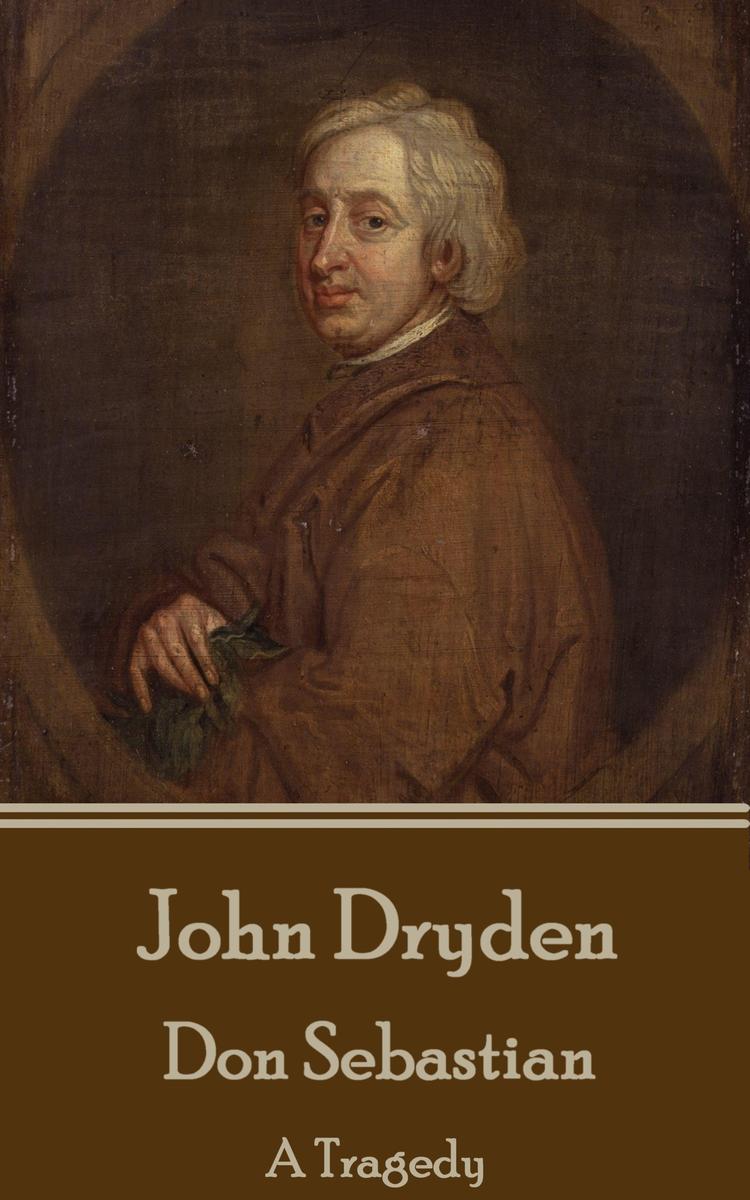
Don Sebastian - A Tragedy
¥26.98
John Dryden was born on August 9th, 1631 in the village rectory of Aldwincle near Thrapston in Northamptonshire. As a boy Dryden lived in the nearby village of Titchmarsh, Northamptonshire. In 1644 he was sent to Westminster School as a King's Scholar. Dryden obtained his BA in 1654, graduating top of the list for Trinity College, Cambridge that year. Returning to London during The Protectorate, Dryden now obtained work with Cromwell's Secretary of State, John Thurloe. At Cromwell's funeral on 23 November 1658 Dryden was in the company of the Puritan poets John Milton and Andrew Marvell. The setting was to be a sea change in English history. From Republic to Monarchy and from one set of lauded poets to what would soon become the Age of Dryden. The start began later that year when Dryden published the first of his great poems, Heroic Stanzas (1658), a eulogy on Cromwell's death. With the Restoration of the Monarchy in 1660 Dryden celebrated in verse with Astraea Redux, an authentic royalist panegyric. With the re-opening of the theatres after the Puritan ban, Dryden began to also write plays. His first play, The Wild Gallant, appeared in 1663 but was not successful. From 1668 on he was contracted to produce three plays a year for the King's Company, in which he became a shareholder. During the 1660s and '70s, theatrical writing was his main source of income. In 1667, he published Annus Mirabilis, a lengthy historical poem which described the English defeat of the Dutch naval fleet and the Great Fire of London in 1666. It established him as the pre-eminent poet of his generation, and was crucial in his attaining the posts of Poet Laureate (1668) and then historiographer royal (1670). This was truly the Age of Dryden, he was the foremost English Literary figure in Poetry, Plays, translations and other forms. In 1694 he began work on what would be his most ambitious and defining work as translator, The Works of Virgil (1697), which was published by subscription. It was a national event. John Dryden died on May 12th, 1700, and was initially buried in St. Anne's cemetery in Soho, before being exhumed and reburied in Westminster Abbey ten days later.
Twelfth Night - Better a witty fool, than a foolish wit.
¥11.67
The life of William Shakespeare, arguably the most significant figure in the Western literary canon, is relatively unknown. Shakespeare was born in Stratford-upon-Avon in 1565, possibly on the 23rd April, St. George's Day, and baptised there on 26th April. Little is known of his education and the first firm facts to his life relate to his marriage, aged 18, to Anne Hathaway, who was 26 and from the nearby village of Shottery. Anne gave birth to their first son six months later. Shakespeare's first play, The Comedy of Errors began a procession of real heavyweights that were to emanate from his pen in a career of just over twenty years in which 37 plays were written and his reputation forever established. This early skill was recognised by many and by 1594 the Lord Chamberlain's Men were performing his works. With the advantage of Shakespeare's progressive writing they rapidly became London's leading company of players, affording him more exposure and, following the death of Queen Elizabeth in 1603, a royal patent by the new king, James I, at which point they changed their name to the King's Men. By 1598, and despite efforts to pirate his work, Shakespeare's name was well known and had become a selling point in its own right on title pages. No plays are attributed to Shakespeare after 1613, and the last few plays he wrote before this time were in collaboration with other writers, one of whom is likely to be John Fletcher who succeeded him as the house playwright for the King's Men. William Shakespeare died two months later on April 23rd, 1616, survived by his wife, two daughters and a legacy of writing that none have since yet eclipsed.
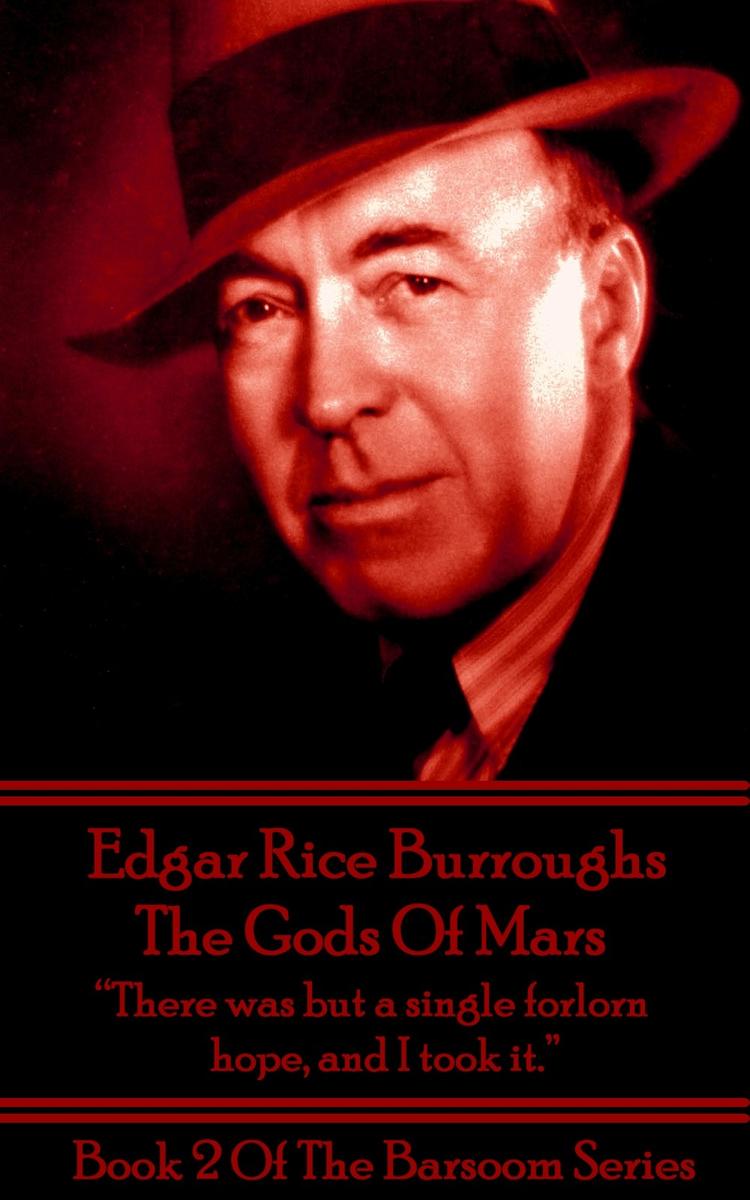
Gods Of Mars - There was but a single forlorn hope, and I took it.
¥35.22
Edgar Rice Burroughs was born on September 1, 1875, in Chicago, Illinois. His early career was unremarkable. After failing to enter West Point he enlisted in the 7th Calvary but was discharged after heart problems were diagnosed. A series of short term jobs gave no indication as to a career path but finally, in 1911, married and with two young children, he turned his hand to writing. He aimed his works squarely at the very popular pulp serial magazines. His first effort 'Under The Moons Of Mars' ran in Munsey's Magazine in 1912 under the pseudonym Norman Bean. With its success he began writing full time. A continuing theme of his work was to develop series so that each character had ample opportunities to return in sequels. John Carter was in the Mars series and there was another on Venus and one on Pellucidar among others. But perhaps the best known is Tarzan. Indeed Burroughs wanted so much to capitalise upon the brand that he introduced a syndicated Tarzan comic strip, movies and merchandise. He purchased a large ranch north of Los Angeles, California, which he named "e;Tarzana."e; The surrounding communities outside the ranch voted in 1927 to adopt the name as their own. By 1932 Burroughs set up his own company to print his own books. Here we publish the second in the Barsoom series and its enduring hero John Carter 'The Gods of Mars'. Another cultural classic.
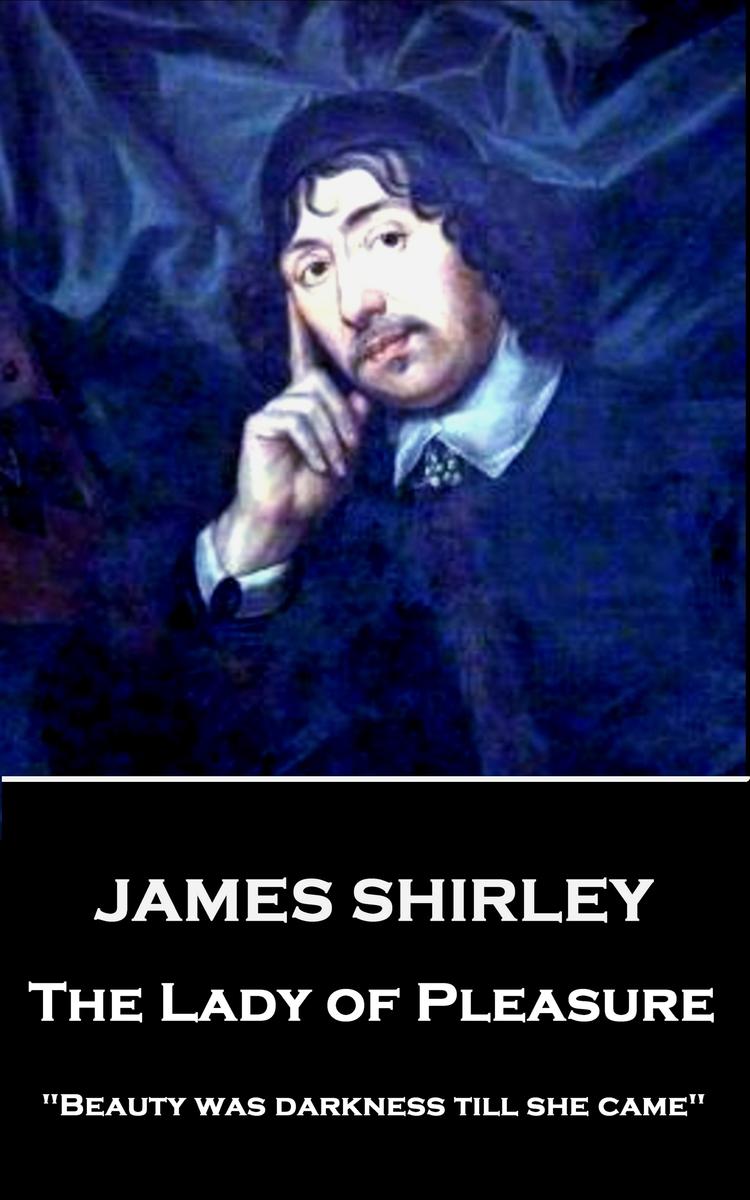
Lady of Pleasure - Beauty was darkness till she came
¥25.80
James Shirley was born in London in September 1596. His education was through a collection of England's finest establishments: Merchant Taylors' School, London, St John's College, Oxford, and St Catharine's College, Cambridge, where he took his B.A. degree in approximately 1618. He first published in 1618, a poem entitled Echo, or the Unfortunate Lovers. As with many artists of this period full details of his life and career are not recorded. Sources say that after graduating he became "e;a minister of God's word in or near St Albans."e; A conversion to the Catholic faith enabled him to become master of St Albans School from 1623-25. He wrote his first play, Love Tricks, or the School of Complement, which was licensed on February 10th, 1625. From the given date it would seem he wrote this whilst at St Albans but, after its production, he moved to London and to live in Gray's Inn. For the next two decades, he would write prolifically and with great quality, across a spectrum of thirty plays; through tragedies and comedies to tragicomedies as well as several books of poetry. Unfortunately, his talents were left to wither when Parliament passed the Puritan edict in 1642, forbidding all stage plays and closing the theatres. Most of his early plays were performed by Queen Henrietta's Men, the acting company for which Shirley was engaged as house dramatist. Shirley's sympathies lay with the King in battles with Parliament and he received marks of special favor from the Queen. He made a bitter attack on William Prynne, who had attacked the stage in Histriomastix, and, when in 1634 a special masque was presented at Whitehall by the gentlemen of the Inns of Court as a practical reply to Prynne, Shirley wrote the text-The Triumph of Peace. Shirley spent the years 1636 to 1640 in Ireland, under the patronage of the Earl of Kildare. Several of his plays were produced by his friend John Ogilby in Dublin in the first ever constructed Irish theatre; The Werburgh Street Theatre. During his years in Dublin he wrote The Doubtful Heir, The Royal Master, The Constant Maid, and St. Patrick for Ireland. In his absence from London, Queen Henrietta's Men sold off a dozen of his plays to the stationers, who naturally, enough published them. When Shirley returned to London in 1640, he finished with the Queen Henrietta's company and his final plays in London were acted by the King's Men. On the outbreak of the English Civil War Shirley served with the Earl of Newcastle. However when the King's fortunes began to decline he returned to London. There his friend Thomas Stanley gave him help and thereafter Shirley supported himself in the main by teaching and publishing some educational works under the Commonwealth. In addition to these he published during the period of dramatic eclipse four small volumes of poems and plays, in 1646, 1653, 1655, and 1659. It is said that he was "e;a drudge"e; for John Ogilby in his translations of Homer's Iliad and the Odyssey, and survived into the reign of Charles II, but, though some of his comedies were revived, his days as a playwright were over. His death, at age seventy, along with that of his wife, in 1666, is described as one of fright and exposure due to the Great Fire of London which had raged through parts of London from September 2nd to the 5th. He was buried at St Giles in the Fields, in London, on October 29th, 1666.
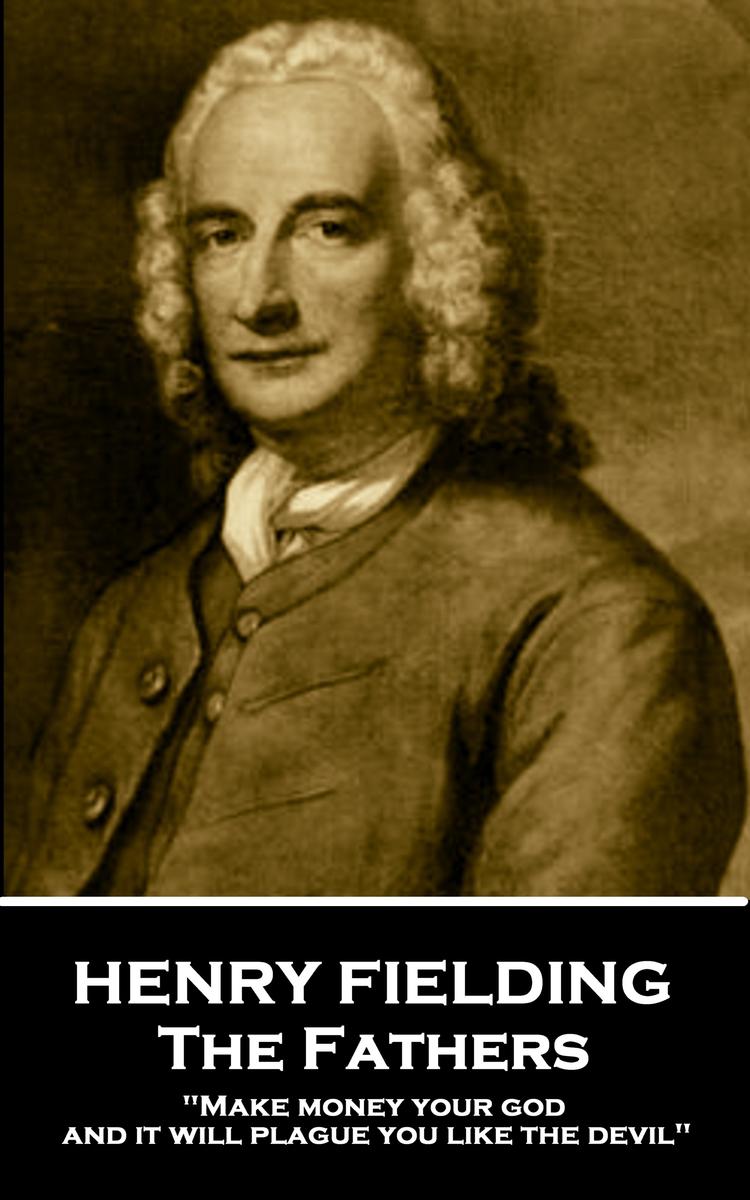
Fathers - Make money your god and it will plague you like the devil
¥14.03
Henry Fielding was born at Sharpham Park, near Glastonbury, in Somerset on April 22nd 1707. His early years were spent on his parents' farm in Dorset before being educated at Eton.An early romance ended disastrously and with it his removal to London and the beginnings of a glittering literary career; he published his first play, at age 21, in 1728.He was prolific, sometimes writing six plays a year, but he did like to poke fun at the authorities. His plays were thought to be the final straw for the authorities in their attempts to bring in a new law. In 1737 The Theatrical Licensing Act was passed. At a stroke political satire was almost impossible. Fielding was rendered mute. Any playwright who was viewed with suspicion by the Government now found an audience difficult to find and therefore Theatre owners now toed the Government line.Fielding was practical with the circumstances and ironically stopped writing to once again take up his career in the practice of law and became a barrister after studying at Middle Temple. By this time he had married Charlotte Craddock, his first wife, and they would go on to have five children. Charlotte died in 1744 but was immortalised as the heroine in both Tom Jones and Amelia.Fielding was put out by the success of Samuel Richardson's Pamela, or Virtue Rewarded. His reaction was to spur him into writing a novel. In 1741 his first novel was published; the successful Shamela, an anonymous parody of Richardson's novel.Undoubtedly the masterpiece of Fielding's career was the novel Tom Jones, published in 1749. It is a wonderfully and carefully constructed picaresque novel following the convoluted and hilarious tale of how a foundling came into a fortune.Fielding was a consistent anti-Jacobite and a keen supporter of the Church of England. This led to him now being richly rewarded with the position of London's Chief Magistrate. Fielding continued to write and his career both literary and professional continued to climb.In 1749 he joined with his younger half-brother John, to help found what was the nascent forerunner to a London police force, the Bow Street Runners. Fielding's ardent commitment to the cause of justice in the 1750s unfortunately coincided with a rapid deterioration in his health. Such was his decline that in the summer of 1754 he travelled, with Mary and his daughter, to Portugal in search of a cure. Gout, asthma, dropsy and other afflictions forced him to use crutches. His health continued to fail alarmingly.Henry Fielding died in Lisbon two months later on October 8th, 1754.
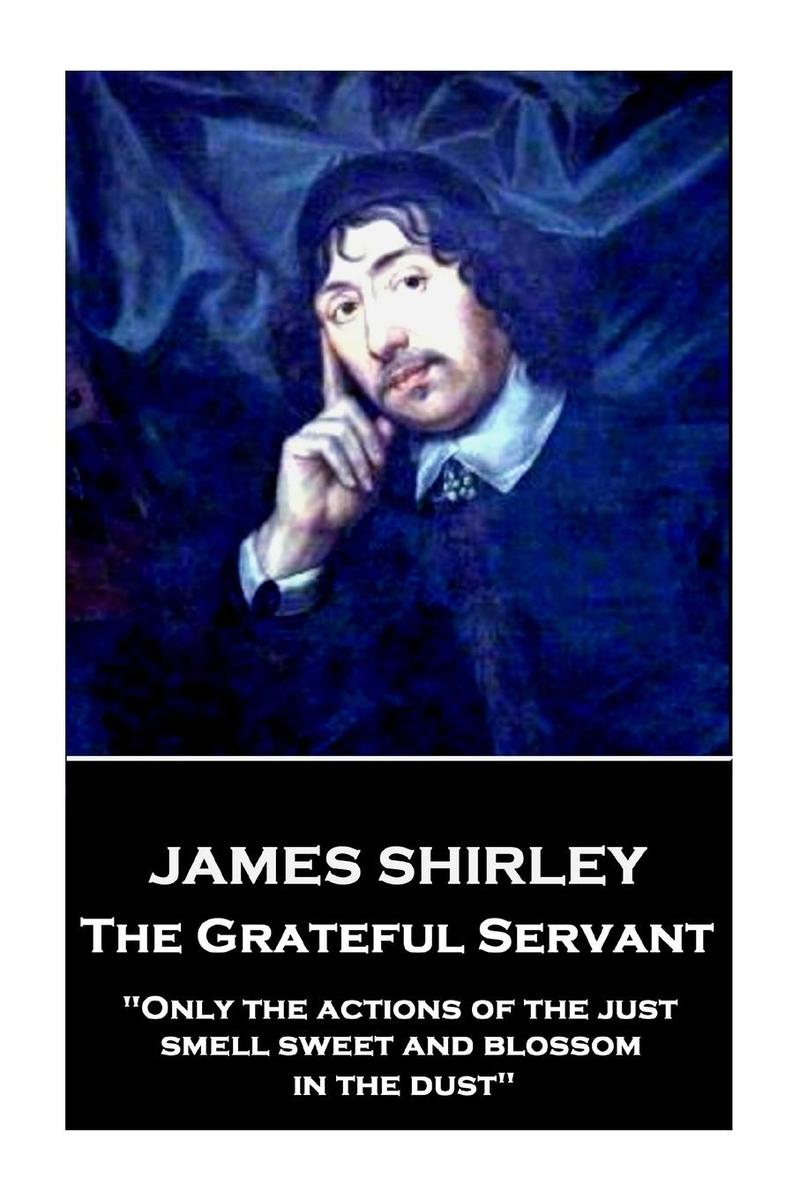
Grateful Servant - Only the actions of the just smell sweet and blossom in the d
¥25.80
James Shirley was born in London in September 1596. His education was through a collection of England's finest establishments: Merchant Taylors' School, London, St John's College, Oxford, and St Catharine's College, Cambridge, where he took his B.A. degree in approximately 1618. He first published in 1618, a poem entitled Echo, or the Unfortunate Lovers. As with many artists of this period full details of his life and career are not recorded. Sources say that after graduating he became "e;a minister of God's word in or near St Albans."e; A conversion to the Catholic faith enabled him to become master of St Albans School from 1623-25. He wrote his first play, Love Tricks, or the School of Complement, which was licensed on February 10th, 1625. From the given date it would seem he wrote this whilst at St Albans but, after its production, he moved to London and to live in Gray's Inn. For the next two decades, he would write prolifically and with great quality, across a spectrum of thirty plays; through tragedies and comedies to tragicomedies as well as several books of poetry. Unfortunately, his talents were left to wither when Parliament passed the Puritan edict in 1642, forbidding all stage plays and closing the theatres. Most of his early plays were performed by Queen Henrietta's Men, the acting company for which Shirley was engaged as house dramatist. Shirley's sympathies lay with the King in battles with Parliament and he received marks of special favor from the Queen. He made a bitter attack on William Prynne, who had attacked the stage in Histriomastix, and, when in 1634 a special masque was presented at Whitehall by the gentlemen of the Inns of Court as a practical reply to Prynne, Shirley wrote the text-The Triumph of Peace. Shirley spent the years 1636 to 1640 in Ireland, under the patronage of the Earl of Kildare. Several of his plays were produced by his friend John Ogilby in Dublin in the first ever constructed Irish theatre; The Werburgh Street Theatre. During his years in Dublin he wrote The Doubtful Heir, The Royal Master, The Constant Maid, and St. Patrick for Ireland. In his absence from London, Queen Henrietta's Men sold off a dozen of his plays to the stationers, who naturally, enough published them. When Shirley returned to London in 1640, he finished with the Queen Henrietta's company and his final plays in London were acted by the King's Men. On the outbreak of the English Civil War Shirley served with the Earl of Newcastle. However when the King's fortunes began to decline he returned to London. There his friend Thomas Stanley gave him help and thereafter Shirley supported himself in the main by teaching and publishing some educational works under the Commonwealth. In addition to these he published during the period of dramatic eclipse four small volumes of poems and plays, in 1646, 1653, 1655, and 1659. It is said that he was "e;a drudge"e; for John Ogilby in his translations of Homer's Iliad and the Odyssey, and survived into the reign of Charles II, but, though some of his comedies were revived, his days as a playwright were over. His death, at age seventy, along with that of his wife, in 1666, is described as one of fright and exposure due to the Great Fire of London which had raged through parts of London from September 2nd to the 5th. He was buried at St Giles in the Fields, in London, on October 29th, 1666.
Rhesus - Question everything. Learn something. Answer nothing
¥14.03
Euripides is rightly lauded as one of the great dramatists of all time. In his lifetime, he wrote over 90 plays and although only 18 have survived they reveal the scope and reach of his genius. Euripides is identified with many theatrical innovations that have influenced drama all the way down to modern times, especially in the representation of traditional, mythical heroes as ordinary people in extraordinary circumstances. As would be expected from a life lived 2,500 years ago, details of it are few and far between. Accounts of his life, written down the ages, do exist but whether much is reliable or surmised is open to debate. Most accounts agree that he was born on Salamis Island around 480 BC, to mother Cleito and father Mnesarchus, a retailer who lived in a village near Athens. Upon the receipt of an oracle saying that his son was fated to win "e;crowns of victory"e;, Mnesarchus insisted that the boy should train for a career in athletics. However, what is clear is that athletics was not to be the way to win crowns of victory. Euripides had been lucky enough to have been born in the era as the other two masters of Greek Tragedy; Sophocles and schylus. It was in their footsteps that he was destined to follow. His first play was performed some thirteen years after the first of Socrates plays and a mere three years after schylus had written his classic The Oristria. Theatre was becoming a very important part of the Greek culture. The Dionysia, held annually, was the most important festival of theatre and second only to the fore-runner of the Olympic games, the Panathenia, held every four years, in appeal. Euripides first competed in the City Dionysia, in 455 BC, one year after the death of schylus, and, incredibly, it was not until 441 BC that he won first prize. His final competition in Athens was in 408 BC. The Bacchae and Iphigenia in Aulis were performed after his death in 405 BC and first prize was awarded posthumously. Altogether his plays won first prize only five times. Euripides was also a great lyric poet. In Medea, for example, he composed for his city, Athens, "e;the noblest of her songs of praise"e;. His lyric skills however are not just confined to individual poems: "e;A play of Euripides is a musical whole....one song echoes motifs from the preceding song, while introducing new ones."e; Much of his life and his whole career coincided with the struggle between Athens and Sparta for hegemony in Greece but he didn't live to see the final defeat of his city. Euripides fell out of favour with his fellow Athenian citizens and retired to the court of Archelaus, king of Macedon, who treated him with consideration and affection. At his death, in around 406BC, he was mourned by the king, who, refusing the request of the Athenians that his remains be carried back to the Greek city, buried him with much splendor within his own dominions. His tomb was placed at the confluence of two streams, near Arethusa in Macedonia, and a cenotaph was built to his memory on the road from Athens towards the Piraeus.
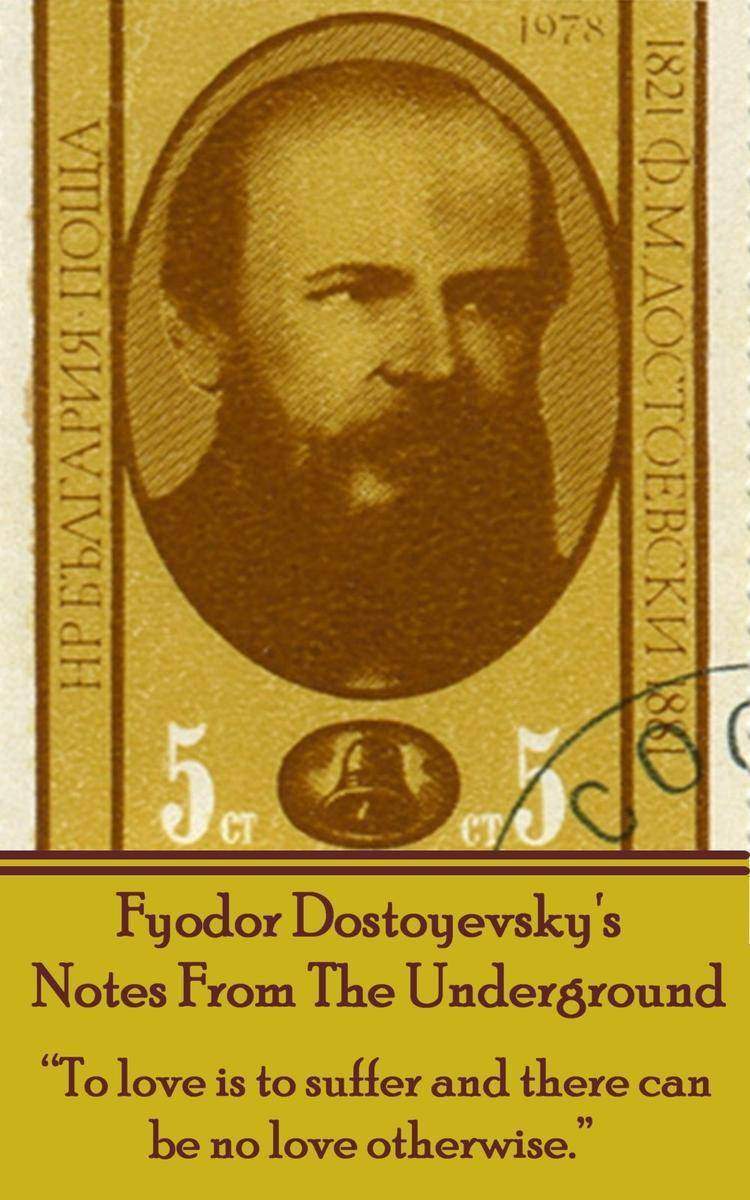
Notes From The Underground - To love is to suffer and there can be no love other
¥15.21
Fyodor Dostoyevsky's Notes from the Underground is both a fictional and philosophical work. It is considered by many critics as an early existentialist novella. The narrative takes the form of notes written by an unnamed narrator and is divided into two parts. In the first part entitled "e;Underground,"e; the protagonist is presented as a pessimist misanthrope who comments on a number of philosophical concepts such as the duality between determinism and free will. Basing his criticism on the work of Nikolay Chernyshevsky, he attacks modern schools of thought that purport to be founded solely on logical reasoning, namely utilitarianism and positivism. The second part of the book, entitled "e;Apropos of the Wet Snow,"e; is closer to fiction than to philosophical analysis. It rather seems to serve as a practical part for the theories exposed in the former through relating some events that happened to the narrator when he was a young man. The narrator often finds difficulty in socializing and even in interacting with the different people around him. Total misunderstanding and mistrust make him feel alienated in society. His feeling of indecision keeps on haunting him until the very end of the narrative when it is revealed that he has even been hesitating to conclude his notes.


