万本电子书0元读

万本电子书0元读

弟子规说什么(全新升级版)
弟子规说什么(全新升级版)
罗大伦
¥9.90
      现代人生活、工作的不如意、身心的失常,几乎全是从性情失调而来,这根源于少儿时期的教育纰漏,如不懂规矩,各种心态、性格培养的不成熟。本书通过逐字逐句解读《弟子规》,用贴近生活的实例告诉您,在规矩里的自由,可能因保护而完整;如果放任自由,则可能会带来伤害。
59元6本 追寻记忆的痕迹:新心智科学的开创历程(诺贝尔奖得主埃里克·坎德尔自传,果壳网副总编吴欧、中科院院士蒲慕明倾情推荐!智慧宫系列)
追寻记忆的痕迹:新心智科学的开创历程(诺贝尔奖得主埃里克·坎德尔自传,果壳网副总编吴欧、中科院院士蒲慕明倾情推荐!智慧宫系列)
埃里克•坎德尔
¥19.99
本书是美籍犹太裔神经科学家、诺贝尔奖得主埃里克?坎德尔的自传,在书中他不仅表达了个人对其生活和历史的感受和思考,也以亲历者的身份叙述了神经科学这个学科从无到有的发展史——人们如何开始用生物科学的方法研究学习和记忆,在过去的一个世纪里这个领域得到了哪些发展,科学界又对未来怀有哪些愿景和期待。通过阅读这本书,读者不仅可以了解神经科学这一学科的动向,更能窥见科学家进行科学探索的思考路径,以及一个伟大科学家的素质和襟怀。本书已被翻译成德语、法语、俄语、意大利语、西班牙语、波斯语等十多个语种,先后荣获2006年度《洛杉矶时报》图书奖和2007年度美国国家学院知识传播奖。
宗教文化
宗教文化
百读
¥2.00
一名僧侣找上桐峰庵主(未详。临济门下的禅僧)的住处问:“这里忽逢大虫时又作么生?”桐峰庵主听罢作虎声,而僧便作怕势,引得庵主哈哈大笑。僧侣道:“你这么坏!”庵主回答:“可是你也把我没法呀!”僧侣听了也莫可奈何,便默默地走了出去。后来雪窦和尚批评这个问答:“简直如掩耳盗铃般。”
中国宗教文化之谜
中国宗教文化之谜
百读
¥2.00
梁武帝曾问达摩大师:“如何是圣谛义?”达摩说:“廓然无圣。”武帝又问:“对朕者谁?达摩说:“不识。”达摩说便离去。 现在个公案的问题是:达摩所回答的真义何在? 梁武帝是在一个偶然的机会里,由一介官吏摇身一变为皇帝的人。他皈依,建造了很多寺院,是个通晓佛理而能够讲经著述的人物。可是,纵然他有这样的经历,却参不透大师回答的真义何在。
论宗教和其他主题的思想
论宗教和其他主题的思想
读书堂
¥2.90
本书作者帕斯卡尔(Blaise Pascal,1623—1662)是十七世纪卓越的数理科学家之一,他对于近代初期的理论科学和实验科学两方面都做出了巨大的历史贡献。他的以《真空论》为代表的一系列科学著作,基本上是唯物主义的并充满战斗风格,三个多世纪以来已成为科学史上和思想史上的光辉典籍。
59元6本 你在忙什么
你在忙什么
索达吉堪布
¥17.99
《你在忙什么》是由影响力遍及全球的佛教大德索达吉堪布近年来赴哈佛、耶鲁、斯坦福、哥廷根、清华、北大、港大……等全球近百所学府的演讲精粹。 堪布认为,时代在变迁,但佛教的宗旨没有变,人们可以从中找到解决现代问题的真正答案,这是应该去提醒大家的。 本书以幸福、压力、财富、情感、快乐为关键词,关注当下社会现状,针对现代人的思想误区,以浅显易懂的语言,为世人打开一条光明之路。身体的忙碌,根本在心。但愿由此你能得到佛教中的宁静心灵,减少无意义的忙碌,活得更加淡定。
套装特惠下单9.99元 论语说什么(全3册)
论语说什么(全3册)
梁冬
¥39.99
  如果说,当今社会有一套帮大家如何获得快乐、如何避免不快乐的知识体系,那显然孔子的思想体系更合适。它能让你成为一个没有敌人的人——仁者,起码也能让你变成一个在朋友圈有吸引力和比较受尊重的人。   很多人这辈子都没活好,总想活出超越这辈子的境界,但很容易走偏。其实,《论语说什么》告诉我们:哪怕我们在正道上前得慢一儿,也比走岔路而绕不回来的好。   一个人上半生主要是求存,下半生慢慢就要求真。求存是向外的,求真是向内的。不管是求存,还是求真,都要有一个学习的过程。因为你改变不了命运,但可以通过学习改变自己处理命运的能力。   读《论语说什么》,zui起码可以让你在糟糕的生活中成为一个不太糟糕的人——勤勉而好学,爱生活但不炫耀,正确地好色……
59元6本 康德书信百封
康德书信百封
康德
¥23.99
本书从康德遗留于世的300多封信中选出100封书信,根据年代先后按照编年史顺序排列。康德书信是康德哲学思想体系的一个重要组成部分。它们不仅包含了康德对自己思想体系的许多重要的说明和解释,形成了康德哲学著作的一个重要补充,而且以动态的方式再现了康德哲学思想形成的过程。同时,它们也是康德生活与事业的忠实见证人。 此外,本书的附录部分收录了康德三篇重要的论文,即《关于一种出自世界公民意图的普遍历史的观念》《回答一个问题:什么是启蒙》《重新提出的问题:人类是否在不断地向善步?》
59元6本 暴力拓扑学
暴力拓扑学
(德)韩炳哲
¥21.99
有些事物,永不消逝,暴力即属此类。 暴力性表达并非现代性的标志。暴力只是变化多端而已,其表现形式随社会局势而变。如今,它回到皮下、交际之下、毛细和神经元的领域,呈现出微观物理学的形态;这种形态的存在,无需在统治或敌对关系中的那种否定或排斥性。 它从可见转为无形,从粗野蛮横转为沉思内省,从正面直转为病毒性感染。暴力起作用的方式不是公然袭,而是蔓延传染。 作者在本书中首次揭示了暴力事件的变形记,从君权和血亲等前现代社会的斩首,经由现代规训社会的畸变,*终到了今天绩效社会和倦怠社会的抑郁。 ------------- 韩炳哲作品系列(见识城邦出品)(已出齐) 《精神政治学》(2019年3月) Psychopolitik 《爱欲之死》(2019年3月) Agonie des Eros 《在群中》(2019年3月) Im Schwarm 《他者的消失》(2019年6月) Die Austreibung des Anderen 《倦怠社会》(2019年6月) Müdigkeitsgesellschaft 《娱乐何为》(2019年6月) Gute Unterhaltung 《暴力拓扑学》(2019年10月) Topologie der Gewalt 《透明社会》(2019年10月) Transparenzgesellschaft 《美的救赎》(2019年10月) Die Errettung des Sch?nen
59元6本 我说参同契.中册
我说参同契.中册
南怀瑾
¥22.80
《参同契》是早期道教重要典籍,全名《周易参同契》。书中借用乾、坤、坎、离、水、火等法象,以明炼丹修仙之术。为道教系统论述炼丹的早著作,道教奉为“丹经王”,是千古丹经之鼻祖。 本书是南怀瑾先生一九八三年在台湾讲解《参同契》的记录,分上、中、下三册。南怀瑾先生认为:《参同契》参合了三种原则相同的学问,且熔于一炉——老庄、道家的丹道,还有《易经》的学问,是一本非读不可的秘密典籍。《参同契》不止是丹经道书,它既是哲学又是科学,也是古典文学之作,其中包含了中华民族深之承天接地的文化。《参同契》素有“天书”之称。这部因深奥而埋藏已久的天书,因南师深入浅出的讲解而重新散发光芒。
59元6本 宗镜录略讲(卷二)
宗镜录略讲(卷二)
南怀瑾
¥24.00
   《列子》为道家重要典籍之一,与老庄并列。它高深莫测,易读而难懂,以故事、神话的形态,阐释道家的学术及观念。 《列子臆说》是南怀瑾先生关于《列子》的讲记,共分上中下三册。南怀瑾先生讲述列子,深浅出、生动自在,以《列子》的内容为研究重,带领读者广阔的视野、深难测的奇妙境界,并破了意识的种种局限。列子,这个御风而行的人,要我们从一切自设的框架中突围,成就天地间的自在逍遥。
59元6本 列子臆说(中册)
列子臆说(中册)
南怀瑾
¥28.80
《金粟轩纪年诗初集(精)》为南怀瑾先生四十余年旧体诗作品合集,收录他在中国大陆、台湾以及美国等地创作的*句、律诗、长短句共计五百五十余首,根据不同时期,分别命名为《西行集》《海屋集》《海东集》《掩关集》《美京集》,同时又附录其佛门诗偈、楹联及佚诗数十首于后,可谓诗笔琳琅,洋洋大观,充分展现了南先生超拔敏锐的思想见地和丰富细腻的情感世界。
The World Set Free
The World Set Free
H. G. Wells
¥18.74
Kitab?n ba?l?ca vasf? olarak, Antik Yunan polisinden günümüze uzanan yolda, ?ocuk ve gen? yeti?tirmenin kamusal ve insan? ?nemini ortaya koyarken, fizik?, ahl?k? ve kültürel y?nleriyle bir bütün olarak e?itim felsefesi üzerine kaleme al?nm?? en temel eserlerden biri olmas? g?sterilebilir… ?Bu noktada, Rousseau’nun, “Tüm yazd?klar?m i?inde en iyi eserim” diye takdim etti?i?Emile’in 1762’de yay?nland???nda lanetlenip, 30 y?l sonra, Frans?z Devrimi’nin ?ncüleri i?in Frans?z milli e?itiminin ilham kayna?? addedildi?i dikkate al?nd???nda, Kant’?n e?itim üzerine sarf etti?i s?zlerin tarihsel ve toplumsal ba?lam? da ortaya ??kar. 18.yüzy?l?n ortalar?ndan 19.yüzy?l?n ba?lar?na dek ge?en bir ?mürlük sürede k?ta Avrupas? büyük bir do?umun sanc?lar?yla sars?lmaktad?r. ?ncesi ve sonras? diye tarihi ikiye ay?ran ?ifte Devrim (Sanayi ve Frans?z Devrimi) büyük bir zihinsel d?nü?üme yol a?mak üzeredir. Kant’? büyüten, ya da büyüklü?üne ayr?ca de?er katan bir unsur da, onun i?te bu ?a??n insan? olmas?d?r. ?Kant, 1806’daki Jena Sava??n? ve Napoleon i?galinin Alman milleti üzerinde yaratt??? ?ok ve deh?eti g?remeden vefat etse de, Wilhelm von Humboldt gibi e?itim reformcular? arac?l???yla Prusya (genel itibar?yla da Alman) e?itim sistemi i?in ne denli ?nemli bir yol a?t???n? tüm kitap boyunca seziyor gibidir. Bununla birlikte Kant’?nE?itim ?zerine’si, milli dilde ibadet edip, okumay? yazmay? te?vik eden Luhterci gelene?in Pietizmle kendini yenilemi? ve Büyük Frederich taraf?ndan te?vik edilmi? olan e?itim anlay???n?n olgunla?ma ?a??n?n da bir ürünüdür. Bu sebeple, kitab?n tamam?na h?kim olan motif, Ayd?nlanmac? bir “i?sel ?zgürle?im” ve “ruhan? terbiye” aras?nda kurulmas? gereken büyük dengedir. ? ? ?Bu arka plan? dikkate alarak, ?imdi kitaba biraz daha yak?ndan bakabiliriz… E?itim ?zerine, memleketin sayg?n ?evirmenlerinden biri olan Ahmet Aydo?an’?n sunu? ve ?ns?züyle ba?l?yor. ?stü kapal? fakat sitem dolu bir de?erlendirme yaz?s? olan “’Sapere Aude!’ Diye ??kt?k Yola”, Kant’a s?zü teslim etmeden evvel, 30 sayfada, Kant’?n dü?ünce dünyas?ndan ne denli uzakta kald???m?z?n ele?tirisini yap?yor. Bu arada, kitab?n ortaya ??k?? ?yküsüne de 22.sayfada a??klay?c? bir notla yer veriliyor. K?ningsberg ?niversitesi’nde muhtelif zamanlarda verilen dersler i?in haz?rlanan notlardan derlendi?i anla??lan?E?itim ?zerine, modern Türk?e’nin bir felsefe dili olamamas?n?n da etkisiyle, ?e?itli dipnotlar arac?l???yla kavramlar?n ve kelimelerin daha anla??l?r k?l?nd??? bir h?lde okura sunuluyor. ? “?nsan E?itilmesi Gereken Bir Varl?kt?r”: ? ?Kant, dü?üncelerini temellendirdi?i giri? sayfalar?nda insan?n e?itime muhta? ten varl?k oldu?u ger?e?inden hareket ediyor ve insan?n ancak e?itimle insan olabilece?ini dile getiriyor. (s.35) E?itime y?nelik bu yakla??m, Kant’?n idealizm felsefesinin ger?ekle?mesine giden yolu a?an anahtarlardan biri say?labilir.? ? ???NDEK?LER: ? KANT'IN YA?AMI…KANT'A G?RE AYDINLANMA NED?R?AHLAKIN METAF?Z???…KANT VE E??T?M ?ZER?NE….KANT VE TANRIKANT IN ELE?T?REL FELSEFES?KANT’IN ELE?T?REL FELSEFES?NE PLATON VE PARMEN?DES?N KATKILARI Kritisizm Nedir? KANT FELSEFES?N?N TEMEL KAVRAMLARIKANT’IN KURAMSAL METAF?Z?K ELE?T?R?S? HAKKINDAK? D???NCELER?..I. KANT'IN LE?BN?Z- WOLFF VE HUME'UN FELSEFELER?NE Y?NEL?K ELE?T?R?S?II. KANT'TA METAF?Z?K B?LG?N?N OLANA?I: METAF?Z?K OLANAKLI MIDIR?SONU?LARKANT’IN D?NYA YURTTA?LI?I AMACINA Y?NEL?K GENEL B?R TAR?H D???NCES?KANT’?I EBED? BARI?” D???NCES?S?YAS? HAKLARDA TEOR? VE PRAT?K ?L??K?S? ?ZER?NEK?RESELLE?EN SORUNLAR KAR?ISINDA KANT ET???UNUTULMAZ KANT S?ZLER?…..
Перегляд позитивного мислення
Gabriele Oettingen
¥16.35
A compreens?o de Contos d’Escárnio n?o poderia restringir-se à constru??o do horizonte no qual nasce, o século XX. A inten??o de escrever lixo e bestagem, anunciada pelo narrador, aos poucos, revela um grotesco vindo de um longínquo, de um aquém. Por isto, faz-se necessário também compreender o fluxo histórico-estético que encontra acolhida na imagina??o de Hilda Hilst, cujo amparo conceitual buscou-se à estética da recep??o e do efeito. Na Teoria Estética, o feio insurge como fen?meno da realidade artística contempor?nea; refúgio de sobrevivência da arte e dos belos escritos, deixa livre à plasticidade do presente a tarefa da denúncia da realidade. Em protesto, o dissonante reivindica cidadania e se mantém como possibilidade da arte. Neste sentido, tem lugar em Hilda Hilst a atualidade do grotesco.
Discovery of the Future: Illustrated
H. G. Wells
¥13.98
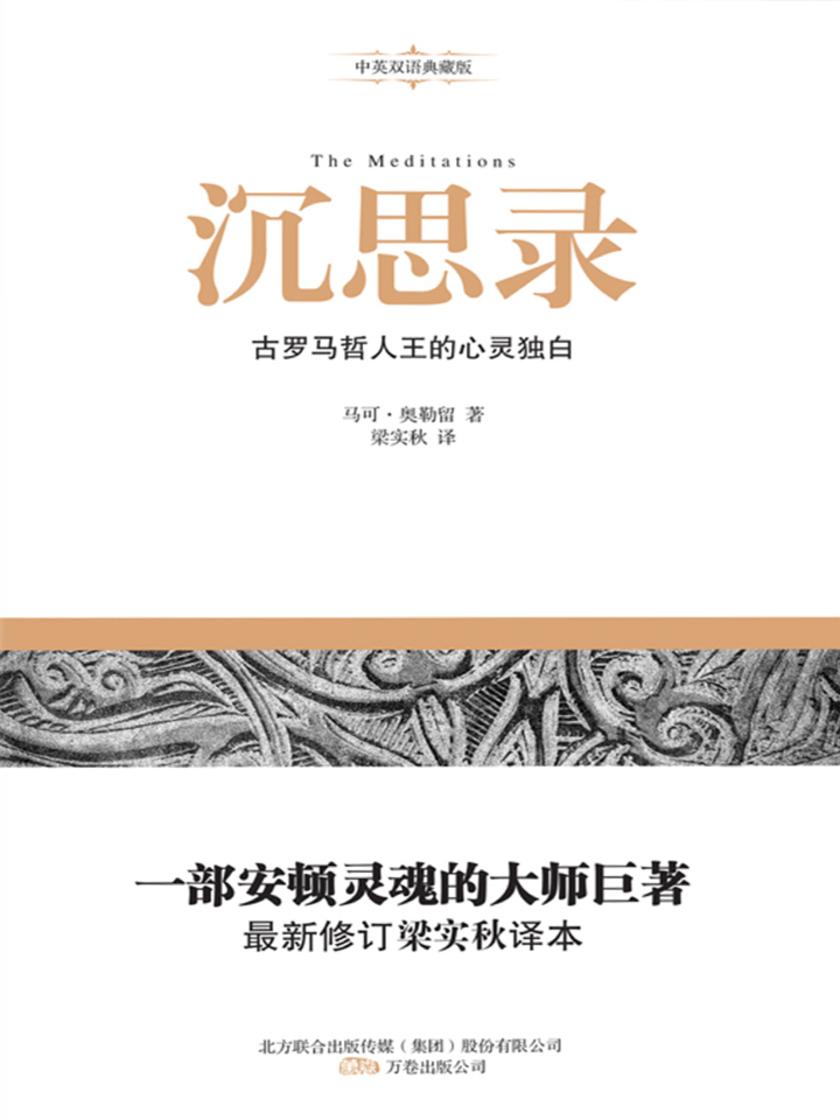
Such is the system which underlies the Meditations of Marcus Aurelius. Some knowledge of it is necessary to the right understanding of the book, but for us the chief interest lies elsewhere. We do not come to Marcus Aurelius for a treatise on Stoicism. He is no head of a school to lay down a body of doctrine for students; he does not even contemplate that others should read what he writes. His philosophy is not an eager intellectual inquiry, but more what we should call religious feeling. The uncompromising stiffness of Zeno or Chrysippus is softened and transformed by passing through a nature reverent and tolerant, gentle and free from guile; the grim resignation which made life possible to the Stoic sage becomes in him almost a mood of aspiration. His book records the innermost thoughts of his heart, set down to ease it, with such moral maxims and reflections as may help him to bear the burden of duty and the countless annoyances of a busy life. It is instructive to compare the Meditations with another famous book, the Imitation of Christ. There is the same ideal of self-control in both. It should be a man's task, says the Imitation, 'to overcome himself, and every day to be stronger than himself.' 'In withstanding of the passions standeth very peace of heart.' 'Let us set the axe to the root, that we being purged of our passions may have a peaceable mind.' To this end there must be continual self-examination. 'If thou may not continually gather thyself together, namely sometimes do it, at least once a day, the morning or the evening. In the morning purpose, in the evening discuss the manner, what thou hast been this day, in word, work, and thought.' But while the Roman's temper is a modest self-reliance, the Christian aims at a more passive mood, humbleness and meekness, and reliance on the presence and personal friendship of God. The Roman scrutinises his faults with severity, but without the self-contempt which makes the Christian 'vile in his own sight.' The Christian, like the Roman, bids 'study to withdraw thine heart from the love of things visible'; but it is not the busy life of duty he has in mind so much as the contempt of all worldly things, and the 'cutting away of all lower delectations.' Both rate men's praise or blame at their real worthlessness; 'Let not thy peace,' says the Christian, 'be in the mouths of men.' But it is to God's censure the Christian appeals, the Roman to his own soul. The petty annoyances of injustice or unkindness are looked on by each with the same magnanimity. 'Why doth a little thing said or done against thee make thee sorry? It is no new thing; it is not the first, nor shall it be the last, if thou live long. At best suffer patiently, if thou canst not suffer joyously.' The Christian should sorrow more for other men's malice than for our own wrongs; but the Roman is inclined to wash his hands of the offender. 'Study to be patient in suffering and bearing other men's defaults and all manner infirmities,' says the Christian; but the Roman would never have thought to add, 'If all men were perfect, what had we then to suffer of other men for God?' The virtue of suffering in itself is an idea which does not meet us in the Meditations. Both alike realise that man is one of a great community. 'No man is sufficient to himself,' says the Christian; 'we must bear together, help together, comfort together.' But while he sees a chief importance in zeal, in exalted emotion that is, and avoidance of lukewarmness, the Roman thought mainly of the duty to be done as well as might be, and less of the feeling which should go with the doing of it. To the saint as to the emperor, the world is a poor thing at best. 'Verily it is a misery to live upon the earth,' says the Christian; few and evil are the days of man's life, which passeth away suddenly as a shadow. ? ? ? ? ? ? ? ? ? ? ? ? ? ? ? ? ? ? ? ? ? ? ? ? ? ? ? ? ? ? ? ? ? ? ? ? ? ? ? ? ? ?*** ? "MARCUS AURELIUS ANTONINUS" was born on April 26, A.D. 121. His real name was M. Annius Verus, and he was sprung of a noble family which claimed descent from Numa, second King of Rome. Thus the most religious of emperors came of the blood of the most pious of early kings. His father, Annius Verus, had held high office in Rome, and his grandfather, of the same name, had been thrice Consul. Both his parents died young, but Marcus held them in loving remembrance. On his father's death Marcus was adopted by his grandfather, the consular Annius Verus, and there was deep love between these two. On the very first page of his book Marcus gratefully declares how of his grandfather he had learned to be gentle and meek, and to refrain from all anger and passion. The Emperor Hadrian divined the fine character of the lad, whom he used to call not Verus but Verissimus, more Truthful than his own name. He advanced Marcus to equestrian rank when six years of age, and at the age of eight made him a member of the ancient Salian priesthood. The boy's aunt, A
A, mint alibi
A, mint alibi
Patricia MacDonald
¥66.79
Magyarázatok a Srimad-Bhagavatam tizedik éneke harminckettedik fejezetének 16-22. versáhez, az el?z? acaryák írásai alapján. A Na pāraye ’ham három része ?rī K???a, ?rī Caitanya Mahāprabhu és ?rīmatī Rādhārā?ī szeretetét mutatja be. Szeretetük egy-egy hatalmas folyóként h?mp?ly?g a prema óceánja felé. ?cāryáink kegyéb?l a bhakták megérinthetik ennek az óceánnak a partját, s néhány cseppnyi nektárt megízlelhetnek bel?le.
MALARIA: История военного переводчика
Андрей Мелехов (Терехов)
¥11.77
A partir de uma sugest?o de Gilles Deleuze e Félix Guattari – a de que todos os filósofos ocidentais terminaram construindo, no interregno do seu pensamento, personagens conceituais, uma espécie de assinatura do filósofo – este livro objetiva identificar esse tra?o a partir da obra de Michel Foucault. A tese em quest?o é que este autor n?o se enquadra em uma imagem única, como a do Juiz em Kant, ou a do sedutor em Kierkegaard, mas em uma imagem híbrida e triádica, fazendo coro com muitos filósofos chamados de transversais e que se instalaram no horizonte de filosofias chamadas de pós-estruturalistas, como Deleuze.
Безжальна правда про нещадний б?знес
Ben Horowitz
¥24.53
Em Vida sem Princípio , Henry David Thoreau nos apresenta um verdadeiro manual de como viver em sociedade e em contato com a Natureza respeitando a natureza e ao próximo.? puro Transcendentalismo , um apelo para que cada um siga a sua própria luz interior.Este ensaio foi obtido a partir da palestra''What Shall It Profit? ''apresentada ao publico em 06 de dezembro de 1854, no Sal?o Railroad em Providence Rhode Island.Foi publicado pela primeira vez na edi??o de outubro de 1863 The Atlantic Monthly, onde foi dado o título moderno.Vida sem Princípio é um ensaio em que Thoreau coloca o seu programa para viver bem. Incluem-se aqui as suas ideias sobre a forma de abordagem da comunica??o interpessoal, modos de trabalho, sustento financeiro e outros códigos de conduta baseados na filosofia de de vida de Thoreau.'
59元6本 佛经概说
佛经概说
慈惠法师
¥18.00
本书以白话文方式,将佛经中之要义糅以现实生活掌故、譬喻,加以阐释。本书所讲说之经典内容,蕴含为人处世之道、修行之要方,对于忙碌的现代人来说,疲累、繁忙之余,此书无异是寂静心灵的精神甘露。本书旨在藉由佛经之略述,启发读者探究佛法之心。
59元6本 往生有分
往生有分
妙莲
¥18.00
妙莲长老对净土法门的示,包括佛七、过堂、对佛学院学僧的始等等。
59元6本 创造进化论(诺贝尔文学奖获奖作品)
创造进化论(诺贝尔文学奖获奖作品)
(法)亨利·柏格森著 刘霞译
¥15.99
《创造化论》是法国哲学大师柏格森的*之作,更是为他带来诺贝尔文学奖的传世名著。本书站在生命化的角度演绎生命的发展历程,不同于环境决定物种演化的观,创造化论主张的是生命存在一种与生俱来的冲力,而这种冲力才是决定物种化繁衍的主要推动力量。 《创造化论》一书结合了生命哲学的有关内容,成为人类史上重新建构哲学的重要典范,它提出意识具有延续性,而一个强有力的证据便是生命的存在。 同时《创造化论》还为人类那神秘莫测的直觉做出了相应的解读,从而披上了一层神秘主义的色彩。作为诺贝尔文学奖作品,《创造化论》也在解放人类思想方面作出了巨大的贡献。