


 购物车
 个人中心

Ahead of the Market
¥90.77
Beat the Pros at Their Own Game All too often, you learn about good stocks far too late to profit from the information. By the time you actually buy a stock, professional investors have already been there, bought the stock, driven up the price, and are just waiting to unload it at an inflated price.All That's About to Change. . . .In Ahead of the Market, Mitch Zacks shows investors how they can spot stocks that are poised to take off long before the rest of the crowd learns about them. HowBy unlocking the gems of priceless information buried in Wall Street's often self-serving research. Ahead of the Market is the first book, ever, that enables you to profitably use the analyst stock research for which Wall Street firms pay more than one billion dollars annually. Many investors have rightly felt misled in the past by analysts who continued to hype stocks as prices plummeted. You may have even concluded that Wall Street research is totally worthless. But it's not.In Ahead of the Market, Mitch Zacks shows that analysts actually provide a wealth of market-moving information that can generate exceptional returns if interpreted correctly.The key is to use the research produced by Wall Street analysts the same way the professional money managers do.Pioneered by the firm Zacks Investment Research and based on more than twenty years of intensive analysis, the investment strategies revealed in this book are indeed the same ones used by successful professional investors everywhere.In these pages you will learn how to form an investment plan by locating stocks that are poised for price appreciation and avoiding stocks heading for a fall. Zacks shows how you could have prevented being burned when the recent bubble burst, if you had known how to use analyst research correctly and teaches you the rules of the research game so you will not fall victim the next time around. In sum, this book is your guide to picking the right stock at the right time.Mitch Zacks's groundbreaking research provides new insights and new strategies to: Use revisions to analysts' earnings estimates to predict the rise and fall of stock prices Interpret the real meaning behind analysts' stock recommendations Employ the "cockroach" phenomenon and other methodologies to predict earnings surprises before they occur Determine how to react when a company reports earnings and how to profit from "post-earnings announcement drift" Understand and profit from "analyst creep" the reason that earnings estimate revisions occur incrementally over time Avoid being duped by the games that companies play with their earnings reportsWhether the economy is healthy or stalled, whether the market is up or down, by focusing on the strategies contained in this book you will always come out ahead. Well-picked individual stocks will always carry the day. Now with Ahead of the Market, you will finally have the same tools institutional investors have and will be able to find great stocks in any market environment.
Alpha Dogs
¥83.93
Take an ordinary business. A bike shop. An auction company. An ice cream parlor. A sock manufacturer. In thoroughly mundane businesses like these, an entrepreneur must outsmart the multitudes of competitors, leap to the head of the pack, and become a dominant Alpha Dog.Exactly how does an everyday company distinguish itself in the marketplace, generate much higher sales than its competitors, and earn the lasting loyalty of customers and employeesIs it cutting-edge productsBrilliant serviceIngenious branding?Donna Fenn, a twenty-year veteran of Inc. magazine, has discovered the people who have the answers. In a personal and probing style, she introduces you to eight Alpha Dogs. These men and women share their solutions and insights on how to rise to the top, despite multiple competitors, from Chinese manufacturers to Wal-Mart.Readers will meet: Chris Zane, an intense, ambitious father of three boys. His Branford, Connecticut, retail bike shop has flourished among Wal-Mart, Sports Authority, and independent bike stores. He's done it by seeking out new markets and perfecting the art of customer service. Deb Weidenhamer, a tough woman in a male-dominated industry who transformed a traditional auction company with cutting-edge technology. While her competitors were still fretting about eBay, she was using the online auction giant as a training ground for her own innovative Web site. Amy Simmons, a former premed student who fell in love with the ice cream business in Boston and then founded her own ice cream parlor in Austin, Texas. With twelve Amy's Ice Creams stores in Austin, Amy's is the Austin hometown favorite, despite her deep-pocketed rivals, Ben Jerry's and Cold Stone Creamery. In accessible, conversational style, Donna Fenn tells each entrepreneur's personal story, shares their winning formulas, and offers nuts-and-bolts advice and practical tips. Alpha Dogs is a lively handbook for every current and aspiring entrepreneur.
Revolt in the Boardroom
¥83.93
Throughout the 20th century, American corporations were governed by autocratic, almost unaccountable chief executives. Their word was law and the only check on their power was a board of directors composed of their friends and allies.Then, in a stunning reversal, a momentous series of firings deposed the heads of some of the world's best-known companies: AIG, Morgan Stanley, Boeing, Hewlett-Packard and Pfizer, just to name a few. Formerly unchallenged CEOs found themselves under fire, often from their own handpicked boards. The number of deposed executives is astonishing. In 2004, the leaders of 600 companies were asked to leave. That number more than doubled in 2005 and reached 1,400 companies in 2006.Flexing new muscles, directors are assuming new and unfamiliar responsibilities. In Revolt in the Boardroom, Alan Murray reveals the inner workings of the new seat of power. Using the access afforded to him by his influential Wall Street Journal column, Murray tells the story of three seminal board revolts the now-famous Hewlett-Packard drama, the ousting of Boeing's Harry Stonecipher and the end of the reign one of the world's most autocratic executives, Hank Greenberg at AIG.Murray goes further to chart the history of the corporation, the rise of governance and the effects of the new power gained by outside institutions like hedge funds and interest groups. Through it all, Murray shows how the job of chief executive has rapidly and permanently changed. Leaders like A. G. Lafley and Jeff Immelt govern instead of rule, build alliances and support instead of dictating direction and pay careful attention to a broader range of stakeholders than ever before.Revolt in the Boardroom is the first look at the new world of corporate power and the last word on the transformational events of the last two years.
You Can't Win a Fight with Your Client
¥83.93
In this follow-up to You Can't Win a Fight with Your Boss, Tom Markert returns to provide clever, timeless advice on how to offer exceptional service. The most important ruleYou can't win a fight with your client! As American companies large and small have shifted their focus from manufacturing to providing services, keeping clients satisfied has become critical to the survival of every business. Yet, very few people have mastered the art of managing clients successfully. In You Can't Win a Fight with Your Client, Tom Markert argues that the secret to great service lies in understanding and applying a few fundamentals. In fifty small doses, he provides practical advice on how to manage your relationships with your clients and ensure they receive the kind of service that will keep them coming back for more.A perfect resource for anyone working with clients at any level, You Can't Win a Fight with Your Client is the no-nonsense, straightforward guide to keeping clients happy in today's hypercompetitive and demanding business environment.
The House of Harper
¥95.39
The epic story of a publishing giantIn 1817 four young brothers opened a printing shop in downtown Manhattan. Two centuries later, their small enterprise has grown into one of the world's largest and most successful publishing houses. The Harper brothers and their sons and successors created a grand cultural institution that has become a cornerstone of America's literary heritage.Eugene Exman's classic history, published in 1967, The House of Harper is the fascinating account of the birth and growth of a magnificent literary empire. Richly detailed, it is filled with portraits of dynamic publishers and editors, with remarkable anecdotes about the legendary artists and authors whose works they championed and brought to the general public Charles Dickens, George Eliot, Herman Melville, Mark Twain, Winslow Homer, Henry James, Edna St. Vincent Millay, Thomas Wolfe, and Aldous Huxley, to name but a few. More than the enthralling saga of a successful business venture, it is a story of the shaping of American literature and culture.
The Girl's Guide to Starting Your Own Business
¥90.77
Geared toward the unique challenges faced by self-employed businesswomen and updated for the social media-driven, post-financial crisis world The Girl's Guide to Starting Your Own Business offers solutions and advice for handling a range of issues, including how to write a business plan, how to secure funding, and how to hire (and fire) employees. Caitlin Friedman and Kimberly Yorio share practical information drawn from their own extensive experience in the public relations, marketing, and consulting fields. Their concise and engaging advice is explained through entertaining tips, lists, and quizzes that speak directly to women who are dreaming of starting, or have already started, their own businesses.
Best Practices: Motivating Employees
¥72.70
In today's high-pressure workplace, motivating all employees to consistently contribute their best can mean the difference between success and failure. Motivating Employees, a comprehensive and essential resource for any manager on the run, shows you how.Learn to: Inspire employees to succeed Improve performance through coaching Minimize the impact of common de-motivators Create a fair and consistent reward system Turn negative experiences into positive, motivational opportunities The Collins Best Practices guides offer new and seasoned managers the essential information they need to achieve more, both personally and professionally. Designed to provide tried-and-true advice from the world's most influential business minds, they feature practical strategies and tips to help you get ahead.

Use The News
¥78.32
Explaining the methods that have made her -- and her stock picks -- famous, Maria Bartiromo tells investors how to use hot information to make money in any market, raging bull or lumbering bear. Packed with sage advice from the most influential people on Wall Street, Use the News is an indispensable investment handbook that will disclose the Wall Street insiders' secrets and show you how to take control of your investments.
Best Practices: Difficult People
¥72.70
Every office has someone who's no fun to be around. But getting along with that person and managing them effectively can make both your jobs easier. Difficult People, a comprehensive and essential resource for any manager on the run, shows you how.Learn to: Recognize why and when people act out Identify different types of difficult people Cope with difficult behavior Get the most out of trouble employees Nurture a harmonious work environment The Collins Best Practices guides offer new and seasoned managers the essential information they need to achieve more, both personally and professionally. Designed to provide tried-and-true advice from the world's most influential business minds, they feature practical strategies and tips to help you get ahead.

Best Practices: Time Management
¥72.70
There are only twenty-four hours in a day, but you can make them count. Time Management, a comprehensive and essential resource for any manager on the run, shows you how.Learn to: Set and prioritize goals, objectives, and tasks Create an effective schedule Avoid distractions and interruptions Respect other people's time Build a time-conscious organization The Collins Best Practices guides offer new and seasoned managers the essential information they need to achieve more, both personally and professionally. Designed to provide tried-and-true advice from the world's most influential business minds, they feature practical strategies and tips to help you get ahead.
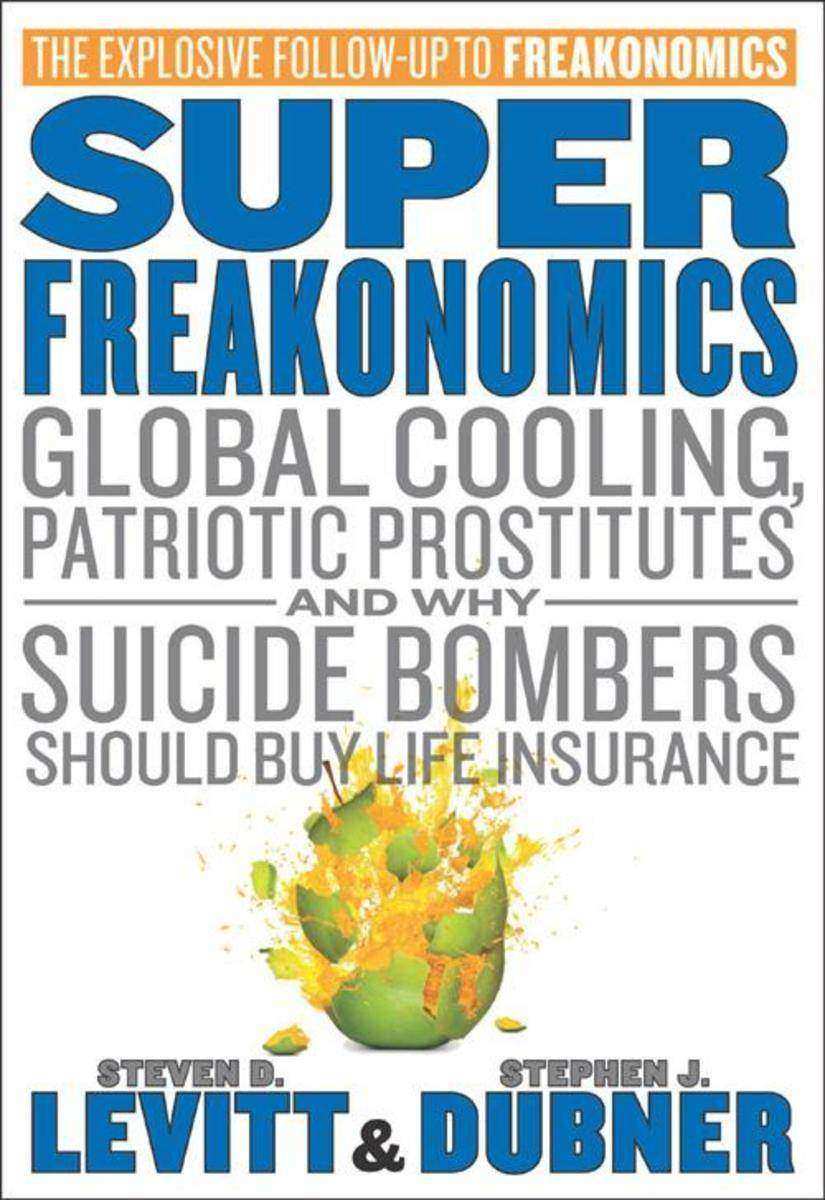
SuperFreakonomics
¥95.11
The New York Times best-selling Freakonomics was a worldwide sensation, selling over four million copies in thirty-five languages and changing the way we look at the world. Now, Steven D. Levitt and Stephen J. Dubner return with SuperFreakonomics, and fans and newcomers alike will find that the freakquel is even bolder, funnier, and more surprising than the first. Four years in the making, SuperFreakonomics asks not only the tough questions, but the unexpected ones: What's more dangerous, driving drunk or walking drunkWhy is chemotherapy prescribed so often if it's so ineffectiveCan a sex change boost your salarySuperFreakonomics challenges the way we think all over again, exploring the hidden side of everything with such questions as: How is a street prostitute like a department-store SantaWhy are doctors so bad at washing their handsHow much good do car seats doWhat's the best way to catch a terroristDid TV cause a rise in crimeWhat do hurricanes, heart attacks, and highway deaths have in commonAre people hard-wired for altruism or selfishness?Can eating kangaroo save the planetWhich adds more value: a pimp or a RealtorLevitt and Dubner mix smart thinking and great storytelling like no one else, whether investigating a solution to global warming or explaining why the price of oral sex has fallen so drastically. By examining how people respond to incentives, they show the world for what it really is good, bad, ugly, and, in the final analysis, super freaky. Freakonomics has been imitated many times over but only now, with SuperFreakonomics, has it met its match.
The Watson Dynasty
¥95.39
For an extraordinary fifty-seven-year period, one of the nation's largest and fastest-growing companies was run by two men who were flesh and blood. The chief executives of the International Business Machines Corporation from 1914 until 1971 were Thomas J. Watson and Thomas J. Watson, father and son. That great corporation bears the imprint of both men -- their ambitions and their strengths -- but it also bears the consequences of a family that was in near-constant conflict.Sometimes wrong but never in doubt, both Watsons had clear -- and farsighted -- visions of what their company could become. They also had volcanic tempers. Their fights with each other combined with their commitment to leadership and excellence made IBM one of the most rewarding, yet gut-clutching firms to work for in the history of American business.We are accustomed to describing professional behavior as if men and women leave their emotions and vulnerabilities at home each day. In the case of the Watsons, filial and sibling strife could not be excluded from the office. In closely studying the desires and frustrations of the Watson family, eminent historian Richard S. Tedlow has produced something more than a family portrait or a company history. He has raised the nearly forbidden issue of the role of emotion in corporate life.This book explores the interplay between the person- alities of these two extraordinary men and the firm they created. Both Watsons had deeply held beliefs about what a corporation is and should be. These ideas helped make "Big Blue" the bluest of blue-chip stocks during the Watsons' tenure. These very beliefs, however, also sowed the seeds for IBM's disasters in the late 1980s and early 1990s, when the company had lost sight of the original meaning behind many of the practices each man put into place.Tracing the family's idiosyncratic ability to cope with each other's weaknesses but not their strengths, The Watson Dynasty is a book for every person who ever went to work but didn't want to check his personality at the door.
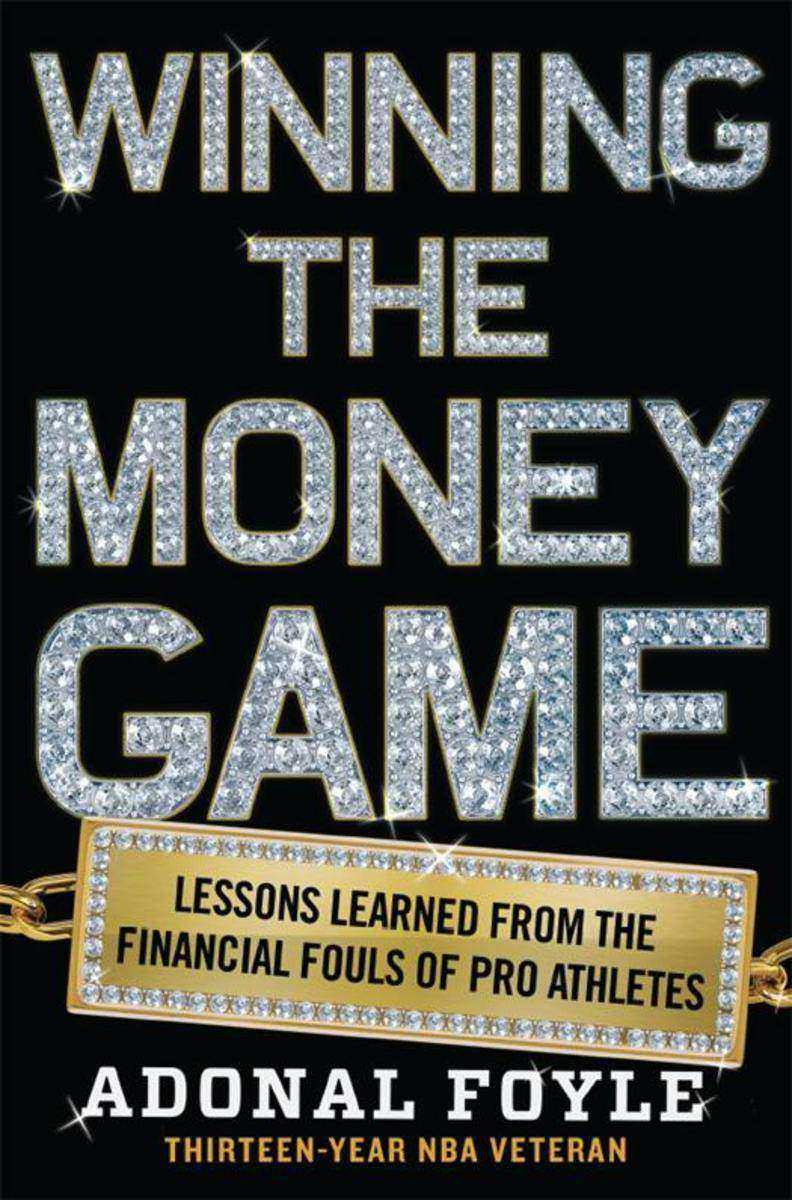
Winning the Money Game
¥94.10
Former NBA center Adonal Foyle has seen athletes burn through millions on women, large entourages, family gifts, gambling debts even shark tanks! Such spending habits are partly responsible for 60 percent of NBA players going broke within five years of retirement and nearly 80 perfect of NFL players being strapped within two.Rich with anecdotes from a sports insider, Winning the Money Game shows you how to avoid the financial fouls of athletes. Foyle gives you the straight, offering guidance on a wide range of money matters, from taxes to alimony, from child support to medical bills, and so much more. He beaks down expenses point by point, illustrating the difference between luxury items and family needs, and lays out the essential dos and don'ts to help you spend, save, and grow your money wisely.
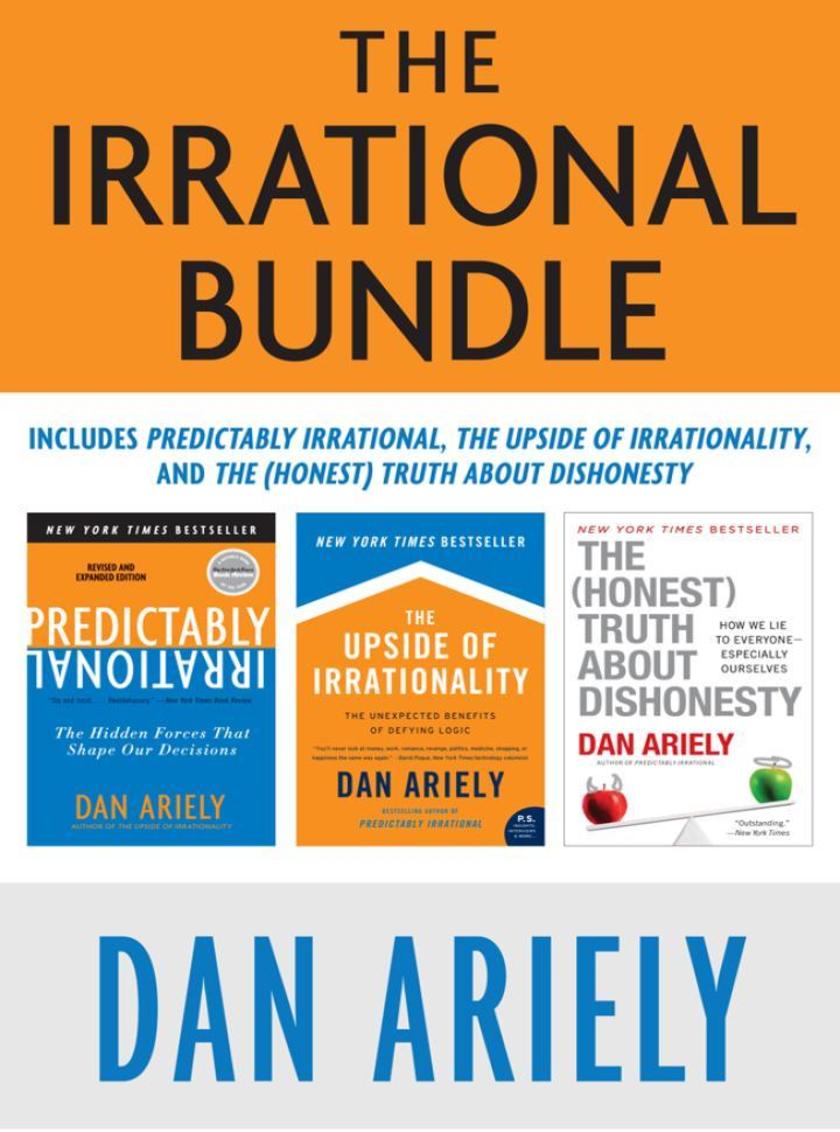
The Irrational Bundle
¥323.63
Dan Ariely's three New York Times bestselling books on his groundbreaking behavioral economics research, Predictably Irrational, The Upside of Irrationality, and The (Honest) Truth About Dishonesty, are now available for the first time in a single volume.
So You Want to Write a Novel
¥84.16
You know there is a novel locked inside of you chock-full of conflict, humor, irony, enthralling events and fascinating characters. What you don't know is how to set it free.Practical Advice, Hands-On HelpRespected author and professional writing instructor Lou Willett Stanek's New York workshops have enabled scores of aspiring novelists to realize their dreams of completing credible and compelling manu*s. Here, in a positive, user-friendly format, she offers not only encouragement and motivation, but Clear, Step-By-Step Instructions To Accomplish Your Goal from original conception through final draft.Learn How To: Set up and stick to a writing schedule Create unforgettable characters Follow strong plotting and solid structure guidelines Choose a viewpoint and develop conflict Handle flashbacks and transitions Not Just Philosophy Or A Simple Motivational Tool, This Is The Book That Tells You How To Succeed
The Strategist: Be the Leader Your Business Needs
¥69.26
Strategy is about identifying why your business matters, not just analysing the competition. Cynthia Montgomery reveals how leaders can embrace the crucial role of The Strategist to really define and drive the objectives and advantages to power their companies forward. Cynthia Montgomery teaches the globally-renowned EOP (Entrepreneur, Owner, President) course at Harvard Business School, one of Harvard’s most oversubscribed executive courses. Participants are all seasoned executives, owners, CEOs, or COOs of privately held companies who pay tens of thousands of dollars to attend, with the goal of learning how to be more effective leaders and how to make their companies more successful. Montgomery’s course teaches them a totally new way to understand leadership, a way that fuses leadership with strategy. Her approach calls for a reset of current thinking about both. She shows that strategy is not just a tool for outwitting the competition – it is the most powerful means a leader has for shaping a firm itself. Montgomery takes the readers through the paces of her world-renowned course, teaching them how to develop the skills and sensibilities that living strategy and real leadership demand. No other book marries strategy and leadership in the same way – a way readers will find challenging, intriguing, and ultimately, inspiring.
A New Model of Economy
¥24.44
This book offers a radical revision of modern economic theory. Its starting point is the existing body of both micro and macro economics, as developed in such textbooks as Economics by Begg, Fischer and Dornbusch and Positive Economics by Lipsey and Chrystal. Following a similar framework to these books, it adjusts the whole range of theory by introducing some new concepts and other earlier ones that have been much neglected in the economic thought of the past century. These are related especially to the fundamental part played by land, in it proper sense of all natural resources available on the earth, the significance of credit, especially through the banking system, and the crucial impact of the method of taxation. The resulting analysis yields a thoroughly revised version of the contemporary model of a capitalist economy, so that a genuine ‘third way’ is revealed. This is not a mere modification of the present system of absentee ownership confronting a market for labour, with all the attendant evils of unemployment, monopoly and maldistribution of wealth and income. Rather it is a system based upon natural law, exhibiting economic security for all, fair distribution of output and, above all, the opportunity for self-fulfillment through work. The ‘new model’ draws upon the masters of economic thought from Smith and Ricardo to Marshall, Schumpeter and Keynes, by highlighting concepts often omitted from current studies of their works; such as Ricardo’s analysis of scarcity and differential elements of rent, Schumpeter’s view of the role of banking and Keynes’s hints at a labour theory of value. Indeed this far-reaching revision makes bold advances upon the Marshallian theory of the firm and the Keynesian theory of national income determination, thus providing new insights into both micro and macro theory. It remains faithful, however to the tradition of these latter thinkers in explaining matters fully in words, and resorting to mathematics mainly through the use of diagrams intelligible to anyone with an elementary grasp of the subject. Whilst the book strives to avoid value judgements in the interests of social science, it undoubtedly carries strong implications about economic policy. These are bound up with the central notions of free land and free credit, which have been singularly ignored by policy-makers since a few valiant attempts to introduce them in the early twentieth century. Hence the ‘new model’ is offered to both theorists and practitioners of economics, to politicians and public servants, but particularly to those who, like the author, truly seek a new vision of the subject.
Boom Bust
¥24.44
In the two and a half years since the first edition appeared (April 2005), events have unfolded as predicted. Then the consensus among forecasters was that the boom in house prices would cool to an annual 2 or 3% rise over the following years. In fact, in keeping with the ‘winner’s curse’ phase of the cycle described by the author, prices rose by more than 10% per annum in Britain. Harrison’s first book, The Power in the Land, predicted the early 1990s recession. Boom Bust, warned that investing in property is not always a safe bet, because the housing market is subject to a sharp downturn at the end of a remarkably regular 18-year cycle. The crash of 2007/8 occurred exactly as predicted. His forecast was based on a careful study of the evidence from property markets in many countries over the last 200 years. Gordon Brown’s claim, last made in his 2007 Budget speech, that ‘we will never return to the old boom and bust’ has been proved false. The reason for the instability, Harrison explains, is not the housing market itself but the land market on which all buildings stand. Land is in fixed supply ‘ as Mark Twain noted: ‘They’re not making any more of it’. Therefore, as the demand for land for new homes and offices rises with population growth and economic expansion, market forces, which normally increase supply to reduce prices, have the reverse effect: prices rise. This encourages speculation, with banks lending more against escalating asset values and reinforcing the upward spiral. Under existing government policies, the only way land prices can be brought back to affordable levels is a slump, undermining the banking system and causing widespread unemployment and repossessions. This is exactly what happened in America with the collapse of the sub-prime mortgage market. The run on Northern Rock showed the UK economy is not immune. The author reveals that the government’s monetary policy only has a marginal impact on land speculation, but as the Bank of England raises interest rates to curb house price inflation, the main victim is the first-time buyer and the productive economy, especially small businesses. The only way to neutralise the boom bust cycle in the housing market is through a reform of taxation, he claims. ‘This book is an important contribution to an overdue debate.’ Martin Ricketts, Chairman of the Academic Advisory Council of the Institute of Economic Affairs and Professor of Economic Organisation, University of Buckingham. Endorsing the thrust of Harrison’s argument, Prof. Ricketts goes on to acknowledge ‘that insufficient attention has been given by policymakers to the rent of land as socially the most efficient source of public revenue’, and that that will ‘have important practical consequences … for the stability of the economic system’. Economic stability is the objective of Gordon Brown and most governments around the world. Harrison explains how this may be achieved.
The 22 Immutable Laws of Branding
¥105.17
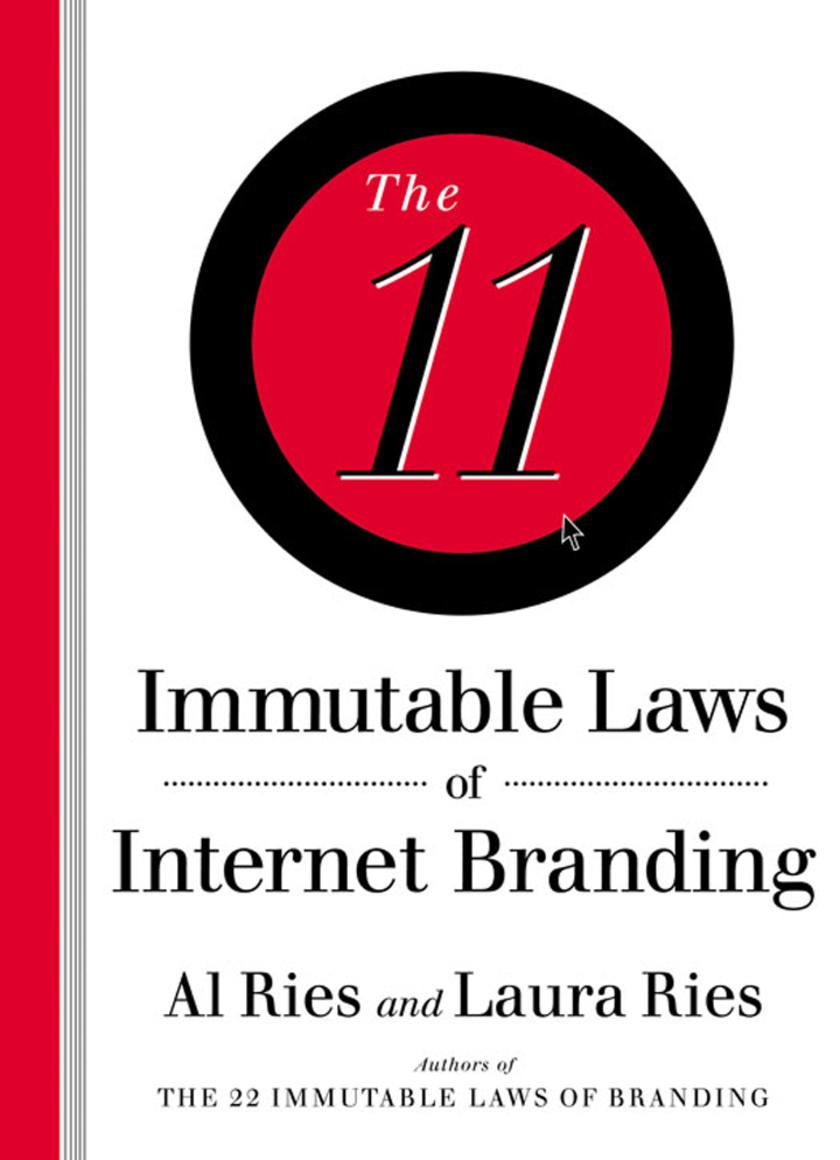
This marketing classic has been expanded to include new commentary, new illustrations, and a bonus book: The 11 Immutable Laws of Internet Branding Smart and accessible, The 22 Immutable Laws of Branding is the definitive text on branding, pairing anecdotes about some of the best brands in the world, like Rolex, Volvo, and Heineken, with the signature savvy of marketing gurus Al and Laura Ries. Combining The 22 Immutable Laws of Branding and The 11 Immutable Laws of Internet Branding, this book proclaims that the only way to stand out in today's marketplace is to build your product or service into a brand and provides the step-by-step instructions you need to do so. The 22 Immutable Laws of Branding also tackles one of the most challenging marketing problems today: branding on the Web. The Rieses divulge the controversial and counterintuitive strategies and secrets that both small and large companies have used to establish internet brands. The 22 Immutable Laws of Branding is the essential primer on building a category-dominating, world-class brand.
On Speaking Well
¥88.56
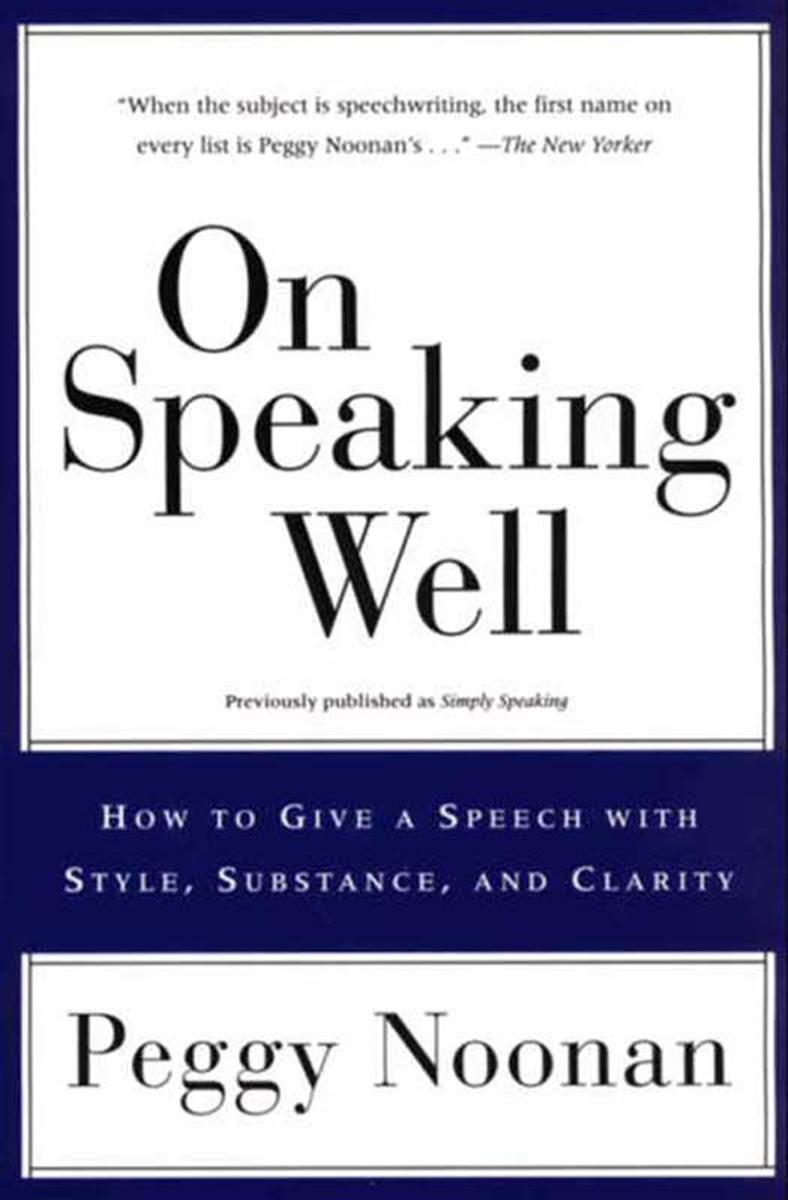
For anyone who fears the thought of writing and giving a speech--be it to business associates, or at a wedding--help is at hand. Acclaimed presidential speechwriter Peggy Noonan shares her secrets to becoming a confidence, persuasive speaker demystifying topics including: Finding you own authentic voice Developing a text that interest you Acing the all-important first paragraph Using logic to move your audience Creating, developing, and reinventing the "core speech" for diverse audiences Strengthening your speech with a vital element: humor Winnowing your thought down to the essentials Handling professional jargon, clich s, and the sound bite syndrome Presenting your speech in the best way Collecting intellectual income--conversing your speech treasures Breaking all the rules and still succeeding Reading for inspiration--how to use the excellence of others Complete with lessons, tips and memorable examples, On Speaking Well shows us how to create forceful, persuasive, relevant speeches that will resonate with our audiences. Engaging, informative, and always entertaining, this is undoubtedly the authoritative how-to guide for anyone writing or giving a speech

Political Economy of Pipelines
¥576.83
With global demand for energy poised to increase by more than half in the next three decades, the supply of safe, reliable, and reasonably priced gas and oil will continue to be of fundamental importance to modern economies. Central to this supply are the pipelines that transport this energy. And while the fundamental economics of the major pipeline networks are the same, the differences in their ownership, commercial development, and operation can provide insight into the workings of market institutions in various nations.?Drawing on a century of the world's experience with gas and oil pipelines, this book illustrates the importance of economics in explaining the evolution of pipeline politics in various countries. It demonstrates that institutional differences influence ownership and regulation, while rents and consumer pricing depend on the size and diversity of existing markets, the depth of regulatory institutions, and the historical structure of the pipeline businesses themselves. The history of pipelines is also rife with social conflict, and Makholm explains how and when institutions in a variety of countries have controlled pipeline behavior-either through economic regulation or government ownership-in the public interest.


