


 购物车
购物车 个人中心
个人中心
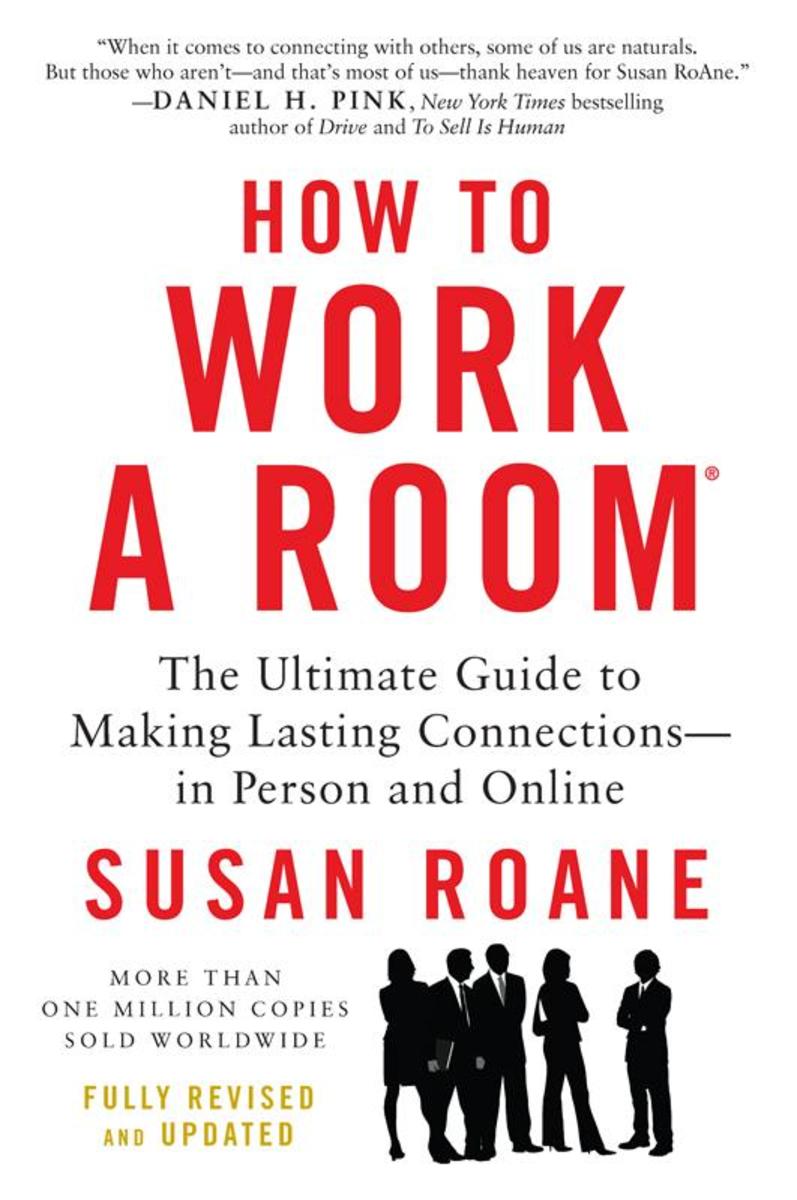
How to Work a Room, 25th Anniversary Edition
¥88.56
The classic bestseller on socializing now fully updated for social interactions in a digital ageHow to Work a Room is the classic bestselling book on improving communication and socializing skills, and using them to create and leverage connections. This Silver Anniversary Edition is fully revised and updated to include the role of technology and social media in networking, as well as Susan RoAne's proven tips for using digital strategies to your advantage plus practical hints for starting conversations and strengthening rapport with strangers. How to Work a Room: The 25th Anniversary Edition is a vital tool for business professionals, job seekers and career changers of all ages.
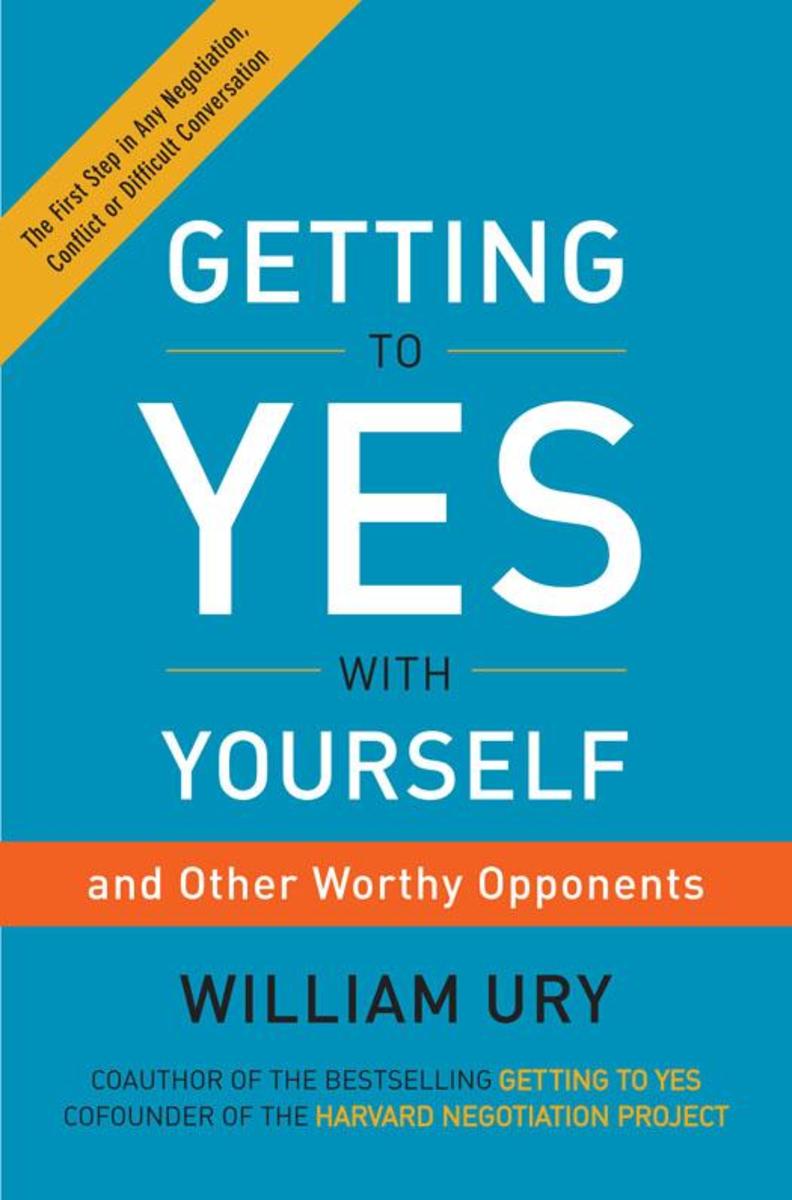
Getting to Yes with Yourself
¥151.10
William Ury, coauthor of the classic bestseller on negotiation Getting to Yes, has taught tens of thousands of people from all walks of life managers, salespeople, students, parents, lawyers, and diplomats how to become better negotiators. Over the years, Ury has discovered that the greatest obstacle to successful agreements and satisfying relationships is not the other side, as difficult as they can be. The biggest obstacle is actually ourselves our natural tendency to react in ways that do not serve our true interests.But this obstacle can also become our biggest opportunity, Ury argues. If we learn to understand and influence ourselves first, we lay the groundwork for understanding and influencing others. In this indispensable prequel to Getting to Yes, Ury draws deeply on his personal and professional experience negotiating conflicts around the world to present a practical method to help you get to yes with yourself first, dra-matically improving your ability to get to yes with others. Extraordinarily useful and elegantly simple, Getting to Yes with Yourself is an essential guide to achieving the inner satisfaction that will, in turn, make your life better, your relationships healthier, your family happier, your work more productive, and the world around you more peaceful.
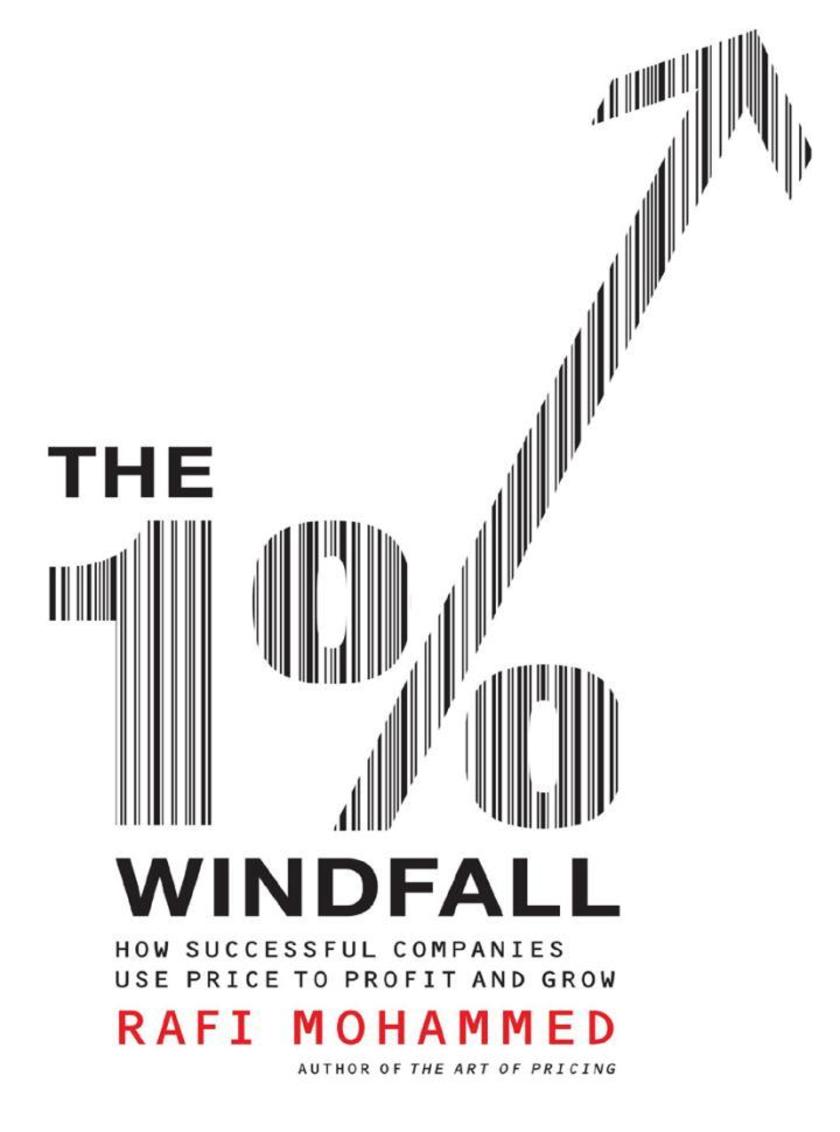
The 1% Windfall
¥166.09
Leading pricing expert Rafi Mohammed shows businesses how to reap a financial windfall and foster growth using the underutilized and often overlooked strategy of setting prices. The 1% Windfall reveals how modest incremental changes to an everyday business practice pricing can yield significant rewards. Illustrating the power of pricing, a study of the Global 1200 found that if companies raised prices by just 1%, their average operating profits would increase by 11%. Using a 1% increase in price, some companies would see even more growth in percentage of profit: Sears, 155%; McKesson, 100%; Tyson, 81%; Land O'Lakes, 58%; and Whirlpool, 35%.The good news is that better pricing is more than simply raising prices. Instead, the key is to offer customers a variety of pricing options. This strategy is win-win: profits to companies and choices for consumers. But how do executives and managers set the right priceUnderpinned by sound empirical research and real-life anecdotes, The 1% Windfall addresses this fundamental question. This book offers guidelines that any company whether a multinational conglomerate, a small business, or even a nonprofit can follow to create a comprehensive pricing strategy for any product or service. In addition, these versatile techniques and tools provide solutions to avert a slump in a recession, offset the impact of inflation, or battle a new competitor. The result is a mind-opening, clear blueprint for com-panies to price for profit and growth.
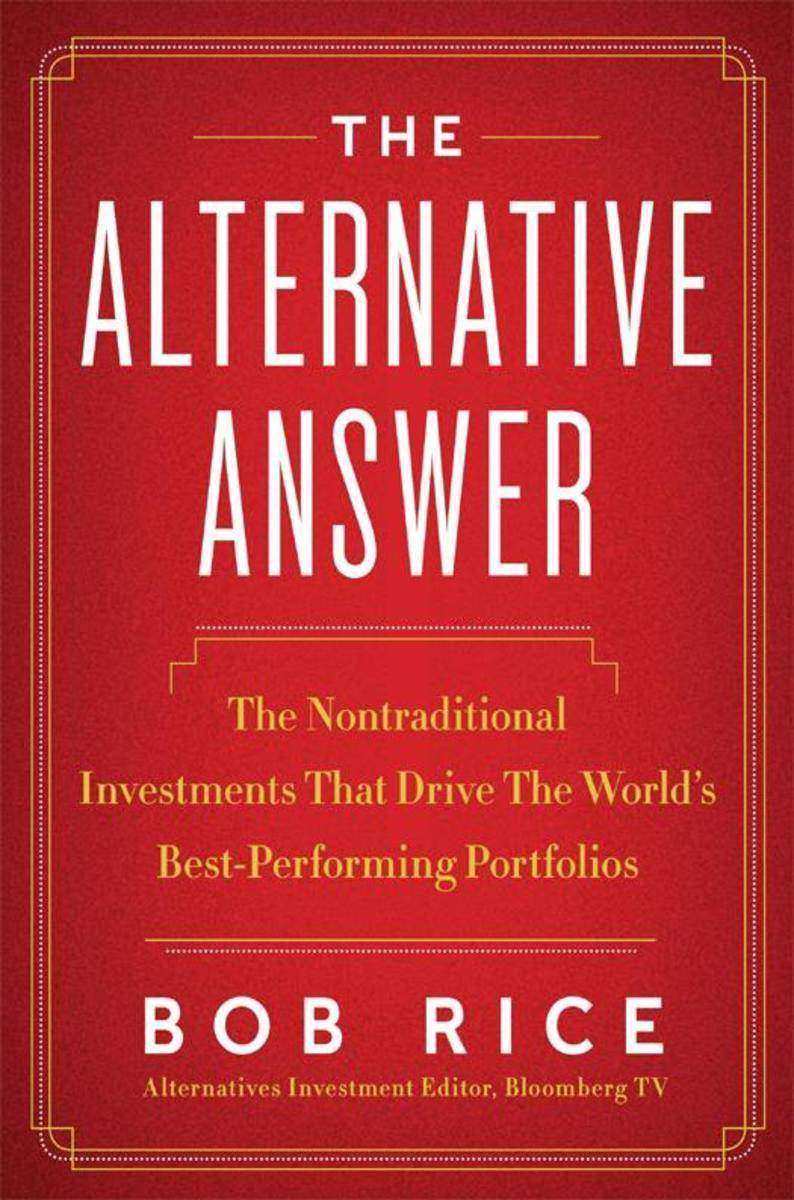
The Alternative Answer
¥155.02
The first book to explain the new world of alternative investing, showing how anyone can use nontraditional options to significantly increase returns and lower risksThe world's elite investors have long relied on alternative investments to produce superior returns. Until now, these strategies were the exclusive purview of institutions and the superwealthy, but today any informed investor can play the same game. A rainbow of investment options timber, start-ups, master limited partnerships (MLPs), hedged strategies, managed futures, infrastructure, peer-to-peer lending, farmland, and dozens of other nontraditional strategies can provide dramatically better gains, with less total risk, than the standard choices. In The Alternative Answer, Bob Rice, Bloomberg TV's Alternative Investments Editor, leads an entertaining and easy- to-understand tour of this world, and suggests specific alternative investments for all four key of a portfolio: safely generating more current income, decreasing risks of economic shocks, significantly increasing long-term profits, and protecting purchasing power over time.Regardless of experience or net worth, readers will learn exactly how to substantially improve investment performance in the same way that the world's best investors already do. Stocks and bonds alone aren't nearly enough. Investors need an alternative answer and now they have it.

The Transparent Leader
¥83.93
Drawing on his experience as a leader in some of the nation's largest corporations, Baum issues a convincing call for honest, ethical, "transparent" dealing throughout the business world. Baum outlines the management techniques he uses within and without the company to get outstanding results without skirting the rules or bending the truth. Baum maintains that by fostering trust, integrity and accountability at all levels within the corporation, managers can stop the erosion of employee loyalty, restore consumer trust in brands, products, and American business. Baum teaches executives fresh ways of managing Wall Street analysts, communicating with shareholders, and wading through the complex maze of social responsibility issues.As a member of six corporate boards, Baum offers unique insight into transparent leadership, including the advantages and pitfalls of corporate governance, and the pressures executives face in reporting earnings. He also discusses the importance of setting standards for ethical business practices, yet highlights the dangers of government regulations that may result in excessive compliance costs at the expense of shareholders, creative risk taking, and innovation.

Money-Driven Medicine
¥154.80
Why is medical care in the United States so expensiveFor decades, Americans have taken it as a matter of faith that we spend more because we have the best health care system in the world. But as costs levitate, that argument becomes more difficult to make. Today, we spend twice as much as Japan on health care—yet few would argue that our health care system is twice as good. Instead, startling new evidence suggests that one out of every three of our health care dollars is squandered on unnecessary or redundant tests; unproven, sometimes unwanted procedures; and overpriced drugs and devices that, too often, are no better than the less expensive products they have replaced. How did this happenIn Money-Driven Medicine, Maggie Mahar takes the reader behind the scenes of a $2 trillion industry to witness how billions of dollars are wasted in a Hobbesian marketplace that pits the industry's players against each other. In remarkably candid interviews, doctors, hospital administrators, patients, health care economists, corporate executives, and Wall Street analysts describe a war of "all against all" that can turn physicians, hospitals, insurers, drugmakers, and device makers into blood rivals. Rather than collaborating, doctors and hospitals compete. Rather than sharing knowledge, drugmakers and device makers divide value. Rather than thinking about long-term collective goals, the imperatives of an impatient marketplace force health care providers to focus on short-term fiscal imperatives. And so investments in untested bleeding-edge medical technologies crowd out investments in information technology that might, in the long run, not only reduce errors but contain costs. In theory, free market competition should tame health care inflation. In fact, Mahar demonstrates, when it comes to medicine, the traditional laws of supply and demand do not apply. Normally, when supply expands, prices fall. But in the health care industry, as the number and variety of drugs, devices, and treatments multiplies, demand rises to absorb the excess, and prices climb. Meanwhile, the perverse incentives of a fee-for-service system reward health care providers for doing more, not less. In this superbly written book, Mahar shows why doctors must take responsibility for the future of our health care industry. Today, she observes, "physicians have been stripped of their standing as professionals: Insurers address them as vendors ('Dear Health Care Provider'), drugmakers and device makers see them as customers (someone you might take to lunch or a strip club), while . . . consumers (aka patients) are encouraged to see their doctors as overpaid retailers. . . . Before patients can reclaim their rightful place as the center—and indeed as the raison d'être—of our health care system," Mahar suggests, "we must once again empower doctors . . . to practice patient-centered medicine—based not on corporate imperatives, doctors' druthers, or even patients' demands," but on the best scientific research available.
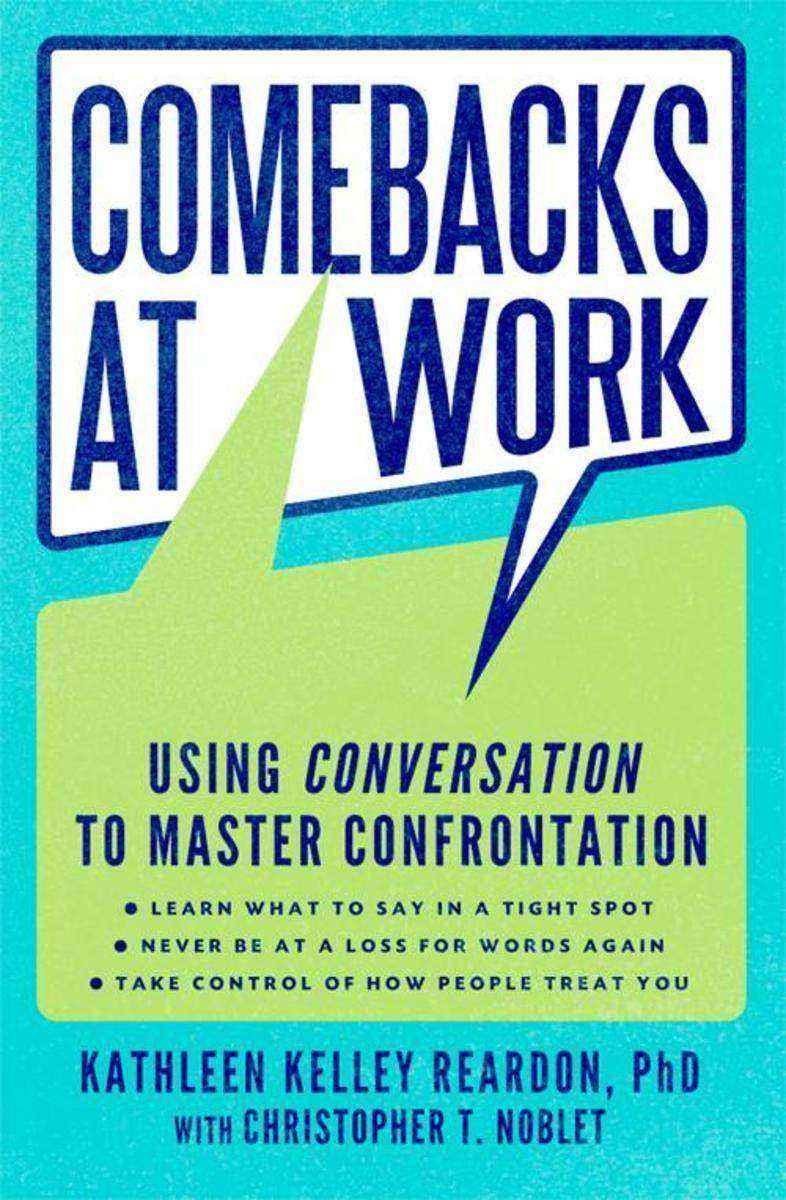
Comebacks at Work
¥138.41
The workplace guide to putting "I wish I'd said" moments in the past Ever wish that you could have a "do over" after a conversation at workDo you often find yourself regretting what you've said to a coworker or kicking yourself for not saying something better, stronger, or more preciseIf so, you're like most people, and in Comebacks at Work, management professor and consultant Kathleen Kelley Reardon, Ph.D., provides the tips and tools you need to know what to say and how to say it better next time.In this compelling, entertaining book, Reardon argues that we are responsible for 75 percent of the way we're treated at work, and our success or failure at the workplace depends largely on how we handle ourselves in conversation with our colleagues. To break free of the stale *s and expected actions that allow politically astute people to manipulate us, we must increase our conversational awareness and effectively employ what Reardon calls "comebacks." Comebacks at Work provides a game plan for doing so and explains: Why some comebacks work, while others fall flat; Why our mind goes blank when we are confronted, and how to overcome that response; How to determine which comebacks work, and when to use them. Every conversation is different, and while many situations are common, one set of comebacks isn't enough. Offering a personalized repertoire of comebacks and a plan for using them strategically as well as the skills you will need to package them for maximum effect, Comebacks at Work will prepare you for any difficult conversation that comes your way.
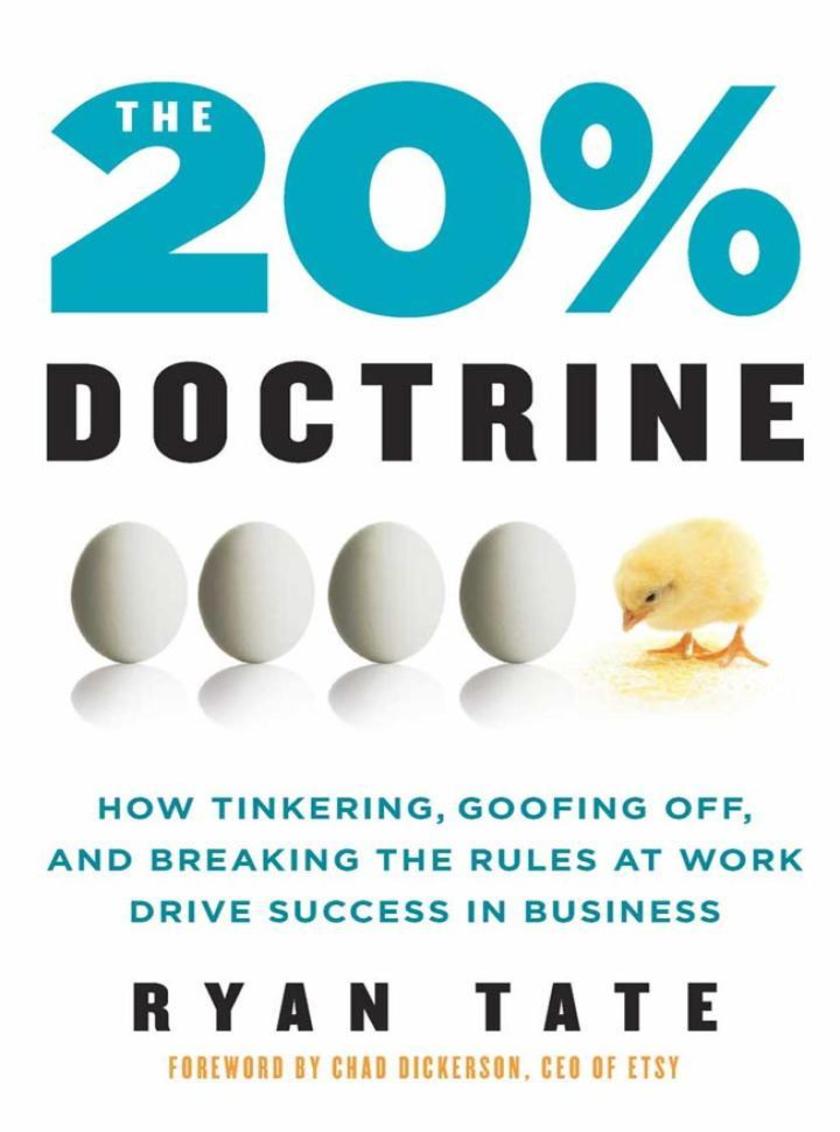
The 20% Doctrine
¥145.91
An inspiring exploration of how unorthodox business practices and the freedom to experiment can fuel innovationWe're at a crossroads. Many iconic American companies have been bailed out or gone bankrupt; others are struggling to survive as digitization and globalization remake their industries. At the same time, the tectonic forces disrupting U.S. corporations ubiquitous bandwidth and computing power, cheap manufacturing and distribution have enabled large organizations to foster new innovations and products through experiments that are at once more aggressive and less risky than they would have been twenty years ago. At companies such as Google, employees are encouraged to spend 20% of their work time on projects they're personally interested in. Almost half of Google's new product launches have originated from this policy, including Gmail and AdSense. Now other companies have adopted the concept, providing them a path to innovation and profits at a time of peril and uncertainty and offering employees creative freedom when many are feeling restless.The 20% Doctrine is about goofing off at work, and how that goofing off can drive innovation and profit. Here Ryan Tate examines the origins and implementation of 20% time at Google, then looks at how other organizations such as Flickr, the Huffington Post, and even a school in the Bronx have adapted or reinvented the same overall concept, intentionally and serendipitously. Along the way, he distills a series of common themes and lessons that can help workers initiate successful 20% style projects within their own organizations. Only through a new devotion to the unhinged and the ad hoc can American businesses resume a steady pace of development and profitability.
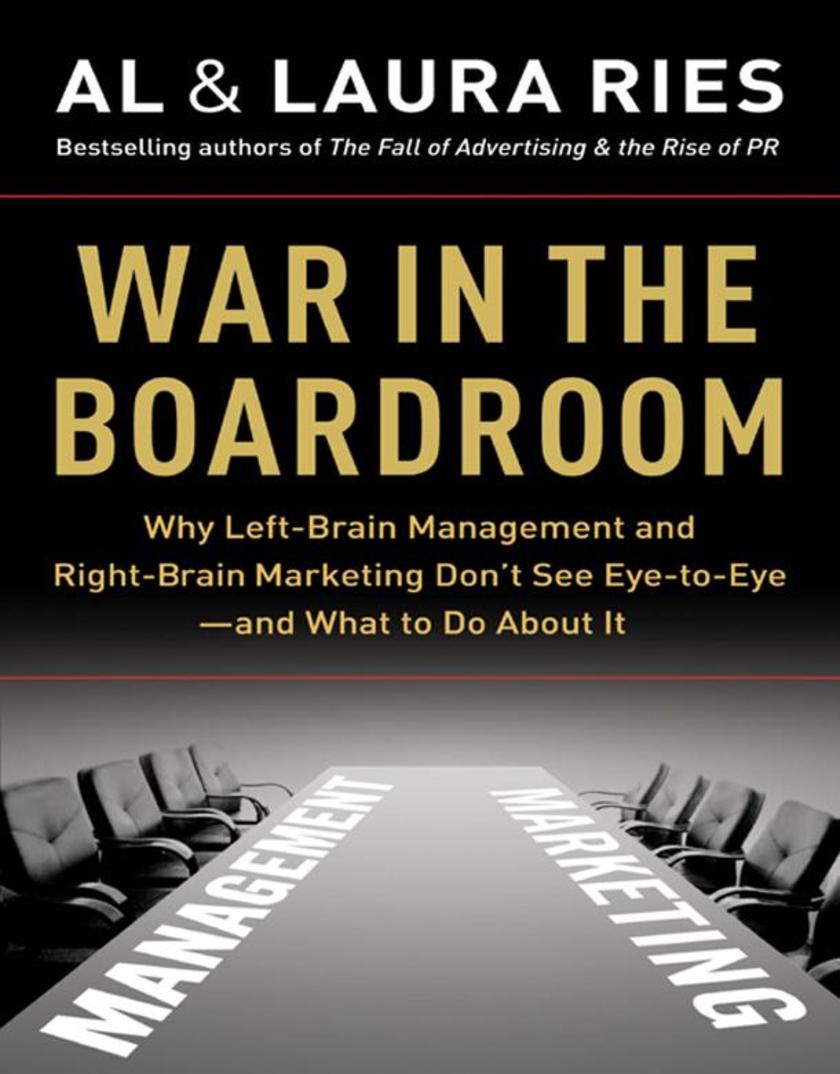
War in the Boardroom
¥151.53
Renowned business gurus Al and Laura Ries give a blow-by-blow account of the battle between management and marketing and argue that the solution lies not in what we think but in how we think There's a reason why the marketing programs of the auto industry, the airline industry, and many other industries are not only ineffective, but bogged down by chaos and confusion.Management minds are not on the same wavelength as marketing minds.What makes a good chief executiveA person who is highly verbal, logical, and analytical. Typical characteristics of a left brainer.What makes a good marketing executiveA person who is highly visual, intuitive, and holistic. Typical characteristics of a right brainer. These different mind-sets often result in conflicting approaches to branding, and the Ries' thought-provoking observations culled from years on the front lines support this conclusion, including: Management deals in reality. Marketing deals in perception. Management demands better products. Marketing demands different products. Management deals in verbal abstractions. Marketing deals in visual hammers. Using some of the world's most famous brands and products to illustrate their argument, the authors convincingly show why some brands succeed (Nokia, Nintendo, and Red Bull) while others decline (Saturn, Sony, and Motorola). In doing so, they sound a clarion call: to survive in today's media-saturated society, managers must understand how to think like marketers and vice versa. Featuring the engaging, no-holds-barred writing that readers have come to expect from Al and Laura Ries, War in the Boardroom offers a fresh look at a perennial problem and provides a game plan for companies that want to break through the deadlock and start reaping the rewards.
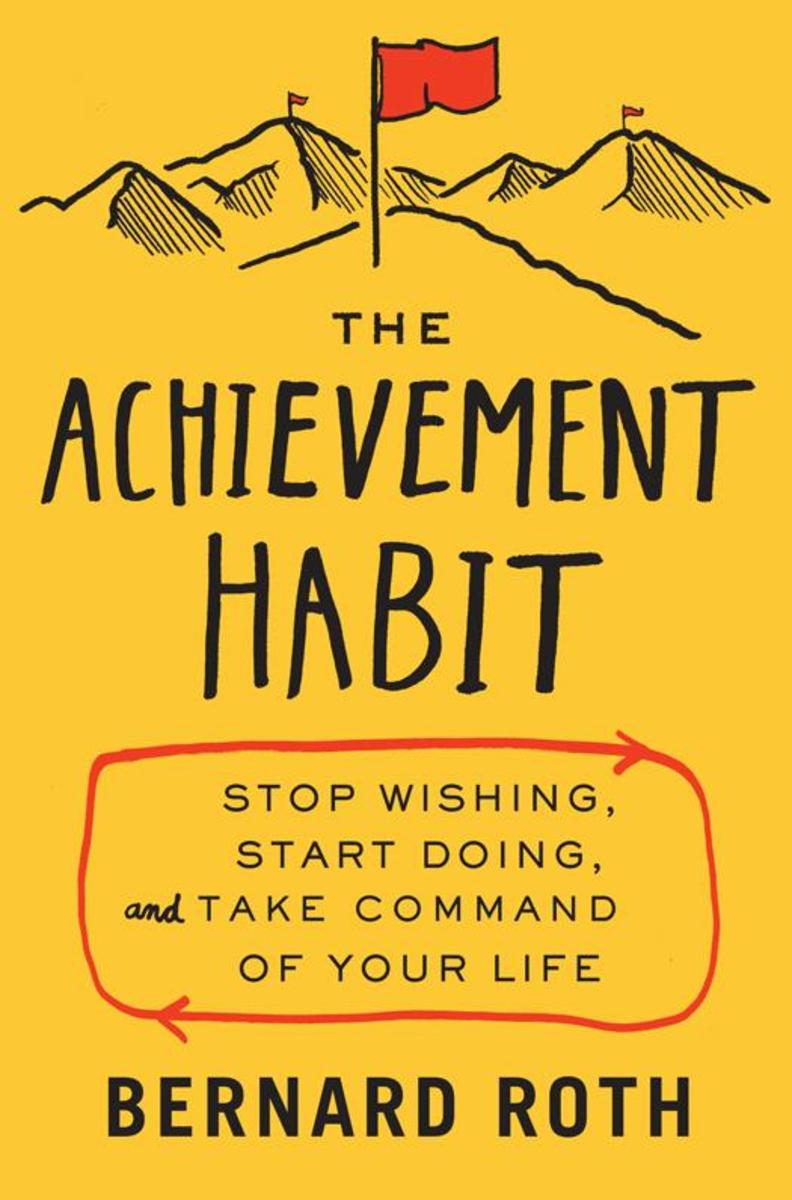
The Achievement Habit
¥155.02
Cofounder of the Stanford d.school Bernie Roth shows you how the power of design thinking can help you achieve goals you never thought possible.Did you know that achievement can be learnedAs Bernie Roth explains, achievement is a muscle. And once you learn how to flex it, you'll be able to meet life's challenges and reach your goals.Based on a legendary course Roth has taught at Stanford University for several decades, The Achievement Habit employs the remarkable insights that stem from design thinking to help us realize the power we all have within to change our lives for the better. By ridding ourselves of issues that stand in the way of reaching our full potential, we gain the confidence finally to do things we've always wanted to do. Combining design thinking, problem-solving, creativity, communication skills, and life adjustments, readers will learn: Why trying and doing are two different things Why using reasons (excuses), even legitimate ones, to explain one's behavior is self-defeating How to change your self-image into one of a doer and achiever How subtle language changes can resolve existential dilemmas and barriers to action How to build resiliency by reinforcing what you do rather than what you accomplish How to be open to learning from your own experience and from those around you Our behavior and relationships can be transformed if we choose to, we can be mindful and control our intentions to create habits that make our lives better. And with this thoughtful book as your guide, you can.
Leaders
¥94.10
In this illuminating study of corporate America's most critical issue leadership world-renowned leadership guru Warren Bennis and his co-author Burt Nanus reveal the four key principles every manager should know: Attention Through Vision, Meaning Through Communication, Trust Through Positioning, and The Deployment of Self. In this age of "process", with downsizing and restructuring affecting many workplaces, companies have fallen trap to lack of communication and distrust, and vision and leadership are needed more than ever before. The wisdom and insight in Leaders addresses this need. It is an indispensable source of guidance all readers will appreciate, whether they're running a small department or in charge of an entire corporation.
The Simplicity Cycle
¥127.33
The Simplicity Cycle is an engaging and accessible field guide that equips readers with practical tools to produce elegant, effective designs. It takes a deep but lighthearted look at the way complexity enhances or diminishes the things we make and use, from PowerPoint presentations and pizzas to spacecraft and software, and shows readers why simplicity is the key to innovation and good design whether you're creating new products, services, or consumer experiences.
Simple Sabotage
¥132.87
Inspired by the Simple Sabotage Field Manual released by the Office of Strategic Services in 1944 to train European resistors, this is the essential handbook to help stamp out unintentional sabotage in any working group, from major corporations to volunteer PTA committees. In 1944, the Office of Strategic Services (OSS)—the predecessor of today’s CIA—issued the Simple Sabotage Field Manual that detailed sabotage techniques designed to demoralize the enemy. One section focused on eight incredibly subtle—and devastatingly destructive—tactics for sabotaging the decision-making processes of organizations. While the manual was written decades ago, these sabotage tactics thrive undetected in organizations today: Insist on doing everything through channels. Make speeches. Talk as frequently as possible and at great length. Refer all matters to committees. Bring up irrelevant issues as frequently as possible. Haggle over precise wordings of communications. Refer back to matters already decided upon and attempt to question the advisability of that decision. Advocate caution and urge fellow-conferees to avoid haste that might result in embarrassments or difficulties later on. Be worried about the propriety of any decision. Everyone has been faced with someone who has used these tactics, even when they have meant well. Filled with proven strategies and techniques, this brief, clever book outlines the counter-sabotage measures to detect and reduce the impact of these eight classic sabotage tactics to improve productivity, spur creativity, and engender better collegial relationships.
Rocking the Ages
¥106.61
For almost forty years, Yankelovich Partners has helped America's biggest companies understand and reach their customers. Their breakthrough MONITOR studies-annual surveys that analyze the values, beliefs, attitudes, and expectations that shape consumer decisions-not only pinpoint current trends, but predict where the market will be in the future.Rocking the Ages: The Yankelovich Report on Generational Marketing (HarperBusiness; May 21, 1997) by J. Walker Smith and Ann Clurman turns the spotlight on America's generation gap and transforms what was born as a political and social rallying cry into a sound foundation for profitable marketing. Defining the essence of three generations-the Matures (born between 1909-1945), the Baby Boomers (1946-1964), and the Generation-Xers (1965-1978)-it explores in telling detail the experiences, life skills, values, personal and professional aspirations, likes and dislikes, and hopes and fears that distinguish each generation. Drawing on this unprecedented data, it elucidates how and why each generation reacts to a vast range of marketplace issues-including technology and cyberspace, healthcare and fitness, media and entertainment, retailing and financial services.From highlighting generational differences regarding such basic concepts as work itself-Matures regard it as an inevitable obligation, Boomers as an opportunity for self-fulfillment, and Xers as simply a paycheck-and gratification-delayed by Matures, demanded instantaneously by Boomers,virtual in the case of most Xers-to describing the widely differing versions of the American Dream each generation harbors, Rocking the Ages offers invaluable insights into how to market a product or service to reach one, two, or all three generations.
The Millionaire in the Mirror
¥134.46
Learn the keys to Outstanding Success and reveal the millionaire in your mirror Despite never being, as he admits, the best communicator, the most talented manager, or the smartest guy in the room, Gene Bedell quickly worked his way up the corporate ladder accumulating career earnings that put him among the country's top one percent of earners while doing what he loved and always putting family first. By looking at his own career and the careers of others who have achieved Outstanding Success people who all started with nothing he found it was possible for those who put their minds to it to become wealthy while spending their careers doing work they love. Now, in The Millionaire in the Mirror, Bedell reveals how you too can find career fulfillment while earning millions without social connections, an Ivy League education, an MBA, or the kind of earth-shattering managerial talent that makes the world take notice and how you can do it without destroying your personal life, resorting to hucksters' get-rich-quick schemes, or opting out of a traditional career path. Inside you'll find the seven success strategies that will revitalize your days at work, helpful tips for getting "unstuck" at any age or phase of your career, and answers to the crucial career questions that are asked far too infrequently. Approachable but authoritative, this is the book for everyday people who have extraordinary potential. If you have the desire and drive to achieve truly Outstanding Success, you can turn the person you see in the mirror into the millionaire you're destined to become.
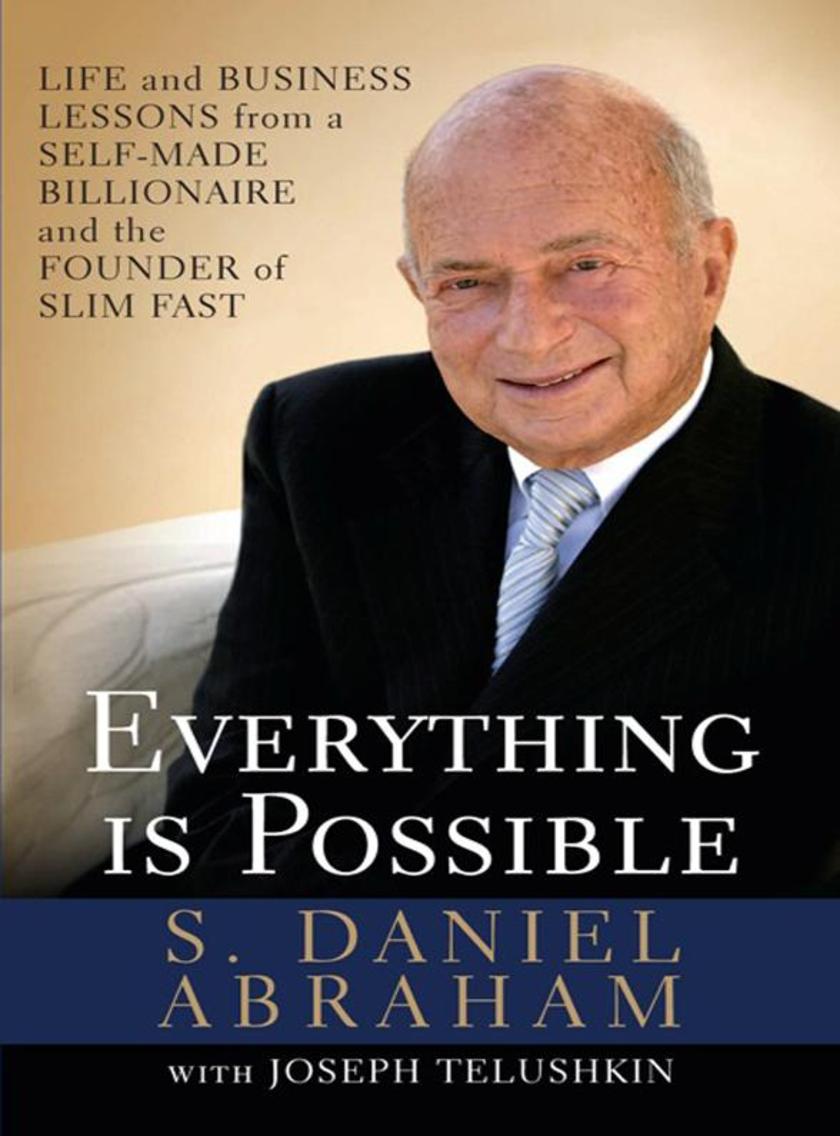
Everything is Possible
¥140.08
In Everything Is Possible, Dan Abraham, the legendary founder of Slim-Fast, recounts the story of his personal and business life, starting from his childhood and army years and his purchase of Thompson Medical for $5,000 when he was in his early twenties, and culminating in the sale of Slim-Fast for $2.3 billion in 2000. At the heart of Everything Is Possible are 16 life lessons that Abraham has picked up in sixty years of a hard-working business career. Among them: ?There is no such thing as a mistake (see pages 198–202) ?Why I always insured that my suppliers made a profit (see pages 208–9) ?The philosophy of continuous improvement (see pages 202–5) ?If you have a theory and the facts dispute it, drop your theory (pages 205–8) ?The realization that we all have both good and bad luck in our lives, but many of us don't prepare for either (pages 216–9) ?I never saw a man pick a fight with a stronger man (pages 191–5) But this memoir, a brilliant guide for anyone starting and growing a business, is about far more than business. Abraham tells the heartwarming story of growing up in a modest home in Long Beach, New York, and the lessons he learned from his mother, father, and one high school teacher that have guided him ever since. And there is more, much more: a discussion of his beliefs about the pleasure of giving; what he has learned from Judaism about ethics and the Golden Rule; and what he learned from his experiences with the FDA about the importance of compromise and about the necessity to fight hard when you believe you're right. At a time, when newspapers are filled with reports of business fraud and deceptions, and when so many people believe that to have spectacular success in business you have to be ruthless and dishonest, this is an account of a business life that has been lived honorably, passionately, and successfully, and with fun. Everything Is Possible is a book to be savored and shared with young and old alike.

The Thank You Economy
¥151.53
If this were 1923, this book would have been called "Why Radio Is Going to Change the Game" . . . If it were 1995, it would be "Why Amazon Is Going to Take Over the Retailing World" . . . The Thank You Economy is about something big, something greater than any single revolutionary platform. It isn't some abstract concept or wacky business strategy it's real, and every one of us is doing business in it every day, whether we choose to recognize it or not. It's the way we communicate, the way we buy and sell, the way businesses and consumers interact online and offline. The Internet, where the Thank You Economy was born, has given consumers back their voice, and the tremendous power of their opinions via social media means that companies and brands have to compete on a whole different level than they used to. Gone are the days when a blizzard of marketing dollars could be used to overwhelm the airwaves, shut out the competition, and grab customer awareness. Now customers' demands for authenticity, originality, creativity, honesty, and good intent have made it necessary for companies and brands to revert to a level of customer service rarely seen since our great-grandparents' day, when business owners often knew their customers personally, and gave them individual attention. Here renowned entrepreneur Gary Vaynerchuk reveals how companies big and small can scale that kind of personal, one-on-one attention to their entire customer base, no matter how large, using the same social media platforms that carry consumer word of mouth. The Thank You Economy offers compelling, data-driven evidence that we have entered into an entirely new business era, one in which the companies that see the biggest returns won't be the ones that can throw the most money at an advertising campaign, but will be those that can prove they care about their customers more than anyone else. The businesses and brands that harness the word-of-mouth power from social media, those that can shift their culture to be more customer-aware and fan-friendly, will pull away from the pack and profit in today's markets. Filled with Vaynerchuk's irrepressible candor and wit, as well as real-world examples of companies that are profiting by putting Thank You Economy principles into practice, The Thank You Economy reveals how businesses can harness all the changes and challenges inherent in social media and turn them into tremendous opportunities for profit and growth.
The Truth About Money 3rd Edition
¥112.23
Home Sweet Home:How to buy your first home, your next home and save on taxes when you sell.A-Z of Investments:From annuities to zero-coupon bonds, go from owing money to OWNING money. Get out of debt (and stay that way).Estate Planning Long-Term Care:Learn how to protect yourself and your family.
What Makes You Tick?
¥140.29
In the most challenging economy of our lifetime, where should you turn for guidanceTo the stories of those who have made it the leaders who battled adversity, forged their own paths,and succeeded . . . because they knew what made them tick. As people everywhere confront the global economic crisis, "success" may seem elusive at best, impossible at worst. Yet history proves that a new generation of success stories will likely emerge from this era of financial chaos. And this new book prepares you to be one of those success stories by analyzing the inner qualities that have propelled the forward-thinking leaders of our time: drive, determination, and self-awareness.As strategists for the internationally renowned consumer and political research firm Penn, Schoen Berland Associates, Michael Berland and Douglas Schoen are experts in how successful people think . . . and how they win. Now they share what they've learned with firsthand accounts from some of the world's most successful people in nearly every field including the founder of Starwood Resorts; a world-famous chef-restaurateur; the CEO of NBC Universal; a supermodel turned entrepreneur; the head of Este Lauder; the commissioner of the National Hockey League; the president of Hearst Magazines; and the creator of CBS's 60 Minutes. Berland and Schoen have discovered that true success is about more than "winning." True success has an emotional quotient: it's about determining your innate strengths, deciding what you truly want, and striving tirelessly to achieve it. Berland and Schoen describe the five archteypes of success: visionaries, natural-born leaders, do-gooders, independence seekers, and independents who follow their dreams. In this unprecedented collection of stories from some of the most successful people in fashion, sports, entertainment, and business, Schoen and Berland demonstrate that success isn't about changing who you are; rather, it's about figuring out what makes you tick and leveraging that knowledge to your advantage. This book shows through compelling first-person storytelling that the most successful people understand their own natural abilities and how to use their best qualities to create a fulfilling life and then tells you how to do the same.

Kiss Your BUT Good-Bye
¥143.95
A simple, engaging, and eminently practical guide to overcoming your weaknesses your "Buts" to achieve the career and personal relationships you want Imagine a workplace where all the employees are aware of the things they do or fail to do that prevent them from being more productive and valuable. Imagine a company where everyone speaks openly and honestly about his or her weaknesses and is committed to strengthening and overcoming them. Imagine an environment where colleagues help one another become more efficient and less disruptive by speaking the truth about what detracts from the team's efforts and objectives. Imagine a place where the firm's most talented employees know exactly what they need to do to attain a leadership position. This is no fantasy workplace: it can be your business if you listen to Joe Azelby and Bob Azelby, brothers and successful executives in their own right.Kiss Your BUT Good-Bye will help all professionals find their individual BUT whether it's a lack of skills, a distracting behavior, or a personality quirk that interferes with achieving success. Using road-tested techniques, Kiss Your BUT Good-Bye helps you examine your BUT, understand it, manage it, cover it, and most important, shrink it. It also enables managers to help their employees discover personal weaknesses and to learn how to deliver the direct, honest feedback every worker needs and deserves.Finding your BUT can be tough medicine, but the Azelbys deliver it with a tasty spoonful of sugar. Get ready for success . . . get ready to Kiss Your BUT Good-Bye.
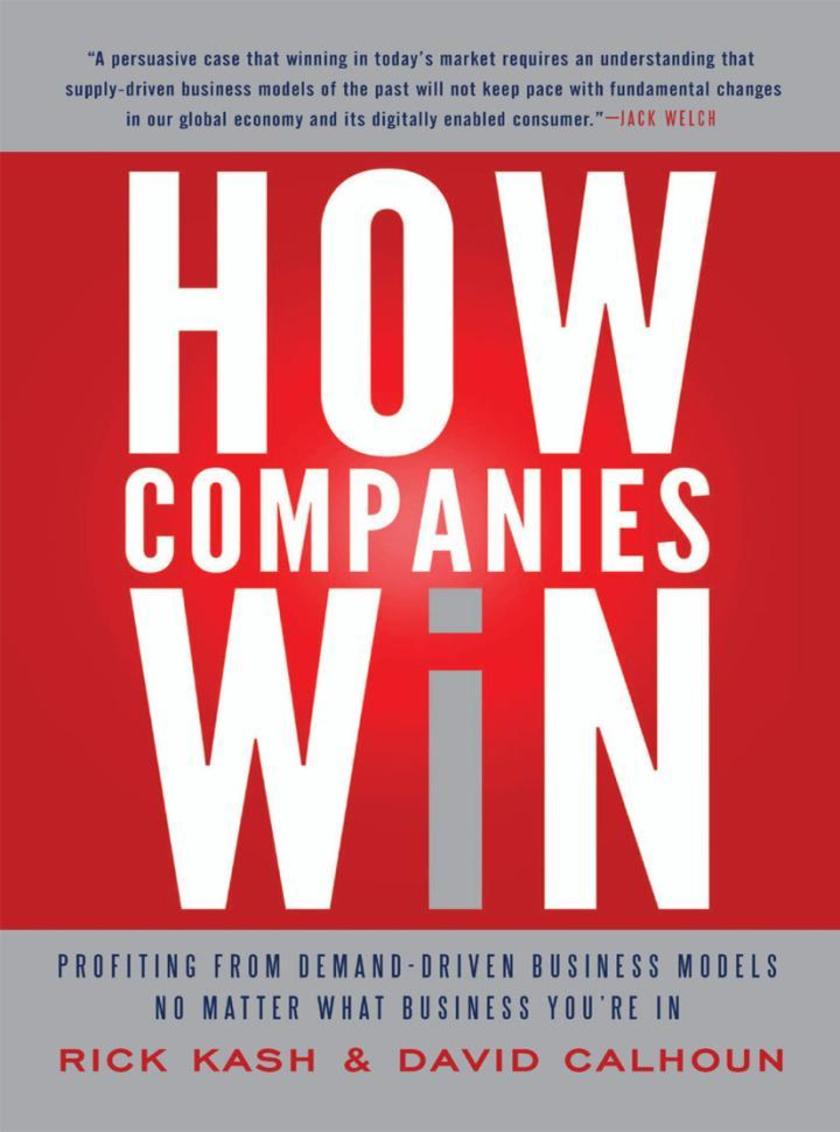
How Companies Win
¥149.48
For the past twenty years, the growth formula for business has been to increase revenues by expanding product offerings and streamlining supply. But with the recent global recession, the world economy has changed forever. Now the old tools most notably supply-chain management are no longer enough. In a new digital age characterized by over-supply and too many product types in almost every market, the new challenge is to locate and capture the elusive pools of high-profit demand.Rick Kash and David Calhoun have the answer: a revolutionary, demand-driven model that has already proved successful for some of the world's most admired companies, including Best Buy, Anheuser-Busch, Hershey's, and Allstate. At the heart of this powerful new business model is an achievable vision for a new kind of winning company, one that uses sophisticated new tools and techniques to discover, characterize, and then serve these pools of high-profit demand and in the process gain pricing power in that market. Kash and Calhoun show how to use everything from social networks to more revealing and effective consumer-research techniques and then introduce the demand chain, the logical new partner to your supply chain. The authors' principles, case histories, and insights will help your business run faster, cut costs, and become better able to deliver high-quality products and services, even in the tightest economic climate.How Companies Win is a compelling call to action to engage every level within a company, small or large, local or global.


