


 购物车
 个人中心

IBM Db2 11.1 Certification Guide
¥73.02
Mastering material for dealing with DBA certification exams About This Book ? Prepare yourself for the IBM C2090-600 certification exam ? Cover over 50 Db2 procedures including database design, performance, and security ? Work through over 150 Q&As to gain confidence on each topic Who This Book Is For The IBM Db2 11.1 Certification Guide is an excellent choice for database administrators, architects, and application developers who are keen to obtain certification in Db2. Basic understanding of Db2 is expected in order to get the most out of this guide. What You Will Learn ? Configure and manage Db2 servers, instances, and databases ? Implement Db2 BLU Acceleration and a DB2 pureScale environment ? Create, manage, and alter Db2 database objects ? Use the partitioning capabilities available within Db2 ? Enforce constraint checking with the SET INTEGRITY command ? Utilize the Db2 problem determination (db2pd) and dsmtop tools ? Configure and manage HADR ? Understand how to encrypt data in transit and at rest In Detail IBM Db2 is a relational database management system (RDBMS) that helps you store, analyze, and retrieve data efficiently. This comprehensive book is designed to help you master all aspects of IBM Db2 database administration and prepare you to take and pass IBM's Certification Exams C2090-600. Building on years of extensive experience, the authors take you through all areas covered by the test. The book delves deep into each certification topic: Db2 server management, physical design, business rules implementation, activity monitoring, utilities, high availability, and security. IBM Db2 11.1 Certification Guide provides you with more than 150 practice questions and answers, simulating real certification examination questions. Each chapter includes an extensive set of practice questions along with carefully explained answers. This book will not just prepare you for the C2090-600 exam but also help you troubleshoot day-to-day database administration challenges. Style and approach A comprehensive certification preparation guide for the C2090-600 exam, covering all the topics in greater detail and with sample questions and answers at the end of each chapter.
Hands-On Cybersecurity with Blockchain
¥81.74
Develop blockchain application with step-by-step instructions, working example and helpful recommendations About This Book ? Understanding the blockchain technology from the cybersecurity perspective ? Developing cyber security solutions with Ethereum blockchain technology ? Understanding real-world deployment of blockchain based applications Who This Book Is For The book is targeted towards security professionals, or any stakeholder dealing with cybersecurity who wants to understand the next-level of securing infrastructure using Blockchain. Basic understanding of Blockchain can be an added advantage. What You Will Learn ? Understand the cyberthreat landscape ? Learn about Ethereum and Hyperledger Blockchain ? Program Blockchain solutions ? Build Blockchain-based apps for 2FA, and DDoS protection ? Develop Blockchain-based PKI solutions and apps for storing DNS entries ? Challenges and the future of cybersecurity and Blockchain In Detail Blockchain technology is being welcomed as one of the most revolutionary and impactful innovations of today. Blockchain technology was first identified in the world’s most popular digital currency, Bitcoin, but has now changed the outlook of several organizations and empowered them to use it even for storage and transfer of value. This book will start by introducing you to the common cyberthreat landscape and common attacks such as malware, phishing, insider threats, and DDoS. The next set of chapters will help you to understand the workings of Blockchain technology, Ethereum and Hyperledger architecture and how they fit into the cybersecurity ecosystem. These chapters will also help you to write your first distributed application on Ethereum Blockchain and the Hyperledger Fabric framework. Later, you will learn about the security triad and its adaptation with Blockchain. The last set of chapters will take you through the core concepts of cybersecurity, such as DDoS protection, PKI-based identity, 2FA, and DNS security. You will learn how Blockchain plays a crucial role in transforming cybersecurity solutions. Toward the end of the book, you will also encounter some real-world deployment examples of Blockchain in security cases, and also understand the short-term challenges and future of cybersecurity with Blockchain. Style and approach This book will follow a practical approach to help understand blockchain technology to transform cybersecurity solutions
Puppet 5 Cookbook
¥81.74
Write custom plugins for Puppet, including facts, providers, and functions About This Book ? Grasp recipes that work with centralized and decentralized deployments ? Explore language differences and enhancements anticipated in Puppet version 5.x ? Gain expert understanding of Puppet's latest and most advanced features Who This Book Is For Puppet 5 Cookbook is for anyone who builds and administers servers, especially in a web operations context. You’ll need some experience of Linux systems administration, including familiarity with the command line, filesystem, and text editing. No prior programming experience is required. What You Will Learn ? Discover the latest and most advanced features of Puppet ? Bootstrap your Puppet installation using powerful tools like Rake ? Master techniques to deal with centralized and decentralized Puppet deployments ? Use exported resources and forge modules to set up Puppet modules ? Create efficient manifests to streamline your deployments ? Automate Puppet master deployment using Git hooks and PuppetDB ? Make Puppet reliable, performant, and scalable In Detail Puppet is a configuration management system that automates all your IT configurations, giving you control of managing each node.Puppet 5 Cookbook will take you through Puppet's latest and most advanced features, including Docker containers, Hiera, and AWS Cloud Orchestration. Updated with the latest advancements and best practices, this book delves into various aspects of writing good Puppet code, which includes using Puppet community style, checking your manifests with puppet-lint, and learning community best practices with an emphasis on real-world implementation. You will learn to set up, install, and create your first manifests with Puppet version control, and also understand various sysadmin tasks, including managing config files, using Augeas, and generating files from snippets and templates. As the book progresses, you’ll explore virtual resources and use Puppet's resource scheduling and auditing features. In the concluding chapters, you’ll walk through managing applications and writing your own resource types, providers, and external node classifiers. By the end of this book, you will have learned to report, log, and debug your system. Style and approach A recipe-based guide filled with quick step-by-step instructions that are immediately applicable
Mastering Firebase for Android Development
¥81.74
Develop a fully functional dynamic Android application using the latest features of Firebase About This Book ? Explore all the latest tools in Firebase—Firebase Firestore, ML-Kit, and Firebase Predictions ? Master Firebase cloud messaging, remote configuration, and work with a real-time database ? Make your app a global success with the help of Google Analytics and AdMob Who This Book Is For Mastering Firebase for Android Development is for individualslooking to extend their skills with Firebase and build faster, scalable, and real-time mobile applications. Basic understanding of Android programming is necessary. In all, this in-depth guide is an accessible pathway to mastering Firebase. What You Will Learn ? Learn about Firebase push notifications and write backend functionalities ? Identify the root cause of an application crash and diagnose and fix bugs ? Store different Multipurpose Internet MailExtension(MIME) type files ? Explore web hosting and connect the Firebase functions to the host website ? Send push notifications and understand the deep integration of analytics tools and cohorts ? Market and monetize your application using Firebase Adwords and Admob ? Build a secure authentication framework while enhancing the sign-in and on-boarding experience for end users In Detail Firebase offers a wide spectrum of tools and services to help you develop high-quality apps in a short period of time. It also allows you to build web and mobile apps quickly without managing the infrastructure.Mastering Firebase for Android Development takes you through the complete toolchain of Firebase,including the latest tools announced in Google IO 2018 such as Firebase ML-Kit, FireStore, and Firebase Predictions. The book begins by teaching you to configure your development environment with Firebase and set up a different structure for a Firebase real-time database. As you make your way through the chapters, you’ll establish the authentication feature in Android and explore email and phone authentication for managing the on-boarding of users. You’ll be taken through topics on Firebase crash reporting, Firebase functions, Firebase Cloud, Firebase Hosting, and Cloud Messaging for push notifications and explore other key areas in depth. In the concluding chapters, you will learn to use Firebase Test Lab to test your application before using Firebase Performance Monitoring to trace performance setbacks. By the end of the book, you will be well equipped with the Firebase ecosystem, which will help you find solutions to your common application development challenges. Style and approach A step by step guide taking you through the different features of Firebase
Hands-On Cryptography with Python
¥54.49
Learn to evaluate and compare data encryption methods and attack cryptographic systems About This Book ? Explore popular and important cryptographic methods ? Compare cryptographic modes and understand their limitations ? Learn to perform attacks on cryptographic systems Who This Book Is For Hands-On Cryptography with Python is for security professionals who want to learn to encrypt and evaluate data, and compare different encryption methods. What You Will Learn ? Protect data with encryption and hashing ? Explore and compare various encryption methods ? Encrypt data using the Caesar Cipher technique ? Make hashes and crack them ? Learn how to use three NIST-recommended systems: AES, SHA, and RSA ? Understand common errors in encryption and exploit them In Detail Cryptography is essential for protecting sensitive information, but it is often performed inadequately or incorrectly. Hands-On Cryptography with Python starts by showing you how to encrypt and evaluate your data. The book will then walk you through various data encryption methods,such as obfuscation, hashing, and strong encryption, and will show how you can attack cryptographic systems. You will learn how to create hashes, crack them, and will understand why they are so different from each other. In the concluding chapters, you will use three NIST-recommended systems: the Advanced Encryption Standard (AES), the Secure Hash Algorithm (SHA), and the Rivest-Shamir-Adleman (RSA). By the end of this book, you will be able to deal with common errors in encryption. Style and approach A practical guide that will help the readers to encrypt their data with ease
PySpark Cookbook
¥73.02
Combine the power of Apache Spark and Python to build effective big data applications About This Book ? Perform effective data processing, machine learning, and analytics using PySpark ? Overcome challenges in developing and deploying Spark solutions using Python ? Explore recipes for efficiently combining Python and Apache Spark to process data Who This Book Is For The PySpark Cookbook is for you if you are a Python developer looking for hands-on recipes for using the Apache Spark 2.x ecosystem in the best possible way. A thorough understanding of Python (and some familiarity with Spark) will help you get the best out of the book. What You Will Learn ? Configure a local instance of PySpark in a virtual environment ? Install and configure Jupyter in local and multi-node environments ? Create DataFrames from JSON and a dictionary using pyspark.sql ? Explore regression and clustering models available in the ML module ? Use DataFrames to transform data used for modeling ? Connect to PubNub and perform aggregations on streams In Detail Apache Spark is an open source framework for efficient cluster computing with a strong interface for data parallelism and fault tolerance. The PySpark Cookbook presents effective and time-saving recipes for leveraging the power of Python and putting it to use in the Spark ecosystem. You’ll start by learning the Apache Spark architecture and how to set up a Python environment for Spark. You’ll then get familiar with the modules available in PySpark and start using them effortlessly. In addition to this, you’ll discover how to abstract data with RDDs and DataFrames, and understand the streaming capabilities of PySpark. You’ll then move on to using ML and MLlib in order to solve any problems related to the machine learning capabilities of PySpark and use GraphFrames to solve graph-processing problems. Finally, you will explore how to deploy your applications to the cloud using the spark-submit command. By the end of this book, you will be able to use the Python API for Apache Spark to solve any problems associated with building data-intensive applications. Style and approach This book is a rich collection of recipes that will come in handy when you are working with PySpark Addressing your common and not-so-common pain points, this is a book that you must have on the shelf.
Robot Operating System Cookbook
¥81.74
Leverage the power of ROS to build exciting collaborative robots. About This Book ? Delve into an open source, meta-operating system for your robot ? Get acquainted with tools and libraries for building and running code on multiple platforms ? Use Gazebo to model your robot and create a virtual environment Who This Book Is For If you’re a researcher or engineer with an interest in the problems, solutions, and future research issues that you may encounter in the development of robotic applications, this book is for you. Basic knowledge of C++ and Python programming with the GNU/Linux environment is strongly recommended to assist with understanding the key concepts covered in the book. What You Will Learn ? Explore advanced concepts, such as ROS pluginlib, nodelets, and actionlib ? Work with ROS visualization, profiling, and debugging tools ? Gain experience in robot modeling and simulation using Gazebo ? Understand the ROS Navigation Stack for mobile robots ? Configure a MoveIt! package for a manipulator robot ? Develop an autonomous navigation framework for MAV using ORB SLAM and MoveIt ? Integrate sensors, actuators, and robots into the ROS ecosystem ? Get acquainted with the ROS-Industrial package with hardware support, capabilities, and applications In Detail This book will leverage the power of ROS with an introduction to its core and advanced concepts through exciting recipes. You will get acquainted with the use of different synchronous and asynchronous communication methods, including messages, services, and actions. You will learn how to use the various debugging and visualization tools used in development and how to interface sensors and actuators with the ROS framework. Firstly, you will get to grips with ROS simulation frameworks, such as Gazebo and RotorS for modeling and simulating any physical robot and virtual environment. You will also cover mobile robotics, micro-aerial vehicles, and robotic arms, which are the leading branches of robotic applications. Robot Operating System Cookbook will also guide you in the development of an autonomous navigation framework for both mobile robots and micro-aerial vehicles. Finally, you will explore ROS-Industrial, an open source project that extends the advanced capabilities of ROS software to manufacturing industries. Style and approach The goal of this book is to provide an integrated overview of the concepts and techniques. ROS is not an operating system in the traditional sense of process management and scheduling; rather, it provides a structured communications layer above the host operating systems of a heterogeneous compute cluster.
Mastering pfSense
¥90.46
Install and configure a pfSense router/firewall, and become a pfSense expert in the process. About This Book ? You can always do more to secure your software – so extend and customize your pfSense firewall ? Build a high availability security system that’s fault-tolerant – and capable of blocking potential threats ? Put the principles of better security into practice by implementing examples provided in the text Who This Book Is For This book is for those with at least an intermediate understanding of networking. Prior knowledge of pfSense would be helpful but is not required. Those who have the resources to set up a pfSense firewall, either in a real or virtual environment, will especially benefit, as they will be able to follow along with the examples in the book. What You Will Learn ? Configure pfSense services such as DHCP, Dynamic DNS, captive portal, DNS, NTP and SNMP ? Set up a managed switch to work with VLANs ? Use pfSense to allow, block and deny traffic, and to implement Network Address Translation (NAT) ? Make use of the traffic shaper to lower and raise the priority of certain types of traffic ? Set up and connect to a VPN tunnel with pfSense ? Incorporate redundancy and high availability by utilizing load balancing and the Common Address Redundancy Protocol (CARP) ? Explore diagnostic tools in pfSense to solve network problems In Detail pfSense has the same reliability and stability as even the most popular commercial firewall offerings on the market – but, like the very best open-source software, it doesn’t limit you. You’re in control – you can exploit and customize pfSense around your security needs. Mastering pfSense - Second Edition, covers features that have long been part of pfSense such as captive portal, VLANs, traffic shaping, VPNs, load balancing, Common Address Redundancy Protocol (CARP), multi-WAN, and routing. It also covers features that have been added with the release of 2.4, such as support for ZFS partitions and OpenVPN 2.4. This book takes into account the fact that, in order to support increased cryptographic loads, pfSense version 2.5 will require a CPU that supports AES-NI. The second edition of this book places more of an emphasis on the practical side of utilizing pfSense than the previous edition, and, as a result, more examples are provided which show in step-by-step fashion how to implement many features. Style and approach Practical guide to learn the advanced functionalities of pfSense with minimum fuss.
C# and .NET Core Test Driven Development
¥73.02
Learn how to apply a test-driven development process by building ready C# 7 and .NET Core applications. About This Book ? Create tests to quickly detect and resolve issues when writing portable code ? Uncover code integration issues that improve code quality using continuous integration ? Set up and use data-driven unit testing to verify your code Who This Book Is For This book is for .NET developers who would like to build efficient applications by implementing principles of test-driven development. C# programming and working knowledge of VS is assumed. What You Will Learn ? Write flexible, maintainable, and verifiable code for .NET Core ? Write testable code using SOLID principles and dependency injections ? Recognize the characteristics of a good unit test ? Structure and group your unit test ? Use mock objects to handle dependencies ? Set up an end-to-end continuous integration process In Detail This book guides developers to create robust, production-ready C# 7 and .NET Core applications through the practice of test-driven development process. In C# and .NET Core Test-Driven Development, you will learn the different stages of the TDD life cycle, basics of TDD, best practices, and anti-patterns. It will teach you how to create an ASP.NET Core MVC sample application, write testable code with SOLID principles and set up a dependency injection for your sample application. Next, you will learn the xUnit testing framework and learn how to use its attributes and assertions. You’ll see how to create data-driven unit tests and mock dependencies in your code. You will understand the difference between running and debugging your tests on .NET Core on LINUX versus Windows and Visual Studio. As you move forward, you will be able to create a healthy continuous integration process for your sample application using GitHub, TeamCity, Cake, and Microsoft VSTS. By the end of this book, you will have learned how to write clean and robust code through the effective practice of TDD, set up CI build steps to test and build applications as well as how to package application for deployment on NuGet. Style and approach The book explores the concepts of test driven development in depth so readers can apply these proven techniques to build sophisticated software with C# and .NET.
.NET Standard 2.0 Cookbook
¥90.46
Get the most out of .NET framework using standard libraries and create a .NET Standard 2.0 library from scratch About This Book ? Write code once and share within .NET ecosystem in Windows, Linux and macOS ? Give your .NET Libraries a common framework in cloud and on premise with the latest .NET Standard 2.0 ? Build a wide range of applications from Mobile with Xamarin to Web with ASP.NET Who This Book Is For This book is for .NET developers who are looking to build dynamic applications with the latest .NET Standard. C# knowledge is required. What You Will Learn ? Create a .NET Standard 2.0 library ? Use System.IO within the .NET Standard 2.0 ? Make use of your legacy .NET libraries with the new .NET Core standard ? Explore the thread support to create a multithreaded .NET Standard 2.0 library ? Create a .NET Standard 2.0 library and use it with an Android and iOS application ? Implement various Visual Studio 2017 diagnostics and debugging tools ? Create a NuGet Package and submit the package to the NuGet Package Manager ? Use Visual Studio 2017 azure tools to deploy the application to Azure ? Test and deliver a .NET Standard 2.0 library In Detail The .NET Standard is a standard that represents a set of APIs that all .NET platforms have to implement, making it easy for developers to access and use one common library for their development needs. This book begins with a quick refresher, helping you understand the mechanics of the new standard and offering insight into how it works. You’ll explore the core library concepts, such as working with collections, configurations, I/O, security, and multithreading. You’ll explore the iOS and Android libraries of Xamarin and we’ll guide you through creating a .NET Standard 2.0 library, which you’ll use with both Android and iOS applications. In the final chapters, you’ll learn the various debugging and diagnostics tools to deliver quality libraries and create a NuGet package of the .NET Standard 2.0 library. By the end of this book, you’ll be able to expand your current workflow to various .NET flavors and have the essential skills to create a .NET Standard 2.0 library from scratch to package and deliver it to the world. Style and approach A recipe-based approach to help you get the most out of the .NET Standard 2.0 Library that can be implemented to all the .NET Platforms
Learning Linux Shell Scripting
¥81.74
Break through the practice of writing tedious code with shell scripts About This Book ? Learn to impeccably build shell scripts and develop advanced applications ? Create smart solutions by writing and debugging scripts ? A step-by-step tutorial to automate routine tasks by developing scripts Who This Book Is For Learning Linux Shell Scripting is ideal for those who are proficient at working with Linux and want to learn about shell scripting to improve their efficiency and practical skills. What You Will Learn ? Familiarize yourself with the various text filtering tools available in Linux ? Understand expressions and variables and how to use them practically ? Automate decision-making and save a lot of time and effort of revisiting code ? Get to grips with advanced functionality such as using traps, dialogs to develop screens & Database administration such as MySQL or Oracle ? Start up a system and customize a Linux system ? Taking backup of local or remote data or important files. ? Use existing other language scripts such as Python, Perl & Ruby in Shell Scripts In Detail Linux is the most powerful and universally adopted OS. Shell is a program that gives the user direct interaction with the operating system. Scripts are collections of commands that are stored in a file. The shell reads this file and acts on commands as if they were typed on the keyboard. Learning Linux Shell Scripting covers Bash, GNU Bourne Again Shell, preparing you to work in the exciting world of Linux shell scripting. CentOS is a popular rpm-based stable and secured Linux distribution. Therefore, we have used CentOS distribution instead of Ubuntu distribution. Linux Shell Scripting is independent of Linux distributions, but we have covered both types of distros. We start with an introduction to the Shell environment and basic commands used. Next, we explore process management in Linux OS, real-world essentials such as debugging and perform Shell arithmetic fluently. You'll then take a step ahead and learn new and advanced topics in Shell scripting, such as decision making, starting up a system, and customizing a Linux environment. You will also learn about grep, stream editor, and AWK, which are very powerful text filters and editors. Finally, you'll get to grips with taking backup, using other language scripts in Shell Scripts as well as automating database administration tasks for MySQL and Oracle. By the end of this book, you will be able to confidently use your own shell scripts in the real world. Style and approach This practical book will go from the very basics of shell scripting to complex, customized automation. The idea behind this book is to be as practical as possible and give you the look and feel of what real-world scripting is like.
Python: Beginner's Guide to Programming Code with Python
¥24.44
Python: Beginner's Guide to Programming Code with Python
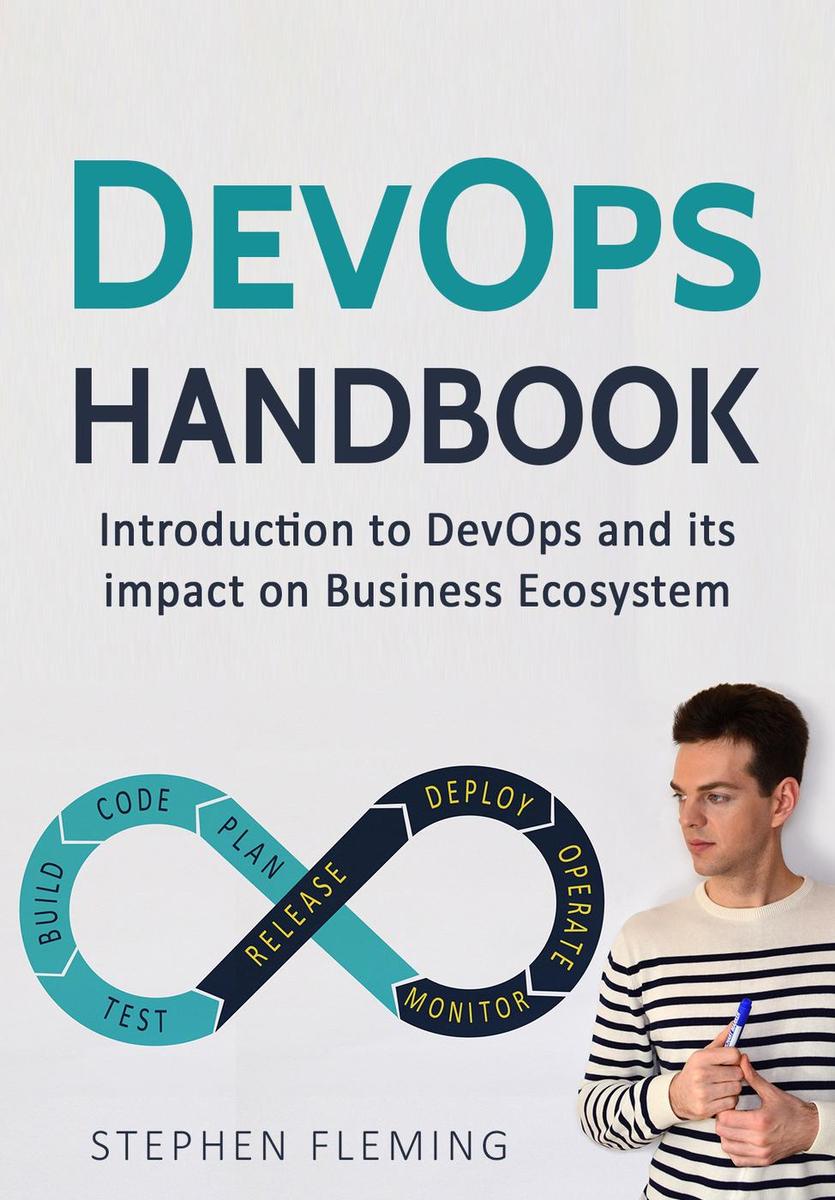
DevOps:Introduction to DevOps and its impact on Business Ecosystem
¥32.62
“It is not the strongest of the species that survive, nor the most intelligent, but the one most responsive to change.”-?Charles Darwin As the industry is moving towards maximum digitization there is a consensus that DevOps practices help you deliver software faster, more reliable, and with fewer errors. DevOps is set of practices and cultural values that have been proven to help organizations of all sizes improve their software release cycles, software quality, security, and ability to get rapid feedback on product development. This book is aimed at Consultant, Project Manager and people from techno-commercial profiles who would be explaining the benefits of DevOps to the client, internal leadership or project teams. As the crux of DevOps methodology lies in the cultural transformation of the organization, people who are stakeholders in shaping this change must understand the overall alignment of business goals with this methodology. You would get to explore: ·What is DevOps·Relationship between Agile, Scrum, Kanban and DevOps·DevOps Adoption:? Organizational cultural Change·DevOps Ecosystem·Emerging Trends·DevOps success stories In the Bonus Booklet you will find out: ·DevOps Job Market overview·Insights into DevOps job application·People to follow on twitter “Grab your copy today along with Bonus DevOps Booklet”

Learn Chart.js
¥54.49
Design interactive graphics and visuals for your data-driven applications using the popular open-source Chart.js data visualization library. Key Features * Harness the power of JavaScript, HTML, and CSS to create interactive visualizations * Display quantitative information efficiently in the form of attractive charts by using Chart.js * A practical guide for creating data-driven applications using open-source JavaScript library Book Description Chart.js is a free, open-source data visualization library, maintained by an active community of developers in GitHub, where it rates as the second most popular data visualization library. If you want to quickly create responsive Web-based data visualizations for the Web, Chart.js is a great choice. This book guides the reader through dozens of practical examples, complete with code you can run and modify as you wish. It is a practical hands-on introduction to Chart.js. If you have basic knowledge of HTML, CSS and JavaScript you can learn to create beautiful interactive Web Canvas-based visualizations for your data using Chart.js. This book will help you set up Chart.js in a Web page and show how to create each one of the eight Chart.js chart types. You will also learn how to configure most properties that override Chart’s default styles and behaviors. Practical applications of Chart.js are exemplified using real data files obtained from public data portals. You will learn how to load, parse, filter and select the data you wish to display from those files. You will also learn how to create visualizations that reveal patterns in the data. This book is based on Chart.js version 2.7.3 and ES2015 JavaScript. By the end of the book, you will be able to create beautiful, efficient and interactive data visualizations for the Web using Chart.js. What you will learn * Learn how to create interactive and responsive data visualizations using Chart.js * Learn how to create Canvas-based graphics without Canvas programming * Create composite charts and configure animated data updates and transitions * Efficiently display quantitative information using bar and line charts, scatterplots, and pie charts * Learn how to load, parse, and filter external files in JSON and CSV formats * Understand the benefits of using a data visualization framework Who this book is for The ideal target audience of this book includes web developers and designers, data journalists, data scientists and artists who wish to create interactive data visualizations for the Web. Basic knowledge of HTML, CSS, and JavaScript is required. No Canvas knowledge is necessary.
Excel 2016: QuickStart Guide for Beginners
¥24.44
Excel 2016: QuickStart Guide for Beginners
Hands-On Functional Programming with TypeScript
¥63.21
Discover the power of functional programming, lazy evaluation, monads, concurrency, and immutability to create succinct and expressive implementations Key Features * Get a solid understanding of how to apply functional programming concepts in TypeScript * Explore TypeScript runtime features such as event loop, closures, and Prototypes * Gain deeper knowledge on the pros and cons of TypeScript Book Description Functional programming is a powerful programming paradigm that can help you to write better code. However, learning functional programming can be complicated, and the existing literature is often too complex for beginners. This book is an approachable introduction to functional programming and reactive programming with TypeScript for readers without previous experience in functional programming with JavaScript, TypeScript , or any other programming language. The book will help you understand the pros, cons, and core principles of functional programming in TypeScript. It will explain higher order functions, referential transparency, functional composition, and monads with the help of effective code examples. Using TypeScript as a functional programming language, you’ll also be able to brush up on your knowledge of applying functional programming techniques, including currying, laziness, and immutability, to real-world scenarios. By the end of this book, you will be confident when it comes to using core functional and reactive programming techniques to help you build effective applications with TypeScript. What you will learn * Understand the pros and cons of functional programming * Delve into the principles, patterns, and best practices of functional and reactive programming * Use lazy evaluation to improve the performance of applications * Explore functional optics with Ramda * Gain insights into category theory functional data structures such as Functors and Monads * Use functions as values, so that they can be passed as arguments to other functions Who this book is for This book is designed for readers with no prior experience of functional programming with JavaScript, TypeScript or any other programming language. Some familiarity with TypeScript and web development is a must to grasp the concepts in the book easily.
Mastering Python Scripting for System Administrators
¥81.74
Leverage the features and libraries of Python to administrate your environment efficiently. Key Features * Learn how to solve problems of system administrators and automate routine activities * Learn to handle regular expressions, network administration * Building GUI, web-scraping and database administration including data analytics Book Description Python has evolved over time and extended its features in relation to every possible IT operation. Python is simple to learn, yet has powerful libraries that can be used to build powerful Python scripts for solving real-world problems and automating administrators' routine activities. The objective of this book is to walk through a series of projects that will teach readers Python scripting with each project. This book will initially cover Python installation and quickly revise basic to advanced programming fundamentals. The book will then focus on the development process as a whole, from setup to planning to building different tools. It will include IT administrators' routine activities (text processing, regular expressions, file archiving, and encryption), network administration (socket programming, email handling, the remote controlling of devices using telnet/ssh, and protocols such as SNMP/DHCP), building graphical user interface, working with websites (Apache log file processing, SOAP and REST APIs communication, and web scraping), and database administration (MySQL and similar database data administration, data analytics, and reporting). By the end of this book, you will be able to use the latest features of Python and be able to build powerful tools that will solve challenging, real-world tasks What you will learn * Understand how to install Python and debug Python scripts * Understand and write scripts for automating testing and routine administrative activities * Understand how to write scripts for text processing, encryption, decryption, and archiving * Handle files, such as pdf, excel, csv, and txt files, and generate reports * Write scripts for remote network administration, including handling emails * Build interactive tools using a graphical user interface * Handle Apache log files, SOAP and REST APIs communication * Automate database administration and perform statistical analysis Who this book is for This book would be ideal for users with some basic understanding of Python programming and who are interested in scaling their programming skills to command line scripting and system administration. Prior knowledge of Python would be necessary.
Ensemble Machine Learning Cookbook
¥81.74
Implement machine learning algorithms to build ensemble models using Keras, H2O, Scikit-Learn, Pandas and more Key Features * Apply popular machine learning algorithms using a recipe-based approach * Implement boosting, bagging, and stacking ensemble methods to improve machine learning models * Discover real-world ensemble applications and encounter complex challenges in Kaggle competitions Book Description Ensemble modeling is an approach used to improve the performance of machine learning models. It combines two or more similar or dissimilar machine learning algorithms to deliver superior intellectual powers. This book will help you to implement popular machine learning algorithms to cover different paradigms of ensemble machine learning such as boosting, bagging, and stacking. The Ensemble Machine Learning Cookbook will start by getting you acquainted with the basics of ensemble techniques and exploratory data analysis. You'll then learn to implement tasks related to statistical and machine learning algorithms to understand the ensemble of multiple heterogeneous algorithms. It will also ensure that you don't miss out on key topics, such as like resampling methods. As you progress, you’ll get a better understanding of bagging, boosting, stacking, and working with the Random Forest algorithm using real-world examples. The book will highlight how these ensemble methods use multiple models to improve machine learning results, as compared to a single model. In the concluding chapters, you'll delve into advanced ensemble models using neural networks, natural language processing, and more. You’ll also be able to implement models such as fraud detection, text categorization, and sentiment analysis. By the end of this book, you'll be able to harness ensemble techniques and the working mechanisms of machine learning algorithms to build intelligent models using individual recipes. What you will learn * Understand how to use machine learning algorithms for regression and classification problems * Implement ensemble techniques such as averaging, weighted averaging, and max-voting * Get to grips with advanced ensemble methods, such as bootstrapping, bagging, and stacking * Use Random Forest for tasks such as classification and regression * Implement an ensemble of homogeneous and heterogeneous machine learning algorithms * Learn and implement various boosting techniques, such as AdaBoost, Gradient Boosting Machine, and XGBoost Who this book is for This book is designed for data scientists, machine learning developers, and deep learning enthusiasts who want to delve into machine learning algorithms to build powerful ensemble models. Working knowledge of Python programming and basic statistics is a must to help you grasp the concepts in the book.
Hands-On Big Data Analytics with PySpark
¥43.59
Use PySpark to easily crush messy data at-scale and discover proven techniques to create testable, immutable, and easily parallelizable Spark jobs Key Features * Work with large amounts of agile data using distributed datasets and in-memory caching * Source data from all popular data hosting platforms, such as HDFS, Hive, JSON, and S3 * Employ the easy-to-use PySpark API to deploy big data Analytics for production Book Description Apache Spark is an open source parallel-processing framework that has been around for quite some time now. One of the many uses of Apache Spark is for data analytics applications across clustered computers. In this book, you will not only learn how to use Spark and the Python API to create high-performance analytics with big data, but also discover techniques for testing, immunizing, and parallelizing Spark jobs. You will learn how to source data from all popular data hosting platforms, including HDFS, Hive, JSON, and S3, and deal with large datasets with PySpark to gain practical big data experience. This book will help you work on prototypes on local machines and subsequently go on to handle messy data in production and at scale. This book covers installing and setting up PySpark, RDD operations, big data cleaning and wrangling, and aggregating and summarizing data into useful reports. You will also learn how to implement some practical and proven techniques to improve certain aspects of programming and administration in Apache Spark. By the end of the book, you will be able to build big data analytical solutions using the various PySpark offerings and also optimize them effectively. What you will learn * Get practical big data experience while working on messy datasets * Analyze patterns with Spark SQL to improve your business intelligence * Use PySpark's interactive shell to speed up development time * Create highly concurrent Spark programs by leveraging immutability * Discover ways to avoid the most expensive operation in the Spark API: the shuffle operation * Re-design your jobs to use reduceByKey instead of groupBy * Create robust processing pipelines by testing Apache Spark jobs Who this book is for This book is for developers, data scientists, business analysts, or anyone who needs to reliably analyze large amounts of large-scale, real-world data. Whether you're tasked with creating your company's business intelligence function or creating great data platforms for your machine learning models, or are looking to use code to magnify the impact of your business, this book is for you.
Python Reinforcement Learning
¥88.28
Apply modern reinforcement learning and deep reinforcement learning methods using Python and its powerful libraries Key Features * Your entry point into the world of artificial intelligence using the power of Python * An example-rich guide to master various RL and DRL algorithms * Explore the power of modern Python libraries to gain confidence in building self-trained applications Book Description Reinforcement Learning (RL) is the trending and most promising branch of artificial intelligence. This Learning Path will help you master not only the basic reinforcement learning algorithms but also the advanced deep reinforcement learning algorithms. The Learning Path starts with an introduction to RL followed by OpenAI Gym, and TensorFlow. You will then explore various RL algorithms, such as Markov Decision Process, Monte Carlo methods, and dynamic programming, including value and policy iteration. You'll also work on various datasets including image, text, and video. This example-rich guide will introduce you to deep RL algorithms, such as Dueling DQN, DRQN, A3C, PPO, and TRPO. You will gain experience in several domains, including gaming, image processing, and physical simulations. You'll explore TensorFlow and OpenAI Gym to implement algorithms that also predict stock prices, generate natural language, and even build other neural networks. You will also learn about imagination-augmented agents, learning from human preference, DQfD, HER, and many of the recent advancements in RL. By the end of the Learning Path, you will have all the knowledge and experience needed to implement RL and deep RL in your projects, and you enter the world of artificial intelligence to solve various real-life problems. This Learning Path includes content from the following Packt products: * Hands-On Reinforcement Learning with Python by Sudharsan Ravichandiran * Python Reinforcement Learning Projects by Sean Saito, Yang Wenzhuo, and Rajalingappaa Shanmugamani What you will learn * Train an agent to walk using OpenAI Gym and TensorFlow * Solve multi-armed-bandit problems using various algorithms * Build intelligent agents using the DRQN algorithm to play the Doom game * Teach your agent to play Connect4 using AlphaGo Zero * Defeat Atari arcade games using the value iteration method * Discover how to deal with discrete and continuous action spaces in various environments Who this book is for If you’re an ML/DL enthusiast interested in AI and want to explore RL and deep RL from scratch, this Learning Path is for you. Prior knowledge of linear algebra is expected.
Python Data Mining Quick Start Guide
¥53.40
Explore the different data mining techniques using the libraries and packages offered by Python Key Features * Grasp the basics of data loading, cleaning, analysis, and visualization * Use the popular Python libraries such as NumPy, pandas, matplotlib, and scikit-learn for data mining * Your one-stop guide to build efficient data mining pipelines without going into too much theory Book Description Data mining is a necessary and predictable response to the dawn of the information age. It is typically defined as the pattern and/ or trend discovery phase in the data mining pipeline, and Python is a popular tool for performing these tasks as it offers a wide variety of tools for data mining. This book will serve as a quick introduction to the concept of data mining and putting it to practical use with the help of popular Python packages and libraries. You will get a hands-on demonstration of working with different real-world datasets and extracting useful insights from them using popular Python libraries such as NumPy, pandas, scikit-learn, and matplotlib. You will then learn the different stages of data mining such as data loading, cleaning, analysis, and visualization. You will also get a full conceptual description of popular data transformation, clustering, and classification techniques. By the end of this book, you will be able to build an efficient data mining pipeline using Python without any hassle. What you will learn * Explore the methods for summarizing datasets and visualizing/plotting data * Collect and format data for analytical work * Assign data points into groups and visualize clustering patterns * Learn how to predict continuous and categorical outputs for data * Clean, filter noise from, and reduce the dimensions of data * Serialize a data processing model using scikit-learn’s pipeline feature * Deploy the data processing model using Python’s pickle module Who this book is for Python developers interested in getting started with data mining will love this book. Budding data scientists and data analysts looking to quickly get to grips with practical data mining with Python will also find this book to be useful. Knowledge of Python programming is all you need to get started.


