


 购物车
购物车 个人中心
个人中心
Data Science for Marketing Analytics
¥73.02
Explore new and more sophisticated tools that reduce your marketing analytics efforts and give you precise results Key Features * Study new techniques for marketing analytics * Explore uses of machine learning to power your marketing analyses * Work through each stage of data analytics with the help of multiple examples and exercises Book Description Data Science for Marketing Analytics covers every stage of data analytics, from working with a raw dataset to segmenting a population and modeling different parts of the population based on the segments. The book starts by teaching you how to use Python libraries, such as pandas and Matplotlib, to read data from Python, manipulate it, and create plots, using both categorical and continuous variables. Then, you'll learn how to segment a population into groups and use different clustering techniques to evaluate customer segmentation. As you make your way through the chapters, you'll explore ways to evaluate and select the best segmentation approach, and go on to create a linear regression model on customer value data to predict lifetime value. In the concluding chapters, you'll gain an understanding of regression techniques and tools for evaluating regression models, and explore ways to predict customer choice using classification algorithms. Finally, you'll apply these techniques to create a churn model for modeling customer product choices. By the end of this book, you will be able to build your own marketing reporting and interactive dashboard solutions. What you will learn * Analyze and visualize data in Python using pandas and Matplotlib * Study clustering techniques, such as hierarchical and k-means clustering * Create customer segments based on manipulated data * Predict customer lifetime value using linear regression * Use classification algorithms to understand customer choice * Optimize classification algorithms to extract maximal information Who this book is for Data Science for Marketing Analytics is designed for developers and marketing analysts looking to use new, more sophisticated tools in their marketing analytics efforts. It'll help if you have prior experience of coding in Python and knowledge of high school level mathematics. Some experience with databases, Excel, statistics, or Tableau is useful but not necessary.
Unreal Engine Virtual Reality Quick Start Guide
¥54.49
Unreal Engine 4 for virtual reality game design, development, User Experience design techniques and Blueprint programming to create virtual reality gameplay for HTC Vive, Oculus Rift, PSVR, and Windows Mixed Reality headsets. Key Features * Build VR games from scratch with the power of Unreal Engine 4 * Learn User Experience design practices to take your VR game to the next level * Understand the best practices to creating art for games on HTC Vive, Oculus Rift, and PSVR Book Description With the ability to put players directly in the game, virtual reality gives users the chance to experience digital worlds directly. Nevertheless, many designers are unsure where to start when working with this amazing technology. With this book, you will learn user experience design processes and create immersive gameplay experiences designed for entertainment and player comfort. Using the power of Unreal Engine 4’s Blueprint visual scripting language, you will build player interaction and locomotion systems from scratch and use these flexible systems to create a sample game, as well as develop functional 2D and 3D user interfaces for players to interact with. And also learn the best practices for creating game art for virtual reality. Finally, you will learn how to test your application with your target audience and finalize your game for distribution. By the end of this book, you will have the knowledge to be able to make the leap from traditional game development to creating immersive virtual reality experiences using Unreal Engine 4. What you will learn * Understand how to get started with VR development in Unreal Engine 4 * Design and create interaction and locomotion systems from scratch * Plan and program a sample game for VR * Understand how VR affects user experience and user interfaces * Discuss what is needed to create optimized art for VR * Test your game with users and prepare for distribution Who this book is for The audience for this book is intermediate or advanced users of Unreal Engine 4 but who have not begun working with VR technology. These users are familiar with the game engine and have an interest in VR technology. They are just beginning to explore the VR features that the game engine has to offer.
Python Machine Learning Cookbook
¥63.21
Discover powerful ways to effectively solve real-world machine learning problems using key libraries including scikit-learn, TensorFlow, and PyTorch Key Features * Learn and implement machine learning algorithms in a variety of real-life scenarios * Cover a range of tasks catering to supervised, unsupervised and reinforcement learning techniques * Find easy-to-follow code solutions for tackling common and not-so-common challenges Book Description This eagerly anticipated second edition of the popular Python Machine Learning Cookbook will enable you to adopt a fresh approach to dealing with real-world machine learning and deep learning tasks. With the help of over 100 recipes, you will learn to build powerful machine learning applications using modern libraries from the Python ecosystem. The book will also guide you on how to implement various machine learning algorithms for classification, clustering, and recommendation engines, using a recipe-based approach. With emphasis on practical solutions, dedicated sections in the book will help you to apply supervised and unsupervised learning techniques to real-world problems. Toward the concluding chapters, you will get to grips with recipes that teach you advanced techniques including reinforcement learning, deep neural networks, and automated machine learning. By the end of this book, you will be equipped with the skills you need to apply machine learning techniques and leverage the full capabilities of the Python ecosystem through real-world examples. What you will learn * Use predictive modeling and apply it to real-world problems * Explore data visualization techniques to interact with your data * Learn how to build a recommendation engine * Understand how to interact with text data and build models to analyze it * Work with speech data and recognize spoken words using Hidden Markov Models * Get well versed with reinforcement learning, automated ML, and transfer learning * Work with image data and build systems for image recognition and biometric face recognition * Use deep neural networks to build an optical character recognition system Who this book is for This book is for data scientists, machine learning developers, deep learning enthusiasts and Python programmers who want to solve real-world challenges using machine-learning techniques and algorithms. If you are facing challenges at work and want ready-to-use code solutions to cover key tasks in machine learning and the deep learning domain, then this book is what you need. Familiarity with Python programming and machine learning concepts will be useful.
Complete Virtual Reality and Augmented Reality Development with Unity
¥88.28
Get close and comfortable with Unity and build applications that run on HoloLens, Daydream, and Oculus Rift Key Features * Build fun augmented reality applications using ARKit, ARCore, and Vuforia * Explore virtual reality by developing more than 10 engaging projects * Learn how to integrate AR and VR concepts together in a single application Book Description Unity is the leading platform to develop mixed reality experiences because it provides a great pipeline for working with 3D assets. Using a practical and project-based approach, this Learning Path educates you about the specifics of AR and VR development using Unity 2018 and Unity 3D. You’ll learn to integrate, animate, and overlay 3D objects on your camera feed, before moving on to implement sensor-based AR applications. You’ll explore various concepts by creating an AR application using Vuforia for both macOS and Windows for Android and iOS devices. Next, you’ll learn how to develop VR applications that can be experienced with devices, such as Oculus and Vive. You’ll also explore various tools for VR development: gaze-based versus hand controller input, world space UI canvases, locomotion and teleportation, timeline animation, and multiplayer networking. You’ll learn the Unity 3D game engine via the interactive Unity Editor and C# programming. By the end of this Learning Path, you’ll be fully equipped to develop rich, interactive mixed reality experiences using Unity. This Learning Path includes content from the following Packt products: * Unity Virtual Reality Projects - Second Edition by Jonathan Linowes * Unity 2018 Augmented Reality Projects by Jesse Glover What you will learn * Create 3D scenes to learn about world space and scale * Move around your scenes using locomotion and teleportation * Create filters or overlays that work with facial recognition software * Interact with virtual objects using eye gaze, hand controllers, and user input events * Design and build a VR storytelling animation with a soundtrack and timelines * Create social VR experiences with Unity networking Who this book is for If you are a game developer familiar with 3D computer graphics and interested in building your own AR and VR games or applications, then this Learning Path is for you. Any prior experience in Unity and C# will be an advantage. In all, this course teaches you the tools and techniques to develop engaging mixed reality applications.
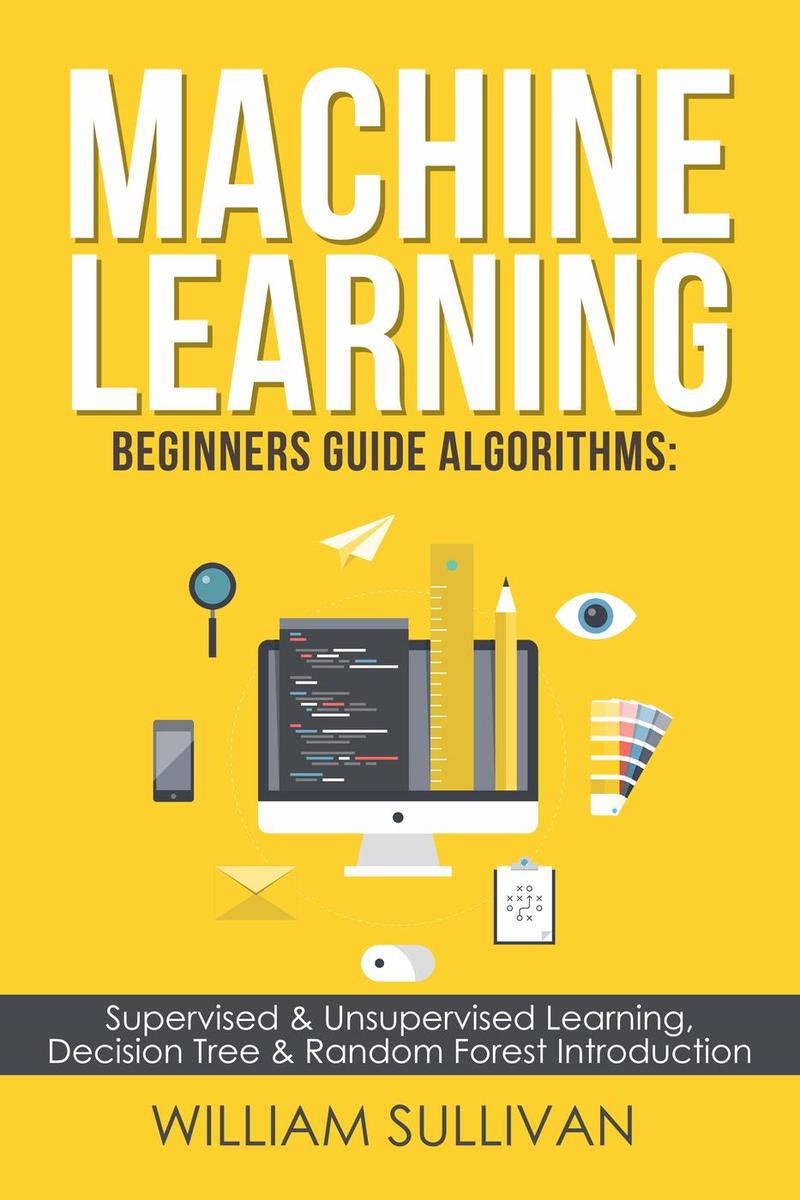
Machine Learning For Beginners Guide Algorithms
¥32.62
Machines can LEARN ?!?! Machine learning occurs primarily through the use of " algorithms" and other elaborate procedures Whether you're a novice, intermediate or expert this book will teach you all the ins, outs and everything you need to know about machine learning Note: Bonus chapters included inside! Instead of spending hundreds or even thousands of dollars on courses/materials why not read this book instead? Its a worthwhile read and the most valuable investment you can make for yourself Other books easily retail for $50-$100+ and have far less quality content. This book is by far superior and exceeds any other book available for beginners. What You'll Learn Supervised Learning Unsupervised Learning Reinforced Learning Algorithms Decision Tree Random Forest Neural Networks Python Deep Learning And much, much more! This is the most comprehensive and easy to read step by step guide in machine learning that exists. Learn from one of the most reliable programmers alive and expert in the field You do not want to miss out on this incredible offer!
CompTIA Network+ Certification Guide
¥71.93
This is a practical certification guide covering all the exam topics in an easy-to-follow manner backed with self-assessment scenarios for better preparation. Key Features *A step-by-step guide to give you a clear understanding of the Network+ Certification *Learn about network architecture, protocols, security, and network troubleshooting *Confidently ace the N10-007 exam with the help of practice tests Book Description CompTIA certified professionals have always had the upper hand in the information technology industry. This book will be your ideal guide to efficiently passing and achieving this certification. Learn from industry experts and implement their practices to resolve complex IT issues. This book revolves around networking concepts where readers will learn topics like network architecture, security, network monitoring, and troubleshooting. This book will not only prepare the readers conceptually but will also help them pass the N10-007 exam. This guide will also provide practice exercise after every chapter where readers can ensure their concepts are clear. By the end of this book, readers will leverage this guide and the included practice questions to boost their confidence in appearing for the actual certificate. What you will learn *Explain the purpose of a variety of networking concepts and implement them appropriately *Understand physical security and common attacks while securing wired and wireless networks *Understand the fundamentals of IPv4 and IPv6 *Determine and explain the appropriate cabling, device, and storage technologies *Understand network troubleshooting methodology and appropriate tools to support connectivity and performance *Use best practices to manage the network, determine policies, and ensure business continuity Who this book is for This book is ideal for readers wanting to pass the CompTIA Network+ certificate. Rookie network engineers and system administrators interested in enhancing their networking skills would also benefit from this book. No Prior knowledge on networking would be needed.
iOS 12 Programming for Beginners
¥81.74
Begin your iOS 12 app development journey with this practical guide Key Features *Kick-start your iOS programming career and have fun building iOS apps of your choice *Get to grips with Xcode 10 and Swift 4.2, the building blocks of iOS development *Discover the latest features of iOS 12 - SiriKit, notifications, and much more Book Description Want to build iOS 12 applications from scratch with the latest Swift 4.2 language and Xcode 10 by your side? Forget sifting through tutorials and blog posts; this book is a direct route to iOS development, taking you through the basics and showing you how to put principles into practice. Take advantage of this developer-friendly guide and start building applications that may just take the App Store by storm! If you’re already an experienced programmer, you can jump right in and learn the latest iOS 12 features. For beginners, this book starts by introducing you to iOS development as you learn Xcode and Swift. You'll also study advanced iOS design topics, such as gestures and animations, to give your app the edge. You’ll explore the latest Swift 4.2 and iOS 12 developments by incorporating new features, such as the latest in notifications, custom-UI notifications, maps, and the recent additions in Sirikit. The book will guide you in using TestFlight to quickly get to grips with everything you need to get your project on the App Store. By the end of this book, you'll be ready to start building your own cool iOS applications confidently. What you will learn *Explore the distinctive design principles that define the iOS user experience *Navigate panels within an Xcode project *Use the latest Xcode asset catalogue of Xcode 10 *Create a playgrounds project within your projects and understand how Ranges and Control flow work *Study operations with integers and work your way through if statements *Build a responsive UI and add privacy to your custom-rich notifications *Set up Sirikit to add voice for Siri shortcuts *Collect valuable feedback with TestFlight before releasing your apps on the App Store Who this book is for This book is for you if you are completely new to Swift, iOS, or programming and want to make iOS applications. However, you’ll also find this book useful if you’re an experienced programmer looking to explore the latest iOS 12 features.
Serverless Architectures with AWS
¥54.49
Don't waste your energy thinking about servers; use AWS to build enterprise-grade serverless applications. Key Features *Learn how to quickly and easily go serverless *Explore AWS and Lambda: the first building blocks of serverless applications on AWS *Study different approaches to deploy and maintain serverless applications Book Description Serverless Architecture with AWS begins with an introduction to the serverless model and helps you get started with AWS and Lambda. You'll also get to grips with other capabilities of the AWS Serverless Platform and see how AWS supports enterprise-grade serverless applications with and without Lambda. This book will guide you in deploying your first serverless project and exploring the capabilities of serverless Amazon Athena, an interactive query service that makes it easy to analyze data in Amazon Simple Storage Service (S3 Amazon) using standard SQL. You’ll also learn about AWS Glue, a fully managed ETL service that makes categorizing data easy and cost-effective. You'll study how Amazon Kinesis makes it possible to unleash the potential of real-time data insights and analytics with capabilities such as video streams, data streams, data firehose, and data analytics. Last but not least, you’ll be equipped to combine Amazon Kinesis capabilities with AWS Lambda to create lightweight serverless architectures. By the end of the book, you will be ready to create and run your first serverless application that takes advantage of the high availability, security, performance, and scalability of AWS. What you will learn *Explore AWS services for supporting a serverless environment *Set up AWS services to make applications scalable and highly available *Deploy a static website with a serverless architecture *Build your first serverless web application *Study the changes in a deployed serverless web application *Apply best practices to ensure overall security, availability, and reliability Who this book is for This book is for you if you want to develop serverless applications and have some prior coding experience. Though no prior experience of AWS is needed, basic knowledge of Java or Node.js will be an added advantage.
Command Line Fundamentals
¥63.21
Master shell basics and Unix tools and discover easy commands to perform complex tasks with speed Key Features *Learn why the Bash shell is widely used on Linux and iOS *Explore advanced shell concepts, such as pipes and redirection *Understand how to use Unix command-line tools as building blocks for different tasks Book Description The most basic interface to a computer—the command line—remains the most flexible and powerful way of processing data and performing and automating various day-to-day tasks. Command Line Fundamentals begins by exploring the basics, and then focuses on the most common tool, the Bash shell (which is standard on all Linux and iOS systems). As you make your way through the book, you'll explore the traditional Unix command-line programs as implemented by the GNU project. You'll also learn to use redirection and pipelines to assemble these programs to solve complex problems. By the end of this book, you'll have explored the basics of shell scripting, allowing you to easily and quickly automate tasks. What you will learn *Use the Bash shell to run commands *Utilize basic Unix utilities such as cat, tr, sort, and uniq *Explore shell wildcards to manage groups of files *Apply useful keyboard shortcuts in shell *Employ redirection and pipes to process data *Write both basic and advanced shell scripts to automate tasks Who this book is for Command Line Fundamentals is for programmers who use GUIs but want to understand how to use the command line to complete tasks faster.
Apache Spark 2: Data Processing and Real-Time Analytics
¥90.46
Build efficient data flow and machine learning programs with this flexible, multi-functional open-source cluster-computing framework Key Features *Master the art of real-time big data processing and machine learning *Explore a wide range of use-cases to analyze large data *Discover ways to optimize your work by using many features of Spark 2.x and Scala Book Description Apache Spark is an in-memory, cluster-based data processing system that provides a wide range of functionalities such as big data processing, analytics, machine learning, and more. With this Learning Path, you can take your knowledge of Apache Spark to the next level by learning how to expand Spark's functionality and building your own data flow and machine learning programs on this platform. You will work with the different modules in Apache Spark, such as interactive querying with Spark SQL, using DataFrames and datasets, implementing streaming analytics with Spark Streaming, and applying machine learning and deep learning techniques on Spark using MLlib and various external tools. By the end of this elaborately designed Learning Path, you will have all the knowledge you need to master Apache Spark, and build your own big data processing and analytics pipeline quickly and without any hassle. This Learning Path includes content from the following Packt products: *Mastering Apache Spark 2.x by Romeo Kienzler *Scala and Spark for Big Data Analytics by Md. Rezaul Karim, Sridhar Alla *Apache Spark 2.x Machine Learning Cookbook by Siamak Amirghodsi, Meenakshi Rajendran, Broderick Hall, Shuen MeiCookbook What you will learn *Get to grips with all the features of Apache Spark 2.x *Perform highly optimized real-time big data processing *Use ML and DL techniques with Spark MLlib and third-party tools *Analyze structured and unstructured data using SparkSQL and GraphX *Understand tuning, debugging, and monitoring of big data applications *Build scalable and fault-tolerant streaming applications *Develop scalable recommendation engines Who this book is for If you are an intermediate-level Spark developer looking to master the advanced capabilities and use-cases of Apache Spark 2.x, this Learning Path is ideal for you. Big data professionals who want to learn how to integrate and use the features of Apache Spark and build a strong big data pipeline will also find this Learning Path useful. To grasp the concepts explained in this Learning Path, you must know the fundamentals of Apache Spark and Scala.
Julia Programming Projects
¥81.74
A step-by-step guide that demonstrates how to build simple-to-advanced applications through examples in Julia Lang 1.x using modern tools Key Features *Work with powerful open-source libraries for data wrangling, analysis, and visualization *Develop full-featured, full-stack web applications *Learn to perform supervised and unsupervised machine learning and time series analysis with Julia Book Description Julia is a new programming language that offers a unique combination of performance and productivity. Its powerful features, friendly syntax, and speed are attracting a growing number of adopters from Python, R, and Matlab, effectively raising the bar for modern general and scientific computing. After six years in the making, Julia has reached version 1.0. Now is the perfect time to learn it, due to its large-scale adoption across a wide range of domains, including fintech, biotech, education, and AI. Beginning with an introduction to the language, Julia Programming Projects goes on to illustrate how to analyze the Iris dataset using DataFrames. You will explore functions and the type system, methods, and multiple dispatch while building a web scraper and a web app. Next, you'll delve into machine learning, where you'll build a books recommender system. You will also see how to apply unsupervised machine learning to perform clustering on the San Francisco business database. After metaprogramming, the final chapters will discuss dates and time, time series analysis, visualization, and forecasting. We'll close with package development, documenting, testing and benchmarking. By the end of the book, you will have gained the practical knowledge to build real-world applications in Julia. What you will learn *Leverage Julia's strengths, its top packages, and main IDE options *Analyze and manipulate datasets using Julia and DataFrames *Write complex code while building real-life Julia applications *Develop and run a web app using Julia and the HTTP package *Build a recommender system using supervised machine learning *Perform exploratory data analysis *Apply unsupervised machine learning algorithms *Perform time series data analysis, visualization, and forecasting Who this book is for Data scientists, statisticians, business analysts, and developers who are interested in learning how to use Julia to crunch numbers, analyze data and build apps will find this book useful. A basic knowledge of programming is assumed.
Machine Learning with Apache Spark Quick Start Guide
¥54.49
Combine advanced analytics including Machine Learning, Deep Learning Neural Networks and Natural Language Processing with modern scalable technologies including Apache Spark to derive actionable insights from Big Data in real-time Key Features *Make a hands-on start in the fields of Big Data, Distributed Technologies and Machine Learning *Learn how to design, develop and interpret the results of common Machine Learning algorithms *Uncover hidden patterns in your data in order to derive real actionable insights and business value Book Description Every person and every organization in the world manages data, whether they realize it or not. Data is used to describe the world around us and can be used for almost any purpose, from analyzing consumer habits to fighting disease and serious organized crime. Ultimately, we manage data in order to derive value from it, and many organizations around the world have traditionally invested in technology to help process their data faster and more efficiently. But we now live in an interconnected world driven by mass data creation and consumption where data is no longer rows and columns restricted to a spreadsheet, but an organic and evolving asset in its own right. With this realization comes major challenges for organizations: how do we manage the sheer size of data being created every second (think not only spreadsheets and databases, but also social media posts, images, videos, music, blogs and so on)? And once we can manage all of this data, how do we derive real value from it? The focus of Machine Learning with Apache Spark is to help us answer these questions in a hands-on manner. We introduce the latest scalable technologies to help us manage and process big data. We then introduce advanced analytical algorithms applied to real-world use cases in order to uncover patterns, derive actionable insights, and learn from this big data. What you will learn *Understand how Spark fits in the context of the big data ecosystem *Understand how to deploy and configure a local development environment using Apache Spark *Understand how to design supervised and unsupervised learning models *Build models to perform NLP, deep learning, and cognitive services using Spark ML libraries *Design real-time machine learning pipelines in Apache Spark *Become familiar with advanced techniques for processing a large volume of data by applying machine learning algorithms Who this book is for This book is aimed at Business Analysts, Data Analysts and Data Scientists who wish to make a hands-on start in order to take advantage of modern Big Data technologies combined with Advanced Analytics.
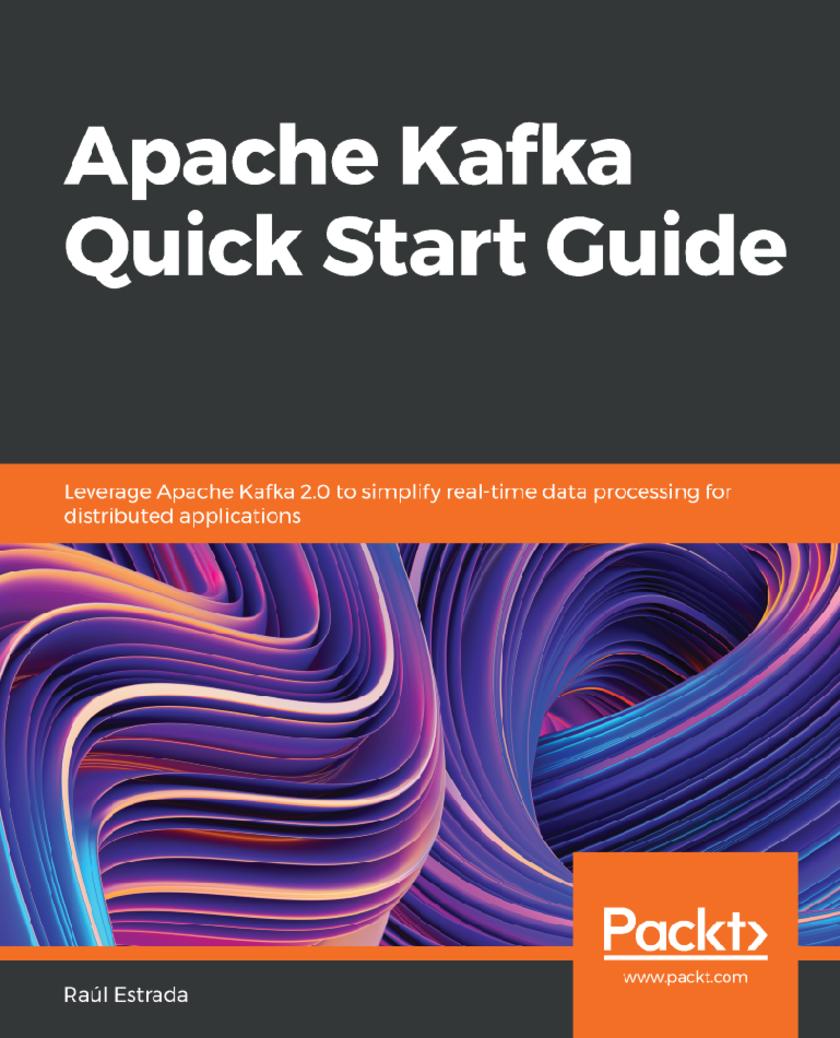
Apache Kafka Quick Start Guide
¥54.49
Process large volumes of data in real-time while building high performance and robust data stream processing pipeline using the latest Apache Kafka 2.0 Key Features *Solve practical large data and processing challenges with Kafka *Tackle data processing challenges like late events, windowing, and watermarking *Understand real-time streaming applications processing using Schema registry, Kafka connect, Kafka streams, and KSQL Book Description Apache Kafka is a great open source platform for handling your real-time data pipeline to ensure high-speed filtering and pattern matching on the ?y. In this book, you will learn how to use Apache Kafka for efficient processing of distributed applications and will get familiar with solving everyday problems in fast data and processing pipelines. This book focuses on programming rather than the configuration management of Kafka clusters or DevOps. It starts off with the installation and setting up the development environment, before quickly moving on to performing fundamental messaging operations such as validation and enrichment. Here you will learn about message composition with pure Kafka API and Kafka Streams. You will look into the transformation of messages in different formats, such asext, binary, XML, JSON, and AVRO. Next, you will learn how to expose the schemas contained in Kafka with the Schema Registry. You will then learn how to work with all relevant connectors with Kafka Connect. While working with Kafka Streams, you will perform various interesting operations on streams, such as windowing, joins, and aggregations. Finally, through KSQL, you will learn how to retrieve, insert, modify, and delete data streams, and how to manipulate watermarks and windows. What you will learn *How to validate data with Kafka *Add information to existing data ?ows *Generate new information through message composition *Perform data validation and versioning with the Schema Registry *How to perform message Serialization and Deserialization *How to perform message Serialization and Deserialization *Process data streams with Kafka Streams *Understand the duality between tables and streams with KSQL Who this book is for This book is for developers who want to quickly master the practical concepts behind Apache Kafka. The audience need not have come across Apache Kafka previously; however, a familiarity of Java or any JVM language will be helpful in understanding the code in this book.
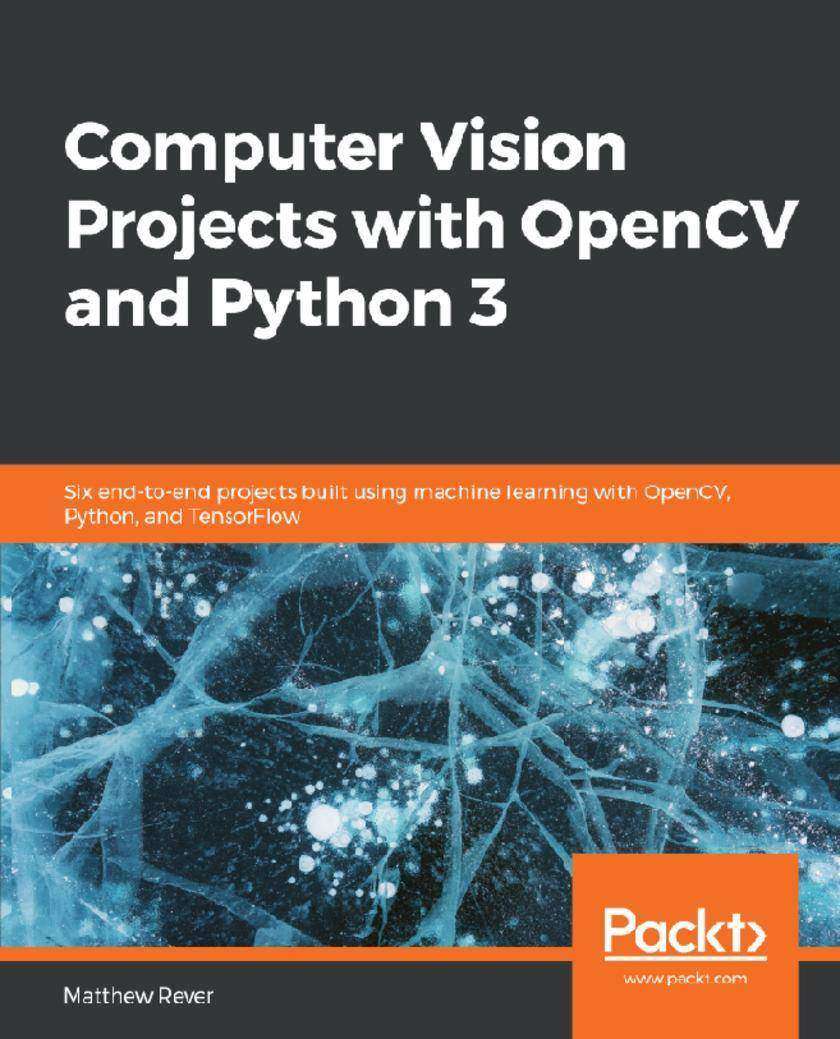
Computer Vision Projects with OpenCV and Python 3
¥54.49
Gain a working knowledge of advanced machine learning and explore Python’s powerful tools for extracting data from images and videos Key Features *Implement image classification and object detection using machine learning and deep learning *Perform image classification, object detection, image segmentation, and other Computer Vision tasks *Crisp content with a practical approach to solving real-world problems in Computer Vision Book Description Python is the ideal programming language for rapidly prototyping and developing production-grade codes for image processing and Computer Vision with its robust syntax and wealth of powerful libraries. This book will help you design and develop production-grade Computer Vision projects tackling real-world problems. With the help of this book, you will learn how to set up Anaconda and Python for the major OSes with cutting-edge third-party libraries for Computer Vision. You'll learn state-of-the-art techniques for classifying images, finding and identifying human postures, and detecting faces within videos. You will use powerful machine learning tools such as OpenCV, Dlib, and TensorFlow to build exciting projects such as classifying handwritten digits, detecting facial features,and much more. The book also covers some advanced projects, such as reading text from license plates from real-world images using Google’s Tesseract software, and tracking human body poses using DeeperCut within TensorFlow. By the end of this book, you will have the expertise required to build your own Computer Vision projects using Python and its associated libraries. What you will learn *Install and run major Computer Vision packages within Python *Apply powerful support vector machines for simple digit classification *Understand deep learning with TensorFlow *Build a deep learning classifier for general images *Use LSTMs for automated image captioning *Read text from real-world images *Extract human pose data from images Who this book is for Python programmers and machine learning developers who wish to build exciting Computer Vision projects using the power of machine learning and OpenCV will find this book useful. The only prerequisite for this book is that you should have a sound knowledge of Python programming.
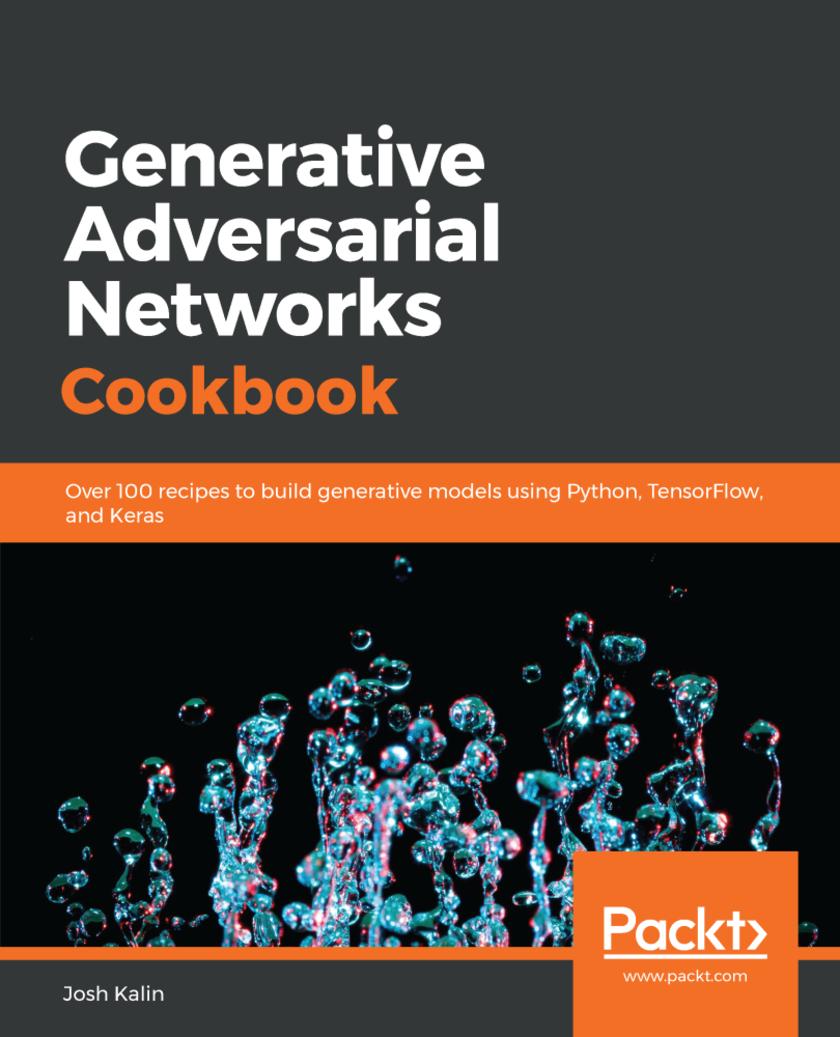
Generative Adversarial Networks Cookbook
¥81.74
Simplify next-generation deep learning by implementing powerful generative models using Python, TensorFlow and Keras Key Features *Understand the common architecture of different types of GANs *Train, optimize, and deploy GAN applications using TensorFlow and Keras *Build generative models with real-world data sets, including 2D and 3D data Book Description Developing Generative Adversarial Networks (GANs) is a complex task, and it is often hard to find code that is easy to understand. This book leads you through eight different examples of modern GAN implementations, including CycleGAN, simGAN, DCGAN, and 2D image to 3D model generation. Each chapter contains useful recipes to build on a common architecture in Python, TensorFlow and Keras to explore increasingly difficult GAN architectures in an easy-to-read format. The book starts by covering the different types of GAN architecture to help you understand how the model works. This book also contains intuitive recipes to help you work with use cases involving DCGAN, Pix2Pix, and so on. To understand these complex applications, you will take different real-world data sets and put them to use. By the end of this book, you will be equipped to deal with the challenges and issues that you may face while working with GAN models, thanks to easy-to-follow code solutions that you can implement right away. What you will learn *Structure a GAN architecture in pseudocode *Understand the common architecture for each of the GAN models you will build *Implement different GAN architectures in TensorFlow and Keras *Use different datasets to enable neural network functionality in GAN models *Combine different GAN models and learn how to fine-tune them *Produce a model that can take 2D images and produce 3D models *Develop a GAN to do style transfer with Pix2Pix Who this book is for This book is for data scientists, machine learning developers, and deep learning practitioners looking for a quick reference to tackle challenges and tasks in the GAN domain. Familiarity with machine learning concepts and working knowledge of Python programming language will help you get the most out of the book.
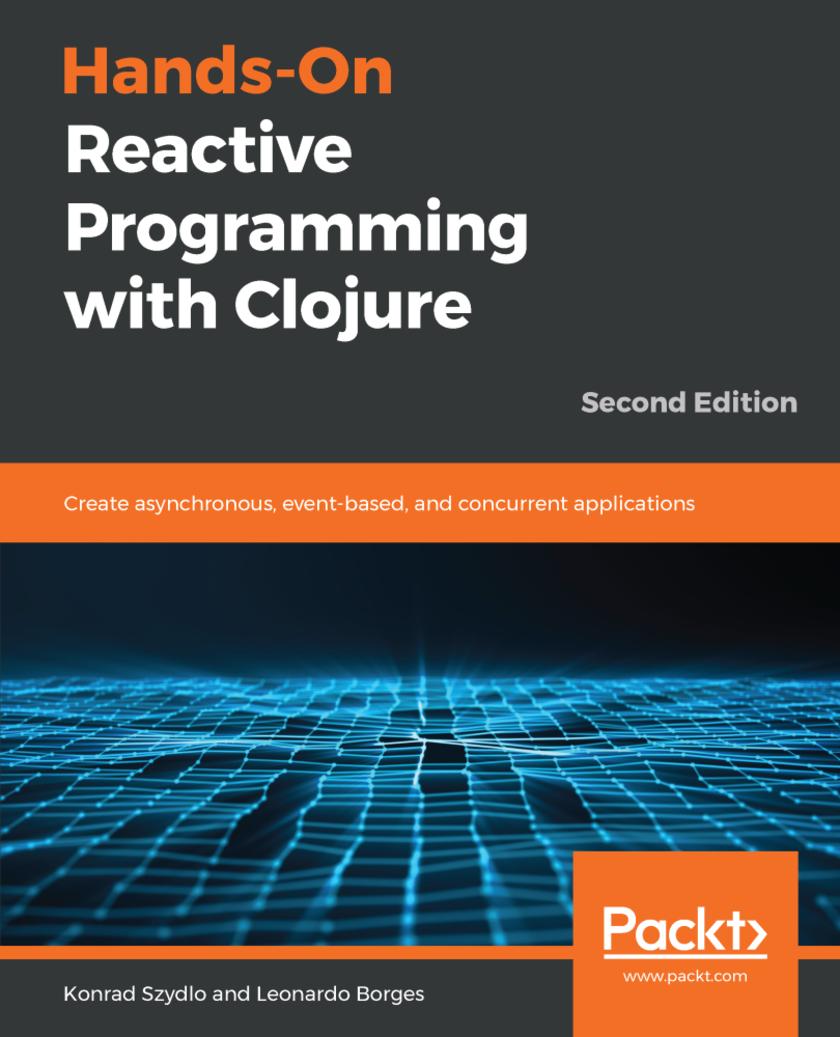
Hands-On Reactive Programming with Clojure
¥63.21
Learn how to use RxClojure to deal with stateful computations Key Features * Leverage the features of Functional Reactive Programming using Clojure * Create dataflow-based systems that are the building blocks of Reactive Programming * Use different Functional Reactive Programming frameworks, techniques, and patterns to solve real-world problems Book Description Reactive Programming is central to many concurrent systems, and can help make the process of developing highly concurrent, event-driven, and asynchronous applications simpler and less error-prone. This book will allow you to explore Reactive Programming in Clojure 1.9 and help you get to grips with some of its new features such as transducers, reader conditionals, additional string functions, direct linking, and socket servers. Hands-On Reactive Programming with Clojure starts by introducing you to Functional Reactive Programming (FRP) and its formulations, as well as showing you how it inspired Compositional Event Systems (CES). It then guides you in understanding Reactive Programming as well as learning how to develop your ability to work with time-varying values thanks to examples of reactive applications implemented in different frameworks. You'll also gain insight into some interesting Reactive design patterns such as the simple component, circuit breaker, request-response, and multiple-master replication. Finally, the book introduces microservices-based architecture in Clojure and closes with examples of unit testing frameworks. By the end of the book, you will have gained all the knowledge you need to create applications using different Reactive Programming approaches. What you will learn * Understand how to think in terms of time-varying values and event streams * Create, compose, and transform observable sequences using Reactive extensions * Build a CES framework from scratch using core.async as its foundation * Develop a simple ClojureScript game using Reagi * Integrate Om and RxJS in a web application * Implement a reactive API in Amazon Web Services (AWS) * Discover helpful approaches to backpressure and error handling * Get to grips with futures and their applications Who this book is for If you’re interested in using Reactive Programming to build asynchronous and concurrent applications, this is the book for you. Basic knowledge of Clojure programming is necessary to understand the concepts covered in this book.
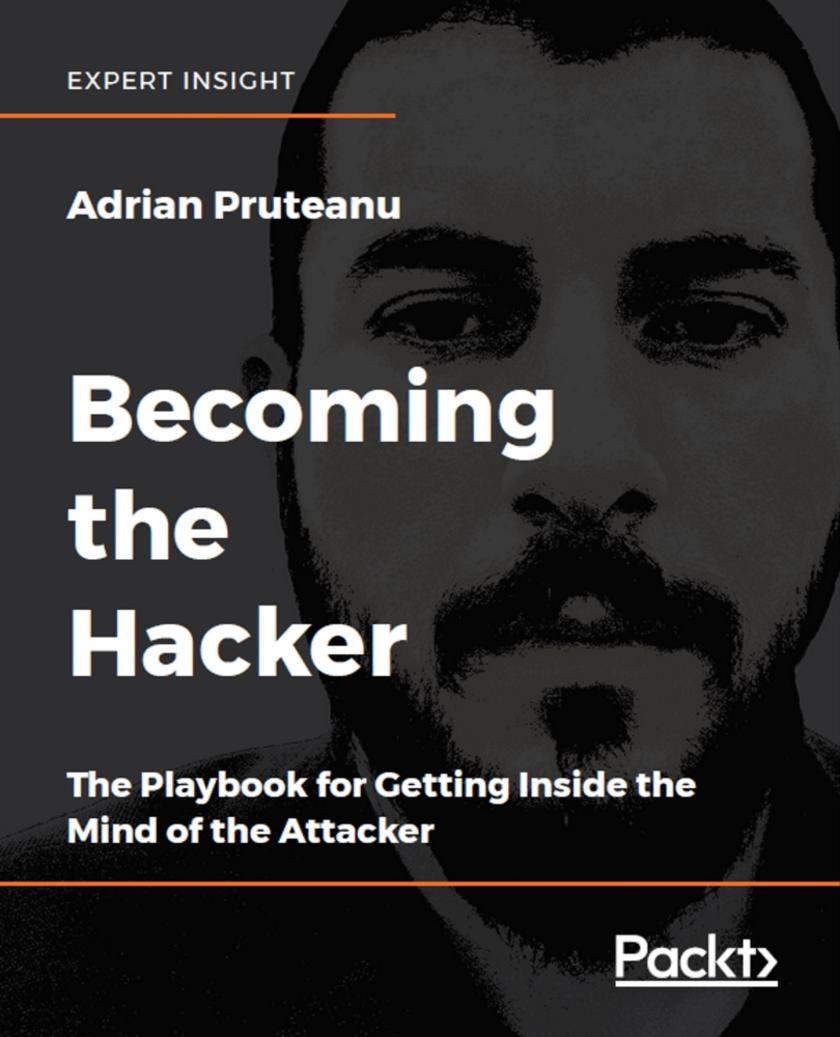
Becoming the Hacker
¥73.02
Web penetration testing by becoming an ethical hacker. Protect the web by learning the tools, and the tricks of the web application attacker. Key Features * Builds on books and courses on penetration testing for beginners * Covers both attack and defense perspectives * Examines which tool to deploy to suit different applications and situations Book Description Becoming the Hacker will teach you how to approach web penetration testing with an attacker's mindset. While testing web applications for performance is common, the ever-changing threat landscape makes security testing much more difficult for the defender. There are many web application tools that claim to provide a complete survey and defense against potential threats, but they must be analyzed in line with the security needs of each web application or service. We must understand how an attacker approaches a web application and the implications of breaching its defenses. Through the first part of the book, Adrian Pruteanu walks you through commonly encountered vulnerabilities and how to take advantage of them to achieve your goal. The latter part of the book shifts gears and puts the newly learned techniques into practice, going over scenarios where the target may be a popular content management system or a containerized application and its network. Becoming the Hacker is a clear guide to web application security from an attacker's point of view, from which both sides can benefit. What you will learn * Study the mindset of an attacker * Adopt defensive strategies * Classify and plan for standard web application security threats * Prepare to combat standard system security problems * Defend WordPress and mobile applications * Use security tools and plan for defense against remote execution Who this book is for The reader should have basic security experience, for example, through running a network or encountering security issues during application development. Formal education in security is useful, but not required. This title is suitable for people with at least two years of experience in development, network management, or DevOps, or with an established interest in security.
Apache Spark Quick Start Guide
¥54.49
A practical guide for solving complex data processing challenges by applying the best optimizations techniques in Apache Spark. Key Features * Learn about the core concepts and the latest developments in Apache Spark * Master writing efficient big data applications with Spark’s built-in modules for SQL, Streaming, Machine Learning and Graph analysis * Get introduced to a variety of optimizations based on the actual experience Book Description Apache Spark is a flexible framework that allows processing of batch and real-time data. Its unified engine has made it quite popular for big data use cases. This book will help you to get started with Apache Spark 2.0 and write big data applications for a variety of use cases. It will also introduce you to Apache Spark – one of the most popular Big Data processing frameworks. Although this book is intended to help you get started with Apache Spark, but it also focuses on explaining the core concepts. This practical guide provides a quick start to the Spark 2.0 architecture and its components. It teaches you how to set up Spark on your local machine. As we move ahead, you will be introduced to resilient distributed datasets (RDDs) and DataFrame APIs, and their corresponding transformations and actions. Then, we move on to the life cycle of a Spark application and learn about the techniques used to debug slow-running applications. You will also go through Spark’s built-in modules for SQL, streaming, machine learning, and graph analysis. Finally, the book will lay out the best practices and optimization techniques that are key for writing efficient Spark applications. By the end of this book, you will have a sound fundamental understanding of the Apache Spark framework and you will be able to write and optimize Spark applications. What you will learn * Learn core concepts such as RDDs, DataFrames, transformations, and more * Set up a Spark development environment * Choose the right APIs for your applications * Understand Spark’s architecture and the execution flow of a Spark application * Explore built-in modules for SQL, streaming, ML, and graph analysis * Optimize your Spark job for better performance Who this book is for If you are a big data enthusiast and love processing huge amount of data, this book is for you. If you are data engineer and looking for the best optimization techniques for your Spark applications, then you will find this book helpful. This book also helps data scientists who want to implement their machine learning algorithms in Spark. You need to have a basic understanding of any one of the programming languages such as Scala, Python or Java.
Generative Adversarial Networks Projects
¥81.74
Explore various Generative Adversarial Network architectures using the Python ecosystem Key Features * Use different datasets to build advanced projects in the Generative Adversarial Network domain * Implement projects ranging from generating 3D shapes to a face aging application * Explore the power of GANs to contribute in open source research and projects Book Description Generative Adversarial Networks (GANs) have the potential to build next-generation models, as they can mimic any distribution of data. Major research and development work is being undertaken in this field since it is one of the rapidly growing areas of machine learning. This book will test unsupervised techniques for training neural networks as you build seven end-to-end projects in the GAN domain. Generative Adversarial Network Projects begins by covering the concepts, tools, and libraries that you will use to build efficient projects. You will also use a variety of datasets for the different projects covered in the book. The level of complexity of the operations required increases with every chapter, helping you get to grips with using GANs. You will cover popular approaches such as 3D-GAN, DCGAN, StackGAN, and CycleGAN, and you’ll gain an understanding of the architecture and functioning of generative models through their practical implementation. By the end of this book, you will be ready to build, train, and optimize your own end-to-end GAN models at work or in your own projects. What you will learn * Train a network on the 3D ShapeNet dataset to generate realistic shapes * Generate anime characters using the Keras implementation of DCGAN * Implement an SRGAN network to generate high-resolution images * Train Age-cGAN on Wiki-Cropped images to improve face verification * Use Conditional GANs for image-to-image translation * Understand the generator and discriminator implementations of StackGAN in Keras Who this book is for If you’re a data scientist, machine learning developer, deep learning practitioner, or AI enthusiast looking for a project guide to test your knowledge and expertise in building real-world GANs models, this book is for you.
Hands-On RESTful API Design Patterns and Best Practices
¥73.02
Build effective RESTful APIs for enterprise with design patterns and REST framework’s out-of-the-box capabilities Key Features * Understand advanced topics such as API gateways, API securities, and cloud * Implement patterns programmatically with easy-to-follow examples * Modernize legacy codebase using API connectors, layers, and microservices Book Description This book deals with the Representational State Transfer (REST) paradigm, which is an architectural style that allows networked devices to communicate with each other over the internet. With the help of this book, you’ll explore the concepts of service-oriented architecture (SOA), event-driven architecture (EDA), and resource-oriented architecture (ROA). This book covers why there is an insistence for high-quality APIs toward enterprise integration. It also covers how to optimize and explore endpoints for microservices with API gateways and touches upon integrated platforms and Hubs for RESTful APIs. You’ll also understand how application delivery and deployments can be simplified and streamlined in the REST world. The book will help you dig deeper into the distinct contributions of RESTful services for IoT analytics and applications. Besides detailing the API design and development aspects, this book will assist you in designing and developing production-ready, testable, sustainable, and enterprise-grade APIs. By the end of the book, you’ll be empowered with all that you need to create highly flexible APIs for next-generation RESTful services and applications. What you will learn * Explore RESTful concepts, including URI, HATEOAS, and Code on Demand * Study core patterns like Statelessness, Pagination, and Discoverability * Optimize endpoints for linked microservices with API gateways * Delve into API authentication, authorization, and API security implementations * Work with Service Orchestration to craft composite and process-aware services * Expose RESTful protocol-based APIs for cloud computing Who this book is for This book is primarily for web, mobile, and cloud services developers, architects, and consultants who want to build well-designed APIs for creating and sustaining enterprise-class applications. You’ll also benefit from this book if you want to understand the finer details of RESTful APIs and their design techniques along with some tricks and tips.
Zabbix 4 Network Monitoring
¥90.46
Gather detailed statistics and deploy impressive business solutions with Zabbix 4.0 Key Features *Experience the full impact of Zabbix 4.0, a useful and increasingly popular tool *Enhance your network’s performance and manage hosts and systems *A step-by-step guide to smarter network monitoring Book Description Zabbix 4 Network Monitoring is the perfect starting point for monitoring the performance of your network devices and applications with Zabbix. Even if you’ve never used a monitoring solution before, this book will get you up and running quickly. You’ll learn to monitor more sophisticated operations with ease and soon feel in complete control of your network, ready to meet any challenges you might face. Starting with the installation, you will discover the new features in Zabbix 4.0. You will then get to grips with native Zabbix agents and Simple Network Management Protocol (SNMP) devices. You will also explore Zabbix's integrated functionality for monitoring Java application servers and VMware. This book also covers notifications, permission management, system maintenance, and troubleshooting, so you can be confident that every potential challenge and task is under your control. If you're working with larger environments, you'll also be able to find out more about distributed data collection using Zabbix proxies. Once you're confident and ready to put these concepts into practice, you will understand how to optimize and improve performance. Troubleshooting network issues is vital for anyone working with Zabbix, so the book also helps you work through any technical snags and glitches you might face. By the end of this book, you will have learned more advanced techniques to fine-tune your system and make sure it is in a healthy state. What you will learn *Install Zabbix server and an agent from source *Manage hosts, users, and permissions while acting upon monitored conditions *Visualize data with the help of ad hoc graphs, custom graphs, and maps *Simplify complex configurations and learn to automate them *Monitor everything from web pages to IPMI devices and Java applications to VMware stats *Configure Zabbix to send alerts including problem severity and time periods *Troubleshoot any network issue Who this book is for If you're new to Zabbix look no further than this book. Zabbix 4 Network Monitoring is for system and network administrators who are looking to put their knowledge to work with Zabbix 4.0.


