


 购物车
购物车 个人中心
个人中心
Scala High Performance Programming
¥334.25
Leverage Scala and the functional paradigm to build performant softwareAbout This Book·Get the first book to explore Scala performance techniques in depth!·Real-world inspired use cases illustrate and support the techniques studied and the language features·This book is written by Vincent Theron and Michael Diamant, software engineers with several years of experience in the high-frequency trading and programmatic advertising industriesWho This Book Is ForThis book assumes a basic exposure to the Scala programming language and the Java Virtual Machine. You should be able to read and understand moderately advanced Scala code. No other knowledge is required.What You Will Learn·Analyze the performance of JVM applications by developing JMH benchmarks and profiling with Flight Recorder·Discover use cases and performance tradeoffs of Scala language features, and eager and lazy collections·Explore event sourcing to improve performance while working with stream processing pipelines·Dive into asynchronous programming to extract performance on multicore systems using Scala Future and Scalaz Task·Design distributed systems with conflict-free replicated data types (CRDTs) to take advantage of eventual consistency without synchronization·Understand the impact of queues on system performance and apply the Free monad to build systems robust to high levels of throughputIn DetailScala is a statically and strongly typed language that blends functional and object-oriented paradigms. It has experienced growing popularity as an appealing and pragmatic choice to write production-ready software in the functional paradigm. Scala and the functional programming paradigm enable you to solve problems with less code and lower maintenance costs than the alternatives. However, these gains can come at the cost of performance if you are not careful.Scala High Performance Programming arms you with the knowledge you need to create performant Scala applications. Starting with the basics of understanding how to define performance, we explore Scala's language features and functional programming techniques while keeping a close eye on performance throughout all the topics.We introduce you as the newest software engineer at a fictitious financial trading company, named MV Trading. As you learn new techniques and approaches to reduce latency and improve throughput, you'll apply them to MV Trading's business problems. By the end of the book, you will be well prepared to write production-ready, performant Scala software using the functional paradigm to solve real-world problems.Style and approachThis step-by-step guide will help you create high performance applications using Scala. Packed with lots of code samples, tips and tricks, every topic is explained in a detailed, easy-to-understand manner.
Complete Virtual Reality and Augmented Reality Development with Unity
¥88.28
Get close and comfortable with Unity and build applications that run on HoloLens, Daydream, and Oculus Rift Key Features * Build fun augmented reality applications using ARKit, ARCore, and Vuforia * Explore virtual reality by developing more than 10 engaging projects * Learn how to integrate AR and VR concepts together in a single application Book Description Unity is the leading platform to develop mixed reality experiences because it provides a great pipeline for working with 3D assets. Using a practical and project-based approach, this Learning Path educates you about the specifics of AR and VR development using Unity 2018 and Unity 3D. You’ll learn to integrate, animate, and overlay 3D objects on your camera feed, before moving on to implement sensor-based AR applications. You’ll explore various concepts by creating an AR application using Vuforia for both macOS and Windows for Android and iOS devices. Next, you’ll learn how to develop VR applications that can be experienced with devices, such as Oculus and Vive. You’ll also explore various tools for VR development: gaze-based versus hand controller input, world space UI canvases, locomotion and teleportation, timeline animation, and multiplayer networking. You’ll learn the Unity 3D game engine via the interactive Unity Editor and C# programming. By the end of this Learning Path, you’ll be fully equipped to develop rich, interactive mixed reality experiences using Unity. This Learning Path includes content from the following Packt products: * Unity Virtual Reality Projects - Second Edition by Jonathan Linowes * Unity 2018 Augmented Reality Projects by Jesse Glover What you will learn * Create 3D scenes to learn about world space and scale * Move around your scenes using locomotion and teleportation * Create filters or overlays that work with facial recognition software * Interact with virtual objects using eye gaze, hand controllers, and user input events * Design and build a VR storytelling animation with a soundtrack and timelines * Create social VR experiences with Unity networking Who this book is for If you are a game developer familiar with 3D computer graphics and interested in building your own AR and VR games or applications, then this Learning Path is for you. Any prior experience in Unity and C# will be an advantage. In all, this course teaches you the tools and techniques to develop engaging mixed reality applications.
Applied Deep Learning with Keras
¥62.12
Take your neural networks to a whole new level with the simplicity and modularity of Keras, the most commonly used high-level neural networks API. Key Features * Solve complex machine learning problems with precision * Evaluate, tweak, and improve your deep learning models and solutions * Use different types of neural networks to solve real-world problems Book Description Though designing neural networks is a sought-after skill, it is not easy to master. With Keras, you can apply complex machine learning algorithms with minimum code. Applied Deep Learning with Keras starts by taking you through the basics of machine learning and Python all the way to gaining an in-depth understanding of applying Keras to develop efficient deep learning solutions. To help you grasp the difference between machine and deep learning, the book guides you on how to build a logistic regression model, first with scikit-learn and then with Keras. You will delve into Keras and its many models by creating prediction models for various real-world scenarios, such as disease prediction and customer churning. You’ll gain knowledge on how to evaluate, optimize, and improve your models to achieve maximum information. Next, you’ll learn to evaluate your model by cross-validating it using Keras Wrapper and scikit-learn. Following this, you’ll proceed to understand how to apply L1, L2, and dropout regularization techniques to improve the accuracy of your model. To help maintain accuracy, you’ll get to grips with applying techniques including null accuracy, precision, and AUC-ROC score techniques for fine tuning your model. By the end of this book, you will have the skills you need to use Keras when building high-level deep neural networks. What you will learn * Understand the difference between single-layer and multi-layer neural network models * Use Keras to build simple logistic regression models, deep neural networks, recurrent neural networks, and convolutional neural networks * Apply L1, L2, and dropout regularization to improve the accuracy of your model * Implement cross-validate using Keras wrappers with scikit-learn * Understand the limitations of model accuracy Who this book is for If you have basic knowledge of data science and machine learning and want to develop your skills and learn about artificial neural networks and deep learning, you will find this book useful. Prior experience of Python programming and experience with statistics and logistic regression will help you get the most out of this book. Although not necessary, some familiarity with the scikit-learn library will be an added bonus.
Hands-On Design Patterns with Java
¥70.84
Understand Gang of Four, architectural, functional, and reactive design patterns and how to implement them on modern Java platforms, such as Java 12 and beyond Key Features * Learn OOP, functional, and reactive patterns for creating readable and maintainable code * Explore architectural patterns and practices for building scalable and reliable applications * Tackle all kinds of performance-related issues and streamline development using design patterns Book Description Java design patterns are reusable and proven solutions to software design problems. This book covers over 60 battle-tested design patterns used by developers to create functional, reusable, and flexible software. Hands-On Design Patterns with Java starts with an introduction to the Unified Modeling Language (UML), and delves into class and object diagrams with the help of detailed examples. You'll study concepts and approaches to object-oriented programming (OOP) and OOP design patterns to build robust applications. As you advance, you'll explore the categories of GOF design patterns, such as behavioral, creational, and structural, that help you improve code readability and enable large-scale reuse of software. You’ll also discover how to work effectively with microservices and serverless architectures by using cloud design patterns, each of which is thoroughly explained and accompanied by real-world programming solutions. By the end of the book, you’ll be able to speed up your software development process using the right design patterns, and you’ll be comfortable working on scalable and maintainable projects of any size. What you will learn * Understand the significance of design patterns for software engineering * Visualize software design with UML diagrams * Strengthen your understanding of OOP to create reusable software systems * Discover GOF design patterns to develop scalable applications * Examine programming challenges and the design patterns that solve them * Explore architectural patterns for microservices and cloud development Who this book is for If you are a developer who wants to learn how to write clear, concise, and effective code for building production-ready applications, this book is for you. Familiarity with the fundamentals of Java is assumed.
Salesforce CRM - The Definitive Admin Handbook
¥70.84
A definitive guide covering all the core concepts necessary to pass the Salesforce Administrator Certification exam Key Features * Understand critical design considerations for setting up Salesforce CRM * Facilitate and manage the transition from Salesforce Classic to Lightning Experience * Learn key functions of application security to manage user profiles and data Book Description Salesforce’s winter ’19 release offers a host of new features for CRM designed to meet your sales and marketing requirements. With this comprehensive guide to implementing Salesforce CRM, administrators of all levels can easily get a thorough understanding of the platform. This Salesforce handbook begins by guiding you in setting up users and security and then progresses to configuration, data management, and data analytics. You’ll discover process automation and approval mechanisms, while also exploring the functional areas of Sales Cloud, Service Cloud, Marketing Cloud, and Salesforce Chatter. This book covers Salesforce CRM system administration in a practical way, and it’ll serve as an invaluable reference for both new administrators and experienced professionals. Furthermore, you’ll also delve into Salesforce mobile apps and mobile administration, along with Salesforce Adoption Manager. You’ll gain insights into Lightning Experience, Salesforce's new app, and learn how its modern design and sleek interface helps you to build customizable components. Finally, we'll see how the two versions compare and help manage the transition from Salesforce Classic to Lightning Experience.?? By the end of the book, you will have mastered the techniques to configure and control various user interface features in Salesforce CRM. What you will learn * Configure a variety of user interface features in Salesforce CRM * Understand the capabilities of the Salesforce CRM sharing model * Explore Einstein Analytics - Salesforce's new wave of advanced reporting * Get to grips with the Lightning Process Builder workflow * Set up user profiles, security, and login access mechanisms * Find out how Apex and Visualforce coding can be used in Salesforce CRM * Manage the transition from Salesforce Classic to Lightning Experience * Implement data manipulation features to apply best practices in data management Who this book is for This book is for administrators who want to develop and strengthen their Salesforce CRM skills in the areas of configuration and system management. Whether you are a new or experienced professional, this book will enhance your knowledge and understanding of Salesforce CRM features.
Automated Testing in Microsoft Dynamics 365 Business Central
¥44.68
Learn how to write automated tests for Dynamics 365 Business Central and see how to implement it in your daily work Key Features * Leverage automated testing to advance over traditional manual testing methods * Write, design, and implement automated tests * Explore various testing frameworks and tools compatible with Microsoft Dynamics 365 Business Central Book Description Dynamics 365 Business Central is the new cloud-based SaaS ERP proposition from Microsoft. It’s not as simple as it used to be way back when it was called Navigator, Navision Financials, or Microsoft Business Solutions-Navision. Our development practices are becoming more formal, and with this, the call for test automation is pressing on us. This book will teach you to leverage testing tools available with Dynamics 365 Business Central to perform automated testing. We’ll begin with a quick introduction to automated testing, followed by an overview of test automation in Dynamics 365 Business Central. Then you’ll learn to design and build automated tests and we’ll go through some efficient methods to get from requirements to application and testing code. Lastly, you’ll learn to incorporate your own and Microsoft tests into your daily development practice. By the end of the book, you’ll be able to write your own automated tests for Dynamics 365 Business Central. What you will learn * Understand what automated tests are, and when and why to use them * Explore the five pillars of the Testability Framework of Business Central * Design and write automated tests for Business Central * Make use of standard automated tests and their helper libraries * Integrate automated tests into your development practice Who this book is for This book is for consultants, testers, developers, and development managers working with Microsoft Dynamics NAV and Business Central. Being a book on automated testing techniques, it also caters to both functional and technical development teams.
Programming Microsoft Dynamics 365 Business Central
¥88.28
Explore the fundamentals of Dynamics 365 Business Central and the Visual Studio Code development environment with the help of useful examples and case studies Key Features * Tailor your applications to best suit the needs of your business * Explore the latest features of Business Central with examples curated by industry experts * Integrate Business Central features in your applications with this comprehensive guide Book Description Microsoft Dynamics 365 Business Central is a full ERP business solution suite with a robust set of development tools to support customization and enhancement. These tools can be used to tailor Business Central's in-built applications to support complete management functions for finance, supply chain, manufacturing, and operations. Using a case study approach, this book will introduce you to Dynamics 365 Business Central and Visual Studio Code development tools to help you become a productive Business Central developer. You'll also learn how to evaluate a product's development capabilities and manage Business Central-based development and implementation. You'll explore application structure, the construction of and uses for each object type, and how it all fits together to build apps that meet special business requirements. By the end of this book, you'll understand how to design and develop high-quality software using the Visual Studio Code development environment, the AL language paired with the improved editor, patterns, and features. What you will learn * Programming using the AL language in the Visual Studio Code development environment * Explore functional design and development using AL * How to build interactive pages and learn how to extract data for users * How to use best practices to design and develop modifications for new functionality integrated with the standard Business Central software * Become familiar with deploying the broad range of components available in a Business Central system * Create robust, viable systems to address specific business requirements Who this book is for If you want to learn about Dynamics 365 Business Central's powerful and extensive built-in development capabilities, this is the book for you. ERP consultants and managers of Business Central development will also find this book helpful. Although you aren't expected to have worked with Dynamics Business Central, basic understanding of programming and familiarity with business application software will help you understand the concepts covered in this book.
Azure DevOps Server 2019 Cookbook
¥88.28
Over 70 recipes to effectively apply DevOps best practices and implement Agile, Git, CI-CD & Test automation using Azure DevOps Server (TFS) 2019 Key Features * Learn improving code quality using pull requests, branch policies, githooks and git branching design * Accelerate the deployment of high quality software by automating build and releases using CI-CD Pipelines. * Learn tried and tested techniques to automate database deployments, App Service & Function Deployments in Azure. Book Description Azure DevOps Server, previously known as Team Foundation Server (TFS), is a comprehensive on-premise DevOps toolset with a rich ecosystem of open source plugins. This book is your one stop guide to learn how to effectively use all of these Azure DevOps services to go from zero to DevOps. You will start by building high-quality scalable software targeting .NET, .NET core or Node.js applications. You will learn techniques that will help you to set up end-to-end traceability of your code changes from design through to release. Whether you are deploying software on-premise or in the cloud in App Service, Functions, or Azure VMs, this book will help you learn release management techniques to reduce release failures. Next, you will be able to secure application configuration by using Azure KeyVault. You will also learn how to create and release extensions to the Azure DevOps marketplace and reach million developer ecosystem for feedback. The working extension samples will allow you to iterate changes in your extensions easily and release updates to the marketplace quickly. By the end of this book, techniques provided in the book will help you break down the invisible silos between your software development teams. This will transform you from being a good software development team to an elite modern cross functional software development team. What you will learn * Set up a team project for an Agile delivery team, importing requirements from Excel * Plan,track, and monitor progress using self updating boards, Sprint and Kanban boards * Unlock the features of Git by using branch policies, Git pull requests, forks, and Git hooks * Build and release .NET core, SQL and Node.js applications using Azure Pipeline * Automate testing by integrating Microsoft and open source testing frameworks * Extend Azure DevOps Server to a million developer ecosystem Who this book is for This book is for anyone looking to succeed with DevOps. The techniques in this book apply to all roles of the software development lifecycle including developers, testers, architects, configuration analysts, site reliability engineers and release managers. If you are a new user you’ll learn how to get started; if you are an experienced user you’ll learn how to launch your project into a modern and mature DevOps enabled software development team.
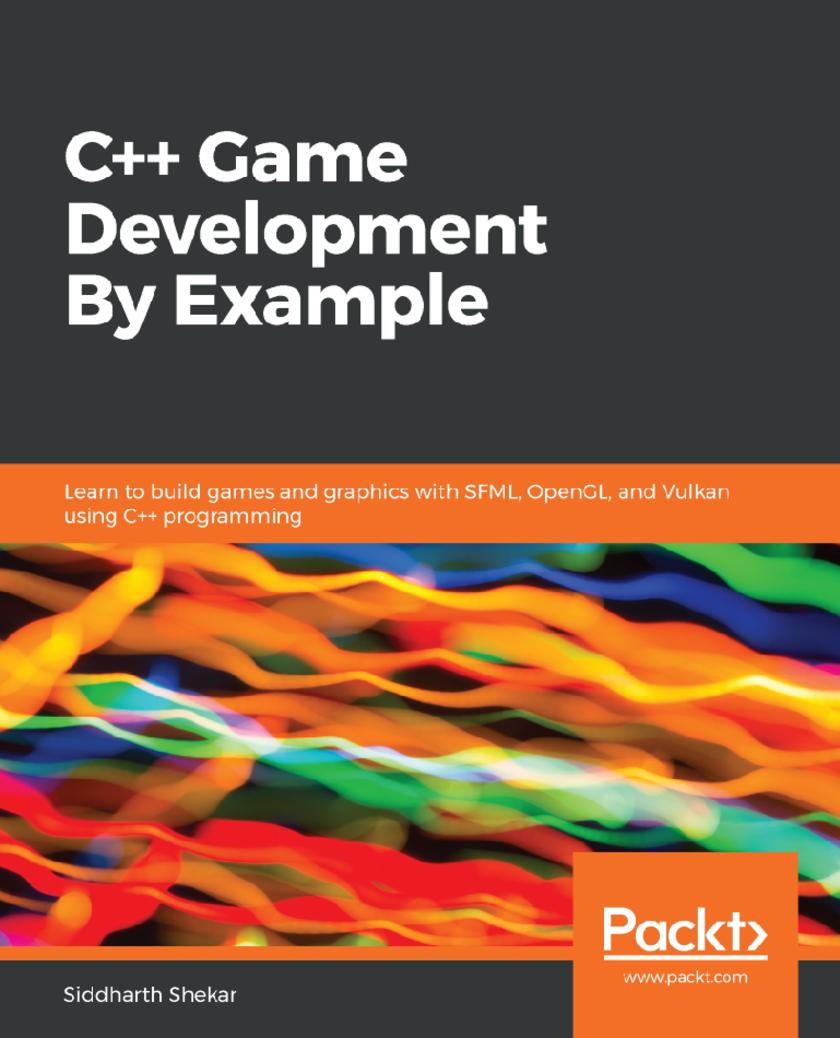
C++ Game Development By Example
¥62.12
Explore modern game programming and rendering techniques to build games using C++ programming language and its popular libraries Key Features * Learn how you can build basic 2D and complex 3D games with C++ * Understand shadows, texturing, lighting, and rendering in 3D game development using OpenGL * Uncover modern graphics programming techniques and GPU compute methods using the Vulkan API Book Description Although numerous languages are currently being used to develop games, C++ remains the standard for fabricating expert libraries and tool chains for game development. This book introduces you to the world of game development with C++. C++ Game Development By Example starts by touching upon the basic concepts of math, programming, and computer graphics and creating a simple side-scrolling action 2D game. You'll build a solid foundation by studying basic game concepts such as creating game loops, rendering 2D game scenes using SFML, 2D sprite creation and animation, and collision detection. The book will help you advance to creating a 3D physics puzzle game using modern OpenGL and the Bullet physics engine. You'll understand the graphics pipeline, which entails creating 3D objects using vertex and index buffers and rendering them to the scene using vertex and fragment shaders. Finally, you'll create a basic project using the Vulkan library that'll help you get to grips with creating swap chains, image views, render passes, and frame buffers for building high-performance graphics in your games. By the end of this book, you’ll be ready with 3 compelling projects created with SFML, the Vulkan API, and OpenGL, and you'll be able take your game and graphics programming skills to the next level. What you will learn * Understand shaders and how to write a basic vertex and fragment shader * Build a Visual Studio project and add SFML to it * Discover how to create sprite animations and a game character class * Add sound effects and background music to your game * Grasp how to integrate Vulkan into Visual Studio * Create shaders and convert them to the SPIR-V binary format Who this book is for If you’re a developer keen to learn game development with C++ or get up to date with game development, this book is for you. Some knowledge of C++ programming is assumed.

Learn D3.js
¥62.12
Explore the power of D3.js 5 and its integration with web technologies for building rich and interactive data visualization solutions Key Features * Explore the latest D3.js 5 for creating charts, plots, and force-directed graphics * Practical guide for creating interactive graphics and data-driven apps with JavaScript * Build Real-time visualization and transition on web using SVG with D3.js Book Description This book is a practical hands-on introduction to D3 (Data-driven Documents): the most popular open-source JavaScript library for creating interactive web-based data visualizations. Based entirely on open web standards, D3 provides an integrated collection of tools for efficiently binding data to graphical elements. If you have basic knowledge of HTML, CSS and JavaScript you can use D3.js to create beautiful interactive web-based data visualizations. D3 is not a charting library. It doesn’t contain any pre-defined chart types, but can be used to create whatever visual representations of data you can imagine. The goal of this book is to introduce D3 and provide a learning path so that you obtain a solid understanding of its fundamental concepts, learn to use most of its modules and functions, and gain enough experience to create your own D3 visualizations. You will learn how to create bar, line, pie and scatter charts, trees, dendograms, treemaps, circle packs, chord/ribbon diagrams, sankey diagrams, animated network diagrams, and maps using different geographical projections. Fundamental concepts are explained in each chapter and then applied to a larger example in step-by-step tutorials, complete with full code, from hundreds of examples you can download and run. This book covers D3 version 5 and is based on ES2015 JavaScript. What you will learn * Learn to use D3.js version 5 and web standards to create beautiful interactive data-driven visualizations for the web * Bind data to DOM elements, applying different scales, color schemes and configuring smooth animated transitions for data updates * Generate data structures and layouts for many popular chart formats * Apply interactive behaviors to any chart * Create thematic maps based on GIS data using different geographical projections with interactive behaviors * Load, parse and transform data from JSON and CSV formats Who this book is for The book is intended for web developers, web designers, data scientists, artists, and any developer who wish to create interactive data visualization for the Web using D3. The book assumes basic knowledge of HTML, CSs, and JavaScript.
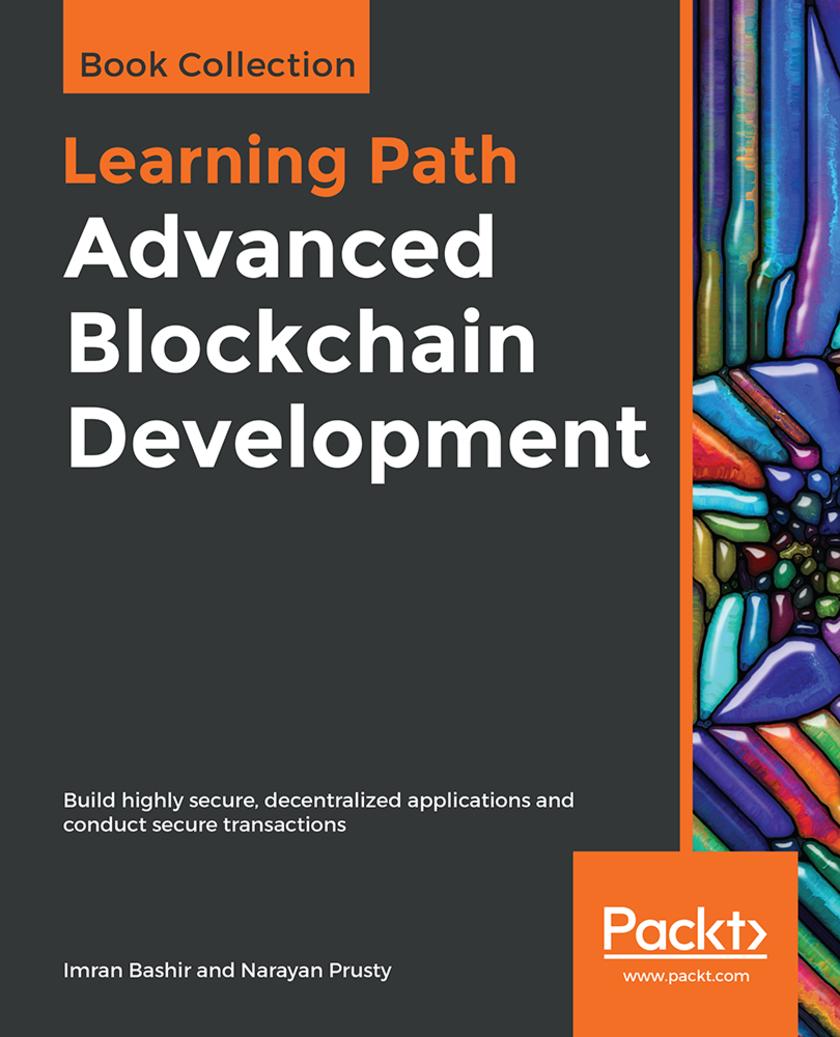
Advanced Blockchain Development
¥88.28
Explore distributed ledger technology, decentralization, and smart contracts and develop real-time decentralized applications with Ethereum and Solidity Key Features * Get to grips with the underlying technical principles and implementations of blockchain * Build powerful applications using Ethereum to secure transactions and create smart contracts * Gain advanced insights into cryptography and cryptocurrencies Book Description Blockchain technology is a distributed ledger with applications in industries such as finance, government, and media. This Learning Path is your guide to building blockchain networks using Ethereum, JavaScript, and Solidity. You will get started by understanding the technical foundations of blockchain technology, including distributed systems, cryptography and how this digital ledger keeps data secure. Further into the chapters, you’ll gain insights into developing applications using Ethereum and Hyperledger. As you build on your knowledge of Ether security, mining , smart contracts, and Solidity, you’ll learn how to create robust and secure applications that run exactly as programmed without being affected by fraud, censorship, or third-party interference. Toward the concluding chapters, you’ll explore how blockchain solutions can be implemented in applications such as IoT apps, in addition to its use in currencies. The Learning Path will also highlight how you can increase blockchain scalability and even discusses the future scope of this fascinating and powerful technology. By the end of this Learning Path, you'll be equipped with the skills you need to tackle pain points encountered in the blockchain life cycle and confidently design and deploy decentralized applications. This Learning Path includes content from the following Packt products: * Mastering Blockchain - Second Edition by Imran Bashir * Building Blockchain Projects by Narayan Prusty What you will learn * Understand why decentralized applications are important * Discover the mechanisms behind bitcoin and alternative cryptocurrencies * Master how cryptography is used to secure data with the help of examples * Maintain, monitor, and manage your blockchain solutions * Create Ethereum wallets * Explore research topics and the future scope of blockchain technology Who this book is for This Learning Path is designed for blockchain developers who want to build decentralized applications and smart contracts from scratch using Hyperledger. Basic familiarity with any programming language will be useful to get started with this Learning Path.
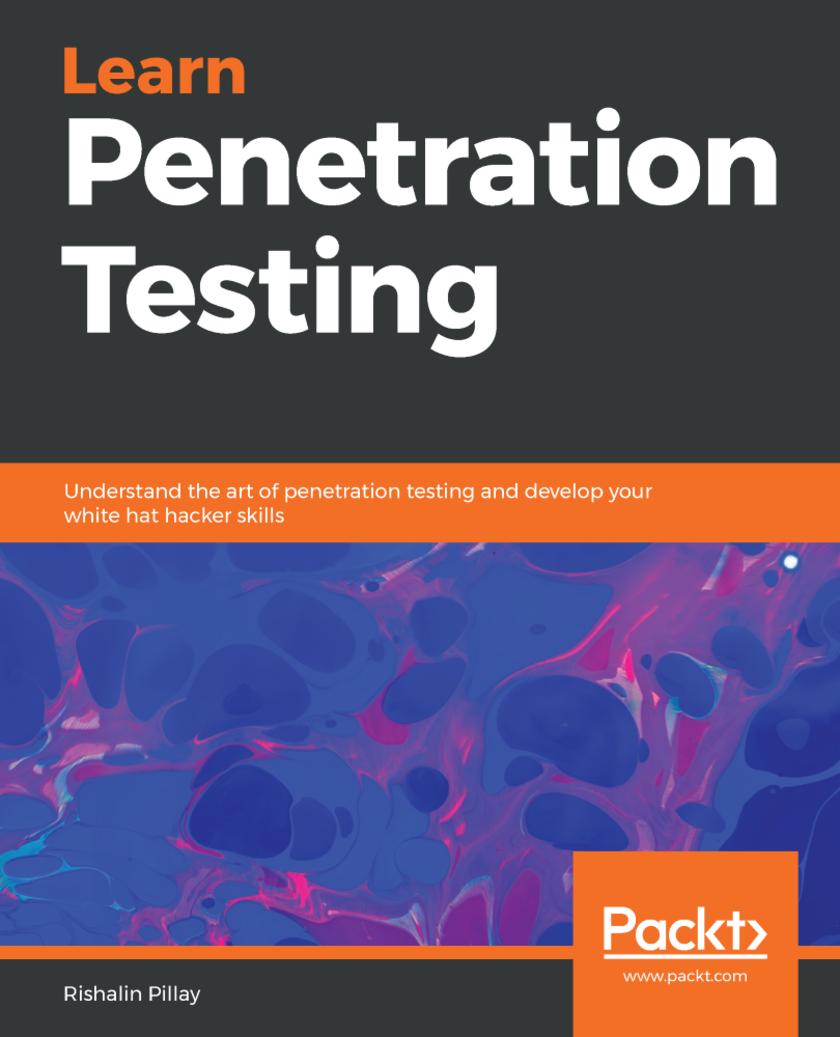
Learn Penetration Testing
¥70.84
Get up to speed with various penetration testing techniques and resolve security threats of varying complexity Key Features * Enhance your penetration testing skills to tackle security threats * Learn to gather information, find vulnerabilities, and exploit enterprise defenses * Navigate secured systems with the most up-to-date version of Kali Linux (2019.1) and Metasploit (5.0.0) Book Description Sending information via the internet is not entirely private, as evidenced by the rise in hacking, malware attacks, and security threats. With the help of this book, you'll learn crucial penetration testing techniques to help you evaluate enterprise defenses. You'll start by understanding each stage of pentesting and deploying target virtual machines, including Linux and Windows. Next, the book will guide you through performing intermediate penetration testing in a controlled environment. With the help of practical use cases, you'll also be able to implement your learning in real-world scenarios. By studying everything from setting up your lab, information gathering and password attacks, through to social engineering and post exploitation, you'll be able to successfully overcome security threats. The book will even help you leverage the best tools, such as Kali Linux, Metasploit, Burp Suite, and other open source pentesting tools to perform these techniques. Toward the later chapters, you'll focus on best practices to quickly resolve security threats. By the end of this book, you'll be well versed with various penetration testing techniques so as to be able to tackle security threats effectively What you will learn * Perform entry-level penetration tests by learning various concepts and techniques * Understand both common and not-so-common vulnerabilities from an attacker's perspective * Get familiar with intermediate attack methods that can be used in real-world scenarios * Understand how vulnerabilities are created by developers and how to fix some of them at source code level * Become well versed with basic tools for ethical hacking purposes * Exploit known vulnerable services with tools such as Metasploit Who this book is for If you’re just getting started with penetration testing and want to explore various security domains, this book is for you. Security professionals, network engineers, and amateur ethical hackers will also find this book useful. Prior knowledge of penetration testing and ethical hacking is not necessary.
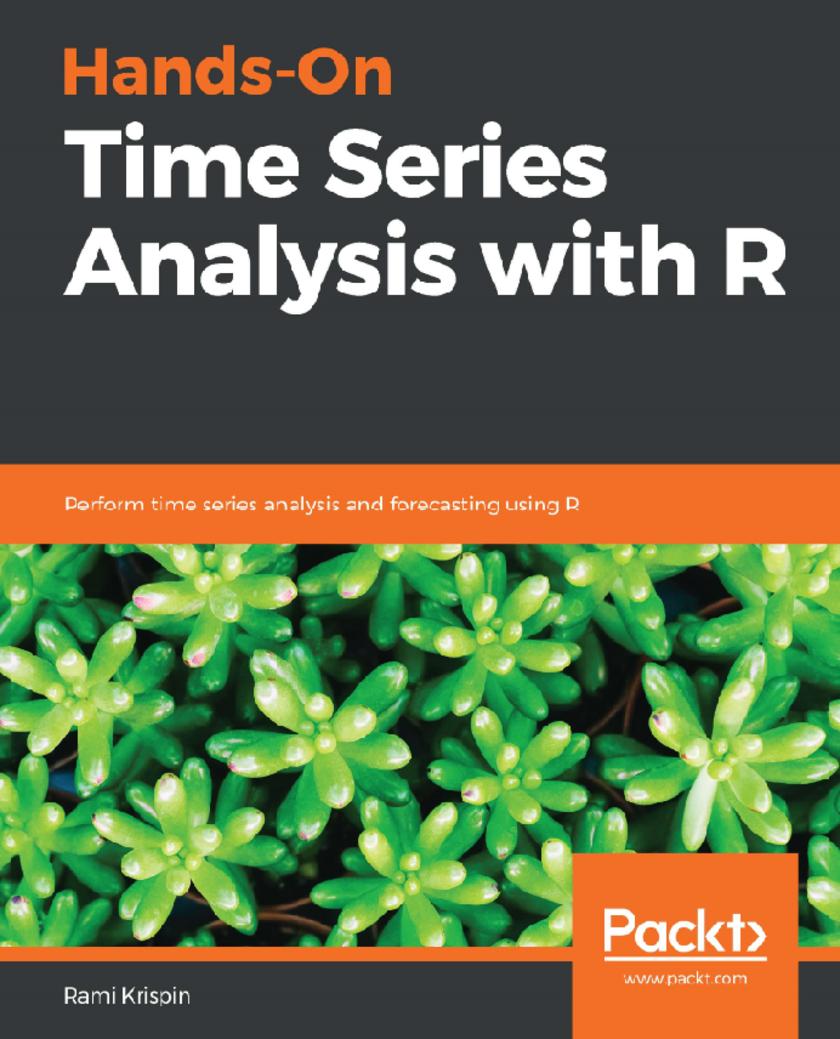
Hands-On Time Series Analysis with R
¥62.12
Build efficient forecasting models using traditional time series models and machine learning algorithms. Key Features * Perform time series analysis and forecasting using R packages such as Forecast and h2o * Develop models and find patterns to create visualizations using the TSstudio and plotly packages * Master statistics and implement time-series methods using examples mentioned Book Description Time series analysis is the art of extracting meaningful insights from, and revealing patterns in, time series data using statistical and data visualization approaches. These insights and patterns can then be utilized to explore past events and forecast future values in the series. This book explores the basics of time series analysis with R and lays the foundations you need to build forecasting models. You will learn how to preprocess raw time series data and clean and manipulate data with packages such as stats, lubridate, xts, and zoo. You will analyze data and extract meaningful information from it using both descriptive statistics and rich data visualization tools in R such as the TSstudio, plotly, and ggplot2 packages. The later section of the book delves into traditional forecasting models such as time series linear regression, exponential smoothing (Holt, Holt-Winter, and more) and Auto-Regressive Integrated Moving Average (ARIMA) models with the stats and forecast packages. You'll also cover advanced time series regression models with machine learning algorithms such as Random Forest and Gradient Boosting Machine using the h2o package. By the end of this book, you will have the skills needed to explore your data, identify patterns, and build a forecasting model using various traditional and machine learning methods. What you will learn * Visualize time series data and derive better insights * Explore auto-correlation and master statistical techniques * Use time series analysis tools from the stats, TSstudio, and forecast packages * Explore and identify seasonal and correlation patterns * Work with different time series formats in R * Explore time series models such as ARIMA, Holt-Winters, and more * Evaluate high-performance forecasting solutions Who this book is for Hands-On Time Series Analysis with R is ideal for data analysts, data scientists, and all R developers who are looking to perform time series analysis to predict outcomes effectively. A basic knowledge of statistics is required; some knowledge in R is expected, but not mandatory.
Hands-On Exploratory Data Analysis with R
¥53.40
Learn exploratory data analysis concepts using powerful R packages to enhance your R data analysis skills Key Features * Speed up your data analysis projects using powerful R packages and techniques * Create multiple hands-on data analysis projects using real-world data * Discover and practice graphical exploratory analysis techniques across domains Book Description Hands-On Exploratory Data Analysis with R will help you build not just a foundation but also expertise in the elementary ways to analyze data. You will learn how to understand your data and summarize its main characteristics. You'll also uncover the structure of your data, and you'll learn graphical and numerical techniques using the R language. This book covers the entire exploratory data analysis (EDA) process—data collection, generating statistics, distribution, and invalidating the hypothesis. As you progress through the book, you will learn how to set up a data analysis environment with tools such as ggplot2, knitr, and R Markdown, using tools such as DOE Scatter Plot and SML2010 for multifactor, optimization, and regression data problems. By the end of this book, you will be able to successfully carry out a preliminary investigation on any dataset, identify hidden insights, and present your results in a business context. What you will learn * Learn powerful R techniques to speed up your data analysis projects * Import, clean, and explore data using powerful R packages * Practice graphical exploratory analysis techniques * Create informative data analysis reports using ggplot2 * Identify and clean missing and erroneous data * Explore data analysis techniques to analyze multi-factor datasets Who this book is for Hands-On Exploratory Data Analysis with R is for data enthusiasts who want to build a strong foundation for data analysis. If you are a data analyst, data engineer, software engineer, or product manager, this book will sharpen your skills in the complete workflow of exploratory data analysis.
Unreal Engine 4 Game Development Quick Start Guide
¥44.68
Learn how to use Unreal Engine 4 by building 3D and multiplayer games using Blueprints Key Features * Learn the fundamentals of Unreal Engine such as project templates, Blueprints, and C++ * Learn to design games; use UMG to create menus and HUDs, and replication to create multiplayer games * Build dynamic game elements using Animation Blueprints and Behavior Trees Book Description Unreal Engine is a popular game engine for developers to build high-end 2D and 3D games. This book is a practical guide, starting off by quickly introducing you to the Unreal Engine 4 (UE4) ecosystem. You will learn how to create Blueprints and C++ code to define your game's functionality. You will be familiarized with the core systems of UE4 such as UMG, Animation Blueprints, and Behavior Trees. You will also learn how to use replication to create multiplayer games. By the end of this book, you will have a broad, solid knowledge base to expand upon on your journey with UE4. What you will learn * Use project templates to give your game a head start * Create custom Blueprints and C++ classes and extend from Epic's base classes * Use UMG to create menus and HUDs for your game * Create more dynamic characters using Animation Blueprints * Learn how to create complex AI with Behavior Trees * Use replication to create multiplayer games * Optimize, test, and deploy a UE4 project Who this book is for Readers who already have some game development experience and Unity users who would like to try UE4 will all benefit from this book. Knowledge of basic Object-Oriented Programming topics such as variables, functions, and classes is assumed.
Hands-On Microservices with Kubernetes
¥70.84
Enhance your skills in building scalable infrastructure for your cloud-based applications Key Features * Learn to design a scalable architecture by building continuous integration (CI) pipelines with Kubernetes * Get an in-depth understanding of role-based access control (RBAC), continuous deployment (CD), and observability * Monitor a Kubernetes cluster with Prometheus and Grafana Book Description Kubernetes is among the most popular open-source platforms for automating the deployment, scaling, and operations of application containers across clusters of hosts, providing a container-centric infrastructure. Hands-On Microservices with Kubernetes starts by providing you with in-depth insights into the synergy between Kubernetes and microservices. You will learn how to use Delinkcious, which will serve as a live lab throughout the book to help you understand microservices and Kubernetes concepts in the context of a real-world application. Next, you will get up to speed with setting up a CI/CD pipeline and configuring microservices using Kubernetes ConfigMaps. As you cover later chapters, you will gain hands-on experience in securing microservices, and implementing REST, gRPC APIs, and a Delinkcious data store. In addition to this, you’ll explore the Nuclio project, run a serverless task on Kubernetes, and manage and implement data-intensive tests. Toward the concluding chapters, you’ll deploy microservices on Kubernetes and learn to maintain a well-monitored system. Finally, you’ll discover the importance of service meshes and how to incorporate Istio into the Delinkcious cluster. By the end of this book, you’ll have gained the skills you need to implement microservices on Kubernetes with the help of effective tools and best practices. What you will learn * Understand the synergy between Kubernetes and microservices * Create a complete CI/CD pipeline for your microservices on Kubernetes * Develop microservices on Kubernetes with the Go kit framework using best practices * Manage and monitor your system using Kubernetes and open-source tools * Expose your services through REST and gRPC APIs * Implement and deploy serverless functions as a service * Externalize authentication, authorization and traffic shaping using a service mesh * Run a Kubernetes cluster in the cloud on Google Kubernetes Engine Who this book is for This book is for developers, DevOps engineers, or anyone who wants to develop large-scale microservice-based systems on top of Kubernetes. If you are looking to use Kubernetes on live production projects or want to migrate existing systems to a modern containerized microservices system, then this book is for you. Coding skills, together with some knowledge of Docker, Kubernetes, and cloud concepts will be useful.
Mastering Active Directory
¥90.46
Become an expert at managing enterprise identity infrastructure by leveraging Active Directory Key Features * Explore the new features in Active Directory Domain Service * Manage your Active Directory services for Windows Server 2016 effectively * Automate administrative tasks in Active Directory using PowerShell Core 6.x Book Description Active Directory (AD) is a centralized and standardized system that automates networked management of user data, security, and distributed resources and enables inter-operation with other directories. This book will first help you brush up on the AD architecture and fundamentals, before guiding you through core components, such as sites, trust relationships, objects, and attributes. You will then explore AD schemas, LDAP, RMS, and security best practices to understand objects and components and how they can be used effectively. Next, the book will provide extensive coverage of AD Domain Services and Federation Services for Windows Server 2016, and help you explore their new features. Furthermore, you will learn to manage your identity infrastructure for a hybrid cloud setup. All this will help you design, plan, deploy, manage operations, and troubleshoot your enterprise identity infrastructure in a secure and effective manner. You’ll later discover Azure AD Module, and learn to automate administrative tasks using PowerShell cmdlets. All along, this updated second edition will cover content based on the latest version of Active Directory, PowerShell 5.1 and LDAP. By the end of this book, you’ll be well versed with best practices and troubleshooting techniques for improving security and performance in identity infrastructures. What you will learn * Design your Hybrid AD environment by evaluating business and technology requirements * Protect sensitive data in a hybrid environment using Azure Information Protection * Explore advanced functionalities of the schema * Learn about Flexible Single Master Operation (FSMO) roles and their placement * Install and migrate Active Directory from older versions to Active Directory 2016 * Control users, groups, and devices effectively * Design your OU structure in the most effective way * Integrate Azure AD with Active Directory Domain Services for a hybrid setup Who this book is for If you are an Active Directory administrator, system administrator, or network professional who has basic knowledge of Active Directory and is looking to become an expert in this topic, this book is for you.
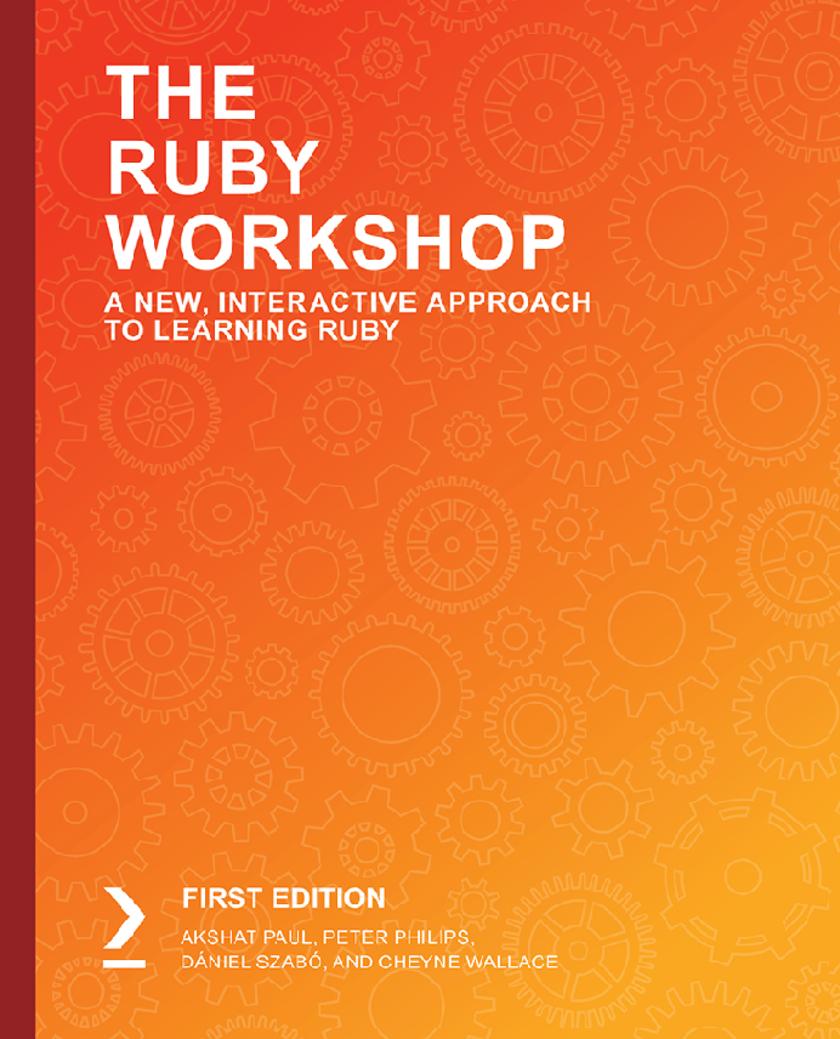
The Ruby Workshop
¥71.93
Cut through the noise and get real results with a step-by-step approach to learning Ruby programming. Key Features * Ideal for the Ruby beginner who is getting started with Ruby for the first time * A complete Ruby tutorial with exercises and activities that help build key skills * Structured to let you progress at your own pace, on your own terms * Use your physical copy to redeem free access to the online interactive edition Book Description You already know you want to learn Ruby, and the smarter way to learn Ruby 2.X is to learn by doing. The Ruby Workshop focuses on building up your practical skills so that you can kick-start your career as a developer and rapidly prototype applications. You'll learn from real examples that lead to real results. Throughout The Ruby Workshop, you'll take an engaging step-by-step approach to understanding the Ruby language. You won't have to sit through any unnecessary theory. If you're short on time you can jump into a single exercise each day or spend an entire weekend learning about metaprogramming. It's your choice. Learning on your terms, you'll build up and reinforce key skills in a way that feels rewarding. Every physical copy of The Ruby Workshop unlocks access to the interactive edition. With videos detailing all exercises and activities, you'll always have a guided solution. You can also benchmark yourself against assessments, track progress, and receive content updates. You'll even earn a secure credential that you can share and verify online upon completion. It's a premium learning experience that's included with your printed copy. To redeem, follow the instructions located at the start of your Ruby book. Fast-paced and direct, The Ruby Workshop is the ideal companion for Ruby beginners. You'll build and iterate on your Ruby code like a software developer, learning along the way. This process means that you'll find that your new skills stick, embedded as best practice. A solid foundation for the years ahead. What you will learn * Get to grips with the fundamentals of Ruby object-oriented programming * Understand common Ruby patterns to help minimize and easily maintain code * Explore ways to fetch, process, and output external data * Discover ways to work with public APIs and create reusable RubyGems * Keep your development process bug-free with various testing methods * Explore how to host applications on cloud application platforms like Heroku Who this book is for Our goal at Packt is to help you be successful, in whatever it is you choose to do. The Ruby Workshop is an ideal Ruby tutorial for the Ruby beginner who is just getting started. Pick up a Workshop today, and let Packt help you develop skills that stick with you for life.
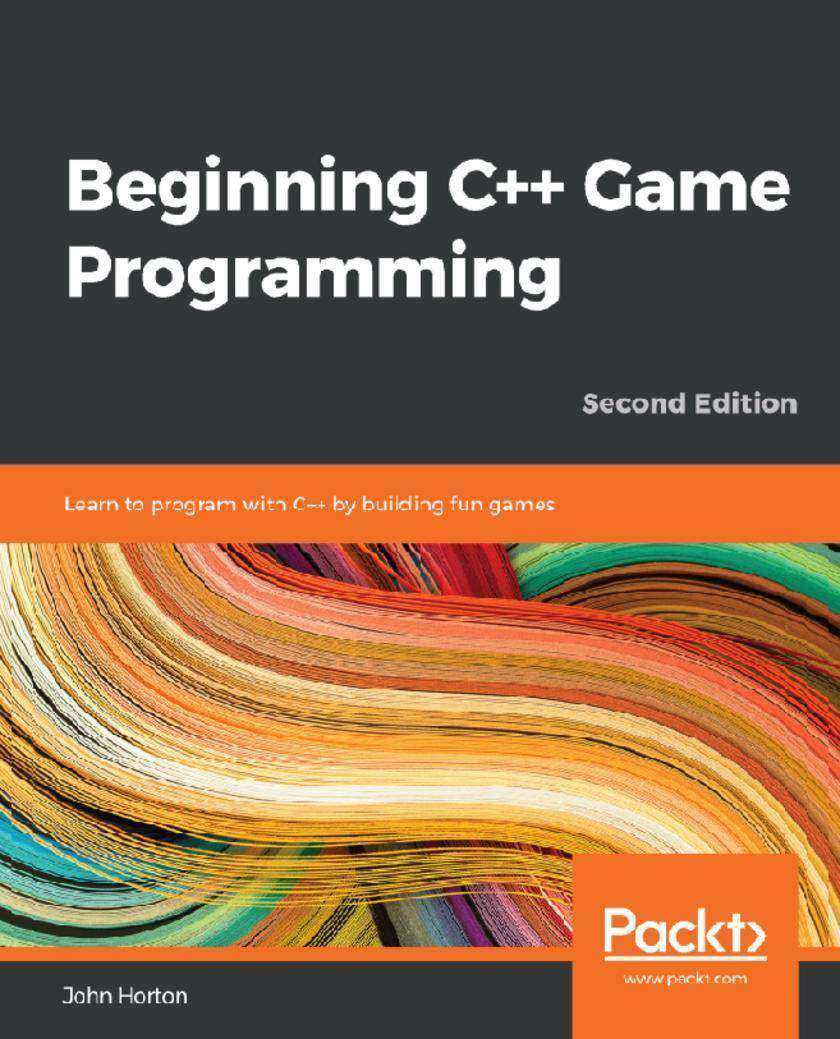
Beginning C++ Game Programming
¥71.93
Get to grips with programming techniques and game development using C++ libraries and Visual Studio 2019 Key Features * Learn game development and C++ with a fun, example-driven approach * Build clones of popular games such as Timberman, Zombie Survival Shooter, a co-op puzzle platformer, and Space Invaders * Discover tips to expand your finished games by thinking critically, technically, and creatively Book Description The second edition of Beginning C++ Game Programming is updated and improved to include the latest features of Visual Studio 2019, SFML, and modern C++ programming techniques. With this book, you’ll get a fun introduction to game programming by building five fully playable games of increasing complexity. You’ll learn to build clones of popular games such as Timberman, Pong, a Zombie survival shooter, a coop puzzle platformer and Space Invaders. The book starts by covering the basics of programming. You’ll study key C++ topics, such as object-oriented programming (OOP) and C++ pointers, and get acquainted with the Standard Template Library (STL). The book helps you learn about collision detection techniques and game physics by building a Pong game. As you build games, you’ll also learn exciting game programming concepts such as particle effects, directional sound (spatialization), OpenGL programmable shaders, spawning objects, and much more. Finally, you’ll explore game design patterns to enhance your C++ game programming skills. By the end of the book, you’ll have gained the knowledge you need to build your own games with exciting features from scratch What you will learn * Set up your game development project in Visual Studio 2019 and explore C++ libraries such as SFML * Explore C++ OOP by building a Pong game * Understand core game concepts such as game animation, game physics, collision detection, scorekeeping, and game sound * Use classes, inheritance, and references to spawn and control thousands of enemies and shoot rapid-fire machine guns * Add advanced features to your game using pointers, references, and the STL * Scale and reuse your game code by learning modern game programming design patterns Who this book is for This book is perfect for you if you have no C++ programming knowledge, you need a beginner-level refresher course, or you want to learn how to build games or just use games as an engaging way to learn C++. Whether you aspire to publish a game (perhaps on Steam) or just want to impress friends with your creations, you’ll find this book useful.
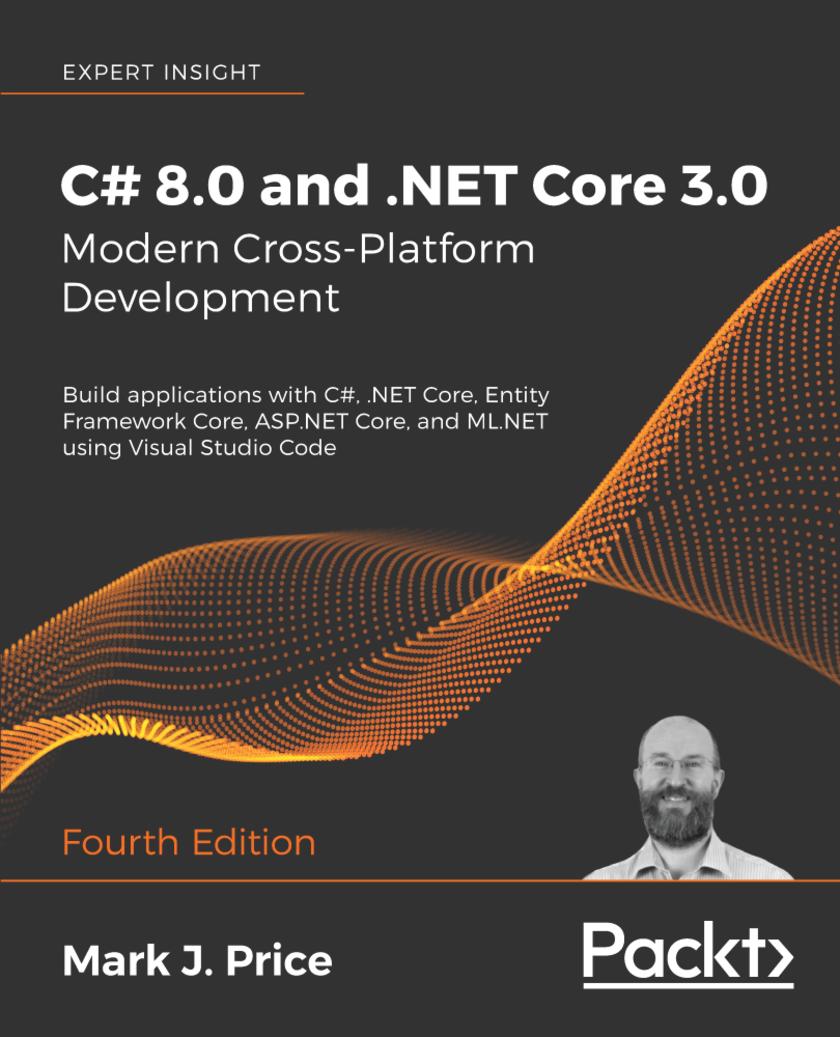
C# 8.0 and .NET Core 3.0 – Modern Cross-Platform Development
¥71.93
Learn the fundamentals, practical applications, and latest features of C# 8.0 and .NET Core 3.0 from expert teacher Mark J. Price. Key Features * Build modern, cross-platform applications with .NET Core 3.0 * Get up to speed with C#, and up to date with all the latest features of C# 8.0 * Start creating professional web applications with ASP.NET Core 3.0 Book Description In C# 8.0 and .NET Core 3.0 – Modern Cross-Platform Development, Fourth Edition, expert teacher Mark J. Price gives you everything you need to start programming C# applications. This latest edition uses the popular Visual Studio Code editor to work across all major operating systems. It is fully updated and expanded with new chapters on Content Management Systems (CMS) and machine learning with ML.NET. The book covers all the topics you need. Part 1 teaches the fundamentals of C#, including object-oriented programming, and new C# 8.0 features such as nullable reference types, simplified switch pattern matching, and default interface methods. Part 2 covers the .NET Standard APIs, such as managing and querying data, monitoring and improving performance, working with the filesystem, async streams, serialization, and encryption. Part 3 provides examples of cross-platform applications you can build and deploy, such as web apps using ASP.NET Core or mobile apps using Xamarin.Forms. The book introduces three technologies for building Windows desktop applications including Windows Forms, Windows Presentation Foundation (WPF), and Universal Windows Platform (UWP) apps, as well as web applications, web services, and mobile apps. What you will learn * Build cross-platform applications for Windows, macOS, Linux, iOS, and Android * Explore application development with C# 8.0 and .NET Core 3.0 * Explore ASP.NET Core 3.0 and create professional web applications * Learn object-oriented programming and C# multitasking * Query and manipulate data using LINQ * Use Entity Framework Core and work with relational databases * Discover Windows app development using the Universal Windows Platform and XAML * Build mobile applications for iOS and Android using Xamarin.Forms Who this book is for Readers with some prior programming experience or with a science, technology, engineering, or mathematics (STEM) background, who want to gain a solid foundation with C# 8.0 and .NET Core 3.0.
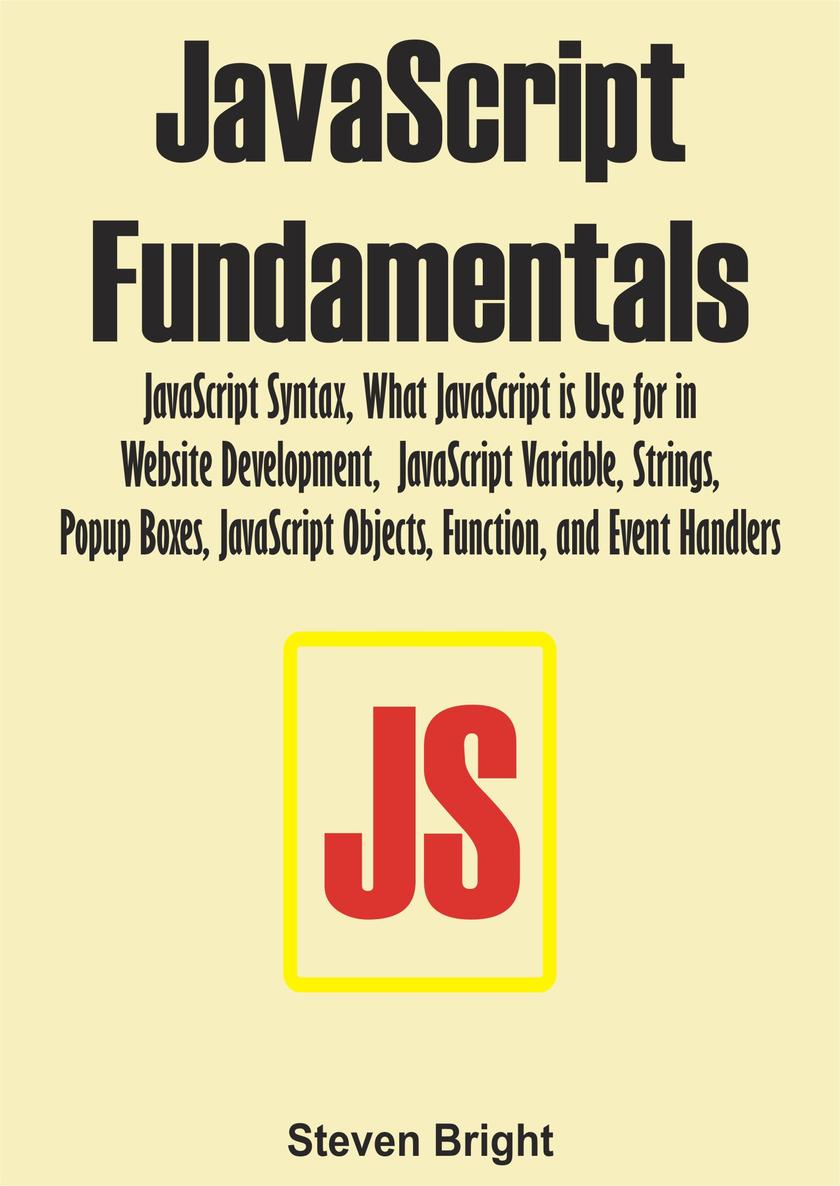
JavaScript Fundamentals
¥28.61
JavaScript Fundamentals


