


 购物车
购物车 个人中心
个人中心
Applied Supervised Learning with R
¥79.56
Explore supervised machine learning with R by studying popular real-world uses cases such as object detection in driverless cars, customer churn, and default prediction Key Features * Study supervised learning algorithms by using real-world datasets * Fine tune optimal parameters with hyperparameter optimization * Select the best algorithm using the model evaluation framework Book Description R provides excellent visualization features that are essential for exploring data before using it in automated learning. Applied Supervised Learning with R helps you cover the complete process of employing R to develop applications using supervised machine learning algorithms for your business needs. The book starts by helping you develop your analytical thinking to create a problem statement using business inputs and domain research. You will then learn different evaluation metrics that compare various algorithms, and later progress to using these metrics to select the best algorithm for your problem. After finalizing the algorithm you want to use, you will study the hyperparameter optimization technique to fine-tune your set of optimal parameters. To prevent you from overfitting your model, a dedicated section will even demonstrate how you can add various regularization terms. By the end of this book, you will have the advanced skills you need for modeling a supervised machine learning algorithm that precisely fulfills your business needs. What you will learn * Develop analytical thinking to precisely identify a business problem * Wrangle data with dplyr, tidyr, and reshape2 * Visualize data with ggplot2 * Validate your supervised machine learning model using k-fold * Optimize hyperparameters with grid and random search, and Bayesian optimization * Deploy your model on Amazon Web Services (AWS) Lambda with plumber * Improve your model’s performance with feature selection and dimensionality reduction Who this book is for This book is specially designed for novice and intermediate-level data analysts, data scientists, and data engineers who want to explore different methods of supervised machine learning and its various use cases. Some background in statistics, probability, calculus, linear algebra, and programming will help you thoroughly understand and follow the content of this book.
Hands-On Microservices with Kubernetes
¥70.84
Enhance your skills in building scalable infrastructure for your cloud-based applications Key Features * Learn to design a scalable architecture by building continuous integration (CI) pipelines with Kubernetes * Get an in-depth understanding of role-based access control (RBAC), continuous deployment (CD), and observability * Monitor a Kubernetes cluster with Prometheus and Grafana Book Description Kubernetes is among the most popular open-source platforms for automating the deployment, scaling, and operations of application containers across clusters of hosts, providing a container-centric infrastructure. Hands-On Microservices with Kubernetes starts by providing you with in-depth insights into the synergy between Kubernetes and microservices. You will learn how to use Delinkcious, which will serve as a live lab throughout the book to help you understand microservices and Kubernetes concepts in the context of a real-world application. Next, you will get up to speed with setting up a CI/CD pipeline and configuring microservices using Kubernetes ConfigMaps. As you cover later chapters, you will gain hands-on experience in securing microservices, and implementing REST, gRPC APIs, and a Delinkcious data store. In addition to this, you’ll explore the Nuclio project, run a serverless task on Kubernetes, and manage and implement data-intensive tests. Toward the concluding chapters, you’ll deploy microservices on Kubernetes and learn to maintain a well-monitored system. Finally, you’ll discover the importance of service meshes and how to incorporate Istio into the Delinkcious cluster. By the end of this book, you’ll have gained the skills you need to implement microservices on Kubernetes with the help of effective tools and best practices. What you will learn * Understand the synergy between Kubernetes and microservices * Create a complete CI/CD pipeline for your microservices on Kubernetes * Develop microservices on Kubernetes with the Go kit framework using best practices * Manage and monitor your system using Kubernetes and open-source tools * Expose your services through REST and gRPC APIs * Implement and deploy serverless functions as a service * Externalize authentication, authorization and traffic shaping using a service mesh * Run a Kubernetes cluster in the cloud on Google Kubernetes Engine Who this book is for This book is for developers, DevOps engineers, or anyone who wants to develop large-scale microservice-based systems on top of Kubernetes. If you are looking to use Kubernetes on live production projects or want to migrate existing systems to a modern containerized microservices system, then this book is for you. Coding skills, together with some knowledge of Docker, Kubernetes, and cloud concepts will be useful.
Mastering Active Directory
¥90.46
Become an expert at managing enterprise identity infrastructure by leveraging Active Directory Key Features * Explore the new features in Active Directory Domain Service * Manage your Active Directory services for Windows Server 2016 effectively * Automate administrative tasks in Active Directory using PowerShell Core 6.x Book Description Active Directory (AD) is a centralized and standardized system that automates networked management of user data, security, and distributed resources and enables inter-operation with other directories. This book will first help you brush up on the AD architecture and fundamentals, before guiding you through core components, such as sites, trust relationships, objects, and attributes. You will then explore AD schemas, LDAP, RMS, and security best practices to understand objects and components and how they can be used effectively. Next, the book will provide extensive coverage of AD Domain Services and Federation Services for Windows Server 2016, and help you explore their new features. Furthermore, you will learn to manage your identity infrastructure for a hybrid cloud setup. All this will help you design, plan, deploy, manage operations, and troubleshoot your enterprise identity infrastructure in a secure and effective manner. You’ll later discover Azure AD Module, and learn to automate administrative tasks using PowerShell cmdlets. All along, this updated second edition will cover content based on the latest version of Active Directory, PowerShell 5.1 and LDAP. By the end of this book, you’ll be well versed with best practices and troubleshooting techniques for improving security and performance in identity infrastructures. What you will learn * Design your Hybrid AD environment by evaluating business and technology requirements * Protect sensitive data in a hybrid environment using Azure Information Protection * Explore advanced functionalities of the schema * Learn about Flexible Single Master Operation (FSMO) roles and their placement * Install and migrate Active Directory from older versions to Active Directory 2016 * Control users, groups, and devices effectively * Design your OU structure in the most effective way * Integrate Azure AD with Active Directory Domain Services for a hybrid setup Who this book is for If you are an Active Directory administrator, system administrator, or network professional who has basic knowledge of Active Directory and is looking to become an expert in this topic, this book is for you.
The Ruby Workshop
¥71.93
Cut through the noise and get real results with a step-by-step approach to learning Ruby programming. Key Features * Ideal for the Ruby beginner who is getting started with Ruby for the first time * A complete Ruby tutorial with exercises and activities that help build key skills * Structured to let you progress at your own pace, on your own terms * Use your physical copy to redeem free access to the online interactive edition Book Description You already know you want to learn Ruby, and the smarter way to learn Ruby 2.X is to learn by doing. The Ruby Workshop focuses on building up your practical skills so that you can kick-start your career as a developer and rapidly prototype applications. You'll learn from real examples that lead to real results. Throughout The Ruby Workshop, you'll take an engaging step-by-step approach to understanding the Ruby language. You won't have to sit through any unnecessary theory. If you're short on time you can jump into a single exercise each day or spend an entire weekend learning about metaprogramming. It's your choice. Learning on your terms, you'll build up and reinforce key skills in a way that feels rewarding. Every physical copy of The Ruby Workshop unlocks access to the interactive edition. With videos detailing all exercises and activities, you'll always have a guided solution. You can also benchmark yourself against assessments, track progress, and receive content updates. You'll even earn a secure credential that you can share and verify online upon completion. It's a premium learning experience that's included with your printed copy. To redeem, follow the instructions located at the start of your Ruby book. Fast-paced and direct, The Ruby Workshop is the ideal companion for Ruby beginners. You'll build and iterate on your Ruby code like a software developer, learning along the way. This process means that you'll find that your new skills stick, embedded as best practice. A solid foundation for the years ahead. What you will learn * Get to grips with the fundamentals of Ruby object-oriented programming * Understand common Ruby patterns to help minimize and easily maintain code * Explore ways to fetch, process, and output external data * Discover ways to work with public APIs and create reusable RubyGems * Keep your development process bug-free with various testing methods * Explore how to host applications on cloud application platforms like Heroku Who this book is for Our goal at Packt is to help you be successful, in whatever it is you choose to do. The Ruby Workshop is an ideal Ruby tutorial for the Ruby beginner who is just getting started. Pick up a Workshop today, and let Packt help you develop skills that stick with you for life.
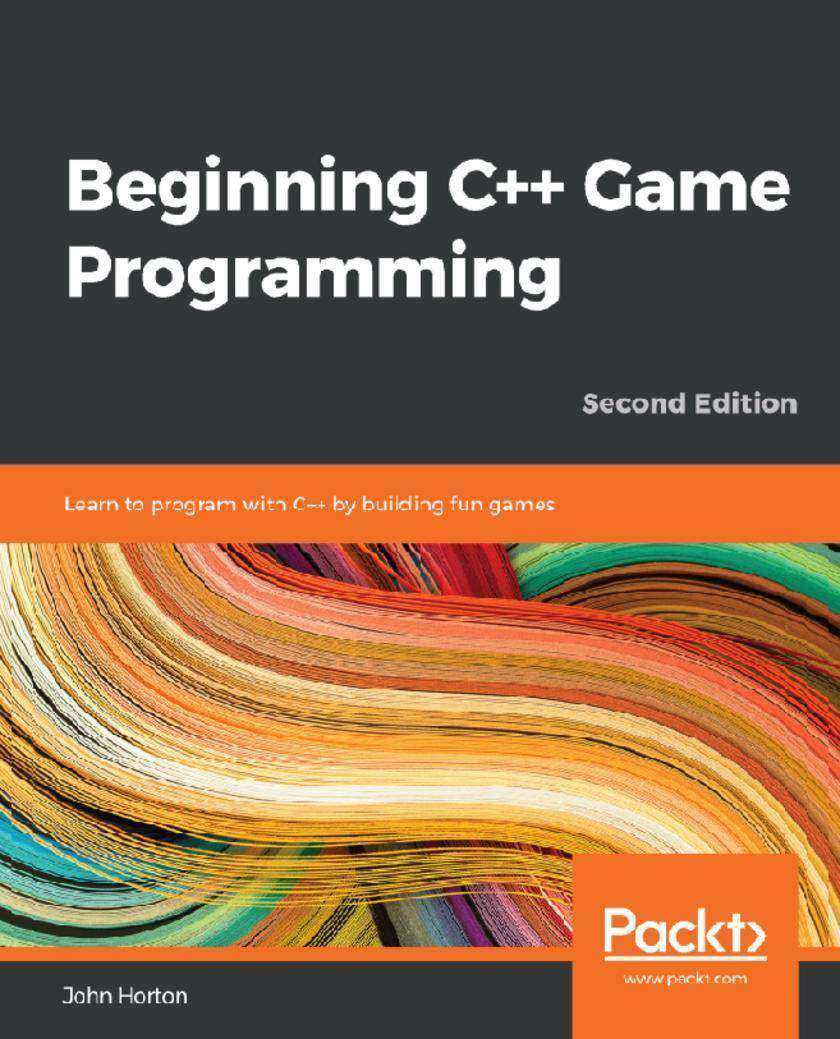
Beginning C++ Game Programming
¥71.93
Get to grips with programming techniques and game development using C++ libraries and Visual Studio 2019 Key Features * Learn game development and C++ with a fun, example-driven approach * Build clones of popular games such as Timberman, Zombie Survival Shooter, a co-op puzzle platformer, and Space Invaders * Discover tips to expand your finished games by thinking critically, technically, and creatively Book Description The second edition of Beginning C++ Game Programming is updated and improved to include the latest features of Visual Studio 2019, SFML, and modern C++ programming techniques. With this book, you’ll get a fun introduction to game programming by building five fully playable games of increasing complexity. You’ll learn to build clones of popular games such as Timberman, Pong, a Zombie survival shooter, a coop puzzle platformer and Space Invaders. The book starts by covering the basics of programming. You’ll study key C++ topics, such as object-oriented programming (OOP) and C++ pointers, and get acquainted with the Standard Template Library (STL). The book helps you learn about collision detection techniques and game physics by building a Pong game. As you build games, you’ll also learn exciting game programming concepts such as particle effects, directional sound (spatialization), OpenGL programmable shaders, spawning objects, and much more. Finally, you’ll explore game design patterns to enhance your C++ game programming skills. By the end of the book, you’ll have gained the knowledge you need to build your own games with exciting features from scratch What you will learn * Set up your game development project in Visual Studio 2019 and explore C++ libraries such as SFML * Explore C++ OOP by building a Pong game * Understand core game concepts such as game animation, game physics, collision detection, scorekeeping, and game sound * Use classes, inheritance, and references to spawn and control thousands of enemies and shoot rapid-fire machine guns * Add advanced features to your game using pointers, references, and the STL * Scale and reuse your game code by learning modern game programming design patterns Who this book is for This book is perfect for you if you have no C++ programming knowledge, you need a beginner-level refresher course, or you want to learn how to build games or just use games as an engaging way to learn C++. Whether you aspire to publish a game (perhaps on Steam) or just want to impress friends with your creations, you’ll find this book useful.
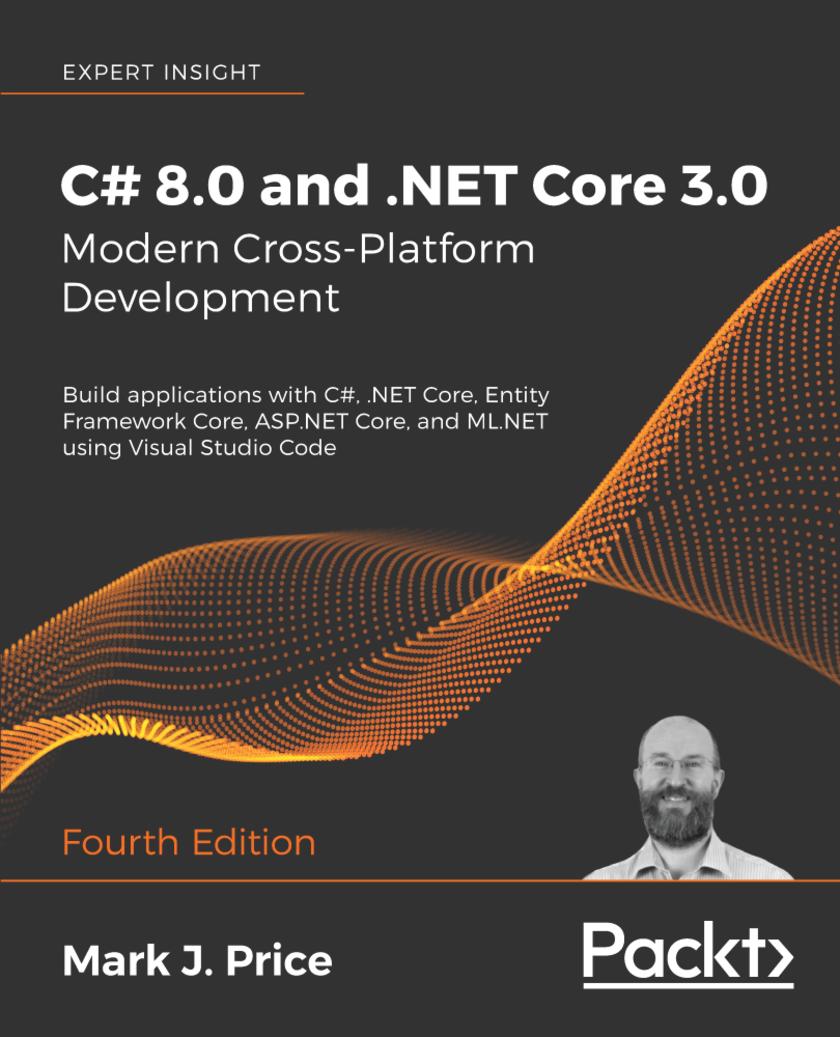
C# 8.0 and .NET Core 3.0 – Modern Cross-Platform Development
¥71.93
Learn the fundamentals, practical applications, and latest features of C# 8.0 and .NET Core 3.0 from expert teacher Mark J. Price. Key Features * Build modern, cross-platform applications with .NET Core 3.0 * Get up to speed with C#, and up to date with all the latest features of C# 8.0 * Start creating professional web applications with ASP.NET Core 3.0 Book Description In C# 8.0 and .NET Core 3.0 – Modern Cross-Platform Development, Fourth Edition, expert teacher Mark J. Price gives you everything you need to start programming C# applications. This latest edition uses the popular Visual Studio Code editor to work across all major operating systems. It is fully updated and expanded with new chapters on Content Management Systems (CMS) and machine learning with ML.NET. The book covers all the topics you need. Part 1 teaches the fundamentals of C#, including object-oriented programming, and new C# 8.0 features such as nullable reference types, simplified switch pattern matching, and default interface methods. Part 2 covers the .NET Standard APIs, such as managing and querying data, monitoring and improving performance, working with the filesystem, async streams, serialization, and encryption. Part 3 provides examples of cross-platform applications you can build and deploy, such as web apps using ASP.NET Core or mobile apps using Xamarin.Forms. The book introduces three technologies for building Windows desktop applications including Windows Forms, Windows Presentation Foundation (WPF), and Universal Windows Platform (UWP) apps, as well as web applications, web services, and mobile apps. What you will learn * Build cross-platform applications for Windows, macOS, Linux, iOS, and Android * Explore application development with C# 8.0 and .NET Core 3.0 * Explore ASP.NET Core 3.0 and create professional web applications * Learn object-oriented programming and C# multitasking * Query and manipulate data using LINQ * Use Entity Framework Core and work with relational databases * Discover Windows app development using the Universal Windows Platform and XAML * Build mobile applications for iOS and Android using Xamarin.Forms Who this book is for Readers with some prior programming experience or with a science, technology, engineering, or mathematics (STEM) background, who want to gain a solid foundation with C# 8.0 and .NET Core 3.0.
Advanced Blockchain Development
¥88.28
Explore distributed ledger technology, decentralization, and smart contracts and develop real-time decentralized applications with Ethereum and Solidity Key Features * Get to grips with the underlying technical principles and implementations of blockchain * Build powerful applications using Ethereum to secure transactions and create smart contracts * Gain advanced insights into cryptography and cryptocurrencies Book Description Blockchain technology is a distributed ledger with applications in industries such as finance, government, and media. This Learning Path is your guide to building blockchain networks using Ethereum, JavaScript, and Solidity. You will get started by understanding the technical foundations of blockchain technology, including distributed systems, cryptography and how this digital ledger keeps data secure. Further into the chapters, you’ll gain insights into developing applications using Ethereum and Hyperledger. As you build on your knowledge of Ether security, mining , smart contracts, and Solidity, you’ll learn how to create robust and secure applications that run exactly as programmed without being affected by fraud, censorship, or third-party interference. Toward the concluding chapters, you’ll explore how blockchain solutions can be implemented in applications such as IoT apps, in addition to its use in currencies. The Learning Path will also highlight how you can increase blockchain scalability and even discusses the future scope of this fascinating and powerful technology. By the end of this Learning Path, you'll be equipped with the skills you need to tackle pain points encountered in the blockchain life cycle and confidently design and deploy decentralized applications. This Learning Path includes content from the following Packt products: * Mastering Blockchain - Second Edition by Imran Bashir * Building Blockchain Projects by Narayan Prusty What you will learn * Understand why decentralized applications are important * Discover the mechanisms behind bitcoin and alternative cryptocurrencies * Master how cryptography is used to secure data with the help of examples * Maintain, monitor, and manage your blockchain solutions * Create Ethereum wallets * Explore research topics and the future scope of blockchain technology Who this book is for This Learning Path is designed for blockchain developers who want to build decentralized applications and smart contracts from scratch using Hyperledger. Basic familiarity with any programming language will be useful to get started with this Learning Path.
Learn Penetration Testing
¥70.84
Get up to speed with various penetration testing techniques and resolve security threats of varying complexity Key Features * Enhance your penetration testing skills to tackle security threats * Learn to gather information, find vulnerabilities, and exploit enterprise defenses * Navigate secured systems with the most up-to-date version of Kali Linux (2019.1) and Metasploit (5.0.0) Book Description Sending information via the internet is not entirely private, as evidenced by the rise in hacking, malware attacks, and security threats. With the help of this book, you'll learn crucial penetration testing techniques to help you evaluate enterprise defenses. You'll start by understanding each stage of pentesting and deploying target virtual machines, including Linux and Windows. Next, the book will guide you through performing intermediate penetration testing in a controlled environment. With the help of practical use cases, you'll also be able to implement your learning in real-world scenarios. By studying everything from setting up your lab, information gathering and password attacks, through to social engineering and post exploitation, you'll be able to successfully overcome security threats. The book will even help you leverage the best tools, such as Kali Linux, Metasploit, Burp Suite, and other open source pentesting tools to perform these techniques. Toward the later chapters, you'll focus on best practices to quickly resolve security threats. By the end of this book, you'll be well versed with various penetration testing techniques so as to be able to tackle security threats effectively What you will learn * Perform entry-level penetration tests by learning various concepts and techniques * Understand both common and not-so-common vulnerabilities from an attacker's perspective * Get familiar with intermediate attack methods that can be used in real-world scenarios * Understand how vulnerabilities are created by developers and how to fix some of them at source code level * Become well versed with basic tools for ethical hacking purposes * Exploit known vulnerable services with tools such as Metasploit Who this book is for If you’re just getting started with penetration testing and want to explore various security domains, this book is for you. Security professionals, network engineers, and amateur ethical hackers will also find this book useful. Prior knowledge of penetration testing and ethical hacking is not necessary.
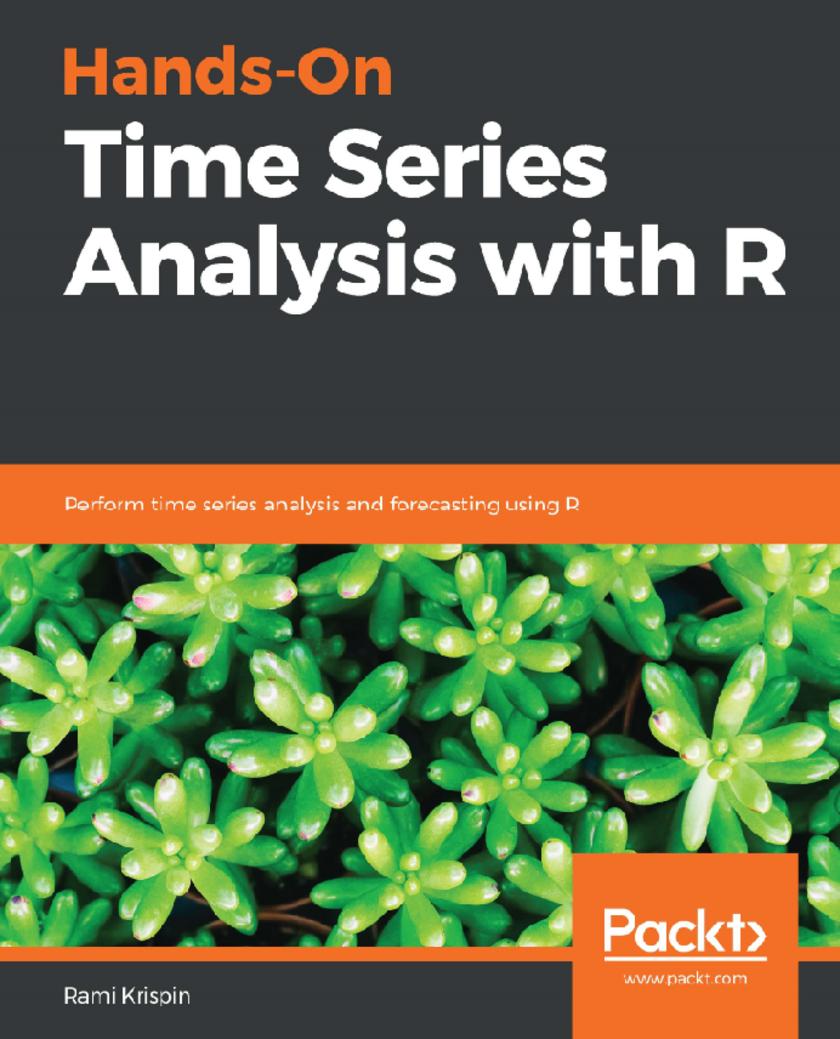
Hands-On Time Series Analysis with R
¥62.12
Build efficient forecasting models using traditional time series models and machine learning algorithms. Key Features * Perform time series analysis and forecasting using R packages such as Forecast and h2o * Develop models and find patterns to create visualizations using the TSstudio and plotly packages * Master statistics and implement time-series methods using examples mentioned Book Description Time series analysis is the art of extracting meaningful insights from, and revealing patterns in, time series data using statistical and data visualization approaches. These insights and patterns can then be utilized to explore past events and forecast future values in the series. This book explores the basics of time series analysis with R and lays the foundations you need to build forecasting models. You will learn how to preprocess raw time series data and clean and manipulate data with packages such as stats, lubridate, xts, and zoo. You will analyze data and extract meaningful information from it using both descriptive statistics and rich data visualization tools in R such as the TSstudio, plotly, and ggplot2 packages. The later section of the book delves into traditional forecasting models such as time series linear regression, exponential smoothing (Holt, Holt-Winter, and more) and Auto-Regressive Integrated Moving Average (ARIMA) models with the stats and forecast packages. You'll also cover advanced time series regression models with machine learning algorithms such as Random Forest and Gradient Boosting Machine using the h2o package. By the end of this book, you will have the skills needed to explore your data, identify patterns, and build a forecasting model using various traditional and machine learning methods. What you will learn * Visualize time series data and derive better insights * Explore auto-correlation and master statistical techniques * Use time series analysis tools from the stats, TSstudio, and forecast packages * Explore and identify seasonal and correlation patterns * Work with different time series formats in R * Explore time series models such as ARIMA, Holt-Winters, and more * Evaluate high-performance forecasting solutions Who this book is for Hands-On Time Series Analysis with R is ideal for data analysts, data scientists, and all R developers who are looking to perform time series analysis to predict outcomes effectively. A basic knowledge of statistics is required; some knowledge in R is expected, but not mandatory.
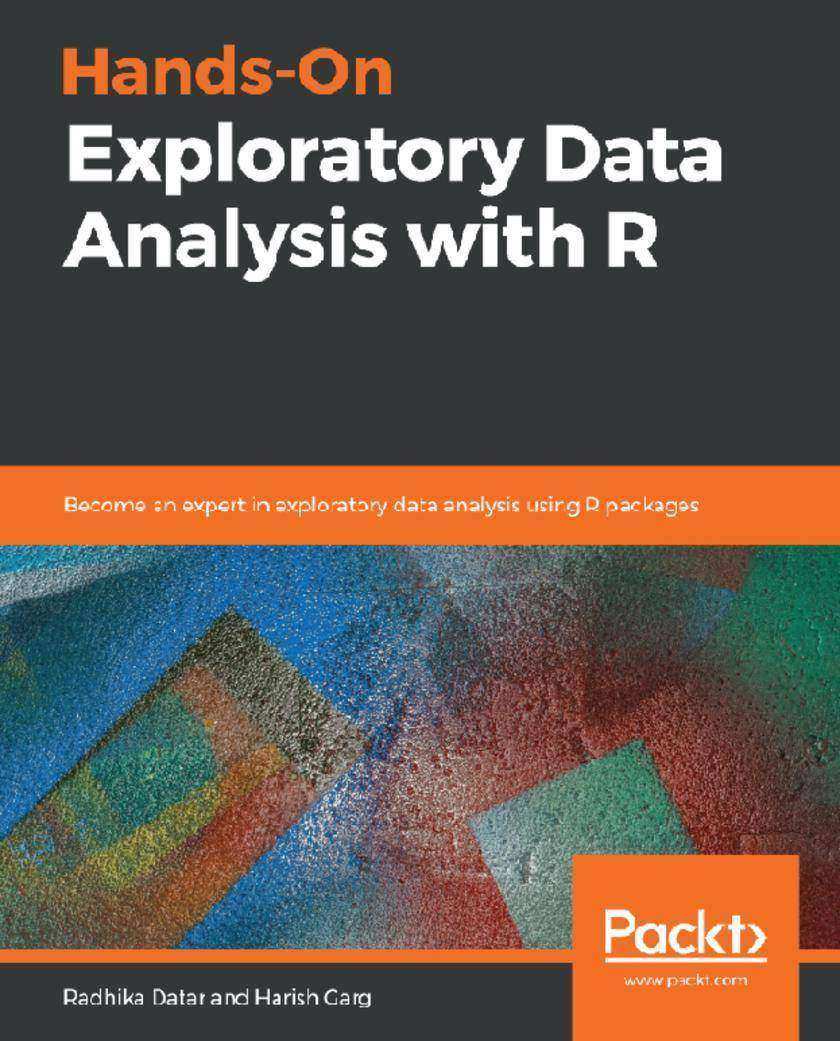
Hands-On Exploratory Data Analysis with R
¥53.40
Learn exploratory data analysis concepts using powerful R packages to enhance your R data analysis skills Key Features * Speed up your data analysis projects using powerful R packages and techniques * Create multiple hands-on data analysis projects using real-world data * Discover and practice graphical exploratory analysis techniques across domains Book Description Hands-On Exploratory Data Analysis with R will help you build not just a foundation but also expertise in the elementary ways to analyze data. You will learn how to understand your data and summarize its main characteristics. You'll also uncover the structure of your data, and you'll learn graphical and numerical techniques using the R language. This book covers the entire exploratory data analysis (EDA) process—data collection, generating statistics, distribution, and invalidating the hypothesis. As you progress through the book, you will learn how to set up a data analysis environment with tools such as ggplot2, knitr, and R Markdown, using tools such as DOE Scatter Plot and SML2010 for multifactor, optimization, and regression data problems. By the end of this book, you will be able to successfully carry out a preliminary investigation on any dataset, identify hidden insights, and present your results in a business context. What you will learn * Learn powerful R techniques to speed up your data analysis projects * Import, clean, and explore data using powerful R packages * Practice graphical exploratory analysis techniques * Create informative data analysis reports using ggplot2 * Identify and clean missing and erroneous data * Explore data analysis techniques to analyze multi-factor datasets Who this book is for Hands-On Exploratory Data Analysis with R is for data enthusiasts who want to build a strong foundation for data analysis. If you are a data analyst, data engineer, software engineer, or product manager, this book will sharpen your skills in the complete workflow of exploratory data analysis.
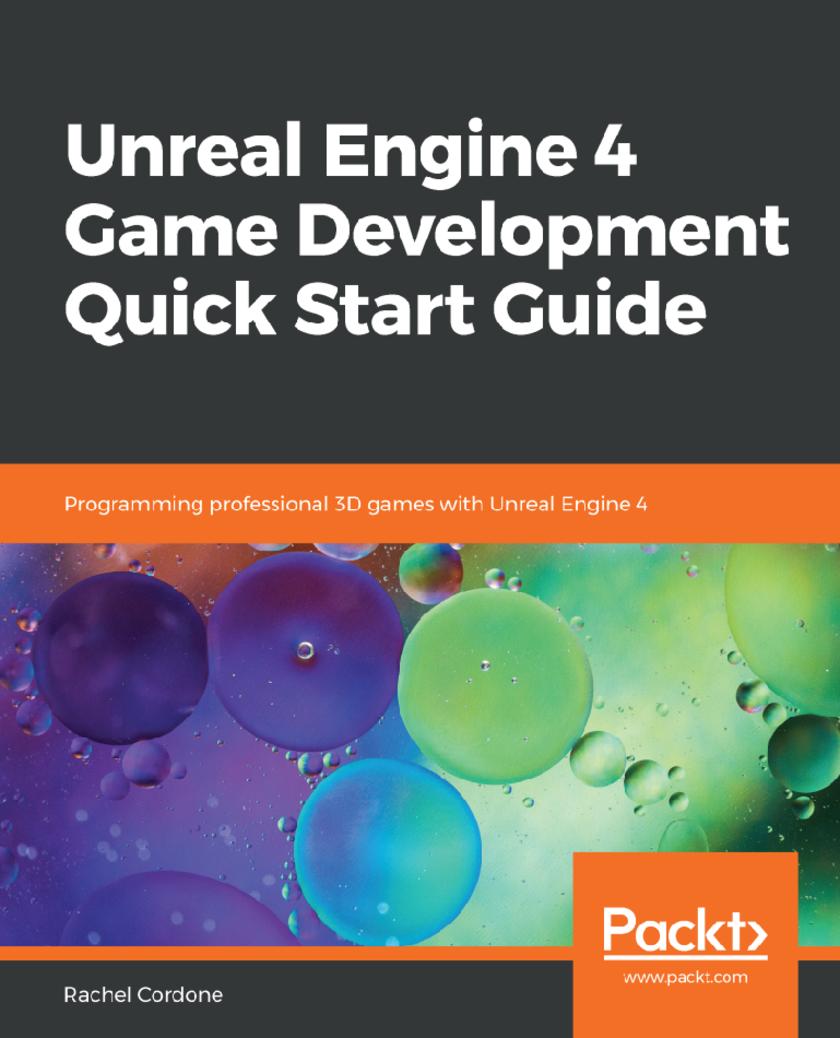
Unreal Engine 4 Game Development Quick Start Guide
¥44.68
Learn how to use Unreal Engine 4 by building 3D and multiplayer games using Blueprints Key Features * Learn the fundamentals of Unreal Engine such as project templates, Blueprints, and C++ * Learn to design games; use UMG to create menus and HUDs, and replication to create multiplayer games * Build dynamic game elements using Animation Blueprints and Behavior Trees Book Description Unreal Engine is a popular game engine for developers to build high-end 2D and 3D games. This book is a practical guide, starting off by quickly introducing you to the Unreal Engine 4 (UE4) ecosystem. You will learn how to create Blueprints and C++ code to define your game's functionality. You will be familiarized with the core systems of UE4 such as UMG, Animation Blueprints, and Behavior Trees. You will also learn how to use replication to create multiplayer games. By the end of this book, you will have a broad, solid knowledge base to expand upon on your journey with UE4. What you will learn * Use project templates to give your game a head start * Create custom Blueprints and C++ classes and extend from Epic's base classes * Use UMG to create menus and HUDs for your game * Create more dynamic characters using Animation Blueprints * Learn how to create complex AI with Behavior Trees * Use replication to create multiplayer games * Optimize, test, and deploy a UE4 project Who this book is for Readers who already have some game development experience and Unity users who would like to try UE4 will all benefit from this book. Knowledge of basic Object-Oriented Programming topics such as variables, functions, and classes is assumed.
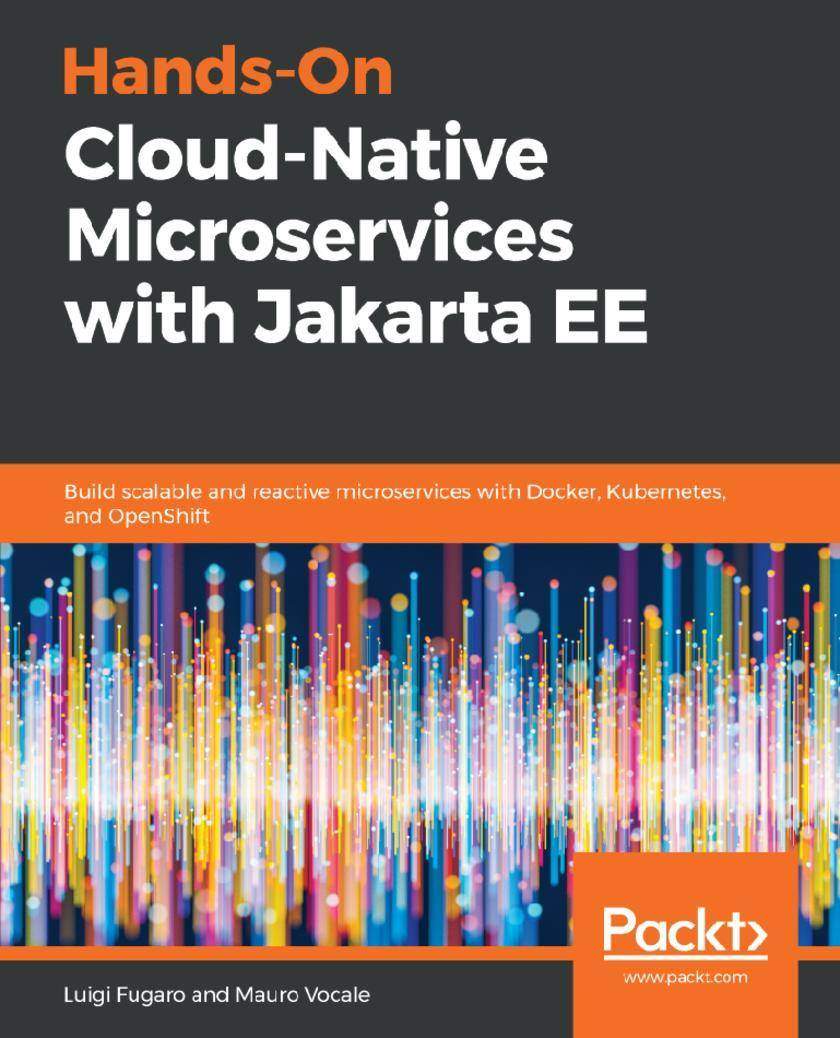
Hands-On Cloud-Native Microservices with Jakarta EE
¥81.74
Discover how cloud-native microservice architecture helps you to build dynamically scalable applications by using the most widely used and adopted runtime environments Key Features * Build robust cloud-native applications using a variety of tools * Understand how to configure both Amazon Web Services (AWS) and Docker clouds for high availability * Explore common design patterns used in building and deploying microservices architecture. Book Description Businesses today are evolving rapidly, and developers now face the challenge of building applications that are resilient, flexible, and native to the cloud. To achieve this, you'll need to be aware of the environment, tools, and resources that you're coding against. The book will begin by introducing you to cloud-native architecture and simplifying the major concepts. You'll learn to build microservices in Jakarta EE using MicroProfile with Thorntail and Narayana LRA. You'll then delve into cloud-native application x-rays, understanding the MicroProfile specification and the implementation/testing of microservices. As you progress further, you'll focus on continuous integration and continuous delivery, in addition to learning how to dockerize your services. You'll also cover concepts and techniques relating to security, monitoring, and troubleshooting problems that might occur with applications after you've written them. By the end of this book, you will be equipped with the skills you need to build highly resilient applications using cloud-native microservice architecture. What you will learn * Integrate reactive principles in MicroProfile microservices architecture * Explore the 12-factors-app paradigm and its implications * Get the best out of Java versions 8 and 9 to implement a microservice based on Thorntail * Understand what OpenShift is and why it is so important for an elastic architecture * Build a Linux container image using Docker and scale the application using Kubernetes * Implement various patterns such as, Circuit Breaker and bulkheads * Get to grips with the DevOps methodology using continuous integration (CI) and continuous deployment (CD) Who this book is for This book is for developers with basic knowledge of Java EE and HTTP-based application principles who want to learn how to build, test and scale Java EE microservices. No prior experience of writing microservices in Java EE is required.
Hands-On Cybersecurity for Finance
¥81.74
A comprehensive guide that will give you hands-on experience to study and overcome financial cyber threats Key Features * Protect your financial environment with cybersecurity practices and methodologies * Identify vulnerabilities such as data manipulation and fraudulent transactions * Provide end-to-end protection within organizations Book Description Organizations have always been a target of cybercrime. Hands-On Cybersecurity for Finance teaches you how to successfully defend your system against common cyber threats, making sure your financial services are a step ahead in terms of security. The book begins by providing an overall description of cybersecurity, guiding you through some of the most important services and technologies currently at risk from cyber threats. Once you have familiarized yourself with the topic, you will explore specific technologies and threats based on case studies and real-life scenarios. As you progress through the chapters, you will discover vulnerabilities and bugs (including the human risk factor), gaining an expert-level view of the most recent threats. You'll then explore information on how you can achieve data and infrastructure protection. In the concluding chapters, you will cover recent and significant updates to procedures and configurations, accompanied by important details related to cybersecurity research and development in IT-based financial services. By the end of the book, you will have gained a basic understanding of the future of information security and will be able to protect financial services and their related infrastructures. What you will learn * Understand the cyber threats faced by organizations * Discover how to identify attackers * Perform vulnerability assessment, software testing, and pentesting * Defend your financial cyberspace using mitigation techniques and remediation plans * Implement encryption and decryption * Understand how Artificial Intelligence (AI) affects cybersecurity Who this book is for Hands-On Cybersecurity for Finance is for you if you are a security architect, cyber risk manager, or pentester looking to secure your organization. Basic understanding of cybersecurity tools and practices will help you get the most out of this book.
Hands-On IoT Solutions with Blockchain
¥63.21
Integrate an end-to-end logistic chain using IBM Blockchain and IoT platforms Key Features *Explore practical implementation of ledger technology in the IoT architecture *Study security best practices for your smart devices *Understand Blockchain implementation for end-to-end IoT solutions Book Description Blockchain has been the hot topic of late thanks to cryptocurrencies. To make matters more interesting, the financial market is looking for ways to reduce operational costs and generate new business models, and this is where blockchain solutions come into the picture. In addition to this, with Internet of Things (IoT) trending and Arduino, Raspberry Pi, and other devices flooding the market, you can now create cheap devices even at home. Hands-On IoT Solutions with Blockchain starts with an overview of IoT concepts in the current business scenario. It then helps you develop your own device on the IBM Watson IoT platform and create your fi rst IoT solution using Watson and Intel Edison.Once you are familiar with IoT, you will learn about Blockchain technology and its use cases. You will also work with the Hyperledger framework and develop your own Blockchain network. As you progress through the chapters, you'll work with problem statements and learn how to design your solution architecture so that you can create your own integrated Blockchain and IoT solution. The next set of chapters will explain how to implement end-to-end Blockchain solutions with IoT using the IBM Cloud platform. By the end of this book, you will have mastered the convergence of IoT and Blockchain technology and exploited the best practices and drivers to develop a bulletproof integrated solution. What you will learn *Understand the key roles of IoT in the current market *Study the different aspects of IBM Watson IoT platform *Create devices, gateways, and applications connected to the platform *Explore the fundamentals of Blockchain *Define good use cases for Blockchain *Discover the Hyperledger Fabric and Composer frameworks *Develop an IBM Watson IoT application using a Intel Edison *Integrate IoT with the Blockchain platform Who this book is for Hands-On IoT Solutions with Blockchain is for you if you are an Internet of Things (IoT) analyst, architect, engineer, or any stakeholder responsible for security mechanisms on an IoT infrastructure. This book is also for IT professionals who want to start developing solutions using Blockchain and IoT on the IBM Cloud platform. Basic understanding of IoT will assist you in understanding key concepts covered in the book.
Implementing VMware Horizon 7.7
¥90.46
Effectively implement features and components for any computing environment Key Features *Explore the latest features of VMware Horizon 7.7 *Virtualize your desktop infrastructure using new features introduced in Horizon *Implement App Volumes and User Environment Manager in your infrastructure Book Description This third edition of Implementing VMware Horizon 7.7 has been updated to get you up to speed with VMware Horizon 7.7 by showing you how to use its key features and deploying an end-user computing infrastructure for your own organization. The book begins by guiding you on how to deploy all the core requirements for a VMware Horizon infrastructure. It then moves on to show you how to provision and administer end-user computing resources using VMware Horizon. You’ll not only be able to deploy the core VMware Horizon features, but you’ll also be able to implement new features, such as the Just-in-Time Management Platform (JMP) and the Horizon Console. You’ll also focus on the latest features and components of the Horizon platform and learn when and how they are used. By the end of the book, you will have developed a solid understanding of how your organization can benefit from the capabilities VMware Horizon offers and how each of its components is implemented. What you will learn *Work with the different products that make up VMware Horizon *Implement a multi-site VMware Horizon Pod using the Cloud Pod Architecture feature *Deploy and configure VMware Horizon’s optional components *Implement and maintain Microsoft RDSH, Horizon Linux, and Windows Desktop Pools and RDSH Application Pools *Configure and manage Horizon remotely using PowerCLI *Learn about the Microsoft Windows Group Policy templates for Horizon *Understand how to manage the SSL certificates for each of the VMware Horizon components Who this book is for If you’re a system administrator, solutions architect, or desktop engineer looking to level up your skills working with VMware's Horizon ecosystem and want to build a successful deployment strategy for desktops and applications, this book is for you.
Snapchat Marketing Success
¥23.14
Snapchat ?Marketing ?Success Virtually all social media sites out there have users communicating with text or chat…sure, some social media sites are starting to adopt video and there is some image sharing, but at the core, comments are left and messages are sent. That is NOT the case with Snapchat. Communication is all done through images and videos with the occasional small caption. This is how the younger generation likes to communicate… Short and sweet. Snapchat is one of the most unusual social networks to make it big online. You wouldn’t have thought that such a simple concept, handled arguably quite poorly to begin with, would become the huge behemoth it has today. And yet it has – and right now it’s flying higher than ever thanks to its 2.0 update. Snapchat’s story is surprising enough on face value but when you learn some of the more surprising twists and turns, the plot only thickens. Read on and let’s take a closer look at some of the things you probably didn’t know about Snapchat… ?Snapchat is Highly Personal If you’ve had your ear to the ground, then you may have heard the buzz about live streaming. Live streaming services are quickly becoming incredibly popular thanks to their ability to allow direct and live communication between a brand and its followers. But in fact, Snapchat has been providing something very similar for a long time. Snapchat allows you to update people about your trip to another country, it allows you to invite people to watch the public unveiling of your new product or service and it allows you to share a joke as you’re coming out the shower. This kind of personal communication has the power to create much more engagement, familiarity and trust. And if you look at the big names on Snapchat – like Arnold Schwarzenegger – then you’ll be able to easily see how it can be used to great effect. It Has Incredible Engagement Yes, Snapchat’s ‘instant’ nature gives it the potential to greatly increase engagement. And in reality, that’s exactly what it does. If ever you think you can’t make it big online, let Snapchat be an inspiring story to suggest otherwise. Snapchat is by no means some miracle feat of coding. Rather, this was actually a relatively poorly put together piece of code and would sap huge amounts of battery and CPU power when running in the background even! That’s not to say it’s a bad app – only that it’s all the more impressive it was able to do as well as it did. Facebook Tried to Buy Snapchat When it was enjoying its first major surge in popularity, Snapchat was offered a purchase bid from Facebook worth $3 billion. That’s a huge vote of confidence from the biggest social network on the planet… and Snapchat turned it down! ??Here’s Why You Need To Take A Close Look At Snapchat… ·Although often overlooked, Snapchat is one of the most powerful new social networks for driving traffic online…? ·Snapchatis all about socialization and a great way to interact with your brand? ·Snapchat was recently offered $3 Billion by Facebook… and they turned it down… this makes it clear that Snapchat is sure that it’s only getting bigger and better!? ·Engagement on Snapchat is MASSIVE, and growing… because all communication is focused on image and video sharing, your audience is very attentive and interested in anything you put in front of them…...Snapchat is adding 200 million new active users every single month!
Learning Go Programming
¥371.39
An insightful guide to learning the Go programming languageAbout This Book·Insightful coverage of Go programming syntax, constructs, and idioms to help you understand Go code effectively·Push your Go skills, with topics such as, data types, channels, concurrency, object-oriented Go, testing, and network programming·Each chapter provides working code samples that are designed to help reader quickly understand respective topicWho This Book Is ForIf you have prior exposure to programming and are interested in learning the Go programming language, this book is designed for you. It will quickly run you through the basics of programming to let you exploit a number of features offered by Go programming language.What You Will Learn·Install and configure the Go development environment to quickly get started with your first program.·Use the basic elements of the language including source code structure, variables, constants, and control flow primitives to quickly get started with Go·Gain practical insight into the use of Go's type system including basic and composite types such as maps, slices, and structs.·Use interface types and techniques such as embedding to create idiomatic object-oriented programs in Go.·Develop effective functions that are encapsulated in well-organized package structures with support for error handling and panic recovery.·Implement goroutine, channels, and other concurrency primitives to write highly-concurrent and safe Go code·Write tested and benchmarked code using Go's built test tools·Access OS resources by calling C libraries and interact with program environment at runtimeIn DetailThe Go programming language has firmly established itself as a favorite for building complex and scalable system applications. Go offers a direct and practical approach to programming that let programmers write correct and predictable code using concurrency idioms and a full-featured standard library.This is a step-by-step, practical guide full of real world examples to help you get started with Go in no time at all. We start off by understanding the fundamentals of Go, followed by a detailed description of the Go data types, program structures and Maps. After this, you learn how to use Go concurrency idioms to avoid pitfalls and create programs that are exact in expected behavior. Next, you will be familiarized with the tools and libraries that are available in Go for writing and exercising tests, benchmarking, and code coverage.Finally, you will be able to utilize some of the most important features of GO such as, Network Programming and OS integration to build efficient applications. All the concepts are explained in a crisp and concise manner and by the end of this book; you would be able to create highly efficient programs that you can deploy over cloud.Style and approachThe book is written to serve as a reader-friendly step-by-step guide to learning the Go programming language. Each topic is sequentially introduced to build on previous materials covered. Every concept is introduced with easy-to-follow code examples that focus on maximizing the understanding of the topic at hand.
Mastering Hibernate
¥222.81
Learn how to correctly utilize the most popular Object-Relational Mapping tool for your Enterprise applicationAbout This Book·Understand the internals of Hibernate and its architecture, and how it manages Entities, Events, Versioning, Filters, and Cache·Observe how Hibernate bridges the gap between object-oriented concepts and relational models·Discover how Hibernate can address architectural concerns such as Transaction, Database Multi-tenancy, Clustering, and Database ShardsWho This Book Is ForMastering Hibernate is intended for those who are already using or considering using Hibernate as the solution to address the problem of Object Relational Mapping. If you are already using Hibernate, this book will help you understand the internals and become a power user of Hibernate.What You Will Learn·Understand the internals of a Hibernate session and how Entities are managed·Declare better mapping between entity classes and database tables·Manage entity associations and collections·Fetch data not just by entity ID, but also using HQL, Criteria Objects, Filters, and Native SQL·Observe the first and second level caches and find out how to manage them·Collect statistics and metrics data for further observation·Make your application work with multi-tenant databasesIn DetailHibernate has been so successful since its inception that it even influenced the Java Enterprise Edition specification in that the Java Persistence API was dramatically changed to do it the Hibernate way. Hibernate is the tool that solves the complex problem of Object Relational Mapping. It can be used in both Java Enterprise applications as well as .Net applications. Additionally, it can be used for both SQL and NoSQL data stores.Some developers learn the basics of Hibernate and hit the ground quickly. But when demands go beyond the basics, they take a reactive approach instead of learning the fundamentals and core concepts. However, the secret to success for any good developer is knowing and understanding the tools at your disposal. It's time to learn about your tool to use it betterThis book first explores the internals of Hibernate by discussing what occurs inside a Hibernate session and how Entities are managed. Then, we cover core topics such as mapping, querying, caching, and we demonstrate how to use a wide range of very useful annotations.Additionally, you will learn how to create event listeners or interceptors utilizing the improved architecture in the latest version of Hibernate.Style and approachThis book takes a close look at the core topics, and helps you understand the complex topics by showing you examples and giving you in-depth discussions.
C++ Game Development Cookbook
¥334.25
Over 90 recipes to get you creating modern, fast, and high-quality games with C++About This Book·Level up your game programming skills with insightful recipes on building games in C++·Analyze the less commonly discussed problems with C++ applications to develop the best games·Improve the performance of your games with the new multi-threading and networking features of C++11Who This Book Is ForThis book is ideal for aspiring game developers who are proficient in C++ programming and are interested in developing games with C++. Some basic knowledge of game programming will be useful but is not necessary.What You Will Learn·Explore the basics of game development to build great and effective features for your game·Develop your first text-based game using the various concepts of object-oriented programming·Use algorithms when developing games with various sorting and searching techniques·Exploit data structures in a game's development for data storage·Create your first 2D game using GDI library and sprite sheet.·Build your first advanced 2D game of space invaders using patterns such as observer, fly-weight, abstract factory, command, state, and moreIn DetailC++ is one of the preferred languages for game development as it supports a variety of coding styles that provides low-level access to the system. C++ is still used as a preferred game programming language by many as it gives game programmers control of the entire architecture, including memory patterns and usage. However, there is little information available on how to harness the advanced features of C++ to build robust games.This book will teach you techniques to develop logic and game code using C++. The primary goal of this book is to teach you to create high-quality games using C++ game programming scripts and techniques, regardless of the library or game engine you use. It will show you how to make use of the object-oriented capabilities of C++ so you can write well-structured and powerful games of any genre. The book also explores important areas such as physics programming and audio programming, and gives you other useful tips and tricks to improve your code.By the end of this book, you will be competent in game programming using C++, and will be able to develop your own games in C++.Style and approachEvery recipe of this guide covers a task that will help you build different aspects of a game, such as taking player input and displaying the output, using control flow to implement decision making, and so on. Each recipe begins with gentle introduction and key concepts, has illustrated examples of use, and ends with a detailed but informative description of the inner workings.
Expert Python Programming - Second Edition
¥334.25
Become an ace Python programmer by learning best coding practices and advance-level concepts with Python 3.5About This Book·Based on the latest stable version of Python (version 3.5)·Creating well manageable code that will run in various environments with different sets of dependencies·Packed with advanced concepts and best practices to write efficient Python codeWho This Book Is ForThe book would appeal to web developers and Python programmers who want to start using version 3.5 and write code efficiently. Basic knowledge of Python programming is expected.What You Will Learn·Conventions and best practices that are widely adopted in the python community·Package python code effectively for community and production use·Easy and lightweight ways to automate code deployment on remote systems·Improve your code's quality, reliability, and performance·Write concurrent code in python·Extend python with code written in different languagesIn DetailPython is a dynamic programming language, used in a wide range of domains by programmers who find it simple, yet powerful. Even if you find writing Python code easy, writing code that is efficient and easy to maintain and reuse is a challenge.The focus of the book is to familiarize you with common conventions, best practices, useful tools and standards used by python professionals on a daily basis when working with code.You will begin with knowing new features in Python 3.5 and quick tricks for improving productivity. Next, you will learn advanced and useful python syntax elements brought to this new version. Using advanced object-oriented concepts and mechanisms available in python, you will learn different approaches to implement metaprogramming. You will learn to choose good names, write packages, and create standalone executables easily.You will also be using some powerful tools such as buildout and vitualenv to release and deploy the code on remote servers for production use. Moving on, you will learn to effectively create Python extensions with C, C++, cython, and pyrex. The important factors while writing code such as code management tools, writing clear documentation, and test-driven development are also covered.You will now dive deeper to make your code efficient with general rules of optimization, strategies for finding bottlenecks, and selected tools for application optimization.By the end of the book, you will be an expert in writing efficient and maintainable code.Style and approach An easy-to-follow guide that covers industry followed best practices in Python programming
Mastering Akka
¥371.39
Master the art of creating scalable, concurrent, and reactive applications using AkkaAbout This Book·This book will help you cure anemic models with domain-driven design·We cover major Akka programming concepts such as concurrency, scalability, and reactivity·You will learn concepts like Event Sourcing and CQRS via Akka Persistence, Akka Streams, Akka Http as well as Akka ClusteringWho This Book Is ForIf you want to use the Lightbend platform to create highly performant reactive applications, then this book is for you. If you are a Scala developer looking for techniques to use all features of the new Akka release and want to incorporate these solutions in your current or new projects, then this book is for you. Expert Java developers who want to build scalable, concurrent, and reactive application will find this book helpful.What You Will Learn·Use Akka actors to enable parallel execution·Build out domain-driven design based components like entities and aggregates·Respond to command requests on that aggregate root that affect the internal state·Leverage Akka Persistence, protobuf and Cassandra to save the persistent state of you entities·Build out complex processing graphs with the Graph Builder DSL·Understand the dynamic push/pull nature of backpressure handling within Akka Streams·Route HTTP requests to an actor and return a response·Deploy actor instances across a set of nodes via ConductR for high availabilityIn DetailFor a programmer, writing multi-threaded applications is critical as it is important to break large tasks into smaller ones and run them simultaneously. Akka is a distributed computing toolkit that uses the abstraction of the Actor model, enabling developers to build correct, concurrent, and distributed applications using Java and Scala with ease. The book begins with a quick introduction that simplifies concurrent programming with actors. We then proceed to master all aspects of domain-driven design. We'll teach you how to scale out with Akka Remoting/Clustering. Finally, we introduce Conductr as a means to deploy to and manage microservices across a cluster.Style and approachThis comprehensive, fast-paced guide is packed with several real-world use cases that will help you understand concepts, issues, and resolutions while using Akka to create highly performant, scalable, and concurrency-proof reactive applications.


