


 购物车
购物车 个人中心
个人中心
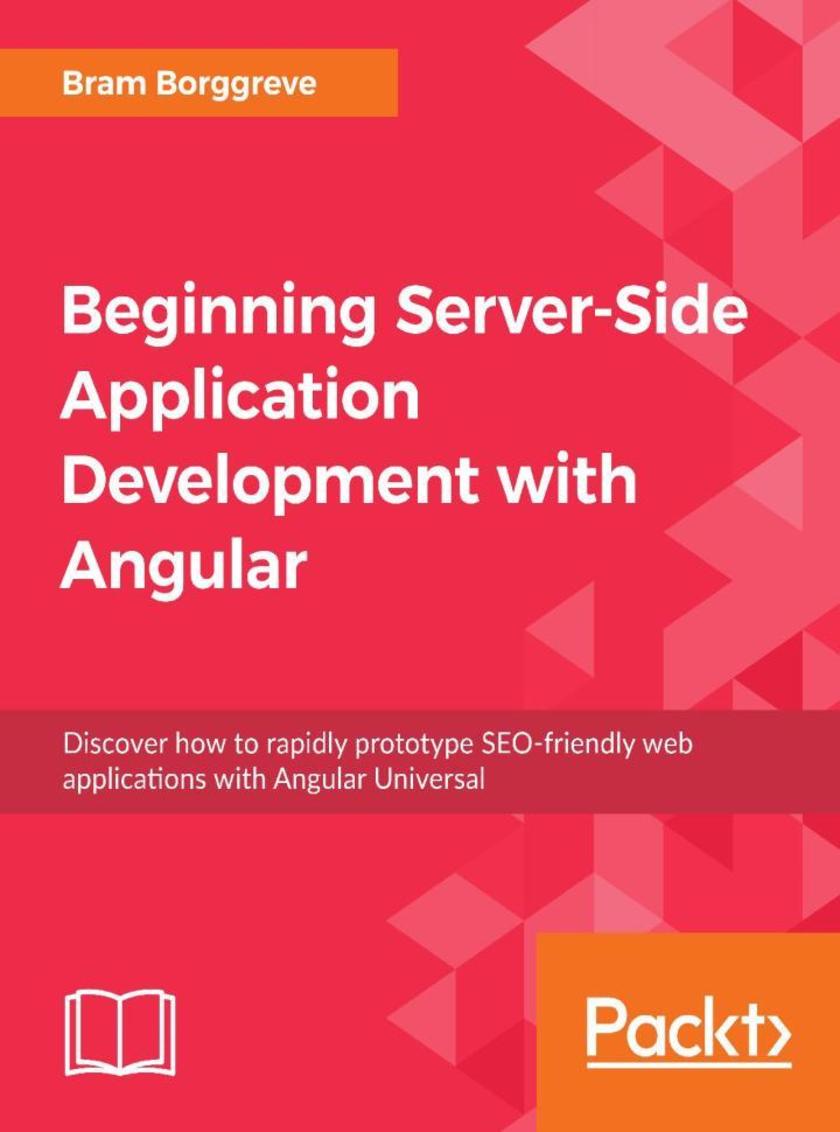
Beginning Server-Side Application Development with Angular
¥90.46
Discover how to rapidly prototype SEO-friendly web applications with Angular Universal About This Book : ? Rapidly build an application that's optimized for search performance ? Develop service workers to make your application truly progressive ? Automatically update metadata and load in content from external APIs Who This Book Is For : This book is ideal for experienced front-end developers who are looking to quickly work through an intelligent example that demonstrates all the key features of server-side development with Angular. You'll need some prior exposure to Angular, as we skim over the basics and get straight to work. What You Will Learn : ? Use the official tools provided by Angular to build an SEO-friendly application ? Create a dynamic web application that maps to current Angular best practices ? Manage your Angular applications with Angular CLI ? Implement server-side rendering for your future web application projects ? Configure service workers to automatically update your application in the background In Detail : Equip yourself with the skills required to create modern, progressive web applications that load quickly and efficiently. This fast-paced guide to server-side Angular leads you through an example application that uses Angular Universal to render application pages on the server, rather than the client. You'll learn how to serve your users views that load instantly, while reaping all the SEO benefits of improved page indexing. With differences of just 200 milliseconds in performance having a measurable impact on your users, it's more important than ever to get server-side right. Style and approach : With this book, you'll be equipped to create modern, SEO-friendly web apps with best practices using Angular CLI. This book focuses on creating a progressive web app using Angular that is optimized for search engines.
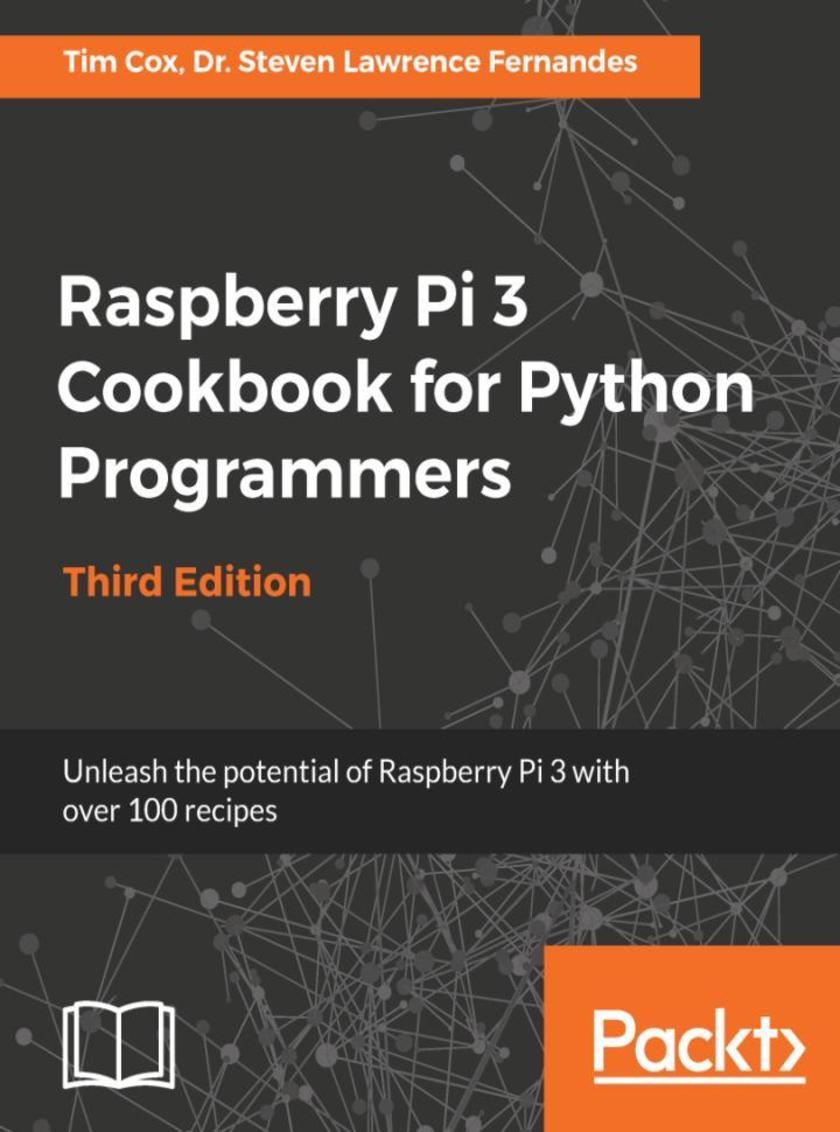
Raspberry Pi 3 Cookbook for Python Programmers
¥63.21
A recipe-based guide to programming your Raspberry Pi 3 using Python About This Book : ? Leverage the power of Raspberry Pi 3 using Python programming ? Create 3D games, build neural network modules, and interface with your own circuits ? Packed with clear, step-by-step recipes to walk you through the capabilities of Raspberry Pi Who This Book Is For : This book is for anyone who wants to master the skills of Python programming using Raspberry Pi 3. Prior knowledge of Python will be an added advantage. What You Will Learn : ? Learn to set up and run Raspberry Pi 3 ? Build text classifiers and perform automation using Python ? Predict sentiments in words and create games and graphics ? Detect edges and contours in images ? Build human face detection and recognition system ? Use Python to drive hardware ? Sense and display real-world data ? Build a neural network module for optical character recognition ? Build movie recommendations system In Detail : Raspberry Pi 3 Cookbook for Python Programmers – Third Edition begins by guiding you through setting up Raspberry Pi 3, performing tasks using Python 3.6, and introducing the first steps to interface with electronics. As you work through each chapter, you will build your skills and apply them as you progress. You will learn how to build text classifiers, predict sentiments in words, develop applications using the popular Tkinter library, and create games by controlling graphics on your screen. You will harness the power of a built in graphics processor using Pi3D to generate your own high-quality 3D graphics and environments. You will understand how to connect Raspberry Pi’s hardware pins directly to control electronics, from switching on LEDs and responding to push buttons to driving motors and servos. Get to grips with monitoring sensors to gather real-life data, using it to control other devices, and viewing the results over the internet. You will apply what you have learned by creating your own Pi-Rover or Pi-Hexipod robots. You will also learn about sentiment analysis, face recognition techniques, and building neural network modules for optical character recognition. Finally, you will learn to build movie recommendations system on Raspberry Pi 3. Style and approach : Written in a cookbook style, this book contains a series of recipes on various topics. It is an easy-to-follow step-by-step guide with examples of feature integration suitable for any search application.
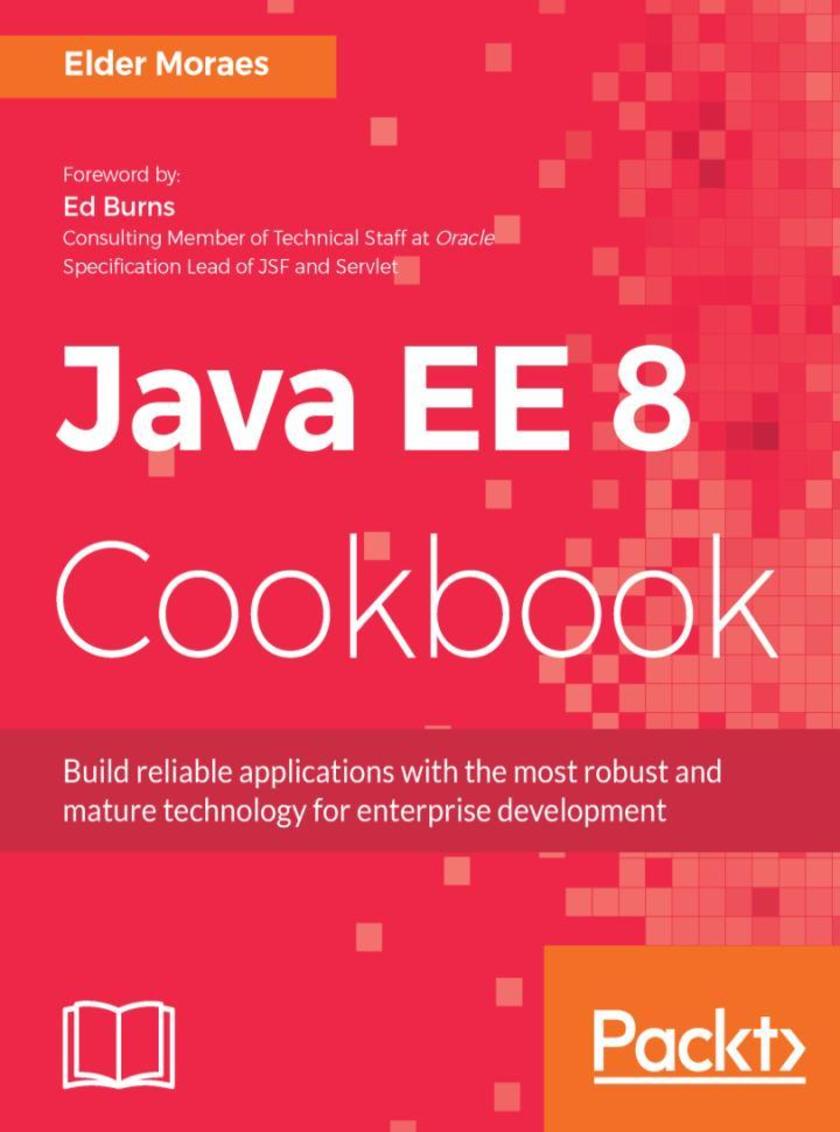
Java EE 8 Cookbook
¥90.46
A practical guide for building effective enterprise solutions with Java EE 8 About This Book ? Recipes to get you up-and-running with Java EE 8 application development ? Learn how to apply the major Java EE 8 APIs and specifications ? Implement microservices and Reactive programming with Java EE 8 Who This Book Is For This book is for developers who want to become proficient with Java EE 8 for their enterprise application development. Basic knowledge of Java is assumed What You Will Learn ? Actionable information on the new features of Java EE 8 ? Using the most important APIs with real and working code ? Building server side applications, web services, and web applications ? Deploying and managing your application using the most important Java EE servers ? Building and deploying microservices using Java EE 8 ? Building Reactive application by joining Java EE APIs and core Java features ? Moving your application to the cloud using containers ? Practical ways to improve your projects and career through community involvement In Detail Java EE is a collection of technologies and APIs to support Enterprise Application development. The choice of what to use and when can be dauntingly complex for any developer. This book will help you master this. Packed with easy to follow recipes, this is your guide to becoming productive with Java EE 8. You will begin by seeing the latest features of Java EE 8, including major Java EE 8 APIs and specifications such as JSF 2.3, and CDI 2.0, and what they mean for you. You will use the new features of Java EE 8 to implement web-based services for your client applications. You will then learn to process the Model and Streaming APIs using JSON-P and JSON-B and will learn to use the Java Lambdas support offered in JSON-P. There are more recipes to fine-tune your RESTful development, and you will learn about the Reactive enhancements offered by the JAX-RS 2.1 specification. Later on, you will learn about the role of multithreading in your enterprise applications and how to integrate them for transaction handling. This is followed by implementing microservices with Java EE and the advancements made by Java EE for cloud computing. The final set of recipes shows you how take advantage of the latest security features and authenticate your enterprise application. At the end of the book, the Appendix shows you how knowledge sharing can change your career and your life. Style and approach Task based learning guide to help ease application development with Java EE.
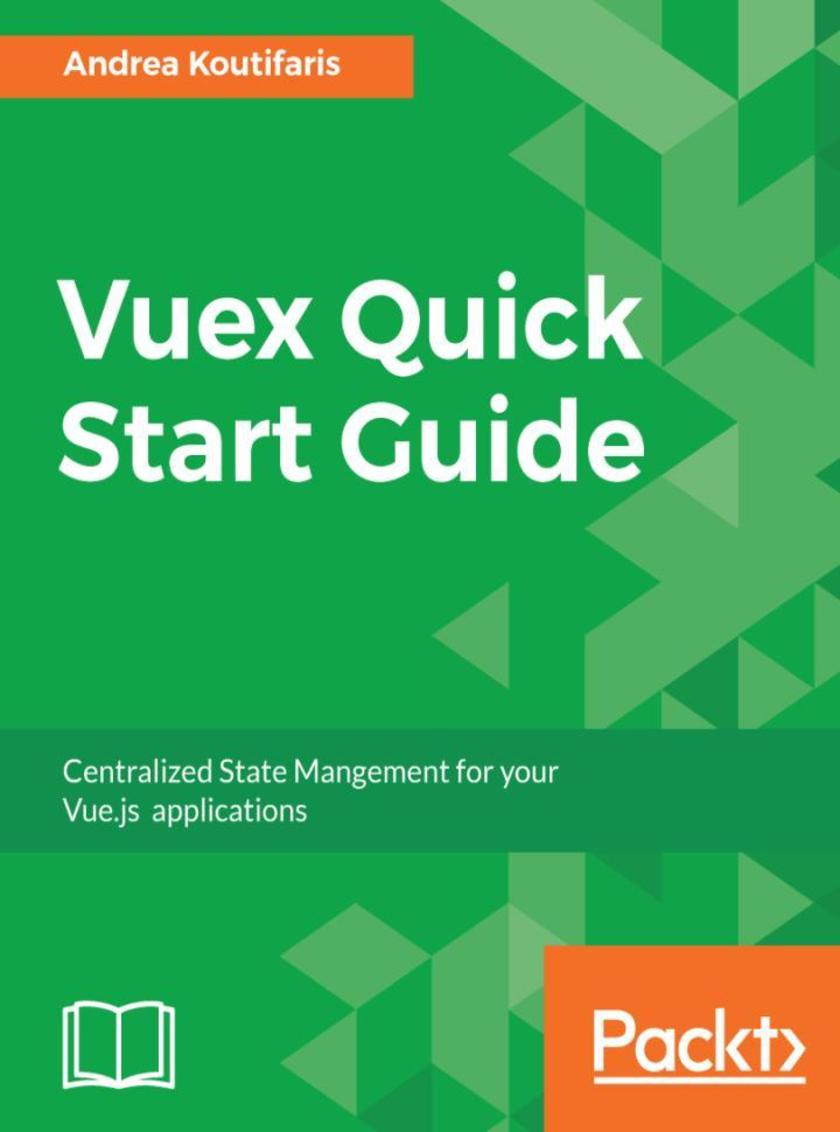
Vuex Quick Start Guide
¥54.49
Develop consistent web apps with Vuex by easily centralizing the state of your application About This Book ? Uncover the hidden features of Vuex to build applications that are powerful, consistent, and maintainable ? Enforce a Flux-like application architecture in your Vue application ? Test your Vuex elements and Vue components using Karma/Jasmine testing framework Who This Book Is For If you are a JavaScript developer, working on Vue.js and want to extend your web development skills to develop and maintain bigger applications using state management, then this book is for you. No knowledge of Vuex is required. What You Will Learn ? Moving from classical MVC to a Flux-like architecture ? Implementing predictable centralized state management in your applications using Vuex ? Using ECMAScript 6 features for developing a real application ? Using webpack in conjunction with Vue single file components ? Testing your Vue/Vuex applications using Karma/Jasmine and inject-loader ? Simple and effective Test Driven Development ? Extending your application with Vuex plugins In Detail State management preserves the state of controls in a user interface. Vuex is a state management tool for Vue.js that makes the architecture easier to understand, maintain and evolve. This book is the easiest way to get started with Vuex to improve your Vue.js application architecture and overall user experience. Our book begins by explaining the problem that Vuex solves, and how it helps your applications. You will learn about the Vuex core concepts, including the Vuex store, changing application state, carrying out asynchronous operations and persisting state changes, all with an eye to scalability. You will learn how to test Vuex elements and Vue components with the Karma and Jasmine testing frameworks. You will see this in the context of a testing first approach, following the fundamentals of Test Driven Development. TDD will help you to identify which components need testing and how to test them. You will build a full Vuex application by creating the application components and services, and persist the state. Vuex comes with a plugin system that allows programmers to extend Vuex features. You will learn about some of the most powerful plugins, and make use of the built-in logger plugin. You write a custom Google Analytics plugin to send actions to its analytics API, and an Undo/Redo plugin. Style and approach Learn the core concepts and get started using?Vuex as a centralized state management system in your Vue.js applications.
Java 9: Building Robust Modular Applications
¥63.21
Mastering advanced features of Java and implement them to build amazing projects About This Book ? Take advantage of Java's new modularity features to write real-world applications that solve a variety of problems ? Explore the major concepts introduced with Java 9, including modular programming, HTTP 2.0, API changes, and more ? Get to grips with tools, techniques and best practices to enhance application development Who This Book Is For This learning path is for Java developers who are looking to move a level up and learn how to build robust applications in the latest version of Java. What You Will Learn ? Package Java applications as modules using the Java Platform Module System ? Implement process management in Java using the all-new process handling API ? Integrate your applications with third-party services in the cloud ? Interact with mail servers, using JavaMail to build an application that filters spam messages ? Use JavaFX to build rich GUI-based applications, which are an essential element of application development ? Leverage the possibilities provided by the newly introduced Java shell ? Test your application's effectiveness with the JVM harness ? See how Java 9 provides support for the HTTP 2.0 standard In Detail Java 9 and its new features add to the richness of the language; Java is one of the languages most used by developers to build robust software applications. Java 9 comes with a special emphasis on modularity with its integration with Jigsaw. This course is your one-stop guide to mastering the language. You'll be provided with an overview and explanation of the new features introduced in Java 9 and the importance of the new APIs and enhancements. Some new features of Java 9 are ground-breaking; if you are an experienced programmer, you will be able to make your enterprise applications leaner by learning these new features. You'll be provided with practical guidance in applying your newly acquired knowledge of Java 9 and further information on future developments of the Java platform. This course will improve your productivity, making your applications faster. Next, you'll go on to implement everything you've learned by building 10 cool projects. You will learn to build an email filter that separates spam messages from all your inboxes, a social media aggregator app that will help you efficiently track various feeds, and a microservice for a client/server note application, to name just a few. By the end of this course, you will be well acquainted with Java 9 features and able to build your own applications and projects. This Learning Path contains the best content from the following two recently published Packt products: ? Mastering Java 9 ? Java 9 Programming Blueprints Style and approach This practical guide is filled with real-world examples. Its projects will help you get acquainted with concepts in depth.
Google Cloud Platform Cookbook
¥81.74
Practical recipes to implement cost-effective and scalable cloud solutions for your organization About This Book ? Implement Google Cloud services in your organization ? Leverage Google Cloud components to secure your organization’s data ? A recipe-based guide that promises hands-on experience in deploying a highly scalable and available environment Who This Book Is For This book is for IT professionals, engineers, and developers looking at implementing Google Cloud in their organizations. Administrators and architects planning to make their organization more efficient with Google Cloud will also find this book useful. Basic understanding of Cloud services and the Google Cloud platform is necessary. What You Will Learn ? Host a Python application on Google Compute Engine ? Host an application using Google Cloud Functions ? Migrate a MySQL DB to Cloud Spanner ? Configure a network for a highly available application on GCP ? Learn simple image processing using Storage and Cloud Functions ? Automate security checks using Policy Scanner ? Understand tools for monitoring a production environment in GCP ? Learn to manage multiple projects using service accounts In Detail Google Cloud Platform is a cloud computing platform that offers products and services to host applications using state-of-the art infrastructure and technology. You can build and host applications and websites, store data, and analyze data on Google's scalable infrastructure. This book follows a recipe-based approach, giving you hands-on experience to make the most of Google Cloud services. This book starts with practical recipes that explain how to utilize Google Cloud's common services. Then, you'll see how to make full use of Google Cloud components such as networking, security, management, and developer tools. Next, we'll deep dive into implementing core Google Cloud services into your organization, with practical recipes on App Engine, Compute Engine microservices with Cloud Functions, virtual networks, and Cloud Storage. Later, we'll provide recipes on implementing authentication and security, Cloud APIs, command-line management, deployment management, and the Cloud SDK. Finally, we'll cover administration troubleshooting tasks with the Compute and Container Engines and we'll show how to monitor your organization's efficiency with best practices. By the end of this book, you'll have a complete understanding of how to implement Google Cloud services in your organization with ease. Style and approach This book will quickly get you started with using Google Cloud Services.
Microsoft Power BI Quick Start Guide
¥52.31
Develop robust, Scala-powered projects with the help of machine learning libraries such as SparkML to harvest meaningful insight Key Features *Gain hands-on experience in building data science projects with Scala *Exploit powerful functionalities of machine learning libraries *Use machine learning algorithms and decision tree models for enterprise apps Book Description Scala, together with the Spark Framework, forms a rich and powerful data processing ecosystem. Modern Scala Projects is a journey into the depths of this ecosystem. The machine learning (ML) projects presented in this book enable you to create practical, robust data analytics solutions, with an emphasis on automating data workflows with the Spark ML pipeline API. This book showcases or carefully cherry-picks from Scala’s functional libraries and other constructs to help readers roll out their own scalable data processing frameworks. The projects in this book enable data practitioners across all industries gain insights into data that will help organizations have strategic and competitive advantage. Modern Scala Projects focuses on the application of supervisory learning ML techniques that classify data and make predictions. You'll begin with working on a project to predict a class of flower by implementing a simple machine learning model. Next, you'll create a cancer diagnosis classification pipeline, followed by projects delving into stock price prediction, spam filtering, fraud detection, and a recommendation engine. By the end of this book, you will be able to build efficient data science projects that fulfil your software requirements. What you will learn *Create pipelines to extract data or analytics and visualizations *Automate your process pipeline with jobs that are reproducible *Extract intelligent data efficiently from large, disparate datasets *Automate the extraction, transformation, and loading of data *Develop tools that collate, model, and analyze data *Maintain the integrity of data as data flows become more complex *Develop tools that predict outcomes based on “pattern discovery” *Build really fast and accurate machine-learning models in Scala Who this book is for Modern Scala Projects is for Scala developers who would like to gain some hands-on experience with some interesting real-world projects. Prior programming experience with Scala is necessary.
Bash Cookbook
¥69.75
Learn all the fundamentals of PHP with a book that blends theory with practice to build up the skills you need for modern web development. Key Features *Brush up on basic PHP 7 syntax and work with variables, data types, arrays, and loops *Master advanced concepts like building your own frameworks and creating your own applications *Apply your newly learned PHP skills to a variety of real-life business scenarios Book Description PHP is the preferred server-side scripting language for tech giants such as Facebook, Wikipedia, and Tumblr despite full-stack JavaScript gaining popularity with upcoming developers. This is because PHP performs better when dealing with heavy computations on the back end. In this book, you’ll learn everything you need to get up and running with the latest version of PHP, including package management with tools such as composer, secure database operations, and a whole host of other best practices that will help you stay a step ahead of traditional programmers. What you will learn *Understand the fundamentals of PHP and work with classes and inheritance *Learn about database operations and package management with composer *Tackle common security concerns and pitfalls using authentication and validation *Build effective PHP applications and frameworks for your business needs Who this book is for If you’re already familiar with another programming language and want to learn about the fundamentals of PHP programming, you’ll find the flow of this book to be an ideal fit. Having a prior understanding of HTML, MySQL, CSS, and JavaScript will be beneficial, but is not mandatory.
Delphi Cookbook,
¥87.19
A fast-paced guide to putting your GeoServer-based application into fast, user-friendly, and secure production Key Features * Resolve bottlenecks, optimize data stores, and cluster server resources * Use identity management and authentication for a user-specific, secure web application * Go beyond traditional web hosting to explore the full range of hosting options in the cloud Book Description GeoServer is open source, server-side software written in Java that allows users to share and edit geospatial data. In this book, you'll start by learning how to develop a spatial analysis platform with web processing services. Then you'll see how to develop an algorithm by chaining together geospatial analysis processes, which you can share with anyone in the world. Next you'll delve into a very important technique to improve the speed of your map application—tile caching. Here, you'll understand how tile caching works, how to develop an effective tile cache-supported web service, and how to leverage tile caching in your OpenLayers web application. Further on, you'll explore important tweaks to produce a performant GeoServer-backed web mapping application. Moving on, you'll enable authentication on the frontend and backend to protect sensitive map data, and deliver sensitive data to your end user. Finally, you'll see how to put your web application into production in a secure and user-friendly way. You'll go beyond traditional web hosting to explore the full range of hosting options in the cloud, and maintain a reliable server instance. What you will learn * Develop a WPS-processing service to allow web-based geospatial data processing * Get to know important techniques to improve the speed of your web map application—tile caching, raster data optimization, and server clustering * Find out which GeoServer settings resolve bottlenecks * Develop an algorithm by chaining geospatial analysis processes together * Put your application into production with hosting, monitoring, and automated backup and recovery * Understand how to develop an effective tile cache-supported web service * Master techniques that ensure resilient server deployment Who this book is for This book is for anyone who wants to learn about advanced interfaces, security, and troubleshooting techniques in GeoServer. A basic understanding of GeoServer is required
Hands-On Recommendation Systems with Python
¥52.31
Secure your Java applications by integrating the Spring Security framework in your code Key Features *Provide authentication, authorization and other security features for Java applications. *Learn how to secure microservices, cloud, and serverless applications easily *Understand the code behind the implementation of various security features Book Description Security is one of the most vital concerns for any organization. The complexity of an application is compounded when you need to integrate security with existing code, new technology, and other frameworks. This book will show you how to effectively write Java code that is robust and easy to maintain. Hands-On Spring Security 5 for Reactive Applications starts with the essential concepts of reactive programming, Spring Framework, and Spring Security. You will then learn about a variety of authentication mechanisms and how to integrate them easily with the Spring MVC application. You will also understand how to achieve authorization in a Spring WebFlux application using Spring Security.You will be able to explore the security confgurations required to achieve OAuth2 for securing REST APIs and integrate security in microservices and serverless applications. This book will guide you in integrating add-ons that will add value to any Spring Security module. By the end of the book, you will be proficient at integrating Spring Security in your Java applications What you will learn *Understand how Spring Framework and Reactive application programming are connected *Implement easy security confgurations with Spring Security expressions *Discover the relationship between OAuth2 and OpenID Connect *Secure microservices and serverless applications with Spring *Integrate add-ons, such as HDIV, Crypto Module, and CORS support *Apply Spring Security 5 features to enhance your Java reactive applications Who this book is for If you are a Java developer who wants to improve application security, then this book is for you. A basic understanding of Spring, Spring Security framework, and reactive applications is required to make the most of the book.
Learn Ethical Hacking from Scratch
¥78.47
Install, Configure and Setup different connections with pfSense Key Features *Build firewall and routing solutions with PfSense. *Learn how to create captive portals, how to connect Pfsense to your https environment and so on. *Practical approach towards building firewall solutions for your organization Book Description As computer networks become ubiquitous, it has become increasingly important to both secure and optimize our networks. pfSense, an open-source router/firewall, provides an easy, cost-effective way of achieving this – and this book explains how to install and configure pfSense in such a way that even a networking beginner can successfully deploy and use pfSense. This book begins by covering networking fundamentals, deployment scenarios, and hardware sizing guidelines, as well as how to install pfSense. The book then covers configuration of basic services such as DHCP, DNS, and captive portal and VLAN configuration. Careful consideration is given to the core firewall functionality of pfSense, and how to set up firewall rules and traffic shaping. Finally, the book covers the basics of VPNs, multi-WAN setups, routing and bridging, and how to perform diagnostics and troubleshooting on a network. What you will learn *Install pfSense *Configure additional interfaces, and enable and configure DHCP *Understand Captive portal *Understand firewalls and NAT, and traffic shaping *Learn in detail about VPNs *Understand Multi-WAN *Learn about routing and bridging in detail *Understand the basics of diagnostics and troubleshooting networks Who this book is for This book is towards any network security professionals who want to get introduced to the world of firewalls and network configurations using Pfsense. No knowledge of PfSense is required
Natural Language Processing with Java
¥69.75
Discover how you can migrate a traditional on-premise SQL server database to a cloud-based solution with Microsoft Azure. Built with database administrators in mind, this book emulates different scenarios you might come across while working with large, complex SQL database migrations and provides solutions for effectively managing the migrated databases. Key Features *Implement backup, restore, and recovery of Azure SQL databases *Create shards and elastic pools to scale Azure SQL databases *Automate common management tasks with PowerShell *Implement over 40 practical activities and exercises across 24 topics to reinforce your learning Book Description As the cloud version of SQL Server, Azure SQL Database differs in key ways when it comes to management, maintenance, and administration. It’s important to know how to administer SQL Database to fully benefit from all of the features and functionality that it provides. This book addresses important aspects of an Azure SQL Database instance such as migration, backup restorations, pricing policies, security, scalability, monitoring, performance optimization, high availability, and disaster recovery. It is a complete guide for database administrators, and ideal for those who are planning to migrate from on premise SQL Server database to an Azure SQL Server database. What you will learn *Learn how to provision a new database or migrate an existing on-premise solution *Understand how to backup, restore, secure, and scale your own Azure SQL Database *Optimize the performance by monitoring and tuning your cloud-based SQL instance *Implement high availability and disaster recovery procedures with SQL Database *Develop a roadmap for your own scalable cloud solution with Azure SQL Database Who this book is for This book is ideal for database administrators, database developers, or application developers who are interested in developing or migrating existing applications with Azure SQL Database. Prior experience of working with an on-premise SQL Server deployment and brief knowledge of PowerShell and C# are recommended prerequisites.
Selenium WebDriver 3 Practical Guide
¥69.75
Bridge the gap between developer and data scientist by creating a modern open-source, Python-based toolset that works with Jupyter Notebook, and PixieDust. Key Features *Think deeply as a developer about your strategy and toolset in data science *Discover the best tools that will suit you as a developer in your data analysis *Accelerate the road to data insight as a programmer using Jupyter Notebook *Deep dive into multiple industry data science use cases Book Description Thoughtful Data Science brings new strategies and a carefully crafted programmer's toolset to work with modern, cutting-edge data analysis. This new approach is designed specifically to give developers more efficiency and power to create cutting-edge data analysis and artificial intelligence insights. Industry expert David Taieb bridges the gap between developers and data scientists by creating a modern open-source, Python-based toolset that works with Jupyter Notebook, and PixieDust. You'll find the right balance of strategic thinking and practical projects throughout this book, with extensive code files and Jupyter projects that you can integrate with your own data analysis. David Taieb introduces four projects designed to connect developers to important industry use cases in data science. The first is an image recognition application with TensorFlow, to meet the growing importance of AI in data analysis. The second analyses social media trends to explore big data issues and natural language processing. The third is a financial portfolio analysis application using time series analysis, pivotal in many data science applications today. The fourth involves applying graph algorithms to solve data problems. Taieb wraps up with a deep look into the future of data science for developers and his views on AI for data science. What you will learn *Bridge the gap between developer and data scientist with a Python-based toolset *Get the most out of Jupyter Notebooks with new productivity-enhancing tools *Explore and visualize data using Jupyter Notebooks and PixieDust *Work with and assess the impact of artificial intelligence in data science *Work with TensorFlow, graphs, natural language processing, and time series *Deep dive into multiple industry data science use cases *Look into the future of data analysis and where to develop your skills Who this book is for This book is for established developers who want to bridge the gap between programmers and data scientists. With the introduction of PixieDust from its creator, the book will also be a great desk companion for the already accomplished Data Scientist. Some fluency in data interpretation and visualization is also assumed since this book addresses data professionals such as business and general data analysts. It will be helpful to have some knowledge of Python, using Python libraries, and some proficiency in web development.
Beginning Data Science with Python and Jupyter
¥90.46
Getting started with data science doesn't have to be an uphill battle. This step-by-step guide is ideal for beginners who know a little Python and are looking for a quick, fast-paced introduction. About This Book ? Get up and running with the Jupyter ecosystem and some example datasets ? Learn about key machine learning concepts like SVM, KNN classifiers and Random Forests ? Discover how you can use web scraping to gather and parse your own bespoke datasets Who This Book Is For This book is ideal for professionals with a variety of job descriptions across large range of industries, given the rising popularity and accessibility of data science. You'll need some prior experience with Python, with any prior work with libraries like Pandas, Matplotlib and Pandas providing you a useful head start. What You Will Learn ? Identify potential areas of investigation and perform exploratory data analysis ? Plan a machine learning classification strategy and train classification models ? Use validation curves and dimensionality reduction to tune and enhance your models ? Scrape tabular data from web pages and transform it into Pandas DataFrames ? Create interactive, web-friendly visualizations to clearly communicate your findings In Detail Get to grips with the skills you need for entry-level data science in this hands-on Python and Jupyter course. You'll learn about some of the most commonly used libraries that are part of the Anaconda distribution, and then explore machine learning models with real datasets to give you the skills and exposure you need for the real world. We'll finish up by showing you how easy it can be to scrape and gather your own data from the open web, so that you can apply your new skills in an actionable context. Style and approach This book covers every aspect of the standard data-workflow process within a day, along with theory, practical hands-on coding, and relatable illustrations.
Hands-On Data Warehousing with Azure Data Factory
¥81.74
Leverage the power of Microsoft Azure Data Factory v2 to build hybrid data solutions About This Book ? Combine the power of Azure Data Factory v2 and SQL Server Integration Services ? Design and enhance performance and scalability of a modern ETL hybrid solution ? Interact with the loaded data in data warehouse and data lake using Power BI Who This Book Is For This book is for you if you are a software professional who develops and implements ETL solutions using Microsoft SQL Server or Azure cloud. It will be an added advantage if you are a software engineer, DW/ETL architect, or ETL developer, and know how to create a new ETL implementation or enhance an existing one with ADF or SSIS. What You Will Learn ? Understand the key components of an ETL solution using Azure Data Factory and Integration Services ? Design the architecture of a modern ETL hybrid solution ? Implement ETL solutions for both on-premises and Azure data ? Improve the performance and scalability of your ETL solution ? Gain thorough knowledge of new capabilities and features added to Azure Data Factory and Integration Services In Detail ETL is one of the essential techniques in data processing. Given data is everywhere, ETL will always be the vital process to handle data from different sources. Hands-On Data Warehousing with Azure Data Factory starts with the basic concepts of data warehousing and ETL process. You will learn how Azure Data Factory and SSIS can be used to understand the key components of an ETL solution. You will go through different services offered by Azure that can be used by ADF and SSIS, such as Azure Data Lake Analytics, Machine Learning and Databrick’s Spark with the help of practical examples. You will explore how to design and implement ETL hybrid solutions using different integration services with a step-by-step approach. Once you get to grips with all this, you will use Power BI to interact with data coming from different sources in order to reveal valuable insights. By the end of this book, you will not only learn how to build your own ETL solutions but also address the key challenges that are faced while building them. Style and approach A step-by-step guide to develop data movement code using SSIS, Azure Data Factory, and database stored procedures for implementing intelligent BI solutions.
Implementing Oracle API Platform Cloud Service
¥90.46
Work with the newest Oracle API Platform Cloud Service to interface with the increasingly complex array of services your clients want. About This Book ? Understand the architecture and functionality of the new Oracle API Cloud Service Platform ? Understand typical use cases for the new platform and how it can work for you ? Design your own APIs, then deploy and customize your APIs ? Implement Oauth 2.0 policy and custom policies ? Migrate from Oracle 12c solutions to the new Oracle API platform Who This Book Is For This book is for all Oracle developers who are working or plan to work with the Oracle API Platform Cloud Service. What You Will Learn ? Get an overview of the Oracle API Cloud Service Platform ? See typical use cases of the Oracle API Cloud Service Platform ? Design your own APIs using Apiary ? Build and run microservices ? Set up API gateways with the new API platform from Oracle ? Customize developer portals ? Configuration management ? Implement Oauth 2.0 policies ? Implement custom policies ? Get a policy SDK overview ? Transition from Oracle API Management 12c to the new Oracle API platform In Detail Implementing Oracle API Platform Cloud Service moves from theory to practice using the newest Oracle API management platform. This critical new platform for Oracle developers allows you to interface the complex array of services your clients expect in the modern world. First, you'll learn about Oracle’s new platform and get an overview of it, then you'll see a use case showing the functionality and use of this new platform for Oracle customers. Next, you’ll see the power of Apiary and begin designing your own APIs. From there, you’ll build and run microservices and set up the Oracle API gateways. Moving on, you’ll discover how to customize the developer portal and publish your own APIs. You’ll spend time looking at configuration management on the new platform, and implementing the Oauth 2.0 policy, as well as custom policies. The latest finance modules from Oracle will be examined, with some of the third party alternatives in sight as well. This broad-scoped book completes your journey with a clear examination of how to transition APIs from Oracle API Management 12c to the new Oracle API Platform, so that you can step into the future confidently. Style and approach This book provides comprehensive coverage of all aspects of Oracle API development using the new Oracle API Platform Cloud Service. All aspects of the new Oracle API Platform Cloud Service are considered and your practical, working Oracle situations are examined to give you have hands-on experience using the new API platform from Oracle.
Mastering vRealize Operations Manager - Second Edition
¥81.74
Manage vRealize operations manager 6.6 effectively using this comprehensive guide. About This Book ? Get complete control of capacity management in your virtual environment ? Display the most appropriate performance metrics and assemble your own dashboard ? Analyze and process data from different sources into a single repository ? Optimize vRealize Automation workload placement Who This Book Is For If you are an administrator of a virtual environment and have used vRealize Operations before but want to gain a professional understanding by easily implementing complex tasks with it, then this book is for you. What You Will Learn ? Discover advanced vRealize Operations concepts and design your processes effectively for the underlying architecture ? Plan and install a new version or upgrade from a previous one ? Apply proven capacity management theories and techniques in practical, real-world environments ? Manipulate data and metrics to display them in the most effective way possible ? Create custom views and dashboards fit for any use case ? Explore how policies have evolved in vRealize Operations 6.6 and how to apply them in the most effective manner In Detail In the modern IT world, the criticality of managing the health, efficiency, and compliance of virtualized environments is more important than ever. With vRealize Operations Manager 6.6, you can make a difference to your business by being reactive rather than proactive. Mastering vRealize Operations Manager helps you streamline your processes and customize the environment to suit your needs. You will gain visibility across all devices in the network and retain full control. With easy-to-follow, step-by-step instructions and support images, you will quickly master the ability to manipulate your data and display it in a way that best suits you and your business or technical requirements. This book not only covers designing, installing, and upgrading vRealize Operations 6.6, but also gives you a deep understanding of its building blocks: badges, alerts, super metrics, views, dashboards, management packs, and plugins. With the new vRealize Operations 6.6 troubleshooting capabilities, capacity planning, intelligent workload placement, and additional monitoring capabilities, this book is aimed at ensuring you get the knowledge to manage your virtualized environment as effectively as possible. Style and approach A step-by-step practical approach guide that help you learn new features of vRealize operations manager 6.6.
The DevOps 2.2 Toolkit
¥90.46
Learn from an expert on how use self-adapting and self-healing systems within Docker. About This Book ? Viktor Farcic shows you all aspects in the creation of self-adapting and self-healing systems in both a practical and hands-on approach. ? Learn how to choose a successful solution for metrics storage and query, including InfluxDB, Nagios and Sensu, Prometheus and Graphite. ? Discover how to integrate Docker Flow Monitor with Docker Flow Proxy. ? How to apply Docker self-healing and self-adaptive to both services and infrastructure. Who This Book Is For This book is for professionals experienced with Docker looking to create both self-adapting and self-healing systems using the software. What You Will Learn ? Let Viktor Farcic show you all aspects in the creation of self-adapting and self-healing systems in both a practical and hands-on approach. ? Learn how to choose a successful solution for metrics storage and query, including InfluxDB, Nagios and Sensu, Prometheus and Graphite. ? Understand how to integrate Docker Flow Monitor with Docker Flow Proxy. ? The creation of cluster-wide alerts by creating alerts based on metrics. ? How to apply self-healing and self-adaptive to both services and infrastructure. In Detail Building on The DevOps 2.0 Toolkit and The DevOps 2.1 Toolkit: Docker Swarm, Viktor Farcic brings his latest exploration of the Docker technology as he records his journey to explore two new programs, self-adaptive and self-healing systems within Docker. The DevOps 2.2 Toolkit: Self-Sufficient Docker Clusters is the latest book in Viktor Farcic’s series that helps you build a full DevOps Toolkit. This book in the series looks at Docker, the tool designed to make it easier in the creation and running of applications using containers. In this latest entry, Viktor combines theory with a hands-on approach to guide you through the process of creating self-adaptive and self-healing systems. Within this book, Viktor will cover a wide-range of emerging topics, including what exactly self-adaptive and self-healing systems are, how to choose a solution for metrics storage and query, the creation of cluster-wide alerts and what a successful self-sufficient system blueprint looks like. Work with Viktor and dive into the creation of self-adaptive and self-healing systems within Docker. Style and approach Readers join Viktor Farcic as he continues his exploration of Docker and begins to explore new opportunities with the platform.
React: Cross-Platform Application Development with React Native
¥73.02
Harness the power of React Native to build 4 real-world apps About This Book ? Build quirky and fun projects from scratch and become efficient with React Native ? Learn to build professional Android and iOS applications using your existing JavaScript knowledge ? Use isomorphic principles to build mobile apps that offer a native user experience ? Embedded with assessments that will help you revise the concepts you have learned in this course Who This Book Is For This book is for developers who want to build amazing cross-platform apps with React Native. What You Will Learn ? Structure React Native projects to ease maintenance and extensibility ? Optimize a project to speed up development ? Use external modules to speed up the development and maintenance of your projects ? Explore the different UI and code patterns to be used for iOS and Android ? Get to know the best practices when building apps in React Native In Detail React Native helps web and mobile developers to build cross-platform apps that perform at the same level as any other natively developed app. The range of apps that can be built using this library is huge. From e-commerce to games, React Native is a good fit for any mobile project due to its flexibility and extendable nature. This project-based book consists of four standalone projects. Each project will help you gain a sound understanding of the framework and build mobile apps with native user experience. Starting with a simple standalone car booking app, you will progressively move on to building advanced apps by adding connectivity with external APIs, using native features, such as the camera or microphone, in the mobile device, integrating with state management libraries such as Redux or MobX, or leveraging React Native’s performance by building a full-featured game. This book is ideal for developers who want to build amazing cross-platform apps with React Native. This book is embedded with useful assessments that will help you revise the concepts you have learned in this book. Style and approach This project-based book consists of four projects. Each project is a standalone project that covers the core techniques and concepts of React Native. Note: This book is a blend of text and quizzes, all packaged up keeping your journey in mind. It includes content from the following Packt products: ? React Native Blueprints by Emilio Rodriguez Martinez
DevOps: Continuous Delivery, Integration, and Deployment with DevOps
¥73.02
Explore the high-in demand core DevOps strategies with powerful DevOps tools such as Ansible, Jenkins, and Chef About This Book ? Get acquainted with methodologies and tools of the DevOps framework ? Perform continuous integration, delivery, deployment, and monitoring using DevOps tools ? Explore popular tools such as Git, Jenkins, Maven, Gerrit, Nexus, Selenium, and so on ? Embedded with assessments that will help you revise the concepts you have learned in this book Who This Book Is For This book is for engineers, architects, and developers, who wish to learn the core strategies of DevOps. What You Will Learn ? Get familiar with life cycle models, maturity states, progression and best practices of DevOps frameworks ? Learn to set up Jenkins and integrate it with Git ? Know how to build jobs and perform testing with Jenkins ? Implement infrastructure automation (Infrastructure as Code) with tools such as Chef and Ansible ? Understand continuous monitoring process with tools such as Splunk and Nagios ? Learn how Splunk improves the code quality In Detail DevOps is the most widely used software engineering culture and practice that aim sat software development and operation. Continuous integration is a cornerstone technique of DevOps that merges software code updates from developers into a shared central mainline. This book takes a practical approach and covers the tools and strategies of DevOps. It starts with familiarizing you with DevOps framework and then shows how toper form continuous delivery, integration, and deployment with DevOps. You will explore DevOps process maturity frameworks and progression models with checklist templates for each phase of DevOps. You will also be familiar with agile terminology, methodology, and the benefits accrued by an organization by adopting it. You will also get acquainted with popular tools such as Git, Jenkins ,Maven, Gerrit, Nexus, Selenium, and so on.You will learn configuration, automation, and the implementation of infrastructure automation (Infrastructure as Code) with tools such as Chef and Ansible. This book is ideal for engineers, architects, and developers, who wish to learn the core strategies of DevOps. Style and approach This book takes a practical approach and covers the tools and strategies of DevOps. It starts with familiarizing you with DevOps framework and then shows how to perform continuous delivery, integration, and deployment with DevOps. Note: This book is a blend of text and quizzes, all packaged up keeping your journey in mind. It includes content from the following Packt product: ? Hands-on DevOps by Sricharan Vadapalli
OpenCV 3 Computer Vision with Python Cookbook
¥81.74
Recipe-based approach to tackle the most common problems in Computer Vision by leveraging the functionality of OpenCV using Python APIs About This Book ? Build computer vision applications with OpenCV functionality via Python API ? Get to grips with image processing, multiple view geometry, and machine learning ? Learn to use deep learning models for image classification, object detection, and face recognition Who This Book Is For This book is for developers who have a basic knowledge of Python. If you are aware of the basics of OpenCV and are ready to build computer vision systems that are smarter, faster, more complex, and more practical than the competition, then this book is for you. What You Will Learn ? Get familiar with low-level image processing methods ? See the common linear algebra tools needed in computer vision ? Work with different camera models and epipolar geometry ? Find out how to detect interesting points in images and compare them ? Binarize images and mask out regions of interest ? Detect objects and track them in videos In Detail OpenCV 3 is a native cross-platform library for computer vision, machine learning, and image processing. OpenCV's convenient high-level APIs hide very powerful internals designed for computational efficiency that can take advantage of multicore and GPU processing. This book will help you tackle increasingly challenging computer vision problems by providing a number of recipes that you can use to improve your applications. In this book, you will learn how to process an image by manipulating pixels and analyze an image using histograms. Then, we'll show you how to apply image filters to enhance image content and exploit the image geometry in order to relay different views of a pictured scene. We’ll explore techniques to achieve camera calibration and perform a multiple-view analysis. Later, you’ll work on reconstructing a 3D scene from images, converting low-level pixel information to high-level concepts for applications such as object detection and recognition. You’ll also discover how to process video from files or cameras and how to detect and track moving objects. Finally, you'll get acquainted with recent approaches in deep learning and neural networks. By the end of the book, you’ll be able to apply your skills in OpenCV to create computer vision applications in various domains. Style and approach This book helps you learn the core concepts of OpenCV faster by taking a recipe-based approach where you can try out different code snippets to understand a concept.


